

Paracrine and epigenetic control of CAF‐induced metastasis: the role of HOTAIR stimulated by TGF‐ß1 secretion
Open accessThe DOI matches its Crossref record; 40 of the 40 references it cites were found in a registry or an index.
Abstract
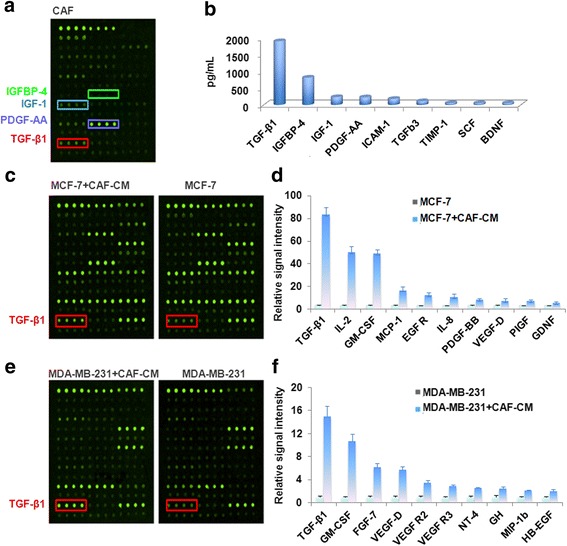
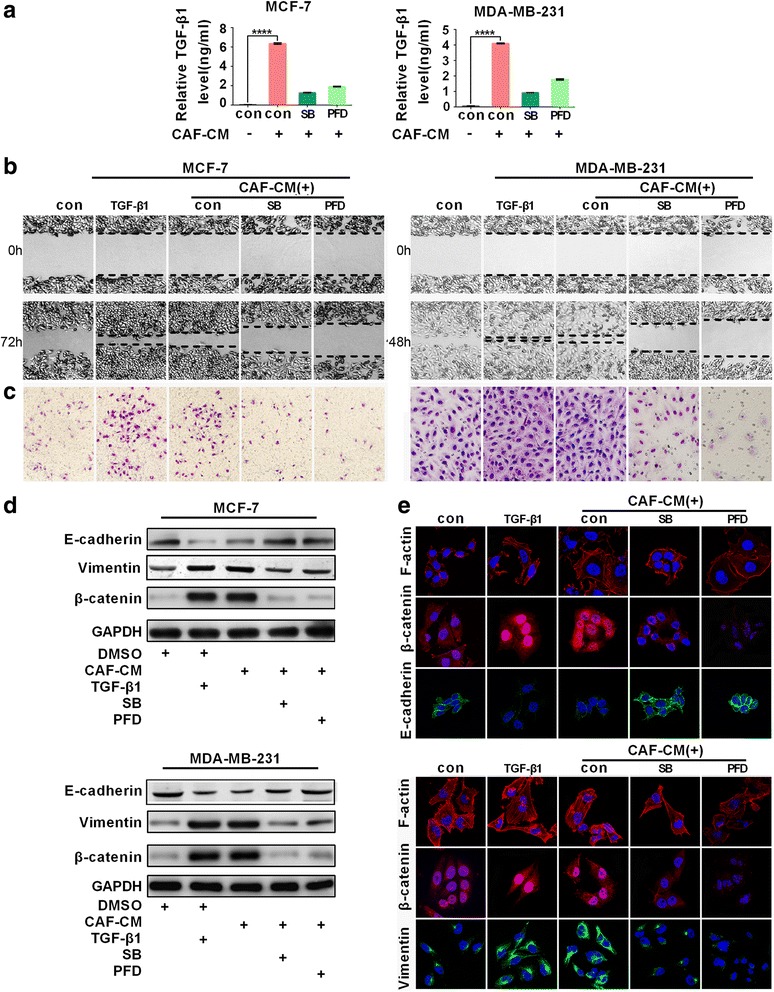
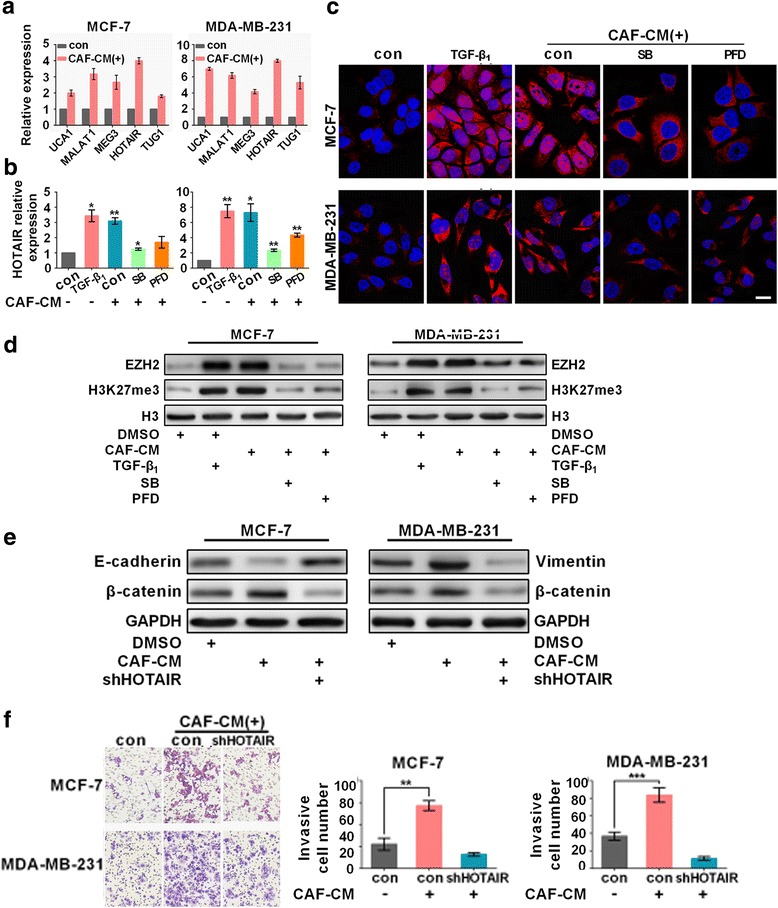
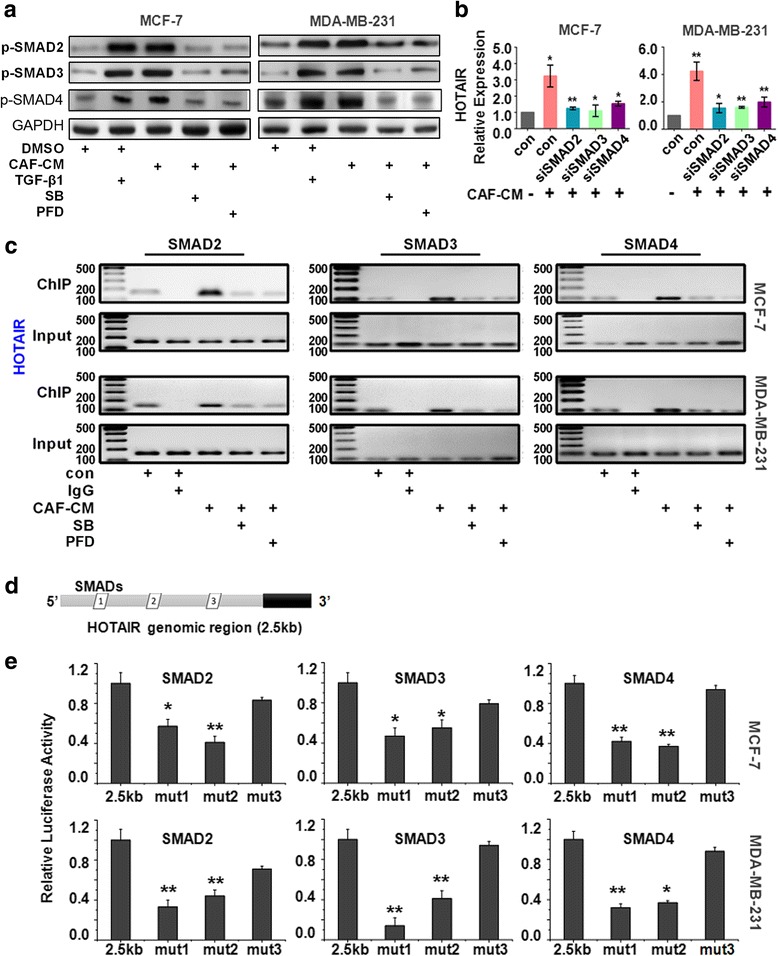
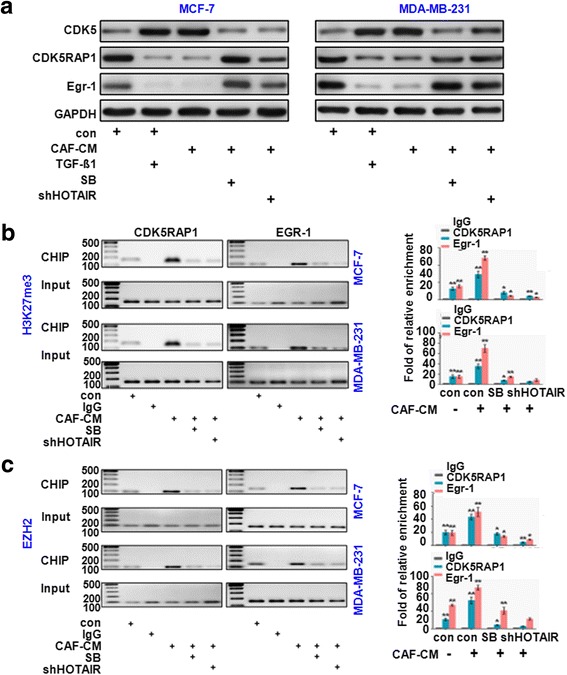
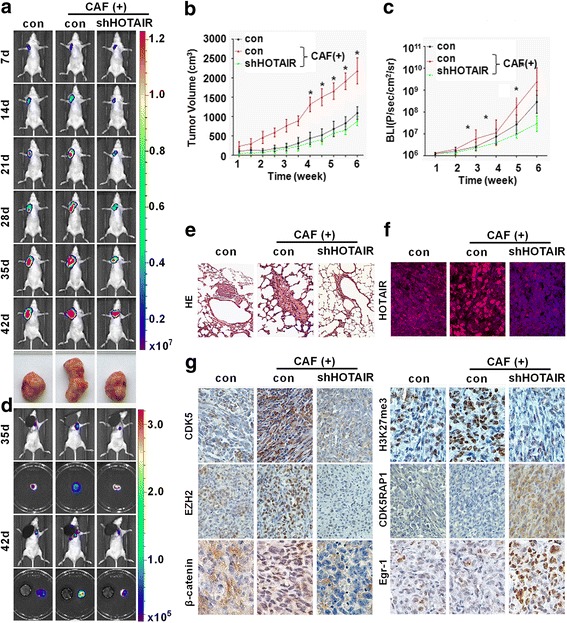
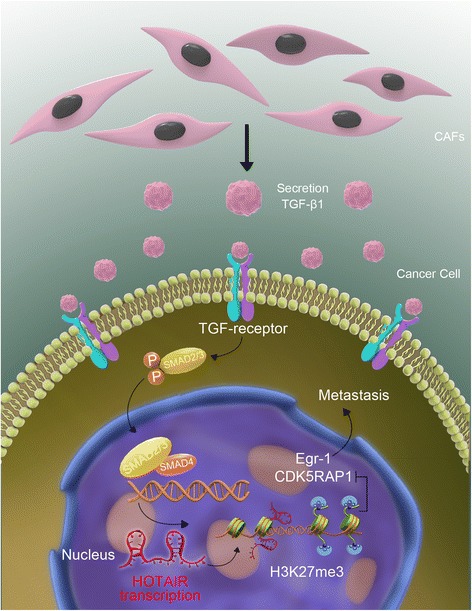
BACKGROUND: The communication between carcinoma associated fibroblasts (CAFs) and cancer cells facilitate tumor metastasis. In this study, we further underlying the epigenetic mechanisms of CAFs feed the cancer cells and the molecular mediators involved in these processes. METHODS: MCF-7 and MDA-MB-231 cells were treated with CAFs culture conditioned medium, respectively. Cytokine antibody array, enzyme-linked immunosorbent assay, western blotting and immunofluorescence were used to identify the key chemokines. Chromatin immunoprecipitation and luciferase reporter assay were performed to explore the transactivation of target LncRNA by CAFs. A series of in vitro assays was performed with RNAi-mediated knockdown to elucidate the function of LncRNA. An orthotopic mouse model of MDA-MB-231 was conducted to confirm the mechanism in vivo. RESULTS: Here we reported that TGF-β1 was top one highest level of cytokine secreted by CAFs as revealed by cytokine antibody array. Paracrine TGF-β1 was essential for CAFs induced EMT and metastasis in breast cancer cells, which is a crucial mediator of the interaction between stromal and cancer cells. CAF-CM significantly enhanced the HOTAIR expression to promote EMT, whereas treatment with small-molecule inhibitors of TGF-β1 attenuated the activation of HOTAIR. Most importantly, SMAD2/3/4 directly bound the promoter site of HOTAIR, located between nucleotides -386 and -398, -440 and -452, suggesting that HOTAIR was a directly transcriptional target of SMAD2/3/4. Additionally, CAFs mediated EMT by targeting CDK5 signaling through H3K27 tri-methylation. Depletion of HOTAIR inhibited CAFs-induced tumor growth and lung metastasis in MDA-MB-231 orthotopic animal model. CONCLUSIONS: Our findings demonstrated that CAFs promoted the metastatic activity of breast cancer cells by activating the transcription of HOTAIR via TGF-β1 secretion, supporting the pursuit of the TGF-β1/HOTAIR axis as a target in breast cancer treatment.
Overview
The claims and statistics of this paper haven’t been checked yet.
Free: it reads the open-access text and checks the first 5 claims that cite a source we can check. Create a free account to check every claim.
Integrity signals
Registry
Cites
Statistics
Figures
Verification
Claims the paper makes
The claims and statistics of this paper haven’t been checked yet.
Free: it reads the open-access text and checks the first 5 claims that cite a source we can check. Create a free account to check every claim.
Claims other papers make about this one
Each is checked against this paper’s own text: does it say what the citing paper says it does?
The source backs part of the claim, not all of it — or backs it for a different population, condition or comparison.
In the citing paper
“Moreover, inhibiting TGF‐β1 was found to significantly inhibit CAF‐induced tumor growth and lung metastasis in an MDA‐MB‐231 orthotopic tumor transplantation nude mouse model [103].”
From Tumor microenvironment signaling and therapeutics in cancer progression (2023) · cites this paper as [103]
Experimental — accuracy not yet measured
Self-check
Percentages, sums and reported differences re-computed from the paper’s own numbers.
The self-check needs the paper’s full text.
Citations
Cites
Smad-dependent and Smad-independent pathways in TGF-β family signalling
Derynck, R., & Zhang, Y. E. (2003) · Nature · doi:10.1038/nature02006 · Cited by 5,373
Long non-coding RNA HOTAIR reprograms chromatin state to promote cancer metastasis
Gupta, R. A., Shah, N., Wang, K. C., Kim, J., Horlings, H. M., Wong, D. J., Tsai, M.-C., Hung, T., Argani, P., Rinn, J. L., et al. (2010) · Nature · doi:10.1038/nature08975 · Cited by 5,218
Self-citationBreast cancer metastasis: markers and models
Weigelt, B., Peterse, J. L., & van't Veer, L. J. (2005) · Nature Reviews Cancer · doi:10.1038/nrc1670 · Cited by 2,232 · cited 1×
“Specifically, high rates of metastasis to the lymph nodes, lungs, bone and brain, not the primary tumor, are the leading cause of breast cancer death [1].”
JASPAR: an open-access database for eukaryotic transcription factor binding profiles
Sandelin, A. (2004) · Nucleic Acids Research · doi:10.1093/nar/gkh012 · Cited by 1,790 · cited 4×
“maximum matrix dissimilarity rate set as 15% in PROMO [28, 29].”
InfluentialFriends or foes — bipolar effects of the tumour stroma in cancer
Mueller, M. M., & Fusenig, N. E. (2004) · Nature Reviews Cancer · doi:10.1038/nrc1477 · Cited by 1,765 · cited 1×
“cular endothelial growth factor (VEGF), platelet-derived growth factor (PDGF), and interleukins (IL) [8, 9].”
Erez, N., Truitt, M., Olson, P., & Hanahan, D. (2010) · Cancer Cell · doi:10.1016/j.ccr.2009.12.041 · Cited by 1,515
PROMO: detection of known transcription regulatory elements using species-tailored searches
Messeguer, X., Escudero, R., Farré, D., Núñez, O., Martı́nez, J., & Albà, M. M. (2002) · Bioinformatics · doi:10.1093/bioinformatics/18.2.333 · Cited by 1,369 · cited 4×
“maximum matrix dissimilarity rate set as 15% in PROMO [28, 29].”
InfluentialStromal gene expression defines poor-prognosis subtypes in colorectal cancer
Calon, A., Lonardo, E., Berenguer-Llergo, A., Espinet, E., Hernando-Momblona, X., Iglesias, M., Sevillano, M., Palomo-Ponce, S., Tauriello, D. V. F., Byrom, D., et al. (2015) · Nature Genetics · doi:10.1038/ng.3225 · Cited by 1,070 · cited 1×
“CAF-mediated initiation of efficient metastasis [26, 32, 33].”
Dependency of Colorectal Cancer on a TGF-β-Driven Program in Stromal Cells for Metastasis Initiation
Calon, A., Espinet, E., Palomo-Ponce, S., Tauriello, D. V. F., Iglesias, M., Céspedes, M. V., Sevillano, M., Nadal, C., Jung, P., Zhang, X. H.-F., et al. (2012) · Cancer Cell · doi:10.1016/j.ccr.2012.08.013 · Cited by 1,060
Quante, M., Tu, S. P., Tomita, H., Gonda, T., Wang, S. S. W., Takashi, S., Baik, G. H., Shibata, W., DiPrete, B., Betz, K. S., et al. (2011) · Cancer Cell · doi:10.1016/j.ccr.2011.01.020 · Cited by 1,044
HOTAIR is a negative prognostic factor and exhibits pro-oncogenic activity in pancreatic cancer
Kim, K., Jutooru, I., Chadalapaka, G., Johnson, G., Frank, J., Burghardt, R., Kim, S., & Safe, S. (2013) · Oncogene · doi:10.1038/onc.2012.193 · Cited by 782
Chromatin Remodeling Is a Key Mechanism Underlying Cocaine-Induced Plasticity in Striatum
Kumar, A., Choi, K.-H., Renthal, W., Tsankova, N. M., Theobald, D. E. H., Truong, H.-T., Russo, S. J., LaPlant, Q., Sasaki, T. S., Whistler, K. N., et al. (2005) · Neuron · doi:10.1016/j.neuron.2005.09.023 · Cited by 764 · cited 1×
“reported that H3 hyperacetylation at the promoter of CDK5 was a key mechanism underlying cocaine-induced plasticity in the striatum [38].”
Carcinoma-associated fibroblasts: orchestrating the composition of malignancy
Gascard, P., & Tlsty, T. D. (2016) · Genes & Development · doi:10.1101/gad.279737.116 · Cited by 732 · cited 1×
“cular endothelial growth factor (VEGF), platelet-derived growth factor (PDGF), and interleukins (IL) [8, 9].”
Yang, Z., Zhou, L., Wu, L.-M., Lai, M.-C., Xie, H.-Y., Zhang, F., & Zheng, S.-S. (2011) · Annals of Surgical Oncology · doi:10.1245/s10434-011-1581-y · Cited by 708
LncRNA HOTAIR enhances ER signaling and confers tamoxifen resistance in breast cancer
Xue, X., Yang, Y. A., Zhang, A., Fong, K.-W., Kim, J., Song, B., Li, S., Zhao, J. C., & Yu, J. (2016) · Oncogene · doi:10.1038/onc.2015.340 · Cited by 432
Yang, L., Achreja, A., Yeung, T.-L., Mangala, L. S., Jiang, D., Han, C., Baddour, J., Marini, J. C., Ni, J., Nakahara, R., et al. (2016) · Cell Metabolism · doi:10.1016/j.cmet.2016.10.011 · Cited by 429 · cited 1×
“Specifically, tumor stromal cells cross-communicate and develop an aggressive phenotype of cancer cells, which are recognized as an important modulator and even a driver of tumorigenicity [4].”
Chen, W.-J., Ho, C.-C., Chang, Y.-L., Chen, H.-Y., Lin, C.-A., Ling, T.-Y., Yu, S.-L., Yuan, S.-S., Louisa Chen, Y.-J., Lin, C.-Y., et al. (2014) · Nature Communications · doi:10.1038/ncomms4472 · Cited by 422 · cited 1×
“Although our study focuses on the TGF-β1, CAFs may also secrete a cocktail of additional pro-metastatic factors, such as IL-6 and IGF-II, to contribute to cancer progression [39, 40].”
Hauptman, N., & Glavač, D. (2013) · International Journal of Molecular Sciences · doi:10.3390/ijms14034655 · Cited by 349
Guido, C., Whitaker-Menezes, D., Capparelli, C., Balliet, R., Lin, Z., Pestell, R. G., Howell, A., Aquila, S., Andò, S., Martinez-Outschoorn, U., et al. (2012) · Cell Cycle · doi:10.4161/cc.21384 · Cited by 319
Epigenetic regulation in human melanoma: past and future
Sarkar, D., Leung, E. Y., Baguley, B. C., Finlay, G. J., & Askarian-Amiri, M. E. (2015) · Epigenetics · doi:10.1080/15592294.2014.1003746 · Cited by 289 · cited 5×
“In addition to the several well-documented gene mutations that have been associated with the development of breast cancer, considerable attention is being focused on the participation of epigenetic events, including the diverse activities of non-coding RNAs [11].”
InfluentialBarcellos-de-Souza, P., Comito, G., Pons-Segura, C., Taddei, M. L., Gori, V., Becherucci, V., Bambi, F., Margheri, F., Laurenzana, A., Del Rosso, M., et al. (2016) · Stem Cells · doi:10.1002/stem.2412 · Cited by 230
Pádua Alves, C., Fonseca, A. S., Muys, B. R., Barros e Lima Bueno, R., Bürger, M. C., Souza, J. E. S., Valente, V., Zago, M. A., & Silva, W. A. (2013) · Stem Cells · doi:10.1002/stem.1547 · Cited by 218
Malek, E., Jagannathan, S., & Driscoll, J. J. (2014) · Oncotarget · doi:10.18632/oncotarget.2469 · Cited by 195
Binding Interactions between Long Noncoding RNA HOTAIR and PRC2 Proteins
Wu, L., Murat, P., Matak-Vinkovic, D., Murrell, A., & Balasubramanian, S. (2013) · Biochemistry · doi:10.1021/bi401085h · Cited by 184 · cited 1×
“Highly upregulated in breast cancer, the lncRNA HOX transcript antisense RNA (HOTAIR) mediates H3K27 tri-methylation and the epigenetic silencing of tumor suppressor genes by recruiting enhancer of zeste homolog 2 (EZH2), which is considered a key molecule and potential biomarker for breast cancer [12].”
Servais, C., & Erez, N. (2013) · The Journal of Pathology · doi:10.1002/path.4103 · Cited by 152
HOTAIR and its surrogate DNA methylation signature indicate carboplatin resistance in ovarian cancer
Teschendorff, A. E., Lee, S.-H., Jones, A., Fiegl, H., Kalwa, M., Wagner, W., Chindera, K., Evans, I., Dubeau, L., Orjalo, A., et al. (2015) · Genome Medicine · doi:10.1186/s13073-015-0233-4 · Cited by 152
CDK5 is essential for TGF-β1-induced epithelial-mesenchymal transition and breast cancer progression
Liang, Q. Y., Li, L., Zhang, J., Yang, L., Wang, L., Liu, D., Feng, J., Hou, P., Yao, R., Zhang, Y., et al. (2013) · Scientific Reports · doi:10.1038/srep02932 · Cited by 139
Leshchenko, V. V., Kuo, P.-Y., Shaknovich, R., Yang, D. T., Gellen, T., Petrich, A., Yu, Y., Remache, Y., Weniger, M. A., Rafiq, S., et al. (2010) · Blood · doi:10.1182/blood-2009-12-257485 · Cited by 134 · cited 1×
“Strikingly, aberrant CDK5 promoter DNA hypomethylation was identified in the mantle cell lymphoma genome compared with normal naive B cells [25].”
Stroma in breast development and disease
Arendt, L. M., Rudnick, J. A., Keller, P. J., & Kuperwasser, C. (2010) · Seminars in Cell & Developmental Biology · doi:10.1016/j.semcdb.2009.10.003 · Cited by 134 · cited 1×
“Growing evidence indicates that malignant breast tissue requires complex local and systemic stromal interactions to provide a tumor-promoting environment during breast carcinoma development and progression [2, 3].”
Yang, J., Yang, L., Lin, Y., Zheng, Z., Fang, J., He, S., & Zhuang, S. (2016) · Cancer Letters · doi:10.1016/j.canlet.2016.09.012 · Cited by 133
Growth of Mouse Mammary Glands in vivo after Monolayer Culture
Daniel, C. W., & DeOme, K. B. (1965) · Science · doi:10.1126/science.149.3684.634 · Cited by 123
Verghese, E. T., Drury, R., Green, C. A., Holliday, D. L., Lu, X., Nash, C., Speirs, V., Thorne, J. L., Thygesen, H. H., Zougman, A., et al. (2013) · The Journal of Pathology · doi:10.1002/path.4248 · Cited by 118
A Cell-Based High-Content Screening Assay Reveals Activators and Inhibitors of Cancer Cell Invasion
Quintavalle, M., Elia, L., Price, J. H., Heynen‐Genel, S., & Courtneidge, S. A. (2011) · Science Signaling · doi:10.1126/scisignal.2002032 · Cited by 107
Osuala, K. O., Sameni, M., Shah, S., Aggarwal, N., Simonait, M. L., Franco, O. E., Hong, Y., Hayward, S. W., Behbod, F., Mattingly, R. R., et al. (2015) · BMC Cancer · doi:10.1186/s12885-015-1576-3 · Cited by 99 · cited 1×
“Although our study focuses on the TGF-β1, CAFs may also secrete a cocktail of additional pro-metastatic factors, such as IL-6 and IGF-II, to contribute to cancer progression [39, 40].”
Mak, G. W.-Y., Chan, M. M.-L., Leong, V. Y.-L., Lee, J. M., Yau, T.-O., Ng, I. O., & Ching, Y.-P. (2011) · Cancer Research · doi:10.1158/0008-5472.can-10-4046 · Cited by 92
Doldi, V., Callari, M., Giannoni, E., D’Aiuto, F., Maffezzini, M., Valdagni, R., Chiarugi, P., Gandellini, P., & Zaffaroni, N. (2015) · Oncotarget · doi:10.18632/oncotarget.5056 · Cited by 72
AC1MMYR2 impairs high dose paclitaxel-induced tumor metastasis by targeting miR-21/CDK5 axis
Ren, Y., Zhou, X., Yang, J.-J., Liu, X., Zhao, X., Wang, Q.-X., Han, L., Song, X., Zhu, Z.-Y., Tian, W.-P., et al. (2015) · Cancer Letters · doi:10.1016/j.canlet.2015.03.038 · Cited by 60 · cited 2×
“Our previous study demonstrated that the aberrant activation of CDK5 signaling is associated with lymph node metastasis in breast cancer, which was responsible for high-dose taxol-induced invasion and EMT [23].”
Self-citationCao, L., Zhou, J., Zhang, J., Wu, S., Yang, X., Zhao, X., Li, H., Luo, M., Yu, Q., Lin, G., et al. (2015) · Clinical Cancer Research · doi:10.1158/1078-0432.ccr-14-1950 · Cited by 53
Self-citationRen, Y. T., Zhou, X., Liu, X., Jia, H.-H., Zhao, X., Wang, Q.-X., Han, L., Song, X., Zhu, Z.-Y., Sun, T., et al. (2016) · Cancer Letters · doi:10.1016/j.canlet.2016.02.003 · Cited by 48
Self-citationMin, A., Zhu, C., Peng, S., Shuai, C., Sun, L., Han, Y., Qian, Y., Gao, S., & Su, T. (2016) · Journal of Biochemical and Molecular Toxicology · doi:10.1002/jbt.21777 · Cited by 35
Cited by
Exosomes: key players in cancer and potential therapeutic strategy
Dai, J., Su, Y., Zhong, S., Cong, L., Liu, B., Yang, J., Tao, Y., He, Z., Chen, C., & Jiang, Y. (2020) · Signal Transduction and Targeted Therapy · doi:10.1038/s41392-020-00261-0 · Cited by 1,186
Long noncoding RNAs in cancer metastasis
Liu, S. J., Dang, H. X., Lim, D. A., Feng, F. Y., & Maher, C. A. (2021) · Nature Reviews Cancer · doi:10.1038/s41568-021-00353-1 · Cited by 648
Fiori, M. E., Di Franco, S., Villanova, L., Bianca, P., Stassi, G., & De Maria, R. (2019) · Molecular Cancer · doi:10.1186/s12943-019-0994-2 · Cited by 647
“transcript antisense RNA (HOTAIR) in breast cancer [40].”
BackgroundRatti, M., Lampis, A., Ghidini, M., Salati, M., Mirchev, M. B., Valeri, N., & Hahne, J. C. (2020) · Targeted Oncology · doi:10.1007/s11523-020-00717-x · Cited by 606
“HOTAIR in turn induces EMT by activating the SMAD cascade signalling in tumour cells [125].”
BackgroundEmerging roles of long non‐coding RNA in cancer
Sanchez Calle, A., Kawamura, Y., Yamamoto, Y., Takeshita, F., & Ochiya, T. (2018) · Cancer Science · doi:10.1111/cas.13642 · Cited by 590
“Genome-wide analysis highlighted the epigenetic regulation of EMT in lung adenocarcinoma.70,71 When lincRNA-p21 is overexpressed in HCC, N-cadherin and snail expression is decreased, inhibiting the EMT.72 Consistently, its depletion in gastric cancer promotes EMT phenotypic changes in cells, and these changes are also…”
BackgroundInfluential
Metadata
- Authors
- Ren, Y., Jia, H.-H., Xu, Y.-Q., Zhou, X., Zhao, X.-H., Wang, Y.-F., Song, X., Zhu, Z.-Y., Sun, T., Dou, Y., Tian, W.-P., Zhao, X.-L., Kang, C.-S., & Mei, M.
- Affiliations
- Tianjin Medical University (CN)
- Tianjin Medical University Cancer Institute and Hospital (CN)
- Tianjin Medical University General Hospital (CN)
- Corresponding author
- Mei, Mei
- Venue
- Molecular Cancer
- Published
- 2018-01-11
- Volume
- 17
- Issue
- 1
- Pages
- 5-5
- ISSN
- 1476-4598 (ISSN-L)
- PMC
- PMC5765658
- OpenAlex
- W2783018806
- Cited by
- 217
- References
- 40
- Citations by year
- 2026: 17 · 2025: 14 · 2024: 38 · 2023: 33 · 2022: 21 · 2021: 35 · 2020: 32 · 2019: 18 · 2018: 9
- FWCI
- 8.36
- Type
- journal article
- Language
- en
- Open access
- gold
- doi.org
- Licence
- cc-by
- Locations
- Molecular Cancer (publishedVersion, cc-by)
- PubMed Central (publishedVersion, cc-by)
- PubMed (publishedVersion)
- DOAJ (DOAJ: Directory of Open Access Journals) (submittedVersion)
- Funders
- National Natural Science Foundation of China (81673026, 81572492)
- Committee of Tianjin Science and Technology (16JCZDJC34800)
- Topics
- Life Sciences › Biochemistry, Genetics and Molecular Biology › Molecular Biology › TGF-β signaling in diseases
- Life Sciences › Biochemistry, Genetics and Molecular Biology › Cancer Research › Cancer-related molecular mechanisms research
- Health Sciences › Medicine › Oncology › Cancer Cells and Metastasis
- Keywords
- cancer-associated fibroblasts, HOTAIR, TGF-β1, breast cancer metastasis, epithelial-mesenchymal transition, paracrine signaling, long non-coding RNA, H3K27me3, tumor microenvironment, lung metastasis
- MeSH terms
- Cancer-Associated Fibroblasts, Animals, Cell Movement, Humans, Neoplasm Metastasis, Neoplasms, Prognosis, Transcription, Genetic, Signal Transduction, Gene Expression Regulation, Neoplastic, Paracrine Communication, Epigenesis, Genetic, Cell Line, Tumor, Cyclin-Dependent Kinase 5, Mice, Smad Proteins, Transforming Growth Factor beta1, Gene Knockdown Techniques, Epithelial-Mesenchymal Transition, RNA, Long Noncoding
About these checks
Registry, retraction, Cites and statistics results are computed, not judged, with one exception: a printed reference that no index lists is read once by a model before it counts as a citation error. Claims are extracted by a model and kept only when their quote appears verbatim in the text; each cited source is then checked, with a model’s help, for whether it says what the claim relies on. Those verdicts can be wrong — read the claim’s quote and the cited source before relying on one.
Statistics and arithmetic are recomputed, not judged.
Confidence bands are shown only for fields calibrated on our annotated test set. None is calibrated yet, so no band is shown.
What counts as a claim ›How we measure confidence ›How we check this ›
Are you an author, or do you see a problem with this page? Request a review
Data sources
Bibliographic data: Semantic Scholar, OpenAlex, Crossref.
Contains information from the Semantic Scholar Academic Graph Datasets, made available under the ODC Attribution License (ODC-BY 1.0).
Semantic Scholar’s data is described in: Kinney, R., et al. (2023). The Semantic Scholar Open Data Platform. arXiv:2301.10140.
