

Paracrine and epigenetic control of CAF‐induced metastasis: the role of HOTAIR stimulated by TGF‐ß1 secretion
Open accessThe DOI matches its Crossref record; 40 of the 40 references it cites were found in a registry or an index.
Abstract
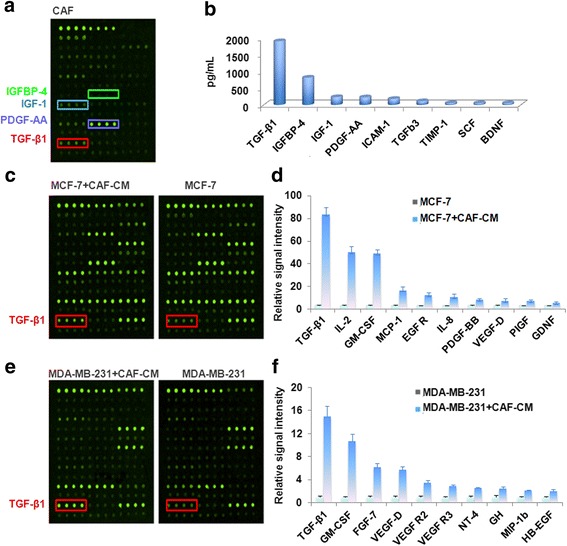
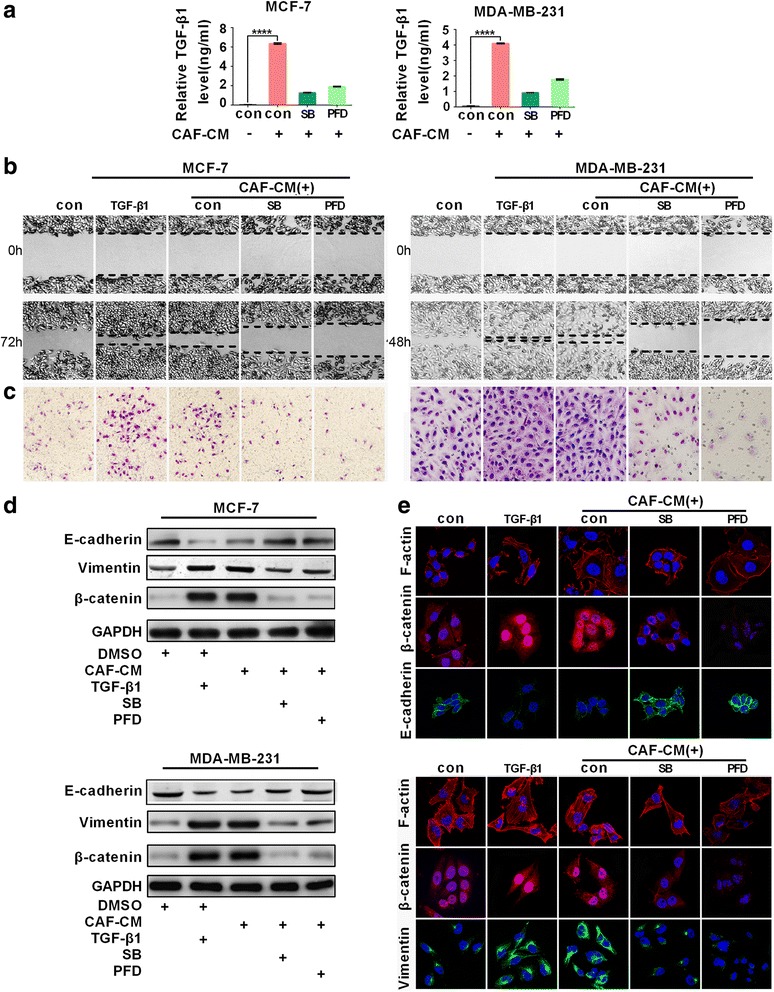
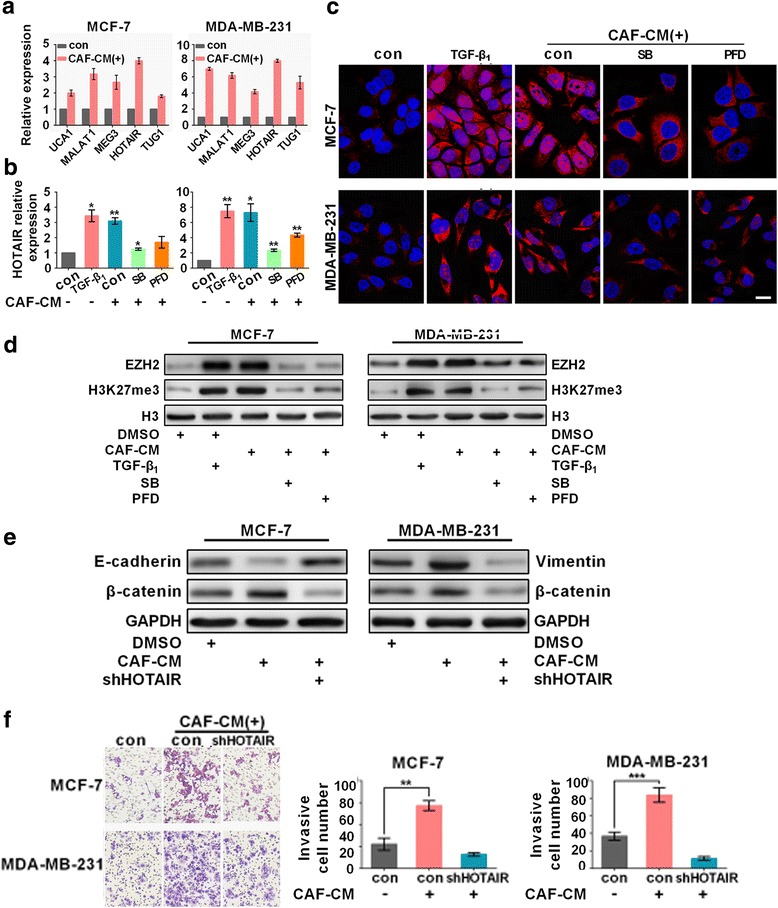
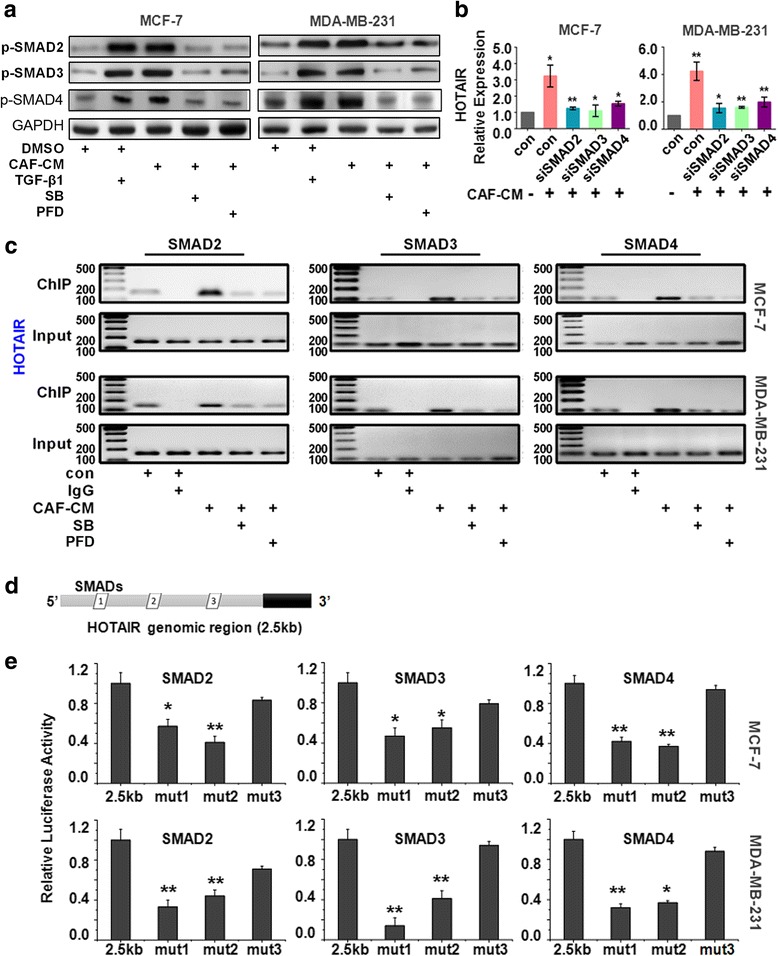
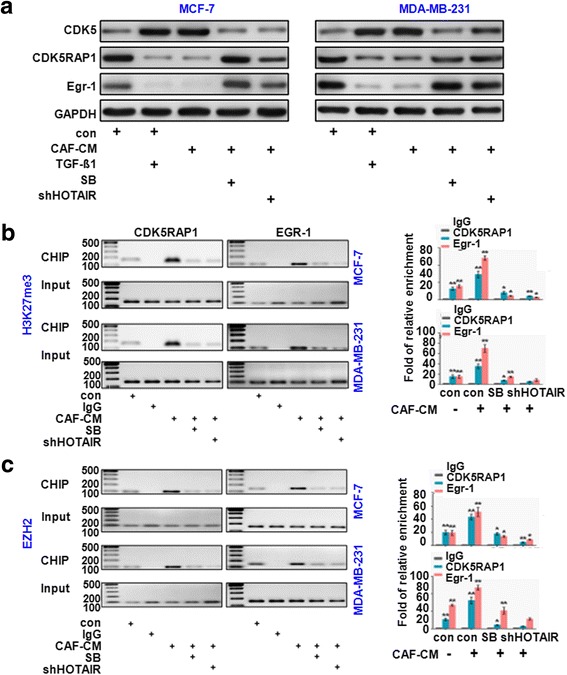
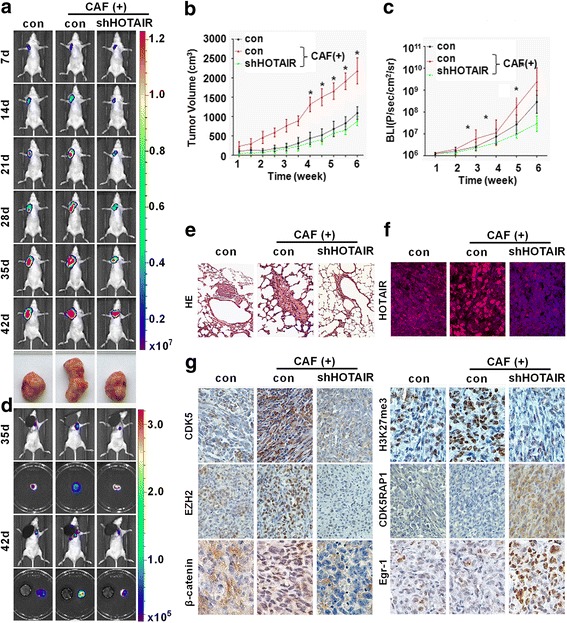
BACKGROUND: The communication between carcinoma associated fibroblasts (CAFs) and cancer cells facilitate tumor metastasis. In this study, we further underlying the epigenetic mechanisms of CAFs feed the cancer cells and the molecular mediators involved in these processes. METHODS: MCF-7 and MDA-MB-231 cells were treated with CAFs culture conditioned medium, respectively. Cytokine antibody array, enzyme-linked immunosorbent assay, western blotting and immunofluorescence were used to identify the key chemokines. Chromatin immunoprecipitation and luciferase reporter assay were performed to explore the transactivation of target LncRNA by CAFs. A series of in vitro assays was performed with RNAi-mediated knockdown to elucidate the function of LncRNA. An orthotopic mouse model of MDA-MB-231 was conducted to confirm the mechanism in vivo. RESULTS: Here we reported that TGF-β1 was top one highest level of cytokine secreted by CAFs as revealed by cytokine antibody array. Paracrine TGF-β1 was essential for CAFs induced EMT and metastasis in breast cancer cells, which is a crucial mediator of the interaction between stromal and cancer cells. CAF-CM significantly enhanced the HOTAIR expression to promote EMT, whereas treatment with small-molecule inhibitors of TGF-β1 attenuated the activation of HOTAIR. Most importantly, SMAD2/3/4 directly bound the promoter site of HOTAIR, located between nucleotides -386 and -398, -440 and -452, suggesting that HOTAIR was a directly transcriptional target of SMAD2/3/4. Additionally, CAFs mediated EMT by targeting CDK5 signaling through H3K27 tri-methylation. Depletion of HOTAIR inhibited CAFs-induced tumor growth and lung metastasis in MDA-MB-231 orthotopic animal model. CONCLUSIONS: Our findings demonstrated that CAFs promoted the metastatic activity of breast cancer cells by activating the transcription of HOTAIR via TGF-β1 secretion, supporting the pursuit of the TGF-β1/HOTAIR axis as a target in breast cancer treatment.
Overview
The claims and statistics of this paper haven’t been checked yet.
Free: it reads the open-access text and checks the first 5 claims that cite a source we can check. Create a free account to check every claim.
Integrity signals
Registry
Cites
Statistics
Figures
Verification
Claims the paper makes
The claims and statistics of this paper haven’t been checked yet.
Free: it reads the open-access text and checks the first 5 claims that cite a source we can check. Create a free account to check every claim.
Claims other papers make about this one
Each is checked against this paper’s own text: does it say what the citing paper says it does?
The source backs part of the claim, not all of it — or backs it for a different population, condition or comparison.
In the citing paper
“Moreover, inhibiting TGF‐β1 was found to significantly inhibit CAF‐induced tumor growth and lung metastasis in an MDA‐MB‐231 orthotopic tumor transplantation nude mouse model [103].”
From Tumor microenvironment signaling and therapeutics in cancer progression (2023) · cites this paper as [103]
Experimental — accuracy not yet measured
Self-check
Percentages, sums and reported differences re-computed from the paper’s own numbers.
The self-check needs the paper’s full text.
Citations
Cites
Smad-dependent and Smad-independent pathways in TGF-β family signalling
Derynck, R., & Zhang, Y. E. (2003) · Nature · doi:10.1038/nature02006 · Cited by 5,373
Long non-coding RNA HOTAIR reprograms chromatin state to promote cancer metastasis
Gupta, R. A., Shah, N., Wang, K. C., Kim, J., Horlings, H. M., Wong, D. J., Tsai, M.-C., Hung, T., Argani, P., Rinn, J. L., et al. (2010) · Nature · doi:10.1038/nature08975 · Cited by 5,218
Self-citationBreast cancer metastasis: markers and models
Weigelt, B., Peterse, J. L., & van't Veer, L. J. (2005) · Nature Reviews Cancer · doi:10.1038/nrc1670 · Cited by 2,232 · cited 1×
“Specifically, high rates of metastasis to the lymph nodes, lungs, bone and brain, not the primary tumor, are the leading cause of breast cancer death [1].”
JASPAR: an open-access database for eukaryotic transcription factor binding profiles
Sandelin, A. (2004) · Nucleic Acids Research · doi:10.1093/nar/gkh012 · Cited by 1,790 · cited 4×
“maximum matrix dissimilarity rate set as 15% in PROMO [28, 29].”
InfluentialFriends or foes — bipolar effects of the tumour stroma in cancer
Mueller, M. M., & Fusenig, N. E. (2004) · Nature Reviews Cancer · doi:10.1038/nrc1477 · Cited by 1,765 · cited 1×
“cular endothelial growth factor (VEGF), platelet-derived growth factor (PDGF), and interleukins (IL) [8, 9].”
Erez, N., Truitt, M., Olson, P., & Hanahan, D. (2010) · Cancer Cell · doi:10.1016/j.ccr.2009.12.041 · Cited by 1,515
PROMO: detection of known transcription regulatory elements using species-tailored searches
Messeguer, X., Escudero, R., Farré, D., Núñez, O., Martı́nez, J., & Albà, M. M. (2002) · Bioinformatics · doi:10.1093/bioinformatics/18.2.333 · Cited by 1,369 · cited 4×
“maximum matrix dissimilarity rate set as 15% in PROMO [28, 29].”
InfluentialStromal gene expression defines poor-prognosis subtypes in colorectal cancer
Calon, A., Lonardo, E., Berenguer-Llergo, A., Espinet, E., Hernando-Momblona, X., Iglesias, M., Sevillano, M., Palomo-Ponce, S., Tauriello, D. V. F., Byrom, D., et al. (2015) · Nature Genetics · doi:10.1038/ng.3225 · Cited by 1,070 · cited 1×
“CAF-mediated initiation of efficient metastasis [26, 32, 33].”
Dependency of Colorectal Cancer on a TGF-β-Driven Program in Stromal Cells for Metastasis Initiation
Calon, A., Espinet, E., Palomo-Ponce, S., Tauriello, D. V. F., Iglesias, M., Céspedes, M. V., Sevillano, M., Nadal, C., Jung, P., Zhang, X. H.-F., et al. (2012) · Cancer Cell · doi:10.1016/j.ccr.2012.08.013 · Cited by 1,060
Quante, M., Tu, S. P., Tomita, H., Gonda, T., Wang, S. S. W., Takashi, S., Baik, G. H., Shibata, W., DiPrete, B., Betz, K. S., et al. (2011) · Cancer Cell · doi:10.1016/j.ccr.2011.01.020 · Cited by 1,044
Cited by
Exosomes: key players in cancer and potential therapeutic strategy
Dai, J., Su, Y., Zhong, S., Cong, L., Liu, B., Yang, J., Tao, Y., He, Z., Chen, C., & Jiang, Y. (2020) · Signal Transduction and Targeted Therapy · doi:10.1038/s41392-020-00261-0 · Cited by 1,186
Long noncoding RNAs in cancer metastasis
Liu, S. J., Dang, H. X., Lim, D. A., Feng, F. Y., & Maher, C. A. (2021) · Nature Reviews Cancer · doi:10.1038/s41568-021-00353-1 · Cited by 648
Fiori, M. E., Di Franco, S., Villanova, L., Bianca, P., Stassi, G., & De Maria, R. (2019) · Molecular Cancer · doi:10.1186/s12943-019-0994-2 · Cited by 647
“transcript antisense RNA (HOTAIR) in breast cancer [40].”
BackgroundRatti, M., Lampis, A., Ghidini, M., Salati, M., Mirchev, M. B., Valeri, N., & Hahne, J. C. (2020) · Targeted Oncology · doi:10.1007/s11523-020-00717-x · Cited by 606
“HOTAIR in turn induces EMT by activating the SMAD cascade signalling in tumour cells [125].”
BackgroundEmerging roles of long non‐coding RNA in cancer
Sanchez Calle, A., Kawamura, Y., Yamamoto, Y., Takeshita, F., & Ochiya, T. (2018) · Cancer Science · doi:10.1111/cas.13642 · Cited by 590
“Genome-wide analysis highlighted the epigenetic regulation of EMT in lung adenocarcinoma.70,71 When lincRNA-p21 is overexpressed in HCC, N-cadherin and snail expression is decreased, inhibiting the EMT.72 Consistently, its depletion in gastric cancer promotes EMT phenotypic changes in cells, and these changes are also…”
BackgroundInfluentialEmerging roles of lncRNA in cancer and therapeutic opportunities.
Jiang, M., Ni, J., Cui, W., Wang, B., & Zhuo, W. (2019) · PubMed Central · Cited by 560
Peltanova, B., Raudenska, M., & Masarik, M. (2019) · Molecular Cancer · doi:10.1186/s12943-019-0983-5 · Cited by 469
Stromal cells in the tumor microenvironment: accomplices of tumor progression?
Zhao, Y., Shen, M., Wu, L., Yang, H., Yao, Y., Yang, Q., Du, J., Liu, L., Li, Y., & Bai, Y. (2023) · Cell Death & Disease · doi:10.1038/s41419-023-06110-6 · Cited by 431
Zhang, H., Yue, X., Chen, Z., Liu, C., Wu, W., Zhang, N., Liu, Z., Yang, L., Jiang, Q., Cheng, Q., et al. (2023) · Molecular Cancer · doi:10.1186/s12943-023-01860-5 · Cited by 424
TGF-β and the Tissue Microenvironment: Relevance in Fibrosis and Cancer
Caja, L., Dituri, F., Mancarella, S., Caballero-Diaz, D., Moustakas, A., Giannelli, G., & Fabregat, I. (2018) · International Journal of Molecular Sciences · doi:10.3390/ijms19051294 · Cited by 351
“TGF-β secreted by CAFs promotes breast cancer metastasis by inducing the expression of the lncRNA HOTAIR [115].”
BackgroundCancer associated-fibroblast-derived exosomes in cancer progression
Li, C., Teixeira, A. F., Zhu, H.-J., & ten Dijke, P. (2021) · Molecular Cancer · doi:10.1186/s12943-021-01463-y · Cited by 336
“For example, secretion of TGF-β by CAFs promotes the EMT of breast cancer cells via TGF-β/SMAD and non-SMAD signaling pathways [62, 63], and facilitates the tumor growth and metastasis in colorectal cancer [64, 65].”
BackgroundTumor microenvironment signaling and therapeutics in cancer progression
Goenka, A., Khan, F., Verma, B., Sinha, P., Dmello, C. C., Jogalekar, M. P., Gangadaran, P., & Ahn, B. (2023) · Cancer Communications · doi:10.1002/cac2.12416 · Cited by 323
“Moreover, inhibiting TGF-β1 was found to significantly inhibit CAF-induced tumor growth and lung metastasis in an MDA-MB-231 orthotopic tumor transplantation nude mouse model [103].”
BackgroundCancer‐associated fibroblasts in breast cancer: Challenges and opportunities
Hu, D., Li, Z., Zheng, B., Lin, X., Pan, Y., Gong, P., Zhuo, W., Hu, Y., Chen, C., Chen, L., et al. (2022) · Cancer Communications · doi:10.1002/cac2.12291 · Cited by 286
“Similarly, CAFs promote the proliferation [181], migration [49], invasion [182–184], stemness [185] and treatment resistance [186] of breast cancer cells and contribute to the reconstruction of the ECM [160] and immune microenvironment [187].”
BackgroundCancer-associated fibroblasts: overview, progress, challenges, and directions
Ping, Q., Yan, R., Cheng, X., Wang, W., Zhong, Y., Hou, Z., Shi, Y., Wang, C., & Li, R. (2021) · Cancer Gene Therapy · doi:10.1038/s41417-021-00318-4 · Cited by 285
“Therefore, inhibiting the expression of TGFβ1 can significantly inhibit CAF-induced tumor growth and lung metastasis [60].”
BackgroundCancer associated fibroblasts in cancer development and therapy
Jia, H., Chen, X., Zhang, L., & Chen, M. (2025) · Journal of Hematology & Oncology · doi:10.1186/s13045-025-01688-0 · Cited by 224
“Moreover, TGFβ secreted by CAFs have been found to induce EMT through an epigenetic mechanism involving the lncRNA ZEB2NAT and HOTAIR [146, 147].”
Self-citationLópez de Andrés, J., Griñán-Lisón, C., Jiménez, G., & Marchal, J. A. (2020) · Journal of Hematology & Oncology · doi:10.1186/s13045-020-00966-3 · Cited by 207
Targeting CAFs to overcome anticancer therapeutic resistance
Saw, P. E., Chen, J., & Song, E. (2022) · Trends in Cancer · doi:10.1016/j.trecan.2022.03.001 · Cited by 197
Zhang, Y., Liu, Z., Yang, X., Lu, W., Chen, Y., Lin, Y., Wang, J., Lin, S., & Yun, J.-P. (2021) · Theranostics · doi:10.7150/thno.51245 · Cited by 186
“reported that CAFmediated increased transcription of HOTAIR in breast cancer cells promoted invasion and metastasis via the secretion of TGF-β, which is a crucial mediator of the cross-talk between stromal and cancer cells within the tumor microenvironment [36].”
BackgroundWei, L., Ye, H., Li, G., Lu, Y., Zhou, Q., Zheng, S., Lin, Q., Liu, Y., Li, Z., & Chen, R. (2018) · Cell Death & Disease · doi:10.1038/s41419-018-1104-x · Cited by 178
TGF-β, EMT, and resistance to anti-cancer treatment
Wang, X., Eichhorn, P. J. A., & Thiery, J. P. (2023) · Seminars in Cancer Biology · doi:10.1016/j.semcancer.2023.10.004 · Cited by 170
HOX transcript antisense RNA (HOTAIR) in cancer
Qu, X., Alsager, S., Zhuo, Y., & Shan, B. (2019) · Cancer Letters · doi:10.1016/j.canlet.2019.04.016 · Cited by 171
HOTAIR LncRNA: A novel oncogenic propellant in human cancer
Rajagopal, T., Talluri, S., Akshaya, R. L., & Dunna, N. R. (2020) · Clinica Chimica Acta · doi:10.1016/j.cca.2019.12.028 · Cited by 170
Glaviano, A., Lau, H., Carter, L. M., Lee, E. H. C., Lam, H. Y., Okina, E., Tan, D. J. J., Tan, W., Ang, H. L., Carbone, D., et al. (2025) · Journal of Hematology & Oncology · doi:10.1186/s13045-024-01634-6 · Cited by 184
The tumour microenvironment and metabolism in renal cell carcinoma targeted or immune therapy
Lai, Y., Tang, F., Huang, Y., He, C., Chen, C., Zhao, J., Wu, W., & He, Z. (2021) · Journal of Cellular Physiology · doi:10.1002/jcp.29969 · Cited by 139
“Through activating the TGFβ‐1/HOTAIR axis, CAFs secrete TGFβ‐1 and promote metastatic activity during breast cancer treatment (Ren et al., 2018).”
BackgroundGlycolysis, the sweet appetite of the tumor microenvironment
Kooshan, Z., Cárdenas-Piedra, L., Clements, J. A., & Batra, J. (2024) · Cancer Letters · doi:10.1016/j.canlet.2024.217156 · Cited by 144
Zhou, Z., Zhou, Q., Wu, X., Xu, S., Hu, X., Tao, X., Li, B., Peng, J., Li, D., Shen, L., et al. (2020) · Cancer Letters · doi:10.1016/j.canlet.2019.12.039 · Cited by 117
Wei, L., Ye, H., Li, G., Lu, Y., Zhou, Q., Zheng, S., Lin, Q., Liu, Y., Li, Z., & Chen, R. (2021) · Cell Death and Disease · doi:10.1038/s41419-021-03420-5 · Cited by 119
Long Non-Coding RNA HOTAIR in Breast Cancer Therapy
Cantile, M., Bonito, M. D., Cerrone, M., Collina, F., Laurentiis, M. D., & Botti, G. (2020) · Cancers · doi:10.3390/cancers12051197 · Cited by 123
“HER2: human epidermal growth factor receptor 2, PI3K: Phosphoinositide 3-kinases, Akt: protein kinase B, PTEN: Phosphatase and tensin homolog, TGF-beta: Transforming growth factor beta 1, EMT: epithelial–mesenchymal transition, ER: Estrogen Receptor, GREB1: Growth Regulating Estrogen Receptor Binding 1, TFF1: Transcri…”
BackgroundInfluentialHOTAIR: a potential metastatic, drug-resistant and prognostic regulator of breast cancer
Raju, G. S. R., Pavitra, E., Bandaru, S. S., Varaprasad, G. L., Nagaraju, G. P., Malla, R. R., Huh, Y. S., & Han, Y. (2023) · Molecular Cancer · doi:10.1186/s12943-023-01765-3 · Cited by 132
“[70] found that HOTAIR mediates the interaction of cancer-associated fibroblasts with BC cells during metastasis.”
BackgroundCancer Associated Fibroblasts: Naughty Neighbors That Drive Ovarian Cancer Progression
Dasari, S., Fang, Y., & Mitra, A. K. (2018) · Cancers · doi:10.3390/cancers10110406 · Cited by 103
“They have been reported to promote the metastatic activity of breast cancer cells by activating the transcription of HOTAIR via TGF-β1 secretion [61].”
BackgroundZhang, J., Hu, Z., Horta, C. A., & Yang, J. (2022) · Seminars in Cancer Biology · doi:10.1016/j.semcancer.2022.12.002 · Cited by 115
“Inhibitors targeting TGFβ signaling, such as SB431542 or pirfenidone, are also shown to abrogate CAFs-induced EMT in breast cancer cells [294].”
BackgroundMolecular mechanisms of long noncoding RNAs‐mediated cancer metastasis
Li, Y., Egranov, S. D., Yang, L., & Lin, C. (2019) · Genes Chromosomes and Cancer · doi:10.1002/gcc.22691 · Cited by 103
“Several recent studies have reported that CAFs-secreted TGF-β promotes cancer metastasis via regulation of lncRNA expression.(72,73) CXCL14 high CAFs upregulated LINC00092, which directly binds to PFKBP2 and promotes metastasis of ovarian cancer by altering glycolysis.”
BackgroundAnsems, M., & Span, P. N. (2020) · Clinical and Translational Radiation Oncology · doi:10.1016/j.ctro.2020.04.001 · Cited by 116
“Next to IL-6 and TGF-b , CAFs also produce VEGF [82,83].”
InfluentialFSTL1 Secreted by Activated Fibroblasts Promotes Hepatocellular Carcinoma Metastasis and Stemness
Loh, J.-J., Li, T.-W., Zhou, L., Wong, T. L., Liu, X., Ma, V. W. S., Lo, C.-M., Man, K., Lee, T. K., Ning, W., et al. (2021) · Cancer Research · doi:10.1158/0008-5472.can-20-4226 · Cited by 102
Wang, Y., Wu, C., Zhang, C., Li, Z., Zhu, T., Chen, J., Ren, Y. T., Wang, X., Zhang, L., & Zhou, X. (2018) · Cancer Letters · doi:10.1016/j.canlet.2018.08.009 · Cited by 99
Self-citationTGF-β Mediated Immune Evasion in Cancer—Spotlight on Cancer-Associated Fibroblasts
Ghahremanifard, P., Chanda, A., Bonni, S., & Bose, P. (2020) · Cancers · doi:10.3390/cancers12123650 · Cited by 109
“Finally, different long non-coding RNAs (lnc-RNAs) have been shown to be downstream effectors of canonical TGF-β/Smad2-3-4 signaling mediated tumor cell-CAF crosstalk with implications in the growth and metastasis of breast [33,34,53], bladder [54] and oral carcinomas [55].”
BackgroundFunctional Interaction among lncRNA HOTAIR and MicroRNAs in Cancer and Other Human Diseases
Cantile, M., Bonito, M. D., Tracey, M. C., & Botti, G. (2021) · Cancers · doi:10.3390/cancers13030570 · Cited by 104
“TGF-β1 can induce HOTAIR expression, promoting epithelial mesenchymal transition (EMT) [32].”
TGF-β signaling networks in the tumor microenvironment
Chan, M. K.-K., Chung, J. Y.-F., Tang, P. C.-T., Chan, A. S.-W., Ho, J. Y.-Y., Lin, T. P.-T., Chen, J., Leung, K.-T., To, K.-F., Lan, H.-Y., et al. (2022) · Cancer Letters · doi:10.1016/j.canlet.2022.215925 · Cited by 90
The Role of lncRNAs in the Distant Metastasis of Breast Cancer
Wu, Y., Shao, A., Wang, L., Hu, K., Yu, C., Pan, C., & Zhang, S. (2019) · Frontiers in Oncology · doi:10.3389/fonc.2019.00407 · Cited by 89
Yin, X., Wang, P., Yang, T., Li, G., Teng, X., Huang, W., & Yu, H. (2020) · Aging · doi:10.18632/aging.202285 · Cited by 85
“carcinoma-associated fibroblasts via TGF-β1 secretion to promote BRCA metastasis [11].”
BackgroundLncRNAs in breast cancer: a link to future approaches
Sideris, N., Dama, P., Bayraktar, S., Stiff, T., & Castellano, L. (2022) · Cancer Gene Therapy · doi:10.1038/s41417-022-00487-w · Cited by 99
“HOTAIR activation was attenuated after treatment with TGF-β1 inhibitors while RNAi mediated knockdown of HOTAIR in mice abrogated the metastatic phenomenon [108].”
BackgroundEmerging Role of Circular RNAs in Cancer
Liu, J., Zhang, X., Yan, M., & Li, H. (2020) · Frontiers in Oncology · doi:10.3389/fonc.2020.00663 · Cited by 81
Zhang, S., Wang, B., Xiao, H., Dong, J., Li, Y., Zhu, C., Jin, Y., Li, H., Cui, M., & Fan, S. (2020) · Thoracic Cancer · doi:10.1111/1759-7714.13450 · Cited by 87
Peng, Z., Tong, Z., Ren, Z., Ye, M., & Hu, K. (2023) · Molecular Medicine · doi:10.1186/s10020-023-00665-y · Cited by 92
The lncRNA HOTAIR transcription is controlled by HNF4α-induced chromatin topology modulation
Battistelli, C., Sabarese, G., Santangelo, L., Montaldo, C., Gonzalez, F. J., Tripodi, M., & Cicchini, C. (2018) · Cell Death and Differentiation · doi:10.1038/s41418-018-0170-z · Cited by 79
“HOTAIR is a low-copy lncRNA [37], which expression is correlated with TGFβmediated EMT [10, 38] and clinical prognosis in different tumor types (i.”
BackgroundLncRNA HOTAIR in Tumor Microenvironment: What Role?
Botti, G., Scognamiglio, G., Aquino, G., Liguori, G., & Cantile, M. (2019) · International Journal of Molecular Sciences · doi:10.3390/ijms20092279 · Cited by 82
“In addition, since the activation of CDK5 is essential for CAF-induced EMT, Ren and collaborators also demonstrated that CAFs mediate HOTAIR expression and EMT by targeting CDK5 signaling [29].”
BackgroundTGF-β1 dominates stromal fibroblast-mediated EMT via the FAP/VCAN axis in bladder cancer cells
Ping, Q., Wang, C., Cheng, X., Zhong, Y., Yan, R., Yang, M., Shi, Y., Li, X., Li, X., Huang, W., et al. (2023) · Journal of Translational Medicine · doi:10.1186/s12967-023-04303-3 · Cited by 79
Self-citationExosomal Long Non-coding RNAs: Emerging Players in the Tumor Microenvironment
Pathania, A. S., & Challagundla, K. B. (2020) · Molecular Therapy — Nucleic Acids · doi:10.1016/j.omtn.2020.09.039 · Cited by 75
“23 March 2021 vated lncRNA HOTAIR induces an epithelial-to-mesenchymal transition and metastasis of breast cancer cells by activating CDK5 signaling.(117) Circulatory exosomes collected from breast cancer patient plasma contains lncRNA HOTAIR that correlates with the ErbB2/HER2 expression in primary breast tumor tissu…”
BackgroundWong, K. Y., Cheung, A. H. K., Chen, B., Chan, W. N., Yu, J. Q., Lo, K. W., Kang, W., & To, K. F. (2022) · International Journal of Cancer · doi:10.1002/ijc.34127 · Cited by 81
“antisense RNA (HOTAIR) expression in breast cancer cell via the secretion of TGF-β1, and also histone H3K27 trimethylation to activate the CDK5 pathway, contributing to cancer metastasis and EMT.(80) More epigenetic control nodes in CAFs activation are expected to be”
BackgroundLong Non-Coding RNA: Dual Effects on Breast Cancer Metastasis and Clinical Applications
Huang, Q.-Y., Liu, G., Qian, X., Tang, L.-B., Huang, Q.-Y., & Xiong, L. (2019) · Cancers · doi:10.3390/cancers11111802 · Cited by 66
Du, Y., Jiang, X. W., Wang, B., Cao, J., Wang, Y., Yu, J., Wang, X., & Liu, H. (2021) · Cancer Cell International · doi:10.1186/s12935-021-01896-x · Cited by 65
“Zhang PF, Wang F, Wu J, Wu Y, Huang W, Liu D, et al. LncRNA SNHG3 induces EMT and sorafenib resistance by modulating the miR-128/CD151 pathway in hepatocellular carcinoma.”
BackgroundInfluentialSelf-citationSantolla, M. F., Vivacqua, A., Lappano, R., Rigiracciolo, D. C., Cirillo, F., Galli, G. R., Talia, M., Brunetti, G., Miglietta, A., Belfiore, A., et al. (2019) · Cells · doi:10.3390/cells8030223 · Cited by 64
“Among diverse stimuli, FGF2 expression and secretion can be regulated by estrogens [18,19], which act mainly through the classical estrogen receptors (ER)α and ERβ leading to the proliferation, migration and survival of breast cancer cells [20].”
BackgroundCancer-Associated Fibroblasts in Breast Cancer Treatment Response and Metastasis
Fernández‐Nogueira, P., Fuster, G., Gutiérrez-Uzquiza, Á., Gascón, P., Carbó, N., & Bragado, P. (2021) · Cancers · doi:10.3390/cancers13133146 · Cited by 65
“One of the key steps in the metastatic process is cancer cell EMT and CAFs have been described to secrete growth factors such as transforming growth factor beta 1 (TGFβ1), EGF, PDGF and HGF that will promote EMT in primary tumor cells [107,120,136,137].”
BackgroundLncRNA regulation: New frontiers in epigenetic solutions to drug chemoresistance
Zhou, Y., Sun, W. C., Qin, Z., Guo, S., Kang, Y., Zeng, S., & Yu, L. (2020) · Biochemical Pharmacology · doi:10.1016/j.bcp.2020.114228 · Cited by 59
Long non-coding RNAs in cancer stem cells
Schwerdtfeger, M., Desiderio, V., Kobold, S., Regad, T., Zappavigna, S., & Caraglia, M. (2021) · Translational Oncology · doi:10.1016/j.tranon.2021.101134 · Cited by 63
Pellacani, D., Tan, S., Lefort, S., & Eaves, C. J. (2019) · The EMBO Journal · doi:10.15252/embj.2018100330 · Cited by 70
“Additional reported mechanisms include the altered expression in CAFs of non-coding RNAs and microRNAs (Verghese et al, 2013; Shah et al, 2015; Ren et al, 2018).”
InfluentialKvokačková, B., Remšík, J., Jolly, M. K., & Souček, K. (2021) · Cancers · doi:10.3390/cancers13092188 · Cited by 71
The role of tumor microenvironment on cancer stem cell fate in solid tumors
Razi, S., Haghparast, A., Khameneh, S. C., Sadrabadi, A. E., Aziziyan, F., Bakhtiyari, M., Nabi‐Afjadi, M., Tarhriz, V., Jalili, A., & Zalpoor, H. (2023) · Cell Communication and Signaling · doi:10.1186/s12964-023-01129-w · Cited by 59
Landscape of tumor suppressor long noncoding RNAs in breast cancer
Pang, B., Wang, Q., Ning, S., Wu, J., Zhang, X., Chen, Y., & Xu, S. (2019) · Journal of Experimental & Clinical Cancer Research · doi:10.1186/s13046-019-1096-0 · Cited by 55
Maharati, A., & Moghbeli, M. (2023) · Journal of Translational Medicine · doi:10.1186/s12967-023-04434-7 · Cited by 55
“CAFs induced EMT and metastasis in BC cells via regulation of TGF-β1-mediated interactions between cancer cells and stromal cells [135].”
BackgroundDeng, S., Cheng, D., Wang, J., Gu, J., Xue, Y., Jiang, Z., Qin, L., Mao, F., Cao, Y., & Cai, K. (2023) · Journal of Experimental & Clinical Cancer Research · doi:10.1186/s13046-023-02863-2 · Cited by 67
“Ren et al. [45] injected CAFs and tumor cells into the mammary fat pads of nude mice and performed bioluminescence imaging weekly to observe the mechanism by which CAFs induce tumor growth and metastasis.”
BackgroundLong Noncoding RNAs Control the Modulation of Immune Checkpoint Molecules in Cancer
Xu, S., Wang, Q., Kang, Y., Liu, J., Yin, Y., Liu, L., Wu, H., Li, S., Sui, S., Shen, M., et al. (2020) · Cancer Immunology Research · doi:10.1158/2326-6066.cir-19-0696 · Cited by 52
“lncRNAs play vital roles in regulating chromatin modification, gene transcription, and posttranscriptional processing (15, 17, 18, 21, 23).”
BackgroundCancer-Associated Fibroblasts: Epigenetic Regulation and Therapeutic Intervention in Breast Cancer
Lee, Y. T., Tan, Y. J., Falasca, M., & Oon, C. E. (2020) · Cancers · doi:10.3390/cancers12102949 · Cited by 51
“The HOTAIR then mediated H327K tri-methylation of CDK5RAPI and EGR-1 promoters region leading to the elevation of CDK5 protein expression to promote BC invasion and migration [79].”
BackgroundEmerging Epigenetic‐Based Nanotechnology for Cancer Therapy: Modulating the Tumor Microenvironment
Zhang, J., Huang, L., Ge, G., & Hu, K. (2023) · Advanced Science · doi:10.1002/advs.202206169 · Cited by 63
Xu, W., Huang, Z., Liao, L., Zhang, Q., Li, J., Zheng, C., He, Y., Luo, T., Wang, Y., Hu, H., et al. (2020) · Advanced Science · doi:10.1002/advs.202000925 · Cited by 58
Self-citationEmerging Roles of Long non-coding RNAs in The Tumor Microenvironment
Zhou, L., Zhu, Y., Sun, D., & Zhang, Q. (2020) · International Journal of Biological Sciences · doi:10.7150/ijbs.44420 · Cited by 55
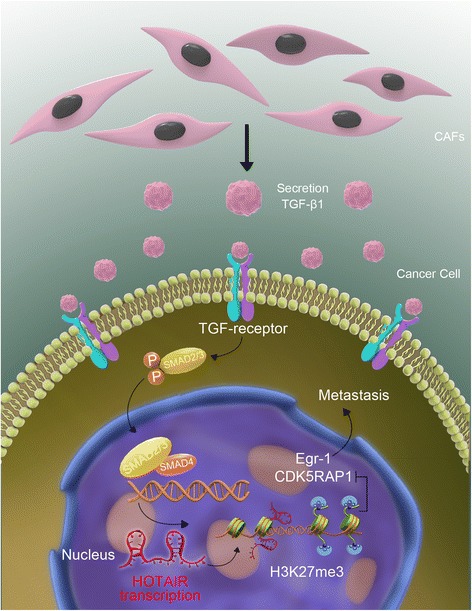
“Similarly, CAFs-secreted TGF-β1 induces the transcription of lncRNA HOTAIR to promote EMT and metastasis in breast cancer cells (94).”
BackgroundThe HOTAIR lncRNA: A remarkable oncogenic promoter in human cancer metastasis (Review)
Chen, L., Qian, X., Wang, Z., & Zhou, X. (2021) · Oncology Letters · doi:10.3892/ol.2021.12563 · Cited by 55
“Secretion of TGF‐β1 by CAF activates the TGF‐β1/Smad pathway in breast cancer cells, increasing HOTAIR transcription and modifying histones in the CDK5 signalling pathway, which leads to changes in the tumour microenvironment (35).”
BackgroundSelf-citationPerez-Penco, M., Weis-Banke, S. E., Schina, A., Siersbæk, M. S., Hübbe, M. L., Jørgensen, M. A., Lecoq, I., de la Torre, L. L., Bendtsen, S. K., Martinenaite, E., et al. (2022) · Journal for ImmunoTherapy of Cancer · doi:10.1136/jitc-2022-005491 · Cited by 50
“In this group, bigger lymph nodes correlated with higher expression of Cd3e (figure 2I).”
HOTAIR in cancer: diagnostic, prognostic, and therapeutic perspectives
Nazari, M., Babakhanzadeh, E., Mollazadeh, A., Ahmadzade, M., Mohammadisoleimani, E., & Hajimaqsoudi, E. (2024) · Cancer Cell International · doi:10.1186/s12935-024-03612-x · Cited by 61
Adjuvant Novel Nanocarrier-Based Targeted Therapy for Lung Cancer
Sarma, K., Akhter, M. H., Ahmad, I. S., Afzal, O., Altamimi, A. S. A., Alossaimi, M. A., Jaremko, M., Emwas, A.-H. M., & Gautam, P. (2024) · Molecules · doi:10.3390/molecules29051076 · Cited by 48
The Role of CDK5 in Tumours and Tumour Microenvironments
Do, P. A., & Lee, C. H. (2020) · Cancers · doi:10.3390/cancers13010101 · Cited by 56
Li, Y., Wang, L., Ma, W., Wu, J., Wu, Q., & Sun, C. (2025) · Journal of Translational Medicine · doi:10.1186/s12967-025-06744-4 · Cited by 58
Raziq, K., Cai, M., Dong, K., Wang, P., Afrifa, J., & Fu, S. (2020) · Biomedicine & Pharmacotherapy · doi:10.1016/j.biopha.2020.110570 · Cited by 51
The lncRNA HOTAIR: a pleiotropic regulator of epithelial cell plasticity
Amicone, L., Marchetti, A., & Cicchini, C. (2023) · Journal of Experimental & Clinical Cancer Research · doi:10.1186/s13046-023-02725-x · Cited by 49
Price, R. L., Bhan, A., & Mandal, S. S. (2021) · DNA repair · doi:10.1016/j.dnarep.2021.103141 · Cited by 50
Yuan, J. X., Li, Y., Zhang, H., Beeraka, N. M., Zhang, D., Wang, Q., Wang, M., Hemanth Vikram, P. R., Sethi, G., & Wang, G. (2024) · Biomedicine & Pharmacotherapy · doi:10.1016/j.biopha.2024.117714 · Cited by 52
RetractedChen, D., Lu, T., Tan, J., Li, H. R., Wang, Q., & Wei, L.-Z. (2019) · Frontiers in Oncology · doi:10.3389/fonc.2019.00739 · Cited by 43
Es, H. A., Zhand, S., Thiery, J. P., & Warkiani, M. E. (2020) · Integrative Biology · doi:10.1093/intbio/zyaa014 · Cited by 46
“CAFs in pancreatic cancer [18] and BC [45].”
BackgroundHaga, K., Yamazaki, M., Maruyama, S., Kawaharada, M., Suzuki, A., Hoshikawa, E., Chan, N. N., Funayama, A., Mikami, T., Kobayashi, T., et al. (2021) · Translational Oncology · doi:10.1016/j.tranon.2021.101236 · Cited by 47
The Roles of ceRNAs-Mediated Autophagy in Cancer Chemoresistance and Metastasis
Zhang, H., & Lü, B. (2020) · Cancers · doi:10.3390/cancers12102926 · Cited by 41
Jin, Y., Bian, S., Wang, H., Mo, J., He, F., Li, L., Chen, T., & Jiang, H. (2022) · Cell Death and Disease · doi:10.1038/s41419-022-05129-5 · Cited by 45
“Cancerassociated fibroblasts (CAFs), the predominant stromal cells of TME, modulate tumor progression by secreting various proinflammatory cytokines (IL-6 [8], IL-8 [8], TGF-β [9], hepatocyte growth factor (HGF) [10], vascular cell adhesion molecules-1 (VCAM-1) [11], and chemokines (CXCL12, CXCL14, CXCL1) [12–14].”
BackgroundNotch Signaling and the Breast Cancer Microenvironment
Shen, Q., & Reedijk, M. (2020) · Advances in experimental medicine and biology · doi:10.1007/978-3-030-55031-8_12 · Cited by 44
Meng, Q., Luo, X., Chen, J., Wang, D., Chen, E., Zhang, W., Zhang, G., Zhou, W., Xu, J., & Song, Z. (2020) · Biochimica et Biophysica Acta (BBA) - Reviews on Cancer · doi:10.1016/j.bbcan.2020.188443 · Cited by 39
Crosstalk between N6-methyladenosine (m6A) modification and noncoding RNA in tumor microenvironment
Wang, D., Han, Y., Peng, L., Huang, T., He, X., Wang, J., & Ou, C. (2023) · International Journal of Biological Sciences · doi:10.7150/ijbs.79651 · Cited by 42
“CAF can also induce the transcription of long non-coding RNA (lncRNA) HOTAIR by secreting TGF-β1, thereby promoting EMT and the metastasis of breast cancer cells [15].”
BackgroundZhang, W., Wang, J., Liu, C., Li, Y., Sun, C., Wu, J., & Wu, Q. (2023) · Journal of Translational Medicine · doi:10.1186/s12967-023-04714-2 · Cited by 49
Long noncoding RNA (lncRNA) HOTAIR: Pathogenic roles and therapeutic opportunities in gastric cancer
Kong, W., Yin, G., Zheng, S., Liu, X., Zhu, A., Yu, P., Zhang, J., Shan, Y., Ying, R., & Jin, H. (2021) · Genes & Diseases · doi:10.1016/j.gendis.2021.07.006 · Cited by 37
“A novel epigenetic molecular mechanism has been described, in which TGF-b1/ CDK5/HOTAIR axis is involved in modulating EMT and the progression of tumor cells in cancer-associated fibroblasts.(42,43) Increased linc-POU3F3 could enhance regulatory T (Treg) distribution, leading to the promotion of cell proliferation by…”
BackgroundEmerging Roles of LncRNAs in the EZH2-regulated Oncogenic Network
Hao, A., Wang, Y., Stovall, D. B., Wang, Y., & Sui, G. (2021) · International Journal of Biological Sciences · doi:10.7150/ijbs.63488 · Cited by 38
“Xist Up NSCLC[93], NB[94] EZH2[93, 94] Growth[93], migration & invasion[94], metastasis[93] / larger tumor size and advanced TNM stage, shorter OS[93] BC*: breast cancer; BC#: bladder cancer; CCA: cholangiocarcinoma; ESCC: esophageal squamous cell carcinoma; GBM: glioblastoma; GC: gastric cancer; HCC: hepatocellular c…”
BackgroundSelf-citationThe prognostic potential of CDX2 in colorectal cancer: Harmonizing biology and clinical practice
Badia-Ramentol, J., Gimeno-Valiente, F., Duréndez-Saéz, E., Martínez‐Ciarpaglini, C., Linares, J., Iglesias, M., Cervantes, A. M. R., Calon, A., & Tarazona, N. (2023) · Cancer Treatment Reviews · doi:10.1016/j.ctrv.2023.102643 · Cited by 43
“For instance, two independent publications demonstrate how breast and prostate cancer cells enter epithelial-to-mesenchymal transition through CAFs-induced promoter methylation [140,141].”
Duan, Y., Zhou, M., Ye, B., Yue, K., Qiao, F., Wang, Y., Lai, Q., Wu, Y., Cao, J., Wu, Y., et al. (2024) · Cell Death and Disease · doi:10.1038/s41419-024-06587-9 · Cited by 41
Self-citationRole of noncoding RNAs and untranslated regions in cancer: A review
Zhang, Y., Yang, M.-W., Yang, S., & Hong, F. (2022) · Medicine · doi:10.1097/md.0000000000030045 · Cited by 39
Li, J., Peng, J., Wang, J., & Chen, Z. (2025) · Med Research · doi:10.1002/mdr2.70022 · Cited by 62
Zhao, L., Jiang, L., Zhang, M., Qiang, Z., Guan, Q., Li, Y., He, M., Zhang, J., & Wei, M. (2021) · Oncogene · doi:10.1038/s41388-021-01900-8 · Cited by 33
“Further, several lncRNAs such as HOTAIR [3], lncRNA-ATB [4], and PTAR [5], have been reported to modulate tumor metastasis.”
BackgroundAhn, Y., & Kim, J. S. (2020) · International Journal of Molecular Sciences · doi:10.3390/ijms21207484 · Cited by 37
“HOTAIR, in turn, activates the EMT, migration, and invasion of breast cancer cells by the epigenetic suppression of EGR1 and CDK5RAP1 promoters.”
BackgroundInfluentialYe, B., Duan, Y., Zhou, M., Wang, Y., Lai, Q., Yue, K., Cao, J., Wu, Y., Wang, X., & Jing, C. (2023) · Cellular Signalling · doi:10.1016/j.cellsig.2023.110725 · Cited by 32
Self-citationAhuja, S., & Zaheer, S. (2023) · Cell Biology International · doi:10.1002/cbin.12097 · Cited by 37
“…site and promoting metastasis of breast cancer cell lines, treatment with small ‐ molecule inhibitors of TGF ‐ β 1 attenuated the activation of HOTAIR (Ren et al., 2018). lncRNA X inactivate ‐ specific transcript (lncRNA XIST) is seen to facilitate EMT and cell invasion and metastasis induced…”
BackgroundXiao, L., Shi, X.-Y., Li, Z.-L., Li, M., Zhang, M.-M., Yan, S.-J., & Wei, Z.-L. (2021) · Journal of Gynecologic Oncology · doi:10.3802/jgo.2021.32.e77 · Cited by 33
Jin, L., Pan, Y., Zhang, J., & Cao, P.-G. (2021) · Translational Oncology · doi:10.1016/j.tranon.2021.101036 · Cited by 31
Wu, Y., Chen, W., Deng, J., Zhou, X., Chen, J., Yang, Z., Cao, X., Liu, J., Tan, Q., Zhou, E., et al. (2025) · Journal of Controlled Release · doi:10.1016/j.jconrel.2025.113998 · Cited by 43
Self-citationCancer metastasis under the magnifying glass of epigenetics and epitranscriptomics
Janin, M., Dávalos, V., & Esteller, M. (2023) · Cancer and Metastasis Reviews · doi:10.1007/s10555-023-10120-3 · Cited by 35
“Furthermore, epigenetic changes also impact the TME, including immune cells and stromal cells like CAFs, which can promote or suppress metastasis [188, 389, 390].”
BackgroundTang, Q., Zheng, F., Liu, Z., Wu, J., Chai, X., He, C., Li, L., & Hann, S. S. (2019) · Journal of Cellular and Molecular Medicine · doi:10.1111/jcmm.14649 · Cited by 28
Metadata
- Authors
- Ren, Y., Jia, H.-H., Xu, Y.-Q., Zhou, X., Zhao, X.-H., Wang, Y.-F., Song, X., Zhu, Z.-Y., Sun, T., Dou, Y., Tian, W.-P., Zhao, X.-L., Kang, C.-S., & Mei, M.
- Affiliations
- Tianjin Medical University (CN)
- Tianjin Medical University Cancer Institute and Hospital (CN)
- Tianjin Medical University General Hospital (CN)
- Corresponding author
- Mei, Mei
- Venue
- Molecular Cancer
- Published
- 2018-01-11
- Volume
- 17
- Issue
- 1
- Pages
- 5-5
- ISSN
- 1476-4598 (ISSN-L)
- PMC
- PMC5765658
- OpenAlex
- W2783018806
- Cited by
- 217
- References
- 40
- Citations by year
- 2026: 17 · 2025: 14 · 2024: 38 · 2023: 33 · 2022: 21 · 2021: 35 · 2020: 32 · 2019: 18 · 2018: 9
- FWCI
- 8.36
- Type
- journal article
- Language
- en
- Open access
- gold
- doi.org
- Licence
- cc-by
- Locations
- Molecular Cancer (publishedVersion, cc-by)
- PubMed Central (publishedVersion, cc-by)
- PubMed (publishedVersion)
- DOAJ (DOAJ: Directory of Open Access Journals) (submittedVersion)
- Funders
- National Natural Science Foundation of China (81673026, 81572492)
- Committee of Tianjin Science and Technology (16JCZDJC34800)
- Topics
- Life Sciences › Biochemistry, Genetics and Molecular Biology › Molecular Biology › TGF-β signaling in diseases
- Life Sciences › Biochemistry, Genetics and Molecular Biology › Cancer Research › Cancer-related molecular mechanisms research
- Health Sciences › Medicine › Oncology › Cancer Cells and Metastasis
- Keywords
- cancer-associated fibroblasts, HOTAIR, TGF-β1, breast cancer metastasis, epithelial-mesenchymal transition, paracrine signaling, long non-coding RNA, H3K27me3, tumor microenvironment, lung metastasis
- MeSH terms
- Cancer-Associated Fibroblasts, Animals, Cell Movement, Humans, Neoplasm Metastasis, Neoplasms, Prognosis, Transcription, Genetic, Signal Transduction, Gene Expression Regulation, Neoplastic, Paracrine Communication, Epigenesis, Genetic, Cell Line, Tumor, Cyclin-Dependent Kinase 5, Mice, Smad Proteins, Transforming Growth Factor beta1, Gene Knockdown Techniques, Epithelial-Mesenchymal Transition, RNA, Long Noncoding
About these checks
Registry, retraction, Cites and statistics results are computed, not judged, with one exception: a printed reference that no index lists is read once by a model before it counts as a citation error. Claims are extracted by a model and kept only when their quote appears verbatim in the text; each cited source is then checked, with a model’s help, for whether it says what the claim relies on. Those verdicts can be wrong — read the claim’s quote and the cited source before relying on one.
Statistics and arithmetic are recomputed, not judged.
Confidence bands are shown only for fields calibrated on our annotated test set. None is calibrated yet, so no band is shown.
What counts as a claim ›How we measure confidence ›How we check this ›
Are you an author, or do you see a problem with this page? Request a review
Data sources
Bibliographic data: Semantic Scholar, OpenAlex, Crossref.
Contains information from the Semantic Scholar Academic Graph Datasets, made available under the ODC Attribution License (ODC-BY 1.0).
Semantic Scholar’s data is described in: Kinney, R., et al. (2023). The Semantic Scholar Open Data Platform. arXiv:2301.10140.
