

The DOI matches its Crossref record; 272 of the 272 references it cites were found in a registry or an index.
Role of Bruton’s tyrosine kinase in B cells and malignancies
Open accessAbstract
Bruton’s tyrosine kinase (BTK) is a non-receptor kinase that plays a crucial role in oncogenic signaling that is critical for proliferation and survival of leukemic cells in many B cell malignancies. BTK was initially shown to be defective in the primary immunodeficiency X-linked agammaglobulinemia (XLA) and is essential both for B cell development and function of mature B cells. Shortly after its discovery, BTK was placed in the signal transduction pathway downstream of the B cell antigen receptor (BCR). More recently, small-molecule inhibitors of this kinase have shown excellent anti-tumor activity, first in animal models and subsequently in clinical studies. In particular, the orally administered irreversible BTK inhibitor ibrutinib is associated with high response rates in patients with relapsed/refractory chronic lymphocytic leukemia (CLL) and mantle-cell lymphoma (MCL), including patients with high-risk genetic lesions. Because ibrutinib is generally well tolerated and shows durable single-agent efficacy, it was rapidly approved for first-line treatment of patients with CLL in 2016. To date, evidence is accumulating for efficacy of ibrutinib in various other B cell malignancies. BTK inhibition has molecular effects beyond its classic role in BCR signaling. These involve B cell-intrinsic signaling pathways central to cellular survival, proliferation or retention in supportive lymphoid niches. Moreover, BTK functions in several myeloid cell populations representing important components of the tumor microenvironment. As a result, there is currently a considerable interest in BTK inhibition as an anti-cancer therapy, not only in B cell malignancies but also in solid tumors. Efficacy of BTK inhibition as a single agent therapy is strong, but resistance may develop, fueling the development of combination therapies that improve clinical responses. In this review, we discuss the role of BTK in B cell differentiation and B cell malignancies and highlight the importance of BTK inhibition in cancer therapy.
Overview
The claims and statistics of this paper haven’t been checked yet.
Run the check — free, no account needed. It reads the open-access text and checks the sources it cites.
Integrity signals
Registry
Cites
Statistics
Figures
Verification
Claims the paper makes
The claims and statistics of this paper haven’t been checked yet.
Run the check — free, no account needed. It reads the open-access text and checks the sources it cites.
Claims other papers make about this one
Each is checked against this paper’s own text: does it say what the citing paper says it does?
The source backs part of the claim, not all of it — or backs it for a different population, condition or comparison.
In the citing paper
“Bruton tyrosine kinase (BTK) is a non-receptor tyrosine kinase that amplifiesupstream B-cell receptor (BCR) signaling and is essential for B-cell development and maturation(1, 2).”
From Resistance Mechanisms and Approach to Chronic Lymphocytic Leukemia after BTK Inhibitor Therapy (2025) · cites this paper as [1]
Experimental — accuracy not yet measuredIn the citing paper
“BTK became a target of interest in chronic lymphocytic leukaemia owing to its crucial role downstream of the B cell receptor53.”
From Advances in covalent drug discovery (2022) · cites this paper as [53]
Self-check
Percentages, sums and reported differences re-computed from the paper’s own numbers.
The self-check needs the paper’s full text.
Citations
Cites
1 retracted
Gray, P., Dunne, A., Brikos, C., Jefferies, C. A., Doyle, S., & O'Neill, L. A. J. (2006) · Journal of Biological Chemistry · doi:10.1074/jbc.m508892200 · Cited by 201
RetractedHallmarks of Cancer: The Next Generation
Hanahan, D., & Weinberg, R. A. (2011) · Cell · doi:10.1016/j.cell.2011.02.013 · Cited by 66,590
Distinct types of diffuse large B-cell lymphoma identified by gene expression profiling
Alizadeh, A. A., Eisen, M. B., Davis, R. E., Ma, C., Lossos, I. S., Rosenwald, A., Boldrick, J. C., Sabet, H., Tran, T., Yu, X., et al. (2000) · Nature · doi:10.1038/35000501 · Cited by 9,925
Mizgerd, J. P., Kubo, H., Kutkoski, G. J., Bhagwan, S. D., Scharffetter-Kochanek, K., Beaudet, A. L., & Doerschuk, C. M. (1997) · The Journal of Experimental Medicine · doi:10.1084/jem.186.8.1357 · Cited by 7,332
Tumour-associated macrophages as treatment targets in oncology
Mantovani, A., Marchesi, F., Malesci, A., Laghi, L., & Allavena, P. (2017) · Nature Reviews Clinical Oncology · doi:10.1038/nrclinonc.2016.217 · Cited by 4,182
Tumor-Associated Macrophages: From Mechanisms to Therapy
Noy, R., & Pollard, J. W. (2014) · Immunity · doi:10.1016/j.immuni.2014.06.010 · Cited by 4,089
AKT/PKB Signaling: Navigating the Network
Manning, B. D., & Toker, A. (2017) · Cell · doi:10.1016/j.cell.2017.04.001 · Cited by 3,772
Fcγ receptors as regulators of immune responses
Nimmerjahn, F., & Ravetch, J. V. (2008) · Nature Reviews Immunology · doi:10.1038/nri2206 · Cited by 2,947
Damle, R. N., Wasil, T., Fais, F., Ghiotto, F., Valetto, A., Allen, S. L., Buchbinder, A., Budman, D. R., Dittmar, K., Kolitz, J. E., et al. (1999) · Blood · doi:10.1182/blood.v94.6.1840 · Cited by 2,634
Targeting BTK with Ibrutinib in Relapsed Chronic Lymphocytic Leukemia
Byrd, J. C., Furman, R. R., Coutre, S. E., Flinn, I. W., Burger, J. A., Blum, K. A., Grant, B., Sharman, J. P., Coleman, M., Wierda, W. G., et al. (2013) · New England Journal of Medicine · doi:10.1056/nejmoa1215637 · Cited by 2,270
Cited by
Sorted by citations
Items 301–400 of 742
Ran, F., Xie, X., Wu, Q., Wu, H., Liu, Y., Tao, W., Sun, Y. P., Wang, R., Zhang, Y., & Ling, Y. (2022) · European Journal of Medicinal Chemistry · doi:10.1016/j.ejmech.2022.114913 · Cited by 12
Bruton’s tyrosine kinase as a promising therapeutic target for multiple sclerosis
Saberi, D., Geladaris, A., Dybowski, S., & Weber, M. S. (2023) · Expert Opinion on Therapeutic Targets · doi:10.1080/14728222.2023.2218615 · Cited by 12
Loss of BTK ameliorates the pathological cardiac fibrosis and dysfunction
Wang, B., Tan, Y. C., Zhou, W., Yang, J., Jiang, Y., Liu, X., & Zhan, Z. (2022) · Matrix Biology · doi:10.1016/j.matbio.2022.08.010 · Cited by 12
Managing Ibrutinib-Intolerant Patients With B-Cell Malignancies
Munoz, J. L., Sarosiek, S., & Castillo, J. J. (2023) · The Oncologist · doi:10.1093/oncolo/oyac260 · Cited by 12
“1): (1) manage ibrutinib side effects via supportive care or dose reductions; (2) switch patients to another covalent BTK inhibitor; or (3) abandon covalent BTK inhibitors for an alternate treatment option.”
BackgroundThe role of Bruton’s tyrosine kinase inhibitors in the management of mantle cell lymphoma
Hanna, K. S., Campbell, M., Husak, A., & Sturm, S. (2020) · Journal of Oncology Pharmacy Practice · doi:10.1177/1078155220915956 · Cited by 12
“BTK is crucial to the retention of MCL cells in lymphoid tissues as BTK inhibition is known to induce migration of malignant cells into the peripheral blood.(19) Treatment selection with a BTK inhibitor for MCL is often dictated by time to relapse, comorbidities, and ability to adhere to oral therapies.”
BackgroundMantle cell lymphoma treatment options for elderly/unfit patients: A systematic review
Alnassfan, T., Cox‐Pridmore, M. J., Taktak, A. F. G., & Till, K. J. (2021) · eJHaem · doi:10.1002/jha2.311 · Cited by 12
“The most frequent second-line option is to target the BCR pathway with ibrutinib, a Bruton’s tyrosine kinase (BTK) inhibitor (Figure 1 [20, 8]).”
BackgroundGirard, J., Reneau, J. C., Devata, S., Wilcox, R. A., Kaminski, M. S., Mercer, J., Carty, S. A., & Phillips, T. J. (2019) · OncoTargets and Therapy · doi:10.2147/ott.s155778 · Cited by 12
Najmi, A., Thangavel, N., Mohanan, A. T., Qadri, M. M., Albratty, M., Ashraf, S. E., Saleh, S. F., Nayeem, M., & Mohan, S. (2023) · Pharmaceuticals · doi:10.3390/ph16030400 · Cited by 11
“BTK activity in B-cell differentiation, proliferation, and survival also applies to the microenvironment of B-cell lymphomas [28].”
BackgroundZhang, Q., Wen, C., Zhao, L., & Wang, Y. (2023) · Molecules · doi:10.3390/molecules28248037 · Cited by 11
“BTK plays a crucial role as an essential enzyme in the signaling pathway of BCR activation [1–3].”
BackgroundBarragan, A. M., Ghaby, K., Pond, M. P., & Roux, B. (2024) · Journal of Chemical Information and Modeling · doi:10.1021/acs.jcim.4c00023 · Cited by 10
Pharmacology of drugs used in autoimmune dermatopathies in cats and dogs: A narrative review
Tham, H. L., & Davis, J. L. (2024) · Veterinary Dermatology · doi:10.1111/vde.13253 · Cited by 11
FragGrow: A Web Server for Structure-Based Drug Design by Fragment Growing within Constraints
Zhang, Y., Zhang, Z., Ke, D., Pan, X., Wang, X., Xiao, X., & Ji, C. (2024) · Journal of Chemical Information and Modeling · doi:10.1021/acs.jcim.4c00154 · Cited by 11
Moraru, R., Valle‐Argos, B., Minton, A. R., Buermann, L. E., Pan, S., Wales, T. E., Joseph, R. E., Andreotti, A. H., Strefford, J. C., Packham, G., et al. (2024) · Journal of Medicinal Chemistry · doi:10.1021/acs.jmedchem.3c01927 · Cited by 12
Investigational drugs for immune thrombocytopenia
Provan, D., & Newland, A. C. (2022) · Expert Opinion on Investigational Drugs · doi:10.1080/13543784.2022.2075340 · Cited by 11
“Cross-linking BTK activates four families of non-receptor protein kinases all of which are transducers of signaling events including phospholipase Cγ(PLCγ), mitogen-activated protein kinase (MAPK), nuclear factor kappa light chain enhancer of activated B cells (NFκB) and activator of serine/threonine AKT (protein kina…”
BackgroundTyrosine kinases in nodal peripheral T-cell lymphomas
Piccaluga, P. P., Cascianelli, C., & Inghirami, G. (2023) · Frontiers in Oncology · doi:10.3389/fonc.2023.1099943 · Cited by 11
“More recently, BTK inhibitors have become the standard treatment for B-cell malignancies such as mantle cell lymphoma and chronic lymphocytic leukemia (8, 9).”
BackgroundZheng, Y., Xu, L., Cao, C., Feng, J., Tang, H., Shu, M.-M., Gao, G., & Chen, X. (2019) · OncoTargets and Therapy · doi:10.2147/ott.s191179 · Cited by 11
Zhang, P., Solari, F. A., Heemskerk, J. W. M., Kuijpers, M. J. E., Sickmann, A., Walter, U., & Jurk, K. (2023) · International Journal of Molecular Sciences · doi:10.3390/ijms24097776 · Cited by 10
“In B cells, the signaling via SFKs, Syk and Btk affects a diverse set of downstream effector proteins, including PLCγ, PKC, PKA, Akt and mitogenactivated protein kinases (MAPKs), as well as several transcription factors [13,14].”
BackgroundInfluentialBruton’s tyrosine kinase is a possible therapeutic target in microscopic polyangiitis
Nakade, I., Tamura, Y., Hashimoto, F., Ariza, Y., Hotta, S., Fujigaya, H., Arai, S., Taniguchi, M., Ogawa, H., Nishibata, Y., et al. (2023) · Arthritis Research & Therapy · doi:10.1186/s13075-023-03201-9 · Cited by 10
“According to the involvement of Btk in BCR signaling that yields B lymphocyte differentiation into antibody-producing plasma cells [1], it was expected that MPO-ANCA production would be decreased by tirabru-tinib.”
BackgroundInfluentialBruton’s tyrosine kinase: A promising target for treating systemic lupus erythematosus
Ding, Q., Zhou, Y., Feng, Y., Sun, L., & Zhang, T. (2024) · International Immunopharmacology · doi:10.1016/j.intimp.2024.113040 · Cited by 10
Characterization of ibrutinib as a non-covalent inhibitor of SRC-family kinases
Guo, M., Dai, S., Wu, D., Duan, Y., Li, ., Qu, L., Jiang, L., Chen, Z., Chen, X., & Chen, Y. (2020) · Bioorganic & Medicinal Chemistry Letters · doi:10.1016/j.bmcl.2020.127757 · Cited by 10
Tonooka, A., & Ohashi, R. (2021) · Journal of Nippon Medical School · doi:10.1272/jnms.jnms.2022_89-221 · Cited by 10
Rahmati, A., Mafi, A., Vakili, O., Soleymani, F., Alishahi, Z., Yahyazadeh, S., Gholinezhad, Y., Rezaee, M., Johnston, T. P., & Sahebkar, A. (2023) · Annals of Hematology · doi:10.1007/s00277-023-05383-3 · Cited by 10
“…it has been shown that the rapidly accelerated fibrosarcoma (RAF) kinase/mitogen-activated protein kinase (MEK)/extracellular signal-regulated kinase (ERK) axis can potentially worsen imatinib resistance in CML cells via the upregulation of PKC, together with the subsequent activation of CRAF [96].”
Overcoming immune checkpoint blockade resistance in solid tumors with intermittent ITK inhibition
Zhao, M., Li, L., Kiernan, C. H., Eiro, M. D. C., Dammeijer, F. F., van Meurs, M., Brouwers-Haspels, I., Wilmsen, M. E. P., Grashof, D. G. B., van de Werken, H. J. G., et al. (2023) · Scientific Reports · doi:10.1038/s41598-023-42871-y · Cited by 10
Self-citationEstupiñan, H. Y., Bouderlique, T., He, C., Berglöf, A., Cappelleri, A., Frengen, N. S., Zain, R., Karlsson, M. C. I., Månsson, R., & Rjh, S. (2024) · Blood Advances · doi:10.1182/bloodadvances.2024012706 · Cited by 10
Sun, B., Liu, X., Zheng, X., Wang, C., Meng, Q., Sun, H., Shu, X. H., Liu, K., Sun, X., Li, Y., et al. (2019) · ChemMedChem · doi:10.1002/cmdc.201900606 · Cited by 10
Wang, K., Xu, Q., & Zhong, H. (2021) · Frontiers in Pharmacology · doi:10.3389/fphar.2020.625498 · Cited by 10
The New Treatment Methods for Non-Hodgkin Lymphoma in Pediatric Patients
Derebas, J., Panuciak, K., Margas, M., Zawitkowska, J., & Lejman, M. (2022) · Cancers · doi:10.3390/cancers14061569 · Cited by 11
Low-Dose JAK3 Inhibition Improves Antitumor T-Cell Immunity and Immunotherapy Efficacy
Dammeijer, F. F., van Gulijk, M., Klaase, L., van Nimwegen, M., Bouzid, R., Hoogenboom, R., Joosse, M. E., Hendriks, R. W., van Hall, T., & Aerts, J. G. J. V. (2022) · Molecular Cancer Therapeutics · doi:10.1158/1535-7163.mct-21-0943 · Cited by 10
Self-citationSingh, S. P., de Bruijn, M. J. W., de Almeida, M. P., Meijers, R. W. J., Nitschke, L., Langerak, A. W., Pillai, S. Y., Stadhouders, R., & Hendriks, R. W. (2018) · Frontiers in Immunology · doi:10.3389/fimmu.2018.01996 · Cited by 10
“CLL cells show constitutive activation of several BCR downstream kinases, increasing leukemic cell survival in vitro (6).”
BackgroundSelf-citationMuqbil, I., Chaker, M., Aboukameel, A., Mohammad, R. M., Azmi, A. S., & Ramchandren, R. (2019) · Heliyon · doi:10.1016/j.heliyon.2019.e02290 · Cited by 10
Important players in carcinogenesis as potential targets in cancer therapy: an update
Hermanowicz, J. M., Kwiatkowska, I., & Pawlak, D. (2020) · Oncotarget · doi:10.18632/oncotarget.27689 · Cited by 9
Robak, T., Witkowska, M., Wolska, A., & Robak, P. J. (2024) · Expert Review of Hematology · doi:10.1080/17474086.2024.2410003 · Cited by 9
“Bruton’s tyrosine kinase is cytoplasmic non-receptor tyrosine kinase that belongs to the TEC-family of kinases [17].”
Gao, Y., Li, S., Dang, Y., Duan, M., Zhang, L., & Li, J. (2024) · British Journal of Haematology · doi:10.1111/bjh.19827 · Cited by 9
Liu, Y., Zhang, R., Qiu, N., Wang, S., Chen, J., Xu, X., Xiang, J., & Shen, Y. (2024) · Advanced Functional Materials · doi:10.1002/adfm.202417101 · Cited by 9
Bruton Tyrosine Kinase Degraders
Sabakhtarishvili, G., Alshebli, M., Bajwa, O. A., & Tabbara, I. A. (2025) · American Journal of Clinical Oncology · doi:10.1097/coc.0000000000001170 · Cited by 9
Ouerdani, A., Valenzuela, B., Treijtel, N., Haddish‐Berhane, N., Desphande, S., Srinivasan, S. S., Smith, E., & Ruixo, J. J. P. (2025) · Cancer Chemotherapy and Pharmacology · doi:10.1007/s00280-025-04753-0 · Cited by 9
“In the absence of BTK, BCR signaling is insuf - ficient to induce B cell differentiation into mature peripheral B cells [ 7 ].”
Collins, G. P., Clevenger, T. N., Burke, K. A., Buyue, Y., MacDonald, A., Cunningham, D., Fox, C. P., Goy, A. H., Gribben, J. G., Nowakowski, G. S., et al. (2021) · Leukemia & lymphoma/Leukemia and lymphoma · doi:10.1080/10428194.2021.1938027 · Cited by 9
“critical for B-cell development, including proliferation, maturation, differentiation, migration, and apoptosis [7].”
BackgroundRip, J., de Bruijn, M. J. W., Neys, S. F. H., Singh, S. P., Willar, J., van Hulst, J. A. C., Hendriks, R. W., & Corneth, O. B. J. (2021) · European Journal of Immunology · doi:10.1002/eji.202048968 · Cited by 9
Self-citationOverview of human B-cell development and antibody deficiencies.
Nandiwada, S. L. (2023) · JIM - Journal of Immunological Methods · doi:10.1016/j.jim.2023.113485 · Cited by 8
Ibrutinib: A narrative drug review
Mehra, N., Bagal, B. P., Munot, P., & Mirgh, S. P. (2020) · Cancer Research Statistics and Treatment · doi:10.4103/crst.crst_234_20 · Cited by 9
Ramuthai, M., Jeyavijayan, S., & Jayram, N. D. (2021) · Polycyclic aromatic compounds · doi:10.1080/10406638.2021.1994430 · Cited by 9
Structure-based virtual screening and biological evaluation of novel small-molecule BTK inhibitors
Lin, T. E., Sung, L., Chao, M., Li, M., Zheng, J.-H., Sung, T.-Y., Hsieh, J., Yang, C., Lee, H., Cho, E.-C., et al. (2021) · Journal of Enzyme Inhibition and Medicinal Chemistry · doi:10.1080/14756366.2021.1999237 · Cited by 9
Daniel, A., Ghez, D., Ravaiau, C., Cavalieri, D., Tournilhac, O., Herbaux, C., Roriz, M., Wémeau, M., Guillet, S., Bossard, J., et al. (2022) · European Journal Of Haematology · doi:10.1111/ejh.13858 · Cited by 9
Elbezanti, W. O., Al‐Odat, O. S., Chitren, R. J., Singh, J. K., Srivastava, S. K., Gowda, K., Amin, S., Robertson, G. P., Nemmara, V. V., Jonnalagadda, S. C., et al. (2022) · Frontiers in Pharmacology · doi:10.3389/fphar.2022.894535 · Cited by 9
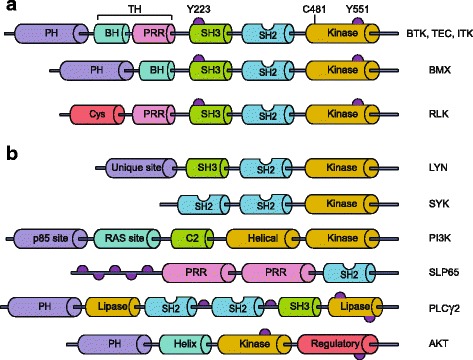
“It is composed of five domains:1) the amino terminal pleckstrin homology (PH) domain, 2) the proline-rich Tec homology (TH) domain, the Src domains 3) SH3, 4) SH2 domain, and 5) the kinase domain (SH1) which is responsible for the catalytic activity [19] (Figure 1A).”
BackgroundCorrection to: Role of Bruton’s tyrosine kinase in B cells and malignancies
Singh, S. P., Dammeijer, F. F., & Hendriks, R. W. (2019) · Molecular Cancer · doi:10.1186/s12943-019-1009-z · Cited by 9
Self-citationYan, S., Xu, W., Fang, N., Li, L., Yang, N., Zhao, X., Hao, H., Zhang, Y., Liang, Q., Wang, Z., et al. (2024) · iScience · doi:10.1016/j.isci.2024.108926 · Cited by 8
“1 4 A retrospective study revealed that new-onset AF in patients with cancer is associated with an elevated risk of thromboembolism and heart failure, even after adjusting for known risk factors.”
BackgroundLiu, Y., Yu, S., Chen, Y., Hú, Z., Fan, L., & Liang, G. (2024) · Frontiers in Pharmacology · doi:10.3389/fphar.2024.1376955 · Cited by 8
“So far, FDA-approved CAR cell medications are CAR-T cells targeting CD19, including idecabtagene vicleucel for MM, lisocabtagene maraleucel for large B-cell lymphoma, tisagenlecleucel for ALL and large B-cell lymphoma, brexucabtagene autoleucel for MCL, and axicabtagene ciloleucel for FL and large B-cell lymphoma.”
InfluentialCook, J. A., Patten, P., Peckham, N., Moss, P. A. H., Phillips, N., Abhishek, A., Roberts, T., Hodges, M., Talbot, G., Barber, V. S., et al. (2025) · The Lancet Haematology · doi:10.1016/s2352-3026(25)00008-0 · Cited by 8
Ikhtiar, F., Jamal, A., & Bokhari, S. M. S. M. (2025) · Discover Oncology · doi:10.1007/s12672-025-03535-7 · Cited by 10
Buffard, M., Naldi, A., Freiss, G., Deckert, M., Radulescu, O., Coopman, P. J., & Larive, R. M. (2021) · Biomolecules · doi:10.3390/biom11020308 · Cited by 8
“Amongst the DG75 cell-specific SYK targets identified in the B-cell receptor signaling pathway, the Bruton’s tyrosine kinase (BTK) protein tyrosine kinase is essential for B-lymphocyte development, differentiation and signaling [31].”
BackgroundComing of Age for BTK Inhibitor Therapy: A Review of Zanubrutinib in Waldenström Macroglobulinemia
Munoz, J. L., Paludo, J., Sarosiek, S., & Castillo, J. J. (2022) · Cells · doi:10.3390/cells11203287 · Cited by 8
“BTK is involved in the signaling cascade for B-cell malignancies downstream of the B-cell antigen receptor and is essential for the development and function of B cells [19].”
BackgroundThe Immunomodulatory Functions of BTK Inhibition in the Central Nervous System
Cao, T., Wang, Z., & Zhu, X. (2022) · Journal of Inflammation Research · doi:10.2147/jir.s389958 · Cited by 9
Zhang, Y., Lu, P., Jin, S., Zhang, J., & Zhou, Y. (2023) · International Journal of Medical Sciences · doi:10.7150/ijms.80467 · Cited by 8
“As targeted therapy of cancer has matured, many targeted drugs have emerged, among which Ibrutinib is applied to act as a suppressor of Bruton's tyrosine kinase [5].”
BackgroundKoraboina, C. P., Maddipati, V. C., Annadurai, N., Gurská, S., Džubák, P., Hajdúch, M., Das, V., & Gundla, R. (2023) · ChemMedChem · doi:10.1002/cmdc.202300511 · Cited by 9
Han, F., Shi, X., Liao, T., Zhang, W., Ma, M., Leng, Q., Jiang, W., Na, N., Miao, Y., & Huang, Z. (2024) · Clinical Immunology · doi:10.1016/j.clim.2024.109941 · Cited by 8
Yan, X. (2024) · Atomic Spectroscopy · doi:10.46770/as.2024.078 · Cited by 8
BTK induces CAM-DR through regulation of CXCR4 degradation in multiple myeloma.
Wang, W., Wei, R., Liu, S., Qiao, L., Hou, J., Gu, C., & Yang, Y. (2019) · PubMed Central · Cited by 8
Immunotherapy‐based combination strategies for advanced urothelial cancer: A long quest
Khaki, A. R., Agarwal, N., Pal, S. K., & Grivas, P. D. (2020) · Cancer · doi:10.1002/cncr.33068 · Cited by 8
“BTK also plays a role in the activation of other inflammatory cells (mast cells, myeloid cells, etc) in the tumor microenvironment to facilitate tumor growth and proliferation.(10) Based on the above compelling data, Zhang et al(3) hypothesized that concurrent PD-1 and BTK inhibition would have an additive or synergis…”
BackgroundChemoproteomic Profiling of an Ibrutinib Analogue Reveals its Unexpected Role in DNA Damage Repair
Ye, Z., Wang, Y., Wu, H. Y., Song, T., Li, X., Liu, Q., & Wang, C. (2020) · ChemBioChem · doi:10.1002/cbic.202000527 · Cited by 8
Low-dose Btk inhibitors: an ‘aspirin’ of tomorrow?
Payrastre, B., & Ribes, A. M. (2021) · Haematologica · doi:10.3324/haematol.2020.265173 · Cited by 8
“In the long-term, daily intake of this drug has remarkable activity on these malignant blood disorders.(1) There are, however, some side effects, including skin rashes, atrial fibrillation, hypertension, and increased risk of bleeding, in about 40% of treated patients.”
BackgroundDuś‐Szachniewicz, K., Rymkiewicz, G., Agrawal, A. K., Kołodziej, P., & Wiśniewski, J. R. (2021) · Cancers · doi:10.3390/cancers13040630 · Cited by 7
“Furthermore, BTK is involved in activating Fc-receptors, thus the upregulation of BTK results in the upregulation of Fc epsilon receptor (FCER) signaling [43], what was also reflected in our work by ClueGO analysis.”
ResultRen, S., Wang, X., & Jin, G. (2021) · International Journal of Biological Sciences · doi:10.7150/ijbs.64094 · Cited by 8
“BTK is also expressed by other immune cells, including myeloidderived suppressor cells (MDSCs) and tumorassociated macrophages (TAMs), and its immune regulatory effect on myeloid cells has an important impact on the tumor microenvironment (TME) [2].”
BackgroundInfluentialPatient-Specific Modeling of Diffuse Large B-Cell Lymphoma
Thobe, K., Konrath, F., Chapuy, B., & Wolf, J. (2021) · Biomedicines · doi:10.3390/biomedicines9111655 · Cited by 8
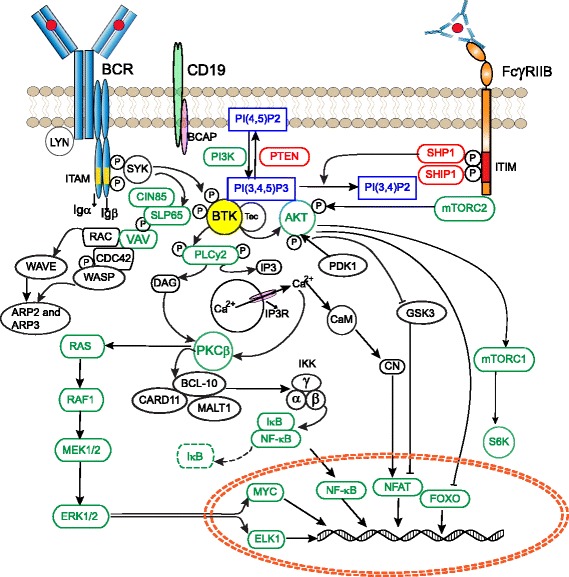
“As indicated above, BTK activates PKC β , which subsequently promotes both MAPK activation via RAS and NF-κ B signaling via a complex of CARD11, BCL10, and MALT1 (CBM) (see [44] and reference therein).”
BackgroundYe, Z., Lu, P., Zhou, Y. W., & Zhang, L. (2021) · PeerJ · doi:10.7717/peerj.12571 · Cited by 8
Rational Combinations of Targeted Therapy and Immune Checkpoint Inhibitors in Head and Neck Cancers
Chai, A. W. Y., Yee, P. S., & Cheong, S. C. (2022) · Frontiers in Oncology · doi:10.3389/fonc.2022.837835 · Cited by 8
The role of BTK inhibitors on the tumor microenvironment in CLL
McCay, J., & Gribben, J. G. (2022) · Leukemia & lymphoma/Leukemia and lymphoma · doi:10.1080/10428194.2022.2064995 · Cited by 8
Ye, B., Chen, S., Guo, H., Zheng, W., Lou, G., Liang, X., Liu, Y., Zhou, C., & Zheng, M. (2022) · The Journal of Immunology · doi:10.4049/jimmunol.2001323 · Cited by 8
Pan, G., Zhong, M., Yao, J., Tan, J., Zheng, H., Jiang, Y., Tang, Y., Zhou, H., Qin, D., Yu, X., et al. (2022) · Journal of Cancer Research and Clinical Oncology · doi:10.1007/s00432-022-04473-5 · Cited by 8
Kinase inhibitors for cancer alter metabolism, blood glucose, and insulin
Duggan, B. M., Marko, D. M., Muzaffar, R., Chan, D. Y., & Schertzer, J. D. (2022) · Journal of Endocrinology · doi:10.1530/joe-22-0212 · Cited by 8
Nucleic Acids for Potential Treatment of Rheumatoid Arthritis
Sun, P., Su, J., Wang, X., Zhou, M., Zhao, Y., & Gu, H. (2022) · ACS Applied Bio Materials · doi:10.1021/acsabm.1c01205 · Cited by 8
A Perspective on Covalent Inhibitors: Research and Development Trends of Warheads and TargetsPreprint
Chen, H., Bird, R. E., Wang, D.-S., Diaz, L. M. L., Iyer, K. A., Gustafson, G. R., Kato-Weinstein, J., & Zhou, Q. A. (2023) · ChemRxiv · doi:10.26434/chemrxiv-2023-wf79n-v2 · Cited by 8
Brady, P., Harper, K. C., Sorensen, B. K., Greszler, S. N., Lai, C., Florjancic, A. S., Zhao, G., Shelat, B. H., Storer, G. E., Henry, R. F., et al. (2024) · Organic Process Research & Development · doi:10.1021/acs.oprd.4c00077 · Cited by 7
Witek, M. A., Larkey, N. E., Bartáková, A., Hupert, M. L., Mog, S., Cronin, J. K., Vun, J., August, K. J., & Soper, S. A. (2024) · International Journal of Molecular Sciences · doi:10.3390/ijms251910619 · Cited by 7
“…a missense CD19 mutation or hemizygous deletions spanning the CD19 locus [84], were reported as the reason behind the absence of a full-length CD19 protein, as shown in Figure 5F. Downregulation of the CD19 antigen in B-ALL leukemic cells may be a signature of immunotherapy-resistant cells [85].”
BackgroundEisen, T. J., Ghaffari-Kashani, S., Hung, C., Groves, J. T., Weiss, A., & Kuriyan, J. (2025) · Science Signaling · doi:10.1126/scisignal.ado1252 · Cited by 7
Nambiar, M., Xie, Y., Ivanic, J., & Schneider, J. P. (2025) · Journal of the American Chemical Society · doi:10.1021/jacs.5c08170 · Cited by 7
Targeted Degradation of Class 1 HDACs With PROTACs is Highly Effective at Inducing DLBCL Cell Death
Alraddadi, A. M., Smalley, J. P., Alzahrani, W., Saleh, A., Al-Mansour, F. S. H., He, B., Cao, T. H., Jayne, S., Dyer, M. J. S., Hodgkinson, J. T., et al. (2025) · eJHaem · doi:10.1002/jha2.70127 · Cited by 7
White, N., Chalk, J. A., Hu, Y., Pins, S. M., Joseph, C. R., Antoniou, P., Wimberger, S., Svensson, S., Caetano-Silva, S. P., Mudde, A. C. A., et al. (2025) · Nature Communications · doi:10.1038/s41467-025-65182-4 · Cited by 7
“Similarly, we updated the title to “ Unveiling the Cut-and-Repair Cycle of Designer Nucleases in Human Stem and T Cells via CLEAR-time dPCR” to convey with more precision the core message of this manuscript.”
Ucpinar, S., Darpö, B., Neale, A. C., Nunn, P. A., Shu, J., Chu, K. A., Kavanagh, M., Xue, H., Phiasivongsa, P., Thomas, D., et al. (2022) · Clinical and Translational Science · doi:10.1111/cts.13271 · Cited by 7
Luxeptinib interferes with LYN-mediated activation of SYK and modulates BCR signaling in lymphoma
Sonowal, H., Rice, W. G., & Howell, S. B. (2023) · PLoS ONE · doi:10.1371/journal.pone.0277003 · Cited by 6
“Apart from its role in B-cell development, aberrant activation of BCR signaling drives proliferation of B-cell leukemias and lymphomas and is a target for therapy [2, 3].”
BackgroundJeong, Y., Kim, S. B., Yang, C. E., Yu, M. S., Choi, W.-S., Jeon, Y., & Lim, J.-Y. (2023) · Frontiers in Oncology · doi:10.3389/fonc.2023.1252658 · Cited by 7
Gene regulation in inborn errors of immunity: Implications for gene therapy design and efficacy
Ghanim, H. Y., & Porteus, M. H. (2024) · Immunological Reviews · doi:10.1111/imr.13305 · Cited by 7
“88,108 Some studies have demonstrated partial or complete reconstitution of B-cell function in XLA mouse models using gamma ret - roviral 101 and lentiviral 109,110 vectors.”
BackgroundChong, E. A., Kumashie, K. G., Chong, E. R., Fabrizio, J., Gupta, A., Svoboda, J., Barta, S. K., Walsh, K. M., Napier, E. B., Lundberg, R. K., et al. (2024) · The Journal of Infectious Diseases · doi:10.1093/infdis/jiae106 · Cited by 7
“In particular, B-cell–directed therapies drastically reduce B-cell numbers and function [3–6].”
BackgroundLi, L., Chai, Y., Wu, C., & Zhao, L. (2020) · Expert Review of Hematology · doi:10.1080/17474086.2020.1839885 · Cited by 7
Bruton's Tyrosine Kinase: A Promising Target for the Treatment of COVID-19.
Rezaei, M. S., Babamahmoodi, A., & Marjani, M. (2020) · PubMed Central · Cited by 7
A Case for Phosphoinositide 3-Kinase–Targeted Therapy for Infectious Disease
Olayinka‐Adefemi, F., Fruman, D. A., & Marshall, A. J. (2020) · The Journal of Immunology · doi:10.4049/jimmunol.2000599 · Cited by 8
“Phosphatidylinositol-(3,4,5)-trisphosphate and phosphatidylinositol-(3,4)-bisphosphate bind to and activate other signaling proteins, which are also drug targets, such as the tyrosine kinase Btk (17, 18), the serine-threonine kinase Akt (19), and the mammalian target of rapamycin (mTOR), a serine-threonine kinase whic…”
BackgroundRen, L., Li, L., Zhang, L., Li, X., Fu, X., Wang, X., Wu, J., Sun, Z., Feng, X., Chang, Y., et al. (2021) · Indian Journal of Hematology and Blood Transfusion · doi:10.1007/s12288-021-01433-w · Cited by 7
Determinants of Atrial Fibrillation Development among Patients undergoing Ibrutinib Therapy
Onitilo, A. A., Piwuna, T. O., Islam, N., Furuya‐Kanamori, L., Kumar, S., & Doi, S. A. R. (2022) · Clinical Medicine & Research · doi:10.3121/cmr.2021.1693 · Cited by 7
Tonooka, A., & Ohashi, R. (2022) · Institutional Repositories DataBase (IRDB) · Cited by 7
Li, K., Wang, M., Akoglu, M., Pollard, A. C., Klecker, J. B., Alfonso, P., Corrionero, A., Prendiville, N., Qü, W., Parker, M. F. L., et al. (2023) · ACS Pharmacology & Translational Science · doi:10.1021/acsptsci.2c00215 · Cited by 7
The magic of small-molecule drugs during ex vivo expansion in adoptive cell therapy
Zhang, H., Passang, T., Ravindranathan, S., Bommireddy, R., Jajja, M. R., Yang, L. P. H., Selvaraj, P., Paulos, C. M., & Waller, E. K. (2023) · Frontiers in Immunology · doi:10.3389/fimmu.2023.1154566 · Cited by 7
“BTK inhibitors (BTKi) Bruton’s tyrosine kinase (BTK) is a nonreceptor tyrosine kinase initially discovered as a critical component of B cell receptor (BCR) signal transduction in both healthy and malignant B lymphocytes (67, 68).”
BackgroundGhane, Y., Heidari, N., Heidari, A., Sadeghi, S., & Goodarzi, A. (2023) · Heliyon · doi:10.1016/j.heliyon.2023.e22912 · Cited by 7
Progress toward a Glycoprotein VI Modulator for the Treatment of Thrombosis
Foster, H., Wilson, C., Philippou, H., & Foster, R. (2020) · Journal of Medicinal Chemistry · doi:10.1021/acs.jmedchem.0c00262 · Cited by 7
An evaluation of zanubrutinib, a BTK inhibitor, for the treatment of chronic lymphocytic leukemia
Geethakumari, P. R., & Awan, F. T. (2020) · Expert Review of Hematology · doi:10.1080/17474086.2020.1817735 · Cited by 7
Cho, H., Lee, E., Kwon, H. A., Lee, S., Jeon, H.-J., Yu, J. H., Ryu, J., & Jeon, R. (2020) · International Journal of Molecular Sciences · doi:10.3390/ijms21217919 · Cited by 7
Novel synthetic drugs for the treatment of non-Hodgkin lymphoma
Manji, F., Puckrin, R., & Stewart, D. A. (2021) · Expert Opinion on Pharmacotherapy · doi:10.1080/14656566.2021.1902988 · Cited by 7
“important therapeutic target for B-cell NHL [45].”
Resistance Mechanisms and Approach to Chronic Lymphocytic Leukemia after BTK Inhibitor Therapy
Gruessner, C., Wiestner, A., & Sun, C. (2025) · Leukemia & Lymphoma · doi:10.1080/10428194.2025.2466101 · Cited by 6
“…is a non-receptor tyrosine kinase that amplifies upstream B-cell receptor (BcR) signaling and is essential for B-cell development and maturation [1,2]. in normal B cells, BtK activation leads to activation of nuclear factor kappa B (NF-κB) enabling increased B-cell survival and proliferation…”
Du, J., Chen, Z., Gu, X.-R., Wang, T., & Huang, Z. (2024) · Frontiers in Cardiovascular Medicine · doi:10.3389/fcvm.2024.1408983 · Cited by 6
Xing, Y., Zhao, K., Zhang, Y., & Wang, Y. (2024) · Frontiers in Oncology · doi:10.3389/fonc.2024.1463505 · Cited by 6
Darragh, A. C., Hanna, A. M., Lipner, J., King, A. J., Servant, N. B., & Jahic, M. (2025) · ACS Pharmacology & Translational Science · doi:10.1021/acsptsci.4c00540 · Cited by 8
Ghogare, S. S., & Pathan, E. K. (2025) · Cell Death Discovery · doi:10.1038/s41420-025-02483-z · Cited by 8
“For instance, Bruton ’ s tyrosine kinase (BTK), an essential component of the oncogenic signaling pathway, is crucial in the proliferation and survival of leukemic cells [130].”
Metadata
- Authors
- Pal Singh, S., Dammeijer, F., & Hendriks, R. W.
- Affiliations
- Erasmus MC (NL)
- Corresponding author
- Hendriks, Rudi W.
- Venue
- Molecular Cancer
- Published
- 2018-02-19
- Volume
- 17
- Issue
- 1
- Pages
- 57-57
- ISSN
- 1476-4598 (ISSN-L)
- PMC
- PMC5817726
- OpenAlex
- W2791299132
- Cited by
- 726
- References
- 272
- Citations by year
- 2026: 62 · 2025: 89 · 2024: 123 · 2023: 104 · 2022: 127 · 2021: 100 · 2020: 67 · 2019: 45 · 2018: 9
- FWCI
- 8.03
- Type
- journal article
- Language
- en
- Update notices
- correction (2019-04-03)
- Open access
- gold
- doi.org
- Locations
- Molecular Cancer (publishedVersion, cc-by)
- PubMed Central (publishedVersion, cc-by)
- PubMed (publishedVersion)
- EUR Research Repository (Erasmus University Rotterdam) (publishedVersion, other-oa)
- EUR Research Repository (Erasmus University Rotterdam) (submittedVersion, other-oa)
- RePub (Erasmus University Rotterdam) (submittedVersion, other-oa)
- DOAJ (DOAJ: Directory of Open Access Journals) (submittedVersion, cc-by-sa)
- Funders
- ZonMw
- Topics
- Health Sciences › Medicine › Hematology › Chronic Lymphocytic Leukemia Research
- Health Sciences › Medicine › Pathology and Forensic Medicine › Lymphoma Diagnosis and Treatment
- Life Sciences › Immunology and Microbiology › Immunology › Immunodeficiency and Autoimmune Disorders
- Keywords
- Bruton's tyrosine kinase, B-cell malignancies, ibrutinib, chronic lymphocytic leukemia, mantle cell lymphoma, B cell receptor signaling, X-linked agammaglobulinemia, B cell differentiation, BTK inhibitors, tumor microenvironment, myeloid cells, drug resistance, combination therapy, solid tumors
- MeSH terms
- Agammaglobulinaemia Tyrosine Kinase, Animals, Antineoplastic Combined Chemotherapy Protocols, B-Lymphocytes, Bone Marrow, Cell Differentiation, Cell Transformation, Neoplastic, Humans, Receptors, Antigen, B-Cell, Biomarkers, Tumor, Signal Transduction, Leukemia, B-Cell, Gene Expression Regulation, Neoplastic, Lymphoma, B-Cell, Treatment Outcome, Lymphopoiesis, Protein Kinase Inhibitors, Molecular Targeted Therapy, Tumor Microenvironment
About these checks
Registry, retraction, Cites and statistics results are computed, not judged, with one exception: a printed reference that no index lists is read once by a model before it counts as a citation error. Claims are extracted by a model and kept only when their quote appears verbatim in the text; each cited source is then checked, with a model’s help, for whether it says what the claim relies on. Those verdicts can be wrong — read the claim’s quote and the cited source before relying on one.
Statistics and arithmetic are recomputed, not judged.
Confidence bands are shown only for fields calibrated on our annotated test set. None is calibrated yet, so no band is shown.
What counts as a claim ›How we measure confidence ›How we check this ›
Are you an author, or do you see a problem with this page? Request a review
