

The DOI matches its Crossref record; 272 of the 272 references it cites were found in a registry or an index.
Role of Bruton’s tyrosine kinase in B cells and malignancies
Open accessAbstract
Bruton’s tyrosine kinase (BTK) is a non-receptor kinase that plays a crucial role in oncogenic signaling that is critical for proliferation and survival of leukemic cells in many B cell malignancies. BTK was initially shown to be defective in the primary immunodeficiency X-linked agammaglobulinemia (XLA) and is essential both for B cell development and function of mature B cells. Shortly after its discovery, BTK was placed in the signal transduction pathway downstream of the B cell antigen receptor (BCR). More recently, small-molecule inhibitors of this kinase have shown excellent anti-tumor activity, first in animal models and subsequently in clinical studies. In particular, the orally administered irreversible BTK inhibitor ibrutinib is associated with high response rates in patients with relapsed/refractory chronic lymphocytic leukemia (CLL) and mantle-cell lymphoma (MCL), including patients with high-risk genetic lesions. Because ibrutinib is generally well tolerated and shows durable single-agent efficacy, it was rapidly approved for first-line treatment of patients with CLL in 2016. To date, evidence is accumulating for efficacy of ibrutinib in various other B cell malignancies. BTK inhibition has molecular effects beyond its classic role in BCR signaling. These involve B cell-intrinsic signaling pathways central to cellular survival, proliferation or retention in supportive lymphoid niches. Moreover, BTK functions in several myeloid cell populations representing important components of the tumor microenvironment. As a result, there is currently a considerable interest in BTK inhibition as an anti-cancer therapy, not only in B cell malignancies but also in solid tumors. Efficacy of BTK inhibition as a single agent therapy is strong, but resistance may develop, fueling the development of combination therapies that improve clinical responses. In this review, we discuss the role of BTK in B cell differentiation and B cell malignancies and highlight the importance of BTK inhibition in cancer therapy.
Overview
The claims and statistics of this paper haven’t been checked yet.
Run the check — free, no account needed. It reads the open-access text and checks the sources it cites.
Integrity signals
Registry
Cites
Statistics
Figures
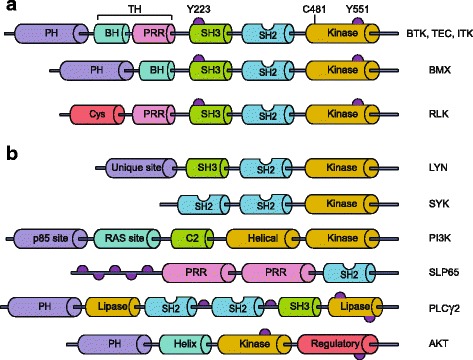
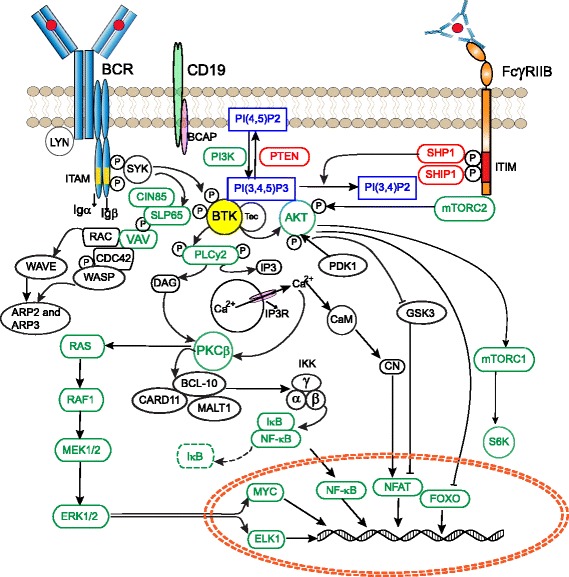
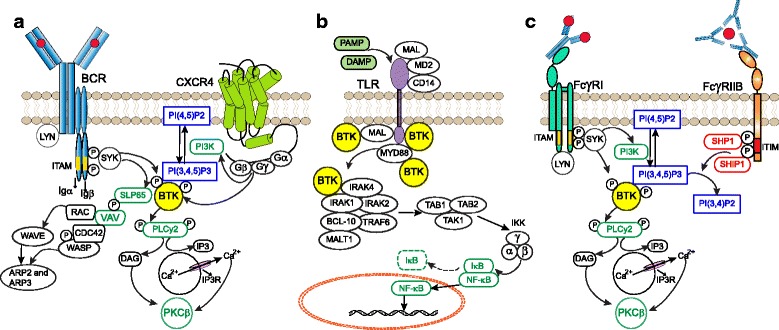
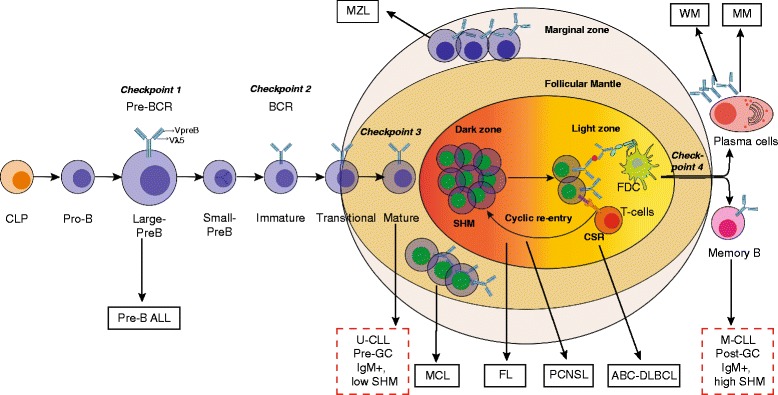
Verification
Claims the paper makes
The claims and statistics of this paper haven’t been checked yet.
Run the check — free, no account needed. It reads the open-access text and checks the sources it cites.
Claims other papers make about this one
Each is checked against this paper’s own text: does it say what the citing paper says it does?
The source backs part of the claim, not all of it — or backs it for a different population, condition or comparison.
In the citing paper
“Bruton tyrosine kinase (BTK) is a non-receptor tyrosine kinase that amplifiesupstream B-cell receptor (BCR) signaling and is essential for B-cell development and maturation(1, 2).”
From Resistance Mechanisms and Approach to Chronic Lymphocytic Leukemia after BTK Inhibitor Therapy (2025) · cites this paper as [1]
Experimental — accuracy not yet measuredIn the citing paper
“BTK became a target of interest in chronic lymphocytic leukaemia owing to its crucial role downstream of the B cell receptor53.”
From Advances in covalent drug discovery (2022) · cites this paper as [53]
Self-check
Percentages, sums and reported differences re-computed from the paper’s own numbers.
The self-check needs the paper’s full text.
Citations
Cites
1 retracted
Gray, P., Dunne, A., Brikos, C., Jefferies, C. A., Doyle, S., & O'Neill, L. A. J. (2006) · Journal of Biological Chemistry · doi:10.1074/jbc.m508892200 · Cited by 201
RetractedHallmarks of Cancer: The Next Generation
Hanahan, D., & Weinberg, R. A. (2011) · Cell · doi:10.1016/j.cell.2011.02.013 · Cited by 66,590
Distinct types of diffuse large B-cell lymphoma identified by gene expression profiling
Alizadeh, A. A., Eisen, M. B., Davis, R. E., Ma, C., Lossos, I. S., Rosenwald, A., Boldrick, J. C., Sabet, H., Tran, T., Yu, X., et al. (2000) · Nature · doi:10.1038/35000501 · Cited by 9,925
Mizgerd, J. P., Kubo, H., Kutkoski, G. J., Bhagwan, S. D., Scharffetter-Kochanek, K., Beaudet, A. L., & Doerschuk, C. M. (1997) · The Journal of Experimental Medicine · doi:10.1084/jem.186.8.1357 · Cited by 7,332
Tumour-associated macrophages as treatment targets in oncology
Mantovani, A., Marchesi, F., Malesci, A., Laghi, L., & Allavena, P. (2017) · Nature Reviews Clinical Oncology · doi:10.1038/nrclinonc.2016.217 · Cited by 4,182
Tumor-Associated Macrophages: From Mechanisms to Therapy
Noy, R., & Pollard, J. W. (2014) · Immunity · doi:10.1016/j.immuni.2014.06.010 · Cited by 4,089
AKT/PKB Signaling: Navigating the Network
Manning, B. D., & Toker, A. (2017) · Cell · doi:10.1016/j.cell.2017.04.001 · Cited by 3,772
Fcγ receptors as regulators of immune responses
Nimmerjahn, F., & Ravetch, J. V. (2008) · Nature Reviews Immunology · doi:10.1038/nri2206 · Cited by 2,947
Damle, R. N., Wasil, T., Fais, F., Ghiotto, F., Valetto, A., Allen, S. L., Buchbinder, A., Budman, D. R., Dittmar, K., Kolitz, J. E., et al. (1999) · Blood · doi:10.1182/blood.v94.6.1840 · Cited by 2,634
Targeting BTK with Ibrutinib in Relapsed Chronic Lymphocytic Leukemia
Byrd, J. C., Furman, R. R., Coutre, S. E., Flinn, I. W., Burger, J. A., Blum, K. A., Grant, B., Sharman, J. P., Coleman, M., Wierda, W. G., et al. (2013) · New England Journal of Medicine · doi:10.1056/nejmoa1215637 · Cited by 2,270
Cited by
Sorted by citations
Advances in covalent drug discovery
Boike, L., Henning, N. J., & Nomura, D. K. (2022) · Nature Reviews Drug Discovery · doi:10.1038/s41573-022-00542-z · Cited by 823
Molecular targeted therapy for anticancer treatment
Min, H.-Y., & Lee, H.-Y. (2022) · Experimental & Molecular Medicine · doi:10.1038/s12276-022-00864-3 · Cited by 569
Properties of FDA-approved small molecule protein kinase inhibitors
Roskoski, R. (2019) · Pharmacological Research · doi:10.1016/j.phrs.2019.03.006 · Cited by 554
Memory B Cells Activate Brain-Homing, Autoreactive CD4+ T Cells in Multiple Sclerosis
Jelčić, I., Nimer, F. A., Wang, J., Lentsch, V., Planas, R., Jelčić, I., Madjovski, A., Ruhrmann, S., Faigle, W., Frauenknecht, K. B. M., et al. (2018) · Cell · doi:10.1016/j.cell.2018.08.011 · Cited by 532
Tam, C. S. L., Opat, S., D’Sa, S., Jurczak, W. J., Lee, H., Cull, G., Owen, R. G., Marlton, P. V., Wahlin, B. E., García‐Sánz, R., et al. (2020) · Blood · doi:10.1182/blood.2020006844 · Cited by 466
Yang, L., Chu, Z., Liu, M., Zou, Q., Li, J., Liu, Q., Wang, Y., Wang, T., Xiang, J., & Wang, B. (2023) · Journal of Hematology & Oncology · doi:10.1186/s13045-023-01453-1 · Cited by 383
Radiopharmaceuticals for PET and SPECT Imaging: A Literature Review over the Last Decade
Crișan, G., Moldovean‐Cioroianu, N. S., Timaru, D.-G., Andrieș, G., Cainap, C. I., & Chiş, V. (2022) · International Journal of Molecular Sciences · doi:10.3390/ijms23095023 · Cited by 386
Advances in covalent kinase inhibitors
Abdeldayem, A., Raouf, Y. S., Constantinescu, S. N., Moriggl, R., & Gunning, P. T. (2020) · Chemical Society Reviews · doi:10.1039/c9cs00720b · Cited by 337
Targeted protein degradation: advances in drug discovery and clinical practice
Zhong, G., Chang, X., Xie, W., & Zhou, X. (2024) · Signal Transduction and Targeted Therapy · doi:10.1038/s41392-024-02004-x · Cited by 326
B Cells in Rheumatoid Arthritis:Pathogenic Mechanisms and Treatment Prospects
Wu, F., Gao, J., Kang, J., Wang, X., Niu, Q., Liu, J., & Zhang, L. (2021) · Frontiers in Immunology · doi:10.3389/fimmu.2021.750753 · Cited by 277
“Targeted B Cell Checkpoints Bruton’s tyrosine kinase (BTK) is a cytoplasmic tyrosine kinase expressed in B cells, which plays a key role in BCR signal transduction and in the development and maturation of B cells (123).”
BackgroundComparative Analysis of BTK Inhibitors and Mechanisms Underlying Adverse Effects
Estupiñan, H. Y., Berglöf, A., Zain, R., & Smith, C. I. E. (2021) · Frontiers in Cell and Developmental Biology · doi:10.3389/fcell.2021.630942 · Cited by 274
“…receptor (BCR) signaling pathway led to the deciphering of the central role of Bruton’s tyrosine kinase (BTK) and the importance of its inhibition as an effective strategy for the treatment of B-cell malignancies (Herman et al., 2011; Smith, 2017; Pal Singh et al., 2018; Lucas and Woyach, 2019).”
BackgroundFMS-like Tyrosine Kinase 3/FLT3: From Basic Science to Clinical Implications
Kazi, J. U., & Rönnstrand, L. (2019) · Physiological Reviews · doi:10.1152/physrev.00029.2018 · Cited by 223
“The Bruton tyrosine kinase (BTK) plays important roles in B cell development as well as in mast cell activation and has been implicated in B cell malignancies (65, 247).”
BackgroundEfficient targeted degradation via reversible and irreversible covalent PROTACs
Gabizon, R., Shraga, A., Gehrtz, P., Livnah, E., Gurwicz, N., Avram, L., Unger, T., Albeck, S., Shulman, Z., & London, N. (2020) · doi:10.26434/chemrxiv.11494398.v1 · Cited by 213
Bruton tyrosine kinase inhibitors for multiple sclerosis
Krämer, J., Bar-Or, A., Turner, T. J., & Wiendl, H. (2023) · Nature Reviews Neurology · doi:10.1038/s41582-023-00800-7 · Cited by 206
Michaud, D. E., Steward, C. R., Mirlekar, B., & Pylayeva‐Gupta, Y. (2020) · Immunological Reviews · doi:10.1111/imr.12939 · Cited by 211
Phosphorylation-Inducing Chimeric Small Molecules
Siriwardena, S. U., Godage, D. N. P. M., Shoba, V. M., Lai, S., Shi, M., Wu, P., Chaudhary, S. K., Schreiber, S. L., & Choudhary, A. (2020) · Journal of the American Chemical Society · doi:10.1021/jacs.0c05537 · Cited by 195
Narita, Y., Nagane, M., Mishima, K., Terui, Y., Arakawa, Y., Yonezawa, H., Asai, K., Fukuhara, N., Sugiyama, K., Shinojima, N., et al. (2020) · Neuro-Oncology · doi:10.1093/neuonc/noaa145 · Cited by 190
The B-Side of Cancer Immunity: The Underrated Tune
Largeot, A., Pagano, G., Gonder, S., Moussay, E., & Paggetti, J. (2019) · Cells · doi:10.3390/cells8050449 · Cited by 189
“It is worth noting that Bruton’s tyrosine kinase (BTK) inhibitor ibrutinib used for the treatment of some B cell-associated lymphomas/leukemias has been tested in solid tumors [117].”
BackgroundPyrazole-containing pharmaceuticals: target, pharmacological activity, and their SAR studies
Li, G., Cheng, Y., Han, C., Song, C., Huang, N., & Du, Y. (2022) · RSC Medicinal Chemistry · doi:10.1039/d2md00206j · Cited by 170
Alu, A., Lei, H., Han, X., Wei, Y., & Wei, X. (2022) · Journal of Hematology & Oncology · doi:10.1186/s13045-022-01353-w · Cited by 159
Strategies for Targeting the NLRP3 Inflammasome in the Clinical and Preclinical Space
Schwaid, A. G., & Spencer, K. B. (2020) · Journal of Medicinal Chemistry · doi:10.1021/acs.jmedchem.0c01307 · Cited by 154
NLRP3 inflammasome: a key player in the pathogenesis of life-style disorders
Ramachandran, R., Manan, A., Kim, J., & Choi, S. (2024) · Experimental & Molecular Medicine · doi:10.1038/s12276-024-01261-8 · Cited by 160
“Bruton ’ s tyrosine kinase directly interacts with NLRP3 and ASC, initiating ASC oligomerization and caspase-1 activation 81,82 .”
BackgroundDhillon, S. (2021) · Drugs · doi:10.1007/s40265-021-01482-5 · Cited by 141
“This has led to the development of highly selective, second-generation BTK inhibitors with fewer off-target effects [3, 5].”
BackgroundAdvances in targeted therapy for malignant lymphoma
Wang, L., Qin, W. D., Huo, Y., Li, X., Shi, Q., Rasko, J. E. J., Janin, A., & Zhao, W. (2020) · Signal Transduction and Targeted Therapy · doi:10.1038/s41392-020-0113-2 · Cited by 146
“The offtarget inhibition of kinases containing an analogous cysteine residue with BTK may also be crucial to the side effects of ibrutinib.(287) Moreover, drug resistance reduces the clinical efficacy, warranting further investigation on combined treatment and dual inhibitors.”
BackgroundThe Importance of Being PI3K in the RAS Signaling Network
Cuesta, C., Arévalo-Alameda, C., & Castellano, E. (2021) · Genes · doi:10.3390/genes12071094 · Cited by 125
“BTK has a critical role in B-cell function and malignancy [66].”
BackgroundProtein kinases: drug targets for immunological disorders
Castelo‐Soccio, L. A., Kim, H., Gadina, M., Schwartzberg, P. L., Laurence, A. D. J., & O’Shea, J. J. (2023) · Nature reviews. Immunology · doi:10.1038/s41577-023-00877-7 · Cited by 128
ROBBINS, D. W., Noviski, M., Tan, Y. S., Könst, Z. A., Kelly, A., Auger, P., Brathaban, N., Cass, R. T., Chan, M. L., Cherala, G., et al. (2024) · Journal of Medicinal Chemistry · doi:10.1021/acs.jmedchem.3c01007 · Cited by 123
Pathogenetic Aspects of Systemic Sclerosis: A View Through the Prism of B Cells
Μελισσαρόπουλος, Κ., Iliopoulos, G., Sakkas, L. I., & Daoussis, D. (2022) · Frontiers in Immunology · doi:10.3389/fimmu.2022.925741 · Cited by 121
“Therapeutic targeting of key signaling molecules of B cells, such as the Bruton’s tyrosine kinase (BTK), is already employed in hematology (31) and research efforts show promising results in samples from patients with SSc.”
BackgroundTherapeutic targets and interventional strategies in COVID-19: mechanisms and clinical studies
Zhou, Y., Xie, Y., Tang, L., Pu, D., Zhu, Y., Liu, J., & Ma, X. (2021) · Signal Transduction and Targeted Therapy · doi:10.1038/s41392-021-00733-x · Cited by 116
“Acalabrutinib, ibrutinib, and zanubrutinib are representatives of BTK inhibitors that are approved in the treatment of certain lymphomas.(278) The attempt for use of BTK inhibitors in COVID-19 treatment is limited in small-scale retrospective clinical studies.”
BackgroundPROTAC’ing oncoproteins: targeted protein degradation for cancer therapy
Kelm, J. M., Pandey, D. S., Malin, E., Kansou, H. W., Arora, S., Kumar, R., & Gavande, N. S. (2023) · Molecular Cancer · doi:10.1186/s12943-022-01707-5 · Cited by 122
Rogers, K. A., Thompson, P. A., Allan, J. N., Coleman, M., Sharman, J. P., Cheson, B. D., Jones, D., Izumi, R. E., Frigault, M. M., Quah, C. S., et al. (2021) · Haematologica · doi:10.3324/haematol.2020.272500 · Cited by 114
“6 Introduction Targeted Bruton tyrosine kinase (BTK) inhibitors are highly effective for the treatment of chronic lymphocytic leukemia (CLL).(1) These agents block signalling by inhibiting BTK, a key kinase in the B-cell receptor signalling pathway.”
Rozkiewicz, D., Hermanowicz, J. M., Kwiatkowska, I., Krupa, A., & Pawlak, D. (2023) · Molecules · doi:10.3390/molecules28052400 · Cited by 110
B cell checkpoints in autoimmune rheumatic diseases
Rubin, S. J. S., Bloom, M. S., & Robinson, W. H. (2019) · Nature Reviews Rheumatology · doi:10.1038/s41584-019-0211-0 · Cited by 109
Zinzani, P. L., Mayer, J., Flowers, C. R., Bijou, F. D., Oliveira, A. C., Song, Y., Zhang, Q., Merli, M., Bouabdallah, K. K., Ganly, P. S., et al. (2023) · Journal of Clinical Oncology · doi:10.1200/jco.23.00775 · Cited by 107
Noy, A., de Vos, S., Coleman, M., Martin, P., Flowers, C. R., Thiéblemont, C., Morschhauser, F., Collins, G. P., Ma, S., Peles, S., et al. (2020) · Blood Advances · doi:10.1182/bloodadvances.2020003121 · Cited by 105
Mendes‐Bastos, P., Brasileiro, A., Kolkhir, P., Frischbutter, S., Scheffel, J., Moñino‐Romero, S., & Maurer, M. (2022) · Allergy · doi:10.1111/all.15261 · Cited by 103
Bleeding by Bruton Tyrosine Kinase-Inhibitors: Dependency on Drug Type and Disease
von Hundelshausen, P., & Siess, W. (2021) · Cancers · doi:10.3390/cancers13051103 · Cited by 100
“Bruton’s tyrosine kinase (Btk), a non-receptor cytoplasmic tyrosine kinase expressed in pre-B cells and B-lymphocytes, plays a central role in B-cell receptor (BCR) signaling, and is crucial for B cell development and proliferation [1].”
BackgroundIbrutinib Resistance Mechanisms and Treatment Strategies for B-Cell Lymphomas
George, B., Chowdhury, S. M., Hart, A., Sircar, A., Singh, S. K., Nath, U. K., Mamgain, M., Singhal, N. K., Sehgal, L., & Jain, N. K. (2020) · Cancers · doi:10.3390/cancers12051328 · Cited by 97
CXCR4 in Waldenström’s Macroglobulinema: chances and challenges
Kaiser, L., Hunter, Z. R., Treon, S. P., & Buske, C. (2020) · Leukemia · doi:10.1038/s41375-020-01102-3 · Cited by 96
Saidu, N. E. B., Bonini, C., Dickinson, A. M., Grce, M., Inngjerdingen, M., Koehl, U., Toubert, A., Zeiser, R., & Galimberti, S. (2020) · Frontiers in Immunology · doi:10.3389/fimmu.2020.578314 · Cited by 95
Baillache, D. J., & Unciti‐Broceta, A. (2020) · RSC Medicinal Chemistry · doi:10.1039/d0md00227e · Cited by 94
Current Understanding of Immune Thrombocytopenia: A Review of Pathogenesis and Treatment Options
Mititelu, A., Onisâi, M., Roşca, A. E., & Vlădăreanu, A. M. (2024) · International Journal of Molecular Sciences · doi:10.3390/ijms25042163 · Cited by 92
“Both Syk and BTK contribute to B-cell receptor signaling and could affect antibody production [92].”
BackgroundThe Trinity of cGAS, TLR9, and ALRs Guardians of the Cellular Galaxy Against Host-Derived Self-DNA
Kumar, V. (2021) · Frontiers in Immunology · doi:10.3389/fimmu.2020.624597 · Cited by 95
Jaime-Figueroa, S., Buhimschi, A. D., Toure, M., Hines, J., & Crews, C. M. (2020) · Bioorganic & Medicinal Chemistry Letters · doi:10.1016/j.bmcl.2019.126877 · Cited by 88
“To a solution of 3-(4-phenoxyphenyl)-1-(4-piperidyl)pyrazolo[3,4-d] -pyrimidin-4-amine (1) (7.”
BackgroundMethodInfluentialvon Hundelshausen, P., Lorenz, R. L., Siess, W., & Weber, C. (2021) · Thrombosis and Haemostasis · doi:10.1055/a-1481-3039 · Cited by 88
BTK signaling—a crucial link in the pathophysiology of chronic spontaneous urticaria
Bernstein, J. A., Maurer, M., & Saini, S. S. (2023) · Journal of Allergy and Clinical Immunology · doi:10.1016/j.jaci.2023.12.008 · Cited by 92
Mechanisms of resistance to tyrosine kinase inhibitor‐targeted therapy and overcoming strategies
Ou, X., Gao, G., Habaz, I. A., & Wang, Y. (2024) · MedComm · doi:10.1002/mco2.694 · Cited by 104
Bruton’s Tyrosine Kinase Inhibition Promotes Myelin Repair
Martin, E., Aigrot, M., Grenningloh, R., Stankoff, B., Lubetzki, C., Boschert, U., & Zalc, B. (2019) · Brain Plasticity · doi:10.3233/bpl-200100 · Cited by 83
“Our data complement preclinical and clinical findings with BTKi, which have been shown to affect B cell proliferation and survival (for review see [24, 25]).”
ResultEstupiñán, H. Y., Wang, Q., Berglöf, A., Schaafsma, G. C. P., Shi, Y., Zhou, L., Mohammad, D. K., Yu, L., Vihinen, M., Zain, R., et al. (2021) · Leukemia · doi:10.1038/s41375-021-01123-6 · Cited by 80
Dimopoulos, M. A., García‐Sánz, R., Lee, H., Trněný, M., Varettoni, M., Opat, S., D’Sa, S., Owen, R. G., Cull, G., Mulligan, S. P., et al. (2020) · Blood Advances · doi:10.1182/bloodadvances.2020003010 · Cited by 79
Targeting Bruton’s Tyrosine Kinase in Inflammatory and Autoimmune Pathologies
Neys, S. F. H., Hendriks, R. W., & Corneth, O. B. J. (2021) · Frontiers in Cell and Developmental Biology · doi:10.3389/fcell.2021.668131 · Cited by 80
“In treatment of B cell malignancies, such combinational or sequential therapeutic strategies are often focused on combinations with other inhibitors acting on B cells [e.g., idelalisib targeting phosphoinositide 3-kinase (PI3K; de Rooij et al., 2015; Pal Singh et al., 2018)].”
BackgroundSelf-citationMurrell, D. F., Patsatsi, A., Stavropoulos, P., Baum, S., Zeeli, T., Kern, J. S., Roussaki‐Schulze, A., Sinclair, R. D., Bassukas, I. D., Thomas, D., et al. (2021) · British Journal of Dermatology · doi:10.1111/bjd.20431 · Cited by 76
Systematic Review of Available CAR-T Cell Trials around the World
Barros, L. R. C., Couto, S. C. F., Santurio, D. S., Paixão, E. A., Cardoso, F. C., da Silva, V. J., Klinger, P. H. D. S., Ribeiro, P. D. A. C., Rós, F. A., de Oliveira, T. G. M., et al. (2022) · Cancers · doi:10.3390/cancers14112667 · Cited by 79
Review of the development of BTK inhibitors in overcoming the clinical limitations of ibrutinib
Ran, F., Liu, Y., Wang, C., Xu, Z., Zhang, Y., Liu, Y., Zhao, G., & Ling, Y. (2021) · European Journal of Medicinal Chemistry · doi:10.1016/j.ejmech.2021.114009 · Cited by 76
Lee, P. Y., Yeoh, Y., & Low, T. Y. (2022) · FEBS Journal · doi:10.1111/febs.16442 · Cited by 79
Structure-Function Relationships of Covalent and Non-Covalent BTK Inhibitors
Zain, R., & Vihinen, M. (2021) · Frontiers in Immunology · doi:10.3389/fimmu.2021.694853 · Cited by 77
Recent Advances of Pyridinone in Medicinal Chemistry
Lin, S., Liu, C., Zhao, X., Han, X., Li, X., Ye, Y., & Li, Z. (2022) · Frontiers in Chemistry · doi:10.3389/fchem.2022.869860 · Cited by 73
Nastoupil, L. J., Lunning, M. A., Vose, J. M., Schreeder, M. T., Siddiqi, T., Flowers, C. R., Cohen, J. B., Burger, J. A., Wierda, W. G., O'Brien, S. M., et al. (2019) · The Lancet Haematology · doi:10.1016/s2352-3026(18)30216-3 · Cited by 70
Systemic lupus erythematosus-complicating immune thrombocytopenia: From pathogenesis to treatment
Jiang, Y., Cheng, Y., Ma, S., Li, T., Chen, Z., Zuo, X., & Zhang, X. (2022) · Journal of Autoimmunity · doi:10.1016/j.jaut.2022.102887 · Cited by 73
Protein kinase inhibitors’ classification using K-Nearest neighbor algorithm
Arian, R., Hariri, A., Mehridehnavi, A., Fassihi, A., & Ghasemi, F. (2020) · Computational Biology and Chemistry · doi:10.1016/j.compbiolchem.2020.107269 · Cited by 68
NLRP3 Inflammasome/Pyroptosis: A Key Driving Force in Diabetic Cardiomyopathy
Zhang, L., Ai, C., Bai, M., Niu, J., & Zhang, Z. (2022) · International Journal of Molecular Sciences · doi:10.3390/ijms231810632 · Cited by 73
“Bruton’s tyrosine kinase (BTK), a key receptor in B cell signal transduction, usually play a crucial part in the genesis of hematological tumors [93].”
BackgroundHeukels, P., van Hulst, J. A. C., van Nimwegen, M., Boorsma, C. E., Melgert, B. N., von der Thüsen, J. H., van den Blink, B., Hoek, R. A. S., Miedema, J., Neys, S. F. H., et al. (2019) · Respiratory Research · doi:10.1186/s12931-019-1195-7 · Cited by 75
“However, the interpretation of this finding is complicated, because ibrutinib is shown to have off-target effects and BTK is also expressed in myeloid lineages [37, 38].”
BackgroundSelf-citationTargeting Gatekeeper Mutations for Kinase Drug Discovery
Zhou, Y., Xiang, S., Yang, F., & Lu, X. (2022) · Journal of Medicinal Chemistry · doi:10.1021/acs.jmedchem.2c01361 · Cited by 69
Bat genomes illuminate adaptations to viral tolerance and disease resistance
Morales, A. E., Dong, Y., Brown, T., Baid, K., Kontopoulos, D. G., Gonzalez, V., Huang, Z., Ahmed, A.-W., Bhuinya, A., Hilgers, L., et al. (2025) · Nature · doi:10.1038/s41586-024-08471-0 · Cited by 78
Medicinal Chemistry Strategies for the Development of Kinase Inhibitors Targeting Point Mutations
Lu, X., Smaill, J. B., & Ding, K. (2020) · Journal of Medicinal Chemistry · doi:10.1021/acs.jmedchem.0c00507 · Cited by 67
Monitoring and Managing BTK Inhibitor Treatment-Related Adverse Events in Clinical Practice
O'Brien, S. M., Brown, J. R., Byrd, J. C., Furman, R. R., Ghia, P., Sharman, J. P., & Wierda, W. G. (2021) · Frontiers in Oncology · doi:10.3389/fonc.2021.720704 · Cited by 69
Switch-like activation of Bruton’s tyrosine kinase by membrane-mediated dimerization
Chung, J. K., Nocka, L. M., Decker, A., Wang, Q., Kadlecek, T. A., Weiss, A., Kuriyan, J., & Groves, J. T. (2019) · Proceedings of the National Academy of Sciences · doi:10.1073/pnas.1819309116 · Cited by 67
“These findings could further our understanding of how to specifically target Btk in the context of diseases such as chronic lymphocytic leukemia (21, 23).”
BackgroundBtk Inhibitors: A Medicinal Chemistry and Drug Delivery Perspective
Brullo, C., Villa, C., Tasso, B., Russo, E., & Spallarossa, A. (2021) · International Journal of Molecular Sciences · doi:10.3390/ijms22147641 · Cited by 65
“Simultaneously, Btk could activate Akt/NfkB signaling pathways [15,16].”
BackgroundFurman, R. R., Byrd, J. C., Owen, R. G., O'Brien, S. M., Brown, J. R., Hillmen, P., Stephens, D. M., Chernyukhin, N., Lezhava, T., Hamdy, A., et al. (2021) · Leukemia · doi:10.1038/s41375-021-01252-y · Cited by 64
“Children with XLA demonstrate a phenotype of B-cell depletion and frequent infection without the other toxicities observed with ibrutinib [5], suggesting that the latter may be due to off-target effects [2, 12].”
BackgroundPost-translational Modifications of IκBα: The State of the Art
Wang, X., Peng, H., Huang, Y., Kong, W., Cui, Q., Du, J., & Jin, H. (2020) · Frontiers in Cell and Developmental Biology · doi:10.3389/fcell.2020.574706 · Cited by 62
Brown, J. R., Byrd, J. C., Ghia, P., Sharman, J. P., Hillmen, P., Stephens, D. M., Sun, C., Jurczak, W. J., Pagel, J. M., Ferrajoli, A., et al. (2021) · Haematologica · doi:10.3324/haematol.2021.278901 · Cited by 66
Harnessing the cyclization strategy for new drug discovery
Tang, K., Wang, S., Gao, W., Song, Y., & Yu, B. (2022) · Acta Pharmaceutica Sinica B · doi:10.1016/j.apsb.2022.09.022 · Cited by 59
Stepping forward: T-cell redirecting bispecific antibodies in cancer therapy
Qin, X., Ning, W., Liu, H., Liu, X., Luo, W., & Xia, N. (2024) · Acta Pharmaceutica Sinica B · doi:10.1016/j.apsb.2024.03.027 · Cited by 62
“Bruton tyrosine kinase inhibitors are the preferred therapeutic agents for patients with chronic lymphocytic leukemia (CLL) 168,169 .”
BackgroundDevelopment of BTK inhibitors for the treatment of B-cell malignancies
Kim, H.-O. (2019) · Archives of Pharmacal Research · doi:10.1007/s12272-019-01124-1 · Cited by 60
Flinsenberg, T. W. H., Tromedjo, C. C., Hu, N., Liu, Y., Guo, Y., Thia, K. Y. T., Noori, T., Song, X., Aw Yeang, H. X., Tantalo, D. G., et al. (2020) · Haematologica · doi:10.3324/haematol.2019.220590 · Cited by 56
“Ibrutinib, the first clinically approved Bruton’s tyrosine kinase (BTK) inhibitor, is an effective and widely used therapy for chronic lymphocytic leukemia (CLL).(1) The significant homology between BTK and IL-2-inducible kinase (ITK) makes ITK an off-target kinase inhibited by ibrutinib.”
BackgroundNeutrophils and NETs in kidney disease
Nakazawa, D., Masuda, S., Nishibata, Y., Watanabe‐Kusunoki, K., Tomaru, U., & Ishizu, A. (2025) · Nature Reviews Nephrology · doi:10.1038/s41581-025-00944-3 · Cited by 69
“BTK is an enzyme expressed in leukocytes other than T and plasma cells and is involved in signal transduction mediated by the B cell receptor and FcγRs 190,191 .”
A Fast and Clean BTK Inhibitor
Gabizon, R., & London, N. (2020) · Journal of Medicinal Chemistry · doi:10.1021/acs.jmedchem.0c00597 · Cited by 56
Targeting Protein Kinases Degradation by PROTACs
Yu, F., Cai, M., Shao, L., & Zhang, J. (2021) · Frontiers in Chemistry · doi:10.3389/fchem.2021.679120 · Cited by 55
Zhu, S., Gokhale, S., Jung, J., Spirollari, E., Tsai, J., Arceo, J., Wu, B. W., Victor, E., & Xie, P. (2021) · Frontiers in Cell and Developmental Biology · doi:10.3389/fcell.2021.727531 · Cited by 54
Clinical immunotherapy in pancreatic cancer
Ye, X., Yu, Y., Zheng, X., & Ma, H. (2024) · Cancer Immunology Immunotherapy · doi:10.1007/s00262-024-03632-6 · Cited by 54
An update of new small-molecule anticancer drugs approved from 2015 to 2020
Liang, X., Wu, P., Yang, Q., Xie, Y., He, C., Yin, L., Yin, Z., Yue, G., Zou, Y., Li, L., et al. (2021) · European Journal of Medicinal Chemistry · doi:10.1016/j.ejmech.2021.113473 · Cited by 53
Sun, S., Wu, S.-H., Kang, J.-B., Ma, Y.-Y., Chen, L., Cao, P., Chang, L., Ding, N., Xue, X., Li, N., et al. (2022) · Journal of Medicinal Chemistry · doi:10.1021/acs.jmedchem.2c00030 · Cited by 54
Degraders upgraded: the rise of PROTACs in hematological malignancies
Casan, J. M. L., & Seymour, J. F. (2024) · Blood · doi:10.1182/blood.2023022993 · Cited by 53
Efficacy and safety of ibrutinib in diffuse large B-cell lymphoma: A single-arm meta-analysis
Hou, K., Yu, Z., Jia, Y., Fang, H., Shao, S., Huang, L., & Feng, Y. (2020) · Critical Reviews in Oncology/Hematology · doi:10.1016/j.critrevonc.2020.103010 · Cited by 52
Emerging therapies in mantle cell lymphoma
Hanel, W. G., & Epperla, N. (2020) · Journal of Hematology & Oncology · doi:10.1186/s13045-020-00914-1 · Cited by 50
Vicente, A. T. S., & Salvador, J. A. R. (2022) · International Journal of Molecular Sciences · doi:10.3390/ijms231911068 · Cited by 56
“Additional studies have shown that PMIBCR/Abl-R6 is not toxic in LK-Ph(-) cell lines, does not affect target expression, and is able to promote the degradation of different isoforms of the Bcr/Abl protein and even some mutant forms that confer imatinib resistance, which is accompanied by increases in p53 levels [74,75…”
BackgroundInfluentialPathogenesis and Treatment of Myeloma-Related Bone Disease
Gau, Y.-C., Yeh, T.-J., Hsu, C.-M., Hsiao, S. Y., & Hsiao, H.-H. (2022) · International Journal of Molecular Sciences · doi:10.3390/ijms23063112 · Cited by 48
“Bruton’s tyrosine kinase (BTK) is a nonreceptor tyrosine kinase of the TEC family and plays a crucial role in oncogenic signaling that is critical for the proliferation and survival of leukemic cells in many B cell malignancies and osteoclast differentiation [35,36].”
BackgroundGarg, N., Padron, E., Rammohan, K. W., & Goodman, C. F. (2022) · Journal of Clinical Medicine · doi:10.3390/jcm11206139 · Cited by 54
The synthesis review of the approved tyrosine kinase inhibitors for anticancer therapy in 2015–2020
Liang, X., Yang, Q., Wu, P., He, C., Yin, L., Xu, F., Yin, Z., Yue, G., Zou, Y., Li, L., et al. (2021) · Bioorganic Chemistry · doi:10.1016/j.bioorg.2021.105011 · Cited by 49
Ibrutinib in the Treatment of Solid Tumors: Current State of Knowledge and Future Directions
Szklener, K., Michalski, A., Żak, K., Piwoński, M., & Mańdziuk, S. (2022) · Cells · doi:10.3390/cells11081338 · Cited by 49
Berg, M. H., Rincon, S. V. D., & Miller, W. H. (2022) · Journal for ImmunoTherapy of Cancer · doi:10.1136/jitc-2021-003551 · Cited by 53
SLC7A11, a Potential Therapeutic Target Through Induced Ferroptosis in Colon Adenocarcinoma
Cheng, X., Wang, Y., Liu, L., Lv, C., Liu, C., & Xu, J. (2022) · Frontiers in Molecular Biosciences · doi:10.3389/fmolb.2022.889688 · Cited by 50
The impact of E3 ligase choice on PROTAC effectiveness in protein kinase degradation
Sobierajski, T., Małolepsza, J., Pichlak, M., Gendaszewska‐Darmach, E., & Błażewska, K. M. (2024) · Drug Discovery Today · doi:10.1016/j.drudis.2024.104032 · Cited by 48
Liu, X., Xu-Liu, Pang, X., Yuan, X. Y., Yu, G.-X., Li, Y.-R., Guan, Y.-F., Zhang, Y., Song, J., Zhang, Q., et al. (2021) · Bioorganic & Medicinal Chemistry · doi:10.1016/j.bmc.2021.116358 · Cited by 46
García‐Merino, A. (2021) · Cells · doi:10.3390/cells10102560 · Cited by 47
Geladaris, A., Torke, S., & Weber, M. S. (2022) · CNS Drugs · doi:10.1007/s40263-022-00951-z · Cited by 45
“Similar to IP3, DAG can act as a second messenger and activate protein kinase C (PKC) and, together with Syk, engage the mitogen-activated protein kinase (MAPK) pathway and increase survival and accelerate proliferation [47, 49, 50].”
BackgroundOpat, S., Tedeschi, A., Hu, B., Linton, K., McKay, P., Leitch, S., Coleman, M., Zinzani, P. L., Jin, J., Sun, M. Y., et al. (2023) · Blood Advances · doi:10.1182/bloodadvances.2023010668 · Cited by 45
“4 This led to the development and approval of the fi rst BTK inhibitor, ibru-tinib, which changed the treatment landscape for indolent B-cell malignancies.”
BackgroundDuarte, D., Lamontanara, A. J., Sala, G. L., Jeong, S., Sohn, Y., Panjkovich, A., Georgeon, S., Kükenshöner, T., Marcaida, M. J., Pojer, F., et al. (2020) · Nature Communications · doi:10.1038/s41467-020-16128-5 · Cited by 46
“Here, allosteric inhibition of Btk in Fc receptor (FcRs) signaling in basophils and mast cells could provide potential therapeutic benefits (Pal Singh et al., 2018).”
BackgroundNadeem, A., Ahmad, S. F., Al-Harbi, N. O., Ibrahim, K. E., Alqahtani, F., Alanazi, W. A., Mahmood, H. M., Alsanea, S., & Attia, S. M. (2020) · International Immunopharmacology · doi:10.1016/j.intimp.2020.107123 · Cited by 45
Differential impact of BTK active site inhibitors on the conformational state of full-length BTK
Joseph, R. E., Amatya, N., Fulton, D. B., Engen, J. R., Wales, T. E., & Andreotti, A. H. (2020) · eLife · doi:10.7554/elife.60470 · Cited by 47
Metadata
- Authors
- Pal Singh, S., Dammeijer, F., & Hendriks, R. W.
- Affiliations
- Erasmus MC (NL)
- Corresponding author
- Hendriks, Rudi W.
- Venue
- Molecular Cancer
- Published
- 2018-02-19
- Volume
- 17
- Issue
- 1
- Pages
- 57-57
- ISSN
- 1476-4598 (ISSN-L)
- PMC
- PMC5817726
- OpenAlex
- W2791299132
- Cited by
- 726
- References
- 272
- Citations by year
- 2026: 62 · 2025: 89 · 2024: 123 · 2023: 104 · 2022: 127 · 2021: 100 · 2020: 67 · 2019: 45 · 2018: 9
- FWCI
- 8.03
- Type
- journal article
- Language
- en
- Update notices
- correction (2019-04-03)
- Open access
- gold
- doi.org
- Locations
- Molecular Cancer (publishedVersion, cc-by)
- PubMed Central (publishedVersion, cc-by)
- PubMed (publishedVersion)
- EUR Research Repository (Erasmus University Rotterdam) (publishedVersion, other-oa)
- EUR Research Repository (Erasmus University Rotterdam) (submittedVersion, other-oa)
- RePub (Erasmus University Rotterdam) (submittedVersion, other-oa)
- DOAJ (DOAJ: Directory of Open Access Journals) (submittedVersion, cc-by-sa)
- Funders
- ZonMw
- Topics
- Health Sciences › Medicine › Hematology › Chronic Lymphocytic Leukemia Research
- Health Sciences › Medicine › Pathology and Forensic Medicine › Lymphoma Diagnosis and Treatment
- Life Sciences › Immunology and Microbiology › Immunology › Immunodeficiency and Autoimmune Disorders
- Keywords
- Bruton's tyrosine kinase, B-cell malignancies, ibrutinib, chronic lymphocytic leukemia, mantle cell lymphoma, B cell receptor signaling, X-linked agammaglobulinemia, B cell differentiation, BTK inhibitors, tumor microenvironment, myeloid cells, drug resistance, combination therapy, solid tumors
- MeSH terms
- Agammaglobulinaemia Tyrosine Kinase, Animals, Antineoplastic Combined Chemotherapy Protocols, B-Lymphocytes, Bone Marrow, Cell Differentiation, Cell Transformation, Neoplastic, Humans, Receptors, Antigen, B-Cell, Biomarkers, Tumor, Signal Transduction, Leukemia, B-Cell, Gene Expression Regulation, Neoplastic, Lymphoma, B-Cell, Treatment Outcome, Lymphopoiesis, Protein Kinase Inhibitors, Molecular Targeted Therapy, Tumor Microenvironment
About these checks
Registry, retraction, Cites and statistics results are computed, not judged, with one exception: a printed reference that no index lists is read once by a model before it counts as a citation error. Claims are extracted by a model and kept only when their quote appears verbatim in the text; each cited source is then checked, with a model’s help, for whether it says what the claim relies on. Those verdicts can be wrong — read the claim’s quote and the cited source before relying on one.
Statistics and arithmetic are recomputed, not judged.
Confidence bands are shown only for fields calibrated on our annotated test set. None is calibrated yet, so no band is shown.
What counts as a claim ›How we measure confidence ›How we check this ›
Are you an author, or do you see a problem with this page? Request a review
