

The DOI matches its Crossref record; 50 of the 50 references it cites were found in a registry or an index.
Hypoxic BMSC-derived exosomal miRNAs promote metastasis of lung cancer cells via STAT3-induced EMT
Open accessAbstract
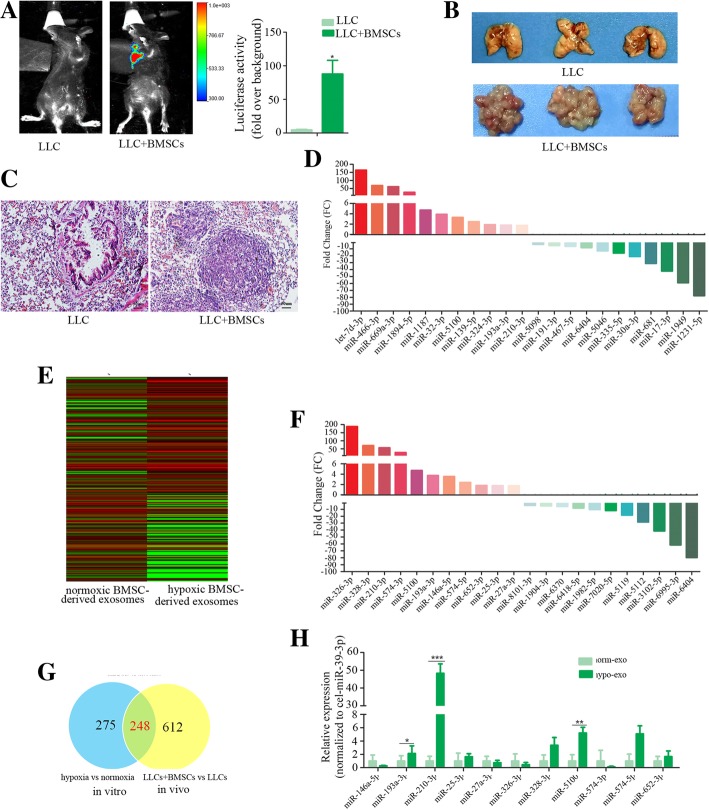
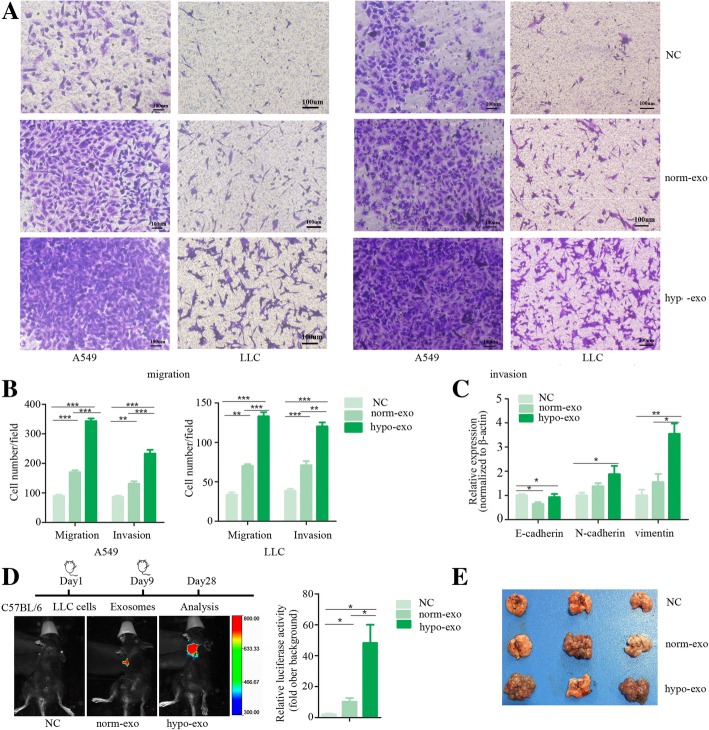
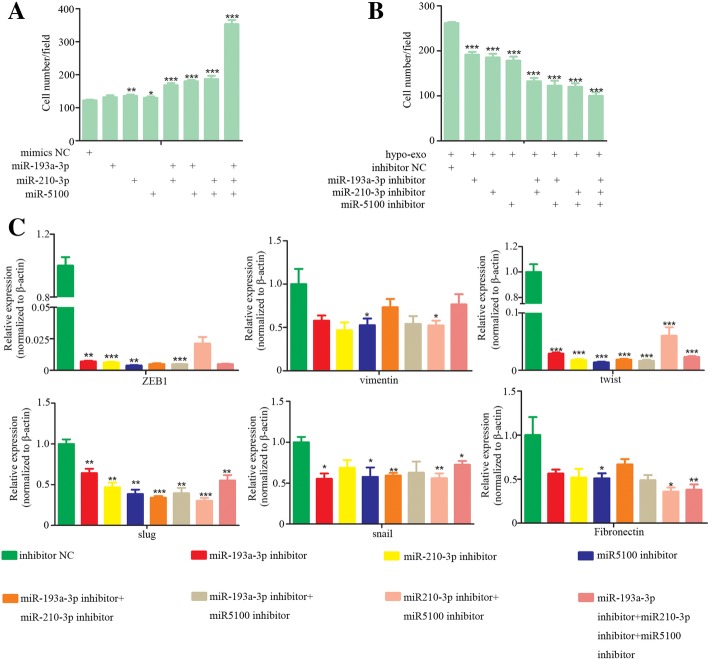
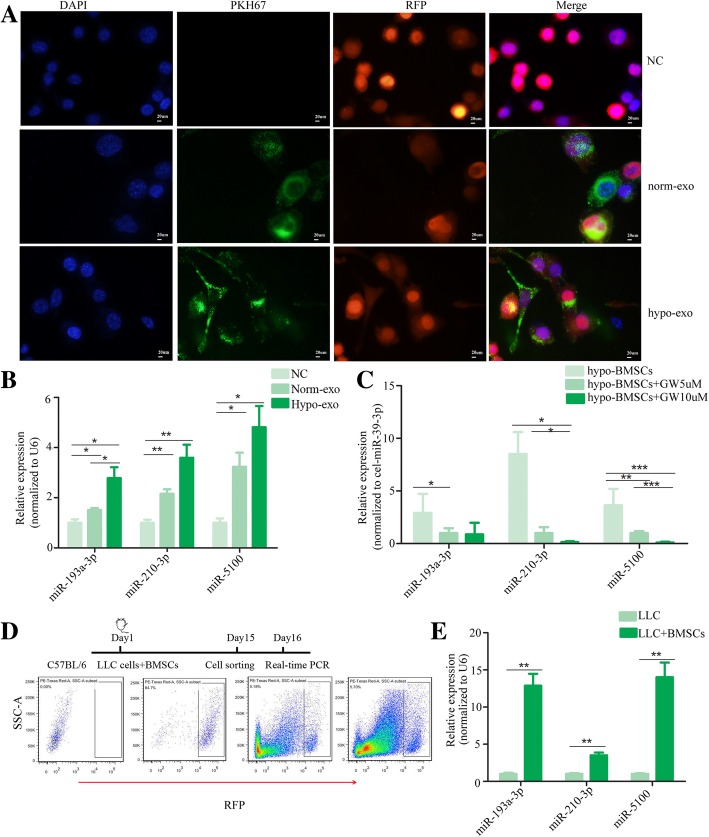
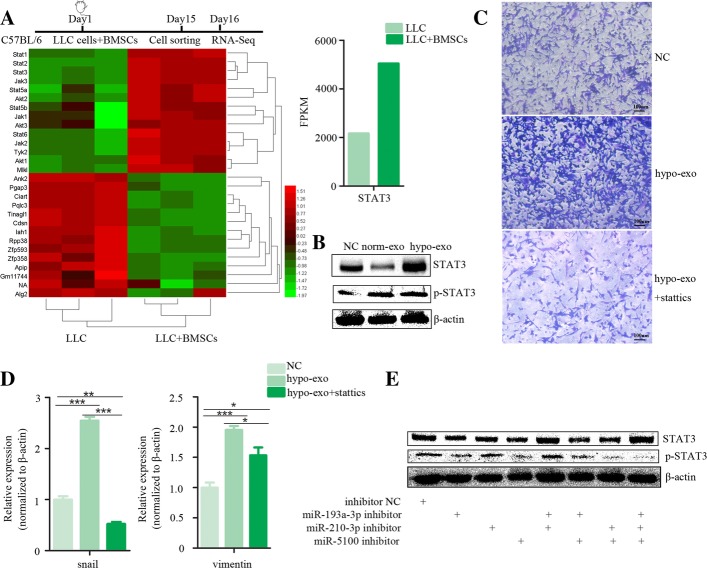
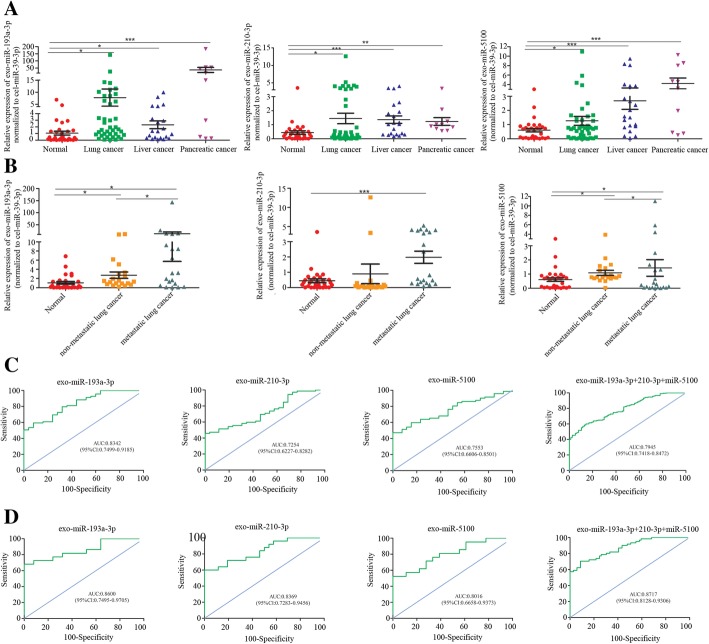
BACKGROUND: Metastasis is the main cause of lung cancer mortality. Bone marrow-derived mesenchymal stem cells (BMSCs) are a component of the cancer microenvironment and contribute to cancer progression. Intratumoral hypoxia affects both cancer and stromal cells. Exosomes are recognized as mediators of intercellular communication. Here, we aim to further elucidate the communication between BMSC-derived exosomes and cancer cells in the hypoxic niche. METHODS: Exosomal miRNA profiling was performed using a microRNA array. Lung cancer cells and an in vivo mouse syngeneic tumor model were used to evaluate the effects of select exosomal microRNAs. Hypoxic BMSC-derived plasma exosomal miRNAs were assessed for their capacity to discriminate between cancer patients and non-cancerous controls and between cancer patients with or without metastasis. RESULTS: We demonstrate that exosomes derived from hypoxic BMSCs are taken by neighboring cancer cells and promote cancer cell invasion and EMT. Exosome-mediated transfer of select microRNAs, including miR-193a-3p, miR-210-3p and miR-5100, from BMSCs to epithelial cancer cells activates STAT3 signaling and increases the expression of mesenchymal related molecules. The diagnostic accuracy of individual microRNA showed that plasma exosomal miR-193a-3p can discriminate cancer patients from non-cancerous controls. A panel of these three plasma exosomal microRNAs showed a better diagnostic accuracy to discriminate lung cancer patients with or without metastasis than individual exosomal microRNA. CONCLUSIONS: Exosome-mediated transfer of miR-193a-3p, miR-210-3p and miR-5100, could promote invasion of lung cancer cells by activating STAT3 signalling-induced EMT. These exosomal miRNAs may be promising noninvasive biomarkers for cancer progression.
Overview
The claims and statistics of this paper haven’t been checked yet.
Run the check — free, no account needed. It reads the open-access text and checks the sources it cites.
Integrity signals
Registry
Cites
Statistics
Figures
Verification
Claims the paper makes
The claims and statistics of this paper haven’t been checked yet.
Run the check — free, no account needed. It reads the open-access text and checks the sources it cites.
Claims other papers make about this one
Each is checked against this paper’s own text: does it say what the citing paper says it does?
In the citing paper
“which has been identified as a new biomarker for lung cancer progression [114].”
From The Therapeutic Potential and Clinical Significance of Exosomes as Carriers of Drug Delivery System (2022) · cites this paper as [114]
In the citing paper
“Similarly, Zhang et al. showed that exosome microRNAs (such as miR-193a-3p, miR-210-3p, and miR-5100) from hypoxic BMSCs were selectively taken up by lung cancer cells and could activate STAT3 signaling to induce epithelial–mesenchymal transition (EMT) to promote the invasion of lung cancer cells, which has been identified as a new biomarker for lung cancer progression [114].”
From The Therapeutic Potential and Clinical Significance of Exosomes as Carriers of Drug Delivery System (2022) · cites this paper as [114]
Self-check
Percentages, sums and reported differences re-computed from the paper’s own numbers.
The self-check needs the paper’s full text.
Citations
Cites
Arroyo, J. D., Chevillet, J. R., Kroh, E. M., Ruf, I. K., Pritchard, C. C., Gibson, D. F., Mitchell, P. S., Bennett, C. F., Pogosova-Agadjanyan, E. L., Stirewalt, D. L., et al. (2011) · Proceedings of the National Academy of Sciences · doi:10.1073/pnas.1019055108 · Cited by 3,294
Targeting hypoxia in cancer therapy
Wilson, W. R., & Hay, M. P. (2011) · Nature Reviews Cancer · doi:10.1038/nrc3064 · Cited by 3,172
Exosomes facilitate therapeutic targeting of oncogenic KRAS in pancreatic cancer
Kamerkar, S., LeBleu, V. S., Sugimoto, H., Yang, S., Ruivo, C. F., Melo, S. A., Lee, J. J., & Kalluri, R. (2017) · Nature · doi:10.1038/nature22341 · Cited by 2,639
Exosome and Exosomal MicroRNA: Trafficking, Sorting, and Function
Zhang, J., Li, S., Li, L., Li, M., Guo, C., Yao, J., & Mi, S. (2015) · Genomics, Proteomics & Bioinformatics · doi:10.1016/j.gpb.2015.02.001 · Cited by 1,901
Hypoxia signalling in cancer and approaches to enforce tumour regression
Pouysségur, J., Dayan, F., & Mazure, N. M. (2006) · Nature · doi:10.1038/nature04871 · Cited by 1,676
MicroRNAs in Stress Signaling and Human Disease
Mendell, J. T., & Olson, E. N. (2012) · Cell · doi:10.1016/j.cell.2012.02.005 · Cited by 1,673
Kroh, E. M., Parkin, R. K., Mitchell, P. S., & Tewari, M. (2010) · Methods · doi:10.1016/j.ymeth.2010.01.032 · Cited by 1,184
Hypoxic enhancement of exosome release by breast cancer cells
King, H. W., Michael, M. Z., & Gleadle, J. M. (2012) · BMC Cancer · doi:10.1186/1471-2407-12-421 · Cited by 1,045
Exosome-delivered microRNAs modulate the inflammatory response to endotoxin
Alexander, M., Hu, R., Runtsch, M. C., Kagele, D. A., Mosbruger, T. L., Tolmachova, T., Seabra, M. C., Round, J. L., Ward, D. M., & O’Connell, R. M. (2015) · Nature Communications · doi:10.1038/ncomms8321 · Cited by 769
Sorting it out: Regulation of exosome loading
Villarroya‐Beltri, C., Baixauli, F., Gutiérrez‐Vázquez, C., Sánchez‐Madrid, F., & Mittelbrunn, M. (2014) · Seminars in Cancer Biology · doi:10.1016/j.semcancer.2014.04.009 · Cited by 766
Research works printed but not linked: 1
- Fang JH, Zhang ZJ, Shang LR, Luo YW, Lin YF, Yuan Y, et al. Hepatoma cell-secreted exosomal microRNA-103 increases vascular permeability and promotes metastasis by targeting junction proteins. Hepatology. 2018;68(4):1459–75. · DOI
Cited by
Sorted by citations
Exosomes: key players in cancer and potential therapeutic strategy
Dai, J., Su, Y., Zhong, S., Cong, L., Liu, B., Yang, J., Tao, Y., He, Z., Chen, C., & Jiang, Y. (2020) · Signal Transduction and Targeted Therapy · doi:10.1038/s41392-020-00261-0 · Cited by 1,186
Targeting STAT3 in Cancer Immunotherapy
Zou, S., Tong, Q., Liu, B., Huang, W., Tian, Y., & Fu, X. (2020) · Molecular Cancer · doi:10.1186/s12943-020-01258-7 · Cited by 1,109
miRNA-based biomarkers, therapies, and resistance in Cancer
He, B., Zhao, Z., Cai, Q., Zhang, Y., Zhang, P., Shi, S., Xie, H., Peng, X., Yin, W., Tao, Y., et al. (2020) · International Journal of Biological Sciences · doi:10.7150/ijbs.47203 · Cited by 651
The biology, function, and applications of exosomes in cancer
Liu, J., Ren, L., Li, S., Li, W., Zheng, X., Yang, Y., Fu, W., Yi, J., Wang, J., & Du, G. (2021) · Acta Pharmaceutica Sinica B · doi:10.1016/j.apsb.2021.01.001 · Cited by 569
Liu, W., Li, L., Rong, Y., Qian, D., Chen, J., Zhou, Z. Y., Luo, Y., Jiang, D., Cheng, L., Zhao, S., et al. (2019) · Acta Biomaterialia · doi:10.1016/j.actbio.2019.12.020 · Cited by 485
Self-citation
Metadata
- Authors
- Zhang, X., Sai, B., Wang, F., Wang, L., Wang, Y., Zheng, L., Li, G., Tang, J., & Xiang, J.
- Affiliations
- Central South University (CN)
- Corresponding author
- Tang, Jingqun
- Xiang, Juanjuan
- Venue
- Molecular Cancer
- Published
- 2019-03-13
- Volume
- 18
- Issue
- 1
- Pages
- 40-40
- ISSN
- 1476-4598 (ISSN-L)
- PMC
- PMC6417285
- OpenAlex
- W2938403043
- Cited by
- 560
- References
- 50
- Citations by year
- 2026: 34 · 2025: 61 · 2024: 96 · 2023: 94 · 2022: 114 · 2021: 81 · 2020: 63 · 2019: 16
- FWCI
- 23.01
- Type
- journal article
- Language
- en
- Open access
- gold
- doi.org
- Licence
- Locations
- Molecular Cancer (publishedVersion, cc-by)
- Europe PMC (PubMed Central) (publishedVersion, other-oa)
- PubMed Central (publishedVersion, cc-by)
- PubMed (publishedVersion)
- DOAJ (DOAJ: Directory of Open Access Journals) (submittedVersion, cc-by-sa)
- Funders
- National Natural Science Foundation of China (81472695, 81773147)
- Strategic Priority Research Program of Central South University (ZLXD2017004)
- National Training and Research Base for Talents of principles of carcinogenesis foundation (111 project: 111-2-12)
- Topics
- Life Sciences › Biochemistry, Genetics and Molecular Biology › Molecular Biology › Extracellular vesicles in disease
- Life Sciences › Biochemistry, Genetics and Molecular Biology › Cancer Research › MicroRNA in disease regulation
- Health Sciences › Medicine › Oncology › Cancer Cells and Metastasis
- Keywords
- lung cancer metastasis, bone marrow-derived mesenchymal stem cells, exosomes, exosomal microRNAs, hypoxia, STAT3 signaling, epithelial-mesenchymal transition, tumor invasion, miR-193a-3p, miR-210-3p, tumor microenvironment, exosome-mediated intercellular communication
- MeSH terms
- Animals, Hypoxia, Cell Movement, Female, Follow-Up Studies, Humans, Lung Neoplasms, Male, Mice, Inbred C57BL, Mice, Nude, Middle Aged, Prognosis, Tumor Cells, Cultured, Biomarkers, Tumor, Signal Transduction, Gene Expression Regulation, Neoplastic, Survival Rate, Case-Control Studies, Apoptosis, Xenograft Model Antitumor Assays, MicroRNAs, Cell Proliferation, STAT3 Transcription Factor, Mice, Exosomes, Epithelial-Mesenchymal Transition, Mesenchymal Stem Cells
About these checks
Registry, retraction, Cites and statistics results are computed, not judged, with one exception: a printed reference that no index lists is read once by a model before it counts as a citation error. Claims are extracted by a model and kept only when their quote appears verbatim in the text; each cited source is then checked, with a model’s help, for whether it says what the claim relies on. Those verdicts can be wrong — read the claim’s quote and the cited source before relying on one.
Statistics and arithmetic are recomputed, not judged.
Confidence bands are shown only for fields calibrated on our annotated test set. None is calibrated yet, so no band is shown.
What counts as a claim ›How we measure confidence ›How we check this ›
Are you an author, or do you see a problem with this page? Request a review
