

The DOI matches its Crossref record; 106 of the 106 references it cites were found in a registry or an index.
Reactive oxygen species: a volatile driver of field cancerization and metastasis
Open accessAbstract
Field cancerization and metastasis are the leading causes for cancer recurrence and mortality in cancer patients. The formation of primary, secondary tumors or metastasis is greatly influenced by multifaceted tumor-stroma interactions, in which stromal components of the tumor microenvironment (TME) can affect the behavior of the cancer cells. Many studies have identified cytokines and growth factors as cell signaling molecules that aid cell to cell communication. However, the functional contribution of reactive oxygen species (ROS), a family of volatile chemicals, as communication molecules are less understood. Cancer cells and various tumor-associated stromal cells produce and secrete a copious amount of ROS into the TME. Intracellular ROS modulate cell signaling cascades that aid in the acquisition of several hallmarks of cancers. Extracellular ROS help to propagate, amplify, and effectively create a mutagenic and oncogenic field which facilitate the formation of multifoci tumors and act as a springboard for metastatic tumor cells. In this review, we summarize our current knowledge of ROS as atypical paracrine signaling molecules for field cancerization and metastasis. Field cancerization and metastasis are often discussed separately; we offer a model that placed these events with ROS as the focal instigating agent in a broader "seed-soil" hypothesis.
Overview
The claims and statistics of this paper haven’t been checked yet.
Run the check — free, no account needed. It reads the open-access text and checks the sources it cites.
Integrity signals
Registry
Cites
Statistics
Figures
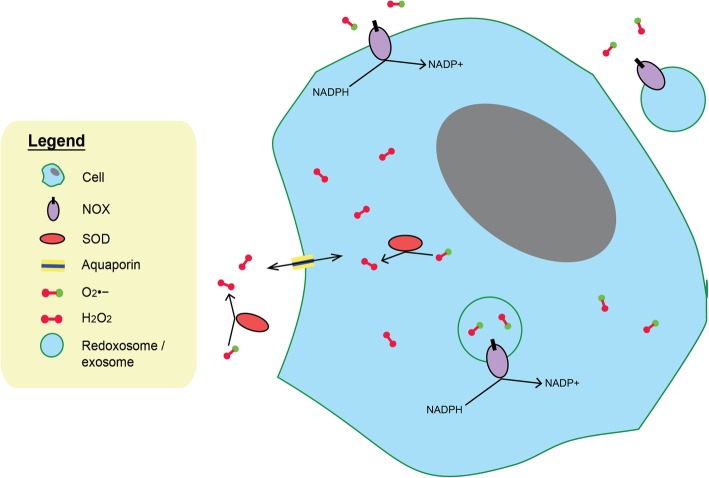
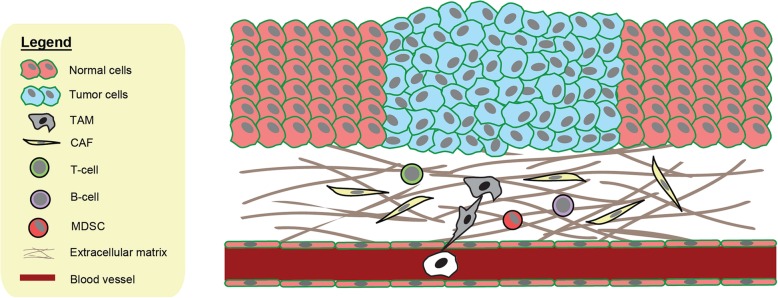
Verification
Claims the paper makes
The claims and statistics of this paper haven’t been checked yet.
Run the check — free, no account needed. It reads the open-access text and checks the sources it cites.
Claims other papers make about this one
Each is checked against this paper’s own text: does it say what the citing paper says it does?
In the citing paper
“Oxidative stress is strongly associated with the expression of various inflammatory transcription factors, such as nuclear factor-kB (NF- kB) that modulates proteolytic pathways and promotes inflammation (29–31).”
From Diabetes and Sarcopenic Obesity: Pathogenesis, Diagnosis, and Treatments (2020) · cites this paper as [31]
In the citing paper
“Cancer is a class of diseases resulted from external factors such as environment, diet and radiation as well as internal factors including obesity and diabetes (31, 116, 117).”
From Diabetes and Sarcopenic Obesity: Pathogenesis, Diagnosis, and Treatments (2020) · cites this paper as [31]
Self-check
Percentages, sums and reported differences re-computed from the paper’s own numbers.
The self-check needs the paper’s full text.
Citations
Cites
Bray, F., Ferlay, J., Soerjomataram, I., Siegel, R. L., Torre, L. A., & Jemal, A. (2018) · CA: A Cancer Journal for Clinicians · doi:10.3322/caac.21492 · Cited by 84,109
The basics of epithelial-mesenchymal transition
Kalluri, R., & Weinberg, R. A. (2009) · Journal of Clinical Investigation · doi:10.1172/jci39104 · Cited by 10,196
NF-κB signaling in inflammation
Liu, T., Zhang, L., Joo, D., & Sun, S.-C. (2017) · Signal Transduction and Targeted Therapy · doi:10.1038/sigtrans.2017.23 · Cited by 8,791
How mitochondria produce reactive oxygen species
Murphy, M. P. (2009) · Biochemical Journal · doi:10.1042/bj20081386 · Cited by 8,207
Molecular mechanisms of epithelial–mesenchymal transition
Lamouille, S., Xu, J., & Derynck, R. (2014) · Nature Reviews Molecular Cell Biology · doi:10.1038/nrm3758 · Cited by 8,091
The NOX Family of ROS-Generating NADPH Oxidases: Physiology and Pathophysiology
Bedard, K., & Krause, K.-H. (2007) · Physiological Reviews · doi:10.1152/physrev.00044.2005 · Cited by 6,989
Myeloid-derived-suppressor cells as regulators of the immune system
Gabrilovich, D. I., & Nagaraj, S. (2009) · Nature Reviews Immunology · doi:10.1038/nri2506 · Cited by 6,753
The biology and function of fibroblasts in cancer
Kalluri, R. (2016) · Nature Reviews Cancer · doi:10.1038/nrc.2016.73 · Cited by 4,366
Microenvironmental regulation of metastasis
Joyce, J. A., & Pollard, J. W. (2009) · Nature Reviews Cancer · doi:10.1038/nrc2618 · Cited by 3,684
Slaughter, D. P., Southwick, H. W., & Smejkal, W. (1953) · Cancer · doi:10.1002/1097-0142(195309)6:5 · Cited by 3,558
Cited by
Sorted by citations
Items 101–200 of 282
Activation of NRF2 by topical apocarotenoid treatment mitigates radiation-induced dermatitis
Schmidlin, C. J., de la Vega, M. R., Perer, J., Zhang, D. D., & Wondrak, G. T. (2020) · Redox Biology · doi:10.1016/j.redox.2020.101714 · Cited by 24
AQP3‐mediated H2O2 uptake inhibits LUAD autophagy by inactivating PTEN
Wang, Y., Chen, D., Liu, Y., Zhang, Y., Duan, C., Otkur, W., Chen, H., Liu, X., Xia, T., Qi, H., et al. (2021) · Cancer Science · doi:10.1111/cas.15008 · Cited by 23
Joardar, N., Guevara‐Flores, A., Martínez-González, J. D. J., & Babu, S. P. S. (2020) · International Journal of Biological Macromolecules · doi:10.1016/j.ijbiomac.2020.09.096 · Cited by 22
Edaravone: A Novel Possible Drug for Cancer Treatment?
Duranti, E., Cordani, N., & Villa, C. (2024) · International Journal of Molecular Sciences · doi:10.3390/ijms25031633 · Cited by 25
Zheng, L., Zhou, H., Zhang, S., Dai, W., Zhang, Y., Hong, L., Chen, F., & Cao, J. (2019) · Journal of Pharmacy and Pharmacology · doi:10.1111/jphp.13180 · Cited by 22
Karyotype Aberrations in Action: The Evolution of Cancer Genomes and the Tumor Microenvironment
Baudoin, N. C., & Bloomfield, M. (2021) · Genes · doi:10.3390/genes12040558 · Cited by 20
Liu, Y., Wu, X., Chen, F., Li, H., Wang, T., Liu, N., Sun, K., Zhou, G., & Tao, K. (2022) · Biomaterials · doi:10.1016/j.biomaterials.2022.121813 · Cited by 23
Lee, J., Kang, Y., Lee, H., Saravanakumar, G., Park, S. A., Ahn, S., & Kim, W. J. (2024) · Biomaterials · doi:10.1016/j.biomaterials.2024.122904 · Cited by 18
Xu, Y., Hu, S., Chen, R., Xu, S., Yu, G., & Ji, L. (2025) · Molecular Biology Reports · doi:10.1007/s11033-025-10731-9 · Cited by 18
Jastrzębska, I., Grześ, P. A., Niemirowicz-Laskowska, K., & Car, H. (2021) · The Journal of Steroid Biochemistry and Molecular Biology · doi:10.1016/j.jsbmb.2021.105975 · Cited by 18
Herrera-Campos, A. B., Zamudio-Martinez, E., Delgado-Bellido, D., Fernández-Cortés, M., Montuenga, L. M., Oliver, F. J., & Garcia-Diaz, A. (2022) · Cancers · doi:10.3390/cancers14112740 · Cited by 17
A reactive oxygen species-triggerable theranostic prodrug system
Liu, F., Liu, L., Wei, P., & Yi, T. (2024) · Journal of Controlled Release · doi:10.1016/j.jconrel.2024.10.054 · Cited by 17
Selvam, C. P., & Ganapasam, S. (2020) · Toxicology Research · doi:10.1093/toxres/tfaa019 · Cited by 18
Shi, Z., Artemenko, M., Yu, W., Zhang, M., Yi, C., Chen, P., Lin, S., Bian, Z., Lian, B., Meng, F., et al. (2025) · ACS Applied Materials & Interfaces · doi:10.1021/acsami.4c12857 · Cited by 16
Understanding the Clinical Use of Levosimendan and Perspectives on its Future in Oncology
Ribeiro, E., & Vale, N. (2023) · Biomolecules · doi:10.3390/biom13091296 · Cited by 16
Ji, H. W., Kim, H. J., Kim, H. W., Yun, S. H., Park, J. E., Choi, E. H., & Kim, S. J. (2020) · Cancers · doi:10.3390/cancers12092640 · Cited by 16
Biological consequences of cancer radiotherapy in the context of oral squamous cell carcinoma
Feller, G., Khammissa, R. A. G., Nemutandani, M. S., & Feller, L. (2021) · Head & Face Medicine · doi:10.1186/s13005-021-00286-y · Cited by 15
Wong, S. W., McCarroll, J. A., Hsu, K., Geczy, C. L., & Tedla, N. T. (2022) · Frontiers in Immunology · doi:10.3389/fimmu.2022.826391 · Cited by 15
Wang, D., Woodcock, E., Yang, X., Nishikawa, H., Sviderskaya, E. V., Oshima, M., Edwards, C., Zhang, Y., & Korchev, Y. E. (2024) · 中国科学通报:英文版 · doi:10.1016/j.scib.2024.04.004 · Cited by 15
Bou-Dargham, M. J., Sha, L., Sarker, D. B., Krakora-Compagno, M. Z., Chen, Z., Zhang, J., & Sang, Q. A. (2023) · International Journal of Molecular Sciences · doi:10.3390/ijms24119355 · Cited by 14
Ferraro, M., Vincenzo, S. D., Lazzara, V., Pinto, P., Patella, B., Inguanta, R., Bruno, A., & Pace, E. (2023) · International Journal of Molecular Sciences · doi:10.3390/ijms242216088 · Cited by 14
Imperative connotation of SODs in cancer: Emerging targets and multifactorial role of action
Panda, B., Tripathy, A., Patra, S., Kullu, B., Tabrez, S. S. M., & Jena, M. (2024) · IUBMB Life · doi:10.1002/iub.2821 · Cited by 14
Wang, W., Zhu, Y., Feng, L., Zhao, R., Yu, C., Hu, Y., Hu, Z., Liu, B., Zhong, L., & Yang, P. (2025) · Nanoscale · doi:10.1039/d4nr04609a · Cited by 14
The dual effects of nanomaterials on sperm and seminal fluid oxidative stress
Zhu, L., Xue, H., Hu, H., Xue, T., Chen, K., Tang, W., Zhang, S., Li, L., Wang, H., Xiao, X., et al. (2025) · Materials Today Bio · doi:10.1016/j.mtbio.2025.102163 · Cited by 13
Huang, W., Zhang, P., Zhao, E., Xiong, J., Wang, S., & Lv, Z. (2025) · Discover Oncology · doi:10.1007/s12672-025-01900-0 · Cited by 13
The critical function of metabolic reprogramming in cancer metastasis
Xie, S., Pan, J., Xu, J., Zhu, W., & Qin, L. (2022) · Aging and Cancer · doi:10.1002/aac2.12044 · Cited by 13
OGG1 in Lung—More than Base Excision Repair
Ma, X., Ming, H., Liu, L., Zhu, J., Pan, L., Chen, Y., & Xiang, Y. (2022) · Antioxidants · doi:10.3390/antiox11050933 · Cited by 13
Wang, J., Chen, H., Song, Q., Liu, X., Li, C., Wang, H., Li, C., & Hong, M. (2022) · Journal of Inorganic Biochemistry · doi:10.1016/j.jinorgbio.2022.111983 · Cited by 13
Emon, B., Knoll, S. G., Doha, U., Ladehoff, L. C., Lalonde, L., Baietto, D., Sivaguru, M., Bhargava, R., & Saif, M. T. A. (2021) · Extreme Mechanics Letters · doi:10.1016/j.eml.2021.101249 · Cited by 13
N-Acetylcysteine Promotes Metastatic Spread of Melanoma in Mice
Obrador, E., Palmer, R. S., López‐Blanch, R., Oriol‐Caballo, M., Moreno-Murciano, P., & Estrela, J. M. (2022) · Cancers · doi:10.3390/cancers14153614 · Cited by 13
Immunosuppressive microenvironment in oral cancer: implications for cancer immunotherapy
Sureshbabu, S. K., Godbole, J. H., Vaibhaw, A., & Chiplunkar, S. V. (2021) · Exploration of Immunology · doi:10.37349/ei.2021.00013 · Cited by 12
Ye, P., Yusufu, R., Guan, Z., Chen, T., Li, S., Feng, Y., Zeng, X., Lu, J., Luo, M., & Wei, F. (2024) · Pharmaceutics · doi:10.3390/pharmaceutics16091131 · Cited by 12
Cellular senescence and abdominal aortic aneurysm: From pathogenesis to therapeutics
Wang, D., Hao, X., Jia, L., Jing, Y., Jiang, B., & Xin, S. (2022) · Frontiers in Cardiovascular Medicine · doi:10.3389/fcvm.2022.999465 · Cited by 14
Pang, J., Zhu, D., Liu, Y., Liu, D., Zhao, C., Zhang, J., Li, S., Liu, Z., Li, X., Huang, P., et al. (2023) · Advanced Healthcare Materials · doi:10.1002/adhm.202203011 · Cited by 12
Small-Molecule Modulators of Mitochondrial Channels as Chemotherapeutic Agents
Parrasia, S., Mattarei, A., Furlan, A., Zoratti, M., & Biasutto, L. (2019) · Cellular Physiology and Biochemistry · doi:10.33594/000000192 · Cited by 12
Peroxisome proliferator-activated receptor antagonists as emerging therapeutics in cancer treatment
Misal, S., Patil, V. M., Ramaa, C. S., & Lavecchia, A. (2025) · Bioorganic Chemistry · doi:10.1016/j.bioorg.2025.108693 · Cited by 14
Zhao, Y., Feng, H., Yan, W., & Yu, Q. (2022) · Frontiers in Medicine · doi:10.3389/fmed.2022.833829 · Cited by 11
A color-tailored fluorogenic sensor for hydrogen peroxide
Potekhina, E. S., Bass, D. I., Ezeriņa, D., Fleckenstein, D. D., Chebotarev, A. S., Сысоева, В. А., Maltsev, D. I., Pak, V. V., Moshchenko, A. A., Соколов, А. И., et al. (2025) · Nature Chemical Biology · doi:10.1038/s41589-025-02036-6 · Cited by 11
Lee, B. Z., Lee, I. S., Pham, C. H., Jeong, S.-K., Lee, S., Hong, K.-W., & Yoo, H. M. (2020) · Journal of Microbiology and Biotechnology · doi:10.4014/jmb.2006.06022 · Cited by 11
Inhibition of Transketolase Improves the Prognosis of Colorectal Cancer
Zhang, L., Huang, Z., Cai, Q., Zhao, C., Xiao, Y., Quan, X., Tang, C., & Gao, J. (2022) · Frontiers in Medicine · doi:10.3389/fmed.2022.837143 · Cited by 11
Exploring How Reactive Oxygen Species Contribute to Cancer via Oxidative Stress
Tavakolpournegari, A., Moosavi, S. S., Matinahmadi, A., Zayani, Z., & Bidooki, S. H. (2025) · Stresses · doi:10.3390/stresses5040069 · Cited by 10
Nanostructured Lipid Carriers in Chemotherapeutics: An Overview
Sabale, V., & Jiwankar, M. N. (2023) · Indian Journal of Pharmaceutical Education and Research · doi:10.5530/ijper.57.2.40 · Cited by 10
Liu, C., Zhou, X., Zeng, H., Yu, J., Li, W., Zhang, W., Liao, Y., Wang, H., & Liu, L. (2024) · Cancer Immunology Research · doi:10.1158/2326-6066.cir-23-0469 · Cited by 10
ALDH1A1 as a marker for metastasis initiating cells: A mechanistic insight
Datta, N., Snijesh, V. P., Parvathy, K., Sneha, A., & Maliekal, T. T. (2024) · Experimental Cell Research · doi:10.1016/j.yexcr.2024.114213 · Cited by 10
Chen, H., Zhu, S.-C., Xu, H.-B., He, Y. J., Xi, C.-Y., Yu, J.-J., Qian, R., Chen, B., & Li, D. (2024) · Sensors and Actuators B Chemical · doi:10.1016/j.snb.2024.136636 · Cited by 10
Wu, J., Bi, Q., Zheng, X., Cao, H., Hao, C., Sun, Z., & Wang, W. (2022) · BMC Cancer · doi:10.1186/s12885-022-10313-z · Cited by 10
Tölg, C., Milojevic, M., Qi, F., Pavanel, H. A., Locke, M. E. O., Ma, J., Price, M., Nelson, A., McCarthy, J. B., Hill, K. A., et al. (2023) · Breast Cancer Research · doi:10.1186/s13058-023-01652-1 · Cited by 10
Liu, Y., Huang, N., Qiao, X., Gu, Z., Wu, Y., Li, J., Wu, C., Li, B., & Li, L. (2023) · International Journal of Oral Science · doi:10.1038/s41368-023-00242-3 · Cited by 12
Non‐invasive diagnosis of early cutaneous squamous cell carcinoma
Azimi, A., Jabbour, S., Patrick, E., & Fernández‐Peñas, P. (2023) · Experimental Dermatology · doi:10.1111/exd.14921 · Cited by 10
Zhevak, T. N., Shelekhova, T. V., Чеснокова, Н. П., Царева, О. Е., Chanturidze, A., Litvitsky, P. F., Andriutsa, N. S., Samburova, N. V., & Budnik, I. (2020) · Experimental and Molecular Pathology · doi:10.1016/j.yexmp.2020.104524 · Cited by 10
Li, C., Wang, L., Li, Z., Li, Z., Zhang, K., Cao, L., Wang, Z., Shen, C., & Chen, L. (2023) · International Journal of Pharmaceutics · doi:10.1016/j.ijpharm.2023.123729 · Cited by 9
Environmental Hazards and Glial Brain Tumors: Association or Causation?
Ostrowski, R. P., Acewicz, A., He, Z., Pucko, E. B., & Godlewski, J. A. (2025) · International Journal of Molecular Sciences · doi:10.3390/ijms26157425 · Cited by 11
Deligiorgi, M. V., Siasos, G., Vakkas, L., & Trafalis, D. T. (2021) · Cancers · doi:10.3390/cancers13225785 · Cited by 9
Metastasis prevention: How to catch metastatic seeds
Gerashchenko, T. S., Schegoleva, A. A., Khozyainova, A. A., Чойнзонов, Е. Л., & Denisov, E. V. (2023) · Biochimica et Biophysica Acta (BBA) - Reviews on Cancer · doi:10.1016/j.bbcan.2023.188867 · Cited by 9
Jiao, J., Wen, L., Wang, Z., Han, B., Zhao, L., & Chen, Q. (2020) · Journal of The Electrochemical Society · doi:10.1149/1945-7111/ab8367 · Cited by 9
Micro- and nanoscale sensing of volatile organic compounds for early-stage cancer diagnosis
Kabir, K. M. M., Baker, M. J., & Donald, W. A. (2022) · TrAC Trends in Analytical Chemistry · doi:10.1016/j.trac.2022.116655 · Cited by 9
Quantitative estimation of intracellular oxidative stress in human tissues
Bai, J., Tan, R., An, Z., & Xu, Y. (2022) · Briefings in Bioinformatics · doi:10.1093/bib/bbac206 · Cited by 9
Zhu, J., Long, Y., He, Y., Liu, S., Wu, X., Teng, K., Liu, W., Feng, F., & Qu, W. (2025) · Journal of Medicinal Chemistry · doi:10.1021/acs.jmedchem.5c01521 · Cited by 8
Lin, B., Li, S., & Han, Y. (2025) · Journal of Molecular Structure · doi:10.1016/j.molstruc.2025.144298 · Cited by 8
de Souza, D. N., de Souza, E. M. N., Pedrosa, M. D. S., Nogueira, F. N., Simões, A., & Nicolau, J. C. (2020) · Biological Trace Element Research · doi:10.1007/s12011-020-02273-x · Cited by 8
Xu, J., Zhou, H., Liu, Z., Huang, Y., Zhang, Z., Zou, H., & Wang, Y. (2025) · Scientific Reports · doi:10.1038/s41598-025-97667-z · Cited by 8
Adsorption of HOOO. radical on pristine and doped graphene—a first-principles study
Laskar, B. I., & Shukla, P. K. (2021) · Structural Chemistry · doi:10.1007/s11224-020-01702-w · Cited by 7
Current research progress in the role of reactive oxygen species in esophageal adenocarcinoma
Hu, Y., Ye, X., Wang, R., & Poon, K. (2021) · Translational Cancer Research · doi:10.21037/tcr-19-1985 · Cited by 8
Chang, L.-C., Fan, C.-W., Tseng, W.-K., & Hua, C. (2021) · Biomarkers · doi:10.1080/1354750x.2021.1999503 · Cited by 8
Phytotherapy for breast cancer
Alugoju, P., Chaitanya, N. S. N., Swamy, V., & Kancharla, P. K. (2021) · Elsevier eBooks · doi:10.1016/b978-0-12-822009-2.00007-8 · Cited by 8
Farmanbar, A., KNELLER, R. W., & Firouzi, S. (2025) · Cancers · doi:10.3390/cancers17101627 · Cited by 7
Trans-Ancestry Mutation Landscape of Hepatoblastoma Genomes in Children
Liu, J., Gao, C., Wang, L., Jian, X., Ma, M., Li, T., Hao, X., Zhang, Q., Chen, Y., Zhao, J., et al. (2021) · Frontiers in Oncology · doi:10.3389/fonc.2021.669560 · Cited by 7
Santos, L. L. D., Custódio, I. D. D., Silva, A. T. F., Ferreira, I. C. C., Marinho, E. D. C., Caixeta, D. C., de Souza, A. V., Teixeira, R. R., Araújo, T. G., Shivappa, N., et al. (2020) · Nutrients · doi:10.3390/nu12113303 · Cited by 7
Cao, Y., Xu, R. F., Fang, J., Zhao, Z., Wu, G., Zhang, Y., Li, R., Lu, Y., & Xu, X. (2025) · Acta Biomaterialia · doi:10.1016/j.actbio.2025.08.001 · Cited by 6
Lotfy, E. M., Bokhtia, R. M., Fattah, H. A. A., & Seliem, I. A. (2025) · European Journal of Medicinal Chemistry · doi:10.1016/j.ejmech.2025.118165 · Cited by 6
Chamani, F. K., Etebari, A., Hajivalili, M., Mosaffa, N., & Jalali, S. A. (2024) · Molecular Biology Reports · doi:10.1007/s11033-023-08947-8 · Cited by 6
Aleksandrova, Y. R., Nikolaeva, N. S., Александровна, Ш. И., Smirnova, K. D., Zubishina, A. A., Khlopotinin, A. I., Fakhrutdinov, A. N., Хохлов, А. Л., Бегунов, Р. С., & Евгеньевна, Н. М. (2024) · Molecules · doi:10.3390/molecules29225360 · Cited by 6
ROS and Oxidative Stress in Cancer: Recent Advances
Varol, M. (2020) · Springer eBooks · doi:10.1007/978-981-15-7586-0_6 · Cited by 6
Association of ABCG2 Polymorphisms on Triple Negative Breast Cancer (TNBC) Susceptibility Risk
Ing, Y. H., Salleh, M. S. M., Yahya, M. M., Ankathil, R., & Aziz, A. A. A. (2023) · Asian Pacific Journal of Cancer Prevention · doi:10.31557/apjcp.2023.24.11.3891 · Cited by 6
MiR-200c reprograms fibroblasts to recapitulate the phenotype of CAFs in breast cancer progression
Zhao, L., Roche, M. E., Diaz‐Barros, V., Domingo‐Vidal, M., Whitaker‐Menezes, D., Tuluc, M., Uppal, G. K., Caro, J., Curry, J., & Martinez‐Outschoorn, U. (2024) · Cell Stress · doi:10.15698/cst2024.03.293 · Cited by 5
Astaxanthin suppresses the metastasis of clear cell renal cell carcinoma through ROS scavenging
Gong, J., Jiang, S., Huang, Y., Yang, D., Zhang, L., Li, Z., & Kang, Q. (2024) · Journal of Functional Foods · doi:10.1016/j.jff.2024.106139 · Cited by 5
Why is cancer so common a disease in people yet so rare at a cellular level?
Ferrell, S. D., Ahmad, I., Nguyen, C. L., Petrova, S. C., Wilhelm, S. R., Ye, Y., & Barsky, S. H. (2020) · Medical Hypotheses · doi:10.1016/j.mehy.2020.110171 · Cited by 5
Zhang, K., Zhou, L., Zhang, T., Fan, Z., Xie, M., Ding, Y., & Li, H. (2020) · Sensors and Actuators B Chemical · doi:10.1016/j.snb.2020.129121 · Cited by 5
Yuan, X., Wang, L., Hu, M., Zhang, L., Chen, H., Zhang, D., Wang, Z., Li, T., Zhong, M., Xu, L., et al. (2021) · Angewandte Chemie · doi:10.1002/ange.202107556 · Cited by 5
Hu, J., Zhou, W., Zhou, Y., Hu, H., Ran, S., & Zhang, Y. (2025) · Journal of Materials Chemistry B · doi:10.1039/d5tb00368g · Cited by 4
Mendes, C., Martins, F., Granja, S., Gonçalves, J., Barros, H. L., Casimiro, T., Aguiar‐Ricardo, A., SILVA, F. A. B. N. D., Abreu, B., Cristovão, M., et al. (2025) · Biomedicine & Pharmacotherapy · doi:10.1016/j.biopha.2025.118405 · Cited by 4
Wen, W., Li, J., Li, Y., Liao, Y., Shao, C., Xu, D., Jiang, H., Liao, Y., Liu, P., Zhang, C., et al. (2025) · International Journal of Medical Sciences · doi:10.7150/ijms.118912 · Cited by 4
Puspasari, K., Pasaribu, T. A. S., Surboyo, M. D. C., Ayuningtyas, N. F., Santosh, A. B. R., & Ernawati, D. S. (2023) · Dental Journal (Majalah Kedokteran Gigi) · doi:10.20473/j.djmkg.v56.i3.p189-196 · Cited by 4
Debnath, S. K., Singh, B., Agrawal, N., & Srivastava, R. (2022) · Handbook of Oxidative Stress in Cancer: Therapeutic Aspects · doi:10.1007/978-981-16-5422-0_127 · Cited by 4
Garcia, J. H., Akins, E. A., Jain, S., Wolf, K. J., Zhang, J. Y., Choudhary, N. R., Lad, M., Shukla, P. D., Gill, S. A., Carson, W., et al. (2023) · bioRxiv (Cold Spring Harbor Laboratory) · doi:10.1101/2023.02.23.529575 · Cited by 4
Villani, V., & Gismondi, A. (2026) · Nutrients · doi:10.3390/nu18030495 · Cited by 3
Regenerative Medicines for ROS-Induced Cancers Treatment
Kumar, D., Ishaque, M., & Raghav, P. K. (2022) · Handbook of Oxidative Stress in Cancer: Therapeutic Aspects · doi:10.1007/978-981-16-1247-3_97-1 · Cited by 3
Exploring Magnetic Nanoparticles in Oncology: Synthesis to Therapeutic Applications
Parida, S. K., & Kar, N. R. (2025) · Journal of Bio-X Research · doi:10.34133/jbioxresearch.0032 · Cited by 3
Oxidative stress, epigenetics, and bladder cancer
Boonla, C. (2021) · Elsevier eBooks · doi:10.1016/b978-0-12-819547-5.00007-9 · Cited by 3
Wu, H., Zhang, Z., Han, X., Zhang, S., Zhang, J., Han, P., Zhang, Y., Bai, Y., & Zhang, Y. (2023) · Oxidative Medicine and Cellular Longevity · doi:10.1155/2023/5207431 · Cited by 3
Ko, H.-J., Su, Y., Loh, J., & Tsai, C. Y. (2024) · Formosan Journal of Surgery · doi:10.1097/fs9.0000000000000123 · Cited by 3
ROS Modulatory Role of HDAC Inhibitors in Cancer Cells
Mekala, J. R., Ramalingam, P. S., Moparthi, N. R., & Kutala, V. K. (2022) · Handbook of Oxidative Stress in Cancer: Therapeutic Aspects · doi:10.1007/978-981-16-5422-0_250 · Cited by 3
Chengizkhan, G., Sukumar, K., Kunnumakkara, A. B., Queimado, L., Munirajan, A. K., Bhaskaran, R. S., Kumaran, R., & Ramachandran, I. (2022) · Handbook of Oxidative Stress in Cancer: Therapeutic Aspects · doi:10.1007/978-981-16-5422-0_109 · Cited by 3
Yoshikawa, F. S. Y., Yabe, R., Torigoe, S., Yamasaki, S., & Saijo, S. (2025) · Frontiers in Immunology · doi:10.3389/fimmu.2025.1639400 · Cited by 2
Engineering Inorganic Nanoparticles to Induce Cuproptosis: A New Strategy for Cancer Therapy
Jiang, Z., Dai, J., Jiang, J., Deng, S., Gu, J., Wang, J., Chen, M., Cai, W., Wu, K., Tao, K., et al. (2025) · Pharmaceutics · doi:10.3390/pharmaceutics17111383 · Cited by 3
Ribeiro, E., & Vale, N. (2026) · Cancers · doi:10.3390/cancers18040562 · Cited by 2
Zou, M., Chen, X., Li, N., Zhou, Z., Feng, W., Xu, R., Zhao, X., & Cui, L. (2026) · Materials Today Bio · doi:10.1016/j.mtbio.2026.103167 · Cited by 2
Alfarouk, K. O., & Alshahrani, S. (2026) · Frontiers in Oncology · doi:10.3389/fonc.2026.1876377 · Cited by 2
Manipulation of ROS‐Responsiveness of Dextran with Thioether Side Chains
Xia, Y. Q., Chen, R., Ke, Y., Xiang, Z., Ma, Z., Shi, Q., Ataullakhanov, F. I., & Panteleev, M. A. (2022) · Macromolecular Chemistry and Physics · doi:10.1002/macp.202200106 · Cited by 2
Deep Learning for Tumor-Associated Stroma Identification in Prostate Histopathology Slides
Wang, Z., Pleasure, M., Zhang, H., Flores, K., Sisk, A. E. J., Speier, W. F., & Arnold, C. W. (2023) · Lecture notes in computer science · doi:10.1007/978-3-031-43987-2_62 · Cited by 2
Metadata
- Authors
- Liao, Z., Chua, D., & Tan, N. S.
- Affiliations
- Nanyang Technological University (SG)
- Corresponding author
- Tan, Nguan Soon
- Venue
- Molecular Cancer
- Published
- 2019-03-30
- Volume
- 18
- Issue
- 1
- Pages
- 65-65
- ISSN
- 1476-4598 (ISSN-L)
- PMC
- PMC6441160
- OpenAlex
- W2943576188
- Cited by
- 284
- References
- 106
- Citations by year
- 2026: 18 · 2025: 34 · 2024: 38 · 2023: 42 · 2022: 60 · 2021: 51 · 2020: 32 · 2019: 8
- FWCI
- 3.33
- Type
- journal article
- Language
- en
- Open access
- gold
- doi.org
- Licence
- Locations
- Molecular Cancer (publishedVersion, cc-by)
- PubMed Central (publishedVersion, cc-by)
- PubMed (publishedVersion)
- DOAJ (DOAJ: Directory of Open Access Journals) (submittedVersion, cc-by-sa)
- DR-NTU (Nanyang Technological University) (submittedVersion, cc-by)
- Funders
- Ministry of Education, Singapore (2014-T2-1-012, 2017-T1-002-103)
- Topics
- Life Sciences › Biochemistry, Genetics and Molecular Biology › Molecular Biology › Redox biology and oxidative stress
- Life Sciences › Biochemistry, Genetics and Molecular Biology › Molecular Biology › Cancer and biochemical research
- Health Sciences › Medicine › Oncology › Cancer Cells and Metastasis
- Keywords
- reactive oxygen species, field cancerization, metastasis, tumor microenvironment, tumor-stroma interactions, paracrine signaling, multifocal tumors, cancer hallmarks, cytokines and growth factors
- MeSH terms
- Animals, Cell Communication, Humans, Neoplasm Metastasis, Neoplasms, Signal Transduction, Reactive Oxygen Species, Oxidative Stress
About these checks
Registry, retraction, Cites and statistics results are computed, not judged, with one exception: a printed reference that no index lists is read once by a model before it counts as a citation error. Claims are extracted by a model and kept only when their quote appears verbatim in the text; each cited source is then checked, with a model’s help, for whether it says what the claim relies on. Those verdicts can be wrong — read the claim’s quote and the cited source before relying on one.
Statistics and arithmetic are recomputed, not judged.
Confidence bands are shown only for fields calibrated on our annotated test set. None is calibrated yet, so no band is shown.
What counts as a claim ›How we measure confidence ›How we check this ›
Are you an author, or do you see a problem with this page? Request a review
