

The DOI matches its Crossref record; 106 of the 106 references it cites were found in a registry or an index.
Reactive oxygen species: a volatile driver of field cancerization and metastasis
Open accessAbstract
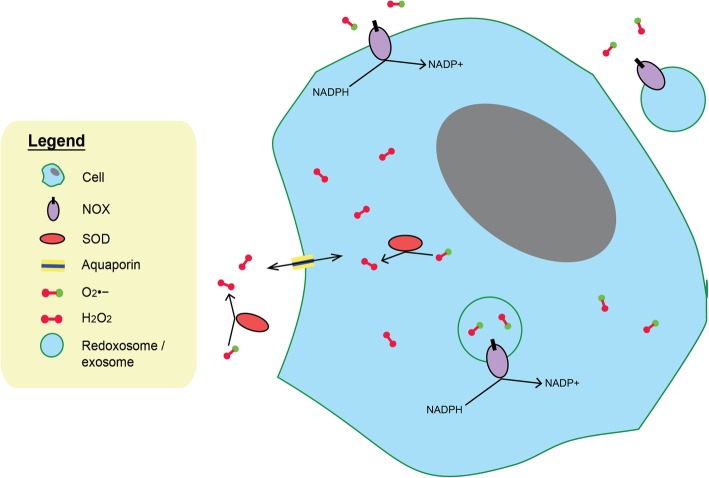
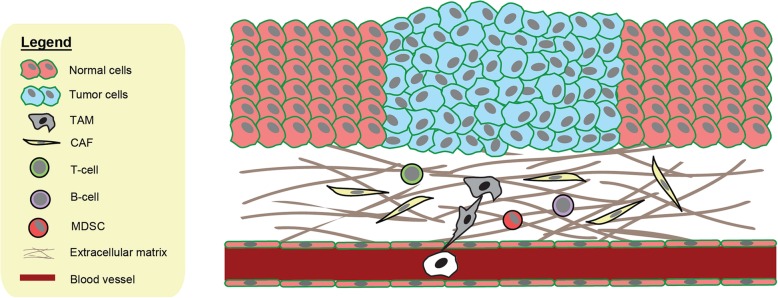
Field cancerization and metastasis are the leading causes for cancer recurrence and mortality in cancer patients. The formation of primary, secondary tumors or metastasis is greatly influenced by multifaceted tumor-stroma interactions, in which stromal components of the tumor microenvironment (TME) can affect the behavior of the cancer cells. Many studies have identified cytokines and growth factors as cell signaling molecules that aid cell to cell communication. However, the functional contribution of reactive oxygen species (ROS), a family of volatile chemicals, as communication molecules are less understood. Cancer cells and various tumor-associated stromal cells produce and secrete a copious amount of ROS into the TME. Intracellular ROS modulate cell signaling cascades that aid in the acquisition of several hallmarks of cancers. Extracellular ROS help to propagate, amplify, and effectively create a mutagenic and oncogenic field which facilitate the formation of multifoci tumors and act as a springboard for metastatic tumor cells. In this review, we summarize our current knowledge of ROS as atypical paracrine signaling molecules for field cancerization and metastasis. Field cancerization and metastasis are often discussed separately; we offer a model that placed these events with ROS as the focal instigating agent in a broader "seed-soil" hypothesis.
Overview
The claims and statistics of this paper haven’t been checked yet.
Run the check — free, no account needed. It reads the open-access text and checks the sources it cites.
Integrity signals
Registry
Cites
Statistics
Figures
Verification
Claims the paper makes
The claims and statistics of this paper haven’t been checked yet.
Run the check — free, no account needed. It reads the open-access text and checks the sources it cites.
Claims other papers make about this one
Each is checked against this paper’s own text: does it say what the citing paper says it does?
In the citing paper
“Oxidative stress is strongly associated with the expression of various inflammatory transcription factors, such as nuclear factor-kB (NF- kB) that modulates proteolytic pathways and promotes inflammation (29–31).”
From Diabetes and Sarcopenic Obesity: Pathogenesis, Diagnosis, and Treatments (2020) · cites this paper as [31]
In the citing paper
“Cancer is a class of diseases resulted from external factors such as environment, diet and radiation as well as internal factors including obesity and diabetes (31, 116, 117).”
From Diabetes and Sarcopenic Obesity: Pathogenesis, Diagnosis, and Treatments (2020) · cites this paper as [31]
Self-check
Percentages, sums and reported differences re-computed from the paper’s own numbers.
The self-check needs the paper’s full text.
Citations
Cites
Bray, F., Ferlay, J., Soerjomataram, I., Siegel, R. L., Torre, L. A., & Jemal, A. (2018) · CA: A Cancer Journal for Clinicians · doi:10.3322/caac.21492 · Cited by 84,109
The basics of epithelial-mesenchymal transition
Kalluri, R., & Weinberg, R. A. (2009) · Journal of Clinical Investigation · doi:10.1172/jci39104 · Cited by 10,196
NF-κB signaling in inflammation
Liu, T., Zhang, L., Joo, D., & Sun, S.-C. (2017) · Signal Transduction and Targeted Therapy · doi:10.1038/sigtrans.2017.23 · Cited by 8,791
How mitochondria produce reactive oxygen species
Murphy, M. P. (2009) · Biochemical Journal · doi:10.1042/bj20081386 · Cited by 8,207
Molecular mechanisms of epithelial–mesenchymal transition
Lamouille, S., Xu, J., & Derynck, R. (2014) · Nature Reviews Molecular Cell Biology · doi:10.1038/nrm3758 · Cited by 8,091
The NOX Family of ROS-Generating NADPH Oxidases: Physiology and Pathophysiology
Bedard, K., & Krause, K.-H. (2007) · Physiological Reviews · doi:10.1152/physrev.00044.2005 · Cited by 6,989
Myeloid-derived-suppressor cells as regulators of the immune system
Gabrilovich, D. I., & Nagaraj, S. (2009) · Nature Reviews Immunology · doi:10.1038/nri2506 · Cited by 6,753
The biology and function of fibroblasts in cancer
Kalluri, R. (2016) · Nature Reviews Cancer · doi:10.1038/nrc.2016.73 · Cited by 4,366
Microenvironmental regulation of metastasis
Joyce, J. A., & Pollard, J. W. (2009) · Nature Reviews Cancer · doi:10.1038/nrc2618 · Cited by 3,684
Slaughter, D. P., Southwick, H. W., & Smejkal, W. (1953) · Cancer · doi:10.1002/1097-0142(195309)6:5 · Cited by 3,558
Requirement for Generation of H 2 O 2 for Platelet-Derived Growth Factor Signal Transduction
Sundaresan, M., Yu, Z.-X., Ferrans, V. J., Irani, K., & Finkel, T. (1995) · Science · doi:10.1126/science.270.5234.296 · Cited by 2,520
Superoxide dismutases: Dual roles in controlling ROS damage and regulating ROS signaling
Wang, Y., Branicky, R. S., Noë, A., & Hekimi, S. (2018) · The Journal of Cell Biology · doi:10.1083/jcb.201708007 · Cited by 2,284
ROS signalling in the biology of cancer
Moloney, J. N., & Cotter, T. G. (2017) · Seminars in Cell and Developmental Biology · doi:10.1016/j.semcdb.2017.05.023 · Cited by 2,030
Bingle, L., Brown, N. J., & Lewis, C. E. (2002) · The Journal of Pathology · doi:10.1002/path.1027 · Cited by 2,022
Ros and ros-mediated cellular signaling
Zhang, J., Wang, X., Vikash, V., Ye, Q., Wu, D., Liu, Y., & Dong, W. (2016) · Oxidative Medicine and Cellular Longevity · doi:10.1155/2016/4350965 · Cited by 1,980
The role of myeloid cells in the promotion of tumour angiogenesis
Murdoch, C., Muthana, M., Coffelt, S. B., & Lewis, C. E. (2008) · Nature Reviews Cancer · doi:10.1038/nrc2444 · Cited by 1,642
Cysteine-Mediated Redox Signaling: Chemistry, Biology, and Tools for Discovery
Paulsen, C. E., & Carroll, K. S. (2013) · Chemical Reviews · doi:10.1021/cr300163e · Cited by 1,313
Reactive oxygen species in cancer cells: Live by the sword, die by the sword
Schumacker, P. T. (2006) · Cancer Cell · doi:10.1016/j.ccr.2006.08.015 · Cited by 1,242
Mitogen-Activated Protein Kinases and Reactive Oxygen Species: How Can ROS Activate MAPK Pathways?
Son, Y., Cheong, Y.-K., Kim, N.-H., Chung, H.-T., Kang, D. G., & Pae, H.-O. (2011) · Journal of Signal Transduction · doi:10.1155/2011/792639 · Cited by 1,219
On the Origin of Cancer Metastasis
Seyfried, T. N., & Huysentruyt, L. C. (2012) · Critical Reviews™ in Oncogenesis · doi:10.1615/critrevoncog.v18.i1-2.40 · Cited by 1,218
Altered recognition of antigen is a mechanism of CD8+ T cell tolerance in cancer
Nagaraj, S., Gupta, K., Писарев, В. М., Kinarsky, L., Sherman, S., Kang, L., Herber, D. L., Schneck, J. P., & Gabrilovich, D. I. (2007) · Nature Medicine · doi:10.1038/nm1609 · Cited by 1,176
Immune cell promotion of metastasis
Kitamura, T., Qian, B.-Z., & Pollard, J. W. (2015) · Nature Reviews Immunology · doi:10.1038/nri3789 · Cited by 1,158
Reactive oxygen species (ROS) and cancer: Role of antioxidative nutraceuticals
Prasad, S., Gupta, S. C., & Tyagi, A. K. (2016) · Cancer Letters · doi:10.1016/j.canlet.2016.03.042 · Cited by 981
Reactive oxygen species and cancer paradox: To promote or to suppress?
Galadari, S., Rahman, A. U., Pallichankandy, S., & Thayyullathil, F. (2017) · Free Radical Biology and Medicine · doi:10.1016/j.freeradbiomed.2017.01.004 · Cited by 918
DNA Base Damage by Reactive Oxygen Species, Oxidizing Agents, and UV Radiation
Cadet, J., & Wagner, J. R. (2013) · Cold Spring Harbor Perspectives in Biology · doi:10.1101/cshperspect.a012559 · Cited by 903
Oxidative Stress and Lipid Peroxidation Products in Cancer Progression and Therapy
Barrera, G. (2012) · ISRN Oncology · doi:10.5402/2012/137289 · Cited by 850
NF- B as a Critical Link Between Inflammation and CancerPreprint
Karin, M. (2009) · Cold Spring Harbor Perspectives in Biology · doi:10.1101/cshperspect.a000141 · Cited by 841
Unraveling the biological roles of reactive oxygen species
Murphy, M. P., Holmgren, A., Larsson, N.-G., Halliwell, B., Chang, C. J., Kalyanaraman, B., Rhee, S. G., Thornalley, P. J., Partridge, L., Gems, D., et al. (2011) · Cell Metabolism · doi:10.1016/j.cmet.2011.03.010 · Cited by 836
Reactive Oxygen Species: A Key Constituent in Cancer Survival
Kumari, S., Badana, A. K., Murali Mohan, G., Gugalavath, S., & Malla, R. R. (2018) · Biomarker Insights · doi:10.1177/1177271918755391 · Cited by 809
Modes of cancer cell invasion and the role of the microenvironment
Clark, A. G., & Vignjevic, D. M. (2015) · Current Opinion in Cell Biology · doi:10.1016/j.ceb.2015.06.004 · Cited by 788
Cancer-Associated Fibroblasts: Their Characteristics and Their Roles in Tumor Growth
Shiga, K., Hara, M., Nagasaki, T., Sato, T., Takahashi, H., & Takeyama, H. (2015) · Cancers · doi:10.3390/cancers7040902 · Cited by 774
Carcinoma-associated fibroblasts: orchestrating the composition of malignancyPreprint
Gascard, P. D., & Tlsty, T. D. (2016) · Genes & Development · doi:10.1101/gad.279737.116 · Cited by 770
Mechanism Regulating Reactive Oxygen Species in Tumor-Induced Myeloid-Derived Suppressor Cells
Corzo, C. A., Cotter, M. J., Cheng, P., Cheng, F., Kusmartsev, S. A., Sotomayor, E. M., Padhya, T. A., McCaffrey, T. V., McCaffrey, J. C., & Gabrilovich, D. I. (2009) · The Journal of Immunology · doi:10.4049/jimmunol.0900092 · Cited by 765
Reciprocal regulation of TGF-β and reactive oxygen species: A perverse cycle for fibrosis
Liu, R.-M., & Desai, L. P. (2015) · Redox Biology · doi:10.1016/j.redox.2015.09.009 · Cited by 725
Ono, M., Kosaka, N., Tominaga, N., Yoshioka, Y., Takeshita, F., Takahashi, R., Yoshida, M., Tsuda, H., Tamura, K., & Ochiya, T. (2014) · Science Signaling · doi:10.1126/scisignal.2005231 · Cited by 703
Roles of NF-κB in Cancer and Inflammatory Diseases and Their Therapeutic Approaches
Park, M., & Hong, J. T. (2016) · Cells · doi:10.3390/cells5020015 · Cited by 658
The Two Faces of Reactive Oxygen Species in Cancer
Reczek, C. R., & Chandel, N. S. (2017) · Annual Review of Cancer Biology · doi:10.1146/annurev-cancerbio-041916-065808 · Cited by 602
The IκB kinase complex in NF‐κB regulation and beyond
Hinz, M., & Scheidereit, C. (2014) · The EMBO Reports · doi:10.1002/embr.201337983 · Cited by 572
Youn, J., & Gabrilovich, D. I. (2010) · European Journal of Immunology · doi:10.1002/eji.201040895 · Cited by 568
Clinical significance of macrophage heterogeneity in human malignant tumors
Komohara, Y., Jinushi, M., & Takeya, M. (2013) · Cancer Science · doi:10.1111/cas.12314 · Cited by 566
Comito, G., Giannoni, E., Segura, C. P., Barcellos‐de‐Souza, P., Raspollini, M. R., Baroni, G., Lanciotti, M., Serni, S., & Chiarugi, P. (2013) · Oncogene · doi:10.1038/onc.2013.191 · Cited by 546
Integrins and EGFR coordinately regulate the pro-apoptotic protein Bim to prevent anoikis
Reginato, M. J., Mills, K. R., Paulus, J. K., Lynch, D. K., Sgroi, D. C., Debnath, J., Muthuswamy, S. K., & Brugge, J. S. (2003) · Nature Cell Biology · doi:10.1038/ncb1026 · Cited by 545
An evolutionary perspective on field cancerization
Curtius, K., Wright, N. A., & Graham, T. A. (2017) · Nature reviews. Cancer · doi:10.1038/nrc.2017.102 · Cited by 540
Ježek, J., Cooper, K. F., & Strich, R. (2018) · Antioxidants · doi:10.3390/antiox7010013 · Cited by 532
Cancer associated fibroblasts: the dark side of the coin.
Cirri, P., & Chiarugi, P. (2011) · Europe PMC (PubMed Central) · Cited by 512
CAR T-cell Therapy: A New Era in Cancer Immunotherapy
Miliotou, Α. N., & Papadopoulou, L. C. (2018) · Current Pharmaceutical Biotechnology · doi:10.2174/1389201019666180418095526 · Cited by 508
STAT1 Signaling Regulates Tumor-Associated Macrophage-Mediated T Cell Deletion
Kusmartsev, S. A., & Gabrilovich, D. I. (2005) · The Journal of Immunology · doi:10.4049/jimmunol.174.8.4880 · Cited by 444
Reactive oxygen species as essential mediators of cell adhesion
Chiarugi, P., Pani, G., Giannoni, E., Taddei, L., Colavitti, R., Raugei, G., Symons, M. C. R., Borrello, S., Galeotti, T., & Ramponi, G. (2003) · The Journal of Cell Biology · doi:10.1083/jcb.200211118 · Cited by 444
Reactive oxygen species in redox cancer therapy
Tong, L., Chuang, C., Wu, S., & Zuo, L. (2015) · Cancer Letters · doi:10.1016/j.canlet.2015.07.008 · Cited by 401
The metastasis-promoting roles of tumor-associated immune cells
Smith, H. A., & Kang, Y. (2013) · Journal of Molecular Medicine · doi:10.1007/s00109-013-1021-5 · Cited by 380
DNA damage by reactive species: Mechanisms, mutation and repair
Jena, N. R. (2012) · Journal of Biosciences · doi:10.1007/s12038-012-9218-2 · Cited by 358
Hervera, A., Virgiliis, F. D., Palmisano, I., Zhou, L., Tantardini, E., Kong, G., Hutson, T. H., Danzi, M. C., Perry, R. B., Santos, C. X. C., et al. (2018) · Nature Cell Biology · doi:10.1038/s41556-018-0039-x · Cited by 336
Cancer-associated fibroblasts in tumor microenvironment–Accomplices in tumor malignancy
Liao, Z., Tan, Z. W., Zhu, P., & Tan, N. S. (2019) · Cellular Immunology · doi:10.1016/j.cellimm.2017.12.003 · Cited by 335
Self-citationDNA damage induces reactive oxygen species generation through the H2AX-Nox1/Rac1 pathway
Kang, M. A., So, E.-Y., Simons, A. L., Spitz, D. R., & Ouchi, T. (2012) · Cell Death & Disease · doi:10.1038/cddis.2011.134 · Cited by 311
Redox regulation of protein kinases
Corcoran, A., & Cotter, T. G. (2013) · The FEBS Journal · doi:10.1111/febs.12224 · Cited by 306
ROS-modulated therapeutic approaches in cancer treatment
Raza, M. H., Siraj, S., Arshad, A., Waheed, U., Aldakheel, F. M., Alduraywish, S. A., & Arshad, M. M. U. D. (2017) · Journal of Cancer Research and Clinical Oncology · doi:10.1007/s00432-017-2464-9 · Cited by 304
Herrera, M., Herrera, A., Domínguez, G., Silva, J., García‐Barberán, V., García, J. M., Gómez, I., Soldevilla, B., Muñoz, C., Provencio, M., et al. (2013) · Cancer Science · doi:10.1111/cas.12096 · Cited by 298
Cause and Consequences of Genetic and Epigenetic Alterations in Human Cancer
Sadiković, B., Al-Romaih, K. I., Squire, J. A., & Zieleńska, M. (2008) · Current Genomics · doi:10.2174/138920208785699580 · Cited by 296
Zhu, P., Tan, M., Huang, R.-L., Tan, C. K., Chong, H. C., Pal, M., Lam, C. R. I., Boukamp, P., Pan, J. Y., Tan, S. H., et al. (2011) · Cancer Cell · doi:10.1016/j.ccr.2011.01.018 · Cited by 288
Self-citationMunn, L. L. (2016) · WIREs Systems Biology and Medicine · doi:10.1002/wsbm.1370 · Cited by 273
Role of Nox Family NADPH Oxidases in Host Defense
Leto, T. L., & Geiszt, M. (2006) · Antioxidants and Redox Signaling · doi:10.1089/ars.2006.8.1549 · Cited by 266
Macrophages eat cancer cells using their own calreticulin as a guide: Roles of TLR and Btk
Feng, M., Chen, J. Y., Weissman-Tsukamoto, R., Volkmer, J.-P., Ho, P. Y., McKenna, K. M., Cheshier, S. H., Zhang, M., Ring, N. G., Gip, P., et al. (2015) · Proceedings of the National Academy of Sciences · doi:10.1073/pnas.1424907112 · Cited by 253
Werner, E., & Werb, Z. (2002) · The Journal of Cell Biology · doi:10.1083/jcb.200111028 · Cited by 252
Young, M. R., Newby, M., & Wepsic, H. T. (1987) · PubMed · Cited by 231
Multifocal Epithelial Tumors and Field Cancerization from Loss of Mesenchymal CSL Signaling
Hu, B., Castillo, E., Harewood, L., Ostano, P., Reymond, A., Dummer, R., Raffoul, W., Hoetzenecker, W., Hofbauer, G. F. L., & Dotto, G. P. (2012) · Cell · doi:10.1016/j.cell.2012.03.048 · Cited by 211
Hashimoto, O., Yoshida, M., Koma, Y., Yanai, T., Hasegawa, D., Kosaka, Y., Nishimura, N., & Yokozaki, H. (2016) · The Journal of Pathology · doi:10.1002/path.4769 · Cited by 190
OuYang, L.-Y., Wu, X.-J., Ye, S., Zhang, R.-X., Li, Z.-L., Liao, W., Pan, Z.-Z., Zheng, L., Zhang, X.-S., Wang, Z., et al. (2015) · Journal of Translational Medicine · doi:10.1186/s12967-015-0410-7 · Cited by 189
Redox regulation of protein kinases
Truong, T. H., & Carroll, K. S. (2013) · Critical Reviews in Biochemistry and Molecular Biology · doi:10.3109/10409238.2013.790873 · Cited by 182
Synergy between T-cell immunity and inhibition of paracrine stimulation causes tumor rejection.
Seung, L. P., Rowley, D. A., Dubey, P., & Schreiber, H. W. (1995) · Proceedings of the National Academy of Sciences · doi:10.1073/pnas.92.14.6254 · Cited by 176
Multifocal epithelial tumors and field cancerization: stroma as a primary determinant
Dotto, G. P. (2014) · Journal of Clinical Investigation · doi:10.1172/jci72589 · Cited by 172
Jounai, N., Kobiyama, K., Takeshita, F., & Ishii, K. J. (2013) · Frontiers in Cellular and Infection Microbiology · doi:10.3389/fcimb.2012.00168 · Cited by 169
Tobar, N., Villar, V. H., & Santibanez, J. F. (2010) · Molecular and Cellular Biochemistry · doi:10.1007/s11010-010-0418-5 · Cited by 168
The differential role of reactive oxygen species in early and late stages of cancer
Assi, M. (2017) · American Journal of Physiology-Regulatory, Integrative and Comparative Physiology · doi:10.1152/ajpregu.00247.2017 · Cited by 157
Mukherjee, S., Ghosh, S., Choudhury, S., Adhikary, A., Manna, K., Dey, S., Sa, G., Das, T., & Chattopadhyay, S. (2013) · The Journal of Nutritional Biochemistry · doi:10.1016/j.jnutbio.2013.07.005 · Cited by 149
Cancer: An Oxidative Crosstalk between Solid Tumor Cells and Cancer Associated Fibroblasts
Arcucci, A., Ruocco, M. R., Granato, G., Sacco, A. M., & Montagnani, S. (2016) · BioMed Research International · doi:10.1155/2016/4502846 · Cited by 139
Metabolic Reprogramming of Cancer Associated Fibroblasts: The Slavery of Stromal Fibroblasts
Avagliano, A., Granato, G., Ruocco, M. R., Romano, V., Belviso, I., Carfora, A., Montagnani, S., & Arcucci, A. (2018) · BioMed Research International · doi:10.1155/2018/6075403 · Cited by 139
The Role of Oxidative Stress Modulators in Breast Cancer
Gürer-Orhan, H., İnce, E., Konyar, D., Saso, L., & Süzen, S. (2017) · Current Medicinal Chemistry · doi:10.2174/0929867324666170711114336 · Cited by 132
Advancement of NF-κB Signaling Pathway: A Novel Target in Pancreatic Cancer
Pramanik, K. C., Makena, M. R., Bhowmick, K., & Pandey, M. K. (2018) · International Journal of Molecular Sciences · doi:10.3390/ijms19123890 · Cited by 132
Cancer-associated fibroblasts enact field cancerization by promoting extratumoral oxidative stress
Chan, J. S. K., Tan, M. J., Sng, M. K., Teo, Z., Phua, T., Choo, C. C., LI, L., Zhu, P., & Tan, N. S. (2017) · Cell Death & Disease · doi:10.1038/cddis.2016.492 · Cited by 130
Self-citationManna, P. R., & Stocco, D. M. (2011) · Journal of Signal Transduction · doi:10.1155/2011/821615 · Cited by 127
Robertson, I. B., & Rifkin, D. B. (2013) · Cytokine & Growth Factor Reviews · doi:10.1016/j.cytogfr.2013.06.003 · Cited by 117
Targeting extracellular ROS signaling of tumor cells.
Bauer, G. (2014) · PubMed · Cited by 111
Caveolin-1 is a negative regulator of NADPH oxidase-derived reactive oxygen species
Chen, F., Barman, S. A., Yu, Y., Haigh, S., Wang, Y., Dou, H., Bagi, Z. A., Han, W., Su, Y., & Fulton, D. J. (2014) · Free Radical Biology and Medicine · doi:10.1016/j.freeradbiomed.2014.04.029 · Cited by 99
The Role of TGF-β Signaling in Lung Cancer Associated with Idiopathic Pulmonary Fibrosis
Saito, A., Horie, M., Micke, P., & Nagase, T. (2018) · International Journal of Molecular Sciences · doi:10.3390/ijms19113611 · Cited by 94
Li, X., Xu, Q., Wu, Y., Li, J., Tang, D., Han, L., & Fan, Q. (2014) · Carcinogenesis · doi:10.1093/carcin/bgu046 · Cited by 91
The Plasma Membrane: A Platform for Intra- and Intercellular Redox Signaling
Nordzieke, D. E., & Medraño-Fernandez, I. (2018) · Antioxidants · doi:10.3390/antiox7110168 · Cited by 90
Du, S., Miao, J., Zhu, Z., Xu, E., Shi, L., Ai, S., Wang, F., Kang, X., Chen, H., Lu, X., et al. (2018) · Cell Death and Disease · doi:10.1038/s41419-018-0953-7 · Cited by 84
Hypoxia-driven immunosuppression contributes to the pre-metastatic niche
Sceneay, J., Parker, B. S., Smyth, M. J., & Möller, A. (2012) · OncoImmunology · doi:10.4161/onci.22355 · Cited by 80
Regulation of anoikis resistance by NADPH oxidase 4 and epidermal growth factor receptor
Kim, H., Sung, J. Y., Park, E., Kho, S., Koo, K. H., Park, S.-Y., Goh, S., Jeon, Y. K., Oh, S., Park, B.-K., et al. (2017) · British Journal of Cancer · doi:10.1038/bjc.2016.440 · Cited by 63
Ghosh, S., Mukherjee, S., Choudhury, S., Gupta, P., Adhikary, A., Baral, R., & Chattopadhyay, S. (2015) · Cellular Signalling · doi:10.1016/j.cellsig.2015.03.013 · Cited by 60
Buessow, S. C., Paul, R. D., & Lopez, D. M. (1984) · PubMed · Cited by 58
Stromal contributions to the carcinogenic process
Spaw, M. C., Anant, S., & Thomas, S. M. (2016) · Molecular Carcinogenesis · doi:10.1002/mc.22583 · Cited by 54
Narita, Y., Wakita, D., Ohkur, T., Chamoto, K., & Nishimura, T. (2009) · Biomedical Research · doi:10.2220/biomedres.30.7 · Cited by 48
Lam, C. R. I., Tan, C., Teo, Z. Q., Tay, C. Y., Phua, T., Wu, Y., Cai, P., Tan, L. P., Chen, X., Zhu, P., et al. (2013) · Cell Death and Disease · doi:10.1038/cddis.2013.339 · Cited by 48
Self-citationRegulation of miR-23b expression and its dual role on ROS production and tumour development
Donadelli, M., Dando, I., Fiorini, C., & Palmieri, M. (2014) · Cancer Letters · doi:10.1016/j.canlet.2014.04.012 · Cited by 47
Field Cancerization: Something New Under the Sun
Vanharanta, S., & Massagué, J. (2012) · Cell · doi:10.1016/j.cell.2012.05.013 · Cited by 44
Hamilton, M. J., Bosiljcic, M., LePard, N. E., Halvorsen, E. C., Ho, V. W., Banáth, J. P., Krystal, G., & Bennewith, K. L. (2013) · The Journal of Immunology · doi:10.4049/jimmunol.1300096 · Cited by 44
Jones, A. C., Antillon, K. S., Jenkins, S. M., Janos, S. N., Overton, H. N., Shoshan, D. S., Fischer, E. G., Trujillo, K. A., & Bisoffi, M. (2015) · PLoS ONE · doi:10.1371/journal.pone.0119314 · Cited by 34
The RCAN1 inhibits NF-κB and suppresses lymphoma growth in mice
Liu, C., Zheng, L., Wang, H., Ran, X., Liu, H., & Sun, X. (2015) · Cell Death and Disease · doi:10.1038/cddis.2015.260 · Cited by 31
Remarks on a Case of Alternate Partial Anaesthesia
Paget, G. (1889) · BMJ · doi:10.1136/bmj.1.1462.1 · Cited by 28
KRAS-driven ROS promote malignant transformation
Suh, Y., & Lee, S. (2015) · Molecular & Cellular Oncology · doi:10.4161/23723548.2014.968059 · Cited by 15
Lee, Y., Choi, J. H., Ha, K.-H., & Jue, D. (2012) · Experimental & Molecular Medicine · doi:10.3858/emm.2012.44.8.058 · Cited by 9
Chen, F., Barman, S. A., Yu, Y., Haigh, S., Wang, Y., Black, S. M., Rafikov, R., Dou, H., Bagi, Z. A., Han, W., et al. (2014) · Free Radical Biology and Medicine · doi:10.1016/j.freeradbiomed.2014.11.001 · Cited by 7
Regulation of EMT by TGF-β Signaling in Cancer Cells
Saitoh, M. (2017) · Current human cell research and applications · doi:10.1007/978-981-10-7296-3_4 · Cited by 6
Seton-Rogers, S. E. (2012) · Nature reviews. Cancer · doi:10.1038/nrc3324 · Cited by 5
[Cell death in Jurkat cells induced by oxygen/nitrogen stress].
Enukidze, M., Mg, M., Intskirveli, N. A., Nd, B., & Sanikidze, T. V. (2009) · PubMed · Cited by 5
Cited by
Sorted by citations
Role of Reactive Oxygen Species in Cancer Progression: Molecular Mechanisms and Recent Advancements
Aggarwal, V., Tuli, H. S., Varol, A., Thakral, F., Yerer, M. B., Sak, K., Varol, M., Jain, A., Khan, M. A., & Sethi, G. (2019) · Biomolecules · doi:10.3390/biom9110735 · Cited by 1,260
Altered metabolism in cancer: insights into energy pathways and therapeutic targets
Tufail, M., Jiang, C.-H., & Li, N. (2024) · Molecular Cancer · doi:10.1186/s12943-024-02119-3 · Cited by 534
From pre-diabetes to diabetes: diagnosis, treatments and translational research
Khan, R., Chua, Z., Tan, J., Yang, Y., Liao, Z., & Zhao, Y. (2019) · Medicina · doi:10.3390/medicina55090546 · Cited by 484
Self-citationChemotherapy: a double-edged sword in cancer treatment
Behranvand, N., Nasri, F., Emameh, R. Z., Khani, P., Hosseini, A., Garssen, J., & Falak, R. (2021) · Cancer Immunology Immunotherapy · doi:10.1007/s00262-021-03013-3 · Cited by 454
The interplay of ROS and the PI3K/Akt pathway in autophagy regulation
Kma, L., & Baruah, T. J. (2021) · Biotechnology and Applied Biochemistry · doi:10.1002/bab.2104 · Cited by 408
Metadata
- Authors
- Liao, Z., Chua, D., & Tan, N. S.
- Affiliations
- Nanyang Technological University (SG)
- Corresponding author
- Tan, Nguan Soon
- Venue
- Molecular Cancer
- Published
- 2019-03-30
- Volume
- 18
- Issue
- 1
- Pages
- 65-65
- ISSN
- 1476-4598 (ISSN-L)
- PMC
- PMC6441160
- OpenAlex
- W2943576188
- Cited by
- 284
- References
- 106
- Citations by year
- 2026: 18 · 2025: 34 · 2024: 38 · 2023: 42 · 2022: 60 · 2021: 51 · 2020: 32 · 2019: 8
- FWCI
- 3.33
- Type
- journal article
- Language
- en
- Open access
- gold
- doi.org
- Licence
- Locations
- Molecular Cancer (publishedVersion, cc-by)
- PubMed Central (publishedVersion, cc-by)
- PubMed (publishedVersion)
- DOAJ (DOAJ: Directory of Open Access Journals) (submittedVersion, cc-by-sa)
- DR-NTU (Nanyang Technological University) (submittedVersion, cc-by)
- Funders
- Ministry of Education, Singapore (2014-T2-1-012, 2017-T1-002-103)
- Topics
- Life Sciences › Biochemistry, Genetics and Molecular Biology › Molecular Biology › Redox biology and oxidative stress
- Life Sciences › Biochemistry, Genetics and Molecular Biology › Molecular Biology › Cancer and biochemical research
- Health Sciences › Medicine › Oncology › Cancer Cells and Metastasis
- Keywords
- reactive oxygen species, field cancerization, metastasis, tumor microenvironment, tumor-stroma interactions, paracrine signaling, multifocal tumors, cancer hallmarks, cytokines and growth factors
- MeSH terms
- Animals, Cell Communication, Humans, Neoplasm Metastasis, Neoplasms, Signal Transduction, Reactive Oxygen Species, Oxidative Stress
About these checks
Registry, retraction, Cites and statistics results are computed, not judged, with one exception: a printed reference that no index lists is read once by a model before it counts as a citation error. Claims are extracted by a model and kept only when their quote appears verbatim in the text; each cited source is then checked, with a model’s help, for whether it says what the claim relies on. Those verdicts can be wrong — read the claim’s quote and the cited source before relying on one.
Statistics and arithmetic are recomputed, not judged.
Confidence bands are shown only for fields calibrated on our annotated test set. None is calibrated yet, so no band is shown.
What counts as a claim ›How we measure confidence ›How we check this ›
Are you an author, or do you see a problem with this page? Request a review
