

Emerging roles and therapeutic value of exosomes in cancer metastasis
Open accessThe DOI matches its Crossref record; 131 of the 131 references it cites were found in a registry or an index.
Abstract
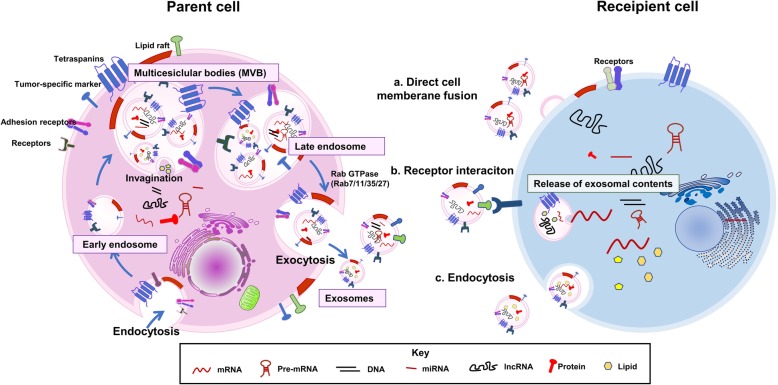
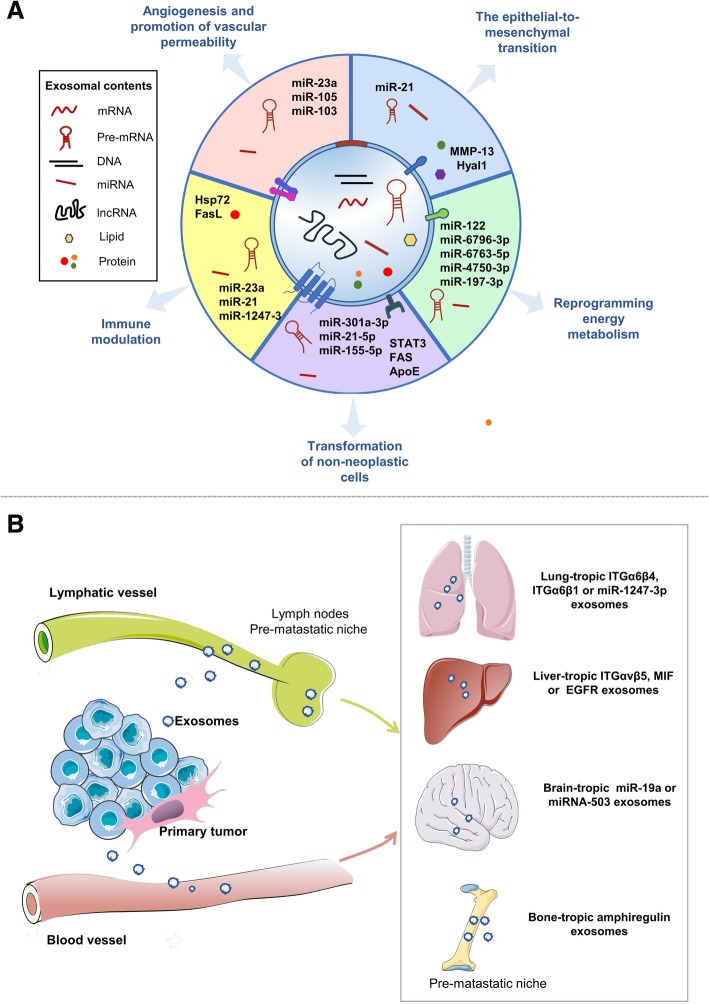
Exosomes are cell-derived vesicles of 30 to 150 nm that contain diverse proteins, nucleic acids, and lipids. These vesicles facilitate effective intercellular communication and trigger profound environmental changes. In recent years, many studies have identified diverse roles for exosomes in tumor metastasis, a major cause of cancer-related deaths; furthermore, circulating tumor-derived exosomes can drive the initiation and progression of metastasis and determine the specific target organs affected. Fortunately, our growing understanding of exosomes and relevant modification technology have provided new ideas for potential treatment of tumor metastases. Here we review recent advances concerning the role of exosomes in metastasis, focusing on their regulatory mechanisms and therapeutic targeting in advanced cancer.
Overview
The claims and statistics of this paper haven’t been checked yet.
Free: it reads the open-access text and checks the first 5 claims that cite a source we can check. Create a free account to check every claim.
Integrity signals
Registry
Cites
Statistics
Figures
Verification
Claims the paper makes
The claims and statistics of this paper haven’t been checked yet.
Free: it reads the open-access text and checks the first 5 claims that cite a source we can check. Create a free account to check every claim.
Claims other papers make about this one
Each is checked against this paper’s own text: does it say what the citing paper says it does?
The source backs part of the claim, not all of it — or backs it for a different population, condition or comparison.
In the citing paper
“A number of preclinical and clinical findings have reported that targeting pathways and molecules involved in the formation of exosome can inhibit tumor progression, such as heparanase/syndecan-1 axis [182, 183] or syndecan heparan sulfate proteoglycans [179, 184].”
From Tumor microenvironment complexity and therapeutic implications at a glance (2020) · cites this paper as [183]
Experimental — accuracy not yet measured
Self-check
Percentages, sums and reported differences re-computed from the paper’s own numbers.
The self-check needs the paper’s full text.
Citations
Cites
1 retracted
Cox, T. R., Rumney, R. M. H., Schoof, E. M., Perryman, L., Høye, A. M., Agrawal, A., Bird, D., Latif, N. A., Forrest, H., Evans, H. R., et al. (2015) · Nature · doi:10.1038/nature14492 · Cited by 482
RetractedHanahan, D., & Weinberg, R. A. (2000) · Cell · doi:10.1016/s0092-8674(00)81683-9 · Cited by 29,219
Valadi, H., Ekström, K., Bossios, A., Sjöstrand, M., Lee, J. J., & Lötvall, J. O. (2007) · Nature Cell Biology · doi:10.1038/ncb1596 · Cited by 12,834 · cited 1×
“The principal RNA of exosomes is miRNA [13, 14], but they also contain long non-coding RNAs (LncRNAs), which regulate gene expression in many ways [15].”
BackgroundExosomes: composition, biogenesis and function
Théry, C., Zitvogel, L., & Amigorena, S. (2002) · Nature Reviews Immunology · doi:10.1038/nri855 · Cited by 5,346 · cited 1×
“Exosomes are constitutively secreted by almost all cell types and can transport proteins, lipids, DNA, and RNA to recipient cells [11].”
BackgroundInvolvement of chemokine receptors in breast cancer metastasis
Müller, A., Homey, B., Soto, H., Ge, N., Catron, D., Buchanan, M. E., McClanahan, T., Murphy, E., Yuan, W., Wagner, S. N., et al. (2001) · Nature · doi:10.1038/35065016 · Cited by 5,340
The distribution of secondary growths in cancer of the breast.
Paget, S. (1889) · The Lancet · doi:10.1016/s0140-6736(00)49915-0 · Cited by 5,277 · cited 1×
“In 1889, Stephen Paget proposed the “seed and soil” hypothesis of metastasis, which claims that the distribution of cancers is not random [2].”
BackgroundTumour exosome integrins determine organotropic metastasis
Hoshino, A., Costa-Silva, B., Shen, T.-L., Rodrigues, G., Hashimoto, A., Tesic Mark, M., Molina, H., Kohsaka, S., Di Giannatale, A., Ceder, S., et al. (2015) · Nature · doi:10.1038/nature15756 · Cited by 5,101 · cited 1×
“Notably, they found that exosomes containing ITGαvβ5 specifically bind to Kupffer cells, thereby facilitating liver tropism, whereas exosomes expressing ITGα6β4 and ITGα6β1 favorably bind to lung-resident fibroblasts and epithelial cells, mediating lung tropism [8].”
BackgroundTumor Metastasis: Molecular Insights and Evolving Paradigms
Valastyan, S., & Weinberg, R. A. (2011) · Cell · doi:10.1016/j.cell.2011.09.024 · Cited by 4,011 · cited 1×
“It is characterized by a loss of cell polarity and cell-cell adhesive ability in epithelial cells and an increase in the migratory and invasive ability that produces mesenchymal stem cells [27, 28].”
BackgroundMathieu, M., Martin-Jaular, L., Lavieu, G., & Théry, C. (2019) · Nature Cell Biology · doi:10.1038/s41556-018-0250-9 · Cited by 3,737 · cited 1×
“3) the process of exosome uptake and cargo delivery into the cytosol of receptor cells need to be more fully understood [115].”
BackgroundMelanoma exosomes educate bone marrow progenitor cells toward a pro-metastatic phenotype through MET
Peinado, H., Alečković, M., Lavotshkin, S., Matei, I., Costa-Silva, B., Moreno-Bueno, G., Hergueta-Redondo, M., Williams, C., García-Santos, G., Ghajar, C. M., et al. (2012) · Nature Medicine · doi:10.1038/nm.2753 · Cited by 3,715 · cited 1×
“In a mouse model of melanoma, interactions between exosomes and the capillary wall have also been observed to increase vascular permeability, thereby leading to tumor cell leakage from blood vessels [37].”
Background
Cited by
Tumor microenvironment complexity and therapeutic implications at a glance
Baghban, R., Roshangar, L., Jahanban-Esfahlan, R., Seidi, K., Ebrahimi-Kalan, A., Jaymand, M., Kolahian, S., Javaheri, T., & Zare, P. (2020) · Cell Communication and Signaling · doi:10.1186/s12964-020-0530-4 · Cited by 1,784
“A number of preclinical and clinical findings have reported that targeting pathways and molecules involved in the formation of exosome can inhibit tumor progression, such as heparanase/syndecan-1 axis [182, 183] or syndecan heparan sulfate proteoglycans [179, 184] .”
BackgroundExosomes promote pre-metastatic niche formation in ovarian cancer
Feng, W., Dean, D. C., Hornicek, F. J., Shi, H., & Duan, Z. (2019) · Molecular Cancer · doi:10.1186/s12943-019-1049-4 · Cited by 289
Tumor-associated exosomes promote lung cancer metastasis through multiple mechanisms
Jiang, C., Zhang, N., Hu, X., & Wang, H. (2021) · Molecular Cancer · doi:10.1186/s12943-021-01411-w · Cited by 209
“They can increase the invasion ability of tumor cells and promote tumor metastasis, which has become a research hotspot in the field of cancer recently [7, 8].”
BackgroundCommunication in the Cancer Microenvironment as a Target for Therapeutic Interventions
Dominiak, A., Chełstowska, B., Olejarz, W., & Nowicka, G. (2020) · Cancers · doi:10.3390/cancers12051232 · Cited by 188
“As a result of fusion, receptor-mediated internalization or endocytosis of the EVs with the plasmalemma of the recipient cell, transported proteins (enzymes, membrane proteins, heat shock proteins, transcription factors), mRNA, tRNAs, non-coding RNAs (LncRNAs), microRNAs and DNA, and lipids (such as sphingolipids, cer…”
BackgroundExosomes and extracellular vesicles: Rethinking the essential values in cancer biology
Yokoi, A., & Ochiya, T. (2021) · Seminars in Cancer Biology · doi:10.1016/j.semcancer.2021.03.032 · Cited by 167
Liang, M., Chen, X., Wang, L., Qin, L., Wang, H., Sun, Z., Zhao, W., & Geng, B. (2020) · Journal of Experimental & Clinical Cancer Research · doi:10.1186/s13046-020-01688-7 · Cited by 166
“Exosomes, as a novel mechanism of intercellular communication, can shuttle bioactive molecules from one cell to another, leading to the exchange of genetic information and reprogramming of recipient cells [10, 11].”
BackgroundLabel-Free Isolation of Exosomes Using Microfluidic Technologies
Hassanpour Tamrin, S., Sanati Nezhad, A., & Sen, A. (2021) · ACS Nano · doi:10.1021/acsnano.1c03469 · Cited by 162
Emerging roles of intratumor microbiota in cancer metastasis
Fu, A., Yao, B., Dong, T., & Cai, S. (2022) · Trends in Cell Biology · doi:10.1016/j.tcb.2022.11.007 · Cited by 150
Exosomes in Prostate Cancer Diagnosis, Prognosis and Therapy
Lorenc, T., Klimczyk, K., Michalczewska, I., Słomka, M., Kubiak-Tomaszewska, G., & Olejarz, W. (2020) · International Journal of Molecular Sciences · doi:10.3390/ijms21062118 · Cited by 143
Hosseini, R., Sarvnaz, H., Arabpour, M., Ramshe, S. M., Asef‐Kabiri, L., Yousefi, H., Akbari, M. E., & Eskandari, N. (2022) · Molecular Cancer · doi:10.1186/s12943-021-01492-7 · Cited by 124
“Exosomal fas‐l, survivin, B7‐H3 and PD‐L1 Increasing evidence shows that TDEs harbor a plethora of membrane-associated proteins that are crucially participated in tumor-immune escape [42, 129].”
BackgroundUveal melanoma pathobiology: Metastasis to the liver
Bustamante, P., Piquet, L., Landreville, S., & Burnier, J. V. (2020) · Seminars in Cancer Biology · doi:10.1016/j.semcancer.2020.05.003 · Cited by 118
Shang, S., Wang, J., Chen, S., Tian, R., Zeng, H., Wang, L., Xia, M., Zhu, H., & Zuo, C. (2019) · Cancer Medicine · doi:10.1002/cam4.2633 · Cited by 114
EVs and Bioengineering: From Cellular Products to Engineered Nanomachines
Villata, S., Canta, M., & Cauda, V. (2020) · International Journal of Molecular Sciences · doi:10.3390/ijms21176048 · Cited by 114
“CAF in turnsare able to secrete factors and EVs, promoting cancer proliferation, progression, invasion, and metastasis [32].”
BackgroundNovel therapeutic targets for cancer metastasis
Stoletov, K. V., Beatty, P. H., & Lewis, J. D. (2020) · Expert Review of Anticancer Therapy · doi:10.1080/14737140.2020.1718496 · Cited by 113
Mo, Y., Leung, L. L., Mak, C. S. L., Wang, X., Chan, W.-S., Hui, L. M. N., Tang, H. W., Siu, M. K. Y., Sharma, R., Xu, D., et al. (2023) · Molecular Cancer · doi:10.1186/s12943-022-01703-9 · Cited by 108
“Recent investigations have depicted that exosomes with secreted miRNAs are vital constituents of the secretome that participated in the oncogenic reprogramming of cancer cells and forming premetastatic niches [47, 48].”
BackgroundRole of Exosomes for Delivery of Chemotherapeutic Drugs
Gebeyehu, A., Kommineni, N., Meckes, D. G., & Sachdeva, M. S. (2021) · Critical Reviews™ in Therapeutic Drug Carrier Systems · doi:10.1615/critrevtherdrugcarriersyst.2021036301 · Cited by 87
Recent progress in exosome research: isolation, characterization and clinical applications
Wang, X., Xia, J., Yang, L., Dai, J., & He, L. (2023) · Cancer Gene Therapy · doi:10.1038/s41417-023-00617-y · Cited by 96
“The involvement of exosomes was also observed in liver metastasis, bone metastasis and brain metastasis [35, 41].”
BackgroundCircFNDC3B sequestrates miR‐937‐5p to derepress TIMP3 and inhibit colorectal cancer progression
Zeng, W., Liu, Y., Li, W., Li, Y., & Zhu, J. (2020) · Molecular Oncology · doi:10.1002/1878-0261.12796 · Cited by 94
Cai, J., Gong, L., Li, G., Guo, J., Yi, X., & Wang, Z. (2021) · Cell Death and Disease · doi:10.1038/s41419-021-03490-5 · Cited by 89
Exosomes in the tumor microenvironment: Promoting cancer progression
Jin, Y., Xing, J., Xu, K., Liu, D., & Zhuo, Y. (2022) · Frontiers in Immunology · doi:10.3389/fimmu.2022.1025218 · Cited by 93
Exosome Traceability and Cell Source Dependence on Composition and Cell-Cell Cross Talk
Hamzah, R. N., Alghazali, K. M., Biris, A. S., & Griffin, R. J. (2021) · International Journal of Molecular Sciences · doi:10.3390/ijms22105346 · Cited by 79
“Many works have sought to use exosomes as therapeutic vehicles to treat different types of diseases [13], such as breast cancer [14],”
BackgroundCox, M. J., Lucien, F., Sakemura, R. L., Boysen, J. C., Kim, Y., Horvei, P., Roman, C. M., Hansen, M. J., Tapper, E. E., Siegler, E. L., et al. (2020) · Molecular Therapy · doi:10.1016/j.ymthe.2020.12.033 · Cited by 87
Revolutionizing anti-tumor therapy: unleashing the potential of B cell-derived exosomes
Xiong, J., Chi, H., Yang, G., Zhao, S., Zhang, J., Tran, L. J., Xia, Z., Yang, F., & Tian, G. (2023) · Frontiers in Immunology · doi:10.3389/fimmu.2023.1188760 · Cited by 86
Therapeutic Targeting of Signaling Pathways Related to Cancer Stemness
Espinosa-Sánchez, A., Suárez-Martínez, E., Sánchez-Díaz, L., & Carnero, A. (2020) · Frontiers in Oncology · doi:10.3389/fonc.2020.01533 · Cited by 71
Emerging Role of Exosomes in Liquid Biopsy for Monitoring Prostate Cancer Invasion and Metastasis
Gao, Z., Pang, B., Li, J., Gao, N., Fan, T., & Li, Y. (2021) · Frontiers in Cell and Developmental Biology · doi:10.3389/fcell.2021.679527 · Cited by 76
Exosomes: a promising avenue for cancer diagnosis beyond treatment
Wang, Z., Wang, Q., Qin, F., & Chen, J. (2024) · Frontiers in Cell and Developmental Biology · doi:10.3389/fcell.2024.1344705 · Cited by 66
“For example, interfering with exosome release from cancer cells may curtail their ability to communicate with neighboring cells and create a conducive environment for tumor growth (Wu M et al., 2019).”
BackgroundEngineering of Exosomes to Target Cancer Metastasis
Zhang, Z., Dombroski, J. A., & King, M. R. (2019) · Cellular and Molecular Bioengineering · doi:10.1007/s12195-019-00607-x · Cited by 66
Sun, J., Zhang, D., Gao, C., Zhang, Y., & Dai, Q.-S. (2019) · Medical science monitor basic research/Medical science monitor. Basic research · doi:10.12659/msmbr.918134 · Cited by 65
“Many studies have shown that DNAs, exosome proteins and RNA, make contributions to the development of HCC [3,17,18].”
BackgroundNegahdaripour, M., Owji, H., Eskandari, S., Zamani, M., Vakili, B., & Nezafat, N. (2020) · Expert Opinion on Biological Therapy · doi:10.1080/14712598.2021.1825677 · Cited by 62
Progress in extracellular vesicle biology and their application in cancer medicine
Srivastava, A., Amreddy, N., Pareek, V., Chinnappan, M., Ahmed, R. A., Mehta, M., Razaq, M., Munshi, A., & Ramesh, R. (2020) · Wiley Interdisciplinary Reviews Nanomedicine and Nanobiotechnology · doi:10.1002/wnan.1621 · Cited by 64
Li, Y., Zhao, W., Wang, Y., Wang, H., & Liu, S. (2022) · Journal of Nanobiotechnology · doi:10.1186/s12951-022-01382-0 · Cited by 61
“Standard guidelines remain to be established for the manufacturing, purification, dosage, and duration of EV-based drugs [159].”
BackgroundWang, Y., Yuan, A.-J., Wu, Y., Wu, L., & Zhang, L. (2022) · Journal of Functional Foods · doi:10.1016/j.jff.2022.105384 · Cited by 60
Schwarzenbach, H., & Gahan, P. B. (2021) · Non-Coding RNA · doi:10.3390/ncrna7010004 · Cited by 53
Silicon Nanowires and Their Impact on Cancer Detection and Monitoring
Smith, R., Geary, S. M., & Salem, A. K. (2020) · ACS Applied Nano Materials · doi:10.1021/acsanm.0c01572 · Cited by 50
Exosomes in cancer development
Stefanius, K., Servage, K. A., & Orth, K. (2021) · Current Opinion in Genetics & Development · doi:10.1016/j.gde.2020.12.018 · Cited by 49
Blood Biomarkers of Uveal Melanoma: Current Perspectives
Bande, M. F., Fernandez-Marta, B., Lago‐Baameiro, N., Santiago-Varela, M., Silva, P., Blanco‐Teijeiro, M. J., Pardo, M., & Piñeiro, A. (2020) · Clinical ophthalmology · doi:10.2147/opth.s199064 · Cited by 48
“Interest in exosomes as specific and accurate biomarkers has intensified dramatically in recent years due to their ability to transport a variety of molecular components from the cells of origin.(114) Exosomes released by tumor cells have also been shown to play a very active role in tumorigenesis, metastasis, and res…”
BackgroundMDA-9/Syntenin/SDCBP: new insights into a unique multifunctional scaffold protein
Pradhan, A. K., Maji, S., Das, S. K., Emdad, L., Sarkar, D., & Fisher, P. B. (2020) · Cancer and Metastasis Reviews · doi:10.1007/s10555-020-09886-7 · Cited by 47
“Interest in exosomes is growing due to their critical roles in cellular signaling [81].”
BackgroundLi, Y., Yu, S., Li, L., Chen, J., Quan, M., Li, Q., & Gao, Y. (2020) · Cell Death and Disease · doi:10.1038/s41419-020-2479-z · Cited by 47
Extracellular Vesicles as Drug Delivery Systems in Cancer
Hernandez-Oller, L., Seras‐Franzoso, J., Andrade, F., Rafael, D. F. D. S., Abasolo, I., Gener, P., & Schwartz, S. (2020) · Pharmaceutics · doi:10.3390/pharmaceutics12121146 · Cited by 46
“Many studies have shown that cancer cell-derived exosomes can also affect and change the surrounding microenvironment by reprogramming the stromal cells to create a favorable niche for tumor progression [10,38,40,41].”
BackgroundExosomes as Smart Nanoplatforms for Diagnosis and Therapy of Cancer
Zhao, Y., Liu, P., Tan, H., Chen, X., Wang, Q., & Chen, T. (2021) · Frontiers in Oncology · doi:10.3389/fonc.2021.743189 · Cited by 46
The Role of Exosomes in Cancer Progression
Soltész, B., Buglyó, G., Németh, N., Szilágyi, M., Pös, O., Szemes, T., Balogh, I., & Nagy, B. (2021) · International Journal of Molecular Sciences · doi:10.3390/ijms23010008 · Cited by 46
Exosomes: The protagonists in the tale of colorectal cancer?
Nabariya, D. K., Reddanna, P., & Yenuganti, V. R. (2020) · Biochimica et Biophysica Acta (BBA) - Reviews on Cancer · doi:10.1016/j.bbcan.2020.188426 · Cited by 44
DNA Associated with Circulating Exosomes as a Biomarker for Glioma
Vaidya, M., & Sugaya, K. (2020) · Genes · doi:10.3390/genes11111276 · Cited by 43
Role of Exosomes in Epithelial–Mesenchymal Transition
Bhattacharya, B., Nag, S., Mukherjee, S., Kulkarni, M., Chandane, P., Mandal, D., Mukerjee, N., Mirgh, D., Anand, K., Adhikari, M. D., et al. (2023) · ACS Applied Bio Materials · doi:10.1021/acsabm.3c00941 · Cited by 39
“…proven to be a great regulator in the field of oncology due to its dynamic roles in cancer, such as immune cell reprogramming, extracellular matrix remodeling, 125 premetastatic niche formation, 94 initiation of metastasis, 95 and finally organ-specific metastasis, 67 and most importantly EMT.”
BackgroundEarly diagnosis of breast and ovarian cancers by body fluids circulating tumor-derived exosomes
Norouzi‐Barough, L., Shahi, A. A. K., Mohebzadeh, F., Masoumi, L., Haddadi, M. R., & Shirian, S. (2020) · Cancer Cell International · doi:10.1186/s12935-020-01276-x · Cited by 38
Cancer Chemoprevention Using Nanotechnology-Based Approaches
Desai, P. P., Thumma, N. J., Wagh, P. R., Zhan, S., Ann, D. K., Wang, J., & Prabhu, S. V. (2020) · Frontiers in Pharmacology · doi:10.3389/fphar.2020.00323 · Cited by 37
“…peptides, etc. and have shown potential in inhibiting of various types of cancers (Wang et al., 2017; Han et al., 2019; Rahbarghazi et al., 2019; Wu et al., 2019) Frontiers in Pharmacology | www.frontiersin.org 5 For the site-specific local treatment and chemoprevention of oral squamous cell…”
BackgroundCho, W.-C., Kim, M. J., Park, J. W., Jeong, S., & Ku, J. (2020) · Translational Oncology · doi:10.1016/j.tranon.2020.101000 · Cited by 37
Qu, Q., Liu, L., Cui, Y., Chen, Y., Wang, Y., & Wang, Y. (2022) · Cells · doi:10.3390/cells11213392 · Cited by 35
You, X., Sun, W., Wang, Y., Liu, X., Wang, A., Liu, L., Han, S., Sun, Y., Zhang, J., Guo, L., et al. (2021) · Cancer Cell International · doi:10.1186/s12935-021-02379-9 · Cited by 34
Xiao, Q., Tan, M., Yan, G., & Peng, L. (2025) · Journal of Nanobiotechnology · doi:10.1186/s12951-025-03306-0 · Cited by 33
Entangled Nanoplasmonic Cavities for Estimating Thickness of Surface-Adsorbed Layers
Mataji‐Kojouri, A., Ozen, M. O., Shahabadi, M., İnci, F., & Demirci, U. (2020) · ACS Nano · doi:10.1021/acsnano.0c02797 · Cited by 33
Yang, L., Li, T., Shi, H., Zhou, Z., Huang, Z., & Lei, X. (2020) · Expert Review of Gastroenterology & Hepatology · doi:10.1080/17474124.2021.1848543 · Cited by 33
-, L. S., Ma, D., & Cuili, C. (2020) · Aging · doi:10.18632/aging.103546 · Cited by 33
The Role of Exosomes in Thyroid Cancer and Their Potential Clinical Application
Feng, K., Ma, R., Zhang, L., Li, H., Tang, Y., Du, G., Niu, D., & Yin, D. (2020) · Frontiers in Oncology · doi:10.3389/fonc.2020.596132 · Cited by 33
Cheng, J., Wang, X., Yuan, X., Liu, G., & Chu, Q. (2022) · PubMed Central · Cited by 32
Ye, M., Wang, J., Pan, S., Zheng, L., Wang, Z. P., & Zhu, X. (2021) · Molecular Therapy — Oncolytics · doi:10.1016/j.omto.2021.12.005 · Cited by 31
“To date, the essential role of exosomes in carcinogenesis and tumor progression has been studied extensively.(25,26)”
BackgroundMolecular principles of tissue invasion and metastasis
Dhanisha, S. S., & Guruvayoorappan, C. (2023) · American Journal of Physiology-Cell Physiology · doi:10.1152/ajpcell.00348.2022 · Cited by 31
Gao, Y., Wang, P., Liang, Z., Li, Z., Li, W., & Ma, Q. (2024) · Analytica Chimica Acta · doi:10.1016/j.aca.2024.342792 · Cited by 30
Norouzi‐Barough, L., Shirian, S., Gorji, A., & Sadeghi, M. T. (2021) · Connective Tissue Research · doi:10.1080/03008207.2021.1887855 · Cited by 30
“fic target cells and the consequences following reaching the acceptor cells needs further investigation.(95) Deep understanding of these issues will eventually introduce”
BackgroundBark, J. M., Kulasinghe, A., Amenábar, J. M., & Punyadeera, C. (2020) · Advances in clinical chemistry · doi:10.1016/bs.acc.2020.06.006 · Cited by 30
Hu, W., Xu, Z., Zhu, S., Sun, W., Wang, X., Tan, C., Zhang, Y., Zhang, G., Xu, Y., & Tang, J. (2021) · Free Radical Biology and Medicine · doi:10.1016/j.freeradbiomed.2020.12.436 · Cited by 29
Self-citationHarnessing the therapeutic potential of extracellular vesicles for cancer treatment
Zhang, Y., Xiao, Y., Sun, G., Jin, X., Guo, L., Li, T., & Yin, H. H. (2021) · Seminars in Cancer Biology · doi:10.1016/j.semcancer.2021.05.001 · Cited by 28
Ni, M., Wu, X., Gui, Y., Huang, Y., Wang, F., & Li, C. (2023) · ACS Applied Nano Materials · doi:10.1021/acsanm.3c04336 · Cited by 28
Ma, Y., Yang, X., Xin, R., Liu, J., & Fu, D. (2020) · Biochimica et Biophysica Acta (BBA) - Reviews on Cancer · doi:10.1016/j.bbcan.2020.188497 · Cited by 28
Yin, J., Huang, H., Long, Y., Ma, Y., Maerkeya, K., Dawuti, R., & Li, L. (2021) · Cancer Biology & Therapy · doi:10.1080/15384047.2021.1959792 · Cited by 27
The antitumor properties of atractylenolides: Molecular mechanisms and signaling pathways
Jiang, Y., Guo, K., Wang, P., Zhu, Y., Huang, J., & Ruan, S. (2022) · Biomedicine & Pharmacotherapy · doi:10.1016/j.biopha.2022.113699 · Cited by 28
Kwantwi, L. B. (2023) · Journal of Cancer Research and Clinical Oncology · doi:10.1007/s00432-023-04833-9 · Cited by 28
“1 3 exosomes and their cargos in cancer treatment and diagnosis has begun to evolve recently (Zhao et al. 2022; Wu et al. 2019).”
BackgroundKim, O., Trần, P. T., Gal, M., Lee, S. U., Na, S., Hwangbo, C., & Lee, J. (2023) · International Journal of Molecular Medicine · doi:10.3892/ijmm.2023.5287 · Cited by 26
“Accumulating evidence indicates that exosomes secreted by breast cancer cells participate in bone metastasis by enhancing osteoclast formation and function (14,30,31).”
BackgroundGarcía-Heredia, J. M., Otero-Albiol, D., Pérez, M., Pérez-Castejón, E., Muñoz-Galván, S., & Carnero, A. (2020) · Oncogenesis · doi:10.1038/s41389-020-00280-0 · Cited by 26
Hepatic Clearance of Cell-Free DNA: Possible Impact on Early Metastasis Diagnosis
Khier, S., & Gahan, P. B. (2021) · Molecular Diagnosis & Therapy · doi:10.1007/s40291-021-00554-2 · Cited by 24
Clinical trial status of exosomes‐based cancer theranostics
Sonar, S. (2024) · Clinical and Translational Discovery · doi:10.1002/ctd2.327 · Cited by 24
Extracellular Vesicles: Emerging Therapeutics in Cutaneous Lesions
Li, Y., Xiao, Q., Tang, J., Xiong, L., & Li, L. (2021) · International Journal of Nanomedicine · doi:10.2147/ijn.s322356 · Cited by 26
Zhang, G., Liu, Y., Yang, J., Wang, H., & Xing, Z. (2021) · The Journal of Gene Medicine · doi:10.1002/jgm.3376 · Cited by 23
“Active molecules carried by exosomes participate in intercellular communication, which in turn affects tumor metastasis.(21) Moreover, exosomal circRNAs become critical regulators in cancer progression by being absorbed by nearby or distant cells.”
BackgroundBai, L., Gao, Z., Jiang, A., Ren, S., & Wang, B. (2021) · Anti-Cancer Drugs · doi:10.1097/cad.0000000000001221 · Cited by 23
Tumour‐derived exosomes in liver metastasis: A Pandora's box
Li, S., Qu, Y., Liu, L., Wang, C., Li, Y., Bai, H., & Wang, J. (2023) · Cell Proliferation · doi:10.1111/cpr.13452 · Cited by 23
“26,27 31 The protein composition of exosomes varies with the origin of cells and tissues.”
Koul, S., Schaal, V. L., Chand, S., Pittenger, S. T., Vellichirammal, N. N., Kumar, V., Guda, C., Bevins, R. A., Yelamanchili, S. V., & Pendyala, G. (2020) · Cells · doi:10.3390/cells9081883 · Cited by 23
Zhang, Y., Zhang, C., Wu, N., Feng, Y., Wang, J., Ma, L., & Chen, Y. (2024) · Frontiers in Immunology · doi:10.3389/fimmu.2024.1473030 · Cited by 22
“Exosomes also regulate key signaling pathways such as MAPK/ERK and PDK1/AKT, further driving the metastatic progression of HCC (87).”
BackgroundChand, S., Jo, A., Vellichirammal, N. N., Gowen, A. M., Guda, C., Schaal, V. L., Odegaard, K. E., Lee, H., Pendyala, G., & Yelamanchili, S. V. (2020) · ACS Applied Nano Materials · doi:10.1021/acsanm.0c01654 · Cited by 22
Natua, S., Dhamdhere, S. G., Mutnuru, S. A., & Shukla, S. (2021) · Wiley Interdisciplinary Reviews - RNA · doi:10.1002/wrna.1676 · Cited by 22
“For a detailed review, please refer to M. Wu et al. (2019), Von Schulze and Deng (2020), and Azmi et al. (2013).”
BackgroundExosomal MicroRNAs in Pregnancy Provides Insight into a Possible Cure for Cancer
Pillay, P., Moodley, K., Vatish, M., & Moodley, J. (2020) · International Journal of Molecular Sciences · doi:10.3390/ijms21155384 · Cited by 20
“The role of exosomes in modulating tumour metastasis has been extensively investigated [13] and found to exhibit consistent characteristics commonly associated with the pathophysiology of cancer.”
BackgroundComprehensive Roles and Future Perspectives of Exosomes in Peritoneal Metastasis of Gastric Cancer
Chen, X., Wang, H., Huang, Y., Chen, Y., Chen, C., Zhuo, W., & Teng, L. (2021) · Frontiers in Oncology · doi:10.3389/fonc.2021.684871 · Cited by 18
“At present, therapeutic exosome-based strategies are an emerging treatment and currently focus on exploration of the targeting moieties of exosomes to primary cancer cells and metastatic tumor (74).”
BackgroundJi, Y., Ji, J., Yin, H., Xu, C., Zhao, P., Lu, H., & Wang, T. (2021) · Bioengineered · doi:10.1080/21655979.2021.2004981 · Cited by 18
Chen, H. H., Zeng, B., Li, X., Zhao, Q., Liu, D., Chen, Y., Zhang, Y., Wang, J., & Xing, H. (2022) · Frontiers in Oncology · doi:10.3389/fonc.2022.895164 · Cited by 18
Tumor‐associated exosomes in cancer progression and therapeutic targets
Liu, X., Wu, F., Pan, W. D., Liu, G., Zhang, H., Yan, D., Zheng, S., Ma, Z., & Ren, X. (2024) · MedComm · doi:10.1002/mco2.709 · Cited by 17
“65 Research shown a CRC-derived exosome containing human antigen R promotes lung cell proliferation by increasing the stability of mRNA for the cell cycle signaling pathway-related factors c-Myc and downregulating the expression of the cycle surveillance factor p21, altering the biological process.”
BackgroundLi, D., Chu, X., Ma, Y., Zhang, F., Tian, X., Yang, Y., & Yang, Y. (2024) · Cancer Letters · doi:10.1016/j.canlet.2024.217403 · Cited by 17
Liquid Biopsy in Pre-Metastatic Niche: From Molecular Mechanism to Clinical Application
Liu, Z., Kong, Y., Dang, Q., Weng, S., Zheng, Y., Ren, Y., Lv, J., Li, N., Han, Y., & Han, X. (2022) · Frontiers in Immunology · doi:10.3389/fimmu.2022.958360 · Cited by 16
The Role of Extracellular Vesicles in the Treatment of Prostate Cancer
Hu, C., Chen, Q., Wu, T., Du, X., Dong, Y., Peng, Z., Xue, W., Sunkara, V., Cho, Y., & Dong, L. (2024) · Small · doi:10.1002/smll.202311071 · Cited by 16
Khoushab, S., Aghmiuni, M. H., Esfandiari, N., Sarvandani, M. R. R., Rashidi, M., Taheriazam, A., Entezari, M., & Hashemi, M. (2024) · Pathology - Research and Practice · doi:10.1016/j.prp.2024.155214 · Cited by 15
The Roles of Exosomes in Metastasis of Sarcoma: From Biomarkers to Therapeutic Targets
Tan, L., Wang, Y., Hu, X., & Min, L. (2023) · Biomolecules · doi:10.3390/biom13030456 · Cited by 15
Malchiodi, Z. X., Cao, H., Gay, M. D., Safronenka, A., Bansal, S., Tucker, R. D., Weinberg, B. A., Cheema, A. K., Shivapurkar, N., & Smith, J. P. (2021) · Cancers · doi:10.3390/cancers13194949 · Cited by 15
“An exciting new area of research involves the understanding and manipulation of the circulating miRNAs in order to prevent metastases [70].”
BackgroundThe cellular and molecular mediators of metastasis to the lung
Cucanic, O., Farnsworth, R. H., & Stacker, S. A. (2022) · Growth Factors · doi:10.1080/08977194.2022.2087520 · Cited by 14
“Tumour-derived exosomes can travel through the blood and lymphatic vasculature and participate in angiogenesis and tissue remodelling to enhance the development of a microenvironment that supports the arrival of metastasising tumour cells to specific organs (Wu et al. 2019).”
BackgroundKimoto, A., Kadoi, Y., Tsuruda, T., Kim, Y., Miyoshi, M., Nomoto, Y., Nakata, Y., Miyake, M., Miyashita, K., 清水一也, et al. (2023) · Pancreatology · doi:10.1016/j.pan.2023.04.002 · Cited by 14
Vaidya, M., Sreerama, S., Gonzalez-Vega, M. N., Smith, J., Field, M., & Sugaya, K. (2023) · International Journal of Molecular Sciences · doi:10.3390/ijms24043242 · Cited by 13
“The tumor-derived EVs carry ontogenically modified nucleic acids and proteins capable of initiating cancerous or pre-cancerous pathways in the recipient cell [23,24].”
BackgroundKong, Q., Cheng, S., Hu, X., You, J., Zhang, C., & Xian, Y. (2022) · The Analyst · doi:10.1039/d2an00242f · Cited by 11
Zhang, M., Wan, L., Zhang, X., Wang, S., Li, F., & Yan, D. (2025) · Frontiers in Immunology · doi:10.3389/fimmu.2025.1627389 · Cited by 10
Metastatic colorectal cancer: Perspectives on long non-coding RNAs and promising therapeutics
Tang, C., Liu, J., Hu, Q., Zeng, S., & Yu, L. (2021) · European Journal of Pharmacology · doi:10.1016/j.ejphar.2021.174367 · Cited by 10
Bhadresha, K. P., Upadhyay, V., Brahmbhatt, J., Jameel, M., Jain, N. K., & Rawal, R. (2022) · Scientific Reports · doi:10.1038/s41598-022-24443-8 · Cited by 10
Xenogeneic Transplantation Promoted Human Exosome Sequestration in Rat Specific Organs
Mobarak, H., Mahdipour, M., Ghaffari‐Nasab, A., & Rahbarghazi, R. (2023) · Advanced Pharmaceutical Bulletin · doi:10.34172/apb.2024.022 · Cited by 10
Potential Use of Exosomal Non-Coding MicroRNAs in Leukemia Therapy: A Systematic Review
Gil-Kulik, P., Kluz, N., Przywara, D., Petniak, A., Wasilewska, M., Frączek-Chudzik, N., & Cieśla, M. (2024) · Cancers · doi:10.3390/cancers16233948 · Cited by 10
Exosomes promote pre-metastatic niche formation in lung cancer
Pan, W., Gao, X., Zhang, X., Li, Y., Zhao, Q., Wang, D., Zhao, M., Wu, Z., & Zhang, Y. (2025) · Cancer Cell International · doi:10.1186/s12935-025-03966-w · Cited by 9
“Due to their natural homing effects and excellent biomolecule-carrying capacity, exosomes have become promising drug delivery vehicles [108].”
Metadata
- Authors
- Wu, M., Wang, G., Hu, W., Yao, Y., & Yu, X.-F.
- Affiliations
- Zhejiang University (CN)
- Second Affiliated Hospital of Zhejiang University (CN)
- Corresponding author
- Yu, Xiao-Fang
- Venue
- Molecular Cancer
- Published
- 2019-03-30
- Volume
- 18
- Issue
- 1
- Pages
- 53-53
- ISSN
- 1476-4598 (ISSN-L)
- PMC
- PMC6441156
- OpenAlex
- W2946914098
- Semantic Scholar
- 0487addfcbde90efe51d523722599f87ec06363a
- Cited by
- 140
- References
- 131
- Citations by year
- 2026: 6 · 2025: 16 · 2024: 14 · 2023: 14 · 2022: 18 · 2021: 27 · 2020: 40 · 2019: 5
- FWCI
- 1.98
- Type
- journal article
- Language
- en
- Open access
- gold
- doi.org
- Licence
- cc-by
- creativecommons.org/licenses/by/4.0/ (tdm)
- Locations
- Molecular Cancer (publishedVersion, cc-by)
- PubMed Central (publishedVersion, cc-by)
- PubMed (publishedVersion)
- DOAJ (DOAJ: Directory of Open Access Journals) (submittedVersion, cc-by-sa)
- Funders
- National Natural Science Foundation of China (No. 81772169)
- Topics
- Life Sciences › Biochemistry, Genetics and Molecular Biology › Molecular Biology › Extracellular vesicles in disease
- Health Sciences › Medicine › Oncology › Cancer Cells and Metastasis
- Life Sciences › Biochemistry, Genetics and Molecular Biology › Cell Biology › Cellular transport and secretion
- Keywords
- exosomes, metastasis, extracellular vesicles, intercellular communication, tumor microenvironment, exosome modification, exosome therapy
- MeSH terms
- Animals, Cell Communication, Humans, Neoplasm Metastasis, Neoplasms, Biomarkers, Tumor, Exosomes, Tumor Microenvironment
About these checks
Registry, retraction, Cites and statistics results are computed, not judged, with one exception: a printed reference that no index lists is read once by a model before it counts as a citation error. Claims are extracted by a model and kept only when their quote appears verbatim in the text; each cited source is then checked, with a model’s help, for whether it says what the claim relies on. Those verdicts can be wrong — read the claim’s quote and the cited source before relying on one.
Statistics and arithmetic are recomputed, not judged.
Confidence bands are shown only for fields calibrated on our annotated test set. None is calibrated yet, so no band is shown.
What counts as a claim ›How we measure confidence ›How we check this ›
Are you an author, or do you see a problem with this page? Request a review
Data sources
Bibliographic data: Semantic Scholar, OpenAlex, Crossref.
Contains information from the Semantic Scholar Academic Graph Datasets, made available under the ODC Attribution License (ODC-BY 1.0).
Semantic Scholar’s data is described in: Kinney, R., et al. (2023). The Semantic Scholar Open Data Platform. arXiv:2301.10140.
