

Emerging roles and therapeutic value of exosomes in cancer metastasis
Open accessThe DOI matches its Crossref record; 131 of the 131 references it cites were found in a registry or an index.
Abstract
Exosomes are cell-derived vesicles of 30 to 150 nm that contain diverse proteins, nucleic acids, and lipids. These vesicles facilitate effective intercellular communication and trigger profound environmental changes. In recent years, many studies have identified diverse roles for exosomes in tumor metastasis, a major cause of cancer-related deaths; furthermore, circulating tumor-derived exosomes can drive the initiation and progression of metastasis and determine the specific target organs affected. Fortunately, our growing understanding of exosomes and relevant modification technology have provided new ideas for potential treatment of tumor metastases. Here we review recent advances concerning the role of exosomes in metastasis, focusing on their regulatory mechanisms and therapeutic targeting in advanced cancer.
Overview
The claims and statistics of this paper haven’t been checked yet.
Free: it reads the open-access text and checks the first 5 claims that cite a source we can check. Create a free account to check every claim.
Integrity signals
Registry
Cites
Statistics
Figures
Verification
Claims the paper makes
The claims and statistics of this paper haven’t been checked yet.
Free: it reads the open-access text and checks the first 5 claims that cite a source we can check. Create a free account to check every claim.
Claims other papers make about this one
Each is checked against this paper’s own text: does it say what the citing paper says it does?
The source backs part of the claim, not all of it — or backs it for a different population, condition or comparison.
In the citing paper
“A number of preclinical and clinical findings have reported that targeting pathways and molecules involved in the formation of exosome can inhibit tumor progression, such as heparanase/syndecan-1 axis [182, 183] or syndecan heparan sulfate proteoglycans [179, 184].”
From Tumor microenvironment complexity and therapeutic implications at a glance (2020) · cites this paper as [183]
Experimental — accuracy not yet measured
Self-check
Percentages, sums and reported differences re-computed from the paper’s own numbers.
The self-check needs the paper’s full text.
Citations
Cites
1 retracted
Cox, T. R., Rumney, R. M. H., Schoof, E. M., Perryman, L., Høye, A. M., Agrawal, A., Bird, D., Latif, N. A., Forrest, H., Evans, H. R., et al. (2015) · Nature · doi:10.1038/nature14492 · Cited by 482
RetractedHanahan, D., & Weinberg, R. A. (2000) · Cell · doi:10.1016/s0092-8674(00)81683-9 · Cited by 29,219
Valadi, H., Ekström, K., Bossios, A., Sjöstrand, M., Lee, J. J., & Lötvall, J. O. (2007) · Nature Cell Biology · doi:10.1038/ncb1596 · Cited by 12,834 · cited 1×
“The principal RNA of exosomes is miRNA [13, 14], but they also contain long non-coding RNAs (LncRNAs), which regulate gene expression in many ways [15].”
BackgroundExosomes: composition, biogenesis and function
Théry, C., Zitvogel, L., & Amigorena, S. (2002) · Nature Reviews Immunology · doi:10.1038/nri855 · Cited by 5,346 · cited 1×
“Exosomes are constitutively secreted by almost all cell types and can transport proteins, lipids, DNA, and RNA to recipient cells [11].”
BackgroundInvolvement of chemokine receptors in breast cancer metastasis
Müller, A., Homey, B., Soto, H., Ge, N., Catron, D., Buchanan, M. E., McClanahan, T., Murphy, E., Yuan, W., Wagner, S. N., et al. (2001) · Nature · doi:10.1038/35065016 · Cited by 5,340
The distribution of secondary growths in cancer of the breast.
Paget, S. (1889) · The Lancet · doi:10.1016/s0140-6736(00)49915-0 · Cited by 5,277 · cited 1×
“In 1889, Stephen Paget proposed the “seed and soil” hypothesis of metastasis, which claims that the distribution of cancers is not random [2].”
BackgroundTumour exosome integrins determine organotropic metastasis
Hoshino, A., Costa-Silva, B., Shen, T.-L., Rodrigues, G., Hashimoto, A., Tesic Mark, M., Molina, H., Kohsaka, S., Di Giannatale, A., Ceder, S., et al. (2015) · Nature · doi:10.1038/nature15756 · Cited by 5,101 · cited 1×
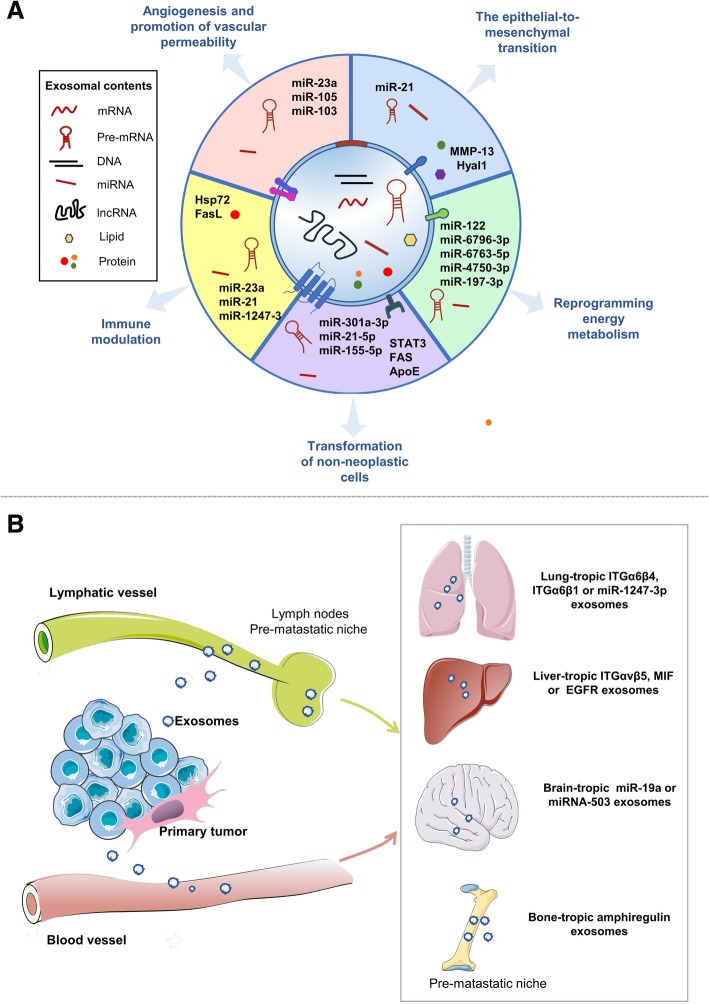
“Notably, they found that exosomes containing ITGαvβ5 specifically bind to Kupffer cells, thereby facilitating liver tropism, whereas exosomes expressing ITGα6β4 and ITGα6β1 favorably bind to lung-resident fibroblasts and epithelial cells, mediating lung tropism [8].”
BackgroundTumor Metastasis: Molecular Insights and Evolving Paradigms
Valastyan, S., & Weinberg, R. A. (2011) · Cell · doi:10.1016/j.cell.2011.09.024 · Cited by 4,011 · cited 1×
“It is characterized by a loss of cell polarity and cell-cell adhesive ability in epithelial cells and an increase in the migratory and invasive ability that produces mesenchymal stem cells [27, 28].”
BackgroundMathieu, M., Martin-Jaular, L., Lavieu, G., & Théry, C. (2019) · Nature Cell Biology · doi:10.1038/s41556-018-0250-9 · Cited by 3,737 · cited 1×
“3) the process of exosome uptake and cargo delivery into the cytosol of receptor cells need to be more fully understood [115].”
BackgroundMelanoma exosomes educate bone marrow progenitor cells toward a pro-metastatic phenotype through MET
Peinado, H., Alečković, M., Lavotshkin, S., Matei, I., Costa-Silva, B., Moreno-Bueno, G., Hergueta-Redondo, M., Williams, C., García-Santos, G., Ghajar, C. M., et al. (2012) · Nature Medicine · doi:10.1038/nm.2753 · Cited by 3,715 · cited 1×
“In a mouse model of melanoma, interactions between exosomes and the capillary wall have also been observed to increase vascular permeability, thereby leading to tumor cell leakage from blood vessels [37].”
BackgroundCommunication by Extracellular Vesicles: Where We Are and Where We Need to Go
Tkach, M., & Théry, C. (2016) · Cell · doi:10.1016/j.cell.2016.01.043 · Cited by 3,444 · cited 2×
“However, this therapeutic strategy still needs to be tested in further in vivo experiments [22].”
BackgroundVEGFR1-positive haematopoietic bone marrow progenitors initiate the pre-metastatic niche
Kaplan, R. N., Riba, R. D., Zacharoulis, S., Bramley, A. H., Vincent, L., Costa, C., MacDonald, D. D., Jin, D. K., Shido, K., Kerns, S. A., et al. (2005) · Nature · doi:10.1038/nature04186 · Cited by 3,288
Pancreatic cancer exosomes initiate pre-metastatic niche formation in the liver
Costa-Silva, B., Aiello, N. M., Ocean, A. J., Singh, S., Zhang, H., Thakur, B. K., Becker, A., Hoshino, A., Mark, M. T., Molina, H., et al. (2015) · Nature Cell Biology · doi:10.1038/ncb3169 · Cited by 2,692 · cited 1×
“These authors further identified an exosomal protein, macrophage migration inhibitory factor (MIF), as an essential trigger of the pre-metastatic niche in the liver [78].”
BackgroundMetastasis: from dissemination to organ-specific colonization
Nguyen, D. X., Bos, P. D., & Massagué, J. (2009) · Nature Reviews Cancer · doi:10.1038/nrc2622 · Cited by 2,649
Long noncoding RNAs: functional surprises from the RNA world
Wilusz, J. E., Sunwoo, H., & Spector, D. L. (2009) · Genes & Development · doi:10.1101/gad.1800909 · Cited by 2,294 · cited 1×
“The principal RNA of exosomes is miRNA [13, 14], but they also contain long non-coding RNAs (LncRNAs), which regulate gene expression in many ways [15].”
BackgroundSyndecan–syntenin–ALIX regulates the biogenesis of exosomes
Baietti, M. F., Zhang, Z., Mortier, E., Melchior, A., Degeest, G., Geeraerts, A., Ivarsson, Y., Depoortere, F., Coomans, C., Vermeiren, E., et al. (2012) · Nature Cell Biology · doi:10.1038/ncb2502 · Cited by 1,899 · cited 1×
“glycans, which are involved in the formation of exosomes and tumor cell dissemination [92, 93].”
BackgroundPre-metastatic niches: organ-specific homes for metastases
Peinado, H., Zhang, H., Matei, I. R., Costa-Silva, B., Hoshino, A., Rodrigues, G., Psaila, B., Kaplan, R. N., Bromberg, J. F., Kang, Y., et al. (2017) · Nature Reviews Cancer · doi:10.1038/nrc.2017.6 · Cited by 1,889 · cited 1×
“The establishment of a pre-metastatic niche involves vascular leakage, modification of the stroma and extracellular matrix, and immune system changes [5].”
BackgroundNeutrophils in cancer: Neutral no more
Coffelt, S. B., Wellenstein, M. D., & de Visser, K. E. (2016) · Nature reviews. Cancer · doi:10.1038/nrc.2016.52 · Cited by 1,830 · cited 1×
“However, neutrophils can also block metastasis [77], so it is necessary to identify the behavior of neutrophils at different stages and under different conditions.”
BackgroundTian, Y., Li, S., Song, J., Ji, T., Zhu, M., Anderson, G. J., Wei, J., & Nie, G. (2014) · Biomaterials · doi:10.1016/j.biomaterials.2013.11.083 · Cited by 1,801 · cited 1×
“One study has found that exosomes can be used to deliver doxorubicin specifically to tumor tissues through intravenous injection, decreasing tumor growth without overt toxicity [111].”
BackgroundSystemically Injected Exosomes Targeted to EGFR Deliver Antitumor MicroRNA to Breast Cancer Cells
Ohno, S.-I., Takanashi, M., Sudo, K., Ueda, S., Ishikawa, A., Matsuyama, N., Fujita, K., Mizutani, T., Ohgi, T., Ochiya, T., et al. (2013) · Molecular Therapy · doi:10.1038/mt.2012.180 · Cited by 1,666 · cited 1×
“have shown that exosomes can efficiently carry let-7a miRNA to EGFR-expressing breast cancer cells in animal models [112].”
BackgroundMicroenvironmental pH Is a Key Factor for Exosome Traffic in Tumor Cells
Parolini, I., Federici, C., Raggi, C., Lugini, L., Palleschi, S., De Milito, A., Coscia, C., Iessi, E., Logozzi, M., Molinari, A., et al. (2009) · Journal of Biological Chemistry · doi:10.1074/jbc.m109.041152 · Cited by 1,555 · cited 2×
“Moreover, Fais and his peers have reported that microenvironmental pH is one of the factors influencing metastatic sites, since exosome fusion and interactions with the acceptor cells are affected by the microenvironmental pH [75, 76].”
BackgroundCancer-secreted miR-105 destroys vascular endothelial barriers to promote metastasis
Zhou, W., Fong, M. Y., Min, Y., Somlo, G., Liu, L., Palomares, M. R., Yu, Y., Chow, A., O’Connor, S. T. F., Chin, A. R., et al. (2014) · Cancer Cell · doi:10.1016/j.ccr.2014.03.007 · Cited by 1,476
Extracellular vesicles in cancer — implications for future improvements in cancer care
Xu, R., Rai, A., Chen, M., Suwakulsiri, W., Greening, D. W., & Simpson, R. J. (2018) · Nature Reviews Clinical Oncology · doi:10.1038/s41571-018-0036-9 · Cited by 1,445 · cited 1×
“5) Is it feasible that only autologous exosomes be used? Under what circumstances can heterologous be explored? 6) Is it promising to design exosome-based drugs targeting the hallmarks of cancer metabolism [130]? 7) Since many studies have focused on the application of exosome-based vaccines as alternative approaches…”
BackgroundDevelopment of exosome-encapsulated paclitaxel to overcome MDR in cancer cells
Kim, M. S., Haney, M. J., Zhao, Y., Mahajan, V., Deygen, I., Klyachko, N. L., Inskoe, E., Piroyan, A., Sokolsky, M., Okolie, O., et al. (2016) · Nanomedicine: Nanotechnology, Biology and Medicine · doi:10.1016/j.nano.2015.10.012 · Cited by 1,410
Ha, D., Yang, N., & Nadithe, V. (2016) · Acta Pharmaceutica Sinica B · doi:10.1016/j.apsb.2016.02.001 · Cited by 1,346
Exosomes Mediate Stromal Mobilization of Autocrine Wnt-PCP Signaling in Breast Cancer Cell Migration
Luga, V., Zhang, L., Viloria-Petit, A. M., Ogunjimi, A. A., Inanlou, M. R., Chiu, E., Buchanan, M., Hosein, A. N., Basik, M., & Wrana, J. L. (2012) · Cell · doi:10.1016/j.cell.2012.11.024 · Cited by 1,311 · cited 1×
“Of note, metastasis-associated exosomes include not only tumor-derived exosomes but also exosomes released from other cells, such as T cells and fibroblasts [19].”
BackgroundCancer to bone: a fatal attraction
Weilbaecher, K. N., Guise, T. A., & McCauley, L. K. (2011) · Nature Reviews Cancer · doi:10.1038/nrc3055 · Cited by 1,285
Escudier, B., Dorval, T., Chaput, N., André, F., Caby, M.-P., Novault, S., Flament, C., Leboulaire, C., Borg, C., Amigorena, S., et al. (2005) · Journal of Translational Medicine · doi:10.1186/1479-5876-3-10 · Cited by 1,280
Exosome Theranostics: Biology and Translational Medicine
He, C., Zheng, S., Luo, Y., & Wang, B. (2018) · Theranostics · doi:10.7150/thno.21945 · Cited by 1,249
Microenvironment-induced PTEN loss by exosomal microRNA primes brain metastasis outgrowth
Zhang, L., Zhang, S., Yao, J., Lowery, F. J., Zhang, Q., Huang, W.-C., Li, P., Li, M., Wang, X., Zhang, C., et al. (2015) · Nature · doi:10.1038/nature15376 · Cited by 1,175 · cited 1×
“In addition, exosomes secreted from cells in secondary microenvironments may enhance brain metastases by producing CCL2 and recruiting IBA1-expressing myeloid cells [18].”
BackgroundA phase I study of dexosome immunotherapy in patients with advanced non-small cell lung cancer
Morse, M. A., Garst, J., Osada, T., Khan, S., Hobeika, A., Clay, T. M., Valente, N., Shreeniwas, R., Sutton, M. A., Delcayre, A., et al. (2005) · Journal of Translational Medicine · doi:10.1186/1479-5876-3-9 · Cited by 1,120 · cited 1×
“Notably, in the second Phase I trial performed at Duke University in advanced non-small cell lung cancer, a high efficacy of autologous dendritic cell (DC)-derived exosomes and MHC class I peptides led to long-term survival [105].”
Fong, M. Y., Zhou, W., Liu, L., Alontaga, A. Y., Chandra, M., Ashby, J., Chow, A., O’Connor, S. T. F., Li, S., Chin, A. R., et al. (2015) · Nature Cell Biology · doi:10.1038/ncb3094 · Cited by 1,118 · cited 2×
“glycolytic enzyme pyruvate kinase, thus increasing nutrient supplies [66].”
BackgroundMonoacylglycerol lipase regulates a fatty acid network that promotes cancer pathogenesis
Nomura, D. K., Long, J. Z., Niessen, S., Hoover, H. S., Ng, S.-W., & Cravatt, B. F. (2010) · Cell · doi:10.1016/j.cell.2009.11.027 · Cited by 1,002 · cited 1×
“Recent studies have shown that tumor cells can alter their metabolic pattern to meet their energy needs under conditions of nutrient deprivation, giving them the ability to invade a hostile environment [60, 61].”
BackgroundChalmin, F., Ladoire, S., Mignot, G., Vincent, J., Bruchard, M., Remy-Martin, J.-P., Boireau, W., Rouleau, A., Simon, B., Lanneau, D., et al. (2010) · Journal of Clinical Investigation · doi:10.1172/jci40483 · Cited by 998 · cited 1×
“pressing Hsp72 can restrain tumor immune surveillance by enhancing the activity of myeloid-derived suppressor cells [39].”
BackgroundFang, T., Lv, H., Lv, G., Li, T., Wang, C., Han, Q., Yu, L., Su, B., Guo, L., Huang, S., et al. (2018) · Nature Communications · doi:10.1038/s41467-017-02583-0 · Cited by 995 · cited 1×
“[52]; this study has revealed a new molecular mechanism”
BackgroundSelf-citationYang, T., Martin, P., Fogarty, B., Brown, A., Schurman, K., Phipps, R., Yin, V. P., Lockman, P., & Bai, S. (2015) · Pharmaceutical Research · doi:10.1007/s11095-014-1593-y · Cited by 975
The tumour-induced systemic environment as a critical regulator of cancer progression and metastasis
McAllister, S. S., & Weinberg, R. A. (2014) · Nature Cell Biology · doi:10.1038/ncb3015 · Cited by 966 · cited 1×
“Also, paracrine interactions with stromal cells facilitate the formation of pre-metastatic niches and promote the growth of distant tumor cells [6, 7].”
BackgroundTumor microenvironment derived exosomes pleiotropically modulate cancer cell metabolism
Zhao, H., Yang, L., Baddour, J., Achreja, A., Bernard, V., Moss, T., Marini, J. C., Tudawe, T., Seviour, E. G., San Lucas, F. A., et al. (2016) · eLife · doi:10.7554/elife.10250 · Cited by 927 · cited 1×
“In particular, exosomes function as metabolite carriers to promote tumor proliferation in nutrient-stressed microenvironments [62].”
BackgroundThe Lin28/let-7 Axis Regulates Glucose Metabolism
Zhu, H., Shyh-Chang, N., Segrè, A. V., Shinoda, G., Shah, S. P., Einhorn, W. S., Takeuchi, A., Engreitz, J. M., Hagan, J. P., Kharas, M. G., et al. (2011) · Cell · doi:10.1016/j.cell.2011.08.033 · Cited by 900 · cited 1×
“Extensive studies have shown that exosomal miRNAs can regulate the metabolic pathways associated with metastasis [63, 64].”
BackgroundProteomic and Biochemical Analyses of Human B Cell-derived Exosomes
Wubbolts, R., Leckie, R. S., Veenhuizen, P. T. M., Schwarzmann, G., Möbius, W., Hoernschemeyer, J., Slot, J.-W., Geuze, H. J., & Stoorvogel, W. (2003) · Journal of Biological Chemistry · doi:10.1074/jbc.m207550200 · Cited by 884 · cited 1×
“They contain many of the important raft lipids found in cellular membranes, such as ceramides, sphingolipids, cholesterol, and glycerophospholipids [12].”
BackgroundSerpins Promote Cancer Cell Survival and Vascular Co-Option in Brain Metastasis
Valiente, M., Obenauf, A. C., Jin, X., Chen, Q., Zhang, X. H.-F., Lee, D. J., Chaft, J. E., Kris, M. G., Huse, J. T., Brogi, E., et al. (2014) · Cell · doi:10.1016/j.cell.2014.01.040 · Cited by 877
In Vivo Imaging Reveals Extracellular Vesicle-Mediated Phenocopying of Metastatic Behavior
Zomer, A., Maynard, C., Verweij, F. J., Kamermans, A., Schäfer, R., Beerling, E., Schiffelers, R. M., de Wit, E., Berenguer, J., Ellenbroek, S. I. J., et al. (2015) · Cell · doi:10.1016/j.cell.2015.04.042 · Cited by 869 · cited 1×
“have reported that aggressive breast cancer cells promote the metastatic capacity of less-aggressive tumor cells, largely by transferring exosomes containing functional RNAs [23].”
BackgroundGlutaminolysis: A Hallmark of Cancer Metabolism
Yang, L., Venneti, S., & Nagrath, D. (2017) · Annual Review of Biomedical Engineering · doi:10.1146/annurev-bioeng-071516-044546 · Cited by 859 · cited 1×
“5) Is it feasible that only autologous exosomes be used? Under what circumstances can heterologous be explored? 6) Is it promising to design exosome-based drugs targeting the hallmarks of cancer metabolism [130]? 7) Since many studies have focused on the application of exosome-based vaccines as alternative approaches…”
BackgroundGrange, C., Tapparo, M., Collino, F., Vitillo, L., Damasco, C., Deregibus, M. C., Tetta, C., Bussolati, B., & Camussi, G. (2011) · Cancer Research · doi:10.1158/0008-5472.can-11-0241 · Cited by 851 · cited 1×
“According to the enrichment analysis, miRNA takes the biggest proportion in the molecules affecting metabolic processes [65].”
BackgroundInduction of Lymphocyte Apoptosis by Tumor Cell Secretion of FasL-bearing Microvesicles
Andreola, G., Rivoltini, L., Castelli, C., Huber, V., Perego, P., Deho, P., Squarcina, P., Accornero, P., Lozupone, F., Lugini, L., et al. (2002) · The Journal of Experimental Medicine · doi:10.1084/jem.20011624 · Cited by 774 · cited 1×
“have observed that tumor-derived exosomes expressing FasL can promote the apoptosis of lymphocytes [45].”
BackgroundKosaka, N., Iguchi, H., Hagiwara, K., Yoshioka, Y., Takeshita, F., & Ochiya, T. (2013) · Journal of Biological Chemistry · doi:10.1074/jbc.m112.446831 · Cited by 771 · cited 1×
“Compelling evidence shows that exosomes can deliver functional molecules to acceptor cells, thereby promoting angiogenesis and increasing vascular leakage [33, 34].”
BackgroundWang, X., Luo, G., Zhang, K., Cao, J., Huang, C., Jiang, T., Liu, B., Su, L., & Qiu, Z. (2018) · Cancer Research · doi:10.1158/0008-5472.can-17-3841 · Cited by 767
Circulating Extracellular Vesicles in Human Disease
Shah, R., Patel, T., & Freedman, J. E. (2018) · New England Journal of Medicine · doi:10.1056/nejmra1704286 · Cited by 749 · cited 1×
“01% of tumor cells in the blood stream can spread to distant sites, metastasis occurs frequently, and exosomes have been proposed to increase its success rate [21, 22].”
BackgroundTetraspanins: push and pull in suppressing and promoting metastasis
Zöller, M. (2009) · Nature Reviews Cancer · doi:10.1038/nrc2543 · Cited by 663 · cited 1×
“shown to restrain tumor cell metastasis via communication with integrins [20].”
BackgroundM2 Macrophage-Derived Exosomes Promote Cell Migration and Invasion in Colon Cancer
Lan, J., Sun, L., Xu, F., Liu, L., Hu, F., Song, D., Hou, Z., Wu, W., Luo, X., Wang, J., et al. (2019) · Cancer Research · doi:10.1158/0008-5472.can-18-0014 · Cited by 643 · cited 1×
“have discovered that M2 macrophages can release exosomes carrying miR-21-5p and miR-155-5p to promote colorectal cancer metastasis through the downregulation of BRG1 expression [56].”
BackgroundSelf-citationLiu, Y., Gu, Y., Han, Y., Zhang, Q., Jiang, Z., Zhang, X., Huang, B., Xu, X., Zheng, J., & Cao, X. (2016) · Cancer Cell · doi:10.1016/j.ccell.2016.06.021 · Cited by 640 · cited 2×
“have discovered that lung epithelial cells can sense tumor exosomal RNAs and be activated to recruit neutrophils by upregulating Toll-like receptor 3 (TLR3), thus facilitating the formation of a pre-metastatic niche [50].”
BackgroundY-box protein 1 is required to sort microRNAs into exosomes in cells and in a cell-free reaction
Shurtleff, M. J., Temoche-Diaz, M. M., Karfilis, K. V., Ri, S., & Schekman, R. (2016) · eLife · doi:10.7554/elife.19276 · Cited by 621 · cited 1×
“Tumor exosomal miRNAs have been shown to interfere with the miRNA profile of target cells at a distance, thereby contributing to the formation of pre-metastatic niches [16, 17].”
BackgroundRe-Engineering Extracellular Vesicles as Smart Nanoscale Therapeutics
Armstrong, J. P. K., Holme, M. N., & Stevens, M. M. (2017) · ACS Nano · doi:10.1021/acsnano.6b07607 · Cited by 602
MicroRNA-21 Promotes Fibrosis of the Kidney by Silencing Metabolic Pathways
Chau, B. N., Xin, C., Hartner, J., Ren, S., Castano, A. P., Linn, G., Li, J., Tran, P. T., Kaimal, V., Huang, X., et al. (2012) · Science Translational Medicine · doi:10.1126/scitranslmed.3003205 · Cited by 587 · cited 1×
“Extensive studies have shown that exosomal miRNAs can regulate the metabolic pathways associated with metastasis [63, 64].”
BackgroundSurviving at a Distance: Organ-Specific Metastasis
Obenauf, A. C., & Massagué, J. (2015) · Trends in Cancer · doi:10.1016/j.trecan.2015.07.009 · Cited by 565 · cited 1×
“However, metastatic cancers are difficult to completely alleviate and are the cause of about 90% of cancer-related deaths [1].”
BackgroundExosome-delivered EGFR regulates liver microenvironment to promote gastric cancer liver metastasis
Zhang, H., Deng, T., Liu, R., Bai, M., Zhou, L., Wang, X., Li, S., Wang, X., Yang, H., Li, J., et al. (2017) · Nature Communications · doi:10.1038/ncomms15016 · Cited by 562 · cited 1×
“Exosomes are known to deliver EGFR to the liver to upregulate hepatocyte growth factor [80].”
BackgroundLi, L., Li, C., Wang, S., Wang, Z., Jiang, J., Wang, W., Li, X., Chen, J., Liu, K., Li, C., et al. (2016) · Cancer Research · doi:10.1158/0008-5472.can-15-1625 · Cited by 532 · cited 7×
“Current evidence shows that several processes occur during tumor metastasis, including angiogenesis and an epithelial-to-mesenchymal transition (EMT) [3].”
BackgroundInfluentialRole of organ selectivity in the determination of metastatic patterns of B16 melanoma.
Hart, I. R., & Fidler, I. J. (1980) · PubMed · Cited by 523
Murine Mammary Carcinoma Exosomes Promote Tumor Growth by Suppression of NK Cell Function
Liu, C., Yu, S., Zinn, K., Wang, J., Zhang, L., Jia, Y., Kappes, J. C., Barnes, S., Kimberly, R. P., Grizzle, W. E., et al. (2006) · The Journal of Immunology · doi:10.4049/jimmunol.176.3.1375 · Cited by 500 · cited 1×
“Also, two studies have indicated that tumor-derived exosomes can block IL-2-mediated activation of NK cells and their cytotoxic activity [46, 47].”
BackgroundTargeting the microenvironment in solid tumors
Belli, C., Trapani, D., Viale, G., D'Amico, P., Duso, B. A., Della Vigna, P., Orsi, F., & Curigliano, G. (2018) · Cancer Treatment Reviews · doi:10.1016/j.ctrv.2018.02.004 · Cited by 496 · cited 1×
“Second, the tumor microenvironment is linked to the progression of various stages of tumors [116].”
BackgroundThe IL-6/JAK/Stat3 feed-forward loop drives tumorigenesis and metastasis
Chang, Q., Bournazou, E., Sansone, P., Berishaj, M., Gao, S. P., Daly, L., Wels, J., Theilen, T., Granitto, S., Zhang, X., et al. (2013) · Neoplasia · doi:10.1593/neo.13706 · Cited by 494
Syn, N., Wang, L., Sethi, G., Thiery, J.-P., & Goh, B.-C. (2016) · Trends in Pharmacological Sciences · doi:10.1016/j.tips.2016.04.006 · Cited by 478 · cited 1×
“Tumor-derived exosomes can promote the initiation and progression of metastasis by targeting EMT-related factors, such as transforming growth factor beta (TGFβ), caveolin-1, hypoxia-inducible factor 1 alpha (HIF-1α), and β-catenin [10].”
BackgroundTumor exosomes expressing Fas ligand mediate CD8+ T-cell apoptosis
Abusamra, A. J., Zhong, Z., Zheng, X., Li, M., Ichim, T. E., Chin, J. L., & Min, W.-P. (2005) · Blood Cells, Molecules, and Diseases · doi:10.1016/j.bcmd.2005.07.001 · Cited by 456 · cited 2×
“It has been reported that tumor-derived exosomes expressing tumor antigens can inhibit T-cell activation and induce apoptosis of T-cells [41, 42].”
BackgroundHong, B. S., Cho, J.-H., Kim, H., Choi, E.-J., Rho, S., Kim, J., Kim, J. H., Choi, D.-S., Kim, Y.-K., Hwang, D., et al. (2009) · BMC Genomics · doi:10.1186/1471-2164-10-556 · Cited by 443 · cited 1×
“In colorectal cancer (CRC), CRC-derived exosomal miRNAs have been shown to promote tumor cell proliferation [90, 100], making it possible to use gene therapy to”
BackgroundMVP-mediated exosomal sorting of miR-193a promotes colon cancer progression
Teng, Y., Ren, Y., Hu, X., Mu, J., Samykutty, A., Zhuang, X., Deng, Z., Kumar, A., Zhang, L., Merchant, M. L., et al. (2017) · Nature Communications · doi:10.1038/ncomms14448 · Cited by 408 · cited 1×
“Furthermore, it has been suggested since there is a positive correlation between exosomal miR-193a expression and liver metastasis of colon cancer, the major vault protein (MVP) can possibly decrease the level of circulating exosomal miR-193a, providing a new therapeutic approach for metastatic colon cancer [103].”
Tumour-derived exosomes and their role in cancer-associated T-cell signalling defects
Taylor, D. D., & Gerçel-Taylor, C. (2005) · British Journal of Cancer · doi:10.1038/sj.bjc.6602316 · Cited by 391 · cited 2×
“It has been reported that tumor-derived exosomes expressing tumor antigens can inhibit T-cell activation and induce apoptosis of T-cells [41, 42].”
BackgroundThe role of exosomes in cancer metastasis
Steinbichler, T. B., Dudás, J., Riechelmann, H., & Skvortsova, I.-I. (2017) · Seminars in Cancer Biology · doi:10.1016/j.semcancer.2017.02.006 · Cited by 389
Organotropism: new insights into molecular mechanisms of breast cancer metastasis
Chen, W., Hoffmann, A. D., Liu, H., & Liu, X. (2018) · npj Precision Oncology · doi:10.1038/s41698-018-0047-0 · Cited by 385 · cited 1×
“Although the mechanisms of organ-specific metastasis are not fully understood, the roles of intercellular communication and the molecular characteristics of tumor cells are important considerations [4].”
BackgroundZheng, P., Luo, Q., Wang, W., Li, J., Wang, T., Wang, P., Chen, L., Zhang, P., Chen, H., Liu, Y., et al. (2018) · Cell Death & Disease · doi:10.1038/s41419-018-0465-5 · Cited by 381 · cited 1×
“Similarly, M2 macrophages-secreted exosomes can promote the dissemination of gastric tumor cells by selectively transferring apolipoprotein E (ApoE), and ApoE can reshape cytoskeleton-supporting transportation by activating the PI3K-Akt signaling pathway [57].”
BackgroundExosome Release and Low pH Belong to a Framework of Resistance of Human Melanoma Cells to Cisplatin
Federici, C., Petrucci, F., Caimi, S., Cesolini, A., Logozzi, M., Borghi, M., D'Ilio, S., Lugini, L., Violante, N., Azzarito, T., et al. (2014) · PLoS ONE · doi:10.1371/journal.pone.0088193 · Cited by 354 · cited 1×
“Based on this theory, comparable proton-pump inhibitors have been developed to decrease plasmatic exosome levels in xenograft models [98].”
BackgroundGenetically Engineered Microvesicles Carrying Suicide mRNA/Protein Inhibit Schwannoma Tumor Growth
Mizrak, A., Bolukbasi, M. F., Ozdener, G. B., Brenner, G. J., Madlener, S., Erkan, E. P., Ströbel, T., Breakefield, X. O., & Saydam, O. (2013) · Molecular Therapy · doi:10.1038/mt.2012.161 · Cited by 337 · cited 1×
“schwannoma tumor progression by delivering suicide mRNAs and proteins [113].”
BackgroundFang, J., Zhang, Z., Shang, L., Luo, Y., Lin, Y., Yuan, Y., & Zhuang, S. (2018) · Hepatology · doi:10.1002/hep.29920 · Cited by 335 · cited 1×
“have found that hepatoma cells generate exosomes rich in miR-103 that can promote tumor cell motility by increasing vessel permeability and targeting various endothelial junction proteins [36].”
BackgroundUpholding a role for EMT in breast cancer metastasis
Ye, X., Brabletz, T., Kang, Y., Longmore, G. D., Nieto, M. A., Stanger, B. Z., Yang, J., & Weinberg, R. A. (2017) · Nature · doi:10.1038/nature22816 · Cited by 333 · cited 1×
“It is characterized by a loss of cell polarity and cell-cell adhesive ability in epithelial cells and an increase in the migratory and invasive ability that produces mesenchymal stem cells [27, 28].”
BackgroundYang, L., Moss, T., Mangala, L. S., Marini, J., Zhao, H., Wahlig, S., Armaiz‐Pena, G., Jiang, D., Achreja, A., Win, J., et al. (2014) · Molecular Systems Biology · doi:10.1002/msb.20134892 · Cited by 326 · cited 1×
“Recent studies have shown that tumor cells can alter their metabolic pattern to meet their energy needs under conditions of nutrient deprivation, giving them the ability to invade a hostile environment [60, 61].”
BackgroundXing, F., Liu, Y., Wu, S.-Y., Wu, K., Sharma, S., Mo, Y.-Y., Feng, J., Sanders, S., Jin, G., Singh, R., et al. (2018) · Cancer Research · doi:10.1158/0008-5472.can-18-1102 · Cited by 324 · cited 1×
“Similarly, a recent study on breast cancer has revealed that exosomal miRNA-503 can block T-cell production by increasing immune-suppressive cytokines, and this inhibition was only observed in brain metastasis [84].”
BackgroundHeparanase Regulates Secretion, Composition, and Function of Tumor Cell-derived Exosomes
Thompson, C. A., Purushothaman, A., Ramani, V. C., Vlodavsky, I., & Sanderson, R. D. (2013) · Journal of Biological Chemistry · doi:10.1074/jbc.c112.444562 · Cited by 322 · cited 1×
“glycans, which are involved in the formation of exosomes and tumor cell dissemination [92, 93].”
BackgroundBerchem, G., Noman, M. Z., Bosseler, M., Paggetti, J., Baconnais, S., Le cam, E., Nanbakhsh, A., Moussay, E., Mami-Chouaib, F., Janji, B., et al. (2016) · OncoImmunology · doi:10.1080/2162402x.2015.1062968 · Cited by 317 · cited 1×
“Furthermore, tumor-derived exosomes containing miR-23a may function as immunosuppressive factors by directly downregulating the expression of CD107a in NK cells [48].”
BackgroundDorayappan, K. D. P., Wanner, R., Wallbillich, J. J., Saini, U., Zingarelli, R., Suarez, A. A., Cohn, D. E., & Selvendiran, K. (2018) · Oncogene · doi:10.1038/s41388-018-0189-0 · Cited by 306 · cited 1×
“In particular, ovarian cancer cells can produce exosomes containing oncogenic proteins such as STAT3 and FAS, which increase the migratory ability of tumor cells [54].”
BackgroundClinical overview on Lipoplatin™: a successful liposomal formulation of cisplatin
Boulikas, T. (2009) · Expert Opinion on Investigational Drugs · doi:10.1517/13543780903114168 · Cited by 276
Activated T Cell Exosomes Promote Tumor Invasion via Fas Signaling Pathway
Cai, Z., Yang, F., Yu, L., Yu, Z., Jiang, L., Wang, Q., Yang, Y., Wang, L., Cao, X., & Wang, J. (2012) · The Journal of Immunology · doi:10.4049/jimmunol.1103466 · Cited by 265 · cited 2×
“Furthermore, activated T-cell exosomes carrying bioactive FasL, a member of the tumor necrosis factor (TNF) family, may enhance the metastasis of melanoma and lung cancer cells by increasing the expression of MMP9 [44].”
BackgroundHashimoto, K., Ochi, H., Sunamura, S., Kosaka, N., Mabuchi, Y., Fukuda, T., Yao, K., Kanda, H., Ae, K., Okawa, A., et al. (2018) · Proceedings of the National Academy of Sciences · doi:10.1073/pnas.1717363115 · Cited by 260 · cited 2×
“have identified eight miRNAs that are highly expressed in exosomes from prostate cancer cells with metastatic potential to bone, further demonstrating that exosomal hsa-miR-940 can enhance the osteoblastic phenotype of a bone metastatic microenvironment by targeting ARHGAP1 and FAM134A [88].”
BackgroundOrganotropism of Breast Cancer Metastasis
Lu, X., & Kang, Y. (2007) · Journal of Mammary Gland Biology and Neoplasia · doi:10.1007/s10911-007-9047-3 · Cited by 259
Strategic design of extracellular vesicle drug delivery systems
Armstrong, J. P. K., & Stevens, M. M. (2018) · Advanced Drug Delivery Reviews · doi:10.1016/j.addr.2018.06.017 · Cited by 257 · cited 1×
“4) How interactions between therapeutic exosomes and unexpected cells can be avoided must also be examined [129].”
BackgroundChen, L., Guo, P., He, Y., Chen, Z., Chen, L., Luo, Y., Qi, L., Liu, Y., Wu, Q., Cui, Y., et al. (2018) · Cell Death & Disease · doi:10.1038/s41419-018-0534-9 · Cited by 253 · cited 1×
“Mechanistically, the exosomes can trigger an EMT process via MAPK/ERK signaling [30].”
BackgroundExosomes: Key mediators of metastasis and pre-metastatic niche formation
Lobb, R. J., Lima, L. G., & Möller, A. (2017) · Seminars in Cell & Developmental Biology · doi:10.1016/j.semcdb.2017.01.004 · Cited by 249 · cited 1×
“For instance, they can inhibit the cytotoxicity of NK cells and differentiation of dendritic cells (DC), as well as induce apoptosis of cytotoxic T-cells and M2 polarization of macrophages, all of which promote tumor metastasis [9, 24].”
BackgroundShao, Y., Chen, T., Zheng, X., Yang, S., Xu, K., Chen, X., Xu, F., Wang, L., Shen, Y., Wang, T., et al. (2018) · Carcinogenesis · doi:10.1093/carcin/bgy115 · Cited by 242 · cited 2×
“For example, exosomes released from colorectal cancer cells are involved in formation of inflammatory pre-metastatic niches via the miR-21-TLR7-IL6 axis [49].”
BackgroundSelf-citationIncreased PSA expression on prostate cancer exosomes in in vitro condition and in cancer patients
Logozzi, M., Angelini, D. F., Iessi, E., Mizzoni, D., Di Raimo, R., Federici, C., Lugini, L., Borsellino, G., Gentilucci, A., Pierella, F., et al. (2017) · Cancer Letters · doi:10.1016/j.canlet.2017.06.036 · Cited by 240
Payen, V. L., Porporato, P. E., Baselet, B., & Sonveaux, P. (2016) · Cellular and Molecular Life Sciences · doi:10.1007/s00018-015-2098-5 · Cited by 220 · cited 2×
“It is also pivotal to learn more about the roles of exosomes in metabolic changes related to metastasis [58].”
BackgroundNishida-Aoki, N., Tominaga, N., Takeshita, F., Sonoda, H., Yoshioka, Y., & Ochiya, T. (2017) · Molecular Therapy · doi:10.1016/j.ymthe.2016.10.009 · Cited by 208 · cited 2×
“Also, targeted antibodies have been reported to significantly reduce cancer metastasis by promoting elimination of tumor-derived exosomes by macrophages [95].”
BackgroundLogozzi, M., Mizzoni, D., Angelini, D., Di Raimo, R., Falchi, M., Battistini, L., & Fais, S. (2018) · Cancers · doi:10.3390/cancers10100370 · Cited by 208 · cited 3×
“The mechanisms responsible for the increased secretion of exosomes in acidic environments are incompletely characterized, although some researchers have pointed out that producing more exosomes under low-pH conditions may be a way of relieving the intracellular accumulation of toxics material [76].”
BackgroundBao, L., You, B., Shi, S., Shan, Y., Zhang, Q., Yue, H., Zhang, J., Zhang, W., Shi, Y., Liu, Y., et al. (2018) · Oncogene · doi:10.1038/s41388-018-0183-6 · Cited by 206 · cited 1×
“For example, one study has shown that exosomal miR-23a can induce angiogenesis in nasopharyngeal cancer [35].”
BackgroundThe heparanase/syndecan‐1 axis in cancer: mechanisms and therapies
Ramani, V. C., Purushothaman, A., Stewart, M. D., Thompson, C. A., Vlodavsky, I., Au, J. L., & Sanderson, R. D. (2013) · The FEBS Journal · doi:10.1111/febs.12168 · Cited by 189 · cited 1×
“Preclinical and clinical studies have suggested that metastatic cancers can be at least partly alleviated by targeting the heparanase/ syndecan-1 axis [91] or syndecan heparan sulfate proteo-”
BackgroundThe Multiple Roles of Exosomes in Metastasis
WEIDLE, U. H., BIRZELE, F., KOLLMORGEN, G., & RÜGER, R. (2017) · Cancer Genomics & Proteomics · doi:10.21873/cgp.20015 · Cited by 185 · cited 1×
“For instance, they can inhibit the cytotoxicity of NK cells and differentiation of dendritic cells (DC), as well as induce apoptosis of cytotoxic T-cells and M2 polarization of macrophages, all of which promote tumor metastasis [9, 24].”
Backgroundvan der Bilt, J. D. W., Kranenburg, O., Nijkamp, M. W., Smakman, N., Veenendaal, L. M., te Velde, E. A., Voest, E. E., van Diest, P. J., & Borel Rinkes, I. H. M. (2005) · Hepatology · doi:10.1002/hep.20739 · Cited by 180
Cell-to-cell miRNA transfer: From body homeostasis to therapy
Redis, R. S., Calin, S., Yang, Y., You, M. J., & Calin, G. A. (2012) · Pharmacology & Therapeutics · doi:10.1016/j.pharmthera.2012.08.003 · Cited by 176 · cited 1×
“The principal RNA of exosomes is miRNA [13, 14], but they also contain long non-coding RNAs (LncRNAs), which regulate gene expression in many ways [15].”
BackgroundRONG, L., Li, R., Li, S., & Luo, R. (2015) · Oncology Letters · doi:10.3892/ol.2015.3841 · Cited by 167 · cited 1×
“In addition, exosomes released by breast cancer cells can decrease T-cell proliferation by targeting TGF-β [40].”
BackgroundmiRNA cargo within exosome‐like vesicle transfer influences metastatic bone colonization
Valencia, K., Luis-Ravelo, D., Bovy, N., Antón, I., Martínez-Canarias, S., Zandueta, C., Ormazábal, C., Struman, I., Tabruyn, S., Rebmann, V., et al. (2014) · Molecular Oncology · doi:10.1016/j.molonc.2014.01.012 · Cited by 166
Curcumin reverses breast tumor exosomes mediated immune suppression of NK cell tumor cytotoxicity
Zhang, H.-G., Kim, H., Liu, C., Yu, S., Wang, J., Grizzle, W. E., Kimberly, R. P., & Barnes, S. (2007) · Biochimica et Biophysica Acta (BBA) - Molecular Cell Research · doi:10.1016/j.bbamcr.2007.04.015 · Cited by 165 · cited 1×
“Also, two studies have indicated that tumor-derived exosomes can block IL-2-mediated activation of NK cells and their cytotoxic activity [46, 47].”
BackgroundEmerging Strategies for Treating Brain Metastases from Breast Cancer
Kodack, D. P., Askoxylakis, V., Ferraro, G. B., Fukumura, D., & Jain, R. K. (2015) · Cancer Cell · doi:10.1016/j.ccell.2015.01.001 · Cited by 162 · cited 1×
“Astrocytes are a main stromal cell type in the brain, and their abnormal increase is associated with brain metastases in animal models and human patients [83].”
BackgroundThe key role of extracellular vesicles in the metastatic process
Zhao, H., Achreja, A., Iessi, E., Logozzi, M., Mizzoni, D., Di Raimo, R., Nagrath, D., & Fais, S. (2018) · Biochimica et Biophysica Acta (BBA) - Reviews on Cancer · doi:10.1016/j.bbcan.2017.11.005 · Cited by 160 · cited 2×
“Tumor-derived exosomes participate in bone metastasis by affecting bone metabolism, since tumor-derived exosomes can destroy the cycle of bone remodeling that occurs during the onset of a bone lesion [85], and exosomal miRNAs may be important regulators of bone metastasis [86].”
BackgroundWhole-body imaging of lymphovascular niches identifies pre-metastatic roles of midkine
Olmeda, D., Cerezo-Wallis, D., Riveiro-Falkenbach, E., Pennacchi, P. C., Contreras-Alcalde, M., Ibarz, N., Cifdaloz, M., Catena, X., Calvo, T. G., Cañón, E., et al. (2017) · Nature · doi:10.1038/nature22977 · Cited by 160
Microenvironmental regulation of cancer metastasis by miRNAs
Zhang, Y., Yang, P., & Wang, X. (2013) · Trends in Cell Biology · doi:10.1016/j.tcb.2013.09.007 · Cited by 150 · cited 1×
“targeted to restrain exosome-mediated metastasis [99].”
How cancer cells dictate their microenvironment: present roles of extracellular vesicles
Naito, Y., Yoshioka, Y., Yamamoto, Y., & Ochiya, T. (2017) · Cellular and Molecular Life Sciences · doi:10.1007/s00018-016-2346-3 · Cited by 148 · cited 1×
“exosomes, thus promoting cancer metastasis, since exosomes can transfer molecules required for metastasis [53].”
BackgroundChen, C., Zong, S., Wang, Z., Lu, J., Zhu, D., Zhang, Y., & Cui, Y. (2016) · ACS Applied Materials & Interfaces · doi:10.1021/acsami.6b09442 · Cited by 148
Pancreatic cancer-derived exosomes promote tumor metastasis and liver pre-metastatic niche formation
Yu, Z., Zhao, S., Ren, L. F., Wang, L., Chen, Z., Hoffman, R. M., & Zhou, J. (2017) · Oncotarget · doi:10.18632/oncotarget.18831 · Cited by 132 · cited 1×
“Furthermore, other authors have reported that exosomes from highly malignant pancreatic tumor cells can promote the establishment of a liver pre-metastatic niche [79]; they found 79 exosomal proteins that are differentially expressed between highly metastatic and less metastatic cells, but they did not extensively res…”
BackgroundShan, Y., You, B., Shi, S., Shi, W., Zhang, Z., Zhang, Q., Gu, M., Chen, J., Bao, L., Liu, D., et al. (2018) · Cell Death & Disease · doi:10.1038/s41419-018-0425-0 · Cited by 130 · cited 7×
“Current evidence shows that several processes occur during tumor metastasis, including angiogenesis and an epithelial-to-mesenchymal transition (EMT) [3].”
BackgroundInfluentialXie, Y., Zhang, H., Li, W., Deng, Y., Munegowda, M. A., Chibbar, R., Qureshi, M., & Xiang, J. (2010) · The Journal of Immunology · doi:10.4049/jimmunol.1000386 · Cited by 129 · cited 1×
“Also, exosomes released from T cells have been shown to block the antitumor immune response by decreasing pMHC I expression in dendritic cells [43].”
BackgroundMicroRNA and Protein Profiling of Brain Metastasis Competent Cell-Derived Exosomes
Camacho, L., Guerrero, P., & Marchetti, D. (2013) · PLoS ONE · doi:10.1371/journal.pone.0073790 · Cited by 121 · cited 1×
“cell-adhesive and invasive capability [82].”
Jiao, S., Sun, K., Chen, X., Zhao, X., Cai, N., Liu, Y., Xu, L., Kong, X., & Wei, L. (2014) · Journal of Biomedical Science · doi:10.1186/1423-0127-21-1 · Cited by 107
Mesenchymal Stem/Stromal Cells in Stromal Evolution and Cancer Progression
Cammarota, F., & Laukkanen, M. O. (2015) · Stem Cells International · doi:10.1155/2016/4824573 · Cited by 96 · cited 1×
“Also, paracrine interactions with stromal cells facilitate the formation of pre-metastatic niches and promote the growth of distant tumor cells [6, 7].”
BackgroundCaneba, C. A., Bellance, N., Yang, L., Pabst, L., & Nagrath, D. (2012) · American Journal of Physiology-Endocrinology and Metabolism · doi:10.1152/ajpendo.00151.2012 · Cited by 95 · cited 1×
“Metabolic adaptation allows cancer cells to adapt to an environment that lacks adequate nutrients [58, 59].”
BackgroundHerpesviruses shape tumour microenvironment through exosomal transfer of viral microRNAs
Yogev, O., Henderson, S., Hayes, M. J., Marelli, S. S., Ofir-Birin, Y., Regev-Rudzki, N., Herrero, J., & Enver, T. (2017) · PLOS Pathogens · doi:10.1371/journal.ppat.1006524 · Cited by 94 · cited 1×
“Also, exosomes from Kaposi’s sarcoma-associated herpesvirus (KSHV)-infected cells can specifically transport viral miRNAs to nearby cells, ultimately causing a metabolic switch toward aerobic glycolysis in the recipient cells [68].”
BackgroundM-Trap: Exosome-Based Capture of Tumor Cells as a New Technology in Peritoneal Metastasis
de la Fuente, A., Alonso-Alconada, L., Costa, C., Cueva, J., Garcia-Caballero, T., Lopez-Lopez, R., & Abal, M. (2015) · Journal of the National Cancer Institute · doi:10.1093/jnci/djv184 · Cited by 93 · cited 1×
“This approach remarkably suppressed tumor metastasis at a distance [96].”
BackgroundZaharie, F. V., Muresan, M.-S., Petrushev, B., Berce, C., Gafencu, G., Selicean, S. E., Jurj, A. M., Cojocneanu, R., Lisencu, C. I., Pop, L., et al. (2015) · Journal of Gastrointestinal and Liver Diseases · doi:10.15403/jgld.2014.1121.244.375 · Cited by 93 · cited 1×
“have demonstrated that exosomal microRNA-375 inhibits tumor cell dissemination by blocking Bcl-2 in colon cancer, suggesting that exosomal microRNA-375 can be considered a potential therapeutic target [102].”
BackgroundSento, S., Sasabe, E., & Yamamoto, T. (2016) · PLOS ONE · doi:10.1371/journal.pone.0148454 · Cited by 91 · cited 1×
“have found that heparin can remarkably block metastasis by decreasing uptake of tumor-derived exosomes in oral squamous carcinoma [94].”
BackgroundTumour–adipose tissue crosstalk: fuelling tumour metastasis by extracellular vesicles
de Lope, L. R., Leaman, O., López, A. A., Hergueta‐Redondo, M., & Peinado, H. (2017) · Philosophical Transactions of the Royal Society B Biological Sciences · doi:10.1098/rstb.2016.0485 · Cited by 87 · cited 1×
“to escape immune surveillance and induce a pre-metastatic microenvironment by transporting inflammatory factors [38].”
BackgroundProbert, C., Dottorini, T., Speakman, A., Hunt, S., Nafee, T. M., Fazeli, A., Wood, S. L., Brown, J. E., & James, V. H. (2018) · Oncogene · doi:10.1038/s41388-018-0540-5 · Cited by 87 · cited 1×
“Tumor-derived exosomes participate in bone metastasis by affecting bone metabolism, since tumor-derived exosomes can destroy the cycle of bone remodeling that occurs during the onset of a bone lesion [85], and exosomal miRNAs may be important regulators of bone metastasis [86].”
BackgroundKarlsson, T., Lundholm, M., Widmark, A., & Persson, E. (2016) · PLoS ONE · doi:10.1371/journal.pone.0166284 · Cited by 83 · cited 1×
“have compared the exosomes from prostate tumor cells and fibroblastic cells and found that the exosomes from cancer cells can remarkably affect osteoclast formation by inhibiting the maturation of monocytic osteoclast precursors, which may represent a exosome-regulated abnormal formation of bone cells at the metastati…”
BackgroundAchreja, A., Zhao, H., Yang, L., Yun, T. H., Marini, J., & Nagrath, D. (2017) · Metabolic Engineering · doi:10.1016/j.ymben.2017.01.001 · Cited by 78 · cited 1×
“For example, Abhinav and colleagues have devised an experimental and computational platform to analyze exosomes with different metabolite components in various environments, which is helpful for understanding the metabolic alterations in tumor microenvironment components; however, the platform still needs to be optimi…”
BackgroundExosomes and their importance in metastasis, diagnosis, and therapy of colorectal cancer
Cheshomi, H., & Matin, M. M. (2018) · Journal of Cellular Biochemistry · doi:10.1002/jcb.27582 · Cited by 77 · cited 2×
“[90], we will comprehensively review below the”
BackgroundThe multifaceted role of extracellular vesicles in metastasis: Priming the soil for seeding
dos Anjos Pultz, B., Andrés Cordero da Luz, F., Socorro Faria, S., Peixoto Ferreira de Souza, L., Cristina Brígido Tavares, P., Alonso Goulart, V., Fontes, W., Ricardo Goulart, L., & José Barbosa Silva, M. (2017) · International Journal of Cancer · doi:10.1002/ijc.30595 · Cited by 74
Cancer cells copy migratory behavior and exchange signaling networks via extracellular vesicles
Steenbeek, S. C., Pham, T. V., de Ligt, J., Zomer, A., Knol, J. C., Piersma, S. R., Schelfhorst, T., Huisjes, R., Schiffelers, R. M., Cuppen, E., et al. (2018) · The EMBO Journal · doi:10.15252/embj.201798357 · Cited by 74 · cited 1×
“Compelling evidence shows that exosomes can deliver functional molecules to acceptor cells, thereby promoting angiogenesis and increasing vascular leakage [33, 34].”
BackgroundMcAtee, C. O., Booth, C., Elowsky, C., Zhao, L., Payne, J., Fangman, T., Caplan, S., Henry, M. D., & Simpson, M. A. (2019) · Matrix Biology · doi:10.1016/j.matbio.2018.05.002 · Cited by 72 · cited 1×
“have shown that prostate tumor cells can increase the mobility of stromal cells by secreting exosomes rich in hyaluronidase Hyal1, a lysosomal hyaluronidase involved in prostate cancer metastasis [29], and Chen et al.”
BackgroundHypoxia After Liver Surgery Imposes an Aggressive Cancer Stem Cell Phenotype on Residual Tumor Cells
Govaert, K. M., Emmink, B. L., Nijkamp, M. W., Cheung, Z. J., Steller, E. J. A., Fatrai, S., de Bruijn, M. T., Kranenburg, O., & Borel Rinkes, I. H. M. (2014) · Annals of Surgery · doi:10.1097/sla.0b013e318295c160 · Cited by 58
Zhang, Y., Huang, S., Li, P., Chen, Q., Li, Y., Zhou, Y., Wang, L., Kang, M., Zhang, B., Yang, B. J., et al. (2018) · Cancer Letters · doi:10.1016/j.canlet.2018.05.027 · Cited by 48
Screening of exosomal microRNAs from colorectal cancer cells
Clancy, C., Khan, S., Glynn, C. L., Holian, E., Dockery, P., Lalor, P., Brown, J. A. L., Joyce, M. R., Kerin, M. J., & Dwyer, R. M. (2017) · Cancer Biomarkers · doi:10.3233/cbm-160659 · Cited by 40
Going live with tumor exosomes and microvesicles
Hyenne, V., Lefebvre, O., & Goetz, J. G. (2017) · Cell Adhesion & Migration · doi:10.1080/19336918.2016.1276694 · Cited by 39
Lim, C., Broquères-You, D., Brouland, J., Merkulova‐Rainon, T., Faussat, A., Hilal, R., Rouquie, D., Eveno, C., Audollent, R., Levy, B. I., et al. (2013) · Journal of Surgical Research · doi:10.1016/j.jss.2013.04.069 · Cited by 36
Welcoming Treat: Astrocyte-Derived Exosomes Induce PTEN Suppression to Foster Brain Metastasis
Alečković, M., & Kang, Y. (2015) · Cancer Cell · doi:10.1016/j.ccell.2015.10.010 · Cited by 33 · cited 1×
“It will be important to explore how components of the tumor microenvironment affect exosome behavior [117, 118].”
BackgroundMoving the systemic evolutionary approach to cancer forward: Therapeutic implications
Mazzocca, A., Ferraro, G., Misciagna, G., & Fais, S. (2018) · Medical Hypotheses · doi:10.1016/j.mehy.2018.09.033 · Cited by 17 · cited 1×
“It will be important to explore how components of the tumor microenvironment affect exosome behavior [117, 118].”
BackgroundAntonopoulos, D., Balatsos, N. A. A., & Gourgoulianis, K. I. (2017) · Journal of Thoracic Disease · doi:10.21037/jtd.2017.03.129 · Cited by 10 · cited 1×
“These mechanisms need to be further explored [51].”
Background
Cited by
Tumor microenvironment complexity and therapeutic implications at a glance
Baghban, R., Roshangar, L., Jahanban-Esfahlan, R., Seidi, K., Ebrahimi-Kalan, A., Jaymand, M., Kolahian, S., Javaheri, T., & Zare, P. (2020) · Cell Communication and Signaling · doi:10.1186/s12964-020-0530-4 · Cited by 1,784
“A number of preclinical and clinical findings have reported that targeting pathways and molecules involved in the formation of exosome can inhibit tumor progression, such as heparanase/syndecan-1 axis [182, 183] or syndecan heparan sulfate proteoglycans [179, 184] .”
BackgroundExosomes promote pre-metastatic niche formation in ovarian cancer
Feng, W., Dean, D. C., Hornicek, F. J., Shi, H., & Duan, Z. (2019) · Molecular Cancer · doi:10.1186/s12943-019-1049-4 · Cited by 289
Tumor-associated exosomes promote lung cancer metastasis through multiple mechanisms
Jiang, C., Zhang, N., Hu, X., & Wang, H. (2021) · Molecular Cancer · doi:10.1186/s12943-021-01411-w · Cited by 209
“They can increase the invasion ability of tumor cells and promote tumor metastasis, which has become a research hotspot in the field of cancer recently [7, 8].”
BackgroundCommunication in the Cancer Microenvironment as a Target for Therapeutic Interventions
Dominiak, A., Chełstowska, B., Olejarz, W., & Nowicka, G. (2020) · Cancers · doi:10.3390/cancers12051232 · Cited by 188
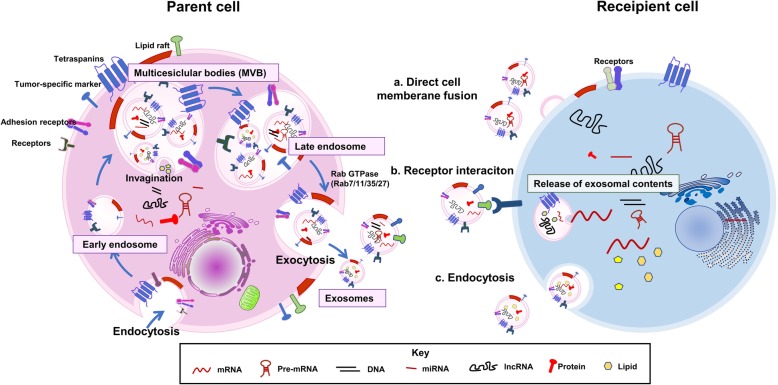
“As a result of fusion, receptor-mediated internalization or endocytosis of the EVs with the plasmalemma of the recipient cell, transported proteins (enzymes, membrane proteins, heat shock proteins, transcription factors), mRNA, tRNAs, non-coding RNAs (LncRNAs), microRNAs and DNA, and lipids (such as sphingolipids, cer…”
BackgroundExosomes and extracellular vesicles: Rethinking the essential values in cancer biology
Yokoi, A., & Ochiya, T. (2021) · Seminars in Cancer Biology · doi:10.1016/j.semcancer.2021.03.032 · Cited by 167
Metadata
- Authors
- Wu, M., Wang, G., Hu, W., Yao, Y., & Yu, X.-F.
- Affiliations
- Zhejiang University (CN)
- Second Affiliated Hospital of Zhejiang University (CN)
- Corresponding author
- Yu, Xiao-Fang
- Venue
- Molecular Cancer
- Published
- 2019-03-30
- Volume
- 18
- Issue
- 1
- Pages
- 53-53
- ISSN
- 1476-4598 (ISSN-L)
- PMC
- PMC6441156
- OpenAlex
- W2946914098
- Cited by
- 140
- References
- 131
- Citations by year
- 2026: 6 · 2025: 16 · 2024: 14 · 2023: 14 · 2022: 18 · 2021: 27 · 2020: 40 · 2019: 5
- FWCI
- 1.98
- Type
- journal article
- Language
- en
- Open access
- gold
- doi.org
- Licence
- cc-by
- creativecommons.org/licenses/by/4.0/ (tdm)
- Locations
- Molecular Cancer (publishedVersion, cc-by)
- PubMed Central (publishedVersion, cc-by)
- PubMed (publishedVersion)
- DOAJ (DOAJ: Directory of Open Access Journals) (submittedVersion, cc-by-sa)
- Funders
- National Natural Science Foundation of China (No. 81772169)
- Topics
- Life Sciences › Biochemistry, Genetics and Molecular Biology › Molecular Biology › Extracellular vesicles in disease
- Health Sciences › Medicine › Oncology › Cancer Cells and Metastasis
- Life Sciences › Biochemistry, Genetics and Molecular Biology › Cell Biology › Cellular transport and secretion
- Keywords
- exosomes, metastasis, extracellular vesicles, intercellular communication, tumor microenvironment, exosome modification, exosome therapy
- MeSH terms
- Animals, Cell Communication, Humans, Neoplasm Metastasis, Neoplasms, Biomarkers, Tumor, Exosomes, Tumor Microenvironment
About these checks
Registry, retraction, Cites and statistics results are computed, not judged, with one exception: a printed reference that no index lists is read once by a model before it counts as a citation error. Claims are extracted by a model and kept only when their quote appears verbatim in the text; each cited source is then checked, with a model’s help, for whether it says what the claim relies on. Those verdicts can be wrong — read the claim’s quote and the cited source before relying on one.
Statistics and arithmetic are recomputed, not judged.
Confidence bands are shown only for fields calibrated on our annotated test set. None is calibrated yet, so no band is shown.
What counts as a claim ›How we measure confidence ›How we check this ›
Are you an author, or do you see a problem with this page? Request a review
Data sources
Bibliographic data: Semantic Scholar, OpenAlex, Crossref.
Contains information from the Semantic Scholar Academic Graph Datasets, made available under the ODC Attribution License (ODC-BY 1.0).
Semantic Scholar’s data is described in: Kinney, R., et al. (2023). The Semantic Scholar Open Data Platform. arXiv:2301.10140.
