

Emerging roles and therapeutic value of exosomes in cancer metastasis
Open accessThe DOI matches its Crossref record; 131 of the 131 references it cites were found in a registry or an index.
Abstract
Exosomes are cell-derived vesicles of 30 to 150 nm that contain diverse proteins, nucleic acids, and lipids. These vesicles facilitate effective intercellular communication and trigger profound environmental changes. In recent years, many studies have identified diverse roles for exosomes in tumor metastasis, a major cause of cancer-related deaths; furthermore, circulating tumor-derived exosomes can drive the initiation and progression of metastasis and determine the specific target organs affected. Fortunately, our growing understanding of exosomes and relevant modification technology have provided new ideas for potential treatment of tumor metastases. Here we review recent advances concerning the role of exosomes in metastasis, focusing on their regulatory mechanisms and therapeutic targeting in advanced cancer.
Overview
The claims and statistics of this paper haven’t been checked yet.
Free: it reads the open-access text and checks the first 5 claims that cite a source we can check. Create a free account to check every claim.
Integrity signals
Registry
Cites
Statistics
Figures
Verification
Claims the paper makes
The claims and statistics of this paper haven’t been checked yet.
Free: it reads the open-access text and checks the first 5 claims that cite a source we can check. Create a free account to check every claim.
Claims other papers make about this one
Each is checked against this paper’s own text: does it say what the citing paper says it does?
The source backs part of the claim, not all of it — or backs it for a different population, condition or comparison.
In the citing paper
“A number of preclinical and clinical findings have reported that targeting pathways and molecules involved in the formation of exosome can inhibit tumor progression, such as heparanase/syndecan-1 axis [182, 183] or syndecan heparan sulfate proteoglycans [179, 184].”
From Tumor microenvironment complexity and therapeutic implications at a glance (2020) · cites this paper as [183]
Experimental — accuracy not yet measured
Self-check
Percentages, sums and reported differences re-computed from the paper’s own numbers.
The self-check needs the paper’s full text.
Citations
Cites
1 retracted
Cox, T. R., Rumney, R. M. H., Schoof, E. M., Perryman, L., Høye, A. M., Agrawal, A., Bird, D., Latif, N. A., Forrest, H., Evans, H. R., et al. (2015) · Nature · doi:10.1038/nature14492 · Cited by 482
RetractedHanahan, D., & Weinberg, R. A. (2000) · Cell · doi:10.1016/s0092-8674(00)81683-9 · Cited by 29,219
Valadi, H., Ekström, K., Bossios, A., Sjöstrand, M., Lee, J. J., & Lötvall, J. O. (2007) · Nature Cell Biology · doi:10.1038/ncb1596 · Cited by 12,834 · cited 1×
“The principal RNA of exosomes is miRNA [13, 14], but they also contain long non-coding RNAs (LncRNAs), which regulate gene expression in many ways [15].”
BackgroundExosomes: composition, biogenesis and function
Théry, C., Zitvogel, L., & Amigorena, S. (2002) · Nature Reviews Immunology · doi:10.1038/nri855 · Cited by 5,346 · cited 1×
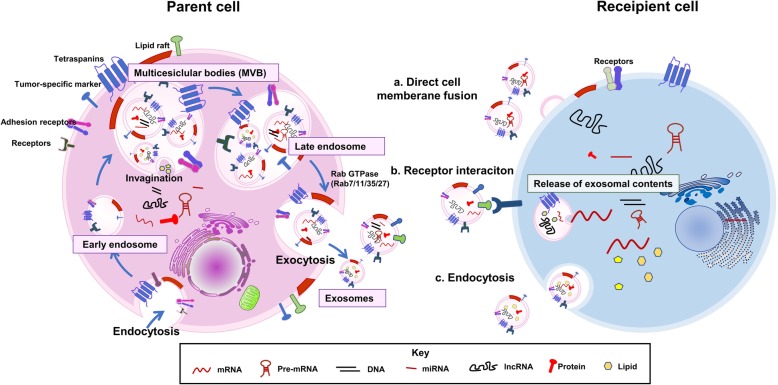
“Exosomes are constitutively secreted by almost all cell types and can transport proteins, lipids, DNA, and RNA to recipient cells [11].”
BackgroundInvolvement of chemokine receptors in breast cancer metastasis
Müller, A., Homey, B., Soto, H., Ge, N., Catron, D., Buchanan, M. E., McClanahan, T., Murphy, E., Yuan, W., Wagner, S. N., et al. (2001) · Nature · doi:10.1038/35065016 · Cited by 5,340
The distribution of secondary growths in cancer of the breast.
Paget, S. (1889) · The Lancet · doi:10.1016/s0140-6736(00)49915-0 · Cited by 5,277 · cited 1×
“In 1889, Stephen Paget proposed the “seed and soil” hypothesis of metastasis, which claims that the distribution of cancers is not random [2].”
BackgroundTumour exosome integrins determine organotropic metastasis
Hoshino, A., Costa-Silva, B., Shen, T.-L., Rodrigues, G., Hashimoto, A., Tesic Mark, M., Molina, H., Kohsaka, S., Di Giannatale, A., Ceder, S., et al. (2015) · Nature · doi:10.1038/nature15756 · Cited by 5,101 · cited 1×
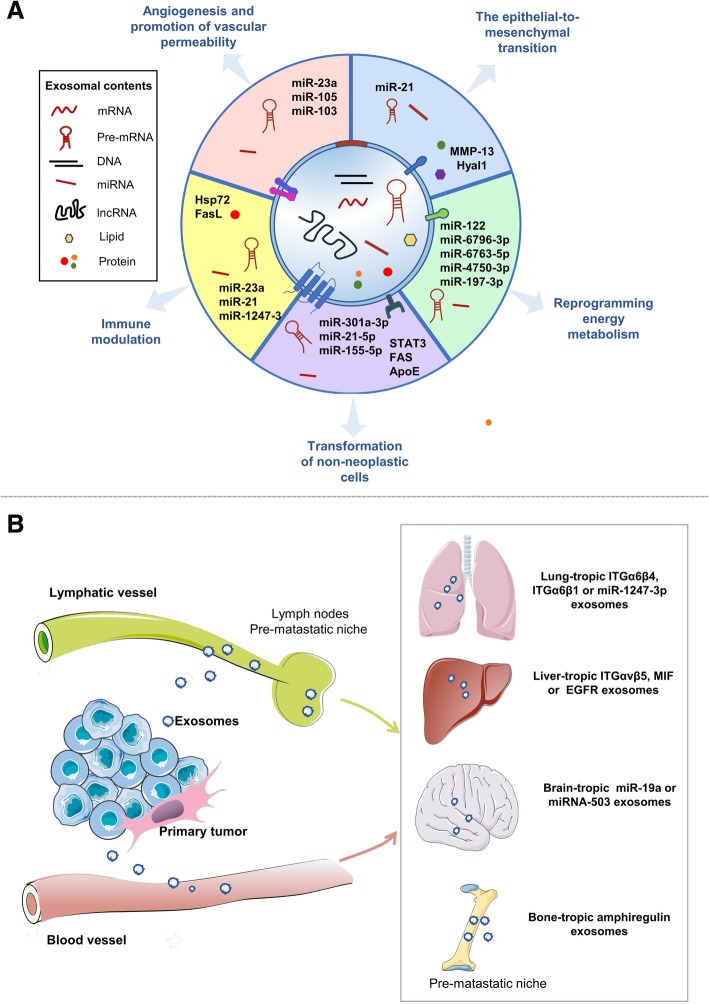
“Notably, they found that exosomes containing ITGαvβ5 specifically bind to Kupffer cells, thereby facilitating liver tropism, whereas exosomes expressing ITGα6β4 and ITGα6β1 favorably bind to lung-resident fibroblasts and epithelial cells, mediating lung tropism [8].”
BackgroundTumor Metastasis: Molecular Insights and Evolving Paradigms
Valastyan, S., & Weinberg, R. A. (2011) · Cell · doi:10.1016/j.cell.2011.09.024 · Cited by 4,011 · cited 1×
“It is characterized by a loss of cell polarity and cell-cell adhesive ability in epithelial cells and an increase in the migratory and invasive ability that produces mesenchymal stem cells [27, 28].”
BackgroundMathieu, M., Martin-Jaular, L., Lavieu, G., & Théry, C. (2019) · Nature Cell Biology · doi:10.1038/s41556-018-0250-9 · Cited by 3,737 · cited 1×
“3) the process of exosome uptake and cargo delivery into the cytosol of receptor cells need to be more fully understood [115].”
BackgroundMelanoma exosomes educate bone marrow progenitor cells toward a pro-metastatic phenotype through MET
Peinado, H., Alečković, M., Lavotshkin, S., Matei, I., Costa-Silva, B., Moreno-Bueno, G., Hergueta-Redondo, M., Williams, C., García-Santos, G., Ghajar, C. M., et al. (2012) · Nature Medicine · doi:10.1038/nm.2753 · Cited by 3,715 · cited 1×
“In a mouse model of melanoma, interactions between exosomes and the capillary wall have also been observed to increase vascular permeability, thereby leading to tumor cell leakage from blood vessels [37].”
Background
Cited by
Items 101–145 of 145
Ebrahim, N. A. A., Farghaly, T. A., & Soliman, S. M. A. (2025) · Medical Oncology · doi:10.1007/s12032-025-03217-y · Cited by 9
“For instance, obesity and high-fat diets have been linked to increased circulating EV lev - els and alterations in lipid composition [ 17 ].”
AmeliMojarad, M., AmeliMojarad, M., & Mojarad, E. N. (2022) · Pathology - Research and Practice · doi:10.1016/j.prp.2022.154133 · Cited by 9
Small extracellular vesicles: Multi-functional aspects in non-small cell lung carcinoma
Padinharayil, H., & George, A. (2024) · Critical Reviews in Oncology/Hematology · doi:10.1016/j.critrevonc.2024.104341 · Cited by 8
Zhang, L., Duan, X., Zhao, Y., Zhang, D., & Zhang, Y. (2025) · Frontiers in Immunology · doi:10.3389/fimmu.2025.1526589 · Cited by 9
“Exosomes are vesicles derived from different types of cells that encapsulate a variety of substances, including proteins, lipids, nucleic acids, and so on (108).”
Yang, L., Zhu, H., Chen, L., Zhang, J., Huang, J., Zeng, L., & Zong, Z. (2025) · Cellular Signalling · doi:10.1016/j.cellsig.2025.111963 · Cited by 8
Research progress of odontogenic extracellular vesicles in regeneration of dental pulp
Li, Y., Liu, C., & Han, G. (2022) · Oral Diseases · doi:10.1111/odi.14451 · Cited by 9
Exosomes: Key tools for cancer liquid biopsy
Panfoli, I., Bruschi, M., & Candiano, G. (2022) · Biocell · doi:10.32604/biocell.2022.020154 · Cited by 8
Construction of a miRNA-mRNA Network Related to Exosomes in Colon Cancer
Dong, W., Wu, D., Xu, S., Sun, Q., & Ci, X. (2022) · Disease Markers · doi:10.1155/2022/2192001 · Cited by 8
Ghosh, D., Lim, T. K., Basu, A., Gross, J. C., & Lin, Q. (2025) · FEBS Journal · doi:10.1111/febs.17410 · Cited by 7
“Extracellular vesicles including sEVs are vital mediators for carrying or transferring such metastatic signal molecules across the tissue barriers [5].”
Achreja, A., Meurs, N., & Nagrath, D. (2019) · Methods in molecular biology · doi:10.1007/978-1-0716-0159-4_10 · Cited by 7
Panfoli, I., & Bruschi, M. (2020) · Journal of Cancer Metastasis and Treatment · doi:10.20517/2394-4722.2020.50 · Cited by 7
“Tumour-derived Exo can drive the metastatic process by targeting specific organs setting a pre-metastatic environment([17]).”
BackgroundInfluentialThe role of MSC-derived exosomes in immune modulation and regenerative medicine
Pandey, S. N., Afzal, M., Goyal, K., Rekha, M. M., Nayak, P. P., Maqbool, M., Khan, Y., Maji, C., Gupta, G., Alzarea, S. I., et al. (2026) · Journal of drug targeting · doi:10.1080/1061186x.2026.2620707 · Cited by 6
“…their influence on the molecular composition of pre-metastatic niches, they are working to ascertain organ-specific metastasis (organot-ropism) [36,37]. to illustrate, Zomer et al. showed that exos released by malignant breast cancer cells can increase the metastatic potential of otherwise…”
Tokgün, O., & İnci, K. (2022) · Molecular Biology Reports · doi:10.1007/s11033-022-07632-6 · Cited by 6
Wang, Z., Yin, R., Zhang, L., Li, S., Zhou, Z., & Sun, M. (2025) · Acta Pharmaceutica Sinica B · doi:10.1016/j.apsb.2025.03.007 · Cited by 5
“…strategies aimed at inhibiting tumor exosomes could effectively alleviate the formation of immunosuppressive micro-environment and promote tumor killing effect of T cells, which is of great significance for potentiating PD-L1/PD-1 mediated immunotherapy to inhibit the development of tumors 19,20 .”
Huang, H., Wang, Y., Gan, J., Bu, H., Li, C., Li, Y., Yang, Y., & Liu, D. (2024) · The FASEB Journal · doi:10.1096/fj.202400951r · Cited by 5
The Radiosensitizing Potentials of Silymarin/Silibinin in Cancer: A Systematic Review
Gupta, J., Jalil, A. T., Muedii, Z. A.-H. R., Aminov, Z., Alsaikhan, F., Ramírez‐Coronel, A. A., Ramaiah, P., & Farhood, B. (2023) · Current Medicinal Chemistry · doi:10.2174/0109298673248404231006052436 · Cited by 5
Pirouzpanah, M., Babaie, S., Pourzeinali, S., Valizadeh, H., Malekeh, S., Şahin, F., & Farshbaf‐Khalili, A. (2024) · BioFactors · doi:10.1002/biof.2036 · Cited by 5
“85 Further, using exosomes derived from a panel of PCa cells, Webber et al. 86 pointed out that transforming growth factor-β (TGF-β )-containing exosomes induced fibroblast differentiation to activated fibroblasts or distinctive myofibroblast phenotype.”
Shapanis, A. G., Lai, C., Sommerlad, M., Parkinson, E., Healy, E., & Skipp, P. J. S. (2020) · International Journal of Molecular Sciences · doi:10.3390/ijms21218160 · Cited by 5
“Related to this, it is known that tumour-derived exosomes can promote the development of metastasis from cancer, including from melanoma, in distant organs [36,37].”
BackgroundWang, Q., & Ding, H. (2025) · Digestive Diseases and Sciences · doi:10.1007/s10620-025-09490-1 · Cited by 4
Osteosarcoma cells‐derived exosomal YES1 promote tumor progression via MAPK pathway
Li, Z., Chen, Q., Zhang, Y., Ye, Z., Song, Y., Zhang, Y., Gu, C., Jia, T., Yang, Y., & Shang, A. (2025) · Interdisciplinary medicine · doi:10.1002/inmd.20240072 · Cited by 4
The Trends of Uveal Melanoma Research in the Past Two Decades and Future Perspectives
Elubous, K. A., Al-Ebous, A., Abous, H. A., & Elubous, R. A. (2021) · SN Comprehensive Clinical Medicine · doi:10.1007/s42399-021-01068-y · Cited by 5
Wagh, B., Verma, N., Setia, A., Rani, K., Randhave, N. V., Kumar, V., Vaishali, Malik, A. K., & Muthu, M. S. (2025) · Journal of Drug Delivery Science and Technology · doi:10.1016/j.jddst.2025.107340 · Cited by 3
Visualization of Cancer Cell-Derived Exosome-Induced Fibroblast Phenotypic Transformation
Yin, S., Chen, F., Peng, B., Shi, Y., Lu, Q., Zhu, X., Li, H., & Zhang, Y. (2025) · Analytical Chemistry · doi:10.1021/acs.analchem.4c06175 · Cited by 3
Arghidash, F., Gheybi, F., Gholamhosseinian, H., Kesharwani, P., & Sahebkar, A. (2025) · Pathology - Research and Practice · doi:10.1016/j.prp.2025.156002 · Cited by 3
Unveiling the intricacies of exosome biology: from biogenesis to therapeutic applications
Mendonca, A., Acharjee, A., Sansare, Y., & Sundaresan, S. (2025) · Histochemistry and Cell Biology · doi:10.1007/s00418-025-02418-w · Cited by 3
“Tumour-derived exosomes, such as β-catenin, caveolin-1 and transforming growth factor beta (TGFβ), have the potential to influence variables associated with EMT and evasion of immune detection (Wu et al. 2019).”
Exosomes and pancreatic diseases: mechanisms, applications, and challenges
Zong, W., Chu, Y., Zhang, Q., Mao, T., & Li, X. (2026) · European journal of medical research · doi:10.1186/s40001-026-03858-3 · Cited by 1
“These primarily include key regulators of vesicle trafficking, membrane fusion, and secretion, such as Rab small GTPases (e.g., RAB27A, RAB27B, RAB5A), SNARE complex components (e.g., VAMP8, STX1A, SNAP23), and the membrane protein GP2 [29] [30].”
Gan, Y., Zhang, Y., Dong, X., & Lv, F. (2026) · MedComm – Biomaterials and Applications · doi:10.1002/mba2.70038 · Cited by 1
Yu, Y., Zhang, W., & Wang, K. (2026) · Frontiers in Oncology · doi:10.3389/fonc.2025.1583295 · Cited by 1
“Moreover, regulatory substances carried by exosomes derived from other constituent cell populations in the microenvironment can also act on tumor cells, breeding more aggressive and heterogeneous tumor cell phenotypes (11, 12).”
Jinqiu, L., Huang, X., Abulizi, G., & Hasim, A. (2026) · Journal of Extracellular Vesicles · doi:10.1002/jev2.70328 · Cited by 1
“Tumor-derived exosomes have garnered recognition as crucial mediators of intercellular communication, capable of systemically delivering bioactive molecules—including proteins, nucleic acids, and metabolites—to reprogram recipient cell function (Wu et al. 2019 , Hoshino et al. 2015 ).”
Mun, B., Kim, J., Kim, C. G., Go, S., Han, M., Ouck, Y., Jang, S., Son, S. U., Kim, G., Son, W., et al. (2026) · Advanced Science · doi:10.1002/advs.76389 · Cited by 1
“Recent studies have focused on tumor-derived extracellular vesicles (EVs) as carriers of molecular information about the tumor microenvironment [ 17, 22–27 ].”
The Pre-metastatic Niche: How Cancer Stem Cell-Derived Exosomal MicroRNA Fit into the Puzzle
Azar, B. K. Y., & Vakhshiteh, F. (2025) · Stem Cell Reviews and Reports · doi:10.1007/s12015-025-10866-z · Cited by 1
Preventing metastasis with pH regulation
Koltai, T., Reshkin, S. J., & Harguindey, S. (2020) · Elsevier eBooks · doi:10.1016/b978-0-12-819059-3.00020-4
Exosomes: The Crucial Element in Prostate Cancer
Moulay, M., & Al-Kareem, S. (2020) · Springer eBooks · doi:10.1007/978-981-15-6599-1_15
Exogen and endogen events trigger complex interactions in the melanoma microenvironment
Gyukity-Sebestyén, E. (2020) · SZTE Repository of Dissertations (University of Szeged) · doi:10.14232/phd.10729
Shou, Y. (2021) · Cancer Cell Research · doi:10.54762/ccr2021.778-783
Kumar, S. (2020) · Faculty Opinions – Post-Publication Peer Review of the Biomedical Literature · doi:10.3410/f.738444944.793578797
Liquid Biopsy in non-small cell lung cancer: exosomes as a tool for the study of biomarkers.
Sáez, M. E. D. (2024) · RiuNet (Universitat Politècnica de València) · doi:10.4995/thesis/10251/203438
Manman, L., Chen, X., Wang, L., Qin, L., Wang, H., Sun, Z., Zhao, W., & Geng, B. (2020) · Figshare · doi:10.6084/m9.figshare.12900601
Manman, L., Chen, X., Wang, L., Qin, L., Wang, H., Sun, Z., Zhao, W., & Geng, B. (2020) · Figshare · doi:10.6084/m9.figshare.12900604
Liu, L., Zhang, Y., Li, X., Mo, Y., Song, L., Jia, Y., Zhang, L., Zhou, W., Zhang, H., Guo, H., et al. (2026) · Cancer Biology and Medicine · doi:10.20892/j.issn.2095-3941.2025.0440
“Exosomes are small extracellular vesicles (typically 30–200 nm in diameter) that can selectively transport a variety of biomolecules, including nucleic acids, lipids, metabolites, and proteins, to recipient cells 12-14 .”
Torunoğlu, E. İ., Sarı, Z. B., Sari, M. E., & Aytar, E. C. (2026) · Biotechnology and Bioengineering · doi:10.1002/bit.70334
Exosomal YES1 from Osteosarcoma Cells Drives Malignant Progression through the ERK/MAPK Pathway
Zhang, W., Hui, C., & Tan, M. (2025) · Interdisciplinary Research in Medical Sciences Specialty · doi:10.51847/rf6jmtdinh
Niches in cancer: from primary tumors to metastatic disease
Chao, Z., Wang, X., Wang, Z., Wu, K., & Li, L. (2026) · Journal of Hematology & Oncology · doi:10.1186/s13045-026-01858-8
“Exosomal integrins have been linked to lung-and liver-directed uptake in experimental models [74, 142–144], but organ selectivity also reflects tumor lineage, vascular access, recipient-cell phenotype and the systemic host response [72, 144, 145].”
Advances in Biomarker Discovery for Early Ovarian Cancer Diagnosis
Niebora, J., Spaczyńska, J., Partyńska, A., Penciak, N., Domagała, D., Data, K., Mozdziak, P. E., Bryja, A., Chmielewski, P. P., Dąbrowski, P., et al. (2026) · Cells · doi:10.3390/cells15211940
Xiong, J., Chi, H., Yang, G., Zhao, S., Zhang, J., Tran, L. J., Xia, Z., Yang, F., & Tian, G. (2023) · doi:10.3389/fimmu.2023.1188760.s001
Metadata
- Authors
- Wu, M., Wang, G., Hu, W., Yao, Y., & Yu, X.-F.
- Affiliations
- Zhejiang University (CN)
- Second Affiliated Hospital of Zhejiang University (CN)
- Corresponding author
- Yu, Xiao-Fang
- Venue
- Molecular Cancer
- Published
- 2019-03-30
- Volume
- 18
- Issue
- 1
- Pages
- 53-53
- ISSN
- 1476-4598 (ISSN-L)
- PMC
- PMC6441156
- OpenAlex
- W2946914098
- Semantic Scholar
- 0487addfcbde90efe51d523722599f87ec06363a
- Cited by
- 140
- References
- 131
- Citations by year
- 2026: 6 · 2025: 16 · 2024: 14 · 2023: 14 · 2022: 18 · 2021: 27 · 2020: 40 · 2019: 5
- FWCI
- 1.98
- Type
- journal article
- Language
- en
- Open access
- gold
- doi.org
- Licence
- cc-by
- creativecommons.org/licenses/by/4.0/ (tdm)
- Locations
- Molecular Cancer (publishedVersion, cc-by)
- PubMed Central (publishedVersion, cc-by)
- PubMed (publishedVersion)
- DOAJ (DOAJ: Directory of Open Access Journals) (submittedVersion, cc-by-sa)
- Funders
- National Natural Science Foundation of China (No. 81772169)
- Topics
- Life Sciences › Biochemistry, Genetics and Molecular Biology › Molecular Biology › Extracellular vesicles in disease
- Health Sciences › Medicine › Oncology › Cancer Cells and Metastasis
- Life Sciences › Biochemistry, Genetics and Molecular Biology › Cell Biology › Cellular transport and secretion
- Keywords
- exosomes, metastasis, extracellular vesicles, intercellular communication, tumor microenvironment, exosome modification, exosome therapy
- MeSH terms
- Animals, Cell Communication, Humans, Neoplasm Metastasis, Neoplasms, Biomarkers, Tumor, Exosomes, Tumor Microenvironment
About these checks
Registry, retraction, Cites and statistics results are computed, not judged, with one exception: a printed reference that no index lists is read once by a model before it counts as a citation error. Claims are extracted by a model and kept only when their quote appears verbatim in the text; each cited source is then checked, with a model’s help, for whether it says what the claim relies on. Those verdicts can be wrong — read the claim’s quote and the cited source before relying on one.
Statistics and arithmetic are recomputed, not judged.
Confidence bands are shown only for fields calibrated on our annotated test set. None is calibrated yet, so no band is shown.
What counts as a claim ›How we measure confidence ›How we check this ›
Are you an author, or do you see a problem with this page? Request a review
Data sources
Bibliographic data: Semantic Scholar, OpenAlex, Crossref.
Contains information from the Semantic Scholar Academic Graph Datasets, made available under the ODC Attribution License (ODC-BY 1.0).
Semantic Scholar’s data is described in: Kinney, R., et al. (2023). The Semantic Scholar Open Data Platform. arXiv:2301.10140.
