

m6A-dependent glycolysis enhances colorectal cancer progression
Open accessThe DOI matches its Crossref record; 49 of the 49 references it cites were found in a registry or an index.
Abstract
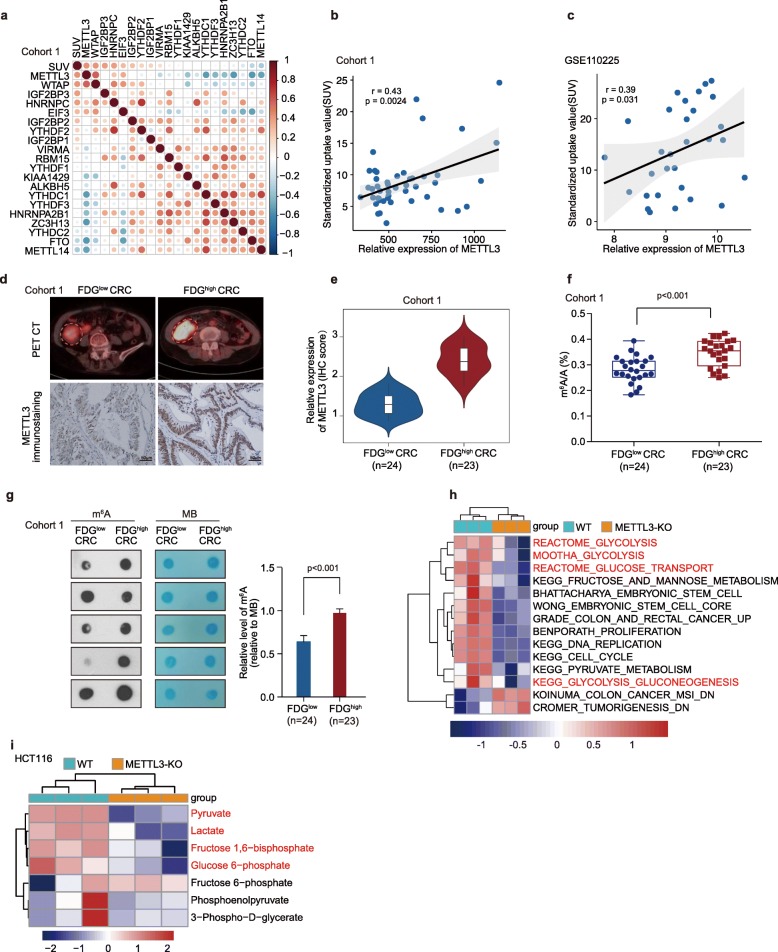
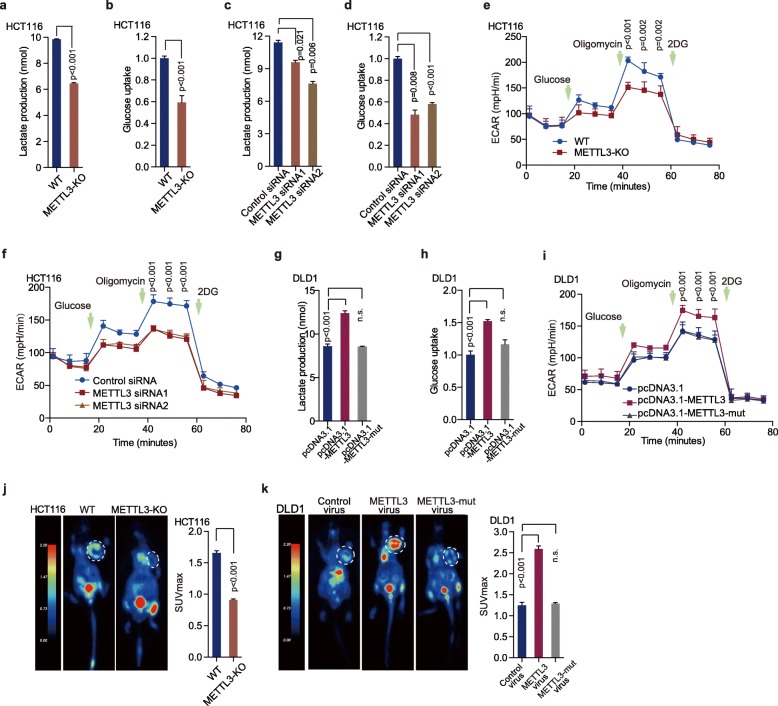
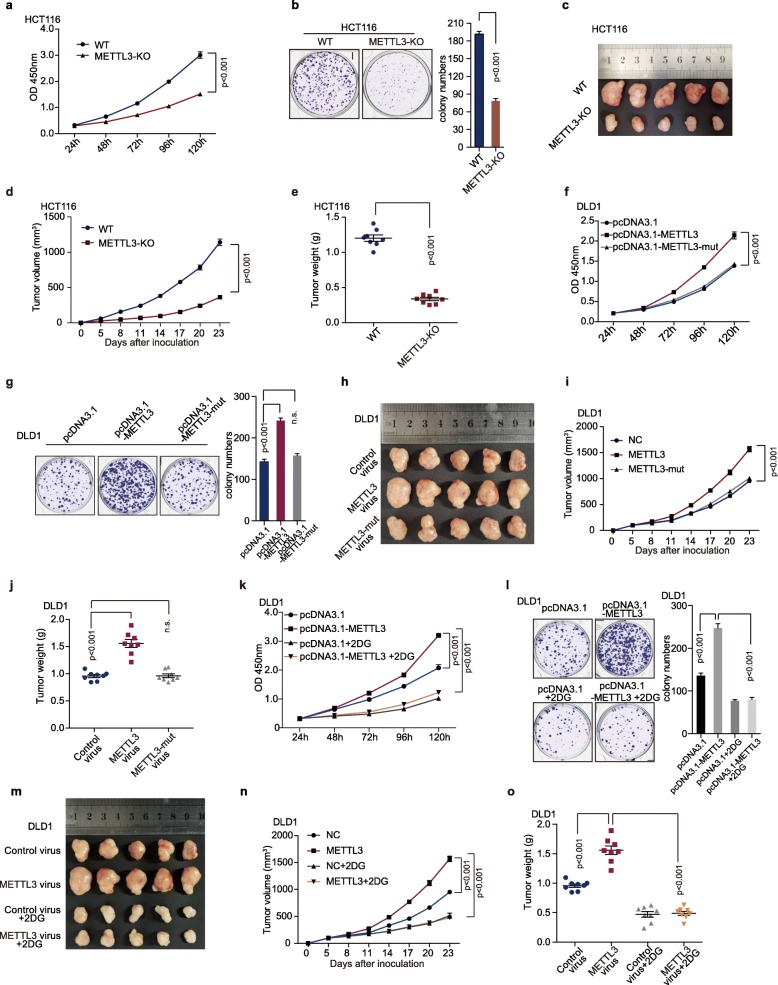
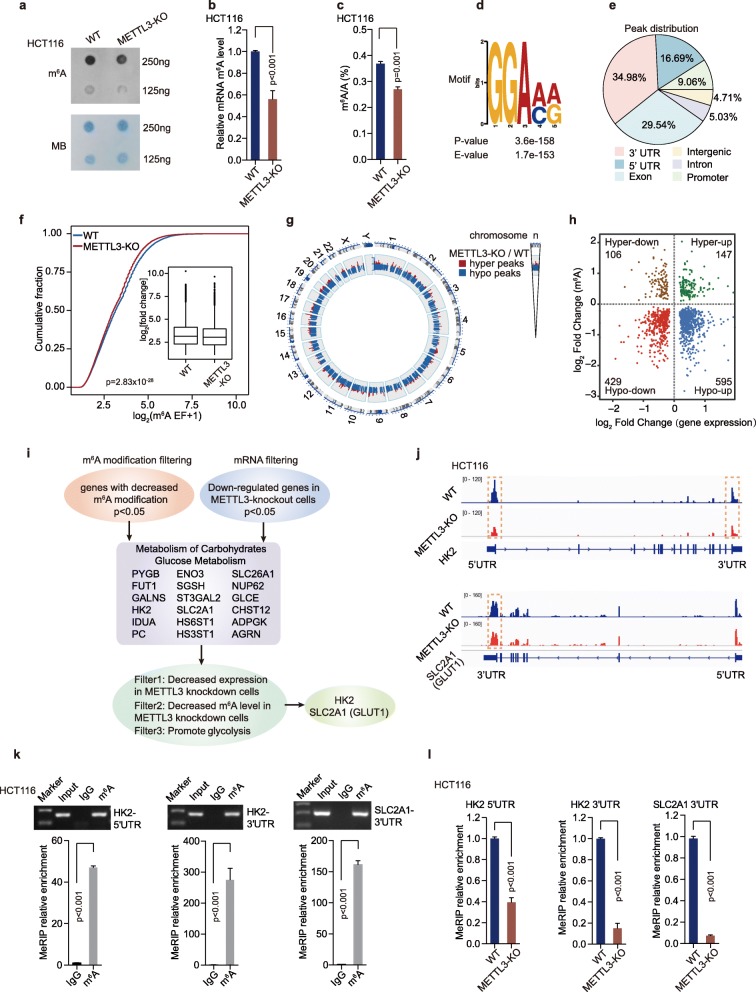
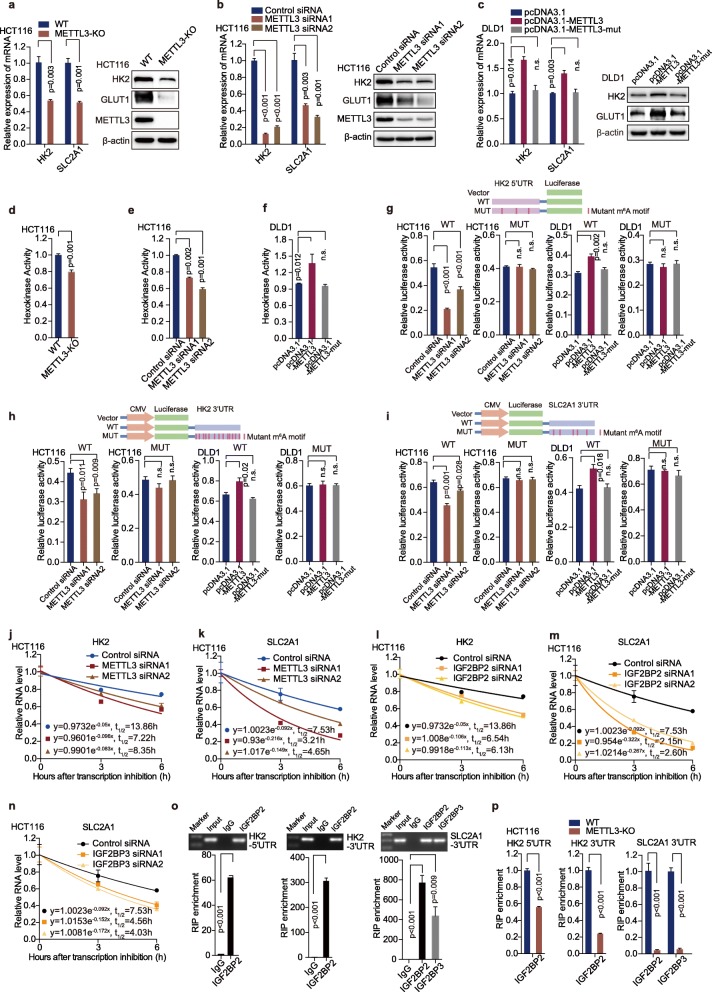
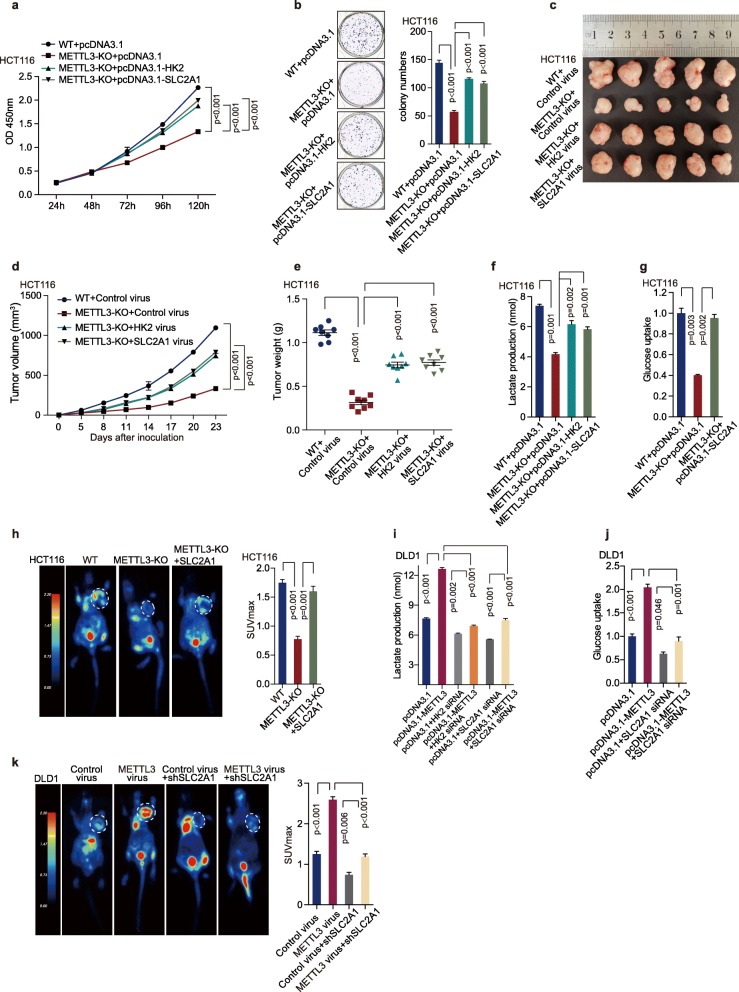
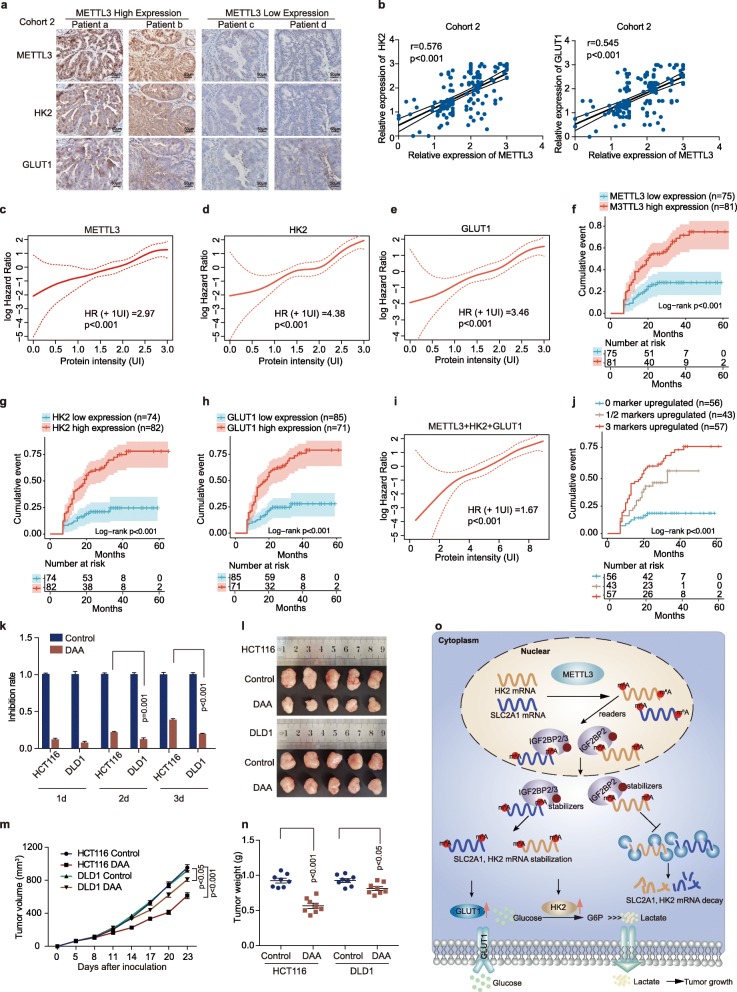
Background: Epigenetic alterations are involved in various aspects of colorectal carcinogenesis. N 6 -methyladenosine (m 6 A) modifications of RNAs are emerging as a new layer of epigenetic regulation. As the most abundant chemical modification of eukaryotic mRNA, m 6 A is essential for the regulation of mRNA stability, splicing, and translation. Alterations of m 6 A regulatory genes play important roles in the pathogenesis of a variety of human diseases. However, whether this mRNA modification participates in the glucose metabolism of colorectal cancer (CRC) remains uncharacterized. Methods: Transcriptome-sequencing and liquid chromatography-tandem mass spectrometry (LC-MS) were performed to evaluate the correlation between m 6 A modifications and glucose metabolism in CRC. Mass spectrometric metabolomics analysis, in vitro and in vivo experiments were conducted to investigate the effects of METTL3 on CRC glycolysis and tumorigenesis. RNA MeRIP-sequencing, immunoprecipitation and RNA stability assay were used to explore the molecular mechanism of METTL3 in CRC. Results: A strong correlation between METTL3 and 18 F-FDG uptake was observed in CRC patients from Xuzhou Central Hospital. METTL3 induced-CRC tumorigenesis depends on cell glycolysis in multiple CRC models. Mechanistically, METTL3 directly interacted with the 5′/3’UTR regions of HK2 , and the 3’UTR region of SLC2A1 (GLUT1), then further stabilized these two genes and activated the glycolysis pathway. M 6 A-mediated HK2 and SLC2A1 (GLUT1) stabilization relied on the m 6 A reader IGF2BP2 or IGF2BP2/3, respectively. Conclusions: METTL3 is a functional and clinical oncogene in CRC. METTL3 stabilizes HK2 and SLC2A1 (GLUT1) expression in CRC through an m 6 A-IGF2BP2/3- dependent mechanism. Targeting METTL3 and its pathway offer alternative rational therapeutic targets in CRC patients with high glucose metabolism.
Overview
The claims and statistics of this paper haven’t been checked yet.
Free: it reads the open-access text and checks the first 5 claims that cite a source we can check. Create a free account to check every claim.
Integrity signals
Registry
Cites
Statistics
Figures
Verification
Claims the paper makes
The claims and statistics of this paper haven’t been checked yet.
Free: it reads the open-access text and checks the first 5 claims that cite a source we can check. Create a free account to check every claim.
Claims other papers make about this one
Each is checked against this paper’s own text: does it say what the citing paper says it does?
The source backs part of the claim, not all of it — or backs it for a different population, condition or comparison.
In the citing paper
“The interaction between IMP2 and its target RNA transcripts depends on m6A modifications [16].”
From IMPlications of IMP2 in RNA Biology and Disease (2025) · cites this paper as [16]
Experimental — accuracy not yet measuredThe source backs part of the claim, not all of it — or backs it for a different population, condition or comparison.
In the citing paper
“IMP2 is a critical regulator of glycolysis in colorectal cancer, driving tumor progression by stabilizing m6A-modified mRNAs of key glycolytic enzymes, hexokinase 2 (encoding HK2) and SLC2A1 (encoding GLUT1) [16].”
From IMPlications of IMP2 in RNA Biology and Disease (2025) · cites this paper as [16]
Experimental — accuracy not yet measuredThe source backs part of the claim, not all of it — or backs it for a different population, condition or comparison.
In the citing paper
“IMP2 causes upregulation of multiple pro-oncogenic targets that increase proliferation, contribute to the Warburg effect, and drive tumor cells toward immune escape [16,110,125].”
From IMPlications of IMP2 in RNA Biology and Disease (2025) · cites this paper as [16]
Experimental — accuracy not yet measuredThe cited source says what the claim attributes to it.
In the citing paper
“The interaction between IMP2 and its target transcripts depends on m6A modifications introduced by METTL3. In METTL3-knockout cells, IMP2 binding to HK2 and GLUT1 mRNAs is substantially impaired [16].”
From IMPlications of IMP2 in RNA Biology and Disease (2025) · cites this paper as [16]
The cited source says what the claim attributes to it.
In the citing paper
“In CRC cell lines, IMP2 knockdown significantly reduces HK2 and GLUT1 mRNA levels and stability.”
From IMPlications of IMP2 in RNA Biology and Disease (2025) · cites this paper as [16]
Self-check
Percentages, sums and reported differences re-computed from the paper’s own numbers.
The self-check needs the paper’s full text.
Citations
Cites
Hallmarks of Cancer: The Next Generation
Hanahan, D., & Weinberg, R. A. (2011) · Cell · doi:10.1016/j.cell.2011.02.013 · Cited by 66,590
Cancer incidence and mortality worldwide: Sources, methods and major patterns in GLOBOCAN 2012
Ferlay, J., Soerjomataram, I., Dikshit, R., Eser, S., Mathers, C., Rebelo, M., Parkin, D. M., Forman, D., & Bray, F. (2015) · International Journal of Cancer · doi:10.1002/ijc.29210 · Cited by 28,766
The Molecular Signatures Database Hallmark Gene Set Collection
Liberzon, A., Birger, C., Thorvaldsdóttir, H., Ghandi, M., Mesirov, J. P., & Tamayo, P. (2015) · Cell Systems · doi:10.1016/j.cels.2015.12.004 · Cited by 13,807 · cited 1×
“Single-sample GSEA (ssGSEA) [26] revealed that the gene sets related to Reactome_Glycolysis, Mootha_ Glycolysis, Reactome_Glucose_Transport and KEGG_ Glycolysis_Gluconeogenesis (glycolysis pathway) and Grade_Colon_And_Rectal_Cancer_Up (colorectal-carcinogenesis signature) were negatively correlated with METTL3-knockou…”
Topology of the human and mouse m6A RNA methylomes revealed by m6A-seq
Dominissini, D., Moshitch-Moshkovitz, S., Schwartz, S., Salmon-Divon, M., Ungar, L., Osenberg, S., Cesarkas, K., Jacob-Hirsch, J., Amariglio, N., Kupiec, M., et al. (2012) · Nature · doi:10.1038/nature11112 · Cited by 4,884
N6-methyladenosine-dependent regulation of messenger RNA stability
Wang, X., Lu, Z., Gomez, A., Hon, G. C., Yue, Y., Han, D., Fu, Y., Parisien, M., Dai, Q., Jia, G., et al. (2014) · Nature · doi:10.1038/nature12730 · Cited by 4,558
Comprehensive Analysis of mRNA Methylation Reveals Enrichment in 3′ UTRs and near Stop Codons
Meyer, K. D., Saletore, Y., Zumbo, P., Elemento, O., Mason, C. E., & Jaffrey, S. R. (2012) · Cell · doi:10.1016/j.cell.2012.05.003 · Cited by 4,223
N6-Methyladenosine in nuclear RNA is a major substrate of the obesity-associated FTO
Jia, G., Fu, Y., Zhao, X., Dai, Q., Zheng, G., Yang, Y., Yi, C., Lindahl, T., Pan, T., Yang, Y.-G., et al. (2011) · Nature Chemical Biology · doi:10.1038/nchembio.687 · Cited by 4,106 · cited 1×
“And this mRNA modification can be removed by demethylases FTO and ALKBH5 [15, 16].”
ALKBH5 Is a Mammalian RNA Demethylase that Impacts RNA Metabolism and Mouse Fertility
Zheng, G., Dahl, J. A., Niu, Y., Fedorcsak, P., Huang, C.-M., Li, C. J., Vågbø, C. B., Shi, Y., Wang, W.-L., Song, S.-H., et al. (2013) · Molecular Cell · doi:10.1016/j.molcel.2012.10.015 · Cited by 3,550
N6-methyladenosine Modulates Messenger RNA Translation Efficiency
Wang, X., Zhao, B. S., Roundtree, I. A., Lu, Z., Han, D., Ma, H., Weng, X., Chen, K., Shi, H., & He, C. (2015) · Cell · doi:10.1016/j.cell.2015.05.014 · Cited by 3,483
A METTL3–METTL14 complex mediates mammalian nuclear RNA N6-adenosine methylation
Liu, J., Yue, Y., Han, D., Wang, X., Fu, Y., Zhang, L., Jia, G., Yu, M., Lu, Z., Deng, X., et al. (2014) · Nature Chemical Biology · doi:10.1038/nchembio.1432 · Cited by 3,433 · cited 1×
“RNA Methyltransferase METTL3 may participate in regulating the mRNA stability and modification of target genes [46].”
Background
Cited by
The role of m6A RNA methylation in cancer metabolism
An, Y., & Duan, H. (2022) · Molecular Cancer · doi:10.1186/s12943-022-01500-4 · Cited by 871
Xiong, J., He, J., Zhu, J., Pan, J., Liao, W., Ye, H., Wang, H., Song, Y., Du, Y., Cui, B., et al. (2022) · Molecular Cell · doi:10.1016/j.molcel.2022.02.033 · Cited by 804
Roles of METTL3 in cancer: mechanisms and therapeutic targeting
Zeng, C., Huang, W., Li, Y., & Weng, H. (2020) · Journal of Hematology & Oncology · doi:10.1186/s13045-020-00951-w · Cited by 634
Li, Q., Ni, Y., Zhang, L., Jiang, R., Xu, J., Yang, H., Hu, Y., Qiu, J., Pu, L., Tang, J., et al. (2021) · Signal Transduction and Targeted Therapy · doi:10.1038/s41392-020-00453-8 · Cited by 380
m6A modification: recent advances, anticancer targeted drug discovery and beyond
Deng, L.-J., Deng, W.-Q., Fan, S.-R., Chen, M.-F., Qi, M., Lyu, W.-Y., Qi, Q., Tiwari, A. K., Chen, J.-X., Zhang, D.-M., et al. (2022) · Molecular Cancer · doi:10.1186/s12943-022-01510-2 · Cited by 366
The roles and implications of RNA m6A modification in cancer
Deng, X., Qing, Y., Horne, D., Huang, H., & Chen, J. (2023) · Nature Reviews Clinical Oncology · doi:10.1038/s41571-023-00774-x · Cited by 364
Zhong, X., He, X., Wang, Y., Hu, Z., Huang, H., Zhao, S., Wei, P., & Li, D. (2022) · Journal of Hematology & Oncology · doi:10.1186/s13045-022-01358-5 · Cited by 329
The role of the HIF‐1α/ALYREF/PKM2 axis in glycolysis and tumorigenesis of bladder cancer
Wang, J., Zhu, W., Han, J., Yang, X., Zhou, R., Lu, H., Yu, H., Yuan, W., Li, P., Tao, J., et al. (2021) · Cancer Communications · doi:10.1002/cac2.12158 · Cited by 313
Liao, M., Yao, D., Wu, L., Luo, C., Wang, Z., Zhang, J., & Liu, B. (2024) · Acta Pharmaceutica Sinica B · doi:10.1016/j.apsb.2023.12.003 · Cited by 261
METTL3 promotes chemoresistance in small cell lung cancer by inducing mitophagy
Sun, Y., Shen, W., Hu, S., Lyu, Q., Wang, Q., Wei, T., Zhu, W., & Zhang, J. (2023) · Journal of Experimental & Clinical Cancer Research · doi:10.1186/s13046-023-02638-9 · Cited by 246
Demethylase ALKBH5 suppresses invasion of gastric cancer via PKMYT1 m6A modification
Hu, Y., Gong, C., Li, Z., Liu, J., Chen, Y., Huang, Y., Luo, Q., Wang, S., Hou, Y., Yang, S., et al. (2022) · Molecular Cancer · doi:10.1186/s12943-022-01522-y · Cited by 241
Ge, T., Gu, X., Jia, R., Ge, S., Chai, P., Zhuang, A., & Fan, X. (2022) · Cancer Communications · doi:10.1002/cac2.12374 · Cited by 200
RNA m6A Modification in Cancers: Molecular Mechanisms and Potential Clinical Applications
Gu, C., Shi, X., Dai, C., Shen, F., Rocco, G., Chen, J., Huang, Z., Chen, C., He, C., Huang, T., et al. (2020) · The Innovation · doi:10.1016/j.xinn.2020.100066 · Cited by 189
Kong, C., Yan, X., Zhu, Y., Zhu, H., Luo, Y., Liu, P., Ferrandon, S., Kalady, M. F., Gao, R., He, J., et al. (2021) · Cancer Research · doi:10.1158/0008-5472.can-21-0453 · Cited by 186
Self-citationProtein translation: biological processes and therapeutic strategies for human diseases
Jia, X., He, X., Huang, C., Li, J., Dong, Z., & Liu, K. (2024) · Signal Transduction and Targeted Therapy · doi:10.1038/s41392-024-01749-9 · Cited by 190
The role of RNA methylation in tumor immunity and its potential in immunotherapy
Li, Y., Jin, H., Li, Q., Shi, L., Mao, Y., & Zhao, L. (2024) · Molecular Cancer · doi:10.1186/s12943-024-02041-8 · Cited by 185
“Furthermore, METTL3 exerts a significant influence on the progression of colo-rectal cancer through glycose metabolism via an m6A-IGF2BP3-dependent mechanism [155].”
BackgroundNicolini, A., & Ferrari, P. (2024) · Frontiers in Immunology · doi:10.3389/fimmu.2024.1353787 · Cited by 182
Liu, W.-W., Zheng, S.-Q., Li, T., Fei, Y.-F., Wang, C., Zhang, S., Wang, F., Jiang, G.-M., & Wang, H. (2024) · Signal Transduction and Targeted Therapy · doi:10.1038/s41392-024-01777-5 · Cited by 166
The IGF2BP family of RNA binding proteins links epitranscriptomics to cancer
Ramesh-Kumar, D., & Guil, S. (2022) · Seminars in Cancer Biology · doi:10.1016/j.semcancer.2022.05.009 · Cited by 167
FTO modifies the m6A level of MALAT and promotes bladder cancer progression
Tao, L., Mu, X., Chen, H., Jin, D., Zhang, R., Zhao, Y., Fan, J., Cao, M., & Zhou, Z. (2021) · Clinical and Translational Medicine · doi:10.1002/ctm2.310 · Cited by 165
Self-citationXu, Y., Lv, D., Yan, C., Su, H., Zhang, X., Shi, Y., & Ying, K. (2022) · Cancer Cell International · doi:10.1186/s12935-021-02433-6 · Cited by 163
Self-citationRNA methylations in human cancers
Han, X., Wang, M., Zhao, Y.-L., Yang, Y., & Yang, Y.-G. (2021) · Seminars in Cancer Biology · doi:10.1016/j.semcancer.2020.11.007 · Cited by 162
Hu, C., Liu, T., Han, C., Xuan, Y., Jiang, D., Sun, Y., Zhang, X., Zhang, W., Xu, Y., Liu, Y., et al. (2021) · International Journal of Biological Sciences · doi:10.7150/ijbs.67770 · Cited by 160
Self-citationWang, X., Ji, Y., Feng, P., Liu, R., Li, G., Zheng, J., Xue, Y., Wei, Y., Ji, C., Chen, D., et al. (2021) · Advanced Science · doi:10.1002/advs.202100209 · Cited by 147
Emerging roles of RNA methylation in gastrointestinal cancers
Xie, S., Chen, W., Chen, K., Chang, Y., Yang, F., Lin, A., Shu, Q., Zhou, T., & Yan, X. (2020) · Cancer Cell International · doi:10.1186/s12935-020-01679-w · Cited by 147
Chen, S., Yang, C., Wang, Z., Hu, J., Pan, J., Liao, C., Zhang, J.-Q., Chen, J.-Z., Huang, Y., Huang, L., et al. (2021) · Journal of Hematology & Oncology · doi:10.1186/s13045-021-01072-8 · Cited by 144
Yang, Q., Lei, X., He, J., Peng, Y., Zhang, Y., Ling, R., Wu, C., Zhang, G., Zheng, B., Chen, X., et al. (2023) · Advanced Science · doi:10.1002/advs.202300898 · Cited by 143
Self-citationMethyltransferase-like proteins in cancer biology and potential therapeutic targeting
Qi, Y., Liu, Z., Hong, L., Li, P., & Ling, Z. (2023) · Journal of Hematology & Oncology · doi:10.1186/s13045-023-01477-7 · Cited by 144
m6A Reader HNRNPA2B1 Promotes Esophageal Cancer Progression via Up-Regulation of ACLY and ACC1
Guo, H., Wang, B., Xu, K., Nie, L., Fu, Y. S., Wang, Z., Wang, Q., Wang, S., & Zou, X. (2020) · Frontiers in Oncology · doi:10.3389/fonc.2020.553045 · Cited by 141
Oncofetal protein IGF2BPs in human cancer: functions, mechanisms and therapeutic potential
Zhu, T., Hong, L., & Ling, Z. (2023) · Biomarker Research · doi:10.1186/s40364-023-00499-0 · Cited by 140
“3’UTR Stability Glycolysis, proliferation [79]”
Influentialm6A-regulated tumor glycolysis: new advances in epigenetics and metabolism
Yue, S., Liu, H., Su, H.-F., Luo, C., Liang, H., Zhang, B., & Zhang, W. (2023) · Molecular Cancer · doi:10.1186/s12943-023-01841-8 · Cited by 140
Chen, B., Jiang, W., Huang, Y., Zhang, J., Yu, P., Wu, L., & Peng, H. (2022) · Oncogene · doi:10.1038/s41388-022-02250-9 · Cited by 140
Zhang, K., Zhang, T., Yang, Y., Tu, W., Huang, H., Wang, Y., Chen, Y., Pan, K., & Chen, Z. (2022) · Theranostics · doi:10.7150/thno.73746 · Cited by 133
Emerging role of RNA methyltransferase METTL3 in gastrointestinal cancer
Wang, Q., Geng, W., Guo, H., Wang, Z., Xu, K., Chen, C., & Wang, S. (2020) · Journal of Hematology & Oncology · doi:10.1186/s13045-020-00895-1 · Cited by 130
Interplay Among Metabolism, Epigenetic Modifications, and Gene Expression in Cancer
Huo, M., Zhang, J., Huang, W., & Wang, Y. (2021) · Frontiers in Cell and Developmental Biology · doi:10.3389/fcell.2021.793428 · Cited by 127
“Methyltransferase 3, N6adenosine-methyltransferase complex catalytic subunit 3 (METTL3) attaches m6A-IGF2BP2/3 to stabilize the expression of hexokinase 2 (HK2), resulting in the expression of phosphorylated glucose hexokinases, and SLC2A1, resulting in the expression of glucose transporter (GLUT1), in colon cancer to…”
BackgroundZhang, F., Liu, H., Duan, M., Wang, G., Zhang, Z., Wang, Y., Qian, Y., Yang, Z., & Jiang, X. (2022) · Journal of Hematology & Oncology · doi:10.1186/s13045-022-01304-5 · Cited by 127
Ma, L., Xue, X., Zhang, X., Yu, K., Xu, X., Tian, X., Miao, Y., Meng, F., Liu, X., Guo, S., et al. (2022) · Journal of Experimental & Clinical Cancer Research · doi:10.1186/s13046-021-02200-5 · Cited by 124
Self-citationCao, X., Geng, Q., Fan, D., Wang, Q., Wang, X., Zhang, M., Zhao, L., Jiao, Y., Deng, T., Liu, H., et al. (2023) · Molecular Cancer · doi:10.1186/s12943-022-01704-8 · Cited by 124
Yuan, X., Li, T., Shi, L., Miao, J., Guo, Y., & Chen, Y. (2021) · Molecular Medicine · doi:10.1186/s10020-021-00355-7 · Cited by 120
The evolving landscape of N6-methyladenosine modification in the tumor microenvironment
Gu, Y., Wu, X., Zhang, J., Fang, Y., Pan, Y., Shu, Y., & Ma, P. (2021) · Molecular Therapy · doi:10.1016/j.ymthe.2021.04.009 · Cited by 118
Lu, S., Han, L., Hu, X., Sun, T., Xu, D., Li, Y., Chen, Q., Yao, W., He, M., Wang, Z., et al. (2021) · Journal of Hematology & Oncology · doi:10.1186/s13045-021-01204-0 · Cited by 116
Roles of RNA Modifications in Diverse Cellular Functions
Wilkinson, E., Cui, Y., & He, Y. (2022) · Frontiers in Cell and Developmental Biology · doi:10.3389/fcell.2022.828683 · Cited by 115
“In addition to lipogenesis and adipogenesis, METTL3 was found to regulate glucose metabolism in colorectal cancer, as METTL3-mediated m(6)A promoted the mRNA stability of Hk2 and Glut1 in an m(6)A and IGF2BP2/3-dependent manner (Shen et al., 2020).”
BackgroundThe Diverse Functions of IMP2/IGF2BP2 in Metabolism
Dai, N. (2020) · Trends in Endocrinology & Metabolism · doi:10.1016/j.tem.2020.05.007 · Cited by 114
The role of Insulin-like growth factor 2 mRNA-binding proteins (IGF2BPs) as m6A readers in cancer
Sun, C., Cao, D., Du, B.-B., Chen, C., & Liu, D. (2022) · International Journal of Biological Sciences · doi:10.7150/ijbs.70458 · Cited by 110
HK2: a potential regulator of osteoarthritis via glycolytic and non-glycolytic pathways
Bao, C., Zhu, S., Song, K., & He, C. (2022) · Cell Communication and Signaling · doi:10.1186/s12964-022-00943-y · Cited by 104
Duan, M., Liu, H., Xu, S., Yang, Z., Zhang, F., Wang, G., Wang, Y., Zhao, S., & Jiang, X. (2023) · Genes & Diseases · doi:10.1016/j.gendis.2023.06.017 · Cited by 100
Inhibition of the m6A reader IGF2BP2 as a strategy against T-cell acute lymphoblastic leukemia
Feng, P., Chen, D., Wang, X., Li, Y., Li, Z., Li, B., Zhang, Y., Li, W., Zhang, J., Ye, J., et al. (2022) · Leukemia · doi:10.1038/s41375-022-01651-9 · Cited by 97
Self-citationMETTL16 promotes glycolytic metabolism reprogramming and colorectal cancer progression
Wei, W., Zhang, Z., Shi, B., Cai, Y., Zhang, H.-S., Sun, C., Fei, Y.-F., Zhong, W., Zhang, S., Wang, C., et al. (2023) · Journal of Experimental & Clinical Cancer Research · doi:10.1186/s13046-023-02732-y · Cited by 93
N6-methyladenosine-dependent signalling in cancer progression and insights into cancer therapies
Tan, F., Zhao, M., Xiong, F., Wang, Y., Zhang, S., Gong, Z., Li, X., He, Y., Shi, L., Wang, F., et al. (2021) · Journal of Experimental & Clinical Cancer Research · doi:10.1186/s13046-021-01952-4 · Cited by 87
Roles and drug development of METTL3 (methyltransferase-like 3) in anti-tumor therapy
Xu, P., & Ge, R. (2022) · European Journal of Medicinal Chemistry · doi:10.1016/j.ejmech.2022.114118 · Cited by 83
Self-citationAlternative splicing of METTL3 explains apparently METTL3-independent m6A modifications in mRNA
Poh, H. X., Mirza, A. H., Pickering, B. F., & Jaffrey, S. R. (2022) · PLoS Biology · doi:10.1371/journal.pbio.3001683 · Cited by 81
Tantai, J., Pan, X., Chen, Y., Shen, Y., & Ji, C. (2022) · Cell Death and Disease · doi:10.1038/s41419-022-04727-7 · Cited by 80
Gao, Y., Wang, H., Chen, S., An, R., Chu, Y., Li, G., Wang, Y., Xie, X., & Zhang, J. (2022) · Journal of Translational Medicine · doi:10.1186/s12967-022-03395-7 · Cited by 80
Disruption of CerS6-mediated sphingolipid metabolism by FTO deficiency aggravates ulcerative colitis
Ma, Y., Zhang, X., Xuan, B., Li, D., Yin, N., Ning, L., Zhou, Y., Yan, Y., Tong, T., Zhu, X., et al. (2023) · Gut · doi:10.1136/gutjnl-2023-330009 · Cited by 78
Self-citationLi, F., He, C., Yao, H., Zhao, Y., Ye, X., Zhou, S., Zou, J., Li, Y., Li, J., Chen, S., et al. (2022) · Pharmacological Research · doi:10.1016/j.phrs.2022.106555 · Cited by 77
Risk SNP-induced lncRNA-SLCC1 drives colorectal cancer through activating glycolysis signaling
Yan, T., Shen, C., Jiang, P., Yu, C., Guo, F., Tian, X., Zhu, X., Lu, S., Han, B., Zhong, M., et al. (2021) · Signal Transduction and Targeted Therapy · doi:10.1038/s41392-020-00446-7 · Cited by 75
Self-citationMETTL14 modulates glycolysis to inhibit colorectal tumorigenesis in p53‐wild‐type cells
Hou, Y., Zhang, X., Yao, H., Hou, L., Zhang, Q., Tao, E., Zhu, X., Jiang, S., Ren, Y., Hong, X., et al. (2023) · EMBO Reports · doi:10.15252/embr.202256325 · Cited by 76
“…that m 6 A regulates glycolysis to affect the occurrence and development of multiple human tumors, such as cervical cancer, liver cancer, and CRC, directly or indirectly through modification of glucose transport protein or glycolytic enzyme (Li et al , 2020; Shen et al , 2020; Wang et al , 2020).”
Self-citationCheng, P., Han, H., Chen, F., Cheng, L., Ma, C., Huang, H., Chen, C., Li, H., Cai, H., Huang, H., et al. (2021) · Acta Biomaterialia · doi:10.1016/j.actbio.2021.11.041 · Cited by 73
Liu, X., Yang, J.-W., Zeng, J., Chen, X., Gao, Y. P., Kui, X.-Y., Liu, X., Zhang, Y., Zhang, Y., & Pei, Z. (2022) · Frontiers in Cell and Developmental Biology · doi:10.3389/fcell.2022.853596 · Cited by 72
Self-citationGao, Y., Zou, T., Xu, P., Wang, Y., Jiang, Y., Chen, Y., Chen, H., Hong, J., & Fang, J. (2022) · Neoplasia · doi:10.1016/j.neo.2022.100850 · Cited by 71
Self-citationPRMT1-mediated PGK1 arginine methylation promotes colorectal cancer glycolysis and tumorigenesis
Liu, H., Chen, X., Wang, P., Chen, M., Deng, C., Qian, X., Bai, J., Li, Z., & Yu, X. (2024) · Cell Death and Disease · doi:10.1038/s41419-024-06544-6 · Cited by 71
LncRNA GAL promotes colorectal cancer liver metastasis through stabilizing GLUT1
Li, B., Kang, H., Xiao, Y., Du, Y., Xiao, Y., Song, G., Zhang, Y., Guo, Y., Yang, F., He, F., et al. (2022) · Oncogene · doi:10.1038/s41388-022-02230-z · Cited by 69
“Increasing experimental evidence indicates that GLUT1 upregulation is involved in the progression of CRC [8, 9] and correlates with poor survival rates of CRC patients [10].”
BackgroundSelf-citationPan, S., Deng, Y., Fu, J. F., Zhang, Y., Zhang, Z., & Qin, X. (2022) · International Journal of Oncology · doi:10.3892/ijo.2022.5304 · Cited by 69
“For example, Shen et al (44) demonstrate that increased m6A modification stabilizes HK2 and GLUT1 expression to enhance glycolysis, which promotes CRC progression.”
BackgroundSelf-citationRetractedLi, W., Gao, Y., Jin, X., Wang, H., Lan, T., Wei, M., Yan, W., Wang, G., Li, Z., Zhao, Z., et al. (2021) · Molecular Therapy — Nucleic Acids · doi:10.1016/j.omtn.2021.12.007 · Cited by 68
Cross‐Talk between Oxidative Stress and m6A RNA Methylation in Cancer
Yang, B., & Chen, Q. (2021) · Oxidative Medicine and Cellular Longevity · doi:10.1155/2021/6545728 · Cited by 65
Novel insights into the m6A-RNA methyltransferase METTL3 in cancer
Cai, Y., Feng, R., Lu, T., Chen, X., Zhou, X., & Wang, X. (2021) · Biomarker Research · doi:10.1186/s40364-021-00278-9 · Cited by 64
Chen, X., Yu, C., Liu, X., Liu, B., Wu, X., Wu, J., Yan, D., Han, L., Tang, Z., Yuan, X., et al. (2022) · Nature Communications · doi:10.1038/s41467-022-35334-x · Cited by 63
New insights into the regulation of METTL3 and its role in tumors
Qiu, J., Qu, H., & Quan, C. (2023) · Cell Communication and Signaling · doi:10.1186/s12964-023-01360-5 · Cited by 63
“In colorectal cancer, METTL3 stabilizes HK2 and GLUT1 to activate aerobic glycolysis pathway via the deposited m 6 A in the 3’UTR/5’UTR [104].”
BackgroundLu, X., Li, D., Lin, Z., Gao, T. X., Gong, Z., Zhang, Y., Wang, H., Xia, X., Lu, F., Song, J., et al. (2024) · Aging Cell · doi:10.1111/acel.14210 · Cited by 62
Self-citationRegulatory role and mechanism of m6A RNA modification in human metabolic diseases
Zhang, Y., Chen, W., Zheng, X., Guo, Y., Cao, J., Zhang, Y., Wen, S., Gao, W., & Wu, Y. (2021) · Molecular Therapy — Oncolytics · doi:10.1016/j.omto.2021.05.003 · Cited by 61
Self-citationTian, S., Lai, J., Yu, T., Li, Q., & Chen, Q. (2021) · Frontiers in Oncology · doi:10.3389/fonc.2020.623634 · Cited by 61
“METTL3 can directly interact with the 5′ or 3′-UTR region of HK2 and the 3′-UTR region of SLC2A1 (GLUT1), relying on IGF2BP2 or IGF2BP3 to further stabilize these two genes and activate the glycolysis pathway (77).”
BackgroundInfluentialMETTL3 boosts glycolysis and cardiac fibroblast proliferation by increasing AR methylation
Zhou, Y., Song, K., Tu, B., Sun, H., Ding, J.-F., Luo, Y., Sha, J.-M., Li, R., Ye, Z., Zhao, J., et al. (2022) · International Journal of Biological Macromolecules · doi:10.1016/j.ijbiomac.2022.11.042 · Cited by 59
Chen, L., Liu, H.-Y., Xiao, Z., Qiu, T., Zhang, D., Zhang, L.-J., Han, F., Chen, G.-J., Xu, X.-M., Zhu, J.-H., et al. (2023) · Cell Death and Disease · doi:10.1038/s41419-023-06099-y · Cited by 59
Shen, Z., Li, Z., Liu, Y., Li, Y., Feng, X., Zhan, Y., Lin, M., Fang, C., Fang, Y., & Deng, H. (2022) · Cancer Letters · doi:10.1016/j.canlet.2022.215617 · Cited by 59
Du, Q., Huo, F., Du, W.-Q., Sun, X., Jiang, X. J., Zhang, L.-S., & Pei, D. (2022) · Oncogene · doi:10.1038/s41388-022-02435-2 · Cited by 57
Colorectal Cancer: Pathogenesis and Targeted Therapy
Li, J., Pan, J., Wang, L., Ji, G., & Dang, Y. (2025) · MedComm · doi:10.1002/mco2.70127 · Cited by 57
Fang, Z., Hu, Y., Hu, J., Huang, Y., Zheng, S. S., & Guo, C. (2021) · Cell & Bioscience · doi:10.1186/s13578-021-00583-8 · Cited by 55
The Potential Role of m6A RNA Methylation in the Aging Process and Aging-Associated Diseases
Sun, J., Cheng, B., Su, Y., Li, M., Ma, S., Zhang, Y., Zhang, A., Cai, S., Bao, Q., Wang, S., et al. (2022) · Frontiers in Genetics · doi:10.3389/fgene.2022.869950 · Cited by 55
Self-citationDetecting the epitranscriptome
Sarkar, A., Gasperi, W., Begley, U., Nevins, S., Huber, S. M., Dedon, P. C., & Begley, T. J. (2021) · Wiley Interdisciplinary Reviews - RNA · doi:10.1002/wrna.1663 · Cited by 54
RNA m 6 A methylation in cancer
Wang, Z., Zhou, J., Zhang, H., Ge, L., Li, J., & Wang, H. (2022) · Molecular Oncology · doi:10.1002/1878-0261.13326 · Cited by 53
Curdione induces ferroptosis mediated by m6A methylation via METTL14 and YTHDF2 in colorectal cancer
Wang, F., Sun, Z., Zhang, Q., Yang, H. C., Yang, G., Yang, Q. E., Zhu, Y., Wu, W., Xu, W., & Wu, X. (2023) · Chinese Medicine · doi:10.1186/s13020-023-00820-x · Cited by 53
Cao, J., Yan, W., Ma, X., Huang, H., & Yan, H. (2021) · The Journal of Clinical Endocrinology & Metabolism · doi:10.1210/clinem/dgab391 · Cited by 49
“Similarly, IGF2BP2 promotes glycolysis in colorectal cancer through direct binding to and stabilization of Glut1 and hexokinase 2 (HK2) mRNA (95).”
METTL3 Promotes Esophageal Squamous Cell Carcinoma Metastasis Through Enhancing GLS2 Expression
Chen, X., Huang, L. J., Yang, T., Xu, J., Zhang, C., Deng, Z., Yang, X., Liu, N., Chen, S., & Lin, S. (2021) · Frontiers in Oncology · doi:10.3389/fonc.2021.667451 · Cited by 52
Targeting glycolysis for cancer therapy using drug delivery systems
Huang, Y. (2022) · Journal of Controlled Release · doi:10.1016/j.jconrel.2022.12.003 · Cited by 52
Ye, Y., Wang, M., Wang, G., Mai, Z., Zhou, B., Han, Y., Zhuang, J., & Xia, W. (2023) · Cellular and Molecular Life Sciences · doi:10.1007/s00018-023-04741-8 · Cited by 52
Xu, X., Huang, J., Ocansey, D. K. W., Xia, Y., Zhao, Z., Xu, Z., Yan, Y., Zhang, X., & Mao, F. (2021) · Journal of Inflammation Research · doi:10.2147/jir.s320449 · Cited by 51
Self-citationTargeting RNA N6-methyladenosine modification: a precise weapon in overcoming tumor immune escape
Li, W., Hao, Y., Zhang, X., Xu, S., & Pang, D. (2022) · Molecular Cancer · doi:10.1186/s12943-022-01652-3 · Cited by 49
Self-citationGlycolysis-Related SLC2A1 Is a Potential Pan-Cancer Biomarker for Prognosis and Immunotherapy
Zheng, H., Long, G., Zheng, Y., Yang, X., Cai, W., He, S., Qin, X., & Liao, H. (2022) · Cancers · doi:10.3390/cancers14215344 · Cited by 50
“demonstrated that the m6A-IGF2BP2/3-dependent mechanism inhibits the mRNA degradation of SLC2A1 in colorectal cancer [43].”
BackgroundRole of glycolysis in inflammatory bowel disease and its associated colorectal cancer
Xia, Y., Zhang, L., Ocansey, D. K. W., Tu, Q., Mao, F., & Sheng, X. (2023) · Frontiers in Endocrinology · doi:10.3389/fendo.2023.1242991 · Cited by 50
Proteolysis Targeting Chimera Degraders of the METTL3–14 m 6 A-RNA Methyltransferase
Errani, F., Invernizzi, A., Herok, M., Bochenkova, E., Stamm, F., Corbeski, I., Romanucci, V., Fabio, G. D., Zálešák, F., & Caflisch, A. (2024) · JACS Au · doi:10.1021/jacsau.4c00040 · Cited by 49
Li, J., Liang, L., Yang, Y. P., Li, X., & Ma, Y. (2021) · Theranostics · doi:10.7150/thno.52366 · Cited by 49
Self-citationFunction and clinical significance of N6-methyladenosine in digestive system tumours
Huang, J., Shao, Y., & Gu, W. (2021) · Experimental Hematology and Oncology · doi:10.1186/s40164-021-00234-1 · Cited by 48
Shen, X., Hu, B., Xu, J., Qin, W., Fu, Y., Wang, S., Dong, Q., & Qin, L. (2020) · Cancer Biology and Medicine · doi:10.20892/j.issn.2095-3941.2020.0402 · Cited by 47
Wang, C., Meng, Y., Zhao, J., Ma, J., Zhao, Y., Gao, R., Liu, W., & Zhou, X. (2023) · International Journal of Biological Sciences · doi:10.7150/ijbs.82081 · Cited by 47
Chen, J., Ye, M., Bai, J., Gong, Z., Yan, L., Gu, D., Hu, C., Lu, F., Yu, P., Xu, L., et al. (2023) · Journal of Translational Medicine · doi:10.1186/s12967-023-04578-6 · Cited by 47
“For the connection between m6A modification and glycolysis, m6A-dependent glycolysis enhances the proliferation of colorectal cancer [51, 52].”
BackgroundInducing disulfidptosis in tumors:potential pathways and significance
Mi, T., Kong, X., Chen, M., Guo, P., & He, D. (2024) · MedComm · doi:10.1002/mco2.791 · Cited by 48
“77,78 Both GLUT and HK are critical for NADPH production and tumor progression.”
BackgroundCircMEG3 inhibits telomerase activity by reducing Cbf5 in human liver cancer stem cells
Jiang, X., Xing, L., Chen, Y., Qin, R., Song, S., Lu, Y., Xie, S., Wang, L., Pu, H., Gui, X., et al. (2020) · Molecular Therapy — Nucleic Acids · doi:10.1016/j.omtn.2020.11.009 · Cited by 47
“Moreover, m6A-dependent glycolysis enhances colorectal cancer progression.(55) Evidentially, our findings provide novel evidence that CircMEG3 inhibits the expression of Cbf5 through METTL3 dependent on HULC in human liver CSCs.”
BackgroundLi, M., Li, M., Xia, Y., Li, G., Su, X., Wang, D., Ye, J., Lu, F., Sun, T., & Ji, C. (2022) · Cell Death and Disease · doi:10.1038/s41419-022-05435-y · Cited by 46
Zhang, X., Ma, D., Xuan, B., Shi, D., He, J., Yu, M., Xiong, H., Ma, Y., Shen, C., Guo, F., et al. (2023) · Oncogene · doi:10.1038/s41388-023-02657-y · Cited by 46
Self-citationZhou, M., He, J., Li, Y., Jiang, L., Ran, J., Wang, C., Ju, C., Du, D., Xu, X., Wang, X., et al. (2023) · Cell Death and Disease · doi:10.1038/s41419-023-06067-6 · Cited by 45
Metadata
- Authors
- Shen, C., Xuan, B., Yan, T., Ma, Y., Xu, P., Tian, X., Zhang, X., Cao, Y., Ma, D., Zhu, X., Zhang, Y., Fang, J.-Y., Chen, H., & Hong, J.
- Affiliations
- Shanghai Jiao Tong University (CN)
- Xuzhou Central Hospital (CN)
- Corresponding author
- Fang, Jing-Yuan
- Chen, Haoyan
- Hong, Jie
- ORCID
- Venue
- Molecular Cancer
- Published
- 2020-04-03
- Volume
- 19
- Issue
- 1
- Pages
- 72-72
- ISSN
- 1476-4598 (ISSN-L)
- PMC
- PMC7118901
- OpenAlex
- W3014891010
- Semantic Scholar
- 8c1988f3c3df027639758856b5a3cfef8cae862f
- Cited by
- 437
- References
- 49
- Citations by year
- 2026: 45 · 2025: 50 · 2024: 84 · 2023: 80 · 2022: 90 · 2021: 71 · 2020: 17
- FWCI
- 21.41
- Type
- journal article
- Language
- en
- Open access
- gold
- doi.org
- Licence
- cc-by
- creativecommons.org/licenses/by/4.0/ (tdm)
- creativecommons.org/licenses/by/4.0/ (vor)
- Locations
- Molecular Cancer (publishedVersion, cc-by)
- PubMed Central (publishedVersion, cc-by)
- PubMed (publishedVersion)
- DOAJ (DOAJ: Directory of Open Access Journals) (submittedVersion, cc-by-sa)
- Funders
- National Natural Science Foundation of China (81871901, 81790632, 81522008, 81874159, 81421001)
- Shanghai Municipal Education Commission (17SG18)
- Shanghai Sailing Program (19YF1428800)
- Topics
- Life Sciences › Biochemistry, Genetics and Molecular Biology › Molecular Biology › RNA modifications and cancer
- Life Sciences › Biochemistry, Genetics and Molecular Biology › Cancer Research › Cancer, Hypoxia, and Metabolism
- Life Sciences › Biochemistry, Genetics and Molecular Biology › Molecular Biology › Epigenetics and DNA Methylation
- Keywords
- N6-methyladenosine, m6A RNA methylation, METTL3, colorectal cancer, glycolysis, glucose metabolism, HK2, GLUT1, SLC2A1, mRNA stability, IGF2BP2, IGF2BP3, FDG uptake, carcinogenesis, oncogenes, therapeutic target
- MeSH terms
- Adenosine, Animals, Glycolysis, Hexokinase, Humans, Methyltransferases, Mice, Nude, Prognosis, Tumor Cells, Cultured, Biomarkers, Tumor, Colorectal Neoplasms, Gene Expression Regulation, Neoplastic, Survival Rate, RNA-Binding Proteins, Apoptosis, Disease Progression, DNA Methylation, Xenograft Model Antitumor Assays, Epigenesis, Genetic, Cell Proliferation, Glucose Transporter Type 1, Mice
About these checks
Registry, retraction, Cites and statistics results are computed, not judged, with one exception: a printed reference that no index lists is read once by a model before it counts as a citation error. Claims are extracted by a model and kept only when their quote appears verbatim in the text; each cited source is then checked, with a model’s help, for whether it says what the claim relies on. Those verdicts can be wrong — read the claim’s quote and the cited source before relying on one.
Statistics and arithmetic are recomputed, not judged.
Confidence bands are shown only for fields calibrated on our annotated test set. None is calibrated yet, so no band is shown.
What counts as a claim ›How we measure confidence ›How we check this ›
Are you an author, or do you see a problem with this page? Request a review
Data sources
Bibliographic data: Semantic Scholar, OpenAlex, Crossref.
Contains information from the Semantic Scholar Academic Graph Datasets, made available under the ODC Attribution License (ODC-BY 1.0).
Semantic Scholar’s data is described in: Kinney, R., et al. (2023). The Semantic Scholar Open Data Platform. arXiv:2301.10140.
