

m6A-dependent glycolysis enhances colorectal cancer progression
Open accessThe DOI matches its Crossref record; 49 of the 49 references it cites were found in a registry or an index.
Abstract
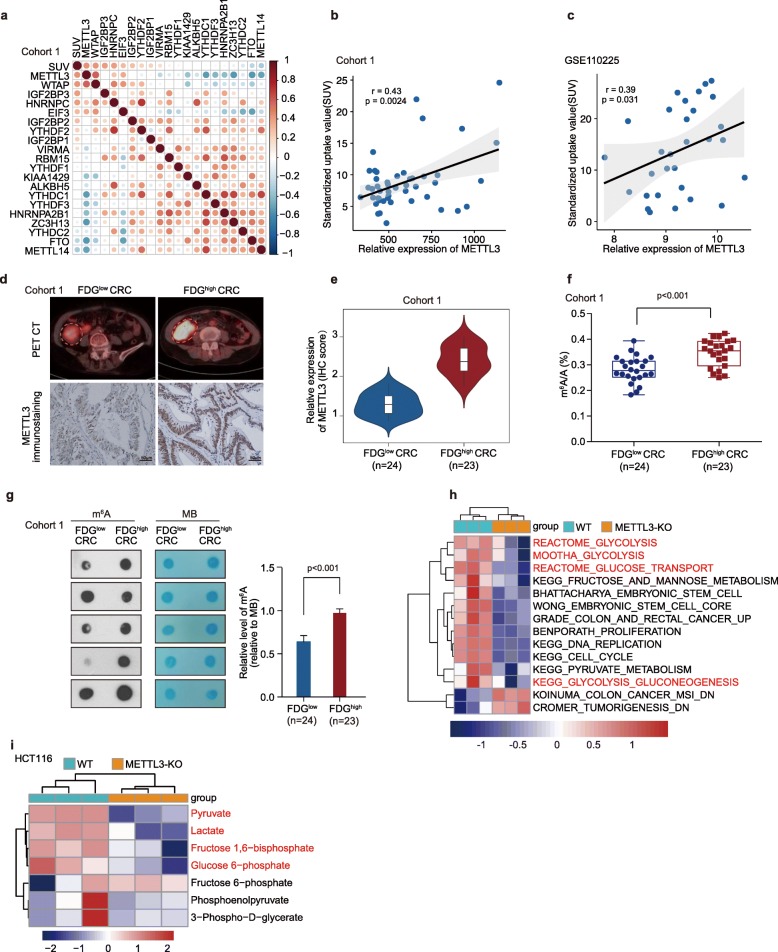
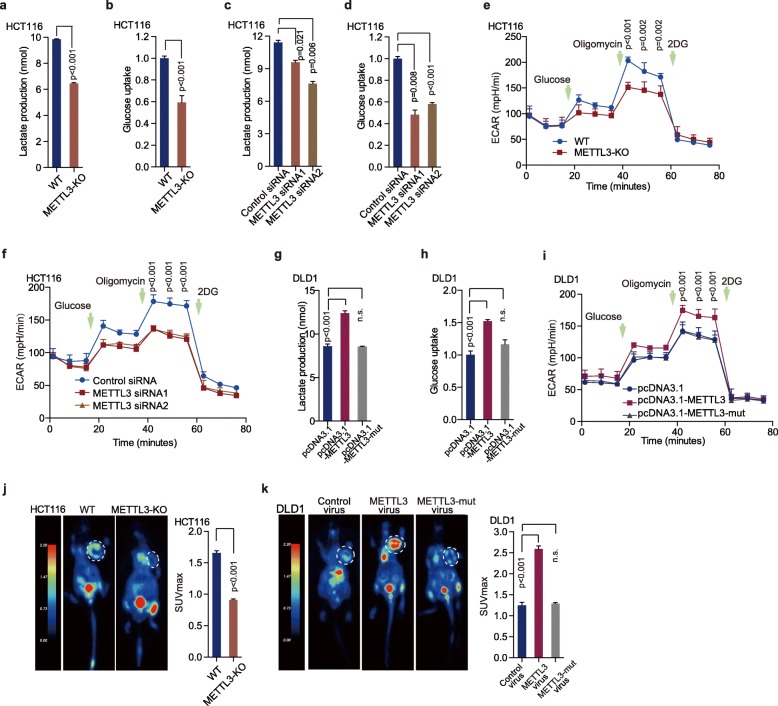
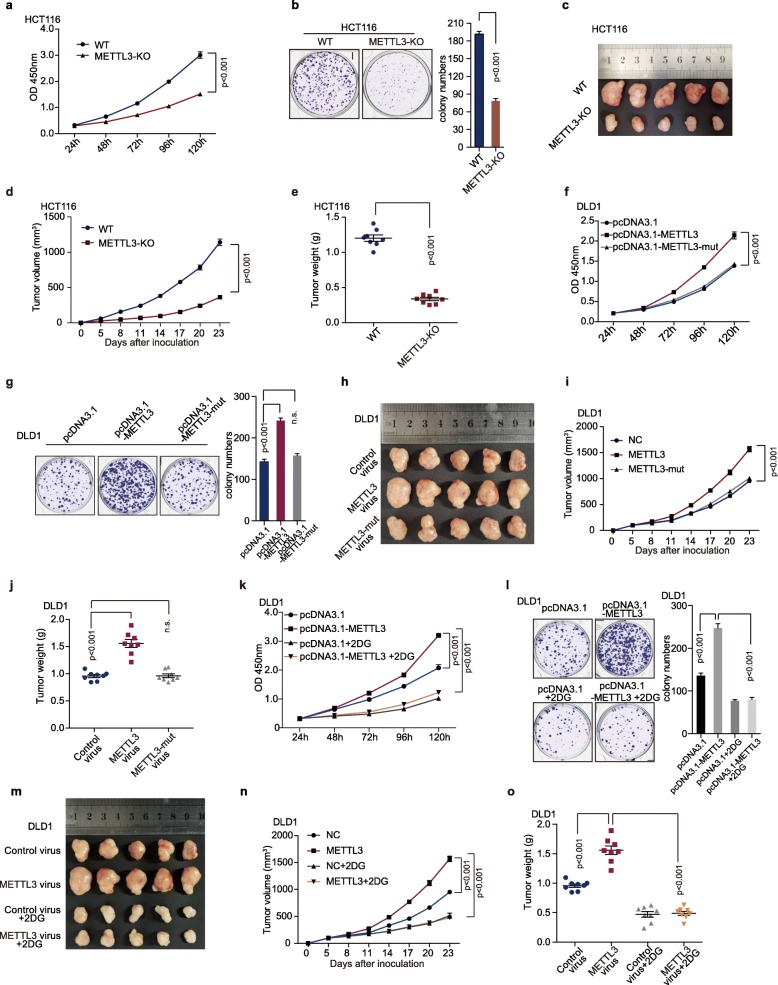
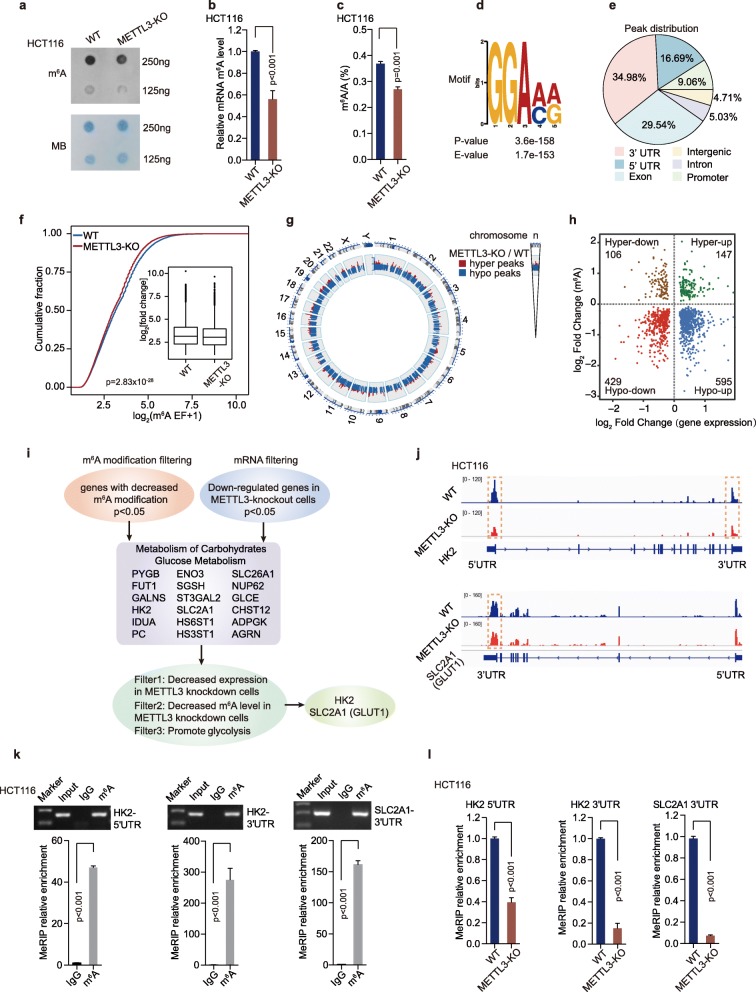
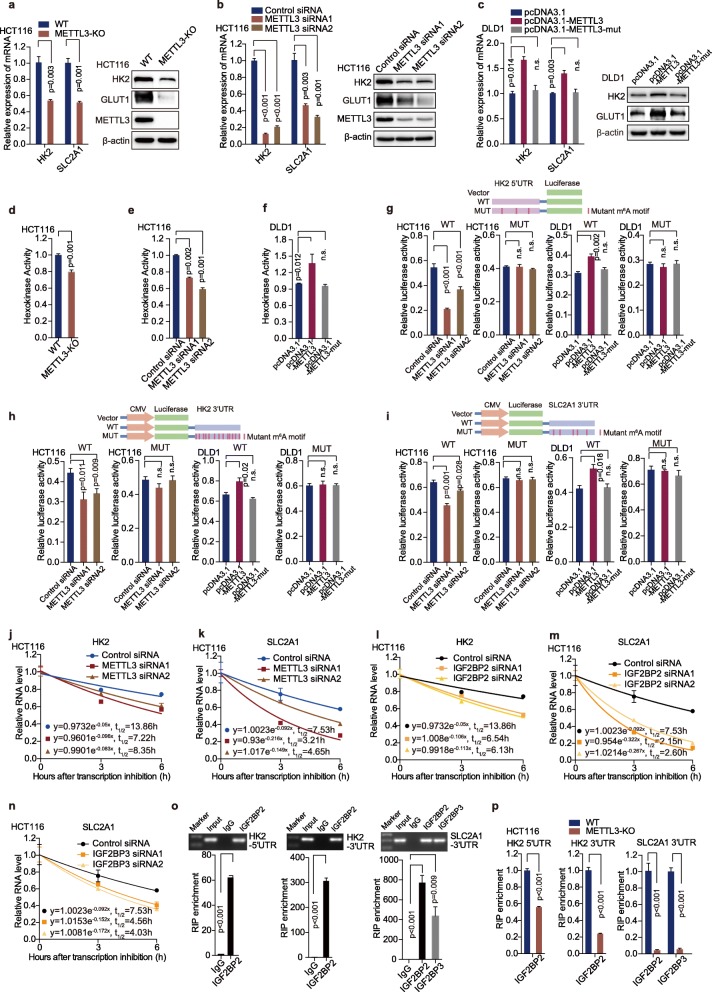
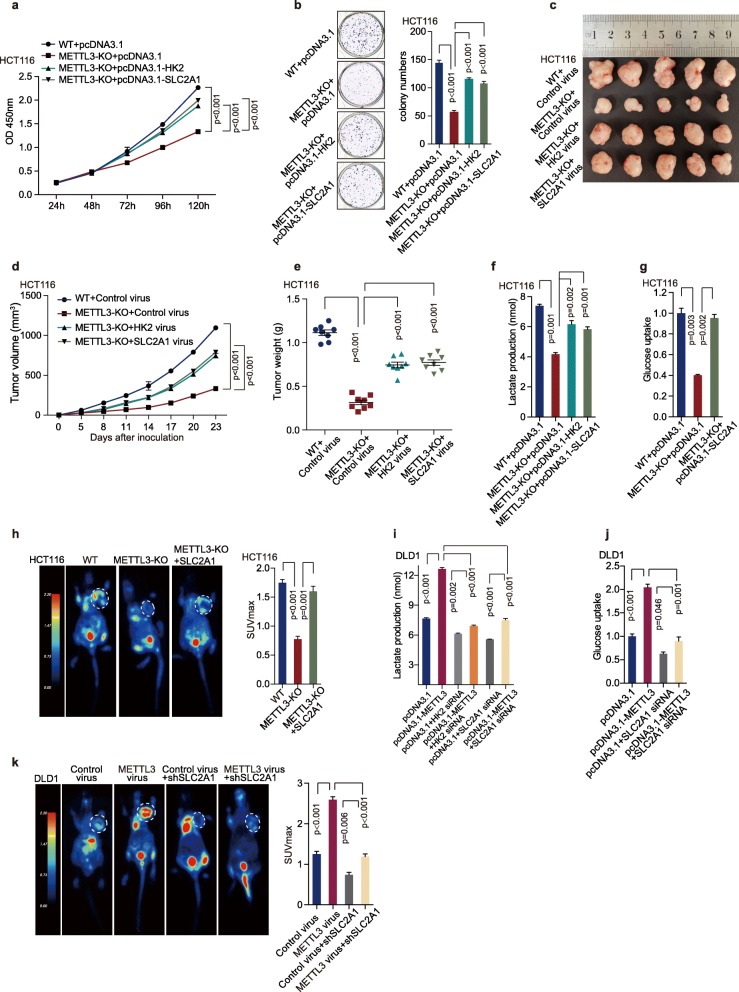
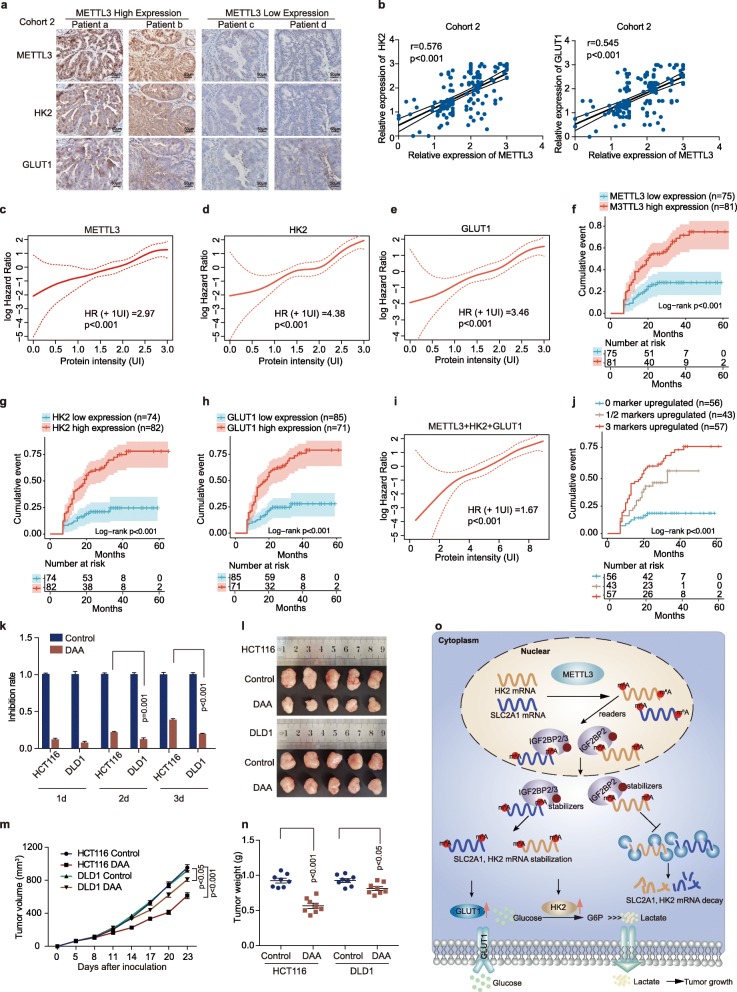
Background: Epigenetic alterations are involved in various aspects of colorectal carcinogenesis. N 6 -methyladenosine (m 6 A) modifications of RNAs are emerging as a new layer of epigenetic regulation. As the most abundant chemical modification of eukaryotic mRNA, m 6 A is essential for the regulation of mRNA stability, splicing, and translation. Alterations of m 6 A regulatory genes play important roles in the pathogenesis of a variety of human diseases. However, whether this mRNA modification participates in the glucose metabolism of colorectal cancer (CRC) remains uncharacterized. Methods: Transcriptome-sequencing and liquid chromatography-tandem mass spectrometry (LC-MS) were performed to evaluate the correlation between m 6 A modifications and glucose metabolism in CRC. Mass spectrometric metabolomics analysis, in vitro and in vivo experiments were conducted to investigate the effects of METTL3 on CRC glycolysis and tumorigenesis. RNA MeRIP-sequencing, immunoprecipitation and RNA stability assay were used to explore the molecular mechanism of METTL3 in CRC. Results: A strong correlation between METTL3 and 18 F-FDG uptake was observed in CRC patients from Xuzhou Central Hospital. METTL3 induced-CRC tumorigenesis depends on cell glycolysis in multiple CRC models. Mechanistically, METTL3 directly interacted with the 5′/3’UTR regions of HK2 , and the 3’UTR region of SLC2A1 (GLUT1), then further stabilized these two genes and activated the glycolysis pathway. M 6 A-mediated HK2 and SLC2A1 (GLUT1) stabilization relied on the m 6 A reader IGF2BP2 or IGF2BP2/3, respectively. Conclusions: METTL3 is a functional and clinical oncogene in CRC. METTL3 stabilizes HK2 and SLC2A1 (GLUT1) expression in CRC through an m 6 A-IGF2BP2/3- dependent mechanism. Targeting METTL3 and its pathway offer alternative rational therapeutic targets in CRC patients with high glucose metabolism.
Overview
The claims and statistics of this paper haven’t been checked yet.
Free: it reads the open-access text and checks the first 5 claims that cite a source we can check. Create a free account to check every claim.
Integrity signals
Registry
Cites
Statistics
Figures
Verification
Claims the paper makes
The claims and statistics of this paper haven’t been checked yet.
Free: it reads the open-access text and checks the first 5 claims that cite a source we can check. Create a free account to check every claim.
Claims other papers make about this one
Each is checked against this paper’s own text: does it say what the citing paper says it does?
The source backs part of the claim, not all of it — or backs it for a different population, condition or comparison.
In the citing paper
“The interaction between IMP2 and its target RNA transcripts depends on m6A modifications [16].”
From IMPlications of IMP2 in RNA Biology and Disease (2025) · cites this paper as [16]
Experimental — accuracy not yet measuredThe source backs part of the claim, not all of it — or backs it for a different population, condition or comparison.
In the citing paper
“IMP2 is a critical regulator of glycolysis in colorectal cancer, driving tumor progression by stabilizing m6A-modified mRNAs of key glycolytic enzymes, hexokinase 2 (encoding HK2) and SLC2A1 (encoding GLUT1) [16].”
From IMPlications of IMP2 in RNA Biology and Disease (2025) · cites this paper as [16]
Experimental — accuracy not yet measuredThe source backs part of the claim, not all of it — or backs it for a different population, condition or comparison.
In the citing paper
“IMP2 causes upregulation of multiple pro-oncogenic targets that increase proliferation, contribute to the Warburg effect, and drive tumor cells toward immune escape [16,110,125].”
From IMPlications of IMP2 in RNA Biology and Disease (2025) · cites this paper as [16]
Experimental — accuracy not yet measuredThe cited source says what the claim attributes to it.
In the citing paper
“The interaction between IMP2 and its target transcripts depends on m6A modifications introduced by METTL3. In METTL3-knockout cells, IMP2 binding to HK2 and GLUT1 mRNAs is substantially impaired [16].”
From IMPlications of IMP2 in RNA Biology and Disease (2025) · cites this paper as [16]
The cited source says what the claim attributes to it.
In the citing paper
“In CRC cell lines, IMP2 knockdown significantly reduces HK2 and GLUT1 mRNA levels and stability.”
From IMPlications of IMP2 in RNA Biology and Disease (2025) · cites this paper as [16]
Self-check
Percentages, sums and reported differences re-computed from the paper’s own numbers.
The self-check needs the paper’s full text.
Citations
Cites
Hallmarks of Cancer: The Next Generation
Hanahan, D., & Weinberg, R. A. (2011) · Cell · doi:10.1016/j.cell.2011.02.013 · Cited by 66,590
Cancer incidence and mortality worldwide: Sources, methods and major patterns in GLOBOCAN 2012
Ferlay, J., Soerjomataram, I., Dikshit, R., Eser, S., Mathers, C., Rebelo, M., Parkin, D. M., Forman, D., & Bray, F. (2015) · International Journal of Cancer · doi:10.1002/ijc.29210 · Cited by 28,766
The Molecular Signatures Database Hallmark Gene Set Collection
Liberzon, A., Birger, C., Thorvaldsdóttir, H., Ghandi, M., Mesirov, J. P., & Tamayo, P. (2015) · Cell Systems · doi:10.1016/j.cels.2015.12.004 · Cited by 13,807 · cited 1×
“Single-sample GSEA (ssGSEA) [26] revealed that the gene sets related to Reactome_Glycolysis, Mootha_ Glycolysis, Reactome_Glucose_Transport and KEGG_ Glycolysis_Gluconeogenesis (glycolysis pathway) and Grade_Colon_And_Rectal_Cancer_Up (colorectal-carcinogenesis signature) were negatively correlated with METTL3-knockou…”
Topology of the human and mouse m6A RNA methylomes revealed by m6A-seq
Dominissini, D., Moshitch-Moshkovitz, S., Schwartz, S., Salmon-Divon, M., Ungar, L., Osenberg, S., Cesarkas, K., Jacob-Hirsch, J., Amariglio, N., Kupiec, M., et al. (2012) · Nature · doi:10.1038/nature11112 · Cited by 4,884
N6-methyladenosine-dependent regulation of messenger RNA stability
Wang, X., Lu, Z., Gomez, A., Hon, G. C., Yue, Y., Han, D., Fu, Y., Parisien, M., Dai, Q., Jia, G., et al. (2014) · Nature · doi:10.1038/nature12730 · Cited by 4,558
Comprehensive Analysis of mRNA Methylation Reveals Enrichment in 3′ UTRs and near Stop Codons
Meyer, K. D., Saletore, Y., Zumbo, P., Elemento, O., Mason, C. E., & Jaffrey, S. R. (2012) · Cell · doi:10.1016/j.cell.2012.05.003 · Cited by 4,223
N6-Methyladenosine in nuclear RNA is a major substrate of the obesity-associated FTO
Jia, G., Fu, Y., Zhao, X., Dai, Q., Zheng, G., Yang, Y., Yi, C., Lindahl, T., Pan, T., Yang, Y.-G., et al. (2011) · Nature Chemical Biology · doi:10.1038/nchembio.687 · Cited by 4,106 · cited 1×
“And this mRNA modification can be removed by demethylases FTO and ALKBH5 [15, 16].”
ALKBH5 Is a Mammalian RNA Demethylase that Impacts RNA Metabolism and Mouse Fertility
Zheng, G., Dahl, J. A., Niu, Y., Fedorcsak, P., Huang, C.-M., Li, C. J., Vågbø, C. B., Shi, Y., Wang, W.-L., Song, S.-H., et al. (2013) · Molecular Cell · doi:10.1016/j.molcel.2012.10.015 · Cited by 3,550
N6-methyladenosine Modulates Messenger RNA Translation Efficiency
Wang, X., Zhao, B. S., Roundtree, I. A., Lu, Z., Han, D., Ma, H., Weng, X., Chen, K., Shi, H., & He, C. (2015) · Cell · doi:10.1016/j.cell.2015.05.014 · Cited by 3,483
A METTL3–METTL14 complex mediates mammalian nuclear RNA N6-adenosine methylation
Liu, J., Yue, Y., Han, D., Wang, X., Fu, Y., Zhang, L., Jia, G., Yu, M., Lu, Z., Deng, X., et al. (2014) · Nature Chemical Biology · doi:10.1038/nchembio.1432 · Cited by 3,433 · cited 1×
“RNA Methyltransferase METTL3 may participate in regulating the mRNA stability and modification of target genes [46].”
Background
Cited by
Items 301–400 of 483
Effects of N6-methyladenosine modification on metabolic reprogramming in digestive tract tumors
Liang, Y., Gao, Y., Bao, Q., Xu, M., Lü, J., & Du, W. (2024) · Heliyon · doi:10.1016/j.heliyon.2024.e24414 · Cited by 5
“Mechanistically, studies have revealed that METTL3 upregulates hexokinase 2 (HK2) and glucose transporter 1 (GLUT1) stability and expression through its interaction with m6A reader, IGF2BP2/3 [94].”
BackgroundNavigating the landscape of epitranscriptomics and host immunity
Huang, E., Frydman-Gani, C., & Xiao, X. G. (2024) · Genome Research · doi:10.1101/gr.278412.123 · Cited by 6
Progress of m6A Methylation in Lipid Metabolism in Humans and Animals
Xin, Z., Zhang, T., Lu, Q., Yang, Z., & Chen, Z. (2022) · Agriculture · doi:10.3390/agriculture12101683 · Cited by 5
“, LC-MS/MS analysis of m6A methylation glycolysis in CRC patients demonstrated that levels of m6A methylation are significantly higher in CRC patients who ingested higher levels of fluorodeoxyglucose [18].”
BackgroundZhan, D., She, Y., Zhang, X., Zhang, J., Wang, S., Hong, S., Zheng, Y., Wang, N., & Wang, Z. (2025) · Research · doi:10.34133/research.0980 · Cited by 4
Self-citationMETTL3 in colorectal cancer: molecular insights and clinical implications
Lagunas‐Rangel, F. A. (2025) · Molecular Biology Reports · doi:10.1007/s11033-025-11248-x · Cited by 4
“The upregulation of HK2 and SLC2A1 ultimately contributes to enhanced glycolysis in colorectal cancer cells [59].”
RNA Methylation in Cancer Metabolism: from Mechanisms to Therapeutic Opportunities
Wu, Z., Xing, Y., Mei, S., Xiao, T., Wei, F. Z., & Liu, Q. (2026) · International Journal of Biological Sciences · doi:10.7150/ijbs.124177 · Cited by 4
The Regulatory Role of m6A Modification in the Function and Signaling Pathways of Animal Stem Cells
Yang, X. E., Xu, Y., Zhu, S., Wang, M., Cao, H., & Lu, L. (2026) · Cells · doi:10.3390/cells15020181 · Cited by 4
“…the glycolysis of stem cells, the YTHDF1 /eEF2 complex and IGFBP3 regulate the 5’UTR of PDK4 (pyruvate dehydrogenase kinase 4) [80], and IGFBPs interact with the 5’/3’UTR of HK2 (hexokinase 2) and the 3’UTR of GLUT1 (facilitative glucose transporter), promoting the expression of HK2 and GLUT1 [81].”
Senousy, M. A., Shaker, O. G., Abdel‐Sattar, R., & Gibriel, A. A. (2026) · Computers in Biology and Medicine · doi:10.1016/j.compbiomed.2026.111520 · Cited by 4
Solute Carrier transporters in tumor metabolism and immune modulation: implications for therapy
Zhou, J., Wen, W., Xu, Y., Yu, J., & Chen, D. (2026) · Journal of Translational Medicine · doi:10.1186/s12967-026-07918-4 · Cited by 4
Xia, L., & Ma, H. (2024) · Bioengineering · doi:10.3390/bioengineering11111070 · Cited by 4
N6-Methyladenosine Modification in the Metabolic Dysfunction-Associated Steatotic Liver Disease
Matsuda, S., Nakashima, M., Fukumoto, A., & Suga, N. (2025) · Nutrients · doi:10.3390/nu17071158 · Cited by 4
Modulation of host N6-methyladenosine modification by gut microbiota in colorectal cancer
Jiang, T.-Q., Wang, H., Cheng, W.-X., & Xie, C. (2024) · World Journal of Gastroenterology · doi:10.3748/wjg.v30.i38.4175 · Cited by 4
Zhang, Q., Cao, Z., He, Y., Liu, Z., & Guo, W. (2024) · Translational Oncology · doi:10.1016/j.tranon.2024.102257 · Cited by 4
“Post-transcriptional modification, a classic epigenetic pattern, has been shown to play a role in a variety of diseases including cancer [28].”
IMPlications of IMP2 in RNA Biology and Disease
Das, J., Busia-Bourdain, O., Khan, K. M., & Wolfe, A. L. (2025) · International Journal of Molecular Sciences · doi:10.3390/ijms26062415 · Cited by 3
“In METTL3-knockout cells, IMP2 binding to HK2 and GLUT1 mRNAs is substantially impaired [16].”
InfluentialYi, W., Li, L., Wang, Y., Chen, Y., Li, Z., Huang, C., Wei, Y., Jia, C., Zuo, W., & Liao, J. (2024) · International Journal of Molecular Medicine · doi:10.3892/ijmm.2024.5370 · Cited by 3
Yin, Z., Ma, L., Tian, X., Sun, Q., Zhang, C., Wang, Y., Miao, Y., Xue, X., Wang, Y., Wang, J., et al. (2024) · Journal of Biological Chemistry · doi:10.1016/j.jbc.2024.107783 · Cited by 3
“…pathways, including PI3K/ AKT/mTOR, Hippo/YAP, Wnt, etc. (18 – 20), and can also regulate various metabolisms including glucose metabolism (21), fatty acid metabolism (22), amino acid metabolism (23), mitochondrial metabolism (24), etc. Exosome is a type of small vesicle that is released…”
Self-citationRoles and therapeutic targeting of SLC transporters in gastrointestinal malignancies
Wang, J., Huang, X., Chen, S., Zhang, Y., Miao, G., Du, S., Wang, X., Lu, Y., & Zhao, X. (2025) · Cancer Letters · doi:10.1016/j.canlet.2025.218222 · Cited by 3
Self-citationKong, F., Feng, J., Shan, H., Zhu, Y., & Zhu, L.-J. (2026) · Experimental Biology and Medicine · doi:10.3389/ebm.2025.10776 · Cited by 3
RNA modifications in cancer and their detection: a review
Yu, B.-Y., & Ueda, H. (2026) · Japanese Journal of Clinical Oncology · doi:10.1093/jjco/hyag018 · Cited by 3
“Moreover, one study demonstrated that elevated glycolysis in colorectal cancer (CRC) cells is driven by METTL3-mediated m 6 A deposition on HK2 and SLC2A1 mRNAs, leading to tumorigenesis [21].”
Colorectal Cancer Puzzle: m6A Modification and Its Intricate Relationship With Drug Resistance
Yang, M., Dai, Z., Han, Y., Shen, Y., & Wang, J. (2026) · Frontiers in Bioscience-Landmark · doi:10.31083/fbl45750 · Cited by 3
Recent Advances in RNA m6A Modification in Solid Tumors and Tumor Immunity
Verghese, M., Wilkinson, E., & He, Y. (2023) · Cancer treatment and research · doi:10.1007/978-3-031-45654-1_4 · Cited by 3
Wang, S., & Xie, X. (2023) · Environmental Toxicology · doi:10.1002/tox.24114 · Cited by 3
Huang, X., Li, X., Lan, X., Wang, M.-Y., Zhang, J., Dong, L., Li, J., Yu, X., Yuan, R., & Yang, F. (2025) · The World Journal of Men s Health · doi:10.5534/wjmh.250125 · Cited by 3
Fong, A. S., Pan, Y., Yu, J. Q., & Wong, C. C. (2022) · Biomedicines · doi:10.3390/biomedicines10102589 · Cited by 3
The effect on m6A methylation writer complex by the reduced MATR3 in pterygium
Guo, Q., & Han, S. (2023) · Acta Histochemica · doi:10.1016/j.acthis.2023.152101 · Cited by 3
Global research trends and prospects of cellular metabolism in colorectal cancer
Liu, Y.-C., Gong, Z., Li, C., Teng, P., Chen, Y., & Huang, Z.-H. (2024) · World Journal of Gastrointestinal Oncology · doi:10.4251/wjgo.v16.i2.527 · Cited by 3
Synthesis of STM2457, a selective small-molecule inhibitor of METTL3
Zhu, C., Liu, J., Ni, Y., Chen, W., Rong, W., Zhang, X., Guo, C., Kong, X., & Tang, S. (2024) · Tetrahedron Letters · doi:10.1016/j.tetlet.2024.155077 · Cited by 3
Self-citationXu, K., Zhang, H., Dai, H., & Mao, W. (2024) · Gene · doi:10.1016/j.gene.2024.149178 · Cited by 3
Multimodal tumor suppression by METTL3 gene knockdown in melanoma and colon cancer cells
Bazargani, A., Taha, M. F., Soltani, B. M., & Javeri, A. (2024) · Histochemistry and Cell Biology · doi:10.1007/s00418-024-02346-1 · Cited by 3
“Meanwhile, in melanoma (Dahal et al. 2019; Jia et al. 2019; Luo et al. 2020), colorectal cancer (Deng et al. 2019; Li et al. 2019a, b; Shen et al. 2020; Zhu et al. 2020), bladder cancer (Cheng et al. 2019; Jin et al. 2019; Zhao et al. 2019; Xie et al. 2020), and glioblastoma (Cui et al. 2017;…”
BMPR1A promotes the proliferation of colorectal cancer cells through the activation of Smad1
Zhou, P., Li, W., Ye, M., Chen, C., & Wang, Y. (2025) · ONCOLOGIE · doi:10.1515/oncologie-2024-0534 · Cited by 3
Epitranscriptomic Role of m6A in Obesity-Associated Disorders and Cancer Metabolic Reprogramming
Yan, S., Wen, W., Mo, Z., Gu, S., & Chen, Z. (2025) · Genes · doi:10.3390/genes16050498 · Cited by 3
“This stabilization ultimately activates the glycolytic pathway [128].”
Ribonucleotide base-modifying enzymes and diseases
Konno, M., Asai, A., Hirotsu, T., & Ishii, H. (2021) · Elsevier eBooks · doi:10.1016/b978-0-12-823684-0.00004-9 · Cited by 3
Development and validation of a m6A -regulated prognostic signature in lung adenocarcinoma
Chen, Y., Xia, L., Peng, Y., Wang, G., Bi, L., Xiao, X., Li, C., & Li, W. (2022) · Frontiers in Oncology · doi:10.3389/fonc.2022.947808 · Cited by 3
“Accumulating studies have reported that alterations in functionally important m(6)A sites were correlated with the risk of malignancy of tumors at multiple levels (9).”
BackgroundModulation of DNA/RNA Methylation Signaling Mediating Metabolic Homeostasis in Cancer
Choubey, P., Kaur, H., & Bansal, K. (2022) · Sub-cellular biochemistry/Subcellular biochemistry · doi:10.1007/978-3-031-07634-3_7 · Cited by 3
Lu, S., Hua, J., Liu, J., Wei, M., Liang, C., Meng, Q., Zhang, B., Yu, X., Wang, W., Xu, J., et al. (2023) · Computational and Structural Biotechnology Journal · doi:10.1016/j.csbj.2023.03.037 · Cited by 3
Ma, B., Bao, S., & Li, Y. (2023) · Frontiers in Oncology · doi:10.3389/fonc.2023.1145753 · Cited by 3
Wang, M., Liu, Z., Fang, X., Cong, X., & Hu, Y. (2023) · Frontiers in Cell and Developmental Biology · doi:10.3389/fcell.2023.1264552 · Cited by 3
“Furthermore, METTL3 is involved in stabilizing the mRNA of HK2 and SLC2A1 ( GLUT1 ), and degrading the mRNA of APC; all these effects are associated with the glycolysis and proliferation of tumor cells (Shen et al., 2020; Wang et al., 2021a).”
BackgroundLiao, W., Long, J., Li, Y., Xie, F., Xun, Z., Wang, Y., Yang, X., Wang, Y., Zhou, K., Sang, X., et al. (2022) · Frontiers in Cell and Developmental Biology · doi:10.3389/fcell.2022.910749 · Cited by 3
“Moreover, lncRNAs were associated with the development of colon cancer, such as regulating cell growth, cell proliferation, cell migratory and invasive abilities, cancer stem cells, and drug resistance (Lan et al., 2018; Chen and Shen, 2020).”
BackgroundA primer for junior trainees: Recognition of RNA modifications by RNA ‐binding proteins
Angelo, M., Bhargava, Y., & Aoki, S. T. (2024) · Biochemistry and Molecular Biology Education · doi:10.1002/bmb.21854 · Cited by 2
Yang, F., Zhu, Z., Shi, L., & Liu, X. (2025) · Biocell · doi:10.32604/biocell.2025.064982 · Cited by 2
Impact théranostique de l’épitranscriptome en cancérologie
Brunel, K., Bastide, A., David, A., & Quesada, S. (2025) · Bulletin du Cancer · doi:10.1016/j.bulcan.2025.08.008 · Cited by 2
Yue, X., Zhang, Y., Zhao, N., Lang, T., Chen, G., Xiong, Q., Gao, L., Wang, W., Li, P., & Wu, C. (2025) · Cell Death and Disease · doi:10.1038/s41419-025-08161-3 · Cited by 2
Self-citationShi, J., Zhu, C., Xu, S., Ran, R., Ye, R., Xiao, Y., Ji, Y., Geng, C., Tang, G., Li, R., et al. (2025) · Bioorganic Chemistry · doi:10.1016/j.bioorg.2025.109234 · Cited by 2
Zhang, Y., Yang, W., Zhang, J., Jixiang, A., Shen, J., Qi, Z., Qian, J., Sun, A., Ge, J., & Zhang, Y. (2026) · Journal of Cardiovascular Translational Research · doi:10.1007/s12265-026-10764-w · Cited by 2
Self-citationYue, B., Song, C., Bao, T., He, W., Du, J., Yang, L., Zhao, E., & Zhang, Z. (2026) · Oncogene · doi:10.1038/s41388-026-03755-3 · Cited by 2
Mostaq, M. S., Amin, M. N., Raphael, A., Asbury, C., Gupta, A. A., Gu, X., Han, X., Sekulić, D., Michalak, P., Kang, L., et al. (2026) · International Journal of Molecular Sciences · doi:10.3390/ijms27073237 · Cited by 2
Sun, S., Huang, C., Fan, W., Wang, Z., Li, K., Liu, X., Wang, Z., Zhao, T., Zhang, G., & Li, X. (2024) · Advanced Biology · doi:10.1002/adbi.202400157 · Cited by 2
Metabolic regulation in urological tumors: Interplay with epigenetics and epitranscriptomics
Miranda‐Gonçalves, V., Guimarães‐Teixeira, C., Henrique, R., & Jerónimo, C. (2021) · Elsevier eBooks · doi:10.1016/b978-0-323-85652-2.00019-1 · Cited by 2
Liu, D., Li, B., Yang, M., Xing, Y., Liu, Y., Yuan, M., Liu, F., Wu, Y., Ma, X., Jia, Y., et al. (2024) · Advanced Biology · doi:10.1002/adbi.202300534 · Cited by 2
Yuan, F., Wang, Y., Cai, X., Du, C., Zhu, J., Tang, C., Yang, J., & Ma, C. (2022) · Exploration of Targeted Anti-tumor Therapy · doi:10.37349/etat.2022.00100 · Cited by 2
“With the rapid development of RNA immunoprecipitation (RIP), next-generation sequencing (NGS) technologies, liquid chromatography (LC) and other detection technologies, the research on the mechanism of m6A in tumorigenesis and development has made rapid progress, and targeting m6A has also become a new direction for t…”
BackgroundPROTAC degraders of the METTL3-14 m6A-RNA methyltransferasePreprint
Errani, F., Invernizzi, A., Herok, M., Bochenkova, E., Stamm, F., Corbeski, I., Romanucci, V., Fabio, G. D., Zálešák, F., & Caflisch, A. (2024) · ChemRxiv · doi:10.26434/chemrxiv-2023-1tr77-v2 · Cited by 2
Su, W., Liu, P., Zhang, Y., Gong, Z., & Zhao, H. (2023) · Journal of Biomaterials and Tissue Engineering · doi:10.1166/jbt.2023.3237 · Cited by 1
Self-citationTian, X., Peng, K., Zhao, T., Jia, B., Ma, Q., Miao, Y., Yang, S., Wu, J., Ma, L., Su, D., et al. (2025) · npj Precision Oncology · doi:10.1038/s41698-025-01073-7 · Cited by 1
Self-citationBai, Y., Liu, Z., Zhai, X., Zhang, D., Liu, S., Xia, Q., Chen, L., Shi, Y., Liao, Y., Liu, Y., et al. (2026) · Cancer Letters · doi:10.1016/j.canlet.2026.218299 · Cited by 1
Wang, Z., Chen, X., Han, X., Cao, X., & Wang, X. (2026) · Breast Cancer Research · doi:10.1186/s13058-026-02260-5 · Cited by 1
Roles and clinical implications of N6-methyladenosine in digestive system tumors
Luo, S., Liu, L., Sun, M., Wang, J., Sui, F., Zhang, M., Wu, X., & Qu, M. (2026) · Mutation Research/Reviews in Mutation Research · doi:10.1016/j.mrrev.2026.108588 · Cited by 1
PLXNA3 is overexpressed and promotes cell proliferation and migration in colorectal cancer
Ling, S., Xiong, Z., Yan, D., & Feng, J. (2026) · Discover Oncology · doi:10.1007/s12672-026-05355-9 · Cited by 1
Guo, S., Wang, X. G., Chen, H., Chen, X., Li, T., Shi, X., Ou, B., Yuan, J., Yang, Z., Zhou, J., et al. (2026) · Journal of Controlled Release · doi:10.1016/j.jconrel.2026.115111 · Cited by 1
Self-citationZhang, B., Ren, X., Wang, B., Wang, Y., Zhang, D., & Meng, F. (2026) · Cell Biology and Toxicology · doi:10.1007/s10565-026-10218-8 · Cited by 1
The role and application prospects of glycolysis-related non-coding RNAs in lung cancer
Zhang, Q., Wang, H., Jiang, Z., Yang, Y., Li, Y., Wang, W., Peng, X., & Huang, J. (2026) · Journal of Translational Medicine · doi:10.1186/s12967-026-08605-0 · Cited by 1
Gong, Y., & Liu, Y. (2026) · Journal of Translational Medicine · doi:10.1186/s12967-026-08663-4 · Cited by 1
Cui, Q., Gao, X., Wu, X., & Zhang, D. (2026) · Frontiers in Cell and Developmental Biology · doi:10.3389/fcell.2026.1874138 · Cited by 2
“Notably, enhanced glycolysis not only reflects metabolic rewiring in cancer cells but may also reshape the local metabolic milieu and thereby influence immune cell function (Shen et al., 2020; Fang et al., 2019).”
Zhan, J., Cen, W., Zhu, J., & Ye, Y. (2023) · Recent Patents on Anti-Cancer Drug Discovery · doi:10.2174/1574892818666230731121815 · Cited by 1
Chen, G., Xia, Z., Zeng, X., & Liu, H. H. (2024) · Archives of Biological Sciences · doi:10.2298/abs240928036c · Cited by 1
Sun, L. P., Huangfu, L., Fang, L., Yan, Y., Kong, R., Ji, K., & Li, J. (2025) · Frontiers in Oncology · doi:10.3389/fonc.2025.1532602 · Cited by 1
Shu, W.-B., Lin, Y., Yan, Y., Sun, Y., Wu, X., & Cao, Q. (2021) · Research Square · doi:10.21203/rs.3.rs-711778/v1 · Cited by 1
METTL3 promotes esophageal squamous cell carcinoma progression through the GLUT4-mTORC1 axisPreprint
Zhou, X., Zhong, X., Gao, C., Chen, X., Zou, J., Li, Q., Cheng, J., Yuan, Z., Wang, Q., Yang, M., et al. (2022) · Research Square · doi:10.21203/rs.3.rs-1595867/v1 · Cited by 1
Qi, B., Li, C., Cai, X., Xu, Y., Guo, M., Tang, Z., Bo, P., & Pu, L. (2022) · Research Square · doi:10.21203/rs.3.rs-2001640/v1 · Cited by 1
Yu, L., Deng, G., Zhao, Z., Xin, J., Wang, H., Zhou, J., Zhang, H., Xie, G., Li, J., & Bai, Y. (2022) · Research Square · doi:10.21203/rs.3.rs-2181247/v1 · Cited by 1
PROTAC degraders of the METTL3-14 m6A-RNA methyltransferasePreprint
Errani, F., Invernizzi, A., Herok, M., Bochenkova, E., Stamm, F., Corbeski, I., Romanucci, V., Fabio, G. D., Zálešák, F., & Caflisch, A. (2023) · ChemRxiv · doi:10.26434/chemrxiv-2023-1tr77 · Cited by 1
Liu, H., Zhu, J., Kou, X., Guo, L., Zhang, H., Chen, X., & Qiu, J. (2021) · Research Square · doi:10.21203/rs.3.rs-775176/v1
Liu, J.-Y., Li, B., Xu, E., & Zhong, Y. (2021) · World Chinese Journal of Digestology · doi:10.11569/wcjd.v29.i23.1373
High expression of ELAVL1 predicts poor prognosis of Esophageal CarcinomaPreprint
Si, F., Du, H., Si, G., & Si, J. (2022) · Research Square · doi:10.21203/rs.3.rs-1868766/v1
N6-methyladenosine modification of RanGAP1 promotes colorectal cancer progression via CRABP2Preprint
Yang, C., Li, J., Shi, J., Guo, Y., Sun, X. S., Gan, D., Wang, R., Zhu, L., Ma, P., Hua, L., et al. (2022) · Research Square · doi:10.21203/rs.3.rs-1922415/v1
Qi, B., Li, C., Cai, X., Xu, Y., Guo, M., Tang, Z., Bo, P., & Pu, L. (2022) · Research Square · doi:10.21203/rs.3.rs-2001640/v2
Li, Z., & Zhao, R. (2022) · Research Square · doi:10.21203/rs.3.rs-2170973/v1
Molecular Aspects of Colorectal Cancer Prognosis in 10 years
Angka, R. N., Sudoyo, A. W., Siregar, N. C., Tobing, D. L., & Jeo, W. S. (2022) · Nusantara Science and Technology Proceedings · doi:10.11594/nstp.2022.2806
OCT1 regulates the migration of colorectal cancer cells by acting on LDHA.
Li, L., Chen, W., Wu, G., & Sun, P. (2024) · PubMed · doi:10.14670/hh-18-613
Bataglia, L. (2023) · Digital Library of Theses and Dissertations (Universidade de São Paulo) · doi:10.11606/t.17.2023.tde-05062023-132826
Yu, T., Jiang, S., & Shan, H. (2024) · Clinical and Translational Discovery · doi:10.1002/ctd2.266
Wu, X., Pan, Y., Li, M., Song, M., Deng, M., Xu, Y., Xu, J., Zhang, S., Wang, S., Zhang, J., et al. (2024) · SSRN Electronic Journal · doi:10.2139/ssrn.4750448
Zheng, J., Guo, J., Zhu, L., Zhou, Y., & Tong, J. (2021) · Figshare · doi:10.6084/m9.figshare.16680106
Zheng, J., Guo, J., Zhu, L., Zhou, Y., & Tong, J. (2021) · Figshare · doi:10.6084/m9.figshare.16680088
Zheng, J., Guo, J., Zhu, L., Zhou, Y., & Tong, J. (2021) · Figshare · doi:10.6084/m9.figshare.16680109
Zheng, J., Guo, J., Zhu, L., Zhou, Y., & Tong, J. (2021) · Figshare · doi:10.6084/m9.figshare.16680103
Zheng, J., Guo, J., Zhu, L., Zhou, Y., & Tong, J. (2021) · Figshare · doi:10.6084/m9.figshare.16680094
Zheng, J., Guo, J., Zhu, L., Zhou, Y., & Tong, J. (2021) · Figshare · doi:10.6084/m9.figshare.16680097
Sulfonylation sites for adenine and its nucleosides/nucleotides
Cheng, X.-Y., Li, P., Xu, L., Zhang, C., Wang, Q., & Tang, H. (2025) · Journal of Pharmaceutical Analysis · doi:10.1016/j.jpha.2025.101258
Metabolic Reallocation in the Tumor Microenvironment of Colorectal Cancer at Single-cell ResolutionPreprint
Dai, Z., & Huang, D. (2025) · Research Square · doi:10.21203/rs.3.rs-5978633/v1
Vasukutty, A., Bhattarai, P. Y., & Choi, H. S. (2025) · Drug Targets and Therapeutics · doi:10.58502/dtt.25.0015
Ma, D., Zhang, X., Hong, Y., Zhang, F., Chang, C., Zhao, J., Wang, Y., Liu, W., Mei, Q., Zhou, L., et al. (2025) · Research Square · doi:10.21203/rs.3.rs-7587364/v1
Self-citationAdditional file 1 of METTL3 promotes chemoresistance in small cell lung cancer by inducing mitophagy
Sun, Y., Shen, W., Hu, S., Lyu, Q., Wang, Q., Wei, T., Zhu, W., & Zhang, J. (2023) · Figshare · doi:10.6084/m9.figshare.22619831
Chen, S., Yang, C., Wang, Z.-W., Hu, J.-F., Pan, J.-J., Liao, C.-Y., Zhang, J.-Q., Chen, J., Huang, Y., Huang, L., et al. (2021) · Figshare · doi:10.6084/m9.figshare.14411611
Yang, C., Huang, S., Cao, F., & Zheng, Y. (2021) · Figshare · doi:10.6084/m9.figshare.16943635
Gao, Y., Wang, H., Chen, S., An, R., Chu, Y., Li, G., Wang, Y., Xie, X., & Zhang, J. (2022) · Figshare · doi:10.6084/m9.figshare.19711091
Chen, S., Yang, C., Wang, Z.-W., Hu, J.-F., Pan, J.-J., Liao, C.-Y., Zhang, J.-Q., Chen, J., Huang, Y., Huang, L., et al. (2021) · Figshare · doi:10.6084/m9.figshare.14411626
Chen, S., Yang, C., Wang, Z.-W., Hu, J.-F., Pan, J.-J., Liao, C.-Y., Zhang, J.-Q., Chen, J., Huang, Y., Huang, L., et al. (2021) · Figshare · doi:10.6084/m9.figshare.14411623
Zhu, W., Wu, C., Liu, Z., Zhao, S., Cheng, X., & Huang, J. (2024) · Figshare · doi:10.6084/m9.figshare.26730601
Metadata
- Authors
- Shen, C., Xuan, B., Yan, T., Ma, Y., Xu, P., Tian, X., Zhang, X., Cao, Y., Ma, D., Zhu, X., Zhang, Y., Fang, J.-Y., Chen, H., & Hong, J.
- Affiliations
- Shanghai Jiao Tong University (CN)
- Xuzhou Central Hospital (CN)
- Corresponding author
- Fang, Jing-Yuan
- Chen, Haoyan
- Hong, Jie
- ORCID
- Venue
- Molecular Cancer
- Published
- 2020-04-03
- Volume
- 19
- Issue
- 1
- Pages
- 72-72
- ISSN
- 1476-4598 (ISSN-L)
- PMC
- PMC7118901
- OpenAlex
- W3014891010
- Semantic Scholar
- 8c1988f3c3df027639758856b5a3cfef8cae862f
- Cited by
- 437
- References
- 49
- Citations by year
- 2026: 45 · 2025: 50 · 2024: 84 · 2023: 80 · 2022: 90 · 2021: 71 · 2020: 17
- FWCI
- 21.41
- Type
- journal article
- Language
- en
- Open access
- gold
- doi.org
- Licence
- cc-by
- creativecommons.org/licenses/by/4.0/ (tdm)
- creativecommons.org/licenses/by/4.0/ (vor)
- Locations
- Molecular Cancer (publishedVersion, cc-by)
- PubMed Central (publishedVersion, cc-by)
- PubMed (publishedVersion)
- DOAJ (DOAJ: Directory of Open Access Journals) (submittedVersion, cc-by-sa)
- Funders
- National Natural Science Foundation of China (81871901, 81790632, 81522008, 81874159, 81421001)
- Shanghai Municipal Education Commission (17SG18)
- Shanghai Sailing Program (19YF1428800)
- Topics
- Life Sciences › Biochemistry, Genetics and Molecular Biology › Molecular Biology › RNA modifications and cancer
- Life Sciences › Biochemistry, Genetics and Molecular Biology › Cancer Research › Cancer, Hypoxia, and Metabolism
- Life Sciences › Biochemistry, Genetics and Molecular Biology › Molecular Biology › Epigenetics and DNA Methylation
- Keywords
- N6-methyladenosine, m6A RNA methylation, METTL3, colorectal cancer, glycolysis, glucose metabolism, HK2, GLUT1, SLC2A1, mRNA stability, IGF2BP2, IGF2BP3, FDG uptake, carcinogenesis, oncogenes, therapeutic target
- MeSH terms
- Adenosine, Animals, Glycolysis, Hexokinase, Humans, Methyltransferases, Mice, Nude, Prognosis, Tumor Cells, Cultured, Biomarkers, Tumor, Colorectal Neoplasms, Gene Expression Regulation, Neoplastic, Survival Rate, RNA-Binding Proteins, Apoptosis, Disease Progression, DNA Methylation, Xenograft Model Antitumor Assays, Epigenesis, Genetic, Cell Proliferation, Glucose Transporter Type 1, Mice
About these checks
Registry, retraction, Cites and statistics results are computed, not judged, with one exception: a printed reference that no index lists is read once by a model before it counts as a citation error. Claims are extracted by a model and kept only when their quote appears verbatim in the text; each cited source is then checked, with a model’s help, for whether it says what the claim relies on. Those verdicts can be wrong — read the claim’s quote and the cited source before relying on one.
Statistics and arithmetic are recomputed, not judged.
Confidence bands are shown only for fields calibrated on our annotated test set. None is calibrated yet, so no band is shown.
What counts as a claim ›How we measure confidence ›How we check this ›
Are you an author, or do you see a problem with this page? Request a review
Data sources
Bibliographic data: Semantic Scholar, OpenAlex, Crossref.
Contains information from the Semantic Scholar Academic Graph Datasets, made available under the ODC Attribution License (ODC-BY 1.0).
Semantic Scholar’s data is described in: Kinney, R., et al. (2023). The Semantic Scholar Open Data Platform. arXiv:2301.10140.
