

m6A-dependent glycolysis enhances colorectal cancer progression
Open accessThe DOI matches its Crossref record; 49 of the 49 references it cites were found in a registry or an index.
Abstract
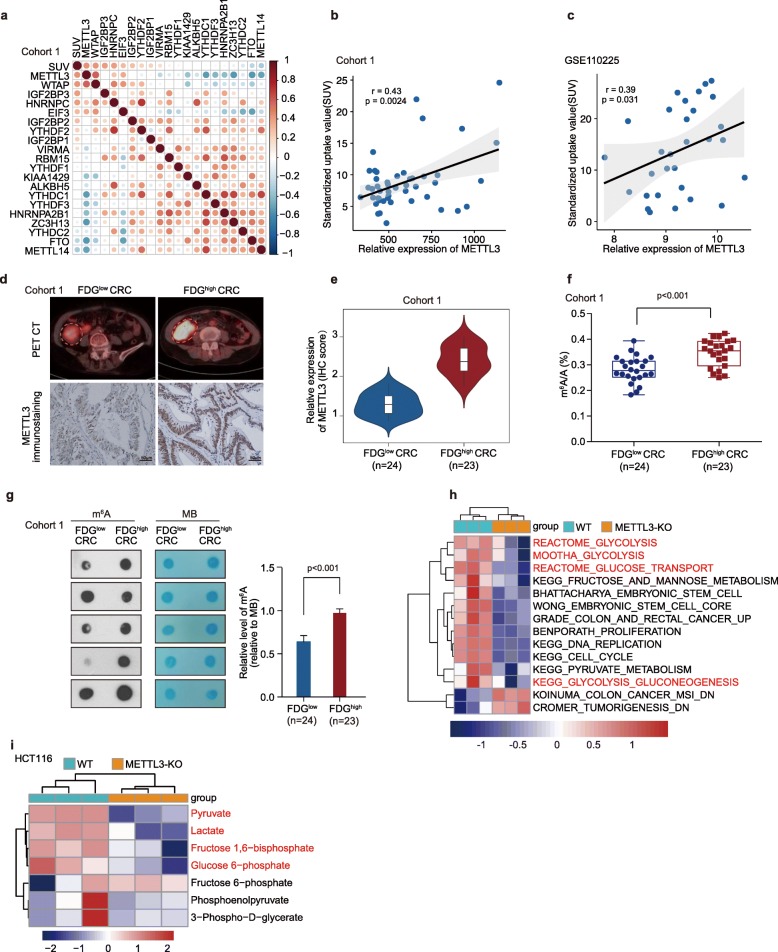
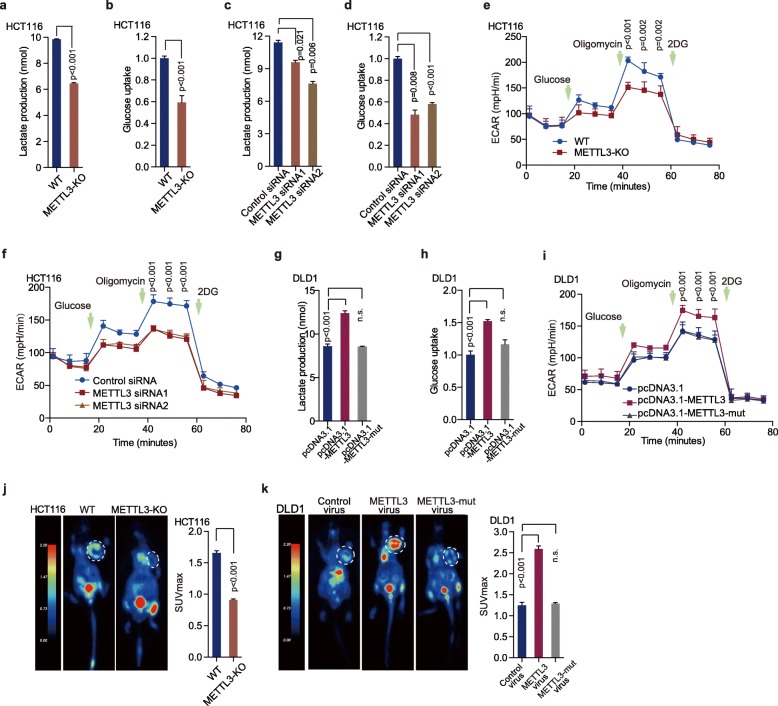
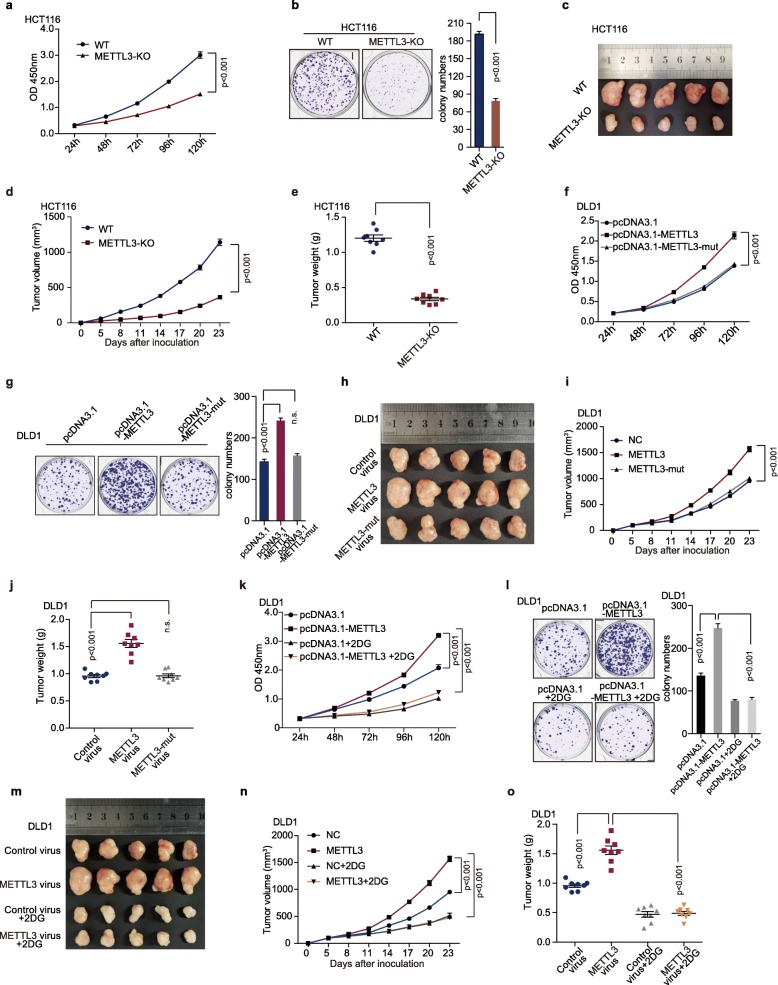
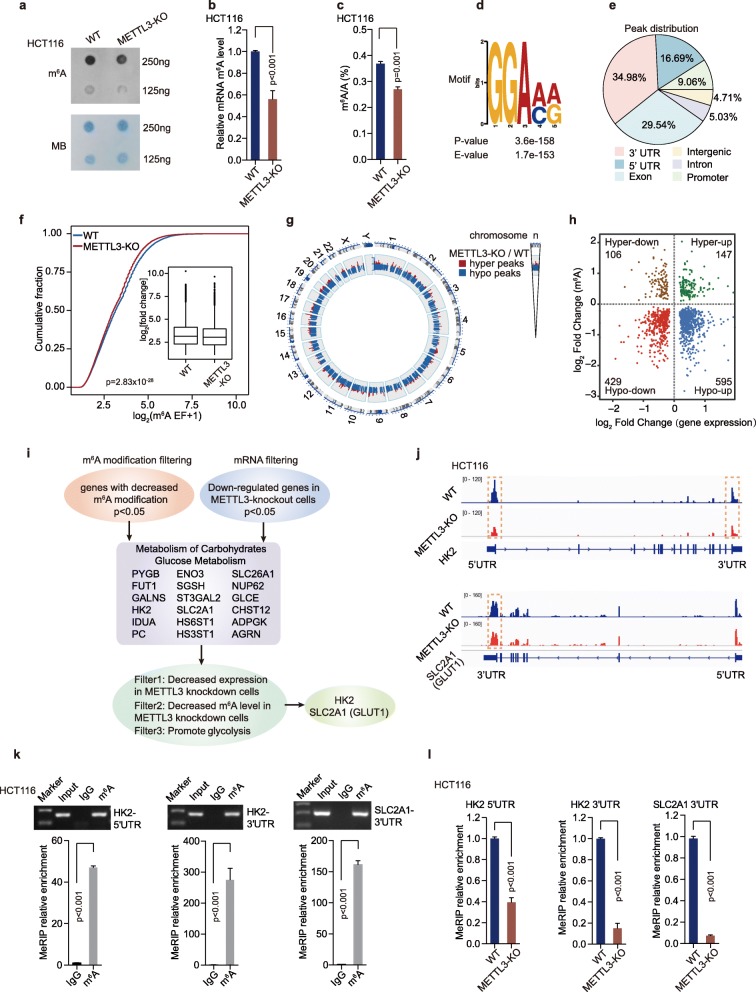
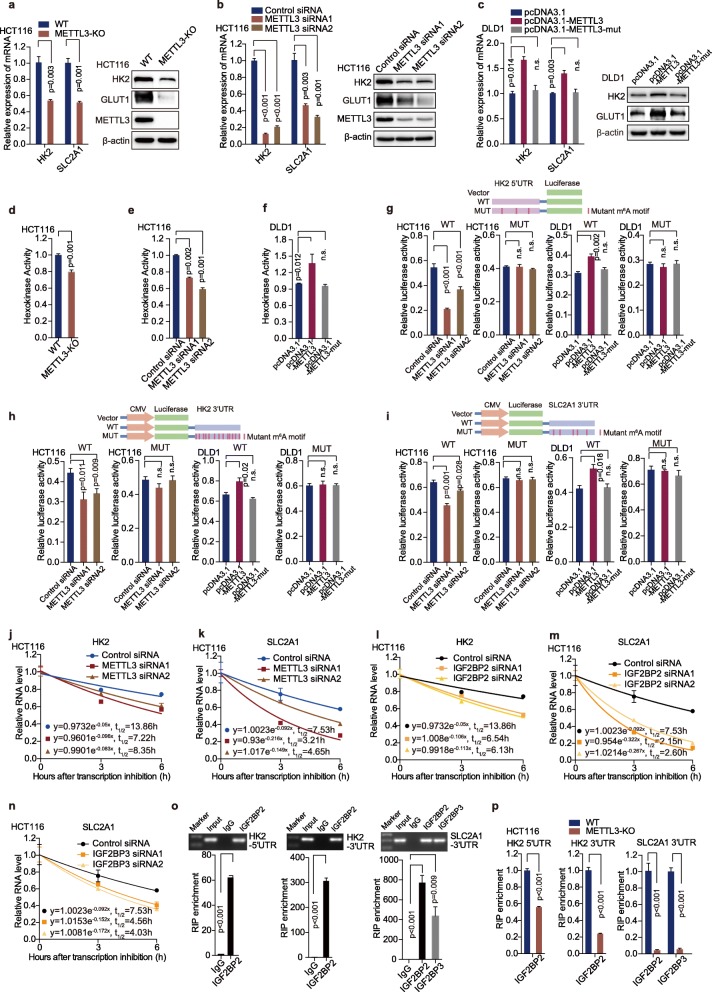
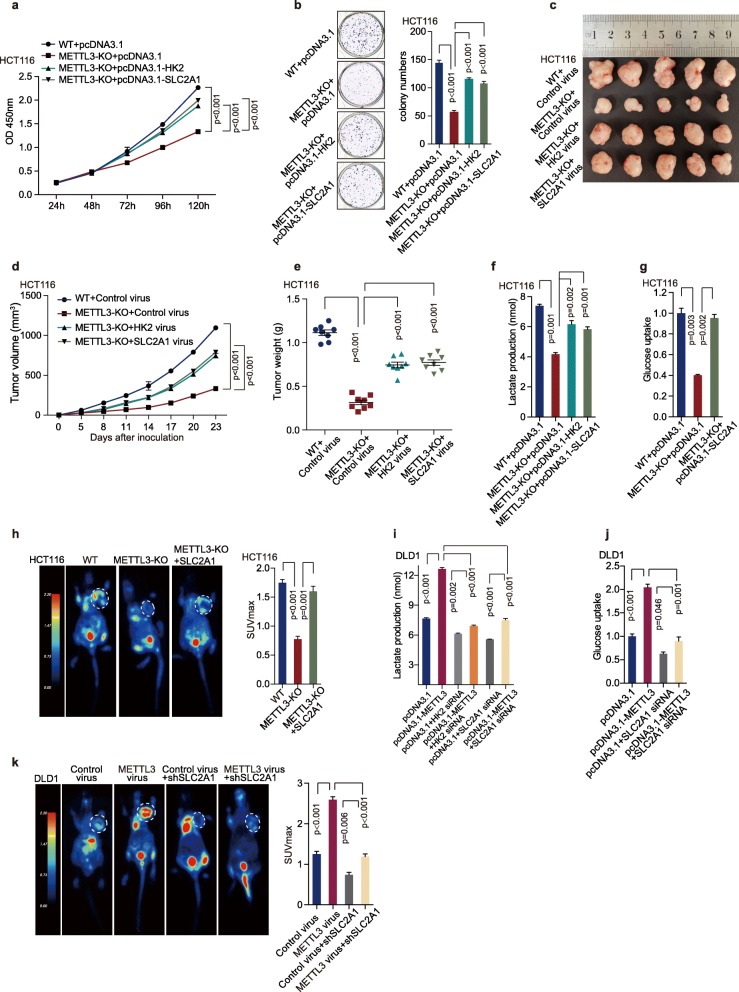
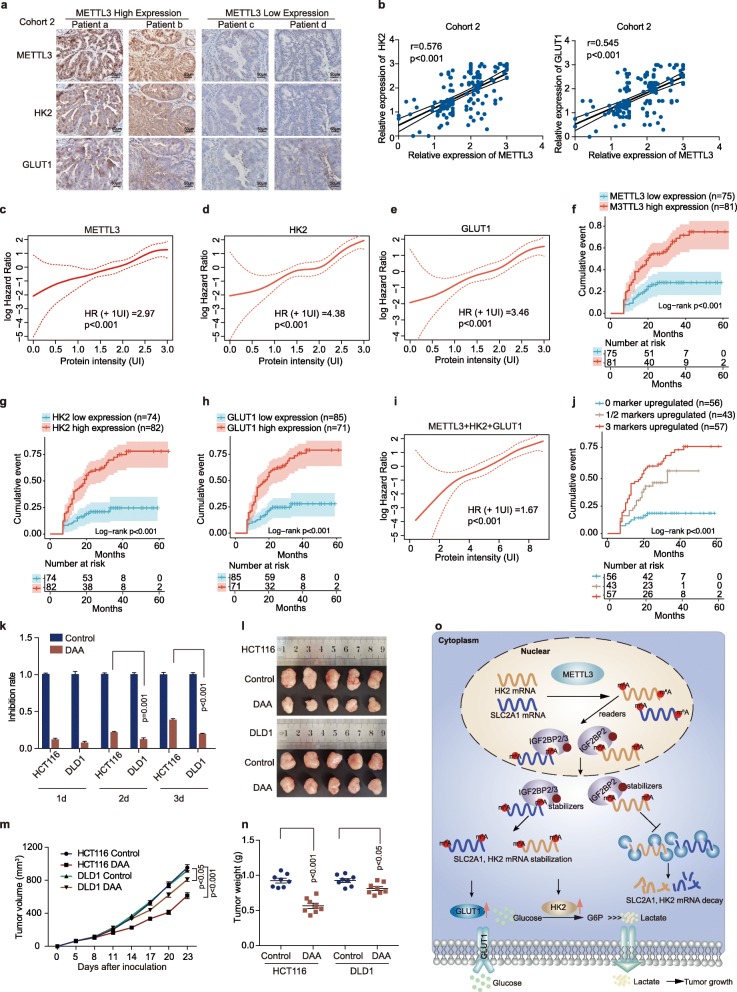
Background: Epigenetic alterations are involved in various aspects of colorectal carcinogenesis. N 6 -methyladenosine (m 6 A) modifications of RNAs are emerging as a new layer of epigenetic regulation. As the most abundant chemical modification of eukaryotic mRNA, m 6 A is essential for the regulation of mRNA stability, splicing, and translation. Alterations of m 6 A regulatory genes play important roles in the pathogenesis of a variety of human diseases. However, whether this mRNA modification participates in the glucose metabolism of colorectal cancer (CRC) remains uncharacterized. Methods: Transcriptome-sequencing and liquid chromatography-tandem mass spectrometry (LC-MS) were performed to evaluate the correlation between m 6 A modifications and glucose metabolism in CRC. Mass spectrometric metabolomics analysis, in vitro and in vivo experiments were conducted to investigate the effects of METTL3 on CRC glycolysis and tumorigenesis. RNA MeRIP-sequencing, immunoprecipitation and RNA stability assay were used to explore the molecular mechanism of METTL3 in CRC. Results: A strong correlation between METTL3 and 18 F-FDG uptake was observed in CRC patients from Xuzhou Central Hospital. METTL3 induced-CRC tumorigenesis depends on cell glycolysis in multiple CRC models. Mechanistically, METTL3 directly interacted with the 5′/3’UTR regions of HK2 , and the 3’UTR region of SLC2A1 (GLUT1), then further stabilized these two genes and activated the glycolysis pathway. M 6 A-mediated HK2 and SLC2A1 (GLUT1) stabilization relied on the m 6 A reader IGF2BP2 or IGF2BP2/3, respectively. Conclusions: METTL3 is a functional and clinical oncogene in CRC. METTL3 stabilizes HK2 and SLC2A1 (GLUT1) expression in CRC through an m 6 A-IGF2BP2/3- dependent mechanism. Targeting METTL3 and its pathway offer alternative rational therapeutic targets in CRC patients with high glucose metabolism.
Overview
The claims and statistics of this paper haven’t been checked yet.
Free: it reads the open-access text and checks the first 5 claims that cite a source we can check. Create a free account to check every claim.
Integrity signals
Registry
Cites
Statistics
Figures
Verification
Claims the paper makes
The claims and statistics of this paper haven’t been checked yet.
Free: it reads the open-access text and checks the first 5 claims that cite a source we can check. Create a free account to check every claim.
Claims other papers make about this one
Each is checked against this paper’s own text: does it say what the citing paper says it does?
The source backs part of the claim, not all of it — or backs it for a different population, condition or comparison.
In the citing paper
“The interaction between IMP2 and its target RNA transcripts depends on m6A modifications [16].”
From IMPlications of IMP2 in RNA Biology and Disease (2025) · cites this paper as [16]
Experimental — accuracy not yet measuredThe source backs part of the claim, not all of it — or backs it for a different population, condition or comparison.
In the citing paper
“IMP2 is a critical regulator of glycolysis in colorectal cancer, driving tumor progression by stabilizing m6A-modified mRNAs of key glycolytic enzymes, hexokinase 2 (encoding HK2) and SLC2A1 (encoding GLUT1) [16].”
From IMPlications of IMP2 in RNA Biology and Disease (2025) · cites this paper as [16]
Experimental — accuracy not yet measuredThe source backs part of the claim, not all of it — or backs it for a different population, condition or comparison.
In the citing paper
“IMP2 causes upregulation of multiple pro-oncogenic targets that increase proliferation, contribute to the Warburg effect, and drive tumor cells toward immune escape [16,110,125].”
From IMPlications of IMP2 in RNA Biology and Disease (2025) · cites this paper as [16]
Experimental — accuracy not yet measuredThe cited source says what the claim attributes to it.
In the citing paper
“The interaction between IMP2 and its target transcripts depends on m6A modifications introduced by METTL3. In METTL3-knockout cells, IMP2 binding to HK2 and GLUT1 mRNAs is substantially impaired [16].”
From IMPlications of IMP2 in RNA Biology and Disease (2025) · cites this paper as [16]
The cited source says what the claim attributes to it.
In the citing paper
“In CRC cell lines, IMP2 knockdown significantly reduces HK2 and GLUT1 mRNA levels and stability.”
From IMPlications of IMP2 in RNA Biology and Disease (2025) · cites this paper as [16]
Self-check
Percentages, sums and reported differences re-computed from the paper’s own numbers.
The self-check needs the paper’s full text.
Citations
Cites
Hallmarks of Cancer: The Next Generation
Hanahan, D., & Weinberg, R. A. (2011) · Cell · doi:10.1016/j.cell.2011.02.013 · Cited by 66,590
Cancer incidence and mortality worldwide: Sources, methods and major patterns in GLOBOCAN 2012
Ferlay, J., Soerjomataram, I., Dikshit, R., Eser, S., Mathers, C., Rebelo, M., Parkin, D. M., Forman, D., & Bray, F. (2015) · International Journal of Cancer · doi:10.1002/ijc.29210 · Cited by 28,766
The Molecular Signatures Database Hallmark Gene Set Collection
Liberzon, A., Birger, C., Thorvaldsdóttir, H., Ghandi, M., Mesirov, J. P., & Tamayo, P. (2015) · Cell Systems · doi:10.1016/j.cels.2015.12.004 · Cited by 13,807 · cited 1×
“Single-sample GSEA (ssGSEA) [26] revealed that the gene sets related to Reactome_Glycolysis, Mootha_ Glycolysis, Reactome_Glucose_Transport and KEGG_ Glycolysis_Gluconeogenesis (glycolysis pathway) and Grade_Colon_And_Rectal_Cancer_Up (colorectal-carcinogenesis signature) were negatively correlated with METTL3-knockou…”
Topology of the human and mouse m6A RNA methylomes revealed by m6A-seq
Dominissini, D., Moshitch-Moshkovitz, S., Schwartz, S., Salmon-Divon, M., Ungar, L., Osenberg, S., Cesarkas, K., Jacob-Hirsch, J., Amariglio, N., Kupiec, M., et al. (2012) · Nature · doi:10.1038/nature11112 · Cited by 4,884
N6-methyladenosine-dependent regulation of messenger RNA stability
Wang, X., Lu, Z., Gomez, A., Hon, G. C., Yue, Y., Han, D., Fu, Y., Parisien, M., Dai, Q., Jia, G., et al. (2014) · Nature · doi:10.1038/nature12730 · Cited by 4,558
Comprehensive Analysis of mRNA Methylation Reveals Enrichment in 3′ UTRs and near Stop Codons
Meyer, K. D., Saletore, Y., Zumbo, P., Elemento, O., Mason, C. E., & Jaffrey, S. R. (2012) · Cell · doi:10.1016/j.cell.2012.05.003 · Cited by 4,223
N6-Methyladenosine in nuclear RNA is a major substrate of the obesity-associated FTO
Jia, G., Fu, Y., Zhao, X., Dai, Q., Zheng, G., Yang, Y., Yi, C., Lindahl, T., Pan, T., Yang, Y.-G., et al. (2011) · Nature Chemical Biology · doi:10.1038/nchembio.687 · Cited by 4,106 · cited 1×
“And this mRNA modification can be removed by demethylases FTO and ALKBH5 [15, 16].”
ALKBH5 Is a Mammalian RNA Demethylase that Impacts RNA Metabolism and Mouse Fertility
Zheng, G., Dahl, J. A., Niu, Y., Fedorcsak, P., Huang, C.-M., Li, C. J., Vågbø, C. B., Shi, Y., Wang, W.-L., Song, S.-H., et al. (2013) · Molecular Cell · doi:10.1016/j.molcel.2012.10.015 · Cited by 3,550
N6-methyladenosine Modulates Messenger RNA Translation Efficiency
Wang, X., Zhao, B. S., Roundtree, I. A., Lu, Z., Han, D., Ma, H., Weng, X., Chen, K., Shi, H., & He, C. (2015) · Cell · doi:10.1016/j.cell.2015.05.014 · Cited by 3,483
A METTL3–METTL14 complex mediates mammalian nuclear RNA N6-adenosine methylation
Liu, J., Yue, Y., Han, D., Wang, X., Fu, Y., Zhang, L., Jia, G., Yu, M., Lu, Z., Deng, X., et al. (2014) · Nature Chemical Biology · doi:10.1038/nchembio.1432 · Cited by 3,433 · cited 1×
“RNA Methyltransferase METTL3 may participate in regulating the mRNA stability and modification of target genes [46].”
Background
Cited by
Items 401–483 of 483
Wei, W., Zhang, Z.-Y., Shi, B., Cai, Y., Zhang, H.-S., Sun, C.-L., Fei, Y.-F., Zhong, W., Zhang, S., Wang, C., et al. (2023) · Figshare · doi:10.6084/m9.figshare.23550506
Shi, Y., Li, K., Yuan, Y., Wang, C., Yang, Z., Zuo, D., Niu, Y., 邱际亮, Li, B., Yuan, Y., et al. (2024) · Figshare · doi:10.6084/m9.figshare.26707802
Wei, W., Zhang, Z.-Y., Shi, B., Cai, Y., Zhang, H.-S., Sun, C.-L., Fei, Y.-F., Zhong, W., Zhang, S., Wang, C., et al. (2023) · Figshare · doi:10.6084/m9.figshare.23550500
Cai, J., Cui, Z., Zhou, J., Zhang, B., Lu, R., Ding, Y., & Hu, H. (2024) · Figshare · doi:10.6084/m9.figshare.26551585
Yang, C., Huang, S., Cao, F., & Zheng, Y. (2021) · Figshare · doi:10.6084/m9.figshare.16943641
Zhu, W., Wu, C., Liu, Z., Zhao, S., Cheng, X., & Huang, J. (2024) · Figshare · doi:10.6084/m9.figshare.26730598
Chen, S., Yang, C., Wang, Z.-W., Hu, J.-F., Pan, J.-J., Liao, C.-Y., Zhang, J.-Q., Chen, J., Huang, Y., Huang, L., et al. (2021) · Figshare · doi:10.6084/m9.figshare.14411608
Chen, S., Yang, C., Wang, Z.-W., Hu, J.-F., Pan, J.-J., Liao, C.-Y., Zhang, J.-Q., Chen, J., Huang, Y., Huang, L., et al. (2021) · Figshare · doi:10.6084/m9.figshare.14411614
Chen, S., Yang, C., Wang, Z.-W., Hu, J.-F., Pan, J.-J., Liao, C.-Y., Zhang, J.-Q., Chen, J., Huang, Y., Huang, L., et al. (2021) · Figshare · doi:10.6084/m9.figshare.14411617
Shi, Y., Li, K., Yuan, Y., Wang, C., Yang, Z., Zuo, D., Niu, Y., 邱际亮, Li, B., Yuan, Y., et al. (2024) · Figshare · doi:10.6084/m9.figshare.25621966
Zheng, J., Guo, J., Zhu, L., Zhou, Y., & Tong, J. (2021) · Figshare · doi:10.6084/m9.figshare.16680100
Wei, W., Zhang, Z.-Y., Shi, B., Cai, Y., Zhang, H.-S., Sun, C.-L., Fei, Y.-F., Zhong, W., Zhang, S., Wang, C., et al. (2023) · Figshare · doi:10.6084/m9.figshare.23550503
Gao, Y., Wang, H., Chen, S., An, R., Chu, Y., Li, G., Wang, Y., Xie, X., & Zhang, J. (2022) · Figshare · doi:10.6084/m9.figshare.19711088
Shi, Y., Li, K., Yuan, Y., Wang, C., Yang, Z., Zuo, D., Niu, Y., 邱际亮, Li, B., Yuan, Y., et al. (2024) · Figshare · doi:10.6084/m9.figshare.26707796
Zhu, W., Wu, C., Liu, Z., Zhao, S., Cheng, X., & Huang, J. (2024) · Figshare · doi:10.6084/m9.figshare.26730607
Zhu, W., Wu, C., Liu, Z., Zhao, S., Cheng, X., & Huang, J. (2024) · Figshare · doi:10.6084/m9.figshare.26730616
Shi, Y., Li, K., Yuan, Y., Wang, C., Yang, Z., Zuo, D., Niu, Y., 邱际亮, Li, B., Yuan, Y., et al. (2024) · Figshare · doi:10.6084/m9.figshare.26707799
Chen, E., Wang, C., Lv, H., & Yu, J. (2023) · Figshare · doi:10.6084/m9.figshare.22603867
Yuan, X., Li, T., Shi, L., Miao, J., Guo, Y., & Chen, Y. (2021) · Figshare · doi:10.6084/m9.figshare.15569088
Chen, S., Yang, C., Wang, Z.-W., Hu, J.-F., Pan, J.-J., Liao, C.-Y., Zhang, J.-Q., Chen, J., Huang, Y., Huang, L., et al. (2021) · Figshare · doi:10.6084/m9.figshare.14411620
Zhu, W., Wu, C., Liu, Z., Zhao, S., Cheng, X., & Huang, J. (2024) · Figshare · doi:10.6084/m9.figshare.26730595
Wang, A., Zeng, Y., Zhang, W., Zhao, J., Gao, L., Li, J., Zhu, J., Liu, Z., & Huang, J.-A. (2024) · Figshare · doi:10.6084/m9.figshare.26488287
Wei, W., Zhang, Z.-Y., Shi, B., Cai, Y., Zhang, H.-S., Sun, C.-L., Fei, Y.-F., Zhong, W., Zhang, S., Wang, C., et al. (2023) · Figshare · doi:10.6084/m9.figshare.23550509
Zhu, W., Wu, C., Liu, Z., Zhao, S., Cheng, X., & Huang, J. (2024) · Figshare · doi:10.6084/m9.figshare.25989252
Zhu, W., Wu, C., Liu, Z., Zhao, S., Cheng, X., & Huang, J. (2024) · Figshare · doi:10.6084/m9.figshare.26730586
Zhu, W., Wu, C., Liu, Z., Zhao, S., Cheng, X., & Huang, J. (2024) · Figshare · doi:10.6084/m9.figshare.25989350
Zhu, W., Wu, C., Liu, Z., Zhao, S., Cheng, X., & Huang, J. (2024) · Figshare · doi:10.6084/m9.figshare.26730589
Dong, Z., Zhang, M.-Y., Qu, L.-X., Zou, J., Yang, Y.-H., Ma, Y.-L., Yang, C.-C., Cao, X.-L., Wang, L.-Y., Zhang, X.-L., et al. (2024) · Figshare · doi:10.6084/m9.figshare.26981819
Self-citationZhu, W., Wu, C., Liu, Z., Zhao, S., Cheng, X., & Huang, J. (2024) · Figshare · doi:10.6084/m9.figshare.26730604
Chen, S., Yang, C., Wang, Z.-W., Hu, J.-F., Pan, J.-J., Liao, C.-Y., Zhang, J.-Q., Chen, J., Huang, Y., Huang, L., et al. (2021) · Figshare · doi:10.6084/m9.figshare.14411629
Wei, W., Zhang, Z.-Y., Shi, B., Cai, Y., Zhang, H.-S., Sun, C.-L., Fei, Y.-F., Zhong, W., Zhang, S., Wang, C., et al. (2023) · Figshare · doi:10.6084/m9.figshare.23550494
Cao, Y., Zhang, C., Chen, J., Ren, J., Li, X., Zhang, Y., Huang, B., Xu, Y., & Dong, L. (2024) · Figshare · doi:10.6084/m9.figshare.25341133
Self-citationChen, S., Yang, C., Wang, Z.-W., Hu, J.-F., Pan, J.-J., Liao, C.-Y., Zhang, J.-Q., Chen, J., Huang, Y., Huang, L., et al. (2021) · Figshare · doi:10.6084/m9.figshare.14411632
Cai, J., Cui, Z., Zhou, J., Zhang, B., Lu, R., Ding, Y., & Hu, H. (2024) · Figshare · doi:10.6084/m9.figshare.26551588
Gao, Y., Yuan, L., Ke, C., Pei, Z., Liu, X., Wu, R., Kui, X., & Zhang, Y. (2024) · Figshare · doi:10.6084/m9.figshare.26571958
Self-citationZhu, W., Wu, C., Liu, Z., Zhao, S., Cheng, X., & Huang, J. (2024) · Figshare · doi:10.6084/m9.figshare.26730610
Yang, C., Huang, S., Cao, F., & Zheng, Y. (2021) · Figshare · doi:10.6084/m9.figshare.16943644
Dong, Z., Zhang, M.-Y., Qu, L.-X., Zou, J., Yang, Y.-H., Ma, Y.-L., Yang, C.-C., Cao, X.-L., Wang, L.-Y., Zhang, X.-L., et al. (2024) · Figshare · doi:10.6084/m9.figshare.26981822
Self-citationChen, E., Wang, C., Lv, H., & Yu, J. (2023) · Figshare · doi:10.6084/m9.figshare.22603870
Zhu, W., Wu, C., Liu, Z., Zhao, S., Cheng, X., & Huang, J. (2024) · Figshare · doi:10.6084/m9.figshare.26730613
Shi, Y., Li, K., Yuan, Y., Wang, C., Yang, Z., Zuo, D., Niu, Y., 邱际亮, Li, B., Yuan, Y., et al. (2024) · Figshare · doi:10.6084/m9.figshare.25622142
Yang, C., Huang, S., Cao, F., & Zheng, Y. (2021) · Figshare · doi:10.6084/m9.figshare.16943638
Zhu, W., Wu, C., Liu, Z., Zhao, S., Cheng, X., & Huang, J. (2024) · Figshare · doi:10.6084/m9.figshare.26730592
m 6 A modification in cancer regulation: molecular circuits and regulatory networks
Li, Y., Zhu, K., Feng, Y., Yao, S., Han, Y., Xiao, X., Han, Z., & Xia, S. (2025) · Visualized Cancer Medicine · doi:10.1051/vcm/2025011
Inhibition of the m6A Reader IGF2BP2 Impairs Cell Cycle Progression and Glycolysis in Ovarian Cancer
Liang, J., Yang, X., Ji, K., Zhu, G., Wang, J., Duan, H., Zhou, J., & Qin, Z. (2026) · Molecular Biology · doi:10.1134/s0026893325700694
Function and regulatory mechanism of RNA-binding protein IGF2BP2 in obesity and cancers
Yi, R., Wu, R., & Jiang, Q. (2026) · Molecular Biology Reports · doi:10.1007/s11033-026-11740-y
The PRKN/METTL3/CLDN2 axis promotes colorectal cancer development through epigenetic mechanisms
任宏涛, Wang, M., Ma, X., An, L., Guo, Y., & Ma, H. (2026) · Cell Biology and Toxicology · doi:10.1007/s10565-026-10180-5
“To identify METTL3-interacting proteins in CRC, the GSE130012 dataset (including METTL3-knockdown and wild-type HCT-116 cells) (Shen et al. 2020) was retrieved from the NCBI database https:// www. ncbi. nlm. nih. gov/.”
Duan, H., Zhang, X., & Sun, G. (2026) · Journal of Evolutionary Biochemistry and Physiology · doi:10.1134/s0022093025600666
Self-citationResearch Progress of the IGF2BP Family in Human Diseases
朱, 欣. (2026) · Advances in Clinical Medicine · doi:10.12677/acm.2026.1641628
Shen, J., Yang, A., He, X., Dai, T., Hui, Z., Ding, Y., Zhao, L., & Chen, J. (2026) · Biomedicines · doi:10.3390/biomedicines14040929
Li, C., Tang, X., Zeng, Z., Yang, L., Cao, F., Zhu, H., Zhu, L., Shen, J., Bian, X., Wang, L., et al. (2026) · Cell Death and Differentiation · doi:10.1038/s41418-026-01755-0
Glycolytic Signaling Pathways and Anti‐Glycolytic Therapy for Cancer: Research and Perspectives
Li, X., Li, S., Li, D. K. T., Xi, Y., Gu, Q., Liu, J., Hou, S., Zhang, X., Jin, C., Yang, M., et al. (2026) · Comprehensive physiology · doi:10.1002/cph4.70177
Self-citationYing, H., Ruan, M., Zhu, W., & Wang, X. (2026) · Journal of Molecular Histology · doi:10.1007/s10735-026-10825-z
“Previous research has shown that glycolysis can influence tumor development and progression (Shen et al. 2020, Dou et al. 2021).”
Fan, J., Tong, M., Lu, Y., Wang, Q., Xie, Y., Lin, K., Xu, J., Cai, X. X., & Liang, X. (2026) · Cells · doi:10.3390/cells15111016
The role of RNA modifications in cancer translational control
Joy, M., Cleynen, A., & Shirokikh, N. E. (2026) · RNA Biology · doi:10.1080/15476286.2026.2694854
“In drug-resistant melanoma cells, m6A deposition in 5 ′ UTRs enables selective translation of resistance-associated mRNAs despite global translational suppression, demonstrating that the eIF3-m6A axis provides an escape route from cap-dependent translation shutdown [78].”
Guo, Y., Kou, R., Huang, Z., Chen, Z., & Yun, H. (2026) · Frontiers in Cell and Developmental Biology · doi:10.3389/fcell.2026.1864321
“…METTL3 stabilizes HK2 mRNA through the readers YTHDF1 and IGF2BP2, promoting aerobic glycolysis and cell growth in cervical and other cancers (Shen et al., 2020; Wang et al., 2020d); the circ-CTNNB1–RBM15 axis and VIRMA likewise enhance HK2 expression in an m6A-dependent manner, accelerating…”
Wang, Q., Miao, H., Wang, Y., Zeng, J., & Hu, Z. (2026) · American Journal of Cancer Research · doi:10.62347/ezps5229
Guimarães‐Teixeira, C., Miranda‐Gonçalves, V., Henrique, R., & Jerónimo, C. (2026) · Advances in experimental medicine and biology · doi:10.1007/978-3-032-12166-0_11
Tang, Q., Hu, Y., Zhu, L., Liu, Y., Zhang, J. Q., An, Z., Dong, Q., & Cao, C. (2026) · Genes · doi:10.3390/genes17070797
“Although MeRIP-seq studies of METTL3 knockout have been reported in other cell types—such as colorectal cancer cells [26] and muscle stem cells [35]—our understanding of METTL3’s alteration in the global pattern of mRNA methylation in HEK293T cells, particularly in the context of innate immune…”
InfluentialGlucose Transporter 1 in Health and Disease
Tai, Y., Chen, Z., Zhu, Y. C., & Han, W. (2026) · MedComm · doi:10.1002/mco2.70874
“The disruption of this axis via METTL3 silencing leads to reduced GLUT1 levels, suppressed glycolysis, and inhibited tumorigenesis, establishing the METTL3-IGF2BP2/3-GLUT1 axis as a pivotal driver of the Warburg effect [ 116, 117 ].”
Gao, G., Guo, Y., Liu, N., & Zhuang, L. (2026) · Discover Oncology · doi:10.1007/s12672-026-05683-w
Guo, J., Zhang, Y., Wang, X., Cao, S., & Xu, J. (2026) · iMetaMed · doi:10.1002/imm3.70055
Self-citationZhao, L., Yin, Z., Ji, C., Wu, Y., Gao, H., & Yuan, H. (2026) · Frontiers in Immunology · doi:10.3389/fimmu.2026.1911067
Kendzia, S., Franke, S., Pirritano, M., Grafahrend‐Belau, E., Köhler, N., Bauchspiess, T., Franzenburg, S., Höring, M., Raab, E., Schmeier, L., et al. (2026) · Cell Death Discovery · doi:10.1038/s41420-026-03315-4
Li, X., Yang, L., Zhou, X., Chen, G., & Liu, S. (2026) · Biochimica et Biophysica Acta (BBA) - Molecular Basis of Disease · doi:10.1016/j.bbadis.2026.168446
Wei, L., Liu, D., Lin, C., Song, Y., Dong, L., & Chi, X.-J. (2026) · Journal of Gastroenterology and Hepatology · doi:10.1111/jgh.70710
Tang, D., Li, Q., Tacchi, C., Banchi, M., & Bocci, G. (2026) · Biochimica et Biophysica Acta (BBA) - Reviews on Cancer · doi:10.1016/j.bbcan.2026.189713
RNA modifications and metabolism in cancer: Mechanisms, cross-talk and therapeutic implications
Luo, X., Zuo, X., He, J., & Yi, P. (2026) · Seminars in Cancer Biology · doi:10.1016/j.semcancer.2026.102622
The Role of METTL3-Mediated m6A Methylation in Hepatocellular Carcinoma Progression and Treatment
Gamage, N. H., Yang, H. D., Lee, S. I., Eun, J. W., Lim, S.-Y., Kim, H. S., & Jeong, J. (2026) · Epigenomes · doi:10.3390/epigenomes10040063
Research Progress and Challenges in Targeting GLUT1 in Tumors
Chen, T., Peng, B., Yuan, X., Liu, Y., Zhang, J., Su, Y., Hu, G., Tao, Z., & Long, G. (2026) · International Journal of Molecular Sciences · doi:10.3390/ijms27209225
“On one hand, methyltransferase-like 3 (METTL3), which is frequently upregulated in colorectal cancer, enhances the stability of SLC2A1 mRNA through N6-methyladenosine (m6A) modification, thereby promoting its expression [52,53].”
Lin, J., Wu, C., Zheng, H., Wang, P., & Ye, K. (2026) · Journal of Pharmacology and Experimental Therapeutics · doi:10.1016/j.jpet.2026.105052
BindingDB (2024) · UC San Diego · doi:10.7270/q2t43zbn
FTO mediated glycolytic metabolism for papillary renal cell carcinoma immune evasion
Guimarães‐Teixeira, C., Nunes, S. P., Bueno-Costa, A., Martinez‐Verbo, L., Duarte, I. F., Carriço, Í. R., Barros‐Silva, D., Lobo, J., Henrique, R., Esteller, M., et al. (2026) · Biomedicine & Pharmacotherapy · doi:10.1016/j.biopha.2026.120009
Wang, C., Zhang, Y., Mei, H., & Wei, Q. (2026) · Cytotechnology · doi:10.1007/s10616-026-01104-6
Self-citationDong, S., Li, S., Wang, X., Liang, S., Zhang, W., Li, L., Xu, Q., Shi, B., Cheng, Z., Zhang, X., et al. (2022) · doi:10.3389/fonc.2022.813852.s002
Self-citationChen, X., Chen, L., Tang, Y., He, Y., Pan, K., Yuan, L., Xie, W., Chen, S., Zhao, W., & Yu, D. (2022) · doi:10.3389/fonc.2022.939449.s004
Xie, J., Huang, Z., Jiang, P., Wu, R., Jiang, H., Luo, C., Hong, H., & Yin, H. (2021) · doi:10.3389/fimmu.2021.760747.s004
Zhou, L., Li, H., Cai, H., Liu, W., Pan, E., Yu, D., & He, S. (2022) · doi:10.3389/fonc.2022.809589.s005
Fang, Z., Hu, Y., Chen, J., Xu, K., Wang, K., Zheng, S., & Guo, C. (2021) · doi:10.3389/fmolb.2021.741603.s001
Li, N., Guo, Q., Zhang, Q., Chen, B.-J., Li, X.-A., & Zhou, Y. (2022) · doi:10.3389/fcell.2021.760912.s002
Zhang, L., Liu, Y., Ding, Y., Deng, Y., Chen, H., Hu, F., Fan, J., Lan, X., & Cao, W. (2024) · doi:10.3389/fonc.2023.1065744.s003
Self-citation
Metadata
- Authors
- Shen, C., Xuan, B., Yan, T., Ma, Y., Xu, P., Tian, X., Zhang, X., Cao, Y., Ma, D., Zhu, X., Zhang, Y., Fang, J.-Y., Chen, H., & Hong, J.
- Affiliations
- Shanghai Jiao Tong University (CN)
- Xuzhou Central Hospital (CN)
- Corresponding author
- Fang, Jing-Yuan
- Chen, Haoyan
- Hong, Jie
- ORCID
- Venue
- Molecular Cancer
- Published
- 2020-04-03
- Volume
- 19
- Issue
- 1
- Pages
- 72-72
- ISSN
- 1476-4598 (ISSN-L)
- PMC
- PMC7118901
- OpenAlex
- W3014891010
- Semantic Scholar
- 8c1988f3c3df027639758856b5a3cfef8cae862f
- Cited by
- 437
- References
- 49
- Citations by year
- 2026: 45 · 2025: 50 · 2024: 84 · 2023: 80 · 2022: 90 · 2021: 71 · 2020: 17
- FWCI
- 21.41
- Type
- journal article
- Language
- en
- Open access
- gold
- doi.org
- Licence
- cc-by
- creativecommons.org/licenses/by/4.0/ (tdm)
- creativecommons.org/licenses/by/4.0/ (vor)
- Locations
- Molecular Cancer (publishedVersion, cc-by)
- PubMed Central (publishedVersion, cc-by)
- PubMed (publishedVersion)
- DOAJ (DOAJ: Directory of Open Access Journals) (submittedVersion, cc-by-sa)
- Funders
- National Natural Science Foundation of China (81871901, 81790632, 81522008, 81874159, 81421001)
- Shanghai Municipal Education Commission (17SG18)
- Shanghai Sailing Program (19YF1428800)
- Topics
- Life Sciences › Biochemistry, Genetics and Molecular Biology › Molecular Biology › RNA modifications and cancer
- Life Sciences › Biochemistry, Genetics and Molecular Biology › Cancer Research › Cancer, Hypoxia, and Metabolism
- Life Sciences › Biochemistry, Genetics and Molecular Biology › Molecular Biology › Epigenetics and DNA Methylation
- Keywords
- N6-methyladenosine, m6A RNA methylation, METTL3, colorectal cancer, glycolysis, glucose metabolism, HK2, GLUT1, SLC2A1, mRNA stability, IGF2BP2, IGF2BP3, FDG uptake, carcinogenesis, oncogenes, therapeutic target
- MeSH terms
- Adenosine, Animals, Glycolysis, Hexokinase, Humans, Methyltransferases, Mice, Nude, Prognosis, Tumor Cells, Cultured, Biomarkers, Tumor, Colorectal Neoplasms, Gene Expression Regulation, Neoplastic, Survival Rate, RNA-Binding Proteins, Apoptosis, Disease Progression, DNA Methylation, Xenograft Model Antitumor Assays, Epigenesis, Genetic, Cell Proliferation, Glucose Transporter Type 1, Mice
About these checks
Registry, retraction, Cites and statistics results are computed, not judged, with one exception: a printed reference that no index lists is read once by a model before it counts as a citation error. Claims are extracted by a model and kept only when their quote appears verbatim in the text; each cited source is then checked, with a model’s help, for whether it says what the claim relies on. Those verdicts can be wrong — read the claim’s quote and the cited source before relying on one.
Statistics and arithmetic are recomputed, not judged.
Confidence bands are shown only for fields calibrated on our annotated test set. None is calibrated yet, so no band is shown.
What counts as a claim ›How we measure confidence ›How we check this ›
Are you an author, or do you see a problem with this page? Request a review
Data sources
Bibliographic data: Semantic Scholar, OpenAlex, Crossref.
Contains information from the Semantic Scholar Academic Graph Datasets, made available under the ODC Attribution License (ODC-BY 1.0).
Semantic Scholar’s data is described in: Kinney, R., et al. (2023). The Semantic Scholar Open Data Platform. arXiv:2301.10140.
