

m6A-dependent glycolysis enhances colorectal cancer progression
Open accessThe DOI matches its Crossref record; 49 of the 49 references it cites were found in a registry or an index.
Abstract
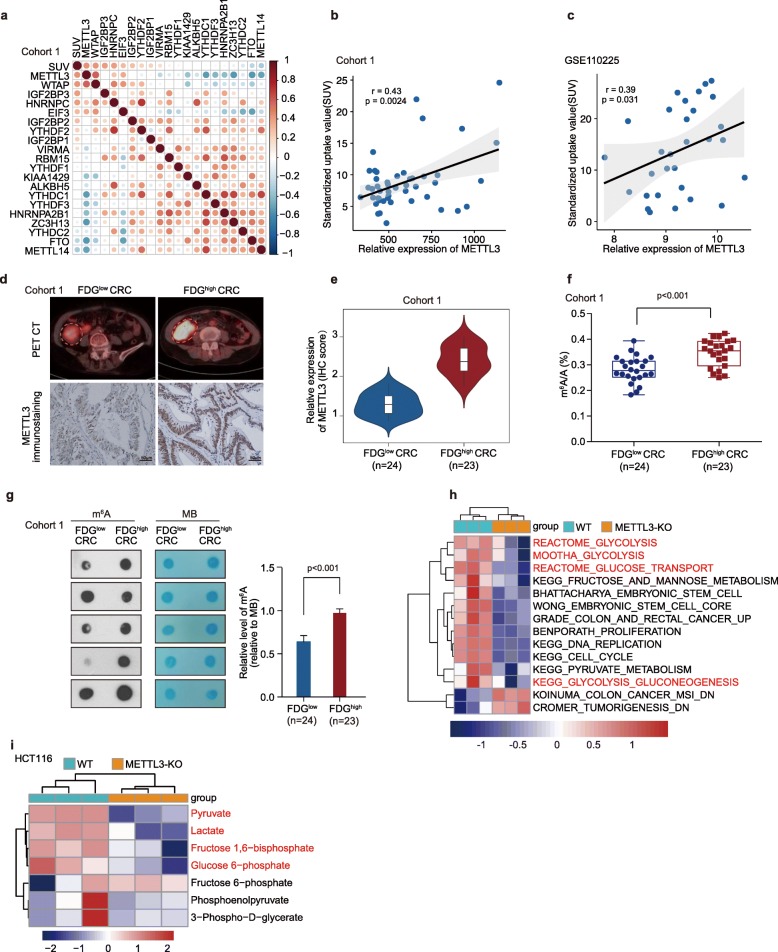
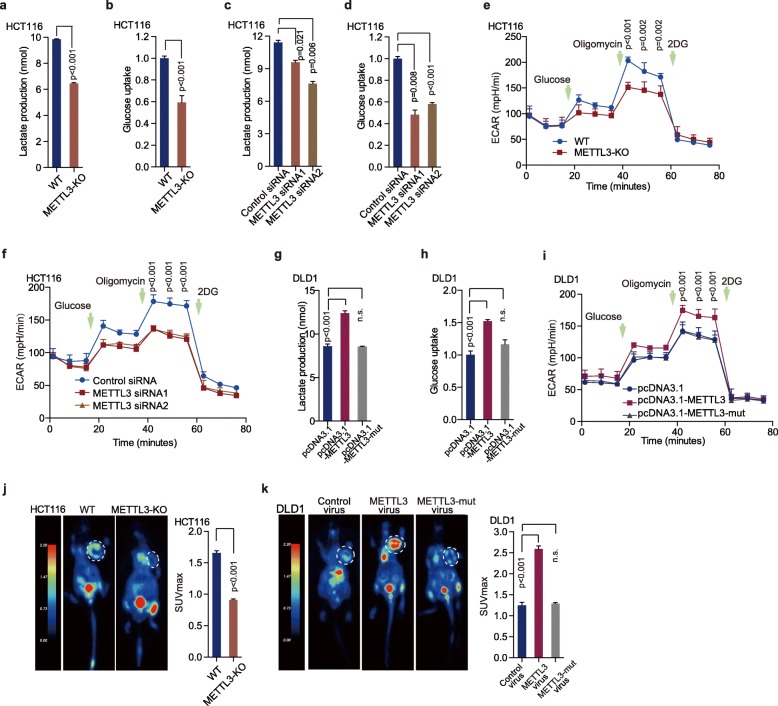
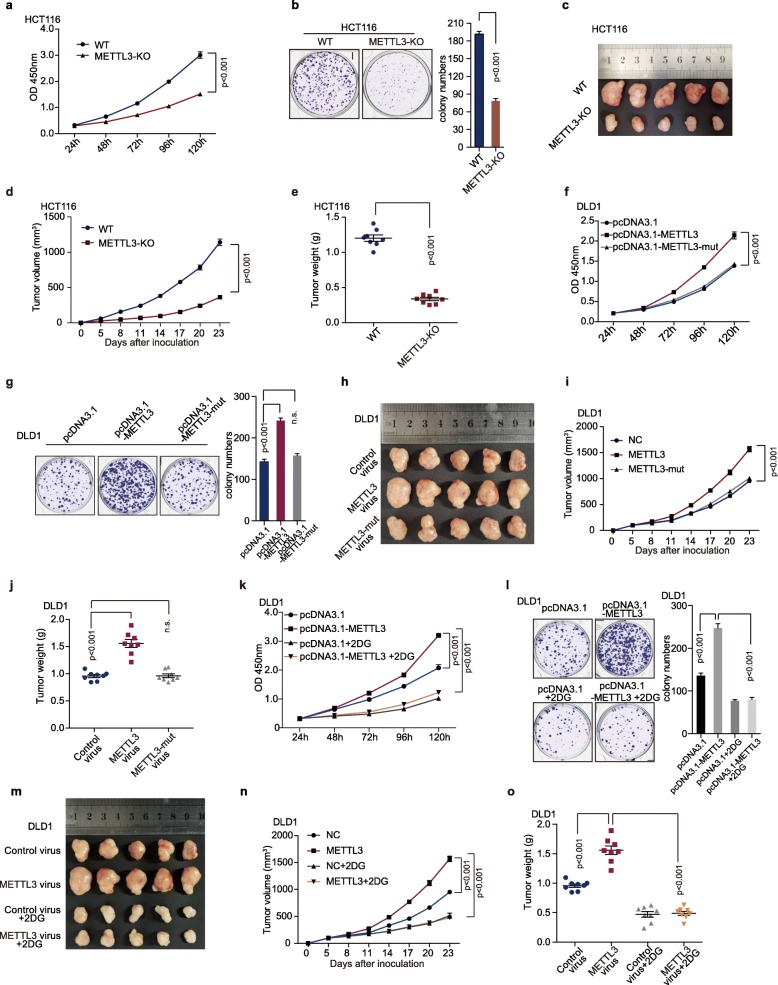
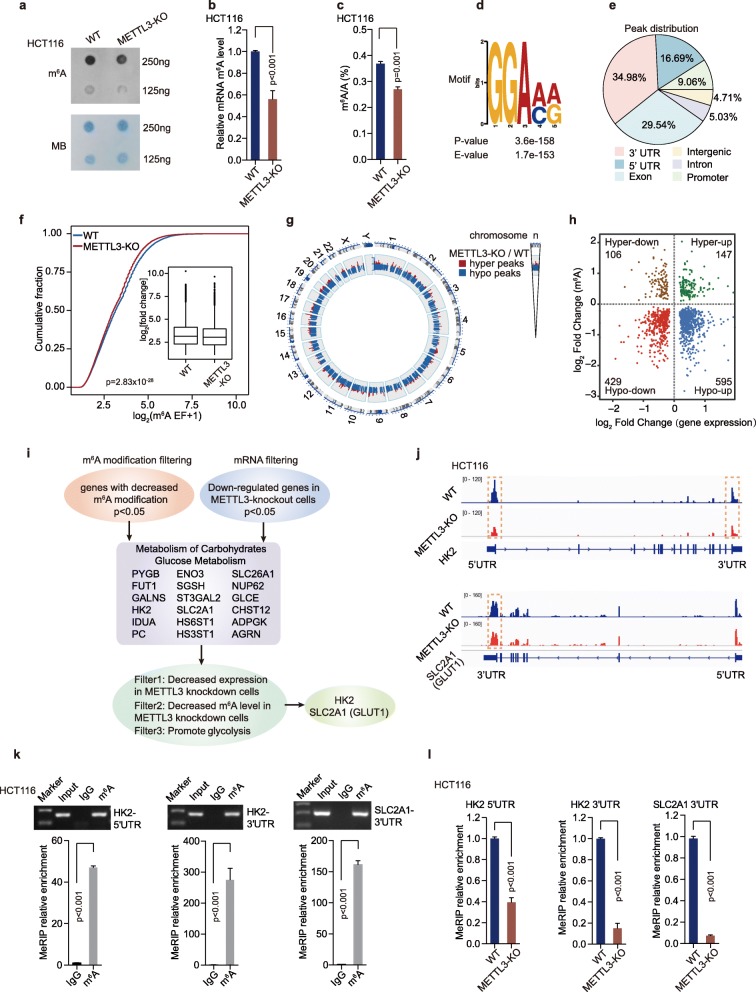
Background: Epigenetic alterations are involved in various aspects of colorectal carcinogenesis. N 6 -methyladenosine (m 6 A) modifications of RNAs are emerging as a new layer of epigenetic regulation. As the most abundant chemical modification of eukaryotic mRNA, m 6 A is essential for the regulation of mRNA stability, splicing, and translation. Alterations of m 6 A regulatory genes play important roles in the pathogenesis of a variety of human diseases. However, whether this mRNA modification participates in the glucose metabolism of colorectal cancer (CRC) remains uncharacterized. Methods: Transcriptome-sequencing and liquid chromatography-tandem mass spectrometry (LC-MS) were performed to evaluate the correlation between m 6 A modifications and glucose metabolism in CRC. Mass spectrometric metabolomics analysis, in vitro and in vivo experiments were conducted to investigate the effects of METTL3 on CRC glycolysis and tumorigenesis. RNA MeRIP-sequencing, immunoprecipitation and RNA stability assay were used to explore the molecular mechanism of METTL3 in CRC. Results: A strong correlation between METTL3 and 18 F-FDG uptake was observed in CRC patients from Xuzhou Central Hospital. METTL3 induced-CRC tumorigenesis depends on cell glycolysis in multiple CRC models. Mechanistically, METTL3 directly interacted with the 5′/3’UTR regions of HK2 , and the 3’UTR region of SLC2A1 (GLUT1), then further stabilized these two genes and activated the glycolysis pathway. M 6 A-mediated HK2 and SLC2A1 (GLUT1) stabilization relied on the m 6 A reader IGF2BP2 or IGF2BP2/3, respectively. Conclusions: METTL3 is a functional and clinical oncogene in CRC. METTL3 stabilizes HK2 and SLC2A1 (GLUT1) expression in CRC through an m 6 A-IGF2BP2/3- dependent mechanism. Targeting METTL3 and its pathway offer alternative rational therapeutic targets in CRC patients with high glucose metabolism.
Overview
The claims and statistics of this paper haven’t been checked yet.
Free: it reads the open-access text and checks the first 5 claims that cite a source we can check. Create a free account to check every claim.
Integrity signals
Registry
Cites
Statistics
Figures
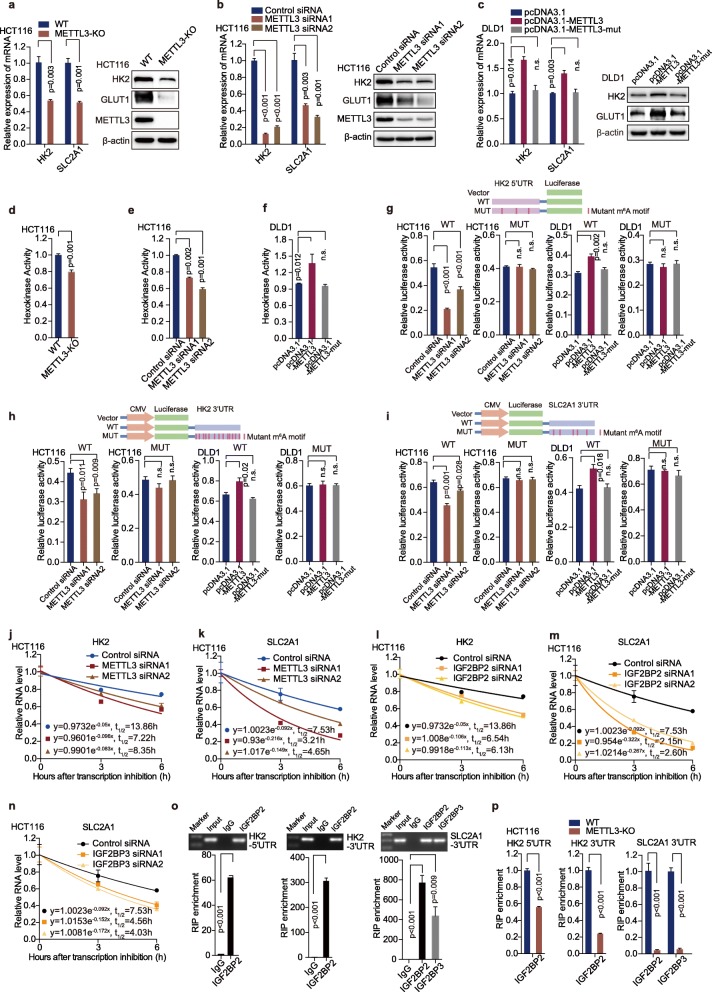
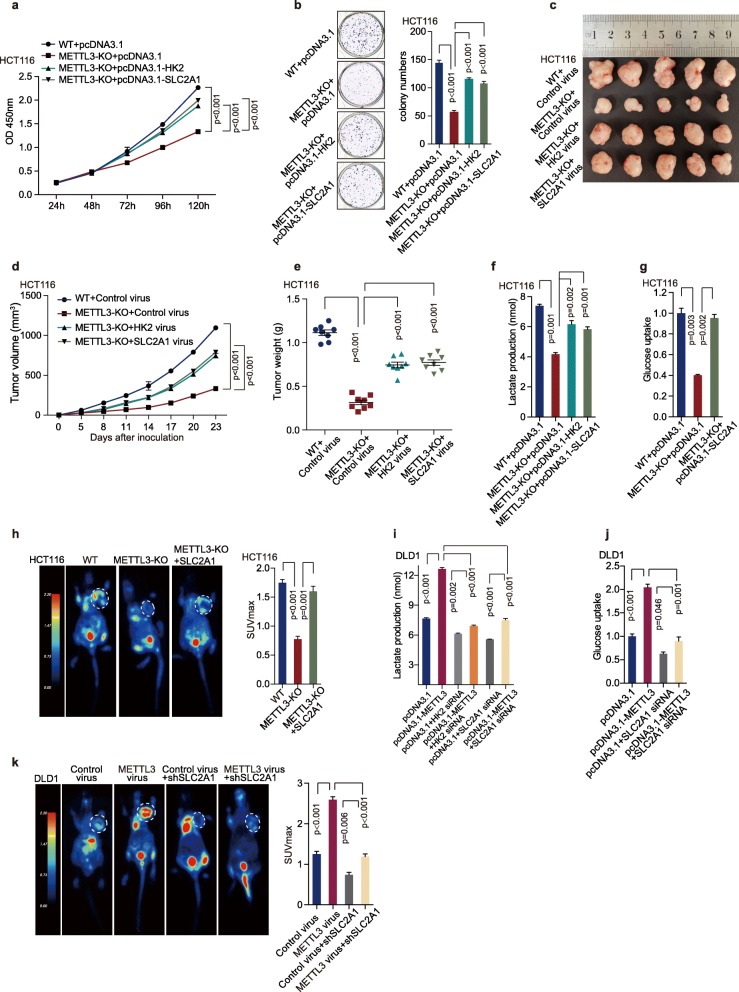
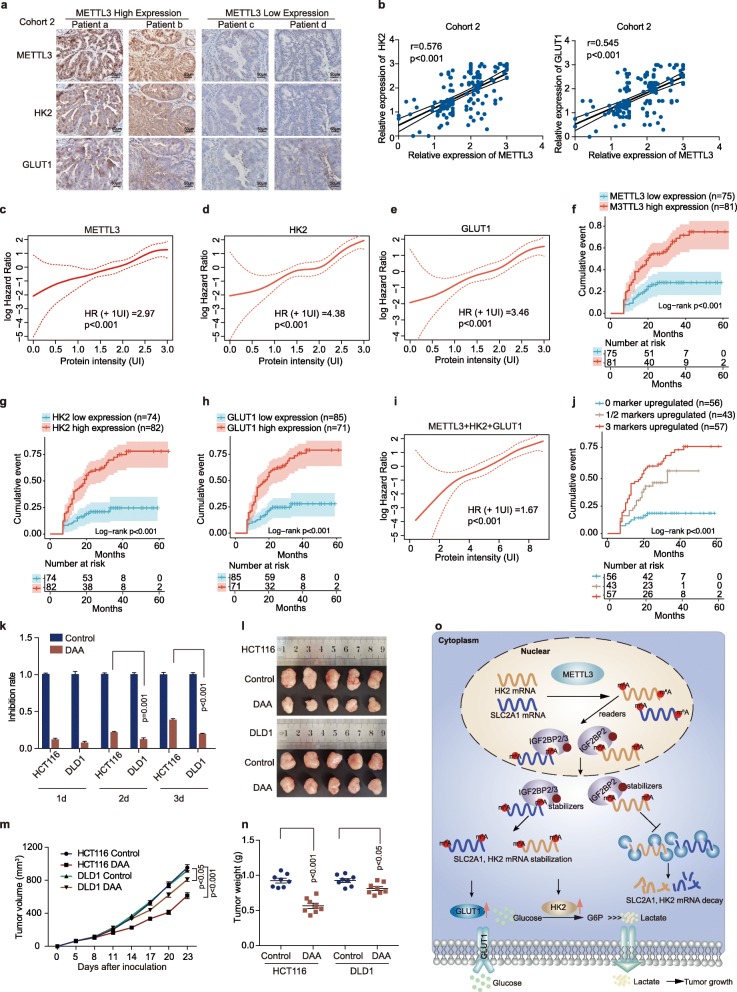
Verification
Claims the paper makes
The claims and statistics of this paper haven’t been checked yet.
Free: it reads the open-access text and checks the first 5 claims that cite a source we can check. Create a free account to check every claim.
Claims other papers make about this one
Each is checked against this paper’s own text: does it say what the citing paper says it does?
The source backs part of the claim, not all of it — or backs it for a different population, condition or comparison.
In the citing paper
“The interaction between IMP2 and its target RNA transcripts depends on m6A modifications [16].”
From IMPlications of IMP2 in RNA Biology and Disease (2025) · cites this paper as [16]
Experimental — accuracy not yet measuredThe source backs part of the claim, not all of it — or backs it for a different population, condition or comparison.
In the citing paper
“IMP2 is a critical regulator of glycolysis in colorectal cancer, driving tumor progression by stabilizing m6A-modified mRNAs of key glycolytic enzymes, hexokinase 2 (encoding HK2) and SLC2A1 (encoding GLUT1) [16].”
From IMPlications of IMP2 in RNA Biology and Disease (2025) · cites this paper as [16]
Experimental — accuracy not yet measuredThe source backs part of the claim, not all of it — or backs it for a different population, condition or comparison.
In the citing paper
“IMP2 causes upregulation of multiple pro-oncogenic targets that increase proliferation, contribute to the Warburg effect, and drive tumor cells toward immune escape [16,110,125].”
From IMPlications of IMP2 in RNA Biology and Disease (2025) · cites this paper as [16]
Experimental — accuracy not yet measuredThe cited source says what the claim attributes to it.
In the citing paper
“The interaction between IMP2 and its target transcripts depends on m6A modifications introduced by METTL3. In METTL3-knockout cells, IMP2 binding to HK2 and GLUT1 mRNAs is substantially impaired [16].”
From IMPlications of IMP2 in RNA Biology and Disease (2025) · cites this paper as [16]
The cited source says what the claim attributes to it.
In the citing paper
“In CRC cell lines, IMP2 knockdown significantly reduces HK2 and GLUT1 mRNA levels and stability.”
From IMPlications of IMP2 in RNA Biology and Disease (2025) · cites this paper as [16]
Self-check
Percentages, sums and reported differences re-computed from the paper’s own numbers.
The self-check needs the paper’s full text.
Citations
Cites
Hallmarks of Cancer: The Next Generation
Hanahan, D., & Weinberg, R. A. (2011) · Cell · doi:10.1016/j.cell.2011.02.013 · Cited by 66,590
Cancer incidence and mortality worldwide: Sources, methods and major patterns in GLOBOCAN 2012
Ferlay, J., Soerjomataram, I., Dikshit, R., Eser, S., Mathers, C., Rebelo, M., Parkin, D. M., Forman, D., & Bray, F. (2015) · International Journal of Cancer · doi:10.1002/ijc.29210 · Cited by 28,766
The Molecular Signatures Database Hallmark Gene Set Collection
Liberzon, A., Birger, C., Thorvaldsdóttir, H., Ghandi, M., Mesirov, J. P., & Tamayo, P. (2015) · Cell Systems · doi:10.1016/j.cels.2015.12.004 · Cited by 13,807 · cited 1×
“Single-sample GSEA (ssGSEA) [26] revealed that the gene sets related to Reactome_Glycolysis, Mootha_ Glycolysis, Reactome_Glucose_Transport and KEGG_ Glycolysis_Gluconeogenesis (glycolysis pathway) and Grade_Colon_And_Rectal_Cancer_Up (colorectal-carcinogenesis signature) were negatively correlated with METTL3-knockou…”
Topology of the human and mouse m6A RNA methylomes revealed by m6A-seq
Dominissini, D., Moshitch-Moshkovitz, S., Schwartz, S., Salmon-Divon, M., Ungar, L., Osenberg, S., Cesarkas, K., Jacob-Hirsch, J., Amariglio, N., Kupiec, M., et al. (2012) · Nature · doi:10.1038/nature11112 · Cited by 4,884
N6-methyladenosine-dependent regulation of messenger RNA stability
Wang, X., Lu, Z., Gomez, A., Hon, G. C., Yue, Y., Han, D., Fu, Y., Parisien, M., Dai, Q., Jia, G., et al. (2014) · Nature · doi:10.1038/nature12730 · Cited by 4,558
Comprehensive Analysis of mRNA Methylation Reveals Enrichment in 3′ UTRs and near Stop Codons
Meyer, K. D., Saletore, Y., Zumbo, P., Elemento, O., Mason, C. E., & Jaffrey, S. R. (2012) · Cell · doi:10.1016/j.cell.2012.05.003 · Cited by 4,223
N6-Methyladenosine in nuclear RNA is a major substrate of the obesity-associated FTO
Jia, G., Fu, Y., Zhao, X., Dai, Q., Zheng, G., Yang, Y., Yi, C., Lindahl, T., Pan, T., Yang, Y.-G., et al. (2011) · Nature Chemical Biology · doi:10.1038/nchembio.687 · Cited by 4,106 · cited 1×
“And this mRNA modification can be removed by demethylases FTO and ALKBH5 [15, 16].”
ALKBH5 Is a Mammalian RNA Demethylase that Impacts RNA Metabolism and Mouse Fertility
Zheng, G., Dahl, J. A., Niu, Y., Fedorcsak, P., Huang, C.-M., Li, C. J., Vågbø, C. B., Shi, Y., Wang, W.-L., Song, S.-H., et al. (2013) · Molecular Cell · doi:10.1016/j.molcel.2012.10.015 · Cited by 3,550
N6-methyladenosine Modulates Messenger RNA Translation Efficiency
Wang, X., Zhao, B. S., Roundtree, I. A., Lu, Z., Han, D., Ma, H., Weng, X., Chen, K., Shi, H., & He, C. (2015) · Cell · doi:10.1016/j.cell.2015.05.014 · Cited by 3,483
A METTL3–METTL14 complex mediates mammalian nuclear RNA N6-adenosine methylation
Liu, J., Yue, Y., Han, D., Wang, X., Fu, Y., Zhang, L., Jia, G., Yu, M., Lu, Z., Deng, X., et al. (2014) · Nature Chemical Biology · doi:10.1038/nchembio.1432 · Cited by 3,433 · cited 1×
“RNA Methyltransferase METTL3 may participate in regulating the mRNA stability and modification of target genes [46].”
Background
Cited by
Items 201–300 of 483
METTL3: a multifunctional regulator in diseases
Li, N., Xiang, W., Dai, J., Yang, J., & Xiong, S. (2025) · Molecular and Cellular Biochemistry · doi:10.1007/s11010-025-05208-z · Cited by 18
Zhang, Y., Tian, X., Bai, Y., Liu, X., Zhu, J., Zhang, L., & Wang, J. (2022) · Mammalian Genome · doi:10.1007/s00335-022-09962-z · Cited by 17
Self-citationMETTL3 promotes colorectal cancer metastasis by promoting the maturation of pri-microRNA-196b
Huang, L. J., Liang, D., Zhang, Y., Chen, X., Chen, J., Wen, C., Liu, H., Yang, X., Yang, X., & Lin, S. (2022) · Journal of Cancer Research and Clinical Oncology · doi:10.1007/s00432-022-04429-9 · Cited by 17
Self-citationFunctions of N6-methyladenosine in cancer metabolism: from mechanism to targeted therapy
He, J., Liu, F., & Zhang, Z. (2023) · Biomarker Research · doi:10.1186/s40364-023-00483-8 · Cited by 16
Review of METTL3 in colorectal cancer: From mechanisms to the therapeutic potential
Zhang, L., Mao, Z., Yin, K., & Wang, S. (2024) · International Journal of Biological Macromolecules · doi:10.1016/j.ijbiomac.2024.134212 · Cited by 16
Zhu, J., Shen, K., Su, Q., Yao, G., & Chen, X. (2025) · Frontiers in Cell and Developmental Biology · doi:10.3389/fcell.2025.1662464 · Cited by 16
“…expression of HK2 and GLUT1 is associated with poor prognosis in CRC. METTL3 promotes this process by stabilizing HK2 and GLUT1 mRNA through IGF2BPs-mediated m6A modification, thereby enhancing glycolytic activity and CRC cell proliferation, ultimately driving tumor progression (Shen et al., 2020).”
Chang, M., Wang, Z., Gao, J., Yang, C., Feng, M., Niu, Y., Tong, W., Bao, X., & Wang, R. (2021) · The Journal of Clinical Endocrinology & Metabolism · doi:10.1210/clinem/dgab652 · Cited by 16
Research Progress of RNA Methylation Modification in Colorectal Cancer
Liang, W., Yi, H., Mao, C., Meng, Q., Wu, X., Li, S., & Xue, J. W. (2022) · Frontiers in Pharmacology · doi:10.3389/fphar.2022.903699 · Cited by 16
Wei, W., Gao, W., Li, Q., Liu, Y., Chen, H., Cui, Y., Sun, Z. S., & Liu, Z. (2022) · npj Genomic Medicine · doi:10.1038/s41525-022-00305-0 · Cited by 16
Self-citationKumari, S., Kumar, S., & Muthuswamy, S. (2022) · Journal of Cancer Research and Clinical Oncology · doi:10.1007/s00432-022-04158-z · Cited by 17
Zou, J., Li, Z., Xie, J., Wu, Z., Huang, Y., Xie, H., Xu, H., Huang, Y., & Zhou, H. (2022) · Journal of Oncology · doi:10.1155/2022/9077424 · Cited by 16
Li, J., Ouyang, S., Lin, Z., Peng, K., Yan, J., Lu, M., Ding, W. B., Mo, J., Su, Y., Wang, L., et al. (2025) · Cell Death and Disease · doi:10.1038/s41419-025-08006-z · Cited by 15
Self-citationShen, L., Che, L., He, Z., Lü, Q., Chen, D., Qin, Z., & Wang, B. (2023) · Cell Death and Disease · doi:10.1038/s41419-023-05736-w · Cited by 15
Yuan, X., Shao, Y.-C., Guan, X.-Q., Liu, Q., Chu, M.-F., Yang, Z., Li, H., Zhao, S., Tian, Y., Zhang, J., et al. (2024) · Biochimica et Biophysica Acta (BBA) - Molecular Cell Research · doi:10.1016/j.bbamcr.2024.119716 · Cited by 15
Xie, Z., Luo, H., Wang, T., Wang, L., Zhang, J., Dong, W., Liu, G., Li, F., Kang, Q., Zhu, X., et al. (2024) · Heliyon · doi:10.1016/j.heliyon.2024.e30195 · Cited by 15
“The m6A modification process is mainly mediated by methylesterases, demethylases, and reading frame proteins [21,22]. m6A modification occurs when RNA is catalyzed by methylesterases, followed by the recognition of the m6A-modified RNA by reading frame proteins to facilitate their function.”
BackgroundSelf-citationRetractedThe Role of RNA m6A Modification in Cancer Glycolytic Reprogramming
Zhou, Y., Huang, T., Jiang, J., Li, Y., Huang, H., & Wu, S. (2022) · Current Gene Therapy · doi:10.2174/1566523222666220830150446 · Cited by 15
Gan, Y., Zhou, L., Wang, R., Zhang, Y., Li, X., Han, S., Rong, P., Wang, W., & Li, W. (2023) · The American Journal of Chinese Medicine · doi:10.1142/s0192415x23500349 · Cited by 14
Self-citationMETTL3 attenuates ferroptosis sensitivity in lung cancer via modulating TFRC
Zhang, P., Wang, S., Chen, Y., Yang, Q., Zhou, J., & Zang, W. (2024) · Open Medicine · doi:10.1515/med-2023-0882 · Cited by 14
Zhu, W., Wu, C., Liu, Z., Zhao, S., Cheng, X., & Huang, J. C. (2024) · Cancer Cell International · doi:10.1186/s12935-024-03383-5 · Cited by 14
Zhang, W., Fu, H., Huang, Y., Zeng, M., Ouyang, X., Wang, X., Ruan, D., Ma, L., Hu, X., Guo, J., et al. (2025) · Nucleic Acids Research · doi:10.1093/nar/gkaf349 · Cited by 14
Hsu, C., El‐Sehrawy, A. A. M. A., Baig, M. R., Al-Khafaji, Z. K. A., Saidaloevich, M. S., Patel, P. N., Ganesan, S., Arora, V., Shukla, S. K., & Nayak, P. P. (2025) · Experimental Cell Research · doi:10.1016/j.yexcr.2025.114867 · Cited by 15
Ai, Y., Huang, X., Chen, W., Wu, L., Jiang, S., Chen, Y., & Chen, S. (2022) · Frontiers in Cell and Developmental Biology · doi:10.3389/fcell.2022.839781 · Cited by 14
“Notably, as metabolites are present in available biofluids and easy to acquire, metabolite-based strategies have been increasingly applied, including the use of markers for clinical diagnosis especially in tumors such as colorectal cancer (Yachida et al., 2019; Shen et al., 2020), gastric cancer (Erawijantari et al.”
BackgroundRomanowska, K., Rawłuszko-Wieczorek, A. A., Marczak, Ł., Kosińska, A., Suchorska, W. M., & Golusiński, W. (2021) · Biomolecules · doi:10.3390/biom11060908 · Cited by 14
Chen, E., Wang, C., Lv, H., & Yu, J. (2023) · Lipids in Health and Disease · doi:10.1186/s12944-023-01789-0 · Cited by 13
Targeting RNA modifications with pharmacological agents: New frontiers in cancer therapy
Guan, A., & Wong, J. J. L. (2024) · Cancer Medicine · doi:10.1002/cam4.6989 · Cited by 13
“Examples of downstream RNA affected are CCNE1 which regulates the cell cycle, 59 HK2 and SLC2A1 which are involved in glycolysis, 60,61 and SOX2 and MYC which interact with key proliferative pathways such as EGFR, Akt, NOTCH and Wnt signalling.”
BackgroundA review of current developments in RNA modifications in lung cancer
Zhang, S., Liu, Y., Liu, K., Hu, X., & Gu, X. (2024) · Cancer Cell International · doi:10.1186/s12935-024-03528-6 · Cited by 13
Mo, A., & Wang, H. (2024) · Biomarkers in Medicine · doi:10.1080/17520363.2024.2416886 · Cited by 13
Tao, Y., Li, J., Pan, J., Wang, Q., Ke, R., Yuan, D., Wu, H., Cao, Y., & Zhao, L. (2025) · ImmunoTargets and Therapy · doi:10.2147/itt.s499806 · Cited by 13
Self-citationMETTL3 safeguards cell identity and epigenome of human trophoblast stem cells
Fu, H., Chen, C. L., Huang, Y., Zhang, W., Li, S., Chan, F.-F., Xu, L., Ruan, D., Ouyang, X., Ma, L., et al. (2025) · Nature Communications · doi:10.1038/s41467-025-67484-z · Cited by 14
[Retracted] A Prognostic Model for Brain Glioma Patients Based on 9 Signature Glycolytic Genes
Xiao, B.-X., Wu, P., Lu, F., Xiuyou, Y., & Chao, D. (2021) · BioMed Research International · doi:10.1155/2021/6680066 · Cited by 13
“There are also some researches focusing on the relationship between glycolysis and tumor oncogenesis, development, proliferation, and invasion [47, 48].”
BackgroundRetractedThe role of the methyltransferase METTL3 in prostate cancer: a potential therapeutic target
Zhou, X., Chai, K., Zhu, H., Luo, C., Zou, X., Zou, J., & Zhang, G. (2024) · BMC Cancer · doi:10.1186/s12885-023-11741-1 · Cited by 13
Multifaceted roles of insulin‑like growth factor 2 mRNA binding protein 2 in human cancer (Review)
Shen, J., & Ding, Y. (2025) · Molecular Medicine Reports · doi:10.3892/mmr.2025.13441 · Cited by 12
Li, R., Li, S., Shen, L., Li, J., Zhang, D., Yu, J., Huang, L., Liu, N., Lü, H., & Xu, M. (2025) · Molecular Biomedicine · doi:10.1186/s43556-025-00256-9 · Cited by 12
Zhang, J., Zhang, H., Chen, L., Wu, Y., Xie, J., Yang, Y., Chen, A., Shahatiaili, A., Muhammad, S., Yang, W., et al. (2025) · Journal of Hematology & Oncology · doi:10.1186/s13045-025-01762-7 · Cited by 12
“METTL3 directly interacts with the 3’UTR of GLUT1 via IGF2BP2/3 and increases the stability of GLUT1 mRNA in cooperation with circFOXK2, upregulating cell glycolysis and the subsequent TCA cycle in mitochondria [28, 170].”
Wang, Y., Wang, K., Zhang, H., Jia, X., Li, X., Sun, S., & Sun, D. (2023) · Frontiers in Genetics · doi:10.3389/fgene.2022.1068462 · Cited by 12
Hypoxia-Derived Exosomes Promote Lung Adenocarcinoma by Regulating HS3ST1-GPC4-Mediated Glycolysis
Ji, X., Zhu, R., Gao, C., Xie, H., Gong, X., & Luo, J. (2024) · Cancers · doi:10.3390/cancers16040695 · Cited by 12
Liu, X., Zhang, Y., Liu, Z., Gao, Y. P., Yuan, L., Zeng, D., Tan, F., Wan, H., & Pei, Z. (2024) · Journal of Cellular and Molecular Medicine · doi:10.1111/jcmm.18195 · Cited by 12
Self-citationWen, J., Zhang, G., Meng, Y., Zhang, L., Jiang, M., & Yu, Z. (2021) · Oncology Letters · doi:10.3892/ol.2021.12972 · Cited by 12
“A previous study demonstrated that METTL3 silencing in CRC patient‐derived organoids and transgenic mouse models exhibited anticancer effects by inhibiting the translation of glucose transporter 1 in vivo (43).”
BackgroundGe, Y., Liu, T., Wang, C., Zhang, Y., Xu, S., Ren, Y., Feng, Y., Yin, L., Pu, Y., & Liang, G. (2021) · RNA Biology · doi:10.1080/15476286.2021.1974749 · Cited by 12
Self-citationCheng, F., Peng, L., & Luo, D. (2022) · Clinical and Experimental Pharmacology and Physiology · doi:10.1111/1440-1681.13647 · Cited by 12
Methyladenosine Modification in RNAs: From Regulatory Roles to Therapeutic Implications in Cancer
Qu, X., Zhang, Y., Sang, X., Ren, D., Zhao, H., & Wong, S. T. C. (2022) · Cancers · doi:10.3390/cancers14133195 · Cited by 12
Self-citationChen, X., Chen, L., Tang, Y., He, Y., Pan, K., Yuan, L., Xie, W., Chen, S., Zhao, W., & Yu, D. (2022) · Frontiers in Oncology · doi:10.3389/fonc.2022.939449 · Cited by 12
“METTL3 stabilizes HK2 and SLC2A1 (GLUT1) expression in colorectal cancer and m(6)A-dependent glycolysis enhances colorectal cancer progression (12).”
BackgroundQi, B., Li, C., Cai, X., Pu, L., Guo, M., Tang, Z., Bu, P., & Xu, Y. (2023) · Biomedicines · doi:10.3390/biomedicines11030873 · Cited by 11
Li, X., Peng, L., Yang, X., Luo, J., Wang, J., Mou, K., Zhou, H., Luo, Y., & Li, X. (2024) · Frontiers in Immunology · doi:10.3389/fimmu.2024.1464042 · Cited by 12
Cheng, Q., Chen, Y., Zou, D., Li, Q., Shi, X., Qin, Q., Liu, M., Wang, L., & Wang, Z. (2024) · Advanced Science · doi:10.1002/advs.202409329 · Cited by 11
Qiu, X., Gao, Q., Wang, J., Zhang, Z., & Tao, L. (2025) · Biochimica et Biophysica Acta (BBA) - Reviews on Cancer · doi:10.1016/j.bbcan.2025.189317 · Cited by 11
Qian, S., Song, H., Huang, L., Hua, H. M., Zhang, X., Li, Z., Pu, M., Huang, H., & Zhang, J. (2025) · Cellular & Molecular Biology Letters · doi:10.1186/s11658-025-00823-6 · Cited by 11
Self-citationTan, S., Zhang, W., Ding, Y., Liu, J., Zhu, M., Luo, X., Cai, J., & Zeng, H. (2026) · Frontiers in Immunology · doi:10.3389/fimmu.2026.1772701 · Cited by 11
Genome-Wide Identification of m6A-Associated Single-Nucleotide Polymorphisms in Colorectal Cancer
Zhao, H., Jiang, J., Wang, M., & Xuan, Z. (2021) · Pharmacogenomics and Personalized Medicine · doi:10.2147/pgpm.s314373 · Cited by 11
Zhang, Y., Wang, Z., Zhang, M., Seery, S., Zheng, G., Wang, W., Zhao, Y., & Wang, X. (2022) · Oncology Letters · doi:10.3892/ol.2022.13370 · Cited by 11
Self-citationChen, Y., Pang, E.-N., Peng, R., Tang, Y., Tan, Q., Lan, M., & Bai, D.-S. (2024) · ACS Biomaterials Science & Engineering · doi:10.1021/acsbiomaterials.4c00704 · Cited by 11
YTHDF1 facilitates esophageal cancer progression via augmenting m6A-dependent TINAGL1 translation
Zhang, L., Cai, E., Xu, Y., Liu, Z., Zheng, M., Sun, Z., Pei, D., & Wang, Q. (2024) · Cellular Signalling · doi:10.1016/j.cellsig.2024.111332 · Cited by 11
Targeting RNA adenosine editing and modification enzymes for RNA therapeutics
Vlachogiannis, N. I., Polycarpou‐Schwarz, M., Avdi, A.-P., Tual‐Chalot, S., & Stellos, K. (2025) · Molecular Therapy · doi:10.1016/j.ymthe.2025.05.021 · Cited by 11
“111 , and Pan et al. 112 Shen et al. 113 , Chen et al. 114 , and Zhou et al. 115 Zhang et al. 116 and Liu et al. 117 Han et al. 125 , Tang et al. 126 , and Ye et al. 127 Mo et al. 128 Zhou et al. 130 , Wang et al. 131 , Yang et al. 132 , and Yuan et al. 133 Li et al. 134 Zhang et al. 188 and Chen…”
Shi, Y., Feng, D., Zhou, J., Liu, L., Li, X., Yuan, Z., Wu, J., & Yao, H. (2025) · Acta Pharmaceutica Sinica B · doi:10.1016/j.apsb.2025.12.010 · Cited by 10
Exploring the glycolytic cross-talk genes between inflammatory bowel disease and colorectal cancer
Ye, C., Huang, Y., Gao, Y., Zhu, S., & Yuan, J. (2023) · Functional & Integrative Genomics · doi:10.1007/s10142-023-01170-5 · Cited by 10
Wang, X., Song, Y., Lu, X., Zhang, H., & Wang, T. (2024) · Cells · doi:10.3390/cells13171439 · Cited by 10
“HK2 is linked to the malignant progression and poor prognosis of CRC [58].”
BackgroundLi, K., Dai, Y.-J., Zhang, H., & Zhang, Z. (2025) · Cell Division · doi:10.1186/s13008-025-00148-y · Cited by 10
Zhang, C., Chen, J., Ren, J., Li, X., Zhang, Y., Huang, B., Xu, Y., Dong, L., & Cao, Y. (2024) · Cancer Cell International · doi:10.1186/s12935-024-03289-2 · Cited by 9
Self-citationN6-methyladenosine-dependent signaling in colorectal cancer: Functions and clinical potential
Liu, S., Liu, M., Li, Y., & Song, Q. (2024) · Critical Reviews in Oncology/Hematology · doi:10.1016/j.critrevonc.2024.104360 · Cited by 9
Miao, Y., Gan, J., Ni, Y.-J., Zhang, Z., Yu, L.-X., Quan, W., Zhang, Z., Wang, H., Han, S., Qu, F.-Y., et al. (2025) · International Journal of Surgery · doi:10.1097/js9.0000000000002506 · Cited by 9
A review on the role of RNA methylation in aging-related diseases
Wei, H., Xu, Y., Lin, L., Li, Y., & Zhu, X. (2023) · International Journal of Biological Macromolecules · doi:10.1016/j.ijbiomac.2023.127769 · Cited by 10
Self-citationTan, Z., Yang, J., Chen, Y., Zhu, H., Liu, X., He, X., Meng, Q., Xiao, M., Tang, R., Rong, Z., et al. (2025) · Cell Death and Disease · doi:10.1038/s41419-025-08049-2 · Cited by 8
Li, X., Ling, M., Wen, Z., Jiang, C., & Tan, X. (2025) · Cell Death Discovery · doi:10.1038/s41420-025-02890-2 · Cited by 8
Du, B., Song, W., Zhang, Y., Yin, Y., Zhou, Y., Pan, Y., Yang, R., Jiang, M., Shen, N., Fu, Q., et al. (2026) · Science China Life Sciences · doi:10.1007/s11427-024-3081-9 · Cited by 9
Self-citationYin, Y., Yang, S., Huang, Z., Yang, Z., Zhang, C., & He, Y. (2024) · Carcinogenesis · doi:10.1093/carcin/bgae004 · Cited by 8
Guo, Y., Han, Y., Zhang, J., Zhou, Y., Wei, M., & Yu, L. (2024) · Cancer Medicine · doi:10.1002/cam4.70415 · Cited by 8
Sun, X., Chen, Y., Xin, F., & Zhang, S. (2024) · BMC Genomics · doi:10.1186/s12864-024-11032-4 · Cited by 8
Li, L., Zhang, R., & Li, Y. (2025) · BMC Cancer · doi:10.1186/s12885-025-13532-2 · Cited by 8
“…suggest that targeting key factors or signaling pathways in the glycolytic pathway may lead to more effective treatment options for patients with CRC. Interestingly, it has been reported that m 6 A modification is closely correlated with glycolysis pathway activation in CRC patients’ tissues [22].”
The role of physical activity and epigenetic changes in colorectal cancer prevention
Sun, Y., Keat, O. B., & Rajabi, S. (2025) · Cancer Cell International · doi:10.1186/s12935-025-03872-1 · Cited by 8
A five-immune-related genes-based prognostic signature for colorectal cancer
Zhu, L., Wang, H., & Wang, Z. (2020) · International Immunopharmacology · doi:10.1016/j.intimp.2020.106866 · Cited by 8
Research progress of N6-methyladenosine in colorectal cancer: A review
Lin, Y., Shi, H., Wu, L., Ge, L., & Ma, Z. (2023) · Medicine · doi:10.1097/md.0000000000036394 · Cited by 8
Liao, J.-N., Ni, W.-J., Wu, P., Yang, Y., Yang, Y., Long, W., Xie, M.-Z., Zhu, X.-Z., Xie, F., & Leng, X.-M. (2025) · World Journal of Gastrointestinal Oncology · doi:10.4251/wjgo.v17.i5.104076 · Cited by 7
Self-citationLiu, J., Fang, Y., Xiong, W., Liu, H., Li, J., Wang, X., Wang, H., Zhang, L., & Liu, Y. (2025) · The FASEB Journal · doi:10.1096/fj.202500614r · Cited by 7
Kang, K., Huang, H., & Chen, Z. (2024) · International Immunopharmacology · doi:10.1016/j.intimp.2024.112798 · Cited by 7
Interplay between epigenetics and metabolism controls cancer stem cell plasticity
Choi, J.-E., & Baek, I. (2024) · Frontiers in Epigenetics and Epigenomics · doi:10.3389/freae.2024.1424163 · Cited by 7
“Since STK11 activates the AMP-activated protein kinase signaling pathway, which negatively regulates glucose uptake and glycolysis, HDAC11-mediated downregulation of STK11 promotes glycolysis, thereby maintaining the stemness of HCC CSCs. SIRT6 can deacetylate H3K9ac and H3K56ac, which negatively regulates the transcr…”
InfluentialOstrowska, K., Rawłuszko-Wieczorek, A. A., Ostapowicz, J., Suchorska, W. M., & Golusiński, W. (2024) · Frontiers in Oncology · doi:10.3389/fonc.2024.1402126 · Cited by 7
Xing, F., Zheng, R., Liu, B., Huang, K., Wang, D., Su, R., & Feng, S. (2023) · Talanta · doi:10.1016/j.talanta.2023.124543 · Cited by 7
Li, X., Yu, Q., Chen, J., Huang, H., Liu, Z., Wang, C., He, Y., Zhang, X., Li, W., Li, C., et al. (2020) · PeerJ · doi:10.7717/peerj.10249 · Cited by 7
“In particular, tumor cells reprogram the glycolysis pathway to accommodate the increased energy required for malignant transformations, including invasion and metastasis (Shen et al., 2020; Abbaszadeh, Cesmeli & Biray, 2020).”
BackgroundSelf-citationRuan, X., Wen, D., Xu, Z., Du, T., Fan, Z.-F., Zhu, F.-F., & Xiao, J. (2024) · Translational Cancer Research · doi:10.21037/tcr-23-2402 · Cited by 6
Ma, D., Liu, X., Zhang, X., Hong, Y., Wang, Y., Zhang, F., Du, L., Zhao, J., Wang, Q., Chang, C., et al. (2025) · Journal of Medicinal Chemistry · doi:10.1021/acs.jmedchem.4c03124 · Cited by 6
Self-citationLan, T.-H., Li, W., Wang, X., Geng, Y.-J., Pang, B., Kang, L.-F., Li, D., Pang, L.-Y., Zhang, X., Zhang, C.-Q., et al. (2025) · iScience · doi:10.1016/j.isci.2025.113165 · Cited by 6
“28,29 Mechanistically, METTL3 modulated the progression of CRC through the regulation of the m6A-CRB3-Hippo pathway.”
Self-citationSLC2A1 and MPST as diagnostic and prognostic biomarkers of potential endometrial cancer
Xi, X., Gong, X., Liu, Y., Cui, B., Xia, C., Du, J., & Qin, S. (2025) · Frontiers in Immunology · doi:10.3389/fimmu.2025.1575916 · Cited by 6
The role of m6A reader IGF2BPs in tumor metabolic reprogramming
Zhou, X., Li, G., Su, X., Wang, Y., Liu, L., Yang, C., Xu, Y., He, J., & Zhang, J. (2025) · Biochemical Pharmacology · doi:10.1016/j.bcp.2025.117452 · Cited by 6
Xu, H., Li, L., Fan, Z., Shao, M., Li, C., Xue, Y., Li, D., Lin, Z., Gong, Z., Wu, J., et al. (2026) · Journal of Orthopaedic Translation · doi:10.1016/j.jot.2026.101056 · Cited by 6
“The half-lives of both mRNA and protein were estimated using established methodologies [23, 24].”
WANG, Y., Daddi, A. A., Hosseini, A., Kato, K., Khalili, E., Lindholm, H. T., Li, M., WANG, Y., Michael, D. C., O'Brien, C. A., et al. (2026) · Nature Communications · doi:10.1038/s41467-026-73211-z · Cited by 6
Song, Y., Yu, Y., Zhang, B. H., & Zhang, X. (2026) · Cellular & Molecular Biology Letters · doi:10.1186/s11658-026-00974-0 · Cited by 6
Self-citationAn Analysis of BMP1 Associated with m6A Modification and Immune Infiltration in Pancancer
Zhou, Y., Xu, S., Sun, Q., & Dong, Y. (2022) · Disease Markers · doi:10.1155/2022/7899961 · Cited by 6
“The modification of m6A, one of the prevalent common RNA modifications, can influence the expression of partial cancer-related genes to impact tumor progression and metastasis [44, 45].”
BackgroundAbo-Dya, N. E., & Issahaku, A. R. (2023) · ChemistrySelect · doi:10.1002/slct.202303481 · Cited by 6
Wu, Q., Fu, X., He, X., Liu, J., Li, Y., & Ou, C. (2023) · iScience · doi:10.1016/j.isci.2023.108720 · Cited by 6
RNA Modifications in Cancer Metabolism and Tumor Microenvironment
Qing, Y., Dong, W., Deng, X., Chen, J., & Su, R. J. (2023) · Cancer treatment and research · doi:10.1007/978-3-031-45654-1_1 · Cited by 7
Shi, Y., Li, K., Yuan, Y., Wang, C., Yang, Z., Zuo, D., Niu, Y., Qiu, J., Li, B., Yuan, Y., et al. (2024) · Cancer Cell International · doi:10.1186/s12935-024-03307-3 · Cited by 6
A Distinct Glucose Metabolism Signature of Lung Adenocarcinoma With Prognostic Value
Ding, L., Liang, J., Zhang, W., Wu, X., & Fan, J. (2022) · Frontiers in Genetics · doi:10.3389/fgene.2022.860677 · Cited by 6
Yu, L., Wang, L., Sun, J., Zhou, X., Hu, Y., Hu, L., He, Y., Lin, C., Chen, J., Xu, X., et al. (2023) · Frontiers in Genetics · doi:10.3389/fgene.2023.885930 · Cited by 6
“Likewise, another experimental study showed that METTL3 stabilizes HK2 and SLC2A1 (GLUT1) expression in CRC through an m6A-IGF2BP2/3- dependent mechanism, thereby pointing to the notion that m6A modification is a promising indicator of controlling human CRC aggressiveness (Shen et al., 2020).”
BackgroundN6-methyladenosine in myeloid cells: a novel regulatory factor for inflammation-related diseases
Pang, J., Kuang, T.-D., Yu, X., Novák, P., Long, Y., Liu, M., Deng, W., Zhu, X., & Yin, K. (2023) · Journal of Physiology and Biochemistry · doi:10.1007/s13105-023-01002-x · Cited by 6
Self-citationWang, S., Xie, X., Li, C., Jia, J. H., & Chen, C. (2021) · Mathematical Biosciences & Engineering · doi:10.3934/mbe.2021405 · Cited by 6
Weng, R., Liu, Y., & Xiong, W. (2025) · American Journal Of Pathology · doi:10.1016/j.ajpath.2025.08.016 · Cited by 5
Identification of an m6A‐related lncRNA prognostic signature in colorectal cancer
Shi, Z., Yang, X., Shen, C., & Zhou, G. (2022) · Journal of Biochemical and Molecular Toxicology · doi:10.1002/jbt.23239 · Cited by 5
Self-citationWang, Y., Zhou, H., Liu, Y., Zhao, X., Wang, S., & Lin, Z. (2025) · Cancer Cell International · doi:10.1186/s12935-025-03672-7 · Cited by 5
“Recent studies have shown that CRC cells rely on aerobic glycolysis to synthesize ATP, thereby providing the energy necessary for proliferation and metastasis [18].”
ZNF384 mediates KRT23 to promote CRC process through the TGF-β/Smad signaling pathway
Liu, J., Li, Y., Liao, B., Xu, Q., Zhou, Y., & Zhang, H. (2025) · Cytotechnology · doi:10.1007/s10616-025-00765-z · Cited by 5
“It had been found that a variety of genes could affect the growth, migration, and invasion of CRC cells via the glycolysis (Shen et al. 2020; Hou et al. 2023; Yu et al. 2022; Liu et al. 2024; Wang et al. 2024).”
Zou, K., Dong, H., Li, M., Zhang, Y., Zhang, K., Song, D., & Chu, C. (2023) · Genomics · doi:10.1016/j.ygeno.2023.110687 · Cited by 5
Self-citation
Metadata
- Authors
- Shen, C., Xuan, B., Yan, T., Ma, Y., Xu, P., Tian, X., Zhang, X., Cao, Y., Ma, D., Zhu, X., Zhang, Y., Fang, J.-Y., Chen, H., & Hong, J.
- Affiliations
- Shanghai Jiao Tong University (CN)
- Xuzhou Central Hospital (CN)
- Corresponding author
- Fang, Jing-Yuan
- Chen, Haoyan
- Hong, Jie
- ORCID
- Venue
- Molecular Cancer
- Published
- 2020-04-03
- Volume
- 19
- Issue
- 1
- Pages
- 72-72
- ISSN
- 1476-4598 (ISSN-L)
- PMC
- PMC7118901
- OpenAlex
- W3014891010
- Semantic Scholar
- 8c1988f3c3df027639758856b5a3cfef8cae862f
- Cited by
- 437
- References
- 49
- Citations by year
- 2026: 45 · 2025: 50 · 2024: 84 · 2023: 80 · 2022: 90 · 2021: 71 · 2020: 17
- FWCI
- 21.41
- Type
- journal article
- Language
- en
- Open access
- gold
- doi.org
- Licence
- cc-by
- creativecommons.org/licenses/by/4.0/ (tdm)
- creativecommons.org/licenses/by/4.0/ (vor)
- Locations
- Molecular Cancer (publishedVersion, cc-by)
- PubMed Central (publishedVersion, cc-by)
- PubMed (publishedVersion)
- DOAJ (DOAJ: Directory of Open Access Journals) (submittedVersion, cc-by-sa)
- Funders
- National Natural Science Foundation of China (81871901, 81790632, 81522008, 81874159, 81421001)
- Shanghai Municipal Education Commission (17SG18)
- Shanghai Sailing Program (19YF1428800)
- Topics
- Life Sciences › Biochemistry, Genetics and Molecular Biology › Molecular Biology › RNA modifications and cancer
- Life Sciences › Biochemistry, Genetics and Molecular Biology › Cancer Research › Cancer, Hypoxia, and Metabolism
- Life Sciences › Biochemistry, Genetics and Molecular Biology › Molecular Biology › Epigenetics and DNA Methylation
- Keywords
- N6-methyladenosine, m6A RNA methylation, METTL3, colorectal cancer, glycolysis, glucose metabolism, HK2, GLUT1, SLC2A1, mRNA stability, IGF2BP2, IGF2BP3, FDG uptake, carcinogenesis, oncogenes, therapeutic target
- MeSH terms
- Adenosine, Animals, Glycolysis, Hexokinase, Humans, Methyltransferases, Mice, Nude, Prognosis, Tumor Cells, Cultured, Biomarkers, Tumor, Colorectal Neoplasms, Gene Expression Regulation, Neoplastic, Survival Rate, RNA-Binding Proteins, Apoptosis, Disease Progression, DNA Methylation, Xenograft Model Antitumor Assays, Epigenesis, Genetic, Cell Proliferation, Glucose Transporter Type 1, Mice
About these checks
Registry, retraction, Cites and statistics results are computed, not judged, with one exception: a printed reference that no index lists is read once by a model before it counts as a citation error. Claims are extracted by a model and kept only when their quote appears verbatim in the text; each cited source is then checked, with a model’s help, for whether it says what the claim relies on. Those verdicts can be wrong — read the claim’s quote and the cited source before relying on one.
Statistics and arithmetic are recomputed, not judged.
Confidence bands are shown only for fields calibrated on our annotated test set. None is calibrated yet, so no band is shown.
What counts as a claim ›How we measure confidence ›How we check this ›
Are you an author, or do you see a problem with this page? Request a review
Data sources
Bibliographic data: Semantic Scholar, OpenAlex, Crossref.
Contains information from the Semantic Scholar Academic Graph Datasets, made available under the ODC Attribution License (ODC-BY 1.0).
Semantic Scholar’s data is described in: Kinney, R., et al. (2023). The Semantic Scholar Open Data Platform. arXiv:2301.10140.
