

Oncogenic KRAS blockade therapy: renewed enthusiasm and persistent challenges
Open accessThe DOI matches its Crossref record; 210 of the 211 references it cites were found in a registry or an index.
Abstract
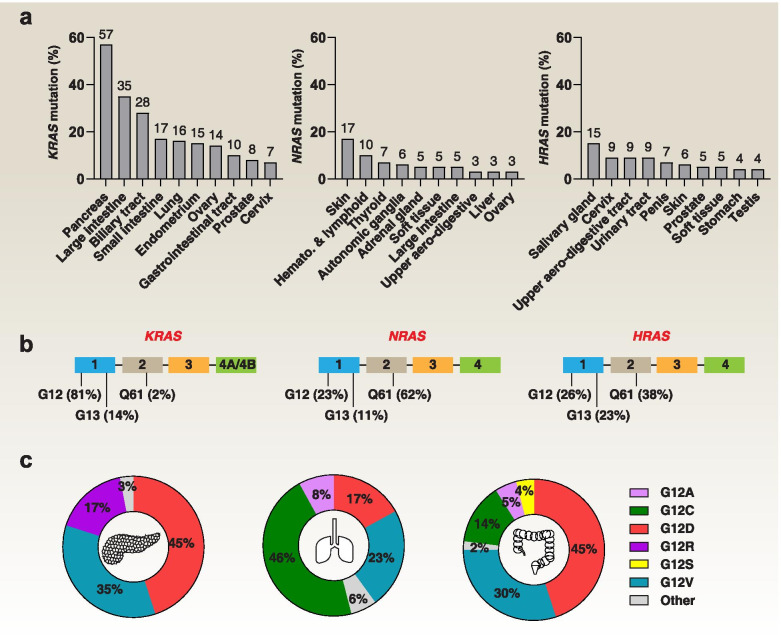
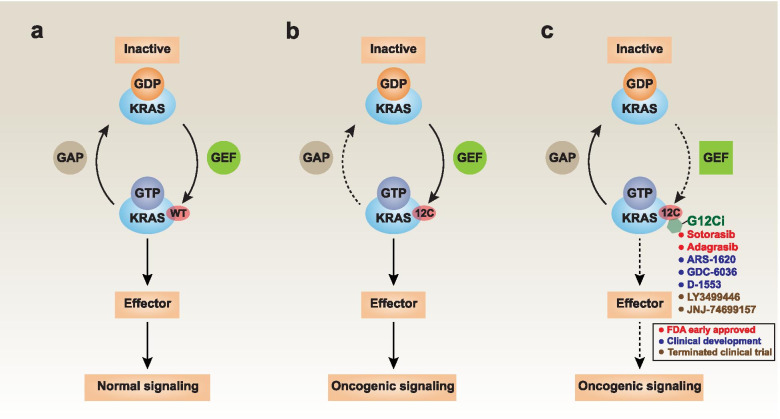
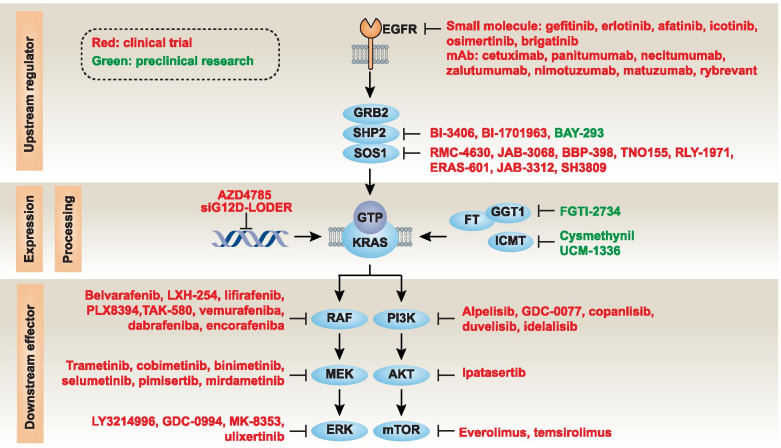
Across a broad range of human cancers, gain-of-function mutations in RAS genes (HRAS, NRAS, and KRAS) lead to constitutive activity of oncoproteins responsible for tumorigenesis and cancer progression. The targeting of RAS with drugs is challenging because RAS lacks classic and tractable drug binding sites. Over the past 30 years, this perception has led to the pursuit of indirect routes for targeting RAS expression, processing, upstream regulators, or downstream effectors. After the discovery that the KRAS-G12C variant contains a druggable pocket below the switch-II loop region, it has become possible to design irreversible covalent inhibitors for the variant with improved potency, selectivity and bioavailability. Two such inhibitors, sotorasib (AMG 510) and adagrasib (MRTX849), were recently evaluated in phase I-III trials for the treatment of non-small cell lung cancer with KRAS-G12C mutations, heralding a new era of precision oncology. In this review, we outline the mutations and functions of KRAS in human tumors and then analyze indirect and direct approaches to shut down the oncogenic KRAS network. Specifically, we discuss the mechanistic principles, clinical features, and strategies for overcoming primary or secondary resistance to KRAS-G12C blockade.
Overview
The claims and statistics of this paper haven’t been checked yet.
Free: it reads the open-access text and checks the first 5 claims that cite a source we can check. Create a free account to check every claim.
Integrity signals
Registry
Cites
Statistics
Figures
Verification
Claims the paper makes
The claims and statistics of this paper haven’t been checked yet.
Free: it reads the open-access text and checks the first 5 claims that cite a source we can check. Create a free account to check every claim.
Claims other papers make about this one
Each is checked against this paper’s own text: does it say what the citing paper says it does?
The cited source says what the claim attributes to it.
In the citing paper
“While these inhibitors are each approved against various malignancies, mutant KRAS is not typically a specific biomarker [45].”
From KRAS: Biology, Inhibition, and Mechanisms of Inhibitor Resistance (2024) · cites this paper as [45]
Self-check
Percentages, sums and reported differences re-computed from the paper’s own numbers.
The self-check needs the paper’s full text.
Citations
Cites
EGFR Mutation and Resistance of Non–Small-Cell Lung Cancer to Gefitinib
Kobayashi, S., Boggon, T. J., Dayaram, T., Jänne, P. A., Kocher, O., Meyerson, M., Johnson, B. E., Eck, M. J., Tenen, D. G., & Halmos, B. (2005) · New England Journal of Medicine · doi:10.1056/nejmoa044238 · Cited by 3,964
Moore, M. J., Goldstein, D., Hamm, J., Figer, A., Hecht, J. R., Gallinger, S., Au, H. J., Murawa, P., Walde, D., Wolff, R. A., et al. (2007) · Journal of Clinical Oncology · doi:10.1200/jco.2006.07.9525 · Cited by 3,848
K-ras Mutations and Benefit from Cetuximab in Advanced Colorectal Cancer
Karapetis, C. S., Khambata-Ford, S., Jonker, D. J., O'Callaghan, C. J., Tu, D., Tebbutt, N. C., Simes, R. J., Chalchal, H., Shapiro, J. D., Robitaille, S., et al. (2008) · New England Journal of Medicine · doi:10.1056/nejmoa0804385 · Cited by 3,622
Wild-Type KRAS Is Required for Panitumumab Efficacy in Patients With Metastatic Colorectal Cancer
Amado, R. G., Wolf, M., Peeters, M., Van Cutsem, E., Siena, S., Freeman, D. J., Juan, T., Sikorski, R., Suggs, S., Radinsky, R., et al. (2008) · Journal of Clinical Oncology · doi:10.1200/jco.2007.14.7116 · Cited by 3,207
K-Ras(G12C) inhibitors allosterically control GTP affinity and effector interactions
Ostrem, J. M., Peters, U., Sos, M. L., Wells, J. A., & Shokat, K. M. (2013) · Nature · doi:10.1038/nature12796 · Cited by 2,557
Distant metastasis occurs late during the genetic evolution of pancreatic cancer
Yachida, S., Jones, S., Bozic, I., Antal, T., Leary, R., Fu, B., Kamiyama, M., Hruban, R. H., Eshleman, J. R., Nowak, M. A., et al. (2010) · Nature · doi:10.1038/nature09515 · Cited by 2,502
The Clinical KRAS(G12C) Inhibitor AMG 510 Drives Anti-Tumour Immunity
Canon, J., Rex, K., Saiki, A. Y., Mohr, C., Cooke, K., Bagal, D., Gaida, K., Holt, T., Knutson, C. G., Koppada, N., et al. (2019) · Nature · doi:10.1038/s41586-019-1694-1 · Cited by 2,277
Panitumumab–FOLFOX4 Treatment and RAS Mutations in Colorectal Cancer
Douillard, J.-Y., Oliner, K. S., Siena, S., Tabernero, J., Burkes, R., Barugel, M., Humblet, Y., Bodoky, G., Cunningham, D., Jassem, J., et al. (2013) · New England Journal of Medicine · doi:10.1056/nejmoa1305275 · Cited by 2,263
A Comprehensive Survey of Ras Mutations in Cancer
Prior, I. A., Lewis, P. D., & Mattos, C. (2012) · Cancer Research · doi:10.1158/0008-5472.can-11-2612 · Cited by 2,063
Drugging the undruggable RAS: Mission Possible?
Cox, A. D., Fesik, S. W., Kimmelman, A. C., Luo, J., & Der, C. J. (2014) · Nature Reviews Drug Discovery · doi:10.1038/nrd4389 · Cited by 1,997
Cited by
Targeting RAS–RAF–MEK–ERK signaling pathway in human cancer: Current status in clinical trials
Song, Y., Bi, Z., Liu, Y., Qin, F., Wei, Y., & Wei, X. (2023) · Genes & Diseases · doi:10.1016/j.gendis.2022.05.006 · Cited by 212
RAS signaling in carcinogenesis, cancer therapy and resistance mechanisms
Yang, X., & Wu, H. K. (2024) · Journal of Hematology & Oncology · doi:10.1186/s13045-024-01631-9 · Cited by 146
Direct Targeting KRAS Mutation in Non-Small Cell Lung Cancer: Focus on Resistance
Reita, D., Pabst, L., Pencreach, E., Guérin, E., Dano, L., Rimelen, V., Voegeli, A.-C., Vallat, L., Mascaux, C., & Beau-Faller, M. (2022) · Cancers · doi:10.3390/cancers14051321 · Cited by 95
Dynamic regulation of RAS and RAS signaling
Kölch, W., Berta, D., & Rosta, E. (2023) · Biochemical Journal · doi:10.1042/bcj20220234 · Cited by 106
Unveiling the role of KRAS in tumor immune microenvironment
Xu, M., Zhao, X., Wen, T., & Qu, X. (2024) · Biomedicine & Pharmacotherapy · doi:10.1016/j.biopha.2023.116058 · Cited by 102
Digestive cancers: mechanisms, therapeutics and management
Zhan, T., Betge, J., Schulte, N., Dreikhausen, L., Hirth, M., Li, M., Weidner, P., Leipertz, A., Teufel, A., & Ebert, M. P. A. (2025) · Signal Transduction and Targeted Therapy · doi:10.1038/s41392-024-02097-4 · Cited by 100
KRAS mutation: The booster of pancreatic ductal adenocarcinoma transformation and progression
Zhang, Z., Zhang, H., Liao, X., & Tsai, H. (2023) · Frontiers in Cell and Developmental Biology · doi:10.3389/fcell.2023.1147676 · Cited by 82
“Most existing KRAS inhibitors, such as AMG510 (sotorasib) and MRTX849 (adagrasib), have shown effect in non-small cell lung cancer treatment (Tang et al., 2021), with limited effect on PDAC.”
BackgroundKRAS Mutation Subtypes and Their Association with Other Driver Mutations in Oncogenic Pathways
Mondal, K., Posa, M. K., Shenoy, R. P., & Roychoudhury, S. (2024) · Cells · doi:10.3390/cells13141221 · Cited by 69
“There are also MEK, ERK, AKT, and MTOR inhibitors [188].”
BackgroundInfluentialKRAS: Biology, Inhibition, and Mechanisms of Inhibitor Resistance
Ash, L. J., Busia-Bourdain, O., Okpattah, D., Kamel, A., Liberchuk, A., & Wolfe, A. L. (2024) · Current Oncology · doi:10.3390/curroncol31040150 · Cited by 68
“Sotorasib administration led to the tumor infiltration of CD8 T-cells, macrophages, and dendritic cells, which were further amplified by the combination with anti-PD-1 therapy.”
BackgroundGlimmers of hope for targeting oncogenic KRAS-G12D
Tang, D., & Kang, R. (2022) · Cancer Gene Therapy · doi:10.1038/s41417-022-00561-3 · Cited by 62
“These groundbreaking studies on KRAS-G12C inhibitors represent a breakthrough in oncoprotein-targeted therapy [9], although drug resistance remains a challenge [10].”
BackgroundSelf-citationResistance looms for KRAS G12C inhibitors and rational tackling strategies
Zhang, J., Zhang, J., Liu, Q., Fan, X., Leung, E. L., Yao, X., & Liu, L. (2021) · Pharmacology & Therapeutics · doi:10.1016/j.pharmthera.2021.108050 · Cited by 57
Targeting the RAS upstream and downstream signaling pathway for cancer treatment
Hossain, M. A. (2024) · European Journal of Pharmacology · doi:10.1016/j.ejphar.2024.176727 · Cited by 57
Overexpression of wild type RRAS2, without oncogenic mutations, drives chronic lymphocytic leukemia
Hortal, A. M., Oeste, C. L., Cifuentes, C., Alcoceba, M., Fernández‐Pisonero, I., Clavaín, L., Tercero, R., Mendoza, P., Domínguez, V., García‐Flores, M., et al. (2022) · Molecular Cancer · doi:10.1186/s12943-022-01496-x · Cited by 47
“This research together with the finding of the association of RRAS2 expression levels, and the SNP rs8570, with poorer prognosis in CLL could place RRAS2 both as a prognosis marker in different human cancers and as a molecular target for direct inhibitors, similarly to cancers with mutations in KRAS (reviewed in [53]).”
BackgroundNovel Inhibitor-Based Therapies for Thyroid Cancer—An Update
Ratajczak, M., Gaweł, D., & Godlewska, M. (2021) · International Journal of Molecular Sciences · doi:10.3390/ijms222111829 · Cited by 47
“Constitutively activated (mutated) GTP-bound RAS isoforms stimulate downstream effector pathways, even in the absence of extracellular stimuli (Figure 2) [45,46].”
BackgroundTargeting paraptosis in cancer: opportunities and challenges
Chen, F., Tang, H., Cai, X., Lin, J., Xiang, L., Kang, R., Liu, J., & Tang, D. (2024) · Cancer Gene Therapy · doi:10.1038/s41417-023-00722-y · Cited by 44
“These RAS-MAPK signaling pathways involve three successive kinases: MAPK kinase kinase (MAP3K), MAPK kinase (MAP2K), and MAPK [57, 58].”
Self-citationBaranyi, M., Molnár, E., Hegedüs, L., Gábriel, Z., Petenyi, F. G., Bordás, F., Lener, V., Ranđelović, I., Cserepes, M., Tóvári, J., et al. (2024) · British Journal of Cancer · doi:10.1038/s41416-024-02586-x · Cited by 43
“Finally, HRAS and KRAS CRISPR knockout sensitivity data was obtained from https://depmap.org.”
BackgroundGao, Z., Chen, J., Li, X.-G., Shi, Y., Tang, Z., Liu, W.-R., Zhang, X., Huang, A., Luo, X., Gao, Q., et al. (2022) · Cancer Cell International · doi:10.1186/s12935-022-02550-w · Cited by 41
“Among these mutations, point mutations in KRAS codon 12 are probably the most common event, which accounts for approximately 80% of KRAS mutation [21].”
BackgroundEmam, S. H., Hassan, R. A., Osman, E. O., Hamed, M. I. A., Abdou, A. M., Kandil, M. M., Elbaz, E. M., & Mikhail, D. S. (2023) · Drug Development Research · doi:10.1002/ddr.22037 · Cited by 40
“2023;84:433–457. wileyonlinelibrary.com/journal/ddr © 2023 Wiley Periodicals LLC. | 433 which can downregulate oncogene expression (Tang et al., 2021).”
BackgroundWu, S., Pan, R., Lu, J., Wu, X., Xie, J., Tang, H., & Li, X. (2022) · Frontiers in Oncology · doi:10.3389/fonc.2022.896927 · Cited by 38
Targeting macropinocytosis for cancer therapy
Tang, D., Wang, J., Kroemer, G., & Kang, R. (2025) · Nature reviews. Cancer · doi:10.1038/s41568-025-00892-x · Cited by 33
“Oncogenic mutations in the RAS gene family ( HRAS , NRAS and KRAS ) are among the most common drivers of tumorigenesis, particularly in pancreatic, lung and colorectal cancers 74 .”
Self-citationYang, P., Qiao, Y., Meng, M., & Zhou, Q. (2022) · Frontiers in Oncology · doi:10.3389/fonc.2022.864159 · Cited by 29
Driver Mutations in Pancreatic Cancer and Opportunities for Targeted Therapy
Olaoba, O. T., Adelusi, T. I., Yang, M. J., Maidens, T., Kimchi, E. T., Staveley-O’Carroll, K. F., & Li, G. (2024) · Cancers · doi:10.3390/cancers16101808 · Cited by 31
“…GDP that dampens the effective therapeutic efficacy of the targeting drugs due to the switching of the GDP to GTP that triggers KRAS activation [55], (5) the difficult SOS targeting due to its role in the switching of KRAS’s GDP and GTP modes and its role in other essential cellular processes,…”
BackgroundLuo, Y., Liu, X., Fang, L., Yu, H., Zhang, Y., Chen, M., Zhang, L.-D., & Xie, C. (2022) · Theranostics · doi:10.7150/thno.76873 · Cited by 28
“G12D is the most frequently observed mutation that leads to constitutive activation of Kras in cancer cells [26].”
SRC kinase drives multidrug resistance induced by KRAS-G12C inhibition
Song, X., Zhou, Z., Elmezayen, A., Wu, R., Yu, C., Gao, B., Minna, J. D., Westover, K. D., Zeh, H. J., Kroemer, G., et al. (2024) · Science Advances · doi:10.1126/sciadv.adq4274 · Cited by 26
Self-citationActivity and resistance to KRASG12C inhibitors in non-small cell lung cancer and colorectal cancer
Ye, W., Lu, X., Qiao, Y., & Ou, W. (2024) · Biochimica et Biophysica Acta (BBA) - Reviews on Cancer · doi:10.1016/j.bbcan.2024.189108 · Cited by 26
Zhang, S., Zhang, Y., Chen, X., Xu, J., Fang, H., Li, Y., Liu, Y., & He, H. (2022) · Journal of Medicinal Chemistry · doi:10.1021/acs.jmedchem.2c01517 · Cited by 22
Tsubaki, M., Takeda, T., Matsuda, T., Kishimoto, K., Takefuji, H., Taniwaki, Y., Ueda, M., Hoshida, T., Tanabe, K., & Nishida, S. (2023) · Cancer Cell International · doi:10.1186/s12935-023-02884-z · Cited by 23
“In addition, acquired resistance to sotorasib and adagrasib, KRAS G12C mutation inhibitors, was associated with KRAS secondary mutations, such as KRAS Y96D, Y96S, G13D, and A59S [29].”
BackgroundGadgeel, S. M., Miao, J., Riess, J. W., Moon, J., Mack, P. C., Gerstner, G. J., Burns, T. F., Taj, A., Akerley, W., Dragnev, K. H., et al. (2023) · Clinical Cancer Research · doi:10.1158/1078-0432.ccr-22-3947 · Cited by 22
Therapeutic Potential of Intrabodies for Cancer Immunotherapy: Current Status and Future Directions
Böldicke, T. W. (2022) · Antibodies · doi:10.3390/antib11030049 · Cited by 21
Bontoux, C., Hofman, V., Brest, P., Ilié, M., Mograbi, B., & Hofman, P. M. (2022) · Cancers · doi:10.3390/cancers14071628 · Cited by 20
Tsai, Y., Chang, H.-Y., Hong, W.-Z., Chen, J.-Y., Chiang, S., Lin, Y. E., Ke, T.-W., Huang, C.-H., Chen, T.-H., Jiang, Y., et al. (2025) · Cancer Letters · doi:10.1016/j.canlet.2025.218132 · Cited by 18
Chhichholiya, Y., Singh, H. V., Vashistha, R., Singh, S., & Munshi, A. (2023) · Critical Reviews in Oncology/Hematology · doi:10.1016/j.critrevonc.2023.104250 · Cited by 17
KRAS-targeted therapies in cancer: novel approaches and overcoming resistance
Tang, D., Kroemer, G., & Kang, R. (2025) · BMJ Oncology · doi:10.1136/bmjonc-2025-000946 · Cited by 16
“10 Historically, KRAS was considered undrug-gable due to its high affinity for GTP/GDP and lack of suitable binding pockets.”
Self-citationZhang, J., Liu, Z., Zhao, W., Li, C., Liu, F., & Wang, J. (2025) · Smart Medicine · doi:10.1002/smmd.70005 · Cited by 16
“The proliferation capacity of KRAS‐mutant hepatocellular carcinoma cells is notably enhanced [7, 8].”
Synthetic Vulnerabilities in the KRAS Pathway
Román, M., Hwang, E. E., & Sweet-Cordero, A. (2022) · Cancers · doi:10.3390/cancers14122837 · Cited by 16
Wang, K., Zhang, X., Fan, Y., Zhou, L. F., Duan, Y., Su, L., Sun, Z., Zhang, C., Yang, H., Yuan, W., et al. (2024) · Redox Biology · doi:10.1016/j.redox.2024.103419 · Cited by 15
Han, Z., Zhou, D., Wang, J., Jiang, B., & Liu, X. (2022) · Biochimica et Biophysica Acta (BBA) - Reviews on Cancer · doi:10.1016/j.bbcan.2022.188677 · Cited by 14
Wang, X., Breuer, J., Garbe, S., Giordano, F. A., Brossart, P., Feldmann, G., & Bisht, S. (2024) · International Journal of Molecular Sciences · doi:10.3390/ijms25116249 · Cited by 11
“Most existing KRAS G12C inhibitors such as Sotorasib or MRTX849 have shown remarkable efficacy in KRAS G12C driven cancers such as non-small cell lung cancer [21–24] but limited effect on PDAC due to the rare occurrence of G12C mutation cases.”
BackgroundPharmacokinetics, bioavailability, and tissue distribution of MRTX1133 in rats using UHPLC-MS/MS
Lu, W., Zeng, R., Pan, M., Zhou, Y., Tang, H., Shen, W., Tang, Y., & Pan, L. (2024) · Frontiers in Pharmacology · doi:10.3389/fphar.2024.1509319 · Cited by 9
The Nanotechnology-Based Approaches against Kirsten Rat Sarcoma-Mutated Cancers
Andrade, F., German-Cortés, J., Montero, S., Carcavilla, P., Baranda-Martínez-Abascal, D., Moltó‐Abad, M., Seras‐Franzoso, J., Díaz‐Riascos, Z. V., Rafael, D. F. D. S., & Abasolo, I. (2023) · Pharmaceutics · doi:10.3390/pharmaceutics15061686 · Cited by 9
Gunji, D., Narumi, R., Muraoka, S., Isoyama, J., Ikemoto, N., Ishida, M., Tomonaga, T., Sakai, Y., Obama, K., & Adachi, J. (2023) · Molecular Omics · doi:10.1039/d3mo00042g · Cited by 8
Signalling in pancreatic cancer: from pathways to therapy
Zhou, K., Liu, Y., Yuan, S., Zhou, Z., Ji, P., Huang, Q., Wen, F., & Li, Q. (2023) · Journal of drug targeting · doi:10.1080/1061186x.2023.2274806 · Cited by 8
“…indicated that the KRAS-G12c variant contained a drug pocket below the Switch ii loop region, which led to a paradigm shift in the design of irreversible covalent inhibitors with improved potency, selectivity, and bioavailability [28]. two KRAS-G12c inhibitors, sotorasib, and adagrasib stood out.”
BackgroundDifferential Response and Resistance to KRAS-Targeted Therapy
Liu, Z., Lenz, H., Yu, J., & Zhang, L. (2025) · Molecular Carcinogenesis · doi:10.1002/mc.23908 · Cited by 7
“Understanding how specific genetic alterations in the resistance to KRAS inhibitors will be beneficial for improved targeting of KRAS ‐ mutant cancers [63].”
The Persistent Power of the Taxane/Platin Chemotherapy
Xu, L. B., Smith, E. R., Koutouratsas, V., Chen, Z., & Xu, X.-X. (2025) · Cancers · doi:10.3390/cancers17071208 · Cited by 7
Huang, Y., Zheng, D., Zhou, Z., Wang, H., Li, Y., Zheng, H., Tan, J., Wu, J., Yang, Q., Tian, H., et al. (2024) · Frontiers in Oncology · doi:10.3389/fonc.2024.1345737 · Cited by 6
“Besides, the direct blockade therapy of KRAS gradually set off a research boom since the aggressive development of storasib and adagrasib (31).”
BackgroundSynthetic approaches and clinical application of KRAS inhibitors for cancer therapy
Jiang, M., Ma, S., Xuan, Y., & Chen, K. (2025) · European Journal of Medicinal Chemistry · doi:10.1016/j.ejmech.2025.117626 · Cited by 6
Reprogramming tumor-associated macrophages: The role of MEK-STAT3 inhibition in lung cancer
Rawat, S., Moglad, E. H. O., Afzal, M., Goyal, A., Roopashree, R., Bansal, P., Mishra, S., Prasad, G. V. S., Pramanik, A., Alzarea, S. I., et al. (2024) · Pathology - Research and Practice · doi:10.1016/j.prp.2024.155748 · Cited by 6
KRAS Q61H Mutation Confers Cancer Cells with Acquired Resistance to SHP2 Inhibition
Song, Y., Yang, X., & Yu, B. (2022) · Pharmaceutical Fronts · doi:10.1055/s-0042-1743411 · Cited by 6
Gong, S., Hu, X., Chen, S., Sun, B., Wu, J., & Li, N. (2022) · Medicinal Research Reviews · doi:10.1002/med.21889 · Cited by 6
“The arrival of sotorasib,(7) the first marketed KRAS covalent inhibitor, and adagrasib, evaluated in phase I‐III clinical trials make the “undruggable” property of KRAS a history.(8) In addition, masked nitrile‐oxide electrophiles might covalently target “undruggable” GPX4 and equip it with anticancer activities via f…”
BackgroundCai, C.-Z., Wu, Y., Feng, X., Ye, X., Liu, P., Huang, X., Li, Z., & Xu, Z. (2025) · Applied Biochemistry and Biotechnology · doi:10.1007/s12010-024-05171-3 · Cited by 5
Jung, O., Soto, A., Wolfe, A. L., & Mahajan, S. S. (2025) · PLoS ONE · doi:10.1371/journal.pone.0329946 · Cited by 5
“KRAS mutations enable cancer cells to proliferate by maintaining a higher proportion of KRAS in the active GTP-bound state [28].”
143D, a novel selective KRASG12C inhibitor exhibits potent antitumor activity in preclinical models
Xu, L., Zheng, S.-X., Mei, L., Yang, K., Wang, Y., Zhou, Q., Kong, X., Zheng, M.-Y., Jiang, H., & Xie, C. (2023) · Acta Pharmacologica Sinica · doi:10.1038/s41401-023-01053-2 · Cited by 5
“Vertical pathway inhibition led to sustained RAS pathway suppression and enhanced the efficacy of KRAS inhibitors in KRAS-mutant cancer models [28, 37, 38].”
BackgroundPan, L., Shen, W., Tang, H., You, L., Chen, G., Tang, Y., & Lu, W. (2024) · Drug Design Development and Therapy · doi:10.2147/dddt.s437293 · Cited by 5
NPS ‐2143 inhibit glioma progression by suppressing autophagy through mediating AKT–mTOR pathway
Nie, J., Li, Q., Yin, H., Yang, J., Li, M., Li, Q., Fan, X., Zhao, Q., & Wen, Z. (2024) · Journal of Cellular and Molecular Medicine · doi:10.1111/jcmm.18221 · Cited by 5
Shuai, T., Zhang, R., Yuan, Z.-H., Zhang, M., Fan, Z., Ruan, X., Qi, Z., Xie, W., Liu, P., Uesugi, M., et al. (2025) · Journal of Medicinal Chemistry · doi:10.1021/acs.jmedchem.5c01365 · Cited by 4
Lv, Y., Zhao, Z., Di, W., Liu, L., Chen, Y., Wei, S., Ji, Y., & Zhong, J. (2026) · Critical Reviews in Oncology/Hematology · doi:10.1016/j.critrevonc.2026.105150 · Cited by 4
A human pan-cancer system analysis of regulator of chromatin condensation 2
Gong, S., Wu, H., Wu, C., Duan, Y., Zhang, B., Wu, P., Tang, J., & Fu, J. (2023) · Heliyon · doi:10.1016/j.heliyon.2023.e13599 · Cited by 4
“The roles of E2F and KRAS in cancer have been extensively studied [45,46].”
BackgroundGain-of-Function Variomics and Multi-omics Network Biology for Precision Medicine
Li, M. M., Awasthi, S., Ghosh, S. K., Bisht, D., Coban‐Akdemir, Z., Sheynkman, G., Sahni, N., & Yi, S. S. (2023) · Methods in molecular biology · doi:10.1007/978-1-0716-3163-8_24 · Cited by 5
Zhang, Y., Zeng, F., Peng, S., Chen, Y., Jiang, W., Wang, Z., Li, D., Huang, Z., Qin, H., Yan, H., et al. (2023) · Expert Review of Respiratory Medicine · doi:10.1080/17476348.2023.2265810 · Cited by 4
“One of the main challenges is that the KRAS protein has a smooth and round shape with no obvious binding site for drugs to attach and block its activity [47–49].”
BackgroundChanges of gonadotropin receptors and Ras subfamily genes during maturation in porcine cumulus cells
Nam, Y., Cheong, H.-T., & Lee, S. (2016) · Journal of Animal Reproduciton and Biotechnology · doi:10.12750/jarb.40.1.50 · Cited by 3
Zhang, Y., Tong, S., & Wan, L. (2025) · Expert Opinion on Drug Safety · doi:10.1080/14740338.2025.2499219 · Cited by 3
KRAS inhibitors in drug resistance and potential for combination therapy
Rathod, L. S., Sakle, N. S., & Mokale, S. N. (2024) · Tumori Journal · doi:10.1177/03008916241289206 · Cited by 3
“55,56 57-59 Emerging preclinical and clinical trial have revealed different potential pathways through which resistance may arise, such as innate, acquired, and adaptive tumor responses that override the effectiveness of KRAS G12C inhibitors.”
Jiang, Y.-H., Wu, S., Wang, Z., Zhang, L., Zhang, J., Li, Y., Liu, C., Wu, W., & Xue, Y. (2022) · Experimental and Therapeutic Medicine · doi:10.3892/etm.2022.11684 · Cited by 3
Bispecific T cell engagers kill resistant cells during KRAS-G12C blockade therapy
Song, X., Zhou, Z., Kang, R., & Tang, D. (2022) · OncoImmunology · doi:10.1080/2162402x.2022.2141978 · Cited by 3
“Currently, preclinical studies offer strategies to overcome G12Ci resistance, most of which use chemotherapy or antibodies to target tumor growth-related signaling pathways.(4) A key unanswered question is how to design specific immunotherapies to enhance the effects of G12Ci? In fact, several clinical trials are eval…”
BackgroundSelf-citationSynergetic photoimmunotherapy with dual-inhibition of EZH2/Akt
Feng, Z., Yuan, Q., Liu, Q., Wang, X., Wang, Y., Wang, J., & Chen, X. (2026) · New Journal of Chemistry · doi:10.1039/d5nj04814a · Cited by 2
From G12C To pan-RAS: The expanding therapeutic landscape of KRAS-mutant NSCLC
Canaslan, K., Başbınar, Y., & Öztop, İ. (2026) · Critical Reviews in Oncology/Hematology · doi:10.1016/j.critrevonc.2026.105344 · Cited by 3
Identification of KRAS mutants (G12C, G12D, and G12V) inhibitors
Yadav, V., Kashif, M., Kamalia, Z., Vikas, Santhipriya, P. R., Gourinath, S., Mondal, N., & Subbarao, N. (2025) · Future Medicinal Chemistry · doi:10.1080/17568919.2025.2557177 · Cited by 2
Subgrouping testicular germ cell tumors based on immunotherapy and chemotherapy associated lncRNAs
Cao, J., Liu, Z., Yuan, J., Luo, Y., Wang, J., Liu, J., Hao, B., & Guo, J. (2024) · Heliyon · doi:10.1016/j.heliyon.2024.e24320 · Cited by 2
“KRAS gene mutation can cause the body to lose GTP hydrolase activity, and its carcinogenic effect mainly affects the growth and proliferation of cells [34].”
BackgroundRecent highlights in covalent inhibitor design
Marino, K. A., Nicewonger, R., Zhang, H., & Thorarensen, A. (2025) · Elsevier eBooks · doi:10.1016/b978-0-443-29808-0.00010-8 · Cited by 1
Small-molecule RAS/RAF inhibitors target RAS-driven cancers via allosteric RAF disruption
Yoshikawa, Y., Kubota, H., Matsumoto, S., Makino, Y., Kawamura, T., Yuki, H., Sakai, N., Shibaike, A., Okamura, M., Fujimoto-Sakisaka, W., et al. (2026) · Nature Communications · doi:10.1038/s41467-026-76337-2 · Cited by 1
“Researchers have also focused on targeting other important downstream molecules in the RAS signalling pathway, such asRAF and MEK (MAPK/ERK kinase) 8,9 .”
InfluentialKRAS G12C-Mutant Non-Small-Cell Lung Adenocarcinoma: First Documented Report in the Arabian Gulf
Alsulaiman, A. S., Alharthi, S. B., Albariqi, A. S., Mutabaqani, R. A., Bokhari, F. F., Tayeb, I. M., Alharthi, D. R., Tariq, M. U., & Babaier, Y. H. (2022) · Cureus · doi:10.7759/cureus.27090
“Other TKIs are still being explored and tested in clinical trials, whereas adagrasib works similarly [34,35].”
BackgroundZhou, Y., Chai, S., Chen, Y., & Guo, P. (2023) · Research Square · doi:10.21203/rs.3.rs-3503267/v1
Quantification of VT204 in rat plasma by LC-MS/MS and its pharmacokinetic study
Yang, X. (2023) · International Journal of Frontiers in Medicine · doi:10.25236/ijfm.2023.051102
Covalent Inhibitors of MAP Kinases
De, S. K. (2024) · Springer eBooks · doi:10.1007/978-3-031-75682-5_5
Yang, W., Yoshida, S., Zhao, J., Wu, W. D., & Qiang, Y. (2025) · Quantitative Imaging in Medicine and Surgery · doi:10.21037/qims-24-1370
“…of the most commonly mutated genes in non-small cell lung cancer (NSCLC) (5,6), can activate the RAS/MAPK signaling pathway through the conversion of its amino acid residue at position 12 from glycine (G) to cysteine (C) (7), which then promotes the proliferation and metastasis of tumor cells (8).”
Association between KRAS Gene rs61764370 Polymorphism and Risk of developing Hashimoto's Thyroiditis
Keikha, N., & Saravani, M. (2024) · Scientific Journal of Kurdistan University of Medical Sciences · doi:10.61186/sjku.29.1.1
Tsubaki, M., Takeda, T., Matsuda, T., Kishimoto, K., Takefuji, H., Taniwaki, Y., Ueda, M., Hoshida, T., Tanabe, K., & Nishida, S. (2023) · Figshare · doi:10.6084/m9.figshare.22649227
Tsubaki, M., Takeda, T., Matsuda, T., Kishimoto, K., Takefuji, H., Taniwaki, Y., Ueda, M., Hoshida, T., Tanabe, K., & Nishida, S. (2023) · Figshare · doi:10.6084/m9.figshare.22649233
Anand, R., Kaliyamoorthy, S., Boopathy, V., Ramasamy, J., & Sambandam, R. (2026) · Exploration of Immunology · doi:10.37349/ei.2026.1003252
SNU523 Inhibits Pancreatic Cancer through the Dual Suppression of STAT3 and MEK Signaling Pathways
Kim, S., Wang, W., Oh, E., Roh, E., Cho, Y., Han, S., & Kang, H. (2026) · ACS Omega · doi:10.1021/acsomega.6c01271
Advances in KRASG12D-targeted therapy: from small-molecule inhibitors to PROTACs and molecular glues
Hao, S., Niu, T., Wu, X., Mu, C., Wang, M., Liu, H., & 路海滨 (2026) · Bioorganic Chemistry · doi:10.1016/j.bioorg.2026.110633
BindingDB (2026) · UC San Diego · doi:10.7270/q27p94b7
Huang, Y., Zheng, D., Zhou, Z., Wang, H., Li, Y., Zheng, H., Tan, J., Wu, J., Yang, Q., Tian, H., et al. (2024) · doi:10.3389/fonc.2024.1345737.s001
Wu, S., Pan, R., Lu, J., Wu, X., Xie, J., Tang, H., & Li, X. (2022) · doi:10.3389/fonc.2022.896927.s001
Metadata
- Authors
- Tang, D., Kroemer, G., & Kang, R.
- Affiliations
- Third Affiliated Hospital of Guangzhou Medical University (CN)
- Inserm (FR)
- The University of Texas Southwestern Medical Center (US)
- Corresponding author
- Tang, Daolin
- Kroemer, Guido
- Kang, Rui
- Venue
- Molecular Cancer
- Published
- 2021-10-04
- Volume
- 20
- Issue
- 1
- Pages
- 128-128
- ISSN
- 1476-4598 (ISSN-L)
- PMC
- PMC8489073
- OpenAlex
- W3202794981
- Cited by
- 80
- References
- 211
- Citations by year
- 2026: 8 · 2025: 13 · 2024: 21 · 2023: 17 · 2022: 18 · 2021: 2
- FWCI
- 1.55
- Type
- journal article
- Language
- en
- Open access
- gold
- doi.org
- Licence
- cc-by
- creativecommons.org/licenses/by/4.0 (tdm)
- creativecommons.org/licenses/by/4.0 (vor)
- Locations
- Molecular Cancer (publishedVersion, cc-by)
- Europe PMC (PubMed Central) (publishedVersion, other-oa)
- PubMed Central (publishedVersion, cc-by)
- PubMed (publishedVersion)
- DOAJ (DOAJ: Directory of Open Access Journals) (submittedVersion, cc-by-sa)
- Funders
- National Cancer Institute (R01CA211070)
- Topics
- Life Sciences › Biochemistry, Genetics and Molecular Biology › Molecular Biology › Protein Kinase Regulation and GTPase Signaling
- Health Sciences › Medicine › Pulmonary and Respiratory Medicine › Lung Cancer Treatments and Mutations
- Life Sciences › Biochemistry, Genetics and Molecular Biology › Molecular Biology › Melanoma and MAPK Pathways
- Keywords
- KRAS, KRAS G12C mutation, oncogenic Ras, KRAS inhibitors, sotorasib, adagrasib, non-small cell lung cancer, drug resistance, precision oncology
- MeSH terms
- Antineoplastic Combined Chemotherapy Protocols, Clinical Trials as Topic, Disease Susceptibility, Humans, Mutation, Neoplasms, Prognosis, Biomarkers, Tumor, Proto-Oncogene Proteins p21(ras), Treatment Outcome, Disease Management, Protein Kinase Inhibitors, Molecular Targeted Therapy
About these checks
Registry, retraction, Cites and statistics results are computed, not judged, with one exception: a printed reference that no index lists is read once by a model before it counts as a citation error. Claims are extracted by a model and kept only when their quote appears verbatim in the text; each cited source is then checked, with a model’s help, for whether it says what the claim relies on. Those verdicts can be wrong — read the claim’s quote and the cited source before relying on one.
Statistics and arithmetic are recomputed, not judged.
Confidence bands are shown only for fields calibrated on our annotated test set. None is calibrated yet, so no band is shown.
What counts as a claim ›How we measure confidence ›How we check this ›
Are you an author, or do you see a problem with this page? Request a review
Data sources
Bibliographic data: Semantic Scholar, OpenAlex, Crossref.
Contains information from the Semantic Scholar Academic Graph Datasets, made available under the ODC Attribution License (ODC-BY 1.0).
Semantic Scholar’s data is described in: Kinney, R., et al. (2023). The Semantic Scholar Open Data Platform. arXiv:2301.10140.
