

Extracellular matrix remodeling in tumor progression and immune escape: from mechanisms to treatments
Open accessThe DOI matches its Crossref record; 626 of the 626 references it cites were found in a registry or an index.
Abstract
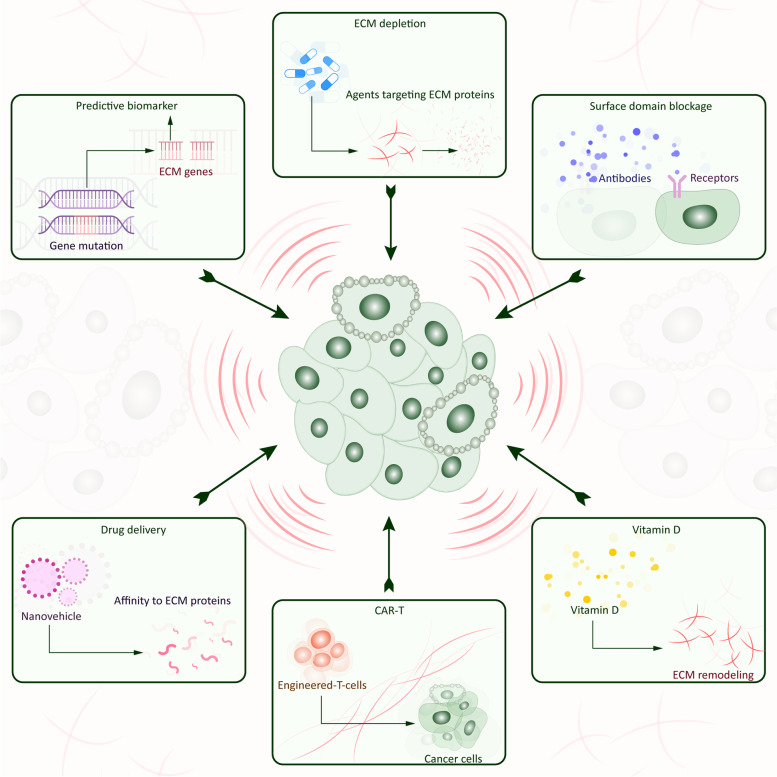
The malignant tumor is a multi-etiological, systemic and complex disease characterized by uncontrolled cell proliferation and distant metastasis. Anticancer treatments including adjuvant therapies and targeted therapies are effective in eliminating cancer cells but in a limited number of patients. Increasing evidence suggests that the extracellular matrix (ECM) plays an important role in tumor development through changes in macromolecule components, degradation enzymes and stiffness. These variations are under the control of cellular components in tumor tissue via the aberrant activation of signaling pathways, the interaction of the ECM components to multiple surface receptors, and mechanical impact. Additionally, the ECM shaped by cancer regulates immune cells which results in an immune suppressive microenvironment and hinders the efficacy of immunotherapies. Thus, the ECM acts as a barrier to protect cancer from treatments and supports tumor progression. Nevertheless, the profound regulatory network of the ECM remodeling hampers the design of individualized antitumor treatment. Here, we elaborate on the composition of the malignant ECM, and discuss the specific mechanisms of the ECM remodeling. Precisely, we highlight the impact of the ECM remodeling on tumor development, including proliferation, anoikis, metastasis, angiogenesis, lymphangiogenesis, and immune escape. Finally, we emphasize ECM "normalization" as a potential strategy for anti-malignant treatment.
Overview
The claims and statistics of this paper haven’t been checked yet.
Free: it reads the open-access text and checks the first 5 claims that cite a source we can check. Create a free account to check every claim.
Integrity signals
Registry
Cites
Statistics
Figures
Verification
Claims the paper makes
The claims and statistics of this paper haven’t been checked yet.
Free: it reads the open-access text and checks the first 5 claims that cite a source we can check. Create a free account to check every claim.
Claims other papers make about this one
Each is checked against this paper’s own text: does it say what the citing paper says it does?
The cited source says what the claim attributes to it.
In the citing paper
“inhibiting lysyl oxidase (LOX) family enzymes, which are involved in the crosslinking of ECM proteins collagen and elastin, can reduce matrix stiffness and improve drug delivery to tumor cells [219].”
From Mechanisms and Strategies to Overcome Drug Resistance in Colorectal Cancer (2025) · cites this paper as [219]
Self-check
Percentages, sums and reported differences re-computed from the paper’s own numbers.
The self-check needs the paper’s full text.
Citations
Cites
2 retracted
Items 401–600 of 626
Bourguignon, L. (2019) · Frontiers in Oncology · doi:10.3389/fonc.2019.00492 · Cited by 63 · cited 15×
“Interferon regulatory factor 8 (IRF8) transcriptionally suppress secreted OPN expression in CD11b+Ly6ClowLy6G+ myeloid cells, which caused decreased interaction between OPN and CD44 receptor in T cell and suppresses immune escape in colon cancer [524].”
BackgroundInfluentialMetabolic reprogramming sustains cancer cell survival following extracellular matrix detachment
Endo, H., Owada, S., Inagaki, Y., Shida, Y., & Tatemichi, M. (2020) · Redox Biology · doi:10.1016/j.redox.2020.101643 · Cited by 62 · cited 1×
“In cancer, the sustaining of proliferation of detached cells depends on AMPK/ Nrf2-induced glutamine metabolism when detached from ECM [296].”
BackgroundArnold, J. M., Gu, F., Ambati, C. R., Rasaily, U., Ramirez‐Peña, E., Joseph, R., Manikkam, M., Martin, R. S., Charles, C., Pan, Y., et al. (2019) · Oncogene · doi:10.1038/s41388-019-0885-4 · Cited by 62 · cited 1×
“Glycolytic enzyme uridine diphosphate (UDP)-glucose 6-dehydrogenase in cancer promotes the secretion of HA during the EMT process [279].”
BackgroundYang, C., Cheng, L., Zhang, P., Wu, W., & Jiang, X. (2017) · Theranostics · doi:10.7150/thno.18340 · Cited by 62 · cited 1×
“Overexpression of RHAMM, the specific receptor of HA, in cancer cells also provides a perfect target for HA nanogels [599].”
BackgroundLiang, Y., Xia, W., Zhang, T., Chen, B., Wang, H., Song, X., Zhang, Z., Xu, L., Dong, G., & Jiang, F. (2020) · Frontiers in Oncology · doi:10.3389/fonc.2020.573534 · Cited by 62 · cited 1×
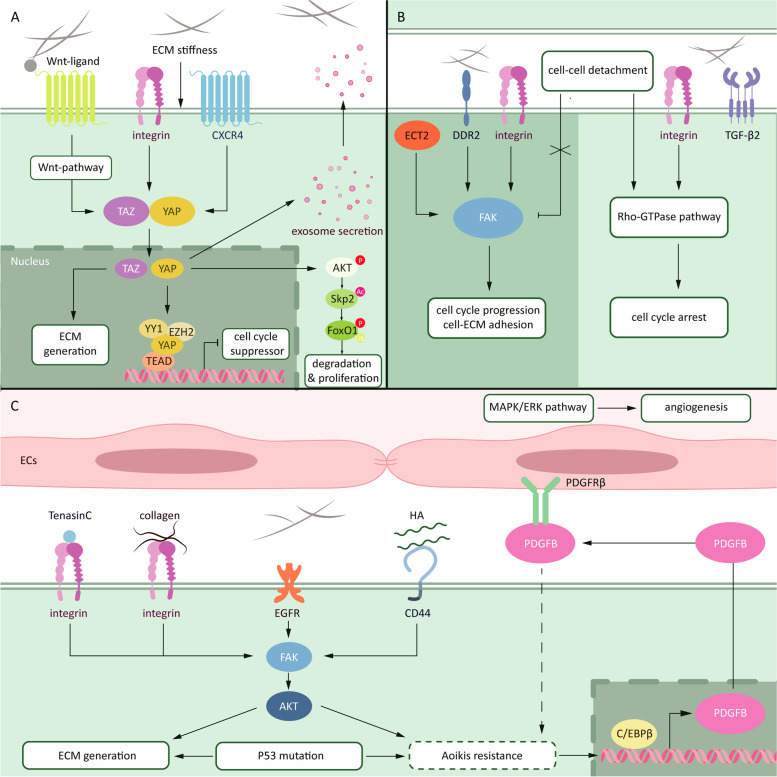
“Moreover, epithelial cell transforming sequence 2 (ECT2)/FAK and collagen type X alpha 1(COL10A1)/discoid protein domain receptor 2 (DDR2)/ FAK pathways contribute to the proliferation and adhesion on ECM of lung adenocarcinoma cells [160, 161].”
BackgroundSelf-citationModulating Microtubule Stability Enhances the Cytotoxic Response of Cancer Cells to Paclitaxel
Ahmed, A. A., Wang, X., Lü, Z., Goldsmith, J., Le, X., Grandjean, G. V., Bartholomeusz, G. A., Broom, B. M., & Bast, R. C. (2011) · Cancer Research · doi:10.1158/0008-5472.can-11-0025 · Cited by 61 · cited 1×
“Some researchers consider that TGFBI is a tumor suppressor because of the deficiency of TGFBI favors tumor formation [259], and high expression of TGFBI in tumor is associated with optimal chemotherapy sensitivity [260, 261].”
BackgroundSelf-citationCastro‐Sánchez, L., Soto-Guzmán, A., Guaderrama-Díaz, M., Cortés‐Reynosa, P., & Salazar, E. P. (2011) · Clinical & Experimental Metastasis · doi:10.1007/s10585-011-9385-9 · Cited by 60 · cited 1×
“Collagen IV binds with DDR1 and mediates Src-dependent MMP2/9 secretion in TNBC invasion [359] and EMT in epithelial breast cell line [360].”
BackgroundZhou, B., Zong, S., Zhong, W., Tian, Y., Wang, L., Zhang, Q., Zhang, R., Li, L., Wang, W., Zhao, J., et al. (2019) · Oncogene · doi:10.1038/s41388-019-1082-1 · Cited by 60 · cited 2×
“Mechanistically, LN-5γ2 interacts with β1 integrin to stimulate FAK and YAP activation in colorectal cancer [333], while increases density of stromal myofibroblasts in oral squamous cell carcinoma [335].”
BackgroundIntraductal xenografts show lobular carcinoma cells rely on their own extracellular matrix and LOXL1
Sflomos, G., Battista, L., Aouad, P., Martino, F. D., Scabia, V., Stravodimou, A., Ayyanan, A., Ifticene‐Treboux, A., RLS, Bücher, P., et al. (2021) · EMBO Molecular Medicine · doi:10.15252/emmm.202013180 · Cited by 60 · cited 2×
“Several research has proved that BANP treatment can suppress proliferation and invasion of tumor cells [395, 566, 567].”
BackgroundBradshaw, A. D. (2015) · Journal of Molecular and Cellular Cardiology · doi:10.1016/j.yjmcc.2015.11.014 · Cited by 59
The lymphatic vasculature: An active and dynamic player in cancer progression
Rezzola, S., Sigmund, E. C., Halin, C., & Ronca, R. (2021) · Medicinal Research Reviews · doi:10.1002/med.21855 · Cited by 59 · cited 1×
“Factors and signaling pathways associated with lymphatic formation have been introduced whereas ECM role in lymphangiogenesis is unclear [436].”
BackgroundLiu, G., Wang, B., Li, S., Jin, Q., & Dai, Y. (2019) · Journal of Cellular Physiology · doi:10.1002/jcp.27630 · Cited by 59 · cited 1×
“When cellular components are eliminated, acellular scaffolds are sufficient to promote EMT and invasion of breast cancer [239, 240].”
BackgroundPlectin is a regulator of prostate cancer growth and metastasis
Buckup, M., Rice, M. A., Hsu, E.-C., Garcia-Marques, F., Liu, S., Aslan, M., Bermudez, A., Huang, J., Pitteri, S. J., & Stoyanova, T. (2021) · Oncogene · doi:10.1038/s41388-020-01557-9 · Cited by 59 · cited 1×
“Prostate cancer Plectin Plectin Knock-down impairs cell growth and metastasis [213]”
BackgroundSyndecan-1 induction in lung microenvironment supports the establishment of breast tumor metastases
Chute, C. L., Yang, X., Meyer, K. K., Yang, N., O’Neil, K., Kasza, I., Eliceiri, K. W., Alexander, C. M., & Friedl, A. (2018) · Breast Cancer Research · doi:10.1186/s13058-018-0995-x · Cited by 59 · cited 1×
“Lung fibroblast expressed syndecan-1 promotes breast cancer lung metastasis, implying the pro-oncogenic role of this glycoprotein in ECM [185].”
BackgroundCrosstalk Between Cancer Associated Fibroblasts and Cancer Cells in Scirrhous Type Gastric Cancer
Miki, Y., Yashiro, M., Moyano‐Galceran, L., Sugimoto, A., Ohira, M., & Lehti, K. (2020) · Frontiers in Oncology · doi:10.3389/fonc.2020.568557 · Cited by 59 · cited 1×
“Precisely, TAMs can regulate collagen production by stimulating CAFs [73, 74].”
BackgroundA Hydrogel-Integrated Culture Device to Interrogate T Cell Activation with Physicochemical Cues
Chin, M. H. W., Norman, M. D. A., Gentleman, E., Coppens, M.-O., & Day, R. M. (2020) · ACS Applied Materials & Interfaces · doi:10.1021/acsami.0c16478 · Cited by 58
Liu, C.-C., Lin, S.-P., Hsu, H., Yang, S., Lin, C.-H., Yang, M., Hung, M., & Hung, S. (2016) · Nature Communications · doi:10.1038/ncomms11798 · Cited by 58 · cited 1×
“Suppression of phosphatases also contributes to the inhibition of collagen generation, highlights the critical role of posttranslational modification of collagen [194].”
BackgroundSelf-citationJung, W.-H., Yam, N., Chen, C.-C., Elawad, K., Hu, B., & Chen, Y. (2020) · Biomaterials · doi:10.1016/j.biomaterials.2020.119756 · Cited by 58
Blocking CLEC14A-MMRN2 binding inhibits sprouting angiogenesis and tumour growth
Noy, P. J., Lodhia, P., Khan, K. A., Zhuang, X. A., Ward, D. G., Verissimo, A. R., Bacon, A., & Bicknell, R. (2015) · Oncogene · doi:10.1038/onc.2015.34 · Cited by 58 · cited 1×
“The expression of matrix protein CLEC14A combines with MMRN2 and reactivate angiogenesis in cancer [429, 430].”
BackgroundBahçecioğlu, G., Yue, X. S., Howe, E. N., Guldner, I. H., Stack, M. S., Nakshatri, H., Zhang, S., & Zorlutuna, P. (2021) · Advanced Science · doi:10.1002/advs.202100128 · Cited by 58 · cited 1×
“Aged ECM transplantation also stimulates oncogenesis in breast cancer [316].”
BackgroundSelf-citationJúnior, H. M., Rocha, V. N., Leite, C. F., de Aguiar, M. C. F., Souza, P. E. A., & Horta, M. C. R. (2013) · Journal of Oral Pathology and Medicine · doi:10.1111/jop.12121 · Cited by 58 · cited 1×
“Mechanistically, LN-5γ2 interacts with β1 integrin to stimulate FAK and YAP activation in colorectal cancer [333], while increases density of stromal myofibroblasts in oral squamous cell carcinoma [335].”
BackgroundGraf, F., Horn, P., Ho, A. D., Boutros, M., & Maercker, C. (2021) · The FASEB Journal · doi:10.1096/fj.202002558rr · Cited by 58 · cited 1×
“Bone-derived mesenchymal stromal cells (MSCs) secreted ECM components contribute to the metastasis [376].”
BackgroundWang, H., Ren, R., Yang, Z., Cai, J., Du, S., & Shen, X. (2021) · Journal of Cancer · doi:10.7150/jca.47032 · Cited by 58 · cited 21×
“These results depict a distinguish role of collagen in PDAC compared to other cancers.”
BackgroundInfluentialStrategies to enhance monoclonal antibody uptake and distribution in solid tumors
Bordeau, B. M., & Balthasar, J. P. (2021) · Cancer Biology and Medicine · doi:10.20892/j.issn.2095-3941.2020.0704 · Cited by 58 · cited 1×
“Angiogenesis is the process to form new blood vessels from pre-existing vessels, and it is essential to provide nutrients and oxygen for promoting tumor growth and hematogenous metastasis [409].”
BackgroundXi, G., Qiu, L., Xu, S., Guo, W., Fu, F., Kang, D., Zheng, L., He, J., Zhang, Q., Li, L., et al. (2021) · BMC Medicine · doi:10.1186/s12916-021-02146-7 · Cited by 58 · cited 1×
“The organization of collagen, the most prevalent component in ECM, is critical for cancer progression [305, 306].”
BackgroundSong, J., Chen, W., Cui, X., Huang, Z., Wen, D., Yang, Y., Yu, W., Cui, L., & Liu, C. (2020) · Theranostics · doi:10.7150/thno.39740 · Cited by 58 · cited 7×
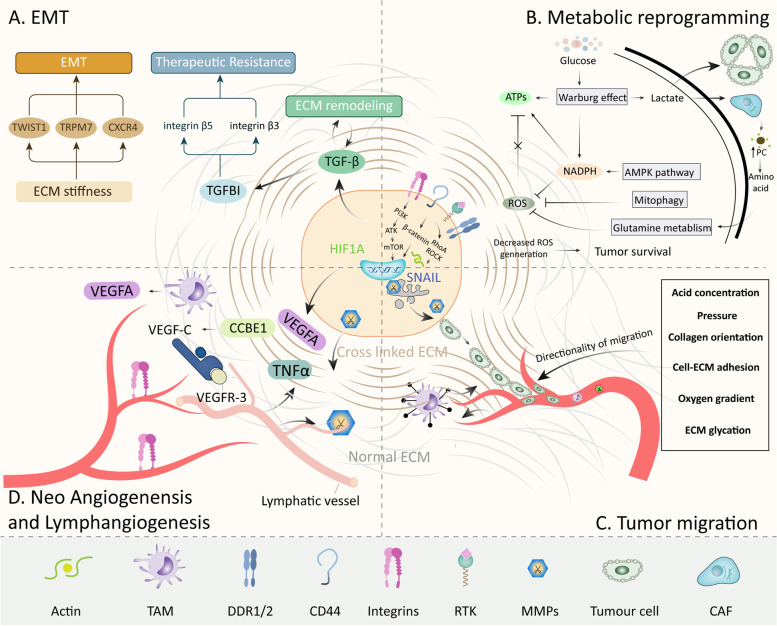
“Indeed, both cancer- and CAF-secreted CCBE1 mediates activation of VEGF-C within ECM and induce lymphangiogenesis and tumor progression [451].”
BackgroundInfluentialHic-5 remodeling of the stromal matrix promotes breast tumor progression
Goreczny, G. J., Ouderkirk, J. L., Olson, E. C., Krendel, M., & Turner, C. E. (2016) · Oncogene · doi:10.1038/onc.2016.422 · Cited by 57 · cited 1×
“In breast cancer, CAFs expressing Hic-5 stimulates ECM remodeling and induces lung metastasis [332].”
BackgroundExtracellular matrix and radiation G1 cell cycle arrest in human fibroblasts.
Dimitrijevic-Bussod, M., Balzaretti-Maggi, V. S., & Gadbois, D. M. (1999) · PubMed · Cited by 57
Discoidin Domain Receptor 2 Inhibits Fibrillogenesis of Collagen Type 1
Mihai, C., Iscru, D. F., Druhan, L. J., Elton, T. S., & Agarwal, G. (2006) · Journal of Molecular Biology · doi:10.1016/j.jmb.2006.06.067 · Cited by 57 · cited 1×
“In DDR2, ECD domain suppress collagen I expression and mediates fibrillogenesis [587, 588].”
BackgroundXu, K., Wang, Z., Copland, J. A., Chakrabarti, R., & Florczyk, S. J. (2020) · Biomaterials · doi:10.1016/j.biomaterials.2020.120126 · Cited by 57 · cited 1×
“Specific chondroitin sulfate scaffold also stimulates EMT in prostate cancer [241].”
BackgroundTexture analysis applied to second harmonic generation image data for ovarian cancer classification
Wen, B. L., BREWER, M. A., Nadiarnykh, O., Hocker, J. D., Singh, V., Mackie, T., & Campagnola, P. J. (2014) · Journal of Biomedical Optics · doi:10.1117/1.jbo.19.9.096007 · Cited by 57
Deng, Y., Chakraborty, P., Jolly, M. K., & Levine, H. (2021) · Cancers · doi:10.3390/cancers13071609 · Cited by 57
Li, H., Bera, K., Toro, P., Fu, P., Zhang, Z., Lu, C., Feldman, M., Ganesan, S., Goldstein, L. J., Davidson, N. E., et al. (2021) · npj Breast Cancer · doi:10.1038/s41523-021-00310-z · Cited by 56
Self-citationPedrón, S., Hanselman, J. S., Schroeder, M. A., Sarkaria, J. N., & Harley, B. A. C. (2017) · Advanced Healthcare Materials · doi:10.1002/adhm.201700529 · Cited by 56 · cited 1×
“In glioblastoma, the negative association between the concentration of extracellular HA and the efficacy of EGFR inhibitor indicates that HA is a main signal factor to stimulate cell proliferation [111].”
BackgroundMMP-14 in skeletal muscle repair
Snyman, C., & Niesler, C. U. (2015) · Journal of Muscle Research and Cell Motility · doi:10.1007/s10974-015-9414-4 · Cited by 56 · cited 1×
“MMP-14 produced by the tip cells of polarized multicellular masses degrades interstitial collagen, resulting in a locus that is a key pathway for cell invasion [50, 51].”
BackgroundContact guidance diversity in rotationally aligned collagen matrices
Nuhn, J. A. M., Perez, A. M., & Schneider, I. C. (2017) · Acta Biomaterialia · doi:10.1016/j.actbio.2017.11.039 · Cited by 56 · cited 1×
“In a 3D culture demonstrates that glycation enhances ECM stiffness and reduces directionality in aligned collagen gel, highlights the significance of posttranslational modification of collagen on tumor invasion [326].”
BackgroundThe role of TGFBI (βig-H3) in gastrointestinal tract tumorigenesis
Han, B., Cai, H., Chen, Y., Hu, B., Luo, H., Wu, Y., & Wu, J. (2015) · Molecular Cancer · doi:10.1186/s12943-015-0335-z · Cited by 56 · cited 1×
“Moreover, TGFBI sustains tumor cell survival after radiotherapy via stimulating FAK pathway activation in gastric cancer [265].”
BackgroundKlement, J. D., Poschel, D. B., Lu, C., Merting, A. D., Yang, D., Redd, P. S., & Liu, K. (2021) · Cancers · doi:10.3390/cancers13051006 · Cited by 55 · cited 1×
“Thus, antibody targeting specific OPN in cancer could be an optimal option [532].”
BackgroundNg, K. Y., Shea, Q. T. K., Wong, T. L., Luk, S. T.-C., Tong, M., Lo, C. M., Man, K., Yun, J., Guan, X., Lee, T. K., et al. (2021) · Advanced Science · doi:10.1002/advs.202002483 · Cited by 55 · cited 1×
“For instance, after chemotherapy treatment, a positive feedback loop between THBS2deficient CD133+ liver CSCs and local soft ECM induces cell metastasis in hepatoma [549].”
BackgroundShao, L., Zhang, B., Wang, L., Wu, L., Kan, Q., & Fan, K. (2017) · Biochemical and Biophysical Research Communications · doi:10.1016/j.bbrc.2017.10.009 · Cited by 55 · cited 1×
“Another research suggests that the specific fragment of OPN cleaved by MMP-9 is sufficient to trigger MDSC infiltration and immune suppression [530].”
BackgroundMultimerin-2 maintains vascular stability and permeability
Pellicani, R., Poletto, E., Andreuzzi, E., Paulitti, A., Doliana, R., Bizzotto, D., Braghetta, P., Colladel, R., Tarticchio, G., Sabatelli, P., et al. (2019) · Matrix Biology · doi:10.1016/j.matbio.2019.08.002 · Cited by 55 · cited 1×
“The absence of Multimerin-2 (MMRN2), a member of EMILIN family expressed by ECs, hampers VEGFA/VEGFR2 activation and angiogenesis in xenograft model [427, 428].”
BackgroundMin, S., Ko, M. J., Jung, H. J., Kim, W., Han, S., Kim, Y., Bae, G., Lee, S., Thangam, R., Choi, H., et al. (2021) · Advanced Materials · doi:10.1002/adma.202008353 · Cited by 54 · cited 1×
“Importantly, to deal with the complex environment containing mechanic signals in ECM, novel nano materials automatically regulating mechanosensing according to ECM in cancer are on the way [602].”
BackgroundFueling Cell Invasion through Extracellular Matrix
Garde, A., & Sherwood, D. R. (2021) · Trends in Cell Biology · doi:10.1016/j.tcb.2021.01.006 · Cited by 54 · cited 1×
“Warburg effect, a phenomenon marked by overwhelming glucose uptake and a disproportionate utilization of glycolysis for energy production, could rapidly generates adenosine triphosphates (ATPs) and nicotinamide adenine dinucleotide phosphate (NADPH) to support malignant biosynthesis [278].”
BackgroundA novel human anti-syndecan-1 antibody inhibits vascular maturation and tumour growth in melanoma
Orecchia, P., Conte, R., Balza, E., Petretto, A., Mauri, P., Mingari, M. C., & Carnemolla, B. (2013) · European Journal of Cancer · doi:10.1016/j.ejca.2012.12.019 · Cited by 54 · cited 1×
“Additionally, syndecan-1 is essential for new blood vessel maturation in cancer [413].”
BackgroundJiang, X., Zhou, T., Wang, Z., Qi, B., & Xia, H. (2016) · ACS Chemical Neuroscience · doi:10.1021/acschemneuro.6b00253 · Cited by 54 · cited 1×
“Moreover, HSP47 regulates TGF-β to mediate ECM remodeling in glioblastoma [405].”
BackgroundHuang, H., Sung, Y., Li, C., Wan, D., Chao, P., Tseng, Y., Liao, B.-W., Cheng, H., Hsu, F., Huang, C., et al. (2021) · Gut · doi:10.1136/gutjnl-2021-325180 · Cited by 54 · cited 1×
“Thus, other factors inducing ECM degradation such as nitric oxide (NO) [563] and HSP70 [564] are potential targets.”
BackgroundMMP-mediated modulation of ECM environment during axonal growth and NMJ development
Chan, Z. C.-K., Oentaryo, M. J., & Lee, C. W. (2020) · Neuroscience Letters · doi:10.1016/j.neulet.2020.134822 · Cited by 53 · cited 1×
“MMPs are a group of zinc-dependent endopeptidases that bind to various ECM proteins and are one of the key enzymes for connective tissue remodeling [40, 41].”
BackgroundSmithen, D. A., Leung, L. M. H., Challinor, M., Lawrence, R., Tang, H., Niculescu‐Duvaz, D., Pearce, S. P., McLeary, R., Lopes, F., Aljarah, M., et al. (2019) · Journal of Medicinal Chemistry · doi:10.1021/acs.jmedchem.9b01112 · Cited by 53 · cited 1×
“Moreover, aminomethylenethiophenes (AMTs) is a potent oral bioavailable antitumor agent targeting dual LOX and LOXL2 and exhibit improved pharmacokinetic properties and excellent antitumor efficacy in vivo [570].”
BackgroundCollagen XV Inhibits Epithelial to Mesenchymal Transition in Pancreatic Adenocarcinoma Cells
Clementz, A. G., Mutolo, M. J., Leir, S., Morris, K. J., Kucybala, K., Harris, H., & Harris, A. (2013) · PLoS ONE · doi:10.1371/journal.pone.0072250 · Cited by 53 · cited 21×
“These results depict a distinguish role of collagen in PDAC compared to other cancers.”
BackgroundInfluentialJuin, A., Spence, H. J., Martin, K. J., McGhee, E., Neilson, M., Cutiongco, M. F. A., Gadegaard, N., Mackay, G., Fort, L., Lilla, S., et al. (2019) · Developmental Cell · doi:10.1016/j.devcel.2019.09.018 · Cited by 52 · cited 1×
“Other factor such as blood derived neural Wiskott-Aldrich syndrome protein (N-WASP) regulates lysophosphatidic acid recycling in a self-generated gradient and promotes PDAC metastasis [378].”
BackgroundRegulation of Collagen Fibrillogenesis by Cell-surface Expression of Kinase Dead DDR2
Blissett, A. R., Garbellini, D., Calomeni, E. P., Mihai, C., Elton, T. S., & Agarwal, G. (2008) · Journal of Molecular Biology · doi:10.1016/j.jmb.2008.10.060 · Cited by 52 · cited 1×
“In DDR2, ECD domain suppress collagen I expression and mediates fibrillogenesis [587, 588].”
Background1,25‐Dihydroxyvitamin D3 inhibits tenascin‐C expression in mammary epithelial cells
González‐Sancho, J. M., Álvarez‐Dolado, M., & Múñoz, A. (1998) · FEBS Letters · doi:10.1016/s0014-5793(98)00348-2 · Cited by 52 · cited 1×
“Vitamin D The role of activated Vitamin D (1,25-dihydroxy vitamin D3, or 1,25(OH)2 D3) in ECM remodeling has been reported that 1,25(OH)2 D3 stimulates generation of bone-associated proteins [610], as well as for OPN in bone [611] and TNC in mammary cells [612].”
BackgroundAmbade, A. S., Hassoun, P. M., & Damico, R. L. (2021) · American Journal of Respiratory Cell and Molecular Biology · doi:10.1165/rcmb.2021-0091tr · Cited by 52 · cited 1×
“At the structural level, the ECM contains interstitial connective tissue matrix and basement membrane [15, 16].”
BackgroundIntracellular Osteopontin Inhibits Toll-like Receptor Signaling and Impedes Liver Carcinogenesis
Fan, X., He, C., Jing, W., Zhou, X., Chen, R., Cao, L., Zhu, M., Jia, R., Wang, H., Guo, Y., et al. (2015) · Cancer Research · doi:10.1158/0008-5472.can-14-0615 · Cited by 51
Thompson, L., Wang, S., Tawfik, O. W., Templeton, K. J., Tancabelic, J., Pinson, D. M., Anderson, H. C., Keighley, J. D., & Garimella, R. (2011) · Journal of Orthopaedic Research® · doi:10.1002/jor.21585 · Cited by 51 · cited 1×
“Intriguingly, in vitro experiments suggest that 1,25(OH)2 D3 induce apoptosis in malignancy [619, 620] and differentiation [621] in malignancies.”
BackgroundZhang, M., Xu, C., Wang, H., Peng, Y., Li, H.-O., Zhou, Y., Liu, S., Wang, F., Liu, L., Chang, Y., et al. (2019) · Cell Death and Disease · doi:10.1038/s41419-019-1309-7 · Cited by 51 · cited 1×
“Hydrogel models cultured by cancer cell lines from different organ demonstrate various quiescent dynamic, which implying a significant of organ specific ECM in the maintenance of quiescent state [172].”
BackgroundCancer stem cell marker CD90 inhibits ovarian cancer formation via β3 integrin
Chen, W.-C., Hsu, H., Li, C.-Y., Yang, Y., Hung, Y.-H., Cho, C.-Y., Wang, C., Weng, T., & Lai, M.-D. (2016) · International Journal of Oncology · doi:10.3892/ijo.2016.3691 · Cited by 51
Huang, H., Chen, L.-Q., Sun, W. Y., Du, H., Dong, S., Ahmed, A. M. Q., Cao, D., Cui, J.-H., Zhang, Y., & Cao, Q. (2020) · Theranostics · doi:10.7150/thno.47446 · Cited by 51 · cited 1×
“For instance, Collagenase IV modified nanoparticles loading doxorubicin can increase penetration of drug and with weaker side effects compared to nanoparticles without collagenase IV [598].”
BackgroundKim, H. J., Yang, K., Kim, K., Lee, Y., Lee, S., Ahn, S. Y., Ahn, Y., & Kang, J. L. (2022) · Cellular & Molecular Immunology · doi:10.1038/s41423-022-00930-w · Cited by 50 · cited 1×
“However, a recent report highlights that CAFs-derived WISP1 can hampers lung metastasis [39].”
BackgroundZhu, P., #x2019, #x2019, Lu, H., Wang, M., Chen, K., Chen, Z., & Yang, L. (2023) · Cancer Biology and Medicine · doi:10.20892/j.issn.2095-3941.2022.0491 · Cited by 50 · cited 1×
“Targeting these enzymes to mediate mechanical signals and enhance the efficacy of immunotherapy in cancer shows great potential [562].”
BackgroundPerbellini, O., Falisi, E., Giaretta, I., Boscaro, E., Novella, E., Facco, M., Fortuna, S., Finotto, S., Amati, E., Maniscalco, F., et al. (2014) · Haematologica · doi:10.3324/haematol.2013.096362 · Cited by 50
Hurkmans, D. P., Jensen, C., Koolen, S. L. W., Aerts, J., Karsdal, M. A., Mathijssen, R. H. J., & Willumsen, N. (2020) · Journal for ImmunoTherapy of Cancer · doi:10.1136/jitc-2020-001193 · Cited by 49 · cited 2×
“Among them, collagen III and vimentin contribute to the prediction of the efficacy of PD-1 inhibitor [559].”
BackgroundEspinosa‐Neira, R., & Salazar, E. P. (2012) · The International Journal of Biochemistry & Cell Biology · doi:10.1016/j.biocel.2012.08.018 · Cited by 49 · cited 1×
“Collagen IV binds with DDR1 and mediates Src-dependent MMP2/9 secretion in TNBC invasion [359] and EMT in epithelial breast cell line [360].”
BackgroundHeparanase promotes lymphangiogenesis and tumor invasion in pancreatic neuroendocrine tumors
Hunter, K. E., Palermo, C., Kester, J. C., Simpson, K., Li, J.-P., Tang, L. H., Klimstra, D. S., Vlodavsky, I., & Joyce, J. A. (2013) · Oncogene · doi:10.1038/onc.2013.142 · Cited by 49 · cited 1×
“Soluble factors such as heparanase stimulates VEGF-C expression in cancer [441, 442], while TGFBI induces activation of FAK signaling pathway in lymphatic endothelial cells (LECs), and increased expression of CCL21 on the surface of LECs to induce the dissociation of VE-cadherin junctions between LECs [443, 444].”
BackgroundWu, S., Xing, X., Wang, Y., Zhang, X., Li, M., Wang, M., Wang, Z., Chen, J., Gao, D., Zhao, Y., et al. (2021) · European Journal of Cancer · doi:10.1016/j.ejca.2021.01.011 · Cited by 49
The role of MMP-14 in ovarian cancer: a systematic review
Vos, M. C., van der Wurff, A. A. M., Kuppevelt, T. H. V., & Massuger, L. F. A. G. (2021) · Journal of Ovarian Research · doi:10.1186/s13048-021-00852-7 · Cited by 49 · cited 1×
“MMP-14 produced by the tip cells of polarized multicellular masses degrades interstitial collagen, resulting in a locus that is a key pathway for cell invasion [50, 51].”
BackgroundYu, Q., Xiao, W., Sun, S., Sohrabi, A., Liang, J., & Seidlits, S. K. (2021) · Frontiers in Cell and Developmental Biology · doi:10.3389/fcell.2021.616580 · Cited by 49 · cited 1×
“ECM components provide the loci for cell adhesion and overcome the P53 mediated apoptosis in glioblastoma [205].”
BackgroundFunctional Dissection of the CCBE1 Protein: A Crucial Requirement for the Collagen Repeat Domain
Roukens, M. G., Peterson-Maduro, J., Padberg, Y., Jeltsch, M., Leppänen, V.-M., Bos, F. L., Alitalo, K., Schulte-Merker, S., & Schulte, D. (2015) · Circulation Research · doi:10.1161/circresaha.116.304949 · Cited by 49 · cited 1×
“Further research unveils that the activation of CCBE1induced VEGF-C is depend on the EGF domain of CCBE1, whereas collagen domain is essential for CCBE1 activation [449].”
BackgroundMaeng, Y.-S., Lee, R., Lee, B., Choi, S.-I., & Kim, E. K. (2016) · Scientific Reports · doi:10.1038/srep20739 · Cited by 48 · cited 6×
“The combination of glycosylated podoplanin from TAMs with galectin 8 on LECs stimulates the activation of β1 integrin.”
BackgroundInfluentialThe good and bad of targeting cancer-associated extracellular matrix
Sangaletti, S., Chiodoni, C., Tripodo, C., & Colombo, M. P. (2017) · Current Opinion in Pharmacology · doi:10.1016/j.coph.2017.06.003 · Cited by 48 · cited 1×
“In most tumor tissues, the ECM remodeling is characterized by increased collagen synthesis and deposition, usually accompanied by the expression of remodeling enzymes such as matrix metalloproteinases (MMPs), lysyl oxidase (LOX), lysyl oxidase-like proteins (LOXLs), WNT1inducible signaling pathway proteins (WISPs) and…”
BackgroundBiofilm-specific extracellular matrix proteins of nontypeableHaemophilus influenzae
Wu, S., Baum, M. M., Kerwin, J., Guerrero‐Given, D., Webster, S., Schaudinn, C., VanderVelde, D. G., & Webster, P. C. (2014) · Pathogens and Disease · doi:10.1111/2049-632x.12195 · Cited by 48 · cited 1×
“A variety of bacterial enzymes (such as collagenase, elastase and hyaluronidase) are known to degrade host ECM [86, 87].”
BackgroundBodelón, C., Mullooly, M., Pfeiffer, R. M., Fan, S., Abubakar, M., Lenz, P., Vacek, P. M., Weaver, D. L., Herschorn, S. D., Johnson, J. M., et al. (2021) · Breast Cancer Research · doi:10.1186/s13058-021-01482-z · Cited by 48
Lokman, N. A., Price, Z. K., Hawkins, E. K., Macpherson, A. M., Oehler, M. K., & Ricciardelli, C. (2019) · Cancers · doi:10.3390/cancers11081187 · Cited by 48
Saini, H., Rahmani Eliato, K., Veldhuizen, J., Zare, A., Allam, M., Silva, C., Kratz, A., Truong, D., Mouneimne, G., LaBaer, J., et al. (2020) · Biomaterials · doi:10.1016/j.biomaterials.2020.119975 · Cited by 47 · cited 1×
“Tumor-secreted PDGF also stimulates CAFs to facilitate ECM stiffness [199].”
BackgroundTanaka, H. Y., Kitahara, K., Sasaki, N., Nakao, N., Sato, K., Narita, H., Shimoda, H., Matsusaki, M., Nishihara, H., Masamune, A., et al. (2019) · Biomaterials · doi:10.1016/j.biomaterials.2018.11.023 · Cited by 47 · cited 2×
“In a 3D model of PDAC, pancreatic stellate cells (PSCs) could play the same role [129].”
BackgroundLatent TGF-β Activation Is a Hallmark of the Tenascin Family
Aubert, A., Mercier‐Gouy, P., Aguero, S., Berthier, L., Liot, S., Prigent, L., Alcaraz, L. B., Verrier, B., Terreux, R., Moali, C., et al. (2021) · Frontiers in Immunology · doi:10.3389/fimmu.2021.613438 · Cited by 47 · cited 3×
“TNC may also combine with secreted TGF-β and stimulate activation of TGF-β, whereas the precise mechanism is still unclear [250].”
BackgroundCarter, R. Z., Micocci, K. C., Natoli, A. L., Redvers, R. P., Paquet‐Fifield, S., Martin, A. C. B. M., Denoyer, D., Ling, X., Kim, S., Tomasin, R., et al. (2014) · The Journal of Pathology · doi:10.1002/path.4490 · Cited by 47 · cited 1×
“Expressing β3 integrin in cancer cells is essential for distant metastasis in breast cancer [176].”
BackgroundMicrobiome Assisted Tumor Microenvironment: Emerging Target of Breast Cancer
Malla, R. R., Marni, R., Kumari, S., Chakraborty, A., & Pappu, L. (2021) · Clinical Breast Cancer · doi:10.1016/j.clbc.2021.09.002 · Cited by 46 · cited 1×
“There are several sets of evidence that the microbiome is actively involved in creating the tumor microenvironment and interacting with multiple elements [79, 80].”
BackgroundChuang, Y.-C., Chang, H.-M., Li, C.-Y., Cui, Y., Lee, C.-L., & Chen, C.-S. (2020) · ACS Applied Materials & Interfaces · doi:10.1021/acsami.0c16638 · Cited by 46 · cited 1×
“Intriguingly, soft matrix physiologically induces mitochondrial ROS generation in a Rho-GTPase-depend way and M1 polarization in macrophage [471].”
BackgroundTenascin C regulates multiple microglial functions involving TLR4 signaling and HDAC1
Haage, V., Elmadany, N., Roll, L., Faissner, A., Gutmann, D. H., Semtner, M., & Kettenmann, H. (2019) · Brain, Behavior, and Immunity · doi:10.1016/j.bbi.2019.06.047 · Cited by 46 · cited 1×
“The similar function on TLR-4 could be observed in microglial, the specific type of macrophage in neuro system [507].”
BackgroundCho, H., Matsumoto, S., Fujita, Y., Kuroda, A., Menju, T., Sonobe, M., Kondo, N., Torii, I., Nakano, T., Lara, P. N., et al. (2016) · Journal of Thoracic Oncology · doi:10.1016/j.jtho.2016.10.023 · Cited by 46 · cited 1×
“Moreover, the combination treatment of 4-MU and trametinib, the MEK inhibitor, significantly inhibits ERK phosphorylation and PD-1/PD-L1 expression in malignant pleural mesothelioma [577].”
BackgroundZunder, S. M., Gelderblom, H. A. J., Tollenaar, R. A. �. �., & Mesker, W. E. (2020) · Critical Reviews in Oncology/Hematology · doi:10.1016/j.critrevonc.2020.102907 · Cited by 46 · cited 1×
“The organization of collagen, the most prevalent component in ECM, is critical for cancer progression [305, 306].”
BackgroundKoikawa, K., Ohuchida, K., Takesue, S., Ando, Y., Kibe, S., Nakayama, H., Endo, S., Abe, T., Okumura, T., Horioka, K., et al. (2017) · Cancer Letters · doi:10.1016/j.canlet.2017.10.010 · Cited by 46 · cited 2×
“Intriguingly, a specific clone of CAFs associated with ECM (eCAFs) is identified in pancreatic cancer [339] and gastric cancer [340], and recently identified Endo180 and paired related homeobox 1 (Prrx1) may be significant genes associated with the function and plasticity of eCAFs [341, 342].”
BackgroundBrandão-Costa, R. M., Helal‐Neto, E., Vieira, A. M., Barcellos‐de‐Souza, P., Morgado‐Díaz, J. A., & Barja‐Fidalgo, C. (2020) · International Journal of Molecular Sciences · doi:10.3390/ijms21082995 · Cited by 46 · cited 1×
“For instance, co-culture of high-metastatic breast cancer-derived ECM stimulates EMT in breast cancer [238].”
BackgroundFu, R., Jiang, X., Li, G., Zhu, Y., & Zhang, H. (2021) · FEBS Journal · doi:10.1111/febs.16174 · Cited by 46 · cited 1×
“Various carbohydrate-rich polysaccharides and protein-rich fibers play an important role in maintaining tissue homeostasis and hydration [18].”
BackgroundCD44S-hyaluronan interactions protect cells resulting from EMT against anoikis
Cieply, B. W., Koontz, C., & Frisch, S. M. (2015) · Matrix Biology · doi:10.1016/j.matbio.2015.04.010 · Cited by 45 · cited 1×
“HA/ CD44 also contributes to the activation of Akt pathway, which is responsible to collagen-induced anoikis resistance [195, 196].”
BackgroundKoelzer, V. H., Huber, B., Mele, V., Iezzi, G., Trippel, M., Karamitopoulou, E., Zlobec, I., & Lugli, A. (2015) · Human Pathology · doi:10.1016/j.humpath.2015.07.010 · Cited by 45 · cited 1×
“Besides expression of ECM signaling receptors such as integrin and DDRs, expression of HA/CD44-mediated motility receptor RHAMM at the invasive front of colorectal cancer cells is necessary for invasion and metastasis [368].”
BackgroundBarton, C. A., Gloss, B., Qu, W., Statham, A. L., Hacker, N. F., Sutherland, R. L., Clark, S. J., & O'Brien, P. (2009) · British Journal of Cancer · doi:10.1038/sj.bjc.6605429 · Cited by 45
Vasiukov, G., Novitskaya, T., Zijlstra, A., Owens, P., Ye, F., Zhao, Z., Moses, H. L., Blackwell, T. S., Feoktistov, I., & Novitskiy, S. V. (2020) · Cancer Research · doi:10.1158/0008-5472.can-19-3954 · Cited by 45 · cited 1×
“Roles of other immune cells, such as NKp46-expressing NK cells [538], LOX-expressing T cells [539] and TGF-β/ CD73/adenosine-dependent Myeloid cells [540] in ECM remodeling and tumor progression are recently reported.”
BackgroundFlies, D. B., Higuchi, T., Harris, J. C., Jha, V., Gimotty, P. A., & Adams, S. F. (2016) · OncoImmunology · doi:10.1080/2162402x.2016.1185583 · Cited by 44 · cited 1×
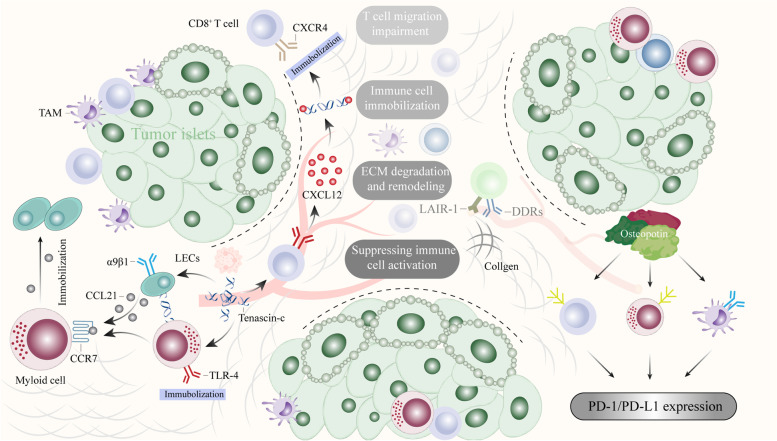
“In ovarian cancer, CD11c+CD11b−CD103+ DCs could be observed in tumor tissues, while PD-1 expression is positively correlated with LAIR-1high in DC [490].”
BackgroundHypoxia-inducible factor (HIF) inhibitors: a patent survey (2016–2020)
Ban, H. S., Uto, Y., & Nakamura, H. (2021) · Expert Opinion on Therapeutic Patents · doi:10.1080/13543776.2021.1874345 · Cited by 44
Li, Q., Zhang, Y., & Jiang, Q. (2018) · Biochemical and Biophysical Research Communications · doi:10.1016/j.bbrc.2018.10.146 · Cited by 44 · cited 1×
“Cervical cancer MFAP5 MFAP5 inhibition triggers cell cycle arrest and apoptosis [236]”
BackgroundQin, X., Lin, L., Cao, L., Zhang, X., Song, X., Hao, J., Zhang, Y., Wei, R., Huang, X., Lu, J., et al. (2017) · Scientific Reports · doi:10.1038/srep45305 · Cited by 43 · cited 1×
“Myeloma Reelin Reelin promotes cell proliferation and glycolysis via FAK/Syk/Akt/mTOR and STAT3 pathways [231]”
BackgroundLi, Y., Liu, H., Zhao, Y., Yue, D., Chen, C., Li, C., Zhang, Z., & Wang, C. (2021) · Thoracic Cancer · doi:10.1111/1759-7714.14108 · Cited by 43 · cited 1×
“Precisely, high expression of intracellular OPN results in increased expression of PD-1 in macrophage and lung cancer cells via NK-κB pathway [521, 522].”
BackgroundSelf-citationLee, S. W., Kim, H. K., Naidansuren, P., Ham, K. A., Choi, H. S., Ahn, H., Kim, M., Kang, D. H., Kang, S. W., & Joe, Y. A. (2020) · The FASEB Journal · doi:10.1096/fj.201902899r · Cited by 43 · cited 1×
“Peroxidasin crosslinks collagen IV and releases bromide to sustain ECs survival [423, 424].”
BackgroundLiu, L., Sheng, X.-P., Shuai, T., Zhao, Y., Li, B., & Li, Y. (2018) · World Journal of Gastroenterology · doi:10.3748/wjg.v24.i40.4565 · Cited by 43 · cited 1×
“High expression of heparinase has been detected in a variety of tumor patients and is significantly associated with poor prognosis in patients with head and neck squamous cell carcinoma [57], breast cancer [58], and gastric cancer [59].”
BackgroundSelf-citationSukowati, C. H. C., Anfuso, B., Fiore, E., Ie, S. I., Raseni, A., Vascotto, F., Avellini, C., Mazzolini, G., & Tiribelli, C. (2019) · Scientific Reports · doi:10.1038/s41598-019-40436-6 · Cited by 42 · cited 1×
“4-methylumbelliferone (4-MU), the HA synthesis inhibitor, significantly decreases HA expression and tumor progression in ER-negative breast cancer [571] and hepatoma [572], it also overcomes chemoresistance in ovarian cancer [573].”
BackgroundBaltes, F., Caspers, J., Henze, S., Schlesinger, M., & Bendas, G. (2020) · International Journal of Molecular Sciences · doi:10.3390/ijms21144956 · Cited by 42 · cited 1×
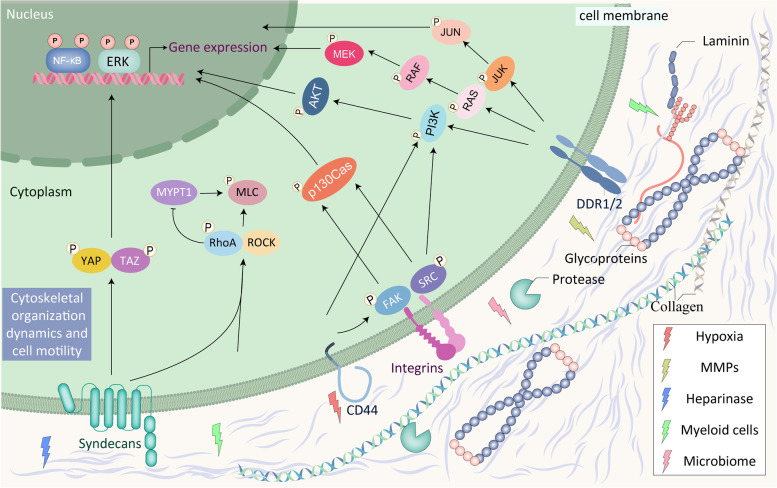
“DDRs are receptor tyrosine kinases that bind with collagen in an integrin-independent way [351, 352], and DDR1 can supplement the collagen-induced tumor progression when β1 integrin was eliminated [353].”
BackgroundLeiva, M. C., Garré, E., Gustafsson, A., Svanström, A., Bogestål, Y. R., Håkansson, J., Ståhlberg, A., & Landberg, G. (2020) · Journal of Cellular Physiology · doi:10.1002/jcp.30191 · Cited by 42 · cited 1×
“A reasonable model constructed by breast cancer patient derived scaffold which perfectly mimic acellular structure of ECM and unveiled enhanced drug resistance in cultured cancer cells [546].”
MethodKodama, K., Ishii, G., Miyamoto, S., Goya, M., Zhang, S., Sangai, T., Yoshikawa, T., Hasebe, T., Hitomi, Y., Izumi, K., et al. (2005) · International Journal of Cancer · doi:10.1002/ijc.21136 · Cited by 42 · cited 1×
“Laminin Laminin 5/integrin/FAK stimulates EGFR activation to promote anoikis resistance and invasion [230]”
BackgroundSelf-citationYang, X., Chen, L., Mao, Y., Hu, Z., & He, M. (2020) · Disease Markers · doi:10.1155/2020/8816070 · Cited by 42
Zhang, J., Li, L., Peng, Y., Chen, Y., Lv, X., Li, S., Qin, X., Yang, H., Wu, C., & Liu, Y. (2017) · Biochimica et Biophysica Acta (BBA) - Molecular Cell Research · doi:10.1016/j.bbamcr.2017.10.007 · Cited by 41 · cited 1×
“Other research indicates that methyl (CH3) and amino (NH2) mechanisms facilitated surface modification induce apoptosis in breast cancer [590].”
BackgroundEngineering a 3D collective cancer invasion model with control over collagen fiber alignment
Su, C., Burchett, A. A., Dunworth, M., Choi, J. S., Ewald, A. J., Ahn, E. H., & Kim, D. (2021) · Biomaterials · doi:10.1016/j.biomaterials.2021.120922 · Cited by 41 · cited 1×
“Several studies indicate that tumors prefer to invade and disseminate along radially aligned fibers rather than circumferentially oriented fibers [319, 320].”
BackgroundSaw, P. E., Xu, X., Kang, B. R., Lee, J., Lee, Y. S., Kim, C., Kim, H., Kang, S.-H., Na, Y. J., Moon, H. J., et al. (2021) · Theranostics · doi:10.7150/thno.44948 · Cited by 41 · cited 1×
“Additionally, extra-domain B (EDB) of fibronectin is an ideal target for drug delivery [594, 595].”
BackgroundLiu, F., Wu, Q., Han, W., Laster, K. V., Hu, Y., Ma, F., Chen, H., Tian, X., Qiao, Y., Liu, H., et al. (2021) · Clinical and Translational Medicine · doi:10.1002/ctm2.548 · Cited by 41
TRPM7 controls mesenchymal features of breast cancer cells by tensional regulation of SOX4
Kuipers, A. J., Middelbeek, J., Vrenken, K. S., Gonzalez, C. P., Poelmans, G., Klarenbeek, J. B., Jalink, K., Trepat, X., & van Leeuwen, F. N. (2018) · Biochimica et Biophysica Acta (BBA) - Molecular Basis of Disease · doi:10.1016/j.bbadis.2018.04.017 · Cited by 41 · cited 1×
“Other mechanosensors promoting EMT via several pathways such as transient receptor potential melastatin 7 (TRPM7)/SOX4 in breast cancer [273], CXCR4/ubiquitin domain containing 1 (UBTD1)/YAP in hepatoma [141] and EGFR in glioblastoma [274] have been reported.”
BackgroundInvolvement of Syndecan-1 and Heparanase in Cancer and Inflammation
Teixeira, F. C. O. B., & Götte, M. (2020) · Advances in experimental medicine and biology · doi:10.1007/978-3-030-34521-1_4 · Cited by 41 · cited 1×
“Heparinase can also degrade perlecan and syndecan-1 (Sdc-1/ CD138) to mediate tumor cell growth and invasion [64].”
BackgroundZhang, C., Fang, L., Wang, X., Yuan, S., Li, W., Tian, W., Chen, J., Zhang, Q., Zhang, Y., Zhang, Q., et al. (2021) · Molecular Therapy — Oncolytics · doi:10.1016/j.omto.2021.11.018 · Cited by 41 · cited 1×
“A therapeutic model with the combination of oncolytic adenovirus carried decorin with a CAR-T targeting carbonic anhydrase IX (CAIX) has been reported to induce ECM remodeling and immunoreaction in cancer recently [605].”
BackgroundSelf-citationFibrinogen activates focal adhesion kinase (FAK) promoting colorectal adenocarcinoma growth
Sharma, B. K., Mureb, D., Murab, S., Rosenfeldt, L. A., Francisco, B. J., Cantrell, R., Karns, R. A., Romick‐Rosendale, L. E., Watanabe‐Chailland, M., Mast, E. M., et al. (2021) · Journal of Thrombosis and Haemostasis · doi:10.1111/jth.15440 · Cited by 41 · cited 1×
“Fibrinogen Fibrinogen actives FAK to suppress P53 and sustain cell proliferation and anti-apoptosis [225]”
BackgroundIntegrin Activation Controls Regulatory T Cell–Mediated Peripheral Tolerance
Klann, J. E., Kim, S. H., Remedios, K. A., He, Z., Metz, P. J., Lopez, J. M., Tysl, T., Olvera, J. G., Ablack, J., Cantor, J. M., et al. (2018) · The Journal of Immunology · doi:10.4049/jimmunol.1800112 · Cited by 41 · cited 10×
“It’s worth to further explore the relationship between Treg and CAFs in various cancers.”
BackgroundInfluentialRuggeri, J. M., Franco-Barraza, J., Sohail, A., Zhang, Y., Long, D., Pasca di Magliano, M., Cukierman, E., Fridman, R., & Crawford, H. C. (2020) · The American Journal of Pathology · doi:10.1016/j.ajpath.2020.03.020 · Cited by 40 · cited 1×
“Attentionally, the regulatory feedback between DDR1 and MMP secretion contributes to sustain the homeostasis in local ECM, highlights the significant role of DDR1 in ECM remodeling [361, 362].”
BackgroundTanaka, R., Seki, Y., Saito, Y., Kamiya, S., Fujita, M., Okutsu, H., Iyoda, T., Takai, T., Owaki, T., Yajima, H., et al. (2014) · Journal of Biological Chemistry · doi:10.1074/jbc.m113.546622 · Cited by 40
Sundquist, E., Kauppila, J. H., Veijola, J., Nikkilä, R., Lehenkari, P. P., Laitinen, S., Risteli, J., Soini, Y., Kosma, V., Sawazaki‐Calone, Í., et al. (2017) · British Journal of Cancer · doi:10.1038/bjc.2016.455 · Cited by 40 · cited 1×
“TNC Overexpression of TNC could be specifically detected and associated with immunosuppression and sever progression in various cancers, such as NSCLC [499], breast cancer [500] and oral tongue squamous cell carcinoma [501].”
BackgroundCorkery, D., Clarke, L. E., Gebremeskel, S., Salsman, J., Pinder, J. B., Page, C. L., Meunier, L., Xu, Z., Mes‐Masson, A., Berman, J. N., et al. (2017) · Oncogene · doi:10.1038/onc.2017.318 · Cited by 40 · cited 1×
“Pre-mRNA splicing factor 4 kinase (PRP4K), a pre-mRNA splicing enzyme, decreases degradation of EGFR during detachment and induces anoikis resistance [182].”
BackgroundShi, X., Huang, H., Zhou, M., Liu, Y., Wu, H., & Dai, M. (2021) · Frontiers in Pharmacology · doi:10.3389/fphar.2021.765482 · Cited by 40 · cited 16×
“Conversely, reduced activity of MMPs inhibits pulmonary vascular permeability and limits the infiltration of immunocytes in the lung prior to metastasis [48].”
BackgroundInfluentialImmune‐mediated ECM depletion improves tumour perfusion and payload delivery
Yeow, Y. L., Kotamraju, V. R., Wang, X., Chopra, M., Azme, N., Wu, J., Schoep, T. D., Delaney, D. S., Feindel, K. W., Li, J., et al. (2019) · EMBO Molecular Medicine · doi:10.15252/emmm.201910923 · Cited by 39 · cited 1×
“Additionally, TNFα-CSG fusion protein, which interacts with laminin-nidogen complexes, decreases ECM stiffness and upregulates immuoinfiltration [580].”
BackgroundSelf-citationYeh, C., Hsieh, M., Yang, J., Yang, S., Chuang, Y., Su, S., Liang, M., Chen, M., & Lin, C. (2019) · Environmental Toxicology · doi:10.1002/tox.22809 · Cited by 39
Self-citationDysregulated fibronectin trafficking by Hsp90 inhibition restricts prostate cancer cell invasion
Armstrong, H., Gillis, J. L., Johnson, I. R. D., Nassar, Z. D., Moldovan, M. V., Levrier, C., Sadowski, M. C., Chin, M. Y., Guns, E. S. T., Tarulli, G. A., et al. (2018) · Scientific Reports · doi:10.1038/s41598-018-19871-4 · Cited by 39 · cited 1×
“AUY922, an inhibitor of HSP90, decreases fibronectin secretion into ECM and hampers invasion in prostate cancer [403].”
BackgroundSosnowska, M., Kutwin, M., Jaworski, S., Strojny, B., Wierzbicki, M., Szczepaniak, J., Łojkowski, M., Święszkowski, W., Bałaban, J., Chwalibóg, A., et al. (2019) · International Journal of Nanomedicine · doi:10.2147/ijn.s206934 · Cited by 39 · cited 1×
“Moreover, synthetic materials are considered to mimic the variation of ECM and observe changes in cell cycle, such as C60 nanofilm [163].”
BackgroundBui, T., Gu, Y., Ancot, F., Sanguin‐Gendreau, V., Zuo, D., & Muller, W. J. (2021) · Oncogene · doi:10.1038/s41388-021-02107-7 · Cited by 38 · cited 1×
“When β1 integrin is blocked, mutation of P53 in cancer fails to response to the absence of β1 integrin signal therefore bypasses apoptosis [208].”
BackgroundFibronectin acts as a molecular switch to determine SPARC function in pancreatic cancer
Munasinghe, A., Malik, K., Mohamedi-Yousufi, F., Moaraf, S., Kocher, H. M., Jones, L. A., & Hill, N. J. (2020) · Cancer Letters · doi:10.1016/j.canlet.2020.02.031 · Cited by 38 · cited 1×
“Pancreatic cancer Fibronectin Fibronectin determines SPARC function to control proliferation and anti-apoptosis [212]”
BackgroundTargeting lysyl oxidase for molecular imaging in breast cancer
Wuest, M., Kuchar, M., Sharma, S. K., Richter, S., Hamann, I., Wang, M., Vos, L. J., Mackey, J. R., Wuest, F. R., & Löser, R. (2015) · Breast Cancer Research · doi:10.1186/s13058-015-0609-9 · Cited by 38 · cited 1×
“Several research has proved that BANP treatment can suppress proliferation and invasion of tumor cells [395, 566, 567].”
BackgroundPeroxidasin-mediated bromine enrichment of basement membranes
He, C. H., Song, W., Weston, T. A., Tran, C., Kurtz, I., Zuckerman, J. E., Guagliardo, P. R., Miner, J. H., Ivanov, S. V., Bougoure, J., et al. (2020) · Proceedings of the National Academy of Sciences · doi:10.1073/pnas.2007749117 · Cited by 37 · cited 1×
“Peroxidasin crosslinks collagen IV and releases bromide to sustain ECs survival [423, 424].”
BackgroundPally, D., Pramanik, D., & Bhat, R. (2019) · Frontiers in Physiology · doi:10.3389/fphys.2019.00790 · Cited by 37 · cited 1×
“In breast cancer, the balance between intracellular and cell–matrix adhesion determines ECM dynamics and the invasion of cancer cells [322].”
BackgroundExtracellular Matrix Remodeling by Fibroblast-MMP14 Regulates Melanoma Growth
Pach, E., Kümper, M., Fromme, J. E., Zamek, J., Metzen, F., Koch, M., Mauch, C., & Zigrino, P. (2021) · International Journal of Molecular Sciences · doi:10.3390/ijms222212276 · Cited by 37 · cited 1×
“Matrix enzymes and ECM components secreted from stromal cell are critical for cancer cell proliferation, while cancer secrets soluble growth factors sustaining stromal cells survival and ECM generation in turn [135, 136].”
BackgroundLong-term vitamin D treatment decreases human uterine leiomyoma size in a xenograft animal model
Corachán, A., Ferrero, H., Escrig, J., Monleón, J., Faus, A., Cervelló, I., & Pellicer, A. (2019) · Fertility and Sterility · doi:10.1016/j.fertnstert.2019.09.018 · Cited by 36 · cited 1×
“Long-term treatment of 1,25(OH)2 D3 shows the similar result in vivo [616].”
BackgroundSmall molecule inhibitor of HSP47 prevents pro-fibrotic mechanisms of fibroblasts in vitro
Miyamura, T., Sakamoto, N., Kakugawa, T., Taniguchi, H., Akiyama, Y., Okuno, D., Moriyama, S., Hara, A., Kido, T., Ishimoto, H., et al. (2020) · Biochemical and Biophysical Research Communications · doi:10.1016/j.bbrc.2020.07.085 · Cited by 36 · cited 1×
“HSP47 also promotes cellplatelet adhesion to mediate tumor invasion and metastasis via collagen I [407, 408].”
BackgroundTuguzbaeva, G. M., Yue, E., Chen, X., He, L., Li, X., Ju, J., Qin, Y., Павлов, В. Н., Lu, Y., Jia, W., et al. (2019) · Acta Pharmaceutica Sinica B · doi:10.1016/j.apsb.2019.10.005 · Cited by 36 · cited 1×
“Dimerization of integrin subunits (including α chain and β chain) triggers phosphorylation of the focal adhesion kinase (FAK)/Src pathway, leading to increased cell adhesion and migration [96].”
BackgroundDiscoidin Domain Receptor 1 Contributes to Tumorigenesis through Modulation of TGFBI Expression
Rudra-Ganguly, N., Lowe, C., Mattie, M. D., Chang, M. S., Satpayev, D., Verlinsky, A., An, Z., Hu, L., Yang, P., Challita-Eid, P. M., et al. (2014) · PLoS ONE · doi:10.1371/journal.pone.0111515 · Cited by 36 · cited 1×
“Downregulation of DDR1 triggers TGFBI secretion and tumor progression [355].”
BackgroundBoch, T., Köhler, J., Janning, M., & Loges, S. (2022) · Cancer Biology and Medicine · doi:10.20892/j.issn.2095-3941.2022.0540 · Cited by 35 · cited 1×
“The occurrence and the development of malignant tumors depend on the extracellular signals and is not a completely autonomous process of tumor cells [2, 3].”
BackgroundGoggins, E. S., Kakkad, S. M., Mironchik, Y., Jacob, D., Wildes, F. B., Krishnamachary, B., & Bhujwalla, Z. M. (2017) · Neoplasia · doi:10.1016/j.neo.2017.11.010 · Cited by 35
Clinicopathologic significance of LAIR-1 expression in hepatocellular carcinoma
Wu, X., Zhang, L., Zhou, J., Liu, L., Fu, Q., Fu, A., Feng, X., Xin, R., Liu, H., Gao, Y., et al. (2018) · Current Problems in Cancer · doi:10.1016/j.currproblcancer.2018.04.005 · Cited by 35
Human peroxidasin 1 promotes angiogenesis through ERK1/2, Akt, and FAK pathways
Medfai, H., Khalil, A., Rousseau, A., Nuyens, V., Paumann-Page, M., Sevcnikar, B., Furtmüller, P. G., Obinger, C., Moguilevsky, N., Peulen, O., et al. (2018) · Cardiovascular Research · doi:10.1093/cvr/cvy179 · Cited by 35 · cited 1×
“Recently, basement membrane multidomain heme peroxidase human peroxidasin 1 (hsPxd01) has been identified as a pivotal regulator to promotes angiogenesis via ERK, Akt and FAK pathway [422].”
BackgroundJanjanam, J., Pano, G., Wang, R., Minden‐Birkenmaier, B. A., Breeze‐Jones, H., Baker, E., Garcin, C., Clayton, G., Shirinifard, A., Zaske, A. M., et al. (2021) · Cancer Research · doi:10.1158/0008-5472.can-20-3982 · Cited by 35 · cited 1×
“WISP1 fuels the linearization and metastasis and is overexpressed in cancer cells, while WISP2 against the process but its expression level is suppressed [38].”
BackgroundCao, C., Lin, S., Zhi, W., Lazare, C., Meng, Y., Wu, P., Gao, P., Wei, J., & Wu, P. (2020) · Frontiers in Oncology · doi:10.3389/fonc.2020.00284 · Cited by 35 · cited 1×
“And High expression of LOXL2 in tumor tissues predicts poor survival in cervical cancer [384], neck squamous cell carcinoma [385], hepatoma carcinoma [386] and other cancer patients [387].”
BackgroundTumor-Associated Regulatory T Cell Expression of LAIR2 Is Prognostic in Lung Adenocarcinoma
Ly, D., Li, Q., Navab, R., Zeltz, C., Fang, L., Cabanero, M., Zhu, C., Tsao, M., & Zhang, L. (2021) · Cancers · doi:10.3390/cancers14010205 · Cited by 35 · cited 1×
“High expression of leukocyteassociated Ig-like receptor 2 (LAIR-2), an inhibitor of immune inhibition receptor LAIR-1, in Treg is correlated with poor outcome in lung adenocarcinoma [475].”
BackgroundSanada, T., Islam, A., Kaminota, T., Kirino, Y., Tanimoto, R., Yoshimitsu, H., Yano, H., Mizuno, Y., Okada, M., Mitani, S., et al. (2019) · The Laryngoscope · doi:10.1002/lary.28142 · Cited by 34
Kang, Z., Wang, C., Tong, Y., Li, Y., Gao, Y., Hou, S., Hao, M., Han, X., Wang, B., Wang, Q., et al. (2020) · Journal of Medicinal Chemistry · doi:10.1021/acs.jmedchem.0c01197 · Cited by 34 · cited 1×
“The interaction between PDAC cells and PSCs, and ECM remodeling induced by PSCs can be inhibited by treatment of the combination of Vitamin D receptor modulators and gemcitabine in vitro and in vivo [623].”
BackgroundSelf-citationFerrandez, E., Gutierrez, O., Segundo, D. S., & Fernández-Luna, J. L. (2018) · Scientific Reports · doi:10.1038/s41598-018-24444-6 · Cited by 34 · cited 1×
“HA/CD44 stimulates epidermal growth factor receptor (EGFR) singling pathway [107], whereas HA/TLR4 is associated with the activation of nuclear factor-kappaB (NF-κB) pathway [106, 108].”
BackgroundRauner, G., Jin, D. X., Miller, D. H., Gierahn, T. M., Li, C. M.-C., Sokol, E. S., Feng, Y., Mathis, R. A., Love, J. C., Gupta, P. B., et al. (2021) · Nature Communications · doi:10.1038/s41467-021-27401-6 · Cited by 34 · cited 1×
“Physiologically, DDR1 controls Mammary morphogenesis [354].”
Ma, Y., Nenkov, M., Schröder, D. C., Abubrig, M., Gassler, N., & Chen, Y. (2021) · International Journal of Molecular Sciences · doi:10.3390/ijms222111834 · Cited by 34 · cited 1×
“Non-small cell lung cancer Fibulins Methylated FBLN2 inhibits tumor proliferation and cell adhesion via MAPK/ERK and AKT/mTOR pathways [229]”
BackgroundEvaluation of Extracellular Matrix Composition to Improve Breast Cancer Modeling
Byrne, C. E., Decombe, J.-B., Bingham, G. C., Remont, J., Miller, L. G., Khalif, L., King, C. T., Hamel, K. M., Bunnell, B. A., Burow, M. E., et al. (2021) · Tissue Engineering Part A · doi:10.1089/ten.tea.2020.0364 · Cited by 33 · cited 1×
“Hydrogel constructed matrix mimics ECM stiffness and unveils enhanced chemoresistance in breast cancer [543, 544], and glioblastoma [545].”
BackgroundDevelopment of a Function-Blocking Antibody Against Fibulin-3 as a Targeted Reagent for Glioblastoma
Nandhu, M. S., Behera, P., Bhaskaran, V., Longo, S. L., Barrera-Arenas, L. M., Sengupta, S., Rodriguez‐Gil, D. J., Chiocca, E. A., & Viapiano, M. S. (2017) · Clinical Cancer Research · doi:10.1158/1078-0432.ccr-17-1628 · Cited by 33 · cited 1×
“Fibulin-3 Inhibition of fibulin-3 suppresses activation of ADAM17/Notch/NK-κB pathway and tumor progression [217]”
BackgroundLewis, D. M., Pruitt, H. C., Jain, N., Ciccaglione, M., McCaffery, J. M., Xia, Z., WEBER, K. L., Eisinger‐Mathason, T. S. K., & Gerecht, S. (2019) · Cancer Research · doi:10.1158/0008-5472.can-18-1984 · Cited by 33 · cited 1×
“Stress relaxion triggers procollagen-lysine, 2-oxoglutarate 5-dioxygenase 2 (PLOD2) expression and results in migration according to oxygen concentration [349].”
BackgroundLAIR-1 suppresses cell growth of ovarian cancer cell via the PI3K-AKT-mTOR pathway
Liu, Y., Ma, L., Shangguan, F., Zhao, X., Wang, W., Gao, Z., Zhou, H., Qu, G., Huang, Y., An, J., et al. (2020) · Aging · doi:10.18632/aging.103589 · Cited by 33 · cited 1×
“However, A research reports that overexpression of LAIR-1 suppresses ovarian tumor growth via inhibiting PI3K/Akt/mTOR pathway [496].”
BackgroundSelf-citationCorachán, A., Trejo, M. G., Carbajo‐García, M. C., Monleón, J., Escrig, J., Faus, A., Pellicer, A., Cervelló, I., & Ferrero, H. (2020) · Fertility and Sterility · doi:10.1016/j.fertnstert.2020.07.049 · Cited by 32 · cited 1×
“It also inhibits the activation of Wnt4/β-catenin/ mTOR pathway to suppress ECM generation [617], especially for mediator complex subunit 12 (MED12) mutation uterine leiomyomas [618].”
Backgroundel Maaty, M. A. A., Grelet, É., Keime, C., Rerra, A., Gantzer, J., Emprou, C., Terzic, J., Lutzing, R., Bornert, J., LAVERNY, G., et al. (2021) · Science Advances · doi:10.1126/sciadv.abg5982 · Cited by 32 · cited 1×
“Moreover, treatment of gemini-72, a vitamin D analog, normalizes ECM remodeling and induce apoptosis of prostatic precancerous cells in vivo [624].”
BackgroundAlphavbeta3 integrin blocking inhibits apoptosis and induces autophagy in murine breast tumor cells
Lino, R. L. B., dos Santos, P. K., Pisani, G. F. D., Altei, W. F., Cominetti, M. R., & Selistre-de-Araújo, H. S. (2019) · Biochimica et Biophysica Acta (BBA) - Molecular Cell Research · doi:10.1016/j.bbamcr.2019.118536 · Cited by 31 · cited 1×
“RGD targeting β3 integrin could inhibit adhesion and tumor-derived small extracellular vesicles absorption in normal breast cells [177], it also favors anti-apoptosis and autophagy in breast cancer cells [178].”
BackgroundHou, J., Tan, Y., Chen, S., Wang, T., Gao, Z., Song, D., Zhao, J., Liao, Y., Liu, X., Jiang, Y., et al. (2019) · Computational and Structural Biotechnology Journal · doi:10.1016/j.csbj.2019.12.010 · Cited by 31 · cited 1×
“While the treatment of FAK inhibitor, which results in ECM depletion, in overcoming chemoresistance depends on the activation of P53 signaling pathway [206].”
BackgroundPaumann-Page, M., Kienzl, N. F., Motwani, J., Bathish, B., Paton, L. N., Magon, N. J., Sevcnikar, B., Furtmüller, P. G., Traxlmayr, M. W., Obinger, C., et al. (2021) · Redox Biology · doi:10.1016/j.redox.2021.102090 · Cited by 31 · cited 1×
“Nevertheless, high expression of peroxidasin could be detected in invasive melanoma cells rather than non-invasive cells and generates hypobromous acid, suggests the additional reaction with other biomolecules which have yet to be elucidated [425].”
BackgroundYoneda, A., Minomi, K., & Tamura, Y. (2020) · Oncogene · doi:10.1038/s41388-020-1311-7 · Cited by 31 · cited 1×
“In breast cancer, HSP47 interacts with nonmuscle myosin IIA (NMIIAH) to promote contractile force of actin filaments [406].”
BackgroundKyriakopoulou, K., Kefali, E., Piperigkou, Z., Riethmüller, C., Greve, B., Franchi, M., Götte, M., & Karamanos, N. K. (2021) · FEBS Journal · doi:10.1111/febs.16240 · Cited by 31 · cited 1×
“inhibition of EGFR triggers suppression of EMT, Notch pathway and syndecan-1 expression via ERβ pathway, suggests the pivotal role of EGFR in anoikis resistance [188].”
BackgroundDiGiacomo, J. W., Godet, I., Trautmann-Rodriguez, M., & Gilkes, D. M. (2020) · Molecular Cancer Research · doi:10.1158/1541-7786.mcr-20-0554 · Cited by 31 · cited 1×
“Breast cancer FGF2 FGF2 promotes ER/Cyclin D1 signaling and endocrinotherapy resistance [214]”
BackgroundXiao, H., Zhang, Y., Li, Z., Liu, B., Cui, D., Liu, F., Chen, D., Liu, Y., & Ouyang, G. (2021) · The Journal of Pathology · doi:10.1002/path.5756 · Cited by 30 · cited 1×
“Hepatoma Periostin Autocrine loop of periostin/integin/FAK/STAT3/perison in hepatic stellate cell promotes hepatoma cell proliferation via paracrine stimuli [218]”
BackgroundYang, L., Zhang, M., Wu, L., Mao, L., Chen, L., Yu, G., Deng, W., Zhang, W., Liu, B., Sun, W., et al. (2018) · Head & Neck · doi:10.1002/hed.25539 · Cited by 30
Sun, J., Feng, A., Chen, S., Zhang, Y., Xie, Q., Yang, M., Shao, Q., Liu, J., Yang, Q., Kong, B., et al. (2013) · Cellular and Molecular Immunology · doi:10.1038/cmi.2012.67 · Cited by 30 · cited 1×
“Overexpressed three different transcripts of OPN in breast cancer unveils similar oncogenic role but different immunosuppressive role in three trascripts [527].”
BackgroundCCBE1 promotes GIST development through enhancing angiogenesis and mediating resistance to imatinib
Tian, G.-A., Zhu, C., Zhang, X.-X., Zhu, L., Yang, X., Jiang, S., Li, R., Tu, L., Wang, Y., Zhuang, C., et al. (2016) · Scientific Reports · doi:10.1038/srep31071 · Cited by 30 · cited 1×
“Besides, high expression of CCBE1 is associated with tumor progression and drug resistance in gastrointestinal stromal tumor [452] and colorectal cancer [453].”
BackgroundSelf-citationChoi, J., Chung, T., Rhee, H., Kim, Y., Jeon, Y., Yoo, J. E., Noh, S., Han, D. H., & Park, Y. N. (2018) · Gut and Liver · doi:10.5009/gnl17569 · Cited by 30 · cited 1×
“And High expression of LOXL2 in tumor tissues predicts poor survival in cervical cancer [384], neck squamous cell carcinoma [385], hepatoma carcinoma [386] and other cancer patients [387].”
BackgroundJoseph, C., Alsaleem, M. A., Toss, M. S., Kariri, Y. A., Althobiti, M. M., Alsaeed, S. A., Aljohani, A., Narasimha, P. L., Mongan, N. P., Green, A. R., et al. (2020) · Cancers · doi:10.3390/cancers13010080 · Cited by 30
Chen, S.-H., Wang, H., Lin, C., Chang, J. T., Hsieh, C., Liao, C., Kang, C., Yang, L., & Yen, T. (2016) · European Journal of Nuclear Medicine and Molecular Imaging · doi:10.1007/s00259-016-3345-1 · Cited by 29 · cited 1×
“Moreover, RGDs can be used as developing agent such as a positron-emission tomography (PET) tracer to demonstrate the edge and volume of tumor, suggesting a potential role of ECM-associated monoclonal antibodies in oncogenic imaging [584, 585].”
BackgroundThe multicellular signalling network of ovarian cancer metastases
Sommerfeld, L., Finkernagel, F., Jansen, J. M., Wagner, U. A. G., Nist, A., Stiewe, T., Müller‐Brüsselbach, S., Sokòl, A. M., Graumann, J., Reinartz, S., et al. (2021) · Clinical and Translational Medicine · doi:10.1002/ctm2.633 · Cited by 29 · cited 1×
“In the omental environment of ovarian cancer, omental adipocytes, mesothelial cells and CAFs provides signals for cancer progression [373].”
BackgroundHSP90 as a regulator of extracellular matrix dynamics
Chakraborty, A., & Edkins, A. L. (2021) · Biochemical Society Transactions · doi:10.1042/bst20210374 · Cited by 29 · cited 1×
“The basic functions of the ECM include sustaining cell proliferation, differentiation and maintenance of tissue homeostasis [17].”
BackgroundChen, Y., Zhao, H., Feng, Y., Ye, Q., Hu, J., Guo, Y., & Feng, Y. (2021) · Frontiers in Molecular Biosciences · doi:10.3389/fmolb.2021.745649 · Cited by 28 · cited 1×
“Additionally, transforming growth factor beta-induced protein (TGFBI, or βig-H3) is a matrix protein determined by TGFβ1 and secreted into ECM by various cancers [257].”
BackgroundHill, L. K., Bruns, J., & Zustiak, S. P. (2020) · Acta Biomaterialia · doi:10.1016/j.actbio.2021.05.005 · Cited by 28
Kosibaty, Z., Murata, Y., Minami, Y., Noguchi, M., & Sakamoto, N. (2020) · Cancer Science · doi:10.1111/cas.14743 · Cited by 28 · cited 1×
“Moreover, epithelial cell transforming sequence 2 (ECT2)/FAK and collagen type X alpha 1(COL10A1)/discoid protein domain receptor 2 (DDR2)/ FAK pathways contribute to the proliferation and adhesion on ECM of lung adenocarcinoma cells [160, 161].”
BackgroundAcquisition of Anoikis Resistance Up-Regulates Syndecan-4 Expression in Endothelial Cells
Carneiro, B. R., Filho, P. C. A. P., Mesquita, A. P. D. S., da Silva, D. S., Pinhal, M. A. D. S., Nader, H. B., & Lopes, C. C. (2014) · PLoS ONE · doi:10.1371/journal.pone.0116001 · Cited by 28 · cited 1×
“Syndecan-4 also participates in the progression of anoikis resistance [186, 187].”
BackgroundMetabolic regulation of immune responses to cancer
Wißfeld, J., Werner, A., Yan, X., ten Bosch, N., & Cui, G. (2022) · Cancer Biology and Medicine · doi:10.20892/j.issn.2095-3941.2022.0381 · Cited by 27 · cited 1×
“the metastasis Metabolic reprogramming facilitates the basic requirement for cancer cell survival and progression by providing energy and specific products to synthesize proteins [277].”
BackgroundADAM8 affects glioblastoma progression by regulating osteopontin-mediated angiogenesis
Li, Y., Guo, S., Zhao, K., Conrad, C., Driescher, C., Rothbart, V., Schlomann, U., Guerreiro, H., Bopp, M. H. A., König, A. M., et al. (2020) · Biological Chemistry · doi:10.1515/hsz-2020-0184 · Cited by 27 · cited 1×
“The expression of membrane-anchored protein a disintegrin and metalloproteinase domain 8 (ADAM8) in glioblastoma cells and macrophages mediates OPN secretion and suppresses angiogenesis via JAK/STAT3 pathway, may also contributes to the formation of the specific isoform of OPN in ECM [531].”
BackgroundSelf-citationHuang, X., Reye, G., Momot, K. I., Blick, T., Lloyd, T., Tilley, W. D., Hickey, T. E., Snell, C. E., Okolicsanyi, R. K., Haupt, L. M., et al. (2020) · Frontiers in Cell and Developmental Biology · doi:10.3389/fcell.2020.00599 · Cited by 27
Liu, X.-Q., Chen, X.-T., Liu, Z.-Z., Gu, S.-S., He, L.-J., Wang, K.-P., & Tang, R.-Z. (2020) · ACS Biomaterials Science & Engineering · doi:10.1021/acsbiomaterials.0c00669 · Cited by 26 · cited 1×
“Additionally, the influence of ECM stiffness on other immune cells such as dendric cells maturation [460] and macrophages [461, 462] have been recently reported.”
BackgroundHagiwara, M., Maruyama, H., Akiyama, M., Koh, I., & Arai, F. (2021) · Communications Biology · doi:10.1038/s42003-021-02350-4 · Cited by 26 · cited 1×
“The physical pressure on the ECM is controlled by the interspace composed of fibrils and the compression and buffering activities of polysaccharide gel [19, 20].”
BackgroundLv, Y., Shan, Y., Song, L., Zhao, Y., Lai, R., Su, J., & Zhang, X. (2021) · Aging · doi:10.18632/aging.203355 · Cited by 26 · cited 1×
“Collagens such as collagen I/β1 integrin in gastric cancer [189], collagen XIII/ β1 integrin in breast cancer [190], COL11A1/Akt/ Cyclic AMP response-element binding protein (CREB) in PDAC [191], collagen IV/integrin in hepatoma [192], support anoikis resistance via B-cell lymphoma (BCL) family proteins and downstream…”
BackgroundCryptic domains of tenascin-C differentially control fibronectin fibrillogenesis
To, W. S., & Midwood, K. S. (2010) · Matrix Biology · doi:10.1016/j.matbio.2010.08.003 · Cited by 25 · cited 1×
“Fibrinogen-like globe (FBG) is a conserved domain in tenascins and mediates cytoskeletal re-organization by binding to fibronectin [592].”
BackgroundLee, S., Park, J., Go, D., Kim, H. K., Kwon, H., Han, S., & Kim, D.-Y. (2015) · Carcinogenesis · doi:10.1093/carcin/bgv144 · Cited by 25 · cited 1×
“Similar result could be detected in helicobacter pylori-induced gastric cancer, another inflammation-associated cance [520].”
ResultHuang, C., Wang, M., Wang, J., Wu, D., Gao, Y., Huang, K., & Yao, X. (2020) · Biochemical Pharmacology · doi:10.1016/j.bcp.2020.114390 · Cited by 25 · cited 1×
“Colorectal cancer MGP MGP expression favors oxaliplatin resistance [222]”
BackgroundZhou, A., Du, J., Jiao, M., Xie, D., Wang, Q., Xue, L., Ju, C., Hua, Z., & Zhang, C. (2019) · Journal of Controlled Release · doi:10.1016/j.jconrel.2019.05.013 · Cited by 25 · cited 2×
“For instance, extracellular HSP70 and HSP90 are critical to interact with MMP2 and enhance migration in breast cancer [401].”
BackgroundChen, Y., Chen, F., Chang, T.-H., Wang, T.-W., Hsu, T.-P., Chi, J.-Y., Hsiao, Y., Li, C., & Wang, J. (2019) · Cancer Letters · doi:10.1016/j.canlet.2019.05.001 · Cited by 25
Reduced hyaluronan cross-linking induces breast cancer malignancy in a CAF-dependent manner
Zhang, G., He, Y., Liu, Y., Du, Y., Yang, C., & Gao, F. (2021) · Cell Death and Disease · doi:10.1038/s41419-021-03875-6 · Cited by 25
Luthria, G., Li, R., Wang, S., Prytyskach, M., Köhler, R. H., Lauffenburger, D. A., Mitchison, T. J., Weissleder, R., & Miller, M. A. (2020) · Nature Communications · doi:10.1038/s41467-020-17147-y · Cited by 25 · cited 1×
“TAM polarization induces microtubules coherent within cancer cell and TAM and enhance tumor cell elongation [374].”
BackgroundInhibition of TGFBIp expression reduces lymphangiogenesis and tumor metastasis
Maeng, Y., Aguilar, B., Choi, S.-I., & Kim, E. K. (2015) · Oncogene · doi:10.1038/onc.2015.73 · Cited by 25 · cited 6×
“The combination of glycosylated podoplanin from TAMs with galectin 8 on LECs stimulates the activation of β1 integrin.”
BackgroundInfluentialDamaghi, M., Byrne, S., Xu, L., Tafreshi, N., Fang, B., Koomen, J. M., Karolak, A. M., Chen, T., Johnson, J., Gallant, N. D., et al. (2020) · Evolutionary Applications · doi:10.1111/eva.13075 · Cited by 25 · cited 1×
“Attentionally, acid stress in local environment is associated with the function of collagens on tumor cells [193].”
BackgroundPaolillo, M., Galiazzo, M., Daga, A., Ciusani, E., Serra, M., Colombo, L., & Schinelli, S. (2018) · International Journal of Oncology · doi:10.3892/ijo.2018.4583 · Cited by 25 · cited 2×
“As previous introduced, RGDs are designed to recognize specific integrin and abrogates the function of integrin [175].”
BackgroundFujita, M., Sasada, M., Iyoda, T., Nagai, R., Kudo, C., Yamamoto, T., Osada, S., Kodama, H., & Fukai, F. (2020) · Biochemical and Biophysical Research Communications · doi:10.1016/j.bbrc.2020.12.050 · Cited by 24 · cited 1×
“Intriguingly, TNC-derived peptide TNIIIA2 confers anoikis resistance and PDGFRβ activation in an α5β1 integrin-dependent manner, suggests a possible positive feedback loop between cancer and CAFs [202, 203].”
BackgroundOrlando, L., Renne, G., Rocca, A., Curigliano, G., Colleoni, M. A., Severi, G., Peruzzotti, G., Viale, G., Sanna, G., Goldhirsch, A., et al. (2005) · Annals of Oncology · doi:10.1093/annonc/mdi213 · Cited by 24 · cited 1×
“TNC Overexpression of TNC could be specifically detected and associated with immunosuppression and sever progression in various cancers, such as NSCLC [499], breast cancer [500] and oral tongue squamous cell carcinoma [501].”
BackgroundHelal‐Neto, E., Brandão-Costa, R. M., Saldanha-Gama, R. F. G., Ribeiro‐Pereira, C., Midlej, V. D. V. P., Benchimol, M., Morandi, V., & Barja‐Fidalgo, C. (2016) · Journal of Cellular Physiology · doi:10.1002/jcp.25358 · Cited by 23 · cited 1×
“Furthermore, tumor-derived ECM transforms normal endothelial cell and stimulate VEGF2 expression via β3 integrin/FAK/Src pathway in melanoma [420].”
BackgroundBoeckelmann, L., Felix, T., Calabrò, S., & Schumacher, U. (2021) · Cellular Oncology · doi:10.1007/s13402-021-00630-z · Cited by 22 · cited 1×
“Chitinase-3-like protein 1 (CHI3L1/YKL-40), a glycoprotein secreted by various cancer cells and stromal cells, enhances the synergic effect of syndecan-1 and β3 integrin and activation of FAK/ERK pathway in ECs to promote angiogenesis in breast and colon cancer [414, 415].”
BackgroundChen, N., Zhang, G., Fu, J., & Wu, Q. (2020) · Thoracic Cancer · doi:10.1111/1759-7714.13636 · Cited by 22 · cited 1×
“Similarly, MMP-14-induced collagen dissolution around tumor cells is also one of the critical factors for cell invasion and migration [49].”
BackgroundLoss of Hyaluronan and Proteoglycan Link Protein-1 Induces Tumorigenesis in Colorectal Cancer
Wang, Y., Xu, X., Marshall, J. E., Gong, M., Zhao, Y., Dua, K., Hansbro, P. M., Xu, J., & Liu, G. (2021) · Frontiers in Oncology · doi:10.3389/fonc.2021.754240 · Cited by 22 · cited 1×
“HAPLN1 HAPLN1 against TGF-β-induced COL1A1 expression and ECM remodeling [226]”
BackgroundMalic Enzyme 1 Is Associated with Tumor Budding in Oral Squamous Cell Carcinomas
Nakashima, C., Kirita, T., Yamamoto, K., Mori, S., Luo, Y., Sasaki, T., Fujii, K., Ohmori, H., Kawahara, I., Mori, T., et al. (2020) · International Journal of Molecular Sciences · doi:10.3390/ijms21197149 · Cited by 22 · cited 1×
“For instance, Hypoxiainduced Malic enzyme 1 expression and stimulates tumor budding, lactate production and YAP activation in oral squamous cell carcinoma [348].”
BackgroundChen, Y., Li, J., Jin, L., Lei, K., Liu, H., & Yang, Y. (2019) · Journal of Cellular Biochemistry · doi:10.1002/jcb.29051 · Cited by 21 · cited 1×
“Fibulins Fibulin-5 inhibits TRPV1 to induce cell apoptosis via ROS/MAPK and Akt pathways [224]”
BackgroundSalo, S., Boutaud, A., Hansen, A. J., He, L., Sun, Y., Morales, S., Venturini, A., Martin, P., Nokelainen, P., Betsholtz, C., et al. (2009) · International Journal of Cancer · doi:10.1002/ijc.24532 · Cited by 21 · cited 1×
“Laminin-332 Laminin 332 antibody targeting matrix binding domain suppress tumor progression [220]”
BackgroundMeephansan, J., Komine, M., Tsuda, H., & Ohtsuki, M. (2012) · Clinical and Experimental Dermatology · doi:10.1111/j.1365-2230.2012.04381.x · Cited by 20 · cited 1×
“Moreover, generation of MMP-9 and MMP-13 is controlled by 1,25(OH)2 D3 in squamous cell carcinoma [622].”
BackgroundKatakam, S. K., Pelucchi, P., Cocola, C., Reinbold, R. A., Vlodavsky, I., Greve, B., & Götte, M. (2020) · Frontiers in Oncology · doi:10.3389/fonc.2020.00774 · Cited by 20 · cited 1×
“While depletion of syndecan-1 in colon cancer cell line in turn stimulates heparinase expression and retain cells into a stem-like state [122].”
BackgroundAl-Ameri, W., Ahmed, I., Al-Dasim, F. M., Mohamoud, Y. A., Al-azwani, I., Malek, J., & Karedath, T. (2019) · International Journal of Molecular Sciences · doi:10.3390/ijms20143568 · Cited by 20
Rajagopal, M. U., Bansal, S., Kaur, P., Jain, S. K., Altadill, T., Hinzman, C. P., Li, Y., Moulton, J., Singh, B. B., Bansal, S., et al. (2021) · Cancers · doi:10.3390/cancers13246204 · Cited by 20 · cited 1×
“In PDAC, TGF-β treatment triggers fibronectin and collagen I deposition, and metabolic variation which is responsible to metastasis [249].”
BackgroundSelf-citationHenke, A., Franco, O. E., Stewart, G. D., Riddick, A. C. P., Katz, E., Hayward, S. W., & Thomson, A. A. (2016) · Cancers · doi:10.3390/cancers8090077 · Cited by 19 · cited 1×
“Interestingly, inhibition of HSP90 facilitates decreased contractility and increased TGF-β2 expression of CAFs in prostate cancer [404].”
BackgroundLaghezza, A., Luisi, G., Caradonna, A., Pizio, A. D., Piemontese, L., Loiodice, F., Agamennone, M., & Tortorella, P. (2019) · Bioorganic & Medicinal Chemistry · doi:10.1016/j.bmc.2019.115257 · Cited by 19 · cited 1×
“MMPs are a group of zinc-dependent endopeptidases that bind to various ECM proteins and are one of the key enzymes for connective tissue remodeling [40, 41].”
BackgroundAguilera‐Montilla, N., Bailón, E., Uceda-Castro, R., Ugarte-Berzal, E., Santos, A., Gutiérrez‐González, A., Pérez-Sánchez, C., den Steen, P. E. V., Opdenakker, G., Garcia-Marco, J. A., et al. (2019) · Oncogene · doi:10.1038/s41388-019-0744-3 · Cited by 19 · cited 1×
“Besides of ECM degradation, the binding of MMP-9 to α4β1 integrin induces several intracellular signaling to promote anti-apoptotic pathway and metastatic pathway in cancer cells, suggesting another pivotal mechanism of MMPs-induced tumor progression [52, 53].”
BackgroundOnyeisi, J. O. S., Filho, P. C. A. P., Mesquita, A. P. D. S., de Azevedo, L. C., Nader, H. B., & Lopes, C. C. (2020) · The International Journal of Biochemistry & Cell Biology · doi:10.1016/j.biocel.2020.105848 · Cited by 19 · cited 1×
“Syndecan-4 also participates in the progression of anoikis resistance [186, 187].”
BackgroundBasilico, B., Palamà, I. E., D’Amone, S., Lauro, C., Rosito, M., Grieco, M., Ratano, P., Cordella, F., Sanchini, C., Angelantonio, S. D., et al. (2022) · Frontiers in Oncology · doi:10.3389/fonc.2022.983507 · Cited by 18 · cited 1×
“Other mechanosensors promoting EMT via several pathways such as transient receptor potential melastatin 7 (TRPM7)/SOX4 in breast cancer [273], CXCR4/ubiquitin domain containing 1 (UBTD1)/YAP in hepatoma [141] and EGFR in glioblastoma [274] have been reported.”
Background
Cited by
Immune evasion in cancer: mechanisms and cutting-edge therapeutic approaches
Tufail, M., Jiang, C.-H., & Li, N. (2025) · Signal Transduction and Targeted Therapy · doi:10.1038/s41392-025-02280-1 · Cited by 363
The Interplay between Extracellular Matrix Remodeling and Cancer Therapeutics
Prakash, J., & Shaked, Y. (2024) · Cancer Discovery · doi:10.1158/2159-8290.cd-24-0002 · Cited by 366
“Specifically, myeloid cells such as macrophages and neutrophils secrete metalloproteinase family enzymes and neutrophil elastase (NE), promoting degradation of both the interstitial ECM and the basement membrane (6).”
BackgroundMa, C., Yang, C., Peng, A., Sun, T., Ji, X., Mi, J., Wei, L., Shen, S., & Feng, Q. (2023) · Molecular Cancer · doi:10.1186/s12943-023-01876-x · Cited by 284
“Angiogenesis is a complex molecular process involving endothelial cell activation, proliferation, and migration to form new blood vessels and vasculature [28, 29].”
BackgroundExtracellular matrix stiffness: Mechanisms in tumor progression and therapeutic potential in cancer
Zhang, M., & Zhang, B. (2025) · Experimental Hematology & Oncology · doi:10.1186/s40164-025-00647-2 · Cited by 269
“The reason is that tumor tissues with higher stiffness not only highly express key molecules essential to EMT induced by stiffness [55] but also induce EMT by activating the FAK/Src signaling pathway and stimulating the expression of receptor tyros-ine-protein phosphatase kappa [56].”
Cancer associated fibroblasts in cancer development and therapy
Jia, H., Chen, X., Zhang, L., & Chen, M. (2025) · Journal of Hematology & Oncology · doi:10.1186/s13045-025-01688-0 · Cited by 224
“The balance between ECM deposition and degradation is crucial for maintaining ECM homeostasis, but this balance can be dysregulated in tumor microenvironments [68] (Fig.”
Metadata
- Authors
- Yuan, Z., Li, Y., Zhang, S., Wang, X., Dou, H., Yu, X., Zhang, Z., Yang, S., & Xiao, M.
- Affiliations
- Harbin Medical University (CN)
- Central South University (CN)
- Corresponding author
- Yang, Shanshan
- Xiao, Min
- Venue
- Molecular Cancer
- Published
- 2023-03-11
- Volume
- 22
- Issue
- 1
- Pages
- 48-48
- ISSN
- 1476-4598 (ISSN-L)
- PMC
- PMC10007858
- OpenAlex
- W4323971780
- Cited by
- 977
- References
- 625
- Citations by year
- 2026: 304 · 2025: 385 · 2024: 242 · 2023: 45
- FWCI
- 32.03
- Type
- journal article
- Language
- en
- Open access
- gold
- doi.org
- Licence
- cc-by
- creativecommons.org/licenses/by/4.0 (tdm)
- creativecommons.org/licenses/by/4.0 (vor)
- Locations
- Molecular Cancer (publishedVersion, cc-by)
- PubMed Central (publishedVersion, cc-by)
- PubMed (publishedVersion)
- DOAJ (DOAJ: Directory of Open Access Journals) (submittedVersion, cc-by-sa)
- Funders
- Natural Science Foundation of Heilongjiang Province, China (LH2021H076)
- National Natural Science Foundation of China, China (81872460, 81872145)
- Topics
- Life Sciences › Biochemistry, Genetics and Molecular Biology › Cell Biology › Cellular Mechanics and Interactions
- Life Sciences › Biochemistry, Genetics and Molecular Biology › Cancer Research › Protease and Inhibitor Mechanisms
- Life Sciences › Biochemistry, Genetics and Molecular Biology › Molecular Biology › TGF-β signaling in diseases
- Keywords
- extracellular matrix remodeling, tumor progression, immune evasion, tumor microenvironment, extracellular matrix stiffness, anoikis, metastasis, angiogenesis, lymphangiogenesis, immunosuppression, immunotherapy resistance, cancer therapy
- MeSH terms
- Extracellular Matrix, Humans, Immunotherapy, Neoplasms, Tumor Microenvironment
About these checks
Registry, retraction, Cites and statistics results are computed, not judged, with one exception: a printed reference that no index lists is read once by a model before it counts as a citation error. Claims are extracted by a model and kept only when their quote appears verbatim in the text; each cited source is then checked, with a model’s help, for whether it says what the claim relies on. Those verdicts can be wrong — read the claim’s quote and the cited source before relying on one.
Statistics and arithmetic are recomputed, not judged.
Confidence bands are shown only for fields calibrated on our annotated test set. None is calibrated yet, so no band is shown.
What counts as a claim ›How we measure confidence ›How we check this ›
Are you an author, or do you see a problem with this page? Request a review
Data sources
Bibliographic data: Semantic Scholar, OpenAlex, Crossref.
Contains information from the Semantic Scholar Academic Graph Datasets, made available under the ODC Attribution License (ODC-BY 1.0).
Semantic Scholar’s data is described in: Kinney, R., et al. (2023). The Semantic Scholar Open Data Platform. arXiv:2301.10140.
