

Extracellular matrix remodeling in tumor progression and immune escape: from mechanisms to treatments
Open accessThe DOI matches its Crossref record; 626 of the 626 references it cites were found in a registry or an index.
Abstract
The malignant tumor is a multi-etiological, systemic and complex disease characterized by uncontrolled cell proliferation and distant metastasis. Anticancer treatments including adjuvant therapies and targeted therapies are effective in eliminating cancer cells but in a limited number of patients. Increasing evidence suggests that the extracellular matrix (ECM) plays an important role in tumor development through changes in macromolecule components, degradation enzymes and stiffness. These variations are under the control of cellular components in tumor tissue via the aberrant activation of signaling pathways, the interaction of the ECM components to multiple surface receptors, and mechanical impact. Additionally, the ECM shaped by cancer regulates immune cells which results in an immune suppressive microenvironment and hinders the efficacy of immunotherapies. Thus, the ECM acts as a barrier to protect cancer from treatments and supports tumor progression. Nevertheless, the profound regulatory network of the ECM remodeling hampers the design of individualized antitumor treatment. Here, we elaborate on the composition of the malignant ECM, and discuss the specific mechanisms of the ECM remodeling. Precisely, we highlight the impact of the ECM remodeling on tumor development, including proliferation, anoikis, metastasis, angiogenesis, lymphangiogenesis, and immune escape. Finally, we emphasize ECM "normalization" as a potential strategy for anti-malignant treatment.
Overview
The claims and statistics of this paper haven’t been checked yet.
Free: it reads the open-access text and checks the first 5 claims that cite a source we can check. Create a free account to check every claim.
Integrity signals
Registry
Cites
Statistics
Figures
Verification
Claims the paper makes
The claims and statistics of this paper haven’t been checked yet.
Free: it reads the open-access text and checks the first 5 claims that cite a source we can check. Create a free account to check every claim.
Claims other papers make about this one
Each is checked against this paper’s own text: does it say what the citing paper says it does?
The cited source says what the claim attributes to it.
In the citing paper
“inhibiting lysyl oxidase (LOX) family enzymes, which are involved in the crosslinking of ECM proteins collagen and elastin, can reduce matrix stiffness and improve drug delivery to tumor cells [219].”
From Mechanisms and Strategies to Overcome Drug Resistance in Colorectal Cancer (2025) · cites this paper as [219]
Self-check
Percentages, sums and reported differences re-computed from the paper’s own numbers.
The self-check needs the paper’s full text.
Citations
Cites
2 retracted
NK cell heparanase controls tumor invasion and immune surveillance
Putz, E. M., Mayfosh, A. J., Kos, K., Barkauskas, D. S., Nakamura, K., Town, L., Goodall, K. J., Yee, D. Y., Poon, I. K. H., Baschuk, N., et al. (2017) · Journal of Clinical Investigation · doi:10.1172/jci92958 · Cited by 105
RetractedAndreuzzi, E., Colladel, R., Pellicani, R., Tarticchio, G., Cannizzaro, R., Spessotto, P., Bussolati, B., Brossa, A., Paoli, P. D., Canzonieri, V., et al. (2017) · Matrix Biology · doi:10.1016/j.matbio.2017.04.002 · Cited by 84 · cited 1×
“mediates MMRN2 degradation and enhances tumor angiogenesis [431].”
BackgroundRetractedSung, H., Ferlay, J., Siegel, R. L., Laversanne, M., Soerjomataram, I., Jemal, A., & Bray, F. (2021) · CA: A Cancer Journal for Clinicians · doi:10.3322/caac.21660 · Cited by 108,699 · cited 1×
“Anti‐cancer therapy targeting ECM Raising morbidity of cancer worldwide demonstrates the emergency of precise treatment strategy design and the discovery of novel therapeutic targets [541].”
BackgroundRole of YAP/TAZ in mechanotransduction
Dupont, S., Morsut, L., Aragona, M., Enzo, E., Giulitti, S., Cordenonsi, M., Zanconato, F., Le Digabel, J., Forcato, M., Bicciato, S., et al. (2011) · Nature · doi:10.1038/nature10137 · Cited by 5,979 · cited 1×
“Abnormal activation of Hippo core factors Yes1 associated transcriptional regulator (YAP) and WW domain containing transcription regulator (TAZ, or WWTR1) sustain cell proliferation and is prevalently detected in various cancers, implying the success adaption of cancer to crowed environment [137, 138].”
BackgroundMatrix Metalloproteinases: Regulators of the Tumor Microenvironment
Kessenbrock, K., Plaks, V., & Werb, Z. (2010) · Cell · doi:10.1016/j.cell.2010.03.015 · Cited by 5,151 · cited 1×
“Some enzymes process matrix components, such as collagen, resulting in the production and release of bioactive fragments [9, 10].”
BackgroundReactive oxygen species (ROS) homeostasis and redox regulation in cellular signaling
Ray, P. D., Huang, B.-W., & Tsuji, Y. (2012) · Cellular Signalling · doi:10.1016/j.cellsig.2012.01.008 · Cited by 4,373 · cited 1×
“When cancer cells are detached from ECM, increasing production of ROS is lethal for tumor cell survival [293].”
BackgroundHow Matrix Metalloproteinases Regulate Cell Behavior
Sternlicht, M. D., & Werb, Z. (2001) · Annual Review of Cell and Developmental Biology · doi:10.1146/annurev.cellbio.17.1.463 · Cited by 3,959 · cited 1×
“A big family contains more than 30 kinds of MMP have been identified since the MMPs’ role as collagen hydrolase was unveiled [42, 43].”
BackgroundThe extracellular matrix: A dynamic niche in cancer progression
Lu, P., Weaver, V. M., & Werb, Z. (2012) · Journal of Cell Biology · doi:10.1083/jcb.201102147 · Cited by 3,024 · cited 1×
“Meanwhile, cell-to-cell activity residing in the TME is constantly reshaping ECM, and these cells are affected by the signals provide by ECM itself [13].”
BackgroundEMT Transition States during Tumor Progression and Metastasis
Pastushenko, I., & Blanpain, C. (2019) · Trends in Cell Biology · doi:10.1016/j.tcb.2018.12.001 · Cited by 2,876 · cited 1×
“ECM‐induced EMT: ready for invasion For epithelial cells, EMT is a critical process for tumor progression and metastasis [237].”
BackgroundDistinct populations of inflammatory fibroblasts and myofibroblasts in pancreatic cancer
Öhlund, D., Handly-Santana, A., Biffi, G., Elyada, E., Almeida, A. S., Ponz-Sarvise, M., Corbo, V., Oni, T. E., Hearn, S. A., Lee, E. J., et al. (2017) · Journal of Experimental Medicine · doi:10.1084/jem.20162024 · Cited by 2,590
Cited by
Immune evasion in cancer: mechanisms and cutting-edge therapeutic approaches
Tufail, M., Jiang, C.-H., & Li, N. (2025) · Signal Transduction and Targeted Therapy · doi:10.1038/s41392-025-02280-1 · Cited by 363
The Interplay between Extracellular Matrix Remodeling and Cancer Therapeutics
Prakash, J., & Shaked, Y. (2024) · Cancer Discovery · doi:10.1158/2159-8290.cd-24-0002 · Cited by 366
“Specifically, myeloid cells such as macrophages and neutrophils secrete metalloproteinase family enzymes and neutrophil elastase (NE), promoting degradation of both the interstitial ECM and the basement membrane (6).”
BackgroundMa, C., Yang, C., Peng, A., Sun, T., Ji, X., Mi, J., Wei, L., Shen, S., & Feng, Q. (2023) · Molecular Cancer · doi:10.1186/s12943-023-01876-x · Cited by 284
“Angiogenesis is a complex molecular process involving endothelial cell activation, proliferation, and migration to form new blood vessels and vasculature [28, 29].”
BackgroundExtracellular matrix stiffness: Mechanisms in tumor progression and therapeutic potential in cancer
Zhang, M., & Zhang, B. (2025) · Experimental Hematology & Oncology · doi:10.1186/s40164-025-00647-2 · Cited by 269
“The reason is that tumor tissues with higher stiffness not only highly express key molecules essential to EMT induced by stiffness [55] but also induce EMT by activating the FAK/Src signaling pathway and stimulating the expression of receptor tyros-ine-protein phosphatase kappa [56].”
Cancer associated fibroblasts in cancer development and therapy
Jia, H., Chen, X., Zhang, L., & Chen, M. (2025) · Journal of Hematology & Oncology · doi:10.1186/s13045-025-01688-0 · Cited by 224
“The balance between ECM deposition and degradation is crucial for maintaining ECM homeostasis, but this balance can be dysregulated in tumor microenvironments [68] (Fig.”
Mitochondrial metabolism and cancer therapeutic innovation
Du, H., Xu, T., Yu, S., Wu, S., & Zhang, J. (2025) · Signal Transduction and Targeted Therapy · doi:10.1038/s41392-025-02311-x · Cited by 216
Cancer stem cells: landscape, challenges and emerging therapeutic innovations
Lee, H., Kim, B., Park, J., Park, S., Yoo, G., Yum, S., Kang, W., Lee, J.-M., Youn, H., & Youn, B. (2025) · Signal Transduction and Targeted Therapy · doi:10.1038/s41392-025-02360-2 · Cited by 188
“299 The increased deposition of collagen, laminin, and fi bronectin contributes to ECM stiffness, in fl uencing CSC adhesion, migration, and chemoresistance.”
Unraveling the tumor microenvironment: Insights into cancer metastasis and therapeutic strategies
El-Tanani, M., Rabbani, S. A., Babiker, R., Rangraze, I., Kapre, S., Palakurthi, S. S., Alnuqaydan, A. M., Aljabali, A. A., Rizzo, M., El-Tanani, Y., et al. (2024) · Cancer Letters · doi:10.1016/j.canlet.2024.216894 · Cited by 202
Chen, X., Zhang, A., Zhao, K., Gao, H., Shi, P., Chen, Y., Cheng, Z., Zhou, W., & Zhang, Y. (2024) · Ageing Research Reviews · doi:10.1016/j.arr.2024.102323 · Cited by 187
“After degeneration, this homeostasis of synthesis and decomposition is broken due to increased expression of catabolic phenotypes (MMP, ADAMTS, etc.) and anabolic down-regulation (Yuan et al., 2023).”
BackgroundZheng, S., Wang, W., Shen, L., Yao, Y., Xia, W., & Ni, C. (2024) · Experimental Hematology & Oncology · doi:10.1186/s40164-024-00543-1 · Cited by 163
“Moreover, hypoxia is responsible for aggravating ECM remodeling by inducing enzymes, such as lysyl oxidases and collagen prolyl 4-hydroxylase, ultimately excluding T cells [293].”
BackgroundTargeting of TAMs: can we be more clever than cancer cells?
Kzhyshkowska, J. G., Shen, J., & Larionova, I. (2024) · Cellular and Molecular Immunology · doi:10.1038/s41423-024-01232-z · Cited by 201
“To initiate ECM degradation, TAMs secrete several proteolytic enzymes, including cathepsins, matrix metalloproteinases (MMPs, such as MMP7, MMP2, and MMP9), and serine proteases [46, 143, 188].”
Glaviano, A., Lau, H., Carter, L. M., Lee, E. H. C., Lam, H. Y., Okina, E., Tan, D. J. J., Tan, W., Ang, H. L., Carbone, D., et al. (2025) · Journal of Hematology & Oncology · doi:10.1186/s13045-024-01634-6 · Cited by 183
Hu, Q., Zhu, Y., Mei, J., Liu, Y. L., & Zhou, G. (2025) · Journal of Hematology & Oncology · doi:10.1186/s13045-025-01717-y · Cited by 181
“While promoting tumor progression, the ECM can also inhibit tumor growth by restricting metastasis and influencing nutrient metabolism [161].”
Progress in biomaterials inspired by the extracellular matrix
Chen, Z., Du, C., Liu, S., Liu, J., Yang, Y., Dong, L., Zhao, W., Huang, W., & Lei, Y. (2024) · Giant · doi:10.1016/j.giant.2024.100323 · Cited by 147
Hallmarks of cancer resistance
Tufail, M., Hu, J.-J., Liang, J., He, C., Wan, W., Huang, Y., Jiang, C., Wu, H., & Li, N. (2024) · iScience · doi:10.1016/j.isci.2024.109979 · Cited by 151
“78 The increased density of ECM can create physical obstacles that hinder the penetration of therapeutic compounds.”
BackgroundAllgayer, H., Mahapatra, S., Mishra, B., Swain, B., Saha, S., Khanra, S., Kumari, K., Panda, V. K., Malhotra, D., Patil, N. S., et al. (2025) · Molecular Cancer · doi:10.1186/s12943-025-02338-2 · Cited by 127
“For example, particular assays study heparan sulfate proteoglycan (HSPG) perlecan degradation, which is crucial for understanding ECM remodeling and tissue homeostasis, or entactin (nidogen) degradation, which is important for studying basement membrane remodeling and ECM turnover [142].”
Chen, Y., Liang, J., Chen, S., Lin, N., Xu, S., Miao, J., Zhang, J., Chen, C., Yuan, X., Xie, Z., et al. (2024) · Molecular Cancer · doi:10.1186/s12943-024-02108-6 · Cited by 123
“Tumor-associated macrophages (TAMs) play a pivotal role in tumor progression, metastasis, and recurrence following treatment [13, 14].”
BackgroundInfluentialFrontiers in pancreatic cancer on biomarkers, microenvironment, and immunotherapy
Yu, B., Shao, S., & Ma, W. (2024) · Cancer Letters · doi:10.1016/j.canlet.2024.217350 · Cited by 132
Wang, H., Wang, T., Yan, S., Tang, J., Zhang, Y., Wang, L., Xu, H., & Tu, C. (2024) · Molecular Cancer · doi:10.1186/s12943-024-02183-9 · Cited by 133
“Cancer represents a spectrum of diseases characterized by uncontrolled cell proliferation and is influenced by a multifaceted interplay of genetic, environmental, and microenvironmental factors [1, 2].”
Xiao, J., Yu, X., Meng, F., Zhang, Y., Zhou, W., Ren, Y., Li, J., Sun, Y., Sun, H., Chen, G., et al. (2024) · Cell Death and Disease · doi:10.1038/s41419-024-06598-6 · Cited by 127
“Since many currently used anticancer therapies target non-tumor components, such as the extracellular matrix (ECM) [27], immune system and vascular system [28], understanding cellular components and how their dynamic interactions to shape the tumor landscape are particularly important.”
Self-citationTumor microenvironment and cancer metastasis: molecular mechanisms and therapeutic implications
Avcı, Ç. B., Bağca, B. G., Nikanfar, M., Takanlou, L. S., Takanlou, M. S., & Nourazarian, A. (2024) · Frontiers in Pharmacology · doi:10.3389/fphar.2024.1442888 · Cited by 118
Cao, Z., Quazi, S., Arora, S., Osellame, L. D., Burvenich, I. J. G., Janes, P. W., & Scott, A. M. (2025) · Journal of Biomedical Science · doi:10.1186/s12929-024-01099-2 · Cited by 100
Khalili‐Tanha, G., Radisky, E. S., Radisky, D. C., & Shoari, A. (2025) · Journal of Translational Medicine · doi:10.1186/s12967-025-06447-w · Cited by 112
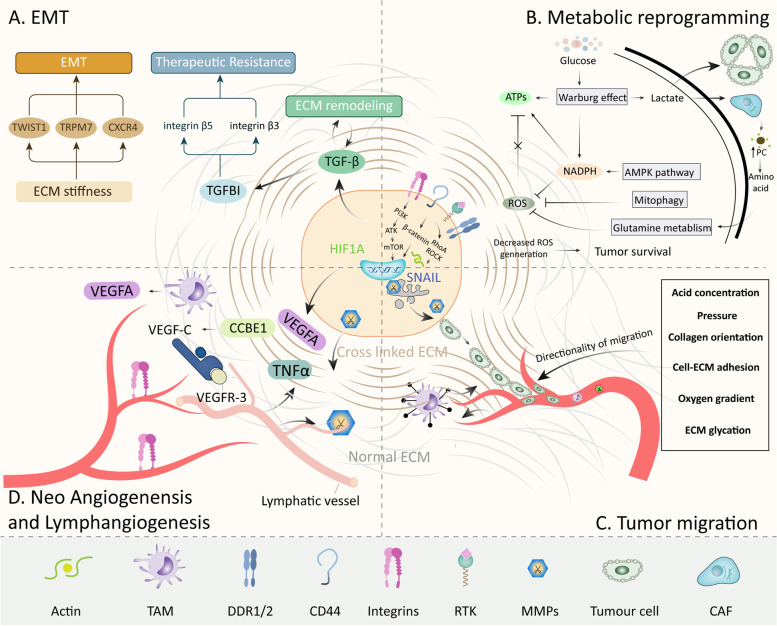
“In cancer specifically, ECM remodeling facilitates tumor cell invasion, metastasis, and therapy resistance, in part by creating a permissive microenvironment for EMT [24].”
Targeting Invasion: The Role of MMP-2 and MMP-9 Inhibition in Colorectal Cancer Therapy
Shoari, A., Ardalan, A. A., Dimesa, A. M., & Coban, M. (2024) · Biomolecules · doi:10.3390/biom15010035 · Cited by 99
Lee, C.-J., Jang, T., Jeon, S.-E., Yun, H.-J., Cho, Y.-H., Lim, D.-Y., & Nam, J. (2024) · Nature Communications · doi:10.1038/s41467-024-54920-9 · Cited by 95
“The TME consists of cellular components, including fi broblasts, endothelial cells, and immune cells, and noncellular components 6,7 .”
Extracellular Matrix Limits Nanoparticle Diffusion and Cellular Uptake in a Tissue-Specific Manner
Cahn, D., Stern, A., Buckenmeyer, M. J., Wolf, M. T., & Duncan, G. A. (2024) · ACS Nano · doi:10.1021/acsnano.4c10381 · Cited by 100
Extracellular matrix: unlocking new avenues in cancer treatment
Lee, J. J., Ng, K. Y., & Bakhtiar, A. (2025) · Biomarker Research · doi:10.1186/s40364-025-00757-3 · Cited by 100
Mechanisms and Strategies to Overcome Drug Resistance in Colorectal Cancer
Haynes, J., & Manogaran, P. (2025) · International Journal of Molecular Sciences · doi:10.3390/ijms26051988 · Cited by 82
“For example, inhibiting lysyl oxidase (LOX) family enzymes, which are involved in the crosslinking of ECM proteins collagen and elastin, can reduce matrix stiffness and improve drug delivery to tumor cells [219].”
Extracellular matrix stiffness regulates colorectal cancer progression via HSF4
Wang, K., Ning, S., Zhang, S., Jiang, M., Huang, Y., Pei, H., Li, M., & Tan, F. (2025) · Journal of Experimental & Clinical Cancer Research · doi:10.1186/s13046-025-03297-8 · Cited by 97
Self-citationTargeting the tumor microenvironment with biomaterials for enhanced immunotherapeutic efficacy
Feng, Y., Tang, Q., Wang, B., Yang, Q., Zhang, Y., Lei, L., & Li, S. (2024) · Journal of Nanobiotechnology · doi:10.1186/s12951-024-03005-2 · Cited by 83
“This intricate and dynamic three-dimensional network of biological macromolecules, including collagen, proteo-glycans, laminin, and HA, plays a crucial role in tumor development, migration, and metastasis, significantly impacting drug delivery [59, 192].”
Extracellular Matrix Signaling Cues: Biological Functions, Diseases, and Therapeutic Targets
Zhao, T., Huang, Y., Zhu, J., Qin, Y., Wu, H., Yu, J., Zhai, Q., Li, S., Qin, X., Wang, D., et al. (2025) · MedComm · doi:10.1002/mco2.70281 · Cited by 103
“For example, MMPs are highly expressed by myeloid cells in the tumor microenvironment and play a key role in degrading ECM components and enhancing tumor cell invasion [84].”
Zhang, Q., An, Z.-Y., Jiang, W. G., Jin, W., & He, X. (2023) · Biomedicine & Pharmacotherapy · doi:10.1016/j.biopha.2023.115390 · Cited by 87
Hilmi, M., Delaye, M., Muzzolini, M., Nicolle, R., Cros, J. F., Hammel, P. R., Cardot‐Ruffino, V., & Neuzillet, C. (2023) · The Lancet. Gastroenterology & hepatology · doi:10.1016/s2468-1253(23)00207-8 · Cited by 82
Ghafoor, S., Garcia, E. P., Jay, D. J., & Persad, S. (2025) · International Journal of Molecular Sciences · doi:10.3390/ijms26094364 · Cited by 86
“By striking a balance between stiffening and breakdown, these enzymes work together to modify the ECM in pathological settings such as cancer, facilitating tumor invasion, metastasis, and progression [76].”
Luo, D. Y., Zhou, J., Ruan, S., Zhang, B., Zhu, H., Que, Y., Ying, S., Li, X., Hu, Y., & Song, Z. (2025) · Cell Death and Disease · doi:10.1038/s41419-025-07385-7 · Cited by 81
Shao, S., Miao, H., & Ma, W. (2023) · Frontiers in Immunology · doi:10.3389/fimmu.2023.1295684 · Cited by 70
Dong, Z., Jiang, W., Wu, C., Chen, T., Chen, J., Ding, X., Zheng, S. S., Piatkevich, K. D., Zhu, Y., & Guo, T. (2024) · Nature Communications · doi:10.1038/s41467-024-53683-7 · Cited by 74
“For instance, tissues rich in extracellular matrix, such as CRC samples 38,39 , require more rigorous homogenization, involving higher SDS concentrations, elevated temperatures, and extended processing times.”
Crosstalk between T lymphocyte and extracellular matrix in tumor microenvironment
Lv, D., Fei, Y., Chen, H., Wang, J., Han, W., Cui, B., Feng, Y., Zhang, P., & Chen, J. (2024) · Frontiers in Immunology · doi:10.3389/fimmu.2024.1340702 · Cited by 75
Liu, Y., Zhang, X., Gu, W., Su, H., Wang, X., Wang, X., Zhang, J., Xu, M., & Sheng, W. (2024) · Journal of Advanced Research · doi:10.1016/j.jare.2024.05.031 · Cited by 70
“In recent years, the role of ECM remodeling in promoting tumor metastasis has been the subject of extensive investigation [18,19], which attracted our attention to the part of CAFs in tumor stromal remodeling.”
Self-citationEnhancing cancer immunotherapy: Nanotechnology-mediated immunotherapy overcoming immunosuppression
Chen, Y., Zhou, Q., Jia, Z., Cheng, N., Zhang, S., Chen, W., & Wang, L. (2024) · Acta Pharmaceutica Sinica B · doi:10.1016/j.apsb.2024.05.032 · Cited by 66
“The main reason for the limited clinical benefits is the inadequate or challenging infiltration of immune cells in the TME 195,196 .”
Self-citationYu, H., Li, J., Peng, S., Liu, Q., Chen, D., He, Z., Xiang, J., & Wang, B. (2024) · Cancer Letters · doi:10.1016/j.canlet.2024.217385 · Cited by 69
Microbiota in cancer: current understandings and future perspectives
Yao, Y., Zhu, Y., Chen, K., Chen, J., Li, Y., Li, D., & Wei, P. (2026) · Signal Transduction and Targeted Therapy · doi:10.1038/s41392-025-02335-3 · Cited by 61
Self-citationMacrophages and platelets in liver fibrosis and hepatocellular carcinoma
Casari, M., Siegl, D., Deppermann, C., & Schuppan, D. (2023) · Frontiers in Immunology · doi:10.3389/fimmu.2023.1277808 · Cited by 58
Pyroptosis in cancer therapy: a double-edged sword for immune activation and tumor progression
Alishvandi, A., Aram, C., Shahrivar, F. F., Kesharwani, P., & Sahebkar, A. (2025) · Molecular Cancer · doi:10.1186/s12943-025-02506-4 · Cited by 63
Decoding Tumor Angiogenesis for Therapeutic Advancements: Mechanistic Insights
Kaur, G., & Roy, B. (2024) · Biomedicines · doi:10.3390/biomedicines12040827 · Cited by 60
“Similar to VEGF, FGFs also play a crucial role in ECM degradation and organization by upregulating the production of MMPs [60].”
BackgroundRole of the Extracellular Matrix in Cancer: Insights into Tumor Progression and Therapy
Desai, N., Sahel, D. K., Sawant, B. K. S., Postwala, H. I., Shah, Y. B., Chavda, V. P., Fernandes, C., Khatri, D. K., & Vora, L. K. (2025) · Advanced Therapeutics · doi:10.1002/adtp.202400370 · Cited by 66
Gong, P., Wang, F., Hua, Y., Ying, J., Chen, J., & Qiao, Y. (2025) · Journal of Nanobiotechnology · doi:10.1186/s12951-025-03815-y · Cited by 65
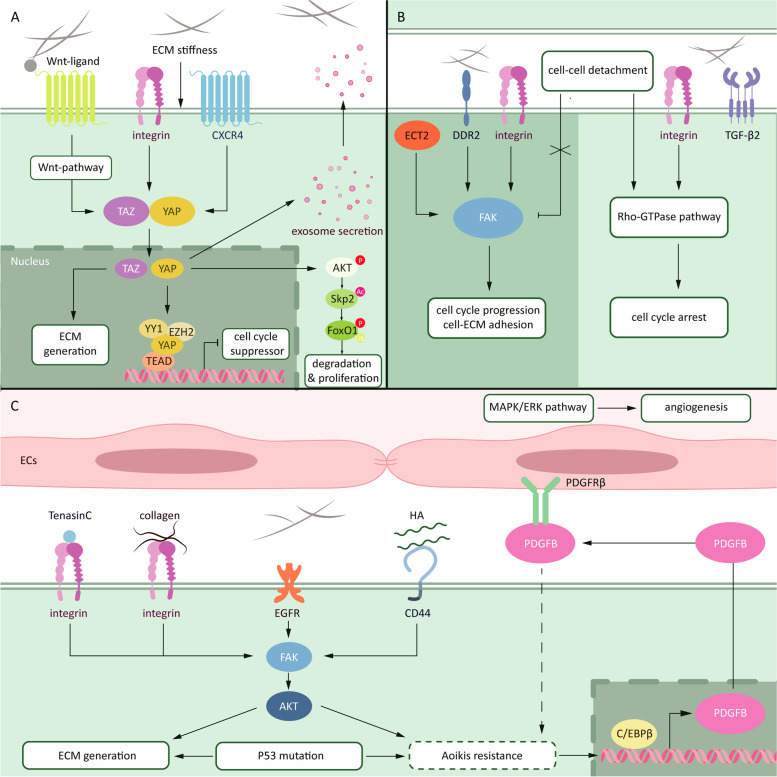
“Within TME, ECM exerts multifaceted regulatory roles in tumor progression through alterations in molecular composition, biomechanical properties, signal transduction, cell–cell interactions, and other key biological processes [2–6].”
Zheng, J.-H., Zhu, Y.-H., Yang, J., Ji, P., Zhao, R.-K., Duan, Z., Yao, H., Jia, Q.-Y., Yin, Y., Hu, L.-P., et al. (2024) · Cell Reports · doi:10.1016/j.celrep.2024.114633 · Cited by 56
Osteopontin is a therapeutic target that drives breast cancer recurrence
Gu, Y., Taifour, T., Bui, T., Zuo, D., Pacis, A., Poirier, A., Attalla, S. S., Fortier, A.-M., Sanguin‐Gendreau, V., Pan, T.-C., et al. (2024) · Nature Communications · doi:10.1038/s41467-024-53023-9 · Cited by 58
“The STAT3-OPN axis, the IL4-macrophage polarization axis, and the effect of OPN on T cells are known in the literature.”
Unraveling the Role of the Tumor Extracellular Matrix to Inform Nanoparticle Design for Nanomedicine
Cassani, M., Fernandes, S., Pagliari, S., Cavalieri, F., Caruso, F., & Forte, G. (2025) · Advanced Science · doi:10.1002/advs.202409898 · Cited by 48
Xie, W., Yu, X., Yang, Q., Ke, N., Wang, P., Kong, H., Wu, X., Ma, P., Chen, L., Yang, J., et al. (2025) · Cancer Discovery · doi:10.1158/2159-8290.cd-24-1712 · Cited by 59
Self-citationXu, D.-M., Chen, L.-X., Xue, T., Zhuang, X., Wei, L., Han, H., & Mo, M. (2025) · Cell Death Discovery · doi:10.1038/s41420-025-02503-y · Cited by 62
“In addition to its structural role, MMP1 signi fi cantly in fl uences tumor-immune interactions by modulating immune cell in fi ltration and positioning within the tumor microenvironment (TME) [6].”
Epigenetic remodeling under oxidative stress: Mechanisms driving tumor metastasis
Peng, P., Qin, S., Li, L., He, Z., Li, B., Nice, E. C., Zhou, L., & Lei, Y. (2024) · MedComm – Oncology · doi:10.1002/mog2.70000 · Cited by 65
Yang, Y., Sun, H., Yu, H., Wang, L., Gao, C., Mei, H., Jiang, X., & Ji, M. (2025) · Journal of Translational Medicine · doi:10.1186/s12967-025-06070-9 · Cited by 56
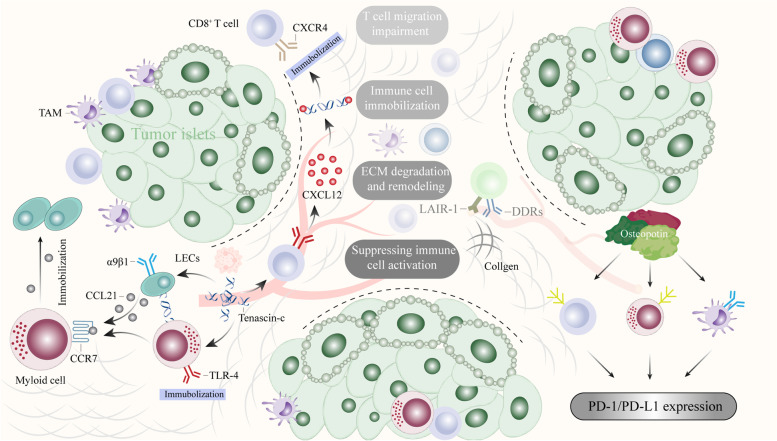
“This reorganization inhibits cytotoxic immune cells, such as CD8 + T cells, from approaching the tumor parenchyma, instead redirecting them into the tumor stroma, thereby enabling tumor immune escape [59, 60].”
Breaking the stromal barrier in pancreatic cancer: Advances and challenges
Chakkera, M., Foote, J. B., Farran, B., & Nagaraju, G. P. (2023) · Biochimica et Biophysica Acta (BBA) - Reviews on Cancer · doi:10.1016/j.bbcan.2023.189065 · Cited by 58
Deng, X., Liu, X., & Zhao, L. (2025) · Materials Today Bio · doi:10.1016/j.mtbio.2025.102385 · Cited by 66
“In addition, ECM degradation can augment the infiltration capacity of immune cells, such as T cells and macrophages, further boosting the effectiveness of tumor immunotherapy [166].”
Smart Inorganic Nanomaterials for Tumor Microenvironment Modulation
Jiang, Z., Xiang, H., & Tang, X. (2025) · Inorganics · doi:10.3390/inorganics13100337 · Cited by 50
Mangani, S., Piperigkou, Z., Koletsis, N. E., Ioannou, P., & Karamanos, N. K. (2024) · FEBS Journal · doi:10.1111/febs.17270 · Cited by 47
“In this manner, the ECM remodeling, which is characterized by alterations in the content and the activity of matrix components, results in the establishment of the breast TME [40].”
Age-related meningeal extracellular matrix remodeling compromises CNS lymphatic function
Romero, K. H., Stevenson, T. J., Smyth, L. C. D., Watkin, B., McCullough, S. J. C., Vinnell, L., Smith, A. M., Schweder, P. M., Correia, J. A., Kipnis, J., et al. (2025) · Journal of Neuroinflammation · doi:10.1186/s12974-025-03436-0 · Cited by 50
“These processes involve increased ECM protein deposition, cross-linking, and structural reorganization, which contribute to tissue stiffening and functional impairment [21, 22].”
Exosomes in inflammation and cancer: from bench to bedside applications
Huang, S., Fang, Y., Qiu, Y., Liu, T., Zhang, W., Yang, Y., Zhong, R., Yang, Y., & Peng, X. (2025) · Molecular Biomedicine · doi:10.1186/s43556-025-00280-9 · Cited by 47
“In the process of tumor development and metastasis, immune escape plays a crucial role [154].”
Xiang, Y., Chen, Q., Nan, Y., Liu, M., Xiao, Z., Yang, Y., Zhang, J., Ying, X., Long, X., Wang, S., et al. (2023) · Advanced Functional Materials · doi:10.1002/adfm.202312092 · Cited by 46
The importance of 3D fibre architecture in cancer and implications for biomaterial model design
Ashworth, J. C., & Cox, T. R. (2024) · Nature reviews. Cancer · doi:10.1038/s41568-024-00704-8 · Cited by 53
Role of tumor microenvironment in ovarian cancer metastasis and clinical advancements
Wang, Y., Zhu, N., Liu, J., Chen, F., Song, Y., Ma, Y., Yang, Z., & Wang, D. (2025) · Journal of Translational Medicine · doi:10.1186/s12967-025-06508-0 · Cited by 56
Zhang, W., Wang, J., Liu, C., Li, Y., Sun, C., Wu, J., & Wu, Q. (2023) · Journal of Translational Medicine · doi:10.1186/s12967-023-04714-2 · Cited by 49
“Destruction of the ECM is the defense layer that destroys TME, so targeting ECM is a potential strategy for anti-malignant therapy [151].”
BackgroundSelf-citation“Reinforcement” by Tumor Microenvironment: The Seventh “R” of Radiobiology
Taghizadeh‐Hesary, F. (2023) · International Journal of Radiation Oncology*Biology*Physics · doi:10.1016/j.ijrobp.2023.09.027 · Cited by 48
Klabukov, I., Smirnova, A., Yakimova, A. O., Kabakov, A. E., Atiakshin, D., Petrenko, D. А., Shestakova, V. A., Sulina, Y. Y., Yatsenko, E., Stepanenko, V. N., et al. (2024) · Journal of Molecular Pathology · doi:10.3390/jmp5040029 · Cited by 42
Biomaterials to regulate tumor extracellular matrix in immunotherapy
Zhang, Y., Dong, X., Zhang, Y., Chen, Z., Zhou, G., Chen, N., Shen, W., Yang, K., & Pei, P. (2024) · Journal of Controlled Release · doi:10.1016/j.jconrel.2024.10.010 · Cited by 42
Lymph node metastasis in cancer: Clearing the clouds to see the dawn
Li, Z., Zhou, K., Wu, Q., Liu, B., & Bu, L. (2024) · Critical Reviews in Oncology/Hematology · doi:10.1016/j.critrevonc.2024.104536 · Cited by 45
Hypoxia-associated autophagy flux dysregulation in human cancers
Fu, J., Lin, J., Dai, Z., Lin, B., & Zhang, J. (2024) · Cancer Letters · doi:10.1016/j.canlet.2024.216823 · Cited by 41
Rijns, L., Rutten, M. G. T. A., Vrehen, A. F., Aldana, A. A., Baker, M. B., & Dankers, P. Y. W. (2024) · Nanoscale · doi:10.1039/d4nr02088j · Cited by 43
The Multifaced Role of Collagen in Cancer Development and Progression
Buglio, G. L., Cicero, A. L., Campora, S., & Ghersi, G. (2024) · International Journal of Molecular Sciences · doi:10.3390/ijms252413523 · Cited by 42
Secretome Analysis: Reading Cellular Sign Language to Understand Intercellular Communication
Wu, W., & Krijgsveld, J. (2023) · Molecular & Cellular Proteomics · doi:10.1016/j.mcpro.2023.100692 · Cited by 43
“Given the key role of the ECM in health and disease, excellent reviews are available describing current insights in ECM biology and its potential for therapeutic targeting (10, 144, 145).”
BackgroundA comprehensive review on the use of traditional Chinese medicine for cancer treatment
Yadav, N., Deshmukh, R., & Mazumder, R. (2024) · Pharmacological Research - Modern Chinese Medicine · doi:10.1016/j.prmcm.2024.100423 · Cited by 46
Zhang, X., Al-Danakh, A., Zhu, X., Feng, D., Yang, L., Wu, H., Li, Y., Wang, S., Chen, Q., & Yang, D. (2024) · Bioengineering & Translational Medicine · doi:10.1002/btm2.10698 · Cited by 43
Self-citationSPP1+ macrophages in HR+ breast cancer are associated with tumor-infiltrating lymphocytes
Cha, S. M., Park, J.-W., Lee, Y. J., Lee, H. J., Lee, H., Lee, I. W., Gong, G., Park, S. H., Lee, H. J., & Jeong, B.-K. (2024) · npj Breast Cancer · doi:10.1038/s41523-024-00695-7 · Cited by 43
“These fi ndings suggest an enhanced ECM remodeling process in TIL-high HR + breast cancer, potentially facilitating tumor invasion and metastasis 31 .”
Personalized nanovaccines for treating solid cancer metastases
Feng, T., Hu, J., Wen, J., Qian, Z., Che, G., Zhou, Q., & Zhu, L. (2024) · Journal of Hematology & Oncology · doi:10.1186/s13045-024-01628-4 · Cited by 41
“The onset of angiogenesis and metastasis in primary cancers is significantly influenced by the ECM [228].”
Focal adhesion in the tumour metastasis: from molecular mechanisms to therapeutic targets
Liu, Z., Zhang, X., Ben, T., Li, M., Jin, Y., Wang, T., & Song, Y. (2025) · Biomarker Research · doi:10.1186/s40364-025-00745-7 · Cited by 45
Tumor-associated macrophages in cancer: from mechanisms to application
Tang, W., Wang, X., Han, B., Jiang, S.-H., & Cao, H. (2025) · Molecular Biomedicine · doi:10.1186/s43556-025-00396-y · Cited by 48
Self-citationExtracellular vesicles on the move: Traversing the complex matrix of tissues
Arif, S., & Moulin, V. J. (2023) · European Journal of Cell Biology · doi:10.1016/j.ejcb.2023.151372 · Cited by 40
Antibody-drug conjugates: Principles and opportunities
Phuna, Z. X., Kumar, P. A., Haroun, E., Dutta, D., & Lim, S. H. (2024) · Life Sciences · doi:10.1016/j.lfs.2024.122676 · Cited by 40
Gao, X., Ma, C., Liang, S., Chen, M., He, Y. Z., & Lei, W. (2024) · International Journal of Molecular Medicine · doi:10.3892/ijmm.2024.5398 · Cited by 36
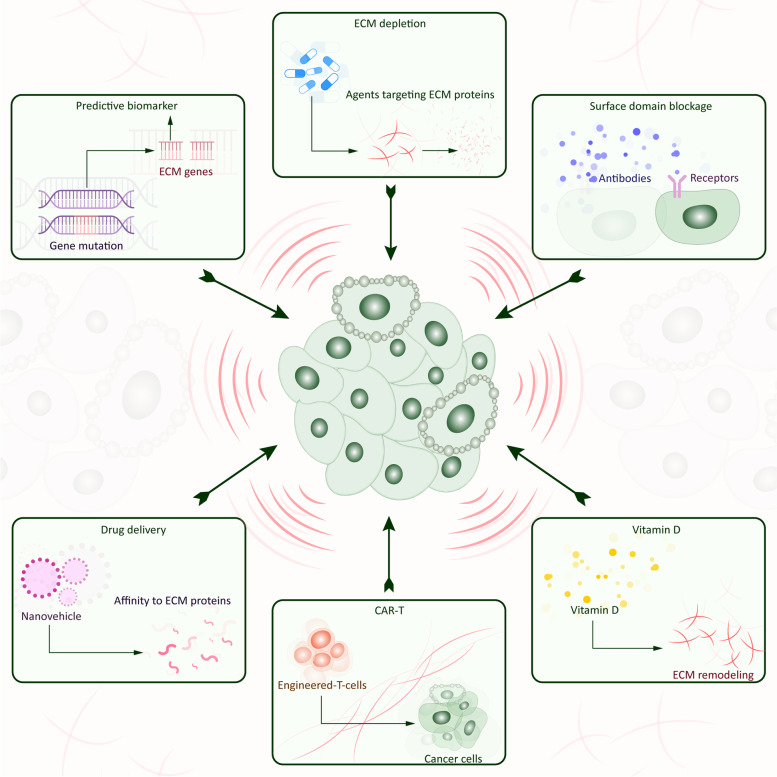
“…by targeting matrix‑related enzymes (matrix metalloproteinases, lysyl oxidase and lysyl oxidase‑like proteins) or ECM‑associated cell‑surface receptors (integrin, discoidin domain receptors and CD44), and the use of vitamin D may have significant therapeutic anti‑tumor potential (138,142‑144).”
BackgroundMeyiah, A., Khan, F. I., Alfaki, D. A., Murshed, K., Raza, A., & Elkord, E. (2025) · Translational Oncology · doi:10.1016/j.tranon.2025.102307 · Cited by 40
“ECM also promotes tumor cell proliferation and migration through the VEGF, which facilitates angiogenesis by promoting blood vessel formation while proteases facilitate ECM modulation to create pathways for vessel growth [23,24].”
Matrix Metalloproteinases in Glioma: Drivers of Invasion and Therapeutic Targets
Aitchison, E. E., Dimesa, A. M., & Shoari, A. (2025) · BioTech · doi:10.3390/biotech14020028 · Cited by 41
“Additionally, MMPs, including MMP-2 and MMP-14, facilitate the recruitment and migration of regulatory T-cells (Tregs) and myeloid-derived suppressor cells (MDSCs) into glioma tissue by re-modeling extracellular matrix components and modulating chemokine gradients [77].”
Role of Tumor Microenvironment in Prostate Cancer Immunometabolism
Wang, Y., Chen, Y., & Wang, J. (2025) · Biomolecules · doi:10.3390/biom15060826 · Cited by 42
Kim, T. H., Lim, S. H., Lee, H., Chae, Y. C., & Min, D. S. (2026) · Experimental & Molecular Medicine · doi:10.1038/s12276-026-01650-1 · Cited by 43
“Importantly, CAF-educated TAMs have been implicated in resistance to immune checkpoint blockade, positioning them as critical therapeutic barriers and high-value targets for stroma – immune comodulation strategies 101,102 .”
Wen, Z., Zhang, Y., Wang, X., Wu, Y., Mao, J., Li, Q., & Gong, S. (2023) · International Journal of Molecular Sciences · doi:10.3390/ijms241713312 · Cited by 35
“Tumor development is characterized by complex interactions between cancer cells and the ECM, and the degradation of the ECM is a precondition required for tumor invasion and metastasis [8].”
BackgroundSelf-citationQiu, Y., Lu, G., Li, N., Hu, Y., Tan, H., & Jiang, C. (2024) · Frontiers in Immunology · doi:10.3389/fimmu.2024.1327281 · Cited by 36
Wang, S., Yuan, X., Yang, Z., Zhang, X., Xu, Z., Yang, L., Yang, X. Z., Zhou, W., & Liu, W. (2024) · Journal of Advanced Research · doi:10.1016/j.jare.2024.08.021 · Cited by 40
“Aberrant tissue fibrosis and ECM stiffening are closely associated with tumorigenesis, progression, and resistance of HCC as well as other solid tumors [2,8,36,37].”
Angiotensin receptor blocker attacks armored and cold tumors and boosts immune checkpoint blockade
Mei, J., Chu, J., Yang, K. G., Luo, Z., Yang, J., Xu, J., Li, Q., Zhang, Y., Zhang, Q., Wan, M., et al. (2024) · Journal for ImmunoTherapy of Cancer · doi:10.1136/jitc-2024-009327 · Cited by 38
The extracellular matrix in inflammation and cancer
Zhang, W., Xiang, Y., Lu, C., Wang, F., Ren, H., Wu, H., & Yan, M. (2026) · Molecular Biomedicine · doi:10.1186/s43556-026-00415-6 · Cited by 38
Zhang, X., Liu, S. S., Ma, J., & Qu, W. (2023) · Pathology - Research and Practice · doi:10.1016/j.prp.2023.154633 · Cited by 33
Immune modulatory microRNAs in tumors, their clinical relevance in diagnosis and therapy
Vaxevanis, C., Bachmann, M. P., & Seliger, B. (2024) · Journal for ImmunoTherapy of Cancer · doi:10.1136/jitc-2024-009774 · Cited by 34
“…to fool the immune system by intrinsic factors, but also by remodeling their microenvironment in order to proliferate and escape immune recognition, 16 which is a result of an evolutionary pressure due to the complex interaction of the immune system with tumor cells and established by genetic…”
BackgroundZhang, Z., Wang, L., Li, X., Miao, Y., & Li, D. (2024) · International Journal of Medical Sciences · doi:10.7150/ijms.100468 · Cited by 32
Self-citationMicroneedle-based nanodrugs for tumor immunotherapy
Wang, T., Liu, H., Li, M., Ji, Z., Zhang, X., Wang, N., Chen, Y., Sun, J., & Liu, F. (2025) · Journal of Controlled Release · doi:10.1016/j.jconrel.2025.02.003 · Cited by 35
Cancer‐Associated Fibroblasts: Heterogeneity, Cancer Pathogenesis, and Therapeutic Targets
Li, Y., Liu, Q., Jing, X., Wang, Y., Jia, X., Yang, X., & Chen, K. (2025) · MedComm · doi:10.1002/mco2.70292 · Cited by 45
“The dense ECM obstructs drug delivery by acting as a physical barrier to compound penetration [209, 210] and by compressing blood vessels.”
Self-citationCancer-Associated Fibroblasts in Esophageal Cancer
Dunbar, K. J., Wong, K., & Rustgi, A. K. (2024) · Cellular and Molecular Gastroenterology and Hepatology · doi:10.1016/j.jcmgh.2024.01.008 · Cited by 36
“8,9 We direct readers to recent reviews for an in-depth analysis of how the ECM in fl uences cancer progression, 10 – 12 and speci fi cally how ECM proteins in fl uence esophageal cancer.”
BackgroundTRPV4 Regulates the Macrophage Metabolic Response to Limit Sepsis-induced Lung Injury
Orsini, E. M., Roychowdhury, S., Gangadhariah, M. H., Cross, E., Abraham, S., Reinhardt, A., Grund, M. E., Zhou, J. Y., Stuehr, O., Pant, B. D., et al. (2024) · American Journal of Respiratory Cell and Molecular Biology · doi:10.1165/rcmb.2023-0456oc · Cited by 33
The Tumor Stroma of Squamous Cell Carcinoma: A Complex Environment That Fuels Cancer Progression
Buruiană, A., Gheban, B., Gheban-Roşca, I. A., Georgiu, C., Crișan, D., & Crişan, M. (2024) · Cancers · doi:10.3390/cancers16091727 · Cited by 37
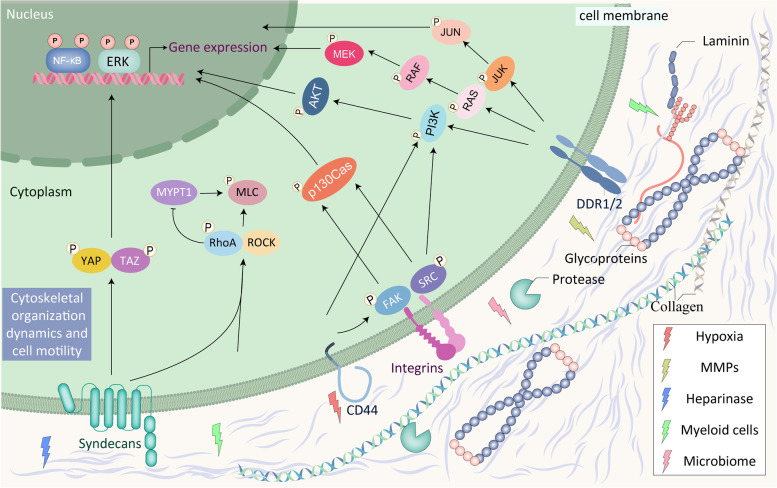
“Additionally, receptors such as discoidin domain-containing receptors (DDRs), CD44, and syndecans offer further therapeutic targets for domain-specific blockade [242,246,247].”
BackgroundInfluentialPost-Translational Modifications of Proteins Orchestrate All Hallmarks of Cancer
Bruno, P. S., Arshad, A., Gogu, M.-R., Waterman, N., Flack, R., Dunn, K., Darie, C. C., & Neagu, A.-N. (2025) · Life · doi:10.3390/life15010126 · Cited by 42
“The extracellular matrix (ECM), mainly consisting of proteoglycans, glycoproteins, and matrisome proteins, also plays an important role in tumor development [139].”
Bioengineering structural anisotropy in living tissues
Mostert, D., van der Putten, C., Sahlgren, C., Kurniawan, N. A., & Bouten, C. V. C. (2025) · Nature Reviews Bioengineering · doi:10.1038/s44222-025-00338-x · Cited by 39
Metadata
- Authors
- Yuan, Z., Li, Y., Zhang, S., Wang, X., Dou, H., Yu, X., Zhang, Z., Yang, S., & Xiao, M.
- Affiliations
- Harbin Medical University (CN)
- Central South University (CN)
- Corresponding author
- Yang, Shanshan
- Xiao, Min
- Venue
- Molecular Cancer
- Published
- 2023-03-11
- Volume
- 22
- Issue
- 1
- Pages
- 48-48
- ISSN
- 1476-4598 (ISSN-L)
- PMC
- PMC10007858
- OpenAlex
- W4323971780
- Cited by
- 977
- References
- 625
- Citations by year
- 2026: 304 · 2025: 385 · 2024: 242 · 2023: 45
- FWCI
- 32.03
- Type
- journal article
- Language
- en
- Open access
- gold
- doi.org
- Licence
- cc-by
- creativecommons.org/licenses/by/4.0 (tdm)
- creativecommons.org/licenses/by/4.0 (vor)
- Locations
- Molecular Cancer (publishedVersion, cc-by)
- PubMed Central (publishedVersion, cc-by)
- PubMed (publishedVersion)
- DOAJ (DOAJ: Directory of Open Access Journals) (submittedVersion, cc-by-sa)
- Funders
- Natural Science Foundation of Heilongjiang Province, China (LH2021H076)
- National Natural Science Foundation of China, China (81872460, 81872145)
- Topics
- Life Sciences › Biochemistry, Genetics and Molecular Biology › Cell Biology › Cellular Mechanics and Interactions
- Life Sciences › Biochemistry, Genetics and Molecular Biology › Cancer Research › Protease and Inhibitor Mechanisms
- Life Sciences › Biochemistry, Genetics and Molecular Biology › Molecular Biology › TGF-β signaling in diseases
- Keywords
- extracellular matrix remodeling, tumor progression, immune evasion, tumor microenvironment, extracellular matrix stiffness, anoikis, metastasis, angiogenesis, lymphangiogenesis, immunosuppression, immunotherapy resistance, cancer therapy
- MeSH terms
- Extracellular Matrix, Humans, Immunotherapy, Neoplasms, Tumor Microenvironment
About these checks
Registry, retraction, Cites and statistics results are computed, not judged, with one exception: a printed reference that no index lists is read once by a model before it counts as a citation error. Claims are extracted by a model and kept only when their quote appears verbatim in the text; each cited source is then checked, with a model’s help, for whether it says what the claim relies on. Those verdicts can be wrong — read the claim’s quote and the cited source before relying on one.
Statistics and arithmetic are recomputed, not judged.
Confidence bands are shown only for fields calibrated on our annotated test set. None is calibrated yet, so no band is shown.
What counts as a claim ›How we measure confidence ›How we check this ›
Are you an author, or do you see a problem with this page? Request a review
Data sources
Bibliographic data: Semantic Scholar, OpenAlex, Crossref.
Contains information from the Semantic Scholar Academic Graph Datasets, made available under the ODC Attribution License (ODC-BY 1.0).
Semantic Scholar’s data is described in: Kinney, R., et al. (2023). The Semantic Scholar Open Data Platform. arXiv:2301.10140.
