

Extracellular matrix remodeling in tumor progression and immune escape: from mechanisms to treatments
Open accessThe DOI matches its Crossref record; 626 of the 626 references it cites were found in a registry or an index.
Abstract
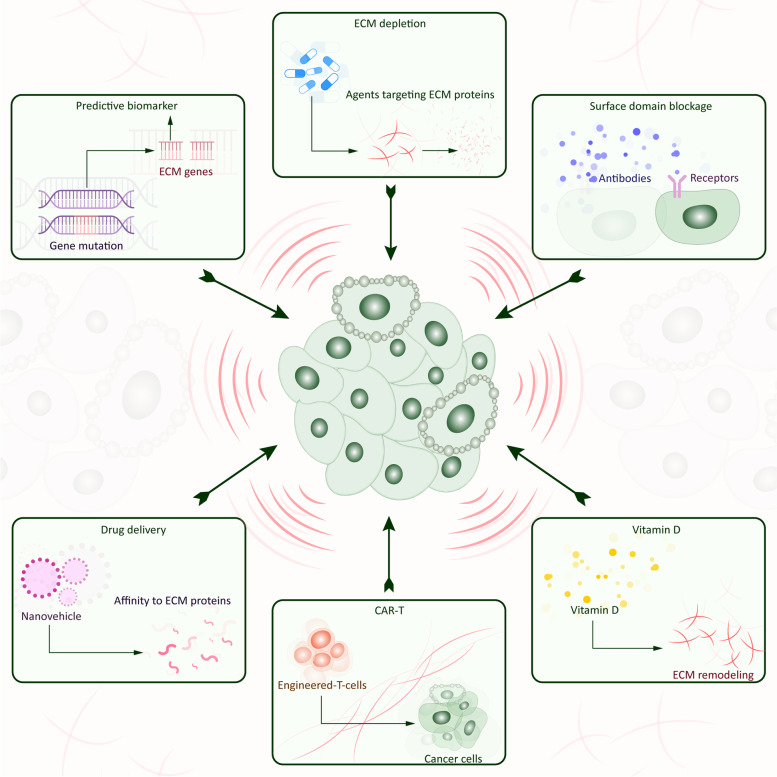
The malignant tumor is a multi-etiological, systemic and complex disease characterized by uncontrolled cell proliferation and distant metastasis. Anticancer treatments including adjuvant therapies and targeted therapies are effective in eliminating cancer cells but in a limited number of patients. Increasing evidence suggests that the extracellular matrix (ECM) plays an important role in tumor development through changes in macromolecule components, degradation enzymes and stiffness. These variations are under the control of cellular components in tumor tissue via the aberrant activation of signaling pathways, the interaction of the ECM components to multiple surface receptors, and mechanical impact. Additionally, the ECM shaped by cancer regulates immune cells which results in an immune suppressive microenvironment and hinders the efficacy of immunotherapies. Thus, the ECM acts as a barrier to protect cancer from treatments and supports tumor progression. Nevertheless, the profound regulatory network of the ECM remodeling hampers the design of individualized antitumor treatment. Here, we elaborate on the composition of the malignant ECM, and discuss the specific mechanisms of the ECM remodeling. Precisely, we highlight the impact of the ECM remodeling on tumor development, including proliferation, anoikis, metastasis, angiogenesis, lymphangiogenesis, and immune escape. Finally, we emphasize ECM "normalization" as a potential strategy for anti-malignant treatment.
Overview
The claims and statistics of this paper haven’t been checked yet.
Free: it reads the open-access text and checks the first 5 claims that cite a source we can check. Create a free account to check every claim.
Integrity signals
Registry
Cites
Statistics
Figures
Verification
Claims the paper makes
The claims and statistics of this paper haven’t been checked yet.
Free: it reads the open-access text and checks the first 5 claims that cite a source we can check. Create a free account to check every claim.
Claims other papers make about this one
Each is checked against this paper’s own text: does it say what the citing paper says it does?
The cited source says what the claim attributes to it.
In the citing paper
“inhibiting lysyl oxidase (LOX) family enzymes, which are involved in the crosslinking of ECM proteins collagen and elastin, can reduce matrix stiffness and improve drug delivery to tumor cells [219].”
From Mechanisms and Strategies to Overcome Drug Resistance in Colorectal Cancer (2025) · cites this paper as [219]
Self-check
Percentages, sums and reported differences re-computed from the paper’s own numbers.
The self-check needs the paper’s full text.
Citations
Cites
2 retracted
NK cell heparanase controls tumor invasion and immune surveillance
Putz, E. M., Mayfosh, A. J., Kos, K., Barkauskas, D. S., Nakamura, K., Town, L., Goodall, K. J., Yee, D. Y., Poon, I. K. H., Baschuk, N., et al. (2017) · Journal of Clinical Investigation · doi:10.1172/jci92958 · Cited by 105
RetractedAndreuzzi, E., Colladel, R., Pellicani, R., Tarticchio, G., Cannizzaro, R., Spessotto, P., Bussolati, B., Brossa, A., Paoli, P. D., Canzonieri, V., et al. (2017) · Matrix Biology · doi:10.1016/j.matbio.2017.04.002 · Cited by 84 · cited 1×
“mediates MMRN2 degradation and enhances tumor angiogenesis [431].”
BackgroundRetractedSung, H., Ferlay, J., Siegel, R. L., Laversanne, M., Soerjomataram, I., Jemal, A., & Bray, F. (2021) · CA: A Cancer Journal for Clinicians · doi:10.3322/caac.21660 · Cited by 108,699 · cited 1×
“Anti‐cancer therapy targeting ECM Raising morbidity of cancer worldwide demonstrates the emergency of precise treatment strategy design and the discovery of novel therapeutic targets [541].”
BackgroundRole of YAP/TAZ in mechanotransduction
Dupont, S., Morsut, L., Aragona, M., Enzo, E., Giulitti, S., Cordenonsi, M., Zanconato, F., Le Digabel, J., Forcato, M., Bicciato, S., et al. (2011) · Nature · doi:10.1038/nature10137 · Cited by 5,979 · cited 1×
“Abnormal activation of Hippo core factors Yes1 associated transcriptional regulator (YAP) and WW domain containing transcription regulator (TAZ, or WWTR1) sustain cell proliferation and is prevalently detected in various cancers, implying the success adaption of cancer to crowed environment [137, 138].”
BackgroundMatrix Metalloproteinases: Regulators of the Tumor Microenvironment
Kessenbrock, K., Plaks, V., & Werb, Z. (2010) · Cell · doi:10.1016/j.cell.2010.03.015 · Cited by 5,151 · cited 1×
“Some enzymes process matrix components, such as collagen, resulting in the production and release of bioactive fragments [9, 10].”
BackgroundReactive oxygen species (ROS) homeostasis and redox regulation in cellular signaling
Ray, P. D., Huang, B.-W., & Tsuji, Y. (2012) · Cellular Signalling · doi:10.1016/j.cellsig.2012.01.008 · Cited by 4,373 · cited 1×
“When cancer cells are detached from ECM, increasing production of ROS is lethal for tumor cell survival [293].”
BackgroundHow Matrix Metalloproteinases Regulate Cell Behavior
Sternlicht, M. D., & Werb, Z. (2001) · Annual Review of Cell and Developmental Biology · doi:10.1146/annurev.cellbio.17.1.463 · Cited by 3,959 · cited 1×
“A big family contains more than 30 kinds of MMP have been identified since the MMPs’ role as collagen hydrolase was unveiled [42, 43].”
BackgroundThe extracellular matrix: A dynamic niche in cancer progression
Lu, P., Weaver, V. M., & Werb, Z. (2012) · Journal of Cell Biology · doi:10.1083/jcb.201102147 · Cited by 3,024 · cited 1×
“Meanwhile, cell-to-cell activity residing in the TME is constantly reshaping ECM, and these cells are affected by the signals provide by ECM itself [13].”
BackgroundEMT Transition States during Tumor Progression and Metastasis
Pastushenko, I., & Blanpain, C. (2019) · Trends in Cell Biology · doi:10.1016/j.tcb.2018.12.001 · Cited by 2,876 · cited 1×
“ECM‐induced EMT: ready for invasion For epithelial cells, EMT is a critical process for tumor progression and metastasis [237].”
BackgroundDistinct populations of inflammatory fibroblasts and myofibroblasts in pancreatic cancer
Öhlund, D., Handly-Santana, A., Biffi, G., Elyada, E., Almeida, A. S., Ponz-Sarvise, M., Corbo, V., Oni, T. E., Hearn, S. A., Lee, E. J., et al. (2017) · Journal of Experimental Medicine · doi:10.1084/jem.20162024 · Cited by 2,590
Tjäderhane, L., Buzalaf, M. A. R., Carrilho, M., & Chaussain, C. (2015) · Caries Research · doi:10.1159/000363582 · Cited by 2,306
Commensal Bacteria Control Cancer Response to Therapy by Modulating the Tumor Microenvironment
Iida, N., Dzutsev, A., Stewart, C. A., Smith, L., Bouladoux, N., Weingarten, R. A., Molina, D. A., Salcedo, R., Back, T., Cramer, S., et al. (2013) · Science · doi:10.1126/science.1240527 · Cited by 2,251 · cited 1×
“Clinical trials about chemotherapeutic agents, cyclophosphamide and oxaliplatin, have shown that reactive oxygen species (ROS) produced by the microbiome in the tumor microenvironment contributes to better chemotherapeutic efficacy [84].”
BackgroundElyada, E., Bolisetty, M., Laise, P., Flynn, W. F., Courtois, E. T., Burkhart, R. A., Teinor, J. A., Belleau, P., Biffi, G., Lucito, M. S., et al. (2019) · Cancer Discovery · doi:10.1158/2159-8290.cd-19-0094 · Cited by 2,241 · cited 22×
“After that, MHC class IIexpressing antigen presenting CAFs (apCAFs) have been identified, and their role in stimulating activation of CD4 T cells via antigen-specific manner has been uncovered [338].”
BackgroundInfluentialMicroenvironmental regulation of tumour angiogenesis
De Palma, M., Biziato, D., & Petrova, T. V. (2017) · Nature Reviews Cancer · doi:10.1038/nrc.2017.51 · Cited by 1,847 · cited 1×
“A thorough review has concluded the role of CAFs and extracellular components generated from CAFs in tumor angiogenesis [410].”
BackgroundThe Roles of Matrix Metalloproteinases and Their Inhibitors in Human Diseases
Cabral-Pacheco, G. A., Garza-Veloz, I., Castruita-De la Rosa, C., Ramirez-Acuña, J. M., Perez-Romero, B. A., Guerrero-Rodriguez, J. F., Martinez-Avila, N., & Martinez-Fierro, M. L. (2020) · International Journal of Molecular Sciences · doi:10.3390/ijms21249739 · Cited by 1,820 · cited 1×
“The role of MMPs in cancer progression and inhibitors of MMPs have been well reviewed recently [398].”
BackgroundGeller, L. T., Barzily-Rokni, M., Danino, T., Jonas, O. H., Shental, N., Nejman, D., Gavert, N., Zwang, Y., Cooper, Z. A., Shee, K., et al. (2017) · Science · doi:10.1126/science.aah5043 · Cited by 1,817 · cited 1×
“hyorhinis in mice can develop resistance of pancreatic ductal adenocarcinoma (PDAC) to gemcitabine, and further investigation unveiled microbiome prevalence (especially γ-proteobacteria) in approximately 75% of human PDAC clinical samples [81].”
BackgroundStromal Gene Signatures in Large-B-Cell Lymphomas
Lenz, G., Wright, G., Dave, S. S., Xiao, W., Powell, J., Zhao, H., Xu, W., Tan, B., Goldschmidt, N., Iqbal, J., et al. (2008) · New England Journal of Medicine · doi:10.1056/nejmoa0802885 · Cited by 1,808 · cited 1×
“For example, specific stromal-related gene signature is correlated with prognosis of large-B-cell lymphoma patients receiving chemotherapy [553].”
BackgroundFibroblast Heterogeneity and Immunosuppressive Environment in Human Breast Cancer
Costa, A., Kieffer, Y., Scholer-Dahirel, A., Pelon, F., Bourachot, B., Cardon, M., Sirven, P., Magagna, I., Fuhrmann, L., Bernard, C., et al. (2018) · Cancer Cell · doi:10.1016/j.ccell.2018.01.011 · Cited by 1,705 · cited 3×
“It’s worth to further explore the relationship between Treg and CAFs in various cancers.”
BackgroundNeutrophil extracellular traps produced during inflammation awaken dormant cancer cells in mice
Albrengues, J., Shields, M. A., Ng, D., Park, C. G., Ambrico, A., Poindexter, M. E., Upadhyay, P., Uyeminami, D. L., Pommier, A., Küttner, V., et al. (2018) · Science · doi:10.1126/science.aao4227 · Cited by 1,476 · cited 10×
“Besides of ECM degradation, the binding of MMP-9 to α4β1 integrin induces several intracellular signaling to promote anti-apoptotic pathway and metastatic pathway in cancer cells, suggesting another pivotal mechanism of MMPs-induced tumor progression [52, 53].”
BackgroundInfluentialThe Hippo Pathway: Biology and Pathophysiology
Ma, S., Meng, Z., Chen, R., & Guan, K.-L. (2019) · Annual Review of Biochemistry · doi:10.1146/annurev-biochem-013118-111829 · Cited by 1,387 · cited 1×
“Abnormal activation of Hippo core factors Yes1 associated transcriptional regulator (YAP) and WW domain containing transcription regulator (TAZ, or WWTR1) sustain cell proliferation and is prevalently detected in various cancers, implying the success adaption of cancer to crowed environment [137, 138].”
BackgroundCysteine cathepsins: From structure, function and regulation to new frontiers
Turk, V., Stoka, V., Vasiljeva, O., Renko, M., Sun, T., Turk, B., & Turk, D. (2012) · Biochimica et Biophysica Acta (BBA) - Proteins and Proteomics · doi:10.1016/j.bbapap.2011.10.002 · Cited by 1,377 · cited 1×
“MMP-2, -3, -9 and -14 are overexpressed and associated with ECM remodeling in a variety of malignant tumors [44, 45].”
BackgroundBiffi, G., Oni, T. E., Spielman, B., Hao, Y., Elyada, E., Park, Y., Preall, J., & Tuveson, D. A. (2019) · Cancer Discovery · doi:10.1158/2159-8290.cd-18-0710 · Cited by 1,360 · cited 3×
“Rising evidence emphasize different role of specific subtypes of CAFs in pancreatic cancer [32, 33].”
BackgroundNaba, A., Clauser, K. R., Hoersch, S., Liu, H., Carr, S. A., & Hynes, R. O. (2012) · Molecular & Cellular Proteomics · doi:10.1074/mcp.m111.014647 · Cited by 1,354 · cited 1×
“Besides gene signature, proteomic analysis of ECM proteins in cancer also contributes to identify cancer and normal tissues [558].”
BackgroundIntegrin Structure, Activation, and Interactions
Campbell, I. D., & Humphries, M. J. (2011) · Cold Spring Harbor Perspectives in Biology · doi:10.1101/cshperspect.a004994 · Cited by 1,191 · cited 1×
“The most prominent transduction pathway downstream of ECM signals is direct transduction, which occurs via classical transmembrane gated proteins such as integrins [95].”
BackgroundSalmon, H., Franciszkiewicz, K., Damotte, D., Dieu-Nosjean, M.-C., Validire, P., Trautmann, A., Mami-Chouaib, F., & Donnadieu, E. (2012) · Journal of Clinical Investigation · doi:10.1172/jci45817 · Cited by 1,138 · cited 2×
“The phenomenon could be observed in several results [313, 463, 464].”
BackgroundYAP/TAZ incorporation in the β-catenin destruction complex orchestrates the Wnt response
Azzolin, L., Panciera, T., Soligo, S., Enzo, E., Bicciato, S., Dupont, S., Bresolin, S., Frasson, C., Basso, G., Guzzardo, V., et al. (2014) · Cell · doi:10.1016/j.cell.2014.06.013 · Cited by 1,094 · cited 1×
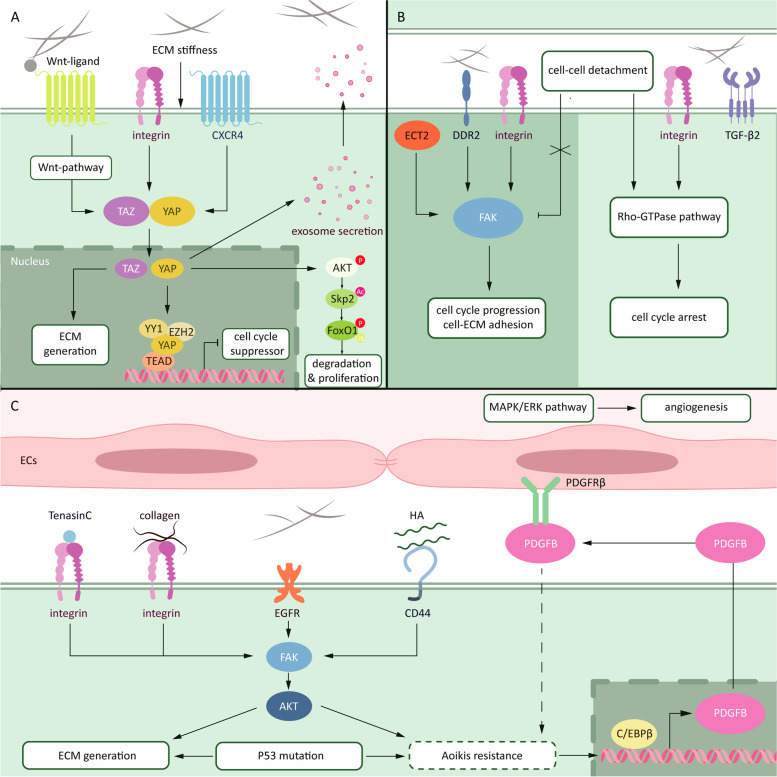
“Besides manchanotransduction, Wnt ligand-linked collagen culture is sufficient to induce YAP/TAZ activation and support cellular reprogramming [144], in accord with previous discovery of Wnt-YAP/TAZ pathway [145, 146].”
BackgroundYAP/TAZ upstream signals and downstream responses
Totaro, A., Panciera, T., & Piccolo, S. (2018) · Nature Cell Biology · doi:10.1038/s41556-018-0142-z · Cited by 1,086 · cited 1×
“Integrins and downstream pathways are main signal traducers for YAP/TAZ activation [139].”
BackgroundTargeting TGF-β Signaling in Cancer
Colak, S., & ten Dijke, P. (2017) · Trends in cancer · doi:10.1016/j.trecan.2016.11.008 · Cited by 1,003
The Discoidin Domain Receptor Tyrosine Kinases Are Activated by Collagen
Vogel, W., Gish, G. D., Alves, F., & Pawson, T. (1997) · Molecular Cell · doi:10.1016/s1097-2765(00)80003-9 · Cited by 1,002 · cited 1×
“DDRs are receptor tyrosine kinases that bind with collagen in an integrin-independent way [351, 352], and DDR1 can supplement the collagen-induced tumor progression when β1 integrin was eliminated [353].”
BackgroundCox, T. R. (2021) · Nature Reviews Cancer · doi:10.1038/s41568-020-00329-7 · Cited by 976 · cited 1×
“Nevertheless, aberrant gene expression and disordered signaling pathway of tumor cells shape pro-tumorigenic ECM remodeling, which forms the tough environment to impede infiltration of anti-tumor immune cells and agents, as well as sustaining cancer cell survival under the stress from anti-tumor agents [542].”
BackgroundWei, S. C., Fattet, L., Tsai, J. H., Guo, Y., Pai, V. H., Majeski, H. E., Chen, A. C., Sah, R. L., Taylor, S. S., Engler, A. J., et al. (2015) · Nature Cell Biology · doi:10.1038/ncb3157 · Cited by 948 · cited 1×
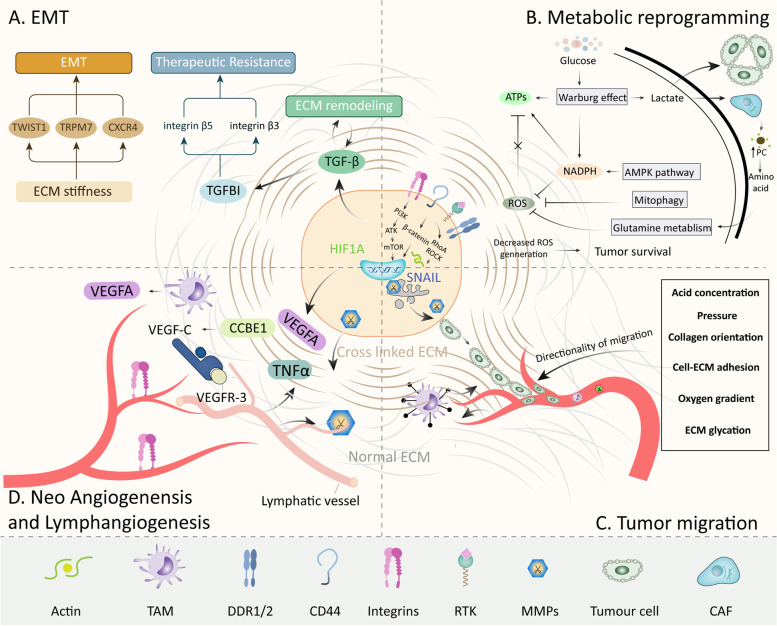
“By the way, ECM stiffness transduces mechanical signal to TWIST1, then destroys the interaction between TWIST1 and Ras-GTPase activating protein SH3 domain-binding protein 2 (G3BP2), which induces nuclear import of TWIST1 and EMT in tumor [271].”
BackgroundBarry-Hamilton, V., Spangler, R., Marshall, D., McCauley, S., Rodriguez, H. M., Oyasu, M., Mikels, A., Vaysberg, M., Ghermazien, H., Wai, C., et al. (2010) · Nature Medicine · doi:10.1038/nm.2208 · Cited by 870 · cited 2×
“Several research has proved that BANP treatment can suppress proliferation and invasion of tumor cells [395, 566, 567].”
BackgroundMakinen, T. (2001) · The EMBO Journal · doi:10.1093/emboj/20.17.4762 · Cited by 845 · cited 1×
“The interaction would trigger activation of downstream pathways including Akt phosphorylation [435].”
BackgroundMisra, S., Hascall, V. C., Markwald, R. R., & Ghatak, S. (2015) · Frontiers in Immunology · doi:10.3389/fimmu.2015.00201 · Cited by 830 · cited 1×
“Receptor for hyaluronan-mediated motility (RHAMM, or CD168) is another HA-specific receptor that mediates inflammation and tumor progression [109].”
BackgroundHeparanase promotes tumor infiltration and antitumor activity of CAR-redirected T lymphocytes
Caruana, I., Savoldo, B., Hoyos, V., Weber, G., Liu, H., Kim, E. S., Ittmann, M. M., Marchetti, D., & Dotti, G. (2015) · Nature Medicine · doi:10.1038/nm.3833 · Cited by 814 · cited 1×
“Thus, reengineered CAR-T cell with overexpression of heparinase, which can degrade ECM components and increases T-cell infiltration, strikingly inhibits tumor growth [604].”
BackgroundWound healing and the role of fibroblasts
P., B. (2013) · Journal of Wound Care · doi:10.12968/jowc.2013.22.8.407 · Cited by 779 · cited 1×
“Within a differentiated organ facing injury, cells just need to perform their duty to proliferation and migration which limited under a range of ECM [304].”
BackgroundSignaling pathways in cancer-associated fibroblasts and targeted therapy for cancer
Wu, F., Yang, J., Liu, J., Wang, Y., Mu, J., Zeng, Q., Deng, S., & Zhou, H. (2021) · Signal Transduction and Targeted Therapy · doi:10.1038/s41392-021-00641-0 · Cited by 773 · cited 1×
“Cancer stimulates CAFs proliferation and activation to facilitate ECM remodeling [328].”
BackgroundAcid-Mediated Tumor Invasion: a Multidisciplinary Study
Gatenby, R. A., Gawlinski, E. T., Gmitro, A. F., Kaylor, B., & Gillies, R. J. (2006) · Cancer Research · doi:10.1158/0008-5472.can-05-4193 · Cited by 771 · cited 1×
“Intriguingly, an acid concentration gradient from the center to the outside of the tumor tissue, which naturally forms the metastatic directionality, mediates cell mobility and invasion [290, 291].”
BackgroundMatrix Metalloproteinases, Vascular Remodeling, and Vascular Disease
Wang, X., & Khalil, R. A. (2018) · Advances in Pharmacology · doi:10.1016/bs.apha.2017.08.002 · Cited by 754 · cited 1×
“A big family contains more than 30 kinds of MMP have been identified since the MMPs’ role as collagen hydrolase was unveiled [42, 43].”
BackgroundSelf-citationAnoikis: an emerging hallmark in health and diseases
Taddei, M., Giannoni, E., Fiaschi, T., & Chiarugi, P. (2012) · The Journal of Pathology · doi:10.1002/path.3000 · Cited by 716 · cited 1×
“Anoikis is pivotal in normal development and tissue homeostasis, whereas anoikis resistance is essential in cancer invasiveness and metastasis [174].”
BackgroundExtracellular matrix (ECM) stiffness and degradation as cancer drivers
Najafi, M., Farhood, B., & Mortezaee, K. (2019) · Journal of Cellular Biochemistry · doi:10.1002/jcb.27681 · Cited by 715 · cited 1×
“Significantly, CAFs are main “architects” to mediate ECM remodeling and cause ECM stiffness and degradation [31].”
BackgroundAlternative Wnt Signaling Activates YAP/TAZ
Park, H. W., Kim, Y. C., Yu, B., Moroishi, T., Mo, J.-S., Plouffe, S. W., Meng, Z., Lin, K. C., Yu, F.-X., Alexander, C. M., et al. (2015) · Cell · doi:10.1016/j.cell.2015.07.013 · Cited by 705 · cited 1×
“Besides manchanotransduction, Wnt ligand-linked collagen culture is sufficient to induce YAP/TAZ activation and support cellular reprogramming [144], in accord with previous discovery of Wnt-YAP/TAZ pathway [145, 146].”
BackgroundHeat Shock Proteins and Cancer
Wu, J., Liu, T., Rios, Z., Mei, Q., Lin, X., & Cao, S. (2017) · Trends in Pharmacological Sciences · doi:10.1016/j.tips.2016.11.009 · Cited by 696 · cited 1×
“Heat shock protein (HSP) family participates protein folding and maturation intracellular and associated with tumor progression [399].”
BackgroundYAP/TAZ-Dependent Reprogramming of Colonic Epithelium Links ECM Remodeling to Tissue Regeneration
Yui, S., Azzolin, L., Maimets, M., Pedersen, M. T., Fordham, R. P., Hansen, S. L., Larsen, H. L., Guiu, J., Alves, M. R. P., Rundsten, C. F., et al. (2018) · Cell Stem Cell · doi:10.1016/j.stem.2017.11.001 · Cited by 681 · cited 1×
“Besides manchanotransduction, Wnt ligand-linked collagen culture is sufficient to induce YAP/TAZ activation and support cellular reprogramming [144], in accord with previous discovery of Wnt-YAP/TAZ pathway [145, 146].”
BackgroundSelf-citationProvenzano, P. P., Inman, D. R., Eliceiri, K. W., & Keely, P. J. (2009) · Oncogene · doi:10.1038/onc.2009.299 · Cited by 675 · cited 1×
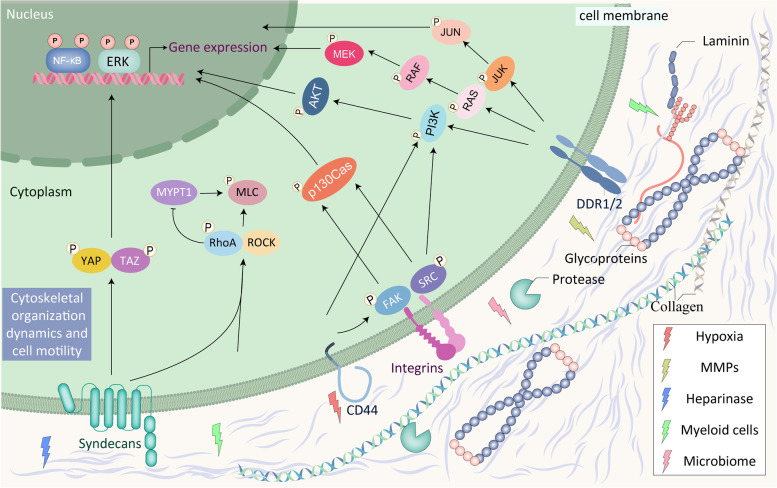
“Pathologic ECM induces FAK and ERK signaling pathway activation to promote cell proliferation in breast cancer [157] and gastric cancer [158].”
BackgroundRofstad, E. K., Mathiesen, B., Kindem, K., & Galappathi, K. (2006) · Cancer Research · doi:10.1158/0008-5472.can-06-0983 · Cited by 668 · cited 1×
“Intriguingly, an acid concentration gradient from the center to the outside of the tumor tissue, which naturally forms the metastatic directionality, mediates cell mobility and invasion [290, 291].”
Backgroundp53 polymorphisms: cancer implications
Whibley, C., Pharoah, P. D. P., & Hollstein, M. (2009) · Nature Reviews Cancer · doi:10.1038/nrc2584 · Cited by 665 · cited 1×
“P53 is a pivotal factor to mediate cell apoptosis, and the existence of gene mutation of P53 is prevalent in most cancer cells [204].”
BackgroundRole of αvβ3 integrin in the activation of vascular endothelial growth factor receptor-2
Soldi, R., Mitola, S., Strasly, M., Defilippi, P., Tarone, G., & Bussolino, F. (1999) · The EMBO Journal · doi:10.1093/emboj/18.4.882 · Cited by 626
TGF-β Tumor Suppression through a Lethal EMT
David, C. J., Huang, Y.-H., Chen, M., Su, J., Zou, Y., Bardeesy, N., Iacobuzio-Donahue, C. A., & Massagué, J. (2016) · Cell · doi:10.1016/j.cell.2016.01.009 · Cited by 593
Context-dependent EMT programs in cancer metastasis
Aiello, N. M., & Kang, Y. (2019) · Journal of Experimental Medicine · doi:10.1084/jem.20181827 · Cited by 584 · cited 1×
“Attentionally, different tumor types rely on discrete EMT effectors [275].”
BackgroundChen, Y., Kim, J., Yang, S., Wang, H., Wu, C.-J., Sugimoto, H., LeBleu, V. S., & Kalluri, R. (2021) · Cancer Cell · doi:10.1016/j.ccell.2021.02.007 · Cited by 566
Self-citationAn Orphan Receptor Tyrosine Kinase Family Whose Members Serve as Nonintegrin Collagen Receptors
Shrivastava, A., Radziejewski, C., Campbell, E., Kovac, L., McGlynn, M., Ryan, T. E., Davis, S., Goldfarb, M. P., Glass, D. J., Lemke, G., et al. (1997) · Molecular Cell · doi:10.1016/s1097-2765(00)80004-0 · Cited by 540 · cited 1×
“DDRs are receptor tyrosine kinases that bind with collagen in an integrin-independent way [351, 352], and DDR1 can supplement the collagen-induced tumor progression when β1 integrin was eliminated [353].”
BackgroundTumor-Promoting Desmoplasia Is Disrupted by Depleting FAP-Expressing Stromal Cells
Lo, A., Wang, L.-C. S., Scholler, J., Monslow, J., Avery, D., Newick, K., O'Brien, S., Evans, R. A., Bajor, D. J., Clendenin, C., et al. (2015) · Cancer Research · doi:10.1158/0008-5472.can-14-3041 · Cited by 498 · cited 21×
“These results depict a distinguish role of collagen in PDAC compared to other cancers.”
BackgroundInfluentialTGF-β orchestrates fibrogenic and developmental EMTs via the RAS effector RREB1
Su, J., Morgani, S. M., David, C. J., Wang, Q., Er, E. E., Huang, Y.-H., Basnet, H., Zou, Y., Shu, W., Soni, R. K., et al. (2020) · Nature · doi:10.1038/s41586-019-1897-5 · Cited by 492 · cited 1×
“RASresponsive element binding protein 1 (RREB1) is a critical partner for TGF-β/SMAD-induced EMT, and fibrosis via downstream activating of SNAIL and other mesenchymal genes [247].”
BackgroundStylianopoulos, T., Martin, J. D., Snuderl, M., Mpekris, F., Jain, S. R., & Jain, R. K. (2013) · Cancer Research · doi:10.1158/0008-5472.can-12-4521 · Cited by 477 · cited 1×
“While at least, new vascular and lymphatic vessels induced by tumor would not be collapsed by interstitial fluid pressure, but by ECM remodeling [465].”
BackgroundHyaluronan: molecular size‐dependent signaling and biological functions in inflammation and cancer
Tavianatou, A. G., Caon, I., Franchi, M., Piperigkou, Z., Galesso, D., & Karamanos, N. K. (2019) · The FEBS Journal · doi:10.1111/febs.14777 · Cited by 462
ccbe1 is required for embryonic lymphangiogenesis and venous sprouting
Hogan, B. M., Bos, F. L., Bussmann, J., Witte, M., Chi, N. C., Duckers, H. J., & Schulte-Merker, S. (2009) · Nature Genetics · doi:10.1038/ng.321 · Cited by 451 · cited 1×
“Another potential target associated with malignant lymphatic formation is a collagen-associated binding protein: collagen- and calcium-binding EGF domains 1 (CCBE1), an indispensable regulator for embryonic lymphangiogenesis [447].”
BackgroundMacrophage-secreted granulin supports pancreatic cancer metastasis by inducing liver fibrosis
Nielsen, S. R., Quaranta, V., Linford, A., Emeagi, P., Rainer, C., Santos, A., Ireland, L., Sakai, T., Sakai, K., Kim, Y.-S., et al. (2016) · Nature Cell Biology · doi:10.1038/ncb3340 · Cited by 441 · cited 1×
“Moreover, TAM-derived granulin stimulates hepatic stellate cells (HSCs) to secret periostin resulting in fibrotic microenvironment [375].”
BackgroundPeng, D. H., Rodriguez, B. L., Diao, L., Chen, L., Wang, J., Byers, L. A., Wei, Y., Chapman, H. A., Yamauchi, M., Behrens, C., et al. (2020) · Nature Communications · doi:10.1038/s41467-020-18298-8 · Cited by 436 · cited 1×
“In melanoma, collagen mediates CD8 + T cell exhaustion through LAIR1/ Src homology 2 domain-containing protein tyrosine phosphatase 1 (SHP1) pathway while combination of programmed death 1 (PD-1) blockades with overexpression of LAIR2, a soluble homologue of LAIR-1 with higher affinity for collagen and thereby acts as…”
BackgroundCollagen density regulates the activity of tumor-infiltrating T cells
Kuczek, D. E., Larsen, A. M. H., Thorseth, M.-L., Carretta, M., Kalvisa, A., Siersbæk, M. S., Simões, A. M. C., Roslind, A., Engelholm, L. H., Noessner, E., et al. (2019) · Journal for ImmunoTherapy of Cancer · doi:10.1186/s40425-019-0556-6 · Cited by 435 · cited 2×
“For instance, a 3D culture constituted by various density of collagen unveils the changes in for T cell composition, while high collagen favors high ratio of CD4/ CD8 T cells and lower activity of CD8 T cells [456].”
BackgroundCell-Cycle Control by Physiological Matrix Elasticity and In Vivo Tissue Stiffening
Klein, E. A., Yin, L., Kothapalli, D., Castagnino, P., Byfield, F. J., Xu, T., Levental, I., Hawthorne, E., Janmey, P. A., & Assoian, R. K. (2009) · Current Biology · doi:10.1016/j.cub.2009.07.069 · Cited by 421 · cited 1×
“Physiological tissue stiffness, which causes decreased cell adhesion, suppresses cell cycle via inhibiting FAK signal responding and downstream Racdependent Cyclin D1 expression [155, 156].”
BackgroundZhu, Y., Yang, J., Xu, D., Gao, X.-M., Zhang, Z., Hsu, J. L., Li, C.-W., Lim, S.-O., Sheng, Y.-Y., Zhang, Y., et al. (2019) · Gut · doi:10.1136/gutjnl-2019-318419 · Cited by 419 · cited 1×
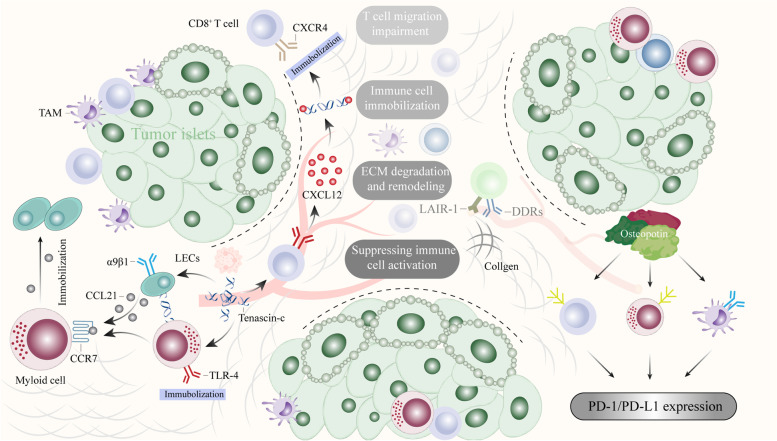
“High expression of secreted OPN in hepatoma stimulates colony-stimulating factor 1 (CSF1)/CSF1R activation in macrophage which further increases PD-1 expression in hepatoma cells [525].”
BackgroundSelf-citationKaur, A., Ecker, B. L., Douglass, S. M., Kugel, C. H., Webster, M. R., Almeida, F. V., Somasundaram, R., Hayden, J., Ban, E., Ahmadzadeh, H., et al. (2019) · Cancer Discovery · doi:10.1158/2159-8290.cd-18-0193 · Cited by 418 · cited 1×
“A significant observation demonstrates that losing of hyaluronan and proteoglycan link protein 1 (HAPLN1), a hyaluronic and proteoglycan link protein, in skin could trigger collagen alignment in melanoma, which hampers CD8 T cell migration whereas enhances infiltration of myeloid-derived suppressor cells (MDSCs) and T…”
BackgroundCrosstalk between mechanotransduction and metabolism
Romani, P., Valcarcel-Jimenez, L., Frezza, C., & Dupont, S. (2021) · Nature Reviews Molecular Cell Biology · doi:10.1038/s41580-020-00306-w · Cited by 403 · cited 1×
“Though some reviews focus on the crosstalk between ECM and metabolism [286], the complex relationship between ECM and tumor metabolism is still mysterious, further explorations are needed.”
BackgroundTumour DDR1 promotes collagen fibre alignment to instigate immune exclusion
Sun, X., Wu, B., Chiang, H.-C., Deng, H., Zhang, X., Xiong, W., Liu, J., Rozeboom, A. M., Harris, B. T., Blommaert, E., et al. (2021) · Nature · doi:10.1038/s41586-021-04057-2 · Cited by 401 · cited 3×
“Precisely, ECD domain of DDR1 mediates collagen fibril alignment by interacting with collagen, then impede immune cell infiltration [484].”
BackgroundInfluentialWei, J., Marisetty, A., Schrand, B., Gabrusiewicz, K., Hashimoto, Y., Ott, M., Grami, Z., Kong, L.-Y., Ling, X., Caruso, H., et al. (2018) · Journal of Clinical Investigation · doi:10.1172/jci121266 · Cited by 396 · cited 1×
“Whereas in glioblastoma, tumor secreted OPN targets αvβ5 integrin to recruit and induce M2-like polarization of macrophage [523].”
BackgroundYeung, T.-L., Leung, C. S., Wong, K.-K., Samimi, G., Thompson, M. S., Liu, J., Zaid, T. M., Ghosh, S., Birrer, M. J., & Mok, S. C. (2013) · Cancer Research · doi:10.1158/0008-5472.can-13-0023 · Cited by 394 · cited 1×
“In ovarian cancer, the activation of TGF-β2/SMAD upregulates the expression of CD44, MMP-9, and RHAMM via VCAN expression (encoding the chondroitin sulfate proteoglycan Versican) in CAFs to promote invasion and metastasis [256].”
BackgroundTumor-Stroma Mechanics Coordinate Amino Acid Availability to Sustain Tumor Growth and Malignancy
Bertero, T., Oldham, W. M., Grasset, E. M., Bourget, I., Boulter, E., Pisano, S., Hofman, P., Bellvert, F., Meneguzzi, G., Bulavin, D. V., et al. (2019) · Cell Metabolism · doi:10.1016/j.cmet.2018.09.012 · Cited by 393 · cited 1×
“Indeed, mechanical signal from ECM stiffness triggers glycolysis and glutamine metastasis in CAFs, then CAFs provide aspartate to support cancer proliferation and induce ECM remodeling [289].”
BackgroundRevisiting the matricellular concept
Murphy-Ullrich, J. E., & Sage, E. H. (2014) · Matrix Biology · doi:10.1016/j.matbio.2014.07.005 · Cited by 392
Extracellular matrix signature identifies breast cancer subgroups with different clinical outcome
Bergamaschi, A., Tagliabue, E., Sørlie, T., Naume, B., Triulzi, T., Orlandi, R., Russnes, H., Nesland, J., Tammi, R., Auvinen, P., et al. (2008) · The Journal of Pathology · doi:10.1002/path.2278 · Cited by 387
Matson, V., Chervin, C. S., & Gajewski, T. F. (2021) · Gastroenterology · doi:10.1053/j.gastro.2020.11.041 · Cited by 385 · cited 1×
“Similarly, other researchers have reported the presence of different types of microbiotas in samples from multiple malignancies [82, 83].”
BackgroundYAP and TAZ: a signalling hub of the tumour microenvironment
Zanconato, F., Cordenonsi, M., & Piccolo, S. (2019) · Nature Reviews Cancer · doi:10.1038/s41568-019-0168-y · Cited by 381 · cited 1×
“stromal cells also provides novel view in ECM-induced tumor progression [154].”
BackgroundPoltavets, V., Kochetkova, M., Pitson, S. M., & Samuel, M. S. (2018) · Frontiers in Oncology · doi:10.3389/fonc.2018.00431 · Cited by 377 · cited 1×
“TME is composed of multiple cellular components, including fibroblasts, endothelial cells (ECs), immunocytes, adipocytes, and acellular component: the extracellular matrix (ECM) [1].”
BackgroundOriented collagen fibers direct tumor cell intravasation
Han, W., Chen, S., Yuan, W., Fan, Q., Tian, J., Wang, X., Chen, L., Zhang, X., Wei, W., Liu, R., et al. (2016) · Proceedings of the National Academy of Sciences · doi:10.1073/pnas.1610347113 · Cited by 376 · cited 1×
“Importantly, collagen I-Matrigel composite extracellular matrix featured collagen orientation or less waveforms in ECM provides a contact guidance to typically induce directional migration of cancer cells [317, 318].”
BackgroundSelf-citationTumor macrophages are pivotal constructors of tumor collagenous matrix
Afik, R., Zigmond, E., Vugman, M., Klepfish, M., Shimshoni, E., Pasmanik-Chor, M., Shenoy, A., Bassat, E., Halpern, Z., Geiger, T., et al. (2016) · Journal of Experimental Medicine · doi:10.1084/jem.20151193 · Cited by 375 · cited 4×
“Precisely, TAMs can regulate collagen production by stimulating CAFs [73, 74].”
BackgroundInfluentialCheon, D.-J., Tong, Y., Sim, M.-S., Dering, J., Berel, D., Cui, X., Lester, J., Beach, J. A., Tighiouart, M., Walts, A. E., et al. (2014) · Clinical Cancer Research · doi:10.1158/1078-0432.ccr-13-1256 · Cited by 373
An osteopontin/CD44 immune checkpoint controls CD8+ T cell activation and tumor immune evasion
Klement, J. D., Paschall, A. V., Redd, P. S., Ibrahim, M. L., Lu, C., Yang, D., Celis, E., Abrams, S. I., Ozato, K., & Liu, K. (2018) · Journal of Clinical Investigation · doi:10.1172/jci123360 · Cited by 368 · cited 1×
“Interferon regulatory factor 8 (IRF8) transcriptionally suppress secreted OPN expression in CD11b+Ly6ClowLy6G+ myeloid cells, which caused decreased interaction between OPN and CD44 receptor in T cell and suppresses immune escape in colon cancer [524].”
BackgroundTargeting lysyl oxidase (LOX) overcomes chemotherapy resistance in triple negative breast cancer
Saatci, O., Kaymak, A., Raza, U., Ersan, P. G., Akbulut, O., Banister, C. E., Sikirzhytski, V., Tokat, U. M., Aykut, G., Ansari, S. A., et al. (2020) · Nature Communications · doi:10.1038/s41467-020-16199-4 · Cited by 368
Tumour budding in solid cancers
Lugli, A., Zlobec, I., Berger, M. D., Kirsch, R., & Nagtegaal, I. D. (2021) · Nature Reviews Clinical Oncology · doi:10.1038/s41571-020-0422-y · Cited by 366 · cited 1×
“Matrix components laminin-5γ2 (LN-5γ2) triggers tumor budding, which defined as isolated single cancer cells or clusters of up to four cancer cells located at the invasive tumour front, of colorectal cancer cells [333, 334].”
BackgroundOsteopontin expression is essential for interferon-α production by plasmacytoid dendritic cells
Shinohara, M. L., Lu, L., Bu, J., Werneck, M. B. F., Kobayashi, K. S., Glimcher, L. H., & Cantor, H. (2006) · Nature Immunology · doi:10.1038/ni1327 · Cited by 360
Li, X., Sun, Z., Peng, G., Xiao, Y., Guo, J., Wu, B., Li, X., Zhou, W., Li, J., Li, Z., et al. (2022) · Theranostics · doi:10.7150/thno.60540 · Cited by 358 · cited 1×
“Intriguingly, a specific clone of CAFs associated with ECM (eCAFs) is identified in pancreatic cancer [339] and gastric cancer [340], and recently identified Endo180 and paired related homeobox 1 (Prrx1) may be significant genes associated with the function and plasticity of eCAFs [341, 342].”
BackgroundSelf-citationShen, Y., Wang, X., Lu, J., Salfenmoser, M., Wirsik, N. M., Schleussner, N., Imle, A., Freire Valls, A., Radhakrishnan, P., Liang, J., et al. (2020) · Cancer Cell · doi:10.1016/j.ccell.2020.05.005 · Cited by 339 · cited 1×
“Other treatments such as normalization of ECM stiffness by photothermal depletion of cancer-associated fibroblasts in desmoplastic cholangiocarcinoma [578], and stiffness-based anti-angiogenic therapy in hepatoma [579] suggest that soften ECM stiffness is critical.”
BackgroundSelf-citationStrain-enhanced stress relaxation impacts nonlinear elasticity in collagen gels
Nam, S., Hu, K. H., Butte, M. J., & Chaudhuri, O. (2016) · Proceedings of the National Academy of Sciences · doi:10.1073/pnas.1523906113 · Cited by 336 · cited 1×
“The physical pressure on the ECM is controlled by the interspace composed of fibrils and the compression and buffering activities of polysaccharide gel [19, 20].”
BackgroundEmerging roles of ECM remodeling processes in cancer
Mohan, V., Das, A., & Sagi, I. (2020) · Seminars in Cancer Biology · doi:10.1016/j.semcancer.2019.09.004 · Cited by 334 · cited 1×
“Microbiome With the in-depth study of tumor microenvironment, the role of microbiome in tumor ECM remodeling cannot be ignored [77, 78].”
BackgroundBaker, A.-M., Bird, D., Lang, G., Cox, T. R., & Erler, J. T. (2013) · Oncogene · doi:10.1038/onc.2012.202 · Cited by 333 · cited 1×
“LOX increases stiffness and stimulates FAK/Src pathway in colorectal cancer [380].”
BackgroundSubstrate Rigidity Regulates Human T Cell Activation and Proliferation
O’Connor, R. S., Hao, X., Shen, K., Bashour, K., Akimova, T., Hancock, W. W., Kam, L. C., & Milone, M. C. (2012) · The Journal of Immunology · doi:10.4049/jimmunol.1102757 · Cited by 329 · cited 1×
“Moreover, matrix stiffness increases the CD4/CD8 T cell ratio, and decreases their activation [456, 467].”
BackgroundA tumor-derived type III collagen-rich ECM niche regulates tumor cell dormancy
Di Martino, J. S., Nobre, A. R., Mondal, C., Taha, I., Farias, E. F., Fertig, E. J., Naba, A., Aguirre-Ghiso, J. A., & Bravo-Cordero, J. J. (2021) · Nature Cancer · doi:10.1038/s43018-021-00291-9 · Cited by 322 · cited 1×
“For instance, the role of type III collagen in maintaining tumor dormancy to form a metastatic niche has been unveiled [93].”
BackgroundContact inhibition controls cell survival and proliferation via YAP/TAZ-autophagy axis
Pavel, M., Renna, M., Park, S. J., Menzies, F. M., Ricketts, T., Füllgrabe, J., Ashkenazi, A., Frake, R. A., Lombarte, A. C., Bento, C. F., et al. (2018) · Nature Communications · doi:10.1038/s41467-018-05388-x · Cited by 317 · cited 1×
“Moreover, dysregulation of YAP/TAZ co-transcriptional function triggers and impairs autophagy sensitivity to contact inhibition via absent F-actin expression [142], while ECM stiffness stimulates YAP/TAZ activation and exosome secretion to enhance cell mobility [143].”
BackgroundHIF-1α metabolically controls collagen synthesis and modification in chondrocytes
Stegen, S., Laperre, K., Eelen, G., Rinaldi, G., Fraisl, P., Torrekens, S., Van Looveren, R., Loopmans, S., Bultynck, G., Vinckier, S., et al. (2019) · Nature · doi:10.1038/s41586-019-0874-3 · Cited by 311 · cited 1×
“During the process, chondrocytes alter their function from collagen production into collagen proline and lysine hydroxylation, which leads to skeletal dysplasia [295].”
BackgroundThe Urinary Tract Microbiome in Health and Disease
Aragón, I. M., Herrera-Imbroda, B., Queipo-Ortuño, M. I., Castillo, E., Del Moral, J. S.-G., Gómez-Millán, J., Yucel, G., & Lara, M. F. (2018) · European Urology Focus · doi:10.1016/j.euf.2016.11.001 · Cited by 306 · cited 1×
“In addition, the microbiome can induce intestinal fibrosis by triggering host immune cells [89].”
BackgroundBourguignon, L. Y. W. (2008) · Seminars in Cancer Biology · doi:10.1016/j.semcancer.2008.03.007 · Cited by 305 · cited 5×
“For instance, after chemotherapy treatment, a positive feedback loop between THBS2deficient CD133+ liver CSCs and local soft ECM induces cell metastasis in hepatoma [549].”
BackgroundInfluentialZhang, Y., Du, W., Chen, Z., & Xiang, C. (2017) · Experimental Cell Research · doi:10.1016/j.yexcr.2017.08.028 · Cited by 299 · cited 1×
“Precisely, high expression of intracellular OPN results in increased expression of PD-1 in macrophage and lung cancer cells via NK-κB pathway [521, 522].”
BackgroundPharmacomicrobiomics: exploiting the drug-microbiota interactions in anticancer therapies
Panebianco, C., Andriulli, A., & Pazienza, V. (2018) · Microbiome · doi:10.1186/s40168-018-0483-7 · Cited by 298
Ray, A., Lee, O., Win, Z., Edwards, R. M., Alford, P. W., Kim, D.-H., & Provenzano, P. P. (2017) · Nature Communications · doi:10.1038/ncomms14923 · Cited by 293 · cited 1×
“Additionally, when cancer cell invasion on aligned collagen fibers, the structure will lead cancer cell to invasion by sensing focal adhesion-mediated contact guidance [325].”
BackgroundCellular Mechanisms and Regulation of Quiescence
Marescal, O., & Cheeseman, I. M. (2020) · Developmental Cell · doi:10.1016/j.devcel.2020.09.029 · Cited by 292 · cited 1×
“The state of quiescence featured by reversible proliferative arrest reserves the capacity to reenter the cell cycle upon receiving an appropriate stimulus [168].”
BackgroundYKL-40, a secreted glycoprotein, promotes tumor angiogenesis
Shao, R., Hamel, K., Petersen, L., Cao, Q. J., Arenas, R. B., Bigelow, C., Bentley, B., & Yan, W. (2009) · Oncogene · doi:10.1038/onc.2009.292 · Cited by 292 · cited 1×
“Chitinase-3-like protein 1 (CHI3L1/YKL-40), a glycoprotein secreted by various cancer cells and stromal cells, enhances the synergic effect of syndecan-1 and β3 integrin and activation of FAK/ERK pathway in ECs to promote angiogenesis in breast and colon cancer [414, 415].”
BackgroundZhang, W., Liu, L., Su, H., Liu, Q., Shen, J., Dai, H., Zheng, W., Lu, Y., Zhang, W., Bei, Y., et al. (2019) · British Journal of Cancer · doi:10.1038/s41416-019-0578-3 · Cited by 291 · cited 1×
“Additionally, CAR-147 modified macrophage increases T cell-infiltration by targeting MMPs in matrix [609].”
BackgroundSugimura, N., Li, Q., Chu, E. S. H., Lau, H. C. H., Fong, W., Liu, W., Liang, C., Nakatsu, G., Su, A. C. Y., Coker, O. O., et al. (2022) · Gut · doi:10.1136/gutjnl-2020-323951 · Cited by 286 · cited 1×
“Similarly, other researchers have reported the presence of different types of microbiotas in samples from multiple malignancies [82, 83].”
BackgroundBeauvais, D. M., Ell, B. J., McWhorter, A. R., & Rapraeger, A. C. (2009) · Journal of Experimental Medicine · doi:10.1084/jem.20081278 · Cited by 280
Cancer-cell stiffening via cholesterol depletion enhances adoptive T-cell immunotherapy
Lei, K., Kurum, A., Kaynak, M., Bonati, L., Han, Y., Cencen, V., Gao, M., Xie, Y.-Q., Guo, Y., Hannebelle, M. T. M., et al. (2021) · Nature Biomedical Engineering · doi:10.1038/s41551-021-00826-6 · Cited by 276 · cited 1×
“However, cholesterol depletion treatment could induce cancer stiffness and enhance T-cell immunotherapy [581].”
BackgroundCollagen prolyl 4-hydroxylase 1 is essential for HIF-1α stabilization and TNBC chemoresistance
Xiong, G., Stewart, R. L., Chen, J., Gao, T., Scott, T. L., Samayoa, L. M., O’Connor, K., Lane, A. N., & Xu, R. (2018) · Nature Communications · doi:10.1038/s41467-018-06893-9 · Cited by 274
Rho GTPase signaling in cancer progression and dissemination
Crosas-Molist, E., Samain, R., Kohlhammer, L., Orgaz, J. L., George, S. L., Maiques, O., Barcelo, J., & Sanz-Moreno, V. (2022) · Physiological Reviews · doi:10.1152/physrev.00045.2020 · Cited by 272 · cited 1×
“Among them, canonical Rho GTPases senses signals from ECM and regulates YAP/TAZ activation, while dual role of Rho GTPases in tumor progression is dependent on their expression and mutation states [140].”
BackgroundThe extracellular matrix – the under‐recognized element in lung disease?
Burgess, J. K., Mauad, T., Tjin, G., Karlsson, J. C., & Westergren‐Thorsson, G. (2016) · The Journal of Pathology · doi:10.1002/path.4808 · Cited by 266 · cited 1×
“Amount of changes in the expression level of MMPs in the tumor microenvironment represent the malignant degree of the tumor, reflecting the structural remodeling function of MMPs in the progression of many epithelial cancers, such as lung cancer, breast cancer, and pancreatic cancer [11, 12].”
BackgroundHeparanase Enhances Syndecan-1 Shedding
Yang, Y., MacLeod, V., Miao, H.-Q., Theus, A., Zhan, F., Shaughnessy, J. D., Sawyer, J., Li, J.-P., Zcharia, E., Vlodavsky, I., et al. (2007) · Journal of Biological Chemistry · doi:10.1074/jbc.m611259200 · Cited by 264
Role of YKL-40 in the Angiogenesis, Radioresistance, and Progression of Glioblastoma
Francescone, R. A., Scully, S., Faibish, M., Taylor, S. L., Oh, D., Moral, L., Yan, W., Bentley, B., & Shao, R. (2011) · Journal of Biological Chemistry · doi:10.1074/jbc.m110.212514 · Cited by 261 · cited 1×
“Moreover, in glioblastoma, YKL-40 induces the synergic effect of syndecan-1 and β5 integrin and FAK/ERK-dependent VEGF secretion and VEGFR2 expression [416, 417].”
BackgroundHuang, W., Chiquet‐Ehrismann, R., Moyano, J. V., Garcı́a-Pardo, A., & Orend, G. (2001) · PubMed · Cited by 260
Signalling pathways linking integrins with cell cycle progression
Moreno-Layseca, P., & Streuli, C. H. (2014) · Matrix Biology · doi:10.1016/j.matbio.2013.10.011 · Cited by 260
Extracellular Matrix Remodeling Regulates Glucose Metabolism through TXNIP Destabilization
Sullivan, W. J., Mullen, P. J., Schmid, E. W., Flores, A., Momcilovic, M., Sharpley, M. S., Jelinek, D., Whiteley, A. E., Maxwell, M. B., Wilde, B. R., et al. (2018) · Cell · doi:10.1016/j.cell.2018.08.017 · Cited by 259 · cited 2×
“To respond to HA degradation, zinc finger protein 36 (ZFP36) is rapidly upregulated and induces the degradation of thioredoxin-interacting protein (TXNIP), followed by enrichment of GLUT1 at the plasma membrane and enhanced tumor migration [282].”
BackgroundMechanical stiffness controls dendritic cell metabolism and function
Chakraborty, M., Chu, K., Shrestha, A., Revelo, X. S., Zhang, X., Gold, M. J., Khan, S., Lee, M., Huang, C., Akbari, M., et al. (2021) · Cell Reports · doi:10.1016/j.celrep.2020.108609 · Cited by 258 · cited 2×
“Additionally, the influence of ECM stiffness on other immune cells such as dendric cells maturation [460] and macrophages [461, 462] have been recently reported.”
BackgroundMatrix modeling and remodeling: A biological interplay regulating tissue homeostasis and diseases
Karamanos, N. K., Theocharis, A. D., Neill, T., & Iozzo, R. V. (2019) · Matrix Biology · doi:10.1016/j.matbio.2018.08.007 · Cited by 254 · cited 1×
“Some enzymes process matrix components, such as collagen, resulting in the production and release of bioactive fragments [9, 10].”
BackgroundIL-6 Mediates Cross-Talk between Tumor Cells and Activated Fibroblasts in the Tumor Microenvironment
Karakasheva, T. A., Lin, E. W., Tang, Q., Qiao, E., Waldron, T. J., Soni, M., Klein-Szanto, A. J., Sahu, V., Basu, D., Ohashi, S., et al. (2018) · Cancer Research · doi:10.1158/0008-5472.can-17-2268 · Cited by 250 · cited 1×
“In squamous cell carcinoma, IL-6 plays the same role by targeting STAT3/ERK pathway in CAFs [331].”
BackgroundPulmonary Vascular Destabilization in the Premetastatic Phase Facilitates Lung Metastasis
Huang, Y., Song, N., Ding, Y., Yuan, S., Li, X., Cai, H., Shi, H., & Luo, Y. (2009) · Cancer Research · doi:10.1158/0008-5472.can-08-4382 · Cited by 247 · cited 1×
“Conversely, reduced activity of MMPs inhibits pulmonary vascular permeability and limits the infiltration of immunocytes in the lung prior to metastasis [48].”
BackgroundFattet, L., Jung, H.-Y., Matsumoto, M. W., Aubol, B. E., Kumar, A., Adams, J. A., Chen, A. C., Sah, R. L., Engler, A. J., Pasquale, E. B., et al. (2020) · Developmental Cell · doi:10.1016/j.devcel.2020.05.031 · Cited by 245 · cited 1×
“Mechanosensory receptor such as Ephrin type-A receptor 2 (EPHA2)/LYN protein also stimulates TWIST1 to induce EMT and invasion in responding ECM stiffness [272].”
BackgroundJeltsch, M., Jha, S. K., Tvorogov, D., Anisimov, A., Leppänen, V.-M., Holopainen, T., Kivelä, R., Ortega, S., Kärpanen, T., & Alitalo, K. (2014) · Circulation · doi:10.1161/circulationaha.113.002779 · Cited by 242 · cited 1×
“Physiologically, CCBE1 promotes VEGF-C expression in a posttranslational layer to transform inactive form of VEGF-C into a mature form [448].”
BackgroundHelms, E. J., Berry, M. W., Chaw, R. C., DuFort, C. C., Sun, D., Onate, M. K., Oon, C., Bhattacharyya, S., Sanford-Crane, H., Horton, W., et al. (2022) · Cancer Discovery · doi:10.1158/2159-8290.cd-21-0601 · Cited by 238
Kong, J., Tian, H., Zhang, F., Zhang, Z., Li, J., Liu, X., Li, X., Liu, J., Li, X., Jin, D., et al. (2019) · Molecular Cancer · doi:10.1186/s12943-019-1101-4 · Cited by 238
Self-citationExtracellular matrix: The driving force of mammalian diseases
Iozzo, R. V., & Gubbiotti, M. A. (2018) · Matrix Biology · doi:10.1016/j.matbio.2018.03.023 · Cited by 236 · cited 1×
“Therefore, better understanding the composition and structural characteristics of ECM remodeling in cancer is critical for discovering therapeutic targets and diagnostic markers [23].”
BackgroundPurushothaman, A., Uyama, T., Kobayashi, F., Yamada, S., Sugahara, K., Rapraeger, A. C., & Sanderson, R. D. (2010) · Blood · doi:10.1182/blood-2009-07-234757 · Cited by 234 · cited 1×
“Shedding syndecan-1 could combine with VEGF and adhere to ECM, then induce invasion and angiogenesis in melanoma [121].”
BackgroundMechanical communication in fibrosis progression
Long, Y., Niu, Y., Liang, K., & Du, Y. (2022) · Trends in Cell Biology · doi:10.1016/j.tcb.2021.10.002 · Cited by 233 · cited 1×
“These enzymes can treat specific ECM components as substrates and catalyze them to control tissues stiffness and cell–matrix interactions through their unique biochemical and physical properties [8].”
BackgroundAhmed, A. A., Mills, A. D., Ibrahim, A. E. K., Temple, J., Blenkiron, C., Vias, M., Massie, C. E., Iyer, N. G., McGeoch, A., Crawford, R., et al. (2007) · Cancer Cell · doi:10.1016/j.ccr.2007.11.014 · Cited by 233 · cited 1×
“Previous researches unveil that TGFBI stabilizes microtubules via FAK and Rho pathways [258].”
BackgroundIshimoto, T., Miyake, K., Nandi, T., Yashiro, M., Onishi, N., Huang, K. K., Lin, S. J., Kalpana, R., Tay, S. T., Suzuki, Y., et al. (2017) · Gastroenterology · doi:10.1053/j.gastro.2017.03.046 · Cited by 233 · cited 1×
“In gastric cancer, activation of TGF-β1 in CAFs promotes mobility and invasion to lymphatic vessel in vivo [255].”
BackgroundSun, X., He, X., Zhang, Y., Hosaka, K., Andersson, P., Wu, J., Wu, J., Jing, X., Du, Q., Hui, X., et al. (2022) · Gut · doi:10.1136/gutjnl-2020-322744 · Cited by 233 · cited 1×
“In pancreatic cancer, TAMderived C-X-C motif chemokine ligand 3 (CXCL3) targets CAFs’ C-X-C motif chemokine receptor 2 (CCR2) to mediate CAF-myofibroblasts (myCAF) transition, subsequent type III collagen generation and tumor metastasis [75].”
BackgroundImmune Modulatory Properties of Collagen in Cancer
Rømer, A. M. A., Thorseth, M.-L., & Madsen, D. H. (2021) · Frontiers in Immunology · doi:10.3389/fimmu.2021.791453 · Cited by 231 · cited 1×
“The role of collagen [497] and other ECM components [498] in immunoreaction in cancer has been well reviewed.”
BackgroundPrevailing Role of Contact Guidance in Intrastromal T-cell Trapping in Human Pancreatic Cancer
Hartmann, N., Giese, N. A., Giese, T., Poschke, I., Offringa, R., Werner, J., & Ryschich, E. (2014) · Clinical Cancer Research · doi:10.1158/1078-0432.ccr-13-2972 · Cited by 230 · cited 1×
“This research, together with a discovery from PDAC, which demonstrates that expression of T-cell-active chemokines and β-integrin pathway is irresponsible to the intertumoral T cell-infiltration, highlights the pro-migration role of collagen density on T lymphocytes [466].”
BackgroundPodoplanin-Expressing Macrophages Promote Lymphangiogenesis and Lymphoinvasion in Breast Cancer
Bieniasz-Krzywiec, P., Martín-Pérez, R., Ehling, M., García-Caballero, M., Pinioti, S., Pretto, S., Kroes, R., Aldeni, C., Di Matteo, M., Prenen, H., et al. (2019) · Cell Metabolism · doi:10.1016/j.cmet.2019.07.015 · Cited by 229 · cited 7×
“The combination of glycosylated podoplanin from TAMs with galectin 8 on LECs stimulates the activation of β1 integrin.”
BackgroundInfluentialHiraga, T., Ito, S., & Nakamura, H. (2013) · Cancer Research · doi:10.1158/0008-5472.can-12-3801 · Cited by 226 · cited 1×
“Previous research demonstrates that HA/CD44 is essential for cancer cell bone metastasis [370].”
BackgroundRomani, P., Nirchio, N., Arboit, M., Barbieri, V., Tosi, A., Michielin, F., Shibuya, S., Benoist, T., Wu, D., Hindmarch, C. C. T., et al. (2022) · Nature Cell Biology · doi:10.1038/s41556-022-00843-w · Cited by 226 · cited 2×
“Softer ECM of distant metastatic niche can enhance therapeutic resistance of cancer cells [292].”
BackgroundCell Clustering Promotes a Metabolic Switch that Supports Metastatic Colonization
Labuschagne, C. F., Cheung, E. C., Blagih, J., Domart, M.-C., & Vousden, K. H. (2019) · Cell Metabolism · doi:10.1016/j.cmet.2019.07.014 · Cited by 225 · cited 1×
“Besides, cancer cell clustering triggers mitophagy activation, which can decrease the generation of ROS, to support tumor survival during metastasis [300].”
BackgroundMa, C., Rong, Y., Radiloff, D. R., Datto, M. B., Centeno, B., Bao, S., Cheng, A. W. M., Lin, F., Jiang, S., Yeatman, T. J., et al. (2008) · Genes & Development · doi:10.1101/gad.1632008 · Cited by 224 · cited 1×
“In colorectal cancer, TGFBI promotes metastasis via stimulating β5 integrin/ Src and disconnection of VE-cadherin junctions between epithelial cells [262].”
BackgroundSelf-citationGlasner, A., Levi, A., Enk, J., Isaacson, B., Viukov, S., Orlanski, S., Scope, A., Neuman, T., Enk, C. D., Hanna, J. H., et al. (2018) · Immunity · doi:10.1016/j.immuni.2017.12.007 · Cited by 222
Chiavarina, B., Whitaker-Menezes, D., Migneco, G., Martinez-Outschoorn, U. E., Pavlides, S., Howell, A., Tanowitz, H. B., Casimiro, M. C., Wang, C., Pestell, R. G., et al. (2010) · Cell Cycle · doi:10.4161/cc.9.17.12908 · Cited by 222 · cited 1×
“Endogenous fibroblasts overexpressing HIF-1α can promote tumor growth both in vivo and in vitro [29].”
BackgroundPanciera, T., Citron, A., Di Biagio, D., Battilana, G., Gandin, A., Giulitti, S., Forcato, M., Bicciato, S., Panzetta, V., Fusco, S., et al. (2020) · Nature Materials · doi:10.1038/s41563-020-0615-x · Cited by 220 · cited 1×
“Importantly, ECM is essential for reprogramming of normal cells into premalignancy, and YAP/TAZ is responsible for the transformation induced by ECM [153].”
BackgroundVitamin D and the Risk of Uterine Fibroids
Baird, D. D., Hill, M. C., Schectman, J. M., & Hollis, B. W. (2013) · Epidemiology · doi:10.1097/ede.0b013e31828acca0 · Cited by 217 · cited 1×
“For instance, 1,25(OH)2 D3 level in plasma is negatively correlated with the risk of uterine leiomyomas [613].”
BackgroundWang, M., Zhao, X., Zhu, D., Liu, T., Liang, X., Liu, F., Zhang, Y., Dong, X., & Sun, B. (2017) · Journal of Experimental & Clinical Cancer Research · doi:10.1186/s13046-017-0533-1 · Cited by 215 · cited 1×
“Mechanistically, HIF-1α stimulates LOXL2 expression and tumor progression in hepatoma [388].”
BackgroundSelman, M., & Pardo, A. (2021) · Ageing Research Reviews · doi:10.1016/j.arr.2021.101393 · Cited by 211
Peng, D. H., Ungewiss, C., Tong, P., Byers, L. A., Wang, J., Canales, J. R., Villalobos, P. A., Uraoka, N., Mino, B., Behrens, C., et al. (2017) · Oncogene · doi:10.1038/onc.2016.358 · Cited by 211 · cited 1×
“Moreover, the competition between miR-200 and ZEB1 regulates collagen deposition and crosslinking, which stimulates β1 integrin/FAK/Src pathway, to promote invasion and metastasis [391].”
BackgroundZhu, Z., Achreja, A., Meurs, N., Animasahun, O., Owen, S., Mittal, A., Parikh, P., Lo, T.-W., Franco-Barraza, J., Shi, J., et al. (2020) · Nature Metabolism · doi:10.1038/s42255-020-0226-5 · Cited by 204
Targeting tumor-intrinsic hexosamine biosynthesis sensitizes pancreatic cancer to anti-PD1 therapy
Sharma, N. S., Gupta, V. K., Garrido, V. T., Hadad, R., Durden, B. C., Kesh, K., Giri, B., Ferrantella, A., Dudeja, V., Saluja, A., et al. (2019) · Journal of Clinical Investigation · doi:10.1172/jci127515 · Cited by 203 · cited 1×
“A small molecule glutamine analog targeting glutamine-fructose amidotransferase 1 (GFAT1), the rate-limiting enzyme of HA synthesis, decreases renewal and metastatic ability of tumor cell, and increases sensitivity to anti-PD-1 treatment [575].”
BackgroundMa, H., Wang, J., Zhao, X., Wu, T., Huang, Z., Chen, D., Liu, Y., & Ouyang, G. (2020) · Cell Reports · doi:10.1016/j.celrep.2019.12.075 · Cited by 196 · cited 1×
“Periostin Interaction loop between fibroblast secreted periostin and cancer derived IL-6 contributes to the progression of colitis-associated colorectal cancer [223]”
BackgroundAkt3-Mediated Resistance to Apoptosis in B-RAF–Targeted Melanoma Cells
Shao, Y., & Aplin, A. E. (2010) · Cancer Research · doi:10.1158/0008-5472.can-09-4471 · Cited by 194 · cited 1×
“HA/ CD44 also contributes to the activation of Akt pathway, which is responsible to collagen-induced anoikis resistance [195, 196].”
BackgroundShinohara, M. L., Kim, H.-J., Kim, J.-H., Garcia, V. A., & Cantor, H. (2008) · Proceedings of the National Academy of Sciences · doi:10.1073/pnas.0802301105 · Cited by 193 · cited 7×
“Intriguingly, DCs under hypoxia, which is commonly detected in TME, shows increasing secretion of OPN and impaired immune activation to support tumor immune escape [517].”
BackgroundInfluentialMcCarty, S. M., Cochrane, C. A., Clegg, P. D., & Percival, S. L. (2012) · Wound Repair and Regeneration · doi:10.1111/j.1524-475x.2012.00763.x · Cited by 193 · cited 1×
“A variety of bacterial enzymes (such as collagenase, elastase and hyaluronidase) are known to degrade host ECM [86, 87].”
BackgroundSPARC: a key player in the pathologies associated with obesity and diabetes
Kos, K., & Wilding, J. P. H. (2010) · Nature Reviews Endocrinology · doi:10.1038/nrendo.2010.18 · Cited by 192 · cited 1×
“Stromal cell protein SPARC is a matrix regulator and collagen chaperone [68].”
BackgroundThe heparanase/syndecan‐1 axis in cancer: mechanisms and therapies
Ramani, V. C., Purushothaman, A., Stewart, M. D., Thompson, C. A., Vlodavsky, I., Au, J. L., & Sanderson, R. D. (2013) · The FEBS Journal · doi:10.1111/febs.12168 · Cited by 189 · cited 1×
“A canonical signaling about syndecans in cancer is heparinase/syndecan-1 pathway [118].”
BackgroundCooperative Activation of PI3K by Ras and Rho Family Small GTPases
Yang, H. W., Shin, M.-G., Lee, S., Kim, J.-R., Park, W. S., Cho, K.-H., Meyer, T., & Do Heo, W. (2012) · Molecular Cell · doi:10.1016/j.molcel.2012.05.007 · Cited by 188 · cited 1×
“Both Rho-GTPase and EGFR could stimulate phosphoinositide 3-kinase (PI3K)/Akt pathway to sustain proliferation in cancer cells [114].”
BackgroundSmad3 Promotes Cancer‐Associated Fibroblasts Generation via Macrophage–Myofibroblast Transition
Tang, P. C., Chung, J. Y., Xue, V. W., Xiao, J., Meng, X., Huang, X., Zhou, S., Chan, A. S., Tsang, A. C., Cheng, A. S., et al. (2022) · Advanced Science · doi:10.1002/advs.202101235 · Cited by 188 · cited 1×
“Intriguingly, single cell analysis uncovered a specific TAM-CAFs transition in lung cancer, highlights the consistent interaction between TAMs and CAFs [76].”
BackgroundSims, J. D., McCready, J., & Jay, D. G. (2011) · PLoS ONE · doi:10.1371/journal.pone.0018848 · Cited by 188 · cited 1×
“For instance, extracellular HSP70 and HSP90 are critical to interact with MMP2 and enhance migration in breast cancer [401].”
BackgroundHeparanase and the hallmarks of cancer
Jayatilleke, K. M., & Hulett, M. D. (2020) · Journal of Translational Medicine · doi:10.1186/s12967-020-02624-1 · Cited by 184 · cited 1×
“Physiologically, heparinase is produced by keratinocytes, platelets, placental trophoblast cells, and white blood cells (including mast cells) [60].”
BackgroundGérard, C., & Goldbeter, A. (2014) · Interface Focus · doi:10.1098/rsfs.2013.0075 · Cited by 183 · cited 1×
“Physiological tissue stiffness, which causes decreased cell adhesion, suppresses cell cycle via inhibiting FAK signal responding and downstream Racdependent Cyclin D1 expression [155, 156].”
BackgroundLecker, L. S. M., Berlato, C., Maniati, E., Delaine-Smith, R., Pearce, O. M. T., Heath, O. M., Nichols, S. J., Trevisan, C., Novak, M., McDermott, J. R., et al. (2021) · Cancer Research · doi:10.1158/0008-5472.can-21-0536 · Cited by 183 · cited 18×
“And the positive feedback loop of TGFBI secretion among TAMs/CAFs/TAMs constructs immunosuppressive TME [270], implying that the concentration of TGFBI in ECM is critical for metastasis but ignores its’ derivation (Fig.”
BackgroundInfluentialRedondo-Muñóz, J., Ugarte-Berzal, E., Terol, M. J., den Steen, P. E. V., del Cerro, M. H., Roderfeld, M., Roeb, E., Opdenakker, G., Garcia-Marco, J. A., & García-Pardo, A. (2010) · Cancer Cell · doi:10.1016/j.ccr.2009.12.044 · Cited by 180 · cited 1×
“Besides of ECM degradation, the binding of MMP-9 to α4β1 integrin induces several intracellular signaling to promote anti-apoptotic pathway and metastatic pathway in cancer cells, suggesting another pivotal mechanism of MMPs-induced tumor progression [52, 53].”
BackgroundChen, D., Liu, Z., Liu, W., Fu, M., Jiang, W., Xu, S., Wang, G., Chen, F., Lu, J., Chen, H., et al. (2021) · Nature Communications · doi:10.1038/s41467-020-20429-0 · Cited by 180 · cited 1×
“Clinical examinations have detected a profound association of collagen fiber orientation disorder to poor prognosis in breast cancer [307–309], Gastric cancer [310], and salivary gland cancer [311].”
BackgroundECM stiffness-tuned exosomes drive breast cancer motility through thrombospondin-1
Patwardhan, S., Mahadik, P., Shetty, O., & Sen, S. (2021) · Biomaterials · doi:10.1016/j.biomaterials.2021.121185 · Cited by 180 · cited 1×
“Moreover, dysregulation of YAP/TAZ co-transcriptional function triggers and impairs autophagy sensitivity to contact inhibition via absent F-actin expression [142], while ECM stiffness stimulates YAP/TAZ activation and exosome secretion to enhance cell mobility [143].”
BackgroundAn osteopontin splice variant induces anchorage independence in human breast cancer cells
He, B., Mirza, M., & Weber, G. F. (2006) · Oncogene · doi:10.1038/sj.onc.1209248 · Cited by 178 · cited 1×
“Osteopotin (OPN, or SPP‐1) Previous research has unveiled that OPN is the ligand to CD44 and integrin, and contributes to the anoikis resistance and promoting adhesion in ECM [512].”
BackgroundChaturvedi, P., Singh, A. P., Moniaux, N., Senapati, S., Chakraborty, S., Meza, J. L., & Batra, S. K. (2007) · Molecular Cancer Research · doi:10.1158/1541-7786.mcr-06-0353 · Cited by 176 · cited 1×
“Amount of changes in the expression level of MMPs in the tumor microenvironment represent the malignant degree of the tumor, reflecting the structural remodeling function of MMPs in the progression of many epithelial cancers, such as lung cancer, breast cancer, and pancreatic cancer [11, 12].”
BackgroundRevisiting the hallmarks of cancer: The role of hyaluronan
Caon, I., Bartolini, B., Parnigoni, A., Caravà, E., Moretto, P., Viola, M., Karousou, E., Vigetti, D., & Passi, A. (2020) · Seminars in Cancer Biology · doi:10.1016/j.semcancer.2019.07.007 · Cited by 176 · cited 7×
“While the increasing expression of TNC enhances tumor necrosis factor alpha (TNFα) secretion from TAMs via TLR-4/STAT3 pathway [506].”
BackgroundInfluentialThe Complex Interplay Between Extracellular Matrix and Cells in Tissues
Manou, D., Caon, I., Bouris, P., Triantaphyllidou, I., Giaroni, C., Passi, A. G., Karamanos, N. K., Vigetti, D., & Theocharis, A. D. (2019) · Methods in molecular biology · doi:10.1007/978-1-4939-9133-4_1 · Cited by 176 · cited 1×
“At the structural level, the ECM contains interstitial connective tissue matrix and basement membrane [15, 16].”
BackgroundTumor cell–organized fibronectin maintenance of a dormant breast cancer population
Barney, L. E., Hall, C. L., Schwartz, A. D., Parks, A. N., Sparages, C., Galarza, S., Platt, M. O., Mercurio, A. M., & Peyton, S. R. (2020) · Science Advances · doi:10.1126/sciadv.aaz4157 · Cited by 176 · cited 1×
“Quiescent cancer cells with the potential of recurrence form a comfortable environment of fibrillar fibronectin matrix via integrin, ROCK and transforming growth factor β2 (TGF-β2) pathways, whereas an outgrowth would be started by MMP-2-mediated ECM degradation in breast cancer [170].”
BackgroundCo-evolution of Matrisome and Adaptive Adhesion Dynamics Drives Ovarian Cancer Chemoresistance
Pietilä, E. A., Gonzalez-Molina, J., Moyano-Galceran, L., Jamalzadeh, S., Zhang, K., Lehtinen, L., Turunen, S. P., Martins, T. A., Gultekin, O., Lamminen, T., et al. (2021) · Nature Communications · doi:10.1038/s41467-021-24009-8 · Cited by 175 · cited 1×
“In ovarian high-grade serous carcinoma, cells with high upregulated expression of collagen VI strikingly stiffen ECM and induce chemoresistance via enhancing integrinbased cancer cell adhesion on stiff collagen VI substrate after cisplatin-based chemotherapy [550].”
BackgroundBarash, U., Cohen‐Kaplan, V., Dowek, I., Sanderson, R. D., Ilan, N., & Vlodavsky, I. (2010) · The FEBS Journal · doi:10.1111/j.1742-4658.2010.07799.x · Cited by 173
FAP and FAPI-PET/CT in Malignant and Non-Malignant Diseases: A Perfect Symbiosis?
Dendl, K., Koerber, S. A., Kratochwil, C., Cardinale, J., Finck, R., Dabir, M., Novruzov, E., Watabe, T., Kramer, V., Choyke, P. L., et al. (2021) · Cancers · doi:10.3390/cancers13194946 · Cited by 173 · cited 1×
“Fibroblast activation protein (FAD) is overexpressed in CAFs and associated with ECM remodeling in tumors and wound healing, and it is a potential target for ECM degradation and tumor imaging [606].”
BackgroundHydrogel-based colorectal cancer organoid co-culture models
Luo, X., Fong, E. L. S., Zhu, C., Lin, Q. X. X., Xiong, M., Li, A., Li, T., Benoukraf, T., Yu, H., & Liu, S. (2021) · Acta Biomaterialia · doi:10.1016/j.actbio.2020.12.037 · Cited by 170 · cited 1×
“A colorectal patient-derived organoid (PDO) model shows that solely CAFs are sufficient to support cell proliferation with the absence of conventional PDO-associated growth factor, highlight the CAFs’ pro-oncogenic role in cancer culture maintenance [128].”
BackgroundFrye, M., Taddei, A., Dierkes, C., Martinez-Corral, I., Fielden, M., Ortsäter, H., Kazenwadel, J., Calado, D. P., Ostergaard, P., Salminen, M., et al. (2018) · Nature Communications · doi:10.1038/s41467-018-03959-6 · Cited by 169 · cited 1×
“ECM stiffness stimulates GATA binding protein 2 (GATA2) and GATA2-dependent VEGFR-3 expression, which mediates lymphatic endothelial cell growth and migration in vivo [438].”
Backgroundβ1 integrins regulate mammary gland proliferation and maintain the integrity of mammary alveoli
Li, N., Zhang, Y., Naylor, M. J., Schatzmann, F., Maurer, F., Wintermantel, T., Schuetz, G., Mueller, U., Streuli, C. H., & Hynes, N. E. (2005) · The EMBO Journal · doi:10.1038/sj.emboj.7600674 · Cited by 168 · cited 1×
“For instance, β1 integrin alteration physiologically maintains mammary gland proliferation and is associated with accelerated cell cycle and temsirolimus resistance in bladder cancer [100, 101].”
BackgroundHuo, C. W., Chew, G., Hill, P., Huang, D., Ingman, W., Hodson, L., Brown, K. A., Magenau, A., Allam, A. H., McGhee, E., et al. (2015) · Breast Cancer Research · doi:10.1186/s13058-015-0592-1 · Cited by 168 · cited 1×
“The phenomenon could be observed in several results [313, 463, 464].”
Halder, S. K., Goodwin, J. S., & Al-Hendy, A. (2011) · The Journal of Clinical Endocrinology & Metabolism · doi:10.1210/jc.2010-2131 · Cited by 167
Hippo Signaling Suppresses Cell Ploidy and Tumorigenesis through Skp2
Zhang, S., Chen, Q., Liu, Q., Li, Y., Sun, X., Hong, L., Ji, S., Liu, C., Geng, J., Zhang, W., et al. (2017) · Cancer Cell · doi:10.1016/j.ccell.2017.04.004 · Cited by 167 · cited 2×
“Moreover, YAP increases nucleic accumulation of P27, a cell cycle suppressor by acetylating and nucleicexporting S-phase kinase associated protein 2 (SKP2) via Akt activation to sustain cytoplasm retention of SKP2 and to inhibit mitosis of cancer cells, which causes polyploidy formation [150].”
BackgroundSelf-citationHyaluronan synthase 2–mediated hyaluronan production mediates Notch1 activation and liver fibrosis
Yang, Y. M., Noureddin, M., Liu, C., Ohashi, K., Kim, S. Y., Ramnath, D., Powell, E. E., Sweet, M. J., Roh, Y. S., Hsin, I.-F., et al. (2019) · Science Translational Medicine · doi:10.1126/scitranslmed.aat9284 · Cited by 166 · cited 1×
“HA/CD44 stimulates epidermal growth factor receptor (EGFR) singling pathway [107], whereas HA/TLR4 is associated with the activation of nuclear factor-kappaB (NF-κB) pathway [106, 108].”
BackgroundSyndecan-2 Mediates Adhesion and Proliferation of Colon Carcinoma Cells
Park, H., Kim, Y., Lim, Y., Han, I., & Oh, E.-S. (2002) · Journal of Biological Chemistry · doi:10.1074/jbc.m202435200 · Cited by 165 · cited 1×
“After that, more subtypes of syndecans have been identified to be associated with progression of cancer [126, 127].”
BackgroundLi, Z.-L., Zhang, H.-L., Huang, Y., Huang, J.-H., Sun, P., Zhou, N.-N., Chen, Y.-H., Mai, J., Wang, Y., Yu, Y., et al. (2020) · Nature Communications · doi:10.1038/s41467-020-17395-y · Cited by 163 · cited 1×
“In addition, TNBC with autophagy-deficiency could ubiquitinate TNC and sustain TNC expression by SKP2, therefore induce immunosuppression [511].”
BackgroundMillul, J., Bassi, G., Mock, J., Elsayed, A., Pellegrino, C., Zana, A., Dakhel Plaza, S., Nadal, L., Gloger, A., Schmidt, E., et al. (2021) · Proceedings of the National Academy of Sciences · doi:10.1073/pnas.2101852118 · Cited by 162 · cited 11×
“A therapeutic model with the combination of oncolytic adenovirus carried decorin with a CAR-T targeting carbonic anhydrase IX (CAIX) has been reported to induce ECM remodeling and immunoreaction in cancer recently [605].”
BackgroundInfluentialGan, L., Meng, J., Xu, M., Liu, M., Qi, Y., Tan, C., Wang, Y., Zhang, P., Weng, W., Sheng, W., et al. (2018) · Oncogene · doi:10.1038/onc.2017.363 · Cited by 161
Yang, N., Mosher, R., Seo, S., Beebe, D. J., & Friedl, A. (2011) · American Journal Of Pathology · doi:10.1016/j.ajpath.2010.11.039 · Cited by 159
Mechanics of a multilayer epithelium instruct tumour architecture and function
Fiore, V. F., Krajnc, M., Quiroz, F. G., Levorse, J., Pasolli, H. A., Shvartsman, S. Y., & Fuchs, E. (2020) · Nature · doi:10.1038/s41586-020-2695-9 · Cited by 159 · cited 1×
“Several studies indicate that tumors prefer to invade and disseminate along radially aligned fibers rather than circumferentially oriented fibers [319, 320].”
BackgroundWang, C., Chen, S., Wang, Y., Liu, X., Hu, F., Sun, J., & Yuan, H. (2018) · Advanced Materials · doi:10.1002/adma.201706407 · Cited by 158 · cited 1×
“The similar strategy has been reported in a lipase-rich TME, which enhance the penetration of doxorubicin/monostearin constructed nanoparticles [601].”
BackgroundHypoxia and loss of PHD2 inactivate stromal fibroblasts to decrease tumour stiffness and metastasis
Madsen, C. D., Pedersen, J. T., Venning, F. A., Singh, L. B., Moeendarbary, E., Charras, G., Cox, T. R., Sahai, E., & Erler, J. T. (2015) · The EMBO Reports · doi:10.15252/embr.201540107 · Cited by 157
Osteopontin Shapes Immunosuppression in the Metastatic Niche
Sangaletti, S., Tripodo, C., Sandri, S., Torselli, I., Vitali, C., Ratti, C., Botti, L., Burocchi, A., Porcasi, R., Tomirotti, A., et al. (2014) · Cancer Research · doi:10.1158/0008-5472.can-13-3334 · Cited by 157 · cited 1×
“Another research in a spontaneous breast metastasis model suggests that secreted OPN is mostly derived from cancer cells and supports tumor survival during metastasis, while high expression of intracellular OPN in MDSCs induces immunosuppression around metastatic site [518].”
BackgroundFibronectin-targeted drug delivery in cancer
Kumra, H., & Reinhardt, D. P. (2015) · Advanced Drug Delivery Reviews · doi:10.1016/j.addr.2015.11.014 · Cited by 157 · cited 1×
“them, drug delivery system based on fibronectin has been concluded [597].”
BackgroundDistribution and Clinical Significance of Heparan Sulfate Proteoglycans in Ovarian Cancer
Davies, E. J., Blackhall, F. H., Shanks, J. H., David, G., McGown, A. T., Swindell, R., Slade, R. J., Martin‐Hirsch, P. L., Gallagher, J. T., & Jayson, G. C. (2004) · Clinical Cancer Research · doi:10.1158/1078-0432.ccr-03-0103 · Cited by 156
The regulation of immune cell trafficking by the extracellular matrix
Hallmann, R., Zhang, X., Russo, J. D., Li, L., Song, J., Hannocks, M., & Sorokin, L. M. (2015) · Current Opinion in Cell Biology · doi:10.1016/j.ceb.2015.06.006 · Cited by 155 · cited 1×
“cells in ECM depends on the distribution and interaction among ECM components, especially among fibril collagen network [459].”
BackgroundSteitz, A. M., Steffes, A., Finkernagel, F., Unger, A., Sommerfeld, L., Jansen, J. M., Wagner, U. A. G., Graumann, J., Müller, R., & Reinartz, S. (2020) · Cell Death and Disease · doi:10.1038/s41419-020-2438-8 · Cited by 155
T-bet-dependent expression of osteopontin contributes to T cell polarization
Shinohara, M. L., Jansson, M., Hwang, E. S., Werneck, M. B. F., Glimcher, L. H., & Cantor, H. (2005) · Proceedings of the National Academy of Sciences · doi:10.1073/pnas.0508666102 · Cited by 154 · cited 1×
“For instance, expression of intracellular OPN is controlled by T-bet signaling pathway and regulates migration of T cells [513], as well as induces IFN-α expression via TLR-9 in plasmacytoid DCs [514].”
BackgroundEMT is associated with an epigenetic signature of ECM remodeling genes
Peixoto, P., Etcheverry, A., Aubry, M., Missey, A., Lachat, C., Perrard, J., Hendrick, E., Delage-Mourroux, R., Mosser, J., Borg, C., et al. (2019) · Cell Death and Disease · doi:10.1038/s41419-019-1397-4 · Cited by 154 · cited 1×
“A pan-genomic analysis links EMT phenotype with gene-coding proteins involved in the degradation of the ECM, supporting the oponin [276].”
BackgroundExploring the Emerging Role of the Gut Microbiota and Tumor Microenvironment in Cancer Immunotherapy
Qiu, Q., Lin, Y., Ma, Y., Li, X., Liang, J. B., Chen, Z., Liu, K., Huang, Y., Luo, H., Huang, R., et al. (2021) · Frontiers in Immunology · doi:10.3389/fimmu.2020.612202 · Cited by 152 · cited 1×
“There are several sets of evidence that the microbiome is actively involved in creating the tumor microenvironment and interacting with multiple elements [79, 80].”
BackgroundDrifka, C. R., Tod, J., Loeffler, A. G., Liu, Y., Thomas, G. J., Eliceiri, K. W., & Kao, W. J. (2015) · Modern Pathology · doi:10.1038/modpathol.2015.97 · Cited by 152
Mutant p53 on the Path to Metastasis
Tang, Q., Su, Z., Gu, W., & Rustgi, A. K. (2020) · Trends in Cancer · doi:10.1016/j.trecan.2019.11.004 · Cited by 152 · cited 1×
“Nevertheless, P53 mutation plays a pivotal role in anoikis resistance against losing adhesion signals [207].”
BackgroundLysyl Oxidase–like Protein LOXL2 Promotes Lung Metastasis of Breast Cancer
Salvador, F., Martin, A., López-Menéndez, C., Moreno-Bueno, G., Santos, V., Vázquez-Naharro, A., Santamaría, P. G., Morales, S., Dubus, P. R., Muinelo-Romay, L., et al. (2017) · Cancer Research · doi:10.1158/0008-5472.can-16-3152 · Cited by 151 · cited 1×
“While overexpression of LOXL2 increases lung metastasis possibly via SNAIL1 upregulation in breast cancer [392].”
BackgroundTuleta, I., & Frangogiannis, N. G. (2021) · Advanced Drug Delivery Reviews · doi:10.1016/j.addr.2021.113904 · Cited by 150
Kollmannsberger, P., Bidan, C. M., Dunlop, J. W. C., Fratzl, P., & Vogel, V. (2018) · Science Advances · doi:10.1126/sciadv.aao4881 · Cited by 149 · cited 1×
“In normal cells, TGF-β activation physiologically transforms myofibroblasts into fibroblast for pro-healing homeostasis sustaining [252].”
BackgroundMejias, M., Gallego, J., Naranjo-Suarez, S., Ramirez, M., Pell, N., Manzano, A., Suñer, C., Bartrons, R., Mendez, R., & Fernandez, M. (2020) · Gastroenterology · doi:10.1053/j.gastro.2020.03.008 · Cited by 149 · cited 1×
“Targeting rate-limiting enzymes, such as phosphofructokinase-2/fructose-2, 6-bisphosphatase 3 (PFKFB3) of glycolysis is sufficient to suppress tumor migration and fibrosis [280, 281].”
BackgroundHeterogeneous microenvironmental stiffness regulates pro-metastatic functions of breast cancer cells
Liu, C., Li, M., Dong, Z.-X., Jiang, D., Li, X., Lin, S., Chen, D., Zou, X., Zhang, X., & Luker, G. D. (2021) · Acta Biomaterialia · doi:10.1016/j.actbio.2021.07.009 · Cited by 149 · cited 2×
“Another research investigates the impact of ECM stiffness on cancer cells in a 3D culture, demonstrating that softer ECM favors YAP pathway activation, glycolytic metabolism and proliferation [285].”
BackgroundCD93 promotes β1 integrin activation and fibronectin fibrillogenesis during tumor angiogenesis
Lugano, R., Vemuri, K., Yu, D., Bergqvist, M., Smits, A., Essand, M., Johansson, S., Dejana, E., & Dimberg, A. (2018) · Journal of Clinical Investigation · doi:10.1172/jci97459 · Cited by 149 · cited 1×
“MMRN2 combines with and stabilizes CD93, therefore stimulates downstream pathways including β1 integrin, FAK and fibronectin expression [433].”
BackgroundMultipotent stromal cells: One name, multiple identities
Soliman, H., Theret, M., Scott, W., Hill, L., Underhill, T. M., Hinz, B., & Rossi, F. M. V. (2021) · Cell Stem Cell · doi:10.1016/j.stem.2021.09.001 · Cited by 147
Stromal integrin α11 regulates PDGFRβ signaling and promotes breast cancer progression
Primac, I., Maquoi, E., Blacher, S., Heljasvaara, R., Van Deun, J., Smeland, H. Y. H., Canale, A., Louis, T., Stuhr, L., Sounni, N. E., et al. (2019) · Journal of Clinical Investigation · doi:10.1172/jci125890 · Cited by 147
Bougherara, H., Mansuet-Lupo, A., Alifano, M., Ngô, C., Damotte, D., Le Frère-Belda, M.-A., Donnadieu, E., & Peranzoni, E. (2015) · Frontiers in Immunology · doi:10.3389/fimmu.2015.00500 · Cited by 147 · cited 1×
“A real-time microscopy motoring the trace of CD8 T in ovarian tumor tissue demonstrates that the mechano-gradient formed by peritumoral collagens guides CD8 T cells moving lingering in a certain direction whereas waken their infiltration to intrude the tumor islets [458].”
BackgroundTaleb, S., Cancello, R., Clément, K., & Lacasa, D. (2006) · Endocrinology · doi:10.1210/en.2006-0386 · Cited by 145 · cited 1×
“In the process of tumor progression, MMP-2 and MMP-9 can mediate the invasion of tumor cells into the basement membrane through the degradation of collagen IV, thus resulting in tumor metastasis and diffusion [46].”
BackgroundCell adhesion is regulated by CDK1 during the cell cycle
Jones, M. C., Askari, J. A., Humphries, J. D., & Humphries, M. J. (2018) · Journal of Cell Biology · doi:10.1083/jcb.201802088 · Cited by 145
Hodkinson, P. S., Elliott, T., Wong, W. S., Rintoul, R. C., MacKinnon, A. C., Haslett, C., & Sethi, T. (2006) · Cell Death and Differentiation · doi:10.1038/sj.cdd.4401849 · Cited by 144 · cited 1×
“Phenomena from the radiation-induced ECM regulation on cell cycle arrest/progression of both malignancy [90, 91] and fibroblasts [92] underpins the opinion.”
BackgroundMakris, E. A., Responte, D. J., Paschos, N. K., Hu, J. C., & Athanasiou, K. A. (2014) · Proceedings of the National Academy of Sciences · doi:10.1073/pnas.1414271111 · Cited by 144 · cited 1×
“ECM remodeling enzymes In the development of various organs, the LOX family of enzymes trigger extracellular collagen crosslinking, which also contributes to the formation of ECM stiffness in malignancy, in a hypoxic environment [35, 36].”
BackgroundKey Matrix Remodeling Enzymes: Functions and Targeting in Cancer
Piperigkou, Z., Kyriakopoulou, K., Koutsakis, C., Mastronikolis, S. N., & Karamanos, N. K. (2021) · Cancers · doi:10.3390/cancers13061441 · Cited by 144
Cited by
Immune evasion in cancer: mechanisms and cutting-edge therapeutic approaches
Tufail, M., Jiang, C.-H., & Li, N. (2025) · Signal Transduction and Targeted Therapy · doi:10.1038/s41392-025-02280-1 · Cited by 363
The Interplay between Extracellular Matrix Remodeling and Cancer Therapeutics
Prakash, J., & Shaked, Y. (2024) · Cancer Discovery · doi:10.1158/2159-8290.cd-24-0002 · Cited by 366
“Specifically, myeloid cells such as macrophages and neutrophils secrete metalloproteinase family enzymes and neutrophil elastase (NE), promoting degradation of both the interstitial ECM and the basement membrane (6).”
BackgroundMa, C., Yang, C., Peng, A., Sun, T., Ji, X., Mi, J., Wei, L., Shen, S., & Feng, Q. (2023) · Molecular Cancer · doi:10.1186/s12943-023-01876-x · Cited by 284
“Angiogenesis is a complex molecular process involving endothelial cell activation, proliferation, and migration to form new blood vessels and vasculature [28, 29].”
BackgroundExtracellular matrix stiffness: Mechanisms in tumor progression and therapeutic potential in cancer
Zhang, M., & Zhang, B. (2025) · Experimental Hematology & Oncology · doi:10.1186/s40164-025-00647-2 · Cited by 269
“The reason is that tumor tissues with higher stiffness not only highly express key molecules essential to EMT induced by stiffness [55] but also induce EMT by activating the FAK/Src signaling pathway and stimulating the expression of receptor tyros-ine-protein phosphatase kappa [56].”
Cancer associated fibroblasts in cancer development and therapy
Jia, H., Chen, X., Zhang, L., & Chen, M. (2025) · Journal of Hematology & Oncology · doi:10.1186/s13045-025-01688-0 · Cited by 224
“The balance between ECM deposition and degradation is crucial for maintaining ECM homeostasis, but this balance can be dysregulated in tumor microenvironments [68] (Fig.”
Metadata
- Authors
- Yuan, Z., Li, Y., Zhang, S., Wang, X., Dou, H., Yu, X., Zhang, Z., Yang, S., & Xiao, M.
- Affiliations
- Harbin Medical University (CN)
- Central South University (CN)
- Corresponding author
- Yang, Shanshan
- Xiao, Min
- Venue
- Molecular Cancer
- Published
- 2023-03-11
- Volume
- 22
- Issue
- 1
- Pages
- 48-48
- ISSN
- 1476-4598 (ISSN-L)
- PMC
- PMC10007858
- OpenAlex
- W4323971780
- Cited by
- 977
- References
- 625
- Citations by year
- 2026: 304 · 2025: 385 · 2024: 242 · 2023: 45
- FWCI
- 32.03
- Type
- journal article
- Language
- en
- Open access
- gold
- doi.org
- Licence
- cc-by
- creativecommons.org/licenses/by/4.0 (tdm)
- creativecommons.org/licenses/by/4.0 (vor)
- Locations
- Molecular Cancer (publishedVersion, cc-by)
- PubMed Central (publishedVersion, cc-by)
- PubMed (publishedVersion)
- DOAJ (DOAJ: Directory of Open Access Journals) (submittedVersion, cc-by-sa)
- Funders
- Natural Science Foundation of Heilongjiang Province, China (LH2021H076)
- National Natural Science Foundation of China, China (81872460, 81872145)
- Topics
- Life Sciences › Biochemistry, Genetics and Molecular Biology › Cell Biology › Cellular Mechanics and Interactions
- Life Sciences › Biochemistry, Genetics and Molecular Biology › Cancer Research › Protease and Inhibitor Mechanisms
- Life Sciences › Biochemistry, Genetics and Molecular Biology › Molecular Biology › TGF-β signaling in diseases
- Keywords
- extracellular matrix remodeling, tumor progression, immune evasion, tumor microenvironment, extracellular matrix stiffness, anoikis, metastasis, angiogenesis, lymphangiogenesis, immunosuppression, immunotherapy resistance, cancer therapy
- MeSH terms
- Extracellular Matrix, Humans, Immunotherapy, Neoplasms, Tumor Microenvironment
About these checks
Registry, retraction, Cites and statistics results are computed, not judged, with one exception: a printed reference that no index lists is read once by a model before it counts as a citation error. Claims are extracted by a model and kept only when their quote appears verbatim in the text; each cited source is then checked, with a model’s help, for whether it says what the claim relies on. Those verdicts can be wrong — read the claim’s quote and the cited source before relying on one.
Statistics and arithmetic are recomputed, not judged.
Confidence bands are shown only for fields calibrated on our annotated test set. None is calibrated yet, so no band is shown.
What counts as a claim ›How we measure confidence ›How we check this ›
Are you an author, or do you see a problem with this page? Request a review
Data sources
Bibliographic data: Semantic Scholar, OpenAlex, Crossref.
Contains information from the Semantic Scholar Academic Graph Datasets, made available under the ODC Attribution License (ODC-BY 1.0).
Semantic Scholar’s data is described in: Kinney, R., et al. (2023). The Semantic Scholar Open Data Platform. arXiv:2301.10140.
