

Extracellular matrix remodeling in tumor progression and immune escape: from mechanisms to treatments
Open accessThe DOI matches its Crossref record; 626 of the 626 references it cites were found in a registry or an index.
Abstract
The malignant tumor is a multi-etiological, systemic and complex disease characterized by uncontrolled cell proliferation and distant metastasis. Anticancer treatments including adjuvant therapies and targeted therapies are effective in eliminating cancer cells but in a limited number of patients. Increasing evidence suggests that the extracellular matrix (ECM) plays an important role in tumor development through changes in macromolecule components, degradation enzymes and stiffness. These variations are under the control of cellular components in tumor tissue via the aberrant activation of signaling pathways, the interaction of the ECM components to multiple surface receptors, and mechanical impact. Additionally, the ECM shaped by cancer regulates immune cells which results in an immune suppressive microenvironment and hinders the efficacy of immunotherapies. Thus, the ECM acts as a barrier to protect cancer from treatments and supports tumor progression. Nevertheless, the profound regulatory network of the ECM remodeling hampers the design of individualized antitumor treatment. Here, we elaborate on the composition of the malignant ECM, and discuss the specific mechanisms of the ECM remodeling. Precisely, we highlight the impact of the ECM remodeling on tumor development, including proliferation, anoikis, metastasis, angiogenesis, lymphangiogenesis, and immune escape. Finally, we emphasize ECM "normalization" as a potential strategy for anti-malignant treatment.
Overview
The claims and statistics of this paper haven’t been checked yet.
Free: it reads the open-access text and checks the first 5 claims that cite a source we can check. Create a free account to check every claim.
Integrity signals
Registry
Cites
Statistics
Figures
Verification
Claims the paper makes
The claims and statistics of this paper haven’t been checked yet.
Free: it reads the open-access text and checks the first 5 claims that cite a source we can check. Create a free account to check every claim.
Claims other papers make about this one
Each is checked against this paper’s own text: does it say what the citing paper says it does?
The cited source says what the claim attributes to it.
In the citing paper
“inhibiting lysyl oxidase (LOX) family enzymes, which are involved in the crosslinking of ECM proteins collagen and elastin, can reduce matrix stiffness and improve drug delivery to tumor cells [219].”
From Mechanisms and Strategies to Overcome Drug Resistance in Colorectal Cancer (2025) · cites this paper as [219]
Self-check
Percentages, sums and reported differences re-computed from the paper’s own numbers.
The self-check needs the paper’s full text.
Citations
Cites
2 retracted
Items 201–400 of 626
Fraser, J. D., Otawara, Y., & Price, P. A. (1988) · Journal of Biological Chemistry · doi:10.1016/s0021-9258(19)35439-0 · Cited by 142 · cited 1×
“Vitamin D The role of activated Vitamin D (1,25-dihydroxy vitamin D3, or 1,25(OH)2 D3) in ECM remodeling has been reported that 1,25(OH)2 D3 stimulates generation of bone-associated proteins [610], as well as for OPN in bone [611] and TNC in mammary cells [612].”
BackgroundWu, X., Cai, J., Zuo, Z., & Li, J. (2019) · Biomedicine & Pharmacotherapy · doi:10.1016/j.biopha.2019.108708 · Cited by 142 · cited 1×
“Collagen I/α2β1 integrin triggers PI3K/Akt/SNAIL pathway to promotes metastasis in colorectal cancer [323].”
BackgroundRam, R. R., Lorente, G., Nikolich, K., Urfer, R., Foehr, E. D., & Nagavarapu, U. (2005) · Journal of Neuro-Oncology · doi:10.1007/s11060-005-6874-1 · Cited by 142 · cited 1×
“While activation of DDR1a/MMP2 promotes cell invasion in glioblastoma [358].”
BackgroundHsp47 promotes cancer metastasis by enhancing collagen-dependent cancer cell-platelet interaction
Xiong, G., Chen, J., Zhang, G., Wang, S., Kawasaki, K., Zhu, J., Zhang, Y., Nagata, K., Li, Z., Zhou, B. P., et al. (2020) · Proceedings of the National Academy of Sciences · doi:10.1073/pnas.1911951117 · Cited by 141 · cited 1×
“HSP47 also promotes cellplatelet adhesion to mediate tumor invasion and metastasis via collagen I [407, 408].”
BackgroundTargeting DDR2 enhances tumor response to anti–PD-1 immunotherapy
Tu, M. M., Lee, F. Y., Jones, R. T., Kimball, A. K., Saravia, E., Graziano, R. F., Coleman, B. M., Menard, K., Yan, J., Michaud, E., et al. (2019) · Science Advances · doi:10.1126/sciadv.aav2437 · Cited by 141 · cited 1×
“A pan-cancer in vivo model verifies the efficiency of suppression on DDR2, which significantly enhances the efficacy of anti-PD-1 immunotherapy [483].”
BackgroundMaeda, T., Alexander, C. M., & Friedl, A. (2004) · Cancer Research · doi:10.1158/0008-5472.can-03-2439 · Cited by 140
Muñoz, N. M., Williams, M. L., Dixon, K. A., Dupuis, C. J., McWatters, A., Avritscher, R., Manrique, S. Z., McHugh, K. J., Murthy, R., Tam, A. L., et al. (2021) · Journal for ImmunoTherapy of Cancer · doi:10.1136/jitc-2020-001800 · Cited by 140 · cited 1×
“A recent study indicates that even through an intertumoral injection, ECM stiffness strikingly hampers drug delivery compared with soft one [565].”
BackgroundKamohara, H., Yamashiro, S., Galligan, C., & Yoshimura, T. (2001) · The FASEB Journal · doi:10.1096/fj.01-0359fje · Cited by 139
Amelio, I., Mancini, M., Petrova, V., Cairns, R. A., Vikhreva, P., Nicolai, S., Marini, A., Antonov, A. A., Le Quesne, J., Baena Acevedo, J. D., et al. (2018) · Proceedings of the National Academy of Sciences · doi:10.1073/pnas.1808314115 · Cited by 139 · cited 1×
“For example, P53 mutation is necessary for HIF-1 constructed ECM [209].”
BackgroundRapid 3D Bioprinting of Glioblastoma Model Mimicking Native Biophysical Heterogeneity
Tang, M., Tiwari, S. K., Agrawal, K., Tan, M. L., Dang, J. W., Tam, T., Tian, J., Wan, X., Schimelman, J. B., You, S., et al. (2021) · Small · doi:10.1002/smll.202006050 · Cited by 139 · cited 1×
“A 3D-bioprinting culture of glioblastoma which contains cancer cells, endothelial cells, and hyaluronic acid derivatives has proved the significance of ECM stiffness on the variation of gene transcription program and interaction between cancer and endothelial cells [130].”
BackgroundLi, H.-M., Yang, J.-G., Liu, Z.-J., Wang, W.-M., Yu, Z.-L., Ren, J.-G., Chen, G., Zhang, W., & Jia, J. (2017) · Journal of Experimental & Clinical Cancer Research · doi:10.1186/s13046-016-0481-1 · Cited by 138 · cited 1×
“Targeting rate-limiting enzymes, such as phosphofructokinase-2/fructose-2, 6-bisphosphatase 3 (PFKFB3) of glycolysis is sufficient to suppress tumor migration and fibrosis [280, 281].”
BackgroundType IV collagen-initiated signals provide survival and growth cues required for liver metastasis
Burnier, J. V., Wang, N., Michel, R. P., Hassanain, M. M., Li, S., Lu, Y., Metrakos, P. P., Antecka, E., Burnier, M. N., Ponton, A., et al. (2011) · Oncogene · doi:10.1038/onc.2011.89 · Cited by 137 · cited 1×
“Collagens such as collagen I/β1 integrin in gastric cancer [189], collagen XIII/ β1 integrin in breast cancer [190], COL11A1/Akt/ Cyclic AMP response-element binding protein (CREB) in PDAC [191], collagen IV/integrin in hepatoma [192], support anoikis resistance via B-cell lymphoma (BCL) family proteins and downstream…”
BackgroundStiff stroma increases breast cancer risk by inducing the oncogene ZNF217
Northey, J. J., Barrett, A. S., Acerbi, I., Hayward, M.-K., Talamantes, S., Dean, I. S., Mouw, J. K., Ponik, S. M., Lakins, J. N., Huang, P., et al. (2020) · Journal of Clinical Investigation · doi:10.1172/jci129249 · Cited by 137 · cited 1×
“A laboratory study demonstrates that high-density collagen co-culture transforms normal breast tissue into premalignancy [315].”
BackgroundTGFBI Deficiency Predisposes Mice to Spontaneous Tumor Development
Zhang, Y., Wen, G., Shao, G., Wang, C., Lin, C., Fang, H., Balajee, A. S., Bhagat, G., Hei, T. K., & Zhao, Y. (2008) · Cancer Research · doi:10.1158/0008-5472.can-08-1648 · Cited by 136 · cited 1×
“Some researchers consider that TGFBI is a tumor suppressor because of the deficiency of TGFBI favors tumor formation [259], and high expression of TGFBI in tumor is associated with optimal chemotherapy sensitivity [260, 261].”
BackgroundGovaere, O., Wouters, J., Petz, M., Vandewynckel, Y.-P., Van den Eynde, K., Van den broeck, A., Verhulst, S., Dollé, L., Gremeaux, L., Ceulemans, A., et al. (2016) · Journal of Hepatology · doi:10.1016/j.jhep.2015.11.011 · Cited by 136 · cited 1×
“Laminin 332 sustains stem state and chemoresistance via phosphorylating mTOR [221]”
BackgroundGrossman, M., Ben-Chetrit, N., Zhuravlev, A., Afik, R., Bassat, E., Solomonov, I., Yarden, Y., & Sagi, I. (2016) · Cancer Research · doi:10.1158/0008-5472.can-15-2813 · Cited by 136 · cited 1×
“Anti-LOXL2 treatment is sufficient to suppress tumor progression in breast cancer [393].”
BackgroundCell-surface heparan sulfate proteoglycans as multifunctional integrators of signaling in cancer
Hassan, N., Greve, B., Espinoza‐Sánchez, N. A., & Götte, M. (2020) · Cellular Signalling · doi:10.1016/j.cellsig.2020.109822 · Cited by 135 · cited 16×
“Furthermore, tumor-derived ECM transforms normal endothelial cell and stimulate VEGF2 expression via β3 integrin/FAK/Src pathway in melanoma [420].”
BackgroundInfluentialTenascin-C Protects Cancer Stem–like Cells from Immune Surveillance by Arresting T-cell Activation
Jachetti, E., Caputo, S., Mazzoleni, S., Brambillasca, C. S., Parigi, S. M., Grioni, M., Piras, I. S., Restuccia, U., Calcinotto, A., Freschi, M., et al. (2015) · Cancer Research · doi:10.1158/0008-5472.can-14-2346 · Cited by 135 · cited 1×
“Further investigation finds out that TNC interacts with α5β1 integrin and suppresses cytoskeleton reorganization of T cells, then supports the survival of lymph node metastatic prostate cancer [504].”
BackgroundThe interplay of extracellular matrix and microbiome in urothelial bladder cancer
Alfano, M., Canducci, F., Nebuloni, M., Clementi, M., Montorsi, F., & Salonia, A. (2016) · Nature Reviews Urology · doi:10.1038/nrurol.2015.292 · Cited by 134 · cited 1×
“Studies have shown that in bladder cancer, the interaction between the host bacterial population and ECM components regulates the main composition of the microenvironment, thus determining tumor growth and metastasis [88].”
BackgroundCollagen Alignment as a Predictor of Recurrence after Ductal Carcinoma In Situ
Conklin, M. W., Gangnon, R. E., Sprague, B. L., Van Gemert, L., Hampton, J. M., Eliceiri, K. W., Bredfeldt, J. S., Liu, Y., Surachaicharn, N., Newcomb, P. A., et al. (2018) · Cancer Epidemiology, Biomarkers & Prevention · doi:10.1158/1055-9965.epi-17-0720 · Cited by 134
Macrophages are exploited from an innate wound healing response to facilitate cancer metastasis
Muliaditan, T., Caron, J., Okesola, M., Opzoomer, J. W., Kosti, P., Georgouli, M., Gordon, P., Lall, S., Kuzeva, D. M., Pedro, L., et al. (2018) · Nature Communications · doi:10.1038/s41467-018-05346-7 · Cited by 133 · cited 1×
“Transcriptomic and proteomic analyses of these cells have demonstrated that tumor-associated macrophages (TAMs) are one of the sources of ECM molecules and process collagen synthesis, stability, assembly and cross-linking [71, 72].”
BackgroundWnt signaling and Loxl2 promote aggressive osteosarcoma
Matsuoka, K., Bakiri, L., Wolff, L. I., Linder, M., Mikels, A. J., Patiño‐García, A., Lecanda, F., Hartmann, C., Sibilia, M. C., & Wagner, E. F. (2020) · Cell Research · doi:10.1038/s41422-020-0370-1 · Cited by 132 · cited 1×
“In osteosarcoma, a positive feedback loop between c-Fos/AP-1/Wnt pathway and LOXL2-induced matrix crosslink, while BAPN destroys the feedback loop [568].”
BackgroundBrain tumor-initiating cells export tenascin-C associated with exosomes to suppress T cell activity
Mirzaei, R., Sarkar, S., Dzikowski, L., Rawji, K. S., Khan, L., Faissner, A., Bose, P., & Yong, V. W. (2018) · OncoImmunology · doi:10.1080/2162402x.2018.1478647 · Cited by 132 · cited 1×
“In glioblastoma, cancer cells secrets TNC-expressing exosome, then TNC targets α5β1 and αvβ6 integrins to suppresses mTOR singling and activation of T cells [505].”
BackgroundMDA-9/Syntenin regulates protective autophagy in anoikis-resistant glioma stem cells
Talukdar, S., Pradhan, A. K., Bhoopathi, P., Shen, X., August, L. A., Windle, J. J., Sarkar, D., Furnari, F. B., Cavenee, W. K., Das, S. K., et al. (2018) · Proceedings of the National Academy of Sciences · doi:10.1073/pnas.1721650115 · Cited by 132 · cited 5×
“For instance, after chemotherapy treatment, a positive feedback loop between THBS2deficient CD133+ liver CSCs and local soft ECM induces cell metastasis in hepatoma [549].”
BackgroundInfluentialCancer Extracellular Matrix Proteins Regulate Tumour Immunity
Gordon-Weeks, A. N., & Yuzhalin, A. E. (2020) · Cancers · doi:10.3390/cancers12113331 · Cited by 132
Bianchi-Smiraglia, A., Paesante, S., & Bakin, A. V. (2013) · Oncogene · doi:10.1038/onc.2012.320 · Cited by 131
Development of resistance to FAK inhibition in pancreatic cancer is linked to stromal depletion
Jiang, H., Liu, X., Knolhoff, B. L., Hegde, S., Lee, K. B., Jiang, H., Fields, R. C., Pachter, J. A., Lim, K.-H., & DeNardo, D. G. (2020) · Gut · doi:10.1136/gutjnl-2018-317424 · Cited by 130 · cited 1×
“Moreover, when PDAC treated with ECM depletion agent FAK inhibitor, the abnormal expression of signal transducer and activator of transcription 3 (STAT3), downstream of EGFR, hampers the function of FAK inhibitor and leads to drug resistance [183].”
BackgroundNoda, M., & Rodan, G. A. (1989) · The Journal of Cell Biology · doi:10.1083/jcb.108.2.713 · Cited by 130 · cited 1×
“Vitamin D The role of activated Vitamin D (1,25-dihydroxy vitamin D3, or 1,25(OH)2 D3) in ECM remodeling has been reported that 1,25(OH)2 D3 stimulates generation of bone-associated proteins [610], as well as for OPN in bone [611] and TNC in mammary cells [612].”
BackgroundCollagen Remodeling in the Hypoxic Tumor-Mesothelial Niche Promotes Ovarian Cancer Metastasis
Natarajan, S., Foreman, K. M., Soriano, M. I., Rossen, N. S., Shehade, H., Fregoso, D. R., Eggold, J. T., Krishnan, V., Dorigo, O., Krieg, A. J., et al. (2019) · Cancer Research · doi:10.1158/0008-5472.can-18-2616 · Cited by 129 · cited 1×
“Hypoxia stimulates LOX expression and increase collagen crosslinking and tumor invasion in ovarian cancer [381].”
BackgroundLOX-1 and cancer: an indissoluble liaison
Murdocca, M., Masi, C. D., Pucci, S., Mango, R., Novelli, G., Natale, C. D., & Sangiuolo, F. C. (2021) · Cancer Gene Therapy · doi:10.1038/s41417-020-00279-0 · Cited by 128 · cited 1×
“These transcription factors are intricate in collagen crosslinking and are one of the key factors leading to tumor fibrosis [37].”
BackgroundPancreatic ductal adenocarcinoma progression is restrained by stromal matrix
Jiang, H., Torphy, R. J., Steiger, K., Hongo, H., Ritchie, A. J., Kriegsmann, M., Horst, D., Umetsu, S. E., Joseph, N. M., McGregor, K., et al. (2020) · Journal of Clinical Investigation · doi:10.1172/jci136760 · Cited by 127 · cited 1×
“However, inhibition of LOXL2, which causes decreased matrix context and stiffness, promotes cancer progression in PDAC, suggests the organ specificity of ECM stiffness in oncogenesis [394].”
BackgroundHorn, L. A., Chariou, P. L., Gameiro, S. R., Qin, H., Iida, M., Fousek, K., Meyer, T. J., Cam, M., Flies, D., Langermann, S., et al. (2022) · Journal of Clinical Investigation · doi:10.1172/jci155148 · Cited by 127 · cited 8×
“Especially, double blockage of LAIR-1 and TGF-β can support totally tumor elimination by PD-L1 [495].”
BackgroundInfluentialInhibitors of gelatinases (MMP-2 and MMP-9) for the management of hematological malignancies
Das, S., Amin, S. A., & Jha, T. (2021) · European Journal of Medicinal Chemistry · doi:10.1016/j.ejmech.2021.113623 · Cited by 127 · cited 1×
“MMPs, the matrix-proteinases mediate generation of fragments from acellular components, and have long been associated with cancer invasion, metastasis and angiogenesis [397].”
BackgroundNicolás‐Boluda, A., Vaquero, J., Laurent, G., Renault, G., Bazzi, R., Donnadieu, E., Roux, S., Fouassier, L., & Gazeau, F. (2020) · ACS Nano · doi:10.1021/acsnano.0c00417 · Cited by 127 · cited 1×
“Other treatments such as normalization of ECM stiffness by photothermal depletion of cancer-associated fibroblasts in desmoplastic cholangiocarcinoma [578], and stiffness-based anti-angiogenic therapy in hepatoma [579] suggest that soften ECM stiffness is critical.”
BackgroundDiscoidin domain receptor 1 controls linear invadosome formation via a Cdc42–Tuba pathway
Juin, A., Di Martino, J., Leitinger, B., Henriet, E., Gary, A.-S., Paysan, L., Bomo, J., Baffet, G., Gauthier-Rouvière, C., Rosenbaum, J., et al. (2014) · Journal of Cell Biology · doi:10.1083/jcb.201404079 · Cited by 127 · cited 1×
“For invasive directionality regulation, DDR1-induced Rho-GTPase member Cdc42 and its specific guanine nucleotide-exchange factor (GEF), Tuba is needed for ECM protein degradation [363].”
BackgroundLysyl Oxidase‐Like 4 Fosters an Immunosuppressive Microenvironment During Hepatocarcinogenesis
Tan, H., Wang, N., Zhang, C., Chan, Y.-T., Yuen, M., & Feng, Y. (2021) · Hepatology · doi:10.1002/hep.31600 · Cited by 126
Tejero, R., Huang, Y., Katsyv, I., Kluge, M., Lin, J., Tomé-García, J., Daviaud, N., Wang, Y., Zhang, B., Tsankova, N. M., et al. (2019) · EBioMedicine · doi:10.1016/j.ebiom.2019.03.064 · Cited by 126 · cited 1×
“A gene signature analysis based on glioblastoma PDO model supports the correlation between quiescent state and hypoxia/TGF-β-dependent ECM [171].”
MethodSignificance of Tumor-Associated Stroma in Promotion of Intratumoral Lymphangiogenesis
Koyama, H., Kobayashi, N., Harada, M., Takeoka, M., Kawai, Y., Sano, K., Fujimori, M., Amano, J., Ohhashi, T., Kannagi, R., et al. (2007) · American Journal Of Pathology · doi:10.2353/ajpath.2008.070360 · Cited by 126 · cited 1×
“HA increases expression of VEGF-C and VEGF-D in tumorstromal interfaces to mediate lymphangiogenesis [439, 440].”
BackgroundTargeting myeloid cells in the tumor sustaining microenvironment
Schupp, J., Krebs, F. K., Zimmer, N., Trzeciak, E., Schuppan, D., & Tuettenberg, A. (2019) · Cellular Immunology · doi:10.1016/j.cellimm.2017.10.013 · Cited by 126 · cited 1×
“Myeloid cells Myeloid cells are the main hematopoietic cells in the human body, which are differentiated from hematopoietic stem cells [66].”
BackgroundMutant p53s generate pro-invasive niches by influencing exosome podocalyxin levels
Novo, D., Heath, N., Mitchell, L., Caligiuri, G., MacFarlane, A., Reijmer, D., Charlton, L., Knight, J., Calka, M., McGhee, E., et al. (2018) · Nature Communications · doi:10.1038/s41467-018-07339-y · Cited by 125 · cited 1×
“It also increases podocalyxin sorting into exosomes and induce ECM deposition [210].”
BackgroundLiu, Q.-P., Luo, Q., Deng, B., Ju, Y., & Song, G.-B. (2020) · Cancers · doi:10.3390/cancers12020490 · Cited by 124
Piao, Y., Lu, L., & de Groot, J. (2009) · Neuro-Oncology · doi:10.1215/15228517-2008-094 · Cited by 124 · cited 1×
“Tumor cells also enhance their aggressiveness via several glutamine-associated mechanisms such as upregulation of glutamine receptor [297], tissue transglutaminase [298] and glutaminolysis [299].”
BackgroundSubstrate stiffness influences phenotype and function of human antigen-presenting dendritic cells
Mennens, S. F. B., Bolomini-Vittori, M., Weiden, J., Joosten, B., Cambi, A., & van den Dries, K. (2017) · Scientific Reports · doi:10.1038/s41598-017-17787-z · Cited by 123
Cueni, L. N., Hegyi, I., Shin, J. W., Albinger‐Hegyi, A., Gruber, S., Kunstfeld, R., Moch, H., & Detmar, M. J. (2010) · American Journal Of Pathology · doi:10.2353/ajpath.2010.090703 · Cited by 123 · cited 1×
“Additionally, expression of membrane glycoprotein podoplanin increases lymphatic vessel formation in oral squamous cell carcinoma [445].”
BackgroundPark, J., Kim, D.-H., Shah, S. R., Kim, H.-N., Kshitiz, Kim, P., Quiñones-Hinojosa, A., & Levchenko, A. (2019) · Nature Communications · doi:10.1038/s41467-019-10729-5 · Cited by 122 · cited 1×
“Wilms Tumor-1/YAP pathway suppresses E-cadherin expression and mediates cell–cell detachment, while YAP/Trio Rho guanine nucleotide exchange factor (TRIO)/Merlin mediated regulation of Rho GTPases, which promotes cell migration in renal cancer [243].”
BackgroundGüç, E., Briquez, P. S., Foretay, D., Fankhauser, M. A., Hubbell, J. A., Kilarski, W. W., & Swartz, M. A. (2017) · Biomaterials · doi:10.1016/j.biomaterials.2017.03.033 · Cited by 121 · cited 1×
“During wounding healing and inflammation, a fibrinbinding variant of VEGF-C induces lymphangiogenesis and ECM deposition [437].”
BackgroundLiu, Y., Lv, J., Liang, X., Yin, X., Zhang, L., Chen, D., Jin, X., Fiskesund, R., Tang, K., Ma, J., et al. (2018) · Cancer Research · doi:10.1158/0008-5472.can-17-3719 · Cited by 120 · cited 2×
“By contrast, β3 integrin is necessary for stem-like tumor-repopulating cell (TRC) dormancy [102], and CD90-inhibited anchorage-independent growth in cancer stem cells (CSCs) [103].”
BackgroundCDK1/2/5 inhibition overcomes IFNG-mediated adaptive immune resistance in pancreatic cancer
Huang, J., Chen, P., Liu, K., Liu, J., Zhou, B., Wu, R., Peng, Q., Liu, Z.-X., Li, C., Kroemer, G., et al. (2021) · Gut · doi:10.1136/gutjnl-2019-320441 · Cited by 119
Endothelial podosome rosettes regulate vascular branching in tumour angiogenesis
Seano, G., Chiaverina, G., Gagliardi, P. A., di Blasio, L., Puliafito, A., Bouvard, C., Sessa, R., Tarone, G., Sorokin, L., Helley, D., et al. (2014) · Nature Cell Biology · doi:10.1038/ncb3036 · Cited by 119 · cited 1×
“α6β1 integrin stimulated by VEGFA in ECs is essential for the formation of endothelial podosome rosettes, which promotes new vessel formation in tumor tissue, while laminin of the vessel basement membrane hampers the fucntion of α6β1 integrin [412].”
BackgroundAguilera, K. Y., Huang, H., Du, W., Hagopian, M. M., Wang, Z., Hinz, S., Hwang, T. H., Wang, H., Fleming, J. B., Castrillon, D. H., et al. (2017) · Molecular Cancer Therapeutics · doi:10.1158/1535-7163.mct-16-0834 · Cited by 118 · cited 21×
“These results depict a distinguish role of collagen in PDAC compared to other cancers.”
BackgroundInfluentialShu, M., Tang, J., Chen, L., Zeng, Q., Li, C., Xiao, S., Jiang, Z., & Liu, J. (2021) · Biomaterials · doi:10.1016/j.biomaterials.2020.120574 · Cited by 118 · cited 11×
“Intriguingly, soft matrix physiologically induces mitochondrial ROS generation in a Rho-GTPase-depend way and M1 polarization in macrophage [471].”
BackgroundInfluentialChou, A., Froio, D., Nagrial, A. M., Parkin, A., Murphy, K. J., Chin, V. T., Wohl, D., Steinmann, A., Stark, R., Drury, A., et al. (2018) · Gut · doi:10.1136/gutjnl-2017-315144 · Cited by 117 · cited 1×
“Cyclindependent kinases 4 and 6 (CDK4/6) inhibitor, which targets the combination of cyclin D1 and CDK4/6 to suppress cell cycle, shows extensive influence in inhibiting ECM deposition and oncogenic properties [164].”
BackgroundChen, Y., Wei, Y., Chen, H., Fong, Y., Hsu, C., Tsai, C., Hsu, H., Liu, S., & Tang, C. (2009) · Journal of Cellular Physiology · doi:10.1002/jcp.21835 · Cited by 117
Fibronectin fibrils regulate TGF-β1-induced Epithelial-Mesenchymal Transition
Griggs, L., Hassan, N. T., Malik, R. S., Griffin, B. P., Martínez, B. A., Elmore, L. W., & Lemmon, C. A. (2017) · Matrix Biology · doi:10.1016/j.matbio.2017.01.001 · Cited by 117 · cited 1×
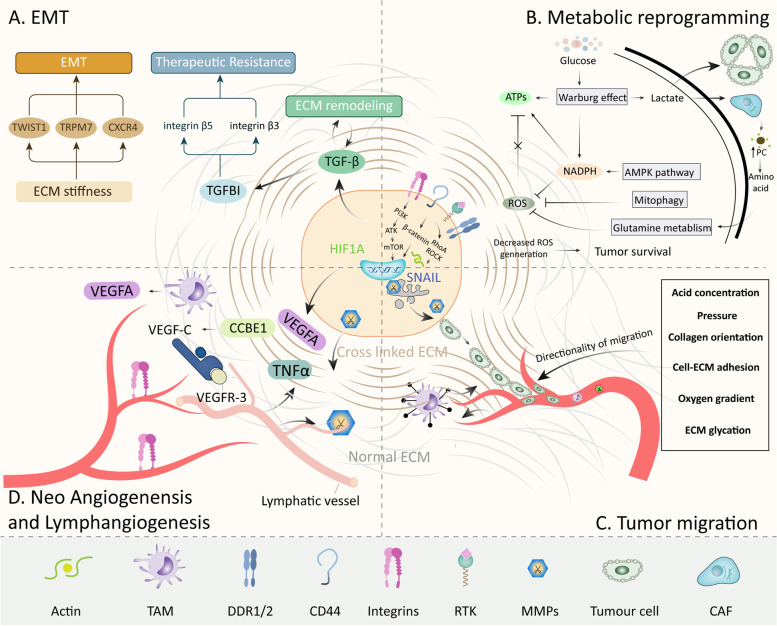
“ECM components such as the binding between tenascins and TGF-β isoforms [250] and EGF-domain of fibronectin fibrils [251] stimulate TGF-β signaling pathway and EMT process in normal cells, may potentially influence EMT in cancer cells (Fig.”
BackgroundWang, X., Zhou, Q., Yu, Z., Wu, X., Chen, X., Li, J., Li, C., Yan, M., Zhu, Z., Liu, B., et al. (2017) · International Journal of Cancer · doi:10.1002/ijc.30801 · Cited by 115 · cited 2×
“Lumican CAFs derived Lumican induces tumor progression via β1-FAK pathway [228]”
BackgroundSelf-citationExtracellular Matrix in Vascular Disease, Part 2/4
Barallobre‐Barreiro, J., Loeys, B., Mayr, M., Rienks, M., Verstraeten, A., & Kovacic, J. C. (2020) · Journal of the American College of Cardiology · doi:10.1016/j.jacc.2020.03.018 · Cited by 115 · cited 1×
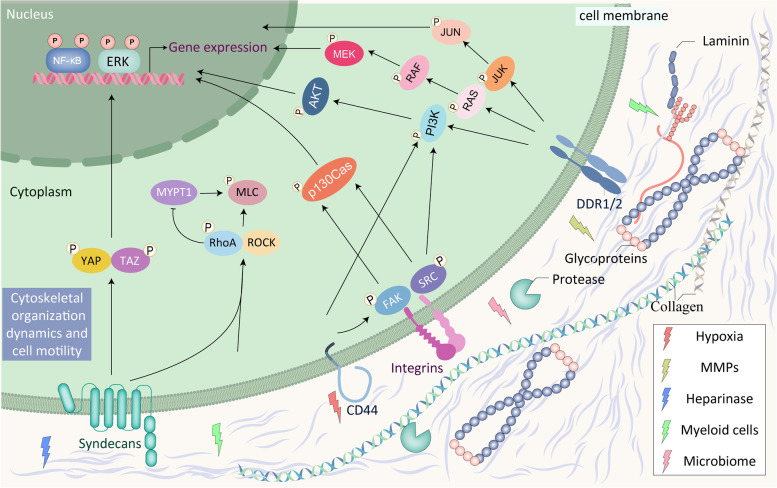
“Molecular composition of ECM The ECM is described as a collection of exocrine molecules that provide structural and biochemical support for the surrounding cells [14].”
BackgroundTorres, S., Garcia-Palmero, I., Herrera, M., Bartolomé, R. A., Peña, C., Fernandez-Aceñero, M. J., Padilla, G., Peláez-García, A., Lopez-Lucendo, M., Rodriguez-Merlo, R., et al. (2015) · Clinical Cancer Research · doi:10.1158/1078-0432.ccr-14-3096 · Cited by 113 · cited 1×
“High expression of LOXL2 in CAFs is correlated with poor prognosis in colorectal cancer [382], prostate cancer [383].”
BackgroundAlonso-Nocelo, M., Raimondo, T. M., Vining, K. H., López-López, R., de la Fuente, M., & Mooney, D. J. (2018) · Biofabrication · doi:10.1088/1758-5090/aaafbc · Cited by 113 · cited 1×
“Additionally, the influence of ECM stiffness on other immune cells such as dendric cells maturation [460] and macrophages [461, 462] have been recently reported.”
BackgroundHalder, S. K., Osteen, K. G., & Al-Hendy, A. A. (2013) · Biology of Reproduction · doi:10.1095/biolreprod.113.107714 · Cited by 112
Rada, M., Nallanthighal, S., Cha, J., Ryan, K. C., Sage, J., Eldred, C., Ullo, M. F., Oršulić, S., & Cheon, D. (2018) · Oncogene · doi:10.1038/s41388-018-0297-x · Cited by 111 · cited 1×
“Ovarian cancer COL11A1 COL11A1-DDR2 stimulates Src-PI3K/Akt/NF-κB signaling to induce cisplatin resistance [233]”
BackgroundAzzariti, A., Mancarella, S., Porcelli, L., Quatrale, A. E., Caligiuri, A., Lupo, L., Dituri, F., & Giannelli, G. (2016) · Hepatology · doi:10.1002/hep.28835 · Cited by 111 · cited 1×
“Intriguingly, soluble laminin-322 secreted by HSCs in conditional medium of hepatoma can induce sorafenib resistance by sustaining activation of α3 integrin/FAK pathway, implying is that the components of ECM that matter, not their location [551].”
BackgroundCancer Burden Is Controlled by Mural Cell-β3-Integrin Regulated Crosstalk with Tumor Cells
Wong, P., Muñoz‐Félix, J. M., Hijazi, M., Kim, H.-J., Robinson, S. D., de Luxán‐Delgado, B., Rodríguez‐Hernández, I., Maiques, Ó., Meng, Y.-M., Meng, Q., et al. (2020) · Cell · doi:10.1016/j.cell.2020.02.003 · Cited by 111 · cited 2×
“Low expression of β3 integrin in mural cells of blood vessel is associated with cancer progression [421].”
BackgroundGlutaminolysis drives membrane trafficking to promote invasiveness of breast cancer cells
Dornier, E., Rabas, N., Mitchell, L. E., Novo, D., Dhayade, S., Marco, S., Mackay, G., Sumpton, D. P., Pallarès-Masmitjà, M., Nixon, C., et al. (2017) · Nature Communications · doi:10.1038/s41467-017-02101-2 · Cited by 111 · cited 1×
“Tumor cells also enhance their aggressiveness via several glutamine-associated mechanisms such as upregulation of glutamine receptor [297], tissue transglutaminase [298] and glutaminolysis [299].”
BackgroundSaupe, F., Schwenzer, A., Jia, Y., Gasser, I., Spenlé, C., Langlois, B., Kammerer, M., Lefebvre, O., Hlushchuk, R., Rupp, T., et al. (2013) · Cell Reports · doi:10.1016/j.celrep.2013.09.014 · Cited by 110 · cited 1×
“During the formation of PDAC in vivo model with normal immune function, the existence of TNC promotes oncogenesis and activation of Wnt singling pathway in cancer cells [503].”
BackgroundInsua‐Rodríguez, J., Pein, M., Hongu, T., Meier, J., Descot, A., Lowy, C. M., De Braekeleer, E., Sinn, H., Spaich, S., Sütterlin, M., et al. (2018) · EMBO Molecular Medicine · doi:10.15252/emmm.201809003 · Cited by 110
Du, S., Yang, Z., Lu, X., Yousuf, S., Zhao, M., Li, W., Miao, J., Wang, X., Heng, Y., Zhu, X., et al. (2021) · Oncogene · doi:10.1038/s41388-021-01988-y · Cited by 110 · cited 1×
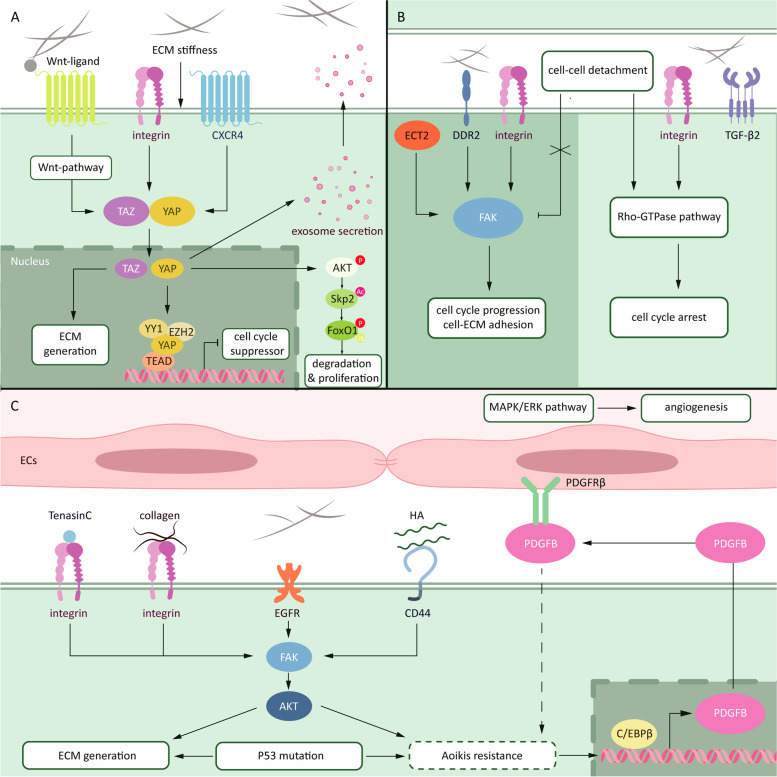
“Besides, platelet-derived growth factor-BB (PDGFB) secretion from anoikis resistant gastric cancer cells constructs a C/EBPβ-PDGFB-PDGFRβ-MAPK feedback loop with vascular ECs, which supports angiogenesis and metastasis in gastric cancer [198].”
BackgroundSelf-citationMatrix Stiffening and EGFR Cooperate to Promote the Collective Invasion of Cancer Cells
Grasset, E. M., Bertero, T., Bozec, A., Friard, J., Bourget, I., Pisano, S., Lecacheur, M., Maiel, M., Bailleux, C., Emelyanov, A., et al. (2018) · Cancer Research · doi:10.1158/0008-5472.can-18-0601 · Cited by 109 · cited 1×
“In squamous cell carcinoma, ECM stiffness triggers collective invasion via mechanical sensing EGFR pathway-induced calcium absorption [324].”
BackgroundCorsa, C. A. S., Brenot, A., Grither, W. R., Van Hove, S., Loza, A. J., Zhang, K., Ponik, S. M., Liu, Y., DeNardo, D. G., Eliceiri, K. W., et al. (2016) · Cell Reports · doi:10.1016/j.celrep.2016.05.033 · Cited by 108 · cited 1×
“K14+ breast cancer cells expression DDR2 and CXCR4 and CAFs expressing DDR2 guides metastasis from primary tumor organoids to polarize to the leading edge and direct migration [365, 366].”
BackgroundMatrix metalloproteinases as master regulators of the vicious cycle of bone metastasis
Lynch, C. C. (2010) · Bone · doi:10.1016/j.bone.2010.06.007 · Cited by 108 · cited 1×
“In the tumor microenvironment, MMPs are primarily derived from myeloid cells and are involved in ECM collagen remodeling [67].”
BackgroundNguyen, E. V., Pereira, B. A., Lawrence, M. G., Ma, X., Rebello, R. J., Chan, H., Niranjan, B., Wu, Y., Ellem, S., Guan, X., et al. (2019) · Molecular & Cellular Proteomics · doi:10.1074/mcp.ra119.001496 · Cited by 107 · cited 1×
“High expression of LOXL2 in CAFs is correlated with poor prognosis in colorectal cancer [382], prostate cancer [383].”
BackgroundThe impact of hypoxia on immune state in cancer
Mortezaee, K., & Majidpoor, J. (2021) · Life Sciences · doi:10.1016/j.lfs.2021.120057 · Cited by 107
Szöőr, Á., Tóth, G., Zsebik, B., Szabó, V., Eshhar, Z., Abken, H., & Vereb, G. (2020) · Cancer Letters · doi:10.1016/j.canlet.2020.04.008 · Cited by 106 · cited 1×
“For instance, human epidermal growth factor receptor 2 (Her-2) specific CAR-T shows a perfect penetration in tumor matrix better than Her-2 monoclonal antibodies [603].”
BackgroundMembrane associated collagen XIII promotes cancer metastasis and enhances anoikis resistance
Zhang, H., Fredericks, T., Xiong, G., Qi, Y., Rychahou, P. G., Li, J.-D., Pihlajaniemi, T., Xu, W., & Xu, R. (2018) · Breast Cancer Research · doi:10.1186/s13058-018-1030-y · Cited by 105 · cited 1×
“Collagens such as collagen I/β1 integrin in gastric cancer [189], collagen XIII/ β1 integrin in breast cancer [190], COL11A1/Akt/ Cyclic AMP response-element binding protein (CREB) in PDAC [191], collagen IV/integrin in hepatoma [192], support anoikis resistance via B-cell lymphoma (BCL) family proteins and downstream…”
BackgroundOhata, H., Ishiguro, T., Aihara, Y., Sato, A., Sakai, H., Sekine, S., Taniguchi, H., Akasu, T., Fujita, S., Nakagama, H., et al. (2012) · Cancer Research · doi:10.1158/0008-5472.can-11-3812 · Cited by 105 · cited 5×
“For instance, after chemotherapy treatment, a positive feedback loop between THBS2deficient CD133+ liver CSCs and local soft ECM induces cell metastasis in hepatoma [549].”
BackgroundInfluentialHeparanase induces VEGF C and facilitates tumor lymphangiogenesis
Cohen‐Kaplan, V., Naroditsky, I., Zetser, A., Ilan, N., Vlodavsky, I., & Doweck, I. (2008) · International Journal of Cancer · doi:10.1002/ijc.23898 · Cited by 104 · cited 1×
“Soluble factors such as heparanase stimulates VEGF-C expression in cancer [441, 442], while TGFBI induces activation of FAK signaling pathway in lymphatic endothelial cells (LECs), and increased expression of CCL21 on the surface of LECs to induce the dissociation of VE-cadherin junctions between LECs [443, 444].”
BackgroundDourado, M. R., Korvala, J., Åström, P., de Oliveira, C. E., Cervigne, N. K., Mofatto, L. S., Bastos, D. C., Messetti, A. C., Graner, E., Leme, A. F. P., et al. (2019) · Journal of Extracellular Vesicles · doi:10.1080/20013078.2019.1578525 · Cited by 104
Hayashido, Y., Lucas, A., Rougeot, C., Godyna, S., Argraves, W. S., & Rochefort, H. (1998) · International Journal of Cancer · doi:10.1002/(sici)1097-0215(19980209)75:4<654::aid-ijc26>3.0.co;2-7 · Cited by 104
Neill, T., Torres, A., Buraschi, S., Owens, R. T., Hoek, J. B., Baffa, R., & Iozzo, R. V. (2014) · Journal of Biological Chemistry · doi:10.1074/jbc.m113.512566 · Cited by 103
Marques, C., Reis, C. A., Vivès, R. R., & Magalhães, A. (2021) · Frontiers in Oncology · doi:10.3389/fonc.2021.778752 · Cited by 103 · cited 16×
“Furthermore, tumor-derived ECM transforms normal endothelial cell and stimulate VEGF2 expression via β3 integrin/FAK/Src pathway in melanoma [420].”
BackgroundInfluentialWu, Y., Huang, Y.-F., Chang, T., Chen, C., Wu, P., Huang, S.-C., & Chou, C.-Y. (2021) · Oncogene · doi:10.1038/s41388-021-01865-8 · Cited by 103 · cited 1×
“For instance, COL11A1 stimulates NK-κB/ insulin-like growth factor binding protein 2 (IGFBP2) to induce TGF-β3 activation in ovarian CAFs to promote tumor growth [253].”
BackgroundHypoxia promotes an inflammatory phenotype of fibroblasts in pancreatic cancer
Mello, A. M., Ngodup, T., Lee, Y., Donahue, K. L., Li, J., Rao, A. U. K., Carpenter, E. S., Crawford, H. C., di Magliano, M. P., & Lee, K. E. (2022) · Oncogenesis · doi:10.1038/s41389-022-00434-2 · Cited by 102 · cited 1×
“Even a proinflammation role of hypoxiainduced CAFs has been reported recently [34].”
BackgroundMatsuyama, W., Wang, L., Farrar, W. L., Faure, M., & Yoshimura, T. (2004) · The Journal of Immunology · doi:10.4049/jimmunol.172.4.2332 · Cited by 102 · cited 1×
“Under the stimulation of collagen, in renal cancer, high expression of DDR1a in monocytes mediates infiltration and migration in ECM [480], while DDR1b triggers MAPK/NF-κB pathway to activate macrophage during inflammation [481].”
BackgroundCTC clusters induced by heparanase enhance breast cancer metastasis
Wei, R., Sun, D., Yang, H. Y., Yan, J., Zhang, X., Zheng, X., Fu, X., Geng, M., Huang, X., & Ding, J. (2018) · Acta Pharmacologica Sinica · doi:10.1038/aps.2017.189 · Cited by 101
Ellert‐Miklaszewska, A., Wiśniewski, P., Kijewska, M., Gajdanowicz, P., Pszczolkowska, D., Przanowski, P., Dąbrowski, M., Maleszewska, M., & Kaminska, B. (2016) · Oncogene · doi:10.1038/onc.2016.55 · Cited by 101 · cited 2×
“The isoform of secreted OPN from glioblastoma could not be observed from normal human astrocytes [529].”
BackgroundLu, C., Liu, Z., Klement, J. D., Yang, D., Merting, A. D., Poschel, D., Albers, T., Waller, J. L., Shi, H., & Liu, K. (2021) · Journal for ImmunoTherapy of Cancer · doi:10.1136/jitc-2021-002624 · Cited by 101 · cited 4×
“Secreted OPN form tumor cells contributes to the accumulation of MDSCs via targeting CD44 and stimulating downstream ERK/MAPK pathway to induce extramedullary myelopoiesis and immune escape [519].”
BackgroundInfluentialYang, M., Ma, C., Liu, S., Sun, J., Shao, Q., Gao, W., Zhang, Y., Li, Z., Xie, Q., Dong, Z., et al. (2009) · Immunology · doi:10.1111/j.1365-2567.2008.02954.x · Cited by 99 · cited 1×
“Intriguingly, DCs under hypoxia, which is commonly detected in TME, shows increasing secretion of OPN and impaired immune activation to support tumor immune escape [517].”
BackgroundTumor-Associated Macrophages as Incessant Builders and Destroyers of the Cancer Stroma
Liguori, M., Solinas, G., Germano, G., Mantovani, A., & Allavena, P. (2011) · Cancers · doi:10.3390/cancers3043740 · Cited by 99 · cited 1×
“TAM shapes ECM remodeling by high-rate degradation of the matrix and generation of ECM proteins [533].”
BackgroundHawk, M. A., Gorsuch, C. L., Fagan, P., Lee, C., Kim, S. E., Hamann, J. C., Mason, J. A., Weigel, K. J., Tsegaye, M. A., Shen, L., et al. (2018) · Nature Cell Biology · doi:10.1038/s41556-018-0034-2 · Cited by 99 · cited 2×
“C motif chemokine ligand 2 CCBE1 Collagen- and calcium-binding EGF domains 1 CSF1 Colony-stimulating factor 1 CAR-T Chimeric antigen receptor redirected T cell CAIX Carbonic anhydrase IX DDR2 Discoid protein domain receptor DC Dendritic cell DAB2 Disabled homolog 2 mitogen-responsive phosphoprotein ECM Extracellular m…”
BackgroundRKIP and HMGA2 regulate breast tumor survival and metastasis through lysyl oxidase and syndecan-2
Sun, M., Gomes, S., Chen, P., Frankenberger, C. A., Sankarasharma, D., Chung, C. H., Chada, K. K., & Rosner, M. R. (2014) · Oncogene · doi:10.1038/onc.2013.328 · Cited by 98 · cited 1×
“After that, more subtypes of syndecans have been identified to be associated with progression of cancer [126, 127].”
BackgroundMah, E. J., Lefebvre, A. E. Y. T., McGahey, G. E., Yee, A. F., & Digman, M. A. (2018) · Scientific Reports · doi:10.1038/s41598-018-35381-9 · Cited by 98 · cited 1×
“Intriguingly, increased collagen density sheds metabolic program of triple negative breast cancer (TNBC) cells from glycolysis to oxidative phosphorylation (OXPHOS), the metabolic pathway relies on mitochondria [284].”
BackgroundHuang, J.-Y., Cheng, Y.-J., Lin, Y.-P., Lin, H.-C., Su, C.-C., Juliano, R., & Yang, B.-C. (2010) · The Journal of Immunology · doi:10.4049/jimmunol.0901352 · Cited by 95 · cited 1×
“ECM from glioblastoma cell line culture expressing TNC shows suppressive function on Jurkat T cell migration [502].”
BackgroundKay, E. J., Koulouras, G., & Zanivan, S. (2021) · Frontiers in Oncology · doi:10.3389/fonc.2021.719922 · Cited by 95 · cited 1×
“CAFs are the primary derivation of acellular components including collagens in ECM [327].”
BackgroundKoohestani, F., Braundmeier, A. G., Mahdian, A., Seo, J., Bi, J., & Nowak, R. A. (2013) · PLoS ONE · doi:10.1371/journal.pone.0075844 · Cited by 95 · cited 1×
“proliferation, and it is emergency to unveil the program of ECM remodeling and identify specific therapeutic target for cancer elimination [94].”
BackgroundTenascin-X promotes epithelial-to-mesenchymal transition by activating latent TGF-β
Alcaraz, L. B., Exposito, J.-Y., Chuvin, N., Pommier, R. M., Cluzel, C., Martel, S., Sentis, S., Bartholin, L., Lethias, C., & Valcourt, U. (2014) · Journal of Cell Biology · doi:10.1083/jcb.201308031 · Cited by 94 · cited 1×
“By the way, FBG domain on tenascin-X, a member of tenascins, supports its mechanic interaction with TGF-β, then induce maturation of TGF-β, highlights the potential role of FBG domain on other tenascins in TGF-β maturation [250, 593].”
BackgroundTGFBI modulates tumour hypoxia and promotes breast cancer metastasis
Fico, F., & Santamaria‐Martínez, A. (2020) · Molecular Oncology · doi:10.1002/1878-0261.12828 · Cited by 94 · cited 1×
“A research finds out that TGFBI causes decreased vessel perfusion and sever hypoxia, which favors metastasis in breast cancer [267].”
BackgroundJin, W., Tamzalit, F., Chaudhuri, P. K., Black, C. T., Huse, M., & Kam, L. C. (2019) · Proceedings of the National Academy of Sciences · doi:10.1073/pnas.1906986116 · Cited by 94 · cited 1×
“Mechanistically, CD4 T cell can form a mechanically complex with stiff matrix surface, this interaction modulates T cell cytoskeletal organization which may suppress T cell activation [468].”
BackgroundGarcía‐Palmero, I., Torres, S., Bartolomé, R. A., Peláez‐García, A., Larriba, M. J., López-Lucendo, M. F., Peña, C., Escudero-Paniagua, B., Múñoz, A., & Casal, J. I. (2016) · Oncogene · doi:10.1038/onc.2016.57 · Cited by 93
Boyle, S. T., Poltavets, V., Kular, J., Pyne, N. T., Sandow, J. J., Lewis, A. C., Murphy, K. J., Kolesnikoff, N., Moretti, P. A. B., Tea, M. N., et al. (2020) · Nature Cell Biology · doi:10.1038/s41556-020-0523-y · Cited by 93 · cited 1×
“A ROCK-dependent paracrine axis has been recently identified and is responsible to breast cancer stimulated reprogramming of CAFs [329].”
BackgroundA Trickster in Disguise: Hyaluronan’s Ambivalent Roles in the Matrix
Bohaumilitzky, L., Huber, A.-K., Stork, E. M., Wengert, S., Woelfl, F., & Boehm, H. (2017) · Frontiers in Oncology · doi:10.3389/fonc.2017.00242 · Cited by 93
Xiao, W., Zhang, R., Sohrabi, A., Ehsanipour, A., Sun, S., Liang, J., Walthers, C. M., Ta, L., Nathanson, D. A., & Seidlits, S. K. (2018) · Cancer Research · doi:10.1158/0008-5472.can-17-2429 · Cited by 93 · cited 1×
“Cancer cells 3D culture of HA also shows severe chemoresistance, especially for glioblastoma cells [547, 548].”
BackgroundShedding of Discoidin Domain Receptor 1 by Membrane-type Matrix Metalloproteinases
Fu, H.-L., Sohail, A., Valiathan, R. R., Wasinski, B. D., Kumarasiri, M., Mahasenan, K. V., Bernardo, M. M., Tokmina-Roszyk, D., Fields, G. B., Mobashery, S., et al. (2013) · Journal of Biological Chemistry · doi:10.1074/jbc.m112.409599 · Cited by 93 · cited 1×
“Attentionally, the regulatory feedback between DDR1 and MMP secretion contributes to sustain the homeostasis in local ECM, highlights the significant role of DDR1 in ECM remodeling [361, 362].”
BackgroundMatrix stiffness‐mediated effects on macrophages polarization and their LOXL2 expression
Xing, X., Wang, Y., Zhang, X., Gao, X., Li, M., Wu, S., Zhao, Y., Chen, J., Gao, D., Chen, R., et al. (2021) · The FEBS Journal · doi:10.1111/febs.15566 · Cited by 92 · cited 1×
“Increasing stiffness of ECM enhances M2 polarization and HIF-1α-induced LOXL2 expression via β5 integrin/FAK/MEK/ERK pathway of macrophage in hepatoma [470].”
BackgroundOmelyanenko, V. G., Gentry, C. A., Kopečková, P., & Kopec̆ek, J. (1998) · International Journal of Cancer · doi:10.1002/(sici)1097-0215(19980209)75:4<643::aid-ijc24>3.0.co;2-8 · Cited by 92
Yang, N., Chen, T., Wang, L., Liu, R., Niu, Y., Sun, L., Yao, B., Wang, Y., Yang, W., Liu, Q., et al. (2020) · Theranostics · doi:10.7150/thno.44789 · Cited by 92 · cited 2×
“Other mechanosensors promoting EMT via several pathways such as transient receptor potential melastatin 7 (TRPM7)/SOX4 in breast cancer [273], CXCR4/ubiquitin domain containing 1 (UBTD1)/YAP in hepatoma [141] and EGFR in glioblastoma [274] have been reported.”
BackgroundAro, E., Khatri, R., Gerard-O'Riley, R., Mangiavini, L., Myllyharju, J., & Schipani, E. (2012) · Journal of Biological Chemistry · doi:10.1074/jbc.m112.352872 · Cited by 92
Fischer, R. S., Sun, X., Baird, M. A., Hourwitz, M. J., Seo, B. R., Pasapera, A. M., Mehta, S. B., Losert, W., Fischbach, C., Fourkas, J. T., et al. (2021) · Proceedings of the National Academy of Sciences · doi:10.1073/pnas.2021135118 · Cited by 91
Karalis, T. T., Heldin, P., Vynios, D. H., Neill, T., Buraschi, S., Iozzo, R. V., Karamanos, N. K., & Skandalis, S. S. (2019) · Matrix Biology · doi:10.1016/j.matbio.2018.04.007 · Cited by 90 · cited 1×
“4-methylumbelliferone (4-MU), the HA synthesis inhibitor, significantly decreases HA expression and tumor progression in ER-negative breast cancer [571] and hepatoma [572], it also overcomes chemoresistance in ovarian cancer [573].”
BackgroundEDB Fibronectin Specific Peptide for Prostate Cancer Targeting
Han, Z., Zhou, Z., Shi, X., Wang, J., Wu, X., Sun, D., Chen, Y., Zhu, H., Magi-Galluzzi, C., & Lu, Z.-R. (2015) · Bioconjugate Chemistry · doi:10.1021/acs.bioconjchem.5b00178 · Cited by 90 · cited 1×
“Additionally, extra-domain B (EDB) of fibronectin is an ideal target for drug delivery [594, 595].”
BackgroundHaas, A. J., Zihni, C., Ruppel, A., Hartmann, C., Ebnet, K., Tada, M., Balda, M. S., & Matter, K. (2020) · Cell Reports · doi:10.1016/j.celrep.2020.107924 · Cited by 90 · cited 1×
“In normal tissues, the sequentially regulated ECM acts as a signal library and provides anchorage points and architectural definitions for mechanical sensing [21].”
BackgroundTargeting of CCBE1 by miR-330-3p in human breast cancer promotes metastasis
Mesci, A., Huang, X., Taeb, S., Jahangiri, S., Kim, Y., Fokas, E., Bruce, J., Leong, H. S., & Liu, S. K. (2017) · British Journal of Cancer · doi:10.1038/bjc.2017.105 · Cited by 90 · cited 1×
“Suppression of CCBE1 by miR-330-3p hampers breast cancer metastasis [454].”
BackgroundMULTIMERIN2 impairs tumor angiogenesis and growth by interfering with VEGF-A/VEGFR2 pathway
Lorenzon, E., Colladel, R., Andreuzzi, E., Marastoni, S., Todaro, F., Schiappacassi, M., Ligresti, G., Colombatti, A., & Mongiat, M. (2011) · Oncogene · doi:10.1038/onc.2011.487 · Cited by 90 · cited 1×
“The absence of Multimerin-2 (MMRN2), a member of EMILIN family expressed by ECs, hampers VEGFA/VEGFR2 activation and angiogenesis in xenograft model [427, 428].”
BackgroundCordes, N., & Beuningen, D. V. (2003) · British Journal of Cancer · doi:10.1038/sj.bjc.6600912 · Cited by 90 · cited 1×
“Phenomena from the radiation-induced ECM regulation on cell cycle arrest/progression of both malignancy [90, 91] and fibroblasts [92] underpins the opinion.”
BackgroundVitamin D3 Inhibits Wnt/β-Catenin and mTOR Signaling Pathways in Human Uterine Fibroid Cells
Al-Hendy, A. A., Diamond, M. P., Boyer, T., & Halder, S. K. (2016) · The Journal of Clinical Endocrinology & Metabolism · doi:10.1210/jc.2015-3555 · Cited by 90 · cited 1×
“It also inhibits the activation of Wnt4/β-catenin/ mTOR pathway to suppress ECM generation [617], especially for mediator complex subunit 12 (MED12) mutation uterine leiomyomas [618].”
BackgroundBegum, A., Ewachiw, T., Jung, C., Huang, A., Norberg, K. J., Marchionni, L., McMillan, R., Penchev, V., Rajeshkumar, N. V., Maitra, A., et al. (2017) · PLOS ONE · doi:10.1371/journal.pone.0180181 · Cited by 89 · cited 1×
“Within ECM, collagen I sustains CSCs renewal and tumor initiation via the activation of FAK in pancreatic cancer [159].”
BackgroundEvolving roles of lysyl oxidase family in tumorigenesis and cancer therapy
Ye, M., Song, Y., Pan, S., Chu, M., Wang, Z.-W., & Zhu, X. (2020) · Pharmacology & Therapeutics · doi:10.1016/j.pharmthera.2020.107633 · Cited by 89 · cited 1×
“Matrix‐related enzymes: crossing the red sea LOX family, including LOX and LOXLs, plays a significant role in cancer-associated ECM stiffness by crosslinking extracellular matrix proteins, collagen and elastin [379].”
BackgroundFibroblast pyruvate carboxylase is required for collagen production in the tumour microenvironment
Schwörer, S., Pavlova, N. N., Cimino, F. V., King, B., Cai, X., Sizemore, G. M., & Thompson, C. B. (2021) · Nature Metabolism · doi:10.1038/s42255-021-00480-x · Cited by 89 · cited 17×
“And the positive feedback loop of TGFBI secretion among TAMs/CAFs/TAMs constructs immunosuppressive TME [270], implying that the concentration of TGFBI in ECM is critical for metastasis but ignores its’ derivation (Fig.”
BackgroundInfluentialAltei, W. F., Pachane, B. C., dos Santos, P. K., Ribeiro, L. N. M., Sung, B. H., Weaver, A. M., & Selistre-de-Araújo, H. S. (2020) · Cell Communication and Signaling · doi:10.1186/s12964-020-00630-w · Cited by 89
Tumbarello, D. A., Temple, J., & Brenton, J. D. (2012) · Molecular Cancer · doi:10.1186/1476-4598-11-36 · Cited by 88
Metastatic colorectal cancer cells maintain the TGFβ program and use TGFBI to fuel angiogenesis
Chiavarina, B., Costanza, B., Ronca, R., Blomme, A., Rezzola, S., Chiodelli, P., Giguelay, A., Belthier, G., Doumont, G., Simaeys, G. V., et al. (2020) · Theranostics · doi:10.7150/thno.51507 · Cited by 88 · cited 1×
“Nevertheless, another research considers that TGFBI induce angiogenesis in colorectal cancer, indicating the organ-specific function of TGFBI in angiogenesis [268].”
BackgroundMetabolic regulation of the cancer-immunity cycle
Patterson, L. F. S., & Vardhana, S. A. (2021) · Trends in Immunology · doi:10.1016/j.it.2021.09.002 · Cited by 87 · cited 1×
“However, high concentration of lactate facilitates immunosuppression and sustains tumor progression via stimulating stromal cells [287].”
BackgroundJha, S. K., Rauniyar, K., Karpanen, T., Leppänen, V.-M., Brouillard, P., Vikkula, M., Alitalo, K., & Jeltsch, M. (2017) · Scientific Reports · doi:10.1038/s41598-017-04982-1 · Cited by 87 · cited 3×
“Precise mechanism of CCBE1-induced VEGF-C activation is the enhancing of cleavage activity of a disintegrin and metalloproteinase with thrombospondin motifs 3 (ADAMTS3) and the facilitating of the colocalization of VEGF-C and ADAMTS3 [450].”
BackgroundJia, Y.-L., Shi, L., Zhou, J.-N., Fu, C.-J., Chen, L., Yuan, H.-F., Wang, Y.-F., Yan, X.-L., Xu, Y.-C., Zeng, Q., et al. (2011) · Hepatology · doi:10.1002/hep.24562 · Cited by 87 · cited 1×
“Epimorphin Cancer secretes epimorphin promotes malignant invasion and metastasis [219]”
BackgroundDiscoidin Domain Receptor 2 Mediates Tumor Cell Cycle Arrest Induced by Fibrillar Collagen
Wall, S. J., Werner, E., Werb, Z., & DeClerck, Y. A. (2005) · Journal of Biological Chemistry · doi:10.1074/jbc.m508226200 · Cited by 87 · cited 1×
“Intriguingly, DDR2 mediates cell cycle arrest under the treatment of collagen, whereas deglycosylation of collagen can overcome the suppression in melanoma, implying the significance of collagen glycosylation [367].”
BackgroundGalvagni, F., Nardi, F., Spiga, O., Trezza, A., Tarticchio, G., Pellicani, R., Andreuzzi, E., Caldi, E., Toti, P., Tosi, G. M., et al. (2017) · Matrix Biology · doi:10.1016/j.matbio.2017.08.003 · Cited by 87 · cited 1×
“Intriguingly, blocking CD93-MMRN2 interaction in ECs favors angiogenesis and metastasis in tumor [432].”
BackgroundNiu, N., Lu, P., Yang, Y., He, R., Zhang, L., Shi, J., Wu, J., Yang, M., Zhang, Z.-G., Wang, L.-W., et al. (2020) · Gut · doi:10.1136/gutjnl-2019-318362 · Cited by 86 · cited 1×
“Gene-deficiency also confers cancer cells with EMT and metastasis via ECM generation, such as SET domain containing 2 (Setd2) in pancreatic cancer [244].”
BackgroundSelf-citationHyaluronan‐CD44/RHAMM interaction‐dependent cell proliferation and survival in lung cancer cells
Song, J. M., Im, J., Nho, R. S., Han, Y. H., Upadhyaya, P., & Kassie, F. (2019) · Molecular Carcinogenesis · doi:10.1002/mc.22930 · Cited by 86
Decorin deficiency promotes epithelial-mesenchymal transition and colon cancer metastasis
Mao, L., Yang, J., Yue, J., Chen, Y., Zhou, H., Fan, D., Zhang, Q., Buraschi, S., Iozzo, R. V., & Bi, X. (2020) · Matrix Biology · doi:10.1016/j.matbio.2020.10.001 · Cited by 86 · cited 1×
“The deficiency of stromal cell-secreted decorin stimulates colorectal cancer initiation and triggers ECM remodeling [377].”
BackgroundYates, T. J., Lopez, L. E., Lokeshwar, S. D., Ortiz, N., Kallifatidis, G., Jordan, A., Hoye, K., Altman, N., & Lokeshwar, V. B. (2015) · JNCI: Journal of the National Cancer Institute · doi:10.1093/jnci/djv085 · Cited by 86 · cited 1×
“Oral dietary supplement of 4-MU is effective to suppress prostate cancer progression via abrogating HA signaling in vivo [574].”
BackgroundTenascin-C Orchestrates an Immune-Suppressive Tumor Microenvironment in Oral Squamous Cell Carcinoma
Spenlé, C., Loustau, T., Murdamoothoo, D., Erne, W., Divonne, S. B.-D. L. F., Veber, R., Petti, L., Bourdely, P., Mörgelin, M., Brauchle, E.-M., et al. (2020) · Cancer Immunology Research · doi:10.1158/2326-6066.cir-20-0074 · Cited by 85 · cited 7×
“The combination of glycosylated podoplanin from TAMs with galectin 8 on LECs stimulates the activation of β1 integrin.”
BackgroundInfluentialCancer immunotherapy by NC410, a LAIR-2 Fc protein blocking human LAIR-collagen interaction
Ramos, M. I. P., Tian, L., de Ruiter, E. J., Song, C., Paucarmayta, A., Singh, A., Elshof, E., Vijver, S. V., Shaik, J., Bosiacki, J., et al. (2021) · eLife · doi:10.7554/elife.62927 · Cited by 85 · cited 2×
“A LAIR-2-Fc recombinant protein also suppresses tumor progression and re-activate anti-tumor immune response [491, 493, 494].”
BackgroundIntegrin-EGFR interaction regulates anoikis resistance in colon cancer cells
Guha, D., Saha, T., Bose, S., Chakraborty, S., Dhar, S., Khan, P., Adhikary, A., Das, T., & Sa, G. (2019) · APOPTOSIS · doi:10.1007/s10495-019-01573-5 · Cited by 84
Mesenchymal Plasticity Regulated by Prrx1 Drives Aggressive Pancreatic Cancer Biology
Feldmann, K., Maurer, C., Peschke, K., Teller, S., Schuck, K., Steiger, K., Engleitner, T., Öllinger, R., Nomura, A., Wirges, N., et al. (2021) · Gastroenterology · doi:10.1053/j.gastro.2020.09.010 · Cited by 84 · cited 1×
“Intriguingly, a specific clone of CAFs associated with ECM (eCAFs) is identified in pancreatic cancer [339] and gastric cancer [340], and recently identified Endo180 and paired related homeobox 1 (Prrx1) may be significant genes associated with the function and plasticity of eCAFs [341, 342].”
BackgroundPradhan, S., & Slater, J. H. (2019) · Biomaterials · doi:10.1016/j.biomaterials.2019.04.022 · Cited by 84 · cited 1×
“Changes in chemical and mechanical properties in hydrogel culture determines balance between quiescence and reactivation [173].”
BackgroundMutant p53 induces Golgi tubulo-vesiculation driving a prometastatic secretome
Capaci, V., Bascetta, L., Fantuz, M., Beznoussenko, G. V., Sommaggio, R., Cancila, V., Bisso, A., Campaner, E., Mironov, A. A., Wiśniewski, J. R., et al. (2020) · Nature Communications · doi:10.1038/s41467-020-17596-5 · Cited by 84 · cited 1×
“Mechanically, mut-p53/HIF1α/miR-30d axis triggers tubulo-vesiculation of the Golgi apparatus and promotes ECM deposition and remodeling [211].”
BackgroundTGFBI expression is associated with a better response to chemotherapy in NSCLC
Irigoyen, M., Pajares, M. J., Agorreta, J., Ponz‐Sarvisé, M., Salvo, E., Lozano, M. D., Pío, R., Bazo, I. G., & Rouzaut, A. (2010) · Molecular Cancer · doi:10.1186/1476-4598-9-130 · Cited by 83 · cited 1×
“Some researchers consider that TGFBI is a tumor suppressor because of the deficiency of TGFBI favors tumor formation [259], and high expression of TGFBI in tumor is associated with optimal chemotherapy sensitivity [260, 261].”
BackgroundKuroda, M., Wada, H., Kimura, Y., Ueda, K., & Kioka, N. (2017) · Journal of Cell Science · doi:10.1242/jcs.194779 · Cited by 82 · cited 1×
“Role of TAZ in ECM remodeling has been described in fibroblasts and adipocytes [148, 149].”
BackgroundOn the mechanism of long-range orientational order of fibroblasts
Li, X., Balagam, R., He, T.-F., Lee, P. P., Igoshin, O. A., & Levine, H. (2017) · Proceedings of the National Academy of Sciences · doi:10.1073/pnas.1707210114 · Cited by 82 · cited 1×
“Intriguingly, the orientation of fibers also contributes to the long-range distribution of CAFs [343].”
BackgroundZhang, H., Ren, L., Ding, Y., Li, F., Chen, X., Ouyang, Y., Zhang, Y., & Zhang, D. (2019) · The FASEB Journal · doi:10.1096/fj.201802186r · Cited by 82 · cited 1×
“It also mediates chemoresistance via activating TGF-β/Smad2 pathway [369].”
BackgroundT Cells Promote Metastasis by Regulating Extracellular Matrix Remodeling following Chemotherapy
Haj-Shomaly, J., Vorontsova, A., Barenholz‐Cohen, T., Levi-Galibov, O., Devarasetty, M., Timaner, M., Raviv, Z., Cooper, T. J., Söker, S., Hasson, P., et al. (2021) · Cancer Research · doi:10.1158/0008-5472.can-21-1012 · Cited by 82 · cited 1×
“Roles of other immune cells, such as NKp46-expressing NK cells [538], LOX-expressing T cells [539] and TGF-β/ CD73/adenosine-dependent Myeloid cells [540] in ECM remodeling and tumor progression are recently reported.”
BackgroundCollagen-rich omentum is a premetastatic niche for integrin α2-mediated peritoneal metastasis
Huang, Y., Liang, C.-Y., Ritz, D., Coelho, R., Septiadi, D., Estermann, M., Cumin, C., Rimmer, N., Schötzau, A., López, M. N., et al. (2020) · eLife · doi:10.7554/elife.59442 · Cited by 81 · cited 1×
“Moreover, collagen-rich environment mostly stimulates integrin signaling pathway and favors pre-metastasis niche [321].”
BackgroundCausal contributors to tissue stiffness and clinical relevance in urology
Martinez-Vidal, L., Murdica, V., Venegoni, C., Pederzoli, F., Bandini, M., Necchi, A., Salonia, A., & Alfano, M. (2021) · Communications Biology · doi:10.1038/s42003-021-02539-7 · Cited by 80 · cited 1×
“Microbiome With the in-depth study of tumor microenvironment, the role of microbiome in tumor ECM remodeling cannot be ignored [77, 78].”
BackgroundParekh, K. R., Ramachandran, S., Cooper, J. D., Bigner, D. D., Patterson, A., & Mohanakumar, T. (2004) · Lung Cancer · doi:10.1016/j.lungcan.2004.05.016 · Cited by 80 · cited 4×
“Overexpression of TNC could be specifically detected and associated with immunosuppression and sever progression in various cancers, such as NSCLC [499], breast cancer [500] and oral tongue squamous cell carcinoma [501].”
BackgroundInfluentialYAP-Mediated Recruitment of YY1 and EZH2 Represses Transcription of Key Cell-Cycle Regulators
Hoxha, S., Shepard, A., Troutman, S. A., Diao, H., Doherty, J. R., Janiszewska, M., Witwicki, R. M., Pipkin, M. E., Ja, W. W., Kareta, M. S., et al. (2020) · Cancer Research · doi:10.1158/0008-5472.can-19-2415 · Cited by 80 · cited 1×
“Nevertheless, another research found out that nuclear YAP inhibits P27 expression in a transcriptional pattern [151].”
BackgroundVijver, S. V., Singh, A., Mommers-Elshof, E. T. A. M., Meeldijk, J., Copeland, R., Boon, L., Langermann, S., Flies, D., Meyaard, L., & Ramos, M. I. P. (2021) · Frontiers in Immunology · doi:10.3389/fimmu.2021.733561 · Cited by 80 · cited 2×
“A LAIR-2-Fc recombinant protein also suppresses tumor progression and re-activate anti-tumor immune response [491, 493, 494].”
BackgroundShift of syndecan-1 expression from epithelial to stromal cells during progression of solid tumours
Mennerich, D., Vogel, A., Klaman, I., Dahl, E., Lichtner, R. B., Rosenthal, A., Pohlenz, H.-D., Thierauch, K.-H., & Sommer, A. (2004) · European Journal of Cancer · doi:10.1016/j.ejca.2004.01.038 · Cited by 79
Jin, Q., Liu, G., Li, S., Yuan, H., Yun, Z., Zhang, W., Zhang, S., Dai, Y., & Ma, Y. (2019) · Journal of Cellular Physiology · doi:10.1002/jcp.26782 · Cited by 79 · cited 1×
“When cellular components are eliminated, acellular scaffolds are sufficient to promote EMT and invasion of breast cancer [239, 240].”
BackgroundSelf-citationMetabolism during ECM Detachment: Achilles Heel of Cancer Cells?
Mason, J. A., Hagel, K. R., Hawk, M. A., & Schafer, Z. T. (2017) · Trends in Cancer · doi:10.1016/j.trecan.2017.04.009 · Cited by 78
Jorgenson, A. J., Choi, K. M., Sicard, D., Smith, K. M. J., Hiemer, S. E., Varelas, X., & Tschumperlin, D. J. (2017) · American Journal of Physiology-Cell Physiology · doi:10.1152/ajpcell.00205.2016 · Cited by 78 · cited 1×
“Role of TAZ in ECM remodeling has been described in fibroblasts and adipocytes [148, 149].”
BackgroundXiao, W., Wang, S., Zhang, R., Sohrabi, A., Yu, Q., Liu, S., Ehsanipour, A., Liang, J., Bierman, R. D., Nathanson, D. A., et al. (2020) · Matrix Biology · doi:10.1016/j.matbio.2019.04.003 · Cited by 78 · cited 1×
“Cancer cells 3D culture of HA also shows severe chemoresistance, especially for glioblastoma cells [547, 548].”
BackgroundPoudel, B., Lee, Y.-M., & Kim, D. (2015) · Acta Biochimica et Biophysica Sinica · doi:10.1093/abbs/gmv005 · Cited by 78 · cited 1×
“Furthermore, inhibition of DDR2 induces decreased invasion of murine melanoma via ERK/NF-κB-mediated MMP secretion [364].”
BackgroundZhong, C., Tao, B., Tang, F., Yang, X., Peng, T., You, J., Xia, K., Xia, X., Chen, L., & Peng, L. (2020) · Theranostics · doi:10.7150/thno.50613 · Cited by 78 · cited 1×
“Glioblastoma Collagen I and fibronectin 3D culture model stimulates tumor progression via PI3K and CDC42 pathway [216]”
BackgroundSoluble stroma‐related biomarkers of pancreatic cancer
Resovi, A., Bani, M. R., Porcu, L., Anastasia, A., Minoli, L., Allavena, P., Cappello, P., Novelli, F., Scarpa, A., Morandi, E., et al. (2018) · EMBO Molecular Medicine · doi:10.15252/emmm.201708741 · Cited by 78 · cited 1×
“The occurrence and the development of malignant tumors depend on the extracellular signals and is not a completely autonomous process of tumor cells [2, 3].”
BackgroundBusuttil, R. A., George, J., Tothill, R. W., Ioculano, K., Kowalczyk, A., Mitchell, C., Lade, S., Tan, P., Haviv, I., & Boussioutas, A. (2014) · Clinical Cancer Research · doi:10.1158/1078-0432.ccr-13-3049 · Cited by 77
Decorin is an autophagy-inducible proteoglycan and is required for proper in vivo autophagy
Gubbiotti, M. A., Neill, T., Frey, H., Schaefer, L., & Iozzo, R. V. (2015) · Matrix Biology · doi:10.1016/j.matbio.2015.09.001 · Cited by 77 · cited 1×
“The activation of mitophagy in cancer during the detachment from ECM depends on the expression of receptor-interacting protein kinase 1 (RIPK-1) [301], and secretion of ECM protein decorin [302, 303].”
BackgroundMatrix compliance permits NF-κB activation to drive therapy resistance in breast cancer
Drain, A. P., Zahir, N., Northey, J. J., Zhang, H., Huang, P., Maller, O., Lakins, J. N., Yu, X., Leight, J. L., Alston‐Mills, B., et al. (2021) · The Journal of Experimental Medicine · doi:10.1084/jem.20191360 · Cited by 77 · cited 1×
“Another research also demonstrates that softer ECM favors chemosensitivity in TNBC (via elevating NF-κB activity and compromising JNK activity) [582].”
BackgroundSelf-citationDiscoidin domain receptor 2 regulates neutrophil chemotaxis in 3D collagen matrices
Afonso, P. V., McCann, C., Kapnick, S. M., & Parent, C. A. (2012) · Blood · doi:10.1182/blood-2012-08-451575 · Cited by 77
Tenascin‐C immobilizes infiltrating T lymphocytes through CXCL12 promoting breast cancer progression
Murdamoothoo, D., Sun, Z., Yilmaz, A., Riegel, G., Fayçal, C. A., Deligne, C., Velázquez-Quesada, I., Erne, W., Nascimento, M., Mörgelin, M., et al. (2021) · EMBO Molecular Medicine · doi:10.15252/emmm.202013270 · Cited by 77
Chirivì, M., Maiullari, F., Milan, M., Presutti, D., Cordiglieri, C., Crosti, M., Sarnicola, M. L., Soluri, A., Volpi, M., Święszkowski, W., et al. (2021) · International Journal of Molecular Sciences · doi:10.3390/ijms22115862 · Cited by 76 · cited 1×
“Different colonies of infiltrating T lymphocytes are changed in number, surface markers, subsets and gene expression under the stress from ECM stiffness [457].”
BackgroundHu, G., Cheng, P., Pan, J., Wang, S., Ding, Q., Jiang, Z., Cheng, L., Shao, X., Huang, L., & Huang, J. (2020) · Cancer Immunology Research · doi:10.1158/2326-6066.cir-19-0923 · Cited by 76 · cited 3×
“It’s worth to further explore the relationship between Treg and CAFs in various cancers.”
BackgroundBerestjuk, I., Lecacheur, M., Carminati, A., Diazzi, S., Rovera, C., Prod’homme, V., Ohanna, M., Popovic, A., Mallavialle, A., Larbret, F., et al. (2021) · EMBO Molecular Medicine · doi:10.15252/emmm.201911814 · Cited by 76 · cited 1×
“Moreover, B-Raf proto-oncogene (BRAF) mutation (BRAFV600) in melanoma favors collagen-rich environment generated by CAFs, while dual targeting DDR1 and DDR2 contributes to the efficacy of imatinib in vivo [561].”
BackgroundThe dark-side of the outside: how extracellular heat shock proteins promote cancer
Seclì, L., Fusella, F., Avalle, L., & Brancaccio, M. (2021) · Cellular and Molecular Life Sciences · doi:10.1007/s00018-021-03764-3 · Cited by 75 · cited 1×
“Intriguingly, some researchers suggest that extracellular HSPs are critical to assist MMPs and promote tumor progression via ECM remodeling [400].”
BackgroundBaker-Williams, A. J., Hashmi, F., Budzyński, M. A., Woodford, M. R., Gleicher, S., Himanen, S. V., Makedon, A. M., Friedman, D., Cortes, S., Namek, S., et al. (2019) · Cell Reports · doi:10.1016/j.celrep.2019.07.045 · Cited by 75 · cited 1×
“The function of HSP90 and MMP2 interaction is under controlled by tissue inhibitors of metalloproteinase 2 (TIMP2) and ATPase homolog 1 (AHA1) co-chaperones [402].”
BackgroundMalik, R., Luong, T., Cao, X., Han, B., Shah, N., Franco-Barraza, J., Han, L., Shenoy, V. B., Lelkes, P. I., & Cukierman, E. (2019) · Matrix Biology · doi:10.1016/j.matbio.2018.11.001 · Cited by 74 · cited 1×
“In PDAC, ECM stiffness induced by CAFs activates ERK pathway and promotes cancer metastasis [330].”
BackgroundMakris, E. A., Hu, J. C. Y., & Athanasiou, K. A. (2013) · Osteoarthritis and Cartilage · doi:10.1016/j.joca.2013.01.007 · Cited by 74 · cited 1×
“ECM remodeling enzymes In the development of various organs, the LOX family of enzymes trigger extracellular collagen crosslinking, which also contributes to the formation of ECM stiffness in malignancy, in a hypoxic environment [35, 36].”
BackgroundHsu, Y., Huang, M., Hung, J., Chang, W., Tsai, Y., Pan, Y., Lin, Y.-S., Tsai, H., & Kuo, P. (2019) · Oncogene · doi:10.1038/s41388-019-1024-y · Cited by 74 · cited 1×
“Besides, BMDC derived ECM miR-92a induces activation of HSCs, subsequently increasing ECM deposition [537].”
BackgroundCheng, N., Bei, Y., Song, Y., Zhang, W., Xu, L., Zhang, W., Yang, N., Bai, X., Shu, Y., & Shen, P. (2020) · Biochemical Pharmacology · doi:10.1016/j.bcp.2020.114298 · Cited by 73 · cited 2×
“Overexpression of B7-H3 in TAM shows fewer collagen fibers and enhanced angiogenesis in breast cancer [71].”
BackgroundBi-specific tenascin-C and fibronectin targeted peptide for solid tumor delivery
Lingasamy, P., Tobi, A., Haugas, M., Hunt, H., Paiste, P., Asser, T., Rätsep, T., Kotamraju, V. R., Bjerkvig, R., & Teesalu, T. (2019) · Biomaterials · doi:10.1016/j.biomaterials.2019.119373 · Cited by 73 · cited 1×
“A nanovehicle with a peptide bi-targeting EDB on fibronectin and FBG on TNC strikingly suppress tumor growth and increase survival of mice in vivo [596].”
BackgroundPaulitti, A., Andreuzzi, E., Bizzotto, D., Pellicani, R., Tarticchio, G., Marastoni, S., Pastrello, C., Jurišica, I., Ligresti, G., Bucciotti, F., et al. (2018) · Oncogene · doi:10.1038/s41388-017-0107-x · Cited by 73 · cited 1×
“ECM component elastin microfibrillar interface protein 2 (EMILIN2) binds on EGFR and stimulates angiogenesis, mediates sensitivity to chemotherapy [426].”
BackgroundLange, K., Kammerer, M., Hegi, M. E., Grotegut, S., Dittmann, A., Huang, W., Fluri, E., Yip, G. W., Götte, M., Ruiz, C., et al. (2007) · Cancer Research · doi:10.1158/0008-5472.can-06-3348 · Cited by 73
Kang, S. U., Cho, S. Y., Jeong, H.-J., Han, J., Chae, H. Y., Yang, H., Sung, C. O., Choi, Y., Shin, Y. K., & Kwon, M. J. (2021) · Laboratory Investigation · doi:10.1038/s41374-021-00699-y · Cited by 72 · cited 2×
“High expression of MMP-11 in TAMs is associated with poor outcomes in breast cancer patients [534].”
BackgroundMa, D., Liu, S., Lal, B., Wei, S., Wang, S., Zhan, D., Zhang, H., Lee, R. S., Gao, P., Lopez-Bertoni, H., et al. (2019) · Cancer Research · doi:10.1158/0008-5472.can-18-3125 · Cited by 72 · cited 2×
“While the increasing expression of TNC enhances tumor necrosis factor alpha (TNFα) secretion from TAMs via TLR-4/STAT3 pathway [506].”
BackgroundHyaluronic Acid Binding to TLR4 Promotes Proliferation and Blocks Apoptosis in Colon Cancer
Makkar, S. K., Riehl, T. E., Chen, B., Yan, Y., Alvarado, D. M., Ciorba, M. A., & Stenson, W. F. (2019) · Molecular Cancer Therapeutics · doi:10.1158/1535-7163.mct-18-1225 · Cited by 72
Bordry, N., Broggi, M. A. S., de Jonge, K., Schaeuble, K., Gannon, P. O., Foukas, P. G., Danenberg, E., Romano, E., Baumgaertner, P., Fankhauser, M., et al. (2018) · OncoImmunology · doi:10.1080/2162402x.2018.1462878 · Cited by 71 · cited 1×
“The phenomenon could be observed in several results [313, 463, 464].”
Saha, M., Kumar, S., Bukhari, S., Andugulapati, S. B., Kumar, P., Hindupur, S. K., & Rangarajan, A. (2018) · Cancer Research · doi:10.1158/0008-5472.can-17-2090 · Cited by 71 · cited 1×
“Compared to the activation of AMPactivated protein kinase (AMPK) pathway in circulating cancer cells, Akt activation is prevalently detected in primary and distant metastatic cancer cells, and the negative feedback loop between AMPK and Akt implying the ability of adaptation of cancer cells to ECM [197].”
BackgroundDisabled Homolog 2 Controls Prometastatic Activity of Tumor-Associated Macrophages
Marigo, I., Trovato, R., Hofer, F., Ingangi, V., Desantis, G., Leone, K., Sanctis, F. D., Ugel, S., Canè, S., Simonelli, A., et al. (2020) · Cancer Discovery · doi:10.1158/2159-8290.cd-20-0036 · Cited by 71 · cited 2×
“Precisely, knockdown of DAB2 impairs integrins’ surface distribution and their ability to internalize ECM fragments, under the expression of α5β1 integrin and stiffer ECM [535].”
BackgroundChen, W., Tsai, Y.-C., Yeh, H.-L., Suau, F., Jiang, K.-C., Shao, A., Huang, J., & Liu, Y. (2017) · Science Signaling · doi:10.1126/scisignal.aam6826 · Cited by 71 · cited 1×
“TGFBI also induces androgen deprivation therapy resistance, EMT, and bone metastasis in prostate cancer [266].”
BackgroundYAP1-mediated pancreatic stellate cell activation inhibits pancreatic cancer cell proliferation
Xiao, Y., Zhang, H., Ma, Q., Huang, R., Lu, J., Liang, X., Liu, X., Zhang, Z., Yu, L., Pang, J., et al. (2019) · Cancer Letters · doi:10.1016/j.canlet.2019.07.015 · Cited by 70 · cited 1×
“Compared with malignant cells, YAP activation in PSCs triggers the secretion of SPARC, an ECM protein, to suppress tumor growth [152].”
BackgroundSelf-citationFlynn, L. A., Blissett, A. R., Calomeni, E. P., & Agarwal, G. (2009) · Journal of Molecular Biology · doi:10.1016/j.jmb.2009.10.073 · Cited by 70 · cited 1×
“Soluble DDR-ECD plays the same role [589].”
Poggi, A. D., Catellani, S., Bruzzone, A., Caligaris‐Cappio, F., Gobbi, M., & Zocchi, M. R. (2008) · Leukemia · doi:10.1038/leu.2008.21 · Cited by 70
Hwang, P. Y., Brenot, A., King, A. C., Longmore, G. D., & George, S. C. (2019) · Cancer Research · doi:10.1158/0008-5472.can-18-2828 · Cited by 70 · cited 1×
“K14+ breast cancer cells expression DDR2 and CXCR4 and CAFs expressing DDR2 guides metastasis from primary tumor organoids to polarize to the leading edge and direct migration [365, 366].”
BackgroundTissue Tranglutaminase Regulates Interactions between Ovarian Cancer Stem Cells and the Tumor Niche
Condello, S., Sima, L. E., Ivan, C., Cárdenas, H., Schiltz, G. E., Mishra, R. K., & Matei, D. E. (2018) · Cancer Research · doi:10.1158/0008-5472.can-17-2319 · Cited by 70 · cited 1×
“Tumor cells also enhance their aggressiveness via several glutamine-associated mechanisms such as upregulation of glutamine receptor [297], tissue transglutaminase [298] and glutaminolysis [299].”
BackgroundMatrix-Targeting Immunotherapy Controls Tumor Growth and Spread by Switching Macrophage Phenotype
Deligne, C., Murdamoothoo, D., Gammage, A. N., Gschwandtner, M., Erne, W., Loustau, T., Marzeda, A. M., Carapito, R., Paul, N., Velázquez-Quesada, I., et al. (2020) · Cancer Immunology Research · doi:10.1158/2326-6066.cir-19-0276 · Cited by 70 · cited 2×
“Breast cancer-derived TNC transforms TAMs into M2-like polarization and triggers immune-suppressive phenotype whereas inhibition of TLR-4 enhances PD-L1 immunotherapy [508].”
BackgroundNummela, P., Lammi, J., Soikkeli, J., Saksela, O., Laakkonen, P. M., & Hölttä, E. (2012) · American Journal Of Pathology · doi:10.1016/j.ajpath.2011.12.035 · Cited by 69 · cited 1×
“In melanoma, TGFBI hinders cell adhesion to fibronectin, collagen-I, and laminin whereas co-localized with fibrillar fibronectin/TNC/periostin structures which favors invasive state of cancer [263].”
BackgroundZanivan, S., Maione, F., Hein, M. Y., Hernández-Fernaud, J. R., Ostasiewicz, P., Giraudo, E., & Mann, M. (2013) · Molecular & Cellular Proteomics · doi:10.1074/mcp.m113.031344 · Cited by 69 · cited 1×
“The expression of matrix protein CLEC14A combines with MMRN2 and reactivate angiogenesis in cancer [429, 430].”
BackgroundMatrix Stiffness-Regulated Growth of Breast Tumor Spheroids and Their Response to Chemotherapy
Li, Y., Khuu, N., Prince, E., Tao, H., Zhang, N., Chen, Z., Gevorkian, A., McGuigan, A. P., & Kumacheva, E. (2021) · Biomacromolecules · doi:10.1021/acs.biomac.0c01287 · Cited by 69 · cited 1×
“Hydrogel constructed matrix mimics ECM stiffness and unveils enhanced chemoresistance in breast cancer [543, 544], and glioblastoma [545].”
BackgroundSelf-citationDayan, A., Fleminger, G., & Ashur‐Fabian, O. (2019) · Oncogene · doi:10.1038/s41388-019-0775-9 · Cited by 69 · cited 1×
“Besides, RGD-motif is an ideal guide to link anti-tumor agents, thus transport agents to target cells overexpressing specific integrins [583].”
BackgroundEffects of vitamin D3 on proliferation of cancer cells in vitro
Fife, R. S., Sledge, G. W., & Proctor, C. (1997) · Cancer Letters · doi:10.1016/s0304-3835(97)00298-x · Cited by 68 · cited 1×
“Intriguingly, in vitro experiments suggest that 1,25(OH)2 D3 induce apoptosis in malignancy [619, 620] and differentiation [621] in malignancies.”
BackgroundA Division of Labor between YAP and TAZ in Non–Small Cell Lung Cancer
Shreberk-Shaked, M., Dassa, B., Sinha, S., Di Agostino, S., Azuri, I., Mukherjee, S., Aylon, Y., Blandino, G., Ruppin, E., & Oren, M. (2020) · Cancer Research · doi:10.1158/0008-5472.can-20-0125 · Cited by 67
Cancer immunotherapy based on blocking immune suppression mediated by an immune modulator LAIR-1
Xu, L., Wang, S., Li, J., Li, J., & Li, B. (2020) · OncoImmunology · doi:10.1080/2162402x.2020.1740477 · Cited by 67 · cited 1×
“A LAIR-2-Fc recombinant protein also suppresses tumor progression and re-activate anti-tumor immune response [491, 493, 494].”
BackgroundDifferentially expressed genes in C6.9 glioma cells during vitamin D-induced cell death program
Baudet, C., Perret, E., Delpech, B., Kaghad, M., Brachet, P., Wion, D., & Caput, D. (1998) · Cell Death and Differentiation · doi:10.1038/sj.cdd.4400327 · Cited by 67 · cited 1×
“Intriguingly, in vitro experiments suggest that 1,25(OH)2 D3 induce apoptosis in malignancy [619, 620] and differentiation [621] in malignancies.”
BackgroundNilsson, M., Adamo, H., Bergh, A., & Halin Bergström, S. (2016) · Scientific Reports · doi:10.1038/srep19608 · Cited by 65
The Heparanase Regulatory Network in Health and Disease
Mayfosh, A. J., Nguyen, T. K., & Hulett, M. D. (2021) · International Journal of Molecular Sciences · doi:10.3390/ijms222011096 · Cited by 65 · cited 1×
“Heparinase is an essentially endo-β-D-glucuronidase, which can degrade HSPGs to produce low molecular weight fragments [56].”
BackgroundΔNp63-mediated regulation of hyaluronic acid metabolism and signaling supports HNSCC tumorigenesis
Compagnone, M., Gatti, V., Presutti, D., Ruberti, G., Fierro, C., Markert, E. K., Vousden, K. H., Zhou, H., Mauriello, A., Anemone, L., et al. (2017) · Proceedings of the National Academy of Sciences · doi:10.1073/pnas.1711777114 · Cited by 65 · cited 1×
“HA/CD44 stimulates epidermal growth factor receptor (EGFR) singling pathway [107], whereas HA/TLR4 is associated with the activation of nuclear factor-kappaB (NF-κB) pathway [106, 108].”
BackgroundIncreased extracellular matrix density disrupts E-cadherin/β-catenin complex in gastric cancer cells
Jang, M., Koh, I., Lee, J. E., Lim, J. Y., Cheong, J.-H., & Kim, P. (2018) · Biomaterials Science · doi:10.1039/c8bm00843d · Cited by 64 · cited 1×
“Pathologic ECM induces FAK and ERK signaling pathway activation to promote cell proliferation in breast cancer [157] and gastric cancer [158].”
BackgroundImpairment of a distinct cancer-associated fibroblast population limits tumour growth and metastasis
Jungwirth, U., van Weverwijk, A., Evans, R. J., Jenkins, L., Vicente, D., Alexander, J. J., Gao, Q., Haider, S., Iravani, M., & Isacke, C. M. (2021) · Nature Communications · doi:10.1038/s41467-021-23583-1 · Cited by 64 · cited 1×
“Intriguingly, a specific clone of CAFs associated with ECM (eCAFs) is identified in pancreatic cancer [339] and gastric cancer [340], and recently identified Endo180 and paired related homeobox 1 (Prrx1) may be significant genes associated with the function and plasticity of eCAFs [341, 342].”
BackgroundCDK1 dependent phosphorylation of hTERT contributes to cancer progression
Yasukawa, M., Ando, Y., Yamashita, T., Matsuda, Y., Shoji, S., Morioka, M. S., Kawaji, H., Shiozawa, K., Machitani, M., Abe, T., et al. (2020) · Nature Communications · doi:10.1038/s41467-020-15289-7 · Cited by 64
Hyaluronan modulates growth factor induced mammary gland branching in a size dependent manner
Tölg, C., Yuan, H., Flynn, S. M., Basu, K., Ma, J., Tse, K. C. K., Kowalska, B., Vulkanesku, D., Cowman, M. K., McCarthy, J. B., et al. (2017) · Matrix Biology · doi:10.1016/j.matbio.2017.02.003 · Cited by 63
Proinvasive extracellular matrix remodeling in tumor microenvironment in response to radiation
Yoo, K.-C., Suh, Y., An, Y., Lee, H., Jeong, Y. J., Uddin, N., Cui, Y., Roh, T. H., Shim, J., Chang, J. H., et al. (2018) · Oncogene · doi:10.1038/s41388-018-0199-y · Cited by 63 · cited 1×
“After radiotherapy, a HA-rich environment constructed by activation of IL-1α/NF-κB/HAS2 pathway in cancer cells promotes glioblastoma metastasis [371].”
BackgroundTumor-Derived Osteopontin Suppresses Antitumor Immunity by Promoting Extramedullary Myelopoiesis
Kim, E., Jeon, I., Seo, H., Park, Y.-J., Song, B., Lee, K.-A., Jang, Y., Chung, Y., & Kang, C. (2014) · Cancer Research · doi:10.1158/0008-5472.can-14-1482 · Cited by 63 · cited 1×
“Secreted OPN form tumor cells contributes to the accumulation of MDSCs via targeting CD44 and stimulating downstream ERK/MAPK pathway to induce extramedullary myelopoiesis and immune escape [519].”
BackgroundHybrid Epithelial–Mesenchymal Phenotypes Are Controlled by Microenvironmental Factors
Selvaggio, G., Canato, S., Pawar, A., Monteiro, P. T., Guerreiro, P. S., Brás, M. M., Janody, F., & Chaouiya, C. (2020) · Cancer Research · doi:10.1158/0008-5472.can-19-3147 · Cited by 63 · cited 1×
“A logical analysis based on EMT cellular regulatory network unveils ECM stiffness is a prerequisite for FAK/Src activation to stimulate SNAIL expression and intracellular adhesion via stimulating receptor-type tyrosine-protein phosphatases kappa (PTPRK) expression [242].”
Background
Cited by
Immune evasion in cancer: mechanisms and cutting-edge therapeutic approaches
Tufail, M., Jiang, C.-H., & Li, N. (2025) · Signal Transduction and Targeted Therapy · doi:10.1038/s41392-025-02280-1 · Cited by 363
The Interplay between Extracellular Matrix Remodeling and Cancer Therapeutics
Prakash, J., & Shaked, Y. (2024) · Cancer Discovery · doi:10.1158/2159-8290.cd-24-0002 · Cited by 366
“Specifically, myeloid cells such as macrophages and neutrophils secrete metalloproteinase family enzymes and neutrophil elastase (NE), promoting degradation of both the interstitial ECM and the basement membrane (6).”
BackgroundMa, C., Yang, C., Peng, A., Sun, T., Ji, X., Mi, J., Wei, L., Shen, S., & Feng, Q. (2023) · Molecular Cancer · doi:10.1186/s12943-023-01876-x · Cited by 284
“Angiogenesis is a complex molecular process involving endothelial cell activation, proliferation, and migration to form new blood vessels and vasculature [28, 29].”
BackgroundExtracellular matrix stiffness: Mechanisms in tumor progression and therapeutic potential in cancer
Zhang, M., & Zhang, B. (2025) · Experimental Hematology & Oncology · doi:10.1186/s40164-025-00647-2 · Cited by 269
“The reason is that tumor tissues with higher stiffness not only highly express key molecules essential to EMT induced by stiffness [55] but also induce EMT by activating the FAK/Src signaling pathway and stimulating the expression of receptor tyros-ine-protein phosphatase kappa [56].”
Cancer associated fibroblasts in cancer development and therapy
Jia, H., Chen, X., Zhang, L., & Chen, M. (2025) · Journal of Hematology & Oncology · doi:10.1186/s13045-025-01688-0 · Cited by 224
“The balance between ECM deposition and degradation is crucial for maintaining ECM homeostasis, but this balance can be dysregulated in tumor microenvironments [68] (Fig.”
Metadata
- Authors
- Yuan, Z., Li, Y., Zhang, S., Wang, X., Dou, H., Yu, X., Zhang, Z., Yang, S., & Xiao, M.
- Affiliations
- Harbin Medical University (CN)
- Central South University (CN)
- Corresponding author
- Yang, Shanshan
- Xiao, Min
- Venue
- Molecular Cancer
- Published
- 2023-03-11
- Volume
- 22
- Issue
- 1
- Pages
- 48-48
- ISSN
- 1476-4598 (ISSN-L)
- PMC
- PMC10007858
- OpenAlex
- W4323971780
- Cited by
- 977
- References
- 625
- Citations by year
- 2026: 304 · 2025: 385 · 2024: 242 · 2023: 45
- FWCI
- 32.03
- Type
- journal article
- Language
- en
- Open access
- gold
- doi.org
- Licence
- cc-by
- creativecommons.org/licenses/by/4.0 (tdm)
- creativecommons.org/licenses/by/4.0 (vor)
- Locations
- Molecular Cancer (publishedVersion, cc-by)
- PubMed Central (publishedVersion, cc-by)
- PubMed (publishedVersion)
- DOAJ (DOAJ: Directory of Open Access Journals) (submittedVersion, cc-by-sa)
- Funders
- Natural Science Foundation of Heilongjiang Province, China (LH2021H076)
- National Natural Science Foundation of China, China (81872460, 81872145)
- Topics
- Life Sciences › Biochemistry, Genetics and Molecular Biology › Cell Biology › Cellular Mechanics and Interactions
- Life Sciences › Biochemistry, Genetics and Molecular Biology › Cancer Research › Protease and Inhibitor Mechanisms
- Life Sciences › Biochemistry, Genetics and Molecular Biology › Molecular Biology › TGF-β signaling in diseases
- Keywords
- extracellular matrix remodeling, tumor progression, immune evasion, tumor microenvironment, extracellular matrix stiffness, anoikis, metastasis, angiogenesis, lymphangiogenesis, immunosuppression, immunotherapy resistance, cancer therapy
- MeSH terms
- Extracellular Matrix, Humans, Immunotherapy, Neoplasms, Tumor Microenvironment
About these checks
Registry, retraction, Cites and statistics results are computed, not judged, with one exception: a printed reference that no index lists is read once by a model before it counts as a citation error. Claims are extracted by a model and kept only when their quote appears verbatim in the text; each cited source is then checked, with a model’s help, for whether it says what the claim relies on. Those verdicts can be wrong — read the claim’s quote and the cited source before relying on one.
Statistics and arithmetic are recomputed, not judged.
Confidence bands are shown only for fields calibrated on our annotated test set. None is calibrated yet, so no band is shown.
What counts as a claim ›How we measure confidence ›How we check this ›
Are you an author, or do you see a problem with this page? Request a review
Data sources
Bibliographic data: Semantic Scholar, OpenAlex, Crossref.
Contains information from the Semantic Scholar Academic Graph Datasets, made available under the ODC Attribution License (ODC-BY 1.0).
Semantic Scholar’s data is described in: Kinney, R., et al. (2023). The Semantic Scholar Open Data Platform. arXiv:2301.10140.
