

Krill oil reduces plasma triacylglycerol level and improves related lipoprotein particle concentration, fatty acid composition and redox status in healthy young adults - a pilot study
Open accessThe DOI matches its Crossref record; 55 of the 56 references it cites were found in a registry or an index.
Abstract
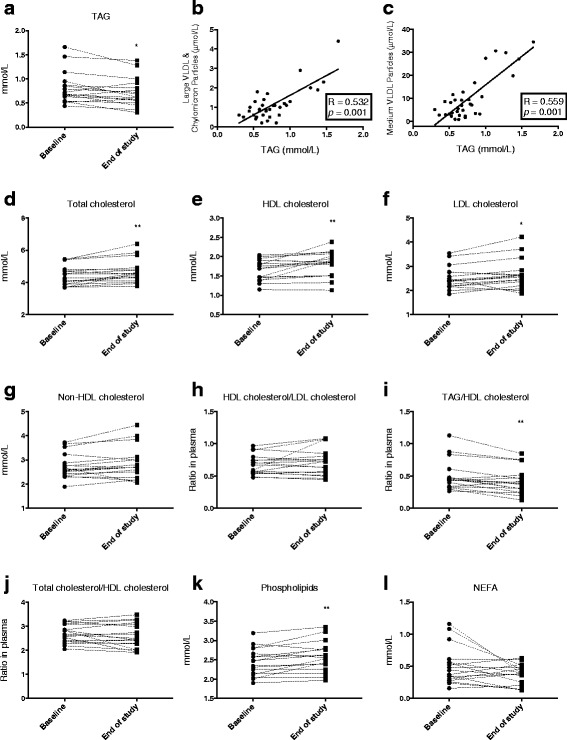
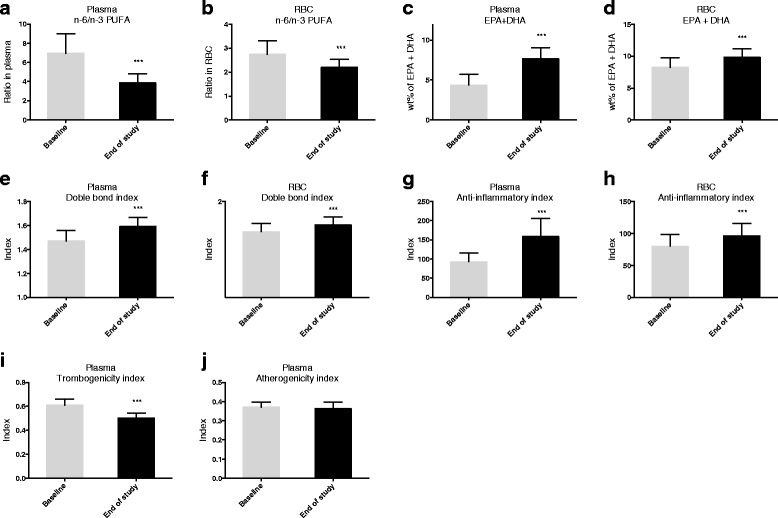
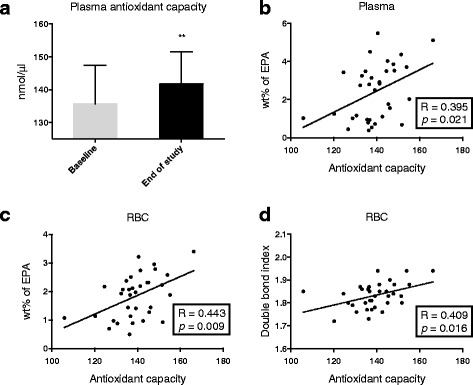
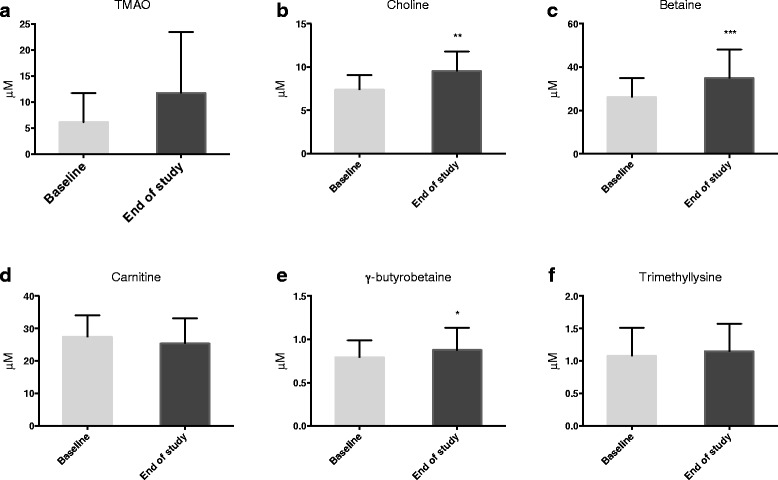
BACKGROUND: Lipid abnormalities, enhanced inflammation and oxidative stress seem to represent a vicious circle in atherogenesis, and therapeutic options directed against these processes seems like a reasonable approach in the management of atherosclerotic disorders. Krill oil (RIMFROST Sublime®) is a phospholipid-rich oil with eicosapentaenoic acid (EPA): docosahexaenoic acid (DHA) ratio of 1.8:1. In this pilot study we determined if krill oil could favourable affect plasma lipid parameters and parameters involved in the initiation and progression of atherosclerosis. METHODS: The study was conducted as a 28 days intervention study examining effect-parameters of dietary supplementation with krill oil (832.5 mg EPA and DHA per day). 17 healthy volunteers in the age group 18-36 (mean age 23 ± 4 years) participated. Plasma lipids, lipoprotein particle sizes, fatty acid composition in plasma and red blood cells (RBCs), plasma cytokines, antioxidant capacity, acylcarntines, carnitine, choline, betaine, and trimethylamine-N-oxide (TMAO) were measured before and after supplementation. RESULTS: Plasma triacylglycerol (TAG) and large very-low density lipoprotein (VLDL) & chylomicron particle concentrations decreased after 28 days of krill oil intake. A significant reduction in the TAG/HDL cholesterol resulted. Krill oil supplementation decreased n-6/n-3 polyunsaturated fatty acids (PUFA) ratio both in plasma and RBCs. This was due to increased EPA, DHA and docosapentaenoic acid (DPA) and reduced amount of arachidonic acid (AA). The increase of n-3 fatty acids and wt % of EPA and DHA in RBC was of smaller magnitude than found in plasma. Krill oil intake increased the antioxidant capacity, double bond index (DBI) and the fatty acid anti-inflammatory index. The plasma atherogenicity index remained constant whereas the thrombogenicity index decreased. Plasma choline, betaine and the carnitine precursor, γ-butyrobetaine were increased after krill oil supplementation whereas the TMAO and carnitine concentrations remained unchanged. CONCLUSION: Krill oil consumption is considered health beneficial as it decreases cardiovascular disease risk parameters through effects on plasma TAGs, lipoprotein particles, fatty acid profile, redox status and possible inflammation. Noteworthy, no adverse effects on plasma levels of TMAO and carnitine were found.
Overview
The claims and statistics of this paper haven’t been checked yet.
Free: it reads the open-access text and checks the first 5 claims that cite a source we can check. Create a free account to check every claim.
Integrity signals
Registry
Cites
Statistics
Figures
Verification
Claims the paper makes
The claims and statistics of this paper haven’t been checked yet.
Free: it reads the open-access text and checks the first 5 claims that cite a source we can check. Create a free account to check every claim.
Claims other papers make about this one
Each is checked against this paper’s own text: does it say what the citing paper says it does?
The cited source doesn’t support the claim as written.
In the citing paper
“Another randomized controlled trial with 41 overweight/obese adults undergoing an alternate-day fasting regimen showed that KO (4 g/day, SuperbaBoost™, Aker BioMarine ASA, Lysaker, Norway) for 8 weeks attenuated declines in fat-free mass (-0.2 ± 0.9 kg) and handgrip strength (-0.2 ± 0.5 kg) observed in the placebo group [308].”
From Nutritional Approaches to Enhance GLP-1 Analogue Therapy in Obesity: A Narrative Review (2025) · cites this paper as [308]
Checked by a reasoning model — may be wrong.
Experimental — accuracy not yet measured
Self-check
Percentages, sums and reported differences re-computed from the paper’s own numbers.
The self-check needs the paper’s full text.
Citations
Cites
Yusuf, S., Hawken, S., Ôunpuu, S., Dans, T., Avezum, A., Lanas, F., McQueen, M., Budaj, A., Pais, P., Varigos, J., et al. (2004) · The Lancet · doi:10.1016/s0140-6736(04)17018-9 · Cited by 12,026
Gut flora metabolism of phosphatidylcholine promotes cardiovascular disease
Wang, Z., Klipfell, E., Bennett, B. J., Koeth, R., Levison, B. S., DuGar, B., Feldstein, A. E., Britt, E. B., Fu, X., Chung, Y.-M., et al. (2011) · Nature · doi:10.1038/nature09922 · Cited by 5,597 · cited 1×
“Trimethylamine can also be generated from betaine [26].”
BackgroundIntestinal microbiota metabolism of l-carnitine, a nutrient in red meat, promotes atherosclerosis
Koeth, R. A., Wang, Z., Levison, B. S., Buffa, J. A., Org, E., Sheehy, B. T., Britt, E. B., Fu, X., Wu, Y., Li, L., et al. (2013) · Nature Medicine · doi:10.1038/nm.3145 · Cited by 4,386
Coronary heart disease: seven dietary factors
Ulbricht, T. L. V., & Southgate, D. A. T. (1991) · The Lancet · doi:10.1016/0140-6736(91)91846-m · Cited by 3,623 · cited 3×
“The atherogenicity index (AI) and the thrombogenenicity (TI) were determined according to Ulbricht and Southgate [57] equations: AI = (C12:0 + 4*C14:0 + C16:0)/(ΣMUFA + Σ(n-6 PUFA) + Σ(n-3 PUFA)).”
MethodInfluentialIntestinal microbial metabolism of phosphatidylcholine and cardiovascular risk
Tang, W. H. W., Wang, Z., Levison, B. S., Koeth, R. A., Britt, E. B., Fu, X., Wu, Y., & Hazen, S. L. (2013) · New England Journal of Medicine · doi:10.1056/nejmoa1109400 · Cited by 3,400 · cited 3×
“Effect on choline, betaine, carnitine and TMAO TMAO is a substance formed in the liver from trimethylamine generated by the gut microbiota from dietary PC, choline, betaine and carnitine [24–27].”
BackgroundInfluentialn−3 Polyunsaturated fatty acids, inflammation, and inflammatory diseases
Calder, P. C. (2006) · The American Journal of Clinical Nutrition · doi:10.1093/ajcn/83.6.1505s · Cited by 2,525 · cited 2×
“AA is a precursor for prostaglandins [16] and is considered proinflammatory.”
BackgroundHDL cholesterol, very low levels of LDL cholesterol, and cardiovascular events
Barter, P., Gotto, A. M., LaRosa, J. C., Maroni, J., Szarek, M., Grundy, S. M., Kastelein, J. J. P., Bittner, V., & Fruchart, J.-C. (2007) · New England Journal of Medicine · doi:10.1056/nejmoa064278 · Cited by 1,610
Rizos, E. C., Ntzani, E. E., Bika, E., Kostapanos, M. S., & Elisaf, M. S. (2012) · JAMA · doi:10.1001/2012.jama.11374 · Cited by 960 · cited 1×
“Indeed, EPA and DHA supplementations have been shown to consistently lower plasma TAG concentration [11, 12] although the efficacy of EPA and DHA in the prevention of CVD has been challenged in the recent meta-analyses [13–15].”
BackgroundMcQueen, M. J., Hawken, S., Wang, X., Ounpuu, S., Sniderman, A., Probstfield, J., Steyn, K., Sanderson, J. E., Hasani, M., Volkova, E., et al. (2008) · The Lancet · doi:10.1016/s0140-6736(08)61076-4 · Cited by 864 · cited 1×
“However, total cholesterol/HDL, a robust risk parameter in European populations [34], was unaltered (Fig.”
BackgroundBucher, H. C., Hengstler, P., Schindler, C., & Meier, G. (2002) · The American Journal of Medicine · doi:10.1016/s0002-9343(01)01114-7 · Cited by 823 · cited 1×
“Since 1970, regular consumption of fatty fish or fish oils has been stated to have several positive effects on CVD because of the presence of n-3 fatty acids, namely EPA (C20:5n-3) and DHA (C22:6n-3), and lately docosapentanenoic acid (DPA, C22:5n-3) has also become a focus of interest [9, 10].”
Background
Research works printed but not linked: 3
- World Health Organization (WHO) Prevention of cardiovascular disease: guidelines for assessment and management of total cardiovascular risk 2007
- European Food Safety Authority (EFSA) Panel on Dietetic Products NaAN Scientific Opinion on the substantiation of health claims related to eicosapentaenoic acid (EPA), docosahexaenoic acid (DHA), docosapentaenoic acid (DPA) Book Scientific Opinion on the substantiation of health claims related to eicosapentaenoic acid (EPA), docosahexaenoic acid (DHA), docosapentaenoic acid (DPA) 2010
- Institute of Medicine (US) Standing Committee on the Scientific Evaluation of Dietary Reference Intakes and its Panel on Folate, Other B Vitamins, and Choline. Choline. In: Book Dietary Reference Intakes: Thiamin, Riboflavin, Niacin, Vitamin B-6, Vitamin B12, Panthothenic Acid, Biotin, and Choline. Washington (National Acedemies Press); 1998. p. 390–422. 23193625
Cited by
Health benefits of dietary marine DHA/EPA-enriched glycerophospholipids
Zhang, T.-T., Xu, J., Wang, Y.-M., & Xue, C.-H. (2019) · Progress in Lipid Research · doi:10.1016/j.plipres.2019.100997 · Cited by 339
Yang, J., Fernández-Galilea, M., Martínez-Fernández, L., González-Muniesa, P., Pérez-Chávez, A., Martínez, J. A., & Moreno-Aliaga, M. J. (2019) · Nutrients · doi:10.3390/nu11040872 · Cited by 292
“A few studies evaluated the effects of n-3 PUFA on these biomarkers and although some of these showed improved antioxidant defenses levels or total antioxidant capacity [165,167,169], others described neutral effects [179,180,182,183].”
BackgroundAhmmed, M. K., Ahmmed, F., Tian, H. (., Carne, A., & Bekhit, A. E. (2020) · Comprehensive Reviews in Food Science and Food Safety · doi:10.1111/1541-4337.12510 · Cited by 241
Trimethylamine N-Oxide (TMAO), Diet and Cardiovascular Disease
Thomas, M. S., & Fernandez, M. L. (2021) · Current Atherosclerosis Reports · doi:10.1007/s11883-021-00910-x · Cited by 181
Trimethylamine N-Oxide in Relation to Cardiometabolic Health—Cause or Effect?
Papandreou, C., Moré, M., & Bellamine, A. (2020) · Nutrients · doi:10.3390/nu12051330 · Cited by 146
“Similarly, the intake of (phosphatidylcholine-rich) krill oil did not affect TMAO concentrations [70].”
BackgroundSimó, C., & García‐Cañas, V. (2020) · Food & Function · doi:10.1039/d0fo01237h · Cited by 123
Omega-3 world map: 2024 update
Schuchardt, J. P., Beinhorn, P., Hu, X. F., Chan, H. M., Roke, K., Bernasconi, A. A., Hahn, A., Sala‐Vila, A., Stark, K. D., & Harris, W. S. (2024) · Progress in Lipid Research · doi:10.1016/j.plipres.2024.101286 · Cited by 117
Fernández-Lázaro, D., Arribalzaga, S., Gutiérrez-Abejón, E., Azarbayjani, M. A., Mielgo-Ayuso, J., & Roche, E. (2024) · Nutrients · doi:10.3390/nu16132044 · Cited by 92
Effects of a nutritional supplement in dogs affected by osteoarthritis
Musco, N., Vassalotti, G., Mastellone, V., Cortese, L., Rocca, G. D., Molinari, M. L., Calabrò, S., Tudisco, R., Cutrignelli, M. I., & Lombardi, P. (2019) · Veterinary Medicine and Science · doi:10.1002/vms3.182 · Cited by 57
“The observed reduction in the TRI in the E group and from 60 days up to the end of the experimental period suggests an improvement of bone status and lipid metabolism and is probably due to the presence of Krill oil in the formula of the nutritional supplement (Berge et al., 2015).”
BackgroundResultInfluentialNutrition, gut microbiota, and alzheimer’s disease
Romanenko, M., Kholin, V., Koliada, A., & Vaiserman, A. (2021) · Frontiers in Psychiatry · doi:10.3389/fpsyt.2021.712673 · Cited by 56
“Studies with food or supplements rich in TMAO precursor failed to increase fasting plasma TMAO in young healthy adults (112, 113).”
BackgroundLiu, Y., Cong, P., Li, B., Song, Y., Liu, Y., Xu, J., & Xue, C. (2018) · Journal of the Science of Food and Agriculture · doi:10.1002/jsfa.9064 · Cited by 52
The oxidation mechanism of phospholipids in Antarctic krill oil promoted by metal ions
Wang, Y., Liu, Y., Ma, L., Li, H., Wang, Z., Xu, J., & Xue, C. (2020) · Food Chemistry · doi:10.1016/j.foodchem.2020.127448 · Cited by 47
Sun, D., Cao, C., Li, B., Chen, H., Li, J., Cao, P., & Liu, Y. (2018) · LWT · doi:10.1016/j.lwt.2018.04.024 · Cited by 46
Rundblad, A., Holven, K. B., Bruheim, I. A., Myhrstad, M. C. W., & Ulven, S. M. (2018) · Journal of Nutritional Science · doi:10.1017/jns.2017.64 · Cited by 46
“Based on a pilot study, we expected a 20 % decrease in fasting TAG following an intake of 800 mg/d marine n-3 fatty acids from krill oil in individuals with slightly elevated TAG((46)).”
BackgroundMethodSelf-citationManuelli, M. C., Guardia, L. D., & Cena, H. (2017) · International Journal of Molecular Sciences · doi:10.3390/ijms18071552 · Cited by 47
“Data from another study demonstrated the effectiveness of krill oil (rich in n-3 PUFAs) supplementation on 17 healthy subject decreasing both VLDL and TGCs over a 28 day period [29].”
BackgroundUceda, S., Echeverry‐Alzate, V., Reiriz, M., Miguel, E. M., Pérez-Curiel, A., Gómez-Senent, S., & Beltrán-Velasco, A. I. (2023) · International Journal of Molecular Sciences · doi:10.3390/ijms241713294 · Cited by 39
“However, at least in young, healthy individuals, an increase in dietary TMAO precursors was not associated with an increase in plasma TMAO levels [81,82].”
BackgroundMödinger, Y., Schön, C., Wilhelm, M. G., & Hals, P. (2019) · Nutrients · doi:10.3390/nu11102548 · Cited by 39
“This finding was recently confirmed in healthy young adults, where krill oil supplementation resulted in increased choline and betaine but not TMAO levels [58].”
ResultThe Role of Betaine in Patients With Chronic Kidney Disease: a Narrative Review
Alvarenga, L., Ferreira, M. S., Kemp, J. A., & Mafra, D. (2022) · Current Nutrition Reports · doi:10.1007/s13668-022-00426-z · Cited by 35
Xie, H., Jiang, J., Cao, S., Xu, X., Zhou, J., Zhang, R., Huang, B., Lu, P., Peng, L., & Liu, M. (2025) · International Journal of Molecular Sciences · doi:10.3390/ijms26031373 · Cited by 34
“Some scholars have also suggested that krill oil, which is rich in omega-3 fatty acids, may increase the concentration of some TMAO precursors but has no significant effect on plasma TMAO levels [148].”
Iqbal, F., Baker, W. S., Khan, M. I., Thukuntla, S., McKinney, K. H., Abate, N. I., & Tuvdendorj, D. (2017) · British Journal of Pharmacology · doi:10.1111/bph.13743 · Cited by 34
“Apo-A1 and decreased TG and inflammation levels in healthy young adults (Berge et al., 2015; Cicero et al., 2016).”
BackgroundPham, T.-P.-T., Hoang, T.-V., Cao, P.-T.-N., Le, T.-T.-D., Ho, V.-T.-N., Vu, T.-M.-H., Le, T.-H.-T., Pham, H.-T.-X., Tran, T.-T., Mafruhah, O. R., et al. (2024) · Food Chemistry X · doi:10.1016/j.fochx.2024.101880 · Cited by 31
Modulation of miRNA expression in aged rat hippocampus by buttermilk and krill oil
Crespo, M. C., Tomé‐Carneiro, J., Gómez‐Coronado, D., Burgos‐Ramos, E., García-Serrano, A. M., Martín‐Hernández, R., Baliyan, S., Fontecha, J., Venero, C., Dávalos, A., et al. (2018) · Scientific Reports · doi:10.1038/s41598-018-22148-5 · Cited by 30
Mitrovic, M., Sistilli, G., Horakova, O., & Rossmeisl, M. (2021) · European Journal of Clinical Investigation · doi:10.1111/eci.13650 · Cited by 29
Wang, X., Wang, Y., Liu, Y., Cong, P., Xu, J., & Xue, C. (2022) · Food & Function · doi:10.1039/d1fo03833h · Cited by 27
Drobnic, F., Storsve, A. B., Burri, L., Ding, Y., Banquells, M., Riera, J., Björk, P., Ferrer-Roca, V., & Domingo, J. C. (2021) · Nutrients · doi:10.3390/nu13124237 · Cited by 23
“5 g daily krill oil administration significantly increases plasma choline and betaine concentrations in healthy young adults [30].”
BackgroundSeto, Y., Morizane, C., Ueno, K., Sato, H., & Onoue, S. (2018) · Journal of Agricultural and Food Chemistry · doi:10.1021/acs.jafc.8b00693 · Cited by 22
Yonke, J. A., & Cherian, G. (2019) · Poultry Science · doi:10.3382/ps/pez339 · Cited by 22
Bjørndal, B., Bruheim, I. A., Lysne, V., Ramsvik, M. S., Ueland, P. M., Nordrehaug, J. E., Nygard, O. K., & Berge, R. K. (2018) · Scandinavian Journal of Clinical and Laboratory Investigation · doi:10.1080/00365513.2018.1512716 · Cited by 20
“In this pilot study, supplementation with krill oil for 28 days in young, healthy adults was previously reported to result in a significantly reduced large VLDL and chylomicron particle concentrations [20].”
BackgroundMethodSelf-citationWang, J., Hu, X., Li, Y., Li, S., Wang, T., Wang, D., Gao, Y., Wang, Q., Zhou, J., & Wan, C. (2025) · Redox Biology · doi:10.1016/j.redox.2025.103491 · Cited by 18
Yang, S., He, Q., Shi, L., & Wu, Y. (2022) · European Journal of Nutrition · doi:10.1007/s00394-022-03077-6 · Cited by 17
“[54] found that KO supplementation in 17 healthy young volunteers over a 28-day period significantly promoted the activity of plasma T-AOC.”
BackgroundStorsve, A. B., Johnsen, L., Nyborg, C., Melau, J., Hisdal, J., & Burri, L. (2020) · Frontiers in Nutrition · doi:10.3389/fnut.2020.00133 · Cited by 17
“Furthermore, another study over 4 weeks confirmed that krill oil treatment significantly increased plasma choline and betaine concentrations in healthy young adults (15).”
BackgroundWei, W., Cheng, Z., Wang, X., Chang, M., Xie, D., Sun, C., Guo, X., & Li, B. (2025) · Food Reviews International · doi:10.1080/87559129.2025.2528083 · Cited by 14
Kilic, E., & Başaran, P. (2025) · Nutrients · doi:10.3390/nu17233787 · Cited by 14
“…(human, clinical) Improved cardiovascular risk markers (TAGs, lipoproteins, FA profile, redox balance), but did not affect plasma TMAO or carnitine [85] n -3–enriched eggs α -Linolenic acid (18:3 n -3), EPA, DHA ( n -3 PUFAs) In vivo (human, clinical) Increased plasma choline and betaine levels,…”
Comparative Analysis of the Antioxidant and Anti-Inflammatory Effects of Krill and Fish Oil
Sarıyer, E. T., Baş, M., & Yüksel, M. (2025) · International Journal of Molecular Sciences · doi:10.3390/ijms26157360 · Cited by 12
“Berge et al. demonstrated that KO supplementation with 832.5 mg/day of EPA + DHA for 28 days did not change serum CRP levels but improved lipid profile in 17 healthy adults aged 18–36 years [42].”
InfluentialRu, Q., Tian, X., Xiong, Q., Xu, C., Chen, L., & Wu, Y. (2021) · Frontiers in Pharmacology · doi:10.3389/fphar.2021.756822 · Cited by 11
“For instance, krill oil could reduce the plasma triacylglycerol level and improves the related lipoprotein particle concentration, fatty acid composition, and redox status in healthy young adults (Berge et al., 2015).”
BackgroundNutritional Approaches to Enhance GLP-1 Analogue Therapy in Obesity: A Narrative Review
Dias, D. D., Vasconcelos, A. R., Souza, A. C. R., Menezes, C. D., Silva, I. S. T. E., & Name, J. J. (2025) · Obesities · doi:10.3390/obesities5040088 · Cited by 8
Krill oil supplementation reduces the growth of CT-26 orthotopic tumours in Balb/c mice
Jayathilake, A. G., Kadife, E., Kuol, N., Luwor, R. B., Nurgali, K., & Su, X. Q. (2022) · BMC Complementary Medicine and Therapies · doi:10.1186/s12906-022-03521-4 · Cited by 8
Zeb, L., Teng, X., Shafiq, M., Dong, Y., & Xiu, Z. (2022) · Journal of Chemical Technology & Biotechnology · doi:10.1002/jctb.7101 · Cited by 8
Shen, Q., Wu, H., Wang, H., Zhao, Q., Xue, J. W., Ma, J., & Wang, H. (2020) · Food Chemistry · doi:10.1016/j.foodchem.2020.128585 · Cited by 7
Katare, P. B., Dalmao‐Fernández, A., Mengeste, A. M., Navabakbar, F., Hamarsland, H., Ellefsen, S., Berge, R. K., Bakke, H. G., Nyman, T. A., Kase, E. T., et al. (2024) · Frontiers in Nutrition · doi:10.3389/fnut.2024.1452768 · Cited by 6
Self-citationMitochondrial dysfunction and lipid alterations in primary sclerosing cholangitis
Fossdal, G., Braadland, P. R., Hov, J. R., Husebye, E. S., Folseraas, T., Ueland, P. M., Ulvik, A., Karlsen, T. H., Berge, R. K., & Vesterhus, M. N. (2025) · Scandinavian Journal of Gastroenterology · doi:10.1080/00365521.2024.2447521 · Cited by 5
“The anti-inflammatory index was defined as previously described as the ratio of anti-inflammatory (e.g., C20:5n-3 [EPA], C22:6n-3 [DHA] versus pro-inflammatory (arachidonic acid) fatty acids [18].”
Self-citationKuka, J., Makrecka‐Kuka, M., Vilks, K., Korzh, S., Cirule, H., Sevostjanovs, E., Grīnberga, S., Dambrova, M., & Liepinsh, E. (2021) · Oxidative Medicine and Cellular Longevity · doi:10.1155/2021/7493190 · Cited by 5
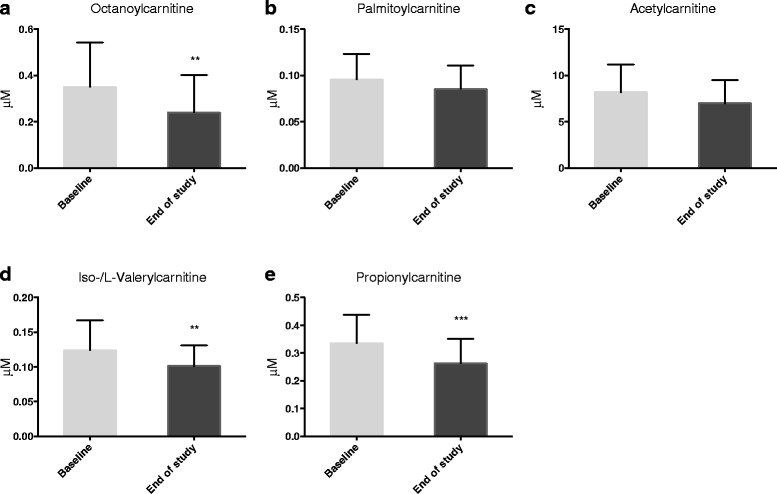
“Interestingly, plasma lipid parameters are normalized, and the levels of several short- to medium-chain acylcarnitines are significantly decreased by up to 30% after treatment with PUFAs [17].”
BackgroundNăstac, L., Dediu, L., Crețu, M., Rîmniceanu, C., Docan, A., Grecu, I. R., Dima, F. M., Stroe, M. D., & Vizireanu, C. (2023) · Fishes · doi:10.3390/fishes8030153 · Cited by 3
Zhang, X., Li, C., Ren, W., Chen, J., Li, X., Zheng, J., Lv, X., Han, Y., Ren, Y., Pang, D., et al. (2024) · Animals and zoonoses. · doi:10.1016/j.azn.2024.09.002 · Cited by 2
A review on the bio-functional roles of phospholipids from marine resources
Haq, M., & Suraiya, S. (2021) · Food Research · doi:10.26656/fr.2017.5(5).677 · Cited by 2
Lin, J., Zhou, J., Luo, S., Liu, H., & Yang, J. (2026) · Frontiers in Nutrition · doi:10.3389/fnut.2026.1925480 · Cited by 1
“Simultaneously, network pharmacology which integrates target prediction, protein interaction networks, and pathway enrichment analysis, has emerged as a powerful tool for predicting the multi-target mechanisms of natural products (17, 18).”
Anti-oxidative and Anti-hyperglycemia Effects of Dung Beetle Extracts on the High Fat Diet SD Rats
Kim, H. J., Kim, B. J., & Ahn, M. Y. (2016) · Journal of Life Science · doi:10.5352/jls.2016.26.7.772 · Cited by 1
“양성대조군으로 사용된 Krill oil은 오메 가-3 지방산의 근원으로 혈장의 중성지방을 낮추는 항비만 효 과[48]와 당뇨환자에서 심혈관질환의 위험성을 낮추는 효과가 확인되었다[31].”
Kürklü, N. S., Başıbüyük, H. H., & ALTUN, H. K. (2020) · International Journal of Agriculture Environment and Food Sciences · doi:10.31015/jaefs.2020.4.4 · Cited by 1
“Since krill oil is rich in omega-3 fatty acids, many studies have been conducted considering its relationship with the abovementioned chronic diseases (Berge et al., 2015; Bunea, El Farrah, & Deutsch, 2004; Gamoh et al., 2011; Konagai et al., 2013; Lobraico et al., 2015).”
BackgroundProtective function of specific micronutrients against cardiovascular and neurodegenerative diseases
Lorenzo, C. M. N. M., & del Cármen, M. (2018) · Biblos-e Archivo (Universidad Autónoma de Madrid)
How functional lipids affect on fatty liver and brain function disorders
Yanagita, T. (2018) · Journal of Lipid Nutrition · doi:10.4010/jln.27.171
Engelhart-Jentzsch, K., Gantenbein, A.-K., Schön, C., Wilhelm, M. G., Stadelmayer, L., Pross, L., Kaiser-Zimmermann, T., Guerrero, G., Jaghutriz, B. A., & Reule, C. (2026) · Food & Nutrition Research · doi:10.29219/fnr.v70.13256
“Krill oil contributes highly bioavailable omega-3 PUFAs and choline, which are known to reduce liver fat and support cardiovascular function (15, 16).”
SPOR & BİLİM 2025: Sporcu Sağlığı
Açak, M. (2025) · Çanakkale Onsekiz Mart University AVESIS
Vasconcelos, A. R., Dias, D. D., Souza, A. C. R., de Abreu-Silva, E. O., Marcadenti, A., & Name, J. J. (2026) · Nutrients · doi:10.3390/nu18162622
“These physicochemical properties may enhance gastrointestinal dispersion and also contribute to minimizing the characteristic fishy aftertaste commonly associated with conventional FO supplements [4,18,67,68].”
THE ROLE OF DIETARY SUPPLEMENTS IN MANAGING OSTEOARTHRITIS IN DOGS
Amato, E. (2024) · The American Journal of Veterinary Sciences And Wildlife Discovery
Ru, Q., Tian, X., Xiong, Q., Xu, C., Chen, L., & Wu, Y. (2021) · doi:10.3389/fphar.2021.756822.s010
Metadata
- Authors
- Berge, R. K., Ramsvik, M. S., Bohov, P., Svardal, A., Nordrehaug, J. E., Rostrup, E., Bruheim, I., & Bjørndal, B.
- Affiliations
- Haukeland University Hospital (NO)
- Rimfrost (Norway) (NO)
- University of Bergen (NO)
- Corresponding author
- Bjørndal, Bodil
- Venue
- Lipids in Health and Disease
- Published
- 2015-12
- Volume
- 14
- Issue
- 1
- Pages
- 163-163
- ISSN
- 1476-511X (ISSN-L)
- PMC
- PMC4678523
- OpenAlex
- W2219729937
- Cited by
- 51
- References
- 56
- Citations by year
- 2026: 2 · 2025: 7 · 2024: 5 · 2023: 2 · 2022: 5 · 2021: 8 · 2020: 6 · 2019: 6 · 2018: 7 · 2017: 2 · 2016: 1
- FWCI
- 3.21
- Type
- journal article
- Language
- en
- Open access
- gold
- doi.org
- Licence
- cc-by
- Locations
- Lipids in Health and Disease (publishedVersion, cc-by)
- PubMed Central (publishedVersion, cc-by)
- PubMed (publishedVersion)
- NORA - Norwegian Open Research Archives (submittedVersion, cc-by)
- Funders
- Bergens Forskningsstiftelse
- Rimfrost AS, Fosnavaag, Norway
- Topics
- Health Sciences › Nursing › Nutrition and Dietetics › Fatty Acid Research and Health
- Physical Sciences › Chemistry › Organic Chemistry › Edible Oils Quality and Analysis
- Life Sciences › Agricultural and Biological Sciences › Aquatic Science › Aquaculture Nutrition and Growth
- Keywords
- krill oil, eicosapentaenoic acid, docosahexaenoic acid, triglycerides, lipoprotein particle size, VLDL, chylomicrons, plasma fatty acid composition, red blood cell fatty acids, n-6/n-3 ratio, arachidonic acid, docosapentaenoic acid, oxidative stress, antioxidant capacity, atherogenicity index, thrombogenicity index, trimethylamine N-oxide, choline, betaine, L-carnitine
- MeSH terms
- Adolescent, Adult, Animals, Betaine, Carnitine, Choline, Chylomicrons, Dietary Fats, Unsaturated, Docosahexaenoic Acids, Erythrocytes, Fatty Acids, Unsaturated, Female, Humans, Lipoproteins, VLDL, Male, Methylamines, Particle Size, Pilot Projects, Triglycerides, Eicosapentaenoic Acid, Cytokines, Euphausiacea, Atherosclerosis
About these checks
Registry, retraction, Cites and statistics results are computed, not judged, with one exception: a printed reference that no index lists is read once by a model before it counts as a citation error. Claims are extracted by a model and kept only when their quote appears verbatim in the text; each cited source is then checked, with a model’s help, for whether it says what the claim relies on. Those verdicts can be wrong — read the claim’s quote and the cited source before relying on one.
Statistics and arithmetic are recomputed, not judged.
Confidence bands are shown only for fields calibrated on our annotated test set. None is calibrated yet, so no band is shown.
What counts as a claim ›How we measure confidence ›How we check this ›
Are you an author, or do you see a problem with this page? Request a review
Data sources
Bibliographic data: Semantic Scholar, OpenAlex, Crossref.
Contains information from the Semantic Scholar Academic Graph Datasets, made available under the ODC Attribution License (ODC-BY 1.0).
Semantic Scholar’s data is described in: Kinney, R., et al. (2023). The Semantic Scholar Open Data Platform. arXiv:2301.10140.
