

The DOI matches its Crossref record; 96 of the 97 references it cites were found in a registry or an index.
The clinical relevance of omega-3 fatty acids in the management of hypertriglyceridemia
Open accessAbstract
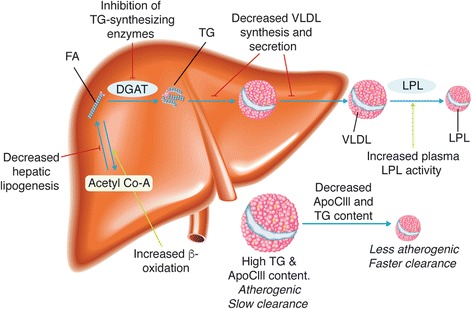
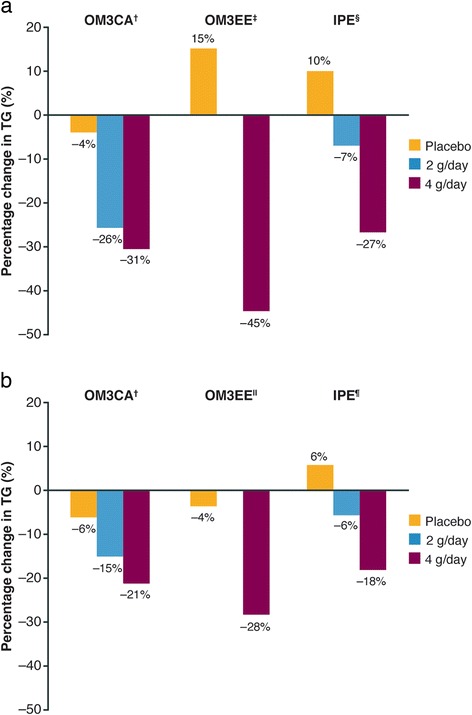
Hypertriglyceridemia (triglycerides > 150 mg/dL) affects ~25 % of the United States (US) population and is associated with increased cardiovascular risk. Severe hypertriglyceridemia (≥ 500 mg/dL) is also a risk factor for pancreatitis. Three omega-3 fatty acid (OM3FA) prescription formulations are approved in the US for the treatment of adults with severe hypertriglyceridemia: (1) OM3FA ethyl esters (OM3EE), a mixture of OM3FA ethyl esters, primarily eicosapentaenoic acid (EPA) and docosahexaenoic acid (DHA) (Lovaza®, Omtryg™, and generics); (2) icosapent ethyl (IPE), EPA ethyl esters (Vascepa®); and (3) omega-3 carboxylic acids (OM3CA), a mixture of OM3FAs in free fatty acid form, primarily EPA, DHA, and docosapentaenoic acid (Epanova®). At approved doses, all formulations substantially reduce triglyceride and very-low-density lipoprotein levels. DHA-containing formulations may also increase low-density lipoprotein cholesterol. However, this is not accompanied by increased non-high-density lipoprotein cholesterol, which is thought to provide a better indication of cardiovascular risk in this patient population. Proposed mechanisms of action of OM3FAs include inhibition of diacylglycerol acyltransferase, increased plasma lipoprotein lipase activity, decreased hepatic lipogenesis, and increased hepatic β-oxidation. OM3CA bioavailability (area under the plasma concentration-time curve from zero to the last measurable concentration) is up to 4-fold greater than that of OM3FA ethyl esters, and unlike ethyl esters, the absorption of OM3CA is not dependent on pancreatic lipase hydrolysis. All three formulations are well tolerated (the most common adverse events are gastrointestinal) and demonstrate a lack of drug-drug interactions with other lipid-lowering drugs, such as statins and fibrates. OM3FAs appear to be an effective treatment option for patients with severe hypertriglyceridemia.
Overview
The claims and statistics of this paper haven’t been checked yet.
Run the check — free, no account needed. It reads the open-access text and checks the sources it cites.
Integrity signals
Registry
Cites
Statistics
Figures
Verification
Claims the paper makes
The claims and statistics of this paper haven’t been checked yet.
Run the check — free, no account needed. It reads the open-access text and checks the sources it cites.
Claims other papers make about this one
Each is checked against this paper’s own text: does it say what the citing paper says it does?
The source backs part of the claim, not all of it — or backs it for a different population, condition or comparison.
In the citing paper
“Combined EPA + DHA formulations, such as omega-3 carboxylic acids and ethyl esters, effectively lower TG levels by reducing hepatic VLDL synthesis and enhancing fatty acid oxidation [87].”
From Targeting triglycerides for cardiovascular risk reduction (2026) · cites this paper as [87]
Experimental — accuracy not yet measured
Self-check
Percentages, sums and reported differences re-computed from the paper’s own numbers.
The self-check needs the paper’s full text.
Citations
Cites
Detection, evaluation, and treatment of high blood cholesterol in adults (Adult Treatment Panel III)
Grundy, S. M., Becker, D. M., Clark, L. T., Cooper, R., Denke, M. A., Howard, J. L., Hunninghake, D. B., Illingworth, D. R., Luepker, R. V., McBride, P. E., et al. (2002) · Civil War Book Review · Cited by 12,198
Standards of Medical Care in Diabetes
Power, D. V. (2006) · Diabetes Care · doi:10.2337/diacare.29.02.06.dc05-1593 · Cited by 8,676
Stone, N. J., Robinson, J. G., Lichtenstein, A. H., Bairey Merz, C. N., Blum, C. B., Eckel, R. H., Goldberg, A. C., Gordon, D., Levy, D., Lloyd-Jones, D. M., et al. (2014) · Circulation · doi:10.1161/01.cir.0000437738.63853.7a · Cited by 7,081
Standards of medical care in diabetes—2014
American Diabetes Association (2014) · Diabetes Care · doi:10.2337/dc14-s014 · Cited by 4,572
Stone, N. J., Robinson, J. G., Lichtenstein, A. H., Bairey Merz, C. N., Blum, C. B., Eckel, R. H., Goldberg, A. C., Gordon, D., Levy, D., Lloyd-Jones, D. M., et al. (2014) · Journal of the American College of Cardiology · doi:10.1016/j.jacc.2013.11.002 · Cited by 3,845
Fish Consumption, Fish Oil, Omega-3 Fatty Acids, and Cardiovascular Disease
Kris-Etherton, P. M., Harris, W. S., & Appel, L. J. (2002) · Circulation · doi:10.1161/01.cir.0000038493.65177.94 · Cited by 3,707
ESC/EAS Guidelines for the management of dyslipidaemias
Reiner, Ž., Catapano, A. L., De Backer, G., Graham, I., Taskinen, M.-R., Wiklund, O., Agewall, S., Alegria, E., Chapman, M. J., Durrington, P., et al. (2011) · European Heart Journal · doi:10.1093/eurheartj/ehr158 · Cited by 3,549
Complementary and Alternative Medicine Use Among Adults and Children: United States, 2007
Barnes, P. M., Bloom, B. E., & Nahin, R. L. (2008) · PsycEXTRA Dataset · doi:10.1037/e623942009-001 · Cited by 3,144
Kavey, R., Simons-Morton, D., & de Jesus, J. D. (2011) · Pediatrics · doi:10.1542/peds.2009-2107c · Cited by 2,131
Cited by
Sorted by citations
The Short Overview on the Relevance of Fatty Acids for Human Cardiovascular Disorders
Шрамко, В. С., Polonskaya, Y. V., Kashtanova, E. V., Stakhneva, E. M., & Ragino, Y. I. (2020) · Biomolecules · doi:10.3390/biom10081127 · Cited by 221
Gioxari, A., Kaliora, A. C., Marantidou, F., & Panagiotakos, D. P. (2017) · Nutrition · doi:10.1016/j.nut.2017.06.023 · Cited by 203
Schunck, W., Konkel, A., Fischer, R., & Weylandt, K. H. (2017) · Pharmacology & Therapeutics · doi:10.1016/j.pharmthera.2017.10.016 · Cited by 211
Dellinger, R. W., Santos, S. R., Morris, M., Evans, M., Alminana, D., Guarente, L., & Marcotulli, E. (2017) · npj Aging and Mechanisms of Disease · doi:10.1038/s41514-017-0016-9 · Cited by 181
Marine Natural Products in Clinical Use
Haque, N., Parveen, S., Tang, T., Wei, J., & Huang, Z. (2022) · Marine Drugs · doi:10.3390/md20080528 · Cited by 172
Santos, H. O., Price, J. C., & Bueno, A. A. (2020) · Nutrients · doi:10.3390/nu12103159 · Cited by 157
Nutraceutical characteristics of the brown seaweed carotenoid fucoxanthin
Miyashita, K., Beppu, F., Hosokawa, M., Liu, X., & Wang, S. (2020) · Archives of Biochemistry and Biophysics · doi:10.1016/j.abb.2020.108364 · Cited by 134
Elevated Serum Triglycerides in the Prognostic Assessment of Acute Pancreatitis
Wang, Q., Wang, G., Qiu, Z., He, X., & Liu, C. (2017) · Journal of Clinical Gastroenterology · doi:10.1097/mcg.0000000000000846 · Cited by 125
Maki, K. C., Palacios, O. M., Bell, M., & Toth, P. P. (2017) · Journal of Clinical Lipidology · doi:10.1016/j.jacl.2017.07.010 · Cited by 107
Patted, P. G., Masareddy, R. S., Patil, A. S., Kanabargi, R., & Bhat, C. T. (2024) · Future Journal of Pharmaceutical Sciences · doi:10.1186/s43094-024-00667-5 · Cited by 126
Effective Prevention of Oxidative Deterioration of Fish Oil: Focus on Flavor Deterioration
Miyashita, K., Uemura, M., & Hosokawa, M. (2018) · Annual Review of Food Science and Technology · doi:10.1146/annurev-food-030117-012320 · Cited by 104
Inflammation and cardiovascular disease: are marine phospholipids the answer?
Lordan, R., Redfern, S., Τσούπρας, Α., & Zabetakis, I. (2020) · Food & Function · doi:10.1039/c9fo01742a · Cited by 104
Goyal, A., Tanwar, B., Sihag, M. K., & Sharma, V. (2021) · Food Chemistry · doi:10.1016/j.foodchem.2021.131459 · Cited by 92
Bocanegra, A., Macho‐González, A., Garcimartín, A., Benedı́, J., & Sánchez-Muniz, F. J. (2021) · International Journal of Molecular Sciences · doi:10.3390/ijms22083816 · Cited by 86
From Life in the Sea to the Clinic: The Marine Drugs Approved and under Clinical Trial
Cappello, E., & Nieri, P. (2021) · Life · doi:10.3390/life11121390 · Cited by 88
Bae, J. H., Lim, H., & Lim, S. (2023) · Advances in Nutrition · doi:10.1016/j.advnut.2023.03.014 · Cited by 78
The emerging role of omega-3 fatty acids as a therapeutic option in neuropsychiatric disorders
Reimers, A., & Ljung, H. (2019) · Therapeutic Advances in Psychopharmacology · doi:10.1177/2045125319858901 · Cited by 79
Chevalier, L., Vachon, A., & Plourde, M. (2020) · Journal of Nutrition · doi:10.1093/jn/nxaa458 · Cited by 65
Alexopoulos, A., Qamar, A., Hutchins, K., Crowley, M. J., Batch, B. C., & Guyton, J. R. (2019) · Current Diabetes Reports · doi:10.1007/s11892-019-1136-3 · Cited by 62
The Role of Omega- 3 Polyunsaturated Fatty Acids in Diabetes Mellitus Management: A Narrative Review
Bayram, S. Ş., & Kızıltan, G. (2024) · Current Nutrition Reports · doi:10.1007/s13668-024-00561-9 · Cited by 61
PPAR-α agonists are still on the rise: an update on clinical and experimental findings
Ferri, N., Corsini, A., Sirtori, C. R., & Ruscica, M. (2017) · Expert Opinion on Investigational Drugs · doi:10.1080/13543784.2017.1312339 · Cited by 59
Klingel, S. L., Metherel, A. H., Irfan, M., Rajna, A., Chabowski, A., Bazinet, R. P., & Mutch, D. M. (2019) · The American Journal of Clinical Nutrition · doi:10.1093/ajcn/nqz234 · Cited by 54
Arca, M., Borghi, C., Pontremoli, R., Ferrari, G. M. D., Colivicchi, F., Desideri, G., & Temporelli, P. L. (2017) · Nutrition Metabolism and Cardiovascular Diseases · doi:10.1016/j.numecd.2017.11.001 · Cited by 54
Jamilian, M., Tabassi, Z., Reiner, Ž., Panahandeh, I., Naderi, F., Aghadavod, E., Amirani, E., Taghizadeh, M., Shafabakhsh, R., Sattari, M., et al. (2020) · British Journal Of Nutrition · doi:10.1017/s0007114519003416 · Cited by 52
Barrea, L., Vetrani, C., Verde, L., Frías-Toral, E., Ceriani, F., Cernea, S., Docimo, A., Graziadio, C., Tripathy, D., Savastano, S., et al. (2023) · Antioxidants · doi:10.3390/antiox12040904 · Cited by 61
Yanagisawa, R., He, C., Asai, A., Hellwig, M., Henle, T., & Toda, M. (2022) · International Journal of Molecular Sciences · doi:10.3390/ijms232012236 · Cited by 48
Lipoprotein Lipase: Is It a Magic Target for the Treatment of Hypertriglyceridemia
Moon, J. H., Kim, K., & Choi, S. H. (2022) · Endocrinology and Metabolism · doi:10.3803/enm.2022.402 · Cited by 53
de Souza, D. R., Pieri, B. L. D. S., Comin, V. H., Marques, S. D. O., Luciano, T. F., Rodrigues, M. S., & de Souza, C. T. (2020) · Journal of Diabetes and its Complications · doi:10.1016/j.jdiacomp.2020.107553 · Cited by 45
Omega-3 Fatty Acids as Druggable Therapeutics for Neurodegenerative Disorders
Chitre, N. M., Moniri, N. H., & Murnane, K. S. (2019) · CNS & Neurological Disorders - Drug Targets · doi:10.2174/1871527318666191114093749 · Cited by 54
Discovery of metabolic biomarkers for gestational diabetes mellitus in a Chinese population
Lu, W., Luo, M., Fang, X., Zhang, R., Li, S., Tang, M., Yu, X., & Hu, C. (2021) · Nutrition & Metabolism · doi:10.1186/s12986-021-00606-8 · Cited by 44
Calado, R., Leal, M. C., Gaspar, H., Santos, S., Marques, A., Nunes, M. L., & Vieira, H. (2018) · Grand challenges in biology and biotechnology · doi:10.1007/978-3-319-69075-9_9 · Cited by 39
Review of Cardiometabolic Effects of Prescription Omega-3 Fatty Acids
Burke, M. F., Burke, F. M., & Soffer, D. E. (2017) · Current Atherosclerosis Reports · doi:10.1007/s11883-017-0700-z · Cited by 40
Bioactive significance of fucoxanthin and its effective extraction
Miyashita, K., Beppu, F., Hosokawa, M., Liu, X., & Wang, S. (2020) · Biocatalysis and Agricultural Biotechnology · doi:10.1016/j.bcab.2020.101639 · Cited by 40
Elkin, R. G., & Harvatine, K. J. (2023) · Poultry Science · doi:10.1016/j.psj.2023.102938 · Cited by 38
Intracellular Cholesterol TraffickingPreprint
Ikonen, E., & Olkkonen, V. M. (2023) · Cold Spring Harbor Perspectives in Biology · doi:10.1101/cshperspect.a041404 · Cited by 42
Chen, S., Wu, Q., Zhu, L., Zong, G., Li, H., Zheng, H., Zeng, R., Lin, X., & Sun, L. D. (2021) · American Journal of Clinical Nutrition · doi:10.1093/ajcn/nqab050 · Cited by 35
Blom, W. A. M., Koppenol, W. P., Hiemstra, H., Stojaković, T., Scharnagl, H., & Trautwein, E. A. (2018) · European Journal of Nutrition · doi:10.1007/s00394-018-1706-1 · Cited by 38
Omega-3 Fatty Acids in Arterial Hypertension: Is There Any Good News?
Brosolo, G., Porto, A. D., Marcante, S., Picci, A., Capilupi, F., Capilupi, P., Bertin, N., Vivarelli, C., Bulfone, L., Vacca, A., et al. (2023) · International Journal of Molecular Sciences · doi:10.3390/ijms24119520 · Cited by 45
Functional Lipids and Cardiovascular Disease Reduction: A Concise Review
Omachi, D. O., Aryee, A. N. A., & Onuh, J. O. (2024) · Nutrients · doi:10.3390/nu16152453 · Cited by 36
Li, J., Dou, K., Zhou, Z., Zhao, D. H., Ye, P., Zhao, J., & Guo, L. (2022) · Frontiers in Pharmacology · doi:10.3389/fphar.2022.1069992 · Cited by 37
Oishi, K., Konishi, T., Hashimoto, C., Yamamoto, S., Takahashi, Y., & Shiina, Y. (2017) · The Journal of Nutritional Biochemistry · doi:10.1016/j.jnutbio.2017.09.024 · Cited by 34
On, S., Kim, H. Y., Kim, H. S., Park, J., & Kang, K. W. (2019) · International Journal of Molecular Sciences · doi:10.3390/ijms20112625 · Cited by 29
Zhu, S., Zhang, J., Jiang, X. J., Wang, W., & Chen, Y. Q. (2022) · EBioMedicine · doi:10.1016/j.ebiom.2022.104060 · Cited by 30
Current Research Landscape of Marine-Derived Anti-Atherosclerotic Substances
Cao, Q., Zhao, J., Xing, M., Han, X., Zhang, Q., Liang, H., Ji, A., & Song, S. (2020) · Marine Drugs · doi:10.3390/md18090440 · Cited by 29
Hypertriglyceridemia in Diabetes Mellitus: Implications for Pediatric Care
Hartz, J. C., de Ferranti, S. D., & Gidding, S. S. (2018) · Journal of the Endocrine Society · doi:10.1210/js.2018-00079 · Cited by 29
Quindry, J. C., & Franklin, B. A. (2017) · Exercise and Sport Sciences Reviews · doi:10.1249/jes.0000000000000134 · Cited by 27
Protective Effects of ω-3 PUFA in Anthracycline-Induced Cardiotoxicity: A Critical Review
Serini, S., Vasconcelos, R. O., Gomes, R. N., & Calviello, G. (2017) · International Journal of Molecular Sciences · doi:10.3390/ijms18122689 · Cited by 26
Li, Q., Hou, C., Peng, Y., Zhu, X., Shi, C., Zhang, K., Tu, M., Guo, F., Huang, D., & Miao, Y. (2019) · BioMed Research International · doi:10.1155/2019/2620750 · Cited by 26
Brook, M. S., Din, U. S. U., Tarum, J., Selby, A., Quinlan, J. I., Bass, J. J., Gharahdaghi, N., Boereboom, C., Abdulla, H., Franchi, M. V., et al. (2021) · Clinical Nutrition ESPEN · doi:10.1016/j.clnesp.2021.09.729 · Cited by 29
Liu, W., Gao, M., Yang, S., Sun, C., Bi, Y., Li, Y., Wang, J., & Yuan, X. (2023) · Journal of Diabetes and its Complications · doi:10.1016/j.jdiacomp.2023.108451 · Cited by 26
López-Toledano, M. A., Thorsteinsson, T., Daak, A. A., Maki, K. C., Johns, C., Rabinowicz, A. L., & Sancilio, F. D. (2017) · Journal of clinical lipidology · doi:10.1016/j.jacl.2017.01.017 · Cited by 26
Lozano‐Muñoz, I., Muñoz, S., Díaz, N. F., Medina, A., Bazaes, J., & Riquelme, C. E. (2020) · Molecules · doi:10.3390/molecules25204615 · Cited by 25
Yang, B., Tseng, P., Hu, X., Zeng, B., Chang, J. P., Liu, Y., Chu, W.-J., Zhang, S., Zhou, Z.-L., Chu, C., et al. (2022) · Progress in Lipid Research · doi:10.1016/j.plipres.2022.101196 · Cited by 23
Maki, K. C., Palacios, O. M., Buggia, M., Trivedi, R., Dicklin, M. R., & Maki, C. E. (2018) · Clinical Therapeutics · doi:10.1016/j.clinthera.2018.10.014 · Cited by 22
Dietary and serum n -3 PUFA and polycystic ovary syndrome: a matched case–control study
Lu, L., Li, X., Lv, L., Xu, Y., Wu, B., & Huang, C. (2022) · British Journal of Nutrition · doi:10.1017/s0007114521003007 · Cited by 20
Omega-3 Fatty Acid Therapy: The Tide Turns for a Fish Story
O’Keefe, J. H., Jacob, D., & Lavie, C. J. (2017) · Mayo Clinic Proceedings · doi:10.1016/j.mayocp.2016.11.008 · Cited by 20
Masuda, D., Miyata, Y., Matsui, S., & Yamashita, S. (2019) · Atherosclerosis · doi:10.1016/j.atherosclerosis.2019.11.014 · Cited by 19
Habitual Fish Oil Supplementation and Incident Chronic Kidney Disease in the UK Biobank
Liu, M., Ye, Z., Yang, S., Zhang, Y., Wu, Q., Zhou, C., He, P., Zhang, Y., Hou, F. F., & Qin, X. (2022) · Nutrients · doi:10.3390/nu15010022 · Cited by 19
Gou, N., Ji, H., Chang, Z., Zhong, M., & Deng, W. W. (2020) · Aquaculture · doi:10.1016/j.aquaculture.2020.735590 · Cited by 19
Nutritional Factors: Benefits in Glaucoma and Ophthalmologic Pathologies
Musa, M., Zeppieri, M., Atuanya, G. N., Enaholo, E. S., Topah, E. K., Ojo, O. M., & Salati, C. (2023) · Life · doi:10.3390/life13051120 · Cited by 20
Lamonaca, P., Prinzi, G., Kisialiou, A., Cardaci, V., Fini, M., & Russo, P. (2017) · Marine Drugs · doi:10.3390/md15030081 · Cited by 18
da Silva, P. S., Mediano, M. F. F., da Silva, G. M. S., de Brito, P. D., Cardoso, C. S. D. A., de Almeida, C. F., Sangenis, L. H. C., Pinheiro, R. O., Hasslocher‐Moreno, A. M., do Brasil, P. E. A. A., et al. (2017) · Nutrition Journal · doi:10.1186/s12937-017-0259-0 · Cited by 17
Poznyak, A. V., Zhang, D., Orekhova, V. A., Grechko, A. V., Wetzker, R., & Orekhov, A. N. (2020) · PubMed Central · Cited by 17
Abdi, A. D., Olvera-Hernández, S., Reyes‐Castro, L. A., Mezo‐González, C. E., Croyal, M., García‐Santillán, J. A., Ouguerram, K., Zambrano, E., & Bolaños, F. J. (2021) · Nutrients · doi:10.3390/nu13093075 · Cited by 17
Cardiometabolic risks and omega‐3 index in recent‐onset bipolar I disorder
Wulsin, L. R., Blom, T. J., Durling, M., Welge, J. A., DelBello, M. P., Adler, C. M., McNamara, R. K., & Strakowski, S. M. (2018) · Bipolar Disorders · doi:10.1111/bdi.12633 · Cited by 16
Scanlon, G., Loughman, J., Farrell, D., & McCartney, D. M. A. (2019) · Nutrition Research Reviews · doi:10.1017/s095442241900012x · Cited by 17
Pasta, A., Formisano, E., Cremonini, A. L., Maganza, E., Parodi, E., Piras, S., & Pisciotta, L. (2020) · Nutrients · doi:10.3390/nu12072056 · Cited by 16
Hong, J., Bledsoe, J. W., Overturf, K., Lee, S., Iassonova, D. R., & Small, B. C. (2022) · Frontiers in Sustainable Food Systems · doi:10.3389/fsufs.2022.837628 · Cited by 15
Takeda, Y., Sakuma, I., Hiramitsu, S., Okada, M., Ueda, S., & Sakurai, M. (2023) · Frontiers in Cardiovascular Medicine · doi:10.3389/fcvm.2023.1094100 · Cited by 15
Ding, D., Li, Y., Xiao, M., Dong, H., Lin, J.-S., Chen, G., Chen, Z.-Y., Tang, X., & Chen, Y. (2020) · Journal of Nutrition · doi:10.1093/jn/nxaa039 · Cited by 15
Laumann, R. D., Iversen, T., Mogensen, P. R., Lauritzen, L., Mølgaard, C., & Frandsen, T. L. (2020) · Nutrition and Cancer · doi:10.1080/01635581.2020.1803934 · Cited by 15
Lin, W. (2021) · Journal of the International Society of Sports Nutrition · doi:10.1186/s12970-021-00436-2 · Cited by 15
An update on renal tubular injury as related to glycolipid metabolism in diabetic kidney disease
Feng, A., Yin, R., Xu, R., Zhang, B., & Yang, L. (2025) · Frontiers in Pharmacology · doi:10.3389/fphar.2025.1559026 · Cited by 18
Davis, D. W., Crew, J., Planinić, P., Alexander, J. M., & Basu, A. (2020) · International Journal of Environmental Research and Public Health · doi:10.3390/ijerph17207528 · Cited by 15
Tognocchi, M., Conte, M., Testai, L., Martucci, M., Serra, A., Salvioli, S., Calderone, V., Mele, M. L., & Conte, G. (2022) · Foods · doi:10.3390/foods11030398 · Cited by 12
Brum, I. D. S. D. C., Mafra, D., Moreira, L. D. S. G., Teixeira, K. T. R., Stockler‐Pinto, M. B., Cardozo, L., & Borges, N. A. (2022) · Nutrition Research · doi:10.1016/j.nutres.2022.06.004 · Cited by 12
Maki, K. C., Johns, C., Harris, W. S., Puder, M., Freedman, S. D., Thorsteinsson, T., Daak, A. A., Rabinowicz, A. L., & Sancilio, F. D. (2017) · Clinical Therapeutics · doi:10.1016/j.clinthera.2017.01.019 · Cited by 12
The Future of Lipid-Lowering Therapy
Zwol, W. H.-V., Rimbert, A., & Kuivenhoven, J. A. (2019) · Journal of Clinical Medicine · doi:10.3390/jcm8071085 · Cited by 12
Zhou, J., Cai, L., Ni, S., Zhong, Z., Yang, M., Yu, H., Zhao, Y., Xun, P., & Bai, J. (2021) · British Journal Of Nutrition · doi:10.1017/s0007114521002300 · Cited by 12
Lipid-Lowering Medications for Managing Dyslipidemia: A Narrative Review
Alqahtani, M. S., Alzibali, K. F., Mahdi, A. M. M., Alharbi, O. M. A., Harbi, R. H. A., Alkhaldi, H. S. M., Alsayafi, Z. A. A., Bisher, F. H. A., Buqurayn, M. H., & Alharbi, M. M. (2024) · Cureus · doi:10.7759/cureus.65202 · Cited by 11
Metabolic alterations in spinal and bulbar muscular atrophy
Francini‐Pesenti, F., Vitturi, N., Tresso, S., & Sorarú, G. (2020) · Revue Neurologique · doi:10.1016/j.neurol.2020.03.020 · Cited by 11
The Role of VEGF Family in Lipid Metabolism
Zhou, Y., Zhu, X., Wang, H., Duan, C., Cui, H., Shi, J., Shi, S., Yuan, G., & Hu, Y. (2022) · Current Pharmaceutical Biotechnology · doi:10.2174/1389201023666220506105026 · Cited by 12
Jiao, Y., Watts, T., Xue, J., Hannafon, B. N., & Ding, W. (2018) · BMC Cancer · doi:10.1186/s12885-018-4946-9 · Cited by 11
Liu, Y., Sun, Y., Xue, B.-H., Wang, X.-D., & Yu, W. (2020) · Digestive Diseases and Sciences · doi:10.1007/s10620-020-06331-1 · Cited by 11
Miller, M. R., Kruger, M. C., Wynne, C., Waaka, D., Li, W., Frampton, C., Wolber, F. M., & Eason, C. (2020) · Marine Drugs · doi:10.3390/md18110524 · Cited by 11
Strikić, D., Vujević, A., Perica, D., Leskovar, D., Paponja, K., Pećin, I., & Merćep, I. (2023) · Diabetology · doi:10.3390/diabetology4040048 · Cited by 9
Nutraceuticals in the management of autonomic function and related disorders: A comprehensive review
da Costa, P. C. T., Freire, M. O. D. L., Coutinho, D. D. O., Godet, M., Magnani, M., Antunes, V. R., de Souza, E. L., Vidal, H., & Alves, J. L. D. B. (2024) · Pharmacological Research · doi:10.1016/j.phrs.2024.107368 · Cited by 12
Effects of Vine Tea Extract on Meat Quality, Gut Microbiota and Metabolome of Wenchang Broiler
Zhou, L., Li, H., Hou, G., Wang, J., Zhou, H., & Wang, D. (2022) · Animals · doi:10.3390/ani12131661 · Cited by 10
Elkin, R. G., El-Zenary, A. S. A., Bomberger, R., Haile, A. B., Weaver, E. A., Ramachandran, R., & Harvatine, K. J. (2022) · Poultry Science · doi:10.1016/j.psj.2022.102318 · Cited by 10
Ramirez, J. L., Zahner, G. J., Spaulding, K. A., Khetani, S. A., Hills, N. K., Gasper, W. J., Harris, W. S., Cohen, B. E., & Grenon, S. M. (2019) · Lipids · doi:10.1002/lipd.12140 · Cited by 10
Estefes-Duarte, J. A., Espinosa‐Sánchez, A., Pérez‐Hernández, N., Ortiz, M. I., & Fernández‐Martínez, E. (2024) · Current Pharmaceutical Biotechnology · doi:10.2174/0113892010340506241014112341 · Cited by 9
Elevated high-density lipoprotein triglycerides increase atherosclerotic risk
Liu, W., Chen, S., Yang, C., Lei, F., Huang, X., Zhang, X., Sun, T., Lin, L., Wang, C., Cao, Y., et al. (2025) · Journal of Lipid Research · doi:10.1016/j.jlr.2025.100791 · Cited by 10
Jarullah, H. H., & Saleh, E. S. (2025) · International Journal of Molecular Sciences · doi:10.3390/ijms26094015 · Cited by 8
RSSDI consensus recommendations for dyslipidemia management in diabetes mellitus
Saboo, B., Agarwal, S., Makkar, B. M., Chawla, R., Ghosh, S. K., Viswanathan, V., Gupta, S., Kumar, C. V., Maheshwari, A., Sreenivasamurthy, L., et al. (2022) · International Journal of Diabetes in Developing Countries · doi:10.1007/s13410-022-01063-6 · Cited by 9
Velidakis, N., Stachteas, P., Gkougkoudi, E., Papadopoulos, C. E., & Kadoglou, N. P. E. (2024) · Pharmaceuticals · doi:10.3390/ph17050568 · Cited by 8
Nutritional adjuvants with antioxidant properties in the treatment of canine leishmaniasis
Gonçalves, R. D. S., de Pinho, F. A., Dinis‐Oliveira, R. J., Mendes, M. O., de Andrade, T. S., Solcà, M. D. S., Larangeira, D. F., Silvestre, R., & Barrouin‐Melo, S. M. (2021) · Veterinary Parasitology · doi:10.1016/j.vetpar.2021.109526 · Cited by 8
Obara, K., Kawaguchi, A., Inaba, R., Kawakita, M., Yamaguchi, R., Yamashita, H., Xu, K., Ou, G., Yamaki, F., Yoshioka, K., et al. (2021) · Biological and Pharmaceutical Bulletin · doi:10.1248/bpb.b21-00362 · Cited by 9
Zhang, C., Xie, Y., Zhou, J., Zhang, C., Xiang, Q., Zhong, Y., Xiao, J., Feng, J., Liao, B., Chen, X., et al. (2025) · Food Science & Nutrition · doi:10.1002/fsn3.70372 · Cited by 8
Ahmad, M. F., Alsayegh, A. A., Khanam, A., Ahmed, A., Raposo, A., Bantun, F., Zeyaullah, M., Babalghith, A. O., Aldairi, A. F., Mozaffar, B., et al. (2025) · Journal of the Science of Food and Agriculture · doi:10.1002/jsfa.70346 · Cited by 8
Chao, T., Sun, J., Ge, Y., & Wang, C. (2023) · Nutrition Metabolism and Cardiovascular Diseases · doi:10.1016/j.numecd.2023.10.035 · Cited by 8
Metadata
- Authors
- Backes, J., Anzalone, D., Hilleman, D., & Catini, J.
- Affiliations
- University of Kansas (US)
- AstraZeneca (United States) (US)
- Creighton University (US)
- Corresponding author
- Backes, James
- Venue
- Lipids in Health and Disease
- Published
- 2016-07-22
- Volume
- 15
- Issue
- 1
- Pages
- 118-118
- ISSN
- 1476-511X (ISSN-L)
- PMC
- PMC4957330
- OpenAlex
- W2487890137
- Cited by
- 195
- References
- 97
- Citations by year
- 2026: 8 · 2025: 20 · 2024: 20 · 2023: 20 · 2022: 26 · 2021: 29 · 2020: 25 · 2019: 15 · 2018: 9 · 2017: 20 · 2016: 1
- FWCI
- 2.01
- Type
- journal article
- Language
- en
- Open access
- gold
- doi.org
- Licence
- cc-by
- Locations
- Lipids in Health and Disease (publishedVersion, cc-by)
- PubMed Central (publishedVersion, cc-by)
- PubMed (publishedVersion)
- Creighton Digital Repository (CDR) (submittedVersion)
- KU ScholarWorks (The University of Kansas) (submittedVersion, cc-by)
- Funders
- AstraZeneca
- Topics
- Health Sciences › Nursing › Nutrition and Dietetics › Fatty Acid Research and Health
- Health Sciences › Medicine › Cardiology and Cardiovascular Medicine › Lipid metabolism and disorders
- Health Sciences › Medicine › Cardiology and Cardiovascular Medicine › Lipoproteins and Cardiovascular Health
- Keywords
- omega-3 fatty acids, severe hypertriglyceridemia, triglyceride-lowering therapy, icosapent ethyl, eicosapentaenoic acid, docosahexaenoic acid, docosapentaenoic acid, VLDL, non-HDL cholesterol, lipoprotein lipase, hepatic lipogenesis, fatty acid beta-oxidation, bioavailability, drug-drug interactions, cardiovascular risk, pancreatitis
- MeSH terms
- Adult, Hypolipidemic Agents, Biological Availability, Docosahexaenoic Acids, Drug Combinations, Esters, Humans, Lipoprotein Lipase, Cholesterol, LDL, Lipoproteins, VLDL, Liver, Oxidation-Reduction, Triglycerides, Eicosapentaenoic Acid, Hypertriglyceridemia, Fatty Acids, Omega-3, Lipogenesis, Diacylglycerol O-Acyltransferase
About these checks
Registry, retraction, Cites and statistics results are computed, not judged, with one exception: a printed reference that no index lists is read once by a model before it counts as a citation error. Claims are extracted by a model and kept only when their quote appears verbatim in the text; each cited source is then checked, with a model’s help, for whether it says what the claim relies on. Those verdicts can be wrong — read the claim’s quote and the cited source before relying on one.
Statistics and arithmetic are recomputed, not judged.
Confidence bands are shown only for fields calibrated on our annotated test set. None is calibrated yet, so no band is shown.
What counts as a claim ›How we measure confidence ›How we check this ›
Are you an author, or do you see a problem with this page? Request a review
