

Gold nanoparticles reduce inflammation in cerebral microvessels of mice with sepsis
Open accessThe DOI matches its Crossref record; 87 of the 87 references it cites were found in a registry or an index.
Abstract
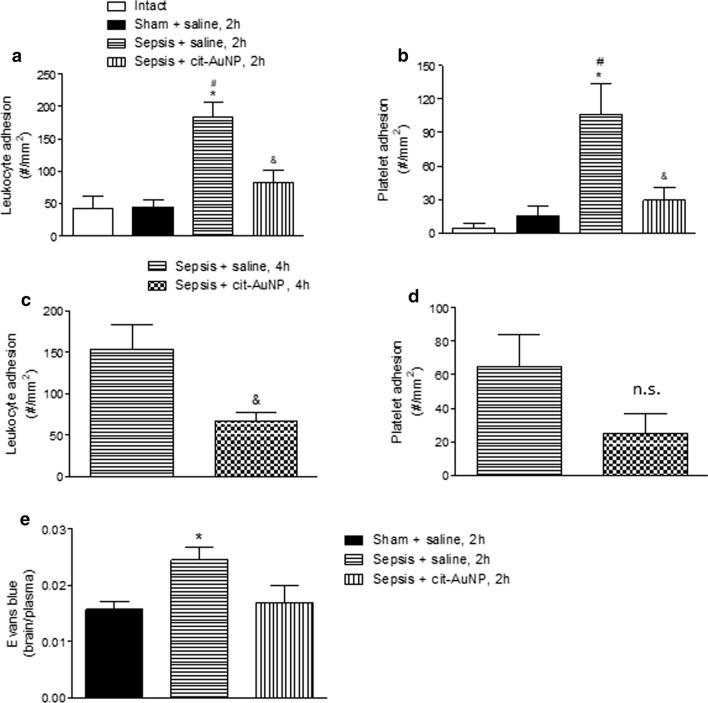
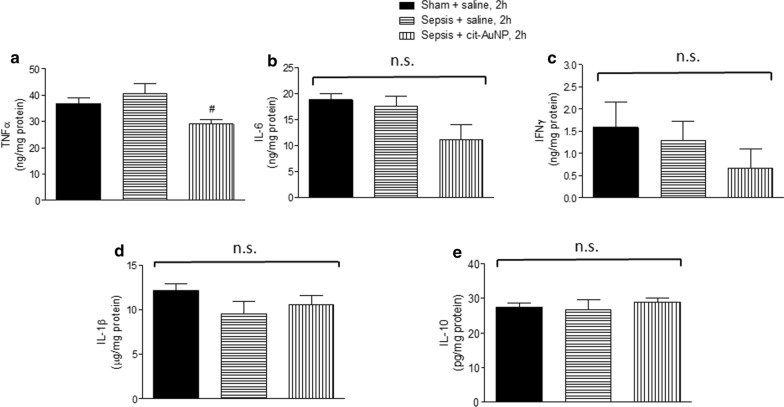
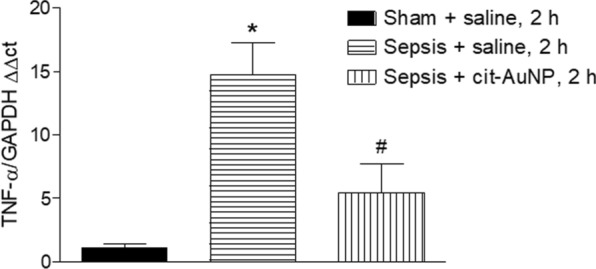
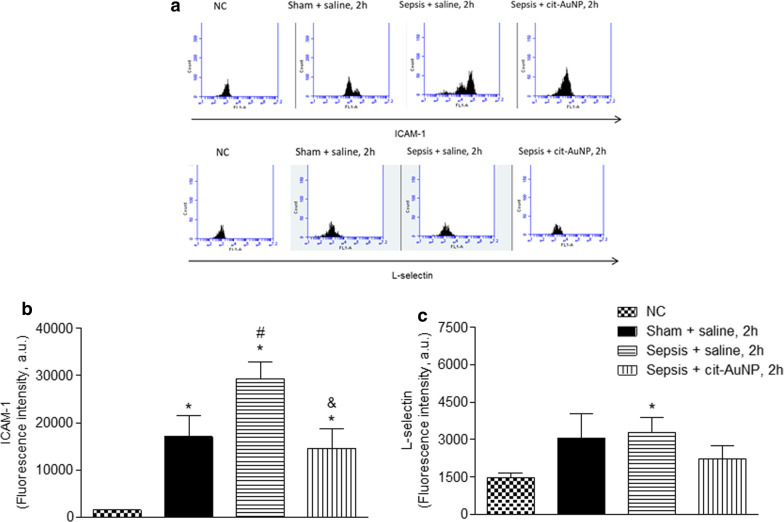
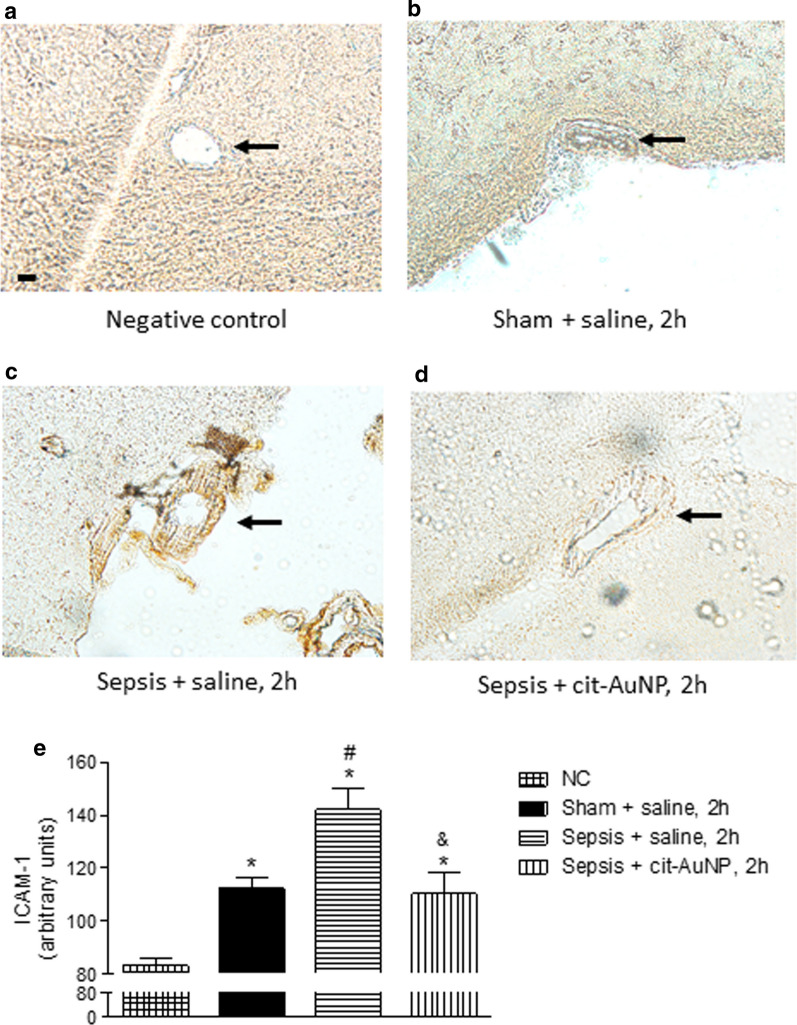
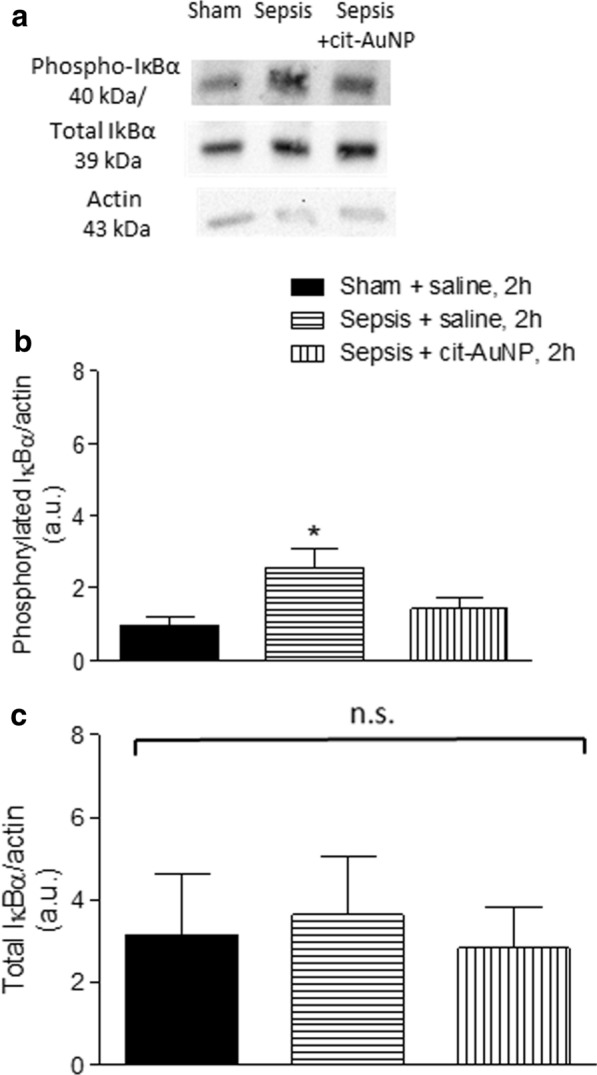
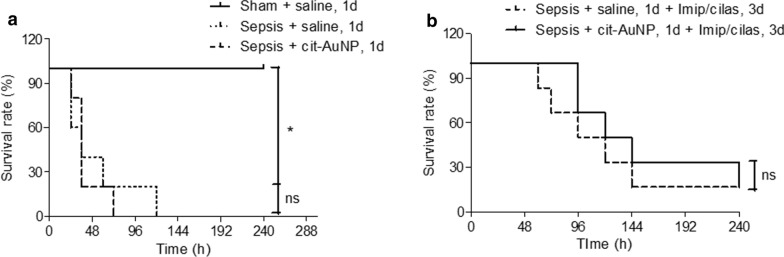
Background: Sepsis is an emergency medical condition that can lead to death and it is defined as a life-threatening organ dysfunction caused by immune dysregulation in response to an infection. It is considered the main killer in intensive care units. Sepsis associated-encephalopathy (SAE) is mostly caused by a sepsis-induced systemic inflammatory response. Studies report SAE in 14–63% of septic patients. Main SAE symptoms are not specific and usually include acute impairment of consciousness, delirium and/or coma, along with electroencephalogram (EEG) changes. For those who recover from sepsis and SAE, impaired cognitive function, mobility and quality of life are often observed months to years after hospital discharge, and there is no treatment available today to prevent that. Inflammation and oxidative stress are key players for the SAE pathophysiology. Gold nanoparticles have been demonstrated to own important anti-inflammatory properties. It was also reported 20 nm citrate-covered gold nanoparticles (cit-AuNP) reduce oxidative stress. In this context, we tested whether 20 nm cit-AuNP could alleviate the acute changes caused by sepsis in brain of mice, with focus on inflammation. Sepsis was induced in female C57BL/6 mice by cecal ligation and puncture (CLP), 20 nm cit-AuNP or saline were intravenously (IV) injected 2 h after induction of sepsis and experiments performed 6 h after induction. Intravital microscopy was used for leukocyte and platelet adhesion study in brain, blood brain barrier (BBB) permeability carried out by Evans blue assay, cytokines measured by ELISA and real time PCR, cell adhesion molecules (CAMs) by flow cytometry and immunohistochemistry, and transcription factors, by western blotting. Results: 20 nm cit-AuNP treatment reduced leukocyte and platelet adhesion to cerebral blood vessels, prevented BBB failure, reduced TNF- concentration in brain, and ICAM-1 expression both in circulating polymorphonuclear (PMN) leukocytes and cerebral blood vessels of mice with sepsis. Furthermore, 20 nm cit-AuNP did not interfere with the antibiotic effect on the survival rate of mice with sepsis. Conclusions: Cit-AuNP showed important anti-inflammatory properties in the brain of mice with sepsis, being a potential candidate to be used as adjuvant drug along with antibiotics in the treatment of sepsis to avoid SAE
Overview
The claims and statistics of this paper haven’t been checked yet.
Free: it reads the open-access text and checks the first 5 claims that cite a source we can check. Create a free account to check every claim.
Integrity signals
Registry
Cites
Statistics
Figures
Verification
Claims the paper makes
The claims and statistics of this paper haven’t been checked yet.
Free: it reads the open-access text and checks the first 5 claims that cite a source we can check. Create a free account to check every claim.
Claims other papers make about this one
Each is checked against this paper’s own text: does it say what the citing paper says it does?
The source backs part of the claim, not all of it — or backs it for a different population, condition or comparison.
In the citing paper
“Activated endothelial cells highly express adhesion molecules such as E-selectin, P-selectin, ICAM-1, and VCAM-1, which interact with neutrophils and monocytes, mediating their rolling, firm adhesion, and transendothelial migration.”
From Research Advances in the Pathogenesis of Sepsis-Associated Encephalopathy (2026) · cites this paper as [50]
Experimental — accuracy not yet measuredThe source backs part of the claim, not all of it — or backs it for a different population, condition or comparison.
In the citing paper
“Infiltrating immune cells release toxic substances and form local inflammatory foci, establishing a vicious cycle [50].”
From Research Advances in the Pathogenesis of Sepsis-Associated Encephalopathy (2026) · cites this paper as [50]
Experimental — accuracy not yet measured
Self-check
Percentages, sums and reported differences re-computed from the paper’s own numbers.
The self-check needs the paper’s full text.
Citations
Cites
Surviving Sepsis Campaign: International Guidelines for Management of Severe Sepsis and Septic Shock
Dellinger, R. P., Levy, M. M., Rhodes, A., Annane, D., Gerlach, H., Opal, S. M., Sevransky, J. E., Sprung, C. L., Douglas, I. S., Jaeschke, R., et al. (2013) · Critical Care Medicine · doi:10.1097/ccm.0b013e31827e83af · Cited by 9,694
Rudd, K. E., Johnson, S. C., Agesa, K. M., Shackelford, K. A., Tsoi, D., Kievlan, D. R., Colombara, D. V., Ikuta, K. S., Kissoon, N., Finfer, S., et al. (2020) · The Lancet · doi:10.1016/s0140-6736(19)32989-7 · Cited by 7,971
A study of the nucleation and growth processes in the synthesis of colloidal gold
Turkevich, J., Stevenson, P. C., & Hillier, J. (1951) · Discussions of the Faraday Society · doi:10.1039/df9511100055 · Cited by 7,792 · cited 1×
“Citrate was used as a reducing agent to form and stabilize the gold nanoparticles in solution, avoiding aggregates formation and, then, changes in nanoparticles diameter, as described in [80].”
MethodSurviving Sepsis Campaign: International guidelines for management of sepsis and septic shock: 2016.
Rhodes, A., Evans, L. E., Alhazzani, W., Levy, M. M., Antonelli, M., Ferrer, R., Kumar, A., Sevransky, J. E., Sprung, C. L., Nunnally, M. E., et al. (2017) · Intensive Care Medicine · doi:10.1007/s00134-017-4683-6 · Cited by 6,621
Shared Principles in NF-κB Signaling
Hayden, M. S., & Ghosh, S. (2008) · Cell · doi:10.1016/j.cell.2008.01.020 · Cited by 4,494
Tissue Destruction by Neutrophils
Epstein, F. H., & Weiss, S. J. (1989) · New England Journal of Medicine · doi:10.1056/nejm198902093200606 · Cited by 3,950
Tissue Destruction by Neutrophils
(1989) · New England Journal of Medicine · doi:10.1056/nejm198908033210513 · Cited by 3,631
Fleischmann, C., Scherag, A., Adhikari, N. K. J., Hartog, C. S., Tsaganos, T., Schlattmann, P., Angus, D. C., & Reinhart, K. (2016) · American Journal of Respiratory and Critical Care Medicine · doi:10.1164/rccm.201504-0781oc · Cited by 3,548
Long-term cognitive impairment and functional disability among survivors of severe sepsis.
Iwashyna, T. J., Ely, E. W., Smith, D. M., & Langa, K. M. (2010) · JAMA · doi:10.1001/jama.2010.1553 · Cited by 2,582 · cited 1×
“For those who recover from sepsis and SAE, impaired cognitive function, mobility and quality of life are often observed months to years after hospital discharge [14, 15], and there is no treatment available today to prevent that.”
BackgroundBiological basis of the behavior of sick animals
Hart, B. L. (1988) · Neuroscience & Biobehavioral Reviews · doi:10.1016/s0149-7634(88)80004-6 · Cited by 2,223
Cited by
Blood-Brain Barrier Disruption by Lipopolysaccharide and Sepsis-Associated Encephalopathy
Peng, X., Luo, Z., He, S., Zhang, L., & Li, Y. (2021) · Frontiers in Cellular and Infection Microbiology · doi:10.3389/fcimb.2021.768108 · Cited by 267
Gold nanoparticles (GNPs) in biomedical and clinical applications: A review
Anik, M. I., Mahmud, N., Al Masud, A., & Hasan, M. (2022) · Nano Select · doi:10.1002/nano.202100255 · Cited by 228
Yin, X.-Y., Tang, X.-H., Wang, S.-X., Zhao, Y.-C., Jia, M., Yang, J.-J., Ji, M.-H., & Shen, J.-C. (2023) · Journal of Neuroinflammation · doi:10.1186/s12974-023-02756-3 · Cited by 138
Gold nanostructures: synthesis, properties, and neurological applications
Zare, I., Yaraki, M. T., Speranza, G., Najafabadi, A. H., Shourangiz-Haghighi, A., Nik, A. B., Manshian, B. B., Saraiva, C., Soenen, S. J., Kogan, M. J., et al. (2022) · Chemical Society Reviews · doi:10.1039/d1cs01111a · Cited by 133
Ding, H., Li, Y., Chen, S., Wen, Y., Zhang, S., Luo, E., Li, X., Zhong, W., & Zeng, H. (2022) · CNS Neuroscience & Therapeutics · doi:10.1111/cns.13765 · Cited by 126
Pharmacological Role of Functionalized Gold Nanoparticles in Disease Applications
Ko, W., Wang, S., Hsiao, C., Hung, C., Hsu, Y.-J., Chang, D., & Hung, C. (2022) · Molecules · doi:10.3390/molecules27051551 · Cited by 121
“Moreover, 20-nm citrate-covered gold nanoparticles (cit-AuNP) reduced the adhesion of white blood cells and platelets to cerebral blood vessels, prevented BBB failure, and reduced the concentration of TNFF-α in the brain, as well as the expression of ICAM-1 in circulating polymorphonuclear (PMN) leukocytes and cerebra…”
BackgroundGold Nanoparticles in Neurological Diseases: A Review of Neuroprotection
Chiang, M., Yang, Y., Nicol, C. J. B., & Wang, C.-J. (2024) · International Journal of Molecular Sciences · doi:10.3390/ijms25042360 · Cited by 121
“Additionally, AuNPs show promising anti-inflammatory properties, mainly due to their ability to modulate immune responses and interact with multiple cellular pathways [84].”
BackgroundZhu, L., Luo, M., Zhang, Y., Fang, F., Li, M., An, F., Zhao, D., & Zhang, J. (2022) · Coordination Chemistry Reviews · doi:10.1016/j.ccr.2022.214875 · Cited by 115
Anti-inflammatory role of gold nanoparticles in the prevention and treatment of Alzheimer's disease
Aili, M., Zhou, K., Zhan, J., Zheng, H., & Luo, F. (2023) · Journal of Materials Chemistry B · doi:10.1039/d3tb01023f · Cited by 80
Hyaluronic acid-based nanoparticles to deliver drugs to the ocular posterior segment
Jiang, H., & Xu, Z. (2023) · Drug Delivery · doi:10.1080/10717544.2023.2204206 · Cited by 69
“Thus, with intrinsic antiangiogenic and anti-inflammatory therapeutic properties (Ba Fakih et al., 2020; Di Bella et al., 2021; McCarrick et al., 2021; Kosuge et al., 2022), GNPs have the potential to be widely used in the treatment of various neovascular-related retinopathies caused by VEGF…”
BackgroundSynthesis and application of gold nanoparticles as antioxidants
Suliasih, B. A., Budi, S., & Katas, H. (2024) · Pharmacia · doi:10.3897/pharmacia.71.e112322 · Cited by 60
Pro-resolving lipid mediators and therapeutic innovations in resolution of inflammation
Peh, H. Y., & Chen, J. (2024) · Pharmacology & Therapeutics · doi:10.1016/j.pharmthera.2024.108753 · Cited by 56
Xuan, W., Xu, W., Zheng, L., Jia, H., Zhang, X., Zhang, X., & Cao, B. (2024) · Cellular and Molecular Life Sciences · doi:10.1007/s00018-024-05474-y · Cited by 39
Dahri, M., Rezaeian, M., Sadeghzadeh, H., Beheshtizadeh, N., Sadeghi, M. M., Zakerhamidi, D., Faraji, S. N., Pakdel, H., Dahri, B., Maleki, R., et al. (2025) · Biomedicine & Pharmacotherapy · doi:10.1016/j.biopha.2025.118360 · Cited by 42
Microglial activation and neuroinflammation in acute and chronic cognitive deficits in sepsis
Denver, P., & Cunningham, C. M. (2024) · Neuropharmacology · doi:10.1016/j.neuropharm.2024.110285 · Cited by 37
Dumbuya, J. S., Chen, X., Du, J., Li, S., Liang, L., Xie, H., & Zeng, Q. (2023) · International Immunopharmacology · doi:10.1016/j.intimp.2023.110758 · Cited by 28
Serra, M. F., Cotias, A. C., Pimentel, A. S., Arantes, A., Pires, A. L. A., Lanzetti, M., Hickmann, J. M., Barreto, E., Carvalho, V. F., Silva, P., et al. (2022) · Antioxidants · doi:10.3390/antiox11091659 · Cited by 25
“Notably, gold nanoparticles (AuNPs) possess significant anti-inflammatory and anti-oxidative properties and have been associated with therapeutic effects on several chronic pathological conditions, including cancer [9,10], sepsis [11], and rheumatoid arthritis [12].”
BackgroundZhang, Y., Chen, S., Tian, W., Zhu, H., Li, W., Dai, W., Zhang, X., Gu, X., & Su, D. (2022) · Frontiers in Medicine · doi:10.3389/fmed.2022.817351 · Cited by 33
Cao, L., Du, M., Cai, M., Feng, Y., Miao, J., Sun, J., Song, J., & Du, B. (2024) · International Journal of Pharmaceutics · doi:10.1016/j.ijpharm.2024.124960 · Cited by 24
Peres, R. A. S., Silva-Aguiar, R. P., Teixeira¹, D. E., Peruchetti, D. B., Alves, S. A. S., Leal, A. B. C., Castro, G. F., Ribeiro, N. B. D. S., Guimarães, F. V., Pinheiro, A. A. S., et al. (2023) · Biochimica et Biophysica Acta (BBA) - General Subjects · doi:10.1016/j.bbagen.2023.130314 · Cited by 43
Nanotechnology-driven therapies for neurodegenerative diseases: a comprehensive review
Espinosa, J. L., Park, P., Holcomb, M., Godin, B., & Villapol, S. (2024) · Therapeutic Delivery · doi:10.1080/20415990.2024.2401307 · Cited by 24
Özçiçek, İ. (2025) · Biomedicine & Pharmacotherapy · doi:10.1016/j.biopha.2025.118410 · Cited by 24
An Erythrocyte Membrane‐Derived Nanosystem for Efficient Reversal of Endothelial Injury in Sepsis
Zhang, Y., Li, J., Qi, J., Chen, Z., Wang, K., & Sun, C. (2023) · Advanced Healthcare Materials · doi:10.1002/adhm.202302320 · Cited by 15
Hanafi, K. E., Gómez-Gómez, B., Pedrero, Z., Paco Bustamante, A., Cherel, Y., Amouroux, D., & Madrid, Y. (2023) · Analytica Chimica Acta · doi:10.1016/j.aca.2023.340952 · Cited by 14
Nanoparticle-based approaches for sepsis treatment: Current trends and perspectives
Louaguenouni, Y., Mansart, A., Annane, D., Fattal, E., & Fay, F. (2025) · Journal of Controlled Release · doi:10.1016/j.jconrel.2025.114139 · Cited by 18
Dorovskikh, S. I., Vikulova, E. S., Sergeevichev, D., Guselnikova, T. Y., Zheravin, A. A., Nasimov, D. A., Vasilieva, M. B., Васильевна, Ч. Е., Saprykin, A. I., Basova, T. V., et al. (2022) · Biomedicines · doi:10.3390/biomedicines10092230 · Cited by 13
“In our case, it can be assumed that the immune system initially reacted actively to the toxicant released by CCM, and then the immune response decreased due to the direct immunosuppressive effect of gold [52].”
BackgroundThe Role of Iron Metabolism in Sepsis-associated Encephalopathy: a Potential Target
Liu, Y., Hu, S., Shi, B., Yu, B., Luo, W., Peng, S., & Du, X. (2023) · Molecular Neurobiology · doi:10.1007/s12035-023-03870-2 · Cited by 15
“Recently, Bella et al. have found that citrate-covered gold nanoparticles (citAuNP) show important anti-inflammatory properties in the brains of mice with sepsis and can be used in conjunction with antibiotics to treat sepsis to avoid SAE [157].”
Insight Into Regulatory T Cells in Sepsis-Associated Encephalopathy
Gao, Y.-L., Liu, Y.-C., Zhang, X., Shou, S.-T., & Chai, Y.-F. (2022) · Frontiers in Neurology · doi:10.3389/fneur.2022.830784 · Cited by 11
Smółka, S., Skorupa, M., Fołta, K., Banaś, A., Balcerzak, K., Krok, D., Shyntum, D. Y., Skonieczna, M., Turczyn, R., & Krukiewicz, K. (2023) · Bioelectrochemistry · doi:10.1016/j.bioelechem.2023.108484 · Cited by 11
Coghi, P. S., Chen, Z., Leong, K. F., Yu, X., Hosmane, N. S., & Zhu, Y. (2025) · Coordination Chemistry Reviews · doi:10.1016/j.ccr.2025.217049 · Cited by 12
El-Zend, M. A., El‐Deen, I. M., Mansour, R. M., Yousef, T. A., Alrashidi, A. A., & Saied, E. M. (2025) · RSC Medicinal Chemistry · doi:10.1039/d5md00484e · Cited by 10
Üstündağ, H., Kara, A., Taş, N. G., Kalındemirtaş, F. D., Kurt, N., Erbaş, E., Huyut, M. T., Gül, M., & Kariper, İ. A. (2025) · Toxicon · doi:10.1016/j.toxicon.2025.108330 · Cited by 9
El-Zend, M. A., El‐Deen, I. M., Reyad, M. F. M., Alshawwa, S. Z., Alrashidi, A. A., & Saied, E. M. (2026) · RSC Advances · doi:10.1039/d5ra07680c · Cited by 7
Yang, M., Yu, Y., Li, D., Liu, T., Wang, Z., Gong, B., Bai, X., He, Y., Liang, H., & Fan, H. (2025) · CNS Neuroscience & Therapeutics · doi:10.1111/cns.70263 · Cited by 7
“GNPs have been demonstrated to reduce neuroinflammation [25], improve neurologic deficits and exert neuroprotective effects in AD, PD and ischemic stroke models [26–28].”
Song, Z., Chen, H., Xu, W., Zong, X., Wang, X., Ji, Y., Gong, J., Pang, M., Fung, S., Yang, H. Y., et al. (2025) · Materials Today Bio · doi:10.1016/j.mtbio.2025.101704 · Cited by 9
“H), sur-passing the effects of the unmodified GNPs [3].”
InfluentialJin, X., Wang, J., Ruan, Y., Li, J., Kong, X., Xia, J., Yang, J., Zhang, Q., Liu, J., & Pi, J. (2025) · International Journal of Nanomedicine · doi:10.2147/ijn.s531255 · Cited by 12
“77”
Ko, W., Nah, H., Kim, S., Han, G. H., Lee, D., Lee, J. S., Heo, D. N., Lee, D., Lee, S. J., Heo, M., et al. (2023) · Materials & Design · doi:10.1016/j.matdes.2023.112181 · Cited by 9
Hu, W., Zhang, X., Wu, Z., Luo, Y., Hu, B., & Zou, X. (2024) · Journal of Inflammation Research · doi:10.2147/jir.s488400 · Cited by 5
Potential therapeutic role of gold nanoparticles in inflammatory diseases
Adewale, O. B., Anadozie, S. O., Davids, H., & Roux, S. (2024) · Elsevier eBooks · doi:10.1016/b978-0-443-19061-2.00021-3 · Cited by 5
Bloodstream Infection-induced Neuroinflammation: from Systemic Infection To Brain Invasion
Anand, G., & Lahariya, R. (2025) · Current Microbiology · doi:10.1007/s00284-025-04626-y · Cited by 7
Jin, X., Sun, H., & Yang, L. (2023) · International Journal of Nanomedicine · doi:10.2147/ijn.s427116 · Cited by 5
Pericytes mediate neuroinflammation via Fli-1 in endotoxemia and sepsis in mice
Li, P., Liu, L., Halushka, P. V., Trojanowska, M., Wang, G., Ergul, A., & Fan, H. (2025) · Inflammation Research · doi:10.1007/s00011-025-02000-z · Cited by 3
Differential effect of gold nanoparticles on cerebrovascular function and biomechanical properties
Hunt, R. D., Sedighi, O., Clark, W. M., Doiron, A. L., & Cipolla, M. J. (2023) · Physiological Reports · doi:10.14814/phy2.15789 · Cited by 3
Dyck, K. V., Vanhoffelen, E., Yserbyt, J., Dijck, P. V., Erreni, M., Hernot, S., & Velde, G. V. (2021) · Journal of Physics Photonics · doi:10.1088/2515-7647/ac0804 · Cited by 5
Fontes, N. F. D. A., Fernandes, M. S., González-Ballesteros, N., Rodríguez-Argüelles, M. C., Gomes, A. C., & Duarte, A. S. G. (2024) · Antioxidants · doi:10.3390/antiox13080884 · Cited by 5
“They have been widely explored for treating various inflammatory conditions [16] such as neuroinflammation [17], autoimmune inflammation [18], and skin inflammation [19].”
BackgroundLiao, B., Li, L., Liang, W., Lin, H., Hu, B., Wang, K., Huang, R., Wang, P., Weng, Q., He, Y., et al. (2025) · Advanced Functional Materials · doi:10.1002/adfm.202507043 · Cited by 8
Nanomaterial‐based immune therapeutic strategies in neurodegenerative diseases
Zhou, X., Liu, J., Lai, S., Yin, S., Luo, B., Shao, L., & Kang, Y. (2025) · BMEMat · doi:10.1002/bmm2.70050 · Cited by 2
The protective effects of molecular hydrogen in sepsis-associated encephalopathy: current status
Dumbuya, J. S., Zeng, C., Ahmad, B., Tian, C., & Lu, J. (2026) · European Journal of Pharmacology · doi:10.1016/j.ejphar.2026.178693 · Cited by 2
Nanotherapeutic strategies for mitigating sepsis-induced multiorgan dysfunctions
Kumari, A., Kumar, S., & Shukla, R. (2026) · Nanomedicine · doi:10.1080/17435889.2026.2659343 · Cited by 2
Abdelkader, N. F., El-Batal, A. I., Amin, Y. M., Hawas, A. M., Hassan, S. H. M., & Eid, N. I. (2025) · Journal of Drug Delivery Science and Technology · doi:10.1016/j.jddst.2025.106977 · Cited by 2
Deng, X., Zhou, J., Fang, W., Sun, R., Yan, G., & Sun, Y. (2025) · Journal of Biomaterials Applications · doi:10.1177/08853282251318052 · Cited by 3
Aldhahrani, A., Binjawhar, D. N., Katouah, H. A., Albaqami, J. J., Elsaid, F. G., Fayad, E., Almaaty, A. H. A., & El-Zend, M. A. (2025) · Journal of Cluster Science · doi:10.1007/s10876-025-02854-7 · Cited by 1
Zhang, X., Yang, M., Zhang, Y., Tao, L., Chen, X., Liu, F., Zhang, B., & Shi, G. (2025) · NeuroMolecular Medicine · doi:10.1007/s12017-025-08896-4 · Cited by 2
“Fourth, integrating rodent SAE models with human hippocampal transcriptomic data including IL-1R, IL-6R, TNFα receptor, Toll-like receptor 4 (TLR4), and CD14 in circumventricular organs (Bella et al., 2021).”
The ICU environment paradigm as a strategy to enhance the validity of delirium animal models
Dominguini, D., Simon, C. S., Bortoluzzi, D. P., Galant, C. H. S., Marcon, A. G., Marcelino, Y. I., da Silva, D. V., NERVIS, M. H. A., de Oliveira, M. A., Cândido, J. R., et al. (2026) · Clinical Science · doi:10.1042/cs20250943 · Cited by 3
Nanozymes as Emerging Therapeutics for Asthma: A Redox-Responsive and Immunomodulatory Strategy
El-Morsy, M. T., Askar, N. M., Khurkhash, A. E., Mahrous, N. A.-D., Elberry, Y. A., Sayed, M. R., Ahmed, N. A., Ahmed, R. A., MOHAMED, Y. A., Steele, S., et al. (2026) · Biomedicines · doi:10.3390/biomedicines14051107 · Cited by 1
(2025) · Nanosistemi Nanomateriali Nanotehnologii · doi:10.15407/nnn.23.01.0203 · Cited by 1
Ferreira, J. P. S., Bella, D. D., Andreotti, D. Z., Cortes, B. F. S., de Carvalho, M. H. C., Kawamoto, E. M., & Rodrigues, S. F. (2023) · Journal of Biomedical Nanotechnology · doi:10.1166/jbn.2023.3502 · Cited by 1
Self-citationKoshevoy, V., Naumenko, S. V., & Serhienko, V. R. (2023) · Veterinary Medicine inter-departmental subject scientific collection · doi:10.36016/vm-2023-109-14 · Cited by 1
Research Advances in the Pathogenesis of Sepsis-Associated Encephalopathy
Tan, H., Su, W., & Niu, Z. (2026) · International Journal of Molecular Sciences · doi:10.3390/ijms27125390 · Cited by 1
Effect of Gold Nanoparticles on Cryopreserved Mesenchymal Stem Cells
(2022) · Nanosistemi Nanomateriali Nanotehnologii · doi:10.15407/nnn.20.01.249
Effect of Silver Nanoparticles on Cryopreserved Mesenchymal Stem Cells from Cartilage Tissue
Volkova, N. O., Stepanyuk, L. V., Yukhta, M. S., & Goltsev, А. (2023) · Springer proceedings in physics · doi:10.1007/978-3-031-42708-4_11 · Cited by 1
Esmaeel, S. E., & Agarwal, A. (2024) · International Journal of Medical Science and Diagnosis Research · doi:10.32553/ijmsdr.v8i1.1020
“26 Furthermore, administration of AuNPs exhibited an insistent control over the blood glucose level, lipids and serum biochemical profiles in diabetic rats near to the control group provokes their effective role in controlling and increasing the organ functions for better utilization of blood…”
BackgroundGold Nanoparticles As Gastrointestinal Prevention For Escherichia Coli-Induced Colitis In Rats
Lafta, O. A., & Abood, W. N. (2025) · International Journal of Environmental Sciences · doi:10.64252/c6hpt352
Gold nanoparticles prevent the establishment of severe malaria in a murine animal model
Alves, S. A. S., Teixeira¹, D. E., Oliveira, L. R. C., Souza, M. E. L., Melo, M. M., Medeiros, M., Serra, S. S. D. S., Silva, P. M., Martins, M. A., Silva, P. L., et al. (2025) · Journal of Pharmaceutical Investigation · doi:10.1007/s40005-025-00756-4
Neuroprotective Effects of Dexpanthenol Against Chest Trauma-Induced Brain Injury in Rats
Taşan, Ş., Aşcı, S., & Aşçı, H. (2025) · SDÜ Tıp Fakültesi Dergisi · doi:10.17343/sdutfd.1629663
Mercury and selenium interactions in biota : new insights from speciation studies
Hanafi, K. E. (2023) · theses.fr (ABES) · doi:10.70675/c0a9a18bz0c61z4717zb020z5ff65086ebf0
Khan, S., Mali, S. N., Carvalho-Silva, J. M., Ansari, A., dos Reis, A. C., & Pratap, A. (2026) · Inflammopharmacology · doi:10.1007/s10787-026-02348-6
Zhu, L., He, R., Xiao, J., Hu, G., You, K., & Rao, S. (2026) · Journal of Biomedical Materials Research Part A · doi:10.1002/jbm.a.70143
Gul, H., Assad, N., Nasreen, Z., Kanwal, M., Khan, M. N., Vandy, A., & Naeem-ul-Hassan, M. (2026) · Discover Nano · doi:10.1186/s11671-026-04881-3 · Cited by 2
“In addition, they decrease leukocyte adhesion and migration by downregulating adhesion molecules, such as ICAM-1, on endothelial cells, which prevents infiltration into inflamed tissues and subsequent damage [256].”
Metadata
- Authors
- Di Bella, D., Ferreira, J. P. S., Silva, R. D. N. O., Echem, C., Milan, A., Akamine, E. H., Carvalho, M. H., & Rodrigues, S. F.
- Affiliations
- Universidade de São Paulo (BR)
- Corresponding author
- Rodrigues, Stephen F.
- Venue
- Journal of Nanobiotechnology
- Published
- 2021-02-19
- Volume
- 19
- Issue
- 1
- Pages
- 52-52
- ISSN
- 1477-3155 (ISSN-L)
- PMC
- PMC7893894
- OpenAlex
- W3130675998
- Semantic Scholar
- e096c0969524d947f625d971737f921db845f234
- Cited by
- 69
- References
- 86
- Citations by year
- 2026: 8 · 2025: 21 · 2024: 11 · 2023: 17 · 2022: 8 · 2021: 4
- FWCI
- 7.21
- Type
- journal article
- Language
- en
- Open access
- gold
- doi.org
- Licence
- cc-by
- creativecommons.org/licenses/by/4.0/ (tdm)
- creativecommons.org/licenses/by/4.0/ (vor)
- Locations
- Journal of Nanobiotechnology (publishedVersion, cc-by)
- PubMed Central (publishedVersion, cc-by)
- PubMed (publishedVersion)
- DOAJ (DOAJ: Directory of Open Access Journals) (submittedVersion, cc-by-sa)
- Funders
- Fundação de Amparo à Pesquisa do Estado de São Paulo (2014/04156-6, 2018/12258-6, 2016/18602-5, 2015/04281-0)
- Topics
- Health Sciences › Medicine › Critical Care and Intensive Care Medicine › Sepsis Diagnosis and Treatment
- Physical Sciences › Materials Science › Electronic, Optical and Magnetic Materials › Gold and Silver Nanoparticles Synthesis and Applications
- Life Sciences › Immunology and Microbiology › Microbiology › Bacterial Infections and Vaccines
- Keywords
- gold nanoparticles, sepsis, sepsis-associated encephalopathy, cerebral microvasculature, inflammation, blood-brain barrier permeability, leukocyte adhesion, platelet adhesion, ICAM-1, TNF-α, oxidative stress, cecal ligation and puncture, anti-inflammatory therapy, antibiotic adjuvants, adhesion molecules
- MeSH terms
- Animals, Blood-Brain Barrier, Brain, Brain Diseases, Cecum, Cell Adhesion, Disease Models, Animal, Female, Gold, Inflammation, Leukocytes, Mice, Inbred C57BL, Neutrophils, Quality of Life, Cytokines, Sepsis, Mice, Metal Nanoparticles, Microvessels, Sepsis-Associated Encephalopathy
About these checks
Registry, retraction, Cites and statistics results are computed, not judged, with one exception: a printed reference that no index lists is read once by a model before it counts as a citation error. Claims are extracted by a model and kept only when their quote appears verbatim in the text; each cited source is then checked, with a model’s help, for whether it says what the claim relies on. Those verdicts can be wrong — read the claim’s quote and the cited source before relying on one.
Statistics and arithmetic are recomputed, not judged.
Confidence bands are shown only for fields calibrated on our annotated test set. None is calibrated yet, so no band is shown.
What counts as a claim ›How we measure confidence ›How we check this ›
Are you an author, or do you see a problem with this page? Request a review
Data sources
Bibliographic data: Semantic Scholar, OpenAlex, Crossref.
Contains information from the Semantic Scholar Academic Graph Datasets, made available under the ODC Attribution License (ODC-BY 1.0).
Semantic Scholar’s data is described in: Kinney, R., et al. (2023). The Semantic Scholar Open Data Platform. arXiv:2301.10140.
