

The DOI matches its Crossref record; 8 of the 8 references it cites were found in a registry or an index.
Simvastatin induced ferroptosis for triple-negative breast cancer therapy
Open accessAbstract
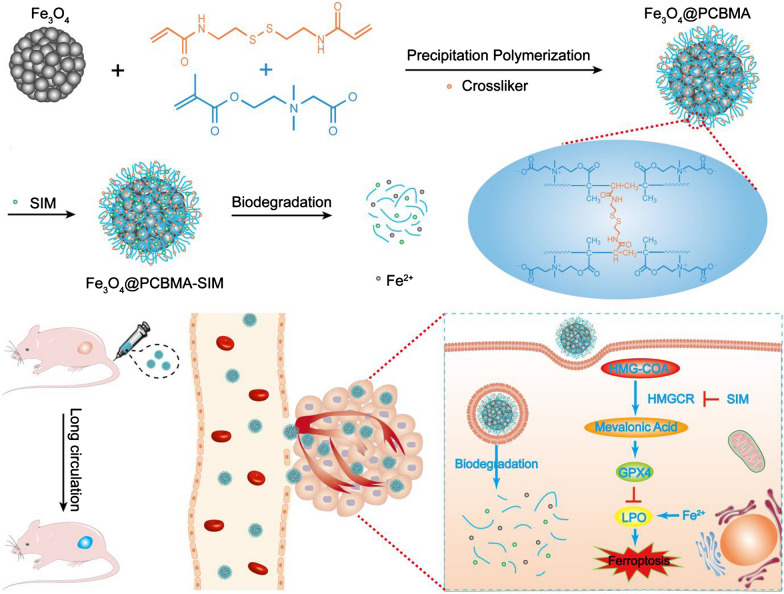
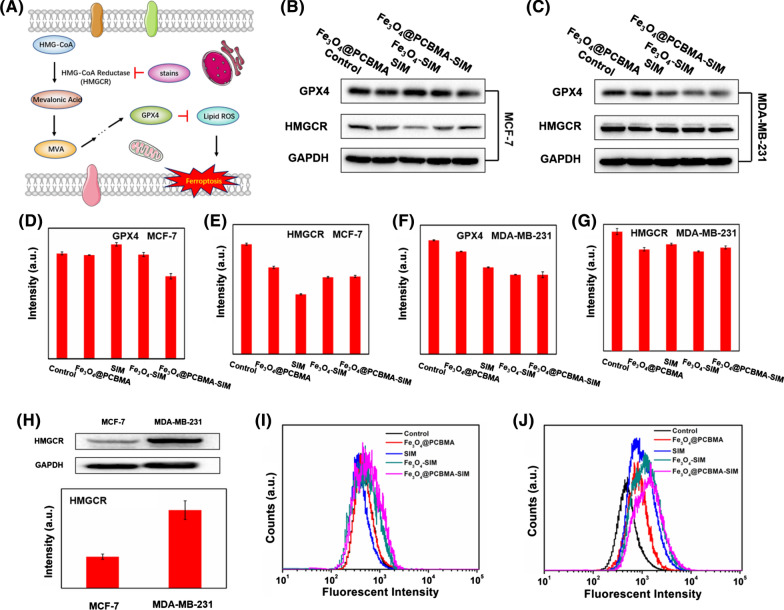
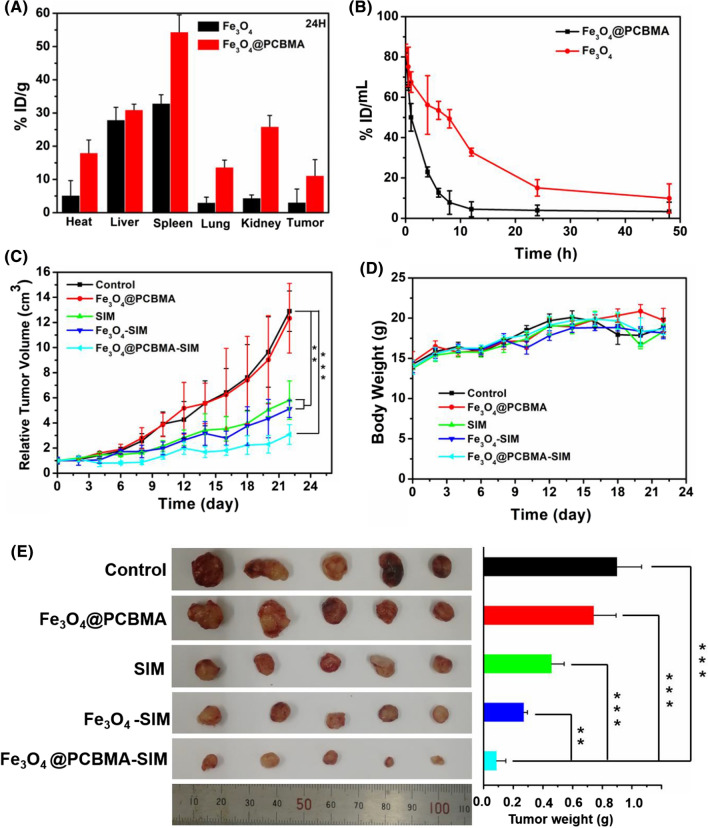
Triple-negative breast cancer (TNBC), a management of aggressive breast cancer, remains an unmet medical challenge. Although a wave of efforts had spurred to design novel therapeutic method of TNBC, unpredictable prognosis with lacking effective therapeutic targets along with the resistance to apoptosis seriously limited survival benefits. Ferroptosis is a non-apoptotic form of cell death that is induced by excessive lipid peroxidation, which provide an innovative way to combat cancer. Emerging evidence suggests that ferroptosis plays an important role in the treatment of TNBC cells. Herein, a novel ferroptosis nanomedicine was prepared by loading simvastatin (SIM), a ferroptosis drug, into zwitterionic polymer coated magnetic nanoparticles (Fe 3 O 4 @PCBMA) to improve the therapeutic effect of TNBC. The as-obtained Fe 3 O 4 @PCBMA-SIM nanoparticles demonstrated more cytotoxicity against MDA-MB-231 than MCF-7 due to the higher expression of 3-hydroxy-3-methyl-glutaryl-coenzyme A reductase (HMGCR), which demonstrated that statins could effectively kill TNBC. Further experiments showed that SIM could inhibit the expression of HMGCR to downregulate the mevalonate (MVA) pathway and glutathione peroxidase 4 (GPX4), thereby inducing cancer cell ferroptosis. What’s more, PCBMA endows Fe 3 O 4 @PCBMA longer blood circulation performance to enhance their accumulation at tumor sites. Given that Fe 3 O 4 have proven for clinical applications by the U.S. Food and Drug Administration (FDA) and SIM could induce cancer cell ferroptosis, the developed Fe 3 O 4 @PCBMA-SIM nanosystem would have great potential in clinics for overcoming the drug resistance brought about by apoptotic drugs to cancer cells.
Overview
The claims and statistics of this paper haven’t been checked yet.
Run the check — free, no account needed. It reads the open-access text and checks the sources it cites.
Integrity signals
Registry
Cites
Statistics
Figures
Verification
Claims the paper makes
The claims and statistics of this paper haven’t been checked yet.
Run the check — free, no account needed. It reads the open-access text and checks the sources it cites.
Claims other papers make about this one
Each is checked against this paper’s own text: does it say what the citing paper says it does?
The source backs part of the claim, not all of it — or backs it for a different population, condition or comparison.
In the citing paper
“Breast cancer, particularly TNBC, has an inherent anti-apoptotic ability, which decreases the overall effectiveness of different treatments and the survival rate [116].”
From Nanosensitizer-assisted sonodynamic therapy for breast cancer (2025) · cites this paper as [116]
Experimental — accuracy not yet measured
Self-check
Percentages, sums and reported differences re-computed from the paper’s own numbers.
The self-check needs the paper’s full text.
Citations
Cites
Sung, H., Ferlay, J., Siegel, R. L., Laversanne, M., Soerjomataram, I., Jemal, A., & Bray, F. (2021) · CA: A Cancer Journal for Clinicians · doi:10.3322/caac.21660 · Cited by 108,699
Bray, F., Ferlay, J., Soerjomataram, I., Siegel, R. L., Torre, L. A., & Jemal, A. (2018) · CA: A Cancer Journal for Clinicians · doi:10.3322/caac.21492 · Cited by 84,109
Cancer drug resistance: an evolving paradigm
Holohan, C., Van Schaeybroeck, S., Longley, D. B., & Johnston, P. G. (2013) · Nature Reviews Cancer · doi:10.1038/nrc3599 · Cited by 4,681
Inactivation of the ferroptosis regulator Gpx4 triggers acute renal failure in mice
Friedmann Angeli, J. P., Schneider, M., Proneth, B., Tyurina, Y. Y., Tyurin, V. A., Hammond, V. J., Herbach, N., Aichler, M., Walch, A., Eggenhofer, E., et al. (2014) · Nature Cell Biology · doi:10.1038/ncb3064 · Cited by 3,732
A Century of Cholesterol and Coronaries: From Plaques to Genes to Statins
Goldstein, J. L., & Brown, M. S. (2015) · Cell · doi:10.1016/j.cell.2015.01.036 · Cited by 1,233
Timmerman, L. A., Holton, T., Yuneva, M., Louie, R. J., Padró, M., Daemen, A., Hu, M., Chan, D. A., Ethier, S. P., van ‘t Veer, L. J., et al. (2013) · Cancer Cell · doi:10.1016/j.ccr.2013.08.020 · Cited by 573
Inhibition of selenoprotein synthesis by selenocysteine tRNA[Ser]Sec lacking isopentenyladenosine
Warner, G. J., Berry, M. J., Moustafa, M. E., Carlson, B. A., Hatfield, D. L., & Faust, J. R. (2000) · Journal of Biological Chemistry · doi:10.1074/jbc.m001280200 · Cited by 207
Ironing out cell death mechanisms
Reed, J. C., & Pellecchia, M. (2012) · Cell · doi:10.1016/j.cell.2012.05.009 · Cited by 87
Research works printed but not linked: 33
- Zhang T, Liu H, Li L, Guo ZY, Song J, Yang XY, Wan GY, Li RS, Wang YS. Leukocyte/platelet hybrid membrane-camouflaged dendritic large pore mesoporous silica nanoparticles co-loaded with photo/chemotherapeutic agents for triple negative breast cancer combination treatment. Bioact Mater. 2021;6:3865–78. · DOI
- Gong Y, Ji P, Yang YS, Xie S, Yu TJ, Xiao Y, Jin ML, Ma D, Guo LW, Pei YC, Chai WJ, Li DQ, Bai F, Bertucci F, Hu X, Jiang YZ, Shao ZM. Metabolic-pathway-based subtyping of triple-negative breast cancer reveals potential therapeutic targets. Cell Metab. 2021;33:51–64. · DOI
- Cao JY, Dixon SJ. Mechanisms of ferroptosis. Cell Mol Life Sci. 2016;73:2195–209. · DOI · Paper page
- Dixon SJ, Lemberg KM, Lamprecht MR, Skouta R, Zaitsev EM, Gleason CE, Patel DN, Bauer AJ, Cantley AM, Yang WS, Morrison B. Ferroptosis: An iron-dependent form of nonapoptotic cell death. Cell. 2012;149:1060–72. · DOI · Paper page
- Wang SF, Li FY, Qiao RR, Hu X, Liao HR, Chen LM, Wu JH, Wu HB, Zhao M, Liu JN, Chen R, Ma XB, Kim D, Sun JH, Davis TP, Chen CY, Tian J, Hyeon T, Ling D. Arginine-rich manganese silicate nanobubbles as a ferroptosis-inducing agent for tumor-targeted theranostics. ACS Nano. 2018;12:12380–92. · DOI
- Liu T, Liu W, Zhang M, Yu W, Gao F, Li C, Wang SB, Feng J, Zhang XZ. Ferrous-supply-regeneration nanoengineering for cancer-cell-specific ferroptosis in combination with imaging-guided photodynamic therapy. ACS Nano. 2018;12:12181–92. · DOI
- Stockwell BR, Angeli JPF, Bayir H, Bush AI, Conrad M, Dixon SJ, Fulda S, Gascon S, Hatzios SK, Kagan VE, Noel K, Jiang X, Linkermann A, Murphy ME, Overholtzer M, Oyagi A, Pagnussat GC, Park J, Ran Q, Rosenfeld CS, Salnikow K, Tang D, Torti FM, Torti SV, Toyokuni S, Woerpel KA, Zhang DD. Ferroptosis: a regulated cell death nexus linking metabolism, redox biology, and disease. Cell. 2017;171:273–85. · DOI · Paper page
- An Y, Zhu JD, Liu F, Deng J, Meng X, Liu GQ, Wu HY, Fan AP, Wang Z, Zhao YJ. Boosting the ferroptotic antitumor efficacy via site-specific amplification of tailored lipid peroxidation. ACS Appl Mater Interfaces. 2019;11:29655–66. · DOI
- Viswanathan VS, Ryan MJ, Dhruv HD, Gill S, Eichhoff OM, Seashore-Ludlow B, Kaffenberger SD, Eaton JK, Shimada K, Aguirre AJ, Viswanathan SR, Chattopadhyay S, Tamayo P, Yang WS, Rees MG, Chen S, Boskovic ZV, Javaid S, Huang C, Wu X, Tseng YY, Roider EM, Gao D, Cleary JM, Wolpin BM, Mesirov JP, Haber DA, Engelman JA, Boehm JS, Kotz JD, Hon CS, Chen Y, Hahn WC, Levesque MP, Doench JG, Berens ME, Shamji AF, Clemons PA, Stockwell BR, Schreiber SL. Dependency of a therapy-resistant state of cancer cells on a lipid peroxidase pathway. Nature. 2017;547:453–7. · DOI · Paper page
- Li HY, Shi W, Li XH, Hu YM, Fang Y, Ma HM. Ferroptosis accompanied by •OH generation and cytoplasmic viscosity increase revealed via dual-functional fluorescence probe. J Am Chem Soc. 2019;141:18301–7. · DOI
- Yu MY, Gai CC, Li ZHR, Ding DJ, Zheng J, Zhang WF, Lv SJ, Li WT. Targeted exosome-encapsulated erastin induced ferroptosis in triple negative breast cancer cells. Cancer Sci. 2019;110:3173–82. · DOI
- Hoque A, Chen H, Xu XC. Statin induces apoptosis and cell growth arrest in prostate cancer cells. Cancer Epidemiol Biomark Prev. 2008;17:88–94. · DOI
- Yin Y, Liu L, Zhao Z, Yin L, Bauer N, Nwaeburu CC, Gladkich J, Gross W, Hackert T, Sticht C, Gretz N, Strobel O, Herr I. Simvastatin inhibits sonic hedgehog signaling and stemness features of pancreatic cancer. Cancer Lett. 2018;426:14–24. · DOI
- Yu HT, Guo PY, Xie XZ, Wang Y, Chen G. Ferroptosis, a new form of cell death, and its relationships with tumourous diseases. J Cell Mol Med. 2017;21:648–57. · DOI
- Yang WS, Stockwell BR. Ferroptosis: death by lipid peroxidation. Trends Cell Biol. 2016;26:165–76. · DOI · Paper page
- Liu M, Liu B, Liu QQ, Du KK, Wang ZF, He NY. Nanomaterial-induced ferroptosis for cancer specific therapy. Coord Chem Rev. 2019;382:160–80. · DOI
- Wilhelm S, Tavares AJ, Dai Q, Ohta S, Audet J, Dvorak HF, Chan WCW. Analysis of nanoparticle delivery to tumours. Nat Rev Mater. 2016;1:1–12.
- Jiang Q, Liu Y, Guo RR, Yao XX, Sung S, Pang ZQ, Yang WL. Erythrocyte-cancer hybrid membrane-camouflaged melanin nanoparticles for enhancing photothermal therapy efficacy in tumors. Biomaterials. 2019;192:292–308. · DOI
- Liu J, Sun ZK, Deng YH, Zou Y, Li CY, Guo XH, Xiong LQ, Gao Y, Li FY, Zhao DY. Highly water-dispersible biocompatible magnetite particles with low cytotoxicity stabilized by citrate groups. Angew Chem Int Ed. 2009;48:5875–9. · DOI
- Zhang L, Xue H, Cao ZQ, Keefe A, Wang JN, Jiang SY. Multifunctional and degradable zwitterionic nanogels for targeted delivery, enhanced MR imaging, reduction-sensitive drug release, and renal clearance. Biomaterials. 2011;32:4604–8. · DOI
- Peng SJ, Ouyang BS, Men YZ, Du Y, Cao YB, Xie RH, Pang ZQ, Shen S, Yang WL. Biodegradable zwitterionic polymer membrane coating endowing nanoparticles with ultra-long circulation and enhanced tumor photothermal therapy. Biomaterials. 2020;231:119680. · DOI
- Wang F, Zhang YT, Yang P, Jin S, Yu M, Guo J, Wang CC. Fabrication of polymeric microgels using reflux-precipitation polymerization and its application for phosphoprotein enrichment. J Mater Chem B. 2014;2:2575–82. · DOI
- Zhai SY, Ma YH, Chen YY, Li D, Cao J, Liu YJ, Cai MT, Xie XX, Chen YW, Luo XL. Synthesis of an amphiphilic block copolymer containing zwitterionic sulfobetaine as a novel pH-sensitive drug carrier. Polym Chem. 2014;5:1285–97. · DOI
- Barry P, Vatsiou A, Spiteri I, Nichol D, Cresswell GD, Acar A, Trahearn N, Hrebien S, Garcia-Murillas I, Chkhaidze K, Ermini L, Huntingford IS, Cottom H, Zabaglo L, Koelble K, Khalique S, Rusby JE, Muscara F, Dowsett M, Maley CC, Natrajan R, Yuan Y, Schiavon G, Turner N, Sottoriva A. The spatiotemporal evolution of lymph node spread in early breast cancer. Clin Cancer Res. 2018;24:4763–70. · DOI
- Wang Y, Tang M. Corrigendum to PM2.5 induces ferroptosis in human endothelial cells through iron overload and redox imbalance. Environ Pollut (Barking, Essex: 1987). 2021;276:113640. · DOI
- Guo SD, Yao XX, Jiang Q, Wang K, Zhang YY, Peng HB, Yang WL. Dihydroartemisinin-loaded magnetic nanoparticles for enhanced chemodynamic therapy. Front Pharmacol. 2020;11:226. · DOI
- Lucky SS, Idris NM, Li ZQ, Huang K, Soo KC, Zhang Y. Titania coated upconversion nanoparticles for near-infrared light triggered photodynamic therapy. ACS Nano. 2015;9:191–205. · DOI
- Mandal CC, Ghosh-Choudhury N, Yoneda T, Choudhury GG. Simvastatin prevents skeletal metastasis of breast cancer by an antagonistic interplay between p53 and CD44. J Biol Chem. 2011;286:11314–27. · DOI · Paper page
- Hayano M, Yang WS, Corn CK, Pagano NC, Stockwell BR. Loss of cysteinyl-tRNA synthetase (CARS) induces the transsulfuration pathway and inhibits ferroptosis induced by cystine deprivation. Cell Death Differ. 2016;2:270–8. · DOI
- Chen G, Roy I, Yang C, Prasad PN. Nanochemistry and nanomedicine for nanoparticle-based diagnostics and therapy. Chem Rev. 2016;116:2826–85. · DOI
- Deng H, Li XL, Peng Q, Wang X, Chen JP, Li YD. Monodisperse magnetic single-crystal ferrite microspheres. Angew Chem Int Ed. 2005;44:2782–5. · DOI
- Yao XX, Yang P, Jin ZK, Jiang Q, Guo RR, Xie RH, He QJ, Yang WL. Multifunctional nanoplatform for photoacoustic imaging-guided combined therapy enhanced by CO induced ferroptosis. Biomaterials. 2019;197:268–83. · DOI
- Ryu JH, Jiwpanich S, Chacko R, Bickerton S, Thayumanavan S. Surface-functionalizable polymer nanogels with facile hydrophobic guest encapsulation capabilities. J Am Chem Soc. 2010;132:8246. · DOI
Cited by
Sorted by citations
Items 201–210 of 210
Research progress of ferroptosis in gynecological diseases
Chen, W., Zhou, W., & Liu, S. (2026) · Annals medicus · doi:10.1080/07853890.2026.2688328
Yu, H., Liao, J., & Zhao, K. (2026) · Journal of Biochemical and Molecular Toxicology · doi:10.1002/jbt.70920
“…magnetic nanoparticles (Fe3O4@PCBMA) with the aim of improving the therapeutic impact of TNBC. SIM was able to inhibit 3‐hydroxy‐3‐methyl‐ glutaryl‐coenzyme A reductase (HMGCR) expression and downregulate GPx4 and the mevalonate (MVA) pathway, thus stimulating cancer cell ferroptosis [79].”
Zhang, S., Li, K., Chen, Y., Liu, Y., Wang, L., & Xu, L. (2025) · Journal of Radiation Research and Applied Sciences · doi:10.1016/j.jrras.2025.102137
Sun, Q.-H., Li, X.-J., Zou, Q., Chen, Y., Zhu, X., Jiang, H.-L., Jiang, T.-T., Wei, F., & Xie, K.-P. (2026) · Theranostics · doi:10.7150/thno.113637
Engineered nanozymes enhance atherosclerosis therapy via inflammation-lipid homeostasis modulation.
Li, Y., He, X., Liu, Y.-L., Deng, Y., Zhang, B.-L., Wei, D., Mangmool, S., Chittasupho, C., & Li, C.-H. (2026) · Colloids and Surfaces B: Biointerfaces · doi:10.1016/j.colsurfb.2026.115524
Zhang, D.-J., Ma, Y., Wang, Y., Liu, X., Zhao, M., Wang, Y.-K., Gao, S., Ren, F., & Chen, Q. (2025) · Surfaces and Interfaces · doi:10.1016/j.surfin.2025.107622
Li, J.-J., & Wang, Z.-H. (2025) · Journal of Medical Biochemistry · doi:10.5937/jomb0-59426
“Simvastatin is a lipid-low ering agent belonging to the class of HMG-CoA reductase inhibitors, which suppresses the activity of the key enzyme HMG-CoA reductase in cholesterol synthesis, thereby reducing endogenous cholesterol production (5, 6).”
Li, Y.-R., Yang, Q., Fan, L.-L., Liu, F., Shang, Y., Zhang, B., Wang, Z., & Zhao, Y. (2024) · Journal of Drug Delivery Science and Technology · doi:10.1016/j.jddst.2024.106358
The use of statin drugs in medical practice. Literature review
Salekh, K., Muraev, A., Ivanov, S., Dolgalev, A., & Bonartsev, A. (2023) · Medical alphabet · doi:10.33667/2078-5631-2023-20-38-43
Prospects for the use of statins in the treatment of neurofibromatosis type 1
Mustafin, R. (2022) · Advances in Molecular Oncology · doi:10.17650/2313-805x-2022-9-3-15-23
Metadata
- Authors
- Yao, X., Xie, R., Cao, Y., Tang, J., Men, Y., Peng, H., & Yang, W.
- Affiliations
- Fudan University (CN)
- Stanford University (US)
- Shanghai Jiao Tong University (CN)
- Corresponding author
- Peng, Haibao
- Yang, Wuli
- Venue
- Journal of Nanobiotechnology
- Published
- 2021-10-09
- Volume
- 19
- Issue
- 1
- Pages
- 311-311
- ISSN
- 1477-3155 (ISSN-L)
- PMC
- PMC8502296
- OpenAlex
- W3206510813
- Cited by
- 227
- References
- 41
- Citations by year
- 2026: 27 · 2025: 67 · 2024: 59 · 2023: 44 · 2022: 29 · 2021: 1
- FWCI
- 21.75
- Type
- journal article
- Language
- en
- Open access
- gold
- doi.org
- Locations
- Journal of Nanobiotechnology (publishedVersion, cc-by)
- PubMed Central (publishedVersion, cc-by)
- PubMed (publishedVersion)
- DOAJ (DOAJ: Directory of Open Access Journals) (submittedVersion, cc-by-sa)
- Funders
- national natural science foundation of china (Grant Nos. 51933002, 51873041, 81902756)
- program of shanghai academic research leader (20XD1400400)
- the open project of state key laboratory of molecular engineering of polymers (No. K2021-19)
- shanghai sailing program (No.19Y1439900)
- Topics
- Life Sciences › Biochemistry, Genetics and Molecular Biology › Cancer Research › Ferroptosis and cancer prognosis
- Physical Sciences › Materials Science › Biomaterials › Nanoparticle-Based Drug Delivery
- Physical Sciences › Engineering › Biomedical Engineering › Nanoplatforms for cancer theranostics
- Keywords
- triple-negative breast cancer, ferroptosis, simvastatin, statins, HMGCR, mevalonate pathway, GPX4, Fe3O4 magnetic nanoparticles, nanomedicine, lipid peroxidation, drug resistance, MDA-MB-231 cells, tumor accumulation
- MeSH terms
- Ferroptosis, Animals, Delayed-Action Preparations, Drug Carriers, Female, Humans, Male, Mice, Nude, Signal Transduction, Simvastatin, Cell Line, Tumor, Mice, Magnetite Nanoparticles, MCF-7 Cells, Triple Negative Breast Neoplasms
About these checks
Registry, retraction, Cites and statistics results are computed, not judged, with one exception: a printed reference that no index lists is read once by a model before it counts as a citation error. Claims are extracted by a model and kept only when their quote appears verbatim in the text; each cited source is then checked, with a model’s help, for whether it says what the claim relies on. Those verdicts can be wrong — read the claim’s quote and the cited source before relying on one.
Statistics and arithmetic are recomputed, not judged.
Confidence bands are shown only for fields calibrated on our annotated test set. None is calibrated yet, so no band is shown.
What counts as a claim ›How we measure confidence ›How we check this ›
Are you an author, or do you see a problem with this page? Request a review
