

Nano delivery of simvastatin targets liver sinusoidal endothelial cells to remodel tumor microenvironment for hepatocellular carcinoma
Open accessThe DOI matches its Crossref record; 37 of the 37 references it cites were found in a registry or an index.
Abstract
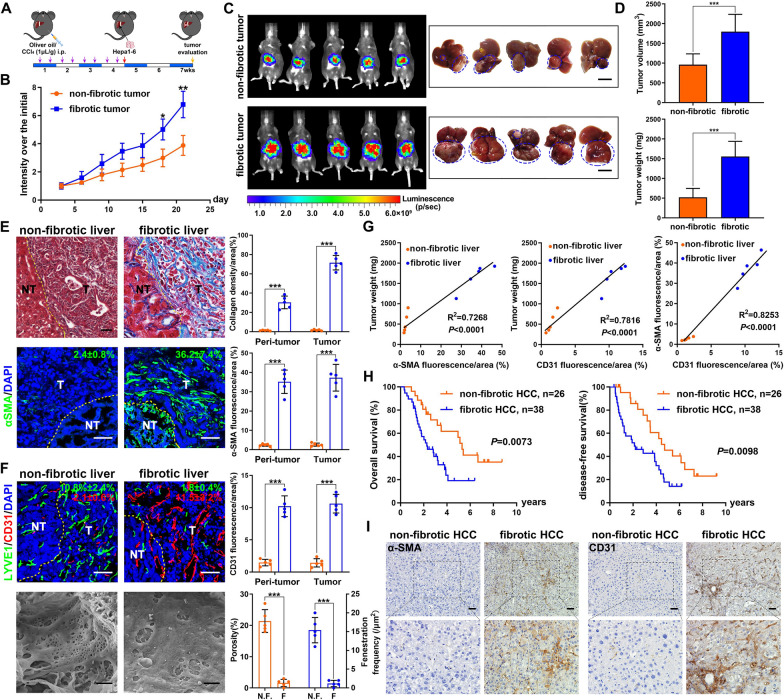
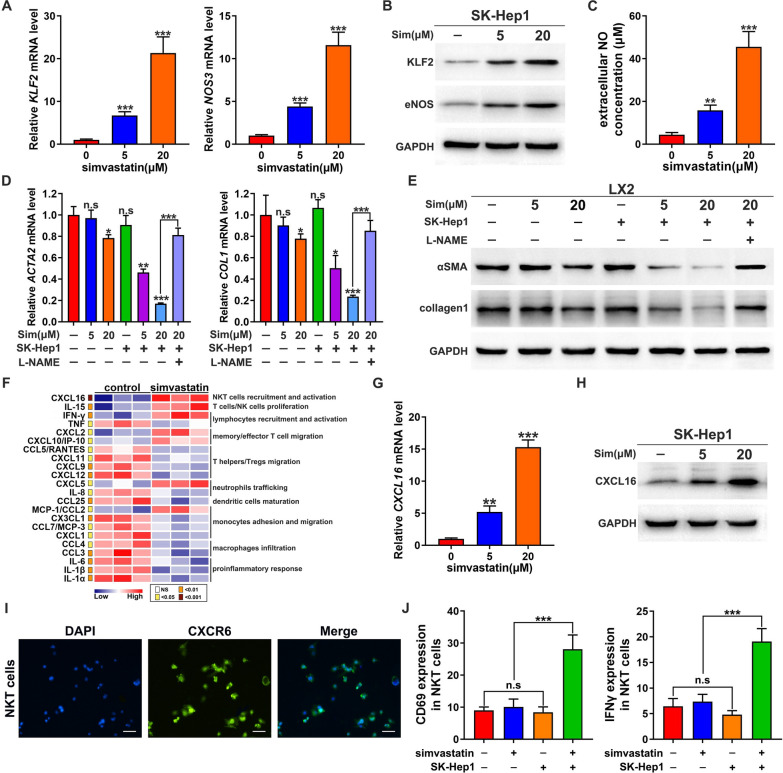
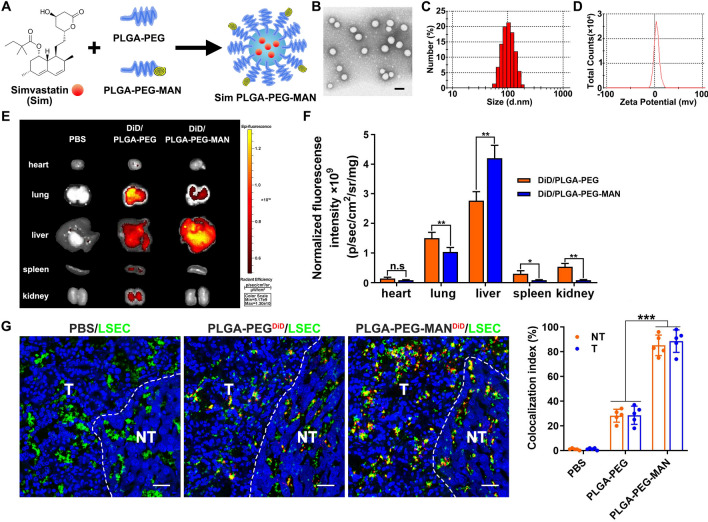
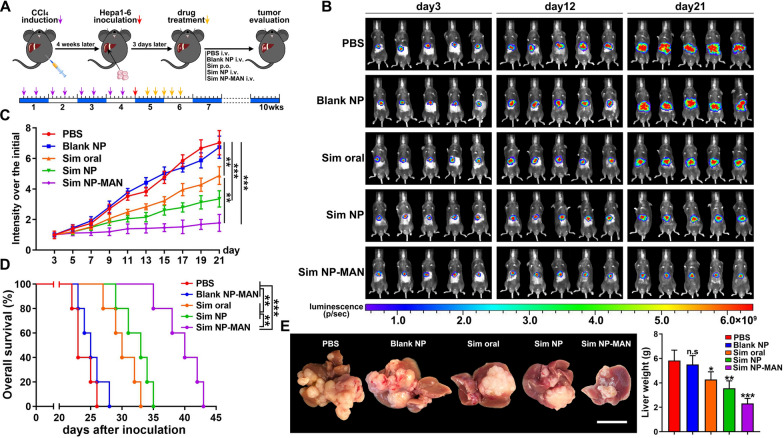
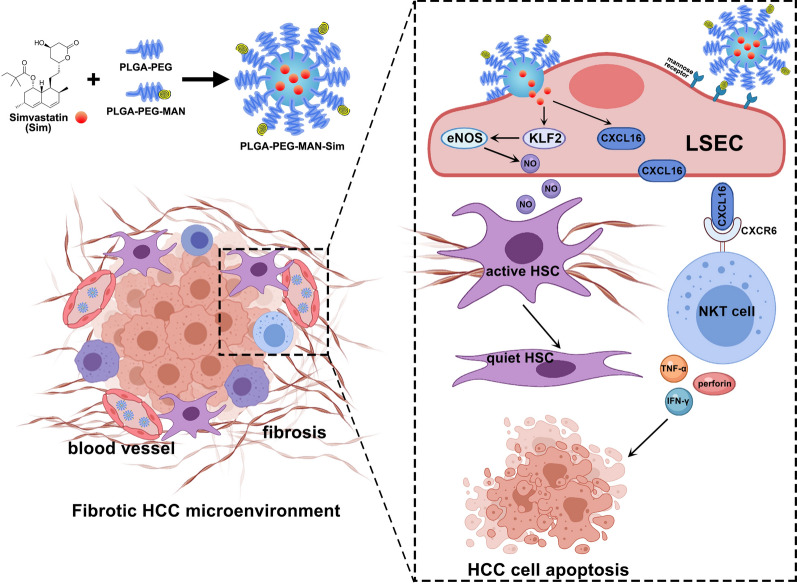
Background: Hepatocellular carcinoma (HCC) developed in fibrotic liver does not respond well to immunotherapy, mainly due to the stromal microenvironment and the fibrosis-related immunosuppressive factors. The characteristic of liver sinusoidal endothelial cells (LSECs) in contributing to fibrosis and orchestrating immune response is responsible for the refractory to targeted therapy or immunotherapy of HCC. We aim to seek a new strategy for HCC treatment based on an old drug simvastatin which shows protecting effect on LSEC. Method: The features of LSECs in mouse fibrotic HCC model and human HCC patients were identified by immunofluorescence and scanning electron microscopy. The effect of simvastatin on LSECs and hepatic stellate cells (HSCs) was examined by immunoblotting, quantitative RT-PCR and RNA-seq. LSEC-targeted delivery of simvastatin was designed using nanotechnology. The anti-HCC effect and toxicity of the nano-drug was evaluated in both intra-hepatic and hemi-splenic inoculated mouse fibrotic HCC model. Results: LSEC capillarization is associated with fibrotic HCC progression and poor survival in both murine HCC model and HCC patients. We further found simvastatin restores the quiescence of activated hepatic stellate cells (aHSCs) via stimulation of KLF2-NO signaling in LSECs, and up-regulates the expression of CXCL16 in LSECs. In intrahepatic inoculated fibrotic HCC mouse model, LSEC-targeted nano-delivery of simvastatin not only alleviates LSEC capillarization to regress the stromal microenvironment, but also recruits natural killer T (NKT) cells through CXCL16 to suppress tumor progression. Together with anti-programmed death-1-ligand-1 (anti-PD-L1) antibody, targeted-delivery of simvastatin achieves an improved therapeutic effect in hemi-splenic inoculated advanced-stage HCC model. Conclusions: These findings reveal an immune-based therapeutic mechanism of simvastatin for remodeling immunosuppressive tumor microenvironment, therefore providing a novel strategy in treating HCC. Graphical Abstract:
Overview
The claims and statistics of this paper haven’t been checked yet.
Free: it reads the open-access text and checks the first 5 claims that cite a source we can check. Create a free account to check every claim.
Integrity signals
Registry
Cites
Statistics
Figures
Verification
Claims the paper makes
The claims and statistics of this paper haven’t been checked yet.
Free: it reads the open-access text and checks the first 5 claims that cite a source we can check. Create a free account to check every claim.
Claims other papers make about this one
Each is checked against this paper’s own text: does it say what the citing paper says it does?
The cited source says what the claim attributes to it.
In the citing paper
“Indeed, the upregulation of CXCL16 in LSECs through the administration of simvastatin-loaded nanoparticles in mice leads to reduced LSEC capillarization and the recruitment of NKT cells to suppress tumor progression [331], suggesting that LSECs are promising therapeutic targets.”
From Inflammation and immunity in liver homeostasis and disease: a nexus of hepatocytes, nonparenchymal cells and immune cells (2025) · doi:10.1038/s41423-025-01313-7 · cites this paper as [331]
Self-check
Percentages, sums and reported differences re-computed from the paper’s own numbers.
The self-check needs the paper’s full text.
Citations
Cites
Siegel, R. L., Miller, K. D., & Jemal, A. (2019) · CA: A Cancer Journal for Clinicians · doi:10.3322/caac.21551 · Cited by 20,160
Transcript-level expression analysis of RNA-seq experiments with HISAT, StringTie and Ballgown
Pertea, M., Kim, D., Pertea, G. M., Leek, J. T., & Salzberg, S. L. (2016) · Nature Protocols · doi:10.1038/nprot.2016.095 · Cited by 6,845
PD-1 and Its Ligands in Tolerance and Immunity
Keir, M. E., Butte, M. J., Freeman, G. J., & Sharpe, A. H. (2008) · Annual Review of Immunology · doi:10.1146/annurev.immunol.26.021607.090331 · Cited by 5,378 · cited 1×
“PD-L1, the major ligand of PD-1, is expressed in various immune cells such as antigen-presenting cells, as well as in endothelial cells [27].”
BackgroundEl-Serag, H. B. (2011) · New England Journal of Medicine · doi:10.1056/nejmra1001683 · Cited by 3,529
Llovet, J. M., Zucman-Rossi, J., Pikarsky, E., Sangro, B., Schwartz, M., Sherman, M., & Gores, G. (2016) · Nature Reviews Disease Primers · doi:10.1038/nrdp.2016.18 · Cited by 2,531 · cited 1×
“Unfortunately, most of them do not respond well to either multi-kinase inhibitors or immune-checkpoint blocking antibodies, which are effective standard cares for other cancers [4].”
BackgroundGut microbiome–mediated bile acid metabolism regulates liver cancer via NKT cells
Ma, C., Han, M., Heinrich, B., Fu, Q., Zhang, Q., Sandhu, M., Agdashian, D., Terabe, M., Berzofsky, J. A., Fako, V., et al. (2018) · Science · doi:10.1126/science.aan5931 · Cited by 1,508 · cited 1×
“It was revealed that hepatic NKT cell accumulation precedes HCC inhibition [35].”
BackgroundLiver sinusoidal endothelial cells: Physiology and role in liver diseases
Poisson, J., Lemoinne, S., Boulanger, C., Durand, F., Moreau, R., Valla, D., & Rautou, P.-E. (2017) · Journal of Hepatology · doi:10.1016/j.jhep.2016.07.009 · Cited by 1,047 · cited 2×
“A unique characteristic of LSECs is their expression of high levels of scavenger receptors, which ensure the high endocytic capacity [7].”
BackgroundScavenger receptors in homeostasis and immunity
Canton, J., Neculai, D., & Grinstein, S. (2013) · Nature Reviews Immunology · doi:10.1038/nri3515 · Cited by 838 · cited 2×
“One of the most extensively studied scavenger receptors on LSECs is the mannose receptor [25].”
BackgroundRole of the Microenvironment in the Pathogenesis and Treatment of Hepatocellular Carcinoma
Hernandez–Gea, V., Toffanin, S., Friedman, S. L., & Llovet, J. M. (2013) · Gastroenterology · doi:10.1053/j.gastro.2013.01.002 · Cited by 722 · cited 1×
“More than 80% of HCC develop in fibrotic or cirrhotic livers, suggesting an important role of liver fibrosis in the premalignant environment of the liver [3].”
BackgroundLiver sinusoidal endothelial cells — gatekeepers of hepatic immunity
Shetty, S., Lalor, P. F., & Adams, D. H. (2018) · Nature Reviews Gastroenterology & Hepatology · doi:10.1038/s41575-018-0020-y · Cited by 523 · cited 2×
“In addition, LSECs influence the composition of hepatic immune populations by distinct expression of adhesion molecules and chemokines in diseased liver, which indicates the crucial role of LSECs in immune-regulation [9].”
Background
Cited by
Sabit, H., Pawlik, T. M., Radwan, F., Abdel-Hakeem, M., Abdel-Ghany, S., Wadan, A.-H. S., Elzawahri, M., El-Hashash, A., & Arneth, B. (2025) · Molecular Cancer · doi:10.1186/s12943-025-02357-z · Cited by 239
“…for chemo-sonodynamic therapy [130], carbon monoxide-driven nano-herb delivery systems [131], simvastatin nano-delivery for TME remodeling [132], integrin receptor-targeted nanoparticles for glioblastoma [133], carbon nanotube cups for targeted delivery [134], double imprinted…”
The evolving role of liver sinusoidal endothelial cells in liver health and disease
McConnell, M. J., Kostallari, E., Ibrahim, S. H., & Iwakiri, Y. (2023) · Hepatology · doi:10.1097/hep.0000000000000207 · Cited by 189
“For example, the overexpression of KLF2 in the cirrhotic rat livers through Adenovirus-Klf2 administration exerts an antifibrotic and vasoprotective effect by decreasing the portal pressure as well as increasing eNOS expression and the response to the vasodilator acetylcholine (102).”
InfluentialEndothelial Cell Dysfunction and Nonalcoholic Fatty Liver Disease (NAFLD): A Concise Review
Nasiri-Ansari, N., Androutsakos, T., Flessa, C.-M., Kyrou, I., Siasos, G., Randeva, H. S., Kassi, E., & Papavassiliou, A. G. (2022) · Cells · doi:10.3390/cells11162511 · Cited by 131
(2025) · doi:10.1038/s41423-025-01313-7 · Cited by 97
“Indeed, the upregulation of CXCL16 in LSECs through the administration of simvastatin-loaded nanoparticles in mice leads to reduced LSEC capillarization and the recruitment of NKT cells to suppress tumor progression [331], suggesting that LSECs are promising therapeutic targets.”
Multiscale biomechanics and mechanotransduction from liver fibrosis to cancer
Li, N., Zhang, X., Zhou, J., Li, W., Shu, X., Wu, Y. C., & Long, M. (2022) · Advanced Drug Delivery Reviews · doi:10.1016/j.addr.2022.114448 · Cited by 102
Liver sinusoidal endothelial cell: An important yet often overlooked player in the liver fibrosis
Qu, J., Wang, L., Li, Y., & Li, X. (2024) · Clinical and Molecular Hepatology · doi:10.3350/cmh.2024.0022 · Cited by 96
“59 Interestingly, in response to the abnormal fluid shear stress happened in liver fibrosis, KLFs were activated, exacerbating the dysfunction of LSECs, thereby representing potential targets for inhibiting the progression of liver fibrosis.”
BackgroundNanomedicine‐boosting icaritin-based immunotherapy of advanced hepatocellular carcinoma
Lu, Y., Gao, Y., Yang, H., Hu, Y. M., & Li, X. (2022) · Military Medical Research · doi:10.1186/s40779-022-00433-9 · Cited by 74
“For advanced HCC, several nanomedicines containing DOX [2], paclitaxel [65], simvastatin [66], sorafenib [67] and arsenic trioxide [68] have been developed to improve the chemotherapeutic effects.”
BackgroundSelf-citationSun, T., Huang, J., Zhang, W., Zheng, X.-Q., Wang, H., Liu, J., Leng, H., Yuan, W., & Song, C. (2022) · Bioactive Materials · doi:10.1016/j.bioactmat.2022.07.028 · Cited by 79
Macrophages and platelets in liver fibrosis and hepatocellular carcinoma
Casari, M., Siegl, D., Deppermann, C., & Schuppan, D. (2023) · Frontiers in Immunology · doi:10.3389/fimmu.2023.1277808 · Cited by 59
Wang, L., Bi, S., Li, Z., Liao, A., Li, Y., Yang, L., Zhou, X., Gao, Y., Liu, X., Zou, Y., et al. (2024) · Biomaterials · doi:10.1016/j.biomaterials.2024.122766 · Cited by 57
Self-citationXia, Y., Jin, Y. J., Cui, D., Wu, X., Song, C., Jin, W., & Huang, H. (2022) · Frontiers in Pharmacology · doi:10.3389/fphar.2022.860546 · Cited by 57
Matrix stiffness-driven cancer progression and the targeted therapeutic strategy
Liang, R., & Song, G. (2023) · Mechanobiology in Medicine · doi:10.1016/j.mbm.2023.100013 · Cited by 52
“Studies have found that the targeted delivery of simvastatin by sinusoidal endothelial cells can reduce collagen deposition and inhibit the progress of HCC [158].”
RNA nanotherapeutics with fibrosis overexpression and retention for MASH treatment
Shan, X., Zhao, Z., Lai, P., Liu, Y., Li, B., Ke, Y., Jiang, H., Zhou, Y., Li, W., Wang, Q., et al. (2024) · Nature Communications · doi:10.1038/s41467-024-51571-8 · Cited by 52
Self-citationWang, K., Chen, H. H., Zheng, J., Chen, J., Chen, Y., & Yuan, Y. (2024) · Journal of Controlled Release · doi:10.1016/j.jconrel.2024.02.022 · Cited by 51
Wang, Q., Liu, J., Chen, Z., Zheng, J., Wang, Y., & Dong, J. (2023) · Biomedicine & Pharmacotherapy · doi:10.1016/j.biopha.2023.116021 · Cited by 49
Liver sinusoidal endothelial cells as potential drivers of liver fibrosis (Review)
Gao, J.-Q., Zuo, B., & He, Y. (2024) · Molecular Medicine Reports · doi:10.3892/mmr.2024.13164 · Cited by 41
“NO signaling in LSECs (97).”
Deng, Z., Ouyang, Z., Mei, S., Zhang, X., Li, Q., Meng, F., Hu, Y., Dai, X., Zhou, S., Mao, K., et al. (2023) · Journal of Ethnopharmacology · doi:10.1016/j.jep.2023.116945 · Cited by 38
The application of nanoparticles in immunotherapy for hepatocellular carcinoma
Hu, X., Zhu, H., He, X., Chen, J., Xiong, L., Shen, Y., Li, J., Xu, Y., Chen, W., Liu, X., et al. (2023) · Journal of Controlled Release · doi:10.1016/j.jconrel.2023.01.051 · Cited by 37
Li, Y., Huan, C., Sun, H., Zhang, W., Guo, Z., Li, C., Yao, J., Zhang, Z., Yu, S., Dong, Q., et al. (2025) · Advanced Science · doi:10.1002/advs.202514661 · Cited by 50
Yuan, Y., Li, J., Chen, M., Zhao, Y., Zhang, B., Chen, X., Zhao, J., Liang, H., & Chen, Q. (2024) · Journal of Controlled Release · doi:10.1016/j.jconrel.2024.10.012 · Cited by 35
Chu, D., Chen, J., Liu, X., Liao, A., Song, X., Li, Y., Yang, L., Chen, Z., Yu, Z., & Guo, J. (2023) · International Journal of Biological Macromolecules · doi:10.1016/j.ijbiomac.2023.125495 · Cited by 33
Self-citationUnagolla, J. M., Das, S., Flanagan, R., Oehler, M., & Menon, J. U. (2024) · International Journal of Pharmaceutics · doi:10.1016/j.ijpharm.2024.124381 · Cited by 34
Tumor Microenvironment in Hepatocellular Carcinoma: Key Players for Immunotherapy
Feng, H., Zhuo, Y., Zhang, X., Li, Y., Li, Y., Duan, X., Shi, J., Xu, C., Gao, Y., & Yu, Z. (2022) · Journal of Hepatocellular Carcinoma · doi:10.2147/jhc.s381764 · Cited by 32
“125 Therefore, targeting LECs is a potential regimen in the therapy of HCC (Figure 3C).”
Self-citationAnti-stromal nanotherapeutics for hepatocellular carcinoma
Yu, Z., Huang, L., & Guo, J. (2024) · Journal of Controlled Release · doi:10.1016/j.jconrel.2024.01.050 · Cited by 30
Self-citationA combined “eat me/don’t eat me” strategy based on exosome for acute liver injury treatment
Du, W., Chen, C., Liu, Y., Quan, H., Xu, M., Liu, J., Song, P., Fang, Z., Yue, Z. H., Xu, H., et al. (2025) · Cell Reports Medicine · doi:10.1016/j.xcrm.2025.102033 · Cited by 39
“Stabilin receptors are exclusively expressed on LSEC, whereas the mannose receptor is also present in low abundance on the surface of KC. 29 Structural analysis reveals that both RLTRKRGLK and reverse-sequence KLGRKRTLR (KLGR) accumulate extensively in LSEC.”
Self-citationIntegrating Metabolic Modulation and Nanomedicine for Cancer Immunotherapy
Zhou, X., Deng, R., Liao, Z., Huang, X., Huang, J., Yang, H., Leong, K. W., & Zhong, Y. (2025) · Advanced Science · doi:10.1002/advs.202510004 · Cited by 31
Gou, H., Liu, S., Liu, L., Luo, M., Qin, S., He, K., & Yang, X. (2022) · Frontiers in Immunology · doi:10.3389/fimmu.2022.1095915 · Cited by 29
“Previous in vitro and in vivo experiments have confirmed that LSEC use CXCL16 as a messenger to control the accumulation of CXCR6+ NKT cells in the liver (11, 13, 14, 28).”
BackgroundNanodelivery of scutellarin induces immunogenic cell death for treating hepatocellular carcinoma
Li, L., Zou, Y., Wang, L., Yang, L., Li, Y., Liao, A., Chen, Z., Yu, Z., Guo, J., & Han, S. (2023) · International Journal of Pharmaceutics · doi:10.1016/j.ijpharm.2023.123114 · Cited by 27
Self-citationNanomedicines for reversing immunosuppressive microenvironment of hepatocellular carcinoma
Pan, X., Ni, S., & Hu, K. (2024) · Biomaterials · doi:10.1016/j.biomaterials.2024.122481 · Cited by 30
Lipid metabolism of hepatocellular carcinoma impacts targeted therapy and immunotherapy
Feng, X.-C., Liu, F., Chen, W.-Y., Du, J. T., & Liu, H. (2023) · World Journal of Gastrointestinal Oncology · doi:10.4251/wjgo.v15.i4.617 · Cited by 25
Statin therapy: a potential adjuvant to immunotherapies in hepatocellular carcinoma
Wang, J., Liu, C., Hu, R., Wu, L., & Li, C. (2024) · Frontiers in Pharmacology · doi:10.3389/fphar.2024.1324140 · Cited by 29
Cao, C., Li, Y., Shi, F., Jiang, S., Li, Y., Yang, L., Zhou, X., Gao, Y., Tang, F., Li, H., et al. (2024) · International Journal of Pharmaceutics · doi:10.1016/j.ijpharm.2024.124424 · Cited by 24
Self-citationDésert, R., Giannone, F., Saviano, A., Hoshida, Y., Heikenwälder, M. F., Nahon, P., & Baumert, T. F. (2025) · npj gut and liver. · doi:10.1038/s44355-025-00018-y · Cited by 26
Resident Immune Cells of the Liver in the Tumor Microenvironment
Lu, Y., Ma, S., Ding, W., Sun, P., Zhou, Q., Duan, Y., & Sartorius, K. (2022) · Frontiers in Oncology · doi:10.3389/fonc.2022.931995 · Cited by 25
“KLF2-NO signaling in LSECs can also inhibit tumor progression by inducing CXCL16 overexpression and recruiting NKT cells (79).”
BackgroundLiver Cell Type-Specific Targeting by Nanoformulations for Therapeutic Applications
Kaps, L., Limeres, M. J., Schneider, P. M., Svensson, M., Zeyn, Y., Ghazi, S. F.-E., Cacicedo, M. L., Galle, P. R., Gehring, S., & Bros, M. (2023) · International Journal of Molecular Sciences · doi:10.3390/ijms241411869 · Cited by 25
“Further studies on nanodrug delivery to HSCs and the relevance of these strategies to address closely related CAFs are discussed by Kaps and Schuppan [236].”
BackgroundInfluentialDing, Y., Xue, M., Tang, Q., Wang, L., Ding, H.-Y., Li, H., Gao, C., & Yu, W. (2022) · World Journal of Gastroenterology · doi:10.3748/wjg.v28.i37.5403 · Cited by 22
Association between Statins Types with Incidence of Liver Cancer: An Updated Meta-analysis
Zhang, X., Lou, D., Fu, R., Wu, F., Zheng, D., & Ma, X. (2023) · Current Medicinal Chemistry · doi:10.2174/0929867330666230701000400 · Cited by 23
Mo, H., Yue, P., Li, Q., Tan, Y., Yan, X., Liu, X., Xu, Y., Luo, Y., Palihati, S., Yi, C., et al. (2025) · Angiogenesis · doi:10.1007/s10456-025-09969-5 · Cited by 20
An overview on nanoplatforms for statins delivery: Perspectives for safe and effective therapy
Etemad, L., Salmasi, Z., Moosavian Kalat, S. A., Moshiri, M., Zamanian, J., Kesharwani, P., & Sahebkar, A. (2023) · Environmental Research · doi:10.1016/j.envres.2023.116572 · Cited by 18
Zhang, J., Zhang, Z., Wu, Z., Wang, Y., Zhang, Z., & Xia, L. (2024) · Chinese Medical Journal · doi:10.1097/cm9.0000000000003144 · Cited by 19
“[114 ] ICIs and mTKIs are most momentous drugs of systemic therapy.”
MethodZhang, Y., Ma, Y., Ma, E., Chen, X., Zhang, Y., Yin, B., & Zhao, J. (2025) · Cancer Drug Resistance · doi:10.20517/cdr.2024.165 · Cited by 28
Non-parenchymal cells: key targets for modulating chronic liver diseases
Yang, T., Gu, Z., Feng, J., Shan, J., Qian, C., & Zhuang, N. (2025) · Frontiers in Immunology · doi:10.3389/fimmu.2025.1576739 · Cited by 21
Targeted nano-drug delivery systems for tumor immunotherapy
Lian, S., Yang, W., Zeng, Y., Tang, R., & Wang, K. (2025) · Journal of Pharmaceutical Analysis · doi:10.1016/j.jpha.2025.101408 · Cited by 18
“[94].”
The role of the CXCR6/CXCL16 axis in the pathogenesis of fibrotic disease
Wang, F., Wu, T.-Q., Lin, Y., Jiao, Y.-R., Li, J., Ruan, Y., Yin, L., & Chen, C. (2024) · International Immunopharmacology · doi:10.1016/j.intimp.2024.112015 · Cited by 17
Recent updates in applications of nanomedicine for the treatment of hepatic fibrosis
Setyawati, D. R., Sekaringtyas, F. C., Pratiwi, R. D., Rosyidah, A., Azhar, R., Gustini, N., Syahputra, G., Rosidah, I., Mardliyati, E., Tarwadi, et al. (2024) · Beilstein Journal of Nanotechnology · doi:10.3762/bjnano.15.89 · Cited by 16
Zhang, M., Bai, J., Yuan, H., Duan, X., Yu, L., Li, Y., Li, K., Rile, S., Wang, X., Wang, H., et al. (2025) · Cell Death and Disease · doi:10.1038/s41419-025-07404-7 · Cited by 15
Abdulmajeed, R. J., & Sergi, C. M. (2025) · International Journal of Molecular Sciences · doi:10.3390/ijms26168006 · Cited by 16
Jirandehi, A. K., Asgari, R., Shahbaz, S. K., & Rezaei, N. (2024) · Nanoscale Advances · doi:10.1039/d4na00808a · Cited by 17
Nanoparticle-based drug delivery systems: A promising approach for the treatment of liver fibrosis
Chen, Y.-N., Li, M.-Q., Zhang, H., Xu, N.-N., Xu, Y.-Q., Liu, W., Chen, T., Li, N., Wu, G.-Y., Zhao, J., et al. (2025) · International Journal of Pharmaceutics X · doi:10.1016/j.ijpx.2025.100411 · Cited by 19
Unlocking exosome therapeutics: The critical role of pharmacokinetics in clinical applications
Yadav, K., Sahu, K. K., Sucheta, Minz, S., & Pradhan, M. (2025) · Tissue and Cell · doi:10.1016/j.tice.2025.102749 · Cited by 14
Hsu, C., Mustafa, M. A., Kumar, A., Pramanik, A., Sharma, R., Mohammed, F., Jawad, I. A., Mohammed, I. J., Alshahrani, M. Y., Khalil, N. A. M. A., et al. (2024) · Pathology - Research and Practice · doi:10.1016/j.prp.2024.155266 · Cited by 18
Lipid metabolism in the immune niche of tumor-prone liver microenvironment
Chen, J., Chan, T. T.-H., & Zhou, J. (2023) · Journal of Leukocyte Biology · doi:10.1093/jleuko/qiad081 · Cited by 13
Navigating liver targeting: Fine-tuning chitosan nanocarriers through saccharide modification
Kira, A. Y., Abdelhamid, A. M., & Nasr, M. (2024) · Journal of Drug Delivery Science and Technology · doi:10.1016/j.jddst.2024.105644 · Cited by 14
Targeting lipid metabolism to enhance cancer immunotherapy
Zhao, D., Wu, L., & Li, Y. (2025) · Biochimica et Biophysica Acta (BBA) - Reviews on Cancer · doi:10.1016/j.bbcan.2025.189416 · Cited by 13
Baj, J., Kołodziej, M., Kobak, J., Januszewski, J., Syty, K., Portincasa, P., & Forma, A. (2024) · International Journal of Molecular Sciences · doi:10.3390/ijms251910233 · Cited by 10
“Authors concluded that LSEC-targeting simvastatin administered through nano delivery appears as a promising therapeutic option for patients with HCC [75].”
BackgroundInfluentialYu, Z., Zou, Y., Han, S., Sun, D., Wang, L., Yang, L., Li, Y., Zhang, X., & Guo, J. (2023) · Fundamental Research · doi:10.1016/j.fmre.2023.05.013 · Cited by 10
“(3) Measurement of cytokines and chemokines [28] .”
Self-citationDon’t Judge a Book by Its Cover: The Role of Statins in Liver Cancer
Piekuś-Słomka, N., Mocan, L. P., Shkreli, R., Grapa, C. M., Denkiewicz, K., Wesolowska, O., Kornek, M., Sparchez, Z. A., Słomka, A., Crăciun, R., et al. (2023) · Cancers · doi:10.3390/cancers15205100 · Cited by 10
“…substantial tumor microenvironment alterations, which might bear prognostic significance, especially concerning immunotherapy treatment response [121,122], with one report suggesting that atorvastatin attenuates PDL-1 induction in HCC cells, hinting towards a potential role of combination therapies…”
BackgroundApplication of PPAR Ligands and Nanoparticle Technology in Metabolic Steatohepatitis Treatment
Vu, H. T., Nguyen, V. D., Ikenaga, H., & Matsubara, T. (2024) · Biomedicines · doi:10.3390/biomedicines12081876 · Cited by 10
“NP drugs targeting LSECs, the key inducers of liver injury, inhibit tumor growth by recruiting natural killer T cells using simvastatin, a nanodrug, converting HSCs from activation to quiescence state for the expression of C-X-C motif chemokine ligand 16 on LSECs [185].”
BackgroundApplication of nanotechnology in the treatment of hepatocellular carcinoma
Cai, L., Du, Y., Xiong, H., & Zheng, H. (2024) · Frontiers in Pharmacology · doi:10.3389/fphar.2024.1438819 · Cited by 10
Ming, Z., Luo, T., Zou, Z., Luo, W., Hu, X., Chen, L., Zhou, J., Liu, X., Mingquan, L., Li, J., et al. (2025) · Hepatology Communications · doi:10.1097/hc9.0000000000000769 · Cited by 8
“[2] In East Asia, such as China, Japan, and Korea, liver cancer is most prevalent and deadly, [3] primarily because the hepatitis virus is pandemic in these areas.”
Biomechanics and mechanobiology of the cell nucleus
Wei, F., Liao, Y., Wang, A., Zhang, X., Chen, X., Ma, C.-Y., Li, N., Chen, J., & Long, M. (2025) · Med-X · doi:10.1007/s44258-025-00063-5 · Cited by 11
“Tbx3 interacts with histone deacetylase 5 (HDAC5) via specific motifs, and inhibiting this interaction with HDAC inhibitors can restore E-cadherin expression and reduce cell migration, offering a therapeutic target to limit metastasis [186].”
Clinical applications of immunogenomics in hepatocellular carcinoma
Carter, J. K., Cameron, D., & Villanueva, A. (2026) · Clinical and Molecular Hepatology · doi:10.3350/cmh.2025.1323 · Cited by 8
“One preclinical study found that reversing pathologic LSEC capillarization with nano-targeted simvastatin delivery resulted in recruitment of natural killer T (NKT) cells and strengthened responses to anti-PD-L1 therapy [101].”
Nanotherapy targeting liver sinusoidal endothelial cells in liver fibrosis
Zhang, L., Ru, J.-W., Liang, S.-Q., Zhang, M.-M., Zhang, C.-Y., Liu, J.-Q., Wang, Y., Zhou, T., Cheng, X. W., Xing, L., et al. (2026) · Journal of Controlled Release · doi:10.1016/j.jconrel.2026.114864 · Cited by 8
Ye, Z., Yan, B., Li, H., Tang, Q., Yuan, K., Hou, J., Xu, L., Yuan, J., Wang, S., Jiao, W., et al. (2025) · Acta Biomaterialia · doi:10.1016/j.actbio.2025.04.014 · Cited by 8
Therapeutic applications of nanomedicine in metabolic diseases by targeting the endothelium
Hou, L., Zhang, M., Liu, L., Zhong, Q., Xie, M., & Zhao, G. (2022) · QJM · doi:10.1093/qjmed/hcac210 · Cited by 9
Inhibition of FGFR2 Signaling by Cynaroside Attenuates Liver Fibrosis
Meng, Q., Luo, L., Lei, M., Chen, Z., Sun, Y., Xue, C., Zhai, Z., Zhang, Y., Cao, J., Su, Z., et al. (2023) · Pharmaceuticals · doi:10.3390/ph16040548 · Cited by 9
“These clinical options include antiviral drugs [31,32], such as interferon and ribavirin, for viral hepatitis; immunosuppressive agents [33], such as azathioprine and mycophenolate mofetil, for inhibiting the immune system; corticosteroids [34,35], including prednisone, for reducing inflammation; and lipid-reducing dr…”
BackgroundZhao, S., Zhang, L., Zhao, J., Kota, V. G., Venkat, K. M., Tasnim, F., & Yu, H. (2023) · Diabetes & Metabolic Syndrome Clinical Research & Reviews · doi:10.1016/j.dsx.2023.102921 · Cited by 7
Li, Y., Shi, J., Yu, S., Lu, X., Li, Y., Zheng, W., Zhang, X., Du, W., Zhao, C., Huang, L., et al. (2025) · Chemical Engineering Journal · doi:10.1016/j.cej.2025.159943 · Cited by 10
Self-citationRedefining hepatocellular carcinoma treatment: nanotechnology meets tumor immune microenvironment
Mi, C., Liu, S., & Chen, Z. (2025) · Journal of drug targeting · doi:10.1080/1061186x.2025.2479757 · Cited by 6
“…cells and reduced Hcc stiffness resulted in the release of iFN-γ and tNF-α, and subsequent apoptosis in tumour cells. when combined with an anti-PD-l1 antibody, the targeted delivery of simvastatin achieved an improved therapeutic effect in the hemi-splenic inoculated advanced-stage Hcc model [72].”
Chen, S., Jin, L., Zeng, Z., & Chen, G. (2024) · Materials & Design · doi:10.1016/j.matdes.2024.113242 · Cited by 6
Rana, K., Yadav, P., Chakraborty, R., Jha, S. K., Agrawal, U., & Bajaj, A. (2025) · ACS Applied Materials & Interfaces · doi:10.1021/acsami.4c14159 · Cited by 6
Deng, H., Ye, H., Xiao, H. P., You, Y., Miao, X., Zhang, W., Leng, Y., Zheng, R., Shuai, X., Ren, J., et al. (2025) · Advanced Healthcare Materials · doi:10.1002/adhm.202500196 · Cited by 5
Statins in the context of precision cancer medicine: important factors to consider
Lagunas‐Rangel, F. A. (2025) · Medical Oncology · doi:10.1007/s12032-025-03101-9 · Cited by 5
“This strategy also enhanced the recruitment of natu-ral killer T (NKT) cells via CXCL16 signaling, promoting antitumor immunity [130].”
Pei, L., Du, X., Mao, Z., Ding, K., Li, J., Liu, T., & Zhao, Y. (2025) · Molecular Pharmaceutics · doi:10.1021/acs.molpharmaceut.5c01439 · Cited by 5
Hou, X., Jiang, X., Zhang, W., & Liu, J. (2025) · Discover Oncology · doi:10.1007/s12672-025-01977-7 · Cited by 5
Zhao, Y., Wang, X., Yang, X., Li, J., & Han, B. (2025) · Discover Oncology · doi:10.1007/s12672-025-02145-7 · Cited by 4
Precision Drug Delivery to the Liver: A Nanoparticle Approach
Yadav, K., Ajazuddin, M., Sharma, M. K., Nagori, K., Jain, P., Minz, S., Singh, M. R., Singh, D., & Pradhan, M. (2025) · Current Drug Delivery · doi:10.2174/0115672018350438250311045745 · Cited by 4
Berikkhanova, K., Inuwa, I., Taigulov, E., Kozhakhmetov, S., Bikhanov, N., Omarbekov, A., Berikkhanova, G., Sultan, Y., Jibo, A. G., Abdrakhmanova, S. A., et al. (2026) · International Journal of Molecular Sciences · doi:10.3390/ijms27114978 · Cited by 4
“For instance, in mouse cancer models, nanoparticles designed to deliver simvastatin preferentially enter LSECs, reverse endothelial capillarization, and remodel the tumor microenvironment, enhancing anti-tumor immunity and slowing hepatocellular carcinoma progression [77].”
Li, F., Zhao, Y., & Nie, G. (2023) · Nano Research · doi:10.1007/s12274-023-5809-5 · Cited by 3
Nano delivery of juglone causes cell cycle arrest and apoptosis for hepatocellular carcinoma therapy
Wang, L., Wang, W., Xu, L., Yu, W., Li, F., Han, S., Guo, J., Zhang, X., & Ma, Z. (2024) · Journal of Drug Delivery Science and Technology · doi:10.1016/j.jddst.2024.105431 · Cited by 4
Self-citationTargeting tumor vascular endothelial cells for hepatocellular carcinoma treatment
Zhang, C.-Y., & Yang, M. J. (2025) · World Journal of Gastroenterology · doi:10.3748/wjg.v31.i29.110114 · Cited by 3
“LSEC-targeted delivery of simvastatin can restore the quiescence of activated hepatic stellate cells by inhibiting LSEC capillarization through activation of Kruppel-like factor 2 (KLF2)-nitric oxide pathway, and enhance natural killer T cell recruitment to improve HCC therapy[29].”
Emerging vesicular nanosystems capable of effectively targeting hepatocytes
Chan, V., Pierre, A. S., Đỗ, T. H., & Li, S. (2025) · Nanomedicine · doi:10.1080/17435889.2025.2534326 · Cited by 2
Wang, S., Wu, Y., Yuan, M., Zheng, J., Wang, C., Wang, J., Zheng, Y., Yang, Q., Xu, M., & Wang, B. (2026) · International Journal of Nanomedicine · doi:10.2147/ijn.s581911 · Cited by 6
“208,209 Regulatory T cells (Tregs) are known to suppress anti-tumor immune responses in the TIME of HCC.”
Simvastatin in liver diseases: therapeutic value and research advances
Zhang, H., Xu, L., Cui, Y., Gou, W., & Li, J. (2026) · Clinical and Experimental Medicine · doi:10.1007/s10238-026-02149-9 · Cited by 2
“…prevention of recurrence after radical surgery only has potential benefit tips from subgroup analysis of small-sample retrospective studies [10, 61, 65], and the relevant conclusions of combined therapy for advanced HCC are all from preclinical studies [10, 61, 65], without high-quality human…”
InfluentialRegulation of immune tolerance in hepatocellular carcinoma by liver diseases: a review
Li, J., & Liu, Y. (2026) · Infectious Agents and Cancer · doi:10.1186/s13027-026-00764-5 · Cited by 2
“Combined with anti-PD-L1 antibody treatment, targeted delivery of simvastatin has shown better therapeutic effects in mouse models [77].”
Self-citationWang, Y., Sun, M., Zhang, T., Feng, Y., Luo, X., Xie, M., Ji, X., Liu, D., Huang, W., & Xia, L. (2022) · Oncology and Translational Medicine · doi:10.1007/s10330-022-0556-6 · Cited by 2
Microscopic imaging of hepatic sinusoidal cells: Fifty years in the making
Shami, G. J., Zapotoczny, B., Wisse, E., & Braet, F. (2024) · Elsevier eBooks · doi:10.1016/b978-0-323-95262-0.00005-x · Cited by 2
Crecca, E., Giuseppe, G. D., Camplone, C., Benedetti, V. V., Melaiu, O., Mezza, T., Cencioni, C., & Spallotta, F. (2025) · Pharmacology & Therapeutics · doi:10.1016/j.pharmthera.2025.108847 · Cited by 2
Wang, K. (2023) · Journal of Biomedical Nanotechnology · doi:10.1166/jbn.2023.3558 · Cited by 1
Maffezzoli, M., GIUDICE, G. C., IOVANE, G., Manini, M., Rapacchi, E., CARUSO, G., Simoni, N., Ferretti, S., Puliatti, S., Campobasso, D., et al. (2025) · Oncology Research Featuring Preclinical and Clinical Cancer Therapeutics · doi:10.32604/or.2024.057278 · Cited by 1
“…analysis of 219 patients with RCC receiving nivolumab showed longer OS and PFS in statin users ( p = 0.017 and p = 0.013, respectively) [92]; accordingly, some evidence proposed a potential adjuvant bene fi t of concomitant statins, in terms of OS, in patients with HCC [99], NSCLC [100].”
InfluentialNewly Established Anoikis-Associated Genes Predict the Prognosis of Hepatocellular Carcinoma
Li, Y., Li, E., Zheng, W., Shi, J., Yu, S., Zhang, X., Zheng, L., Du, W., Liu, H., Feng, H., et al. (2025) · Journal of Hepatocellular Carcinoma · doi:10.2147/jhc.s533398 · Cited by 1
Self-citationlv, C., He, H., Li, A., Han, X., Xiang, R., Zhang, X., & Yao, L. (2025) · Scientific Reports · doi:10.1038/s41598-025-22302-w · Cited by 1
El-Din, A. S. G. S., Hamza, E., Kira, A. Y., Saber, S., Zohny, M. H., Alshehri, O. Y., Al-Dhelaan, R. A., Mohamed, E. O., & Elagamy, H. I. (2026) · Pharmaceuticals · doi:10.3390/ph19060898 · Cited by 1
Gao, R., Pan, Z., Zhang, W., Li, H., Wang, C., Wu, W., Ma, H., Chen, Z., Ji, Q., Zhao, J., et al. (2026) · International Immunopharmacology · doi:10.1016/j.intimp.2026.117283 · Cited by 1
Yan, M., Cui, Y., & Xiang, Q. (2026) · Molecular Biomedicine · doi:10.1186/s43556-026-00527-z · Cited by 3
Role of liver sinusoidal endothelial cells in the diagnosis and treatment of liver diseases
Fernández‐Iglesias, A., & Gracia‐Sancho, J. (2024) · Elsevier eBooks · doi:10.1016/b978-0-323-95262-0.00023-1 · Cited by 1
The mechanistic insights behind the anticancer effects of statins in liver cancer
Chen, Y., & Wong, C. C. (2024) · Hepatology Communications · doi:10.1097/hc9.0000000000000519 · Cited by 1
“[24,25] In conclusion, statins are the key inhibitors of the MVA pathway, and they not only reduce lipid levels but also suppress the production of MVA metabolites, thereby impeding the initiation and development of HCC (Fig.”
BackgroundYao, Y., Wu, S., Leiyang, Y., & Li, M. (2025) · Asia-Pacific Journal of Clinical Oncology · doi:10.1111/ajco.14204 · Cited by 1
Sharma, H. S., Wiklund, L., & Sharma, A. (2023) · International review of neurobiology · doi:10.1016/s0074-7742(23)00113-7
Zhao, M., Li, C., & Gong, J. (2023) · Research Square · doi:10.21203/rs.3.rs-3712616/v1
Metadata
- Authors
- Yu, Z., Guo, J., Liu, Y., Wang, M., Liu, Z., Gao, Y., & Huang, L.
- Affiliations
- University of North Carolina at Chapel Hill (US)
- Shanghai University of Traditional Chinese Medicine (CN)
- Corresponding author
- Gao, Yueqiu
- Huang, Leaf
- Venue
- Journal of Nanobiotechnology
- Published
- 2022-01-04
- Volume
- 20
- Issue
- 1
- Pages
- 9-9
- ISSN
- 1477-3155 (ISSN-L)
- PMC
- PMC8725360
- OpenAlex
- W4205834838
- Cited by
- 114
- References
- 37
- Citations by year
- 2026: 18 · 2025: 34 · 2024: 29 · 2023: 21 · 2022: 12
- FWCI
- 14.30
- Type
- journal article
- Language
- en
- Open access
- gold
- doi.org
- Licence
- cc-by
- creativecommons.org/licenses/by/4.0 (tdm)
- creativecommons.org/licenses/by/4.0 (vor)
- Locations
- Journal of Nanobiotechnology (publishedVersion, cc-by)
- PubMed Central (publishedVersion, cc-by)
- PubMed (publishedVersion)
- DOAJ (DOAJ: Directory of Open Access Journals) (submittedVersion, cc-by-sa)
- Funders
- National Institutes of Health (CA198999)
- National Natural Science Foundation of China (82074154, 81774240)
- China Scholarship Council (201808310047)
- Shanghai Rising-Star Program (17QA1403900)
- Youth Tip-top Talent program in Shanghai
- Training Plan of Outstanding Young Medical Talents from Shanghai Municipal Health Bureau (2017YQ021)
- Siming Scholar from Shanghai Shuguang Hospital (SGXZ-201904)
- Youth Xinglin Scholar from Shanghai University of Traditional Chinese Medicine
- Jilin University
- Topics
- Health Sciences › Medicine › Hepatology › Hepatocellular Carcinoma Treatment and Prognosis
- Health Sciences › Medicine › Hepatology › Liver physiology and pathology
- Life Sciences › Biochemistry, Genetics and Molecular Biology › Cancer Research › Cancer, Lipids, and Metabolism
- Keywords
- hepatocellular carcinoma, simvastatin, liver sinusoidal endothelial cells, hepatic stellate cells, tumor microenvironment, liver fibrosis, CXCL16, NKT cells, PD-L1 blockade, immunosuppression, stromal remodeling
- MeSH terms
- Nanoparticle Drug Delivery System, Animals, Cells, Cultured, Carcinoma, Hepatocellular, Humans, Liver, Liver Neoplasms, Male, Mice, Inbred C57BL, Signal Transduction, Simvastatin, Endothelial Cells, Mice, Nanoparticles, Hepatic Stellate Cells, Tumor Microenvironment
About these checks
Registry, retraction, Cites and statistics results are computed, not judged, with one exception: a printed reference that no index lists is read once by a model before it counts as a citation error. Claims are extracted by a model and kept only when their quote appears verbatim in the text; each cited source is then checked, with a model’s help, for whether it says what the claim relies on. Those verdicts can be wrong — read the claim’s quote and the cited source before relying on one.
Statistics and arithmetic are recomputed, not judged.
Confidence bands are shown only for fields calibrated on our annotated test set. None is calibrated yet, so no band is shown.
What counts as a claim ›How we measure confidence ›How we check this ›
Are you an author, or do you see a problem with this page? Request a review
Data sources
Bibliographic data: Semantic Scholar, OpenAlex, Crossref.
Contains information from the Semantic Scholar Academic Graph Datasets, made available under the ODC Attribution License (ODC-BY 1.0).
Semantic Scholar’s data is described in: Kinney, R., et al. (2023). The Semantic Scholar Open Data Platform. arXiv:2301.10140.
