

Activity-based detection of synthetic cannabinoid receptor agonists in plant materials
Open accessThe DOI matches its Crossref record; 51 of the 51 references it cites were found in a registry or an index.
Abstract
Background: Since late 2019, fortification of ‘regular’ cannabis plant material with synthetic cannabinoid receptor agonists (SCRAs) has become a notable phenomenon on the drug market. As many SCRAs pose a higher health risk than genuine cannabis, recognizing SCRA-adulterated cannabis is important from a harm reduction perspective. However, this is not always an easy task as adulterated cannabis may only be distinguished from genuine cannabis by dedicated, often expensive and time-consuming analytical techniques. In addition, the dynamic nature of the SCRA market renders identification of fortified samples a challenging task. Therefore, we established and applied an in vitro cannabinoid receptor 1 (CB 1) activity-based procedure to screen plant material for the presence of SCRAs. Methods: The assay principle relies on the functional complementation of a split-nanoluciferase following recruitment of β-arrestin 2 to activated CB 1. A straightforward sample preparation, encompassing methanolic extraction and dilution, was optimized for plant matrices, including cannabis, spiked with 5 µg/mg of the SCRA CP55,940. Results: The bioassay successfully detected all samples of a set (n = 24) of analytically confirmed authentic Spice products, additionally providing relevant information on the ‘strength’ of a preparation and whether different samples may have originated from separate batches or possibly the same production batch. Finally, the methodology was applied to assess the occurrence of SCRA adulteration in a large set (n = 252) of herbal materials collected at an international dance festival. This did not reveal any positives, i.e. there were no samples that yielded a relevant CB 1 activation. Conclusion: In summary, we established SCRA screening of herbal materials as a new application for the activity-based CB 1 bioassay. The simplicity of the sample preparation, the rapid results and the universal character of the bioassay render it an effective and future-proof tool for evaluating herbal materials for the presence of SCRAs, which is relevant in the context of harm reduction.
Overview
The claims and statistics of this paper haven’t been checked yet.
Free: it reads the open-access text and checks the first 5 claims that cite a source we can check. Create a free account to check every claim.
Integrity signals
Registry
Cites
Statistics
Figures
Verification
Claims the paper makes
The claims and statistics of this paper haven’t been checked yet.
Free: it reads the open-access text and checks the first 5 claims that cite a source we can check. Create a free account to check every claim.
Claims other papers make about this one
Each is checked against this paper’s own text: does it say what the citing paper says it does?
The source backs part of the claim, not all of it — or backs it for a different population, condition or comparison.
In the citing paper
“It should be noted that a limitation of this procedure is the difficulty in directly comparing the relative abundance of drugs within a sample due to the varying ionization efficiencies of each compound [49].”
From Nitazene test strips: a laboratory evaluation (2024) · cites this paper as [49]
Experimental — accuracy not yet measured
Self-check
Percentages, sums and reported differences re-computed from the paper’s own numbers.
The self-check needs the paper’s full text.
Citations
Cites
NanoLuc Complementation Reporter Optimized for Accurate Measurement of Protein Interactions in Cells
Dixon, A. S., Schwinn, M. K., Hall, M. P., Zimmerman, K., Otto, P., Lubben, T. H., Butler, B. L., Binkowski, B. F., Machleidt, T., Kirkland, T. A., et al. (2016) · ACS Chemical Biology · doi:10.1021/acschembio.5b00753 · Cited by 1,405 · cited 1×
“The generation of a cell line stably expressing CB 1 and a truncated βarr2 (βarr2 TR366 ) in the NanoBiT® system has been previously described [28–30 , 32 ].”
MethodThe effects of cannabinoids on the brain
Ameri, A. (1999) · Progress in Neurobiology · doi:10.1016/s0301-0082(98)00087-2 · Cited by 812
Synthetic cannabinoids: Epidemiology, pharmacodynamics, and clinical implications
Castaneto, M. S., Gorelick, D. A., Desrosiers, N. A., Hartman, R. L., Pirard, S., & Huestis, M. A. (2014) · Drug and Alcohol Dependence · doi:10.1016/j.drugalcdep.2014.08.005 · Cited by 709 · cited 1×
“…higher potency and efficacy at CB 1 [5], and may cause serious adverse effects, including agitation [6], cardiovascular problems [7], psychological disorders [8, 9], nausea and vomiting, depressed breathing, muscle twitches, acute renal failure, suicidal ideation and cognitive impairment [10, 11].”
Background‘Spice’ and other herbal blends: harmless incense or cannabinoid designer drugs?
Auwärter, V., Dresen, S., Weinmann, W., Müller, M., Pütz, M., & Ferreirós, N. (2009) · Journal of Mass Spectrometry · doi:10.1002/jms.1558 · Cited by 660
Seely, K. A., Lapoint, J., Moran, J. H., & Fattore, L. (2012) · Progress in Neuro-Psychopharmacology and Biological Psychiatry · doi:10.1016/j.pnpbp.2012.04.017 · Cited by 465 · cited 1×
“However, this analytical method is costly and time-consuming, limiting its routine implementation for high-throughput screening and in resource-limited settings [14, 16–18].”
MethodSpice drugs as a new trend: Mode of action, identification and legislation
Vardakou, I., Pistos, C., & Spiliopoulou, C. (2010) · Toxicology Letters · doi:10.1016/j.toxlet.2010.06.002 · Cited by 341
Synthetic cannabinoid JWH-018 and psychosis: An explorative study
Every-Palmer, S. (2011) · Drug and Alcohol Dependence · doi:10.1016/j.drugalcdep.2011.01.012 · Cited by 299 · cited 1×
“…higher potency and efficacy at CB 1 [5], and may cause serious adverse effects, including agitation [6], cardiovascular problems [7], psychological disorders [8, 9], nausea and vomiting, depressed breathing, muscle twitches, acute renal failure, suicidal ideation and cognitive impairment [10, 11].”
BackgroundLindigkeit, R., Boehme, A., Eiserloh, I., Luebbecke, M., Wiggermann, M., Ernst, L., & Beuerle, T. (2009) · Forensic Science International · doi:10.1016/j.forsciint.2009.06.008 · Cited by 299 · cited 1×
“Here, a spiking level of 0.5% w/w of CP55,940 in herbal material was chosen to optimize sample preparation, which is below spiking levels typically seen in conventional Spice products (i.e. 1.67-10% w/w) [41, 49–51].”
MethodInfluentialMyocardial Infarction Associated With Use of the Synthetic Cannabinoid K2
Mir, A., Obafemi, A., Young, A., & Kane, C. (2011) · Pediatrics · doi:10.1542/peds.2010-3823 · Cited by 266 · cited 1×
“…SCRAs often have a higher potency and efficacy at CB 1 [5], and may cause serious adverse effects, including agitation [6], cardiovascular problems [7], psychological disorders [8, 9], nausea and vomiting, depressed breathing, muscle twitches, acute renal failure, suicidal ideation and cognitive…”
BackgroundWang, M., Wang, Y.-H., Avula, B., Radwan, M. M., Wanas, A. S., van Antwerp, J., Parcher, J. F., ElSohly, M. A., & Khan, I. A. (2016) · Cannabis and Cannabinoid Research · doi:10.1089/can.2016.0020 · Cited by 265 · cited 2×
“However, previous studies have shown that CBD does not result in CB 1 activation, and THCA requires decarboxylation to yield the active THC [28, 42, 43].”
BackgroundChemical analysis of synthetic cannabinoids as designer drugs in herbal products
Uchiyama, N., Kikura-Hanajiri, R., Ogata, J., & Goda, Y. (2010) · Forensic Science International · doi:10.1016/j.forsciint.2010.01.004 · Cited by 245
Cannaert, A., Storme, J., Franz, F., Auwärter, V., & Stove, C. P. (2016) · Analytical Chemistry · doi:10.1021/acs.analchem.6b02600 · Cited by 226 · cited 5×
“However, previous studies have shown that CBD does not result in CB 1 activation, and THCA requires decarboxylation to yield the active THC [28, 42, 43].”
BackgroundMethodInfluentialSelf-citation“Spice” Girls: Synthetic Cannabinoid Intoxication
Schneir, A. B., Cullen, J., & Ly, B. T. (2011) · The Journal of Emergency Medicine · doi:10.1016/j.jemermed.2010.10.014 · Cited by 215
Severe Toxicity Following Synthetic Cannabinoid Ingestion
Lapoint, J., James, L. P., Moran, C. L., Nelson, L. S., Hoffman, R. S., & Moran, J. H. (2011) · Clinical Toxicology · doi:10.3109/15563650.2011.609822 · Cited by 212 · cited 2×
“In comparison to THC, SCRAs often have a higher potency and efficacy at CB 1 [5], and may cause serious adverse effects, including agitation [6], cardiovascular problems [7], psychological disorders [8, 9], nausea and vomiting, depressed breathing, muscle twitches, acute renal failure, suicidal…”
BackgroundDussy, F. E., Hamberg, C., Luginbühl, M., Schwerzmann, T., & Briellmann, T. A. (2005) · Forensic Science International · doi:10.1016/j.forsciint.2004.05.015 · Cited by 202
Identification of a Cannabinoid Analog as a New Type of Designer Drug in a Herbal Product
Uchiyama, N., Kikura-Hanajiri, R., Kawahara, N., Haishima, Y., & Goda, Y. (2009) · Chemical and Pharmaceutical Bulletin · doi:10.1248/cpb.57.439 · Cited by 172 · cited 1×
“These preparations are typically the result of spraying or soaking plant material with SCRAs, dissolved in an organic solvent, followed by drying and crushing [2, 19–21].”
BackgroundHudson, S. C., Ramsey, J., King, L. A., Timbers, S., Maynard, S., Dargan, P. I., & Wood, D. M. (2010) · Journal of Analytical Toxicology · doi:10.1093/jat/34.5.252 · Cited by 142
Emerging drugs of abuse: current perspectives on synthetic cannabinoids
Debruyne, D., & Boisselier, R. L. (2015) · Substance Abuse and Rehabilitation · doi:10.2147/sar.s73586 · Cited by 138
Shanks, K. G., Dahn, T., Behonick, G., & Terrell, A. (2012) · Journal of Analytical Toxicology · doi:10.1093/jat/bks047 · Cited by 119 · cited 1×
“According to studies by Moosmann et al. [51] and Shanks et al. [55], manufacturers easily change SCRA formulations in ‘legal high’ products to bypass legislation while maintaining the same brand/packaging.”
ResultBlanckaert, P., Cannaert, A., Van Uytfanghe, K., Hulpia, F., Deconinck, E., Van Calenbergh, S., & Stove, C. (2020) · Drug Testing and Analysis · doi:10.1002/dta.2738 · Cited by 116 · cited 1×
“The LC-HRMS settings were the same as those previously published [33, 34], except for the start and duration of the LC gradient (starting at 50% solvent B, with a linear increase to 98% solvent B in 5 min) and the mass ranges (scanning from 250 to 500 Da for the TOF-MS full scan spectra, combined…”
MethodSelf-citationMardal, M., Andreasen, M. F., Mollerup, C. B., Stockham, P., Telving, R., Thomaidis, N. S., Diamanti, K. S., Linnet, K., & Dalsgaard, P. W. (2019) · Journal of Analytical Toxicology · doi:10.1093/jat/bkz030 · Cited by 113 · cited 1×
“The HighRes NPS library [45] and a set of in-house reference standards were used to include matching based on (i) mass accuracy, (ii) retention time, (iii) isotope pattern, and (iv) MS² spectrum (number of fragment ions) in the identification procedure.”
MethodCannaert, A., Sparkes, E., Pike, E., Luo, J. L., Fang, A., Kevin, R. C., Ellison, R., Gerona, R. R. L., Banister, S. D., & Stove, C. P. (2020) · ACS Chemical Neuroscience · doi:10.1021/acschemneuro.0c00644 · Cited by 112 · cited 1×
“…here, CP55,940 only shows a moderate efficacy at CB 1 and a spiking level of 0.5% was chosen to yield a signal that was sufficiently distinguishable from background, yet was not too high (most currently encountered SCRAs have an efficacy that is much higher than that of CP55,940) [35, 36, 38–40].”
BackgroundInfluentialSelf-citationMusah, R. A., Domin, M. A., Walling, M. A., & Shepard, J. R. E. (2012) · Rapid Communications in Mass Spectrometry · doi:10.1002/rcm.6205 · Cited by 111 · cited 2×
“The resulting broad structural variety has rendered routine structure-based immunological drug screens ineffective, as these lack adequate cross-reactivity and sensitivity in detecting these compounds in biological matrices or confiscated materials [2, 14].”
BackgroundMethodCannaert, A., Franz, F., Auwärter, V., & Stove, C. P. (2017) · Analytical Chemistry · doi:10.1021/acs.analchem.7b02552 · Cited by 99 · cited 2×
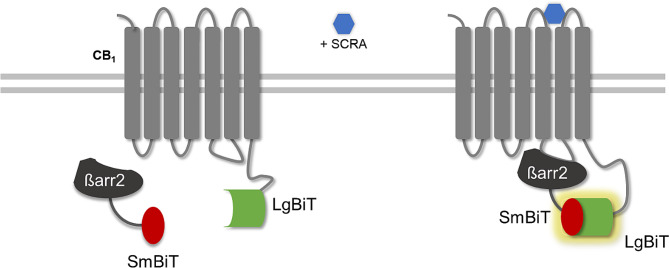
“The ‘untargeted’ activity-based methodology utilizes a CB 1 -β-arrestin 2 (βarr2) recruitment assay based on functional complementation of a split-nanoluciferase (NanoBiT®; NanoLuc® Binary Technology), facilitating real-time monitoring of protein interactions in living cells [28, 29].”
MethodSelf-citationMoreno-Sanz, G. (2016) · Cannabis and Cannabinoid Research · doi:10.1089/can.2016.0008 · Cited by 92 · cited 1×
“…desired and expected and is related to the fact that the extraction procedure does not aim at extracting THC, and that THCA, the THC precursor present in plant material, requires exposure to heat (e.g. during smoking) to undergo decarboxylation to form the partial CB 1 agonist THC [42, 43, 52].”
BackgroundThoren, K. L., Colby, J. M., Shugarts, S. B., Wu, A. H. B., & Lynch, K. L. (2016) · Clinical Chemistry · doi:10.1373/clinchem.2015.241315 · Cited by 84 · cited 1×
“The LC-HRMS settings were the same as those previously published [33, 34], except for the start and duration of the LC gradient (starting at 50% solvent B, with a linear increase to 98% solvent B in 5 min) and the mass ranges (scanning from 250 to 500 Da for the TOF-MS full scan spectra, combined…”
MethodNoble, C., Cannaert, A., Línnet, K., & Stove, C. P. (2018) · Drug Testing and Analysis · doi:10.1002/dta.2517 · Cited by 82 · cited 2×
“…here, CP55,940 only shows a moderate efficacy at CB 1 and a spiking level of 0.5% was chosen to yield a signal that was sufficiently distinguishable from background, yet was not too high (most currently encountered SCRAs have an efficacy that is much higher than that of CP55,940) [35, 36, 38–40].”
BackgroundInfluentialSelf-citationAssessment of Biased Agonism among Distinct Synthetic Cannabinoid Receptor Agonist Scaffolds
Wouters, E., Walraed, J., Robertson, M. J., Meyrath, M., Szpakowska, M., Chevigné, A., Skiniotis, G., & Stove, C. (2020) · ACS Pharmacology & Translational Science · doi:10.1021/acsptsci.9b00069 · Cited by 70 · cited 5×
“So far, this method has been applied for the characterization of reference materials and for the screening of biological matrices and powders for the presence of SCRAs, irrespective of the chemical structure of these SCRAs [35–37].”
BackgroundMethodInfluentialSelf-citationReports of Adverse Events Associated with Use of Novel Psychoactive Substances, 2017–2020: A Review
Mohr, A. L. A., Logan, B. K., Fogarty, M. F., Krotulski, A. J., Papsun, D. M., Kacinko, S. L., Huestis, M. A., & Ropero-Miller, J. D. (2022) · Journal of Analytical Toxicology · doi:10.1093/jat/bkac023 · Cited by 68 · cited 1×
“…higher potency and efficacy at CB 1 [5], and may cause serious adverse effects, including agitation [6], cardiovascular problems [7], psychological disorders [8, 9], nausea and vomiting, depressed breathing, muscle twitches, acute renal failure, suicidal ideation and cognitive impairment [10, 11].”
BackgroundAbouchedid, R., Hudson, S. C., Thurtle, N., Yamamoto, T., Ho, J. H., Bailey, G. P., Wood, M., Sadones, N., Stove, C. P., Dines, A. M., et al. (2017) · Clinical Toxicology · doi:10.1080/15563650.2017.1287373 · Cited by 66 · cited 1×
“In comparison to THC, SCRAs often have a higher potency and efficacy at CB 1 [5], and may cause serious adverse effects, including agitation [6], cardiovascular problems [7], psychological disorders [8, 9], nausea and vomiting, depressed breathing, muscle twitches, acute renal failure, suicidal…”
BackgroundSelf-citationKrotulski, A. J., Varnum, S. J., & Logan, B. K. (2020) · Journal of Forensic Sciences · doi:10.1111/1556-4029.14184 · Cited by 65 · cited 1×
“High resolution mass spectrometry (HRMS) serves as the gold standard for NPS detection [15].”
BackgroundChiang, C.-H., Lee, H., Chen, B., Lin, Y.-C., Chao, Y.-Y., & Huang, Y. (2018) · Journal of Food and Drug Analysis · doi:10.1016/j.jfda.2018.11.003 · Cited by 59 · cited 1×
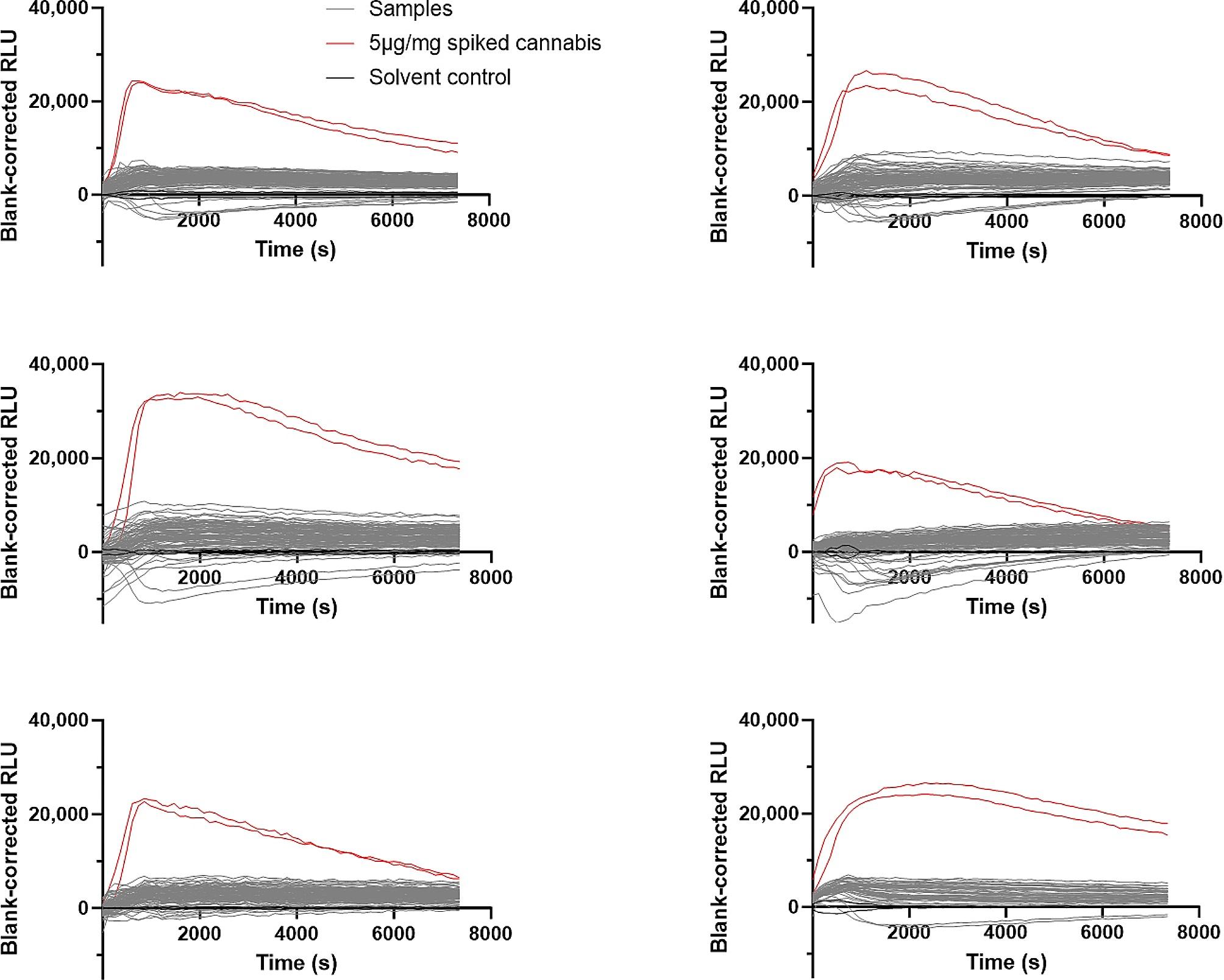
“Data are presented as duplicates from six experiments, with 46 samples per plate that may obscure the detection of SCRAs and can be linked to the complexity of herbal matrices, such as the commonly used Lamiaceae Mint herbs ( Mentha , Mellissa and Thymus ) and Turnera diffusa [1, 46–48].”
BackgroundOomen, P. E., Schori, D., Tögel-Lins, K., Acreman, D., Chenorhokian, S., Luf, A., Karden, A., Paulos, C., Fornero, E., Gerace, E., et al. (2021) · International Journal of Drug Policy · doi:10.1016/j.drugpo.2021.103493 · Cited by 59
DNA sequence analyses of blended herbal products including synthetic cannabinoids as designer drugs
Ogata, J., Uchiyama, N., Kikura‐Hanajiri, R., & Goda, Y. (2012) · Forensic Science International · doi:10.1016/j.forsciint.2012.09.006 · Cited by 56 · cited 1×
“Data are presented as duplicates from six experiments, with 46 samples per plate that may obscure the detection of SCRAs and can be linked to the complexity of herbal matrices, such as the commonly used Lamiaceae Mint herbs ( Mentha , Mellissa and Thymus ) and Turnera diffusa [1, 46–48].”
BackgroundActivity-Based Detection of Cannabinoids in Serum and Plasma Samples
Cannaert, A., Storme, J., Heß, C., Auwärter, V., Wille, S. M. R., & Stove, C. P. (2018) · Clinical Chemistry · doi:10.1373/clinchem.2017.285361 · Cited by 54 · cited 5×
“In previous research, we reported on the development and application of an activity-based screening principle, capable of monitoring the CB 1 activating potential of extracts from biological samples [29, 30].”
BackgroundMethodInfluentialSelf-citationWouters, E., Mogler, L., Cannaert, A., Auwärter, V., & Stove, C. P. (2019) · Drug Testing and Analysis · doi:10.1002/dta.2607 · Cited by 54 · cited 1×
“This shows resemblance to the principle of ‘activity equivalents’, as proposed for assisting in the interpretation of SCRA or opioid preparations and intoxications [56–58].”
MethodSelf-citationGrafinger, K. E., Cannaert, A., Ametovski, A., Sparkes, E., Cairns, E. A., Banister, S. D., Auwärter, V., & Stove, C. P. (2021) · Drug Testing and Analysis · doi:10.1002/dta.3035 · Cited by 45
Self-citationFirst Report on Brorphine: The Next Opioid on the Deadly New Psychoactive Substance Horizon?
Verougstraete, N., Vandeputte, M. M., Lyphout, C., Cannaert, A., Hulpia, F., Van Calenbergh, S., Verstraete, A. G., & Stove, C. (2021) · Journal of Analytical Toxicology · doi:10.1093/jat/bkaa094 · Cited by 44
Self-citationMonti, M. C., Zeugin, J., Koch, K., Milenkovic, N., Scheurer, E., & Mercer‐Chalmers‐Bender, K. (2022) · Drug Testing and Analysis · doi:10.1002/dta.3220 · Cited by 44 · cited 4×
“This combination of the consumer’s unwitting use of SCRAs, along with the SCRAs’ heightened potency and toxicity compared to THC, increases the risk of (severe) intoxications and unanticipated health effects [2, 3, 5, 26, 27].”
BackgroundInfluentialVandeputte, M. M., Verougstraete, N., Walther, D., Glatfelter, G. C., Malfliet, J., Baumann, M. H., Verstraete, A. G., & Stove, C. P. (2022) · Archives of Toxicology · doi:10.1007/s00204-022-03294-2 · Cited by 44 · cited 1×
“This shows resemblance to the principle of ‘activity equivalents’, as proposed for assisting in the interpretation of SCRA or opioid preparations and intoxications [56–58].”
MethodSelf-citationInhomogeneities in herbal mixtures: a serious risk for consumers
Moosmann, B., Angerer, V., & Auwärter, V. (2014) · Forensic Toxicology · doi:10.1007/s11419-014-0247-4 · Cited by 41 · cited 2×
“According to studies by Moosmann et al. [51] and Shanks et al. [55], manufacturers easily change SCRA formulations in ‘legal high’ products to bypass legislation while maintaining the same brand/packaging.”
MethodResultInfluentialPanic Attack after Spice Abuse in a Patient with ADHD
Müller, H., Huttner, H. B., Köhrmann, M., Wielopolski, J., Kornhuber, J., & Sperling, W. (2010) · Pharmacopsychiatry · doi:10.1055/s-0029-1243252 · Cited by 40 · cited 1×
“…higher potency and efficacy at CB 1 [5], and may cause serious adverse effects, including agitation [6], cardiovascular problems [7], psychological disorders [8, 9], nausea and vomiting, depressed breathing, muscle twitches, acute renal failure, suicidal ideation and cognitive impairment [10, 11].”
BackgroundMarusich, J. A., Wiley, J. L., Lefever, T. W., Patel, P. R., & Thomas, B. F. (2017) · Neuropharmacology · doi:10.1016/j.neuropharm.2017.10.041 · Cited by 33 · cited 1×
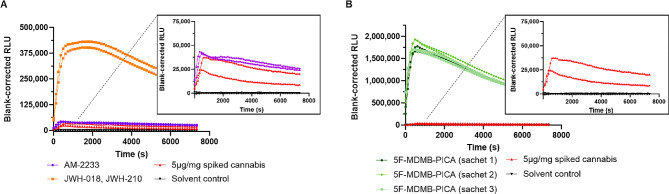
“…that this is a stronger Spice preparation, which aligned well with the obtained analytical data (with a lower peak intensity being observed for AM-2233), and with the fact that a higher intrinsic CB 1 activation potential has been observed for both JWH SCRAs than for AM-2233 [28, 35, 53, 54].”
BackgroundA new cannabinoid receptor 1 selective agonist evading the 2021 “China ban”: ADB‐FUBIATA
Deventer, M. H., Uytfanghe, K. V., Vinckier, I. M. J., Reniero, F., gualbert, G. C., & Stove, C. P. (2022) · Drug Testing and Analysis · doi:10.1002/dta.3285 · Cited by 33 · cited 2×
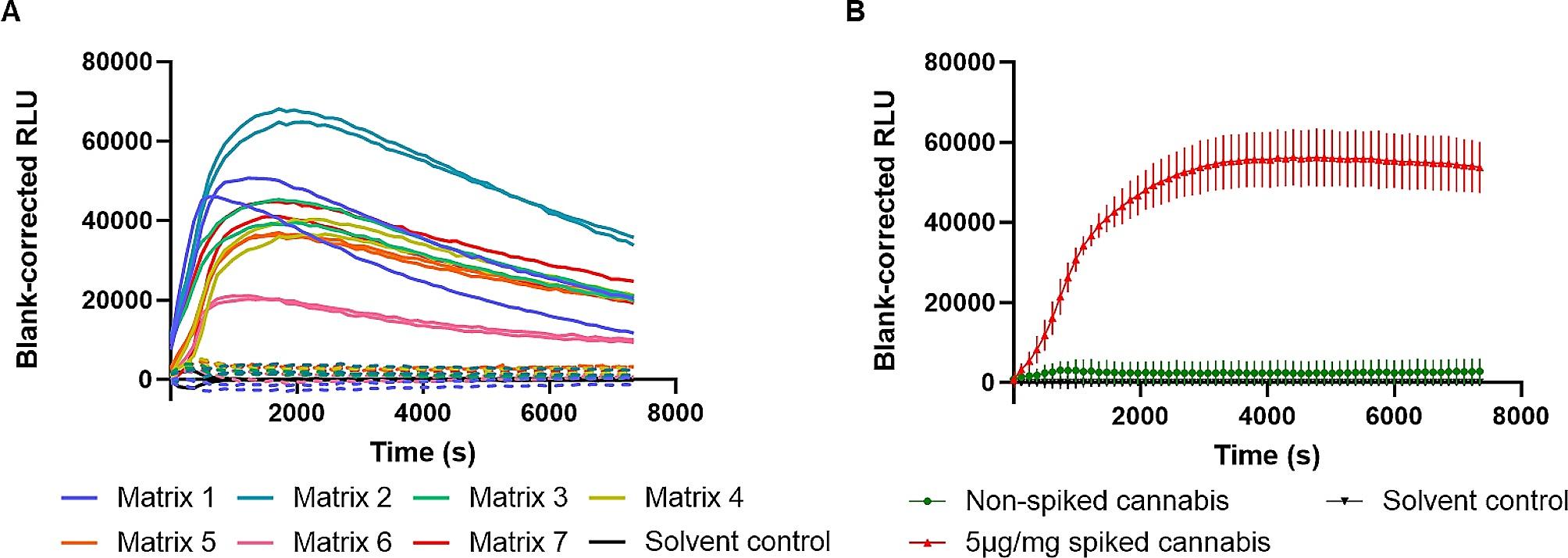
“Twenty mg of each matrix was spiked with 200 µL of a 0.5 mg/mL solution of CP55,940 (~ 5 µg/mg, ~ 0.5% w/w), a SCRA commonly used as a reference in CB 1 activity-determination studies [35–37].”
MethodInfluentialSelf-citationJanssens, L. K., Uytfanghe, K. V., Williams, J. B., Hering, K. W., Iula, D. M., & Stove, C. P. (2024) · Archives of Toxicology · doi:10.1007/s00204-024-03769-4 · Cited by 32 · cited 2×
“With the assay set-up used here, THC itself, which may also readily be present in cannabis material, is only a weak partial agonist at CB 1 , with an efficacy 10% compared to that of CP55,940, while CP55,940 itself is also only a moderately efficacious agonist relative to other SCRAs [44].”
MethodSelf-citationSparkes, E., Cairns, E. A., Kevin, R. C., Lai, F., Grafinger, K. E., Chen, S., Deventer, M. H., Ellison, R., Boyd, R. A., Martin, L. J., et al. (2021) · RSC Medicinal Chemistry · doi:10.1039/d1md00242b · Cited by 31
Self-citationSynthetic cannabinoids in Europe – a review.
Auwärter, V., de Morais, J., Gallegos, A., Evans-Brown, M. J., Christie, R., Jorge, R., & Sedefov, R. (2021) · Cited by 30
Alves, V. L., Gonçalves, J. L., Aguiar, J., Caldeira, M. J., Teixeira, H. M., & Câmara, J. S. (2021) · Analytical and Bioanalytical Chemistry · doi:10.1007/s00216-021-03199-6 · Cited by 20
Holt, A. K., Karin, K. N., Butler, S. N., Ferreira, A. R., Krotulski, A. J., Poklis, J. L., & Peace, M. R. (2022) · Drug Testing and Analysis · doi:10.1002/dta.3253 · Cited by 17 · cited 1×
“Since 2019, and initially observed in Switzer-land, a new SCRA-related phenomenon has emerged, in which low-THC cannabis is adulterated with SCRAs [23–25].”
BackgroundJanssens, L. K., Boeckaerts, D., Hudson, S. C., Morozova, D., Cannaert, A., Wood, D. M., Wolfe, C. E., Baets, B. D., Stock, M., Dargan, P. I., et al. (2022) · Clinical Chemistry · doi:10.1093/clinchem/hvac027 · Cited by 14 · cited 1×
“Moreover, it has proven to be a sensitive and selective system, with the measurement of a receptor-proximal event as a read-out (βarr2 recruitment to activated CB 1 ), minimizing false positive scoring [30, 31].”
BackgroundSelf-citationGerace, E., Seganti, F., Corcia, D. D., Vincenti, M., & Salomone, A. (2022) · Current Pharmaceutical Design · doi:10.2174/1381612828666220603142859 · Cited by 11
Research works printed but not linked: 5
- EMCDDA Thematic papers: understanding the ‘Spice’ phenomenon 2009 Luxembourg Publications Office of the European Union
- EMCDDA New psychoactive substances: 25 years of early warning and response in Europe. An update from the EU early warning system (June 2022) 2022 Luxembourg Publications Office of the European Union
- EMCDDA Low-THC cannabis products in Europe 2020 Luxembourg Publications Office of the European Union
- Schläpfer M, Bissig C, Bogdal C. ‘Synthetische Cannabimimetika auf Industriehanfblüten. Ein gefährliches Aufeinandertreffen zweier bekannter Phänomene’. In Kriminalistik. 2020;7:433–35.
- Guest E DEA Dosing studies: Investigation of JWH-018 concentration in spice packages Emerging trends in synthetic drugs workshop presentation slides 2013 National Institiute of Standards and Technology Drug Enforcement Administration
Cited by
Nitazene test strips: a laboratory evaluation
De Vrieze, L. M., Stove, C. P., & Vandeputte, M. M. (2024) · Harm Reduction Journal · doi:10.1186/s12954-024-01078-8 · Cited by 34
“It should be noted that a limitation of this procedure is the difficulty in directly comparing the relative abundance of drugs within a sample due to the varying ionization efficiencies of each compound [49].”
BackgroundSelf-citationTimmerman, A., Deventer, M. H., Andrews, R. C., Reid, R., Marland, V., Edwards, D., Pudney, C. R., NicDaéid, N., Stove, C. P., & Norman, C. (2024) · Drug Testing and Analysis · doi:10.1002/dta.3817 · Cited by 9
Self-citationDetecting the Undetectable: Analytical Strategies for Novel Psychoactive Substances
Jousselin, E., Griffeuille, P., Petit, I., Saint‐Marcoux, F., Balkhi, S. E., & Védrenne, N. (2026) · Therapeutic Drug Monitoring · doi:10.1097/ftd.0000000000001431 · Cited by 5
Grafinger, K. E., Weinmann, W., Pasin, D., Gréen, H., Stove, C. P., Schöning, V., & Hammann, F. (2026) · Forensic Science International · doi:10.1016/j.forsciint.2026.112883 · Cited by 8
Self-citationTimmerman, A., Lyphout, C., Verougstraete, N., Coopman, V., & Stove, C. P. (2025) · Archives of Toxicology · doi:10.1007/s00204-025-04193-y · Cited by 2
“Calculation of the relative contribution of a given SCRA in an e-liquid was based on the peak intensities of the identified SCRAs, as was done in prior work (Timmerman et al. 2024a).”
InfluentialSelf-citation
Metadata
- Authors
- Timmerman, A., Balcaen, M., Coopman, V., Degreef, M., Pottie, E., & Stove, C. P.
- Affiliations
- Ghent University (BE)
- Sciensano (Belgium) (BE)
- Corresponding author
- Stove, Christophe P.
- Venue
- Harm Reduction Journal
- Published
- 2024-07-01
- Volume
- 21
- Issue
- 1
- Pages
- 127-127
- ISSN
- 1477-7517 (ISSN-L)
- PMC
- PMC11218095
- OpenAlex
- W4400264446
- Cited by
- 8
- References
- 51
- Citations by year
- 2026: 4 · 2025: 2 · 2024: 2
- FWCI
- 1.90
- Type
- journal article
- Language
- en
- Open access
- gold
- doi.org
- Licence
- cc-by
- creativecommons.org/licenses/by/4.0 (tdm)
- creativecommons.org/licenses/by/4.0 (vor)
- Locations
- Harm Reduction Journal (publishedVersion, cc-by)
- PubMed Central (publishedVersion, cc-by)
- PubMed (publishedVersion)
- Ghent University Academic Bibliography (Ghent University) (submittedVersion, cc-by)
- DOAJ (DOAJ: Directory of Open Access Journals) (submittedVersion)
- Funders
- The Bijzonder Onderzoeksfonds (BOF) of Ghent University (BOF21/DOC/248)
- Topics
- Life Sciences › Pharmacology, Toxicology and Pharmaceutics › Toxicology › Forensic Toxicology and Drug Analysis
- Health Sciences › Medicine › Pharmacology (medical) › Cannabis and Cannabinoid Research
- Life Sciences › Agricultural and Biological Sciences › Animal Science and Zoology › Pharmacological Effects and Assays
- Keywords
- synthetic cannabinoids, β-arrestin2, CP55,940, herbal materials, dance festivals, harm reduction, drug screening
- MeSH terms
- Biological Assay, Cannabinoids, Cannabis, Drug Contamination, Humans, Receptor, Cannabinoid, CB1, Cannabinoid Receptor Agonists
About these checks
Registry, retraction, Cites and statistics results are computed, not judged, with one exception: a printed reference that no index lists is read once by a model before it counts as a citation error. Claims are extracted by a model and kept only when their quote appears verbatim in the text; each cited source is then checked, with a model’s help, for whether it says what the claim relies on. Those verdicts can be wrong — read the claim’s quote and the cited source before relying on one.
Statistics and arithmetic are recomputed, not judged.
Confidence bands are shown only for fields calibrated on our annotated test set. None is calibrated yet, so no band is shown.
What counts as a claim ›How we measure confidence ›How we check this ›
Are you an author, or do you see a problem with this page? Request a review
Data sources
Bibliographic data: Semantic Scholar, OpenAlex, Crossref.
Contains information from the Semantic Scholar Academic Graph Datasets, made available under the ODC Attribution License (ODC-BY 1.0).
Semantic Scholar’s data is described in: Kinney, R., et al. (2023). The Semantic Scholar Open Data Platform. arXiv:2301.10140.
