

Associations between psychological factors and health-related quality of life and global quality of life in patients with ALS: a systematic review
Open accessThe DOI matches its Crossref record; 91 of the 91 references it cites were found in a registry or an index; none of the 40 sources its claims cite is checked for support yet.
Abstract
OBJECTIVE: To systematically identify and appraise evidence on associations between psychological factors (moods, beliefs, personality) and Health-related QoL (HRQoL) and/or global QoL in patients with Amyotrophic Lateral Sclerosis (ALS). METHODS: A systematic review was conducted in several online databases (PsycINFO, EMBASE, PubMed and CINAHL) up to October 2015. Articles were included if they reported associations between psychological factors (moods, beliefs and personality) and HRQoL and/or global QoL in an ALS population. The search was limited to empirical studies, published in English, which provided quantitative data. The methodological quality of the included articles was assessed. RESULTS: In total, 22 studies were included. Mood was investigated in 14 studies, beliefs in 11 studies and personality in one study. Fifteen different psychological factors were extracted and assessed using 24 different measures. Twelve different QoL measures were used in the selected studies, subdivided into seven different HRQoL measures and five different global QoL measures. Higher levels of anxiety and depression appeared to be related to a poorer HRQoL, whereas a higher level of religiosity seemed to be associated with better global QoL. No conclusive associations were found for confusion-bewilderment (mood), spirituality, mindfulness, coping styles, hopelessness, perception of burden, cognitive appraisal (beliefs), neuroticism, extraversion, openness, agreeableness and conscientiousness (personality), due to insufficient or inconsistent evidence. Religiosity and spirituality appeared to become more positively associated over time. CONCLUSIONS: Our results suggest that higher levels of anxiety and depression are related to a poorer HRQoL, whereas higher levels of religiosity appeared to be related to better global QoL. Associations might change during the disease course. This review supports the importance of psychological factors with regard to ALS care. Further research is needed to supplement the available evidence and to investigate how psychological factors can be modified to improve QoL. REVIEW REGISTRATION NUMBER: PROSPERO 2015:CRD42015027303.
Overview
CoChat Summary
## TL;DR
This systematic review found that higher anxiety and depression were generally associated with poorer health-related quality of life (HRQoL) in ALS, while higher religiosity was more consistently associated with better global quality of life (QoL). Evidence was too sparse, inconsistent, or heterogeneous to draw firm conclusions for most other psychological factors.
## Key findings
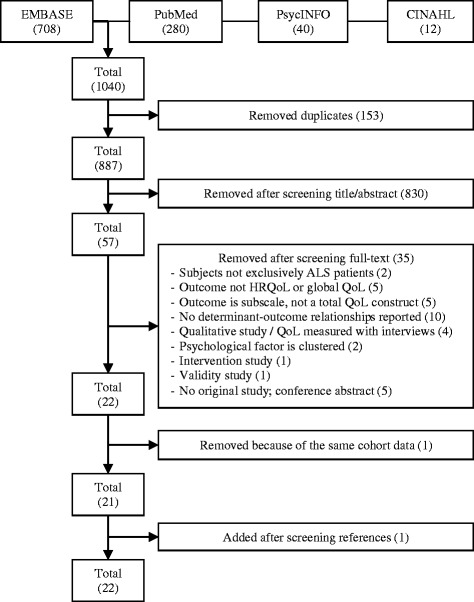
- The review included 22 studies; 14 examined mood, 11 beliefs, and 1 personality, with 15 psychological factors assessed using 24 measures and 12 QoL measures overall.
- Anxiety: 2 of 3 studies found significant negative associations with HRQoL, and 1 of 3 found significant negative associations with global QoL; one HRQoL study reported a strong negative correlation (−0.53).
- Depression: 7 of 8 studies found significant negative associations with HRQoL, with reported moderate-to-strong correlations of −0.430, −0.60, and −0.617; 4 of 8 studies found significant negative associations with global QoL, including a moderate correlation (−0.36).
- Religiosity/spirituality: 3 of 4 studies found higher religiosity was significantly related to higher global QoL; one study reported religiosity/personal religiosity became more positively associated over time, with an increase in explained variance of 16% at 12 months. One study found religious well-being strongly associated with higher HRQoL (−0.99), and spirituality was strongly associated with higher global QoL (0.54) at long-term follow-up.
## Methods
- Systematic review conducted according to PRISMA and registered in PROSPERO 2015:CRD42015027303.
- Searched EMBASE, PsycINFO, PubMed, and CINAHL up to October 2015; limited to English-language, peer-reviewed, empirical quantitative studies in ALS.
- Two reviewers independently screened studies and assessed methodological quality with an 8-point checklist; associations were summarized using reported correlations, standardized betas, and explained variance, and no meta-analysis was done because of heterogeneity.
## Limitations
- The paper states that only a small number of psychological factors could be compared because most associations were reported only once, and that the review may have missed relevant non-English journals; it also notes potential publication bias.
- The literature was highly heterogeneous: psychological factors were measured with 24 different instruments and QoL with 12 different measures; the paper says this prevented meta-analysis.
- Evidence was limited by cross-sectional designs, small samples, and insufficient stratification by disease stage; this is stated in the paper’s “Limitations of the literature” section and is also evident from the reported study mix.
Model-written summary. Check it against the paper before relying on it.
Integrity signals
Registry
Cites
Statistics
Figures
Verification
Claims the paper makes
0 Valid · 1 Not valid · 26 Not checked · 26 Own results and interpretations
A result the paper states — it cites no source for it, so there is none to check. The quote shows it is in the paper.
In the paper
“Mood appeared to be related to HRQoL but not to global QoL.”
§ Associations between psychological factors and health-related quality of life and global quality of life in patients with ALS: a systematic review > Discussion > Mood
hedged- Asserted: passes — The authors put it forward as true.
- Checkable: passes — It can be checked against evidence.
- Load-bearing: passes — The paper’s conclusions depend on it.
- Based: passes — The paper gives a reason why it holds.
In the paper
“high mindfulness at baseline predicted significantly higher global QoL scores after four months [29].”
§ Associations between psychological factors and health-related quality of life and global quality of life in patients with ALS: a systematic review > Results > Mindfulness
What the sources say
- Not checked yetcites [29] Pagnini F Phillips D Bosma CM Reece A Langer E Mindfulness, physical impairment and psychological well-being in people with amyotrophic lateral sclerosis Psychol Health 2015 30 503 17 10.1080/08870446.2014.982652 25361013 source
plainstates a cause- Asserted: passes — The authors put it forward as true.
- Checkable: passes — It can be checked against evidence.
- Load-bearing: passes — The paper’s conclusions depend on it.
- Based: passes — The paper gives a reason why it holds.
In the paper
“Having the belief of being a burden to others was moderately associated with lower global QoL (0.45).”
§ Associations between psychological factors and health-related quality of life and global quality of life in patients with ALS: a systematic review > Results > Mindfulness
What the sources say
- Not checked yetcites [45] Ganzini L Johnston WS Hoffman WF Correlates of suffering in amyotrophic lateral sclerosis Neurology 1999 52 1434 40 10.1212/WNL.52.7.1434 10227631 source
plainstates an association- Asserted: passes — The authors put it forward as true.
- Checkable: passes — It can be checked against evidence.
- Load-bearing: unclear — It is unclear whether the paper’s conclusions depend on it.
- Based: passes — The paper gives a reason why it holds.
A result the paper reports from its own data — it cites no other source for it, so there is none to check. The quote shows it is in the paper.
In the paper
“A total of 57 articles remained for full-text screening; 22 articles met all inclusion criteria.”
§ Associations between psychological factors and health-related quality of life and global quality of life in patients with ALS: a systematic review > Results > Description of studies included
plain- Asserted: passes — The authors put it forward as true.
- Checkable: passes — It can be checked against evidence.
- Load-bearing: unclear — It is unclear whether the paper’s conclusions depend on it.
- Based: passes — The paper gives a reason why it holds.
In the paper
“Religiosity and spirituality appeared to become more positively associated over time.”
- Also stated in: § Associations throughout the disease course · hedged
“religiosity and spirituality appeared to become more positively associated with global QoL over time.”
§ Associations between psychological factors and health-related quality of life and global quality of life in patients with ALS: a systematic review > Abstract > Results
What the sources say
- Not checked yetcites [16] Bremer BA Simone AL Walsh S Simmons Z Felgoise SH Factors supporting quality of life over time for individuals with amyotrophic lateral sclerosis: the role of positive self-perception and religiosity Ann Behav Med 2004 28 119 25 10.1207/s15324796abm2802_7 15454359 source
hedgedstates an association- Asserted: passes — The authors put it forward as true.
- Checkable: passes — It can be checked against evidence.
- Load-bearing: passes — The paper’s conclusions depend on it.
- Based: passes — The paper gives a reason why it holds.
- Also stated in: § Associations throughout the disease course · hedged
26 more claims
Create a free account to see all 53 claims and to verify the 40 references still open.
- It may state two separate claims as one. 9
- Probably not a substantial claim. 18
Claims other papers make about this one
Each is checked against this paper’s own text: does it say what the citing paper says it does?
The source backs part of the claim, not all of it — or backs it for a different population, condition or comparison.
In the citing paper
“poor quality of life and psychological distress are associated with negative outcomes, including shorter survival time and increased risk of suicide. 4-6”
From Acceptance and Commitment Therapy plus usual care for improving quality of life in people with motor neuron disease (COMMEND): a multicentre, parallel, randomised controlled trial in the UK (2024) · cites this paper as [5]
Experimental — accuracy not yet measuredThe source backs part of the claim, not all of it — or backs it for a different population, condition or comparison.
In the citing paper
“Although shorter survival times, poorer quality of life and increased risks of suicide and mortality have been reported in those experiencing psychological distress [8–12]”
From A randomised controlled trial of acceptance and commitment therapy plus usual care compared to usual care alone for improving psychological health in people with motor neuron disease (COMMEND): study protocol. (2022) · cites this paper as [12]
Experimental — accuracy not yet measuredThe cited source says what the claim attributes to it.
In the citing paper
“No curative treatment is currently available, so the paramount clinical consideration is symptom relief to improve quality of life (QoL) [1].”
Citations
Cites
Diagnostic and Statistical Manual of Mental Disorders
Williams, J. B. W., & First, M. (2013) · Encyclopedia of Social Work · doi:10.1093/acrefore/9780199975839.013.104 · Cited by 109,519
The Hospital Anxiety and Depression Scale
Zigmond, A. S., & Snaith, R. P. (1983) · Acta Psychiatrica Scandinavica · doi:10.1111/j.1600-0447.1983.tb09716.x · Cited by 47,139
An inventory for measuring depression
BECK, A. T. (1961) · Archives of General Psychiatry · doi:10.1001/archpsyc.1961.01710120031004 · Cited by 38,032 · cited 3×
“Depression Beck Depression Inventory (BDI) Beck (1961) [53] 21 To assess severity of depressive symptoms.”
BackgroundMethodInfluentialHamilton, M. (1960) · Journal of Neurology, Neurosurgery & Psychiatry · doi:10.1136/jnnp.23.1.56 · Cited by 32,817 · cited 1×
“Hospital Anxiety and Depression Scale subscale depression (HADS-d) Zigmond (1983) [65] 7 To assess psychological distress in medically ill patients.”
BackgroundDiagnostic and Statistical Manual of Mental Disorders.
Widiger, T. A. (2000) · Encyclopedia of Psychology, Vol. 3. · doi:10.1037/10518-009 · Cited by 19,744
Depression and quality of life in older persons: A review
Sivertsen, H., Bjørkløf, G. H., Engedal, K., Selbæk, G., & Helvik, A.-S. (2015) · Dementia and Geriatric Cognitive Disorders · doi:10.1159/000437299 · Cited by 14,152
The assessment of anxiety states by rating
HAMILTON, M. (1959) · British Journal of Medical Psychology · doi:10.1111/j.2044-8341.1959.tb00467.x · Cited by 11,455 · cited 2×
“Anxiety Hamilton rating scale for anxiety (HAM-A) Hamilton (1959) [63] 14 To assess the severity of symptoms of anxiety.”
MethodSF-36 health survey: Manual and interpretation guide
Ware, J. (2003) · Medical Entomology and Zoology · Cited by 11,424
A self-rating depression scale
ZUNG, W. W. K. (1965) · Archives of General Psychiatry · doi:10.1001/archpsyc.1965.01720310065008 · Cited by 9,813 · cited 1×
“Zung Depression Scale (ZDS); Zung (1965) [68] also called Zung Self-Rating Depression Scale (SDS) (1965) 20 To assess depression 4-point scale.”
MethodScoville, W. B. (1949) · Journal of neurosurgery · doi:10.3171/jns.1949.6.1.0065 · Cited by 7,381
Research works printed but not linked: 5
- World Health Organization WHOQOL: measuring quality of life 1997 Geneva World Health Organization
- Cohen J Statistical power analysis for the behavioural sciences 1988 2 UK Lawrence Erlbaum Associates
- Ryckman R Theories of Personality 2000 7 Thomson/Wadsworth Belmont
- McNair DM Lorr M Droppleman LF Profile of mood state manual 1992 Educational and Industrial Testing Service San Diego
- Costa P McCrae R Revised NEO Personality Inventory (NEO PI-R) and NEO Five Factor Inventory. Professional Manual 1992 Odessa Psychological Assessment Resources
Cited by
Caregiver burden in amyotrophic lateral sclerosis: A systematic review
de Wit, J., Bakker, L. A., van Groenestijn, A. C., van den Berg, L. H., Schröder, C. D., Visser-Meily, J. M., & Beelen, A. (2018) · Palliative Medicine · doi:10.1177/0269216317709965 · Cited by 163
Self-citationAbu, H. O., Ulbricht, C. M., Ding, E., Allison, J. J., Salmoirago‐Blotcher, E., Goldberg, R. J., & Kiefe, C. I. (2018) · Quality of Life Research · doi:10.1007/s11136-018-1906-4 · Cited by 160
Linse, K., Aust, E., Joos, M., & Hermann, A. (2018) · Frontiers in Neurology · doi:10.3389/fneur.2018.00603 · Cited by 84
“However, there has been reported a “response shift” in the evaluation of their QoL by patients toward a higher value of social activities and a lower value of financial aspects, mobility and leisure activities (47, 60, 61); a shift that patients’ next of kin are apparently not aware of (44), maybe because it does not…”
An, T., He, Z.-C., Zhang, X.-Q., Li, J., Chen, A.-L., Tan, F., Chen, H.-D., Lv, B.-H., Lian, J., Gao, S.-H., et al. (2019) · Chinese Medicine · doi:10.1186/s13020-019-0225-1 · Cited by 63
Multidisciplinary care in Amyotrophic Lateral Sclerosis: a systematic review and meta-analysis
de Almeida, F. E. O., Santana, A. K. D. C., & de Carvalho, F. O. (2021) · Neurological Sciences · doi:10.1007/s10072-020-05011-2 · Cited by 68
“Lack of optimal HRQoL assessment tools for ALS has been already reported as a problem to accurately measure QoL of these patients, leading to high study heterogeneity and making transition of results for clinical practice even more difficult [49].”
BackgroundResultIndividual quality of life in spousal ALS patient-caregiver dyads
Galvin, M., Gavin, T., Mays, I., Heverin, M., & Hardiman, O. M. (2020) · Health and Quality of Life Outcomes · doi:10.1186/s12955-020-01551-5 · Cited by 59
“The SEIQoL-DW scores are person-specific [10], an overall SEIQoL index QoL score (SIS) is a summary score, generated by multiplying each cue’s weight by its corresponding satisfaction level, and summing the products across the 5 life areas [18].”
BackgroundMethodAberrant distributions of nuclear pore complex proteins in ALS mice and ALS patients
Shang, J., Yamashita, T., Nakano, Y., Morihara, R., Li, X., Feng, T., Liu, X., Huang, Y. C., Fukui, Y., Hishikawa, N., et al. (2017) · Neuroscience · doi:10.1016/j.neuroscience.2017.03.024 · Cited by 51
Eye‐tracking–based assessment suggests preserved well‐being in locked‐in patients
Linse, K., Rüger, W., Joos, M., Schmitz‐Peiffer, H., Storch, A., & Hermann, A. (2017) · Annals of Neurology · doi:10.1002/ana.24871 · Cited by 51
the TONiC study group, Edge, R., Mills, R., Tennant, A., Diggle, P. J., & Young, C. A. (2020) · Journal of Neurology · doi:10.1007/s00415-019-09615-3 · Cited by 47
Young, C. A., Ealing, J., McDermott, C., Williams, T., Al-Chalabi, A., Majeed, T., Burke, G., Pinto, A., Dick, D., Talbot, K., et al. (2019) · Amyotrophic Lateral Sclerosis and Frontotemporal Degeneration · doi:10.1080/21678421.2019.1615951 · Cited by 38
“Quality of life in ALS/MND is influenced by a variety of psychological as well as physical factors (5,6), and the clinical challenge is to understand how to intervene regarding the complex interplay of these physical and psychological factors.”
Gould, R. L., McDermott, C. J., Thompson, B. J., Rawlinson, C. V., Bursnall, M., Bradburn, M., Kumar, P., Turton, E. J., White, D. A., Serfaty, M. A., et al. (2024) · The Lancet · doi:10.1016/s0140-6736(24)00533-6 · Cited by 38
Harris, M., Thomas, G., Thomas, M., Cafarella, P., Stocks, A., Greig, J., & McEvoy, R. D. (2017) · Palliative & Supportive Care · doi:10.1017/s1478951517000700 · Cited by 41
“…between wellbeing-related measures and a range of psychological, behavioral, or social variables (Pagnini, 2013; Carvalho et al., 2016; van Groenestijn et al., 2016), but the psychological therapies currently offered appear to lack proof of efficacy in this condition (Pagnini, 2013; Gould…”
BackgroundPsychological interventions for people with motor neuron disease: a scoping review
Zarotti, N., Mayberry, E., Ovaska-Stafford, N., Eccles, F., & Simpson, J. (2021) · Amyotrophic Lateral Sclerosis and Frontotemporal Degeneration · doi:10.1080/21678421.2020.1788094 · Cited by 36
Siciliano, M., Trojano, L., Trojsi, F., Monsurrò, M. R., Tedeschi, G., & Santangelo, G. (2019) · Muscle & Nerve · doi:10.1002/mus.26475 · Cited by 38
A Nation-Wide, Multi-Center Study on the Quality of Life of ALS Patients in Germany
Mohajer-Peseschkian, T., Cordts, I., Günther, R., Stolte, B., Zeller, D., Schröter, C., Weyen, U., Regensburger, M., Wolf, J., Schneider, I., et al. (2021) · Brain Sciences · doi:10.3390/brainsci11030372 · Cited by 38
Deep continuous patient-requested sedation until death: a multicentric study
Serey, A., Tricou, C., Phan-Hoang, N., Legenne, M., Perceau-Chambard, É., & Filbet, M. (2019) · BMJ Supportive & Palliative Care · doi:10.1136/bmjspcare-2018-001712 · Cited by 35
Palliative medicine and end-of-life care
Glover, T. L., & Kluger, B. M. (2019) · Handbook of clinical neurology · doi:10.1016/b978-0-12-804766-8.00030-3 · Cited by 39
The Role of Specialty Palliative Care for Amyotrophic Lateral Sclerosis
Sethi, A., Everett, E. A., Mehta, A. K., Besbris, J. M., Burke, C., Pedowitz, E., Kilpatrick, M. M., Foster, L., & Maiser, S. (2021) · American Journal of Hospice and Palliative Medicine® · doi:10.1177/10499091211049386 · Cited by 32
“The natural progression of ALS can result in significant physical, emotional, spiritual, and existential distress.(4,5) Therefore, people with ALS deserve access to excellent symptom management, psychosocial support, and medical professionals to help them navigate complex medical decision-making.”
BackgroundInterconexão entre saúde, espiritualidade e religiosidade
Teixeira, M. Z. (2020) · Revista de Medicina · doi:10.11606/issn.1679-9836.v99i2p134-147 · Cited by 50
Llobet, M. P., Sánchez-Ortega, M. A., Lluch‐Canut, T., Arroyo, C. M., Hidalgo-Blanco, M. Á., & Roldán-Merino, J. F. (2020) · Worldviews on Evidence-Based Nursing · doi:10.1111/wvn.12453 · Cited by 29
Oberstadt, M., Esser, P., Claßen, J., & Mehnert-Theuerkauf, A. (2018) · Frontiers in Neurology · doi:10.3389/fneur.2018.00231 · Cited by 32
Bond, L., Bowen, G., Mertens, B., Denson, K., Jordan, K., Vidakovic, B., & Mitchell, C. S. (2020) · Behavioral Sciences · doi:10.3390/bs10010033 · Cited by 28
Health-related quality of life in amyotrophic lateral sclerosis using EQ-5D-5L
Wei, Q., Hou, Y., Chen, Y., Ou, R., Cao, B., Zhang, L., Yang, T., & Shang, H. (2021) · Health and Quality of Life Outcomes · doi:10.1186/s12955-021-01822-9 · Cited by 28
McVeigh, C., Donaghy, C. G., Laughlin, B. M., Dick, A., Kaur, K., McConville, J., & Watson, M. (2019) · BMC Palliative Care · doi:10.1186/s12904-019-0423-8 · Cited by 26
Carelli, L., Solca, F., Faini, A., Madotto, F., Lafronza, A., Monti, A., Zago, S., Doretti, A., Ciammola, A., Ticozzi, N., et al. (2018) · Frontiers in Psychology · doi:10.3389/fpsyg.2018.00450 · Cited by 25
“Both psychological aspects and cognitive changes exert a well-known effect on quality of life, functional abilities, prognosis and survival of patients with ALS (pALS) (Elamin et al., 2013; van Groenestijn et al., 2016; Xu et al., 2017).”
BackgroundRisk factors for social withdrawal in amyotrophic lateral sclerosis/motor neurone disease
Schlüter, D. K., Tennant, A., Mills, R. J., Diggle, P. J., & Young, C. A. (2018) · Amyotrophic Lateral Sclerosis and Frontotemporal Degeneration · doi:10.1080/21678421.2018.1508477 · Cited by 26
Salehi, N., Afrashteh, M. Y., Majzoobi, M. R., Ziapour, A., Janjani, P., & Karami, S. (2023) · BMC Geriatrics · doi:10.1186/s12877-023-04083-x · Cited by 21
Non-motor symptoms in motor neuron disease: prevalence, assessment and impact
Beswick, E., Forbes, D., Johnson, M., Newton, J. L., Dakin, R. S., Glasmcher, S., Abrahams, S., Carson, A. J., Chandran, S., & Pal, S. (2023) · Brain Communications · doi:10.1093/braincomms/fcad336 · Cited by 19
“17 The broad range of non-motor symptoms previously reported, 18 and their significant effect on quality of life, 17 has highlighted the need for further research into the presence and impact of a broad range of non-motor symptoms in motor neuron disease.”
BackgroundNari, F., Jeong, W., Jang, B. N., Lee, H. J., & Park, E. (2021) · BMJ Open · doi:10.1136/bmjopen-2020-047933 · Cited by 20
Gould, R. L., Thompson, B. J., Rawlinson, C., Kumar, P., White, D., Serfaty, M. A., Graham, C. D., McCracken, L. M., Bursnall, M., Bradburn, M., et al. (2022) · BMC Neurology · doi:10.1186/s12883-022-02950-5 · Cited by 16
Intervention impact on quality of life in Ukrainians with post-traumatic stress disorder
Kiro, L. S., Urbanovych, A., & Zak, M. (2024) · BMC Psychology · doi:10.1186/s40359-024-02109-6 · Cited by 15
“Databases are being established, and scientific and practical journals such as the Quality of Life Research Journal are being published [23–25].”
BackgroundAn, R., Cheng, L., Li, X., Wu, Y., He, X., Ai, S., Xu, Y., & He, C. (2022) · Frontiers in Neurology · doi:10.3389/fneur.2022.806577 · Cited by 15
“No curative treatment is available for patients with ALS, so the paramount consideration in clinical practice is symptom relief to improve Quality of Life (QoL) (2).”
BackgroundGenuis, S. K., Luth, W., Bubela, T. M., & Johnston, W. S. W. (2023) · Muscle & Nerve · doi:10.1002/mus.27935 · Cited by 16
Young, C. A., Ealing, J., McDermott, C. J., Williams, T. L., Al‐Chalabi, A., Majeed, T., Roberts, R. C., Mills, R. J., & Tennant, A. (2021) · Amyotrophic Lateral Sclerosis and Frontotemporal Degeneration · doi:10.1080/21678421.2021.1990343 · Cited by 15
Reenen, E. T. K., Post, M. W. M., van Groenestijn, A. C., van den Berg, L. H., & Visser‐Meily, J. M. A. (2020) · Journal of Psychosomatic Research · doi:10.1016/j.jpsychores.2020.109974 · Cited by 14
Self-citationStrang, P. M., Schultz, T., & Ozanne, A. (2024) · Upsala Journal of Medical Sciences · doi:10.48101/ujms.v129.9856 · Cited by 12
“The life situation creates emotional and existential distress, and affects quality of life, in both patients and relatives (9–13).”
BackgroundAn, R., Wu, Y., Li, Y., Li, X., Ai, S., Xu, Y., & He, C. (2022) · Frontiers in Neuroscience · doi:10.3389/fnins.2022.897598 · Cited by 13
Gentili, D., Deiana, G., Chessa, V., Calabretta, A., Marras, E., Solinas, C., Gugliotta, C., & Azara, A. (2023) · Healthcare · doi:10.3390/healthcare11111641 · Cited by 11
“Results achieved through this study are vital to carefully define a proper care model that must consider the patients’ needs in their local setting and beyond their physical needs, supporting them and their family caregivers also in psychological and social well-being.”
BackgroundIMPACT-ALS: summary of results from a European survey of people living with ALS
Conroy, É., Gómez, B., O’Brien, D., Heverin, M., Hardiman, O. M., McDermott, C. J., & Galvin, M. (2023) · Amyotrophic Lateral Sclerosis and Frontotemporal Degeneration · doi:10.1080/21678421.2023.2249515 · Cited by 11
“%) in previous ALS cohorts (31 – 33).”
BackgroundGould, R. L., Rawlinson, C., Thompson, B., Weeks, K., Gossage-Worrall, R., Cantrill, H., Serfaty, M. A., Graham, C. D., McCracken, L. M., White, D., et al. (2023) · Pilot and Feasibility Studies · doi:10.1186/s40814-023-01354-7 · Cited by 10
Ma, Y., Li, X., Zhao, D., Wu, R., Sun, H., Chen, S., Wang, L., Xue, F., Huang, J. L., Li, X., et al. (2017) · Psychology Health & Medicine · doi:10.1080/13548506.2017.1339894 · Cited by 10
Jellinger, K. A. (2023) · Journal of Neural Transmission · doi:10.1007/s00702-023-02714-6 · Cited by 9
“…et al. 2015; Lou et al. 2003; Paganoni et al. 2017; Pizzimenti et al. 2013; Rabkin et al. 2016; Sandstedt et al. 2016; Thakore and Pioro 2016; van Groenestijn et al. 2016; Wei et al. 2021; Young et al. 2022), others found that QoL was not impaired as expected (Bungener 2012; Grehl et al.…”
Psychosoziale Versorgung bei Patienten mit Amyotropher Lateralsklerose: Ein narrativer Review
Esser, P., Metelmann, M., Hartung, T. J., Claßen, J., Mehnert-Theuerkauf, A., & Koranyi, S. (2019) · PPmP - Psychotherapie · Psychosomatik · Medizinische Psychologie · doi:10.1055/a-0806-7862 · Cited by 11
“Neben dem oben gezeigten Bedarf an psychosozialer Unterstützung gibt es zahlreiche statistische Belege dafür, dass die häufig aufgestellte Gleichung „Verbesserung der körperlichen Symptomatik = bessere Lebensqualität“ nicht uneingeschränkt haltbar ist: Zum Einen belegte ein Review den starken Einfluss psychosozia ler…”
BackgroundEffects of Coping Strategies on Health-Related Quality of Life of People with Neuromuscular Diseases
García, I., Rodríguez, A. A., Angelini, C. I., García-Sanchoyerto, M., Espinosa-Blanco, P., & Martínez, Ó. (2024) · Muscles · doi:10.3390/muscles3020011 · Cited by 8
“The results obtained are somewhat contradictory to the evidence reported by van Groenestijn et al. [32], for whom religiosity was associated with better HRQoL levels.”
BackgroundResultBoyce, D. M., Raymond, J. S., Larson, T. C., III, Kirkland, E., Horton, D. K., & Mehta, P. (2024) · Amyotrophic Lateral Sclerosis and Frontotemporal Degeneration · doi:10.1080/21678421.2024.2349920 · Cited by 8
Kullmann, J. A. P., Hayes, S. C., & Pamphlett, R. (2018) · Brain and Behavior · doi:10.1002/brb3.1119 · Cited by 8
Linse, K., Weber, C., Reilich, P., Schöberl, F., Boentert, M., Petri, S., Rödiger, A., Posa, A., Otto, M., Wolf, J., et al. (2024) · Neurological Research and Practice · doi:10.1186/s42466-024-00328-1 · Cited by 7
“Psychosocial and socio-medical aspects have significant impact on patients’ QoL: Naturally, health related QoL worsens throughout the disease course, however, patients’ subjective QoL is more strongly associated with psychological factors such as anxiety and depression [4].”
BackgroundNiknam, M., Olazadeh, K., Azami, M., Boroumandieh, S., Yari‐Boroujeni, R., Izadi, N., Azizi, F., & Amiri, P. (2024) · BMJ Open · doi:10.1136/bmjopen-2024-087870 · Cited by 7
Driskell, L. D., York, M. K., Heyn, P. C., Sanjak, M., & MacAdam, C. (2018) · Archives of Physical Medicine and Rehabilitation · doi:10.1016/j.apmr.2018.05.002 · Cited by 7
Lapin, B. R., Mate, K., Li, Y., & Thakore, N. J. (2022) · Journal of the Neurological Sciences · doi:10.1016/j.jns.2022.120442 · Cited by 6
Gold, N. D., Mallard, A. J., Hermann, J. C., Zeifman, R. J., Pagni, B. A., Bogenschutz, M. P., & Ross, S. (2023) · Journal of Palliative Medicine · doi:10.1089/jpm.2022.0604 · Cited by 6
“56 In addition, those with ALS often experience existential and dignity-related distress stemming from their inability to fulfill important roles and feeling similar to a burden to others.”
Rehabilitation bei Amyotropher Lateralsklerose
Groß, M., & Summ, O. (2019) · Nervenheilkunde · doi:10.1055/a-0876-2651 · Cited by 6
“Depression ist wiederum mit Fatigue [76], und Depression und Angst sind mit verminderter Lebensqualität assoziiert, während Religiosität mit einer besseren Lebensqualität assoziiert ist [77].”
BackgroundRawlinson, C. V., Gould, R. L., McDermott, C. J., Thompson, B. T., Weeks, K., Gossage-Worrall, R., Serfaty, M. A., Graham, C. D., McCracken, L. M., White, D. A., et al. (2024) · The Cognitive Behaviour Therapist · doi:10.1017/s1754470x24000333 · Cited by 5
“Psychological distress in plwMND is associated with numerous factors, including poorer quality of life (Edge et al ., 2020; van Groenestijn et al ., 2016), increased hopelessness (Paganoni et al ., 2017) and increased risk of suicide (Fang et al ., 2008).”
Murray, D., Rooney, J. P. K., Meldrum, D., Al‐Chalabi, A., Bunte, T. M., Chiwera, T., Choudhury, M., Chiò, A., Fenton, L., Fortune, J., et al. (2025) · Amyotrophic Lateral Sclerosis and Frontotemporal Degeneration · doi:10.1080/21678421.2025.2471421 · Cited by 5
Linse, K., Lulé, D. E., Schöberl, F., Reilich, P., Ilse, B., Metelmann, M., Eickhoff, C., Bublitz, S. K., Lorenzl, S., Boentert, M., et al. (2026) · Neurological Research and Practice · doi:10.1186/s42466-026-00481-9 · Cited by 4
“Patients’ QoL is more strongly correlated with their psy - chological, rather their physical condition [ 13, 14].”
Rifai, A., Soelistyoningsih, D., Fajar, J. K., & Gunawan, A. (2022) · Clinical Epidemiology and Global Health · doi:10.1016/j.cegh.2022.101075 · Cited by 4
Brune, D., Stojanov, T., Müller, A. M., Weibel, D., Hunziker, S., Erdbrink, S., ARCR_Pred Study Group, Rosso, C., Akgün, D., Weiß, I., et al. (2024) · BMC Musculoskeletal Disorders · doi:10.1186/s12891-024-08099-1 · Cited by 4
Complex Treatment of Amyotrophic Lateral Sclerosis Patient
Białkowska, J., Mroczkowska, D., Huflejt, M. E., Wojtkiewicz, J., Siwek, T., Barczewska, M., & Maksymowicz, W. (2019) · Acta Clinica Croatica · doi:10.20471/acc.2019.58.04.24 · Cited by 4
Indicators of integrated care for patients with chronic cardiovascular disease in ambulatory care
Szlenk-Czyczerska, E., & Kurpas, D. (2023) · Advances in Clinical and Experimental Medicine · doi:10.17219/acem/161462 · Cited by 4
Health Status Perspectives in Amyotrophic Lateral Sclerosis
Pinto, S., & de Carvalho, M. A. (2017) · Neurodegenerative Diseases · doi:10.1159/000480638 · Cited by 6
Damme, J. V., Kuspinar, A., Johnston, W. S. W., O’Connell, C. M., Turnbull, J., Chum, M., Strachan, P. H., Luth, W., McCullum, S. A., Peters, N., et al. (2022) · Amyotrophic Lateral Sclerosis and Frontotemporal Degeneration · doi:10.1080/21678421.2022.2029898 · Cited by 4
“quantitative measure to understand the impact of ALS and its treatment, compare interventions, predict PALS outcomes (4), and incorporate PALS’ perspectives on the evaluation of care (8).”
BackgroundReligiosity in patients with amyotrophic lateral sclerosis, a cross-country comparison
Ciećwierska, K., Lulé, D. E., Helczyk, O., Nieporęcki, K., Bielecki, M., Baader, S., Ludolph, A. C., & Kuźma‐Kozakiewicz, M. (2023) · Quality of Life Research · doi:10.1007/s11136-023-03383-4 · Cited by 4
High doses of opioids usage for amyotrophic lateral sclerosis patients with non-invasive ventilation
Morishima, R., Shimizu, T., Kimura, H., Bokuda, K., Saotome, T., Nakayama, Y., & Takahashi, K. (2023) · Acta Neurologica Belgica · doi:10.1007/s13760-023-02344-5 · Cited by 3
“In fact, symptoms other than pain and respiratory distress, such as anxiety, depression, and apathy, have been shown to affect the quality of life of ALS patients [23–26], and it has been suggested that appropriate treatment of these symptoms may contribute to prolonged survival [25, 26].”
Quality of Life of People With Neuromuscular Diseases: The Role of Stigma
Sommers‐Spijkerman, M., Reenen, E. T. K., Kruithof, W. J., Visser‐Meily, J. M. A., Scholten, E. W. M., & Beelen, A. (2025) · Muscle & Nerve · doi:10.1002/mus.28434 · Cited by 4
Self-citationScirocco, E., Paganoni, S., & Brizzi, K. T. (2026) · Neurology Clinical Practice · doi:10.1212/cpj.0000000000200600 · Cited by 2
Headache types and characteristics in patients with Amyotrophic Lateral Sclerosis
Soliman, R., Fahmy, N. A., & Swelam, M. S. (2025) · The Journal of Headache and Pain · doi:10.1186/s10194-025-01987-4 · Cited by 2
Olchik, M. R., Ghisi, M., Winckler, P. B., & Ayres, A. J. (2017) · International Journal of Clinical Medicine · doi:10.4236/ijcm.2017.812063 · Cited by 3
“They may appear in the first year of diagnosis and persist during the course of the disease, often making clinical management difficult [53] [54].”
BackgroundCreer, S., Griffiths, A. W., Hobson, E., Davies, S. M., Massey, C., Stokes, L., Waters, B., Bamber, R. W., Hastings, S., Bedford, J., et al. (2026) · Neurodegenerative Disease Management · doi:10.1080/17582024.2026.2637420 · Cited by 2
Domke, N., Geue, K., Schlichte, I., Ullsperger, M., Meyer, T., Petri, S., Schreiber, S., Vielhaber, S., Junne, F., & Vogt, S. (2026) · BMC Psychology · doi:10.1186/s40359-026-05273-z · Cited by 1
“Several studies confirm the correlation between hrQoL and depressive symptoms [2, 10, 45, 47–49]; however, findings regarding the association between depressive Fig.”
Giebel, C. M., Medley, G., Smith, S., Thornton, M., Furlong, M., Ennis, M., & Young, C. A. (2019) · Quality of Life Research · doi:10.1007/s11136-019-02193-x · Cited by 1
STRATEGY OF DIFFERENTIATED MULTI-STAGE THERAPY OF PROXIMAL SPINAL AMIOTROPHY IN CHILDREN
Шаймурзин, М. Р. (2019) · Avicenna Bulletin · doi:10.25005/2074-0581-2019-21-3-408-414 · Cited by 1
Mosiychuk, L. М., Demeshkіna, L. V., & Zyhalo, E. V. (2022) · GASTROENTEROLOGY · doi:10.22141/2308-2097.56.2.2022.491 · Cited by 1
Theme 11 Cognitive and psychological assessment and support
Nanni, S., Armienti, E., Azzollini, V., Bongioanni, P., & Carboncini, M. C. (2018) · Amyotrophic Lateral Sclerosis and Frontotemporal Degeneration · doi:10.1080/21678421.2018.1510581
Spinal muscular atrophy: a perspective outlook
Шаймурзин, М. Р., & Луцкий, И. С. (2020) · Кубанский научный медицинский вестник · doi:10.25207/1608-6228-2020-27-6-80-93
Reenen, E. T. K. (2021) · Utrecht University Repository (Utrecht University) · doi:10.33540/883 · Cited by 1
the TONiC study group, Edge, R., Mills, R. J., Tennant, A., Diggle, P. J., & Young, C. A. (2020) · Journal of Neurology · doi:10.1007/s00415-020-09700-y
Liévano, J. C. G. (2020) · Repositorio Institucional (Pontificia Universidad Javeriana) · doi:10.11144/javeriana.10554.34860
ASSESSING THE QUALITY OF LIFE IN CHRONIC KIDNEY DISEASE IN A TERTIARY CARE HOSPITAL
Dhivya, K., Harini, S., & Aswini, S. (2023) · Asian Journal of Pharmaceutical and Clinical Research · doi:10.22159/ajpcr.2023.v16i12.48334
“Each domain compasses various measures that assess the perception of symptoms, disability, and ability to function are prioritized mainly toward physical function [4].”
BackgroundMental Health of People with Amyotrophic Lateral Sclerosis and Potential Interventions
Jiang, X. (2024) · Journal of Education Humanities and Social Sciences · doi:10.54097/57004103
“A study by Groenestijn et al. proved that health-related quality of life appears to share a negative correlation with anxiety [16].”
BackgroundPsychiatric Care of Patients with Pulmonary Disease
Sher, Y. I., Charoenpong, P., Weinstein, S. J., Tillman, E. M., & Georgiopoulos, A. M. (2024) · Elsevier eBooks · doi:10.1016/b978-0-443-11844-9.00047-3
Digging deeper: A critique of the mediation study of spirituality in ALS patients
Fitri, H. U., Saputra, R., Suhardita, K., Suarta, I. M., Oktasari, M., Aminah, S., & Laras, P. B. (2024) · Palliative & Supportive Care · doi:10.1017/s1478951524001275
“Fifth, while the analyses were impressive, further research with larger samples and longitudinal methods is needed to understand how the relationship dynamics between social support, spirituality and emotional well-being may change, especially as ALS disease progresses (van Groenestijn et al. 2016).”
Gould, R. L., Thompson, B. J., Rawlinson, C. V., Bursnall, M., Bradburn, M. J., Keetharuth, A. D., Young, T. A., Lawrence, V. C., White, D. A., Howard, R. J., et al. (2025) · Health Technology Assessment · doi:10.3310/jhgd7339
Patient and Care-Partner Voices in ALS: Shaping Behavioral Health and Collaborative Care
Rush, C. L., Lester, E. G., Mehta, K., Seward, M., & Vranceanu, A. (2025) · Journal of Pain and Symptom Management · doi:10.1016/j.jpainsymman.2025.10.020
Additional file 1 of Health-related quality of life in amyotrophic lateral sclerosis using EQ-5D-5L
Wei, Q.-Q., Hou, Y., Chen, Y., Ou, R., Cao, B., Zhang, L., Yang, T., & Shang, H. (2021) · Figshare · doi:10.6084/m9.figshare.15026493
Gould, R. L., Rawlinson, C. V., Thompson, B., Weeks, K., Gossage-Worrall, R., Cantrill, H., Serfaty, M. A., Graham, C. D., McCracken, L. M., White, D. A., et al. (2023) · Figshare · doi:10.6084/m9.figshare.23647495
Gould, R. L., Rawlinson, C. V., Thompson, B., Weeks, K., Gossage-Worrall, R., Cantrill, H., Serfaty, M. A., Graham, C. D., McCracken, L. M., White, D., et al. (2023) · Figshare · doi:10.6084/m9.figshare.23647486
Gould, R. L., Rawlinson, C. V., Thompson, B., Weeks, K., Gossage-Worrall, R., Cantrill, H., Serfaty, M. A., Graham, C. D., McCracken, L. M., White, D., et al. (2023) · Figshare · doi:10.6084/m9.figshare.23647492
Gould, R. L., Rawlinson, C. V., Thompson, B., Weeks, K., Gossage-Worrall, R., Cantrill, H., Serfaty, M. A., Graham, C. D., McCracken, L. M., White, D., et al. (2023) · Figshare · doi:10.6084/m9.figshare.23647489
Trindade, J. S. (2019) · Portuguese National Funding Agency for Science, Research and Technology (RCAAP Project by FCT)
Patients experiences of living with amyotrophic lateral sclerosis : A general literature study
Högberg, F., & Carlund Stefanac, N. (2024) · Hogskolan Ihalmstad (Halmstad University)
Å styrke håpet til en pasient med Amyotrofisk lateralsklerose (ALS)
Ilisoaia, E.-M. (2020) · NORA - Norwegian Open Research Archives
Six Major Challenges Faced by ALS Patients in China From an Ecological Systems PerspectivePreprint
Yan, P., Li, Z. H., Zhao, J., Chen, X. J., Lin, Y., Li, Y., Gu, Y., & Liu, Z. Y. (2026) · Research Square · doi:10.21203/rs.3.rs-9385085/v1
Sommers‐Spijkerman, M., Müller, F., Reenen, E. T. K., Visser‐Meily, J. M. A., Uitslag, R., & Beelen, A. (2026) · Amyotrophic Lateral Sclerosis and Frontotemporal Degeneration · doi:10.1080/21678421.2026.2671166
Self-citationHealth and functional status in oral potentially malignant disorders: a questionnaire-based study
Ahmed, Z., Raza, N., Akhlaq, H., Rasool, F., Lohana, K., & Ahmed, S. (2025) · BIOMEDICA · doi:10.24911/biomedica/5-1559
Deepa, V., & Daniel, E. V. (2026) · IGI Global eBooks · doi:10.4018/979-8-2600-0675-7.ch002
Teixeira, M. Z. (2026) · La homeopatía de México
Specialist psychology provision for ALS/MND: results from a survey of UK ALS/MND services
Mayberry, E. J., Creer, S., Griffiths, A. W., Hobson, E., Davies, S., Bedford, J., Gould, R. L., & McDermott, C. J. (2026) · Amyotrophic Lateral Sclerosis and Frontotemporal Degeneration · doi:10.1080/21678421.2026.2742816
Hillier, S., McKinstry, C., Cadilhac, D. A.-M., Khalil, H., Joy, A., & Carey, L. M. (2026) · Frontiers in Neurology · doi:10.3389/fneur.2026.1861343
Lippi, L., Turco, A., Picco, M. R., Madonia, N., Mazzini, L., Marchi, F. D., Alessandro de, S. I. R. E., & Invernizzi, M. (2026) · Sci · doi:10.3390/sci8110362
Metadata
- Authors
- van Groenestijn, A. C., Kruitwagen-van Reenen, E. T., Visser-Meily, J. M. A., van den Berg, L. H., & Schröder, C. D.
- Affiliations
- University Medical Center Utrecht (NL)
- Corresponding author
- Schröder, Carin D.
- ORCID
- Schröder, Carin D.
- Venue
- Health and Quality of Life Outcomes
- Published
- 2016-07-20
- Volume
- 14
- Issue
- 1
- Pages
- 107-107
- ISSN
- 1477-7525 (ISSN-L)
- PMC
- PMC4955215
- OpenAlex
- W2475928909
- Semantic Scholar
- 5598f61f8b6b17c14cabe1e61a2cc7f14bba65b2
- Cited by
- 92
- References
- 91
- Citations by year
- 2026: 9 · 2025: 4 · 2024: 12 · 2023: 16 · 2022: 8 · 2021: 8 · 2020: 8 · 2019: 12 · 2018: 8 · 2017: 7
- FWCI
- 1.25
- Type
- journal article
- Language
- en
- Open access
- gold
- doi.org
- Licence
- cc-by
- Locations
- Health and Quality of Life Outcomes (publishedVersion, cc-by)
- PubMed Central (publishedVersion, cc-by)
- PubMed (publishedVersion)
- Pure Amsterdam UMC (publishedVersion, cc-by)
- Utrecht University Repository (Utrecht University) (publishedVersion, other-oa)
- Utrecht University Repository (Utrecht University) (submittedVersion, other-oa)
- Funders
- The Netherlands Organization for Health Research and Development (ZonMw) and the Prinses Beatrix Fonds (ID: ZonMW 89000003)
- Topics
- Health Sciences › Medicine › Clinical Neurology › Amyotrophic Lateral Sclerosis Research
- Health Sciences › Medicine › Oncology › Cancer survivorship and care
- Social Sciences › Health › Religion, Spirituality, and Psychology
- Keywords
- amyotrophic lateral sclerosis, health-related quality of life, global quality of life, psychological factors, mood, anxiety, depression, religiosity, spirituality, belief, personality, coping styles, hopelessness
- MeSH terms
- Adaptation, Psychological, Affect, Amyotrophic Lateral Sclerosis, Anxiety, Depression, Humans, Personality, Quality of Life, Spirituality
About these checks
Registry, retraction, Cites and statistics results are computed, not judged, with one exception: a printed reference that no index lists is read once by a model before it counts as a citation error. Claims are extracted by a model and kept only when their quote appears verbatim in the text; each cited source is then checked, with a model’s help, for whether it says what the claim relies on. Those verdicts can be wrong — read the claim’s quote and the cited source before relying on one.
A language model drew the claims from the paper on 2026-10-11, under version 3 of the claim definition (model deepseek-v4.1-flash, prompt extract-v3).
A second model labelled each claim on 2026-10-11 (model jev-1.13-20260917, definition revision gold-guideline-v0.2).
Statistics and arithmetic are recomputed, not judged.
Confidence bands are shown only for fields calibrated on our annotated test set. None is calibrated yet, so no band is shown.
What counts as a claim ›How we measure confidence ›How we check this ›
Are you an author, or do you see a problem with this page? Request a review
Data sources
Bibliographic data: Semantic Scholar, OpenAlex, Crossref.
Contains information from the Semantic Scholar Academic Graph Datasets, made available under the ODC Attribution License (ODC-BY 1.0).
Semantic Scholar’s data is described in: Kinney, R., et al. (2023). The Semantic Scholar Open Data Platform. arXiv:2301.10140.
