

Effectiveness of Omega-3 fatty acid for polycystic ovary syndrome: a systematic review and meta-analysis
Open accessThe DOI matches its Crossref record; 45 of the 45 references it cites were found in a registry or an index.
Abstract
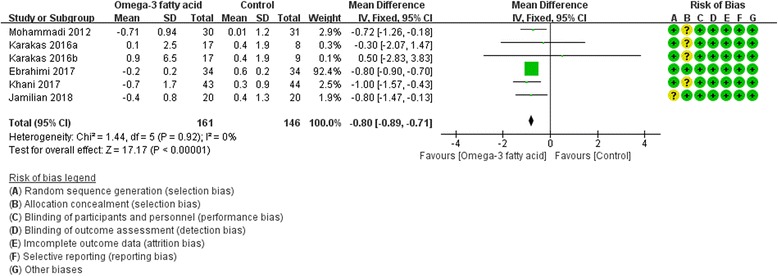
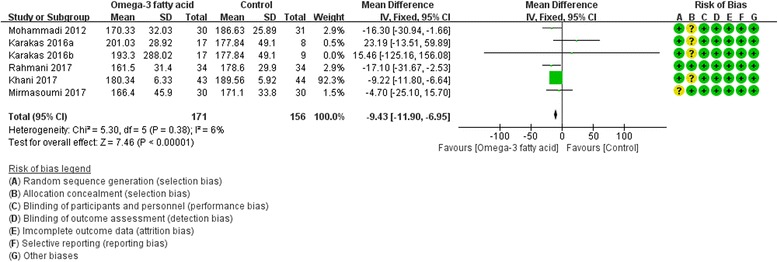
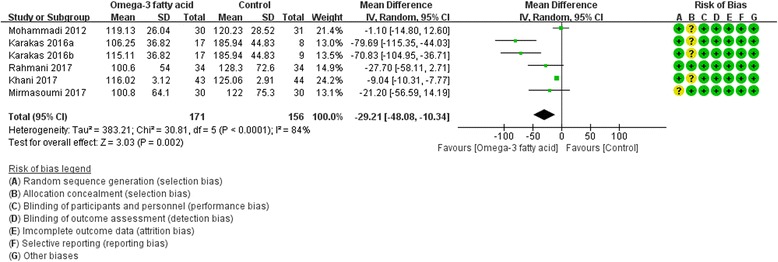
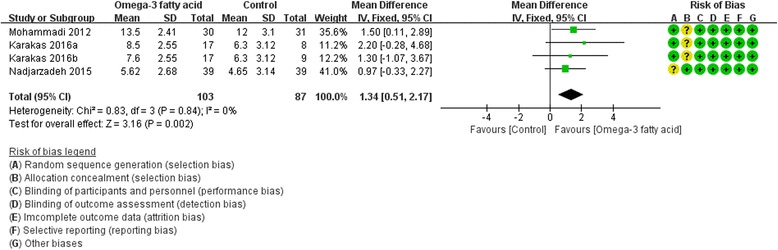
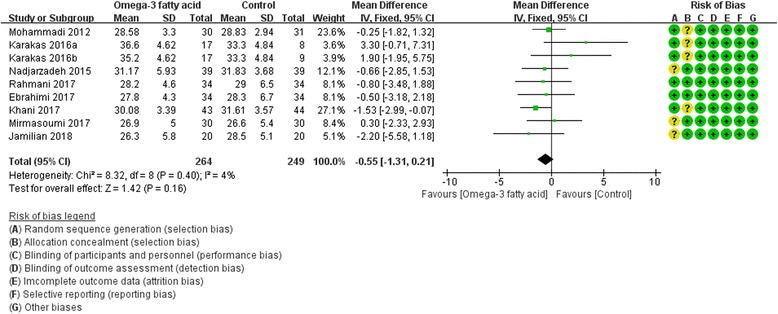
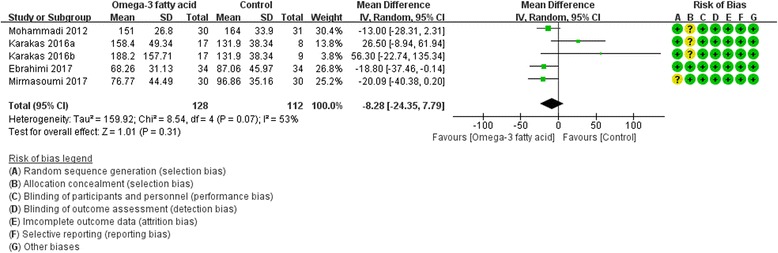
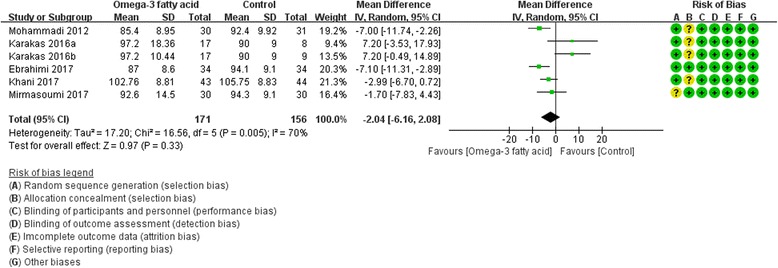
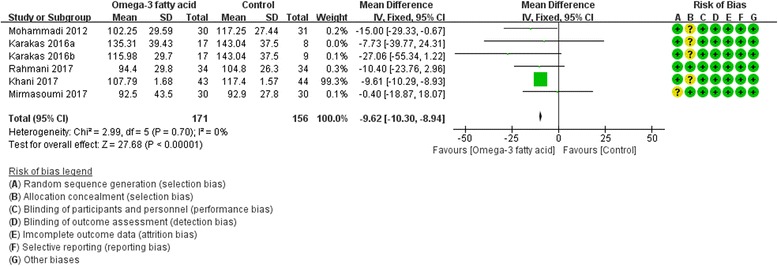
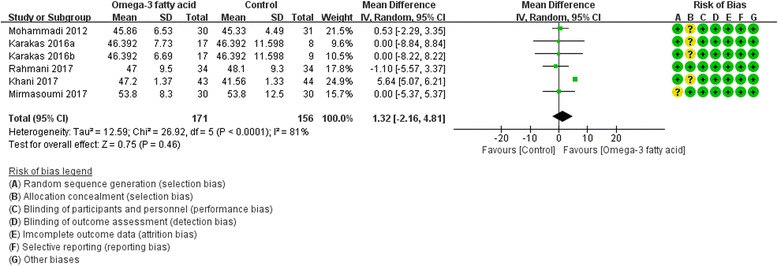
OBJECTIVE: To assess the effectiveness and safety of omega-3 fatty acid for patients with PCOS. METHODS: In this meta-analysis, data from randomized controlled trials were obtained to assess the effects of omega-3 fatty acid versus placebo or western medicine in women with PCOS. The study's registration number is CRD42017065859. The primary outcomes included the change of homeostatic model assessment (HOMA) of insulin resistance, total cholesterol (TC), triglyceride (TG) and adiponectin. RESULT: Nine trials involving 591 patients were included. Comparing with the control group, omega-3 fatty acid may improve HOMA index (WMD -0.80; 95% CI -0.89, - 0.71; P<0. 00001), decrease TC and TG level [TC: (WMD -9.43; 95% CI -11.90, - 6.95; P<0. 00001); TG: (WMD -29.21; 95% CI -48.08, - 10.34; P = 0. 002)], and increase adiponectin level (WMD 1.34; 95% CI 0.51, 2.17; P = 0. 002). CONCLUSION: Based on current evidence, omega-3 fatty acid may be recommended for the treatment of PCOS with insulin resistance as well as high TC (especially LDL-C) and TG.
Overview
The claims and statistics of this paper haven’t been checked yet.
Free: it reads the open-access text and checks the first 5 claims that cite a source we can check. Create a free account to check every claim.
Integrity signals
Registry
Cites
Statistics
Figures
Verification
Claims the paper makes
The claims and statistics of this paper haven’t been checked yet.
Free: it reads the open-access text and checks the first 5 claims that cite a source we can check. Create a free account to check every claim.
Claims other papers make about this one
Each is checked against this paper’s own text: does it say what the citing paper says it does?
The source backs part of the claim, not all of it — or backs it for a different population, condition or comparison.
In the citing paper
“Several clinical studies have demonstrated that n-3 PUFAs can indeed improve various components of the metabolic syndrome, including dyslipidemia, inflammation and insulin resistance in women with PCOS [13].”
From Role of Omega-3 Fatty Acids in Improving Metabolic Dysfunctions in Polycystic Ovary Syndrome (2024) · cites this paper as [13]
Experimental — accuracy not yet measuredThe source backs part of the claim, not all of it — or backs it for a different population, condition or comparison.
In the citing paper
“Numerous randomized controlled trials (Table 2) and meta-analyses of those trials [13,65] have shown that n-3 PUFAs (either ALA or EPA/DHA) are effective in reducing serum triglycerides in women with PCOS.”
From Role of Omega-3 Fatty Acids in Improving Metabolic Dysfunctions in Polycystic Ovary Syndrome (2024) · cites this paper as [13]
Experimental — accuracy not yet measuredThe source backs part of the claim, not all of it — or backs it for a different population, condition or comparison.
In the citing paper
“While most clinical studies (Table 2) and meta-analyses [13,64,65,66] summarizing data from those studies consistently show that n-3 PUFAs are beneficial in improving insulin resistance and dyslipidemia associated with PCOS”
From Role of Omega-3 Fatty Acids in Improving Metabolic Dysfunctions in Polycystic Ovary Syndrome (2024) · cites this paper as [13]
Experimental — accuracy not yet measuredThe source backs part of the claim, not all of it — or backs it for a different population, condition or comparison.
In the citing paper
“A recent meta-analysis of nine studies involving 591 subjects demonstrated that n-3 PUFA supplementation improves the IR, reduces total cholesterol and triglycerides serum levels, and increases adiponectin levels”
From Adherence to the Mediterranean Diet, Dietary Patterns and Body Composition in Women with Polycystic Ovary Syndrome (PCOS) (2019) · cites this paper as [71]
Experimental — accuracy not yet measuredThe cited source says what the claim attributes to it.
In the citing paper
“these studies also highlight that there is only a modest or no effect of n-3 PUFA in weight loss in these women.”
From Role of Omega-3 Fatty Acids in Improving Metabolic Dysfunctions in Polycystic Ovary Syndrome (2024) · cites this paper as [13]
2 more claims about this paper
Create a free account to see every claim other papers make about this one.
Self-check
Percentages, sums and reported differences re-computed from the paper’s own numbers.
The self-check needs the paper’s full text.
Citations
Cites
Cochrane Handbook for Systematic Reviews of Interventions
Tarsilla, M. (2010) · Journal of MultiDisciplinary Evaluation · doi:10.56645/jmde.v6i14.284 · Cited by 5,178
(2008) · Cited by 3,790
The Diagnosis of Polycystic Ovary Syndrome during Adolescence
Witchel, S. F., Oberfield, S., Rosenfield, R. L., Codner, E., Bonny, A., Ibáñez, L., Pena, A., Horikawa, R., Gomez-Lobo, V., Joel, D., et al. (2015) · Hormone Research in Paediatrics · doi:10.1159/000375530 · Cited by 3,113
Azziz, R., Carmina, E., Dewailly, D., Diamanti-Kandarakis, E., Escobar-Morreale, H. F., Futterweit, W., Janssen, O. E., Legro, R. S., Norman, R. J., Taylor, A. E., et al. (2006) · The Journal of Clinical Endocrinology & Metabolism · doi:10.1210/jc.2006-0178 · Cited by 2,143
Azziz, R., Carmina, E., Dewailly, D., Diamanti-Kandarakis, E., Escobar-Morreale, H. F., Futterweit, W., Janssen, O. E., Legro, R. S., Norman, R. J., Taylor, A. E., et al. (2009) · Fertility and Sterility · doi:10.1016/j.fertnstert.2008.06.035 · Cited by 2,132
Meta-analysis of individual participant data: rationale, conduct, and reporting
Riley, R. D., Lambert, P. C., & Abo-Zaid, G. (2010) · BMJ · doi:10.1136/bmj.c221 · Cited by 1,701 · cited 1×
“Furthermore, the individual patient data (IPD) meta-analysis, which would allow analysis to control for all types of heterogeneity due to differences in studies and/or patients and may be potentially more reliable than aggregate data meta-analysis, are also needed in the future [43, 44].”
BackgroundBetter Reporting of Harms in Randomized Trials: An Extension of the CONSORT Statement
Ioannidis, J. P. A., Evans, S. J. W., Gøtzsche, P. C., O'Neill, R. T., Altman, D. G., Schulz, K., Moher, D., & for the CONSORT Group* (2004) · Annals of Internal Medicine · doi:10.7326/0003-4819-141-10-200411160-00009 · Cited by 1,593 · cited 1×
“Future clinical trials are required to report AEs with more explanations [33].”
BackgroundMoran, L. J., Misso, M. L., Wild, R. A., & Norman, R. J. (2010) · Human Reproduction Update · doi:10.1093/humupd/dmq001 · Cited by 1,108
Chapter 16: Special Topics in Statistics
Higgins, J. P. T., Deeks, J. J., & Altman, D. (2008) · Cited by 730
Developmental origin of polycystic ovary syndrome—a hypothesis
Abbott, D., Dumesic, D., & Franks, S. (2002) · Journal of Endocrinology · doi:10.1677/joe.0.1740001 · Cited by 504 · cited 1×
“PCOS is one of the most common endocrine disorders that women suffer from [34], which is closely related to insulin resistance and hyperandrogenism [4–6].”
Background
Research works printed but not linked: 1
- Loke Y Price D Herxheimer A JPT H Green S Chapter 14: Adverse effects Cochrane Handbook for Systematic Reviews of Interventions. chapter 14 2011 Chichester John Wiley & Sons
Cited by
Yanai, H., & Yoshida, H. (2019) · International Journal of Molecular Sciences · doi:10.3390/ijms20051190 · Cited by 468
Barrea, L., Arnone, A., Annunziata, G., Muscogiuri, G., Laudisio, D., Salzano, C., Pugliese, G., Colao, A., & Savastano, S. (2019) · Nutrients · doi:10.3390/nu11102278 · Cited by 306
“A recent meta-analysis of nine studies involving 591 subjects demonstrated that n-3 PUFA supplementation improves the IR, reduces total cholesterol and triglycerides serum levels, and increases adiponectin levels, which suggests that n-3 PUFA supplementation should be recommended for the metabolic management of PCOS w…”
BackgroundLifestyle management in polycystic ovary syndrome – beyond diet and physical activity
Cowan, S., Lim, S., Alycia, C., Pirotta, S., Thomson, R., Gibson-Helm, M., Blackmore, R., Naderpoor, N., Bennett, C., Ee, C., et al. (2023) · BMC Endocrine Disorders · doi:10.1186/s12902-022-01208-y · Cited by 240
“A meta-analysis (nine RCTs) of women with PCOS (n=591) receiving omega-3 supplementation reported reductions in HOMA-IR, TC, TAG and LDL-C, though showed no effect on other metabolic parameters or T [225].”
MethodWang, T., Sha, L., Li, Y., Zhu, L., Wang, Z., Li, K., Lu, H., Bao, T., Guo, L., Zhang, X., et al. (2020) · Frontiers in Endocrinology · doi:10.3389/fendo.2020.00284 · Cited by 162
Self-citationPolycystic ovarian syndrome-current pharmacotherapy and clinical implications
Rashid, R., Mir, S. A., Kareem, O., Ali, T., Ara, R., Malik, A., Amin, F., & Bader, G. N. (2022) · Taiwanese Journal of Obstetrics and Gynecology · doi:10.1016/j.tjog.2021.11.009 · Cited by 156
Female Fertility and the Nutritional Approach: The Most Essential Aspects
Skoracka, K., Ratajczak, A. E., Rychter, A. M., Dobrowolska, A., & Krela‐Kaźmierczak, I. (2021) · Advances in Nutrition · doi:10.1093/advances/nmab068 · Cited by 208
“It seems, however, that ɷ-3 FAs—by increasing insulin sensitivity and improving the lipid profile—may be helpful in the treatment of PCOS, although more studies are required (57).”
BackgroundNutritional Supplements and Complementary Therapies in Polycystic Ovary Syndrome
Alesi, S., Ee, C., Moran, L. J., Rao, V., & Mousa, A. (2022) · Advances in Nutrition · doi:10.1093/advances/nmab141 · Cited by 146
Barbe, A., Bongrani, A., Mellouk, N., Estienne, A., Kurowska, P., Grandhaye, J., Elfassy, Y., Levy, R., Rak, A., Froment, P., et al. (2019) · International Journal of Molecular Sciences · doi:10.3390/ijms20071526 · Cited by 120
“They also reported a significant decrease in total cholesterol, triglycerides and LDL-cholesterol, resulting in a global beneficial effect on cardiometabolic risk factors characteristic of PCOS women [167].”
BackgroundPolycystic ovary syndrome and type 2 diabetes mellitus: A state-of-the-art review
Livadas, S., Anagnostis, P. G., Bosdou, J. Κ., Bantouna, D., & Paparodis, R. D. (2022) · World Journal of Diabetes · doi:10.4239/wjd.v13.i1.5 · Cited by 132
Natural Molecules in the Management of Polycystic Ovary Syndrome (PCOS): An Analytical Review
Iervolino, M., Lepore, E., Forte, G., Laganà, A. S., Buzzaccarini, G., & Unfer, V. (2021) · Nutrients · doi:10.3390/nu13051677 · Cited by 98
“and colleagues [98] reported that omega-3 fatty acids positively affect insulin resistance (improving HOMA index and increasing adiponectin levels) and decrease the level of total cholesterol (TC), TG and LDL.”
BackgroundRahmani, E., Samimi, M., Ebrahimi, F. A., Foroozanfard, F., Ahmadi, S., Rahimi, M., Jamilian, M., Aghadavod, E., Bahmani, F., Taghizadeh, M., et al. (2016) · Molecular and Cellular Endocrinology · doi:10.1016/j.mce.2016.09.008 · Cited by 93
The Complex Roles of Adipokines in Polycystic Ovary Syndrome and Endometriosis
Schüler-Toprak, S., Ortmann, O., Buechler, C., & Treeck, O. (2022) · Biomedicines · doi:10.3390/biomedicines10102503 · Cited by 61
Jamilian, M., Tabassi, Z., Reiner, Ž., Panahandeh, I., Naderi, F., Aghadavod, E., Amirani, E., Taghizadeh, M., Shafabakhsh, R., Sattari, M., et al. (2020) · British Journal Of Nutrition · doi:10.1017/s0007114519003416 · Cited by 53
“In some studies, n-3 fatty acid supplementation in patients with non-alcoholic fatty liver disease(28) and polycystic ovary syndrome(29) decreased plasma TAG levels.”
BackgroundHan, Y., Wu, H., Sun, S., Zhao, R., Deng, Y., Zeng, S., & Chen, J. (2023) · Nutrients · doi:10.3390/nu15092230 · Cited by 69
Polycystic ovary syndrome and obesity: clinical aspects and nutritional management
FRIAS-TORAL, E., GARCIA-VELASQUEZ, E., de los ANGELES CARIGNANO, M., RODRIGUEZ-VEINTIMILLA, D., ALVARADO-AGUILERA, I., & BAUTISTA-LITARDO, N. (2022) · Minerva Endocrinology · doi:10.23736/s2724-6507.21.03349-6 · Cited by 40
Tosatti, J. A. G., Alves, M. T., Cândido, A. L., Reis, F. M., Araújo, V. E., & Gomes, K. B. (2021) · British Journal of Nutrition · doi:10.1017/s0007114520003207 · Cited by 38
“A previous meta-analysis that assessed the effectiveness and safety of n-3 fatty acids for patients with PCOS included nine RCT (n 591 patients) and observed that, compared with the control group, n-3 fatty acids may improve adiponectin levels (weighted mean difference 1·34; 95 % CI 0·51, 2·17; P= 0·002)(25).”
ResultShen, H., Xu, X. L., Ye, D., & Li, X. (2021) · Gynecologic and Obstetric Investigation · doi:10.1159/000518040 · Cited by 43
Female infertility in the era of obesity: The clash of two pandemics or inevitable consequence?
Medenica, S., Spoltore, M. E., Ormazabal, P., Marina, L., Šojat, A. S., Faggiano, A., Gnessi, L., Mazzilli, R., & Watanabe, M. (2022) · Clinical Endocrinology · doi:10.1111/cen.14785 · Cited by 32
“supplementation may be recommended for the treatment of PCOS with IR and dyslipidemia.(120)”
BackgroundMoslehi, N., Zeraattalab-Motlagh, S., Rahimi Sakak, F., Shab-Bidar, S., Tehrani, F. R., & Mirmiran, P. (2023) · Nutrition Reviews · doi:10.1093/nutrit/nuac075 · Cited by 28
Effects of Cangfu Daotan Decoction on obese polycystic ovary syndrome and its mechanism
Yi, W., Li, X., Chen, K., Zhu, M., Cai, X., & Pan, A. (2020) · Steroids · doi:10.1016/j.steroids.2020.108740 · Cited by 30
Ali, S. E., Badawy, S. A. E., Elmosalamy, S. H., Emam, S. R., Azouz, A. A., Galal, M. K., Abd‐Elsalam, R. M., Issa, M. Y., & Hassan, B. B. (2021) · Journal of Ethnopharmacology · doi:10.1016/j.jep.2021.114318 · Cited by 30
Heidari, H., Hajhashemy, Z., & Saneei, P. (2022) · Scientific Reports · doi:10.1038/s41598-022-24467-0 · Cited by 37
Renzo, L. D., LORENZO, A. D., Fontanari, M., Gualtieri, P., Monsignore, D., Schifano, G., Alfano, V., Marchetti, M., & SIERR, O. B. O. (2022) · Journal of Assisted Reproduction and Genetics · doi:10.1007/s10815-022-02472-6 · Cited by 34
Gao, Z., Zhang, D., Yan, X., Shi, H., & Xian, X. (2022) · Frontiers in Cardiovascular Medicine · doi:10.3389/fcvm.2022.904250 · Cited by 22
Lu, L., Li, X., Lv, L., Xu, Y., Wu, B., & Huang, C. (2022) · Frontiers in Nutrition · doi:10.3389/fnut.2022.1016943 · Cited by 22
Dietary and serum n -3 PUFA and polycystic ovary syndrome: a matched case–control study
Lu, L., Li, X., Lv, L., Xu, Y., Wu, B., & Huang, C. (2022) · British Journal of Nutrition · doi:10.1017/s0007114521003007 · Cited by 20
“A previous meta-analysis involving 591 PCOS patients from nine randomised controlled trials has indicated that supplementation with n -3 PUFA improved insulin resistance and reduces total cholesterol, TAG and LDL-cholesterol, but it reported null associations between n -3 PUFA and the levels of BMI, HDL-cholesterol, t…”
InfluentialPolycystic Ovary Syndrome and Reproductive Health: A Comprehensive Review
Hussein, R., Dayel, S. B., & Abahussein, O. (2024) · Clinical and Experimental Obstetrics & Gynecology · doi:10.31083/j.ceog5112269 · Cited by 27
Omega-3 PUFA intake and the risk of digestive system cancers
Wang, J., Zhang, Y., & Zhao, L. (2020) · Medicine · doi:10.1097/md.0000000000020119 · Cited by 18
Role of Omega-3 Fatty Acids in Improving Metabolic Dysfunctions in Polycystic Ovary Syndrome
Albardan, L., Platat, C., & Kalupahana, N. S. (2024) · Nutrients · doi:10.3390/nu16172961 · Cited by 18
“Several clinical studies have demonstrated that n -3 PUFAs can indeed improve various components of the metabolic syndrome, including dyslipidemia, inflammation and insulin resistance in women with PCOS [13].”
BackgroundMethodResultInfluentialKabel, A. M., Ashour, A. M., Omar, M. S., & Estfanous, R. S. (2020) · Food Science & Nutrition · doi:10.1002/fsn3.1819 · Cited by 18
“This was attributed to its effect as a primary scavenger of free radicals and being an important regulator of oxidation/ reduction signal origin and transmission in the body cells which induce genre expression and control of membrane channels (Salek et al., 2019; Yang et al., 2018).”
BackgroundZhou, J., Zuo, W., Tan, Y., Wang, X., Zhu, M., & Zhang, H. (2023) · Journal of Ovarian Research · doi:10.1186/s13048-023-01130-4 · Cited by 16
“Compared with previous systematic studies [22, 42, 43], our study included the largest number of RCTs and covered more comprehensive indicators on anthropometric indices, lipid profiles, IR and inflammatory parameters, which are important for a comprehensive understanding of the metabolic status of PCOS patients.”
ResultDo Popular Diets Impact Fertility?
Salvaleda-Mateu, M., Rodríguez-Varela, C., & Labarta, E. (2024) · Nutrients · doi:10.3390/nu16111726 · Cited by 19
“Moreover, its supplementation may improve insulin resistance and the glycemic profile in women diagnosed with PCOS [109,110].”
BackgroundEmami, N., Masouleh, A. A. M., Moini, A., Yaghmaei, P., & Shahhoseini, M. (2020) · Adipocyte · doi:10.1080/21623945.2019.1710021 · Cited by 13
“range of chronic diseases such as PCOS [12,13].”
BackgroundMizgier, M., Więckowska, B., Formanowicz, D., Lombardi, G., Brożek, A., Nowicki, M., Durkalec‐Michalski, K., Kędzia, W., & Jarząbek‐Bielecka, G. (2024) · Scientific Reports · doi:10.1038/s41598-024-54100-1 · Cited by 16
“It has been shown that PUFA taken as supplementation improves insulin resistance and serum lipid concentration and increases adiponectin concentration 41,45 .”
BackgroundJun, J. E., Jeong, I., Yu, J. M., Kim, S. R., Lee, I. K., Han, K. A., Choi, S. H., Kim, S., Park, H. K., Mok, J., et al. (2019) · Diabetes & Metabolism Journal · doi:10.4093/dmj.2018.0265 · Cited by 20
Alizadeh, F., Ramezani, M., & Piravar, Z. (2020) · Middle East Fertility Society Journal · doi:10.1186/s43043-020-0015-9 · Cited by 14
Fat intake pattern in women with polycystic ovary syndrome
Navarro-Lafuente, F., Árense-Gonzalo, J. J., Sánchez-Ferrer, M. L., Prieto‐Sánchez, M. T., Cutillas-Tolín, A., Mendiola, J., Adoamnei, E., Gazabat-Barbado, E., Vioqué, J., & Torres-Cantero, A. M. (2021) · Reproductive BioMedicine Online · doi:10.1016/j.rbmo.2021.08.015 · Cited by 11
Melo, V. F. F. D., Silva, T., Silva, T., Freitas, J. C., Sacramento, J. M., Vázquez, M. R., & Araújo, E. M. Q. (2022) · Endocrine Regulations · doi:10.2478/enr-2022-0008 · Cited by 197
Polycystic ovary syndrome in Latin American populations: What is known and what remains unresolved
Abruzzese, G. A., Velázquez, M. E., Cerrone, G. E., & Motta, A. B. (2022) · The Journal of Steroid Biochemistry and Molecular Biology · doi:10.1016/j.jsbmb.2022.106195 · Cited by 16
Multi-omics insights and therapeutic implications in polycystic ovary syndrome: a review
Babu, A., & Ramanathan, G. (2023) · Functional & Integrative Genomics · doi:10.1007/s10142-023-01053-9 · Cited by 12
Di, F., Gao, D., Yao, L., Zhang, R., Qiu, J., & Song, L. (2023) · Frontiers in Endocrinology · doi:10.3389/fendo.2023.1077604 · Cited by 11
Shao, F., Xu, S., Zhao, H., Zhang, F., Wang, X., & Wang, H. (2024) · Frontiers in Endocrinology · doi:10.3389/fendo.2024.1420004 · Cited by 8
Shah, R. D. (2019) · Children · doi:10.3390/children6080089 · Cited by 9
“A meta-analysis of omega-3 fatty acids in PCOS showed improvement in insulin resistance and, Homeostatic model assessment of insulin resistance (HOMA-IR), adiponectin, and expected decrease in triglyceride levels in women with PCOS, though no significant effects on androgen levels or ovulation rates were seen [94].”
BackgroundCan Melatonin Improve the Osteopenia of Perimenopausal and Postmenopausal Women? A Meta-Analysis
Bao, T., Zeng, L., Yang, K., Li, Y., Ren, F., Zhang, Y., & Gao, Z. (2019) · International Journal of Endocrinology · doi:10.1155/2019/5151678 · Cited by 8
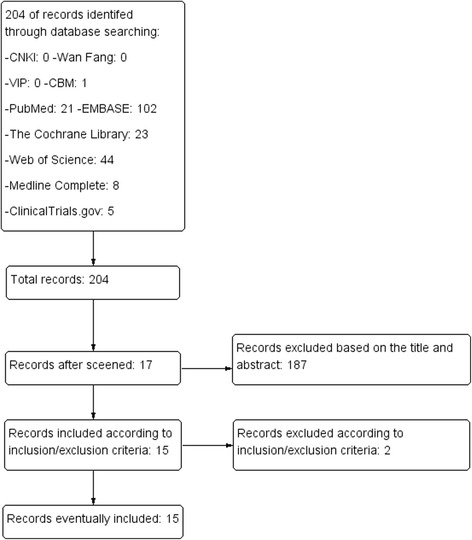
“The Chinese Science and Technology Periodical Database (VIP), Chinese Biomedical Database (CBM), PubMed, Web of Science, ClinicalTrials, Cochrane Library (until Issue 1, 2018), the China National Knowledge Infrastructure Databases (CNKI), EMBASE, Medline Complete, and Wan Fang Database were searched from their incepti…”
BackgroundMethodSelf-citationNaz, M. S. G., Jahanfar, S., & Tehrani, F. R. (2022) · Clinical Nutrition ESPEN · doi:10.1016/j.clnesp.2022.11.007 · Cited by 10
Wang, R., Huang, K., Wang, M., Zou, W., Huang, Y., Jiang, W., Feng, Y., Shen, H., & Lei, X. (2025) · Frontiers in Nutrition · doi:10.3389/fnut.2025.1705284 · Cited by 10
Low Dietary Omega-6 to Omega-3 Fatty Acid Intake Ratio Enhances Adiponectin Level in Obesity
Fabiani, H., Mudjihartini, N., & Lestari, W. (2021) · World Nutrition Journal · doi:10.25220/wnj.v05.i1.0005 · Cited by 6
Panchal, D., Pandya, T., Kevlani, V., Shah, S., & Acharya, S. P. (2023) · Drug Delivery and Translational Research · doi:10.1007/s13346-023-01304-z · Cited by 8
Exploring the Novel Alternative and Modern Treatment Options for Polycystic Ovary Syndrome-A Review
Mohammed, S., Cockburn, B. N., & Sundaram, V. (2024) · Integrative Medicine Reports · doi:10.1089/imr.2023.0045 · Cited by 13
Wang, R., Miao, C., Chen, Y., Zhao, Y., Yang, L., Cheng, W., & Zhang, Q. (2022) · Gynecological Endocrinology · doi:10.1080/09513590.2022.2148648 · Cited by 7
“The inclusion criteria for other trials were case-control and cohort studies, which may have led to different results [42].”
BackgroundResultBahramian, H., Sherafatmanesh, S., Asadi, N., Bakhshi, A., Eftekhari, M. H., & Ekramzadeh, M. (2023) · International Journal of Reproductive BioMedicine (IJRM) · doi:10.18502/ijrm.v21i7.13889 · Cited by 10
“As a bioactive anti-inflammatory agent, it has been confirmed that omega-3 (O3) supplementation can exhibit beneficial effects in improving parameters such as fasting glucose, insulin resistance, triglyceride level, and ovulation function (11).”
BackgroundUnfer, V. (2021) · International Journal of Molecular Sciences · doi:10.3390/ijms221810114 · Cited by 8
Role of complementary and alternative medicine in polycystic ovary syndrome
Siddique, R., & Mehmood, M. H. (2023) · Elsevier eBooks · doi:10.1016/b978-0-323-87932-3.00031-1 · Cited by 6
Are marine n-3 fatty acids protective towards insulin resistance? From cell to human
Delarue, J. (2020) · Proceedings of The Nutrition Society · doi:10.1017/s0029665120000087 · Cited by 6
“Yang et al.(104), in 2018, included nine RCT (591 patients with ovary polycystic syndrome); marine n-3 (900–4000 mg/d; duration 6–12 weeks) improved HOMA-IR (P< 0⋅00001) and increased plasma adiponectin (P= 0⋅002).”
BackgroundLifestyle Interventions for Sarcopenic Obesity in Polycystic Ovary Syndrome
Chilibeck, P. D., Kazemi, M., McBreairty, L. E., & Zello, G. A. (2020) · Springer eBooks · doi:10.1007/978-3-030-53370-0_67 · Cited by 5
Natural Chemical Constituents and Polymer Used in to Reduce PCOS Pain
Sarwade, P. P., Dhanasree, B., Gaisamudre, K. N., Kumar, R., Banerjee, A., Dubey, S. A., Otia, M. K., & Kumar, V. (2025) · Journal for Research in Applied Sciences and Biotechnology · doi:10.55544/jrasb.4.1.10 · Cited by 5
Nandagopal, P. B., Jayakrishnan, G., Kaithamattathil, A. V., & Manickam, V. (2026) · Frontiers in Reproductive Health · doi:10.3389/frph.2026.1821411 · Cited by 5
“For instance, omega-3 fatty acids possess anti-inflammatory properties and may contribute to improved lipid profiles, reduced cardiovascular risk, and modulation of androgen levels (53, 54).”
Mishra, S., & Mittal, P. (2025) · Phytomedicine Plus · doi:10.1016/j.phyplu.2025.100741 · Cited by 3
Beneficial effects of long-chain n-3 fatty acids on insulin-resistance: basic and clinical aspects
Delarue, J. (2025) · Biochimie · doi:10.1016/j.biochi.2025.09.014 · Cited by 183
Emami, N., Moini, A., Bakhtiarizadeh, M. R., Yaghmaei, P., Shahhoseini, M., & Alizadeh, A. (2023) · PubMed Central · doi:10.22074/ijfs.2022.551310.1284 · Cited by 5
A Complex Condition; Polycystic Ovary Syndrome (PCOS): A Review of its Recent Advanced Treatment
Wal, P., Saxena, B., Aziz, N., Pyne, C., Wal, A., & Rathore, S. (2023) · Current Women s Health Reviews · doi:10.2174/0115734048259334231020120628 · Cited by 2
Chiarot, A., Minhas, M., de Maat, N. M., Doan, J., Nilsson, M. I., Hettinga, B. P., Faghih, M., Neal, M. S., Nederveen, J. P., & Tarnopolsky, M. A. (2025) · Biomolecules · doi:10.3390/biom15091258 · Cited by 2
Wang, K.-Y., Yang, T., Ding, Y.-F., Zeng, A., Li, Y., & Qiang, J.-W. (2025) · Frontiers in Medicine · doi:10.3389/fmed.2025.1652954 · Cited by 3
“Yang et al. (18) reported that omega-3 fatty acids may be recommended for the treatment of PCOS with insulin resistance.”
Mao, D., Wei, Y., Wang, C., & Tao, J. (2026) · Archives of Gynecology and Obstetrics · doi:10.1007/s00404-026-08344-z · Cited by 3
“…to a series of related clinical manifestations and complications, with elevated plasma total cholesterol (TC), triglycerides (TG), and low-density lipoprotein cholesterol (LDL-C), and lowered high-density lipoprotein cholesterol (HDL-C) in patients with PCOS being the typical manifestations [5].”
Delarue, J. (2022) · Bulletin de l Académie Nationale de Médecine · doi:10.1016/j.banm.2022.04.028 · Cited by 2
Onyegbule, O. A., Meludu, S., Dioka, C. E., Okwara, J. E., Obi-Ezeani, C. N., Njoku, C. M., & Onah, E. C. (2022) · Journal of Applied Sciences and Clinical Practice · doi:10.4103/jascp.jascp_8_22 · Cited by 2
Adiponectin-enhancing dietary constituents in cancer prevention
Ray, A., & Acharya, D. (2020) · Elsevier eBooks · doi:10.1016/b978-0-12-816151-7.00005-3 · Cited by 1
Andres-Montenegro, N., Molina-Gutierrez, S., & Murillo, O. I. N. (2025) · Bionatura journal : · doi:10.70099/bj/2025.02.02.13 · Cited by 2
Zarezadeh, R., Fattahi, A., Hamdi, K., Nouri, M., & Darabi, M. (2026) · Journal of Ovarian Research · doi:10.1186/s13048-026-02151-5 · Cited by 1
“…of PCOS patients with long-chain n-3 PUFAs notably improved metabolic profile and inflammation status in the affected women, as evidenced by a decrease in insulin resistance, triglycerides, total cholesterol, and high-sensitivity C-reactive protein, along with an increase in adiponectin [63–65].”
Current Resources for Evidence-Based Practice, January 2019
Bovbjerg, M. L. (2018) · Journal of Obstetric, Gynecologic & Neonatal Nursing · doi:10.1016/j.jogn.2018.12.002 · Cited by 1
Mekki, K., Benharrat, L. I., Senouci, A., & Benhabib, W. (2021) · Current Nutrition & Food Science · doi:10.2174/1573401317666211104121725 · Cited by 1
Pal, R. S., Pal, Y., Chaitanya, M., Kumar, R., Tyagi, P. K., & Srivastava, P. (2023) · Current Women s Health Reviews · doi:10.2174/0115734048262284230927191823 · Cited by 1
A influência da nutrição em mulheres com síndrome dos ovários policísticos: Uma revisão integrativa.
Picanço, J. S. C., Gomes, A. C. D. M., de Brito, C. S. G., Costa, G. D. S. R., Leite, I. P., Marques, J. G., Quadros, K. C., Vieira, L. D. S., dos Reis, L. C., Rocha, L. M. B., et al. (2024) · Brazilian Journal of Implantology and Health Sciences · doi:10.36557/2674-8169.2024v6n8p3725-3751 · Cited by 3
Szűcs, K. F., Vigh, D., Mirdamadi, M., Samavati, R., Schaffer, A., Barna, T., Tóth, T., Bázár, G., Baranyay, H., & Gáspár, R. (2025) · International Journal of Molecular Sciences · doi:10.3390/ijms26115221 · Cited by 2
“Conversely, some investigations have reported no significant associations between n-3 PUFAs and the levels of FSH, LH, and SHBG [28].”
Gordon, B., Agresta, E., Isoldi, K. K., & Vargas-Rodriguez, I. (2019) · Topics in Clinical Nutrition · doi:10.1097/tin.0000000000000196 · Cited by 1
Polycystic Ovary Syndrome: Dietary Approaches to Counteract Insulin Resistance
Das, I. (2020) · Journal of Undergraduate Life Sciences · doi:10.33137/juls.v14i1.35925 · Cited by 1
Skin, R., & Kurzawa, M. (2021) · Aesthetic Cosmetology and Medicine · doi:10.52336/acm.2021.10.3.04
Polikistik Over Sendromu ve Ağırlık Yönetimi Arasındaki İlişkinin İncelenmesi
Sarıyer, E. T., & Burcu Merve, A. K. S. U. (2021) · Süleyman Demirel Üniversitesi Sağlık Bilimleri Dergisi · doi:10.22312/sdusbed.854552 · Cited by 2
Cardoso, C. D. A. G., Ley, S. B. D. S. L., & Elias, L. D. S. (2022) · RECIMA21 - Revista Científica Multidisciplinar · doi:10.47820/recima21.v3i1.1072 · Cited by 2
Impact of nutrition and exercise on polycystic ovarian syndrome
Rana, S., & Ramchandra, N. (2022) · Journal of Current Research in Food Science · doi:10.22271/foodsci.2022.v3.i1a.61
Pengaruh Asupan Nutrisi Dan Pola Makan Pada Pasien Dengan Sindrom Ovarium Polikistik
Lesmana, S., Winaktu, G. J. M. T., Elena, I. M., & Sutanto, L. B. (2023) · Jurnal MedScientiae · doi:10.36452/jmedscientiae.v2i1.2723
Mikronährstoffe in der Gynäkologie
Schurgast, H. (2023) · Journal für Gynäkologische Endokrinologie/Schweiz · doi:10.1007/s41975-023-00310-1
The Awareness of Jazan Females about the Nutrition Related Effects of Polycystic Ovary Syndrome
Malik, N. E. E., Abdalla, S. E. B., Alhassen, M. M. F., Alageb, N. A., Sayed, F. J., Alfaifi, N. Y., Alfaifi, K. K., & Hattan, A. A. (2023) · Journal of Biosciences and Medicines · doi:10.4236/jbm.2023.1111019 · Cited by 1
Shen, J., Xu, L., Wu, X., & Ding, Y. (2024) · Reproductive Sciences · doi:10.1007/s43032-024-01476-0 · Cited by 1
“The utilization of omega-3 (ω-3) fatty acid has the potential to be efficacious in females diagnosed with PCOS who also present with dyslipidemia and/or IR [12].”
Therapeutic Effect of Omega-3 Fatty Acid in Polycystic Ovarian Disease
Yadav, A., Mishra, A., Sharma, A., Harsha, V., Singh, A., & Nayak, A. K. (2024) · Journal of Anatomical Sciences · doi:10.46351/jas.v32i1pp45-52
Soni, A., Parikh, M., & Gandhi, T. R. (2025) · Elsevier eBooks · doi:10.1016/b978-0-443-22300-6.00013-9
Nessa, A., Akter, S., Hossain, F., Alam, H., Sultana, R., Islam, M. A., Tarique, M. M. A., & Banu, J. (2025) · International Journal of Reproduction Contraception Obstetrics and Gynecology · doi:10.18203/2320-1770.ijrcog20251971
Bayrak, Ç. C., Yilmaz, B., Kağıtçı, M., İnce, O., Karakas, S. M., & Yılmaz, A. (2025) · Journal of Clinical Medicine · doi:10.3390/jcm14248899
“A meta-analysis further demonstrated that ω -3 fatty acids may benefit insulin resistance, hypercholesterolemia, and hypertriglyceridemia in PCOS [28].”
Zhou, J., Zuo, W., Tan, Y., Wang, X., Zhu, M., & Zhang, H. (2024) · Figshare · doi:10.6084/m9.figshare.26575700
Zhou, J., Zuo, W., Tan, Y., Wang, X., Zhu, M., & Zhang, H. (2024) · Figshare · doi:10.6084/m9.figshare.26575697
Nutritional management in polycystic ovary syndrome
Bisht, S., Nandave, M., Singh, M. F., Bisht, L., & Kumar, M. (2026) · Elsevier eBooks · doi:10.1016/b978-0-443-34003-1.00010-9
Polyzystisches Ovarialsyndrom und Endometriose – Komplementäre Therapien
Müller, T. (2026) · Springer eBooks · doi:10.1007/978-3-662-68171-8_28
P, S. P. S., T, K. T. K., S, R. S. R., A, A. A. A., S, L. S. L., B, B. Y. B. B. Y., S, T. G. S. T. G., & N, P. N. P. (2026) · Journal of Pharmaceutical Innovation · doi:10.1007/s12247-026-10432-1
“9). metabolism, hormone regulation, and anti-inflammatory properties, all of which are important in combating patho-physiological PCOS [45, 46].”
Huang, L., Li, H., Zhao, M., Wang, X., Zhang, Y., Ba, L., Yin, J., Wang, B., Zhang, X., & Hong, X. (2026) · Molecular Nutrition & Food Research · doi:10.1002/mnfr.70437
“…omega-3 fatty acids from fish, a key element of this diet, have been linked to a lower likelihood of PCOS, reduced the levels of testosterone, insulin resistance (assessed by homeostasis model assessment, HOMA), total cholesterol (TC), and triglycerides (TG) in affected individuals [ 7, 37–40 ].”
Barbe, A. (2020) · theses.fr (ABES) · doi:10.70675/a1929a18zc99dz4f74zb8f8z614bf9e123e9
Singnale, P., Sasmal, D., Chukkala, S. S., Chilumula, M., Raghavendra, P., Singh, S. P., Mummadi, M. K., & Gondru, R. (2026) · Cureus · doi:10.7759/cureus.106497
“…PUFAs has been shown to significantly reduce insulin resistance, as measured by HOMA‑IR, fasting insulin, triglycerides, total cholesterol, and LDL cholesterol, while increasing adiponectin, highlighting improvements in insulin sensitivity and lipid metabolism compared with controls [82,83].”
Rôle des adipocytokines dans l'obésité, l'insulino-résistance et leurs conséquences sur la fertilité
Bongrani, A. (2022) · theses.fr (ABES) · doi:10.70675/1b281dcdz1f16z4985z95f8z0706a492c996
THE ROLE OF GUT MICROBIOTA IN THE PATHOGENESIS OF POLYCYSTIC OVARY SYNDROME
Stępień, A., Podleśna, M., Bączek, K., Chromiak, K., Curzytek, K., Bluczak, K., Czechowicz, K., Radziwiłko, J. M., Pastuszak, A., & Kozińska, A. (2026) · International Journal of Innovative Technologies in Social Science · doi:10.31435/ijitss.1(49).2026.4524
Ficek, M., Gawęda, W., Łobodzińska, W., Hamouta, Z., & Adamczyk, J. (2026) · International Journal of Innovative Technologies in Social Science · doi:10.31435/ijitss.1(49).2026.4798
Hormonal Imbalance and Gut Dysbiosis: Emerging Perspectives in Women’s Health
De, R., Chakrabortty, S., Das, J., Chaudhary, P., Patra, R., Sardar, K., Nath, R., Pal, R., Debnath, B., & Ashique, S. (2026) · Probiotics and Antimicrobial Proteins · doi:10.1007/s12602-026-11089-5 · Cited by 1
Metadata
- Authors
- Yang, K., Zeng, L., Bao, T., & Ge, J.
- Affiliations
- Hunan University of Traditional Chinese Medicine (CN)
- Beijing University of Chinese Medicine (CN)
- Corresponding author
- Ge, Jinwen
- Venue
- Reproductive Biology and Endocrinology
- Published
- 2018-03-27
- Volume
- 16
- Issue
- 1
- Pages
- 27-27
- ISSN
- 1477-7827 (ISSN-L)
- PMC
- PMC5870911
- OpenAlex
- W2796048673
- Cited by
- 103
- References
- 45
- Citations by year
- 2026: 14 · 2025: 11 · 2024: 11 · 2023: 14 · 2022: 18 · 2021: 13 · 2020: 13 · 2019: 7 · 2018: 1
- FWCI
- 1.28
- Type
- journal article
- Language
- en
- Open access
- gold
- doi.org
- Licence
- cc-by
- creativecommons.org/licenses/by/4.0/ (tdm)
- Locations
- Reproductive Biology and Endocrinology (publishedVersion, cc-by)
- PubMed Central (publishedVersion, cc-by)
- PubMed (publishedVersion)
- DOAJ (DOAJ: Directory of Open Access Journals) (submittedVersion, cc-by-sa)
- Funders
- National Natural Science Foundation of China (81274008)
- Topics
- Health Sciences › Medicine › Reproductive Medicine › Ovarian function and disorders
- Health Sciences › Nursing › Nutrition and Dietetics › Fatty Acid Research and Health
- Health Sciences › Medicine › Endocrinology, Diabetes and Metabolism › Diabetes, Cardiovascular Risks, and Lipoproteins
- Keywords
- omega-3 fatty acids, polycystic ovary syndrome, insulin resistance, HOMA index, total cholesterol, triglycerides, LDL cholesterol, adiponectin, lipid profile
- MeSH terms
- Cholesterol, Female, Humans, Insulin Resistance, Placebos, Polycystic Ovary Syndrome, Triglycerides, Fatty Acids, Omega-3, Randomized Controlled Trials as Topic, Adiponectin
About these checks
Registry, retraction, Cites and statistics results are computed, not judged, with one exception: a printed reference that no index lists is read once by a model before it counts as a citation error. Claims are extracted by a model and kept only when their quote appears verbatim in the text; each cited source is then checked, with a model’s help, for whether it says what the claim relies on. Those verdicts can be wrong — read the claim’s quote and the cited source before relying on one.
Statistics and arithmetic are recomputed, not judged.
Confidence bands are shown only for fields calibrated on our annotated test set. None is calibrated yet, so no band is shown.
What counts as a claim ›How we measure confidence ›How we check this ›
Are you an author, or do you see a problem with this page? Request a review
Data sources
Bibliographic data: Semantic Scholar, OpenAlex, Crossref.
Contains information from the Semantic Scholar Academic Graph Datasets, made available under the ODC Attribution License (ODC-BY 1.0).
Semantic Scholar’s data is described in: Kinney, R., et al. (2023). The Semantic Scholar Open Data Platform. arXiv:2301.10140.
