

Characterization of polycystic ovary syndrome among Flo app users around the world
Open accessPublished version of a preprint
The DOI matches its Crossref record; 43 of the 44 references it cites were found in a registry or an index.
Abstract
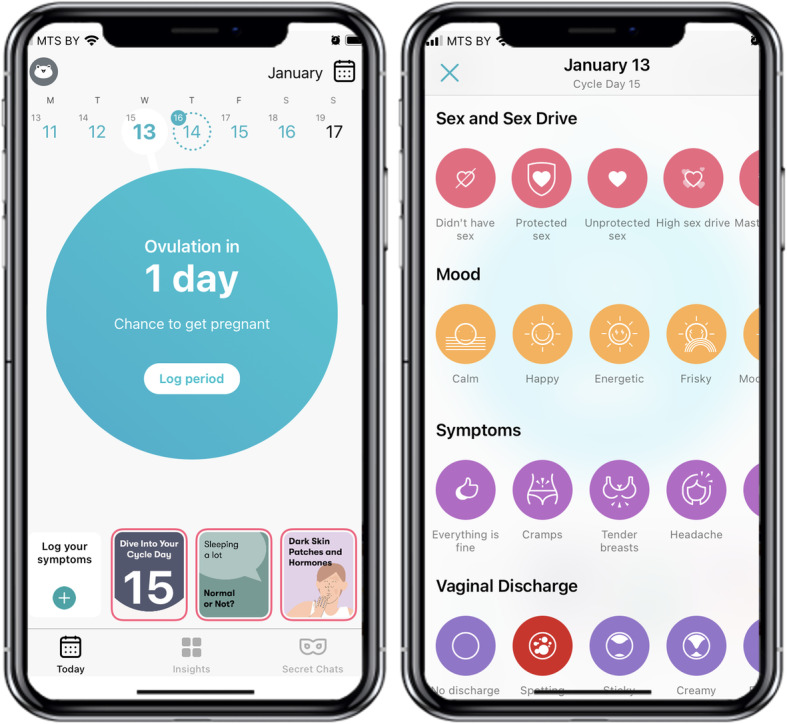
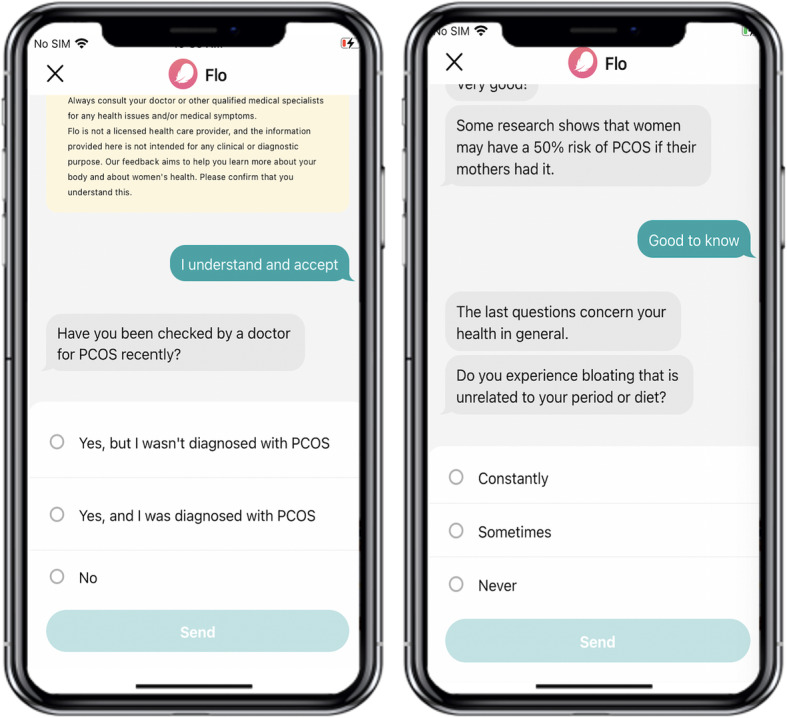
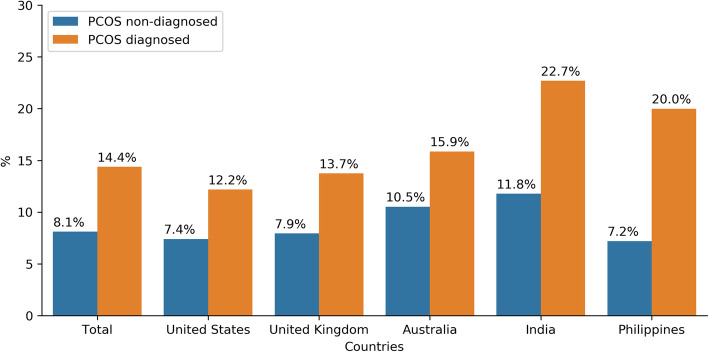
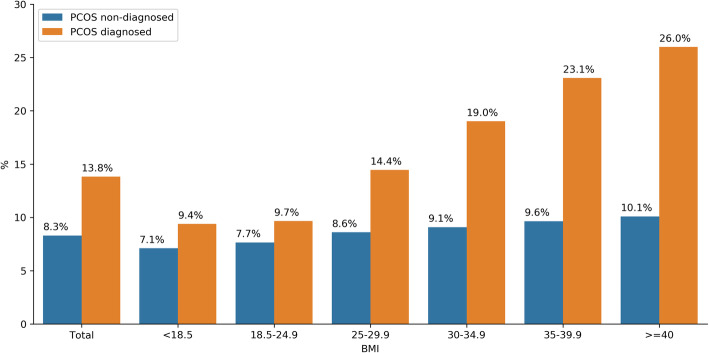
Background: Polycystic ovary syndrome (PCOS) is a complex and multi-faceted endocrine disorder that affects 5–20% of women. Literature is limited regarding potentially differing PCOS phenotypes among women around the world. Objective: To use Flo app technology to understand the multifaceted characteristics of PCOS across several countries and identify contributing risk factors to the development of this condition. Study design: Flo is a widely used female health and wellbeing app with period tracking functionality that provides a globally representative and medically unbiased perspective on PCOS symptomatology. A chatbot dialog on PCOS was subsequently administered on the Flo application (app) to users from 142 countries (with at least 100 respondents) who have the app running in English during September–October 2019. Results: For analyses, we selected the five countries with the greatest number of respondents: US ( n = 243,238), UK ( n = 68,325), India ( n = 40,092), Philippines ( n = 35,131), and Australia ( n = 29,926). Bloating was the most frequently reported symptom among PCOS-positive women and appeared to be the main predictor of PCOS in our model (odds ratio 3·76 [95% CI 3·60–3·94]; p < 0·0001). Additional top predictors of PCOS are high blood cholesterol and glucose levels. As BMI increased, the percentage of women who reported a physician-confirmed PCOS diagnosis also increased. However, women in India did not follow this trend. Conclusion: Our findings are based on the largest known PCOS dataset and indicate that symptoms are more complex than previously understood. The most frequently reported symptoms (bloating, facial hirsutism, irregular cycles, hyperpigmentation, and baldness) are broader than those included in the Rotterdam criteria. Future work should reevaluate and refine the criteria utilized in PCOS diagnosis.
Overview
The claims and statistics of this paper haven’t been checked yet.
Free: it reads the open-access text and checks the first 5 claims that cite a source we can check. Create a free account to check every claim.
Integrity signals
Registry
Cites
Statistics
Figures
Verification
Claims the paper makes
The claims and statistics of this paper haven’t been checked yet.
Free: it reads the open-access text and checks the first 5 claims that cite a source we can check. Create a free account to check every claim.
Claims other papers make about this one
Each is checked against this paper’s own text: does it say what the citing paper says it does?
The source backs part of the claim, not all of it — or backs it for a different population, condition or comparison.
In the citing paper
“Such willingness by people with PCOS to ask questions is further supported by their reported engagement with a PCOS chatbot [56].”
From Polycystic Ovary Syndrome and the Internet of Things: A Scoping Review (2024) · cites this paper as [56]
Experimental — accuracy not yet measuredThe source backs part of the claim, not all of it — or backs it for a different population, condition or comparison.
In the citing paper
“The most prevalent predictors of PCOS were bloating, both high cholesterol and glucose, and high glucose alone [56].”
From Polycystic Ovary Syndrome and the Internet of Things: A Scoping Review (2024) · cites this paper as [56]
Experimental — accuracy not yet measuredThe source backs part of the claim, not all of it — or backs it for a different population, condition or comparison.
In the citing paper
“Where reported, the mean age (±standard deviation) of participants ranged from 24.70 ± 5.45 years [56] to 33.0 ± 8.2 years [61], whilst the mean body mass index (BMI) ranged from 24.2 kg/m2 [43] to 29.3 ± 8.00 kg/m2 [61].”
From Polycystic Ovary Syndrome and the Internet of Things: A Scoping Review (2024) · cites this paper as [56]
Experimental — accuracy not yet measuredThe source backs part of the claim, not all of it — or backs it for a different population, condition or comparison.
In the citing paper
“Study sample sizes ranged from 28 [42] up to 416,712 [56], although it should be noted that the latter are drawn from an international sample where the majority of participants do not have PCOS.”
From Polycystic Ovary Syndrome and the Internet of Things: A Scoping Review (2024) · cites this paper as [56]
Experimental — accuracy not yet measuredThe cited source says what the claim attributes to it.
In the citing paper
“An app designed to track menstruation already uses AI algorithms to give the user personalized menstrual and ovulation predictions [56].”
From Polycystic Ovary Syndrome and the Internet of Things: A Scoping Review (2024) · cites this paper as [56]
3 more claims about this paper
Create a free account to see every claim other papers make about this one.
Self-check
Percentages, sums and reported differences re-computed from the paper’s own numbers.
The self-check needs the paper’s full text.
Citations
Cites
(2004) · Fertility and Sterility · doi:10.1016/j.fertnstert.2003.10.004 · Cited by 9,050
Prevalence and Trends in Obesity Among US Adults, 1999-2008
Flegal, K. M. (2010) · JAMA · doi:10.1001/jama.2009.2014 · Cited by 7,580
The global obesity pandemic: shaped by global drivers and local environments
Swinburn, B. A., Sacks, G., Hall, K. D., McPherson, K., Finegood, D. T., Moodie, M. L., & Gortmaker, S. L. (2011) · The Lancet · doi:10.1016/s0140-6736(11)60813-1 · Cited by 4,888
Men at risk: occupation and male infertility
Claman, P. (2004) · Fertility and Sterility · doi:10.1016/s0015-0282(03)01188-9 · Cited by 2,387
Azziz, R., Carmina, E., Dewailly, D., Diamanti-Kandarakis, E., Escobar-Morreale, H. F., Futterweit, W., Janssen, O. E., Legro, R. S., Norman, R. J., Taylor, A. E., et al. (2006) · The Journal of Clinical Endocrinology & Metabolism · doi:10.1210/jc.2006-0178 · Cited by 2,143
Azziz, R., Carmina, E., Dewailly, D., Diamanti-Kandarakis, E., Escobar-Morreale, H. F., Futterweit, W., Janssen, O. E., Legro, R. S., Norman, R. J., Taylor, A. E., et al. (2009) · Fertility and Sterility · doi:10.1016/j.fertnstert.2008.06.035 · Cited by 2,132
Azziz, R., Carmina, E., Chen, Z., Dunaif, A., Laven, J. S. E., Legro, R. S., Lizneva, D., Natterson-Horowtiz, B., Teede, H. J., & Yildiz, B. O. (2016) · Nature Reviews Disease Primers · doi:10.1038/nrdp.2016.57 · Cited by 2,005
March, W. A., Moore, V. M., Willson, K. J., Phillips, D. I. W., Norman, R. J., & Davies, M. J. (2010) · Human Reproduction · doi:10.1093/humrep/dep399 · Cited by 1,799
Legro, R. S. (1999) · Journal of Clinical Endocrinology & Metabolism · doi:10.1210/jc.84.1.165 · Cited by 1,743
Criteria, Prevalence, and Phenotypes of Polycystic Ovary Syndrome
Lizneva, D., Suturina, L., Walker, W., Brakta, S., Gavrilova-Jordan, L., & Azziz, R. (2016) · Fertility and Sterility · doi:10.1016/j.fertnstert.2016.05.003 · Cited by 1,358
Andrology: Polycystic ovary syndrome: the spectrum of the disorder in 1741 patients
Balen, A. H., Conway, G. S., Kaltsas, G., Techatraisak, K., Manning, P. J., West, C., & Jacobs, H. S. (1995) · Human Reproduction · doi:10.1093/oxfordjournals.humrep.a136243 · Cited by 1,060
Dumesic, D. A., Oberfield, S. E., Stener-Victorin, E., Marshall, J. C., Laven, J. S., & Legro, R. S. (2015) · Endocrine Reviews · doi:10.1210/er.2015-1018 · Cited by 1,020
Lim, S. S., Davies, M. J., Norman, R. J., & Moran, L. J. (2012) · Human Reproduction Update · doi:10.1093/humupd/dms030 · Cited by 939
Torous, J., Nicholas, J., Larsen, M. E., Firth, J., & Christensen, H. (2018) · Evidence Based Mental Health · doi:10.1136/eb-2018-102891 · Cited by 790
Prevalence and Predictors of the Metabolic Syndrome in Women with Polycystic Ovary Syndrome
Ehrmann, D. A., Liljenquist, D. R., Kasza, K., Azziz, R., Legro, R. S., & Ghazzi, M. N. (2006) · The Journal of Clinical Endocrinology & Metabolism · doi:10.1210/jc.2005-1329 · Cited by 703
Cameron, A. J., Zimmet, P. Z., Dunstan, D. W., Dalton, M., Shaw, J. E., Welborn, T. A., Owen, N., Salmon, J., & Jolley, D. (2003) · Medical Journal of Australia · doi:10.5694/j.1326-5377.2003.tb05283.x · Cited by 596
Cameron, A. J., Zimmet, P. Z., Dunstan, D. W., Dalton, M., Shaw, J. E., Welborn, T. A., Owen, N., Salmon, J., & Jolley, D. (2004) · Medical Journal of Australia · doi:10.5694/j.1326-5377.2004.tb05998.x · Cited by 534
Geographical Prevalence of Polycystic Ovary Syndrome as Determined by Region and Race/Ethnicity
Wolf, W. M., Wattick, R. A., Kinkade, O. N., & Olfert, M. D. (2018) · International Journal of Environmental Research and Public Health · doi:10.3390/ijerph15112589 · Cited by 413
Real-world menstrual cycle characteristics of more than 600,000 menstrual cycles
Bull, J. R., Rowland, S. P., Scherwitzl, E. B., Scherwitzl, R., Danielsson, K. G., & Harper, J. (2019) · npj Digital Medicine · doi:10.1038/s41746-019-0152-7 · Cited by 404
Kakoly, N. S., Khomami, M. B., Joham, A. E., Cooray, S. D., Misso, M. L., Norman, R. J., Harrison, C. L., Ranasinha, S., Teede, H. J., & Moran, L. J. (2018) · Human Reproduction Update · doi:10.1093/humupd/dmy007 · Cited by 384
KIDDY, D. S., SHARP, P. S., WHITE, D. M., SCANLON, M. F., MASON, H. D., BRAY, C. S., POLSON, D. W., REED, M. J., & FRANKS, S. (1990) · Clinical Endocrinology · doi:10.1111/j.1365-2265.1990.tb00857.x · Cited by 364
Prevalence and Characteristics of the Polycystic Ovary Syndrome in Overweight and Obese Women
Álvarez-Blasco, F., Botella-Carretero, J. I., San Millán, J. L., & Escobar-Morreale, H. F. (2006) · Archives of Internal Medicine · doi:10.1001/archinte.166.19.2081 · Cited by 348
Anxiety and depression in polycystic ovary syndrome: a systematic review and meta-analysis
Barry, J. A., Kuczmierczyk, A. R., & Hardiman, P. J. (2011) · Human Reproduction · doi:10.1093/humrep/der197 · Cited by 336
Ding, T., Hardiman, P. J., Petersen, I., Wang, F.-F., Qu, F., & Baio, G. (2017) · Oncotarget · doi:10.18632/oncotarget.19180 · Cited by 336
Long-term consequences of polycystic ovary syndrome: Results of a 31 year follow-up study
Wild, S., Pierpoint, T., Jacobs, H., & McKeigue, P. (2000) · Human Fertility · doi:10.1080/1464727002000198781 · Cited by 306
Polycystic Ovary Syndrome and Mental Health: A Review
Himelein, M. J., & Thatcher, S. S. (2006) · Obstetrical & Gynecological Survey · doi:10.1097/01.ogx.0000243772.33357.84 · Cited by 239
Prevalence and Risk Factors of Overweight and Obesity in China
Reynolds, K., Gu, D., Whelton, P. K., Wu, X., Duan, X., Mo, J., He, J., & For the InterASIA Collaborative Group (2007) · Obesity · doi:10.1038/oby.2007.527 · Cited by 221
Referral Bias in Defining the Phenotype and Prevalence of Obesity in Polycystic Ovary Syndrome
Ezeh, U., Yildiz, B. O., & Azziz, R. (2013) · The Journal of Clinical Endocrinology & Metabolism · doi:10.1210/jc.2013-1295 · Cited by 193
Polycystic Ovary Syndrome (PCOS), Diagnostic Criteria, and AMH
Banimohammad, M., & Seghinsara, A. M. (2017) · PubMed · doi:10.22034/apjcp.2017.18.1.17 · Cited by 192
Holte, J., Bergh, T., Gennarelli, G., & Wide, L. (1994) · Clinical Endocrinology · doi:10.1111/j.1365-2265.1994.tb02578.x · Cited by 179
Kumarapeli, V., Seneviratne, R. D. A., Wijeyaratne, C. N., Yapa, R. M. S. C., & Dodampahala, S. H. (2008) · American Journal of Epidemiology · doi:10.1093/aje/kwn137 · Cited by 170
Ethnic differences in the phenotypic expression of polycystic ovary syndrome
Zhao, Y., & Qiao, J. (2013) · Steroids · doi:10.1016/j.steroids.2013.04.006 · Cited by 166
Role of obesity and adiposity in polycystic ovary syndrome
Diamanti‐Kandarakis, E. (2007) · International Journal of Obesity · doi:10.1038/sj.ijo.0803730 · Cited by 148
Diagnosis of hyperandrogenism: clinical criteria
Yıldız, B. O. (2006) · Best Practice & Research Clinical Endocrinology & Metabolism · doi:10.1016/j.beem.2006.02.004 · Cited by 147
von Ruesten, A., Steffen, A., Floegel, A., van der A, D. L., Masala, G., Tjønneland, A., Halkjaer, J., Palli, D., Wareham, N. J., Loos, R. J. F., et al. (2011) · PLoS ONE · doi:10.1371/journal.pone.0027455 · Cited by 147
Al‐Azemi, M., Omu, F. E., & Omu, A. E. (2003) · Archives of Gynecology and Obstetrics · doi:10.1007/s00404-003-0537-2 · Cited by 119
Clinical and biochemical presentations of polycystic ovary syndrome among obese and nonobese women
Liou, T.-H., Yang, J.-H., Hsieh, C.-H., Lee, C.-Y., Hsu, C.-S., & Hsu, M.-I. (2009) · Fertility and Sterility · doi:10.1016/j.fertnstert.2008.09.003 · Cited by 100
Epidemiology and Comorbidities of Polycystic Ovary Syndrome in an Indigent Population
Sirmans, S. M., Parish, R. C., Blake, S., & Wang, X. (2014) · Journal of Investigative Medicine · doi:10.1097/01.jim.0000446834.90599.5d · Cited by 79
Casarini, L., & Brigante, G. (2014) · The Journal of Clinical Endocrinology & Metabolism · doi:10.1210/jc.2014-2703 · Cited by 65
Chun, Y., Xiaoqiang, L., Mao, Y., Feiyang, D., Yugui, C., & Jia-yin, L. (2016) · Journal of Biomedical Research · doi:10.7555/jbr.30.20140111 · Cited by 61
Mani, H., Davies, M. J., Bodicoat, D. H., Levy, M. J., Gray, L. J., Howlett, T. A., & Khunti, K. (2015) · Clinical Endocrinology · doi:10.1111/cen.12784 · Cited by 59
Liang, S.-J., Liou, T., LIN, H., Hsu, C.-S., Tzeng, C., & Hsu, M.-I. (2012) · Acta Obstetricia Et Gynecologica Scandinavica · doi:10.1111/j.1600-0412.2012.01417.x · Cited by 36
Worldwide Dissatisfaction With the Diagnostic Process and Initial Treatment of PCOS
(2017) · The Journal of Clinical Endocrinology & Metabolism · doi:10.1210/jc.2016-3808 · Cited by 19 · cited 2×
“A 2017 study found that over onethird of women spent over two years, visiting at least three medical providers, searching for a diagnosis [21].”
Background
Research works printed but not linked: 1
- Health NIo Evidence-based Methodology Workshop on Polycystic Ovary Syndrome (PCOS) Pathways to Prevention Workshop Program (P2P): National Institutes of Health 2012
Cited by
Amiri, M., Hatoum, S., Buyalos, R. P., Sheidaei, A., & Azziz, R. (2025) · The Journal of Clinical Endocrinology & Metabolism · doi:10.1210/clinem/dgae917 · Cited by 54
Metabolic risk factors and fertility disorders: A narrative review of the female perspective
Westerman, R., & Kuhnt, A. (2021) · Reproductive Biomedicine & Society Online · doi:10.1016/j.rbms.2021.09.002 · Cited by 59
“PCOS is a complex and multi-faceted endocrine disorder in women of reproductive age, affecting approximately 2–20% (Jain et al., 2021; Pal, 2014), depending on the clinical inclusion criteria.”
BackgroundPatel, U., Broad, A., Biswakarma, R., & Harper, J. C. (2023) · Reproductive BioMedicine Online · doi:10.1016/j.rbmo.2023.103599 · Cited by 53
“…illustrates the potential bene fi ts of using period tracking apps in the currently marginalized research into women ’ s and menstrual health, to further our understanding of and diagnostic abilities related to gynaecological conditions ( Jain et al., 2021 ; Li et al., 2020 ; Symul et al., 2019 ).”
Zhaunova, L., Bamford, R., Radović, T., Wickham, A. P., Peven, K., Croft, J., Klepchukova, A., & Ponzo, S. (2023) · JMIR mhealth and uhealth · doi:10.2196/40427 · Cited by 42
“For example, prolonged cycle length and cycle irregularity, in combination with other symptoms such as excessive body hair and acne, might be signs of PCOS [38], while painful and heavy periods or bleeding between periods might be indicative of endometriosis [53].”
BackgroundSelf-citationRao, V. S., Cowan, S., Armour, M., Smith, C. A., Cheema, B. S., Moran, L., Lim, S. S., Gupta, S., de Manincor, M., Sreedhar, V., et al. (2022) · International Journal of Environmental Research and Public Health · doi:10.3390/ijerph192315850 · Cited by 40
“, where they reported irregular periods (66%) as the third most common symptom of PCOS in Indian women [43].”
Background
Metadata
- Authors
- Jain, T., Negris, O., Brown, D., Galic, I., Salimgaraev, R., & Zhaunova, L.
- Affiliations
- Northwestern University (US)
- Delaware Museum of Nature and Science (US)
- Corresponding author
- Jain, Tarun
- Venue
- Reproductive Biology and Endocrinology
- Published
- 2021-03-03
- Volume
- 19
- Issue
- 1
- Pages
- 36-36
- ISSN
- 1477-7827 (ISSN-L)
- PMC
- PMC7927251
- OpenAlex
- W3114240787
- Cited by
- 37
- References
- 44
- Citations by year
- 2026: 3 · 2025: 9 · 2024: 9 · 2023: 10 · 2022: 5 · 2021: 1
- FWCI
- 5.39
- Type
- journal article
- Language
- en
- Open access
- gold
- doi.org
- Licence
- cc-by
- creativecommons.org/licenses/by/4.0/ (tdm)
- creativecommons.org/licenses/by/4.0/ (vor)
- Locations
- Reproductive Biology and Endocrinology (publishedVersion, cc-by)
- Research Square (acceptedVersion, cc-by)
- PubMed Central (publishedVersion, cc-by)
- PubMed (publishedVersion)
- DOAJ (DOAJ: Directory of Open Access Journals) (submittedVersion, cc-by-sa)
- Topics
- Health Sciences › Medicine › Reproductive Medicine › Ovarian function and disorders
- Health Sciences › Medicine › Reproductive Medicine › Endometriosis Research and Treatment
- Health Sciences › Medicine › Reproductive Medicine › Reproductive Health and Technologies
- Keywords
- polycystic ovary syndrome, PCOS symptoms, bloating, PCOS risk factors, serum cholesterol, blood glucose, body mass index, Rotterdam criteria, PCOS diagnosis, period tracking apps, hirsutism, hyperpigmentation, menstrual irregularity, cross-national comparison
- MeSH terms
- Adult, Female, Hirsutism, Humans, Menstrual Cycle, Menstruation Disturbances, Polycystic Ovary Syndrome, Body Mass Index, Young Adult, Mobile Applications
About these checks
Registry, retraction, Cites and statistics results are computed, not judged, with one exception: a printed reference that no index lists is read once by a model before it counts as a citation error. Claims are extracted by a model and kept only when their quote appears verbatim in the text; each cited source is then checked, with a model’s help, for whether it says what the claim relies on. Those verdicts can be wrong — read the claim’s quote and the cited source before relying on one.
Statistics and arithmetic are recomputed, not judged.
Confidence bands are shown only for fields calibrated on our annotated test set. None is calibrated yet, so no band is shown.
What counts as a claim ›How we measure confidence ›How we check this ›
Are you an author, or do you see a problem with this page? Request a review
Data sources
Bibliographic data: Semantic Scholar, OpenAlex, Crossref.
Contains information from the Semantic Scholar Academic Graph Datasets, made available under the ODC Attribution License (ODC-BY 1.0).
Semantic Scholar’s data is described in: Kinney, R., et al. (2023). The Semantic Scholar Open Data Platform. arXiv:2301.10140.
