

Inositol is an effective and safe treatment in polycystic ovary syndrome: a systematic review and meta-analysis of randomized controlled trials
Open accessThe DOI matches its Crossref record; 54 of the 55 references it cites were found in a registry or an index; 25 of the 34 sources its claims cite were checked for support.
Abstract
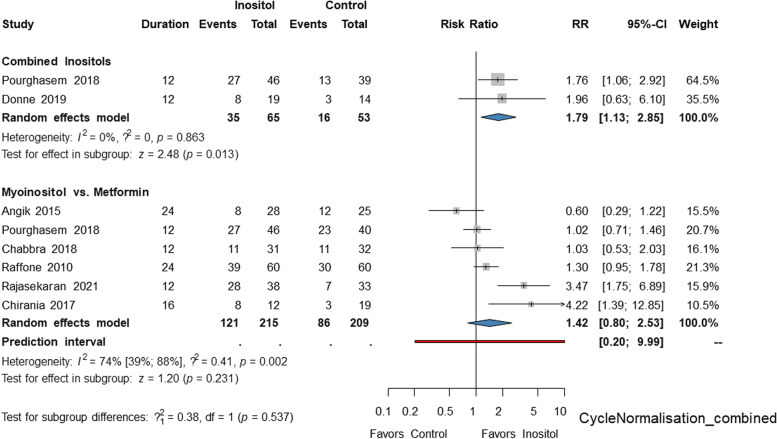
Background: Metformin is the gold standard insulin sensitizer, which is widely used to treat insulin resistance in polycystic ovary syndrome (PCOS). However, metformin may induce gastrointestinal side effects. Objective: Inositols have long been debated as a potential alternative for metformin in treating PCOS. Therefore, the present systematic review aimed to evaluate the efficacy and safety of inositols in treating PCOS. Methods: The present systematic search was performed in CENTRAL, MEDLINE, and Embase from the inception until October 20th, 2021. Eligible randomized controlled trials (RCTs) included women diagnosed with PCOS and compared any inositols with metformin or placebo. Our primary outcome was cycle normalization, whereas secondary outcomes were body mass index (BMI), parameters of carbohydrate metabolism and clinical and laboratory hyperandrogenism. Results are reported as risk ratios or mean differences (MDs) with 95% confidence intervals (CIs). Results: Twenty-six RCTs were identified, including data of 1691 patients (806 inositol, 311 with placebo, and 509 metformin groups). In patients treated with inositols, the risk (CI: 1.13; 2.85) of having a regular menstrual cycle was found by 1.79 higher than in the case of placebo. Moreover, the inositols showed non-inferiority compared to metformin in this outcome. In the case of BMI (MD = -0.45; CI: -0.89; -0.02), free testosterone (MD = -0,41, CI: -0.69; -0.13), total testosterone (MD = -20.39, CI: -40.12; -0.66), androstenedione (MD = -0.69, CI: -1,16; -0.22), glucose (MD = -3.14; CI: -5.75; -0.54) levels and AUC insulin (MD = -2081.05, CI: -2745.32; -1416.78) inositol treatment induced greater decrease compared to placebo. Inositol increased sex-hormone-binding globulin significantly compared to placebo (MD = 32.06, CI:1.27; 62.85). Conclusion: Inositol is an effective and safe treatment in PCOS. Moreover, inositols showed non-inferiority in most outcomes compared to the gold standard treatment; metformin. Trial registration: PROSPERO registration number: CRD42021283275.
Overview
CoChat Summary
TL;DR
This systematic review and meta-analysis of 26 RCTs found that inositols improve menstrual cycle normalization, BMI, androgen levels, and some glycemic parameters in women with PCOS compared with placebo, with non-inferiority to metformin in most outcomes. Inositols also had fewer side effects than metformin.
Key findings
- Inositol increased cycle normalization versus placebo (RR = 1.79, 95% CI 1.13–2.85) and was non-inferior to metformin (RR = 1.42, 95% CI 0.80–2.53).
- Versus placebo, inositols reduced BMI (MD = −0.45 kg/m², 95% CI −0.89 to −0.02), free testosterone (MD = −0.41 ng/dl, 95% CI −0.69 to −0.13), total testosterone (MD = −20.39 ng/dl, 95% CI −40.12 to −0.66), androstenedione (MD = −0.69 ng/ml, 95% CI −1.16 to −0.22), glucose (MD = −3.14 mg/dl, 95% CI −5.75 to −0.54), and AUC insulin (MD = −2081.05 μU/ml/min, 95% CI −2745.32 to −1416.78), while increasing SHBG (MD = 32.06 nmol/L, 95% CI 1.27–62.85).
- Four studies comparing inositol with metformin reported a lower side-effect rate in the inositol group (7% vs 53%; RR = 0.16, 95% CI 0.09–0.28); metformin side effects included bloating, nausea, and generalized weakness.
- The authors report that inositols were non-inferior to metformin for most outcomes, including total testosterone, glycemic parameters, BMI, and cycle normalization.
Methods
- Systematic review and meta-analysis following PRISMA 2020 and the Cochrane Handbook, registered on PROSPERO (CRD42021283275).
- Searched CENTRAL, MEDLINE, and Embase from inception until October 20, 2021, for RCTs of women with PCOS comparing any inositol with metformin or placebo.
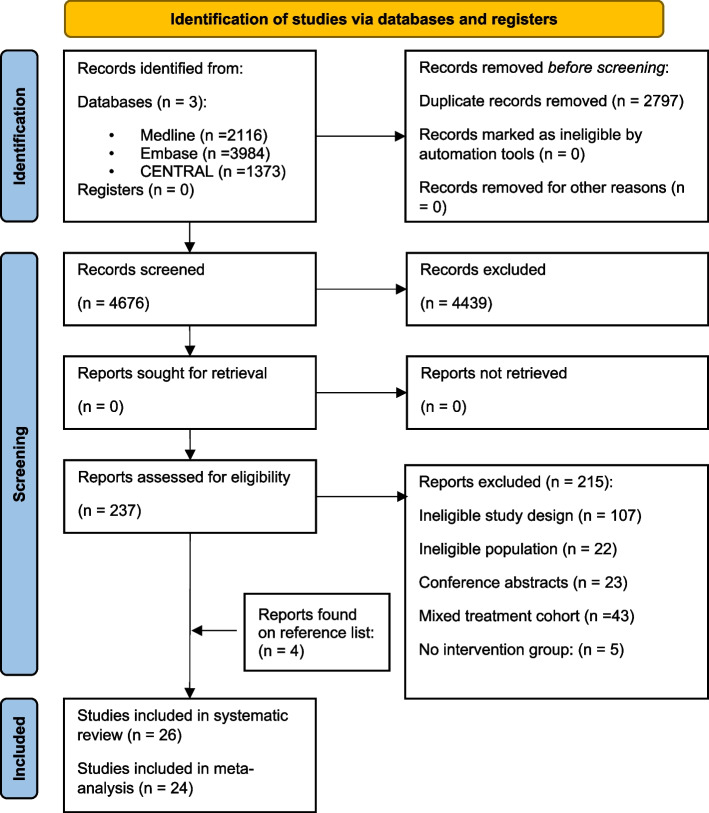
- Included 26 RCTs with 1691 women (806 inositol, 311 placebo, 509 metformin); 24 studies were included in the quantitative synthesis. Pooled risk ratios or mean differences with 95% CIs used random-effects models; heterogeneity assessed with I² and Cochran Q; GRADE used for quality of evidence.
Limitations
- The paper states limitations including small number of studies with small sample sizes, heterogeneous populations, differing follow-up times, different inositol dosages and monotherapy versus combinations, problematic generalization of pregnancy-rate results because only one study analyzed women who wanted pregnancy, missing AUC-insulin and glucose graphs, and moderate-to-high risk of bias in some domains.
- The text also makes evident that the primary outcome was changed from ovulation and menstrual cycle length to menstrual cycle normalization because of lack of data, and the minimum number of studies for meta-analysis was decreased to two.
- The paper notes that cycle normalization data were heterogeneous and that pregnancy outcome definitions were heterogeneous, carrying a significant risk of bias.
Model-written summary. Check it against the paper before relying on it.
Integrity signals
Registry
Cites
Statistics
Figures
Verification
Claims the paper makes
16 Valid · 3 Not valid · 6 Not checked · 97 Own results and interpretations
The cited sources support only part of this claim — read each source’s verdict below.
In the paper
“On the other hand, insulin resistance (IR) has a central role in its pathogenesis [5–7].”
§ Inositol is an effective and safe treatment in polycystic ovary syndrome: a systematic review and meta-analysis of randomized controlled trials > Background
What the sources say
- Supportedcites [5] Armanini D Boscaro M Bordin L Sabbadin C Controversies in the pathogenesis, diagnosis and treatment of pcos: focus on insulin resistance, inflammation, and hyperandrogenism Int J Mol Sci. 2022 23 8 4110 10.3390/ijms23084110 35456928 PMC9030414 source
Section 2, “The Pathogenetic Role of Insulin Resistance in PCOS,” describes how insulin resistance and compensatory hyperinsulinemia increase ovarian androgen production and affect other hormone pathways. This supports the claim that insulin resistance has a central role in PCOS pathogenesis. (LLM, conf=0.92)
- Partly supportedcites [6] Dinicola S Unfer V Facchinetti F Soulage CO Greene ND Bizzarri M Inositols: From Established Knowledge to Novel Approaches Int J Mol Sci 2021 22 19 10575 10.3390/ijms221910575 34638926 PMC8508595 sourceExperimental — accuracy not yet measured
Section 2.1 says insulin resistance and compensatory hyperinsulinemia “seem to have a central role in PCOS pathogenesis.” This supports the substance of the claim, but the citing sentence states the role as fact rather than retaining the source’s qualification. (LLM, conf=0.84)
- Supportedcites [7] Kamenov Z Gateva A Inositols in PCOS Molecules 2020 25 23 5566 10.3390/molecules25235566 33260918 PMC7729761 source
Section 1.1 describes insulin resistance as a central feature of PCOS and says it is thought to be fundamental to the condition. It also describes a pathogenic role for the accompanying hyperinsulinemia, supporting the paraphrase without establishing that insulin resistance is the sole cause. Page numbers are not provided in our copy. (LLM, conf=0.91)
plainstates a cause- Asserted: passes — The authors put it forward as true.
- Checkable: passes — It can be checked against evidence.
- Load-bearing: passes — The paper’s conclusions depend on it.
- Based: passes — The paper gives a reason why it holds.
- Supported
Every source the paper cites for this claim was checked and supports it.
In the paper
“Inositols are considered insulin sensitizers, as they modulate the members of insulin signaling pathways [6].”
§ Inositol is an effective and safe treatment in polycystic ovary syndrome: a systematic review and meta-analysis of randomized controlled trials > Background
What the sources say
- Supportedcites [6] Dinicola S Unfer V Facchinetti F Soulage CO Greene ND Bizzarri M Inositols: From Established Knowledge to Novel Approaches Int J Mol Sci 2021 22 19 10575 10.3390/ijms221910575 34638926 PMC8508595 sourceExperimental — accuracy not yet measured
Section 1.1, “Inositol Discovery and Biology” (page not provided), describes myo-inositol and D-chiro-inositol as having insulin-sensitizing effects. It also reports that D-chiro-inositol changes the expression or activity of several proteins involved in insulin signal transduction. (LLM, conf=0.93)
plainstates a cause- Asserted: passes — The authors put it forward as true.
- Checkable: passes — It can be checked against evidence.
- Load-bearing: passes — The paper’s conclusions depend on it.
- Based: passes — The paper gives a reason why it holds.
- Supported
Every source the paper cites for this claim was checked and supports it.
In the paper
“In addition, hyperinsulinemia stimulates the androgen overproduction of ovarian theca cells [10].”
§ Inositol is an effective and safe treatment in polycystic ovary syndrome: a systematic review and meta-analysis of randomized controlled trials > Background
What the sources say
- Supportedcites [10] Notaro ALG Neto FTL The use of metformin in women with polycystic ovary syndrome: an updated review J Assist Reprod Genet 2022 39 3 573 579 10.1007/s10815-022-02429-9 35156149 PMC8995234 source
The Introduction states that insulin excess acts synergistically with luteinizing hormone to stimulate androgen production by ovarian theca cells. This supports the claim in the context of women with PCOS. (LLM, conf=0.93)
plainstates a cause- Asserted: passes — The authors put it forward as true.
- Checkable: passes — It can be checked against evidence.
- Load-bearing: passes — The paper’s conclusions depend on it.
- Based: passes — The paper gives a reason why it holds.
- Supported
The cited sources that could be checked couldn’t confirm or dispute this claim.
In the paper
“Higher insulin levels reduce the sex hormone binding globulin (SHBG) production of the liver.”
§ Inositol is an effective and safe treatment in polycystic ovary syndrome: a systematic review and meta-analysis of randomized controlled trials > Background
What the sources say
- Could not verifycites [10] Notaro ALG Neto FTL The use of metformin in women with polycystic ovary syndrome: an updated review J Assist Reprod Genet 2022 39 3 573 579 10.1007/s10815-022-02429-9 35156149 PMC8995234 sourceExperimental — accuracy not yet measured
The Introduction says insulin excess stimulates androgen production by theca cells, but it does not address sex hormone-binding globulin production by the liver. Searches for SHBG and hepatic SHBG production found no passage supporting the claimed mechanism in our copy; no page numbers were provided. (LLM, conf=0.76)
plainstates a cause- Asserted: passes — The authors put it forward as true.
- Checkable: passes — It can be checked against evidence.
- Load-bearing: passes — The paper’s conclusions depend on it.
- Based: passes — The paper gives a reason why it holds.
- Could not verify
Every source the paper cites for this claim was checked and supports it.
In the paper
“IR and compensatory hyperinsulinemia can, directly and indirectly, lead to irregular menstrual cycles and hyperandrogenism.”
§ Inositol is an effective and safe treatment in polycystic ovary syndrome: a systematic review and meta-analysis of randomized controlled trials > Background
What the sources say
- Supportedcites [10] Notaro ALG Neto FTL The use of metformin in women with polycystic ovary syndrome: an updated review J Assist Reprod Genet 2022 39 3 573 579 10.1007/s10815-022-02429-9 35156149 PMC8995234 source
The Introduction (page not specified) says excess insulin stimulates androgen production and aggravates hyperandrogenism in women with PCOS. It also links insulin resistance to ovulatory dysfunction by describing the return of normal ovulatory function as a rationale for treating it; the Introduction identifies menstrual irregularity as a feature of PCOS. (LLM, conf=0.85)
plainstates a cause- Asserted: passes — The authors put it forward as true.
- Checkable: passes — It can be checked against evidence.
- Load-bearing: passes — The paper’s conclusions depend on it.
- Based: passes — The paper gives a reason why it holds.
- Supported
74 more claims · 3 with their cited sources checked
Create a free account to see all 122 claims and to verify the 2 references still open.
- Probably not a substantial claim. 29
- It may state two separate claims as one. 24
Claims other papers make about this one
Each is checked against this paper’s own text: does it say what the citing paper says it does?
The source backs part of the claim, not all of it — or backs it for a different population, condition or comparison.
In the citing paper
“A potential reason for this discrepancy is that Greff and colleagues (62) included some studies that we had excluded from analyses due to uncertainty about research integrity; hence, their results may have been influenced by data that we considered to be questionable in the context of informing guidelines for clinical practice.”
From Inositol for Polycystic Ovary Syndrome: A Systematic Review and Meta-analysis to Inform the 2023 Update of the International Evidence-based PCOS Guidelines (2024) · cites this paper as [62]
Experimental — accuracy not yet measuredThe cited source says what the claim attributes to it.
In the citing paper
“Greff and colleagues examined the efficacy of MI or DCI against placebo or metformin in PCOS and reported on 26 RCTs (62).”
From Inositol for Polycystic Ovary Syndrome: A Systematic Review and Meta-analysis to Inform the 2023 Update of the International Evidence-based PCOS Guidelines (2024) · cites this paper as [62]
The cited source says what the claim attributes to it.
In the citing paper
“In contrast to our findings, Greff et al (62). reported a higher rate of cycle normalization and greater reduction of BMI and weight in the inositol group compared with placebo.”
From Inositol for Polycystic Ovary Syndrome: A Systematic Review and Meta-analysis to Inform the 2023 Update of the International Evidence-based PCOS Guidelines (2024) · cites this paper as [62]
The check wasn’t confident either way, so it gives no verdict — never disputed.
In the citing paper
“The administration of GLP-1RA or exendin-4 to rats fed a high-fat diet resulted in an increase in the OPG/RANKL ratio and a reduction in the degree of bone loss.”
From Glucagon-like peptide-1 receptor: mechanisms and advances in therapy (2024) · cites this paper as [393]
Experimental — accuracy not yet measuredThe check wasn’t confident either way, so it gives no verdict — never disputed.
In the citing paper
“In Wistar rats, a diet high in fat was found to lead to a decrease in the ratio of OPG/RANKL, which resulted in increased bone resorption and ultimately a reduction in bone mass.”
From Glucagon-like peptide-1 receptor: mechanisms and advances in therapy (2024) · cites this paper as [393]
Experimental — accuracy not yet measured
Self-check
Percentages, sums and reported differences re-computed from the paper’s own numbers.
Each contradiction between two passages listed here was confirmed by an independent check.
Rated major: it would touch a result — a value a result rests on, reported and recomputed p-values on opposite sides of the significance level, two passages that conflict with no sign which is right, or a cited work retracted before this paper was published.
In the paper
§ Inositol is an effective and safe treatment in polycystic ovary syndrome: a systematic review and meta-analysis of randomized controlled trials > Discussion
“In the case of DHEAS and androstenedione, no significant difference was found.”
§ Inositol is an effective and safe treatment in polycystic ovary syndrome: a systematic review and meta-analysis of randomized controlled trials > Results > Androgens in PCOS
“Androstenedione was also significantly reduced after inositol treatment (MD = -0.69 ng/ml, CI: -1.16; -0.22, Figure S6.).”
Rated major: it would touch a result — a value a result rests on, reported and recomputed p-values on opposite sides of the significance level, two passages that conflict with no sign which is right, or a cited work retracted before this paper was published.
In the paper
§ Inositol is an effective and safe treatment in polycystic ovary syndrome: a systematic review and meta-analysis of randomized controlled trials > Discussion
“According to our data, inositols are non-inferior to metformin regarding its effect on free and total testosterone, androstenedione, and SHBG.”
§ Inositol is an effective and safe treatment in polycystic ovary syndrome: a systematic review and meta-analysis of randomized controlled trials > Results > Androgens in PCOS
“However, only one RCT reported on DHEAS [12], and no articles compared inositol to metformin regarding free testosterone and androstenedione levels.”
Rated minor: it would not touch a result — a value no result rests on, a p-value that stays on the same side of the significance level, or a conflict that is clerical, resolved elsewhere in the paper, or outside its own findings.
In the paper
“| 2 (64) | -0.52 (-1.13; -0.09) | low |”
§ Inositol is an effective and safe treatment in polycystic ovary syndrome: a systematic review and meta-analysis of randomized controlled trials > Results > Inositol treatment promotes ovarian cycle normalization and contributes to weight loss
Reported -0.52 · recomputed -0.61
Rated minor: it would not touch a result — a value no result rests on, a p-value that stays on the same side of the significance level, or a conflict that is clerical, resolved elsewhere in the paper, or outside its own findings.
In the paper
“Twenty-six RCTs were identified, including data of 1691 patients (806 inositol, 311 with placebo, and 509 metformin groups).”
§ Inositol is an effective and safe treatment in polycystic ovary syndrome: a systematic review and meta-analysis of randomized controlled trials > Abstract > Results
Reported 1691 · recomputed 1626
Rated minor: it would not touch a result — a value no result rests on, a p-value that stays on the same side of the significance level, or a conflict that is clerical, resolved elsewhere in the paper, or outside its own findings.
In the paper
§ Inositol is an effective and safe treatment in polycystic ovary syndrome: a systematic review and meta-analysis of randomized controlled trials > Results > Androgens in PCOS
“Myoinositol, compared to placebo, also seems to have a beneficial effect on androstenedione (MD = 0.89 ng/ml, CI: -1.56; -0.22, Figure S6.).”
§ Inositol is an effective and safe treatment in polycystic ovary syndrome: a systematic review and meta-analysis of randomized controlled trials > Results > Inositol treatment promotes ovarian cycle normalization and contributes to weight loss
“| 3 (88) | -0.89 (-1.56; -0.22) | very low |”
Cited works that were retracted
Works this paper cites that were later retracted, from the retraction notices publishers deposit. Major when the notice came out before this paper was published.
A note, not an issue: for example, a cited work that was retracted only after this paper was published, which its authors could not have known.
In the paper
“Gerli S Papaleo E Ferrari A Di Renzo GC Randomized, double blind placebo-controlled trial: effects of myo-inositol on ovarian function and metabolic factors in women with PCOS Eur Rev Med Pharmacol Sci 2007 11 5 347 354 18074942”
Cited work W2414963813 · retraction date not known · this paper published 2023-01-26
A note, not an issue: for example, a cited work that was retracted only after this paper was published, which its authors could not have known.
In the paper
“Jamilian H, Jamilian M, Foroozanfard F, Afshar Ebrahimi F, Bahmani F, Asemi Z. Comparison of myo-inositol and metformin on mental health parameters and biomarkers of oxidative stress in women with polycystic ovary syndrome: a randomized, double-blind, placebo-controlled trial. J Psychosom Obstet Gynaecol. 2018;39(4):307–14.”
Cited work 10.1080/0167482x.2017.1383381 · retracted 2024-05-17 · notice 10.1080/0167482x.2024.2346385 · this paper published 2023-01-26
Citations
Cites
2 retracted
- Retracted
Jamilian, H., Jamilian, M., Foroozanfard, F., Afshar Ebrahimi, F., Bahmani, F., & Asemi, Z. (2018) · Journal of Psychosomatic Obstetrics & Gynecology · doi:10.1080/0167482x.2017.1383381 · Cited by 20
RetractedR: A Language and Environment for Statistical Computing
R Core Team (2025) · doi:10.32614/r.manuals · Cited by 352,181
The PRISMA 2020 statement: An updated guideline for reporting systematic reviews
Page, M. J., McKenzie, J. E., Bossuyt, P. M., Boutron, I., Hoffmann, T. C., Mulrow, C. D., Shamseer, L., Tetzlaff, J. M., Akl, E. A., Brennan, S. E., et al. (2021) · BMJ · doi:10.1136/bmj.n71 · Cited by 108,283
RoB 2: a revised tool for assessing risk of bias in randomised trials
Sterne, J. A. C., Savović, J., Page, M. J., Elbers, R. G., Blencowe, N. S., Boutron, I., Cates, C. J., Cheng, H.-Y., Corbett, M. S., Eldridge, S. M., et al. (2019) · BMJ · doi:10.1136/bmj.l4898 · Cited by 34,787 · cited 1×
“Study risk of bias assessment The risk of bias was assessed based on the recommendation of the Cochrane Collaboration, using the Cochrane risk-of-bias tool for randomized trials (RoB 2) [23].”
MethodCochrane Handbook for Systematic Reviews of Interventions
(2019) · doi:10.1002/9781119536604 · Cited by 14,828
Statistical Aspects of the Analysis of Data From Retrospective Studies of Disease
(1959) · JNCI: Journal of the National Cancer Institute · doi:10.1093/jnci/22.4.719 · Cited by 14,689 · cited 1×
“In the case of dichotomous categorical outcomes, pooled risk ratios (RRs) were calculated with 95% CIs using the random-effects model with the Mantel–Haenszel method, and to obtain τ2 the Paule-Mandel estimator was used [26].”
MethodThe PRISMA 2020 statement: an updated guideline for reporting systematic reviews
Page, M. J., McKenzie, J., Bossuyt, P., Boutron, I., Hoffmann, T., mulrow, C., Shamseer, L., Tetzlaff, J., Akl, E., Brennan, S. E., et al. (2020) · doi:10.31222/osf.io/v7gm2_v1 · Cited by 8,090
The Rotterdam ESHRE/ASRM-sponsored PCOS consensus workshop group (2004) · Human Reproduction · doi:10.1093/humrep/deh098 · Cited by 6,138
The PRISMA 2020 statement: an updated guideline for reporting systematic reviews
Page, M. J., McKenzie, J., Bossuyt, P., Boutron, I., Hoffmann, T., mulrow, C., Shamseer, L., Tetzlaff, J., Akl, E., Brennan, S. E., et al. (2020) · doi:10.31222/osf.io/v7gm2 · Cited by 5,177
IntHout, J., Ioannidis, J. P., & Borm, G. F. (2014) · BMC Medical Research Methodology · doi:10.1186/1471-2288-14-25 · Cited by 2,419
Doing Meta-Analysis with R: A Hands-On Guide
Harrer, M., Cuijpers, P., Furukawa, T. A., & Ebert, D. D. (2021) · doi:10.1201/9781003107347 · Cited by 1,850
Teede, H. J., Misso, M. L., Costello, M. F., Dokras, A., Laven, J., Moran, L., Piltonen, T., Norman, R. J., & the International PCOS Network (2018) · Clinical Endocrinology · doi:10.1111/cen.13795 · Cited by 1,823
Criteria, Prevalence, and Phenotypes of Polycystic Ovary Syndrome
Lizneva, D., Suturina, L., Walker, W., Brakta, S., Gavrilova-Jordan, L., & Azziz, R. (2016) · Fertility and Sterility · doi:10.1016/j.fertnstert.2016.05.003 · Cited by 1,358 · cited 1×
“It affects 5–20% of women of childbearing age [1, 2].”
BackgroundStepto, N. K., Cassar, S., Joham, A. E., Hutchison, S. K., Harrison, C. L., Goldstein, R. F., & Teede, H. J. (2013) · Human Reproduction · doi:10.1093/humrep/des463 · Cited by 747 · cited 1×
“According to a crosssectional study, IR is present in 75% of lean and 95% of overweight women with PCOS [8].”
BackgroundOvulatory and Metabolic Effects of d-Chiro-Inositol in the Polycystic Ovary Syndrome
Nestler, J. E., Jakubowicz, D. J., Reamer, P., Gunn, R. D., & Allan, G. (1999) · New England Journal of Medicine · doi:10.1056/nejm199904293401703 · Cited by 518 · cited 2×
“Nestler, 1999 [43] Venezuela NR 22/22 27.”
Armanini, D., Boscaro, M., Bordin, L., & Sabbadin, C. (2022) · International Journal of Molecular Sciences · doi:10.3390/ijms23084110 · Cited by 324 · cited 1×
“In addition, myoinositol might improve oocyte and embryo quality [5] by encouraging translocation of GLUT4 to the plasma membrane in order to increase glucose uptake [53] and promote aromatase activity.”
BackgroundObesity and Polycystic Ovary Syndrome
Vrbikova, J., & Hainer, V. (2009) · Obesity Facts · doi:10.1159/000194971 · Cited by 236 · cited 1×
“It is important to emphasize that 60–70% of women with PCOS are overweight [9].”
BackgroundGenazzani, A. D., Lanzoni, C., Ricchieri, F., & Jasonni, V. M. (2008) · Gynecological Endocrinology · doi:10.1080/09513590801893232 · Cited by 221 · cited 2×
“were not included in the analysis as they reported improvement if the patient became oligomenorrheic from amenorrhea [37] Pundir et al.”
Backgroundmeta: General Package for Meta-Analysis
Schwarzer, G. (2006) · CRAN: Contributed Packages · doi:10.32614/cran.package.meta · Cited by 202
Effects of d-chiro-inositol in lean women with the polycystic ovary syndrome
Iuorno, M. J., Jakubowicz, D. J., Baillargeon, J.-P., Dillon, P., Gunn, R. D., Allan, G., & Nestler, J. E. (2002) · Endocrine Practice · doi:10.4158/ep.8.6.417 · Cited by 188 · cited 1×
“Iuorno, 2002 [39] Venezuela NR 10/10 27.”
(2009) · PubMed · Cited by 160
Inositols: From Established Knowledge to Novel Approaches
Dinicola, S., Unfer, V., Facchinetti, F., Soulage, C. O., Greene, N. D., Bizzarri, M., Laganà, A. S., Chan, S.-Y., Bevilacqua, A., Pkhaladze, L., et al. (2021) · International Journal of Molecular Sciences · doi:10.3390/ijms221910575 · Cited by 154 · cited 3×
“During the secondary signaling mechanisms, inositol triphosphate (IP3) will also be released, which can be converted to free myoinositol by inositol-monophosphatase [6].”
BackgroundInfluentialFruzzetti, F., Perini, D., Russo, M., Bucci, F., & Gadducci, A. (2017) · Gynecological Endocrinology · doi:10.1080/09513590.2016.1236078 · Cited by 135 · cited 1×
“Fruzetti, 2016 [36] Italy 2014–2015 24/22 21.”
Teede, H. J., Misso, M. L., Costello, M. F., Dokras, A., Laven, J., Moran, L., Piltonen, T., Norman, R. J., & International PCOS Network (2019) · Human Reproduction · doi:10.1093/humrep/dey363 · Cited by 120
Schneider, S. (2015) · FEBS Letters · doi:10.1016/j.febslet.2015.03.012 · Cited by 118 · cited 1×
“On the other hand, it can be found in the cell membranes as phosphatidyl-myoinositol as the precursor of inositol triphosphate (PIP2), which plays a crucial role [52] in the signal transduction of various receptors, including FSH, promoting granulosa cell differentiation and follicle maturation [47].”
BackgroundPundir, J., Psaroudakis, D., Savnur, P., Bhide, P., Sabatini, L., Teede, H., Coomarasamy, A., & Thangaratinam, S. (2018) · BJOG: An International Journal of Obstetrics & Gynaecology · doi:10.1111/1471-0528.14754 · Cited by 115
Inositols in polycystic ovary syndrome: An overview on the advances
Facchinetti, F., Unfer, V., Dewailly, D., Kamenov, Z. A., Diamanti-Kandarakis, E., Laganà, A. S., Nestler, J. E., & Soulage, C. O. (2020) · Trends in Endocrinology & Metabolism · doi:10.1016/j.tem.2020.02.002 · Cited by 102 · cited 4×
“Eligible studies used either myoinositol or D-chiro-inositol as the investigated intervention.”
BackgroundInfluentialInsulin sensitiser agents alone and in co-treatment with r-FSH for ovulation induction in PCOS women
Raffone, E., Rizzo, P., & Benedetto, V. (2010) · Gynecological Endocrinology · doi:10.3109/09513590903366996 · Cited by 100
Benelli, E., Del Ghianda, S., Di Cosmo, C., & Tonacchera, M. (2016) · International Journal of Endocrinology · doi:10.1155/2016/3204083 · Cited by 100 · cited 1×
“, one more RCT was included in the present analysis [31], and no difference was found in DHEAS levels after inositol treatment compared to placebo [19, 31].”
ResultKamenov, Z., & Gateva, A. (2020) · Molecules · doi:10.3390/molecules25235566 · Cited by 100
Facchinetti, F., Orrù, B., Grandi, G., & Unfer, V. (2019) · Gynecological Endocrinology · doi:10.1080/09513590.2018.1540578 · Cited by 94 · cited 2×
“in testosterone, androstenedione, and SHBG levels after inositol treatment compared to metformin [3, 56].”
BackgroundDonà, G., Sabbadin, C., Fiore, C., Bragadin, M., Giorgino, F. L., Ragazzi, E., Clari, G., Bordin, L., & Armanini, D. (2012) · European Journal of Endocrinology · doi:10.1530/eje-11-0840 · Cited by 89
The use of metformin in women with polycystic ovary syndrome: an updated review
Notaro, A. L. G., & Neto, F. T. L. (2022) · Journal of Assisted Reproduction and Genetics · doi:10.1007/s10815-022-02429-9 · Cited by 83 · cited 2×
“In addition, hyperinsulinemia stimulates the androgen overproduction of ovarian theca cells [10].”
BackgroundIjuin, T., & Takenawa, T. (2012) · Journal of Biological Chemistry · doi:10.1074/jbc.m111.335539 · Cited by 73 · cited 1×
“In addition, myoinositol might improve oocyte and embryo quality [5] by encouraging translocation of GLUT4 to the plasma membrane in order to increase glucose uptake [53] and promote aromatase activity.”
BackgroundInositol and human reproduction. From cellular metabolism to clinical use
Milewska, E. M., Czyzyk, A., Meczekalski, B., & Genazzani, A. D. (2016) · Gynecological Endocrinology · doi:10.1080/09513590.2016.1188282 · Cited by 69 · cited 4×
“Eligible studies used either myoinositol or D-chiro-inositol as the investigated intervention.”
BackgroundInfluentialShokrpour, M., Foroozanfard, F., Afshar Ebrahimi, F., Vahedpoor, Z., Aghadavod, E., Ghaderi, A., & Asemi, Z. (2019) · Gynecological Endocrinology · doi:10.1080/09513590.2018.1540570 · Cited by 63
Effectiveness of myoinositol for polycystic ovary syndrome: a systematic review and meta-analysis
Zeng, L., & Yang, K. (2018) · Endocrine · doi:10.1007/s12020-017-1442-y · Cited by 59 · cited 5×
“to previously published meta-analyses [19, 54].”
BackgroundInfluentialFulghesu, A. M., Romualdi, D., Di Florio, C., Sanna, S., Tagliaferri, V., Gambineri, A., Tomassoni, F., Minerba, L., Pasquali, R., & Lanzone, A. (2012) · Human Reproduction · doi:10.1093/humrep/des262 · Cited by 48 · cited 1×
“However, metformin may induce mild to severe gastrointestinal side effects such as nausea, diarrhea, vomiting, and flatulence [11].”
BackgroundTagliaferri, V., Romualdi, D., Immediata, V., De Cicco, S., Di Florio, C., Lanzone, A., & Guido, M. (2017) · Clinical Endocrinology · doi:10.1111/cen.13304 · Cited by 40 · cited 3×
“Twenty-four studies were included in the quantitative synthesis [12–16, 31–49], but two studies were excluded from the meta-analysis due to inappropriate data reporting [50, 51].”
BackgroundChhabra, N., & Malik, S. (2018) · Journal of Human Reproductive Sciences · doi:10.4103/jhrs.jhrs_59_17 · Cited by 40
(2019) · PubMed · doi:10.26355/eurrev_201903_17278 · Cited by 38 · cited 8×
“Finally, only one study investigated the effect of inositol on the FG-score [15].”
BackgroundInfluentialSoldat-Stanković, V., Popović-Pejičić, S., Stanković, S., Prtina, A., Malešević, G., Bjekić-Macut, J., Livadas, S., Ognjanović, S., Mastorakos, G., Micić, D., et al. (2022) · Journal of Endocrinological Investigation · doi:10.1007/s40618-021-01691-5 · Cited by 37 · cited 11×
“In the case of DHEAS and androstenedione, no significant difference was found.”
BackgroundInfluentialAngik, R. (2015) · International Journal of Reproduction, Contraception, Obstetrics and Gynecology · doi:10.5455/2320-1770.ijrcog20150234 · Cited by 33
Jamilian, M., Farhat, P., Foroozanfard, F., Afshar Ebrahimi, F., Aghadavod, E., Bahmani, F., Badehnoosh, B., Jamilian, H., & Asemi, Z. (2017) · Clinical Endocrinology · doi:10.1111/cen.13366 · Cited by 31
Pourghasem, S., Bazarganipour, F., Taghavi, S. A., & Kutenaee, M. A. (2019) · Archives of Gynecology and Obstetrics · doi:10.1007/s00404-019-05064-5 · Cited by 28 · cited 2×
“Pourghasem, 2018 [44] Iran 2015–2016 50/50/50 30.”
Method(2013) · PubMed · Cited by 25
Kutenaei, M. A., Teshnizi, S. H., Ghaemmaghami, P., Eini, F., & Roozbeh, N. (2021) · PubMed · doi:10.26355/eurrev_202104_25565 · Cited by 25 · cited 1×
“reported that myoinositol reduced total testosterone and DHEA level more effectively than metformin [55].”
BackgroundNehra, J., Kaushal, J., Singhal, S. R., & Ghalaut, V. S. (2017) · International Journal of Pharmacy and Pharmaceutical Sciences · doi:10.22159/ijpps.2017v9i4.16359 · Cited by 23
Rajasekaran, K., Malhotra, N., Mahey, R., Khadgawat, R., & Kalaivani, M. (2022) · Gynecological Endocrinology · doi:10.1080/09513590.2021.1981282 · Cited by 22
A randomised clinical trial comparing myoinositol and metformin in PCOS
Chirania, K., Misra, S., & Behera, S. (2017) · International Journal of Reproduction Contraception Obstetrics and Gynecology · doi:10.18203/2320-1770.ijrcog20171563 · Cited by 21 · cited 1×
“On the other hand, it can be found in the cell membranes as phosphatidyl-myoinositol as the precursor of inositol triphosphate (PIP2), which plays a crucial role [52] in the signal transduction of various receptors, including FSH, promoting granulosa cell differentiation and follicle maturation [47].”
BackgroundMaria Concetta Musacchio, V. D. L. (2013) · Journal of Metabolic Syndrome · doi:10.4172/2167-0943.1000127 · Cited by 19 · cited 2×
“Twenty-four studies were included in the quantitative synthesis [12–16, 31–49], but two studies were excluded from the meta-analysis due to inappropriate data reporting [50, 51].”
BackgroundLi, X., Fang, Z., Yang, X., Pan, H., Zhang, C., Li, X., Bai, Y., & Wang, F. (2021) · Journal of obstetrics and gynaecology research · doi:10.1111/jog.14725 · Cited by 17 · cited 2×
“Background Polycystic ovary syndrome (PCOS) is the most common endocrine disorder and one of the most frequent causes of infertility in women [1].”
Background(2022) · PubMed · doi:10.26355/eurrev_202203_28322 · Cited by 11 · cited 2×
“in testosterone, androstenedione, and SHBG levels after inositol treatment compared to metformin [3, 56].”
BackgroundSingh, P., Biswal, S., & Verma, S. K. (2020) · International Journal of Reproduction Contraception Obstetrics and Gynecology · doi:10.18203/2320-1770.ijrcog20205220 · Cited by 2
Research works printed but not linked: 4
- Nehra J Kaushal J Singhal SR Ghalaut VS A comparative study of myo inositol versus metformin on biochemical profile in polycystic ovarian syndrome in women Int J Pharm Sci Res 2017 8 4 1664 1670
- Higgins JPT LT, Deeks JJ. Chapter 6: Choosing effect measures and computing estimates of effect. In: Higgins JPT, Thomas J, Chandler J, Cumpston M, Li T, Page MJ, Welch VA, editors. Cochrane Handbook for Systematic Reviews of Interventions version 6.3 (updated February 2022). Cochrane. 2022. https://training.cochrane.org/handbook/current/chapter-06.
- Schünemann H The GRADE handbook: Cochrane Collaboration 2013
- Schillaci R Mangione D Lo Monte G Vassiliadis A Inositol supplementation and IVF outcome: Preliminary data Italian J Gynaecol Obstetr 2012 24 1 38 44
Cited by
Glucagon-like peptide-1 receptor: mechanisms and advances in therapy
Zheng, Z., Zong, Y., Ma, Y., Tian, Y., Pang, Y., Zhang, C., & Gao, J. (2024) · Signal Transduction and Targeted Therapy · doi:10.1038/s41392-024-01931-z · Cited by 1,036
“393 As a result, GLP-1RAs could mitigate the detrimental effects of hyperlipidemia-induced skeletal defects, leading to an improved prognosis in individuals with OA.”
BackgroundPolycystic Ovary Syndrome and Oxidative Stress—From Bench to Bedside
Żeber‐Lubecka, N., Ciebiera, M., & Hennig, E. E. (2023) · International Journal of Molecular Sciences · doi:10.3390/ijms241814126 · Cited by 182
“Inositol is a naturally occurring carbohydrate compound that belongs to the vitamin B family and has gained attention for its potential role in various health conditions, including PCOS [116], especially due to its effects on insulin sensitivity and hormone regulation [117].”
The Role of Lifestyle Interventions in PCOS Management: A Systematic Review
Gautam, R., Maan, P., Jyoti, A., Kumar, A., Malhotra, N., & Arora, T. (2025) · Nutrients · doi:10.3390/nu17020310 · Cited by 115
Systematic low-grade chronic inflammation and intrinsic mechanisms in polycystic ovary syndrome
Deng, H., Chen, Y., Xing, J., Zhang, N., & Xu, L. (2024) · Frontiers in Immunology · doi:10.3389/fimmu.2024.1470283 · Cited by 172
Froldi, G. (2024) · Pharmaceuticals · doi:10.3390/ph17040478 · Cited by 83
“In addition, improvements in hyperinsulinemia and carbohydrate metabolism were observed compared to the placebo group, suggesting that inositol may not be inferior to metformin treatment regarding glucose control [205].”
Background
Metadata
- Authors
- Greff, D., Juhász, A. E., Váncsa, S., Váradi, A., Sipos, Z., Szinte, J., Park, S., Hegyi, P., Nyirády, P., Ács, N., Várbíró, S., & Horváth, E. M.
- Affiliations
- Semmelweis University (HU)
- University of Pecs (HU)
- Venue
- Reproductive Biology and Endocrinology
- Published
- 2023-01-26
- Volume
- 21
- Issue
- 1
- Pages
- 10-10
- ISSN
- 1477-7827 (ISSN-L)
- PMC
- PMC9878965
- OpenAlex
- W4318054803
- Semantic Scholar
- a8070dcf10b3bc2a08cd0fa11ecab3c363d18cad
- Cited by
- 143
- References
- 51
- Citations by year
- 2026: 35 · 2025: 51 · 2024: 41 · 2023: 16
- FWCI
- 5.74
- Type
- journal article
- Language
- en
- Open access
- gold
- doi.org
- Licence
- cc-by
- creativecommons.org/licenses/by/4.0 (tdm)
- creativecommons.org/licenses/by/4.0 (vor)
- Locations
- Reproductive Biology and Endocrinology (publishedVersion, cc-by)
- PubMed Central (publishedVersion, cc-by)
- PubMed (publishedVersion)
- DOAJ (DOAJ: Directory of Open Access Journals) (submittedVersion, cc-by-sa)
- Funders
- National Research, Development, and Innovation Office (NKFIH-FK129206)
- Semmelweis University
- Topics
- Health Sciences › Medicine › Reproductive Medicine › Ovarian function and disorders
- Health Sciences › Medicine › Endocrinology, Diabetes and Metabolism › Diabetes, Cardiovascular Risks, and Lipoproteins
- Health Sciences › Medicine › Reproductive Medicine › Endometriosis Research and Treatment
- Keywords
- polycystic ovary syndrome, myo-inositol, metformin, insulin resistance, body mass index, hyperandrogenism, sex hormone-binding globulin, insulin sensitivity, glucose metabolism, treatment safety, insulin sensitizers, androstenedione, free testosterone, sex hormones
- MeSH terms
- Female, Humans, Hypoglycemic Agents, Inositol, Metformin, Polycystic Ovary Syndrome, Testosterone, Randomized Controlled Trials as Topic, Insulins
About these checks
Registry, retraction, Cites and statistics results are computed, not judged, with one exception: a printed reference that no index lists is read once by a model before it counts as a citation error. Claims are extracted by a model and kept only when their quote appears verbatim in the text; each cited source is then checked, with a model’s help, for whether it says what the claim relies on. Those verdicts can be wrong — read the claim’s quote and the cited source before relying on one.
The claim verdicts this report counts are experimental: their accuracy is not yet measured.
A language model drew the claims from the paper on 2026-10-10, under version 3 of the claim definition (model deepseek-v4.1-flash, prompt extract-v3).
A second model labelled each claim on 2026-10-10 (model jev-1.13-20260917, definition revision gold-guideline-v0.2).
Cited sources are checked with a language model’s help (gpt-6-sol).
Statistics and arithmetic are recomputed, not judged.
Confidence bands are shown only for fields calibrated on our annotated test set. None is calibrated yet, so no band is shown.
What counts as a claim ›How we measure confidence ›How we check this ›
Are you an author, or do you see a problem with this page? Request a review
Data sources
Bibliographic data: Semantic Scholar, OpenAlex, Crossref.
Contains information from the Semantic Scholar Academic Graph Datasets, made available under the ODC Attribution License (ODC-BY 1.0).
Semantic Scholar’s data is described in: Kinney, R., et al. (2023). The Semantic Scholar Open Data Platform. arXiv:2301.10140.
