

Approaches to improving the contribution of the nursing and midwifery workforce to increasing universal access to primary health care for vulnerable populations: a systematic review
Open accessThe DOI matches its Crossref record; 87 of the 89 references it cites were found in a registry or an index.
Abstract
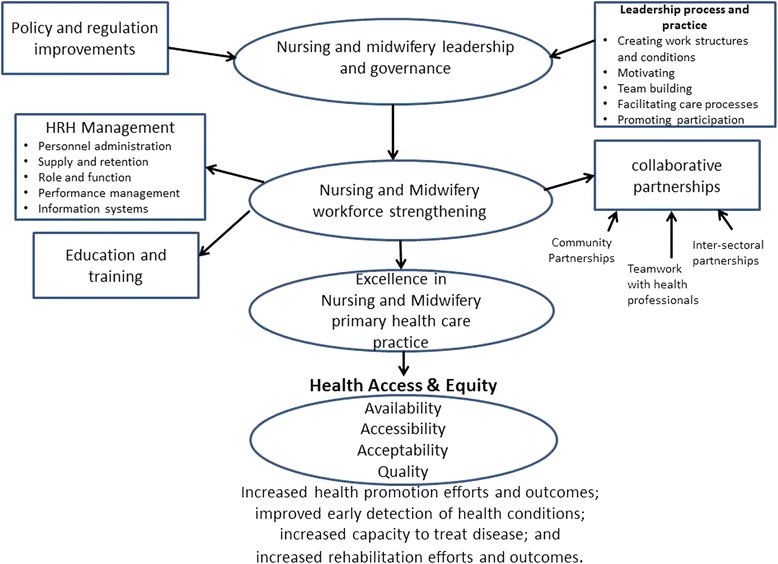
BACKGROUND: Despite considerable evidence showing the importance of the nursing and midwifery workforce, there are no systematic reviews outlining how these cadres are best supported to provide universal access and reduce health care disparities at the primary health care (PHC) level. This review aims to identify nursing and midwifery policy, staffing, education and training interventions, collaborative efforts and strategies that have improved the quantity, quality and relevance of the nursing and midwifery workforce leading to health improvements for vulnerable populations. METHODS: We undertook a structured search of bibliographic databases for peer-reviewed research literature using a focused review question and inclusion/exclusion criteria. The quality of retrieved papers was appraised using standard tools. The characteristics of screened papers were described, and a deductive qualitative content analysis methodology was applied to analyse the interventions and findings of included studies using a conceptual framework. RESULTS: Thirty-six papers were included in the review, the majority (25) from high-income countries and nursing settings (32). Eleven papers defined leadership and governance approaches that had impacted upon the health outcomes of disadvantaged groups including policies at the national and state level that had led to an increased supply and coverage of nursing and midwifery staff and scope of practice. Twenty-seven papers outlined human resource management strategies to support the expansion of nurse's and midwives' roles that often involved task shifting and task sharing. These included approaches to managing staffing supply, distribution and skills mix; workloads; supervision; performance management; and remuneration, financial incentives and staffing costs. Education and training activities were described in 14 papers to assist nurses and midwives to perform new or expanded roles and prepare nurses for inclusive practice. This review identified collaboration between nurses and midwives and other health providers and organizations, across sectors, and with communities and individuals that resulted in improved health care and outcomes. CONCLUSIONS: The findings of this review confirm the importance of a conceptual framework for understanding and planning leadership and governance approaches, management strategies and collaboration and education and training efforts to scale up and support nurses and midwives in existing or expanded roles to improve access to PHC for vulnerable populations.
Overview
The claims and statistics of this paper haven’t been checked yet.
Free: it reads the open-access text and checks the first 5 claims that cite a source we can check. Create a free account to check every claim.
Integrity signals
Registry
Cites
Statistics
Figures
Verification
Claims the paper makes
The claims and statistics of this paper haven’t been checked yet.
Free: it reads the open-access text and checks the first 5 claims that cite a source we can check. Create a free account to check every claim.
Claims other papers make about this one
Each is checked against this paper’s own text: does it say what the citing paper says it does?
The check wasn’t confident either way, so it gives no verdict — never disputed.
In the citing paper
“As highlighted by others, solutions to post-conflict delivery of BEmONC are contextual and more likely to be successful in NGO run facilities [48, 49] and with inter-country collaboration to increase SBA capacity [14, 50].”
From Accelerated Training of Skilled Birth Attendants in a Marginalized Population on the Thai-Myanmar Border: A Multiple Methods Program Evaluation (2016) · cites this paper as [48]
Experimental — accuracy not yet measured
Self-check
Percentages, sums and reported differences re-computed from the paper’s own numbers.
The self-check needs the paper’s full text.
Citations
Cites
Preferred Reporting Items for Systematic Reviews and Meta-Analyses: the PRISMA statement
Moher, D., Liberati, A., Tetzlaff, J., Altman, D. G., & for the PRISMA Group (2009) · BMJ · doi:10.1136/bmj.b2535 · Cited by 83,823
Preferred Reporting Items for Systematic Reviews and Meta-Analyses: The PRISMA Statement
Moher, D., Liberati, A., Tetzlaff, J., Altman, D. G., & The PRISMA Group (2009) · PLoS Medicine · doi:10.1371/journal.pmed.1000097 · Cited by 64,042 · cited 1×
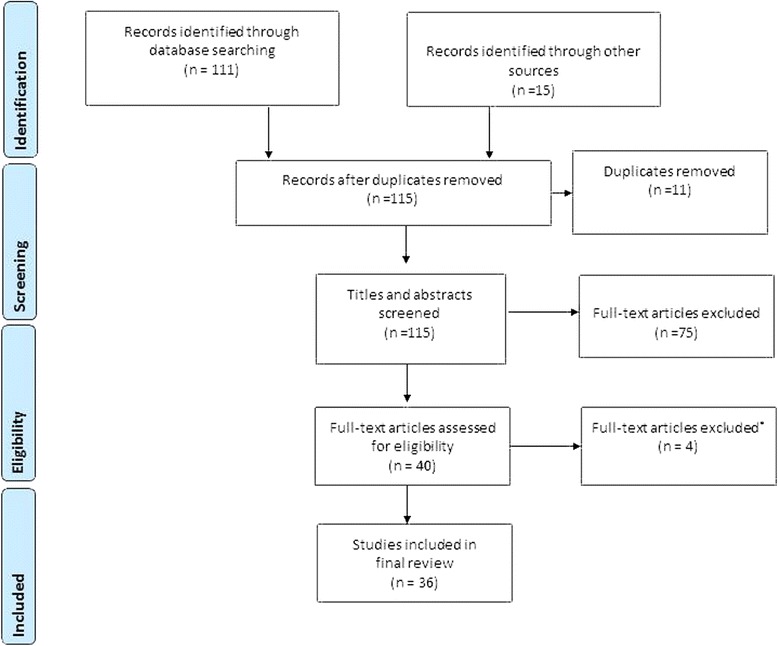
“report the review process [32] (see Fig.”
Preferred reporting items for systematic reviews and meta-analyses: the PRISMA Statement.
(2009) · PubMed Central · Cited by 44,859
The qualitative content analysis process
Elo, S., & Kyngäs, H. (2008) · Journal of Advanced Nursing · doi:10.1111/j.1365-2648.2007.04569.x · Cited by 22,617 · cited 1×
“lected research papers [28].”
Preferred Reporting Items for Systematic Reviews and Meta-Analyses: The PRISMA Statement
Moher, D., Liberati, A., Tetzlaff, J., & Altman, D. G. (2009) · Journal of Clinical Epidemiology · doi:10.1016/j.jclinepi.2009.06.005 · Cited by 19,575
Systematic reviews: CRD's guidance for undertaking reviews in health care
Tacconelli, E. (2010) · The Lancet Infectious Diseases · doi:10.1016/s1473-3099(10)70065-7 · Cited by 3,245
Pluye, P., Gagnon, M.-P., Griffiths, F., & Johnson-Lafleur, J. (2009) · International Journal of Nursing Studies · doi:10.1016/j.ijnurstu.2009.01.009 · Cited by 1,119 · cited 1×
“’s [34] scoring system was used to assess the non-experimental and mixed method studies.”
MethodFendall, N. R. E. (1978) · The Lancet · doi:10.1016/s0140-6736(78)92066-4 · Cited by 1,089
Frohlich, K. L., & Potvin, L. (2008) · American Journal of Public Health · doi:10.2105/ajph.2007.114777 · Cited by 989 · cited 1×
“For the purpose of this paper, we defined a vulnerable population as a subgroup or subpopulation who, because of shared social characteristics, is at a higher risk of factors such as unsafe sex, stress, drug misuse and malnutrition that can impact upon health issues including HIV and diabetes as well as access to heal…”
BackgroundThe relationship between nursing leadership and patient outcomes: a systematic review update
Wong, C. A., Cummings, G. G., & Ducharme, L. (2013) · Journal of Nursing Management · doi:10.1111/jonm.12116 · Cited by 846 · cited 1×
“ship and governance on action and intervention is drawn from evidence of the impact of leadership upon patient outcomes [23] and acknowledges the importance”
Background
Research works printed but not linked: 4
- 7. Speybroeck N, Kinfu Y, Dal Poz MR, Evans DB. Reassessing the relationship between human resources for health, intervention coverage and health outcomes. Geneva: World Health Organization; 2006.
- 12. UCL. Working for health equity: the role of health professionals healthcare system and workforce’s role in reducing health inequalities through action on the social determinants of health. London: UCL Institute of Health Equity - Department of Epidemiology & Public Health University College London; 2013.
- 21. WHO. Interprofessional collaborative practice in primary health care: nursing and midwifery perspectives six case studies. Geneva: World Health Organization; 2013.
- 86. Kamau-Small S, Joyce B, Bermingham N, Roberts J, Robbins C. The impact of the Care Equity Project with community/public health nursing students. Public Health Nursing. 2014;32(3):169–76. doi: 10.1111/phn.12131. · DOI
Cited by
Bitton, A., Fifield, J., Ratcliffe, H., Karlage, A., Wang, H., Veillard, J. H., Schwarz, D., & Hirschhorn, L. R. (2019) · BMJ Global Health · doi:10.1136/bmjgh-2019-001551 · Cited by 205
Karimi-Shahanjarini, A., Shakibazadeh, E., Rashidian, A., Hajimiri, K., Glenton, C., Noyes, J., Lewin, S., Laurant, M., & Colvin, C. J. (2019) · Cochrane Database of Systematic Reviews · doi:10.1002/14651858.cd010412.pub2 · Cited by 177
Performance Measurement and Management Systems: A Perspective from Complexity Theory
Okwir, S., Nudurupati, S., Ginieis, M., & Angelis, J. (2018) · International Journal of Management Reviews · doi:10.1111/ijmr.12184 · Cited by 163
A global perspective of advanced practice nursing research: A review of systematic reviews
Kilpatrick, K., Savard, I., Audet, L., Costanzo, G., Khan, M., Atallah, R., Jabbour, M., Zhou, W., Wheeler, K. J., Ladd, E., et al. (2024) · PLoS ONE · doi:10.1371/journal.pone.0305008 · Cited by 129
“Several reviews indicated that autonomous or full scope of practice enhanced patient, provider and health system level outcomes (e.g., Dawson, 2015; Hutchison, 2014) [101, 141].”
Wilson, D., Heaslip, V., & Jackson, D. W. (2018) · Journal of Clinical Nursing · doi:10.1111/jocn.14546 · Cited by 80
Witter, S., Hamza, M. M., Alazemi, N., Alluhidan, M., Alghaith, T., & Herbst, C. H. (2020) · Human Resources for Health · doi:10.1186/s12960-020-00484-w · Cited by 72
Sangy, M. T., Duaso, M., Feeley, C., & Walker, S. (2023) · Midwifery · doi:10.1016/j.midw.2023.103696 · Cited by 50
Effland, K. J., Hays, K. E., Ortiz, F. M., & Blanco, B. A. (2020) · Journal of Midwifery & Women s Health · doi:10.1111/jmwh.13070 · Cited by 39
Creating academic structures to promote nursing's role in global health policy
Gimbel, S., Kohler, P. K., Mitchell, P. H., & Emami, A. (2017) · International Nursing Review · doi:10.1111/inr.12338 · Cited by 43
“At the policy level, nursing certifications and regulatory bodies ensure quality care across heterogeneous sites (Blaauw et al. 2014; Dawson et al. 2015; Doherty & Coetzee 2005; Martinez-Gonzalez et al. 2015; McCarthy et al. 2013; Moraros et al. 2016; Willcox et al. 2015).”
BackgroundWhite, A. L., Min, T. H., Gross, M. M., Kajeechiwa, L., Thwin, M. M., Hanboonkunupakarn, B., Than, H. H., Zin, T. W., Rijken, M. J., Hoogenboom, G., et al. (2016) · PLoS ONE · doi:10.1371/journal.pone.0164363 · Cited by 29
Consumer participation in drug treatment: a systematic review
Goodhew, M., Stein‐Parbury, J., & Dawson, A. J. (2018) · Drugs and Alcohol Today · doi:10.1108/dat-05-2018-0023 · Cited by 34
Self-citationAbrams, R., Wong, G., Mahtani, K. R., Tierney, S., Boylan, A. R., Roberts, N. W., & Park, S. E. (2020) · British Journal of General Practice · doi:10.3399/bjgp20x710153 · Cited by 38
A bibliographic exploration of nursing's scope of practice
Benton, D., Cusack, L., Jabbour, R., & Penney, C. (2016) · International Nursing Review · doi:10.1111/inr.12337 · Cited by 32
“…looking specifically at advanced practice roles, address particular care settings, client groups or areas of practice such as primary, long-term or intensive care and anaesthesiology (Dawson et al. 2015; Donald et al. 2013; Morilla-Herrera et al. 2016; Neft et al. 2013; Srivastava et al. 2008).”
BackgroundMeta-synthesis of Qualitative Research
Dawson, A. J. (2019) · Springer eBooks · doi:10.1007/978-981-10-5251-4_112 · Cited by 33
Self-citationImproving maternal health literacy among low-income pregnant women: A systematic review
Ningrum, E. W., Lusmilasari, L., Huriyati, E., Marthias, T., & Hasanbasri, M. (2024) · Narra J · doi:10.52225/narra.v4i2.886 · Cited by 58
“These initiatives are essential to successfully implementing midwifery services in the community [17].”
BackgroundHosseinnejad, A., Rassouli, M., Jahani, S., Elahi, N., & Molavynejad, S. (2022) · Frontiers in Public Health · doi:10.3389/fpubh.2021.793973 · Cited by 30
Nature and scope of certified nurse‐midwifery practice: A workforce study
Hastings‐Tolsma, M., Wilcox, S. L., Brucker, M. C., Nodine, P., BURPO, R. H., Camune, B. D., Griggs, J., & Callahan, T. J. (2018) · Journal of Clinical Nursing · doi:10.1111/jocn.14489 · Cited by 24
Saif-Ur-Rahman, K. M., Mamun, R., & Anwar, I. (2019) · BMJ Open · doi:10.1136/bmjopen-2018-024316 · Cited by 21
Gopalan, G. (2016) · Pilot and Feasibility Studies · doi:10.1186/s40814-016-0062-2 · Cited by 20
“, nurses) to increase access to medical services [39–42].”
BackgroundThe state of midwifery in small island Pacific nations
Homer, C., Turkmani, S., & Rumsey, M. (2017) · Women and Birth · doi:10.1016/j.wombi.2017.02.012 · Cited by 18
West, F., Dawson, A. J., & Homer, C. (2017) · Nurse Education in Practice · doi:10.1016/j.nepr.2017.05.003 · Cited by 24
“There are also a limited number of suitable professional development programs for midwives in rural areas (Dawson et al., 2015; Frenk et al., 2010; Lemay et al., 2012), inadequate access to the internet and poor computer literacy both of which can lead to the use of outdated or incomplete reference…”
BackgroundSelf-citationHossain, M. A., & Dawson, A. J. (2022) · WHO South-East Asia Journal of Public Health · doi:10.4103/who-seajph.who-seajph_144_21 · Cited by 22
Self-citationKhatri, R. B., & Assefa, Y. A. (2023) · BioMed Research International · doi:10.1155/2023/6648138 · Cited by 18
“A multidisciplinary team, multicultural and Indigenous providers, provision of interpreters, gender matching with users, and cross-cultural training could negate ethnic bias, stigma, and stereotypes and provide culturally appropriate care [43, 174].”
BackgroundGuerra-Arias, M., Nove, A., Michel‐Schuldt, M., & de Bernis, L. (2017) · International Journal for Equity in Health · doi:10.1186/s12939-017-0569-z · Cited by 14
“(XLSX 12 kb) Abbreviations AAAQ: Availability, accessibility, acceptability and quality; CARMMA: Campaign for Accelerated Reduction of Maternal Mortality in Africa; DRC: Democratic Republic of the Congo; EmONC: Emergency Obstetric and Newborn Care; FTE: Full-time equivalent; HRH: Human resources for health; HRIS: Huma…”
BackgroundInfluentialHudon, É., Hudon, C., Chouinard, M., Lafontaine, S., de Jordy, L. C., & Ellefsen, É. (2022) · Advances in Nursing Science · doi:10.1097/ans.0000000000000419 · Cited by 18
“11,13,24 We excluded studies that were (1) exclusive to fecundation, delivery, or the postnatal period; (2) about miscarriage, abortion, or perinatal loss because these situations may influence women’s experience of prenatal care25; (3) conducted in hospital settings; (4) unclear about nurses’ follow-up in primary car…”
MethodMay, S. Y., Clara, N., Khin, O. K., Mar, W., Han, A. N., & Maw, S. S. (2021) · International Journal of Nursing Sciences · doi:10.1016/j.ijnss.2021.05.003 · Cited by 21
“Collaboration of nurses and midwives with other healthcare providers and organizations can improve health outcomes [7].”
BackgroundSavard, I., Costanzo, G., Henderson, C., Gray, D. C., Rogers, M., & Kilpatrick, K. (2025) · Nursing Outlook · doi:10.1016/j.outlook.2025.102358 · Cited by 16
“…including independent practice and prescriptive authority (Patel et al., 2019; Yang et al., 2021), improving access to primary healthcare, especially in underserved and rural areas and for people in vulnerable situations (Dawson et al., 2015; De Chesnay & Anderson, 2019; Neprash et al., 2021).”
Hamm, L. M., Black, J. M., Burn, H., Grey, C., Harwood, M. L. N., Peiris-John, R. J., Gordon, I., Burton, M. J., Evans, J. R., & Ramke, J. (2020) · BMJ Open · doi:10.1136/bmjopen-2019-033775 · Cited by 10
Fan, Y., Qu, X. D., Zhang, W., Tao, Z., & Chen, C. (2024) · Journal of Nursing Management · doi:10.1155/2024/9946881 · Cited by 12
“…complex and rapidly developing medical environment, nurses tend to be the main providers of primary health care services, and the central role of nurses in health care, including their proximity to patients, clinical decision-making roles, health care education, and preventive services [1–3].”
Reimagining the role of the nursing workforce in Uganda after more than a decade of ART scale-up
Zakumumpa, H. (2020) · Human Resources for Health · doi:10.1186/s12960-020-00479-7 · Cited by 9
Anderson, R., Zaman, S. B., Jimmy, A. N., Read, J. M., & Limmer, M. (2023) · BMC Pregnancy and Childbirth · doi:10.1186/s12884-023-06027-0 · Cited by 13
“Policies that scale up education and deploy midwives closer to communities were found to have a positive impact on service utilization and health outcomes [68].”
BackgroundInequalities in Health Services Usage in a National Health System Scheme
Morteruel, M., Rodríguez-Álvarez, E., Unai Martín, R., & Amaia Bacigalupe, H. (2017) · Nursing Research · doi:10.1097/nnr.0000000000000256 · Cited by 9
Design Implications to Support Integrative Medicine in Pregnancy Care
Zakeresfahani, A., Everhart, M., Baglione, A. N., Llorca, M. C., Grant, V., Omega, N., Woertz, A., & Clawson, J. (2022) · Proceedings of the ACM on Human-Computer Interaction · doi:10.1145/3555540 · Cited by 9
“As nontraditional birth settings such as birth centers and home births increase in popularity [69] and the number of IMPs increase nationwide [30], there exists an opportunity for the HCI and CSCW community to effectively work towards bridging the clinical and non-clinical domains to ensure holistic care for a plurali…”
BackgroundMundet, X., Crespo, R. M., Fernandez-Coll, M. L., Saumell, M., Millan-Mata, F., Cardona, À., & Codern‐Bové, N. (2017) · BMC Medical Education · doi:10.1186/s12909-017-1061-6 · Cited by 10
“and designing strategies to improve the health of the population and vulnerable groups [22].”
BackgroundReinstating district nursing: A UK perspective
Morris, H. (2017) · Nurse Education in Practice · doi:10.1016/j.nepr.2017.06.006 · Cited by 8
“The term ‘district nurse’ is used to describe nursing within the community and in the home in the UK, New Zealand, Australia, The Netherlands and Sweden (Haybin et al., 2016; O'Connor, 2011; Dawson et al., 2015; Sprinks, 2014, Hollman et al., 2014).”
BackgroundEstrategia Integral para la Ampliación del Rol de Enfermería en la Atención Primaria de Salud
Leija-Hernández, C., Olivera-Carrasco, H., Acuña-Díaz, M. C., Zárate-Grajales, R. A., & Choperena-Aguilar, D. (2020) · Enfermería Universitaria · doi:10.22201/eneo.23958421e.2020.2.892 · Cited by 14
Nolan, S. J., Hendricks, J. M., Williamson, M. J., & Ferguson, S. A. (2018) · Midwifery · doi:10.1016/j.midw.2018.03.022 · Cited by 13
Stilwell, B., & Nyaka, M. (2020) · Advanced practice in nursing · doi:10.1007/978-3-030-20550-8_3 · Cited by 6
Malika, N. M., Herman, P. M., Whitley, M. D., Coulter, I. D., Maiers, M., Chesney, M. A., & Rogers, R. C. (2024) · Global Advances in Integrative Medicine and Health · doi:10.1177/27536130241244759 · Cited by 8
“18,19 While all these strategies have proven successful in advancing healthcare access and utilization, they share a common foundation: an understanding of the unique needs of marginalized, underserved, and racial and ethnic communities, which is best achieved through community engagement.”
Development of a Blueprint for Integrated Care for Vulnerable Pregnant Women
van der Vliet–Torij, H. W. H., Venekamp, A. A., van Heijningen‐Tousain, H. J. M., Wingelaar-Loomans, E. M., Scheele, J., de Graaf, J. P., den Berg, M. P. L., Steegers, E. A. P., & Goumans, M. J. B. M. (2022) · Maternal and Child Health Journal · doi:10.1007/s10995-021-03340-y · Cited by 5
Nagle, C., McDonald, S., Morrow, J., Kruger, G., Cramer, R. L., Couch, S., Hartney, N., Bryce, J., Birks, M., & Heartfield, M. (2019) · Midwifery · doi:10.1016/j.midw.2019.05.007 · Cited by 11
Nxumalo, C. T., Luvuno, Z., Chiya, W. H., Ngcobo, S. J., Naidoo, D., Zamudio‐Haas, S., & Harris, O. (2024) · JMIR Research Protocols · doi:10.2196/52250 · Cited by 4
“The South African health system, which is based on a primary health care approach to service delivery, is nurse led, as nurses constitute the majority workforce [21].”
BackgroundZefrial, Y. (2018) · KnE Life Sciences · doi:10.18502/kls.v4i9.3564 · Cited by 4
“The rest of articles are excluded from the study, one (1) article is about alternative theory related to work motivation (Hee) [3], 4 (four) article in systematic review (Dawson, Nkowane, and Whelan) (Parmelli et al.; Dubois et al.; Petros) [5, 6], 3 (three) article review performance of institution with Balanced Scor…”
BackgroundLori, J. R., Moyer, C. A., Dzomeku, V. M., Nakua, E. K., Agyei‐Baffour, P., & Rominski, S. (2017) · Midwifery · doi:10.1016/j.midw.2017.12.012 · Cited by 5
“…and equipment, poor working conditions, lack of supervision, lack of career advancement, poor job satisfaction, poor accommodations, poor communication, lack of amenities for self and family, and poor schools for children (Alhassan et al., 2013; Adegoke et al., 2015; Dawson et al., 2015).”
BackgroundInternet of Things in Medical Education: A Systematic Mapping Review
Behmanesh, A., Shams, R., Soleimanpour, S., Fazeli, M. A., & Davarzani, M. H. (2025) · Medical Journal of the Islamic Republic of Iran · doi:10.47176/mjiri.39.39 · Cited by 3
“For instance, it can provide objective and quantitative feedback on clinical skills, reducing the reliance on subjective assessments by educators (10).”
Dableh, S., Frazer, K., Azar, M., Hamadeh, R. S., & Kroll, T. (2025) · PLoS ONE · doi:10.1371/journal.pone.0335073 · Cited by 6
“Nurses at PHCCs play a pivotal role in patient preparation and education as part of the medical consultation and should be trained and empowered to undertake holistic assessments [54–56].”
Perry, R. L., Ginn, C., Donnelly, C., & Benzies, K. (2020) · Health & Social Care in the Community · doi:10.1111/hsc.13202 · Cited by 3
Moral distress in community health nursing practice
Guzys, D., Tori, K. E., & Mather, C. A. (2021) · Australian Journal of Primary Health · doi:10.1071/py20276 · Cited by 3
Hossain, M. A., & Dawson, A. J. (2021) · Women Midwives and Midwifery · doi:10.36749/wmm.1.3.1-12.2021 · Cited by 3
Self-citationLandudjama, L., Rachmawati, S. D., & Zuhriyah, L. (2021) · Australasian Emergency Care · doi:10.1016/j.auec.2021.03.003 · Cited by 2
Melkamu, E., Beyene, D. T., Jemaneh, T. M., & Wakjira, D. (2022) · SAGE Open Nursing · doi:10.1177/23779608221146662 · Cited by 4
“It is not hidden that nurses and midwives are part of the multidisciplinary health workforce and large holders of responsibilities in healthcare (Dawson et al., 2015).”
BackgroundMeta-Synthesis of Qualitative Research
Dawson, A. J. (2018) · Springer eBooks · doi:10.1007/978-981-10-2779-6_112-1 · Cited by 3
Self-citationA Nurse-Run Public Health Clinic for Individuals Utilizing a Community Outreach Center
Doran, K., Barrett, B. A., & Buchanan, M. (2021) · Journal of Community Health Nursing · doi:10.1080/07370016.2021.1932951 · Cited by 2
“…access to care, increased patient satisfaction (e.g., quality of care), improved health outcomes (e.g., medication adherence, harm reduction, quality of life), reduced healthcare utilization, and increased sense of hope and social support (Bonevski et al., 2014; Dawson et al., 2015; Weber, 2019).”
BackgroundInfluentialDoctor Placement’s Policy and Its Implications in Indonesia: Legal Qualitative Study
Absori, A., Quinncilla, K. H., Rizka, R., Budiono, A., & Surbakti, N. (2022) · Open Access Macedonian Journal of Medical Sciences · doi:10.3889/oamjms.2022.8692 · Cited by 7
“Limited health facilities for doctors, such as transportation and drugs, especially in RUAFI, cause a high workload for healthcare providers [25], [26].”
BackgroundTender Loving Care: A Conceptual Analysis
Kido, K., Mitani, A., & Uemura, Y. (2023) · Women Midwives and Midwifery · doi:10.36749/wmm.3.2.13-23.2023 · Cited by 1
“The approach of (Dawson et al., 2015) for conceptual analysis was used.”
MethodBarriers to primary health care access—an update
Erny-Albrecht, K. M., & Bywood, P. T. (2016) · Flinders Academic Commons (Flinders University) · Cited by 1
Pilihan Jenis Pelayanan Bidan pada Masyarakat Urban, Sub-Urban dan Rural
Nirmala, S. A., & Mandiri, A. (2021) · Jurnal Kesehatan Vokasional · doi:10.22146/jkesvo.60289 · Cited by 1
Urgensi pendidikan karakter di institusi pendidikan kesehatan di Indonesia
Yani, L. Y. (2023) · Jurnal Pendidikan Karakter · doi:10.21831/jpka.v14i1.54137 · Cited by 14
Considering medical missions in all its different forms – a viewpoint from the Asia-Pacific Region
Nungarai, N., Paul, M., John, N. G., & Goh, W. L. (2021) · Christian Journal for Global Health · doi:10.15566/cjgh.v8i1.523 · Cited by 1
CONSECUENCIAS CLÍNICAS DE CARIES DENTALES NO TRATADAS EN ESCOLARES DE ZONAS RURALES EN PERÚ
Aquino-Canchari, C. R. (2018) · Odontología Activa Revista Científica · doi:10.26871/oactiva.v2i1.167 · Cited by 1
bem, A., & Boniface, F. (2023) · Malaysian Mental Health Journal · doi:10.26480/mmhj.02.2023.72.79 · Cited by 1
Goodhew, M. (2019) · UTS ePRESS (University of Technology Sydney) · Cited by 1
Strengthening midwifery educator capacity in low and lower-middle income countries
West, F. (2016) · OPUS - Open Publications of UTS Scholars (University of Technology Sydney)
Nursing Now en Colombia: motivación para hacer visible el rol enfermero
Chaparro-Díaz, L. (2020) · Metas de Enfermería · doi:10.35667/metasenf.2019.23.1003081563
Fadhillah, H., Nursalam, N., & Mustikasari, M. (2021) · Systematic Reviews in Pharmacy
Advanced Practice Nursing: A Justified Need
Fagerström, L. (2021) · Advanced practice in nursing · doi:10.1007/978-3-030-53555-1_1
Omwenga, S., Amimo, F., Mbuthia, N. N., & Ondieki, J. K. (2023) · International Journal of Psychology · doi:10.47604/ijp.2082
Stilwell, B., & Nyaka, M. (2024) · Advanced practice in nursing · doi:10.1007/978-3-031-34097-0_3
Analysis of the Role of Midwives in Increasing Infant Immunization Coverage in Rural Areas
Emilia, K. (2024) · International Journal of Nursing and Midwifery Research · doi:10.35335/ners.v2i3.316
“Midwives play a pivotal role in maternal and child health, especially in rural communities where they often serve as the primary healthcare providers(Dawson et al., 2015).”
Peniston, S., Sivaramakrishnan, D., McSweeney, C., & Holloway, A. S. (2025) · Global Public Health · doi:10.1080/17441692.2025.2579687 · Cited by 1
“…2020a) and Global Strategic Directions for Nursing and Midwifery, (WHO, 2021a) along with other studies (Adler et al., 2019; Coster et al., 2018; Dawson et al., 2015; Fairall et al., 2016; Haykin et al., 2020; Kane et al., 2017; Laurant et al., 2018; Lulebo et al., 2017; Ogedegbe et al., 2017;…”
Yem, S., Kem, S., Sreyroth, N., Moniroth, M., & Tun, S. (2025) · medRxiv · doi:10.64898/2025.12.20.25342731
Alshudukhi, A., & Almansour, A. M. (2026) · Journal of Nursing Management · doi:10.1155/jonm/9438410 · Cited by 1
Ramirez-Ponce, A., Téllez, R. M. B., Arias‐Rico, J., Lopez-Melo, P., & Sanchez-Cordova, M. D. (2026) · South Florida Journal of Development · doi:10.46932/sfjdv7n4-029
National regulatory variations in nurse-midwives’ prescribing of essential medications
Vanderlaan, J., & Thompson-Robinson, M. V. (2026) · Journal of Nursing Regulation · doi:10.1016/j.jnr.2026.08.001
Kazi, A., Andoniou, E., Rodas, J., Janakiram, P., & Rouleau, K. D. (2026) · Frontiers in Medicine · doi:10.3389/fmed.2026.1894165
The Midwifery Approach to Primary Healthcare: From Survival to Dignity
Maiti, I., & Subbiah, N. (2026) · Health and population. Perspectives and issues · doi:10.5005/hppi-11041-0064
Metadata
- Authors
- Dawson, A. J., Nkowane, A. M., & Whelan, A.
- Affiliations
- University of Technology Sydney (AU)
- World Health Organization (CH)
- Corresponding author
- Dawson, A. J.
- ORCID
- Dawson, A. J.
- Venue
- Human Resources for Health
- Published
- 2015-12
- Volume
- 13
- Issue
- 1
- Pages
- 97-97
- ISSN
- 1478-4491 (ISSN-L)
- PMC
- PMC4683743
- OpenAlex
- W2203251461
- Cited by
- 77
- References
- 89
- Citations by year
- 2026: 5 · 2025: 5 · 2024: 7 · 2023: 7 · 2022: 7 · 2021: 9 · 2020: 9 · 2019: 6 · 2018: 8 · 2017: 9 · 2016: 5
- FWCI
- 1.76
- Type
- journal article
- Language
- en
- Open access
- gold
- doi.org
- Licence
- cc-by
- Locations
- Human Resources for Health (publishedVersion, cc-by)
- PubMed Central (publishedVersion, cc-by)
- PubMed (publishedVersion)
- UTS ePRESS (University of Technology Sydney) (submittedVersion)
- Funders
- World Health Organization
- Topics
- Health Sciences › Medicine › Public Health, Environmental and Occupational Health › Global Health Workforce Issues
- Health Sciences › Nursing › Issues, ethics and legal aspects › Nursing Education, Practice, and Leadership
- Health Sciences › Health Professions › General Health Professions › Nursing Roles and Practices
- Keywords
- nursing workforce, midwifery workforce, primary care, universal health coverage, vulnerable populations, health care disparities, human resource management, task shifting, task sharing, nursing education, scope of practice, workforce distribution, intersectoral collaboration
- MeSH terms
- Cooperative Behavior, Education, Nursing, Continuing, Humans, Leadership, Midwifery, Nursing, Primary Health Care, Global Health, Nurse's Role, Vulnerable Populations
About these checks
Registry, retraction, Cites and statistics results are computed, not judged, with one exception: a printed reference that no index lists is read once by a model before it counts as a citation error. Claims are extracted by a model and kept only when their quote appears verbatim in the text; each cited source is then checked, with a model’s help, for whether it says what the claim relies on. Those verdicts can be wrong — read the claim’s quote and the cited source before relying on one.
Statistics and arithmetic are recomputed, not judged.
Confidence bands are shown only for fields calibrated on our annotated test set. None is calibrated yet, so no band is shown.
What counts as a claim ›How we measure confidence ›How we check this ›
Are you an author, or do you see a problem with this page? Request a review
Data sources
Bibliographic data: Semantic Scholar, OpenAlex, Crossref.
Contains information from the Semantic Scholar Academic Graph Datasets, made available under the ODC Attribution License (ODC-BY 1.0).
Semantic Scholar’s data is described in: Kinney, R., et al. (2023). The Semantic Scholar Open Data Platform. arXiv:2301.10140.
