

Approaches to improving the contribution of the nursing and midwifery workforce to increasing universal access to primary health care for vulnerable populations: a systematic review
Open accessThe DOI matches its Crossref record; 87 of the 89 references it cites were found in a registry or an index.
Abstract
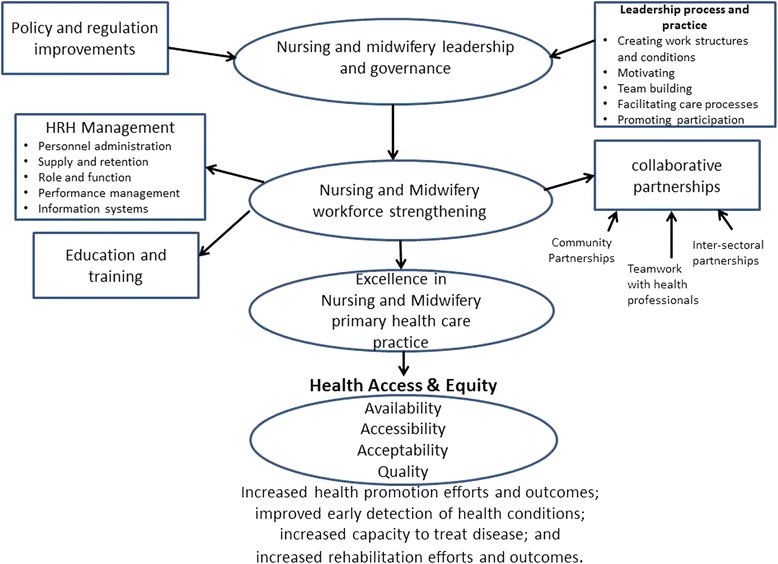
BACKGROUND: Despite considerable evidence showing the importance of the nursing and midwifery workforce, there are no systematic reviews outlining how these cadres are best supported to provide universal access and reduce health care disparities at the primary health care (PHC) level. This review aims to identify nursing and midwifery policy, staffing, education and training interventions, collaborative efforts and strategies that have improved the quantity, quality and relevance of the nursing and midwifery workforce leading to health improvements for vulnerable populations. METHODS: We undertook a structured search of bibliographic databases for peer-reviewed research literature using a focused review question and inclusion/exclusion criteria. The quality of retrieved papers was appraised using standard tools. The characteristics of screened papers were described, and a deductive qualitative content analysis methodology was applied to analyse the interventions and findings of included studies using a conceptual framework. RESULTS: Thirty-six papers were included in the review, the majority (25) from high-income countries and nursing settings (32). Eleven papers defined leadership and governance approaches that had impacted upon the health outcomes of disadvantaged groups including policies at the national and state level that had led to an increased supply and coverage of nursing and midwifery staff and scope of practice. Twenty-seven papers outlined human resource management strategies to support the expansion of nurse's and midwives' roles that often involved task shifting and task sharing. These included approaches to managing staffing supply, distribution and skills mix; workloads; supervision; performance management; and remuneration, financial incentives and staffing costs. Education and training activities were described in 14 papers to assist nurses and midwives to perform new or expanded roles and prepare nurses for inclusive practice. This review identified collaboration between nurses and midwives and other health providers and organizations, across sectors, and with communities and individuals that resulted in improved health care and outcomes. CONCLUSIONS: The findings of this review confirm the importance of a conceptual framework for understanding and planning leadership and governance approaches, management strategies and collaboration and education and training efforts to scale up and support nurses and midwives in existing or expanded roles to improve access to PHC for vulnerable populations.
Overview
The claims and statistics of this paper haven’t been checked yet.
Free: it reads the open-access text and checks the first 5 claims that cite a source we can check. Create a free account to check every claim.
Integrity signals
Registry
Cites
Statistics
Figures
Verification
Claims the paper makes
The claims and statistics of this paper haven’t been checked yet.
Free: it reads the open-access text and checks the first 5 claims that cite a source we can check. Create a free account to check every claim.
Claims other papers make about this one
Each is checked against this paper’s own text: does it say what the citing paper says it does?
The check wasn’t confident either way, so it gives no verdict — never disputed.
In the citing paper
“As highlighted by others, solutions to post-conflict delivery of BEmONC are contextual and more likely to be successful in NGO run facilities [48, 49] and with inter-country collaboration to increase SBA capacity [14, 50].”
From Accelerated Training of Skilled Birth Attendants in a Marginalized Population on the Thai-Myanmar Border: A Multiple Methods Program Evaluation (2016) · cites this paper as [48]
Experimental — accuracy not yet measured
Self-check
Percentages, sums and reported differences re-computed from the paper’s own numbers.
The self-check needs the paper’s full text.
Citations
Cites
Preferred Reporting Items for Systematic Reviews and Meta-Analyses: the PRISMA statement
Moher, D., Liberati, A., Tetzlaff, J., Altman, D. G., & for the PRISMA Group (2009) · BMJ · doi:10.1136/bmj.b2535 · Cited by 83,823
Preferred Reporting Items for Systematic Reviews and Meta-Analyses: The PRISMA Statement
Moher, D., Liberati, A., Tetzlaff, J., Altman, D. G., & The PRISMA Group (2009) · PLoS Medicine · doi:10.1371/journal.pmed.1000097 · Cited by 64,042 · cited 1×
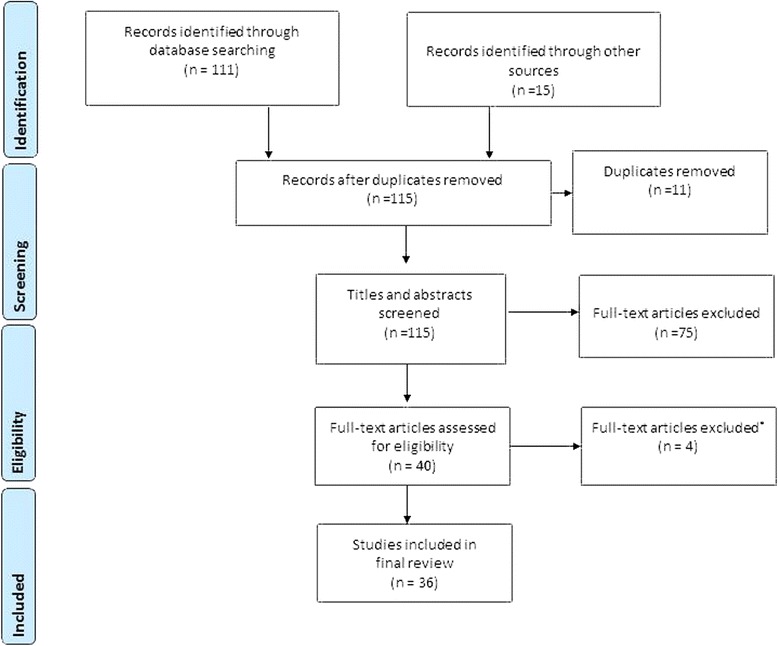
“report the review process [32] (see Fig.”
Preferred reporting items for systematic reviews and meta-analyses: the PRISMA Statement.
(2009) · PubMed Central · Cited by 44,859
The qualitative content analysis process
Elo, S., & Kyngäs, H. (2008) · Journal of Advanced Nursing · doi:10.1111/j.1365-2648.2007.04569.x · Cited by 22,617 · cited 1×
“lected research papers [28].”
Preferred Reporting Items for Systematic Reviews and Meta-Analyses: The PRISMA Statement
Moher, D., Liberati, A., Tetzlaff, J., & Altman, D. G. (2009) · Journal of Clinical Epidemiology · doi:10.1016/j.jclinepi.2009.06.005 · Cited by 19,575
Systematic reviews: CRD's guidance for undertaking reviews in health care
Tacconelli, E. (2010) · The Lancet Infectious Diseases · doi:10.1016/s1473-3099(10)70065-7 · Cited by 3,245
Pluye, P., Gagnon, M.-P., Griffiths, F., & Johnson-Lafleur, J. (2009) · International Journal of Nursing Studies · doi:10.1016/j.ijnurstu.2009.01.009 · Cited by 1,119 · cited 1×
“’s [34] scoring system was used to assess the non-experimental and mixed method studies.”
MethodFendall, N. R. E. (1978) · The Lancet · doi:10.1016/s0140-6736(78)92066-4 · Cited by 1,089
Frohlich, K. L., & Potvin, L. (2008) · American Journal of Public Health · doi:10.2105/ajph.2007.114777 · Cited by 989 · cited 1×
“For the purpose of this paper, we defined a vulnerable population as a subgroup or subpopulation who, because of shared social characteristics, is at a higher risk of factors such as unsafe sex, stress, drug misuse and malnutrition that can impact upon health issues including HIV and diabetes as well as access to heal…”
BackgroundThe relationship between nursing leadership and patient outcomes: a systematic review update
Wong, C. A., Cummings, G. G., & Ducharme, L. (2013) · Journal of Nursing Management · doi:10.1111/jonm.12116 · Cited by 846 · cited 1×
“ship and governance on action and intervention is drawn from evidence of the impact of leadership upon patient outcomes [23] and acknowledges the importance”
BackgroundDoes progress towards universal health coverage improve population health?
Moreno-Serra, R., & Smith, P. C. (2012) · The Lancet · doi:10.1016/s0140-6736(12)61039-3 · Cited by 636
Human resources for health and universal health coverage: fostering equity and effective coverage
Campbell, J., Buchan, J., Cometto, G., David, B., Dussault, G., Fogstad, H., Fronteira, I., Lozano, R., Nyonator, F., Pablos-Méndez, A., et al. (2013) · Bulletin of the World Health Organization · doi:10.2471/blt.13.118729 · Cited by 349 · cited 1×
“The coverage of nurses and midwives, in terms of adequate numbers and their appropriate distribution in locations where the community can access them, is critical [6].”
BackgroundThe projected effect of scaling up midwifery
Homer, C. S. E., Friberg, I. K., Dias, M. A. B., ten Hoope-Bender, P., Sandall, J., Speciale, A. M., & Bartlett, L. A. (2014) · The Lancet · doi:10.1016/s0140-6736(14)60790-x · Cited by 323 · cited 1×
“deaths [8].”
Factors contributing to nursing leadership: A systematic review
Cummings, G., Lee, H., Macgregor, T., Davey, M., Wong, C., Paul, L., & Stafford, E. (2008) · Journal of Health Services Research & Policy · doi:10.1258/jhsrp.2008.007154 · Cited by 281 · cited 1×
“of leadership at the management level [24] and the practice level in service delivery [25, 26].”
BackgroundUniversal health coverage and universal access
Evans, D. B., Hsu, J., & Boerma, T. (2013) · Bulletin of the World Health Organization · doi:10.2471/blt.13.125450 · Cited by 274 · cited 1×
“the health services they need without suffering financial hardship [1].”
BackgroundShengelia, B., Tandon, A., Adams, O. B., & Murray, C. J. L. (2005) · Social Science & Medicine · doi:10.1016/j.socscimed.2004.11.055 · Cited by 270 · cited 1×
“Evidence suggests that the provision of affordable, acceptable, high-quality health services [2] leads to better access to necessary care and improved population health, particularly for growing numbers of vulnerable individuals and communities [3] who experience significant health disparities [4].”
BackgroundNurse Staffing and Healthcare Outcomes: A Systematic Review of the International Research Evidence
Lankshear, A. J., Sheldon, T. A., & Maynard, A. (2005) · Advances in Nursing Science · doi:10.1097/00012272-200504000-00008 · Cited by 260 · cited 1×
“patient satisfaction and health outcomes [17, 18], while inadequate nurse staffing levels have been associated with an increase in adverse events and poor care [19].”
BackgroundRich, M. L., Miller, A. C., Niyigena, P., Franke, M. F., Niyonzima, J. B., Socci, A., Drobac, P. C., Hakizamungu, M., Mayfield, A., Ruhayisha, R., et al. (2012) · JAIDS Journal of Acquired Immune Deficiency Syndromes · doi:10.1097/qai.0b013e31824476c4 · Cited by 172 · cited 1×
“nursing and midwifery-led health care within the community at the primary health care level [9, 10].”
BackgroundMapping the concept of vulnerability related to health care disparities: a scoping review
Grabovschi, C., Loignon, C., & Fortin, M. (2013) · BMC Health Services Research · doi:10.1186/1472-6963-13-94 · Cited by 159 · cited 2×
“Evidence suggests that the provision of affordable, acceptable, high-quality health services [2] leads to better access to necessary care and improved population health, particularly for growing numbers of vulnerable individuals and communities [3] who experience significant health disparities [4].”
BackgroundShumbusho, F., van Griensven, J., Lowrance, D., Turate, I., Weaver, M. A., Price, J., & Binagwaho, A. (2009) · PLoS Medicine · doi:10.1371/journal.pmed.1000163 · Cited by 154
Colvin, C. J., de Heer, J., Winterton, L., Mellenkamp, M., Glenton, C., Noyes, J., Lewin, S., & Rashidian, A. (2013) · Midwifery · doi:10.1016/j.midw.2013.05.001 · Cited by 135
Pauly, B. (2008) · International Journal of Drug Policy · doi:10.1016/j.drugpo.2008.02.009 · Cited by 127 · cited 1×
“lationship with actual access and uptake of services [89].”
BackgroundImpact of nurse practitioners on health outcomes of Medicare and Medicaid patients
Oliver, G. M., Pennington, L., Revelle, S., & Rantz, M. (2014) · Nursing Outlook · doi:10.1016/j.outlook.2014.07.004 · Cited by 117 · cited 5×
“(Oliver et al. 2014) [68] USA Quantitative from multiple data sets Medicare: national social insurance programme serves a large population of elderly and disabled individuals.”
BackgroundInfluentialHomer, C. S. E., Foureur, M. J., Allende, T., Pekin, F., Caplice, S., & Catling-Paull, C. (2012) · Midwifery · doi:10.1016/j.midw.2011.06.004 · Cited by 112 · cited 2×
“(Homer et al. 2012) [58] Australia: Sydney in women’s homes, community health centre Mixed methods: a focus group discussion and review of patient records 353 Aboriginal and Torres Strait Islander women who gave birth in 2007 and 2008 To examine the perspectives of women accessed the service 353…”
BackgroundRodney, A. M., & Hill, P. S. (2014) · International Journal for Equity in Health · doi:10.1186/s12939-014-0072-8 · Cited by 109 · cited 1×
“indicators and frameworks [77].”
Markle‐Reid, M., Browne, G., & Gafni, A. (2013) · Journal of Evaluation in Clinical Practice · doi:10.1111/j.1365-2753.2011.01782.x · Cited by 102 · cited 6×
“paediatric nurses [52] intermediate care nurses [53], community nurses [64, 65] community-based nurses [54, 55],”
BackgroundMethodInfluentialPearson, A., O’Brien‐Pallas, L., Thomson, D., Doucette, E., Tucker, D. F., Wiechula, R., Long, L., Porritt, K. A., & Jordan, Z. (2006) · International Journal of Evidence-Based Healthcare · doi:10.1111/j.1479-6988.2006.00055.x · Cited by 99
An effective system of nurse‐led diabetes care in rural Africa
Gill, G. V., Price, C., Shandu, D., Dedicoat, M., & Wilkinson, D. (2008) · Diabetic Medicine · doi:10.1111/j.1464-5491.2008.02421.x · Cited by 94 · cited 5×
“2008) [42] Rural KwaZuluNatal in South Africa outreach clinics Quasi-experimental study using clinical records and 284 rural poor with diabetes To evaluate a nurse-led diabetes protocol and education-based system A total of 284 patients were enrolled, with 197 followed for 18 months (13 died and 26% lapsed during the…”
BackgroundMethodInfluentialWest, R., Usher, K. J., & Foster, K. (2010) · Contemporary Nurse · doi:10.5172/conu.2010.36.1-2.121 · Cited by 92
Williams, S. D., Hansen, K., Smithey, M., Burnley, J. E., Koplitz, M., Koyama, K., Young, J., & Bakos, A. (2014) · Public Health Reports · doi:10.1177/00333549141291s207 · Cited by 86 · cited 1×
“nursing and midwifery workforce, may facilitate the appropriate delivery of relevant health care [13, 14] and promote health equity among distinct populations [15, 16].”
BackgroundPersson, L. Å., Nga, N. T., Målqvist, M., Thi Phuong Hoa, D., Eriksson, L., Wallin, L., Selling, K., Huy, T. Q., Duc, D. M., Tiep, T. V., et al. (2013) · PLoS Medicine · doi:10.1371/journal.pmed.1001445 · Cited by 83 · cited 1×
“ing patients and strengthening community involvement in their health [11] through knowing and understanding the health needs of local populations and targeting interventions to meet the wider determinants of health [12].”
BackgroundLabhardt, N. D., Balo, J., Ndam, M., Manga, E., & Stoll, B. (2011) · Tropical Medicine & International Health · doi:10.1111/j.1365-3156.2011.02827.x · Cited by 81 · cited 9×
“(Labhardt et al. 2011) [44] Primary health care clinics in Open-label, three-arm, clusterrandomized trial in nurse-led facilities 221 poor, rural patients with hypertension and diabetes To compare the effects of low-level facility-based interventions on patient retention rates for cardiovascular…”
BackgroundInfluentialSmall, W., Wood, E., Lloyd-Smith, E., Tyndall, M., & Kerr, T. (2008) · Drug and Alcohol Dependence · doi:10.1016/j.drugalcdep.2008.05.014 · Cited by 75 · cited 4×
“(Small et al. 2008) [71] Canada Qualitative descriptive semi-structured qualitative interviews 50 individuals recruited from a cohort of Safe Injecting Facility (SIF) users To investigate IDU perspectives regarding the impact of SIF on access to care and treatment of injection-related infections…”
BackgroundInfluentialWelch, G., Allen, N. A., Zagarins, S. E., Stamp, K. D., Bursell, S.-E., & Kedziora, R. J. (2011) · The Diabetes Educator · doi:10.1177/0145721711416257 · Cited by 75 · cited 7×
“Specific vulnerable populations formed the focus of many papers including children [48, 50], the elderly [55, 61, 64, 65], ethnic minorities [40, 51, 57, 72], indigenous people [58, 67], the homeless [53], the poor [39, 41, 44, 52, 54, 56, 60, 68, 69, 73], prisoners [59, 66], those living in rural locations [42, 43, 4…”
BackgroundInfluentialLamers, F., Jonkers, C. C. M., Bosma, H., Chavannes, N. H., Knottnerus, J. A., & van Eijk, J. T. (2010) · COPD: Journal of Chronic Obstructive Pulmonary Disease · doi:10.3109/15412555.2010.510156 · Cited by 74 · cited 1×
“(Larson et al. 2010) [62] Rural general practices, Western Australia Prospective cohort with before-after measures 83 patients from rural areas with asthma Trialled the outcome for asthma patients of a brief, nurse-led, patient-education session with general practice review of an asthma action plan…”
Backgroundvan Griensven, J., Naeyer, L. D., Uwera, J., Asiimwe, A., Gazille, C., & Reid, T. (2008) · BMC Pediatrics · doi:10.1186/1471-2431-8-39 · Cited by 73 · cited 1×
“(van Griensven et al. 2008) [48] Two governmentrun health centres in Kigali, Rwanda Programme treatment and outcome data from 2 facilities.”
BackgroundChang, L. W., Alamo, S., Guma, S., Christopher, J., Suntoke, T., Omasete, R., Montis, J. P., Quinn, T. C., Juncker, M., & Reynolds, S. J. (2009) · JAIDS Journal of Acquired Immune Deficiency Syndromes · doi:10.1097/qai.0b013e3181988375 · Cited by 68 · cited 11×
“Specific vulnerable populations formed the focus of many papers including children [48, 50], the elderly [55, 61, 64, 65], ethnic minorities [40, 51, 57, 72], indigenous people [58, 67], the homeless [53], the poor [39, 41, 44, 52, 54, 56, 60, 68, 69, 73], prisoners [59, 66], those living in rural locations [42, 43, 4…”
BackgroundInfluentialFish, J. (2010) · Journal of research in nursing · doi:10.1177/1744987110364691 · Cited by 66 · cited 1×
“policy and practice [79, 80].”
A prison based nurse-led specialist diabetes service for detained individuals
Mills, L. (2014) · European Diabetes Nursing · doi:10.1002/edn.249 · Cited by 65 · cited 7×
“Specific vulnerable populations formed the focus of many papers including children [48, 50], the elderly [55, 61, 64, 65], ethnic minorities [40, 51, 57, 72], indigenous people [58, 67], the homeless [53], the poor [39, 41, 44, 52, 54, 56, 60, 68, 69, 73], prisoners [59, 66], those living in rural locations [42, 43, 4…”
BackgroundInfluentialBray, P., Thompson, D., Wynn, J. D., Cummings, D. M., & Whetstone, L. (2005) · The Journal of Rural Health · doi:10.1111/j.1748-0361.2005.tb00101.x · Cited by 60 · cited 7×
“Specific vulnerable populations formed the focus of many papers including children [48, 50], the elderly [55, 61, 64, 65], ethnic minorities [40, 51, 57, 72], indigenous people [58, 67], the homeless [53], the poor [39, 41, 44, 52, 54, 56, 60, 68, 69, 73], prisoners [59, 66], those living in rural locations [42, 43, 4…”
BackgroundInfluentialMartínez-González, N. A., Rosemann, T., Djalali, S., Huber-Geismann, F., & Tandjung, R. (2015) · Medical Care Research and Review · doi:10.1177/1077558715586297 · Cited by 60 · cited 1×
“The review findings concerning support for the expansion of nurses’ and midwives’ roles and the delegation of tasks to nurses from other cadres and from nurses to other staff concur with research into task shifting and sharing [82, 83].”
BackgroundNair, N., Tripathy, P., Prost, A., Costello, A. M. D. L., & Osrin, D. (2010) · PLoS Medicine · doi:10.1371/journal.pmed.1000246 · Cited by 59 · cited 1×
“nursing and midwifery-led health care within the community at the primary health care level [9, 10].”
BackgroundPacquiao, D. F. (2008) · Contemporary Nurse · doi:10.5172/conu.673.28.1-2.189 · Cited by 57 · cited 1×
“nursing and midwifery workforce, may facilitate the appropriate delivery of relevant health care [13, 14] and promote health equity among distinct populations [15, 16].”
BackgroundMarkle-Reid, M., McAiney, C., Forbes, D., Thabane, L., Gibson, M., Browne, G., Hoch, J. S., Peirce, T., & Busing, B. (2014) · BMC Geriatrics · doi:10.1186/1471-2318-14-62 · Cited by 54 · cited 10×
“paediatric nurses [52] intermediate care nurses [53], community nurses [64, 65] community-based nurses [54, 55],”
BackgroundInfluentialFrankenberg, E., Buttenheim, A. M., Sikoki, B., & Suriastini, W. (2009) · Studies in Family Planning · doi:10.1111/j.1728-4465.2009.00184.x · Cited by 49 · cited 8×
“2009) [41] Indonesia 13 of 26 provinces at village level Secondary analysis of Indonesia Family Life Survey dataset (1993,1997, 2000) using logistic modelling 7224 households including the poor with low education in rural areas To investigate the impact of scale up of midwives in access to midwifery services on women’…”
BackgroundMethodInfluentialNurses on a mission: a professional service learning experience with the inner-city homeless.
Lashley, M. E. (2007) · PubMed · Cited by 40
STEPHEN, A. (2007) · Journal of Nursing Management · doi:10.1111/j.1365-2934.2006.00736.x · Cited by 39 · cited 1×
“of leadership at the management level [24] and the practice level in service delivery [25, 26].”
BackgroundSchnippel, K., Lince-Deroche, N., van den Handel, T., Molefi, S., Bruce, S., & Firnhaber, C. S. (2015) · PLoS ONE · doi:10.1371/journal.pone.0119236 · Cited by 36 · cited 5×
“While we were able to identify approaches to increase the number of welltrained, motivated nurses and midwives to provide the services to meet patients’ needs thereby increasing access to quality health care services, we were only able to locate one study that identified cost effective nursing care [46].”
BackgroundInfluentialPartnership working by default: district nurses and care home staff providing care for older people
Goodman, C. M., Robb, N., Drennan, V. M., & Woolley, R. J. (2005) · Health & Social Care in the Community · doi:10.1111/j.1365-2524.2005.00587.x · Cited by 35 · cited 6×
“paediatric nurses [52] intermediate care nurses [53], community nurses [64, 65] community-based nurses [54, 55],”
BackgroundInfluentialEvolving trends in nurse regulation: what are the policy impacts for nursing’s social mandate?
Duncan, S., Thorne, S., & Rodney, P. (2015) · Nursing Inquiry · doi:10.1111/nin.12087 · Cited by 35
Recruiting and Retaining a Diverse Workforce in Nursing: From Evidence to Best Practices to Policy
Gilliss, C. L., Powell, D. L., & Carter, B. M. (2010) · Policy Politics & Nursing Practice · doi:10.1177/1527154411398491 · Cited by 35 · cited 1×
“nursing and midwifery workforce, may facilitate the appropriate delivery of relevant health care [13, 14] and promote health equity among distinct populations [15, 16].”
BackgroundLong-term glycaemic outcome of structured nurse-led diabetes care in rural Africa
Price, C., Shandu, D., Dedicoat, M., Wilkinson, D., & Gill, G. V. (2011) · QJM · doi:10.1093/qjmed/hcr005 · Cited by 33 · cited 8×
“clinic in order to optimize the service [45].”
BackgroundInfluentialGross, J., Pl, R., Kiriinya, R., Rakuom, C. P., Willy, R., Kamenju, A., Oywer, E. O., Wambua, D., Waudo, A. N., & Rogers, M. (2010) · Bulletin of the World Health Organization · doi:10.2471/blt.09.072678 · Cited by 32 · cited 6×
“2010) [43] Kenya Secondary analysis of dataset from the Kenya Health Workforce Informatics System using logistic modelling Nurses employed in Kenya’s public sector in rural and underserved areas To analyse the effect of Kenya’s Emergency Hiring Plan for nurses on their inequitable distribution in rural and underserved…”
BackgroundMethodInfluentialProcess evaluation of a multiple risk factor perinatal programme for a hard-to-reach minority group
Hesselink, A. E., & Harting, J. (2011) · Journal of Advanced Nursing · doi:10.1111/j.1365-2648.2011.05644.x · Cited by 31 · cited 7×
“Specific vulnerable populations formed the focus of many papers including children [48, 50], the elderly [55, 61, 64, 65], ethnic minorities [40, 51, 57, 72], indigenous people [58, 67], the homeless [53], the poor [39, 41, 44, 52, 54, 56, 60, 68, 69, 73], prisoners [59, 66], those living in rural locations [42, 43, 4…”
BackgroundMethodInfluentialExpanding the Role of Nurse Practitioners: Effects on Rural Access to Care for Injured Workers
Sears, J. M., Wickizer, T. M., Franklin, G. M., Cheadle, A. D., & Berkowitz, B. (2008) · The Journal of Rural Health · doi:10.1111/j.1748-0361.2008.00154.x · Cited by 31 · cited 17×
“The number of NPs participating in the workers’ compensation system rose after SHB 1691 implementation, more so in rural areas.”
BackgroundMethodInfluentialYates, V. M., Lebas, E., Orpiay, R., & Bale, B. J. (2010) · Annals of Tropical Medicine and Parasitology · doi:10.1179/136485910x12743554760306 · Cited by 30 · cited 3×
“2010) [49] Snake Park clinic in Meserani, Tanzania Prospective study of health facility data between April 2007 and the end of 2009, received treatment for snakebite envenomation 85 patients rural poor patients To examine the management of snakebites by the staff of a rural clinic: The 85 snakebite cases had a mean ag…”
BackgroundMethodInfluentialErsser, S. J., Farasat, H., Jackson, K., Dennis, H., Sheppard, Z. A., & More, A. (2013) · British Journal of Dermatology · doi:10.1111/bjd.12414 · Cited by 30 · cited 9×
“paediatric nurses [52] intermediate care nurses [53], community nurses [64, 65] community-based nurses [54, 55],”
BackgroundMethodInfluentialKramer, A., Nosbusch, J. M., & Rice, J. (2012) · The Journal of Perinatal & Neonatal Nursing · doi:10.1097/jpn.0b013e31824356dd · Cited by 29 · cited 1×
“Four items were discarded due to methodological concerns [35–38].”
BackgroundAyerle, G. M., Makowsky, K., & Schücking, B. A. (2011) · Midwifery · doi:10.1016/j.midw.2011.05.009 · Cited by 28 · cited 6×
“(Ayerle, Makowsky and Schücking 2012) [50] Germany, home visiting Mixed method:review of family records, 30 questionnaire and interviews with 14 mothers and 6 social workers 734 families whose vulnerability was scored according to factors such as conflict, drug abuse, social support, mental health, stress, teenage pre…”
BackgroundMethodInfluentialMid-level health providers: A promising resource to achieve the health Millennium Development Goals
Brown, A. R., Cometto, G., Cumbi, A., de Pinho, H., Kamwendo, F., Lehman, U., McCourt, W., McPake, B., Pariyo, G. W., & Sanders, D. M. (2011) · Research Explorer (The University of Manchester) · Cited by 24
Driscoll, A. L., Currey, J., George, M. V., & Davidson, P. M. (2012) · Australian Critical Care · doi:10.1016/j.aucc.2012.08.001 · Cited by 23 · cited 1×
“patient satisfaction and health outcomes [17, 18], while inadequate nurse staffing levels have been associated with an increase in adverse events and poor care [19].”
BackgroundBuilding social capital with women in a socially disadvantaged community
Griffiths, R., Horsfall, J. M., Moore, M., Lane, D., Kroon, V., & Langdon, R. (2009) · International Journal of Nursing Practice · doi:10.1111/j.1440-172x.2009.01742.x · Cited by 22 · cited 16×
“and social capital through networks in a disadvantaged community in urban Australia [56].”
BackgroundMethodInfluentialChetty, D., & Hoque, M. (2013) · African Journal of Psychiatry · doi:10.4314/ajpsy.v16i1.5 · Cited by 22 · cited 2×
“(Chetty and Hoque 2013) [40] South Africa: KwaZuluNatal community psychiatric clinic Quasi-experimental, non-equivalent, control group design study design 30 depressed Indian poor urban participants To determine the effectiveness of a nurse-facilitated-cognitive-group intervention as an adjunct to…”
BackgroundWray, J., Walker, L., & Benedict (2007) · Nurse Education Today · doi:10.1016/j.nedt.2007.09.011 · Cited by 19
Canadian Rural Women’s Experiences with Rural Primary Health Care Nurse Practitioners
Leipert, B. D., Delaney, J., Forbes, D. A., & Forchuk, C. (2011) · Online Journal of Rural Nursing and Health Care · doi:10.14574/ojrnhc.v11i1.8 · Cited by 18 · cited 7×
“(Leipert et al. 2011) [63] Nurse practitioner services, rural southwest Ontario, Canada Qualitative in-depth, face-to-face interviews using interpretive description methodology 9 rural women, aged 18–80 using nurse practitioner services To explore rural women’s experiences with primary health care…”
BackgroundMethodInfluentialSullivan, C. (2009) · Journal of Nursing Education · doi:10.3928/01484834-20090610-06 · Cited by 17 · cited 1×
“how partnerships with community agencies can increase the cultural competency of nurses [85].”
BackgroundImpact of structured education and self management on rural asthma outcomes.
Larson, A., Ward, J., Ross, L., Whyatt, D., Weatherston, M., & Landau, L. I. (2010) · PubMed · Cited by 17
Wetta‐Hall, R. (2007) · Applied Nursing Research · doi:10.1016/j.apnr.2006.08.009 · Cited by 15
Fostering Health Equity: Clinical and Research Training Strategies from Nursing Education
Deatrick, J. A., Lipman, T. H., Gennaro, S., Sommers, M., Siantz, M. L. D. L., Mooney‐Doyle, K., Hollis, G., & Jemmott, L. S. (2009) · The Kaohsiung Journal of Medical Sciences · doi:10.1016/s1607-551x(09)70554-6 · Cited by 15 · cited 1×
“[74] in this review and other reports [86–88] where social inclusion and cultural learning positively influenced student nurse clinical and research skills and attitudes.”
ResultThe Impact of the Care Equity Project with Community/Public Health Nursing Students
Kamau‐Small, S., Joyce, B. L., Bermingham, N., Roberts, J., & Robbins, C. (2014) · Public Health Nursing · doi:10.1111/phn.12131 · Cited by 13 · cited 1×
“[74] in this review and other reports [86–88] where social inclusion and cultural learning positively influenced student nurse clinical and research skills and attitudes.”
ResultQuality of health care provided at a pediatric nurse‐managed clinic
Coddington, J. A., Sands, L. P., Edwards, N. E., Kirkpatrick, J. M., & Chen, S. E. (2011) · Journal of the American Academy of Nurse Practitioners · doi:10.1111/j.1745-7599.2011.00657.x · Cited by 13 · cited 6×
“paediatric nurses [52] intermediate care nurses [53], community nurses [64, 65] community-based nurses [54, 55],”
BackgroundMethodInfluentialEssential Midwifery Practice: Leadership, Expertise and Collaborative Working
(2010) · Wiley eBooks · doi:10.1002/9781118784990 · Cited by 13
Nurse Managed Center: Access to Primary Health Care for Urban Native Americans
Neff, D. F., Kinion, E. S., & Cardina, C. (2007) · Journal of Community Health Nursing · doi:10.1080/07370010709336583 · Cited by 12 · cited 11×
“(Neff, Kinion and Cardina 2007) [67] USA: northeastern Ohio Quantitative descriptive review of patient records 334 Native American patients To describe the nursing interventions provided at an urban nurse-managed centre to urban Native Americans.”
BackgroundInfluentialNursing care delivered at academic community-based nurse-managed center.
Neff, D. F., Mahama, N., Mohar, D. R. H., & Kinion, E. S. (2003) · PubMed · Cited by 12
Nurses Leading Care in Custody Suite Environments
Hurley, J., Linsley, P., Elvins, M., & Jones, M. C. (2013) · Journal of Forensic Nursing · doi:10.1097/jfn.0b013e31827a57e7 · Cited by 11 · cited 9×
“In a study involving nurse-led care to prisoners, nurse education was aimed to enhance the nurses’ existing core capabilities and “minimize organizational risk while supporting nurses’ role expansion” [59].”
BackgroundMethodInfluentialKeltner, B. R., Kelley, F. J., & Smith, D. (2004) · Nursing Administration Quarterly · doi:10.1097/00006216-200407000-00006 · Cited by 10 · cited 1×
“policy and practice [79, 80].”
Nurse-led homeless intermediate care: an economic evaluation
Dorney-Smith, S. (2011) · British Journal of Nursing · doi:10.12968/bjon.2011.20.18.1193 · Cited by 10
Associate Degree Nursing in a Community-Based Health Center Network: Lessons in Collaboration
Connolly, C., Wilson, D., Missett, R., Dooley, W. C., Avent, P. A., & Wright, R. (2004) · Journal of Nursing Education · doi:10.3928/01484834-20040201-08 · Cited by 9 · cited 1×
“outlines innovative nursing education in communitybased health centres [84], and Sullivan demonstrates”
BackgroundLEWIS, M., ALLEN, H., & Warr, J. (2010) · Journal of Psychiatric and Mental Health Nursing · doi:10.1111/j.1365-2850.2010.01589.x · Cited by 9
ESSENTIAL MIDWIFERY PRACTICE: EXPERTISE, LEADERSHIP, AND COLLABORATIVE WORKING
Angelini, D. J. (2012) · Journal of Midwifery & Women s Health · doi:10.1111/j.1542-2011.2012.00192_2.x · Cited by 5
Improving Access and Managing Population Health Through Multidisciplinary Partnerships
Kaiser, K. L., Hultquist, T. B., Lopez, P., & Raymond, R. A. (2010) · Journal of Public Health Management and Practice · doi:10.1097/phh.0b013e3181c9817e · Cited by 5 · cited 1×
“Four items were discarded due to methodological concerns [35–38].”
BackgroundWiddup, J., Comino, E. J., Webster, V., & Knight, J. A. (2012) · Australian Health Review · doi:10.1071/ah10961 · Cited by 4 · cited 1×
“received by vulnerable groups [78].”
Jackson, C., Blundell, S., McEachan, R., & Cameron, I. D. (2009) · Primary Health Care Research & Development · doi:10.1017/s146342360900108x · Cited by 3 · cited 9×
“itional work, particularly in the initial 12-month set-up phase [60].”
BackgroundInfluentialReducing health didparities for low decile children and families: a nurse-led response
Riley, C., & Crawford, R. (2010) · Journal of Primary Health Care · doi:10.1071/hc10243 · Cited by 3 · cited 9×
“Specific vulnerable populations formed the focus of many papers including children [48, 50], the elderly [55, 61, 64, 65], ethnic minorities [40, 51, 57, 72], indigenous people [58, 67], the homeless [53], the poor [39, 41, 44, 52, 54, 56, 60, 68, 69, 73], prisoners [59, 66], those living in rural locations [42, 43, 4…”
BackgroundMethodInfluentialDawson, A. J. (2010) · UTS ePRESS (University of Technology Sydney) · Cited by 2
Self-citationNurses' collaboration for policy development: equity and access to health care
Robinson, J. J. A. (2013) · International Nursing Review · doi:10.1111/inr.12010 · Cited by 1 · cited 1×
“However, nurses and midwives cannot deliver care on their own, and in order to achieve universal access and health equity, partnership and collaboration are necessary at the policy level [20] and in practice [21].”
BackgroundDawson, A. J., & Whelan, A. K. (2014) · UTS ePRESS (University of Technology Sydney) · Cited by 1
Self-citation
Research works printed but not linked: 4
- 7. Speybroeck N, Kinfu Y, Dal Poz MR, Evans DB. Reassessing the relationship between human resources for health, intervention coverage and health outcomes. Geneva: World Health Organization; 2006.
- 12. UCL. Working for health equity: the role of health professionals healthcare system and workforce’s role in reducing health inequalities through action on the social determinants of health. London: UCL Institute of Health Equity - Department of Epidemiology & Public Health University College London; 2013.
- 21. WHO. Interprofessional collaborative practice in primary health care: nursing and midwifery perspectives six case studies. Geneva: World Health Organization; 2013.
- 86. Kamau-Small S, Joyce B, Bermingham N, Roberts J, Robbins C. The impact of the Care Equity Project with community/public health nursing students. Public Health Nursing. 2014;32(3):169–76. doi: 10.1111/phn.12131. · DOI
Cited by
Bitton, A., Fifield, J., Ratcliffe, H., Karlage, A., Wang, H., Veillard, J. H., Schwarz, D., & Hirschhorn, L. R. (2019) · BMJ Global Health · doi:10.1136/bmjgh-2019-001551 · Cited by 205
Karimi-Shahanjarini, A., Shakibazadeh, E., Rashidian, A., Hajimiri, K., Glenton, C., Noyes, J., Lewin, S., Laurant, M., & Colvin, C. J. (2019) · Cochrane Database of Systematic Reviews · doi:10.1002/14651858.cd010412.pub2 · Cited by 177
Performance Measurement and Management Systems: A Perspective from Complexity Theory
Okwir, S., Nudurupati, S., Ginieis, M., & Angelis, J. (2018) · International Journal of Management Reviews · doi:10.1111/ijmr.12184 · Cited by 163
A global perspective of advanced practice nursing research: A review of systematic reviews
Kilpatrick, K., Savard, I., Audet, L., Costanzo, G., Khan, M., Atallah, R., Jabbour, M., Zhou, W., Wheeler, K. J., Ladd, E., et al. (2024) · PLoS ONE · doi:10.1371/journal.pone.0305008 · Cited by 129
“Several reviews indicated that autonomous or full scope of practice enhanced patient, provider and health system level outcomes (e.g., Dawson, 2015; Hutchison, 2014) [101, 141].”
Wilson, D., Heaslip, V., & Jackson, D. W. (2018) · Journal of Clinical Nursing · doi:10.1111/jocn.14546 · Cited by 80
Metadata
- Authors
- Dawson, A. J., Nkowane, A. M., & Whelan, A.
- Affiliations
- University of Technology Sydney (AU)
- World Health Organization (CH)
- Corresponding author
- Dawson, A. J.
- ORCID
- Dawson, A. J.
- Venue
- Human Resources for Health
- Published
- 2015-12
- Volume
- 13
- Issue
- 1
- Pages
- 97-97
- ISSN
- 1478-4491 (ISSN-L)
- PMC
- PMC4683743
- OpenAlex
- W2203251461
- Cited by
- 77
- References
- 89
- Citations by year
- 2026: 5 · 2025: 5 · 2024: 7 · 2023: 7 · 2022: 7 · 2021: 9 · 2020: 9 · 2019: 6 · 2018: 8 · 2017: 9 · 2016: 5
- FWCI
- 1.76
- Type
- journal article
- Language
- en
- Open access
- gold
- doi.org
- Licence
- cc-by
- Locations
- Human Resources for Health (publishedVersion, cc-by)
- PubMed Central (publishedVersion, cc-by)
- PubMed (publishedVersion)
- UTS ePRESS (University of Technology Sydney) (submittedVersion)
- Funders
- World Health Organization
- Topics
- Health Sciences › Medicine › Public Health, Environmental and Occupational Health › Global Health Workforce Issues
- Health Sciences › Nursing › Issues, ethics and legal aspects › Nursing Education, Practice, and Leadership
- Health Sciences › Health Professions › General Health Professions › Nursing Roles and Practices
- Keywords
- nursing workforce, midwifery workforce, primary care, universal health coverage, vulnerable populations, health care disparities, human resource management, task shifting, task sharing, nursing education, scope of practice, workforce distribution, intersectoral collaboration
- MeSH terms
- Cooperative Behavior, Education, Nursing, Continuing, Humans, Leadership, Midwifery, Nursing, Primary Health Care, Global Health, Nurse's Role, Vulnerable Populations
About these checks
Registry, retraction, Cites and statistics results are computed, not judged, with one exception: a printed reference that no index lists is read once by a model before it counts as a citation error. Claims are extracted by a model and kept only when their quote appears verbatim in the text; each cited source is then checked, with a model’s help, for whether it says what the claim relies on. Those verdicts can be wrong — read the claim’s quote and the cited source before relying on one.
Statistics and arithmetic are recomputed, not judged.
Confidence bands are shown only for fields calibrated on our annotated test set. None is calibrated yet, so no band is shown.
What counts as a claim ›How we measure confidence ›How we check this ›
Are you an author, or do you see a problem with this page? Request a review
Data sources
Bibliographic data: Semantic Scholar, OpenAlex, Crossref.
Contains information from the Semantic Scholar Academic Graph Datasets, made available under the ODC Attribution License (ODC-BY 1.0).
Semantic Scholar’s data is described in: Kinney, R., et al. (2023). The Semantic Scholar Open Data Platform. arXiv:2301.10140.
