

A systematic review of implementation frameworks of innovations in healthcare and resulting generic implementation framework
Open accessThe DOI matches its Crossref record; 83 of the 84 references it cites were found in a registry or an index; 27 of the 62 sources its claims cite were checked for support.
Abstract
BACKGROUND: Implementation science and knowledge translation have developed across multiple disciplines with the common aim of bringing innovations to practice. Numerous implementation frameworks, models, and theories have been developed to target a diverse array of innovations. As such, it is plausible that not all frameworks include the full range of concepts now thought to be involved in implementation. Users face the decision of selecting a single or combining multiple implementation frameworks. To aid this decision, the aim of this review was to assess the comprehensiveness of existing frameworks. METHODS: A systematic search was undertaken in PubMed to identify implementation frameworks of innovations in healthcare published from 2004 to May 2013. Additionally, titles and abstracts from Implementation Science journal and references from identified papers were reviewed. The orientation, type, and presence of stages and domains, along with the degree of inclusion and depth of analysis of factors, strategies, and evaluations of implementation of included frameworks were analysed. RESULTS: Frameworks were assessed individually and grouped according to their targeted innovation. Frameworks for particular innovations had similar settings, end-users, and 'type' (descriptive, prescriptive, explanatory, or predictive). On the whole, frameworks were descriptive and explanatory more often than prescriptive and predictive. A small number of the reviewed frameworks covered an implementation concept(s) in detail, however, overall, there was limited degree and depth of analysis of implementation concepts. The core implementation concepts across the frameworks were collated to form a Generic Implementation Framework, which includes the process of implementation (often portrayed as a series of stages and/or steps), the innovation to be implemented, the context in which the implementation is to occur (divided into a range of domains), and influencing factors, strategies, and evaluations. CONCLUSIONS: The selection of implementation framework(s) should be based not solely on the healthcare innovation to be implemented, but include other aspects of the framework's orientation, e.g., the setting and end-user, as well as the degree of inclusion and depth of analysis of the implementation concepts. The resulting generic structure provides researchers, policy-makers, health administrators, and practitioners a base that can be used as guidance for their implementation efforts.
Overview
CoChat Summary
TL;DR
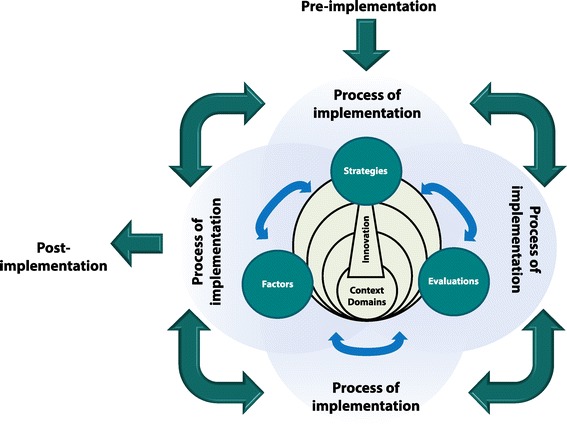
This systematic review assessed 49 implementation frameworks for healthcare innovations published 2004–May 2013 and found limited comprehensiveness across core implementation concepts. The authors collated core concepts into a Generic Implementation Framework (GIF) covering implementation process, innovation, context domains, influencing factors, strategies, and evaluations.
Key findings
- Of 49 included frameworks, most were descriptive (27, 55%) or explanatory (24, 49%), while fewer were prescriptive (13, 24%) or predictive (9, 18%).
- The operation stage was included in 49 frameworks (94%), sustainability in 31 (63%), installation in 31 (63%), exploration in 22 (45%), communication in 18 (37%), and development in 12 (24%).
- Domains covered were organisation (43, 88%), individuals (37, 76%), innovation (36, 73%), local environment (27, 55%), and external system (22, 45%).
- Only 6% of frameworks covered the degree of any one element comprehensively (+++); depth was covered for factors in 20%, strategies in 29%, and evaluations in 14% of frameworks.
Methods
- Systematic search in PubMed for implementation frameworks of innovations in healthcare published 2004 to May 2013, plus titles/abstracts from Implementation Science journal (Feb 2006–May 2013) and references from identified papers.
- Included papers proposed an implementation framework, model, or theory of an innovation in healthcare and included concepts related to operation and/or sustainability stages; excluded frameworks focused on one specific domain/factor/strategy, validation studies without framework change, single case studies, quality improvement frameworks, and others.
- Data extraction by a single reviewer assessed framework orientation, type (descriptive, prescriptive, explanatory, predictive), stages, domains, and degree/depth of factors, strategies, and evaluations; results were synthesised into tables and a Generic Implementation Framework.
Limitations
- The paper states that studies applying frameworks were excluded unless a new framework was proposed, only the original reference per framework was included unless subsequent changes were made, and influential pre-2004 frameworks were omitted.
- The paper states that classifying innovations based on definitions could have impacted groupings and overall analysis, though it argues this does not reduce validity.
- The paper states that article inclusion and data extraction were performed by a single reviewer (JCM), with assistance from a second member when doubts arose (SIB), which may have influenced coding of framework comprehensiveness; evident from the text, the search was primarily PubMed plus Implementation Science and reference screening, without other databases.
Model-written summary. Check it against the paper before relying on it.
Integrity signals
Registry
Cites
Statistics
Figures
Verification
Claims the paper makes
7 Valid · 2 Not valid · 10 Not checked · 86 Own results and interpretations
At least one cited source doesn’t support this claim or points to a different paper, and none confirmed it — see the verdicts below.
In the paper
“There seems to be no literature review covering the comprehensiveness of the frameworks [26].”
§ A systematic review of implementation frameworks of innovations in healthcare and resulting generic implementation framework > Background
What the sources say
- Disputedcites [26] Tabak RG Khoong EC Chambers DA Brownson RC Bridging research and practice: models for dissemination and implementation research Am J Prev Med 2012 43 337 50 10.1016/j.amepre.2012.05.024 22898128 PMC3592983 sourceExperimental — accuracy not yet measured
Our copy of Tabak et al. (2012) nowhere says that no literature review covers the comprehensiveness of D&I frameworks; on the contrary, it identifies itself as such a review, stating in Evidence Acquisition that 'The search was not exhaustive but did attempt to identify every model. To ensure comprehensiveness...' and that snowball sampling drew on 'existing reviews, reference lists, and presentations' (Evidence Acquisition), which presupposes prior reviews of frameworks exist. The Abstract Context frames the work as 'developing an inventory of models used in D&I research' and synthesizing it, and the Discussion (p. Limitations) treats comprehensiveness explicitly, conceding 'it is impossible to ensure all available models were included' and 'some D&I models are likely missing from this review.' So the cited source contradicts, rather than supports, the assertion that no review addresses the frameworks' comprehensiveness. (LLM, conf=0.65)
Checked by a reasoning model — may be wrong.
hedged- Asserted: passes — The authors put it forward as true.
- Checkable: passes — It can be checked against evidence.
- Load-bearing: passes — The paper’s conclusions depend on it.
- Based: passes — The paper gives a reason why it holds.
- Disputed
The cited sources support only part of this claim — read each source’s verdict below.
In the paper
“Implementation and knowledge translation frameworks have predominantly developed within disciplines.”
§ A systematic review of implementation frameworks of innovations in healthcare and resulting generic implementation framework > Background
What the sources say
- Partly supportedcites [4] Kitson A Harvey G McCormack B Enabling the implementation of evidence based practice: a conceptual framework Qual Health Care 1998 7 149 58 10.1136/qshc.7.3.149 10185141 PMC2483604 sourceExperimental — accuracy not yet measured
The Distillation section says this framework grew from work with clinicians, mostly nurses, and invites colleagues from other disciplines to assess it. That supports an example of a framework developed in a disciplinary setting, but neither Distillation nor the Introduction establishes that implementation and knowledge translation frameworks have predominantly developed within disciplines. (LLM, conf=0.78)
- Not checked yetcites [6] Rogers EM Diffusion of innovations 2003 5 New York Free Press
- Could not verifycites [7] Lavis JN Robertson D Woodside JM McLeod CB Abelson J How can research organizations more effectively transfer research knowledge to decision makers? Milbank Q 2003 81 221 48 10.1111/1468-0009.t01-1-00052 12841049 PMC2690219 sourceExperimental — accuracy not yet measured
The ‘A Framework for Knowledge Transfer’ section presents the authors’ framework and says their review spans a range of disciplinary perspectives. It does not say that implementation or knowledge-translation frameworks have predominantly developed within disciplines; searches for that assertion found no supporting passage in our copy. (LLM, conf=0.70)
- Not checked yetcites [8] Klein KJ Sorra JS The Challenge of Innovation Implementation Acad Manage Rev 1996 21 1055 80 source
- Not checked yetcites [9] Fixsen DL Naoom SF Blase KA Friedman RM Wallace F Implementation research: a synthesis of the literature 2005 Tampa, FL University of South Florida, Louis de la Parte Florida Mental Health Institute, The National Implementation Research Network
- Partly supportedcites [10] Michie S Johnston M Abraham C Lawton R Parker D Walker A Making psychological theory useful for implementing evidence based practice: a consensus approach Qual Saf Health Care 2005 14 26 33 10.1136/qshc.2004.011155 15692000 PMC1743963 sourceExperimental — accuracy not yet measured
The introduction (section R; page unavailable) describes theories developed within the social and behavioural sciences and a prior framework published for a psychology readership. These support the idea that some relevant approaches were discipline-based, but the paper does not establish that implementation and knowledge translation frameworks predominantly developed within disciplines. (LLM, conf=0.76)
- Not checked yetcites [11] Lomas J Diffusion, dissemination, and implementation: who should do what? Ann N Y Acad Sci 2006 703 226 37 10.1111/j.1749-6632.1993.tb26351.x 8192299 source
- Not checked yetcites [12] Graham ID Logan J Harrison MB Straus SE Tetroe J Caswell W Lost in knowledge translation: Time for a map? J Contin Educ Health Prof 2006 26 13 24 10.1002/chp.47 16557505 source
plain- Asserted: passes — The authors put it forward as true.
- Checkable: passes — It can be checked against evidence.
- Load-bearing: passes — The paper’s conclusions depend on it.
- Based: passes — The paper gives a reason why it holds.
- Partly supported
The cited sources support only part of this claim — read each source’s verdict below.
In the paper
“In the ensuing 9 years, the field has expanded considerably and further taxonomies, checklists, conceptual frameworks, theories, and models of implementation have been developed [10,13,14,17,18].”
§ A systematic review of implementation frameworks of innovations in healthcare and resulting generic implementation framework > Background
What the sources say
- Supportedcites [10] Michie S Johnston M Abraham C Lawton R Parker D Walker A Making psychological theory useful for implementing evidence based practice: a consensus approach Qual Saf Health Care 2005 14 26 33 10.1136/qshc.2004.011155 15692000 PMC1743963 source
The Abstract reports the development of a theoretical framework for implementation research, and the Discussion describes its 12 theoretical domains. In this multi-citation sentence, the paper supports the claim as an example of a framework developed in the field; it need not itself be a taxonomy, checklist, theory, and model. (LLM, conf=0.90)
- Partly supportedcites [13] Damschroder LJ Aron DC Keith RE Kirsh SR Alexander JA Lowery JC Fostering implementation of health services research findings into practice: a consolidated framework for advancing implementation science Implement Sci 2009 4 50 10.1186/1748-5908-4-50 19664226 PMC2736161 sourceExperimental — accuracy not yet measured
The Background and Methods describe the development of the CFIR and identify existing implementation theories, models, and a taxonomy. As a 2009 paper, this source does not support the claim that the field expanded or that further approaches were developed in the ensuing nine years. (LLM, conf=0.84)
- Not checked yetcites [14] Rabin BA Brownson RC Haire-Joshu D Kreuter MW Weaver NL A glossary for dissemination and implementation research in health J Public Health Manag Pract 2008 14 117 23 10.1097/01.PHH.0000311888.06252.bb 18287916 source
- Supportedcites [17] Flottorp S Oxman A Krause J Musila N Wensing M Godycki-Cwirko M A checklist for identifying determinants of practice: a systematic review and synthesis of frameworks and taxonomies of factors that prevent or enable improvements in healthcare professional practice Implement Sci 2013 8 35 10.1186/1748-5908-8-35 23522377 PMC3617095 source
The Methods (Study design) state that the authors reviewed frameworks and taxonomies and developed the TICD checklist. The Results (Study selection) also report 12 included checklists. Among the sentence’s several citations, this paper supports the development of a further implementation checklist, rather than every type of resource listed. (LLM, conf=0.88)
- Supportedcites [18] Cane J O’Connor D Michie S Validation of the theoretical domains framework for use in behaviour change and implementation research Implement Sci 2012 7 37 10.1186/1748-5908-7-37 22530986 PMC3483008 source
This is one of several citations offered for the development of implementation-related tools. The Background describes the development of the Theoretical Domains Framework, and the Conclusions describe this paper’s refined version. The paper therefore supports the framework example, without needing to establish that it developed every type of tool listed. (LLM, conf=0.88)
plain- Asserted: passes — The authors put it forward as true.
- Checkable: passes — It can be checked against evidence.
- Load-bearing: passes — The paper’s conclusions depend on it.
- Based: passes — The paper gives a reason why it holds.
- Supported
Every source the paper cites for this claim was checked and supports it.
In the paper
“In 2004, Greenhalgh et al. [16] conducted a comprehensive literature review of implementation studies for innovations in service delivery and organisation.”
§ A systematic review of implementation frameworks of innovations in healthcare and resulting generic implementation framework > Background
What the sources say
- Supportedcites [16] Greenhalgh T Robert G Macfarlane F Bate P Kyriakidou O Diffusion of innovations in service organizations: systematic review and recommendations Milbank Q 2004 82 581 629 10.1111/j.0887-378X.2004.00325.x 15595944 PMC2690184 source
The Abstract (p. 1) states the article 'summarizes the findings of a systematic literature review of the diffusion of service innovations' and defines 'innovation in service delivery and organization,' matching the claim's scope and the 2004 attribution. The same section lists inclusion criteria covering studies that 'addressed innovation in service delivery and organization' and 'looked specifically at the diffusion, dissemination, implementation, and/or routinization of these innovations,' and the methods passage describes dividing primary studies' findings into six categories including 'the implementation process,' supporting 'comprehensive literature review of implementation studies.' The Conclusion (p. 1) further characterizes it as 'this extensive systematic review.' (LLM, conf=0.87)
plain- Asserted: passes — The authors put it forward as true.
- Checkable: passes — It can be checked against evidence.
- Load-bearing: passes — The paper’s conclusions depend on it.
- Based: passes — The paper gives a reason why it holds.
- Supported
The cited sources support only part of this claim — read each source’s verdict below.
In the paper
“For example, eight frameworks did not explicitly mention stages [13,15,42,44,46,49,50,64,74]”
§ A systematic review of implementation frameworks of innovations in healthcare and resulting generic implementation framework > Results
What the sources say
- Partly supportedcites [13] Damschroder LJ Aron DC Keith RE Kirsh SR Alexander JA Lowery JC Fostering implementation of health services research findings into practice: a consolidated framework for advancing implementation science Implement Sci 2009 4 50 10.1186/1748-5908-4-50 19664226 PMC2736161 sourceExperimental — accuracy not yet measured
The Results > Process section describes four implementation activities that can occur in any order, rather than a sequence of implementation stages. But Results > Characteristics of individuals explicitly includes an ‘Individual stage of change’ construct, and the paper does not establish the citing sentence’s count of eight frameworks. No page numbers are available in our copy. (LLM, conf=0.78)
- Not checked yetcites [15] May C Finch T Implementing, embedding, and integrating practices: an outline of normalization process theory Sociology 2009 43 535 54 10.1177/0038038509103208 source
- Supportedcites [42] Schell S Luke D Schooley M Elliott M Herbers S Mueller N Public health program capacity for sustainability: a new framework Implement Sci 2013 8 15 10.1186/1748-5908-8-15 23375082 PMC3599102 source
The Results (Development of capacity for sustainability framework; page unavailable) describe this framework as nine domains arranged in a circular pattern, not as stages. The Methods list eight steps for developing the framework, but those are not stages within it. This citation supports identifying Schell et al.’s framework as one that does not explicitly specify stages; it does not independently establish the citing paper’s count of eight frameworks. (LLM, conf=0.88)
- Not checked yetcites [44] Racine DP Reliable effectiveness: a theory on sustaining and replicating worthwhile innovations Adm Policy Ment Health 2006 33 356 87 10.1007/s10488-006-0047-1 16755396 source
- Not checked yetcites [46] Bradley EH Fund C Translating research into practice: speeding the adoption of innovative health care programs Issue Brief (Commonw Fund) 2004 724 1 12 15270051
- Supportedcites [49] May C Towards a general theory of implementation Implement Sci 2013 8 18 10.1186/1748-5908-8-18 23406398 PMC3602092 source
In “Theory-building as a journey” (page unavailable), May describes the framework’s four constructs as “not linear or sequential” and says they interact continuously, rather than presenting them as stages. This supports citing the paper as an example of a framework that does not explicitly specify stages; the count of eight is the citing authors’ classification across multiple sources. (LLM, conf=0.88)
- Could not verifycites [50] May C Agency and implementation: understanding the embedding of healthcare innovations in practice Soc Sci Med 2013 78 26 33 10.1016/j.socscimed.2012.11.021 23246396 sourceExperimental — accuracy not yet measured
Our copy of May (2013) is a theory paper extending Normalization Process Theory; it contains no comparative audit or enumeration of implementation frameworks and no statement that 'eight frameworks did not explicitly mention stages' (searched: stages, phases, framework comparison, 'eight frameworks'). The Introduction and 'Contingency and embedding' sections describe NPT as characterizing implementation/embedding as 'agentic, dynamic... unevenly distributed across social space and time' and set out sixteen analytic propositions rather than stages, but this is only this paper's own framework, not the counted claim. The References sections show the paper cites framework literature (e.g. Greenhalgh et al. 2004; Légaré et al. on the Ottawa Decision Support Framework) without tabulating or counting them, so nothing in our copy supports or contradicts the specific count attributed here. (LLM, conf=0.70)
- Not checked yetcites [64] Edgar L Herbert R Lambert S MacDonald JA Dubois S Latimer M The joint venture model of knowledge utilization: a guide for change in nursing Nurs Leadersh (Tor Ont) 2006 19 41 55 10.12927/cjnl.2006.18172 16761801 source
- Not checked yetcites [74] Vratny A Shriver D A conceptual model for growing evidence-based practice Nurs Adm Q 2007 31 162 70 10.1097/01.NAQ.0000264866.79711.08 17413511 source
plain- Asserted: passes — The authors put it forward as true.
- Checkable: passes — It can be checked against evidence.
- Load-bearing: unclear — It is unclear whether the paper’s conclusions depend on it.
- Based: passes — The paper gives a reason why it holds.
- Partly supported
48 more claims · 3 with their cited sources checked
Create a free account to see all 105 claims and to verify the 35 references still open.
- Probably not a substantial claim. 33
- It may state two separate claims as one. 28
Claims other papers make about this one
Each is checked against this paper’s own text: does it say what the citing paper says it does?
The cited source says what the claim attributes to it.
In the citing paper
“Expansion of the Outer Setting also brings the updated CFIR into closer alignment with other implementation and policy frameworks [18, 78–80].”
From The updated consolidated framework for implementation research based on user feedback (2022) · cites this paper as [78]
The cited source says what the claim attributes to it.
In the citing paper
“While there are aforementioned specific evaluation frameworks, other frameworks also include evaluation elements to varying degrees [7].”
From Ten recommendations for using implementation frameworks in research and practice (2020) · cites this paper as [7]
Self-check
Percentages, sums and reported differences re-computed from the paper’s own numbers.
Each contradiction between two passages listed here was confirmed by an independent check.
Rated minor: it would not touch a result — a value no result rests on, a p-value that stays on the same side of the significance level, or a conflict that is clerical, resolved elsewhere in the paper, or outside its own findings.
In the paper
§ A systematic review of implementation frameworks of innovations in healthcare and resulting generic implementation framework > Results
“eight frameworks did not explicitly mention stages”
§ A systematic review of implementation frameworks of innovations in healthcare and resulting generic implementation framework > Results
“[13,15,42,44,46,49,50,64,74]”
Rated minor: it would not touch a result — a value no result rests on, a p-value that stays on the same side of the significance level, or a conflict that is clerical, resolved elsewhere in the paper, or outside its own findings.
In the paper
“| TOTAL (n = 49) | 12 (24%) | 18 (37%) | 22 (45%) | 31 (63%) | 49 (94%) | 31 (63%) |”
§ A systematic review of implementation frameworks of innovations in healthcare and resulting generic implementation framework > Results
Reported 49 · recomputed 46
Rated minor: it would not touch a result — a value no result rests on, a p-value that stays on the same side of the significance level, or a conflict that is clerical, resolved elsewhere in the paper, or outside its own findings.
In the paper
§ A systematic review of implementation frameworks of innovations in healthcare and resulting generic implementation framework > Results
“Out of the 49 implementation frameworks five comprehensively included the range of items within any one element with justification for their inclusion (as indicated by +++) and provided descriptions which included the relationships between or within the elements or mechanisms for operationalization (as indicated by ^^^) (Table 4).”
§ A systematic review of implementation frameworks of innovations in healthcare and resulting generic implementation framework > Results
“These frameworks were Damschroder et al. [13] covering factors, Kilbourne et al. [76] and Stetler et al. [55] for strategies, and Stetler et al. [55] and Lehman et al. [53] on evaluations.”
Rated minor: it would not touch a result — a value no result rests on, a p-value that stays on the same side of the significance level, or a conflict that is clerical, resolved elsewhere in the paper, or outside its own findings.
In the paper
“| TOTAL (n = 49) | 27 (55%) | 13 (24%) | 24 (49%) | 9 (18%) |”
§ A systematic review of implementation frameworks of innovations in healthcare and resulting generic implementation framework > Results
Reported 24 · recomputed 26.530612
Citations
Cites
Preferred Reporting Items for Systematic Reviews and Meta-Analyses: the PRISMA statement
Moher, D., Liberati, A., Tetzlaff, J., Altman, D. G., & for the PRISMA Group (2009) · BMJ · doi:10.1136/bmj.b2535 · Cited by 83,823
Preferred Reporting Items for Systematic Reviews and Meta-Analyses: The PRISMA Statement
Moher, D., Liberati, A., Tetzlaff, J., Altman, D. G., & The PRISMA Group (2009) · PLoS Medicine · doi:10.1371/journal.pmed.1000097 · Cited by 64,042 · cited 1×
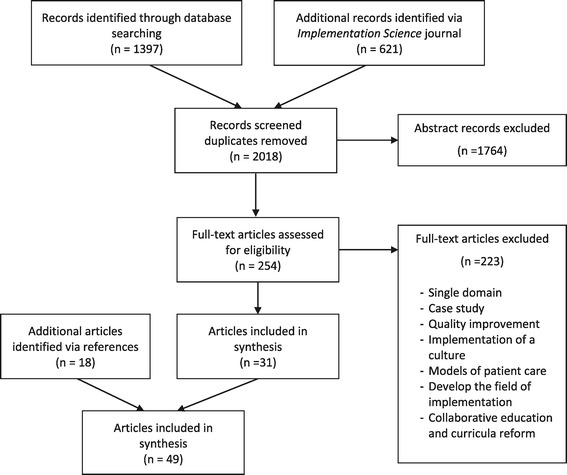
“Figure 1 PRISMA flow chart of framework selection [38].”
Preferred reporting items for systematic reviews and meta-analyses: the PRISMA Statement.
(2009) · PubMed Central · Cited by 44,859
Rogers, E. M., Singhal, A., & Quinlan, M. M. (2019) · An Integrated Approach to Communication Theory and Research · doi:10.4324/9780203710753-35 · Cited by 37,322
Wang, G., Ma, R., Qiao, G., Wada, K., Aizawa, Y., & Satoh, T. (2015) · Integrative Medicine International · doi:10.1159/000368408 · Cited by 18,657
Damschroder, L. J., Aron, D. C., Keith, R. E., Kirsh, S. R., Alexander, J. A., & Lowery, J. C. (2009) · Implementation Science · doi:10.1186/1748-5908-4-50 · Cited by 14,496 · cited 8×
“In the ensuing 9 years, the field has expanded considerably and further taxonomies, checklists, conceptual frameworks, theories, and models of implementation have been developed [10,13,14,17,18].”
InfluentialValente, T. W. (2003) · Genetics in Medicine · doi:10.1097/01.gim.0000061743.67794.c4 · Cited by 13,723
Developing and evaluating complex interventions: the new Medical Research Council guidance
Craig, P., Dieppe, P., Macintyre, S., Michie, S., Nazareth, I., & Petticrew, M. (2008) · BMJ · doi:10.1136/bmj.a1655 · Cited by 10,995 · cited 1×
“Background Implementation of innovations into practice is a complex process [1].”
Diffusion of Innovations in Service Organizations: Systematic Review and Recommendations
GREENHALGH, T., ROBERT, G., MACFARLANE, F., BATE, P., & KYRIAKIDOU, O. (2004) · The Milbank Quarterly · doi:10.1111/j.0887-378x.2004.00325.x · Cited by 7,448 · cited 5×
“conceptual framework (diffusion and dissemination, adoption/ assimilation, and implementation) [16].”
InfluentialEvaluating the public health impact of health promotion interventions: the RE-AIM framework.
Glasgow, R. E., Vogt, T. M., & Boles, S. M. (1999) · American Journal of Public Health · doi:10.2105/ajph.89.9.1322 · Cited by 7,217 · cited 1×
“Moreover, it means that influential frameworks within implementation science published prior to 2004 are omitted, but these have been analysed in previously published literature reviews [79-81].”
Research works printed but not linked: 2
- Lomas J Improving research dissemination and uptake in the health sector: beyond the sound of one hand clapping 1997 Ontario Centre for Health Economics and Policy Analysis Hamilton
- Green L Kreuter M The PRECEDE–PROCEED model Health promotion planning: an educational approach 1999 3 Mountain View (CA) Mayfield Publishing Company 32 43
Cited by
Items 201–300 of 394
Kostick, K. M., Trejo, M. B., Bhimaraj, A., Civitello, A. B., Grinstein, J., Horstmanshof, D., Jorde, U. P., Loebe, M. M., Mehra, M. R., Sulemanjee, N., et al. (2021) · BMC Medical Informatics and Decision Making · doi:10.1186/s12911-021-01468-z · Cited by 8
Implementation Science in Surgery: Translating Outcomes to Action
Nasser, J. S., & Chung, K. C. (2023) · Plastic & Reconstructive Surgery · doi:10.1097/prs.0000000000009822 · Cited by 7
Macé, F., Vriese, C. D., Nelissen-Vrancken, M. H. J. M. G., Ruggli, M., Brülhart, M., & Peyron, C. (2023) · Exploratory Research in Clinical and Social Pharmacy · doi:10.1016/j.rcsop.2023.100331 · Cited by 7
Klager, E., Lintschinger, J. M., Teufel, A., Schaden, E., Manschein, V., Reischmann, L., Ulbing, S., Willschke, H., Frimmel, C., Renner, R., et al. (2024) · PLoS ONE · doi:10.1371/journal.pone.0309955 · Cited by 7
“Although there have been very strong developments in this area in recent years, a lot of projects involved in transferring telemedical solutions into routine care fail due to a lack of consideration given to the stakeholders and change management aspects [13, 14].”
BackgroundMartin, T., Veldeman, S., Grossmann, H., Fuchs-Frohnhofen, P., Czaplik, M., & Follmann, A. (2024) · JMIR Aging · doi:10.2196/55471 · Cited by 6
“Even though several implementation frameworks for telemedicine have been proposed in the literature [23,24], a lot of projects transferring telemedical or digital innovation into routine care fail due to poor consideration of change management (CM) aspects [25].”
Backgroundvan Leersum, C. M., Bults, M., Siebrand, E., Olthuis, T. J. J., Bekhuis, R. E. M., Konijnendijk, A., & den Ouden, M. E. M. (2024) · JMIR Diabetes · doi:10.2196/56917 · Cited by 9
Clifton, J., Adair, E., Cheung, M., Torres, C., Andrews, W., Dorsonne, B., Hailu, A. Y., Heggan, E., Miefert, J., Riazi, G., et al. (2024) · Journal of Pain · doi:10.1016/j.jpain.2024.104718 · Cited by 12
Zoellner, J., & Porter, K. (2017) · Elsevier eBooks · doi:10.1016/b978-0-12-802928-2.00006-0 · Cited by 5
Barrieren und förderliche Faktoren telemedizinischer Ansätze in der medizinischen Rehabilitation
Farin‐Glattacker, E., Schmidt, E., & Spohn, L. (2019) · Springer eBooks · doi:10.1007/978-3-658-23987-9_8 · Cited by 8
Ogrin, R., Rushford, M.-A., Fallon, J., Mannix, R., Quinn, B., & Lewis, A. (2024) · PLoS ONE · doi:10.1371/journal.pone.0302572 · Cited by 10
“The implementation of new programs are likely to be more successful when underpinned by theoretical approaches [12], with many implementation frameworks developed to guide new program implementation [13].”
Short, K. H., Bullock, H. L., Jaouich, A., & Manion, I. G. (2018) · Plenum series on human exceptionality · doi:10.1007/978-3-319-89842-1_5 · Cited by 11
John, A. S., O’Kane, M., Christenson, R. H., Jülicher, P., Oellerich, M., & Price, C. P. (2021) · Clinica Chimica Acta · doi:10.1016/j.cca.2021.07.004 · Cited by 11
Digital services innovation for aging-in-place
Q.Z., C.Y., & Z.Q. (2015) · IEEE International Conference on Industrial Engineering and Engineering Management (IEEM) · doi:10.1109/ieem.2015.7385711 · Cited by 12
Schaad, L., Graells, M., Kasztura, M., Schmutz, E., Moullin, J. C., Hügli, O., Daeppen, J., Ambrosetti, J., Ombelli, J., Golay, M., et al. (2023) · INQUIRY The Journal of Health Care Organization Provision and Financing · doi:10.1177/00469580231159745 · Cited by 9
Self-citationElkington, K. S., O’Grady, M. A., Tross, S., Wilson, P. A., Watkins, J., Lebron, L., Cohall, R. M., & COHALL, A. T. (2020) · Health & Justice · doi:10.1186/s40352-020-00121-7 · Cited by 6
Wong, A. K. C., Wong, F. K. Y., Liang, J., Tong, D. W. K., Chan, M. L., Chu, T. K., Wong, B. C., Chan, R. S. Y., Ho, W. H., Tang, C. Y. S., et al. (2023) · Annals of Medicine · doi:10.1080/07853890.2023.2262088 · Cited by 6
“the design of the implementation strategies is informed by the Generic Implementation Framework (GIF) [18], while the design of the effectiveness and implementation evaluations is based on the Re-AIM framework [19].”
BackgroundMethodInfluentialPinches, R. S., Clinton, C. M., Ward, A., Meyer, S. C., Al‐Ibraheemi, A., Forrest, S. J., Strand, G. R., Detert, H., Piche‐Schulman, A., Gill, K., et al. (2020) · Pediatric Blood & Cancer · doi:10.1002/pbc.28326 · Cited by 5
Browne, J., Palacios, J., Madero-Cabib, I., Dintrans, P. V., Quilodrán, R., Ceriani, A., & Meza, D. (2021) · Journal of Long-Term Care · doi:10.31389/jltc.72 · Cited by 6
Lo, S. B., Conley, C. C., Brothers, B. M., Ryba, M. M., Frierson, G. F., Shelby, R. A., Thornton, L. M., Carpenter, K. M., & Andersen, B. L. (2021) · Health Psychology · doi:10.1037/hea0001094 · Cited by 5
Chalmers, L., Czarniak, P., Hughes, J., Iacob, R., Lee, Y. P., Parsons, K., Parsons, R. W., Sunderland, B., & Sim, T. F. (2022) · Exploratory Research in Clinical and Social Pharmacy · doi:10.1016/j.rcsop.2022.100147 · Cited by 5
“8 and potentially consider other implementation frameworks.(51) While there was a 100%response rate to the pharmacy staff questionnaires and the results of these questionnaires were very positive, these must be interpreted with caution due to the lownumbers of participants and the purposive recruitment of interested p…”
BackgroundStockton, D. A., Fowler, C., Debono, D. S., & Travaglia, J. (2022) · Journal of Child Health Care · doi:10.1177/13674935221129003 · Cited by 9
Evaluation of a blended learning approach on stratified care for physiotherapy bachelor students
Adje, M., Steinhäuser, J., Laekeman, M., Rogan, S., & Karstens, S. (2023) · BMC Medical Education · doi:10.1186/s12909-023-04517-5 · Cited by 11
“The questions were ordered in a way that would encourage participants to consider how their knowledge might be put to use [48].”
BackgroundJohnson, L., Mardo, J. N., & Demain, S. H. (2023) · PLoS ONE · doi:10.1371/journal.pone.0282612 · Cited by 6
Nurse/midwife-to-patient ratios: A scoping review
Tait, D., Davis, D. L., Roche, M. A., & Paterson, C. C. (2024) · Contemporary Nurse · doi:10.1080/10376178.2024.2318361 · Cited by 7
“While change process models with general applicability abound (Moullin et al., 2015), they do not provide speci fi c guidance regarding ratios.”
Salama, J. S., Lee, A., & Afshin, A. (2019) · BMJ Innovations · doi:10.1136/bmjinnov-2018-000334 · Cited by 6
Implementation of Clinical Pharmacy Services in Primary Health Care: A Scoping Review
Paolinelli, J. P. V., de Alencar, T., Rocha, K. S. S., Pereira, M. L., & Júnior, G. A. D. S. (2025) · Journal of Evaluation in Clinical Practice · doi:10.1111/jep.70285 · Cited by 14
“The use of a theoretical model in implementation research serves as a roadmap for planning and executing implementation strategies, increasing the efficacy/efficiency of research, generalization, and interpretation of results [158].”
Mulaku, M., Owino, E. J., Ochodo, E., & Young, T. (2024) · F1000Research · doi:10.12688/f1000research.157439.1 · Cited by 4
Cook, C. R., Larson, M. F., & Zhang, Y. (2023) · Issues in clinical child psychology · doi:10.1007/978-3-031-20006-9_26 · Cited by 6
Reyneke, R. A., Richens, I. F., Buchanan, H., Davies, E. B., Sorrell, C., Ashmore, A., & Brennan, M. L. (2023) · Preventive Veterinary Medicine · doi:10.1016/j.prevetmed.2023.105928 · Cited by 6
Sustaining e-health innovations in a complex hospital environment: learning through evidence
Jaana, M., MacPhee, E., Sherrard, H., & Walker, M. (2024) · Frontiers in Digital Health · doi:10.3389/fdgth.2024.1346085 · Cited by 13
Bautista, J. R. (2024) · Applied Clinical Informatics · doi:10.1055/a-2385-1544 · Cited by 4
“17 This includes preimplementation, implementation, and postimplementation.”
How to create accessible research summaries for the developmental language disorder community
Gasparini, L., Ziegenfusz, S., Turner, N., Leitão, S., Clair, M. S., & Jackson, E. (2024) · International Journal of Language & Communication Disorders · doi:10.1111/1460-6984.13142 · Cited by 5
Bawab, N., Moullin, J. C., Perraudin, C., & Bugnon, O. (2020) · Pharmacy · doi:10.3390/pharmacy8020106 · Cited by 7
“Implementation success depends on what is being implemented (the innovation also known as the (clinical) intervention), where and for whom the innovation is implemented (the context), and how and by whom (implementation strategies) the innovation is implemented (see Table 1 for definitions) [19,20].”
BackgroundMethodSelf-citationThe Role of Human Capital in the Implementation of Healthcare Innovation in the UAE
Qureshi, W. (2020) · Palgrave studies in global human capital management · doi:10.1007/978-3-030-42211-0_11 · Cited by 6
McPherson, J. (2015) · Carolina Digital Repository (University of North Carolina at Chapel Hill) · doi:10.17615/3jwb-bh64 · Cited by 8
Boudewijns, E. A., Vermond, D., van der Kleij, R., Chavannes, N. H., van Schayck, O. C. P., Kirenga, B., & Brakema, E. A. (2020) · BMJ Open · doi:10.1136/bmjopen-2020-041821 · Cited by 5
Staging Advocacy: Portrait of a Caregiver
Eaton, J., & Madsen, N. L. (2017) · Public Policy & Aging Report · doi:10.1093/ppar/prx009 · Cited by 5
Healthcare Information Systems (HIS) Assimilation Theory
Sulaiman, H. B., & Wickramasinghe, N. S. (2018) · Healthcare delivery in the information age · doi:10.1007/978-3-319-72287-0_18 · Cited by 4
Communicating the Implementation of Open Notes to Health Care Professionals: Mixed Methods Study
Jonnergård, K., Petersson, L., & Erlingsdóttir, G. (2021) · JMIR Medical Informatics · doi:10.2196/22391 · Cited by 4
“This complexity needs to be considered [8-11] for successful implementation of new technology, particularly with regard to how the implementation is communicated to employees [12,13].”
BackgroundDissemination and Implementation Research
Barnett, M. L., Dickson, K. S., Becker‐Haimes, E. M., & Stadnick, N. A. (2021) · Elsevier eBooks · doi:10.1016/b978-0-12-818697-8.00170-9 · Cited by 4
Mckenzie, E., Barnett, P., Parker, G., & Pilling, S. (2025) · BJPsych Open · doi:10.1192/bjo.2025.10075 · Cited by 4
Ritchie, M. J., Smith, J. L., Kim, B., Woodward, E. N., & Kirchner, J. E. (2024) · Frontiers in Health Services · doi:10.3389/frhs.2024.1304694 · Cited by 4
Westerlund, A. (2022) · doi:10.13140/rg.2.2.19273.42080 · Cited by 4
An Innovation Pathway for Well-Being, Aging and Health: A Croatian Case Study
Belani, H., Šolić, P., & Mimica, M. (2022) · International Conference on Smart and Sustainable Technologies (SpliTech) · doi:10.23919/splitech55088.2022.9854345 · Cited by 4
“In order to better unveil the complexity of implementing innovations, especially in healthcare, a systematic review of implementation frameworks has been conducted as well as the generic implementation framework proposed in [21], covering ”the process of implementation (often portrayed as a series of stages and/or ste…”
BackgroundMapping community pharmacy services in Brazil: a scoping review
Garabeli, A. A., Benetoli, A., Possagno, G. C. H., Machinski, I., Tonin, F. S., Fernández-Llimós, F., & Pontarolo, R. (2022) · Brazilian Journal of Pharmaceutical Sciences · doi:10.1590/s2175-97902022e20851 · Cited by 5
Bawab, N., Moullin, J. C., Jotterand, S., Rossier, C., Schneider, M. P., & Perraudin, C. (2023) · Journal of Continuing Education in the Health Professions · doi:10.1097/ceh.0000000000000466 · Cited by 3
“Implementation science has been developed to reduce the gap between the development of effective health care interventions and their incorporation into routine practice.(21,22) The objective of this study was to assess the building of interprofessional collaborative practices throughout the implementation process of a…”
BackgroundSelf-citationTranslational science in the science of reading: A case study
Daniel, J., Clucas, L., Wenqing, C., Collier, K. G., & Moss, J. (2024) · British Journal of Special Education · doi:10.1111/1467-8578.12548 · Cited by 6
Karlsson, P., Nygren‐Bonnier, M., Torikka, S., Porserud, A., Henningsohn, L., Olsson, C., Rydwik, E., & Hagströmer, M. (2024) · BMC Cancer · doi:10.1186/s12885-024-13059-y · Cited by 3
“Further, it is important to investigate user experiences and facilitating aspects and barriers that influence implementation as a guide for potential further implementation of an intervention [15].”
BackgroundHui, C. Y., Condon, K., Kolekar, S., Roberts, N., Sreter, K. B., Simons, S. O., Figueiredo, C. E. D. S., McKeough, Z. J., Salim, H. S., Gawlik‐Lipinski, A., et al. (2024) · PLoS ONE · doi:10.1371/journal.pone.0314914 · Cited by 4
Vine, M. M., Jarvis, J. W., Chong, E., Laxer, R. E., Ladak, A., & Manson, H. E. (2019) · BMC Public Health · doi:10.1186/s12889-019-7704-2 · Cited by 3
Assessing attitudes to ED-based HIV testing: Development of a short-structured survey instrument
Rao, A., Nagourney, E. M., Chen, V. H., Hill, S., Klein, E. Y., Whalen, M. M., Quinn, T. C., & Hansoti, B. (2021) · PLoS ONE · doi:10.1371/journal.pone.0252372 · Cited by 3
Yang, L., & Friedenreich, C. M. (2022) · Preventive Medicine · doi:10.1016/j.ypmed.2022.107342 · Cited by 3
Addressing the Practice Context in Evidence-Based Practice Implementation: Leadership and Climate
Shuman, C. J. (2017) · Deep Blue (University of Michigan) · Cited by 8
Mustafa, M., Hatah, E., & Makmor‐Bakry, M. (2024) · PLoS ONE · doi:10.1371/journal.pone.0304291 · Cited by 4
Salisbury, D. L., Lin, F. V., & Yu, F. (2025) · Scientific Reports · doi:10.1038/s41598-025-88890-9 · Cited by 3
Lai-Kwon, J. E., Rutherford, C., Jefford, M., Zhang, I., Devereux, C., Herath, D., Burbury, K., & Best, S. (2025) · Quality of Life Research · doi:10.1007/s11136-025-03995-y · Cited by 2
“Multiple implementation science theories and frameworks exist [16, 17], including process models that describe how to translate research into practice (e.g. Knowledge to Action [18, 19]), determinant frameworks that specify the barriers and facilitators that influence implementation outcomes (e.g.…”
Restiglian, A., Martin, L., Long, D. N., Reynolds, L., Walker, T., Meadley, B., Finn, A., Batt, A. M., Miles, A. K., Johnston, T., et al. (2025) · Paramedicine · doi:10.1177/27536386251360833 · Cited by 2
“21,22 It serves as a comprehensive roadmap outlining the knowledge, skills, behaviours and qualities necessary to practice.”
Boersema, G. C., Botma, Y., & Mulder, M. (2025) · International Journal of Older People Nursing · doi:10.1111/opn.70044 · Cited by 3
“Therefore, multiple theories are often needed to navigate the implementation process, including planning, design, contextual analysis, strategy selection and evaluation (Moullin et al. 2015).”
Systemic innovation in digital healthcare solutions: a framework for knowledge mobilisation
Natera, J. M., & Sampedro-Hernández, J. L. (2025) · Management Research The Journal of the Iberoamerican Academy of Management · doi:10.1108/mrjiam-03-2025-1705 · Cited by 2
Lilja, P. A., Skaremyr, E., Svensson, A.-K., & Andersson, K. (2025) · Linguistics and Education · doi:10.1016/j.linged.2025.101465 · Cited by 2
Otte, M., Gutiérrez‐Ibarluzea, I., & Dauben, H. (2026) · Frontiers in Pharmacology · doi:10.3389/fphar.2026.1869110 · Cited by 2
“Organisational conditions are addressed implicitly or only at specific points within existing frameworks (Moullin et al., 2015).”
The review of the foreign experience on the financing of innovative medical technologies
Omelyanovskiy, V. V., Zheleznyakova, I. A., Bezdenezhnykh, T. P., Lazareva, M. L., & Fedyaev, D. V. (2020) · FARMAKOEKONOMIKA Modern Pharmacoeconomics and Pharmacoepidemiology · doi:10.17749/2070-4909/farmakoekonomika.2020.055 · Cited by 3
Hanchanale, V. S., Biyani, C. S., & Sevdalis, N. (2022) · Springer eBooks · doi:10.1007/978-3-030-88789-6_28 · Cited by 2
Graells, M., Schaad, L., Schmutz, E., Moullin, J. C., Hügli, O., Daeppen, J., Ambrosetti, J., Ombelli, J., Golay, M., Ribordy, V., et al. (2023) · Healthcare · doi:10.3390/healthcare11091228 · Cited by 4
“The parent study procedures were developed based on the Generic Implementation Framework (GIF) [28], which includes five stages (i.e., development, exploration, preparation, operation and sustainability).”
MethodSelf-citationChibi, M., Wasswa, W., Ngongoni, C. N., & Lule, F. J. (2023) · Frontiers in Health Services · doi:10.3389/frhs.2023.1198008 · Cited by 3
Frith, M., Randall, S. M., Savira, F., Swann, J., White, N., Giddy, A., McLean, K., Peeters, A., & Robinson, S. (2023) · BMJ Open · doi:10.1136/bmjopen-2023-075773 · Cited by 2
“Concepts used in this study are based on the RE-AIM framework and are listed below in table 1, along with example questions for illustration.”
BackgroundMethodInfluentialStone, M. (2024) · Child Care in Practice · doi:10.1080/13575279.2024.2309120 · Cited by 2
“Previously there was a strong research focus on implementation theories, frameworks and strategies, exempli fi ed by e ff orts to collate and synthesise the large number of frameworks such as the ERIC project (Powell et al., 2015) and evidence synthesis by Moullin et al. (2015).”
BackgroundJackson, E., Botero, J., Hanavan, C., Gent, R., Hatton, S., & Leitão, S. (2025) · International Journal of Speech-Language Pathology · doi:10.1080/17549507.2024.2446515 · Cited by 2
Schmid, S. A., Zimmermann, K., Koch, C., Mester, P., Athanasoulas, G., Buttenschoen, J., Fleischmann, D., Schlosser‐Hupf, S., Pavel, V., Schilling, T., et al. (2025) · Antibiotics · doi:10.3390/antibiotics14020202 · Cited by 3
“The findings of this study, which demonstrate the successful implementation of an interprofessional approach to TDM in Piperacillin/Tazobactam therapy for ACLF patients, align closely with the principles outlined in the Generic Implementation Framework (GIF) proposed by Moullin et al. [39].”
Park, S., Bakko, M., & Pinto, R. M. (2025) · Human Services Organizations Management Leadership & Governance · doi:10.1080/23303131.2025.2471533 · Cited by 3
iKMC-IR Study Group, Yoshida, S., & Portela, A. (2026) · Gates Open Research · doi:10.12688/gatesopenres.16392.1 · Cited by 4
An Applied Test of Knowledge Translation Methods Using a Mobile Health Solution
Armstrong, C. M., Ciulla, R., Williams, S. A., & Micheel, L. (2020) · Military Medicine · doi:10.1093/milmed/usz196 · Cited by 3
Soni, A., Beeken, R. J., McGowan, L. J., Lawson, V., Chadwick, P., & Croker, H. A. (2021) · Nutrients · doi:10.3390/nu13082807 · Cited by 3
“This is, however, an important element in an intervention’s impact because if it is challenging to provide, then it is less likely to be offered to service users [63].”
BackgroundHow to Sustain and Spread Nutritional Care Improvements
Laur, C. V., & Bell, J. (2021) · Perspectives in nursing management and care for older adults · doi:10.1007/978-3-030-63892-4_11 · Cited by 2
Standardised Data on Initiatives – STARDIT: Beta VersionPreprint
Nunn, J., & Shafee, T. M. A. (2021) · OSF Preprints (OSF Preprints) · doi:10.31219/osf.io/w5xj6 · Cited by 2
Martines, J. C., Portela, A. G., & Bahl, R. (2023) · Acta Paediatrica · doi:10.1111/apa.16862 · Cited by 2
How Innovation Systems Promote and Hinder Innovations in Healthcare - a Swedish Case
Eriksson, N., Rexhepi, H., Javid, R., Djäken, E. M., & Lifvergren, S. (2024) · Journal of Innovation Management · doi:10.24840/2183-0606_012.001_0008 · Cited by 2
Hamash, M., Ghreir, H., & Mohamed, H. (2024) · Innovative Teaching and Learning Journal · doi:10.11113/itlj.v8.155 · Cited by 1
Comiskey, C. M. (2024) · Advances in mental health and addiction · doi:10.1007/978-3-031-65917-1_10 · Cited by 1
Implementation Status of Public Health Informatics
Chanyalew, M. A. (2024) · Sustainable development goals series · doi:10.1007/978-3-031-71118-3_5 · Cited by 1
Kuipers, Y., Aitken-Arbuckle, A., Hardie, K., Corrigan, A. E., Jenkins, H., & Craig, J. (2025) · Evaluation and Program Planning · doi:10.1016/j.evalprogplan.2025.102552 · Cited by 2
Pritchard, L., Burden, K., Carlson‐Jones, W., Stormon, N., & Do, L. (2025) · Gerodontology · doi:10.1111/ger.12811 · Cited by 2
“Implementation frameworks are crucial in the sustainability and acceptance of new practices and innovations [54].”
InfluentialRavula, R. K. (2025) · European Journal of Computer Science and Information Technology · doi:10.37745/ejcsit.2013/vol13n9127140 · Cited by 1
Implementation of Goal-Oriented Care in Belgium: Experiences From 25 Primary Care Organisations
Vanneste, L., Heymans, I., Belche, J.-L., Huybrechts, I., VELDE, D. V. D., VRIENDT, P. D., Haverals, R., Boeykens, D., Anthierens, S., & Boeckxstaens, P. (2025) · International Journal of Integrated Care · doi:10.5334/ijic.8983 · Cited by 2
Steensma, R., van den Bogerd, N., Dijkstra, K., Meijboom, W., Janssen-Heijnen, M. L. G., Krabbendam, L., & Maas, J. (2025) · HERD Health Environments Research & Design Journal · doi:10.1177/19375867251331105 · Cited by 2
“Implementation domains are groups or levels that in fl uence implementation outcomes (Moullin et al., 2015; Nilsen, 2020).”
Stadel, M., & Diermayr, G. (2025) · International Journal of Health Professions · doi:10.2478/ijhp-2025-0007 · Cited by 1
“…im Modell/der Theorie/ dem Rahmenwerk abgedeckt werden sollen (z.B. spätere Nutzer*innen, Organisation, System); oder die Übereinstimmung der TMFs mit dem jeweiligen Setting, Kontext und den praktischen Herausforderungen des Projekts (Birken et al., 2018; Lynch et al. 2018; Moullin et al., 2015).”
Kurtz, C., Shadmi, E., Kruzel-Davila, E., Antebi, A., Tsehovsky, T., & Spitzer, S. (2026) · BMC Health Services Research · doi:10.1186/s12913-026-14408-2 · Cited by 1
“While it is widely recognized that thorough planning and preparation are imperative for the successful implementation and long-term maintenance of interventions, these crucial steps are often overlooked [20, 21].”
Muellmann, S., Jahnel, T., Barnils, N. P., Pan, C.-C., & Gerhardus, A. (2026) · BMC Public Health · doi:10.1186/s12889-026-27174-x · Cited by 2
“Eligible public health frameworks are needed to describe properties, characteristics, and/or qualities of the development or evaluation of health interventions (i.e., descriptive frameworks [23]).”
Park, K. U., Delisle, M., Hassett, M. J., Minami, C. A., Punglia, R. S., Woodbury, S. R., Brindle, M. E., Mittendorf, E. A., & King, T. A. (2026) · Annals of Surgical Oncology · doi:10.1245/s10434-026-19792-x · Cited by 1
“12,13 Studies have shown a positive relationship between intent and behavior of clinicians.”
Yanlin, L. I. U., Dempsey, M., Shiel, A., & Killeen, H. (2026) · Physical & Occupational Therapy In Pediatrics · doi:10.1080/01942638.2026.2654615 · Cited by 1
“Most frameworks by their nature are encouraged to be used in a flexible, descriptive and explanatory way rather than prescriptive and predictive (Moullin et al., 2015).”
Giallo, R., Fogarty, A., Savopoulos, P., Cox, A., Toone, E., Williams, K. L., Jones, A. M., & Treyvaud, K. (2021) · Health & Social Care in the Community · doi:10.1111/hsc.13587 · Cited by 2
Implementation science to guide pharmacy and health services research
García‐Cárdenas, V., & Hohmeier, K. C. (2022) · Elsevier eBooks · doi:10.1016/b978-0-323-91888-6.00046-6 · Cited by 3
Keith, R. E., Crosson, J. C., & Damschroder, L. J. (2023) · Oxford University Press eBooks · doi:10.1093/oxfordhb/9780190059668.013.16 · Cited by 1
TAVARES, A. L., BRASIL, L. X., Javarini, H. R. V., Júnior, G. A. D. S., de Araújo, D. C. S. A., & Rocha, K. S. S. (2024) · Revista Brasileira de Farmácia Hospitalar e Serviços de Saúde · doi:10.30968/rbfhss.2024.151.1072 · Cited by 9
Winters, A. M., Collins‐Camargo, C., Utterback, L., & Minton, L. (2024) · Discover Psychology · doi:10.1007/s44202-024-00182-x · Cited by 1
“A number of implementation frameworks have been established (e.g. [38, 39]).”
A new model for the diagnostic assessment services trajectory for neurodevelopmental conditions
Jacques, C., Rivard, M., Mello, C., Abouzeid, N., Hérault, É., & Saulnier, G. (2024) · Frontiers in Rehabilitation Sciences · doi:10.3389/fresc.2024.1426966 · Cited by 1
Innovation readiness assessment in healthcare organizations
Gabrielyan, A. R., Aleksandrova, O. Y., & Mikhailov, I. А. (2025) · Medical Technologies Assessment and Choice · doi:10.17116/medtech20254701118 · Cited by 1
Towards Sustainable Healthcare: Integrating Technology for Eco-friendly and Efficient Solutions
Al-Barazie, R., & Mohamed, A. (2025) · Advances in Science, Technology & Innovation/Advances in science, technology & innovation · doi:10.1007/978-3-031-76837-8_31 · Cited by 1
Gjestsen, M. T. (2020) · Stavanger University Library eBooks · doi:10.31265/usps.40 · Cited by 1
INOVAÇÕES EM SERVIÇOS DE DOAÇÃO E TRANSPLANTE DE ÓRGÃOS: REVISÃO SISTEMÁTICA DA LITERATURA
Siqueira, M. M. (2019) · RAHIS - Revista de Administração Hospitalar e Inovação em Saúde · doi:10.21450/rahis.v15i4.5281 · Cited by 2
Metadata
- Authors
- Moullin, J. C., Sabater-Hernández, D., Fernandez-Llimos, F., & Benrimoj, S. I.
- Affiliations
- University of Technology Sydney (AU)
- Corresponding author
- Moullin, Joanna C
- Venue
- Health Research Policy and Systems
- Published
- 2015-03-14
- Volume
- 13
- Issue
- 1
- Pages
- 16-16
- ISSN
- 1478-4505 (ISSN-L)
- PMC
- PMC4364490
- OpenAlex
- W1989327107
- Semantic Scholar
- 60e91bccd6b6630c9ae7042264448d6209c88022
- Cited by
- 392
- References
- 84
- Citations by year
- 2026: 18 · 2025: 30 · 2024: 52 · 2023: 46 · 2022: 45 · 2021: 49 · 2020: 53 · 2019: 22 · 2018: 23 · 2017: 27 · 2016: 20 · 2015: 6
- FWCI
- 4.55
- Type
- journal article
- Language
- en
- Open access
- gold
- doi.org
- Locations
- Health Research Policy and Systems (publishedVersion, cc-by)
- PubMed Central (publishedVersion, cc-by)
- PubMed (publishedVersion)
- Institutional Repository of the University of Granada (University of Granada) (submittedVersion, cc-by-nc-nd)
- LA Referencia (Red Federada de Repositorios Institucionales de Publicaciones Científicas) (submittedVersion, cc-by-nc-nd)
- eSpace (Curtin University) (submittedVersion)
- UTS ePRESS (University of Technology Sydney) (submittedVersion)
- Topics
- Health Sciences › Health Professions › General Health Professions › Health Policy Implementation Science
- Health Sciences › Health Professions › General Health Professions › Health Sciences Research and Education
- Health Sciences › Medicine › Public Health, Environmental and Occupational Health › Clinical practice guidelines implementation
- Keywords
- implementation framework, healthcare innovation, implementation science, knowledge translation, implementation stages, implementation factors, implementation strategies, implementation evaluation
- MeSH terms
- Delivery of Health Care, Diffusion of Innovation
About these checks
Registry, retraction, Cites and statistics results are computed, not judged, with one exception: a printed reference that no index lists is read once by a model before it counts as a citation error. Claims are extracted by a model and kept only when their quote appears verbatim in the text; each cited source is then checked, with a model’s help, for whether it says what the claim relies on. Those verdicts can be wrong — read the claim’s quote and the cited source before relying on one.
The claim verdicts this report counts are experimental: their accuracy is not yet measured.
A language model drew the claims from the paper on 2026-10-04, under version 3 of the claim definition (model deepseek-v4.1-flash, prompt extract-v3).
A second model labelled each claim on 2026-10-04 (model jev-1.13-20260917, definition revision gold-guideline-v0.2).
Cited sources are checked with a language model’s help (qwen3.8-omni-flash and gpt-6-sol).
Statistics and arithmetic are recomputed, not judged.
Confidence bands are shown only for fields calibrated on our annotated test set. None is calibrated yet, so no band is shown.
What counts as a claim ›How we measure confidence ›How we check this ›
Are you an author, or do you see a problem with this page? Request a review
Data sources
Bibliographic data: Semantic Scholar, OpenAlex, Crossref.
Contains information from the Semantic Scholar Academic Graph Datasets, made available under the ODC Attribution License (ODC-BY 1.0).
Semantic Scholar’s data is described in: Kinney, R., et al. (2023). The Semantic Scholar Open Data Platform. arXiv:2301.10140.
