

The DOI matches its Crossref record; 46 of the 46 references it cites were found in a registry or an index.
Efficacy of behavioural interventions for transport behaviour change: systematic review, meta-analysis and intervention coding
Open accessAbstract
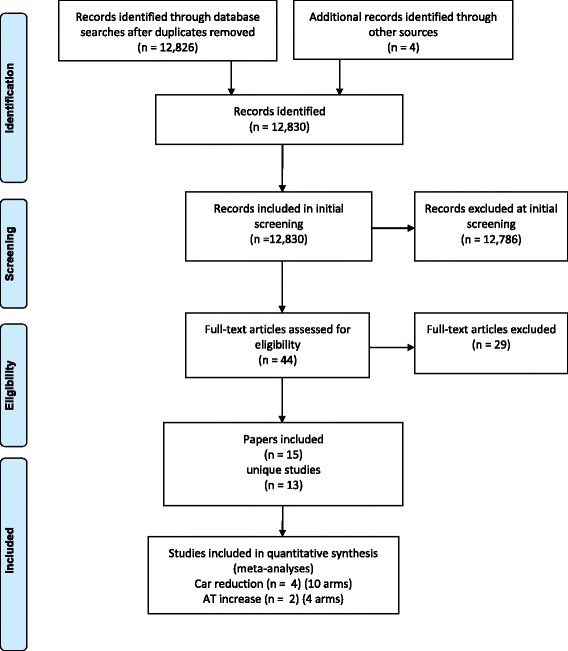
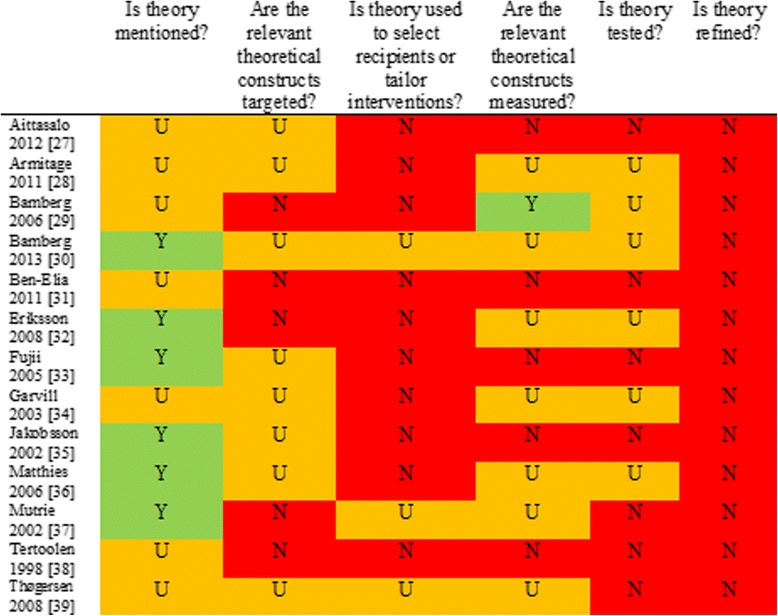
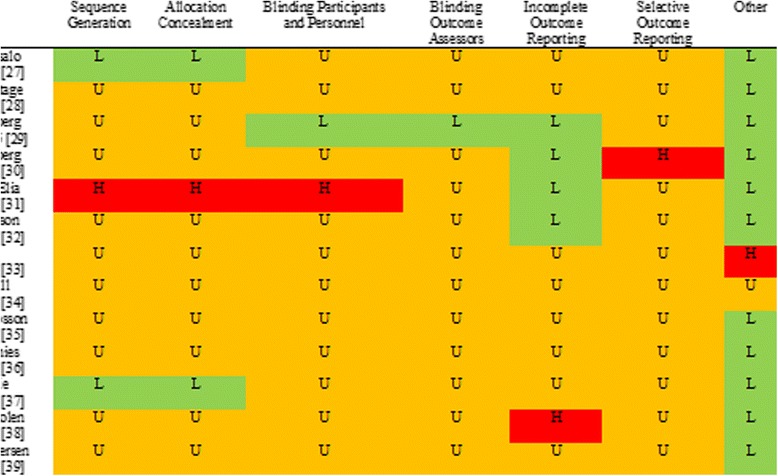
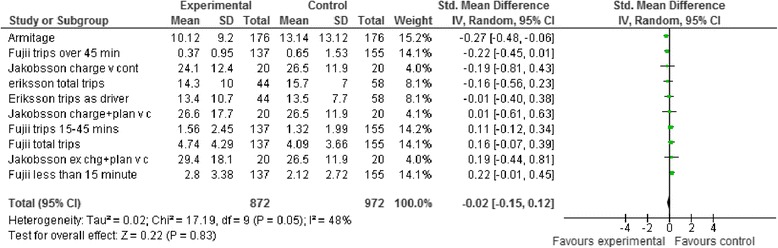
BACKGROUND: Reducing reliance on motorised transport and increasing use of more physically active modes of travel may offer an opportunity to address physical inactivity. This review evaluates the evidence for the effects of behavioural interventions to reduce car use for journeys made by adults and codes intervention development and content. METHODS: The review follows the procedure stated in the registration protocol published in the PROSPERO database (registration number CRD42011001797). Controlled studies evaluating behavioural interventions to reduce car use compared with no interventions or alternative interventions on outcome measures of transport behaviours taken in adult participants are included in this review. Searches were conducted on all records in Applied Social Sciences Index and Abstracts (ASSIA), Ovid Embase, Ovid Medline, Ovid PsycInfo, Scopus, Sociological Abstracts, Transportation Research Information Service (TRIS), Transportation Research International Documentation (TRID), and Web of Science databases. Peer reviewed publications in English language meeting the inclusion criteria are eligible. Methodological quality is assessed using the Cochrane Risk of Bias Tool. Interventions are categorised in terms of behavioural frameworks, theories and techniques. RESULTS: 15 full text articles are included, representing 13 unique studies, with 4895 participants and 27 intervention arms. Risk of bias across the review is appraised as considerable due to the unclear methodological quality of individual studies. Heterogeneity of included studies is considerable. Meta-analyses reveal no significant effect on reduction of frequency of car use or on increasing the proportion of journeys by alternative, more active modes of transport. There is insufficient data relating to alternative outcomes such as distance and duration which may have important health implications. Interventions were top-down but could not be described as theory-based. Intervention efficacy was associated with the use of a combination of information provision and behavioural regulation techniques. There was a lack of consideration of opportunity for change and behaviour in context. CONCLUSIONS: There is no evidence for the efficacy of existing behavioural interventions to reduce car trips included in this review. The evidence for efficacy of behavioural interventions to decrease distance and duration of car journeys is limited and inconclusive. Overall the evidence is highly heterogeneous and is at considerable risk of bias. Future research should investigate alternative behavioural interventions in high quality, controlled studies informed by existing evidence, theory, and viewers of potential users. Future intervention studies should increase scientific rigour, include objective outcome measures, and incorporate thorough evaluations as standard.
Overview
The claims and statistics of this paper haven’t been checked yet.
Run the check — free, no account needed. It reads the open-access text and checks the sources it cites.
Integrity signals
Registry
Cites
Statistics
Figures
Verification
Claims the paper makes
The claims and statistics of this paper haven’t been checked yet.
Run the check — free, no account needed. It reads the open-access text and checks the sources it cites.
Claims other papers make about this one
Each is checked against this paper’s own text: does it say what the citing paper says it does?
In the citing paper
“BCTTv1 has also been used by systematic reviewers to identify BCTs within intervention papers, in order to facilitate intervention comparison and evaluate technique efficacy (e.g. [42–47]).”
Self-check
Percentages, sums and reported differences re-computed from the paper’s own numbers.
The self-check needs the paper’s full text.
Citations
Cites
The theory of planned behavior
Ajzen, I. (1991) · Organizational Behavior and Human Decision Processes · doi:10.1016/0749-5978(91)90020-t · Cited by 90,587
The Cochrane Collaboration's tool for assessing risk of bias in randomised trials
Higgins, J. P. T., Altman, D. G., Gotzsche, P. C., Juni, P., Moher, D., Oxman, A. D., Savovic, J., Schulz, K. F., Weeks, L., Sterne, J. A. C., et al. (2011) · BMJ · doi:10.1136/bmj.d5928 · Cited by 33,817
Cochrane Handbook for Systematic Reviews of Interventions: Cochrane Book Series
(2008) · doi:10.1002/9780470712184 · Cited by 25,048
Dermyshi, E., Wang, Y., Yan, C., Hong, W., Qiu, G., Gong, X., & Zhang, T. (2017) · Neonatology · doi:10.1159/000454668 · Cited by 24,586
Liberati, A., Altman, D. G., Tetzlaff, J., Mulrow, C., Gotzsche, P. C., Ioannidis, J. P. A., Clarke, M., Devereaux, P. J., Kleijnen, J., & Moher, D. (2009) · BMJ · doi:10.1136/bmj.b2700 · Cited by 17,648
Michie, S., van Stralen, M. M., & West, R. (2011) · Implementation Science · doi:10.1186/1748-5908-6-42 · Cited by 13,697
CONSORT 2010 Statement: updated guidelines for reporting parallel group randomised trials
the CONSORT Group, Schulz, K. F., Altman, D. G., & Moher, D. (2010) · BMC Medicine · doi:10.1186/1741-7015-8-18 · Cited by 13,371
Developing and evaluating complex interventions: the new Medical Research Council guidance
Craig, P., Dieppe, P., Macintyre, S., Michie, S., Nazareth, I., & Petticrew, M. (2008) · BMJ · doi:10.1136/bmj.a1655 · Cited by 10,995
CONSORT 2010 Statement: updated guidelines for reporting parallel group randomised trials
Schulz, K. F., Altman, D. G., Moher, D., & for the CONSORT Group (2010) · BMJ · doi:10.1136/bmj.c332 · Cited by 9,329
Michie, S., Richardson, M., Johnston, M., Abraham, C., Francis, J., Hardeman, W., Eccles, M. P., Cane, J., & Wood, C. E. (2013) · Annals of Behavioral Medicine · doi:10.1007/s12160-013-9486-6 · Cited by 7,629
Cane, J., O’Connor, D., & Michie, S. (2012) · Implementation Science · doi:10.1186/1748-5908-7-37 · Cited by 4,888 · cited 5×
“The revised Theory Domain Framework consists of 14 domains and 84 component constructs.”
MethodInfluentialA taxonomy of behavior change techniques used in interventions
Abraham, C., & Michie, S. (2008) · Health Psychology · doi:10.1037/0278-6133.27.3.379 · Cited by 2,525
Michie, S., Ashford, S., Sniehotta, F. F., Dombrowski, S. U., Bishop, A., & French, D. P. (2011) · Psychology & Health · doi:10.1080/08870446.2010.540664 · Cited by 1,756
Self-citationSitting time and mortality from all causes, cardiovascular disease, and cancer
KATZMARZYK, P. T., CHURCH, T. S., CRAIG, C. L., & BOUCHARD, C. (2009) · Medicine & Science in Sports & Exercise · doi:10.1249/mss.0b013e3181930355 · Cited by 1,611
Physiological and health implications of a sedentary lifestyle
Tremblay, M. S., Colley, R. C., Saunders, T. J., Healy, G. N., & Owen, N. G. (2010) · Applied Physiology, Nutrition, and Metabolism · doi:10.1139/h10-079 · Cited by 1,572
Predicting Behavior From Actions in the Past: Repeated Decision Making or a Matter of Habit?
Aarts, H., Verplanken, B., & van Knippenberg, A. (1998) · Journal of Applied Social Psychology · doi:10.1111/j.1559-1816.1998.tb01681.x · Cited by 926
Are interventions theory-based? Development of a theory coding scheme.
Michie, S., & Prestwich, A. (2010) · Health Psychology · doi:10.1037/a0016939 · Cited by 855
Sedentary Behaviors and Health Outcomes Among Adults
Proper, K. I., Singh, A. S., van Mechelen, W., & Chinapaw, M. J. M. (2011) · American Journal of Preventive Medicine · doi:10.1016/j.amepre.2010.10.015 · Cited by 633
Does theory influence the effectiveness of health behavior interventions? Meta-analysis
Prestwich, A., Sniehotta, F. F., Whittington, C., Dombrowski, S. U., Rogers, L., & Michie, S. (2014) · Health Psychology · doi:10.1037/a0032853 · Cited by 562
Self-citationPromoting walking and cycling as an alternative to using cars: systematic review
Ogilvie, D., Egan, M., Hamilton, V., & Petticrew, M. (2004) · British medical journal · doi:10.1136/bmj.38216.714560.55 · Cited by 467
Evidence-based behavioral medicine: What is it and how do we achieve it?
Davidson, K. W., Goldstein, M. G., Kaplan, R. M., Kaufmann, P. G., Knatterud, G. L., Orleans, C. T., Spring, B. J., Trudeau, K. J., & Whitlock, E. P. (2003) · Annals of Behavioral Medicine · doi:10.1207/s15324796abm2603_01 · Cited by 420
Bamberg, S. (2006) · Environment and Behavior · doi:10.1177/0013916505285091 · Cited by 394
Habit and information use in travel mode choices
Aarts, H., Verplanken, B., & van Knippenberg, A. (1997) · Acta Psychologica · doi:10.1016/s0001-6918(97)00008-5 · Cited by 326
Iedema, R. A. M., Allen, S. J., Britton, K., Piper, D. A., Baker, A., Grbich, C. F., Allan, A., Jones, L., Tuckett, A. G., Williams, A. F., et al. (2011) · BMJ · doi:10.1136/bmj.d4423 · Cited by 306
Mind, mechanism, and adaptive behavior.
Hull, C. L. (1937) · Psychological Review · doi:10.1037/h0058294 · Cited by 303
Can we reduce car use and, if so, how? A review of available evidence
Graham-Rowe, E., Skippon, S., Gardner, B., & Abraham, C. (2011) · Transportation Research Part A Policy and Practice · doi:10.1016/j.tra.2011.02.001 · Cited by 292
Psychological resistance against attempts to reduce private car use
Tertoolen, G., van Kreveld, D., & Verstraten, B. (1998) · Transportation Research Part A Policy and Practice · doi:10.1016/s0965-8564(97)00006-2 · Cited by 265
Eriksson, L., Garvill, J., & Nordlund, A. M. (2007) · Transportation Research Part F Traffic Psychology and Behaviour · doi:10.1016/j.trf.2007.05.004 · Cited by 262
Applying the stage model of self-regulated behavioral change in a car use reduction intervention
Bamberg, S. (2012) · Journal of Environmental Psychology · doi:10.1016/j.jenvp.2012.10.001 · Cited by 254
Promoting public transport as a subscription service: Effects of a free month travel card
Thøgersen, J. B. (2009) · Transport Policy · doi:10.1016/j.tranpol.2009.10.008 · Cited by 223
Behavior change techniques used to promote walking and cycling: A systematic review.
Bird, E. L., Baker, G., Mutrie, N., Ogilvie, D., Sahlqvist, S., & Powell, J. E. (2013) · Health Psychology · doi:10.1037/a0032078 · Cited by 191
Winterfeld, A. (2009) · PubMed · Cited by 189
Mutrie, N., Carney, C., Blamey, A., Crawford, F., Aitchison, T., & Whitelaw, A. (2002) · Journal of Epidemiology & Community Health · doi:10.1136/jech.56.6.407 · Cited by 168
Effects of increased awareness on choice of travel mode
Garvill, J., Marell, A., & Nordlund, A. M. (2003) · Transportation · doi:10.1023/a:1021286608889 · Cited by 162
Matthies, E., Klöckner, C. A., & Preissner, C. L. (2006) · Applied Psychology · doi:10.1111/j.1464-0597.2006.00237.x · Cited by 138
Changing commuters’ behavior using rewards: A study of rush-hour avoidance
Ben-Elia, E., & Ettema, D. (2011) · Transportation Research Part F Traffic Psychology and Behaviour · doi:10.1016/j.trf.2011.04.003 · Cited by 132
Fujii, S., & Taniguchi, A. (2005) · Transportation Research Part D Transport and Environment · doi:10.1016/j.trd.2005.04.010 · Cited by 120
Effects of economic disincentives on private car use
Bergstad, C. J., Fujii, S., & Gärling, T. (2002) · Transportation · doi:10.1023/a:1016334411457 · Cited by 106
Stated reasons for reducing work-commute by car
Eriksson, L. G., Friman, M., & Gärling, T. (2008) · Transportation Research Part F Traffic Psychology and Behaviour · doi:10.1016/j.trf.2008.04.001 · Cited by 80
Aittasalo, M., Rinne, M. B., Pasanen, M. E., Kukkonen-Harjula, K. T., & Vasankari, T. J. (2012) · BMC Public Health · doi:10.1186/1471-2458-12-403 · Cited by 74
Rodrigues, A., Sniehotta, F. F., & Araújo‐Soares, V. (2012) · Annals of Behavioral Medicine · doi:10.1007/s12160-012-9444-8 · Cited by 52
Self-citationOrganisational travel plans for improving health
Hosking, J., Macmillan, A. K., CONNOR, J. L., Bullen, C., & Ameratunga, S. N. (2010) · Cochrane Database of Systematic Reviews · doi:10.1002/14651858.cd005575.pub3 · Cited by 43
Dombrowski, S. U., Sniehotta, F. F., Johnston, M., Broom, I., Kulkarni, U., Brown, J., Murray, L., & Araújo-Soares, V. (2012) · Patient Education and Counseling · doi:10.1016/j.pec.2011.08.003 · Cited by 33
Self-citationTowards an interdisciplinary science of transport and health: a case study on school travel
Hodgson, S., Namdeo, A. K., Araújo‐Soares, V., & Pless‐Mulloli, T. (2012) · Journal of Transport Geography · doi:10.1016/j.jtrangeo.2012.01.011 · Cited by 27
Armitage, C. J., Reid, J. C., & Spencer, C. P. (2011) · Transportmetrica · doi:10.1080/18128602.2010.505591 · Cited by 10
Ball, S. (2013) · Oxford University Press eBooks · doi:10.1093/acprof:oso/9780199667987.003.0006 · Cited by 2
Research works printed but not linked: 1
- Dombrowski S: Ingredients in complex behavioural interventions for obese adults with obesity-related co-morbidities or additional risk factors for co-morbidities: a systematic review. Psychol Rev. 2012, 44: 1-43.
Cited by
Sorted by citations
Health impact assessment of active transportation: A systematic review
Mueller, N., Rueda, D. R., Cole‐Hunter, T., de Nazelle, A. J., Dons, E., Gerike, R., Götschi, T., Panis, L. I., Kahlmeier, S., & Nieuwenhuijsen, M. J. (2015) · Preventive Medicine · doi:10.1016/j.ypmed.2015.04.010 · Cited by 831
Carey, R., Bohlen, L. C., Johnston, M., Rothman, A. J., de Bruin, M., Kelly, M. P., & Michie, S. (2018) · Annals of Behavioral Medicine · doi:10.1093/abm/kay078 · Cited by 743
Michie, S., Carey, R. N., Johnston, M., Rothman, A. J., de Bruin, M., Kelly, M. P., & Connell, L. E. (2018) · Annals of Behavioral Medicine · doi:10.1007/s12160-016-9816-6 · Cited by 475
Reducing car dependence in the heart of Europe: lessons from Germany, Austria, and Switzerland
Buehler, R., Pucher, J. R., Gerike, R., & Götschi, T. (2016) · Transport Reviews · doi:10.1080/01441647.2016.1177799 · Cited by 357
Sufficiency transitions: A review of consumption changes for environmental sustainability
Sandberg, M. (2021) · Journal of Cleaner Production · doi:10.1016/j.jclepro.2021.126097 · Cited by 311
Metadata
- Authors
- Arnott, B., Rehackova, L., Errington, L., Sniehotta, F. F., Roberts, J., & Araujo-Soares, V.
- Affiliations
- Newcastle University (GB)
- University of Sheffield (GB)
- Corresponding author
- Arnott, Bronia
- Venue
- International Journal of Behavioral Nutrition and Physical Activity
- Published
- 2014-11-28
- Volume
- 11
- Issue
- 1
- Pages
- 133-133
- ISSN
- 1479-5868 (ISSN-L)
- PMC
- PMC4267710
- OpenAlex
- W2111886427
- Cited by
- 143
- References
- 46
- Citations by year
- 2026: 10 · 2025: 8 · 2024: 10 · 2023: 14 · 2022: 19 · 2021: 12 · 2020: 12 · 2019: 19 · 2018: 13 · 2017: 13 · 2016: 7 · 2015: 6
- FWCI
- 1.90
- Type
- journal article
- Language
- en
- Open access
- gold
- doi.org
- Locations
- International Journal of Behavioral Nutrition and Physical Activity (publishedVersion, cc-by)
- PubMed Central (publishedVersion, cc-by)
- PubMed (publishedVersion)
- White Rose Research Online (University of Leeds, The University of Sheffield, University of York) (acceptedVersion)
- Newcastle University ePrints (Newcastle Univesity) (cc-by)
- Funders
- Newcastle University
- Medical Research Council (MR/K02325X/1)
- Engineering and Physical Sciences Research Council (EP/J004715/1)
- Topics
- Social Sciences › Transportation › Urban Transport and Accessibility
- Social Sciences › Psychology › Applied Psychology › Behavioral Health and Interventions
- Social Sciences › Transportation › Transportation Planning and Optimization
- Keywords
- travel behavior change, car use reduction, behavioral interventions, active travel, physical inactivity, information provision
- MeSH terms
- Automobile Driving, Health Promotion, Humans, Motor Activity, Health Behavior, Randomized Controlled Trials as Topic, Databases, Factual
About these checks
Registry, retraction, Cites and statistics results are computed, not judged, with one exception: a printed reference that no index lists is read once by a model before it counts as a citation error. Claims are extracted by a model and kept only when their quote appears verbatim in the text; each cited source is then checked, with a model’s help, for whether it says what the claim relies on. Those verdicts can be wrong — read the claim’s quote and the cited source before relying on one.
Statistics and arithmetic are recomputed, not judged.
Confidence bands are shown only for fields calibrated on our annotated test set. None is calibrated yet, so no band is shown.
What counts as a claim ›How we measure confidence ›How we check this ›
Are you an author, or do you see a problem with this page? Request a review
