

Analysing the use of the Australian Health Star Rating system by level of food processing
Open accessThe DOI matches its Crossref record; 51 of the 51 references it cites were found in a registry or an index.
Abstract
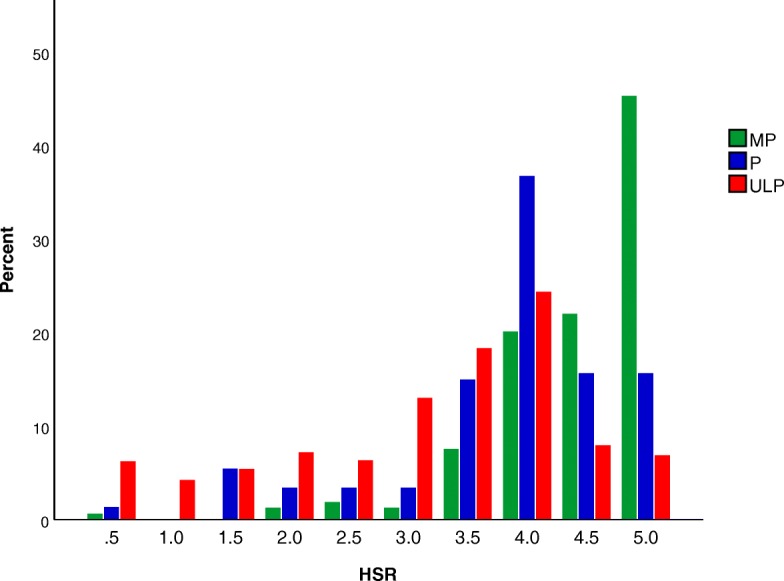
BACKGROUND: The consumption of ultra-processed foods is associated with diminished dietary quality and adverse health outcomes. The Australian Health Star Rating (HSR) is a nutrient-based front-of-pack (FOP) labelling system that assesses the 'healthiness' of foods on a scale of 0.5 to 5 stars based on their content of 'risk' and 'positive' nutrients. This study aimed to analyse the use of health stars on new packaged food products entering the Australian marketplace by level of food processing. METHODS: The Mintel Global New Product Database (GNPD) was searched to identify the number of stars displayed on the labels of all new packaged food products participating in the HSR system released into the Australian retail food supply between 27 June 2014 (the endorsement date) and 30 June 2017. Products were categorised by the four NOVA food processing categories: unprocessed and minimally processed (MP), processed culinary ingredients (PCI), processed (P), and ultra-processed (UP), and the distribution of the star ratings within each category was compared and analysed. RESULTS: The majority of new food products displaying an HSR were UP (74.4%), followed by MP (12.5%), P (11.6%), and PCI (1.5%). The median HSR of MP products (4.5) was significantly higher than the median of P (4) and UP products (3.5) (all p < 0.05). In all NOVA categories HSR profiles were distributed towards higher star ratings, and the majority (77%) of UP products displayed an HSR ≥ 2.5. CONCLUSIONS: The HSR is being displayed on a substantial proportion of newly released UP foods. Technical weaknesses, design flaws and governance limitations with the HSR system are resulting in 3 out of 4 instances of these UP foods displaying at least 2.5 so-called 'health' stars. These findings add further evidence to concerns that the HSR system, in its current form, is misrepresenting the healthiness of new packaged food products and creating a risk for behavioural nutrition.
Overview
The claims and statistics of this paper haven’t been checked yet.
Free: it reads the open-access text and checks the first 5 claims that cite a source we can check. Create a free account to check every claim.
Integrity signals
Registry
Cites
Statistics
Figures
Verification
Claims the paper makes
The claims and statistics of this paper haven’t been checked yet.
Free: it reads the open-access text and checks the first 5 claims that cite a source we can check. Create a free account to check every claim.
Claims other papers make about this one
Each is checked against this paper’s own text: does it say what the citing paper says it does?
The check wasn’t confident either way, so it gives no verdict — never disputed.
In the citing paper
“This approach shows mixed results, small at best, for modifying consumer choices 195,196 .”
From Ultra‐processed foods and the nutrition transition: global, regional and national trends, food systems transformations and political economy drivers (2020) · cites this paper as [196]
Experimental — accuracy not yet measured
Self-check
Percentages, sums and reported differences re-computed from the paper’s own numbers.
The self-check needs the paper’s full text.
Citations
Cites
The UN Decade of Nutrition, the NOVA food classification and the trouble with ultra-processing
Monteiro, C. A., Cannon, G., Moubarac, J.-C., Levy, R. B., Louzada, M. L. C., & Jaime, P. C. (2018) · Public Health Nutrition · doi:10.1017/s1368980017000234 · Cited by 2,333
Fiolet, T., Srour, B., Sellem, L., Kesse-Guyot, E., Allès, B., Méjean, C., Deschasaux, M., Fassier, P., Latino-Martel, P., Beslay, M., et al. (2018) · BMJ · doi:10.1136/bmj.k322 · Cited by 1,057
The Western Diet–Microbiome-Host Interaction and Its Role in Metabolic Disease
Zinöcker, M. K., & Lindseth, I. A. (2018) · doi:10.20944/preprints201803.0064.v1 · Cited by 776 · cited 2×
“comment, what is “more important than level of complexity is whether the system of categorisation works to predict the nutritional quality of diets and risk of disease” [61], which the evidence confirms and is increasingly supported by studies reporting plausible biological mechanisms [3].”
BackgroundThe Western Diet–Microbiome-Host Interaction and Its Role in Metabolic Disease
Zinöcker, M. K., & Lindseth, I. A. (2018) · doi:10.20944/preprints201803.0064.v2 · Cited by 776
Consumption of ultra-processed foods and obesity in Brazilian adolescents and adults
Louzada, M. L. D. C., Baraldi, L. G., Steele, E. M., Martins, A. P. B., Canella, D. S., Moubarac, J.-C., Levy, R. B., Cannon, G., Afshin, A., Imamura, F., et al. (2015) · Preventive Medicine · doi:10.1016/j.ypmed.2015.07.018 · Cited by 656 · cited 1×
“[9], metabolic syndrome in adolescents [10], altered lipid profiles in children [11], hypertension in adults [12], and overall cancer and breast cancer risk [13].”
BackgroundConsumption of ultra-processed foods predicts diet quality in Canada
Moubarac, J.-C., Batal, M., Louzada, M. L., Martinez Steele, E., & Monteiro, C. A. (2017) · Appetite · doi:10.1016/j.appet.2016.11.006 · Cited by 649
Martínez Steele, E., Popkin, B. M., Swinburn, B., & Monteiro, C. A. (2017) · Population Health Metrics · doi:10.1186/s12963-017-0119-3 · Cited by 585
Ultra-processed foods and the nutritional dietary profile in Brazil
Louzada, M. L. D. C., Martins, A. P. B., Canella, D. S., Baraldi, L. G., Levy, R. B., Claro, R. M., Moubarac, J.-C., Cannon, G., & Monteiro, C. A. (2015) · Revista de Saúde Pública · doi:10.1590/s0034-8910.2015049006132 · Cited by 573 · cited 11×
“consumption of UP foods and impaired diet quality has been reported in Canada [4], Brazil [5], Columbia [6], the United States [7], and Europe [8].”
BackgroundInfluentialFood Standards Australia New Zealand
(2010) · Encyclopedia of Nanoscience and Society · doi:10.4135/9781412972093.n134 · Cited by 570
Rauber, F., Campagnolo, P. D. B., Hoffman, D. J., & Vitolo, M. R. (2015) · Nutrition, Metabolism and Cardiovascular Diseases · doi:10.1016/j.numecd.2014.08.001 · Cited by 488 · cited 1×
“[9], metabolic syndrome in adolescents [10], altered lipid profiles in children [11], hypertension in adults [12], and overall cancer and breast cancer risk [13].”
BackgroundMendonça, R. D. D., Lopes, A. C. S., Pimenta, A. M., Gea, A., Martinez-Gonzalez, M. A., & Bes-Rastrollo, M. (2017) · American Journal of Hypertension · doi:10.1093/ajh/hpw137 · Cited by 488 · cited 1×
“[9], metabolic syndrome in adolescents [10], altered lipid profiles in children [11], hypertension in adults [12], and overall cancer and breast cancer risk [13].”
BackgroundThorning, T. K., Bertram, H. C., Bonjour, J.-P., de Groot, L., Dupont, D., Feeney, E., Ipsen, R., Lecerf, J. M., Mackie, A., McKinley, M. C., et al. (2017) · The American Journal of Clinical Nutrition · doi:10.3945/ajcn.116.151548 · Cited by 378
Participação crescente de produtos ultraprocessados na dieta brasileira (1987-2009)
Martins, A. P. B., Levy, R. B., Claro, R. M., Moubarac, J., & Monteiro, C. A. (2013) · Redalyc (Universidad Autónoma del Estado de México) · Cited by 371
Tavares, L. F., Fonseca, S. C., Garcia Rosa, M. L., & Yokoo, E. M. (2012) · Public Health Nutrition · doi:10.1017/s1368980011001571 · Cited by 328
Nutritionism: The Science and Politics of Dietary Advice
Scrinis, G. (2013) · doi:10.7312/scri15656 · Cited by 322
Ultra-processed foods in human health: a critical appraisal
Gibney, M. J., Forde, C. G., Mullally, D., & Gibney, E. R. (2017) · The American Journal of Clinical Nutrition · doi:10.3945/ajcn.117.160440 · Cited by 287
Participacao crescente de produtos ultraprocessados na dieta brasileira (1987-2009)
Martins, A. P. B., Levy, R. B., Claro, R. M., Moubarac, J. C., & Monteiro, C. A. (2013) · Revista de Saúde Pública · doi:10.1590/s0034-8910.2013047004968 · Cited by 278 · cited 10×
“It has been applied extensively in the assessment of dietary patterns [2] and forms the basis of the Brazilian and Uruguayan dietary guidelines recommendations, which include the avoidance of UP products [17, 18].”
BackgroundInfluentialDuncan, L. R., Hall, C. R., Wilson, P. M., & O, J. (2010) · International Journal of Behavioral Nutrition and Physical Activity · doi:10.1186/1479-5868-7-7 · Cited by 274
Increased contribution of ultra-processed food products in the Brazilian diet (1987-2009)
Martins, A. P. B., Levy, R. B., Claro, R. M., Moubarac, J., & Monteiro, C. A. (2022) · Figshare · doi:10.6084/m9.figshare.19933590 · Cited by 267
Front-of-pack nutrition label stimulates healthier product development: a quantitative analysis
Vyth, E. L., Steenhuis, I. H., Roodenburg, A. J., Brug, J., & Seidell, J. C. (2010) · International Journal of Behavioral Nutrition and Physical Activity · doi:10.1186/1479-5868-7-65 · Cited by 256
Trends in consumption of ultra-processed foods and obesity in Sweden between 1960 and 2010
Juul, F., & Hemmingsson, E. (2015) · Public Health Nutrition · doi:10.1017/s1368980015000506 · Cited by 248 · cited 2×
“Juul F, Hemmingsson E. Trends in consumption of ultra-processed foods and obesity in Sweden between 1960 and 2010.”
BackgroundSlimani, N., Deharveng, G., Southgate, D. A. T., Biessy, C., Chajès, V, van Bakel, M. M. E., Boutron-Ruault, M. C., McTaggart, A., Grioni, S., Verkaik-Kloosterman, J., et al. (2009) · European Journal of Clinical Nutrition · doi:10.1038/ejcn.2009.82 · Cited by 247
Luiten, C. M., Steenhuis, I. H., Eyles, H., Ni Mhurchu, C., & Waterlander, W. E. (2016) · Public Health Nutrition · doi:10.1017/s1368980015002177 · Cited by 203 · cited 1×
“In New Zealand, a country that shares a common food regulation system with Australia, it has been reported that UP products are the most available packaged products in supermarkets [26].”
BackgroundHjerpsted, J., Leedo, E., & Tholstrup, T. (2011) · The American Journal of Clinical Nutrition · doi:10.3945/ajcn.111.022426 · Cited by 184
Ultra-processed foods and the nutritional dietary profile in Brazil
Louzada, M. L. D. C., Martins, A. P. B., Canella, D. S., Baraldi, L. G., Levy, R. B., Claro, R. M., Moubarac, J., Cannon, G., & Monteiro, C. A. (2017) · Figshare · doi:10.6084/m9.figshare.5670163 · Cited by 156
Scrinis, G. (2016) · The Journal of Peasant Studies · doi:10.1080/03066150.2015.1101455 · Cited by 132
Wholesome Nutrition: an example for a sustainable diet
von Koerber, K., Bader, N., & Leitzmann, C. (2016) · Proceedings of The Nutrition Society · doi:10.1017/s0029665116000616 · Cited by 125
Consumers' responses to front-of-pack labels that vary by interpretive content
Talati, Z., Pettigrew, S., Kelly, B., Ball, K., Dixon, H., & Shilton, T. (2016) · Appetite · doi:10.1016/j.appet.2016.03.009 · Cited by 114
Ultra-processed family foods in Australia: nutrition claims, health claims and marketing techniques
Pulker, C. E., Scott, J. A., & Pollard, C. M. (2018) · Public Health Nutrition · doi:10.1017/s1368980017001148 · Cited by 104 · cited 2×
“[24, 43], no studies have comprehensively assessed new food products entering the marketplace displaying the HSR label against a food processing classification”
BackgroundCornwell, B., Villamor, E., Mora-Plazas, M., Marin, C., Monteiro, C. A., & Baylin, A. (2018) · Public Health Nutrition · doi:10.1017/s1368980017000891 · Cited by 99 · cited 3×
“New York: Columbia University Press, 2013; 2013.”
BackgroundInfluentialMonitoring and benchmarking population diet quality globally: a step‐wise approach
Vandevijvere, S., Monteiro, C., Krebs‐Smith, S. M., Lee, A., Swinburn, B., Kelly, B., Neal, B., Snowdon, W., Sacks, G., & INFORMAS (2013) · Obesity Reviews · doi:10.1111/obr.12082 · Cited by 97
Dunford, E., Webster, J., Woodward, M., Czernichow, S., Yuan, W. L., Jenner, K., Mhurchu, C. N., Jacobson, M., Campbell, N., & Neal, B. (2012) · Canadian Medical Association Journal · doi:10.1503/cmaj.111895 · Cited by 88 · cited 1×
“A second researcher (JW) conducted quality control using previously published methods [47, 48].”
MethodPublic Health Nutrition special issue on ultra-processed foods
Kelly, B., & Jacoby, E. (2018) · Public Health Nutrition · doi:10.1017/s1368980017002853 · Cited by 86
Lawrence, M. A., Dickie, S., & Woods, J. (2018) · Nutrients · doi:10.3390/nu10010032 · Cited by 70
Self-citationJones, A., Rådholm, K., & Neal, B. C. (2018) · Nutrients · doi:10.3390/nu10040501 · Cited by 66
Cornwell, B., Villamor, E., Mora‐Plazas, M., Marín, C., Monteiro, C. A., & Baylín, A. (2017) · Public Health Nutrition · doi:10.1017/s1368980017001963 · Cited by 61
Measuring the Healthiness of the Packaged Food Supply in Australia
Crino, M., Sacks, G., Dunford, E., Trieu, K., Webster, J. L., Vandevijvere, S., Swinburn, B. A., Wu, J. H. Y., & Neal, B. C. (2018) · Nutrients · doi:10.3390/nu10060702 · Cited by 54
Australia’s evolving food practices: a risky mix of continuity and change
Venn, D., Banwell, C., & Dixon, J. (2017) · Public Health Nutrition · doi:10.1017/s136898001600255x · Cited by 49
Ultra-processing. An odd ‘appraisal’
Monteiro, C. A., Cannon, G., Moubarac, J.-C., Levy, R. B., Louzada, M. L. C., & Jaime, P. C. (2018) · Public Health Nutrition · doi:10.1017/s1368980017003287 · Cited by 44
Technical Report: Alignment of NSW Healthy Food Provision Policy with the Health Star Rating System.
Dunford, E., Cobcroft, M., Thomas, M., & Wu, J. H. (2015) · Cited by 39
Solberg, S. L., Terragni, L., & Granheim, S. I. (2016) · Public Health Nutrition · doi:10.1017/s1368980015003523 · Cited by 37
International collaborative project to compare and track the nutritional composition of fast foods
The Food Monitoring Group (2012) · BMC Public Health · doi:10.1186/1471-2458-12-559 · Cited by 35
Front-of-package nutrition references are positively associated with food processing
Christoforou, A., Dachner, N., Mendelson, R., & Tarasuk, V. S. (2017) · Public Health Nutrition · doi:10.1017/s1368980017001057 · Cited by 34 · cited 1×
“cantly more likely than lesser-processed foods to display a symbol or summary system FOP label [55].”
BackgroundSpiteri, S., Olstad, D. L., & Woods, J. (2018) · BMC Public Health · doi:10.1186/s12889-018-5127-0 · Cited by 33 · cited 1×
“Three studies have investigated the level of food processing in the Australian food supply, finding more than one third of commonly consumed foods are UP products [23], 95% of high market share UP products contain added sugar [24], and 82% of all new packaged products released in 2015 were UP [25].”
BackgroundSelf-citationPeters, S. A. E., Dunford, E., Jones, A., Mhurchú, C. N., Crino, M., Taylor, F., Woodward, M., & Neal, B. C. (2017) · Nutrients · doi:10.3390/nu9070701 · Cited by 29 · cited 1×
“One study found that including added sugar instead of total sugar in the algorithm results in better discrimination between FFG foods and discretionary foods [63].”
BackgroundAn Evaluation of the Healthiness of the Indian Packaged Food and Beverage Supply
Jones, A., Dunford, E., Crossley, R., Thout, S. R., Rayner, M., & Neal, B. C. (2017) · Nutrients · doi:10.3390/nu9101103 · Cited by 27
A novel processed food classification system applied to Australian food composition databases
O'Halloran, S. A., Lacy, K. E., Grimes, C. A., Woods, J., Campbell, K. J., & Nowson, C. A. (2017) · Journal of Human Nutrition and Dietetics · doi:10.1111/jhn.12445 · Cited by 23 · cited 3×
“The NOVA classification system previously has been applied to items in the AUSNUT 2011–2013 food composition database [23], which reflects the Australian food supply during this time period [45].”
BackgroundMethodSelf-citationCooper, S. L., Pelly, F. E., & Lowe, J. B. (2017) · European Journal of Clinical Nutrition · doi:10.1038/ejcn.2017.23 · Cited by 22 · cited 1×
“[24, 43], no studies have comprehensively assessed new food products entering the marketplace displaying the HSR label against a food processing classification”
BackgroundPublic Health Implications of Front-of-Package Labels
Nestle, M. (2018) · American Journal of Public Health · doi:10.2105/ajph.2017.304285 · Cited by 14
Regulating Front of Package Labeling: An Exercise in Futility?
Bellatti, A., & Simon, M. (2011) · Journal of Hunger & Environmental Nutrition · doi:10.1080/19320248.2011.625815 · Cited by 7
Re: Jones et al., Nutrients 2018, 10, 501
Lawrence, M. A., & Woods, J. (2018) · Nutrients · doi:10.3390/nu10060746 · Cited by 6
Self-citation
Research works printed but not linked: 3
- Niles MT, Ahuja R, Barker T, Esquivel J, Gutterman S, Heller MC, Mango N, Portner D, Raimond R, Tirado C, Vermeulen S. Climate change mitigation beyond agriculture: a review of food system opportunities and implications. Renew Agric Food Syst. 2018. 10.1017/S1742170518000029:1-12. · doi:10.1017/s1742170518000029:1-12
- Blewett NGN Pettigrew S Reynolds C Yeatman H Labelling logic: review of food labelling law and policy 2011
- Monteiro CA Cannon G Moubarac J-C Levy RB Louzada MLC Jaime PC The UN Decade of Nutrition, the NOVA food classification and the trouble with ultra-processing Public Health Nutr 2017 England Cambridge University Press 1 13 PMC10261019 28322183 · DOI · Paper page
Cited by
Baker, P., Machado, P., Santos, T., Sievert, K., Backholer, K., Hadjikakou, M., Russell, C., Huse, O., Bell, C., Scrinis, G., et al. (2020) · Obesity Reviews · doi:10.1111/obr.13126 · Cited by 1,194
“5 stars or more (out of a possible 5) on labels.(196,197) Food-”
BackgroundSelf-citationBaker, P., Slater, S., White, M., Wood, B., Contreras‐Manzano, A., Corvalán, C., Gupta, A. K., Hofman, K. J., Kruger, P., Laar, A. K., et al. (2025) · The Lancet · doi:10.1016/s0140-6736(25)01567-3 · Cited by 135
Self-citationCapozzi, F., Magkos, F., Fava, F., Milani, G. P., Agostoni, C. V., Astrup, A. V., & Saguy, I. S. (2021) · Nutrients · doi:10.3390/nu13113948 · Cited by 113
Nutrient profile models a useful tool to facilitate healthier food choices: A comprehensive review
Santos, M., Rito, A. I., Matias, F., Assunção, R., Castanheira, I. P., & Loureiro, I. (2021) · Trends in Food Science & Technology · doi:10.1016/j.tifs.2021.01.082 · Cited by 63
The Nutri-Score algorithm: Evaluation of its validation process
van der Bend, D. L. M., van Eijsden, M., van Roost, M. H. I., de Graaf, C., & Roodenburg, A. J. C. (2022) · Frontiers in Nutrition · doi:10.3389/fnut.2022.974003 · Cited by 61
“While studies supporting the health effects of the HSR are lacking (62), the predictive validity studies for the NutriScore algorithm do suggest an association with cancer (25, 41), cardiovascular disease (26, 27) and mortality (42, 43).”
Background
Metadata
- Authors
- Dickie, S., Woods, J. L., & Lawrence, M.
- Affiliations
- Deakin University (AU)
- Corresponding author
- Dickie, Sarah
- Venue
- International Journal of Behavioral Nutrition and Physical Activity
- Published
- 2018-12
- Volume
- 15
- Issue
- 1
- Pages
- 128-128
- ISSN
- 1479-5868 (ISSN-L)
- PMC
- PMC6293654
- OpenAlex
- W2905236299
- Cited by
- 50
- References
- 51
- Citations by year
- 2026: 4 · 2025: 7 · 2024: 6 · 2023: 9 · 2022: 7 · 2021: 8 · 2020: 7 · 2019: 2
- FWCI
- 4.05
- Type
- journal article
- Language
- en
- Open access
- gold
- doi.org
- Licence
- cc-by
- creativecommons.org/licenses/by/4.0/ (tdm)
- Locations
- International Journal of Behavioral Nutrition and Physical Activity (publishedVersion, cc-by)
- Europe PMC (PubMed Central) (publishedVersion, other-oa)
- PubMed Central (publishedVersion, cc-by)
- PubMed (publishedVersion)
- DOAJ (DOAJ: Directory of Open Access Journals) (submittedVersion, cc-by-sa)
- Own your potential (DEAKIN) (submittedVersion)
- Figshare (submittedVersion, cc-by)
- Topics
- Health Sciences › Medicine › Public Health, Environmental and Occupational Health › Consumer Attitudes and Food Labeling
- Social Sciences › Business, Management and Accounting › Marketing › Consumer Packaging Perceptions and Trends
- Health Sciences › Medicine › Public Health, Environmental and Occupational Health › Global Public Health Policies and Epidemiology
- Keywords
- front-of-pack labeling, ultra-processed foods, minimally processed foods, food health
- MeSH terms
- Diet, Healthy, Australia, Food Handling, Food Labeling, Nutritive Value, Health Behavior, Food Packaging, Fast Foods
About these checks
Registry, retraction, Cites and statistics results are computed, not judged, with one exception: a printed reference that no index lists is read once by a model before it counts as a citation error. Claims are extracted by a model and kept only when their quote appears verbatim in the text; each cited source is then checked, with a model’s help, for whether it says what the claim relies on. Those verdicts can be wrong — read the claim’s quote and the cited source before relying on one.
Statistics and arithmetic are recomputed, not judged.
Confidence bands are shown only for fields calibrated on our annotated test set. None is calibrated yet, so no band is shown.
What counts as a claim ›How we measure confidence ›How we check this ›
Are you an author, or do you see a problem with this page? Request a review
Data sources
Bibliographic data: Semantic Scholar, OpenAlex, Crossref.
Contains information from the Semantic Scholar Academic Graph Datasets, made available under the ODC Attribution License (ODC-BY 1.0).
Semantic Scholar’s data is described in: Kinney, R., et al. (2023). The Semantic Scholar Open Data Platform. arXiv:2301.10140.
