

Analysing the use of the Australian Health Star Rating system by level of food processing
Open accessThe DOI matches its Crossref record; 51 of the 51 references it cites were found in a registry or an index.
Abstract
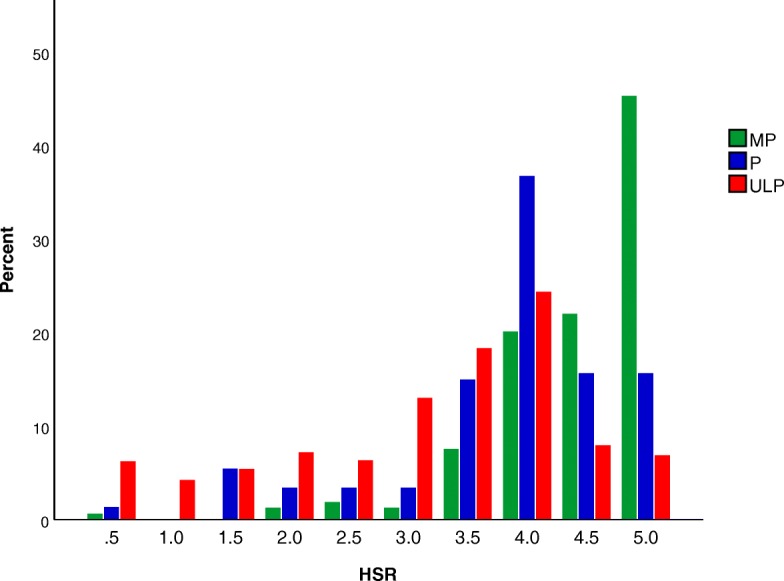
BACKGROUND: The consumption of ultra-processed foods is associated with diminished dietary quality and adverse health outcomes. The Australian Health Star Rating (HSR) is a nutrient-based front-of-pack (FOP) labelling system that assesses the 'healthiness' of foods on a scale of 0.5 to 5 stars based on their content of 'risk' and 'positive' nutrients. This study aimed to analyse the use of health stars on new packaged food products entering the Australian marketplace by level of food processing. METHODS: The Mintel Global New Product Database (GNPD) was searched to identify the number of stars displayed on the labels of all new packaged food products participating in the HSR system released into the Australian retail food supply between 27 June 2014 (the endorsement date) and 30 June 2017. Products were categorised by the four NOVA food processing categories: unprocessed and minimally processed (MP), processed culinary ingredients (PCI), processed (P), and ultra-processed (UP), and the distribution of the star ratings within each category was compared and analysed. RESULTS: The majority of new food products displaying an HSR were UP (74.4%), followed by MP (12.5%), P (11.6%), and PCI (1.5%). The median HSR of MP products (4.5) was significantly higher than the median of P (4) and UP products (3.5) (all p < 0.05). In all NOVA categories HSR profiles were distributed towards higher star ratings, and the majority (77%) of UP products displayed an HSR ≥ 2.5. CONCLUSIONS: The HSR is being displayed on a substantial proportion of newly released UP foods. Technical weaknesses, design flaws and governance limitations with the HSR system are resulting in 3 out of 4 instances of these UP foods displaying at least 2.5 so-called 'health' stars. These findings add further evidence to concerns that the HSR system, in its current form, is misrepresenting the healthiness of new packaged food products and creating a risk for behavioural nutrition.
Overview
The claims and statistics of this paper haven’t been checked yet.
Free: it reads the open-access text and checks the first 5 claims that cite a source we can check. Create a free account to check every claim.
Integrity signals
Registry
Cites
Statistics
Figures
Verification
Claims the paper makes
The claims and statistics of this paper haven’t been checked yet.
Free: it reads the open-access text and checks the first 5 claims that cite a source we can check. Create a free account to check every claim.
Claims other papers make about this one
Each is checked against this paper’s own text: does it say what the citing paper says it does?
The check wasn’t confident either way, so it gives no verdict — never disputed.
In the citing paper
“This approach shows mixed results, small at best, for modifying consumer choices 195,196 .”
From Ultra‐processed foods and the nutrition transition: global, regional and national trends, food systems transformations and political economy drivers (2020) · cites this paper as [196]
Experimental — accuracy not yet measured
Self-check
Percentages, sums and reported differences re-computed from the paper’s own numbers.
The self-check needs the paper’s full text.
Citations
Cites
The UN Decade of Nutrition, the NOVA food classification and the trouble with ultra-processing
Monteiro, C. A., Cannon, G., Moubarac, J.-C., Levy, R. B., Louzada, M. L. C., & Jaime, P. C. (2018) · Public Health Nutrition · doi:10.1017/s1368980017000234 · Cited by 2,333
Fiolet, T., Srour, B., Sellem, L., Kesse-Guyot, E., Allès, B., Méjean, C., Deschasaux, M., Fassier, P., Latino-Martel, P., Beslay, M., et al. (2018) · BMJ · doi:10.1136/bmj.k322 · Cited by 1,057
The Western Diet–Microbiome-Host Interaction and Its Role in Metabolic Disease
Zinöcker, M. K., & Lindseth, I. A. (2018) · doi:10.20944/preprints201803.0064.v1 · Cited by 776 · cited 2×
“comment, what is “more important than level of complexity is whether the system of categorisation works to predict the nutritional quality of diets and risk of disease” [61], which the evidence confirms and is increasingly supported by studies reporting plausible biological mechanisms [3].”
BackgroundThe Western Diet–Microbiome-Host Interaction and Its Role in Metabolic Disease
Zinöcker, M. K., & Lindseth, I. A. (2018) · doi:10.20944/preprints201803.0064.v2 · Cited by 776
Consumption of ultra-processed foods and obesity in Brazilian adolescents and adults
Louzada, M. L. D. C., Baraldi, L. G., Steele, E. M., Martins, A. P. B., Canella, D. S., Moubarac, J.-C., Levy, R. B., Cannon, G., Afshin, A., Imamura, F., et al. (2015) · Preventive Medicine · doi:10.1016/j.ypmed.2015.07.018 · Cited by 656 · cited 1×
“[9], metabolic syndrome in adolescents [10], altered lipid profiles in children [11], hypertension in adults [12], and overall cancer and breast cancer risk [13].”
BackgroundConsumption of ultra-processed foods predicts diet quality in Canada
Moubarac, J.-C., Batal, M., Louzada, M. L., Martinez Steele, E., & Monteiro, C. A. (2017) · Appetite · doi:10.1016/j.appet.2016.11.006 · Cited by 649
Martínez Steele, E., Popkin, B. M., Swinburn, B., & Monteiro, C. A. (2017) · Population Health Metrics · doi:10.1186/s12963-017-0119-3 · Cited by 585
Ultra-processed foods and the nutritional dietary profile in Brazil
Louzada, M. L. D. C., Martins, A. P. B., Canella, D. S., Baraldi, L. G., Levy, R. B., Claro, R. M., Moubarac, J.-C., Cannon, G., & Monteiro, C. A. (2015) · Revista de Saúde Pública · doi:10.1590/s0034-8910.2015049006132 · Cited by 573 · cited 11×
“consumption of UP foods and impaired diet quality has been reported in Canada [4], Brazil [5], Columbia [6], the United States [7], and Europe [8].”
BackgroundInfluentialFood Standards Australia New Zealand
(2010) · Encyclopedia of Nanoscience and Society · doi:10.4135/9781412972093.n134 · Cited by 570
Rauber, F., Campagnolo, P. D. B., Hoffman, D. J., & Vitolo, M. R. (2015) · Nutrition, Metabolism and Cardiovascular Diseases · doi:10.1016/j.numecd.2014.08.001 · Cited by 488 · cited 1×
“[9], metabolic syndrome in adolescents [10], altered lipid profiles in children [11], hypertension in adults [12], and overall cancer and breast cancer risk [13].”
Background
Research works printed but not linked: 3
- Niles MT, Ahuja R, Barker T, Esquivel J, Gutterman S, Heller MC, Mango N, Portner D, Raimond R, Tirado C, Vermeulen S. Climate change mitigation beyond agriculture: a review of food system opportunities and implications. Renew Agric Food Syst. 2018. 10.1017/S1742170518000029:1-12. · doi:10.1017/s1742170518000029:1-12
- Blewett NGN Pettigrew S Reynolds C Yeatman H Labelling logic: review of food labelling law and policy 2011
- Monteiro CA Cannon G Moubarac J-C Levy RB Louzada MLC Jaime PC The UN Decade of Nutrition, the NOVA food classification and the trouble with ultra-processing Public Health Nutr 2017 England Cambridge University Press 1 13 PMC10261019 28322183 · DOI · Paper page
Cited by
Baker, P., Machado, P., Santos, T., Sievert, K., Backholer, K., Hadjikakou, M., Russell, C., Huse, O., Bell, C., Scrinis, G., et al. (2020) · Obesity Reviews · doi:10.1111/obr.13126 · Cited by 1,194
“5 stars or more (out of a possible 5) on labels.(196,197) Food-”
BackgroundSelf-citationBaker, P., Slater, S., White, M., Wood, B., Contreras‐Manzano, A., Corvalán, C., Gupta, A. K., Hofman, K. J., Kruger, P., Laar, A. K., et al. (2025) · The Lancet · doi:10.1016/s0140-6736(25)01567-3 · Cited by 135
Self-citationCapozzi, F., Magkos, F., Fava, F., Milani, G. P., Agostoni, C. V., Astrup, A. V., & Saguy, I. S. (2021) · Nutrients · doi:10.3390/nu13113948 · Cited by 113
Nutrient profile models a useful tool to facilitate healthier food choices: A comprehensive review
Santos, M., Rito, A. I., Matias, F., Assunção, R., Castanheira, I. P., & Loureiro, I. (2021) · Trends in Food Science & Technology · doi:10.1016/j.tifs.2021.01.082 · Cited by 63
The Nutri-Score algorithm: Evaluation of its validation process
van der Bend, D. L. M., van Eijsden, M., van Roost, M. H. I., de Graaf, C., & Roodenburg, A. J. C. (2022) · Frontiers in Nutrition · doi:10.3389/fnut.2022.974003 · Cited by 61
“While studies supporting the health effects of the HSR are lacking (62), the predictive validity studies for the NutriScore algorithm do suggest an association with cancer (25, 41), cardiovascular disease (26, 27) and mortality (42, 43).”
BackgroundNorthcott, T., Lawrence, M., Parker, C., & Baker, P. (2023) · Agriculture and Human Values · doi:10.1007/s10460-022-10412-4 · Cited by 51
Self-citationNutrition and packaging characteristics of toddler foods and milks in Australia
McCann, J. R., Russell, G. C., Campbell, K. J., & Woods, J. (2020) · Public Health Nutrition · doi:10.1017/s1368980020004590 · Cited by 55
“In addition, other research(91) has also recognised the problematic nature of applying the NOVA classification to the AUSNUT database of foods for two main reasons.”
BackgroundSelf-citationDicken, S. J., Batterham, R. L., & Brown, A. (2024) · British Journal of Nutrition · doi:10.1017/s0007114524000096 · Cited by 39
Wood, B., Williams, O., Baker, P., & Sacks, G. (2023) · Journal of Agrarian Change · doi:10.1111/joac.12545 · Cited by 47
Davidou, S., Christodoulou, A., Frank, K., & Fardet, A. (2021) · Journal of Food Composition and Analysis · doi:10.1016/j.jfca.2021.103848 · Cited by 47
Dickie, S., Woods, J. L., Baker, P., Elizabeth, L., & Lawrence, M. A. (2020) · Nutrients · doi:10.3390/nu12051463 · Cited by 38
“The HSR’s alignment with NOVA and the ADGs, particularly the observed misalignment with UP and discretionary categories, also did not differ from earlier findings [45,46].”
BackgroundMethodResultInfluentialSelf-citationFardet, A. (2024) · Journal of Food Science · doi:10.1111/1750-3841.17139 · Cited by 41
Fardet, A., & Rock, E. (2020) · Critical Reviews in Food Science and Nutrition · doi:10.1080/10408398.2020.1858751 · Cited by 41
“These findings add further evidence to concerns that the Health Star Rating System, in its current form, is misrepresenting the healthiness of new packaged food products and creating a risk for behavioral nutrition” (Dickie, Woods, and Lawrence 2018).”
BackgroundLawrence, M. A., Pollard, C. M., Vidgen, H. A., & Woods, J. (2019) · Public Health Research & Practice · doi:10.17061/phrp2911906 · Cited by 30
Self-citationBreen, M., James, H., Rangan, A., & Gemming, L. (2020) · Nutrients · doi:10.3390/nu12051513 · Cited by 28
“5/5 should be considered a minimum passing grade at best, a marked difference from the health halo surrounding products marketed as health foods [34].”
BackgroundDickie, S., Woods, J., Machado, P. P., & Lawrence, M. A. (2023) · Frontiers in Nutrition · doi:10.3389/fnut.2023.1071356 · Cited by 25
“it assesses the nutrient content of all NOVA group 3 and group 4 foods, meaning manufacturers of ultra-processed foods are still able to manipulate nutrient content to avoid an unhealthy classification (63).”
BackgroundSelf-citationDecarbonising Health Systems Across OECD Countries
OECD (2025) · OECD health policy studies · doi:10.1787/5ac2b24b-en · Cited by 25
What Is the Nutritional Composition of Ultra-Processed Food Marketed in Italy?
Lorenzoni, G., Benedetto, R. D., Silano, M., & Gregori, D. (2021) · Nutrients · doi:10.3390/nu13072364 · Cited by 23
“However, several FOPLs have been proposed [15], based on nutrient content but using different thresholds, e.g., the traffic light system, the Nutriscore, the NutrInform battery, the Health Star Rating (HSR).”
BackgroundMethodResultInfluentialBarrett, E. M., Gaines, A., Coyle, D. H., Pettigrew, S., Shahid, M., Maganja, D., Jones, A., Rayner, M., Mozaffarian, D., Taylor, F., et al. (2023) · Nutrition Bulletin · doi:10.1111/nbu.12640 · Cited by 21
Acton, R. B., Kirkpatrick, S. I., & Hammond, D. G. (2021) · Journal of the Academy of Nutrition and Dietetics · doi:10.1016/j.jand.2021.07.014 · Cited by 21
Giner, C., Rodriguez, D., & Elasri, A. (2023) · OECD food, agriculture and fisheries working papers · doi:10.1787/c1f4d81d-en · Cited by 19
Modifying the Health Star Rating nutrient profiling algorithm to account for ultra‐processing
Barrett, E. M., Pettigrew, S., Neal, B. C., Rayner, M., Coyle, D. H., Jones, A., Maganja, D., Gaines, A., Mozaffarian, D., Taylor, F., et al. (2024) · Nutrition & Dietetics · doi:10.1111/1747-0080.12892 · Cited by 17
“16,17 Given the emerging evidence for the negative health effects of ultra-processing independent of nutrient profile, considering ultra-processing as a factor within the Health Star Rating algorithm might enhance its ability to distinguish between healthier and less healthy products.”
Australian Consumers Are Willing to Pay for the Health Star Rating Front-of-Pack Nutrition Label
Cooper, S. L., Butcher, L. M., Scagnelli, S. D., Lo, J., Ryan, M. M., Devine, A., & O’Sullivan, T. A. (2020) · Nutrients · doi:10.3390/nu12123876 · Cited by 17
Machado, P., Cediel, G., Woods, J., Baker, P., Dickie, S., Gomes, F. S., Scrinis, G., & Lawrence, M. (2022) · European Journal of Nutrition · doi:10.1007/s00394-021-02740-8 · Cited by 15
Self-citationEbner, P., Frank, K., Christodoulou, A., & Davidou, S. (2022) · International Journal of Food Sciences and Nutrition · doi:10.1080/09637486.2022.2060951 · Cited by 16
“The authors concluded that this “is misrepresenting the healthiness of new packaged food products and creating a risk for behavioural nutrition” (Dickie et al. 2018).”
BackgroundResultInfluentialIt is time to appreciate the value of processed foods
Fitzgerald, M. A. (2023) · Trends in Food Science & Technology · doi:10.1016/j.tifs.2023.03.001 · Cited by 14
Singh, A. P., Singh, A., & Bhattacharya, S. (2025) · Medical Journal Armed Forces India · doi:10.1016/j.mjafi.2024.12.003 · Cited by 11
Hafner, E., Hribar, M., & Pravst, I. (2025) · Nutrients · doi:10.3390/nu17101731 · Cited by 10
“This can be particularly problematic if labels promote foods that are in conflict with dietary guidelines, such as UPFs [35].”
Habibi, N., Leemaqz, S., & Grieger, J. A. (2022) · Nutrients · doi:10.3390/nu14071518 · Cited by 10
Chan, J., McMahon, E., Wycherley, T. P., Howes, K., Bidstrup, G., & Brimblecombe, J. K. (2022) · British Journal Of Nutrition · doi:10.1017/s0007114522002756 · Cited by 9
Innovative Management of Vegetable Outgrades as a Means of Food Loss and Waste Reduction
Markowska, J., Polak, E., Drabent, A., & Tyfa, A. (2022) · Sustainability · doi:10.3390/su141912363 · Cited by 9
Categorizing Foods by Relative Healthfulness: A Scoping Review of Front of Pack Labelling
Singh, S., Naicker, A., & Memela, S. N. (2021) · International Journal of Environmental Research and Public Health · doi:10.3390/ijerph182211980 · Cited by 8
“5 to 5 stars for their proportion of ‘risk’ and ‘positive’ nutrients [23].”
The case for mandatory – not voluntary – front-of-package nutrition labels
Taillie, L. S., & Duran, A. C. (2024) · Bulletin of the World Health Organization · doi:10.2471/blt.24.292537 · Cited by 7
Product Innovation and Export Strategy: An Application to French Dairy Firms
Dzukou, K. R. C., Duvaleix‐Tréguer, S., & Latouche, K. (2022) · Journal of Economics & Management Strategy · doi:10.1111/jems.12579 · Cited by 7
Ellena, G., Mazzoli, A., Spacova, I., Leys, N., Lebeer, S., & Mastroleo, F. (2025) · npj Science of Food · doi:10.1038/s41538-025-00626-1 · Cited by 5
Hallak, R., Lee, C., & Onur, İ. (2021) · Foods · doi:10.3390/foods10112764 · Cited by 6
“Scores on the HSR are derived from an algorithm that assesses the food’s nutritional profile [27].”
MethodAnastasiou, K., Brooker, P. G., Cleanthous, X., Tan, R., Smith, B. P. C., & Riley, M. D. (2023) · Nutrients · doi:10.3390/nu15010247 · Cited by 5
“5 (n = 8 products; n = 7 calorically sweetened, n = 1 non-calorically sweetened), which has previously been used to differentiate products that score poorly from those with more acceptable nutrient contents [43].”
Dzukou, K. R. C. (2021) · Revue économique · doi:10.3917/reco.726.1079 · Cited by 3
Пархоменко, А. (2023) · Журнал ВШЭ по международному праву (HSE University Journal of International Law) · doi:10.17323/jil.2023.18198 · Cited by 2
Ogundijo, D. A., Tas, A. A., & Onarinde, B. A. (2024) · International Journal of Food Science & Technology · doi:10.1111/ijfs.17166 · Cited by 2
“This is the same in the United States, Australia and elsewhere (Dickie et al ., 2018; Jones et al ., 2019; J (cid:1) auregui et al ., 2022).”
BackgroundNunes, B. S., Borges, C. G., Grilo, M. F., & Duran, A. C. (2025) · Public Health Nutrition · doi:10.1017/s1368980025101456 · Cited by 2
Lawrence, M. A., Lawrence, A. S., Stanton, R. A., Pollard, C. M., Pulker, C. E., Woods, J., & Ashton, B. A. (2019) · Obesity Reviews · doi:10.1111/obr.12957 · Cited by 2
Self-citationActon, R. B. (2020) · UWSpace (University of Waterloo) · Cited by 2
Food packaging and labelling: Tensions and opportunities influencing consumer decisions
Llagas, B. R., Brennan, L. L., Jenkins, E. L., Verghese, K., Lockrey, S., & Parker, L. (2025) · Elsevier eBooks · doi:10.1016/b978-0-443-24768-2.00010-7 · Cited by 1
Ojo, A. E., Kissock, K., Jones, A., Alfa, V. O., Jamro-Comer, E., Shedul, G. L., Orji, I. A., Guhan, I., Okoro, C. E., Ojo, T. M.-F., et al. (2025) · Journal of Health Population and Nutrition · doi:10.1186/s41043-025-01121-9 · Cited by 1
“In this study, a product was classified as “unhealthy” if it had an HSR score 3.5 and “healthy” if its HSR score ≥ 3.5 based on previous research [28–30].”
InfluentialRethinking fussiness in commercial food contexts
Bennett, J., Harper, I., Broom, A. F., Kenny, K., Harris, H. A., Wright, F., & Raubenheimer, D. (2026) · Health Promotion International · doi:10.1093/heapro/daag063 · Cited by 1
“…health halo messages, cryptic back-of-pack ingredients lists, and even food rating systems have mutated into marketing mechanisms that support the food industry’s sales, rather than warning citizens, parents and children of imbalanced nutrients and questionable additives (Dickie et al .”
InfluentialSalkhanova, A., Nabigazinova, E., Kaldybay, A., Omirbekova, A., Sabit, M., Baikonsova, L., Yergeshbayeva, R., Knyazbay, A., Chuiko, T., Yermakova, I., et al. (2026) · Nutrients · doi:10.3390/nu18142228 · Cited by 1
“However, evidence indicates that ultra-processed foods may receive disproportionately favorable ratings under conventional profiling frameworks that do not account for the degree of industrial processing [21–25].”
Design of a worksite intervention to lower cardiometabollc risk In South Africa
Singh, S. (2023) · DUT Open Scholar (Durban University of Technology) · doi:10.51415/10321/4822
Vanderlee, L., Saha, S., Faraj, K., Moubarac, J., Orr, S. K., Weerasinghe, A., Li, Y., & Hobin, E. P. (2025) · Canadian Journal of Public Health · doi:10.17269/s41997-025-01101-w
“…and food groups, and typically do not consider type of food processing in the calculation/algorithm, resulting in only partial agreement between traditional nutrient profiling methods and type of processing (Barrett et al., 2023; Dickie et al., 2018; Luiten et al., 2016; Popkin et al., 2024).”
Pereira, F. (2023) · Tuwhera (Auckland University of Technology)
Brastein, S., Woods, J., Dickie, S., & Lawrence, M. A. (2026) · Public Health Nutrition · doi:10.1017/s1368980026102419
Self-citationInnovation produit et performance des entreprises dans l'industrie laitière française
Dzukou, K. R. C. (2020) · theses.fr (ABES) · doi:10.70675/7e9e114cz48b9z4bfczb65az01f6f625c7f4
Liu, Q., Luo, L., Yan, Z., Yang, P., Long, T., Yang, Y., He, M., & Li, T. (2026) · Frontiers in Nutrition · doi:10.3389/fnut.2026.1843587
“Compared to the Australian Health Star Rating (HSR) or the European Nutri-Score (which occasionally bestow “health halos” upon UPFs), the Chilean warning model may differ in sensitivity and effects on purchasing intentions (122–124).”
Mongeon, J., Kwofie, E. M., Allotey, D., Agyemang, P., & Ndu-Kanebi, M. (2026) · Sustainable Production and Consumption · doi:10.1016/j.spc.2026.10.001
Supporting information 1 of The Nutri-Score algorithm: Evaluation of its validation process
van der Bend, D. L. M., van Eijsden, M., van Roost, M. H. I., de Graaf, K., & Roodenburg, A. J. C. (2022) · doi:10.3389/fnut.2022.974003.s001
Metadata
- Authors
- Dickie, S., Woods, J. L., & Lawrence, M.
- Affiliations
- Deakin University (AU)
- Corresponding author
- Dickie, Sarah
- Venue
- International Journal of Behavioral Nutrition and Physical Activity
- Published
- 2018-12
- Volume
- 15
- Issue
- 1
- Pages
- 128-128
- ISSN
- 1479-5868 (ISSN-L)
- PMC
- PMC6293654
- OpenAlex
- W2905236299
- Cited by
- 50
- References
- 51
- Citations by year
- 2026: 4 · 2025: 7 · 2024: 6 · 2023: 9 · 2022: 7 · 2021: 8 · 2020: 7 · 2019: 2
- FWCI
- 4.05
- Type
- journal article
- Language
- en
- Open access
- gold
- doi.org
- Licence
- cc-by
- creativecommons.org/licenses/by/4.0/ (tdm)
- Locations
- International Journal of Behavioral Nutrition and Physical Activity (publishedVersion, cc-by)
- Europe PMC (PubMed Central) (publishedVersion, other-oa)
- PubMed Central (publishedVersion, cc-by)
- PubMed (publishedVersion)
- DOAJ (DOAJ: Directory of Open Access Journals) (submittedVersion, cc-by-sa)
- Own your potential (DEAKIN) (submittedVersion)
- Figshare (submittedVersion, cc-by)
- Topics
- Health Sciences › Medicine › Public Health, Environmental and Occupational Health › Consumer Attitudes and Food Labeling
- Social Sciences › Business, Management and Accounting › Marketing › Consumer Packaging Perceptions and Trends
- Health Sciences › Medicine › Public Health, Environmental and Occupational Health › Global Public Health Policies and Epidemiology
- Keywords
- front-of-pack labeling, ultra-processed foods, minimally processed foods, food health
- MeSH terms
- Diet, Healthy, Australia, Food Handling, Food Labeling, Nutritive Value, Health Behavior, Food Packaging, Fast Foods
About these checks
Registry, retraction, Cites and statistics results are computed, not judged, with one exception: a printed reference that no index lists is read once by a model before it counts as a citation error. Claims are extracted by a model and kept only when their quote appears verbatim in the text; each cited source is then checked, with a model’s help, for whether it says what the claim relies on. Those verdicts can be wrong — read the claim’s quote and the cited source before relying on one.
Statistics and arithmetic are recomputed, not judged.
Confidence bands are shown only for fields calibrated on our annotated test set. None is calibrated yet, so no band is shown.
What counts as a claim ›How we measure confidence ›How we check this ›
Are you an author, or do you see a problem with this page? Request a review
Data sources
Bibliographic data: Semantic Scholar, OpenAlex, Crossref.
Contains information from the Semantic Scholar Academic Graph Datasets, made available under the ODC Attribution License (ODC-BY 1.0).
Semantic Scholar’s data is described in: Kinney, R., et al. (2023). The Semantic Scholar Open Data Platform. arXiv:2301.10140.
