

The DOI matches its Crossref record; 44 of the 48 references it cites were found in a registry or an index.
A systematic review of just-in-time adaptive interventions (JITAIs) to promote physical activity
Open accessAbstract
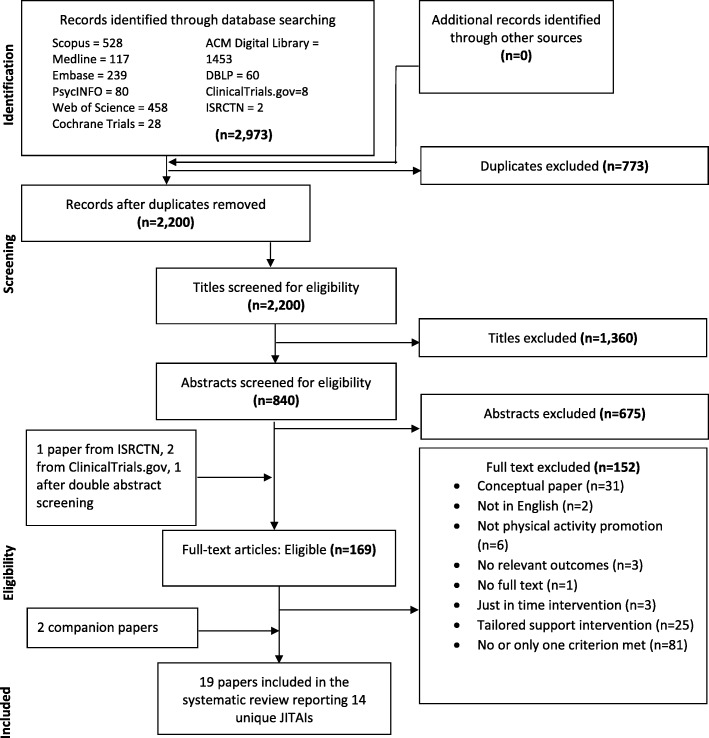
BACKGROUND: Progress in mobile health (mHealth) technology has enabled the design of just-in-time adaptive interventions (JITAIs). We define JITAIs as having three features: behavioural support that directly corresponds to a need in real-time; content or timing of support is adapted or tailored according to input collected by the system since support was initiated; support is system-triggered. We conducted a systematic review of JITAIs for physical activity to identify their features, feasibility, acceptability and effectiveness. METHODS: We searched Scopus, Medline, Embase, PsycINFO, Web of Science, DBLP, ACM Digital Library, Cochrane Central Register of Controlled Trials, ClinicalTrials.gov and the ISRCTN register using terms related to physical activity, mHealth interventions and JITAIs. We included primary studies of any design reporting data about JITAIs, irrespective of population, age and setting. Outcomes included physical activity, engagement, uptake, feasibility and acceptability. Paper screening and data extraction were independently validated. Synthesis was narrative. We used the mHealth Evidence Reporting and Assessment checklist to assess quality of intervention descriptions. RESULTS: We screened 2200 titles, 840 abstracts, 169 full-text papers, and included 19 papers reporting 14 unique JITAIs, including six randomised studies. Five JITAIs targeted both physical activity and sedentary behaviour, five sedentary behaviour only, and four physical activity only. JITAIs prompted breaks following sedentary periods and/or suggested physical activities during opportunistic moments, typically over three to four weeks. Feasibility challenges related to the technology, sensor reliability and timeliness of just-in-time messages. Overall, participants found JITAIs acceptable. We found mixed evidence for intervention effects on behaviour, but no study was sufficiently powered to detect any effects. Common behaviour change techniques were goal setting (behaviour), prompts/cues, feedback on behaviour and action planning. Five studies reported a theory-base. We found lack of evidence about cost-effectiveness, uptake, reach, impact on health inequalities, and sustained engagement. CONCLUSIONS: Research into JITAIs to increase physical activity and reduce sedentary behaviour is in its early stages. Consistent use and a shared definition of the term 'JITAI' will aid evidence synthesis. We recommend robust evaluation of theory and evidence-based JITAIs in representative populations. Decision makers and health professionals need to be cautious in signposting patients to JITAIs until such evidence is available, although they are unlikely to cause health-related harm. REFERENCE: PROSPERO 2017 CRD42017070849.
Overview
The claims and statistics of this paper haven’t been checked yet.
Run the check — free, no account needed. It reads the open-access text and checks the sources it cites.
Integrity signals
Registry
Cites
Statistics
Figures
Verification
Claims the paper makes
The claims and statistics of this paper haven’t been checked yet.
Run the check — free, no account needed. It reads the open-access text and checks the sources it cites.
Claims other papers make about this one
Each is checked against this paper’s own text: does it say what the citing paper says it does?
In the citing paper
“Beyond connectivity and feasibility, the advantages of AI chatbot programs lie essentially in the computational power to develop and deliver personalized interventions [22-24].”
In the citing paper
“Furthermore, rapid progress in mobile health technologies and functions has enabled the design of just-in-time adaptive interventions (JITAIs) [24].”
Self-check
Percentages, sums and reported differences re-computed from the paper’s own numbers.
The self-check needs the paper’s full text.
Citations
Cites
Preferred Reporting Items for Systematic Reviews and Meta-Analyses: the PRISMA statement
Moher, D., Liberati, A., Tetzlaff, J., Altman, D. G., & for the PRISMA Group (2009) · BMJ · doi:10.1136/bmj.b2535 · Cited by 83,823
Preferred reporting items for systematic reviews and meta-analyses: the PRISMA Statement.
(2009) · PubMed Central · Cited by 44,859
(1985) · Europe PMC (PubMed Central) · Cited by 9,143
Michie, S., Richardson, M., Johnston, M., Abraham, C., Francis, J., Hardeman, W., Eccles, M. P., Cane, J., & Wood, C. E. (2013) · Annals of Behavioral Medicine · doi:10.1007/s12160-013-9486-6 · Cited by 7,629 · cited 3×
“This was independently validated by four reviewers (FN, AJ, KL and JH) and FN independently validated the extraction of behaviour change techniques (BCTs) [16].”
BackgroundMethodInfluentialSelf-citationA behavior model for persuasive design
Fogg, B. (2009) · Proceedings of the 4th International Conference on Persuasive Technology · doi:10.1145/1541948.1541999 · Cited by 2,328
Nahum-Shani, I., Smith, S. N., Spring, B. J., Collins, L. M., Witkiewitz, K., Tewari, A., & Murphy, S. A. (2018) · Annals of Behavioral Medicine · doi:10.1007/s12160-016-9830-8 · Cited by 2,171
Perski, O., Blandford, A., West, R., & Michie, S. (2017) · Translational Behavioral Medicine · doi:10.1007/s13142-016-0453-1 · Cited by 1,193 · cited 1×
“Finally, we extracted data about the following outcomes: feasibility, acceptability, engagement [17], effectiveness and health-economic outcomes.”
MethodConsolvo, S., McDonald, D. W., Toscos, T., Chen, M. Y., Froehlich, J. E., Harrison, B. L., Klasnja, P., LaMarca, A., LeGrand, L., Libby, R., et al. (2008) · CHI Conference on Human Factors in Computing Systems · doi:10.1145/1357054.1357335 · Cited by 1,133 · cited 2×
“On this basis, we excluded some studies [22, 23, 40] which others described as JITAIs.”
BackgroundResultA meta-analysis of computer-tailored interventions for health behavior change
Krebs, P., Prochaska, J. O., & Rossi, J. S. (2010) · Preventive Medicine · doi:10.1016/j.ypmed.2010.06.004 · Cited by 854 · cited 1×
“We adopt the Naughton [9] definition and define behavioural JITAIs as having three key features: 1) The intervention aims to provide behavioural support that directly corresponds to a need in real time when the user is at risk of engaging in a negative health behaviour or has an opportunity to engage in a positive beh…”
MethodAgarwal, S., LeFevre, A. E., Lee, J., L’Engle, K., Mehl, G., Sinha, C., & Labrique, A. (2016) · BMJ · doi:10.1136/bmj.i1174 · Cited by 639 · cited 3×
“Table 5 Quality of intervention descriptions, assessed with the mERA checklist [18](1)”
BackgroundMethodInfluential
Research works printed but not linked: 2
- Nahum-Shani S, Smith S, Tewari A, Witkiewitz K, Collins LM, Spring B, et al. Just-in-time adaptive interventions (JITAIs): An organizing framework for ongoing health behavior support. (Technical Report No. 14–126). University Park, PA: The Methodology Center, Penn State; 2014.
- Lin Y. Evaluation user study of motivate final version. Motivate : a context-aware mobile application for physical activity promotion. Eindhoven: Technische Universiteit Eindhoven. https://doi.org/IR750185201/IR7501852013. p. 95-126.
Cited by
Sorted by citations
Items 101–200 of 395
Kerr, J. I., Naegelin, M., Benk, M., von Wangenheim, F., Meins, E., Viganò, E., & Ferrario, A. (2023) · Journal of Medical Internet Research · doi:10.2196/44131 · Cited by 19
Lee, J. G. W., Lee, B., & Choe, E. K. (2023) · CHI Conference on Human Factors in Computing Systems · doi:10.1145/3544548.3581486 · Cited by 23
“Many studies have looked into how notifications can be combined with personal health data to influence people towards healthy choices[7,73],orwhichsituationsarebestfornotifyingtheuser[25], particularlyintheareaofJust-in-TimeAdaptiveInterventions(JI-TAIs)[27,44,53,59,69,72].”
BackgroundA Meta-Synthesis of the Barriers and Facilitators for Personal Informatics Systems
Kabir, K. S., & Wiese, J. (2023) · Proceedings of the ACM on Interactive Mobile Wearable and Ubiquitous Technologies · doi:10.1145/3610893 · Cited by 16
Zhu, Z., Aitken, J. A., Dalal, R. S., & Kaplan, S. A. (2023) · Organizational Research Methods · doi:10.1177/10944281231202740 · Cited by 18
“Thus far, JITAIs have mainly been applied to health-or lifestyle-related behaviors (e.g., Hardeman et al., 2019; Smyth & Heron, 2016).”
Momentary mood predicts upcoming real‐life sedentary behavior
Giurgiu, M., Plotnikoff, R. C., Nigg, C. R., Koch, E. D., Ebner‐Priemer, U., & Reichert, M. (2020) · Scandinavian Journal of Medicine and Science in Sports · doi:10.1111/sms.13652 · Cited by 19
Emmenis, M. V., Jamison, J. Q., Kassavou, A., Hardeman, W., Naughton, F., A’Court, C., Sutton, S., & Eborall, H. (2022) · BMJ Open · doi:10.1136/bmjopen-2021-053183 · Cited by 13
Self-citationInterventions to increase physical activity: An analysis of candidate behavioural mechanisms
Gormley, L., Belton, C. A., Lunn, P., & Robertson, D. A. (2022) · Preventive Medicine Reports · doi:10.1016/j.pmedr.2022.101880 · Cited by 22
Stults‐Kolehmainen, M., Blacutt, M. E., Bartholomew, J. B., Boullosa, D. A., Janata, P., Koo, B. B., McKee, P. C., Casper, R. C., Budnick, C. J., Gilson, T. A., et al. (2022) · Frontiers in Psychology · doi:10.3389/fpsyg.2022.901272 · Cited by 15
“to modify the environment or lead people to environments that both: (a) produce desire-promoting stimuli for movement and (b) reveal opportunities to act on these desires (Hardeman et al., 2019; Ash et al., 2021; Liu et al., 2021).”
BackgroundWang, J., Wu, Z., Choi, S. W., Sen, S., Yan, X., Miner, J. A., Sander, A. M., Lyden, A. K., Troost, J. P., & Carlozzi, N. E. (2023) · JMIR Formative Research · doi:10.2196/43099 · Cited by 18
“Mobile devices can collect objective real-time measurements such as physical activity and geographic location as well as self-assessments (eg, self-report surveys) from the user to inform personalized (ie, tailored) just-in-time adaptive interventions (JITAIs) [14-17].”
BackgroundThe evolution and mapping trends of mobile health (m-Health): a bibliometric analysis (1997–2023)
Alanzi, T. M., Rehman, S. U., Khan, M. A., & Istepanian, R. S. H. (2024) · mHealth · doi:10.21037/mhealth-23-20 · Cited by 16
Non-pharmaceutical interventions to optimize cancer immunotherapy
Boesch, M., Baty, F., Rassouli, F., Kowatsch, T., Joerger, M., Früh, M., & Brutsche, M. H. (2023) · OncoImmunology · doi:10.1080/2162402x.2023.2255459 · Cited by 15
Kleiman, E. M., Bentley, K. H., Glenn, C. R., Liu, R. T., & Rizvi, S. L. (2021) · General Hospital Psychiatry · doi:10.1016/j.genhosppsych.2021.11.002 · Cited by 15
Brügger, V., Kowatsch, T., & Jovanova, M. (2025) · Scientific Reports · doi:10.1038/s41598-025-08003-4 · Cited by 19
Novák, J., Jurková, K., Lojkaskova, A., Jaklova, A., Kühnová, J., Pfeiferová, M., Král, N., Janek, M., Omcirk, D., Malisova, K., et al. (2024) · BMC Public Health · doi:10.1186/s12889-024-18384-2 · Cited by 15
“The ubiquity of smartphones and wearable devices offers a unique opportunity to provide personalised, context-sensitive, and scalable just-in-time adaptive interventions (JITAIs), which use data from wearable sensors to intervene when it is most relevant for the patient [17, 18].”
BackgroundHuh, J., Lee, K. J., Roldan, W., Castro, Y., Kshirsagar, S., Rastogi, P., Kim, I., Miller, K. A., Cockburn, M., & Yip, J. C. (2021) · International Journal of Behavioral Medicine · doi:10.1007/s12529-021-09987-9 · Cited by 16
Terminology for Dissemination and Implementation Research
Rabin, B. A., Viglione, C., & Brownson, R. C. (2023) · Oxford University Press eBooks · doi:10.1093/oso/9780197660690.003.0002 · Cited by 14
Hietbrink, E. A. G., Lansink, C., Laverman, G. D., Vollenbroek-Hutten, M. M. R., Middelweerd, A., & Tabak, M. (2025) · npj Digital Medicine · doi:10.1038/s41746-025-02054-7 · Cited by 20
“This problem is not new: previous reviews have raised similar concerns 45,46,48,49 .”
InfluentialVos, A. L., de Bruijn, G., Klein, M. C. A., Lakerveld, J., Boerman, S. C., & Smit, E. G. (2023) · JMIR Formative Research · doi:10.2196/40851 · Cited by 13
“However, contextually tailored feedback has seldom been incorporated into PA apps, and more studies are needed to determine its efficacy [62].”
BackgroundGuan, K., Adlung, C., Keijsers, L., Smit, C. R., Vreeker, A., Thalassinou, E., van Roekel, E., de Reuver, M., & Figueroa, C. A. (2024) · BMJ Open · doi:10.1136/bmjopen-2024-083870 · Cited by 13
“Further, most prior reviews of JITAIs focus exclusively on specific health behaviours (eg, harmful substance use 51 or physical activity 52 ) across different age groups—highlighting a gap in our understanding of how JITAIs can comprehensively account for multiple health behaviours and their…”
BackgroundFilgueiras, A., Stults‐Kolehmainen, M., Boullosa, D. A., Sinha, R., Bartholomew, J. B., McKee, P. C., Gilson, T. A., Keegan, R. J., Viana, A., Bueno, F. A., et al. (2023) · Frontiers in Psychology · doi:10.3389/fpsyg.2023.1106571 · Cited by 17
“Just in time adaptive interventions (JITAI; Hardeman et al., 2019) to provide just the right amount of support for people when they are experiencing “CRAVE moments”—transient times of wanting to move.”
BackgroundRetractedNicol, G. E., Ricchio, A., Metts, C. L., Yingling, M. D., Ramsey, A. T., Schweiger, J. A., Miller, J. P., & Lenze, E. J. (2020) · JMIR mhealth and uhealth · doi:10.2196/18609 · Cited by 11
“However, few just-in-time adaptive interventions have collected or incorporated dynamic user preferences and perspectives into adaptation algorithms [26,27], and little is known about what types of data inputs are most relevant in building adaptive treatments for lifestyle change [28].”
BackgroundHampton, L. H., & Chow, J. C. (2021) · Remedial and Special Education · doi:10.1177/07419325211030669 · Cited by 18
“A recent systematic review of JITAI to promote physical activity suggests that the research procedures are acceptable, feasible, and low-risk, but the added benefit to the literature is still unclear at this stage of development (Hardeman et al., 2019, p. 201).”
BackgroundA complex systems view on physical activity with actionable insights for behaviour change
Schüler, J., Heino, M. T. J., Balagué, N., Chater, A., Grüber, M., Kanning, M. K., Keim, D. A., Mier, D. U., Moreno‐Villanueva, M., Nußbeck, F. W., et al. (2025) · Nature Human Behaviour · doi:10.1038/s41562-025-02279-2 · Cited by 13
“This can provide valuable insights for just-in-time interventions 103 .”
Crosley‐Lyons, R., Do, B., Hewus, M., & Dunton, G. F. (2023) · Psychology of sport and exercise · doi:10.1016/j.psychsport.2023.102423 · Cited by 12
Herold, F., Theobald, P., Gronwald, T., Kaushal, N., Zou, L., de Bruin, E. D., Bherer, L., & Müller, N. G. (2024) · JMIR Aging · doi:10.2196/56433 · Cited by 15
“…activity interventions using real-life data of wearables such as smartwatches or smartphones to provide real-time recommendations for opportunities to be physically active [160-162]) or that are used to conduct physical exercises (eg, virtual reality–enhanced stationary ergometer [163-166]) [64].”
MethodChatbots in Psychology: Revolutionizing Clinical Support and Mental Health Care
de Filippis, R., & Foysal, A. A. (2024) · Voice of the Publisher · doi:10.4236/vp.2024.103025 · Cited by 16
Just-In-Time Adaptive Interventions to Promote Behavioral Health: Protocol for a Systematic Review
Henry, L. M., Blay-Tofey, M., Haeffner, C. E., Raymond, C. N., Tandilashvili, E., Terry, N. L., Kiderman, M., Metcalf, O., Brotman, M. A., & López-Guzmán, S. (2024) · JMIR Research Protocols · doi:10.2196/58917 · Cited by 14
“Still, systematic reviews and meta-analyses exist that have examined the impact of JITAIs on the promotion of physical health, providing some early support for JITAIs as a digital health tool [15,16].”
Personality psychology is getting personal: Advancing the field through personalization
Modersitzki, N., Phan, L. V., McDonald, S., Wright, A. G. C., & Renner, K. (2025) · European Journal of Personality · doi:10.1177/08902070251316915 · Cited by 13
Wang, P., Liu, H., Shi, Y., Liu, A., Zhu, Q., Albu, I., Pacholec, M., Cheng, L. L., Sun, X. S., & Chi, X. (2025) · Med Research · doi:10.1002/mdr2.70017 · Cited by 18
Kim, H. H., Kim, Y., Michaelides, A. P., & Park, Y. R. (2022) · Journal of Medical Internet Research · doi:10.2196/29380 · Cited by 11
“Obesity management using mobile health technology enables the design of just-in-time adaptive interventions for behavioral support that directly correspond to needs determined by using real-time data collected from user records [50].”
BackgroundLeenaerts, N., Soyster, P. D., Ceccarini, J., Sunaert, S. G., Fisher, A. J., & Vrieze, E. (2024) · Psychological Medicine · doi:10.1017/s0033291724000862 · Cited by 16
Perski, O., Copeland, A., Allen, J., Pavel, M., Rivera, D. E., Hekler, E. B., Hankonen, N. E., & Chevance, G. (2024) · Health Psychology Review · doi:10.1080/17437199.2024.2400977 · Cited by 18
“…is poised to accelerate the development of adaptive interventions, including but not limited to ‘just-in-time adaptive interventions’ (JITAIs), which aim to provide the right type of support to individuals at the right time (Hardeman et al., 2019; Nahum-Shani et al., 2016; Perski et al., 2021).”
Thompson, L., Charitos, S., Bird, J., Marshall, P., & Brigden, A. (2025) · Journal of Medical Internet Research · doi:10.2196/62944 · Cited by 11
“One growing use case for smartwatches within health care and health care research is just-in-time adaptive interventions (JITAIs) [70,71].”
Delobelle, J., Lebuf, E., Compernolle, S., Větrovský, T., Cauwenberg, J. V., Cimler, R., Kühnová, J., & Dyck, D. V. (2025) · BMJ Open · doi:10.1136/bmjopen-2024-096327 · Cited by 11
“13 To enhance the development of effective JITAIs, it is imperative to acquire a deeper understanding of the time-dependent and context-dependent factors influencing PA and SB within and between individuals.”
Miller, C. C., Chua, Y. X., Quintana, M., Lei, B., Biljecki, F., & Frei, M. (2025) · Building and Environment · doi:10.1016/j.buildenv.2025.113388 · Cited by 11
“Given the momentum of the JITAI framework in providing personalized information in the context of the built environment (Hardeman et al., 2019; Re-ichert et al., 2020; Ligtenberg et al., 2022; Tobin et al., 2023), the analysis can be expanded to an urban scale, integrating with geospatial data.”
Poppe, L., Paepe, A. L. D., Ryckeghem, D. M. L. V., Dyck, D. V., Maes, I., & Crombez, G. (2021) · PeerJ · doi:10.7717/peerj.11579 · Cited by 14
mHealth interventions targeting movement behaviors in Asia: A scoping review
Edney, S. M., Chua, X. H., Müller, A. M., Kui, K. Y., & Müller‐Riemenschneider, F. (2021) · Obesity Reviews · doi:10.1111/obr.13396 · Cited by 11
“, chatbots),(159) personalization strategies,(160) or adaptive intervention designs.(161) Further, these”
BackgroundDigital Life Data in the Clinical Whitespace
Coppersmith, G. (2022) · Current Directions in Psychological Science · doi:10.1177/09637214211068839 · Cited by 12
Jung, G., & Lee, U. (2025) · CHI Conference on Human Factors in Computing Systems · doi:10.1145/3706598.3713730 · Cited by 15
Daryabeygi‐Khotbehsara, R., Dunstan, D. W., Islam, S. M. S., Zhang, Y., Abdelrazek, M., & Maddison, R. (2023) · JMIR Research Protocols · doi:10.2196/41502 · Cited by 10
“Progress in mHealth technology has enabled the design of just-in-time adaptive interventions (JITAIs), which aim to deliver behavior change support in real or near time, matched to when users need or want the support [7,8].”
BackgroundMuench, F. J., Madden, S. P., Oommen, S., Forthal, S., Srinagesh, A., Stadler, G., Kuerbis, A., Leeman, R. F., Suffoletto, B. P., Baumel, A., et al. (2023) · Addiction · doi:10.1111/add.16391 · Cited by 10
Daniels, K., Quadflieg, K., Robijns, J., Vry, J. D., Alphen, H. V., Beers, R. V., Sourbron, B., Vanbuel, A., Meekers, S., Mattheeussen, M., et al. (2025) · Sensors · doi:10.3390/s25030858 · Cited by 12
“Your decision will not affect your relationship with the investigator.”
Cotie, P. N. R., Willms, A., & Liu, S. (2025) · International Journal of Environmental Research and Public Health · doi:10.3390/ijerph22071133 · Cited by 11
“This reporting is consistent with Hardeman and colleagues’ systematic review which also reflected on the underreporting of behavior change theories among PA JITAIs [15].”
Lei, B., Liu, P., Fujiwara, K., Frei, M., Miller, C., Chua, Y. X., & Biljecki, F. (2025) · Cities · doi:10.1016/j.cities.2025.106443 · Cited by 11
Färber, A., Schwabe, C., Stalder, P., Dolata, M., & Schwabe, G. (2024) · JMIR Human Factors · doi:10.2196/49647 · Cited by 12
“Depending on a patient’s mood, context, experience, and feedback, the DC can adjust the treatment within days, hours, minutes, or even seconds [85,86].”
BackgroundIbrahim, A. H., Beaumont, C. T., & Strohacker, K. A. (2024) · Applied Psychophysiology and Biofeedback · doi:10.1007/s10484-024-09645-2 · Cited by 12
“…of real-life processes for intra-individualization in the current study reflect the goals of just-in-time-adaptive interventions, where tailored treatments is provided in the optional amount, at the right time, and only when needed to support behavior change and maintenance (Hardeman et al., 2019).”
Fiedler, J., Bergmann, M. R., Sell, S., Wöll, A., & Stetter, B. J. (2024) · Journal of Medical Internet Research · doi:10.2196/54119 · Cited by 10
“An intervention is defined as a JITAI if it corresponds to real-time needs, adapts to input data, and is triggered by the system with the aim to deliver the intervention at a state of vulnerability, opportunity and receptivity of participants [25-28].”
InfluentialTang, T. S., Klein, G., Görges, M., Yip, A. K. W., Fisher, L., Polonsky, W. H., Hessler, D., & Taylor, D. (2024) · Diabetic Medicine · doi:10.1111/dme.15451 · Cited by 8
“33 Finally, just- in-time adaptive interventions (JITAIs) have been applied in various fields including addictions treatment, 34,35 physical activity, 36 obesity 37 and depression.”
Schenkel, K., Haug, S., Castro, R. P., Lüscher, J., Scholz, U., Schaub, M. P., & Radtke, T. (2022) · Applied Psychology Health and Well-Being · doi:10.1111/aphw.12340 · Cited by 8
“So far, the effectiveness of JITPIs has not been addressed for occupational stress, but conceptually JITPIs can also be applied to occupational stress reduction, since the mechanisms behind are independently of the target behavior (Hardeman et al., 2019).”
BackgroundMethodInfluentialRan, M. O., Zuozhi, F. A. N. G., & Jiandong, F. A. N. G. (2022) · Advances in Psychological Science · doi:10.3724/sp.j.1042.2023.00669 · Cited by 10
“…et al., 2020),并 给予用户个性化的反馈(Laranjo et al., 2018; Zhang et al., 2020),比基于传统 编程的虚拟化身更高效、灵活且人性化,无疑是更活跃的社会行动者(Alkhaldi et al., 2016; Ames et al., 2019; Hardeman et al., 2019; Tremain et al., 2020)。 自 1966 年世界上第一个真正意义上的聊天机器人 ELIZA 诞生以来(Weizenbaum, c h i n a X i v : 202210 .”
Figueroa, C. A., Pathak, L. E., Khan, I., Williams, J. J., Lyles, C. R., & Aguilera, A. (2023) · Universal Access in the Information Society · doi:10.1007/s10209-022-00962-z · Cited by 11
“, activity suggestion or motivational message) [41, 43].”
BackgroundZhou, S., Levinson, A. H., Zhang, X., Portz, J. D., Moore, S. L., Gore, M. O., Ford, K. L., Li, Q., & Bull, S. S. (2020) · Health Promotion Practice · doi:10.1177/1524839920942214 · Cited by 11
“Systematic reviews suggest server-triggered interventions are often used to promote physical activities (Hardeman et al., 2019), whereas user-triggered interventions are frequently used to address mental health issues (Wang & Miller, 2019).”
BackgroundStevens, C. J., Gillman, A. S., Giordano, G., & Bryan, A. D. (2020) · Health Psychology · doi:10.1037/hea0001023 · Cited by 9
Willems, I., Verbestel, V., Calders, P., Lapauw, B., & Craemer, M. D. (2023) · International Journal of Environmental Research and Public Health · doi:10.3390/ijerph20054407 · Cited by 14
Herrijgers, C., Verboon, P., Florence, É., Vandebosch, H., Poels, K., & Platteau, T. (2024) · JMIR Formative Research · doi:10.2196/56606 · Cited by 8
Daniels, K., Vonck, S., Robijns, J., Quadflieg, K., Bergs, J., Spooren, A. I. F., Hansen, D., & Bonnechère, B. (2024) · JMIR Aging · doi:10.2196/63348 · Cited by 13
“Enhanced just-in-time interventions enabled by the app’s real-time data capabilities through ecological momentary assessment could revolutionize preventive health measures [104,105].”
Koike, C., Nestor, B. A., Gelmez, P. S., Fladger, A., Shrier, L. A., & Kossowsky, J. (2025) · Journal of Adolescent Health · doi:10.1016/j.jadohealth.2025.07.027 · Cited by 9
Zeng, S. Y., Wu, R. C., Truong, K. N., & Chevalier, F. (2020) · Proceedings of the ACM on Interactive Mobile Wearable and Ubiquitous Technologies · doi:10.1145/3432218 · Cited by 8
“Interventions which are optimized based on context to target behavior change, or Just in Time Adaptive Interventions (JITAI), have been explored in existing works on mobile health [15, 22, 25].”
BackgroundSingh, T., Truong, M., Roberts, K. E., & Myneni, S. (2024) · Digital Health · doi:10.1177/20552076241228430 · Cited by 9
“12 Anastasiadou et al. 44 used the RASA framework to build a chatbot prototype that helps to improve individuals ’ engagement in diabetes self-management.”
BackgroundMethodWhy Machines Matter for Survey and Social Science Researchers
Buskirk, T. D., & Kirchner, A. (2020) · doi:10.1002/9781118976357.ch1 · Cited by 8
Stults‐Kolehmainen, M., Dunton, G. F., Boullosa, D. A., Ash, G. I., & Filgueiras, A. (2023) · Frontiers in Sports and Active Living · doi:10.3389/fspor.2023.1282118 · Cited by 8
Gandrup, J., Selby, D., & Dixon, W. G. (2024) · JMIR Formative Research · doi:10.2196/50679 · Cited by 7
“Just-in-time adaptive interventions are an emerging area of research that, until now, has primarily been deployed in mental health and behavior-change treatments [6,7].”
BackgroundKonishi, N., Oba, T., Takano, K., Katahira, K., & Kimura, K. (2024) · JMIR mhealth and uhealth · doi:10.2196/59708 · Cited by 9
“…highlighted the importance of behavioral goals and self-monitoring [24]; SMS text messaging, personalization, goal setting and planning, and graded tasks [25]; goal setting, prompts/cues, feedback on behavior, and action planning [26]; and personalized goal setting with motivational feedback [27].”
Tauseef, H. A., Coppersmith, D. D. L., Reid-Russell, A., Nagpal, A., Ross, J. M., Nock, M. K., & Eisenlohr-Moul, T. A. (2024) · Frontiers in Psychiatry · doi:10.3389/fpsyt.2024.1434499 · Cited by 8
A smartphone-based intervention to decrease neuroticism: Protocol of the CHILL Study
Haehner, P., Wright, A. J., Andrae, R., Lubczyk, T., Betancourt, L. A. R., Hopwood, C. J., & Bleidorn, W. (2025) · Personality Science · doi:10.1177/27000710251319409 · Cited by 8
“Compared to psychotherapy which addresses related problems like depression and anxiety, digital smartphone interventions offer fl exible and cost-effective intervention approaches that can easily be used by many people (Hardeman et al., 2019; Nahum-Shani et al., 2015).”
Newhouse, N., Bartlett, Y. K., Simao, S. C., Miles, L. M., Cholerton, R., Kenning, C., Locock, L., Williams, V., French, D., Rea, R. D., et al. (2025) · Journal of Medical Internet Research · doi:10.2196/70203 · Cited by 7
“…content (eg, including evidence-based BCTs designed to support motivation and action control and increase confidence), its just-in-time relevance [54-56], and the way in which it was delivered (eg, regularly, in short messages, and over the course of a year) could have acted together in these…”
Human Digital Twins for pervasive healthcare: A scoping review
Park, J., Park, E., Lee, D., Kang, S., Lee, T., Hong, H., Lee, S.-J., Kim, H., Park, Y. R., & Lee, U. (2025) · Health Informatics Journal · doi:10.1177/14604582251392455 · Cited by 7
“66,67,68,69,70,71,72 The integration of those acting components enables the implementation of JITAI which decides ‘ when and what to help ’ (Just-in-time) and ‘ how to help (Adaptive intervention).”
Describing Physical Activity Patterns of Truck Drivers Using Actigraphy
Wipfli, B., Rice, S. P. M., Olson, R., Ha, K., Trullinger-Dwyer, C. F., & Bodner, T. (2023) · Safety and Health at Work · doi:10.1016/j.shaw.2023.08.005 · Cited by 7
“Interventions involving just-in-time adaptive prompts to engage in PA were reviewed in 2019 [23].”
BackgroundPang, B., McVeigh, J. A., Thompson, C., Thøgersen‐Ntoumani, C., Stamatakis, E., & Moullin, J. C. (2025) · Health Promotion Journal of Australia · doi:10.1002/hpja.957 · Cited by 9
“Just- in-time adaptive intervention (JITAI) assists in the delivery of intervention prompts at the ‘right time’ and the ‘right place’, however, it may be challenging in older adults because of lower smartphone literacy [37].”
Improving Context-Aware Habit-Support Interventions Using Egocentric Visual Contexts
Khan, M., Fernandes, G., Vaish, A., Manuja, M., Maes, P., & Stibe, A. (2021) · Lecture notes in computer science · doi:10.1007/978-3-030-79460-6_10 · Cited by 7
Dunne, D. M., Lefevre, C. E., Cunniffe, B., Impey, S. G., Tod, D., Close, G. L., Morton, J. P., & Murphy, R. (2022) · Frontiers in Sports and Active Living · doi:10.3389/fspor.2022.911412 · Cited by 7
“However, technology enabled interventions, such as adaptive and continuous tuning interventions, have shown promise to support a more dynamic approach, where data can be harvested frommultiple timepoints to feed algorithms that refine the intervention content, delivery or timing to the idiosyncrasies of an individual…”
BackgroundReza, M., Bernuy, A. M. Z., Liu, E., Li, T., Liang, Z., Barber, C. K., & Williams, J. (2023) · International Conference on Human Factors in Computing Systems · doi:10.1145/3544548.3581368 · Cited by 8
“We contribute to the growing body of existing work within HCI that focuses on leveraging online technology to promote positive belief change at scale by designing systems that apply various behavioural science approaches to real-world problems such as mental health treatment using online chat tools [3, 40] and convers…”
BackgroundTailoring coaching conversations with virtual health coaches
Beinema, T. C. (2021) · doi:10.3990/1.9789036552608 · Cited by 7
Developing personalized algorithms for sensing mental health symptoms in daily life
Timmons, A. C., Tutul, A. A., Avramidis, K., Duong, J. B., Carta, K. E., Walters, S. N., Jumonville, G. A., Carrasco, A. S., Freitag, G. F., Romero, D. N., et al. (2025) · npj Mental Health Research · doi:10.1038/s44184-025-00147-5 · Cited by 7
“Of the JITAI clinical trials conducted to date, most have focused on readily observable and objective physicalhealthbehaviors,suchasweightloss,sleep,andphysicalactivity,or havetargetedsubstanceuse 10,15 .”
A Survey on Machine Learning Approaches for Personalized Coaching with Human Digital Twins
Rietdijk, H. H., Conde-Céspedes, P., Dijkhuis, T. B., Oldenhuis, H. K. E., & Trocan, M. (2025) · Applied Sciences · doi:10.3390/app15137528 · Cited by 6
Yarrington, J. S., Metts, A. V., Vargas, J. H., Couto, D. D., Marafon, T., & Cohen, Z. D. (2025) · Journal of Affective Disorders · doi:10.1016/j.jad.2025.119878 · Cited by 6
Hou, Y., Yu, L., Jamnik, M. R., Liu, D., Wilson, E., Wu, X., Moreira, J., Mujica, B. F., Mukhopadhyay, E. S., Novotney, A., et al. (2025) · Neuroscience & Biobehavioral Reviews · doi:10.1016/j.neubiorev.2025.106355 · Cited by 8
Hematabadi, A., Rashidlamir, A., Radfar, B., Shourabi, P., Hajimousaei, S., Schauer, M., & Motevalli, M. S. (2025) · Youth · doi:10.3390/youth5040111 · Cited by 9
“These dynamic interventions help reduce user disengagement and promote sustained PA over time (Hardeman et al., 2019; Henry et al., 2025).”
Koh, J. Y. J., Tan, S. X., Tan, X. M., Tan, C. Y. H., Chan, S. L., Lee, J. W. K., Lim, A. Y. L., Lin, W., & Chew, H. S. J. (2025) · Journal of Medical Internet Research · doi:10.2196/76625 · Cited by 7
“Consistent with previous JITAI reviews, this review identified a lack of behavioral theories incorporated in weight management JITAIs, potentially stemming from application developers’ limited familiarity with health behavioral theories [8,14].”
InfluentialNorweg, A. M., Hofferber, B., Maguire, S., Oh, C., Raveis, V. H., & Simon, N. M. (2023) · Respiratory Medicine · doi:10.1016/j.rmed.2023.107505 · Cited by 7
Wang, Y., Porges, E. C., DeFelice, J. S., & Fridberg, D. J. (2024) · Current Addiction Reports · doi:10.1007/s40429-024-00543-5 · Cited by 9
“Further, just-in-time adaptive intervention (JITAI) [26] is a subtype of EMI that delivers “in the moment” support to patients based upon their current behaviors or experiences.”
Daryabeygi‐Khotbehsara, R., Islam, S. M. S., Dunstan, D. W., Abdelrazek, M., Markides, B. R., Pham, T. T., & Maddison, R. (2022) · Electronics · doi:10.3390/electronics11193011 · Cited by 6
Zhao, B., Sotres‐Alvarez, D., Evenson, K. R., Greenlee, H., Mossavar‐Rahmani, Y., Qi, Q., Márquez, D. X., Vidot, D. C., Elfassy, T., Arredondo, E. M., et al. (2023) · Medicine & Science in Sports & Exercise · doi:10.1249/mss.0000000000003266 · Cited by 6
Digital scenography: 30 years of experimentation and innovation in performance and interactive media
Zezulka, K. (2022) · International Journal of Performance Arts and Digital Media · doi:10.1080/14794713.2022.2078583 · Cited by 6
Mair, J. L., Salamanca-Sanabria, A., Frese, B. F., Jakob, R., Kowatsch, T., & Haug, S. (2023) · doi:10.31219/osf.io/n4sav · Cited by 6
Estimating Sense of Agency from Behavioral Logs: Toward a Just-in-Time Adaptive Intervention System
Togawa, R., Legaspi, R., Nishimura, Y., Miyamoto, A., Yang, B., Sugisaki, E., Ikeda, K., Kobayashi, N., & Naruse, Y. (2024) · Lecture notes in computer science · doi:10.1007/978-3-031-58226-4_21 · Cited by 5
Ortega, A., & Cushing, C. C. (2024) · JMIR Formative Research · doi:10.2196/60171 · Cited by 5
“A systematic review [16] revealed that most physical activity JITAIs modified decision points to occur at interventionist-defined times [17-19] or at user-defined times [20].”
Kumar, D., Haag, D., Jens Blechert, A., Niebauer, J., & Smeddinck, J. D. (2024) · JMIR mhealth and uhealth · doi:10.2196/57255 · Cited by 7
“JITAIs are configured to use real-time data and context awareness to deliver the “right” interventions precisely when they are needed the most [8,9].”
Jang, S., Seo, Y., Choi, W., & Lee, U. (2025) · CHI Conference on Human Factors in Computing Systems · doi:10.1145/3706598.3714208 · Cited by 6
Kim, M., Mansour-Assi, S., Mistiri, M. E., Park, J.-H., Banerjee, S., Khan, O., Torre, S. A. D. L., Higgins, M., Godino, J., Patrick, K., et al. (2025) · JMIR Research Protocols · doi:10.2196/70599 · Cited by 6
“In particular, previous research shows that DHIs for PA have a moderate short-term effect on PA, are acceptable with good adherence when used in research studies [5,21-28], and show meaningful 12-month results with effect sizes of 0.2 relative to comparators [29,30].”
InfluentialIntegrating Digital Food Nudges and Recommender Systems: Current Status and Future Directions
Majjodi, A. E., Starke, A. D., & Trattner, C. (2025) · IEEE Access · doi:10.1109/access.2025.3588663 · Cited by 5
“The use of prompts has been shown to facilitate effective behavioral change across various domains, including transportation, healthcare, environmental conservation, and education, both in online and offline settings [130], [131], [132].”
Daily Physical Activity in Older Age
Wilhelm, L. O., Pauly, T., Ashe, M. C., & Hoppmann, C. A. (2021) · GeroPsych · doi:10.1024/1662-9647/a000255 · Cited by 5
Haag, D., Smeddinck, J. D., Vogelsang, A., & Jens Blechert, A. (2024) · Psychology of sport and exercise · doi:10.1016/j.psychsport.2024.102796 · Cited by 5
Artificial Intelligence-Based Decision Support Systems for Precision and Digital Health
Deliu, N., & Chakraborty, B. (2025) · Springer eBooks · doi:10.1007/978-981-96-0742-6_1 · Cited by 15
Zhou, S., Liu, Y., Turnbull, A., Tapparello, C., Adeli, E., & Lin, F. (2025) · Ageing Research Reviews · doi:10.1016/j.arr.2025.102877 · Cited by 5
Ortega, A., & Cushing, C. C. (2020) · JMIR mhealth and uhealth · doi:10.2196/17450 · Cited by 5
“A recent meta-analysis [18] revealed that most physical activity JITAIs modified decision points based on rational decisions, such as interventionist-defined [19-21] or user-defined times [22].”
Background“Feel free to ask”: Nudging to promote asking questions in the online classroom
Weijers, R. J., de Koning, B. B., Scholten, E., Wong, J., & PAAS, F. G. W. C. (2023) · The Internet and Higher Education · doi:10.1016/j.iheduc.2023.100931 · Cited by 5
Lewis, B. A., Napolitano, M. A., Buman, M. P., Williams, D. M., & Nigg, C. R. (2024) · Journal of Behavioral Medicine · doi:10.1007/s10865-024-00533-y · Cited by 6
“Participants do rate JITAIs as acceptable (Hardeman et al., 2019).”
InfluentialHao, C., Uusitalo, S., Figueroa, C. A., Smit, Q. T. S., Strange, M., Chang, W.-T., Ribeiro, M. I., Nana, V. K., Tielman, M. L., & de Boer, M. (2025) · Frontiers in Digital Health · doi:10.3389/fdgth.2025.1544185 · Cited by 5
“Current techniques cannot continuously collect personal and contextual data in real-time to deliver adaptive interventions effectively (21).”
Le, F., Mattern, V., Johansson, P. J., Hettiarachchi, P., Ebner‐Priemer, U., Wiley, J. F., Dumuid, D., & Giurgiu, M. (2025) · Scientific Reports · doi:10.1038/s41598-025-99266-4 · Cited by 6
“Future research may implement ambulatory assessment techniques in personalized just-in-time adaptive interventions, as they can promote short walking breaks through triggered prompts in daily life 66 .”
Metadata
- Authors
- Hardeman, W., Houghton, J., Lane, K., Jones, A., & Naughton, F.
- Affiliations
- University of East Anglia (GB)
- Corresponding author
- Hardeman, Wendy
- Venue
- International Journal of Behavioral Nutrition and Physical Activity
- Published
- 2019-04-03
- Volume
- 16
- Issue
- 1
- Pages
- 31-31
- ISSN
- 1479-5868 (ISSN-L)
- PMC
- PMC6448257
- OpenAlex
- W2924472360
- Cited by
- 396
- References
- 48
- Citations by year
- 2026: 70 · 2025: 79 · 2024: 72 · 2023: 61 · 2022: 41 · 2021: 45 · 2020: 22 · 2019: 4
- FWCI
- 5.13
- Type
- journal article
- Language
- en
- Open access
- gold
- doi.org
- Licence
- Locations
- International Journal of Behavioral Nutrition and Physical Activity (publishedVersion, cc-by)
- Europe PMC (PubMed Central) (publishedVersion, cc-by)
- PubMed Central (publishedVersion, cc-by)
- PubMed (publishedVersion)
- UEA Digital Repository (University of East Anglia) (acceptedVersion)
- DOAJ (DOAJ: Directory of Open Access Journals) (submittedVersion)
- Apollo (University of Cambridge) (submittedVersion)
- Apollo
- Funders
- Wellcome Trust
- United Kingdom Clinical Research Collaboration
- Cancer Research UK
- National Institute for Health and Care Research
- British Heart Foundation
- Centre for Diet and Activity Research
- Medical Research Council (MR/K023187/1)
- Economic and Social Research Council
- Topics
- Health Sciences › Health Professions › General Health Professions › Mobile Health and mHealth Applications
- Health Sciences › Medicine › Public Health, Environmental and Occupational Health › Physical Activity and Health
- Social Sciences › Psychology › Applied Psychology › Digital Mental Health Interventions
- Keywords
- just-in-time adaptive interventions, physical activity promotion, mobile health, sedentary behavior, behaviour change techniques, intervention feasibility and acceptability, sensor reliability, theory-based intervention, health disparities, cost-effectiveness, sustained engagement, goal setting, action planning
- MeSH terms
- Behavior Therapy, Cost-Benefit Analysis, Health Promotion, Humans, Exercise, Sedentary Behavior
About these checks
Registry, retraction, Cites and statistics results are computed, not judged, with one exception: a printed reference that no index lists is read once by a model before it counts as a citation error. Claims are extracted by a model and kept only when their quote appears verbatim in the text; each cited source is then checked, with a model’s help, for whether it says what the claim relies on. Those verdicts can be wrong — read the claim’s quote and the cited source before relying on one.
Statistics and arithmetic are recomputed, not judged.
Confidence bands are shown only for fields calibrated on our annotated test set. None is calibrated yet, so no band is shown.
What counts as a claim ›How we measure confidence ›How we check this ›
Are you an author, or do you see a problem with this page? Request a review
