

Rates of compliance and adherence to high-intensity interval training: a systematic review and Meta-analyses
Open accessThe DOI matches its Crossref record; 251 of the 253 references it cites were found in a registry or an index; 17 of the 28 sources its claims cite were checked for support.
Abstract
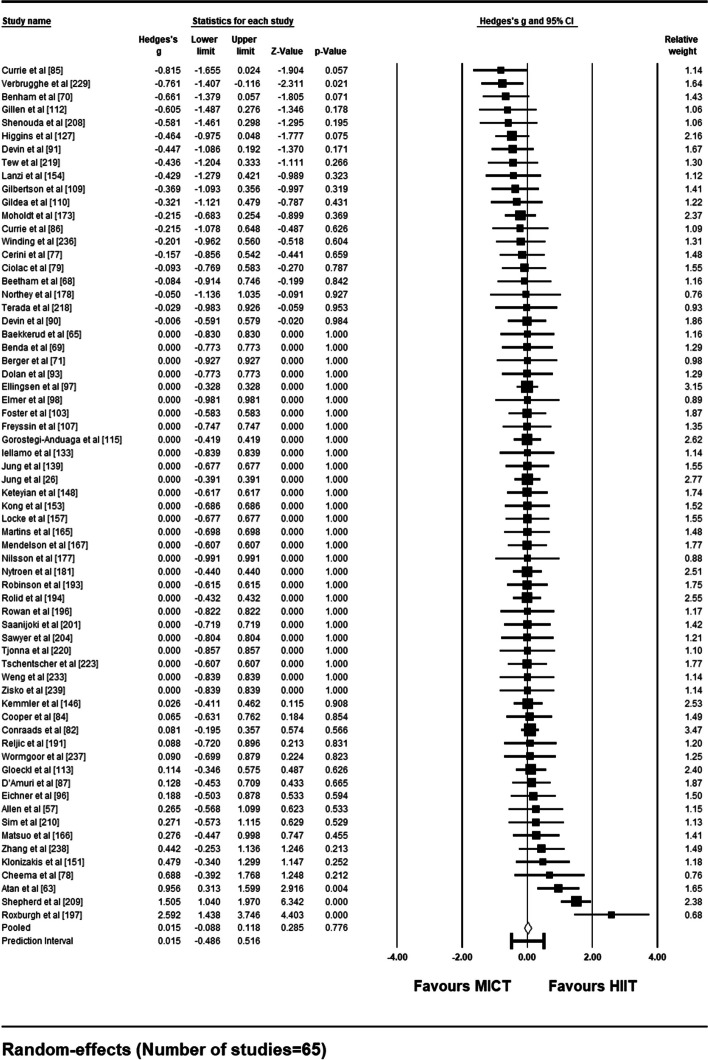
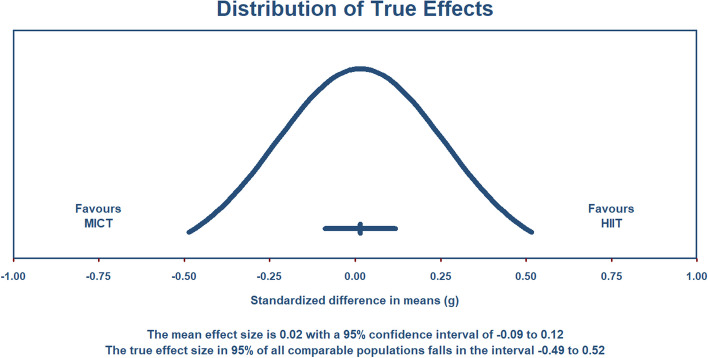
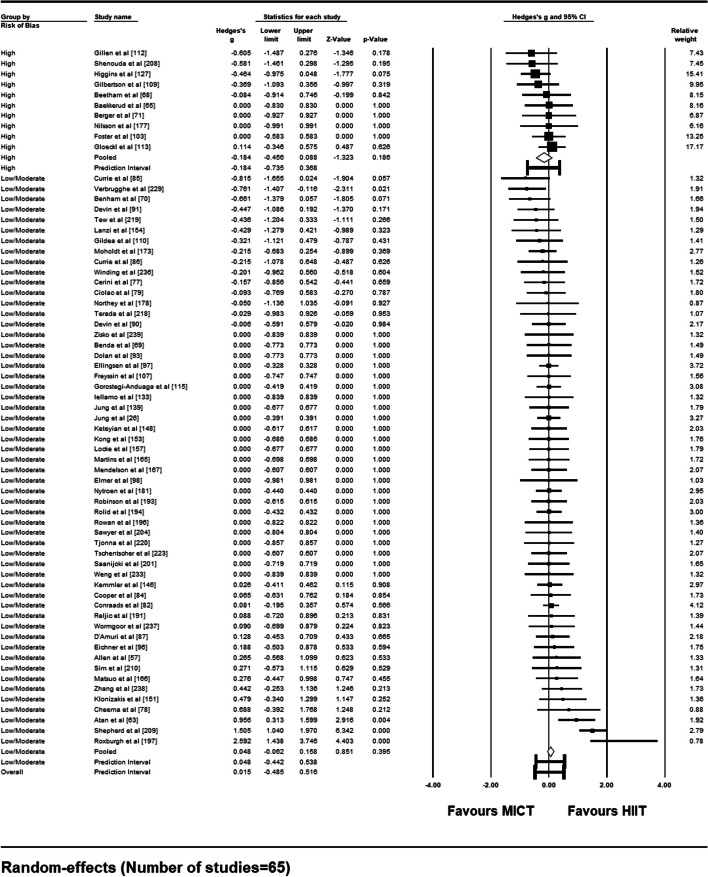
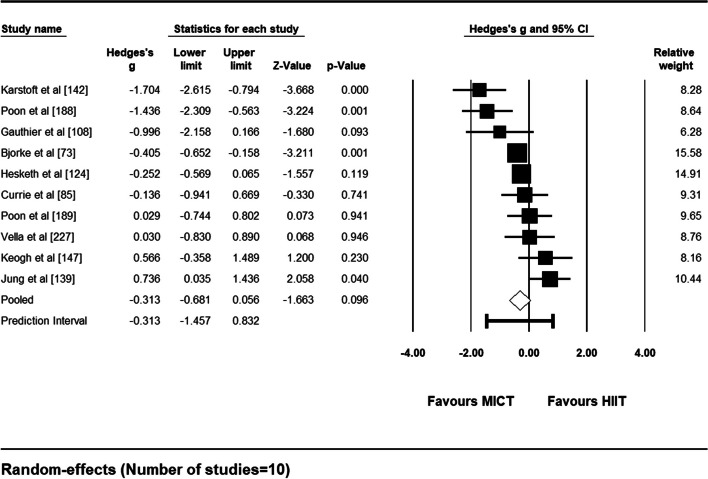
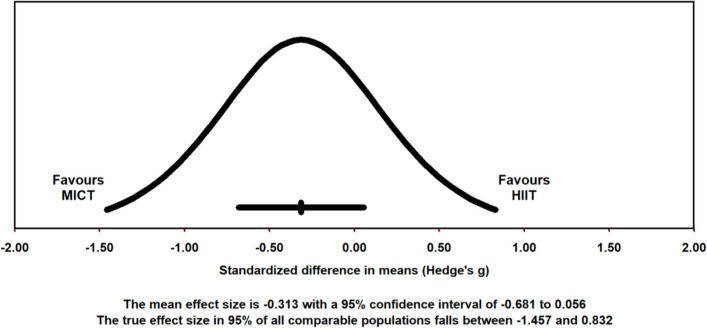
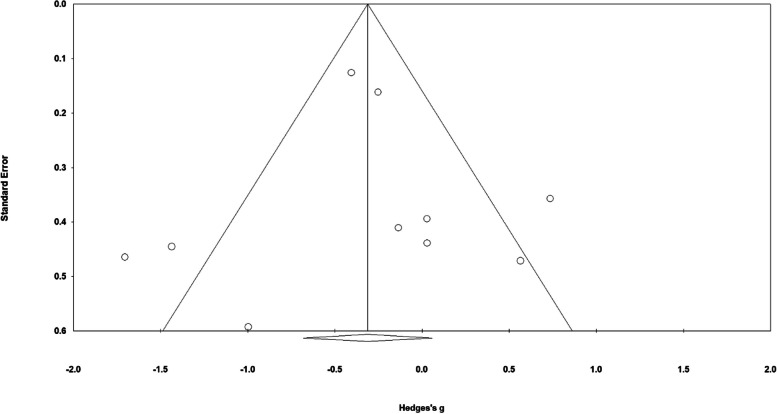
BACKGROUND: To determine rates of compliance (i.e., supervised intervention attendance) and adherence (i.e., unsupervised physical activity completion) to high-intensity interval training (HIIT) among insufficiently active adults and adults with a medical condition, and determine whether compliance and adherence rates were different between HIIT and moderate-intensity continuous training (MICT). METHODS: Articles on adults in a HIIT intervention and who were either insufficiently active or had a medical condition were included. MEDLINE, EMBASE, PsychINFO, SPORTDiscus, CINAHL, and Web of Science were searched. Article screening and data extraction were completed by two independent reviewers. Risk of bias was assessed using RoB 2.0 or ROBINS-I. Meta-analyses were conducted to discern differences in compliance and adherence between HIIT vs. MICT. Sensitivity analyses, publication bias, sub-group analyses, and quality appraisal were conducted for each meta-analysis. RESULTS: One hundred eighty-eight unique studies were included (n = 8928 participants). Compliance to HIIT interventions averaged 89.4% (SD:11.8%), while adherence to HIIT averaged 63% (SD: 21.1%). Compliance and adherence to MICT averaged 92.5% (SD:10.6%) and 68.2% (SD:16.2%), respectively. Based on 65 studies included in the meta-analysis, compliance rates were not different between supervised HIIT and MICT interventions [Hedge's g = 0.015 (95%CI: - 0.088-0.118), p = .78]. Results were robust and low risk of publication bias was detected. No differences were detected based on sub-group analyses comparing medical conditions or risk of bias of studies. Quality of the evidence was rated as moderate over concerns in the directness of the evidence. Based on 10 studies, adherence rates were not different between unsupervised HIIT and MICT interventions [Hedge's g = - 0.313 (95%CI: - 0.681-0.056), p = .096]. Sub-group analysis points to differences in adherence rates dependent on the method of outcome measurement. Adherence results should be interpreted with caution due to very low quality of evidence. CONCLUSIONS: Compliance to HIIT and MICT was high among insufficiently active adults and adults with a medical condition. Adherence to HIIT and MICT was relatively moderate, although there was high heterogeneity and very low quality of evidence. Further research should take into consideration exercise protocols employed, methods of outcome measurement, and measurement timepoints. REGISTRATION: This review was registered in the PROSPERO database and given the identifier CRD42019103313.
Overview
CoChat Summary
TL;DR
This systematic review and meta-analysis included 188 unique studies (n = 8,928) and found that supervised HIIT compliance was high and similar to supervised MICT, while unsupervised real-world adherence was moderate and also not significantly different from MICT. Evidence quality was moderate for supervised compliance and very low for unsupervised adherence.
Key findings
- Across 188 unique studies, mean compliance to supervised HIIT was 89.4% (SD 11.8%) and to supervised MICT was 92.5% (SD 10.6%).
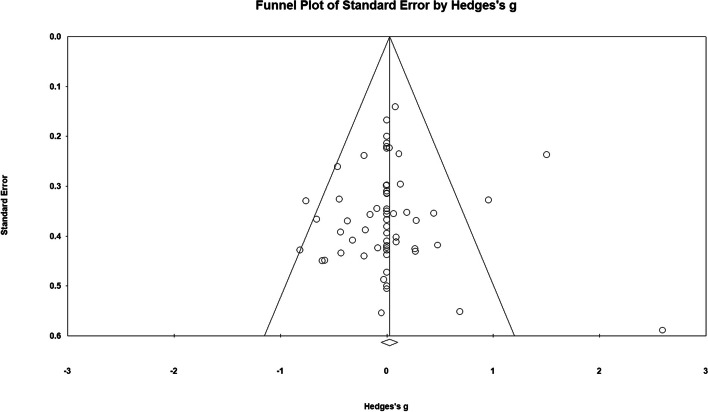
- In the supervised compliance meta-analysis, 65 studies showed no significant difference between HIIT and MICT (Hedge’s g = 0.015, 95% CI −0.088 to 0.118, p = .78).
- Mean adherence to unsupervised HIIT was 63% (SD 21.1%) and to unsupervised MICT was 68.2% (SD 16.2%).
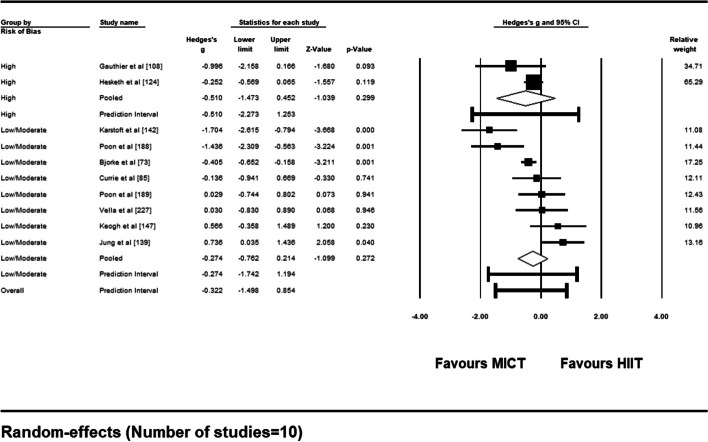
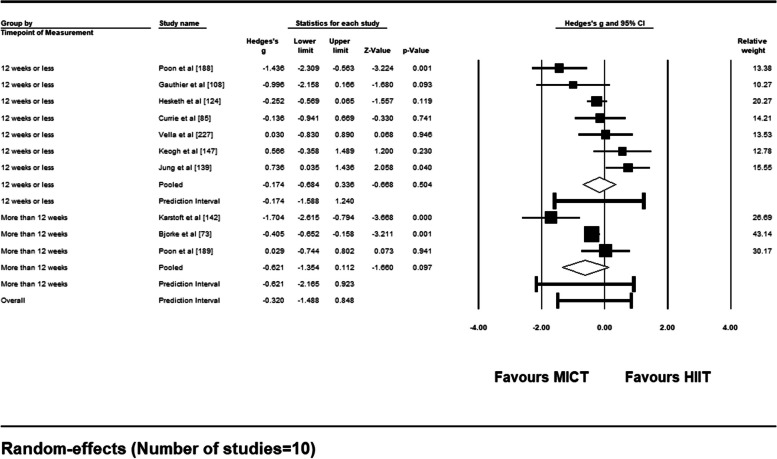
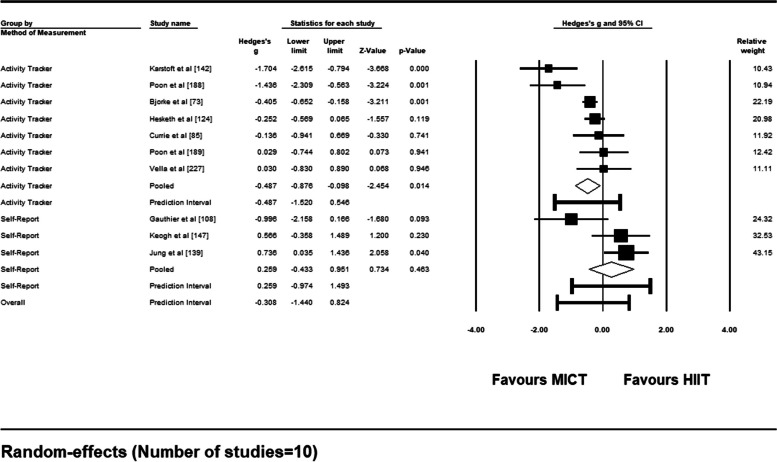
- In the unsupervised adherence meta-analysis, 10 studies showed no significant difference between HIIT and MICT (Hedge’s g = −0.313, 95% CI −0.681 to 0.056, p = .096), but adherence estimates had high heterogeneity (I² = 70.93%).
- The paper rates the quality of evidence as moderate for supervised compliance and very low for unsupervised adherence.
Methods
- Systematic review and meta-analysis following PRISMA 2020, registered in PROSPERO (CRD42019103313).
- Searched MEDLINE, EMBASE, PsycINFO, SPORTDiscus, CINAHL, and Web of Science from inception to October 3, 2022; included full-text, peer-reviewed primary studies of adults aged 18–65 who were insufficiently active or had a medical condition.
- Two independent reviewers handled screening and extraction; risk of bias was assessed with RoB 2.0 or ROBINS-I; random-effects meta-analyses used Hedge’s g, plus sensitivity, publication-bias, subgroup, and GRADE assessments.
Limitations
- Stated in the paper: the review focused on attendance/completion rates and did not assess whether participants achieved the intended exercise intensity.
- Stated in the paper: about a quarter of full texts were excluded because they did not report compliance/adherence, which may bias estimates upward if such outcomes are more often reported in more engaging studies.
- Stated in the paper: standardizing outcomes to percentage of completed sessions can obscure differences in the absolute number of prescribed sessions.
- Evident from the text: the adherence meta-analysis was based on only 10 studies, with high heterogeneity and very low quality of evidence, so conclusions are unstable and should be cautious.
Model-written summary. Check it against the paper before relying on it.
Integrity signals
Registry
Cites
Statistics
Figures
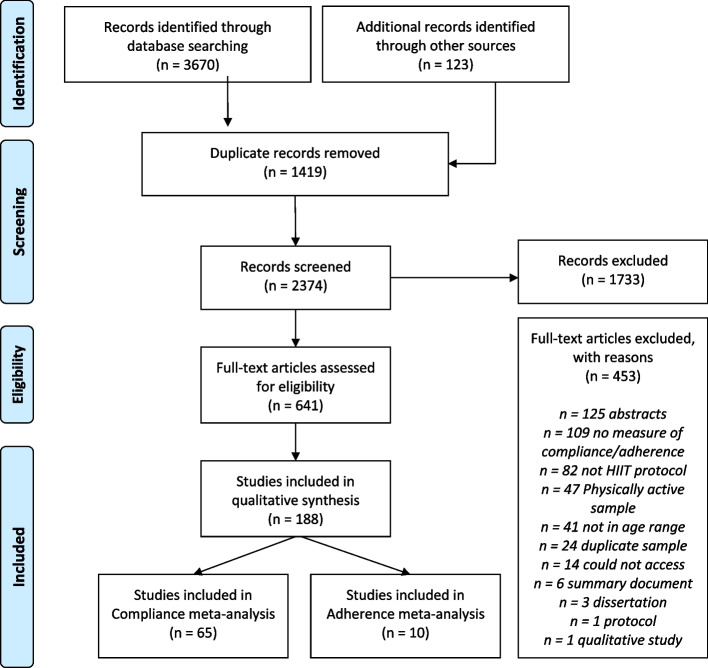

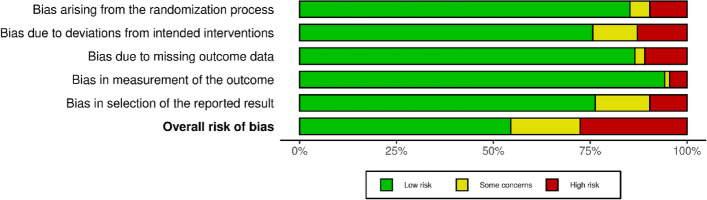
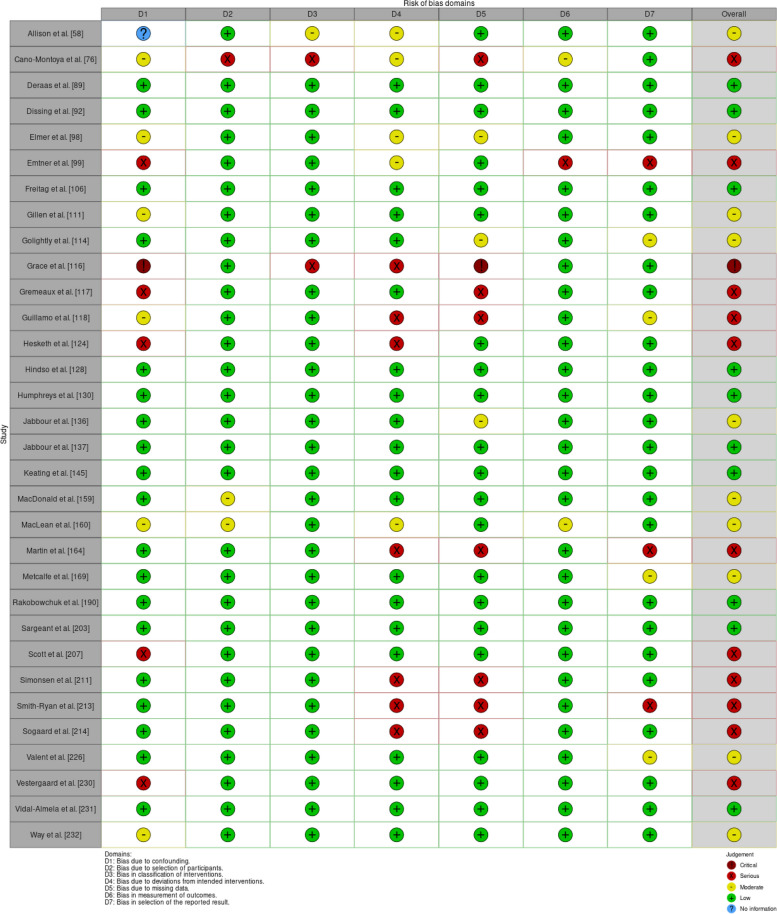
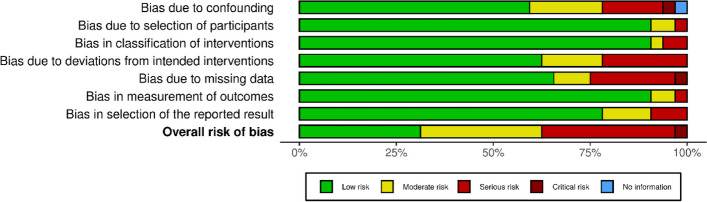
Verification
Claims the paper makes
14 Valid · 0 Not valid · 6 Not checked · 78 Own results and interpretations
Every source the paper cites for this claim was checked and supports it.
In the paper
“Weston and colleagues [14] reporting attendance rates > 85% for six studies focusing on individuals with cardiometabolic disease”
§ Rates of compliance and adherence to high-intensity interval training: a systematic review and Meta-analyses > Background
What the sources say
- Supportedcites [14] Weston KS Wisloff U Coombes JS High-intensity interval training in patients with lifestyle-induced cardiometabolic disease: a systematic review and meta-analysis Br J Sports Med. 2014 48 1227 1234 10.1136/bjsports-2013-092576 24144531 source
The Adherence passage reports that both groups in six studies had attendance rates above 85%. The paper’s inclusion criteria specify populations with cardiometabolic chronic disease. (LLM, conf=0.95)
plainn = 6- Asserted: passes — The authors put it forward as true.
- Checkable: passes — It can be checked against evidence.
- Load-bearing: unclear — It is unclear whether the paper’s conclusions depend on it.
- Based: passes — The paper gives a reason why it holds.
- Supported
The cited sources support only part of this claim — read each source’s verdict below.
In the paper
“A minimum of 10 studies included in each meta-analysis was considered sufficient for heterogeneity values to be deemed reliable [45].”
§ Rates of compliance and adherence to high-intensity interval training: a systematic review and Meta-analyses > Methods > Meta-analyses
What the sources say
- Partly supportedcites [45] Gagnier JJ Moher D Boon H Investigating clinical heterogeneity in systematic reviews: a methodologic review of guidance in the literature BMC Med. Res Methodol. 2012 12 111 10.1186/1471-2288-12-111 22846171 PMC3564789 sourceExperimental — accuracy not yet measured
The Discussion (page unavailable) reports a suggested minimum of 10 trials per covariate to reduce spurious findings in meta-regression. It does not say that 10 studies per meta-analysis make heterogeneity values reliable; the claim applies the threshold to a different purpose. (LLM, conf=0.87)
plain- Asserted: passes — The authors put it forward as true.
- Checkable: passes — It can be checked against evidence.
- Load-bearing: passes — The paper’s conclusions depend on it.
- Based: passes — The paper gives a reason why it holds.
- Partly supported
Every source the paper cites for this claim was checked and supports it.
In the paper
“Similarly, removing Keogh and colleagues [147] from the main analysis resulted in a statistically significant pooled effect size favoring the MICT interventions (Hedge’s g = − 0.388, p = .043).”
§ Rates of compliance and adherence to high-intensity interval training: a systematic review and Meta-analyses > Results > Adherence
What the sources say
- Supportedcites [147] Keogh JW Grigg J Vertullo CJ Is high-intensity interval cycling feasible and more beneficial than continuous cycling for knee osteoarthritic patients? Results of a randomised control feasibility trial Peer J. 2018 6 e4738 10.7717/peerj.4738 29761054 PMC5949056 source
The citation identifies the Keogh study removed from the citing authors’ adherence meta-analysis. The Results report adherence for both its HIIT and MICT cycling groups (94% and 88%, respectively). The pooled effect size and p-value describe the citing authors’ own analysis, not a result attributed to Keogh. (LLM, conf=0.92)
plain- Asserted: passes — The authors put it forward as true.
- Checkable: passes — It can be checked against evidence.
- Load-bearing: unclear — It is unclear whether the paper’s conclusions depend on it.
- Based: passes — The paper gives a reason why it holds.
- Supported
Every source the paper cites for this claim was checked and supports it.
In the paper
“The removal of Jung and colleagues [139] from the main analysis resulted in a statistically significant pooled effect size favoring the MICT interventions (Hedge’s g = − 0.426, p = .016).”
§ Rates of compliance and adherence to high-intensity interval training: a systematic review and Meta-analyses > Results > Adherence
What the sources say
- Supportedcites [139] Jung ME Bourne JE Beauchamp MR High-intensity interval training as an efficacious alternative to moderate-intensity continuous training for adults with prediabetes J Diabetes Res. 2015 2015 191595 10.1155/2015/191595 25918728 PMC4396724 source
The Introduction identifies Jung and colleagues’ study as a comparison of exercise adherence between HIIT and MICT in adults with prediabetes. The citation identifies the study removed from the citing authors’ meta-analysis; the pooled effect size is a result of that analysis, not a result attributed to Jung and colleagues. (LLM, conf=0.90)
plainstates an association- Asserted: passes — The authors put it forward as true.
- Checkable: passes — It can be checked against evidence.
- Load-bearing: unclear — It is unclear whether the paper’s conclusions depend on it.
- Based: passes — The paper gives a reason why it holds.
- Supported
A result the paper reports from its own data — it cites no other source for it, so there is none to check. The quote shows it is in the paper.
In the paper
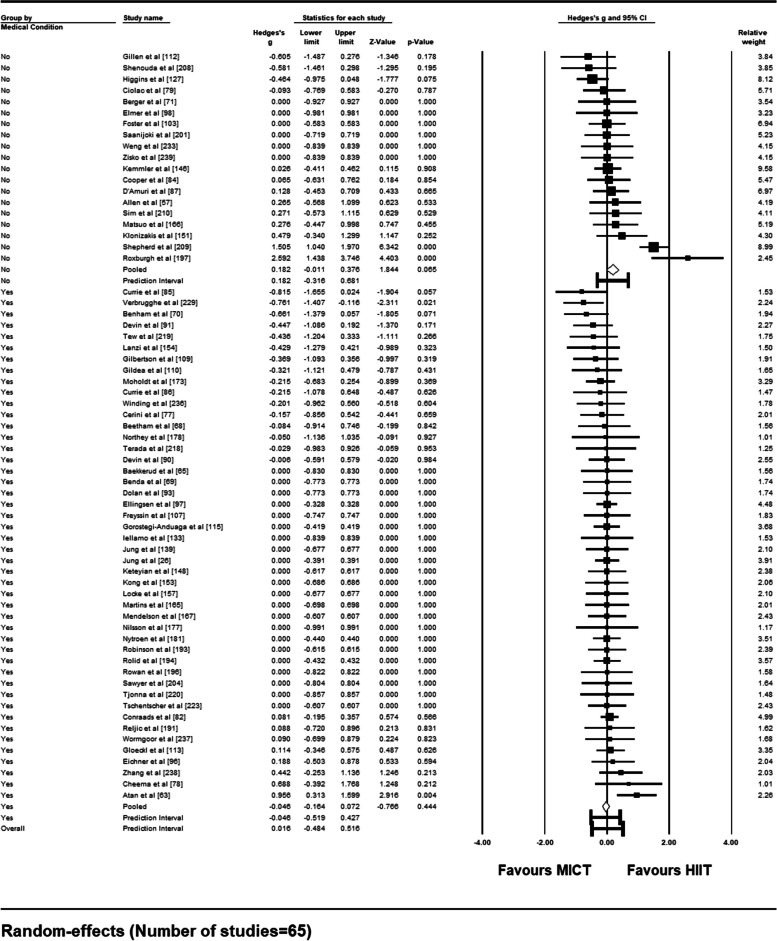
“No differences were detected based on sub-group analyses comparing medical conditions or risk of bias of studies.”
§ Rates of compliance and adherence to high-intensity interval training: a systematic review and Meta-analyses > Abstract > Results
plain- Asserted: passes — The authors put it forward as true.
- Checkable: passes — It can be checked against evidence.
- Load-bearing: unclear — It is unclear whether the paper’s conclusions depend on it.
- Based: passes — The paper gives a reason why it holds.
46 more claims
Create a free account to see all 98 claims and every source verdict.
- It may state two separate claims as one. 27
- Probably not a substantial claim. 28
Claims other papers make about this one
Each is checked against this paper’s own text: does it say what the citing paper says it does?
The source backs part of the claim, not all of it — or backs it for a different population, condition or comparison.
In the citing paper
“Additionally, it can lead to decreased adherence to training, particularly in unsupervised settings (Ekkekakis and Biddle, 2023; Santos et al., 2023).”
From High-Intensity Interval Training and Moderate-Intensity Continuous Training Affect Running Economy in Endurance Runners: A Systematic Review and Meta-Analysis of Randomized Controlled Trials (2025) · cites this paper as Santos et al., 2023
Experimental — accuracy not yet measuredThe source backs part of the claim, not all of it — or backs it for a different population, condition or comparison.
In the citing paper
“In contrast, MICT is relatively effective in mitigating these risks and enhancing runners’ compliance with their training regimens (Ekkekakis and Biddle, 2023; Santos et al., 2023).”
From High-Intensity Interval Training and Moderate-Intensity Continuous Training Affect Running Economy in Endurance Runners: A Systematic Review and Meta-Analysis of Randomized Controlled Trials (2025) · cites this paper as Santos et al., 2023
Experimental — accuracy not yet measured
Statistics recomputed
Every reported test result, recomputed from its test statistic and degrees of freedom. A result shows as not adding up only once an independent check has confirmed it.
- ConsistentQ(64) = 100.88reported p = .002 · recomputed p = .002
“Q (64) = 100.88, p = .002”
- ConsistentQ(1) = 3.9reported p = .048 · recomputed p = .048
“Q (1) = 3.90, p = .048”
- ConsistentQ(1) = 2.39reported p = .122 · recomputed p = .122
“Q (1) = 2.39, p = .122”
- ConsistentQ(9) = 30.96reported p < .001 · recomputed p < .001
“Q (9) = 30.96, p < .001”
- ConsistentQ(1) = 0.185reported p = .668 · recomputed p = .667
“Q (1) = 0.185, p = .668”
2 more recomputed tests
Create a free account to see every test the Stats check recomputed.
Self-check
Percentages, sums and reported differences re-computed from the paper’s own numbers.
Self-check results appear here once an independent check has confirmed them.
Citations
Cites
Items 201–251 of 251
High-intensity training in patients with spinal and bulbar muscular atrophy
Heje, K., Andersen, G., Buch, A. E., Andersen, H., & Vissing, J. (2019) · Journal of Neurology · doi:10.1007/s00415-019-09316-x · Cited by 29
Stavrinou, P. S., Bogdanis, G. C., Giannaki, C. D., Terzis, G. D., & Hadjicharalambous, M. (2019) · Applied Physiology, Nutrition, and Metabolism · doi:10.1139/apnm-2018-0707 · Cited by 28
Papadopoulos, E., Gillen, J. B., Moore, D., Au, D., Kurgan, N., Klentrou, P., Finelli, A., Alibhai, S. M. H., & Mina, D. S. (2021) · Applied Physiology, Nutrition, and Metabolism · doi:10.1139/apnm-2021-0365 · Cited by 28
Reljic, D., Herrmann, H. J., JAKOBS, B., Dieterich, W., Mougiakakos, D., Neurath, M. F., & Zopf, Y. (2022) · Medicine & Science in Sports & Exercise · doi:10.1249/mss.0000000000002989 · Cited by 27
Wormgoor, S. G., Dalleck, L. C., Zinn, C., Borotkanics, R., & Harris, N. K. (2018) · Frontiers in Endocrinology · doi:10.3389/fendo.2018.00475 · Cited by 26
One‐year aerobic interval training in outpatients with schizophrenia: A randomized controlled trial
Brobakken, M. F., Nygård, M., Güzey, I. C., Morken, G., Reitan, S. K., Heggelund, J., Vedul‐Kjelsås, E., & Wang, E. (2020) · Scandinavian Journal of Medicine and Science in Sports · doi:10.1111/sms.13808 · Cited by 25
Simonsen, C., Thorsen-Streit, S., Sundberg, A., Djurhuus, S. S., Mortensen, C. E., Qvortrup, C., Pedersen, B. K., Svendsen, L. B., Heer, P., & Christensen, J. F. (2020) · BJS Open · doi:10.1002/bjs5.50337 · Cited by 25
Feasibility of a prehabilitation program before major abdominal surgery: a pilot prospective study
Martin, D. J., Besson, C., Pache, B. C.-E., Michel, A., Geinoz, S., Grémeaux, V., Larcinese, A., Benaïm, C., Kayser, B., Demartines, N., et al. (2021) · Journal of International Medical Research · doi:10.1177/03000605211060196 · Cited by 25
Commentary: Why sprint interval training is inappropriate for a largely sedentary population
Del Vecchio, F. B., Gentil, P., Coswig, V. S., & Fukuda, D. H. (2015) · Frontiers in Psychology · doi:10.3389/fpsyg.2015.01359 · Cited by 25 · cited 1×
“Some argue that HIIT is an enjoyable and time efficient exercise modality, increasing appeal to a general population where time is the most prominent self-reported reason for non-engage-ment in physical activity [22, 23].”
BackgroundSargeant, J. A., Bawden, S., Aithal, G. P., Simpson, E. J., Macdonald, I. A., Turner, M. C., Cegielski, J., Smith, K., Dorling, J. L., Gowland, P. A., et al. (2018) · European Journal of Applied Physiology · doi:10.1007/s00421-018-3818-y · Cited by 23
Santos, A., Lonsdale, C., Lubans, D. R., Vasconcellos, D., Kapsal, N. J., Vis‐Dunbar, M., & Jung, M. E. (2020) · Systematic Reviews · doi:10.1186/s13643-020-01301-0 · Cited by 23 · cited 2×
“The protocol of this systematic review has been published elsewhere [29].”
MethodSelf-citationTsirigkakis, S., Mastorakos, G. P., Koutedakis, Y., Mougios, V., Nevill, A. M., Pafili, Z., & Bogdanis, G. C. (2021) · Nutrients · doi:10.3390/nu13041096 · Cited by 23
Ekkekakis, P., Hartman, M. E., & Ladwig, M. A. (2023) · Journal of Sport & Exercise Psychology · doi:10.1123/jsep.2022-0029 · Cited by 23 · cited 2×
“Similarly, Oliveira and colleagues [19] have reported comparable rates of perceived exercise enjoyment and affective responses to exercise, although this review has been recently critiqued on the basis of using a single summary statistic to examine enjoyment and affect [20].”
BackgroundThe effect of increased physical activity on pulmonary diffusing capacity in unfit women
Flaherty, J. M., Smoliga, J. M., & Zavorsky, G. S. (2014) · Experimental Physiology · doi:10.1113/expphysiol.2013.076406 · Cited by 21
Gilbertson, N. M., Mandelson, J. A., Hilovsky, K. L., Akers, J. D., Hargens, T. A., Wenos, D. L., & Edwards, E. S. (2019) · European Journal of Applied Physiology · doi:10.1007/s00421-019-04137-2 · Cited by 21
High‐Intensity Interval Training for Knee Osteoarthritis: A Pilot Study
Golightly, Y. M., Smith‐Ryan, A. E., Blue, M. N. M., Álvarez, C., Allen, K. D., & Nelson, A. E. (2021) · ACR Open Rheumatology · doi:10.1002/acr2.11318 · Cited by 21
Pedersen, L. R., Olsen, R. H., Jürs, A., Anholm, C., Fenger, M., Haugaard, S. B., & Prescott, E. (2015) · Metabolism · doi:10.1016/j.metabol.2015.07.007 · Cited by 20
Allen, A. M., Carlson, S. C., Bosch, T. A., Eberly, L. E., Okuyemi, K. S., Nair, U. S., & Gordon, J. S. (2018) · Journal of Addiction Medicine · doi:10.1097/adm.0000000000000414 · Cited by 20
Jabbour, G., Iancu, H.-D., Zouhal, H., Mauriège, P., Joanisse, D. R., & Martin, L. J. (2018) · Physiological Reports · doi:10.14814/phy2.13609 · Cited by 19
High-Intensity Interval Training Is Feasible in Women at High Risk for Breast Cancer
Coletta, A. M., Brewster, A. M., Chen, M., Li, Y., Bevers, T. B., Basen‐Engquist, K., & Gilchrist, S. C. (2019) · Medicine & Science in Sports & Exercise · doi:10.1249/mss.0000000000002048 · Cited by 19
Karlsen, T., Hoff, J., Støylen, A., Skovholdt, M. C., Aarhus, K. G., & Helgerud, J. (2008) · Scandinavian Cardiovascular Journal · doi:10.1080/14017430802032723 · Cited by 18
Guillamò, E., Cobo‐Calvo, Á., Oviedo, G. R., Travier, N., Álamo, J., Niño-Méndez, O. A., Martínez-Yélamos, A., Martínez‐Yélamos, S., & Javierre, C. F. (2018) · RECERCAT (Consorci de Serveis Universitaris de Catalunya) · Cited by 18
Vestergaard, M., Jensen, K., & Juul‐Kristensen, B. (2022) · Pilot and Feasibility Studies · doi:10.1186/s40814-022-00997-2 · Cited by 18
Dowd, A. J., Kronlund, L. J., Warbeck, C. B., Parmar, C., Daun, J. T., Wytsma-Fisher, K., Reimer, R. A., Millet, G. Y., Fung, T. S., & Culos-Reed, S. N. (2021) · Psychology and Health · doi:10.1080/08870446.2021.1921774 · Cited by 17
Vidal‐Almela, S., Way, K. L., Terada, T., Tulloch, H. E., Keast, M.-L., Pipe, A., Chirico, D., & Reed, J. L. (2021) · Applied Physiology, Nutrition, and Metabolism · doi:10.1139/apnm-2021-0265 · Cited by 17
(2021) · International Journal of Exercise Science · doi:10.70252/weqd2681 · Cited by 16
Billany, R. E., Smith, A. C., Hutchinson, G., Graham-Brown, M. P. M., Nixon, D. G. D., & BISHOP, N. C. (2022) · Pilot and Feasibility Studies · doi:10.1186/s40814-022-01067-3 · Cited by 16
Zisko, N., Stensvold, D., Slagsvold, K. H., Rognmo, Ø., Nauman, J., Wisløff, U., & Karlsen, T. (2015) · The Open Cardiovascular Medicine Journal · doi:10.2174/1874192401509010050 · Cited by 15
Jabbour, G., & Majed, L. (2018) · Frontiers in Physiology · doi:10.3389/fphys.2018.01505 · Cited by 15
Kiel, I. A., Lionett, S., Parr, E. B., Jones, H., Røset, M. A., Salvesen, Ø. O., Hawley, J. A., Vanky, E., & Moholdt, T. T. (2022) · PubMed · doi:10.1249/mss.0000000000002849 · Cited by 15
Lyall, G. K., Birk, G. K., Harris, E., Ferguson, C., Riches‐Suman, K., Kearney, M. T., Porter, K. E., & Birch, K. M. (2022) · Physiological Reports · doi:10.14814/phy2.15441 · Cited by 15
Rating of Perceived Exertion after 12 Weeks of High-Intensity, Intermittent Sprinting
Heydari, M., & Boutcher, S. H. (2013) · Perceptual and Motor Skills · doi:10.2466/06.15.29.pms.116.1.340-351 · Cited by 14
Haines, M. R. (2020) · Pilot and Feasibility Studies · doi:10.1186/s40814-020-00571-8 · Cited by 14
Bjørke, A. C. H., Buffart, L. M., Raastad, T., Demmelmaier, I., Stenling, A., Nordin, K., & Berntsen, S. (2022) · Frontiers in Sports and Active Living · doi:10.3389/fspor.2022.902124 · Cited by 14 · cited 1×
“Total sample size was on average 48 participants per study ( SD : 46.2) and ranged from 1 participant [106] to 255 participants [73].”
BackgroundInfluentialFeasibility and potential benefits of a structured exercise program on cognitive performance in HIV
Kaur, N., Aubertin‐Leheudre, M., Fellows, L. K., Brouillette, M., & Mayo, N. E. (2021) · AIDS Care · doi:10.1080/09540121.2020.1867307 · Cited by 13
Deraas, T., Hopstock, L. A., Henriksen, A., Morseth, B., Sand, A.-S., Njølstad, I., Pedersen, S., Sagelv, E. H., Johansson, J., & Grimsgaard, S. (2021) · Pilot and Feasibility Studies · doi:10.1186/s40814-021-00921-0 · Cited by 13
Gildea, N., McDermott, A., Rocha, J., O'Shea, D. B., Green, S., & Egaña, M. (2021) · American Journal of Physiology-Regulatory, Integrative and Comparative Physiology · doi:10.1152/ajpregu.00318.2020 · Cited by 13
A Pilot Study on In-Task Affect Predicting Free-Living Adherence to HIIT and MICT
Ivanova, E. L., Sadikaj, G., Bourne, J. E., Beauchamp, M. R., Little, J. P., & Jung, M. E. (2020) · Research Quarterly for Exercise and Sport · doi:10.1080/02701367.2020.1828562 · Cited by 11
Self-citationFreitag, N., Weber, P. D., Sanders, T. C., Schulz, H., Bloch, W., & Schumann, M. (2018) · Medicine · doi:10.1097/md.0000000000011068 · Cited by 10
Arad, A. D., Albu, J., & DiMenna, F. J. (2020) · BMC Sports Science Medicine and Rehabilitation · doi:10.1186/s13102-020-00207-7 · Cited by 10
The effect of low volume sprint interval training in patients with non-alcoholic fatty liver disease
MacLean, C., Dillon, J. F., Babraj, J., & Vollaard, N. B. J. (2017) · The Physician and Sportsmedicine · doi:10.1080/00913847.2018.1411171 · Cited by 9
HINDSØ, M. G., Kuhlman, A. B., Dohlmann, T. L., Lund, M. T., Hartmann, B., Holst, J. J., Larsen, S., & Helge, J. W. (2021) · European Journal of Sport Science · doi:10.1080/17461391.2021.1877830 · Cited by 9
Cerini, T., Hilfiker, R., Riegler, T. F., & Felsch, Q. T. M. (2022) · Archives of Physiotherapy · doi:10.1186/s40945-022-00136-3 · Cited by 9
Cano-Montoya, J., Álvarez, C., Martínez‐Salazar, C., Salas, A., Sade-Calles, F., & Ramírez‐Campillo, R. (2016) · Revista médica de Chile · doi:10.4067/s0034-98872016000900008 · Cited by 8 · cited 1×
“Only one included article [76] was in a language other than English (Spanish; 0.53%).”
BackgroundInfluentialUtilizing Heart Rate and RPE to Prescribe Cycle Ergometer HIIT in Older Adults: A Feasibility Study
Keating, C. J., Román, P. Á. L., Linares, J. C. C., Pérez, A. D. L. C., & MONTILLA, J. A. P. (2022) · International journal of exercise science · doi:10.70252/hoba5599 · Cited by 7
Ávila-Gandía, V., Sánchez-Macarro, M., Luque-Rubia, A. J., García-Sánchez, E., Cánovas, F., Santiago, A. L., & López-Román, F. J. (2021) · Journal of Personalized Medicine · doi:10.3390/jpm11040291 · Cited by 6
Humphreys, L. J., Carter, A., Sharrack, B., & Copeland, R. J. (2022) · International Journal of Therapy and Rehabilitation · doi:10.12968/ijtr.2021.0073 · Cited by 6
Smith‐Ryan, A. E., Weaver, M. A., Viera, A. J., Weinberger, M., Blue, M. N. M., & Hirsch, K. R. (2021) · Frontiers in Sports and Active Living · doi:10.3389/fspor.2021.690243 · Cited by 5
Dissing, A.-M., Johansen, M. D., Pilegaard, M., & Hejlesen, O. K. (2019) · Obesity Medicine · doi:10.1016/j.obmed.2019.01.001 · Cited by 4
(2014) · European Journal of Preventive Cardiology · doi:10.1177/2047487314534570 · Cited by 4
Hettchen, M., von Stengel, S., Kohl, M., MURPHY, M. H., Shojaa, M., Ghasemikaram, M., Bragonzoni, L., Benvenuti, F., Ripamonti, C., Benedetti, G., et al. (2021) · German Journal of Sports Medicine · doi:10.5960/dzsm.2020.449 · Cited by 3
Research works printed but not linked: 1
- Borenstein M Hedges L Higgins JPT Comprehensive Meta-analysis version 4 2022 Englewood, NJ Biostat
Cited by
Poon, E. T., Li, H., Gibala, M. J., Wong, S. H., & Ho, R. S. T. (2024) · Scandinavian Journal of Medicine and Science in Sports · doi:10.1111/sms.14652 · Cited by 85
Poon, E. T., Wongpipit, W., Li, H., Wong, S. H., Siu, P. M., Kong, A. P. S., & Johnson, N. A. (2024) · British Journal of Sports Medicine · doi:10.1136/bjsports-2024-108481 · Cited by 63
“69 It is noted that most of the included RCTs undertook HIIT interventions under supervised clinical, laboratory or gym conditions.”
Poon, E. T., Li, H., Little, J. P., Wong, S. H., & Ho, R. S. T. (2024) · Sports Medicine · doi:10.1007/s40279-024-02070-9 · Cited by 60
“A recent systematic review and meta-analysis conducted by Santos et al. [126], which included 188 unique studies with a total of 8928 participants, revealed that in unsupervised, real-world interval training interventions (inclusive of both HIIT and SIT), the average adherence rate (i.e.,…”
Wan, K., Dai, Z., Wong, P., Huang, Y., Lei, E. F., Little, J. P., Lin, F., & Tam, B. T. (2025) · Scandinavian Journal of Medicine and Science in Sports · doi:10.1111/sms.70114 · Cited by 42
Yin, M., Li, Y., Aziz, A. R., Buffey, A., Bishop, D. J., Bao, D., Nassis, G. P., Islam, H., Wang, H., Fyfe, J. J., et al. (2026) · Journal of Sport and Health Science · doi:10.1016/j.jshs.2025.101088 · Cited by 35
Metadata
- Authors
- Santos, A., Braaten, K., MacPherson, M., Vasconcellos, D., Vis-Dunbar, M., Lonsdale, C., Lubans, D., & Jung, M. E.
- Affiliations
- University of British Columbia, Okanagan Campus (CA)
- Australian Catholic University (AU)
- Hunter Medical Research Institute (AU)
- Corresponding author
- Jung, Mary E.
- ORCID
- Venue
- International Journal of Behavioral Nutrition and Physical Activity
- Published
- 2023-11-21
- Volume
- 20
- Issue
- 1
- Pages
- 134-134
- ISSN
- 1479-5868 (ISSN-L)
- PMC
- PMC10664287
- OpenAlex
- W4388866554
- Semantic Scholar
- 1e999b48a8b5003b8e3ffb1fef9c7ea75ee43da4
- Cited by
- 59
- References
- 253
- Citations by year
- 2026: 22 · 2025: 25 · 2024: 12
- FWCI
- 2.10
- Type
- journal article
- Language
- en
- Open access
- gold
- doi.org
- Licence
- cc-by
- creativecommons.org/licenses/by/4.0 (tdm)
- creativecommons.org/licenses/by/4.0 (vor)
- Locations
- International Journal of Behavioral Nutrition and Physical Activity (publishedVersion, cc-by)
- PubMed Central (publishedVersion, cc-by)
- PubMed (publishedVersion)
- Jyväskylä University Digital Archive (University of Jyväskylä) (submittedVersion, cc-by)
- DOAJ (DOAJ: Directory of Open Access Journals) (submittedVersion, cc-by-sa)
- NOVA (University of Newcastle Australia) (submittedVersion)
- Topics
- Health Sciences › Medicine › Public Health, Environmental and Occupational Health › Physical Activity and Health
- Health Sciences › Medicine › Physiology (medical) › Cardiovascular and exercise physiology
- Health Sciences › Medicine › Orthopedics and Sports Medicine › Sports Performance and Training
- Keywords
- high-intensity interval training, compliance, adherence, moderate-intensity continuous training, physical activity, quality of evidence, publication bias, risk of bias, subgroup analysis, sedentary behavior, physical activity interventions
- MeSH terms
- High-Intensity Interval Training, Adult, Humans, Exercise
About these checks
Registry, retraction, Cites and statistics results are computed, not judged, with one exception: a printed reference that no index lists is read once by a model before it counts as a citation error. Claims are extracted by a model and kept only when their quote appears verbatim in the text; each cited source is then checked, with a model’s help, for whether it says what the claim relies on. Those verdicts can be wrong — read the claim’s quote and the cited source before relying on one.
The claim verdicts this report counts are experimental: their accuracy is not yet measured.
A language model drew the claims from the paper on 2026-10-10, under version 3 of the claim definition (model deepseek-v4.1-flash, prompt extract-v3).
A second model labelled each claim on 2026-10-10 (model jev-1.13-20260917, definition revision gold-guideline-v0.2).
Cited sources are checked with a language model’s help (gpt-6-sol).
Statistics and arithmetic are recomputed, not judged.
Confidence bands are shown only for fields calibrated on our annotated test set. None is calibrated yet, so no band is shown.
What counts as a claim ›How we measure confidence ›How we check this ›
Are you an author, or do you see a problem with this page? Request a review
Data sources
Bibliographic data: Semantic Scholar, OpenAlex, Crossref.
Contains information from the Semantic Scholar Academic Graph Datasets, made available under the ODC Attribution License (ODC-BY 1.0).
Semantic Scholar’s data is described in: Kinney, R., et al. (2023). The Semantic Scholar Open Data Platform. arXiv:2301.10140.
