

The effects of whey protein with or without carbohydrates on resistance training adaptations
Open accessThe DOI matches its Crossref record; 54 of the 54 references it cites were found in a registry or an index.
Abstract
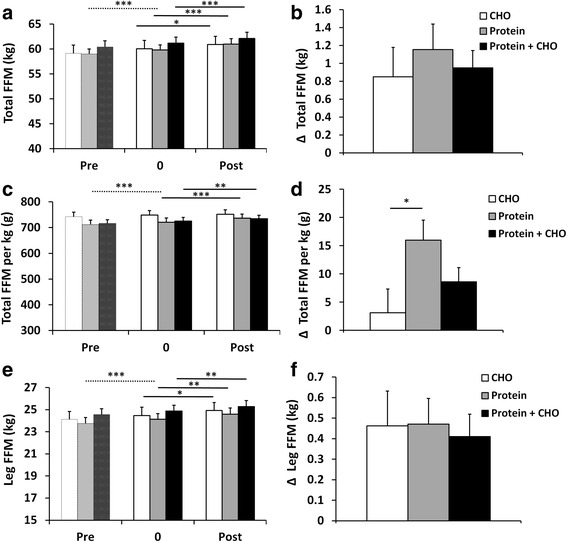
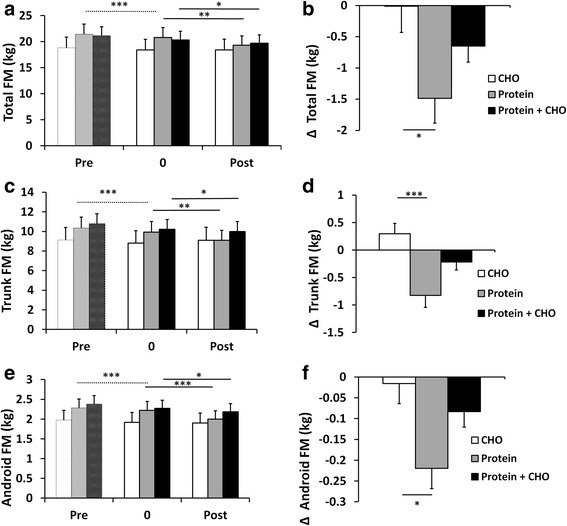
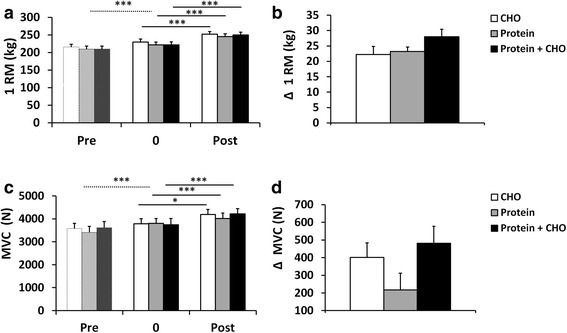
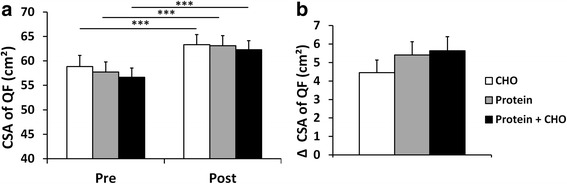
BACKGROUND: Nutrition intake in the context of a resistance training (RT) bout may affect body composition and muscle strength. However, the individual and combined effects of whey protein and carbohydrates on long-term resistance training adaptations are poorly understood. METHODS: A four-week preparatory RT period was conducted in previously untrained males to standardize the training background of the subjects. Thereafter, the subjects were randomized into three groups: 30 g of whey proteins (n = 22), isocaloric carbohydrates (maltodextrin, n = 21), or protein + carbohydrates (n = 25). Within these groups, the subjects were further randomized into two whole-body 12-week RT regimens aiming either for muscle hypertrophy and maximal strength or muscle strength, hypertrophy and power. The post-exercise drink was always ingested immediately after the exercise bout, 2-3 times per week depending on the training period. Body composition (by DXA), quadriceps femoris muscle cross-sectional area (by panoramic ultrasound), maximal strength (by dynamic and isometric leg press) and serum lipids as basic markers of cardiovascular health, were analysed before and after the intervention. RESULTS: Twelve-week RT led to increased fat-free mass, muscle size and strength independent of post-exercise nutrient intake (P < 0.05). However, the whey protein group reduced more total and abdominal area fat when compared to the carbohydrate group independent of the type of RT (P < 0.05). Thus, a larger relative increase (per kg bodyweight) in fat-free mass was observed in the protein vs. carbohydrate group (P < 0.05) without significant differences to the combined group. No systematic effects of the interventions were found for serum lipids. The RT type did not have an effect on the adaptations in response to different supplementation paradigms. CONCLUSIONS: Post-exercise supplementation with whey proteins when compared to carbohydrates or combination of proteins and carbohydrates did not have a major effect on muscle size or strength when ingested two to three times a week. However, whey proteins may increase abdominal fat loss and relative fat-free mass adaptations in response to resistance training when compared to fast-acting carbohydrates.
Overview
The claims and statistics of this paper haven’t been checked yet.
Free: it reads the open-access text and checks the first 5 claims that cite a source we can check. Create a free account to check every claim.
Integrity signals
Registry
Cites
Statistics
Figures
Verification
Claims the paper makes
The claims and statistics of this paper haven’t been checked yet.
Free: it reads the open-access text and checks the first 5 claims that cite a source we can check. Create a free account to check every claim.
Claims other papers make about this one
Each is checked against this paper’s own text: does it say what the citing paper says it does?
The source backs part of the claim, not all of it — or backs it for a different population, condition or comparison.
In the citing paper
“Fat mass was found to significantly decrease in both groups that contained protein in comparison to carbohydrate, but no differences between the two protein-containing groups were noted.”
From ISSN exercise & sports nutrition review update: research & recommendations (2018) · cites this paper as [609]
Experimental — accuracy not yet measuredThe source backs part of the claim, not all of it — or backs it for a different population, condition or comparison.
In the citing paper
“Overall, changes in strength were similar in all groups while changes in fat-free mass were greater in the protein group when compared to the carbohydrate group.”
From ISSN exercise & sports nutrition review update: research & recommendations (2018) · cites this paper as [609]
Experimental — accuracy not yet measuredThe source backs part of the claim, not all of it — or backs it for a different population, condition or comparison.
In the citing paper
“However, when optimal carbohydrate is delivered the impact of adding protein (irrespective of when it is provided) appears to offer little to no additional benefit on endurance or resistance exercise performance as well as the recovery of reduced muscle glycogen.”
From International society of sports nutrition position stand: nutrient timing (2017) · cites this paper as [97]
Experimental — accuracy not yet measuredThe cited source says what the claim attributes to it.
In the citing paper
“Much like the work on glycogen recovery, studies involving resistance training and optimization of adaptations seen from resistance training also point towards a higher priority being given towards the total amount of protein consumed during the day.”
From International society of sports nutrition position stand: nutrient timing (2017) · cites this paper as [97]
The cited source says what the claim attributes to it.
In the citing paper
“In this respect, when sufficient protein is supplied, it may be that carbohydrate has no additional adaptive benefit.”
From International society of sports nutrition position stand: nutrient timing (2017) · cites this paper as [97]
1 more claim about this paper
Create a free account to see every claim other papers make about this one.
Self-check
Percentages, sums and reported differences re-computed from the paper’s own numbers.
The self-check needs the paper’s full text.
Citations
Cites
Friedewald, W. T., Levy, R. I., & Fredrickson, D. S. (1972) · Clinical Chemistry · doi:10.1093/clinchem/18.6.499 · Cited by 32,423 · cited 3×
“Friedewald WT, Levy RI, Fredrickson DS. Estimation of the concentration of low-density lipoprotein cholesterol in plasma, without use of the preparative ultracentrifuge.”
MethodInfluentialAntihyperlipidemic and Biochemical Activities of Mcy Protein in Streptozotocin Induced Diabetic Rats
Marella, S., Maddirela, D. R., Badri, K. R., Jyothi Kumar, M. V., & Chippada, A. (2015) · Cellular Physiology and Biochemistry · doi:10.1159/000373954 · Cited by 5,938
Abdominal obesity and metabolic syndrome
Després, J.-P., & Lemieux, I. (2006) · Nature · doi:10.1038/nature05488 · Cited by 4,354 · cited 1×
“Conversely, excessive fat, especially in the abdominal area, is linked to increased risk of premature death [4] and comorbidities such as negatively altered blood lipid profile [5].”
BackgroundProgression Models in Resistance Training for Healthy Adults
(2009) · Medicine & Science in Sports & Exercise · doi:10.1249/mss.0b013e3181915670 · Cited by 4,332
Progression Models in Resistance Training for Healthy Adults
(2002) · Medicine and Science in Sports and Exercise · doi:10.1097/00005768-200202000-00027 · Cited by 2,979
General and abdominal adiposity and risk of death in Europe
Pischon, T., Boeing, H., Hoffmann, K., Bergmann, M., Schulze, M. B., Overvad, K., van der Schouw, Y. T., Spencer, E., Moons, K. G. M., Tjønneland, A., et al. (2008) · New England Journal of Medicine · doi:10.1056/nejmoa0801891 · Cited by 2,155 · cited 2×
“Conversely, excessive fat, especially in the abdominal area, is linked to increased risk of premature death [4] and comorbidities such as negatively altered blood lipid profile [5].”
BackgroundThe underappreciated role of muscle in health and disease
Wolfe, R. R. (2006) · The American Journal of Clinical Nutrition · doi:10.1093/ajcn/84.3.475 · Cited by 1,537 · cited 2×
“mount importance for health [1–3].”
BackgroundFolland, J. P., & Williams, A. G. (2007) · Sports Medicine · doi:10.2165/00007256-200737020-00004 · Cited by 1,347
Strength testing—predicting a one-rep max from reps-to-fatigue
Brzycki, M. (1993) · Journal of Physical Education, Recreation & Dance · doi:10.1080/07303084.1993.10606684 · Cited by 1,236 · cited 1×
“formula [24].”
Objectively measured physical capability levels and mortality: systematic review and meta-analysis
Cooper, R., Kuh, D., Hardy, R., Mortality Review Group, & teams, O. B. O. T. F. A. H. S. (2010) · BMJ · doi:10.1136/bmj.c4467 · Cited by 1,166
Cited by
Morton, R. W., Murphy, K. T., McKellar, S. R., Schoenfeld, B. J., Henselmans, M., Helms, E., Aragon, A. A., Devries, M. C., Banfield, L., Krieger, J. W., et al. (2018) · British Journal of Sports Medicine · doi:10.1136/bjsports-2017-097608 · Cited by 1,269
ISSN exercise & sports nutrition review update: research & recommendations
Kerksick, C. M., Wilborn, C. D., Roberts, M. D., Smith-Ryan, A., Kleiner, S. M., Jäger, R., Collins, R., Cooke, M., Davis, J. N., Galvan, E., et al. (2018) · Journal of the International Society of Sports Nutrition · doi:10.1186/s12970-018-0242-y · Cited by 945
International society of sports nutrition position stand: nutrient timing
Kerksick, C. M., Arent, S., Schoenfeld, B. J., Stout, J. R., Campbell, B., Wilborn, C. D., Taylor, L., Kalman, D., Smith-Ryan, A. E., Kreider, R. B., et al. (2017) · Journal of the International Society of Sports Nutrition · doi:10.1186/s12970-017-0189-4 · Cited by 622
“As an example of this, Hulmi and colleagues [97] showed no benefit in resistance training adaptations when a combination of maltodextrin carbohydrate (34.”
BackgroundMobley, C., Haun, C., Roberson, P., Mumford, P., Romero, M., Kephart, W., Anderson, R., Vann, C., Osburn, S., Pledge, C., et al. (2017) · Nutrients · doi:10.3390/nu9090972 · Cited by 103
Hulmi, J. J., Isola, V., Suonpää, M., Järvinen, N. J., Kokkonen, M., Wennerström, A., Nyman, K., Perola, M., Ahtiainen, J. P., & Häkkinen, K. (2017) · Frontiers in Physiology · doi:10.3389/fphys.2016.00689 · Cited by 44
“Body composition was estimated by Dual-energy X-ray absorptiometry (DXA, Lunar Prodigy Advance, GE Medical Systems—Lunar, Madison WI USA) using methods similar to Hulmi et al. (2015) in a fasted state.”
MethodSelf-citationDrăgoi, C. M., Nicolae, A. C., Ungurianu, A., Margina, D. M., Grădinaru, D., & Dumitrescu, I.-B. (2024) · Cells · doi:10.3390/cells13020138 · Cited by 87
Tavares, L. D., de Souza, E. O., Ugrinowitsch, C., Laurentino, G. C., Roschel, H., Aihara, A. Y., Cardoso, F. N., & Tricoli, V. (2017) · European Journal of Sport Science · doi:10.1080/17461391.2017.1298673 · Cited by 48
“However, other studies have shown no additional effect of protein supplementation associated to the ST regimen on muscle mass and strength, especially when the training period is less than 12 weeks (Boone, Stout, Beyer, Fukuda, & Hoffman, 2015; Hulmi et al., 2015; Paoli et al., 2016).”
BackgroundO’Bryan, K. R., Doering, T. M., Morton, R. W., Coffey, V. G., Phillips, S. M., & Cox, G. R. (2020) · British Journal of Sports Medicine · doi:10.1136/bjsports-2018-099889 · Cited by 47
Protein Supplementation Does Not Affect Myogenic Adaptations to Resistance Training
REIDY, P. T., FRY, C. S., IGBINIGIE, S., DEER, R. R., JENNINGS, K., COPE, M. B., MUKHERJEA, R., VOLPI, E., & RASMUSSEN, B. B. (2017) · Medicine & Science in Sports & Exercise · doi:10.1249/mss.0000000000001224 · Cited by 39
“In addition, studies using magnetic resonance imaging of the biceps (10) or latissimus dorsi (33) and ultrasound (3,4,22,23,48) of the thigh muscles have clearly shown the same pattern: no effect of protein supplementation (whey) to enhance vastus lateralis muscle hypertrophy.”
Protein Supplementation in Sport: Source, Timing, and Intended Benefits
Huecker, M., Sarav, M., Pearlman, M., & Laster, J. (2019) · Current Nutrition Reports · doi:10.1007/s13668-019-00293-1 · Cited by 37
Roberts, J., Zinchenko, A., Suckling, C. A., Smith, L., Johnstone, J., & Henselmans, M. (2017) · Journal of the International Society of Sports Nutrition · doi:10.1186/s12970-017-0201-z · Cited by 45
Castro, L. H. A., de Araújo, F. H. S., Olimpio, M. Y. M., Primo, R. B. D. B., Pereira, T. T., Lopes, L. A. F., Trindade, E. B. S. D. M., Fernandes, R., & Oesterreich, S. A. (2019) · Nutrients · doi:10.3390/nu11092047 · Cited by 37
“[34] Adaptable to each participant’s progress based on the strength test (2–6 RM) 3 28 2–3 84 Whole body Allowed for recreational activities, but not registered”
BackgroundMethodResultInfluentialHigh protein consumption in trained women: bad to the bone?
Antonio, J., Ellerbroek, A., Evans, C., Silver, T., & Peacock, C. A. (2018) · Journal of the International Society of Sports Nutrition · doi:10.1186/s12970-018-0210-6 · Cited by 26
Omi, N., Shiba, H., Nishimura, E., Tsukamoto, S., Maruki‐Uchida, H., Oda, M., & Morita, M. (2019) · Journal of the International Society of Sports Nutrition · doi:10.1186/s12970-019-0303-x · Cited by 27
Ihalainen, J. K., Ahtiainen, J. P., Walker, S., Paulsen, G., Selänne, H., Hämäläinen, M., Moilanen, E., Peltonen, H., & Mero, A. A. (2017) · Journal of Physiology and Biochemistry · doi:10.1007/s13105-017-0590-0 · Cited by 28
Self-citationSchoenfeld, B. J., & Aragon, A. A. (2018) · Journal of Orthopaedic & Sports Physical Therapy · doi:10.2519/jospt.2018.0615 · Cited by 22
Whey protein supplementation and muscle mass: current perspectives
Naclerio, F., & Seijo, M. (2019) · Nutrition and Dietary Supplements · doi:10.2147/nds.s166195 · Cited by 29
Prokopidis, K., Morgan, P. T., Veronese, N., Morwani‐Mangnani, J., Triantafyllidis, K. K., Kechagias, K. S., Roberts, J., Hurst, C., Stevenson, E., Vlachopoulos, D., et al. (2024) · Clinical Nutrition · doi:10.1016/j.clnu.2024.12.003 · Cited by 23
Heat stability of whey protein ingredients based on state diagrams
Triani, R., & Foegeding, E. A. (2019) · International Dairy Journal · doi:10.1016/j.idairyj.2018.12.006 · Cited by 14
Branched-Chain Amino Acid Deprivation Decreases Lipid Oxidation and Lipogenesis in C2C12 Myotubes
Karvinen, S. M., Fachada, V., Sahinaho, U.-M., Pekkala, S., Lautaoja-Kivipelto, J. H., Mäntyselkä, S., Permi, P., Hulmi, J. J., Silvennoinen, M., & Kainulainen, H. (2022) · Metabolites · doi:10.3390/metabo12040328 · Cited by 16
Self-citationZange, J., Schopen, K., Albracht, K., Gerlach, D. A., Frings‐Meuthen, P., Maffiuletti, N. A., Bloch, W., & Rittweger, J. (2017) · PLoS ONE · doi:10.1371/journal.pone.0171562 · Cited by 14
Aragon, A. A., & Schoenfeld, B. J. (2020) · Strength & Conditioning Journal · doi:10.1519/ssc.0000000000000539 · Cited by 10
Savolainen, L., Timpmann, S., Mooses, M., Mäestu, E., Medijainen, L., Tõnutare, L., Ross, F., Lellsaar, M., Unt, E., & Ööpik, V. (2021) · European Journal of Applied Physiology · doi:10.1007/s00421-021-04674-9 · Cited by 15
Resistance Training Induces Antiatherogenic Effects on Metabolomic Pathways
Sarin, H. V., Ahtiainen, J. P., Hulmi, J. J., Ihalainen, J. K., Walker, S., Küüsmaa-Schildt, M., Perola, M., & Peltonen, H. (2019) · Medicine & Science in Sports & Exercise · doi:10.1249/mss.0000000000002003 · Cited by 13
Self-citationde Almeida, J. A., Santana, H. A. D. P., Motta‐Santos, D., Nogueira, M. E., Silva, K. K. S., Miotto, H., Medeiros, C. S. D. A., Coelho‐Ravagnani, C. D. F., Voltarelli, F. A., & Guimarães, R. D. C. A. (2019) · Journal of Medicinal Food · doi:10.1089/jmf.2019.0072 · Cited by 12
Ioannidou, P., Dóró, Z., Schalla, J., Wätjen, W., Diel, P. R., & Isenmann, E. (2024) · The journal of nutrition health & aging · doi:10.1016/j.jnha.2024.100349 · Cited by 17
“Additionally, after each training session, TP had to drink 40 g of maltodextrin and 30 g of the protein powder provided throughout the entire study to increase the resorption of Leucine [48 – 50].”
Importance of Cheese Whey Processing: Supplements for Sports Activities – a Review
Fassina, P., Nunes, G. Q., Adami, F. S., Goettert, M. I., & de Souza, C. F. V. (2019) · Polish Journal of Food and Nutrition Sciences · doi:10.31883/pjfns-2019-0008 · Cited by 14
“Furthermore, these proteins participate in beta-oxidation processes [Acheson et al., 2011] and lipolysis [Hector et al., 2015] and can be recommended for body fat loss after strength training [Hulmi et al., 2015].”
BackgroundNoh, K.-W., & Park, S. (2023) · Physical Activity and Nutrition · doi:10.20463/pan.2023.0033 · Cited by 10
“…press: +28.6 kg, leg press: +141 kg) 41 . differences in the effects of resistance exercise and protein mass, and muscle function Note Many studies that investigated the effects of RT and protein supplementation on mus - cle strength in males reported similar results (Table 1, Table 2) 42,43 .”
ResultInfluentialIntake of carbohydrate-protein supplements by recreational users at gyms: Body composition improved?
Saidi, O., Bezrati, I., Benzarti, A., Duché, P., & Serairi, R. (2018) · Science & Sports · doi:10.1016/j.scispo.2018.02.004 · Cited by 13
Welis, W., Effendi, R., Ilham, I., Mario, D. T., Bafirman, B., & Ihsan, N. (2023) · Retos · doi:10.47197/retos.v51.99162 · Cited by 17
Zhou, J., Tu, J., Wang, L., Yang, L., Yang, G., Zhao, S., Zeng, X., & Qiao, S. (2022) · Journal of Nutrition · doi:10.1093/jn/nxac165 · Cited by 7
Mhamed, M. B., Zarrouk, F., Mrad, M., Methnani, J., Bahlous, A., Zaouali, M., Lindinger, M., Bigard, X., & Bouhlel, E. (2024) · Science & Sports · doi:10.1016/j.scispo.2024.02.001 · Cited by 7
Inflammation status of healthy young men: initial and specific responses to resistance training
Ihalainen, J. K., Peltonen, H., Paulsen, G., Ahtiainen, J. P., Taipale, R. S., Hämäläinen, M., Moilanen, E., & Mero, A. A. (2017) · Applied Physiology, Nutrition, and Metabolism · doi:10.1139/apnm-2017-0315 · Cited by 10
Self-citationAntónio, J., Ellerbroek, A., & Carson, C. (2018) · Journal of Functional Morphology and Kinesiology · doi:10.3390/jfmk3040062 · Cited by 10
Nutraceuticals for Healthy Sporting
Mudila, H., Prasher, P., Khati, B., Kumar, S., & Punetha, H. (2017) · Advances in human services and public health (AHSPH) book series · doi:10.4018/978-1-5225-2970-5.ch004 · Cited by 6
Smith, K. S., Morris, M. M., Morrow, C. D., Novak, J. R., Roberts, M. D., & Frugé, A. D. (2022) · Microorganisms · doi:10.3390/microorganisms10122344 · Cited by 7
Batista, A., Monteiro, C. P., Borrego, R., Matias, C. N., Teixeira, F. J., Valamatos, M. J., de Oliveira, A. C. C., Reis, J. F., Mendes, L., & Sardinha, L. B. (2018) · Applied Physiology, Nutrition, and Metabolism · doi:10.1139/apnm-2018-0143 · Cited by 6
Zare, F., Parvizi, M. M., Saki, N., & Jaladat, A. M. (2020) · Dermatologic Therapy · doi:10.1111/dth.13931 · Cited by 6
Wageh, M., Fortino, S. A., Pontello, R., MAKLAD, A., McGlory, C., Kumbhare, D. A., Phillips, S. M., & Parise, G. (2024) · Medicine & Science in Sports & Exercise · doi:10.1249/mss.0000000000003505 · Cited by 5
Mohammadi, S., Ashtary‐Larky, D., Beyki, M., Sough, N. K., Alaghemand, N., Amirani, N., Omran, H. S., Dolatshahi, S., & Asbaghi, O. (2025) · Nutrition Reviews · doi:10.1093/nutrit/nuaf068 · Cited by 6
Savolainen, L., Timpmann, S., Mooses, M., Mäestu, E., Medijainen, L., Lellsaar, M., Tiimann, K., Piir, A., Zilmer, M., Unt, E., et al. (2024) · Nutrients · doi:10.3390/nu16193356 · Cited by 6
“The entire 16-week study took place from January to April, i.e., during the participants were familiarized with RT equipment, taught in the first weeks of starting systematic RT [52].”
BackgroundMohammadi, S., Ashtary‐Larky, D., Alaghemand, N., Alnsour, A. F., Shokouhifar, S., Borzabadi, A., Mehrbod, M., Candow, D. G., Forbes, S. C., António, J., et al. (2025) · Nutrients · doi:10.3390/nu17243877 · Cited by 7
“The RCTs were carried out in multiple countries, including Finland [73,138,150], the Netherlands [42,83,89, 172,182,190], Australia [43,67,103,119,142], Japan [45,72,93,94,121,123,132], Iran [61,65, 109,115,117,126,128–130, 135, 144,”
Does protein adding to diet affect sportsmen's cardiovascular system?
Usalp, S., Kemal, H. S., Akpınar, O., Cerit, L., & Duygu, H. (2020) · Çukurova medical journal (Online)/Çukurova medical journal · doi:10.17826/cumj.733444 · Cited by 4
“0 [5-22] mV), R wave in leads V5-6 amplitude (15 [9-25] vs 13 [4-32] mV), the sum of V1 S and V5 R wave voltage indicating left ventricular hypertrophy according to Sokolow-Lyon criteria (25 [15-40] vs 25 [14-52] mV), longest R wave in extremity leads (22.”
MethodDrummond, M. D. M., da Silva, R. Â. D., Carvas, N., de Melo, M. S., & Ferreira, M. H. L. (2026) · Translational Sports Medicine · doi:10.1155/tsm2/5557511 · Cited by 4
Csala, D., Ádám, Z., Horváth‐Szalai, Z., Sebesi, B., Garai, K., Kvell, K., & Wilhelm, M. (2026) · Biomedicines · doi:10.3390/biomedicines14010127 · Cited by 2
“Daily carbohydrate and protein intake was standardized at 2.2 g/kg body weight, consistent with previous recommendations and studies [31,32].”
Influentialdel Campo-Cervantes, J. M., Monroy, J. L. B., Ramírez-Orozco, R. E., Ramos, S. B. E., Espinosa, I. G., Valencia, S. C., & Gutiérrez-Ramírez, A. (2023) · Nutrición Hospitalaria · doi:10.20960/nh.04292 · Cited by 4
Introductory Chapter: Dairy By-Products - Why Should We Care?
Gigli, I., & Calafat, M. (2019) · IntechOpen eBooks · doi:10.5772/intechopen.86594 · Cited by 1
Cortobius, D., & Westblad, N. (2016) · DiVA (Digitala Vetenskapliga Arkivet) · doi:10.13140/rg.2.2.30262.19526 · Cited by 1
“It is however questionable that the supplemented protein would have had any major impact on the observed muscle growth because studies normally show minor or no effect of protein supplementation on hypertrophy (Hulmi, Lockwood & Stout 2010; Hulmi et al. 2015).”
Tommola, S. (2017) · Jyväskylä University Digital Archive (University of Jyväskylä)
Ranasinghe, D. C. (2018) · Queensland University of Technology · doi:10.5204/thesis.eprints.115457
Belyaev, N., Ponomarenko, D., Губарева, Л. И., & Lisova, I. (2017) · Medical news of the North Caucasus · doi:10.14300/mnnc.2017.12122
Nutritional Considerations for Concurrent Training
Etheridge, T., & Atherton, P. J. (2018) · Springer eBooks · doi:10.1007/978-3-319-75547-2_16
Tritto, A. C. (2019) · Digital Library of Theses and Dissertations (Universidade de São Paulo) · doi:10.11606/d.39.2019.tde-18062018-140048
SAFETY AND EFFICACY OF WHEY PROTEIN SUPPLEMENTATION IN TEENAGE ATHLETES
Stranieri, A. (2019) · Digital Commons - URI (University of Rhode Island) · doi:10.23860/thesis-stranieri-andrew-2019 · Cited by 1
“In this vein, Hulmi et al. compared the effects of whey protein with or without added carbohydrates on body composition (Hulmi et al., 2015).”
BackgroundLelyana, R. (2020) · Acta Scientific Women s Health · doi:10.31080/aswh.2020.02.0135
Nutraceuticals for Healthy Sporting
Mudila, H., Prasher, P., Khati, B., Kumar, S., & Punetha, H. (2021) · IGI Global eBooks · doi:10.4018/978-1-7998-7707-3.ch047
Aspekte der Ernährung bei kombiniertem Ausdauer- und Krafttraining
Etheridge, T., & Atherton, P. J. (2023) · Springer eBooks · doi:10.1007/978-3-031-36310-8_16
Putriningtyas, N. D., Cahyati, W. H., Rahayu, T., & Rachmawati, L. (2024) · JURNAL KREATIVITAS PENGABDIAN KEPADA MASYARAKAT (PKM) · doi:10.33024/jkpm.v7i6.14861 · Cited by 3
“Proses degradasi dan sintesis protein otot merupakan respon dari latihan ketahanan dengan intensitas tinggi (Hulmi et al., 2015).”
BackgroundWang, Z., Qin, G., & Kim, B.-M. (2026) · Nutrients · doi:10.3390/nu18060909 · Cited by 2
Skeletal muscle biomass as an underappreciated fate of glucose
Wackerhage, H., Eggelbusch, M., Hulmi, J. J., & Mäntyselkä, S. (2026) · American Journal of Physiology-Cell Physiology · doi:10.1152/ajpcell.00295.2026
Self-citation
Metadata
- Authors
- Hulmi, J. J., Laakso, M., Mero, A. A., Häkkinen, K., Ahtiainen, J. P., & Peltonen, H.
- Affiliations
- University of Jyväskylä (FI)
- Corresponding author
- Hulmi, Juha J.
- Venue
- Journal of the International Society of Sports Nutrition
- Publisher
- Informa UK Limited
- Published
- 2015-10-20
- Volume
- 12
- Issue
- 1
- Pages
- 48-48
- ISSN
- 1550-2783 (ISSN-L)
- PMC
- PMC4681166
- OpenAlex
- W2205573639
- Cited by
- 61
- References
- 54
- Citations by year
- 2026: 4 · 2025: 2 · 2024: 7 · 2023: 4 · 2022: 4 · 2021: 2 · 2020: 4 · 2019: 12 · 2018: 8 · 2017: 13 · 2016: 1
- FWCI
- 3.90
- Type
- journal article
- Language
- en
- Open access
- gold
- doi.org
- Licence
- Locations
- Journal of the International Society of Sports Nutrition (publishedVersion, cc-by)
- Europe PMC (PubMed Central) (publishedVersion, cc-by)
- PubMed Central (publishedVersion, cc-by)
- PubMed (publishedVersion)
- Jyväskylä University Digital Archive (University of Jyväskylä) (submittedVersion, cc-by)
- Funders
- Tekes (70007/13)
- Jyväskylän Yliopisto
- Topics
- Health Sciences › Nursing › Nutrition and Dietetics › Muscle metabolism and nutrition
- Health Sciences › Medicine › Orthopedics and Sports Medicine › Sports Performance and Training
- Health Sciences › Medicine › Physiology (medical) › Cardiovascular and exercise physiology
- Keywords
- whey protein, carbohydrates, maltodextrin, resistance training, post-exercise supplementation, muscle hypertrophy, maximal strength, fat-free mass, body composition, serum lipids, muscle strength, power
- MeSH terms
- Whey Proteins, Adaptation, Physiological, Adult, Body Composition, Carbohydrates, Dietary Carbohydrates, Double-Blind Method, Humans, Lipids, Male, Absorptiometry, Photon, Muscle, Skeletal, Dietary Supplements, Muscle Strength, Resistance Training, Sports Nutritional Physiological Phenomena
About these checks
Registry, retraction, Cites and statistics results are computed, not judged, with one exception: a printed reference that no index lists is read once by a model before it counts as a citation error. Claims are extracted by a model and kept only when their quote appears verbatim in the text; each cited source is then checked, with a model’s help, for whether it says what the claim relies on. Those verdicts can be wrong — read the claim’s quote and the cited source before relying on one.
Statistics and arithmetic are recomputed, not judged.
Confidence bands are shown only for fields calibrated on our annotated test set. None is calibrated yet, so no band is shown.
What counts as a claim ›How we measure confidence ›How we check this ›
Are you an author, or do you see a problem with this page? Request a review
Data sources
Bibliographic data: Semantic Scholar, OpenAlex, Crossref.
Contains information from the Semantic Scholar Academic Graph Datasets, made available under the ODC Attribution License (ODC-BY 1.0).
Semantic Scholar’s data is described in: Kinney, R., et al. (2023). The Semantic Scholar Open Data Platform. arXiv:2301.10140.
