

The effects of varying doses of caffeine on cardiac parasympathetic reactivation following an acute bout of anaerobic exercise in recreational athletes
Open accessPublished version of a preprint
The DOI matches its Crossref record; 73 of the 75 references it cites were found in a registry or an index.
Abstract
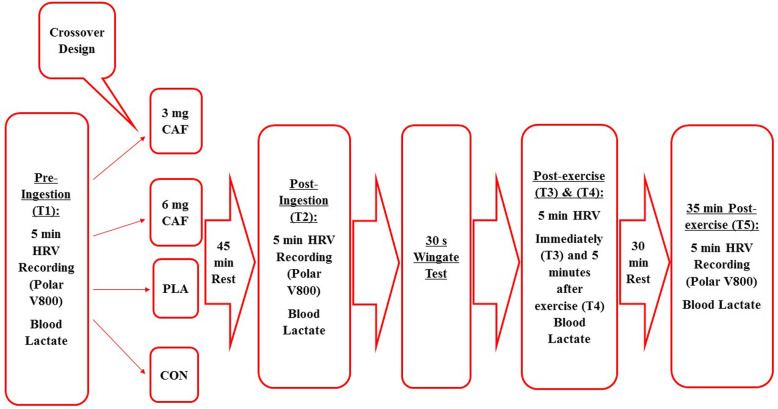
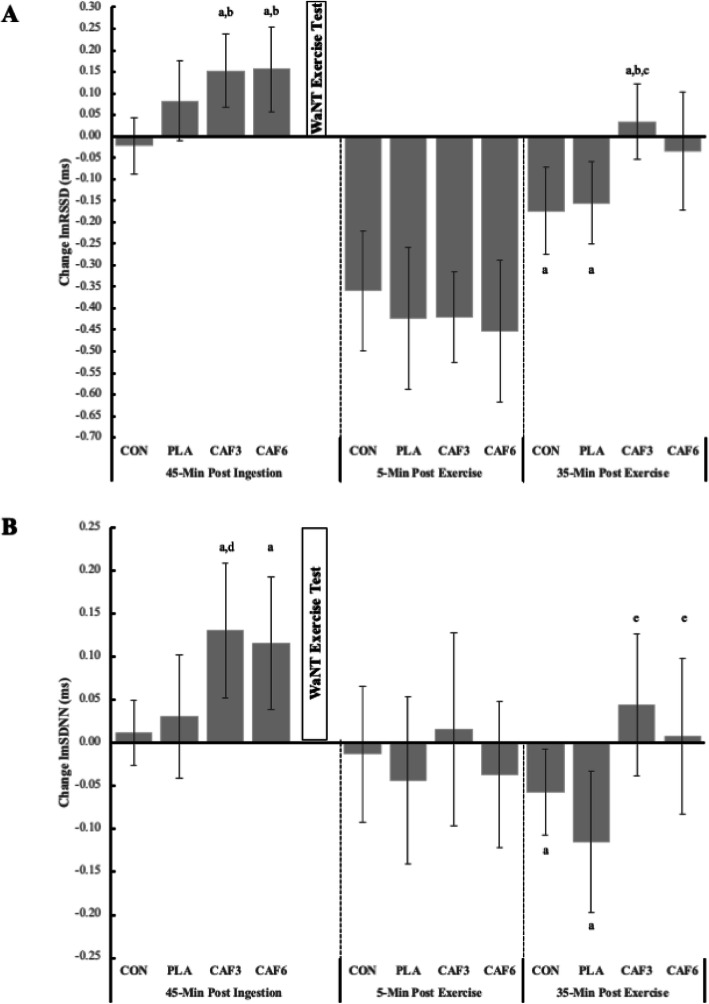
To examine the effects of varying doses of caffeine on autonomic reactivation following anaerobic exercise. Recreationally active males ( N = 20; 24 ± 2y) participated in a randomized, double-blind, placebo-controlled, crossover study where participants ingested: [1] Control (CON; no supplement), [2] a non-caffeinated placebo (PLA), [3] 3-mg∙kg − 1 of caffeine (CAF3) or [4] 6-mg∙kg − 1 of caffeine (CAF6) prior to Wingate testing. Parasympathetic (lnRMSSD, primary outcome) and global HRV (lnSDNN, secondary outcome) were assessed at rest (i.e., pre-ingestion), 45-min post-ingestion, and 5-min and 35-min post-exercise recovery. We used a GLM to assess mean (95% CI) changes from pre-ingestion baseline. Overall, we observed a significant trend for lnRMSSD and lnSDNN ( both , p = 0.001, ηp 2 = 0.745). Forty-five minutes after treatment ingestion, we observed a significant increase in lnRMSSD for CAF3 (0.15 ms, 95%CI, 0.07,0.24) and CAF6 (0.16 ms, 95%CI, 0.06,0.25), both being significant ( both , p < 0.004) vs. CON (− 0.02 ms, 95%CI, − 0.09,0.04). Five-minutes after exercise, all treatments demonstrated significant declines in lnRMSSD vs. baseline ( all , p < 0.001). After 35-min of recovery, lnRMSSD returned to a level not significantly different than baseline for CAF3 (0.03 ms, 95%CI, − 0.05, 0.12) and CAF6 (− 0.03 ms, 95%CI, − 0.17, 0.10), while PLA (− 0.16 ms, 95%CI, − 0.25, − 0.06) and CON (− 0.17 ms, 95%CI, − 0.28, − 0.07) treatments remained significantly depressed. A similar pattern was also observed for SDNN. Caffeine ingestion increases resting cardiac autonomic modulation and accelerates post-exercise autonomic recovery after a bout of anaerobic exercise in recreationally active young men. However, no differences between caffeine doses on cardiac autonomic reactivity were observed.
Overview
The claims and statistics of this paper haven’t been checked yet.
Free: it reads the open-access text and checks the first 5 claims that cite a source we can check. Create a free account to check every claim.
Integrity signals
Registry
Cites
Statistics
Figures
Verification
Claims the paper makes
The claims and statistics of this paper haven’t been checked yet.
Free: it reads the open-access text and checks the first 5 claims that cite a source we can check. Create a free account to check every claim.
Claims other papers make about this one
Each is checked against this paper’s own text: does it say what the citing paper says it does?
The cited source doesn’t support the claim as written.
In the citing paper
“The findings suggest a decrease in HRV linked to dose [ 19 ], time [ 20 , 21 ], and form of ingestion (such as drinks, gum, and capsules) [ 11 , 21 , 22 ].”
From Impact of Caffeine Intake Strategies on Heart Rate Variability during Post-Exercise Recovery: A Systematic Review and Meta-Analysis (2024) · cites this paper as [21]
Checked by a reasoning model — may be wrong.
Experimental — accuracy not yet measuredThe source backs part of the claim, not all of it — or backs it for a different population, condition or comparison.
In the citing paper
“The findings suggest a decrease in HRV linked to dose [ 19 ], time [ 20 , 21 ], and form of ingestion (such as drinks, gum, and capsules) [ 11 , 21 , 22 ].”
From Impact of Caffeine Intake Strategies on Heart Rate Variability during Post-Exercise Recovery: A Systematic Review and Meta-Analysis (2024) · cites this paper as [21]
Experimental — accuracy not yet measured
Self-check
Percentages, sums and reported differences re-computed from the paper’s own numbers.
The self-check needs the paper’s full text.
Citations
Cites
Heart Rate Variability: Standards of Measurement, Physiological Interpretation, and Clinical Use
Electrophysiology, T. F. O. T. E. S. O. C. T. N. A. (1996) · Circulation · doi:10.1161/01.cir.93.5.1043 · Cited by 17,159
Cohen, J. (1992) · Psychological Bulletin · doi:10.1037//0033-2909.112.1.155 · Cited by 8,771
Thayer, J. F., Åhs, F., Fredrikson, M., Sollers, J. J., & Wager, T. D. (2012) · Neuroscience & Biobehavioral Reviews · doi:10.1016/j.neubiorev.2011.11.009 · Cited by 3,224
Heart rate variability: A review
Rajendra Acharya, U., Paul Joseph, K., Kannathal, N., Lim, C. M., & Suri, J. S. (2006) · Medical & Biological Engineering & Computing · doi:10.1007/s11517-006-0119-0 · Cited by 2,820 · cited 1×
“The dependent variables in the time domain included the standard deviation of normal-to-normal (SDNN) intervals and the root mean squared of successive difference (RMSSD) of R-R intervals (27).”
MethodKubios HRV–heart rate variability analysis software.
Tarvainen, M. P., Niskanen, J.-P., Lipponen, J. A., Ranta-aho, P. O., & Karjalainen, P. A. (2014) · Computer Methods and Programs in Biomedicine · doi:10.1016/j.cmpb.2013.07.024 · Cited by 2,720 · cited 1×
“2, Joensuu, Finland), as previously described (26).”
European Journal of Clinical Nutrition
(2019) · European Journal of Clinical Nutrition · doi:10.1038/41430.1476-5640 · Cited by 1,445
Educational and Psychological Measurement
(1982) · Serials Review · doi:10.1080/00987913.1982.10763392 · Cited by 1,410
Eta-squared and partial eta-squared in fixed factor anova designs
Cohen, J. (1973) · Educational and Psychological Measurement · doi:10.1177/001316447303300111 · Cited by 1,333
The Wingate Anaerobic Test: An Update on Methodology, Reliability and Validity
Bar-Or, O. (1987) · Sports Medicine · doi:10.2165/00007256-198704060-00001 · Cited by 1,169
Triggering of Sudden Death from Cardiac Causes by Vigorous Exertion
Albert, C. M., Mittleman, M. A., Chae, C. U., Lee, I.-M., Hennekens, C. H., & Manson, J. E. (2000) · New England Journal of Medicine · doi:10.1056/nejm200011093431902 · Cited by 1,020
IOC Consensus Statement: Dietary Supplements and the High-performance Athlete
Maughan, R. J., Burke, L. M., Dvorak, J., Larson-Meyer, D. E., Peeling, P., Phillips, S. M., Rawson, E. S., Walsh, N. P., Garthe, I., Geyer, H., et al. (2018) · British Journal of Sports Medicine · doi:10.1136/bjsports-2018-099027 · Cited by 1,004
European Journal of Applied Physiology
(2013) · European Journal of Applied Physiology · doi:10.1007/421.1439-6327 · Cited by 997
Heart Rate Variability in Athletes
Aubert, A. E., Seps, B., & Beckers, F. (2003) · Sports Medicine · doi:10.2165/00007256-200333120-00003 · Cited by 911
Sex differences in healthy human heart rate variability: A meta-analysis
Koenig, J., & Thayer, J. F. (2016) · Neuroscience & Biobehavioral Reviews · doi:10.1016/j.neubiorev.2016.03.007 · Cited by 860
British Journal of Clinical Pharmacology
(2010) · British Journal of Clinical Pharmacology · doi:10.1111/(issn)1365-2125 · Cited by 833
Michael, S., Graham, K. S., & Davis, G. M. (2017) · Frontiers in Physiology · doi:10.3389/fphys.2017.00301 · Cited by 603 · cited 4×
“HRV becomes useful during training and as it a validated tool to assess internal training load during and following exercise allowing for the individual evaluation surrounding training stimuli [1, 3, 4].”
BackgroundMethodInfluentialIOC Consensus Statement: Dietary Supplements and the High-Performance Athlete
Maughan, R. J., Burke, L. M., Dvorak, J., Larson-Meyer, D. E., Peeling, P., Phillips, S. M., Rawson, E. S., Walsh, N. P., Garthe, I., Geyer, H., et al. (2018) · International Journal of Sport Nutrition and Exercise Metabolism · doi:10.1123/ijsnem.2018-0020 · Cited by 540
Metabolic, Catecholamine, and Exercise Performance Responses to Various Doses of Caffeine
Graham, T. E., & Spriet, L. L. (1995) · Journal of Applied Physiology · doi:10.1152/jappl.1995.78.3.867 · Cited by 488
Short-Term Heart Rate Variability—Influence of Gender and Age in Healthy Subjects
Voss, A., Schroeder, R., Heitmann, A., Peters, A., & Perz, S. (2015) · PLOS ONE · doi:10.1371/journal.pone.0118308 · Cited by 478 · cited 1×
“Establishing a cause of these divergences is not an easy task since several variables can affect HRV analysis, such as sex (35), body position (36), body mass index (37), nutritional status (38), functional condition (39), corresponding heart rate (40), cardiorespiratory tness (41) and age (42).”
BackgroundEuropean Journal of Preventive Cardiology
Emilio, A. P., Silvia, C., & Piepoli, M. (2019) · European Heart Journal · doi:10.1093/eurheartj/ehz546 · Cited by 348
Bellenger, C. R., Fuller, J. T., Thomson, R. L., Davison, K., Robertson, E. Y., & Buckley, J. D. (2016) · Sports Medicine · doi:10.1007/s40279-016-0484-2 · Cited by 343
Glade, M. J. (2010) · Nutrition · doi:10.1016/j.nut.2010.08.004 · Cited by 306
Parasympathetic reactivation after repeated sprint exercise
Buchheit, M., Laursen, P. B., & Ahmaidi, S. (2007) · American Journal of Physiology-Heart and Circulatory Physiology · doi:10.1152/ajpheart.00062.2007 · Cited by 290 · cited 1×
“This finding strengthens the favorable effect of caffeine on post-exercise parasympathetic reactivation since an inverse relationship between exercise intensity and the magnitude of parasympathetic reactivation is expected [53, 54].”
BackgroundCaffeine, performance, and metabolism during repeated Wingate exercise tests
Greer, F., McLean, C., & Graham, T. E. (1998) · Journal of Applied Physiology · doi:10.1152/jappl.1998.85.4.1502 · Cited by 240
Effects of exercise intensity and duration on nocturnal heart rate variability and sleep quality
Myllymäki, T., Rusko, H. K., Syväoja, H. J., Juuti, T., Kinnunen, M.-L., & Kyröläinen, H. (2011) · European Journal of Applied Physiology · doi:10.1007/s00421-011-2034-9 · Cited by 211
NSCA’s Guide to Tests and Assessments: National Strength and Conditioning Association
Miller, T. A., & National Strength & Conditioning Association (2012) · Human Kinetics eBooks · doi:10.5040/9781718225398 · Cited by 189
Koenig, J., Jarczok, M. N., Warth, M., Ellis, R. J., Bach, C., Hillecke, T. K., & Thayer, J. F. (2014) · The Journal of nutrition, health and aging · doi:10.1007/s12603-014-0022-6 · Cited by 173 · cited 1×
“Establishing a cause of these divergences is not an easy task since several variables can affect HRV analysis, such as sex (35), body position (36), body mass index (37), nutritional status (38), functional condition (39), corresponding heart rate (40), cardiorespiratory �tness (41) and age (42).”
BackgroundThe Effect of Caffeine as an Ergogenic Aid in Anaerobic Exercise
Woolf, K., Bidwell, W. K., & Carlson, A. G. (2008) · International Journal of Sport Nutrition and Exercise Metabolism · doi:10.1123/ijsnem.18.4.412 · Cited by 167
Caffeine ingestion enhances Wingate performance: a meta‐analysis
Grgic, J. (2018) · European Journal of Sport Science · doi:10.1080/17461391.2017.1394371 · Cited by 165
Mielgo-Ayuso, J., Marques-Jiménez, D., Refoyo, I., Del Coso, J., León-Guereño, P., & Calleja-González, J. (2019) · Nutrients · doi:10.3390/nu11102313 · Cited by 119 · cited 1×
“In that same sense, the physiological and functional response to caffeine ingestion also depends on various factors such as individual caffeine habituation (43), caffeine dosage (44), sex (45), functional condition adopted to analysis (34), genetic pro le (46), caffeine expectancies (47) and some other neuromuscular c…”
BackgroundHibino, G., Moritani, T., Kawada, T., & Fushiki, T. (1997) · Journal of Nutrition · doi:10.1093/jn/127.7.1422 · Cited by 108 · cited 2×
“Previous studies showed that both 2 (30) and 5 mg∙kg-1 (32) of caffeine, dosage close to those adopted in this study, were able to increase cardiac parasympathetic modulation.”
BackgroundAcute effects of caffeine on heart rate variability
Sondermeijer, H. P., van Marle, A. G. J., Kamen, P., & Krum, H. (2002) · The American Journal of Cardiology · doi:10.1016/s0002-9149(02)02725-x · Cited by 99
Caffeine metabolism and epinephrine responses during exercise in users and nonusers
Van Soeren, M. H., Sathasivam, P., Spriet, L. L., & Graham, T. E. (1993) · Journal of Applied Physiology · doi:10.1152/jappl.1993.75.2.805 · Cited by 94
Zimmermann-Viehoff, F., Thayer, J., Koenig, J., Herrmann, C., Weber, C. S., & Deter, H.-C. (2016) · Nutritional Neuroscience · doi:10.1179/1476830515y.0000000018 · Cited by 87
Lower and upper body anaerobic performance in male and female adolescent athletes
NINDL, B. C., MAHAR, M. T., HARMAN, E. A., & PATTON, J. F. (1995) · Medicine & Science in Sports & Exercise · doi:10.1249/00005768-199502000-00013 · Cited by 85
Naderi, A., de Oliveira, E. P., Ziegenfuss, T. N., & Willems, M. E. T. (2016) · Journal of Exercise Nutrition & Biochemistry · doi:10.20463/jenb.2016.0031 · Cited by 82
Self-citationCaffeine and Physiological Responses to Submaximal Exercise: A Meta-Analysis
Glaister, M., & Gissane, C. (2018) · International Journal of Sports Physiology and Performance · doi:10.1123/ijspp.2017-0312 · Cited by 81
Heart Rate Variability in Sport Performance: Do Time of Day and Chronotype Play A Role?
Vitale, J. A., Bonato, M., Torre, A. L., & Banfi, G. (2019) · Journal of Clinical Medicine · doi:10.3390/jcm8050723 · Cited by 78
Gonzaga, L. A., Vanderlei, L. C. M., Gomes, R. L., & Valenti, V. E. (2017) · Scientific Reports · doi:10.1038/s41598-017-14540-4 · Cited by 75 · cited 2×
“The ingestion of caffeine influences the ANS via an increase in catecholamine secretion, which subsequently increases heart rate and mean arterial blood pressure at rest and during exercise [12].”
BackgroundResultAutonomic recovery following sprint interval exercise
Stuckey, M. I., Tordi, N., Mourot, L., Gurr, L. J., Rakobowchuk, M., Millar, P. J., Tóth, R., MacDonald, M. J., & Kamath, M. V. (2011) · Scandinavian Journal of Medicine and Science in Sports · doi:10.1111/j.1600-0838.2011.01320.x · Cited by 74
Yeragani, V. K., Krishnan, S., Engels, H. J., & Gretebeck, R. (2005) · Depression and Anxiety · doi:10.1002/da.20061 · Cited by 74
Post-exercise heart-rate recovery correlates to resting heart-rate variability in healthy men
Molina, G. E., Fontana, K. E., Porto, L. G. G., & Junqueira, L. F. (2016) · Clinical Autonomic Research · doi:10.1007/s10286-016-0378-2 · Cited by 73 · cited 1×
“Establishing a cause of these divergences is not an easy task since several variables can affect HRV analysis, such as sex [33], body position [34], body mass index [35], nutritional status [36], functional condition [37], corresponding heart rate [38], cardiorespiratory fitness [39] and age [40].”
BackgroundSan Juan, A. F., López-Samanes, Á., Jodra, P., Valenzuela, P. L., Rueda, J., Veiga-Herreros, P., Pérez-López, A., & Domínguez, R. (2019) · Nutrients · doi:10.3390/nu11092120 · Cited by 73
Cardiac vagal activity following three intensities of exercise in humans
Gladwell, V., SANDERCOCK, G. R. H., & Birch, S. L. (2009) · Clinical Physiology and Functional Imaging · doi:10.1111/j.1475-097x.2009.00899.x · Cited by 66
S., G., K., M., J., N., L., W., S., K., D., S., K., L., & S., F.-C. (2002) · European Journal of Applied Physiology · doi:10.1007/s00421-002-0608-2 · Cited by 63 · cited 1×
“Of note, blood lactate re ects the balance between lactate production and clearance and the precise mechanisms that explain the small differences observed in this study is unclear and it may be just a inter day variation of BLA response to exercise, hypothesis previously reported in the literature (64, 65).”
ResultExpresso coffee increases parasympathetic activity in young, healthy people
Monda, M., Viggiano, A., Vicidomini, C., Viggiano, A., Iannaccone, T., Tafuri, D., & De Luca, B. (2009) · Nutritional Neuroscience · doi:10.1179/147683009x388841 · Cited by 61
Caffeine delays autonomic recovery following acute exercise
Bunsawat, K., White, D. W., Kappus, R. M., & Baynard, T. (2015) · European Journal of Preventive Cardiology · doi:10.1177/2047487314554867 · Cited by 61
Firefighters’ basal cardiac autonomic function and its associations with cardiorespiratory fitness
Porto, L. G. G., Schmidt, A. C. B., de Souza, J. M., Nogueira, R. M., Fontana, K. E., Molina, G. E., Korre, M., Smith, D. L., Junqueira, L. F., & Kales, S. N. (2019) · Work · doi:10.3233/wor-192883 · Cited by 59
Caffeine Ingestion Attenuates Fatigue-induced Loss of Muscle Torque Complexity
Pethick, J., Winter, S. L., & Burnley, M. (2017) · Medicine & Science in Sports & Exercise · doi:10.1249/mss.0000000000001441 · Cited by 54
Acute caffeine intake increases performance in the 15‐s Wingate test during the menstrual cycle
Lara, B., Gutiérrez Hellín, J., Ruíz‐Moreno, C., Romero‐Moraleda, B., & Del Coso, J. (2020) · British Journal of Clinical Pharmacology · doi:10.1111/bcp.14175 · Cited by 52
Heart Rate Variability during Recovery from a Wingate Test in Adolescent Males
Goulopoulou, S., Heffernan, K. S., Fernhall, B., Yates, G., Baxter-Jones, A. D. G., & Unnithan, V. B. (2006) · Medicine & Science in Sports & Exercise · doi:10.1249/01.mss.0000218126.46242.2e · Cited by 47
ADORA2A C Allele Carriers Exhibit Ergogenic Responses to Caffeine Supplementation
Grgic, J., Pickering, C., Bishop, D. J., Del Coso, J., Schoenfeld, B. J., Tinsley, G. M., & Pedisic, Z. (2020) · Nutrients · doi:10.3390/nu12030741 · Cited by 47 · cited 1×
“In that same sense, the physiological and functional response to caffeine ingestion also depends on various factors such as individual caffeine habituation [41], caffeine dosage [42], sex [43], functional condition adopted to analysis [32], genetic profile [44], caffeine expectancies Table 1 Wingate test characteristi…”
BackgroundSouthward, K., Rutherfurd-Markwick, K. J., & Ali, A. (2018) · Sports Medicine · doi:10.1007/s40279-018-0967-4 · Cited by 44
A novel pharmacological activity of caffeine in the cholinergic system
Fabiani, C., Murray, A. P., Corradi, J., & Antollini, S. S. (2018) · Neuropharmacology · doi:10.1016/j.neuropharm.2018.03.041 · Cited by 41
Interplay between heart rate and its variability: a prognostic game
Sacha, J. (2014) · Frontiers in Physiology · doi:10.3389/fphys.2014.00347 · Cited by 38 · cited 1×
“Establishing a cause of these divergences is not an easy task since several variables can affect HRV analysis, such as sex [33], body position [34], body mass index [35], nutritional status [36], functional condition [37], corresponding heart rate [38], cardiorespiratory fitness [39] and age [40].”
Backgroundda Cruz, C. J. G., Porto, L. G. G., Rolim, P. D. S., Pires, D. D. S., Garcia, G. L., & Molina, G. E. (2019) · Clinics · doi:10.6061/clinics/2019/e806 · Cited by 34
Caffeine’s effect on intermittent sprint cycling performance with different rest intervals
Lee, C.-L., Cheng, C.-F., Lin, J.-C., & Huang, H.-W. (2012) · European Journal of Applied Physiology · doi:10.1007/s00421-011-2181-z · Cited by 33 · cited 1×
“Thus, since increase (57, 58) and reduction (50, 59) of different markers of exercise tolerance after caffeine supplementation already been reported, the recommendation of caffeine supplementation to improve recreational or athletic performance should be made cautiously.”
BackgroundThe Influence of Caffeine Expectancies on Simulated Soccer Performance in Recreational Individuals
Shabir, A., Hooton, A., Spencer, G., Storey, M., Ensor, O., Sandford, L., Tallis, J. A., Saunders, B., & Higgins, M. F. (2019) · Nutrients · doi:10.3390/nu11102289 · Cited by 31 · cited 1×
“In that same sense, the physiological and functional response to caffeine ingestion also depends on various factors such as individual caffeine habituation (43), caffeine dosage (44), sex (45), functional condition adopted to analysis (34), genetic pro le (46), caffeine expectancies (47) and some other neuromuscular c…”
BackgroundEffects of Different Doses of Caffeine on Anaerobic Exercise in Boys
Turley, K. R., Eusse, P. A., Thomas, M. M., Townsend, J. R., & Morton, A. B. (2014) · Pediatric Exercise Science · doi:10.1123/pes.2014-0032 · Cited by 29
The effect of acute caffeine ingestion on upper and lower body anaerobic exercise performance
Duncan, M. J., Eyre, E. L. J., Grgić, J., & Tallis, J. A. (2019) · European Journal of Sport Science · doi:10.1080/17461391.2019.1601261 · Cited by 28
Huertas, F., Blasco, E., Moratal, C., & Lupiáñez, J. (2019) · Scientific Reports · doi:10.1038/s41598-019-46524-x · Cited by 28 · cited 1×
“In that same sense, the physiological and functional response to caffeine ingestion also depends on various factors such as individual caffeine habituation [41], caffeine dosage [42], sex [43], functional condition adopted to analysis [32], genetic profile [44], caffeine expectancies Table 1 Wingate test characteristi…”
BackgroundAn, S. M., Park, J. S., & Kim, S. H. (2014) · Journal of Exercise Nutrition and Biochemistry · doi:10.5717/jenb.2014.18.1.31 · Cited by 24
Hernández, J. C., Giraldo, D. M., Paul, S., & Inchima, S. U. (2015) · PLoS ONE · doi:10.1371/journal.pone.0119844 · Cited by 24
The Effects of Caffeine on the Cholinergic System
Pohanka, M. (2014) · Mini-Reviews in Medicinal Chemistry · doi:10.2174/1389557514666140529223436 · Cited by 23 · cited 1×
“Was previously reported that caffeine ingestion could promote a signi cant increase in plasma levels of catecholamines (50, 51) and inhibits the enzymatic degradation of cyclic adenosine monophosphate by phosphodiesterases, which potentiates postsynaptic neurotransmission in the sympathetic nervous system (52) On the…”
ResultKliszczewicz, B. M., Bechke, E. E., Williamson, C. M., Bailey, P., Hoffstetter, W., McLester, J. R., & McLester, C. N. (2018) · Journal of the International Society of Sports Nutrition · doi:10.1186/s12970-018-0240-0 · Cited by 16 · cited 3×
“(2018) underwent ten physically active young males to Wingate anaerobic test, and no effect of a complex containing caffeine (100 mg) + Citrus Aurantium (100 mg) was observed on post-exercise parasympathetic and sympathetic activity, despite higher resting sympathetic activity compared to the placebo condition (17).”
BackgroundWilliamson, C. M., Nickerson, B. S., Bechke, E. E., McLester, C. N., & Kliszczewicz, B. M. (2018) · Journal of the International Society of Sports Nutrition · doi:10.1186/s12970-018-0211-5 · Cited by 13
Involvement of Cardiorespiratory Capacity on the Acute Effects of Caffeine on Autonomic Recovery
Gonzaga, L. A., Vanderlei, L. C. M., Gomes, R. L., Garner, D. M., & Valenti, V. E. (2019) · Medicina · doi:10.3390/medicina55050196 · Cited by 13 · cited 1×
“However, research ndings are mixed, with some studies showing that 300-400 mg of caffeine delays post-exercise parasympathetic reactivation (12, 14, 15), while others have found no effect from caffeine at doses associated with <3 mg∙kg-1 body mass (16, 17).”
Backgroundda Silva Rolim, P., da Costa Matos, R. A., Von Koenig Soares, E. D. M. K., Molina, G. E., & da Cruz, C. J. G. (2019) · European Journal of Sport Science · doi:10.1080/17461391.2018.1532532 · Cited by 12 · cited 5×
“ing in the supine position in young men [32].”
BackgroundResultInfluentialKavaliauskas, M., & Phillips, S. (2016) · Isokinetics and Exercise Science · doi:10.3233/ies-160632 · Cited by 11
Reproducibility of Post-Exercise Lactate and Anaerobic Threshold
Fric, J., Fric, J., Boldt, F., Stoboy, H., Meller, W., Feldt, F., & Drygas, W. (1988) · International Journal of Sports Medicine · doi:10.1055/s-2007-1025029 · Cited by 9 · cited 1×
“Of note, blood lactate reflects the balance between lactate production and clearance and the precise mechanisms that explain the small differences observed in this study is unclear and it may be just a inter day variation of BLA response to exercise, hypothesis previously reported in the literature [62, 63].”
ResultMUSCLE STRENGTH AND CAFFEINE SUPPLEMENTATION: ARE WE DOING MORE OF THE SAME?
Soares, E. D. M. K. V. K., Garcia, G. L., Molina, G. E., & Fontana, K. E. (2019) · Revista Brasileira de Medicina do Esporte · doi:10.1590/1517-869220192502180594 · Cited by 9
Hammoud, S., Mourad, R., Karam, R., Saad, I., van den Bemt, B. J. F., & Kurdi, M. (2020) · European Journal of Clinical Nutrition · doi:10.1038/s41430-020-0562-2 · Cited by 9 · cited 1×
“Establishing a cause of these divergences is not an easy task since several variables can affect HRV analysis, such as sex [33], body position [34], body mass index [35], nutritional status [36], functional condition [37], corresponding heart rate [38], cardiorespiratory fitness [39] and age [40].”
Background(1996) · PubMed
Research works printed but not linked: 1
- ACSM’s Exercise Testing and Prescription 10 ed: Lippincott Williams & Wilkins 2017
Cited by
Adami, P. E., Κουτλιάνος, Ν., Baggish, A. L., Bermon, S., Cavarretta, E., Deligiannis, A. P., Furlanello, F., Kouidi, E. J., Marques-Vidal, P. M., Niebauer, J., et al. (2022) · European Journal of Preventive Cardiology · doi:10.1093/eurjpc/zwab198 · Cited by 92
Karayigit, R., Naderi, A., Akca, F., Cruz, C. J. G. D., Sarshin, A., Yasli, B. C., Ersoz, G., & Kaviani, M. (2020) · Nutrients · doi:10.3390/nu13010002 · Cited by 47
“[35] reported both 3 and 6 mg/kg/bm anhydrous caffeine increases resting cardiac autonomic modulation and accelerates post-exercise autonomic recovery after a bout of anaerobic exercise in recreationally active young men, which was also observed in young men after a submaximal exercise test [62].”
BackgroundSelf-citationdos Santos, W. Y. H., Aidar, F. J., de Matos, D. G., van den Tillaar, R., Marçal, A. C., Lobo, L. F., Marcucci-Barbosa, L. S., Machado, S. D. C., de Almeida‐Neto, P. F., Garrido, N. D., et al. (2021) · International Journal of Environmental Research and Public Health · doi:10.3390/ijerph18105155 · Cited by 33
“, ibuprofen) [18], and dietary supplements [19,20].”
Karayiğit, R., Naderi, A., Saunders, B., Forbes, S. C., Coso, J. D., Berjisian, E., Yıldırım, U. C., & Suzuki, K. (2021) · Sports · doi:10.3390/sports9120162 · Cited by 25
“Previous research showing the benefits of CAF on WAnT performance were conducted with low habitual users [2,18,33].”
BackgroundSelf-citationPorto, A. A., Benjamim, C. J. R., Gonzaga, L. A., Luciano de Almeida, M., Bueno Júnior, C. R., Garner, D. M., & Valenti, V. E. (2022) · Nutrition, Metabolism and Cardiovascular Diseases · doi:10.1016/j.numecd.2022.01.015 · Cited by 20
“[33] revealed no outcome of CAF on HRV indices after exercise.”
Background
Metadata
- Authors
- Sarshin, A., Naderi, A., da Cruz, C. J. G., Feizolahi, F., Forbes, S. C., Candow, D. G., Mohammadgholian, E., Amiri, M., Jafari, N., Rahimi, A., Alijani, E., & Earnest, C. P.
- Affiliations
- Islamic Azad University, Karaj (IR)
- Islamic Azad University Boroujerd Branch (IR)
- Laboratory of Exercise Physiology, Faculty of Physical EducationUniversity of Brasilia Brasília Brazil
- Brandon University (CA)
- University of Regina (CA)
- Texas A&M University (US)
- Corresponding author
- Sarshin, Amir
- ORCID
- Venue
- Journal of the International Society of Sports Nutrition
- Publisher
- Informa UK Limited
- Published
- 2020-01-03
- Volume
- 17
- Issue
- 1
- Pages
- 44-44
- ISSN
- 1550-2783 (ISSN-L)
- PMC
- PMC7441702
- OpenAlex
- W3061280052
- Cited by
- 21
- References
- 75
- Citations by year
- 2026: 1 · 2025: 1 · 2024: 2 · 2022: 6 · 2021: 10 · 2020: 1
- FWCI
- 2.55
- Type
- journal article
- Language
- en
- Open access
- gold
- doi.org
- Licence
- Locations
- Journal of the International Society of Sports Nutrition (publishedVersion, cc-by)
- Research Square (acceptedVersion, cc-by)
- PubMed Central (publishedVersion, cc-by)
- PubMed (publishedVersion)
- DOAJ (DOAJ: Directory of Open Access Journals) (submittedVersion, cc-by-sa)
- Topics
- Health Sciences › Medicine › Pharmacology (medical) › Coffee research and impacts
- Health Sciences › Medicine › Cardiology and Cardiovascular Medicine › Heart Rate Variability and Autonomic Control
- Health Sciences › Medicine › Physiology (medical) › Exercise and Physiological Responses
- Keywords
- caffeine, dose-response relationship, parasympathetic reactivation, anaerobic exercise, heart rate variability, RMSSD, SDNN, post-exercise recovery, recreational athletes, Wingate test, caffeine supplementation, autonomic nervous system, placebo effect, caffeine tolerance, caffeine sensitivity, caffeine resistance, caffeine dependence, caffeine withdrawal symptoms
- MeSH terms
- Caffeine, Double-Blind Method, Exercise Test, Heart Rate, Humans, Male, Parasympathetic Nervous System, Time Factors, Exercise, Cross-Over Studies, Performance-Enhancing Substances
About these checks
Registry, retraction, Cites and statistics results are computed, not judged, with one exception: a printed reference that no index lists is read once by a model before it counts as a citation error. Claims are extracted by a model and kept only when their quote appears verbatim in the text; each cited source is then checked, with a model’s help, for whether it says what the claim relies on. Those verdicts can be wrong — read the claim’s quote and the cited source before relying on one.
Statistics and arithmetic are recomputed, not judged.
Confidence bands are shown only for fields calibrated on our annotated test set. None is calibrated yet, so no band is shown.
What counts as a claim ›How we measure confidence ›How we check this ›
Are you an author, or do you see a problem with this page? Request a review
Data sources
Bibliographic data: Semantic Scholar, OpenAlex, Crossref.
Contains information from the Semantic Scholar Academic Graph Datasets, made available under the ODC Attribution License (ODC-BY 1.0).
Semantic Scholar’s data is described in: Kinney, R., et al. (2023). The Semantic Scholar Open Data Platform. arXiv:2301.10140.
