

Kynurenine metabolic balance is disrupted in the hippocampus following peripheral lipopolysaccharide challenge
Open accessThe DOI matches its Crossref record; 73 of the 73 references it cites were found in a registry or an index.
Abstract
BACKGROUND: Inflammation increases the risk of developing depression-related symptoms, and tryptophan metabolism is an important mediator of these behavior changes. Peripheral immune activation results in central up-regulation of pro-inflammatory cytokine expression, microglia activation, and the production of neurotoxic kynurenine metabolites. The neuroinflammatory and kynurenine metabolic response to peripheral immune activation has been largely characterized at the whole brain level. It is unknown if this metabolic response exhibits regional specificity even though the unique indoleamine 2,3-dioxygenase (IDO)-dependent depressive-like behaviors are known to be controlled by discrete brain regions. Therefore, regional characterization of neuroinflammation and kynurenine metabolism might allow for better understanding of the potential mechanisms that mediate inflammation-associated behavior changes. METHODS: Following peripheral immune challenge with lipopolysaccharide (LPS), brain tissue from behaviorally relevant regions was analyzed for changes in mRNA of neuroinflammatory targets and kynurenine pathway enzymes. The metabolic balance of the kynurenine pathway was also determined in the peripheral circulation and these brain regions. RESULTS: Peripheral LPS treatment resulted in region-independent up-regulation of brain expression of pro-inflammatory cytokines and glial cellular markers indicative of a neuroinflammatory response. The expression of kynurenine pathway enzymes was also largely region-independent. While the kynurenine/tryptophan ratio was elevated significantly in both the plasma and in each brain regions evaluated, the balance of kynurenine metabolism was skewed toward production of neurotoxic metabolites in the hippocampus. CONCLUSIONS: The upstream neuroinflammatory processes, such as pro-inflammatory cytokine production, glial cell activation, and kynurenine production, may be similar throughout the brain. However, it appears that the balance of downstream kynurenine metabolism is a tightly regulated brain region-dependent process.
Overview
The claims and statistics of this paper haven’t been checked yet.
Free: it reads the open-access text and checks the first 5 claims that cite a source we can check. Create a free account to check every claim.
Integrity signals
Registry
Cites
Statistics
Figures
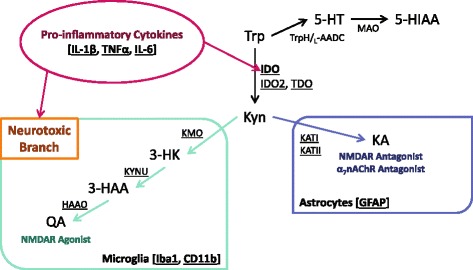
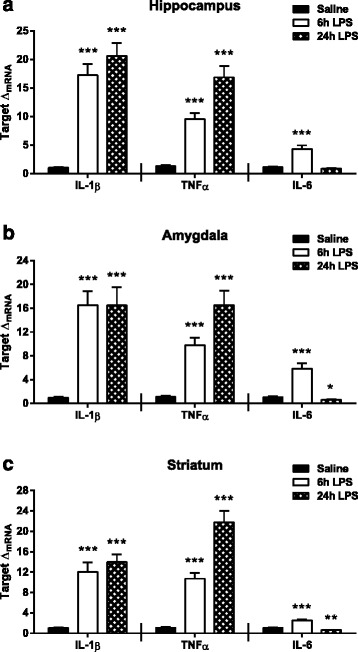
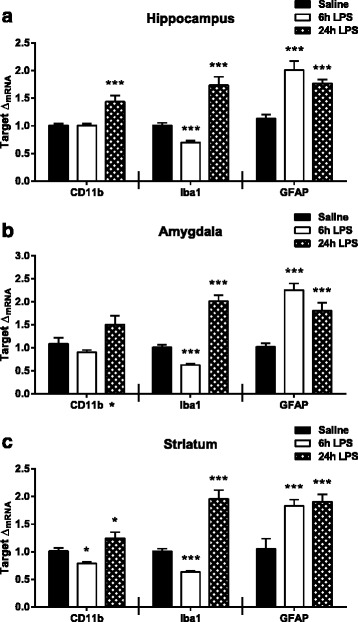
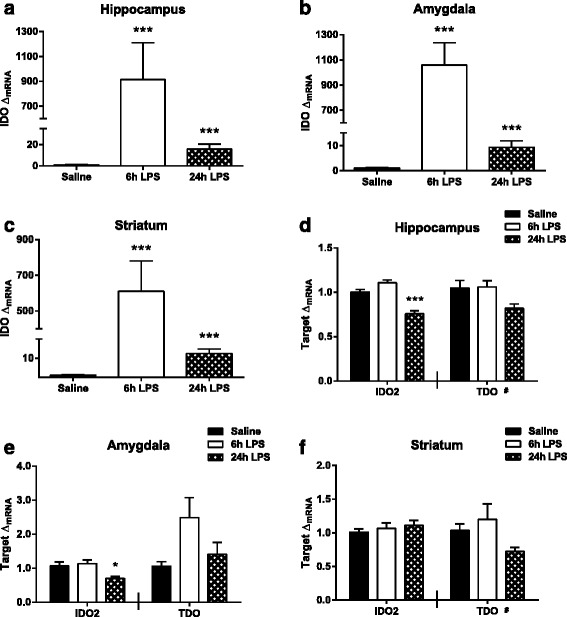
Verification
Claims the paper makes
The claims and statistics of this paper haven’t been checked yet.
Free: it reads the open-access text and checks the first 5 claims that cite a source we can check. Create a free account to check every claim.
Claims other papers make about this one
Each is checked against this paper’s own text: does it say what the citing paper says it does?
The source backs part of the claim, not all of it — or backs it for a different population, condition or comparison.
In the citing paper
“Studies have proven that peripherally injected LPS increases the central and peripheral metabolism of TRP via the KYN pathway by exerting neurotoxic effects, inducing reactivation of microglia and astrocytes in the CNS. 247”
From Major depressive disorder: hypothesis, mechanism, prevention and treatment (2024) · cites this paper as [247]
Experimental — accuracy not yet measured
Self-check
Percentages, sums and reported differences re-computed from the paper’s own numbers.
The self-check needs the paper’s full text.
Citations
Cites
Polazzi, E., Mengoni, I., Caprini, M., Peña-Altamira, E., Kurtys, E., & Monti, B. (2013) · Neurosignals · doi:10.1159/000337115 · Cited by 8,994
From inflammation to sickness and depression: when the immune system subjugates the brain
Dantzer, R., O'Connor, J. C., Freund, G. G., Johnson, R. W., & Kelley, K. W. (2008) · Nature Reviews Neuroscience · doi:10.1038/nrn2297 · Cited by 7,395 · cited 2×
“Twenty-four hours post LPS was chosen as the sampling time point based on established behavioral kinetics [47].”
MethodSelf-citationInsel, T., Cuthbert, B., Garvey, M., Heinssen, R., Pine, D. S., Quinn, K., Sanislow, C., & Wang, P. (2010) · American Journal of Psychiatry · doi:10.1176/appi.ajp.2010.09091379 · Cited by 7,067 · cited 2×
“Under the guidelines of the RDoC framework, a renewed emphasis has been placed on understanding regionally distinct structural, cellular, and molecular events involved in the pathogenesis of neuropsychiatric disease [29, 30].”
Microglia-mediated neurotoxicity: uncovering the molecular mechanisms
Block, M. L., Zecca, L., & Hong, J.-S. (2007) · Nature Reviews Neuroscience · doi:10.1038/nrn2038 · Cited by 4,110 · cited 1×
“While the initial neuroinflammatory response may be part of an adaptive beneficial process, excessive or chronic neuroinflammation has been associated with adverse neurological consequences [14, 15].”
BackgroundDepression, chronic diseases, and decrements in health: results from the World Health Surveys
Moussavi, S., Chatterji, S., Verdes, E., Tandon, A., Patel, V., & Ustun, B. (2007) · The Lancet · doi:10.1016/s0140-6736(07)61415-9 · Cited by 4,070 · cited 1×
“sion diagnosis [1].”
Cell types in the mouse cortex and hippocampus revealed by single-cell RNA-seq
Zeisel, A., Muñoz-Manchado, A. B., Codeluppi, S., Lönnerberg, P., La Manno, G., Juréus, A., Marques, S., Munguba, H., He, L., Betsholtz, C., et al. (2015) · Science · doi:10.1126/science.aaa1934 · Cited by 3,124
Cytokines sing the blues: inflammation and the pathogenesis of depression
Raison, C. L., Capuron, L., & Miller, A. H. (2006) · Trends in Immunology · doi:10.1016/j.it.2005.11.006 · Cited by 3,009 · cited 2×
“Peripheral immune activation and subsequent production of pro-inflammatory cytokines communicate immune status to the brain via multiple routes, where the inflammatory signals are locally propagated by microglia, the resident immune cells [13].”
BackgroundDrevets, W. C., Price, J. L., & Furey, M. L. (2008) · Brain Structure and Function · doi:10.1007/s00429-008-0189-x · Cited by 2,241 · cited 1×
“Dysfunction in these brain regions has been reported in depressed patients and is hypothesized to be a critical pathogenic mechanism underlying distinct depression-associated behaviors [36].”
BackgroundHeterogeneity in the distribution and morphology of microglia in the normal adult mouse brain
Lawson, L. J., Perry, V. H., Dri, P., & Gordon, S. (1990) · Neuroscience · doi:10.1016/0306-4522(90)90229-w · Cited by 2,045 · cited 1×
“Previous studies have demonstrated regional heterogeneity in microglia cell distribution [39] and activation fol-”
BackgroundKynurenines in the mammalian brain: when physiology meets pathology
Schwarcz, R., Bruno, J. P., Muchowski, P. J., & Wu, H.-Q. (2012) · Nature Reviews Neuroscience · doi:10.1038/nrn3257 · Cited by 1,530 · cited 3×
“Contemporary research suggests that the relative balance of these opposing metabolic branches, rather than simply changes in the levels of individual metabolites, constitutes the pathogenic potential of kynurenine metabolism [53].”
BackgroundInfluential
Research works printed but not linked: 1
- Franklin KBJ Paxinos G The mouse brain in sterotaxic coordinates 2007 3 New York, NY Academic Press
Cited by
Major depressive disorder: hypothesis, mechanism, prevention and treatment
Cui, L., Li, S., Wang, S., Wu, X., Liu, Y., Yu, W., Wang, Y., Tang, Y., Xia, M., & Li, B. (2024) · Signal Transduction and Targeted Therapy · doi:10.1038/s41392-024-01738-y · Cited by 1,244
“245 According to clinical research, TRP and tryptophan catabolites (TRYCATs) may play a crucial role in psychiatric illnesses, including MDD. Peripheral and central in fl ammation can both stimulate the KYN pathway and trigger TRP metabolism and subsequent synthesis of various TRYCATs, including the toxic NMDAR activat…”
BackgroundInfluentialThe kynurenine pathway: a finger in every pie
Savitz, J. (2020) · Molecular Psychiatry · doi:10.1038/s41380-019-0414-4 · Cited by 756
The microbiota–gut–brain axis and neurodevelopmental disorders
Wang, Q., Yang, Q., & Liu, X. (2023) · Protein & Cell · doi:10.1093/procel/pwad026 · Cited by 355
Wirthgen, E., Hoeflich, A., Rebl, A., & Günther, J. (2018) · Frontiers in Immunology · doi:10.3389/fimmu.2017.01957 · Cited by 378
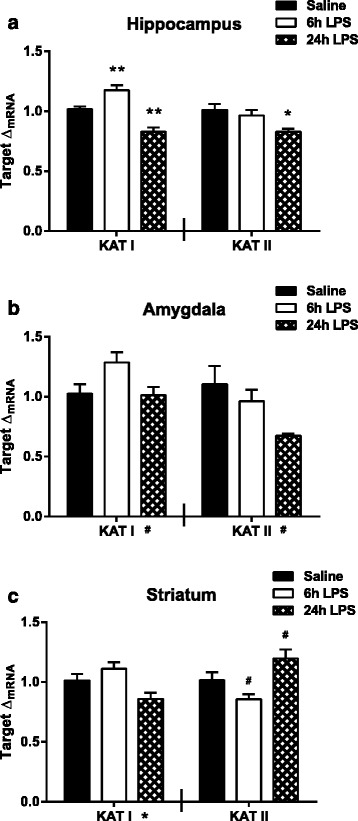
“) lipopolysaccharide (LPS) challenge increased KAT-I mRNA expression in the hippocampus 6 h postchallenge, followed by a decrease after 24 h, whereas KAT-II mRNA expression was decreased 24 h after LPS treatment (48).”
MethodMicroglia in depression: current perspectives
Jia, X., Gao, Z., & Hu, H. (2021) · Science China Life Sciences · doi:10.1007/s11427-020-1815-6 · Cited by 282
“Upregulated IDO and affected tryptophan metabolism have been implicated in inflammation or stress-induced depressive behaviors (Parrott et al., 2016a; Parrott et al., 2016b; Verdonk et al., 2019).”
BackgroundMithaiwala, M. N., Santana-Coelho, D., Porter, G. A., & O’Connor, J. C. (2021) · Cells · doi:10.3390/cells10061548 · Cited by 190
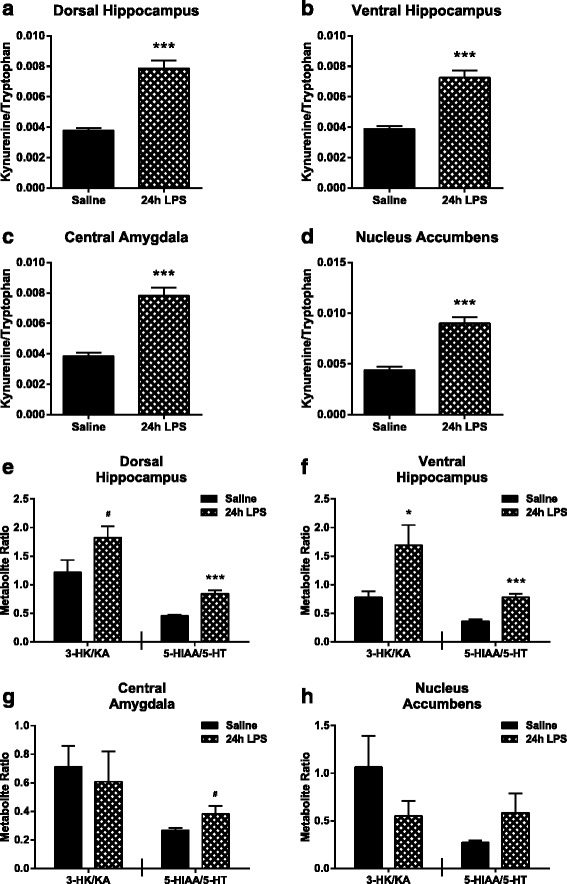
“The same group also noted that an increased 3-HK/KA ratio indicative of increased metabolism in the hippocampus (dorsal + ventral) compared to other brain regions like amygdala and nucleus accumbens [98].”
BackgroundSelf-citationParrott, J. M., Redus, L., Santana-Coelho, D., Morales, J., Gao, X., & O'Connor, J. C. (2016) · Translational Psychiatry · doi:10.1038/tp.2016.200 · Cited by 174
Self-citationMuneer, A. (2020) · Clinical Psychopharmacology and Neuroscience · doi:10.9758/cpn.2020.18.4.507 · Cited by 159
“in the hippocampus relative to other brain regions [51].”
BackgroundGarrison, A. M., Parrott, J. M., Tuñon, A., Delgado, J., Redus, L., & O’Connor, J. C. (2018) · Psychoneuroendocrinology · doi:10.1016/j.psyneuen.2018.04.019 · Cited by 150
“Moreover, preclinical rodent studies have found that IDO is necessary for mice to develop depressive-like behaviors in response to inflammation and KMO is required for this anhedonic response (O'Connor et al., 2009; Parrott et al., 2016).”
BackgroundMethodSelf-citationDebnath, S., Velagapudi, C., Redus, L., Thameem, F., Kasinath, B. S., Hura, C., Lorenzo, C., Abboud, H. E., & O’Connor, J. C. (2017) · International Journal of Tryptophan Research · doi:10.1177/1178646917694600 · Cited by 146
Self-citationThe Microbiota-Gut-Immune-Glia (MGIG) Axis in Major Depression
Rudzki, L., & Maes, M. (2020) · Molecular Neurobiology · doi:10.1007/s12035-020-01961-y · Cited by 111
Tryptophan and its metabolites in normal physiology and cancer etiology
Perez‐Castro, L., Garcia, R., Venkateswaran, N., Barnes, S. D., & Conacci‐Sorrell, M. (2021) · FEBS Journal · doi:10.1111/febs.16245 · Cited by 122
Vancassel, S., Capuron, L., & Castanon, N. (2018) · Frontiers in Neuroscience · doi:10.3389/fnins.2018.00499 · Cited by 94
Wang, P., Zhang, Y., Gong, Y., Yang, R., Chen, Z., Hu, W., Wu, Y., Gao, M., Xu, X., Qin, Y., et al. (2018) · Neurobiology of Disease · doi:10.1016/j.nbd.2017.12.006 · Cited by 97
Kynurenine Pathway Metabolites as Biomarkers in Alzheimer’s Disease
Liang, Y., Xie, S., He, Y., Xu, M., Qiao, X., Zhu, Y. H., & Wu, W. (2022) · Disease Markers · doi:10.1155/2022/9484217 · Cited by 105
“3-HK Unknown Oxidative stress regulation Neurotoxicity Neurotoxicity [96, 110, 125]”
BackgroundLaumet, G., Zhou, W., Dantzer, R., Edralin, J. D., Huo, X., Budac, D. P., O'Connor, J. C., Lee, A. W., Heijnen, C. J., & Kavelaars, A. (2017) · Brain, Behavior, and Immunity · doi:10.1016/j.bbi.2017.07.008 · Cited by 82
Self-citationRudzki, L., & Szulc, A. (2018) · Frontiers in Psychiatry · doi:10.3389/fpsyt.2018.00205 · Cited by 80
“This was also accompanied with increased activity of brain kynurenic pathway enzymes with subsequent activation of neurotoxic branch of this pathway toward synthesis of detrimental kynurenines (73).”
BackgroundAlzarea, S., & Rahman, S. (2019) · Behavioural Brain Research · doi:10.1016/j.bbr.2019.03.019 · Cited by 75
Gamma-oryzanol Prevents LPS-induced Brain Inflammation and Cognitive Impairment in Adult Mice
Mastinu, A., Bonini, S. A., Rungratanawanich, W., Aria, F., Marziano, M., Maccarinelli, G., Abate, G., Premoli, M., Memo, M., & Uberti, D. L. (2019) · Nutrients · doi:10.3390/nu11040728 · Cited by 76
Thomson, C. A., McColl, A., Graham, G. J., & Cavanagh, J. (2020) · Journal of Neuroinflammation · doi:10.1186/s12974-020-01759-8 · Cited by 77
Mental Health in Allergic Rhinitis: Depression and Suicidal Behavior
Amritwar, A., Lowry, C. A., Brenner, L. A., Hoisington, A. J., Stiller, J. W., Hamilton, R. G., & Postolache, T. T. (2017) · Current Treatment Options in Allergy · doi:10.1007/s40521-017-0110-z · Cited by 82
Tanaka, M., Szabó, Á., & Vécsei, L. (2024) · International Journal of Molecular Sciences · doi:10.3390/ijms252312767 · Cited by 58
“Furthermore, the lipopolysaccharide (LPS)-induced activation of the KYN pathway was investigated, specifically how immune system activation affects KYN metabolism in the brain [295].”
The Impact of Gut Microbiota-Derived Metabolites in Autism Spectrum Disorders
Marzal, L. N. P., Prince, N., Bajić, D., Roussin, L., Naudon, L., Rabot, S., Garssen, J., Kraneveld, A. D., & Perez‐Pardo, P. (2021) · International Journal of Molecular Sciences · doi:10.3390/ijms221810052 · Cited by 78
“Recently, kynurenine metabolism has become an area of study in neurological diseases with a possible neuroinflammatory component [145,146].”
BackgroundBrain-immune crosstalk in the treatment of major depressive disorder
Branchi, I., Poggini, S., Capuron, L., Benedetti, F., Poletti, S., Tamouza, R., Drexhage, H. A., Penninx, B. W. J. H., & Pariante, C. M. (2021) · European Neuropsychopharmacology · doi:10.1016/j.euroneuro.2020.11.016 · Cited by 64
Xie, L., Wu, Q., Li, K., Khan, M. A. S., Zhang, A., Sinha, B., Li, S., Chang, S. L., Brody, D. L., Grinstaff, M. W., et al. (2024) · Aging and Disease · doi:10.14336/ad.2024.0134 · Cited by 70
“QUIN impairs spatial learning and memory [26] and downregulating QUIN improves the IDO-dependent depressive-like behaviors in the hippocampus of LPS-treated mice [31].”
BackgroundDanielski, L. G., Giustina, A. D., Goldim, M. P. D. S., Florentino, D., Mathias, K., Garbossa, L., Schraiber, R. D. B., Laurentino, A. O. M., da Silva, M. G., Michels, M., et al. (2017) · Molecular Neurobiology · doi:10.1007/s12035-017-0706-0 · Cited by 63
Glial and tissue-specific regulation of Kynurenine Pathway dioxygenases by acute stress of mice
Dostal, C. R., Carson Sulzer, M., Kelley, K. W., Freund, G. G., & McCusker, R. H. (2017) · Neurobiology of Stress · doi:10.1016/j.ynstr.2017.02.002 · Cited by 57
“Downstream Kyn Pathway enzymes are spatially and temporally regulated in the brain by inflammation (Parrott et al., 2016) and acute stress (Vecchiarelli et al., 2015).”
Human Gut Microbiota for Diagnosis and Treatment of Depression
Averina, O. V., Poluektova, E. U., Zorkina, Y., Kovtun, A. S., & Даниленко, В. Н. (2024) · International Journal of Molecular Sciences · doi:10.3390/ijms25115782 · Cited by 59
“…the permeability of the gut and BBB [30,81], controls the maturation and functions of microglia [78], affects the expression of genes involved in myelination [82], participates in the synthesis of aryl-carbohydrate receptor (AHR) ligands [83] and modulates serotonin and the kynurenine axis [84].”
Backgroundde Oliveira, F. R., Fantucci, M. Z., Adriano, L., Valim, V., Cunha, T. M., Louzada‐Júnior, P., & Rocha, E. M. (2018) · International Journal of Molecular Sciences · doi:10.3390/ijms19123953 · Cited by 61
“Reversion of the inflammation with corticosteroids in the CNS has been unsuccessful as the inflammation is present in other target organs and leads to the death of microglia, astrocytes, and neurons, mostly in the hippocampus and dorsal ganglion root [199,208,211].”
BackgroundIDO/Kynurenine; novel insight for treatment of inflammatory diseases
Lashgari, N., Roudsari, N. M., Shayan, M., Shahraki, F. N., Hosseini, Y., Momtaz, S., & Abdolghaffari, A. H. (2023) · Cytokine · doi:10.1016/j.cyto.2023.156206 · Cited by 58
Kynurenine Metabolism and Alzheimer’s Disease: The Potential Targets and Approaches
Sharma, V., Singh, T. G., Prabhakar, N. K., & Mannan, A. (2022) · Neurochemical Research · doi:10.1007/s11064-022-03546-8 · Cited by 56
“One of such metabolic pathways affected by several neuroinflammatory mechanisms includes the kynurenine pathway of tryptophan metabolism, which is the primary route of central tryptophan breakdown [14, 15].”
BackgroundLiu, X., Chen, W., Wang, C., Liu, W., Hayashi, T., Mizuno, K., Hattori, S., Fujisaki, H., & Ikejima, T. (2021) · Physiology & Behavior · doi:10.1016/j.physbeh.2021.113593 · Cited by 49
di Giacomo, V., Chiavaroli, A., Orlando, G., Cataldi, A., Rapino, M., Valerio, V. D., Leone, S., Brunetti, L., Menghini, L., Recinella, L., et al. (2020) · Antioxidants · doi:10.3390/antiox9010071 · Cited by 48
“Specifically, the 3-HK/KA is a reliable marker of neurotoxicity [26], and our findings of reduction of this ratio from Hypo-E22 cells after pharmacological treatment further support the neuroprotective role exerted by both CBD and CBG.”
BackgroundAgostini, A., Yuchun, D., Li, B., Kendall, D. A., & Pardon, M.-C. (2020) · Brain, Behavior, and Immunity · doi:10.1016/j.bbi.2019.09.019 · Cited by 41
“This was associated with elevated levels of degradation products of both the serotonin and nicotinamide pathways of tryptophan metabolism, suggesting their co-activation, as seen previously (Guo et al., 2016; O'Connor et al., 2009; Parrott et al., 2016).”
Barone, P. R. (2019) · Behavioural Pharmacology · doi:10.1097/fbp.0000000000000477 · Cited by 39
Glial mechanisms underlying major depressive disorder: Potential therapeutic opportunities
Rahman, S., & Alzarea, S. I. (2019) · Progress in molecular biology and translational science · doi:10.1016/bs.pmbts.2019.06.010 · Cited by 39
Role of neuroglia in neuropathic pain and depression
Liu, Q., Li, R., Yang, W., Cui, R., & Li, B. (2021) · Pharmacological Research · doi:10.1016/j.phrs.2021.105957 · Cited by 39
SCI and depression: Does inflammation commandeer the brain?
Brakel, K., & Hook, M. A. (2019) · Experimental Neurology · doi:10.1016/j.expneurol.2019.112977 · Cited by 36
Hemmati, S., Sadeghi, M. A., Jafari, R. M., Yousefi‐Manesh, H., & Dehpour, A. R. (2019) · Journal of Neuroinflammation · doi:10.1186/s12974-019-1509-1 · Cited by 36
Giménez‐Gómez, P., Pérez‐Hernández, M., O’Shea, E., Caso, J. R., Martín‐Hernández, D., Alou, L., Gómez-Lus, M. L., Gutiérrez‐López, M. D., & Colado, M. I. (2019) · The FASEB Journal · doi:10.1096/fj.201900491rr · Cited by 35
“Differences in Kyn concentration regulation between brain and periphery could also be the result of tissue-dependent alterations in the activity of Kyn-degrading enzymes by EtOH and antibiotic treatment because the balance of downstream Kyn metabolism and thus the Kyn concentration is a tightly regulated brain region–…”
BackgroundLi, C., Jiang, N., Gan, L., Zhao, M.-J., Chang, Q., Liu, X., & Pan, R. (2020) · Neurochemistry International · doi:10.1016/j.neuint.2020.104771 · Cited by 37
Ye, F., Dong, M.-C., Xu, C.-X., Jiang, N., Chang, Q., Liu, X., & Pan, R. L. (2023) · European Journal of Pharmacology · doi:10.1016/j.ejphar.2023.176301 · Cited by 33
Glial polarization in neurological diseases: Molecular mechanisms and therapeutic opportunities
Liu, Y., Wu, L., Peng, W., & Mao, X. (2024) · Ageing Research Reviews · doi:10.1016/j.arr.2024.102638 · Cited by 36
Zádor, F., Nagy-Grócz, G., Kékesi, G., Dvorácskó, S., Szűcs, E., Tömböly, C., Horváth, G., Benyhe, S., & Vécsei, L. (2019) · Molecules · doi:10.3390/molecules24203709 · Cited by 34
“In fetal astrocytes, IFN-γ increased the level KAT I and II transcripts [35], whereas lipopolysaccharide treatment also increased KAT I but reduced KAT II mRNA expression in the hippocampus [216].”
BackgroundRahman, S. U., Ali, T., Hao, Q., He, K., Li, W., Ullah, N., Zhang, Z., Jiang, Y., & Li, S. (2021) · Neurochemical Research · doi:10.1007/s11064-021-03396-w · Cited by 33
RetractedFrom “Leaky Gut” to Impaired Glia-Neuron Communication in Depression
Rudzki, L., & Maes, M. H. J. (2021) · Advances in experimental medicine and biology · doi:10.1007/978-981-33-6044-0_9 · Cited by 33
Dostal, C. R., Gamsby, N. S., Lawson, M. A., & McCusker, R. H. (2017) · Brain Behavior and Immunity · doi:10.1016/j.bbi.2017.12.006 · Cited by 33
Zhang, G., Tobolski, D., Zwierzchowski, G., Mandal, R., Wishart, D. S., & Ametaj, B. N. (2022) · Journal of Agricultural and Food Chemistry · doi:10.1021/acs.jafc.1c07281 · Cited by 29
Brain derived neurotrophic factor deficiency exacerbates inflammation-induced anhedonia in mice
Parrott, J. M., Porter, G. A., Redus, L., & O’Connor, J. C. (2021) · Psychoneuroendocrinology · doi:10.1016/j.psyneuen.2021.105404 · Cited by 29
Self-citationQuinolinic acid potentially links kidney injury to brain toxicity
Saliba, A., Debnath, S., Tamayo, I. M., Lee, H. J., Ragi, N., Das, F., Montellano, R., Tůmová, J., Maddox, M., Trevino, E., et al. (2025) · JCI Insight · doi:10.1172/jci.insight.180229 · Cited by 24
“Oxidative KP is driven by inflammation in the brain (44).”
Self-citationTeixeira, A. L., Martins, L. B., Berk, M., & Bauer, M. E. (2022) · Clinical Science · doi:10.1042/cs20211106 · Cited by 22
Afia, A. B., Vila, È., MacDowell, K. S., Ormazábal, A., Leza, J. C., Haro, J. M., Artuch, R., Ramos, B., & García‐Bueno, B. (2021) · Journal of Neuroinflammation · doi:10.1186/s12974-021-02260-6 · Cited by 23
Zhao, T., Piao, L.-H., Li, D.-P., Xu, S., Wang, S., Yuan, H., & Zhang, C. (2022) · Journal of Affective Disorders · doi:10.1016/j.jad.2022.12.035 · Cited by 22
Zhu, Y., & Fu, Z. (2024) · BMC Psychiatry · doi:10.1186/s12888-024-06178-0 · Cited by 22
“…as quinolinic acid(QUIN), exhibit neurotoxic effects by triggering N-methyl-D-aspartate(NMDA) receptors, resulting in excitotoxicity, further exacerbating neuronal damage and death, particularly in brain regions responsible for mood regulation, such as the hippocampus and prefrontal cortex [24].”
Backgroundde Oliveira, C. M., Smedt, V. D., Morael, J., Vancassel, S., Capuron, L., Gaudout, D., Pourtau, L., & Castanon, N. (2021) · Pharmaceutics · doi:10.3390/pharmaceutics13122155 · Cited by 22
“However, several studies previously reported that it is actually the case for KYN pathway enzymes [55,81].”
BackgroundThe exploration of neuroinflammatory mechanism by which CRHR2 deficiency induced anxiety disorder
Deng, S., Guo, A., Huang, Z., Guan, K., Zhu, Y., Chan, C., Gui, J., Song, C., & Li, X. (2023) · Progress in Neuro-Psychopharmacology and Biological Psychiatry · doi:10.1016/j.pnpbp.2023.110844 · Cited by 22
Early Life Stress and the Fate of Kynurenine Pathway Metabolites
Coplan, J. D., George, R., Syed, S. A., Rozenboym, A. V., Tang, J. E., Fulton, S. L., & Perera, T. D. (2021) · Frontiers in Human Neuroscience · doi:10.3389/fnhum.2021.636144 · Cited by 23
Lipopolysaccharide Increases Cortical Kynurenic Acid and Deficits in Reference Memory in Mice
Peyton, L., Oliveros, A., Tufvesson‐Alm, M., Schwieler, L., Starski, P. A., Engberg, G., Erhardt, S., & Choi, D. (2019) · International Journal of Tryptophan Research · doi:10.1177/1178646919891169 · Cited by 20
“Total number of vis = its to all arms (2)”
BackgroundSinan, K. I., Chiavaroli, A., Orlando, G., Béné, K., Zengin, G., Cziáky, Z., Jekő, J., Mahomoodally, M. F., Picot-Allain, M. C. N., Menghini, L., et al. (2020) · Biomolecules · doi:10.3390/biom10040516 · Cited by 20
“In HypoE22 cells, we also investigated extract effects on extracellular levels of 3-hydroxykinurenine (3-HK), a recognized marker of neurotoxicity [10].”
BackgroundThe Microbiota-gut-immune-glia (MGIG) Axis in Major DepressionPreprint
Rudzki, L., & Maes, M. H. J. (2020) · Preprints.org · doi:10.20944/preprints202002.0084.v1 · Cited by 18
Hashimoto, O., Kuniishi, H., Nakatake, Y., Yamada, M., Wada, K., & Sekiguchi, M. (2020) · Brain Behavior and Immunity · doi:10.1016/j.bbi.2020.09.013 · Cited by 17
“Abnormal regulation of IDO or KMO results in depressive behaviors in patients with major depressive disorder and LPS-challenged animals (Savitz et al., 2015; O’Connor et al., 2009; Parrott et al., 2016a).”
BackgroundBiomarkers of stress resilience: A review
Paribello, P., Branchi, I., Viglione, A., Mancini, G. F., Morena, M., Campolongo, P., & Manchia, M. (2024) · Neuroscience Applied · doi:10.1016/j.nsa.2024.104052 · Cited by 18
“Supporting this concept, the activation of the kynurenine pathway has been demonstrated to correlate with the severity of neuropsychiatric symptoms in clinical populations (Parrott et 2010a; Savitz et al., 2015a, 2015b).”
Gabrawy, M. M., Westbrook, R., King, A., Khosravian, N., Ochaney, N., deCarvalho, T., Wang, Q., Yu, Y., Huang, Q., Said, A., et al. (2024) · Aging Cell · doi:10.1111/acel.14102 · Cited by 18
Xiao, X., Zhong, Z., Wei, C., Wang, G., Zhao, Z., He, J., Zhai, Z., Zhou, Y., Wang, W., Guo, H., et al. (2024) · Advanced Functional Materials · doi:10.1002/adfm.202411426 · Cited by 18
Kupjetz, M., Chirino, T. Y. W., Joisten, N., & Zimmer, P. (2024) · Brain Research · doi:10.1016/j.brainres.2024.149415 · Cited by 16
Moravcová, S., Spišská, V., Pačesová, D., Hrubcová, L., Kubištová, A., Novotný, J., & Bendová, Z. (2022) · Archives of Biochemistry and Biophysics · doi:10.1016/j.abb.2022.109213 · Cited by 15
Han, X., Cao, X., Ju, Q., Ge, C., Lin, Y., Shi, J., Zhang, X., Sun, C., & Li, H. (2025) · Journal of Biological Chemistry · doi:10.1016/j.jbc.2025.110225 · Cited by 12
“An LPS dose of 0.5 mg/kg is approximately 20-fold lower than the lethal dose and is often used in research to explore the link between the brain and the immune response to infection (28 – 30).”
InfluentialGut–brain axis in health and brain disease
Olasunkanmi, O. I., Zheng, L., & Zheng, P. (2026) · Chinese Medical Journal · doi:10.1097/cm9.0000000000003920 · Cited by 14
“[167] Moreover, systemic kynurenine can cross the BBB via large neutral amino acid transporters.”
AUTOIMMUNE CONCEPT OF SCHIZOPHRENIA: HISTORICAL ROOTS AND CURRENT FACETS
Mayorova, M. A., Георгиевич, Б. Б., Churilov, L. P., Gilburd, B., Petrova, N. N., & Shoenfeld, Y. (2021) · Psychiatria Danubina · doi:10.24869/psyd.2021.3 · Cited by 16
Li, Y., Lu, Y., Lin, X., & Zhao, L. (2026) · Annals of Medicine · doi:10.1080/07853890.2025.2611191 · Cited by 12
Hasegawa, M., Niijima, M., Kunisawa, K., Teshigawara, T., Kubota, H., Fujigaki, S., Fujigaki, H., Yamamoto, Y., Kim, H., Saito, K., et al. (2024) · Biochemical and Biophysical Research Communications · doi:10.1016/j.bbrc.2024.150922 · Cited by 12
Alzarea, S. I., & Rahman, S. (2024) · CNS & Neurological Disorders - Drug Targets · doi:10.2174/0118715273311527240916050749 · Cited by 11
Safi, A., Giunti, E., Melikechi, O., Xia, W., & Melikechi, N. (2025) · Heliyon · doi:10.1016/j.heliyon.2025.e42349 · Cited by 11
Indoleamine 2, 3-dioxygenase is responsible for low stress tolerance after intracerebral hemorrhage
Ohnishi, M., Akagi, M., Kotsuki, M., Yonemura, S., Aokawa, H., Yamashita-Ibara, M., Yokofujita, O., Maehara, S., Hata, T., & Inoue, A. (2023) · PLoS ONE · doi:10.1371/journal.pone.0273037 · Cited by 9
“IDO converts tryptophan to kynurenine in the kynurenine pathway and is may also metabolize 5-HT itself [2, 3].”
Backgroundde Oliveira, C. M., Morael, J., Guille, A., Amadieu, C., Vancassel, S., Gaudout, D., Capuron, L., Pourtau, L., & Castanon, N. (2023) · Frontiers in Nutrition · doi:10.3389/fnut.2023.1267839 · Cited by 13
“Besides, several studies have confirmed that the increase in levels of KYN and its derivatives measured in the FCx and STR 24 h post-LPS was also significant in the HPC (13, 63, 68, 85).”
BackgroundResultInfluentialGliozzi, M., Coppoletta, A. R., Cardamone, A., Musolino, V., Carresi, C., Nucera, S., Ruga, S., Scarano, F., Bosco, F., Guarnieri, L., et al. (2024) · Pharmacological Research · doi:10.1016/j.phrs.2024.107087 · Cited by 9
Medicinal Plants for a Healthy Gut Microbiome: Scientific Insights into Modern Herbal Applications
Pacyga, K., Tabiś, A., & Pacyga, P. (2025) · International Journal of Molecular Sciences · doi:10.3390/ijms262210875 · Cited by 12
Wang, Y., Wu, W., Zeng, F., Meng, X., Peng, M., Wang, D., Chen, Z., & Liu, W. (2024) · Experimental Neurology · doi:10.1016/j.expneurol.2024.115070 · Cited by 8
Notarangelo, F. M., & Schwarcz, R. M. (2021) · European Journal of Neuroscience · doi:10.1111/ejn.15416 · Cited by 9
“Also of possible relevance in this context, the effect of systemically applied LPS on KP metabolites differs at various doses and between brain regions (Parrott et al., 2016; Tao et al., 2020).”
BackgroundMethodZheng, Y., Tufvesson‐Alm, M., Trepci, A., Imbeault, S., Li, X., Schwieler, L., Engberg, G., & Erhardt, S. (2023) · Acta Neuropsychiatrica · doi:10.1017/neu.2023.40 · Cited by 8
“…., 2020; Mao et al ., 2021) and activate the kynurenine pathway following induction of indoleamine 2,3-dioxygenase (IDO), but with differential downstream metabolite profiles (O ’ Connor et al ., 2009; Larsson et al ., 2016; Parrott et al ., 2016a; Parrott et al ., 2016b; Imbeault et al ., 2020).”
InfluentialMicrobes and mood: innovative biomarker approaches in depression
Green, M., Trivedi, M. H., & Foster, J. A. (2024) · Trends in Molecular Medicine · doi:10.1016/j.molmed.2024.09.002 · Cited by 8
Castanon, N., Vancassel, S., Amadieu, C., Cussotto, S., Leyrolle, Q., Lucas, C., Lefèvre, A., Emond, P., Dinel, A., & Capuron, L. (2025) · Brain Behavior and Immunity · doi:10.1016/j.bbi.2025.106107 · Cited by 9
Losing the Filter: How Kynurenine Pathway Dysregulation Impairs Habituation
de la Flor, M. A., & O’Connor, J. C. (2025) · Cells · doi:10.3390/cells14221786 · Cited by 6
Self-citationLuo, Y., Zhang, Y., Chen, F., Zhao, Y., Li, X., Liu, X., Shakir, M. Z., Shan, C., & Jiang, N. (2025) · Behavioural Brain Research · doi:10.1016/j.bbr.2025.115506 · Cited by 5
de Biedma‐Elduayen, L. G., Giménez‐Gómez, P., Morales‐Puerto, N., Vidal, R., Río-García, Á. D., la Calle, C. N.-D., Careaga, L., Gutiérrez‐López, M. D., O’Shea, E., & Colado, M. I. (2025) · Frontiers in Pharmacology · doi:10.3389/fphar.2025.1628527 · Cited by 4
“However, previous research suggests that under certain conditions, discrepancies can arise in the KYN pathway between the brain and serum, and even among different brain regions (Parrott et al., 2016; Giménez-Gómez et al., 2021).”
MicroRNA-132 regulates quinolinic acid production in the brain during LPS-induced neuroinflammation
Kezai, A. M., Badiane, P. Y., Hennart, B., Allorge, D., Marion, S., & Hébert, S. S. (2025) · Frontiers in Immunology · doi:10.3389/fimmu.2025.1644783 · Cited by 6
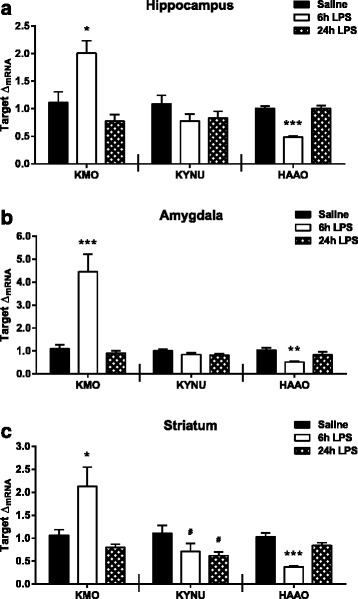
“…has been previously shown to induce the expression of several key enzymes of the KP pathway, including indoleamine 2,3-dioxygenase-1 (IDO-1), KMO, kynureninase (KYNU), and 3-hydroxyanthranilate 3,4-dioxygenase (HAAO) in different brain regions and murine microglial cell cultures (7, 11 – 13).”
Cong, G., Ao, D., Mei, X., Zhao, R., Guo, R., Ke, X., Ma, Z., Gu, L., & Zheng, H. (2026) · International Immunopharmacology · doi:10.1016/j.intimp.2026.116237 · Cited by 5
Sepehrinezhad, A., & Shahbazi, A. (2025) · Hepatic Medicine Evidence and Research · doi:10.2147/hmer.s546200 · Cited by 3
Williams, M. E., Schutte, L., Asia, L. K., Wissing, M. P., & van Vuren, E. J. (2026) · Journal of Neuroimmune Pharmacology · doi:10.1007/s11481-025-10278-3 · Cited by 3
“Within this axis, Kyn is partitioned toward QUIN via microglial and monocyte pathways (Stone et al. 2022; Argolo et al. 2025), or toward KA via astrocytic Kyn aminotransferases (Parrott et al. 2016a).”
Ustinova, N. V., Karkashadze, G. A., & Namazova-Baranova, L. S. (2024) · Педиатрическая фармакология · doi:10.15690/pf.v21i3.2757 · Cited by 2
Physiology of the kynurenine pathway and its implications in CNS disorders
Zhang, Q., Tang, Y.-H., & Tang, X.-Q. (2026) · Reviews in the Neurosciences · doi:10.1515/revneuro-2025-0130 · Cited by 1
“Alterations in BBB integrity, such as those that occur during in fl ammation or disease, may modify this balance and in fl uence central metabolite availability (Parrott et al. 2016; Peyton et al. 2019).”
Zhao, S., Gong, J., Wu, R., Xiong, Y., Gu, Y., Wang, Y., & Song, Z. (2026) · Frontiers in Physiology · doi:10.3389/fphys.2026.1752608 · Cited by 1
Vilademunt, M., Çabas, I., Grieco, F., Carron, C., Sprenger, T., Larrieu, T., Cardinaux, J., & Toni, N. (2026) · Brain Behavior and Immunity · doi:10.1016/j.bbi.2026.106814 · Cited by 1
Evrensel, A., & Tarhan, N. (2022) · Neuromethods · doi:10.1007/978-1-0716-2083-0_2 · Cited by 1
Metzker, K. L. L., Mathias, K., Machado, R. S., Bonfante, S., Joaquim, L. D. S., da Silva, M. G., Daros, G. C., Lins, E. M. F., Belle, F., Alano, C. G., et al. (2024) · CNS & Neurological Disorders - Drug Targets · doi:10.2174/0118715273282363240415045927 · Cited by 1
KMO deletion preserves non-associative learning and SVZ neurogenesis in aging mice
de la Flor, M. A., Kuhn-Sandoval, N., Santana‐Coelho, D., Lozano, D., Harrison, S. J., Bucknor, M. C., Mithaiwala, M. N., O’Connor, J. C., & Kokovay, E. (2026) · Behavioural Brain Research · doi:10.1016/j.bbr.2026.116224 · Cited by 2
Self-citationШизофрения как аутоиммунное заболевание: гипотезы и факты
Mayorova, M., Петрова, Н. Н., & Чурилов, Л. П. (2018) · Крымский журнал экспериментальной и клинической медицины · Cited by 1
Inflammatory Bases of Neuropsychiatric Symptom Domains: Mechanisms and Specificity
Aouizerate, B., Vancassel, S., Castanon, N., & Capuron, L. (2021) · Springer eBooks · doi:10.1007/978-3-030-71229-7_20 · Cited by 3
Pedroso-Roussado, C., Guppy, F. M., Bowler, L. D., & Inácio, J. (2022) · Preprints.org · doi:10.20944/preprints202212.0205.v1
Metadata
- Authors
- Parrott, J. M., Redus, L., & O’Connor, J. C.
- Affiliations
- The University of Texas at San Antonio Health Science Center (US)
- Corresponding author
- O’Connor, Jason C.
- ORCID
- O’Connor, Jason C.
- Venue
- Journal of Neuroinflammation
- Published
- 2016-05-27
- Volume
- 13
- Issue
- 1
- Pages
- 124-124
- ISSN
- 1742-2094 (ISSN-L)
- PMC
- PMC4884395
- OpenAlex
- W2401414122
- Semantic Scholar
- b15d3614b14b05eb8c36239c70ab0b4100168216
- Cited by
- 112
- References
- 73
- Citations by year
- 2026: 10 · 2025: 10 · 2024: 18 · 2023: 7 · 2022: 8 · 2021: 17 · 2020: 16 · 2019: 12 · 2018: 5 · 2017: 8 · 2016: 1
- FWCI
- 2.95
- Type
- journal article
- Language
- en
- Open access
- gold
- doi.org
- Licence
- cc-by
- creativecommons.org/licenses/by/4.0/ (tdm)
- creativecommons.org/licenses/by/4.0/ (vor)
- Locations
- Journal of Neuroinflammation (publishedVersion, cc-by)
- Europe PMC (PubMed Central) (publishedVersion, cc-by)
- PubMed Central (publishedVersion, cc-by)
- PubMed (publishedVersion)
- Funders
- National Institute of Mental Health (P30MH089868, 1F31MH102070-01A1)
- National Center for Advancing Translational Sciences (UL1TR001120)
- Norman Hackerman Advanced Research Program (003659-0010-2012)
- Topics
- Life Sciences › Neuroscience › Biological Psychiatry › Tryptophan and brain disorders
- Life Sciences › Neuroscience › Neurology › Neuroinflammation and Neurodegeneration Mechanisms
- Life Sciences › Neuroscience › Behavioral Neuroscience › Stress Responses and Cortisol
- Keywords
- kynurenine metabolism, hippocampus, lipopolysaccharide, neuroinflammation, tryptophan metabolism, indoleamine 2,3-dioxygenase, inflammatory cytokines, microglial activation, depression, regional specificity, peripheral immune activation
- MeSH terms
- Animals, Brain, Calcium-Binding Proteins, Chromatography, Liquid, Disease Models, Animal, Glial Fibrillary Acidic Protein, Kynurenine, Lipopolysaccharides, Male, Mice, Inbred C57BL, Microfilament Proteins, RNA, Messenger, Mass Spectrometry, Time Factors, Signal Transduction, Cytokines, Neurogenic Inflammation, Indoleamine-Pyrrole 2,3,-Dioxygenase, Mice
About these checks
Registry, retraction, Cites and statistics results are computed, not judged, with one exception: a printed reference that no index lists is read once by a model before it counts as a citation error. Claims are extracted by a model and kept only when their quote appears verbatim in the text; each cited source is then checked, with a model’s help, for whether it says what the claim relies on. Those verdicts can be wrong — read the claim’s quote and the cited source before relying on one.
Statistics and arithmetic are recomputed, not judged.
Confidence bands are shown only for fields calibrated on our annotated test set. None is calibrated yet, so no band is shown.
What counts as a claim ›How we measure confidence ›How we check this ›
Are you an author, or do you see a problem with this page? Request a review
Data sources
Bibliographic data: Semantic Scholar, OpenAlex, Crossref.
Contains information from the Semantic Scholar Academic Graph Datasets, made available under the ODC Attribution License (ODC-BY 1.0).
Semantic Scholar’s data is described in: Kinney, R., et al. (2023). The Semantic Scholar Open Data Platform. arXiv:2301.10140.
