

Activation of P2X7 receptor and NLRP3 inflammasome assembly in hippocampal glial cells mediates chronic stress-induced depressive-like behaviors
Open accessThe DOI matches its Crossref record; 99 of the 100 references it cites were found in a registry or an index.
Abstract
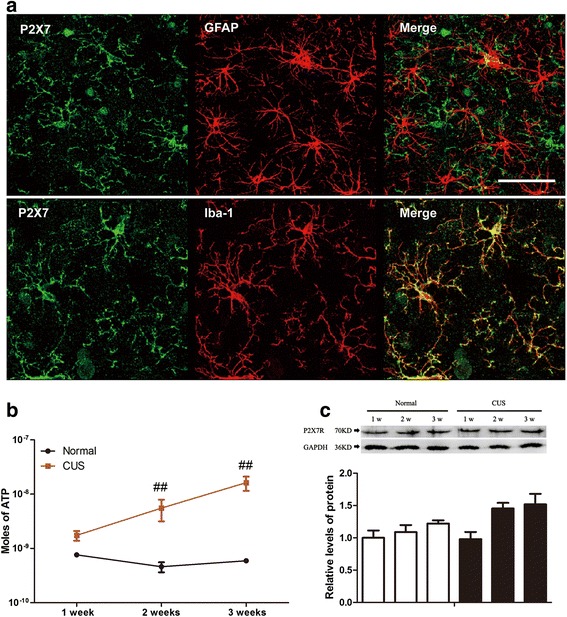
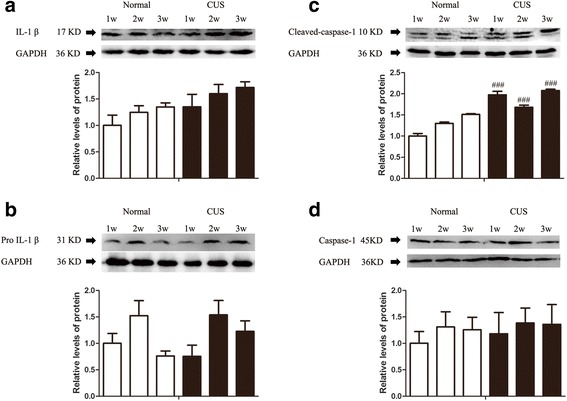
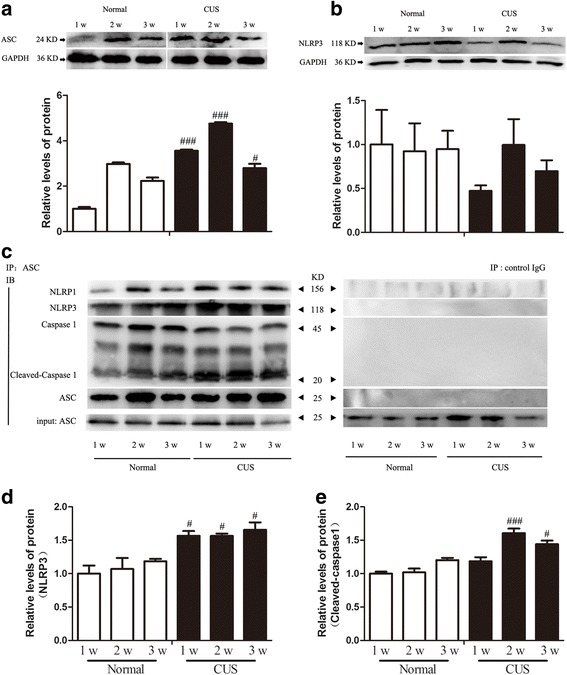
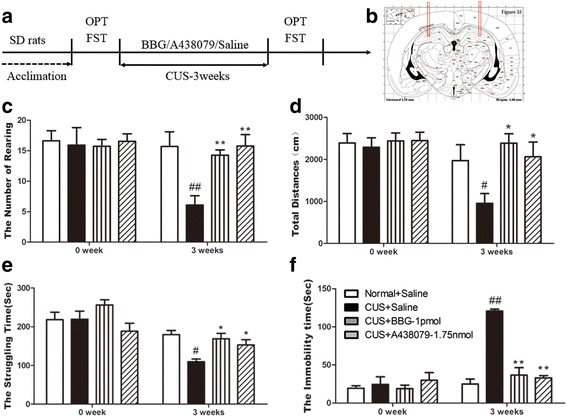
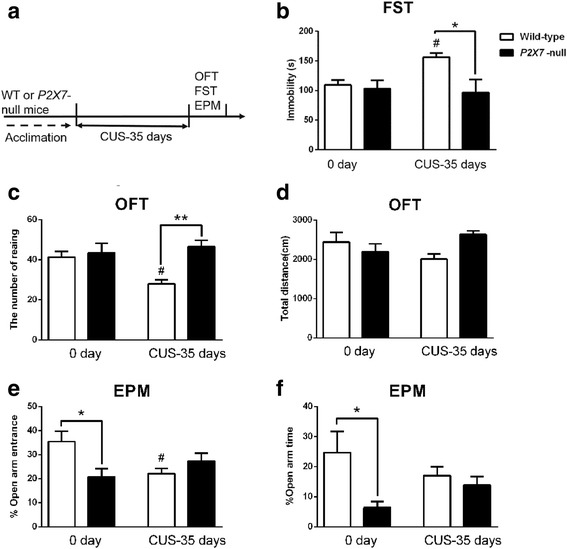
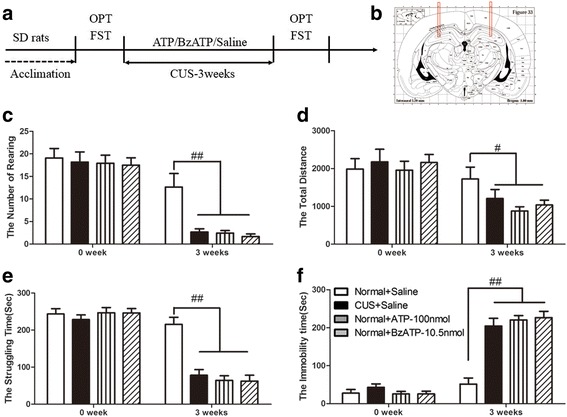
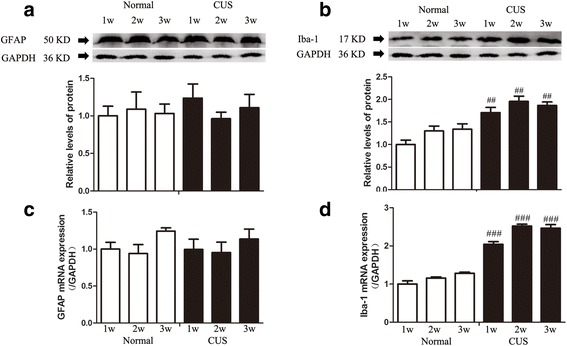
BACKGROUND: In recent years, proinflammatory cytokine interleukin-1β (IL-1β) was considered to play a critical role in the pathogenesis of depression. In addition, P2X7 receptor (P2X7R), a member of the purinergic receptor family, which is predominantly present on microglia, as well as on astrocytes and neurons in lesser amounts in the central nervous system, was suggested to be involved in the processing and releasing of IL-1β. Here, we investigated the role of P2X7R in the pathogenesis of depression. METHODS: Male Sprague-Dawley rats were subjected to chronic unpredictable stressors (CUS) for 3 weeks. At the end of week 1, 2, and 3, extracellular ATP, caspase 1, IL-1β, and components and activation of NLRP3 inflammasome (nucleotide-binding, leucine-rich repeat, pyrin domain containing 3) were evaluated as biomarker of neuroinflammation. In separate experiments, the rats were microinjected with P2X7R agonists ATP, BzATP, and saline into the hippocampus, respectively, or exposed to CUS combined with hippocampal microinjection with P2X7R antagonist, BBG and A438079, and saline, respectively, for 3 weeks, followed by exposed to forced swimming test and open-field test. Moreover, we also evaluated the depressive and anxiety-like behavior of P2X7-null mice in forced swimming test, open-field test, and elevated plus maze. RESULTS: Along with stress accumulation, extracellular ATP, cleaved-caspase 1, IL-1β, and ASC were significantly enhanced in the hippocampus, but P2X7R and NLRP3 were not. Immunoprecipitation assay indicated that along with the accumulation of stress, assembly of NLRP3 inflammasome and cleaved caspase 1 in NLRP3 inflammasome were significantly increased. Moreover, antagonists of P2X7R, either BBG or A438079, prevented the development of depressive-like behaviors induced by chronic unpredictable stress in rats. Meanwhile, we could not observe any depressive-like or anxiety-like behaviors of P2X7-null mice after they had been exposed to CUS. The results implied that P2X7 knockout could impede the development of depressive-like and anxiety-like behaviors induced by CUS. In contrast, chronic administration of agonists of P2X7R, either ATP or BzATP, could induce depressive-like behaviors. CONCLUSIONS: The activation of P2X7R and subsequent NLRP3 inflammasome in hippocampal microglial cells could mediate depressive-like behaviors, which suggests a new therapeutic target for the prevention and treatment of depression.
Overview
The claims and statistics of this paper haven’t been checked yet.
Free: it reads the open-access text and checks the first 5 claims that cite a source we can check. Create a free account to check every claim.
Integrity signals
Registry
Cites
Statistics
Figures
Verification
Claims the paper makes
The claims and statistics of this paper haven’t been checked yet.
Free: it reads the open-access text and checks the first 5 claims that cite a source we can check. Create a free account to check every claim.
Claims other papers make about this one
Each is checked against this paper’s own text: does it say what the citing paper says it does?
The source backs part of the claim, not all of it — or backs it for a different population, condition or comparison.
In the citing paper
“Despite being detected in glial and neuronal cells [49,50,51,52,53,54], the activity of the P2X7R was not always investigated and used antibodies lack specificity [49,55,56,57].”
From P2X7 Receptor Signaling in Stress and Depression (2019) · cites this paper as [53]
Experimental — accuracy not yet measuredThe source backs part of the claim, not all of it — or backs it for a different population, condition or comparison.
In the citing paper
“In studies using immunohistochemistry, no alterations in hippocampal P2X7R levels were detected in animals exposed to chronic unpredictable stress (CUS) [53].”
From P2X7 Receptor Signaling in Stress and Depression (2019) · cites this paper as [53]
Experimental — accuracy not yet measuredThe cited source says what the claim attributes to it.
In the citing paper
“Depressive-like symptoms are exacerbated by activation of P2X 7 R in glial cells. 94”
From Major depressive disorder: hypothesis, mechanism, prevention and treatment (2024) · cites this paper as [94]
The cited source says what the claim attributes to it.
In the citing paper
“This proposal is further substantiated in a study where CUS increased ATP levels and promoted activation of the hippocampal NLRP3 inflammasomal pathway [53]”
From P2X7 Receptor Signaling in Stress and Depression (2019) · cites this paper as [53]
In the citing paper
“It can therefore be hypothesized that stress may trigger excessive ATP release, followed by activation of P2X7R signaling in the hippocampus. This may subsequently impair mechanisms involved in behavioral adaptation to chronic aversive situations, and facilitate the development of depressive-like behaviors.”
From P2X7 Receptor Signaling in Stress and Depression (2019) · cites this paper as [53]
3 more claims about this paper
Create a free account to see every claim other papers make about this one.
Self-check
Percentages, sums and reported differences re-computed from the paper’s own numbers.
The self-check needs the paper’s full text.
Citations
Cites
Schroder, K., & Tschopp, J. (2010) · Cell · doi:10.1016/j.cell.2010.01.040 · Cited by 5,475
ATP mediates rapid microglial response to local brain injury in vivo
Davalos, D., Grutzendler, J., Yang, G., Kim, J. V., Zuo, Y., Jung, S., Littman, D. R., Dustin, M. L., & Gan, W.-B. (2005) · Nature Neuroscience · doi:10.1038/nn1472 · Cited by 3,913 · cited 1×
“As they said, the neuron [66] and astrocyte [67] could be the source of eATP.”
BackgroundInflammation and Its Discontents: The Role of Cytokines in the Pathophysiology of Major Depression
Miller, A. H., Maletic, V., & Raison, C. L. (2009) · Biological Psychiatry · doi:10.1016/j.biopsych.2008.11.029 · Cited by 3,848
Molecular Physiology of P2X Receptors
North, R. A. (2002) · Physiological Reviews · doi:10.1152/physrev.00015.2002 · Cited by 2,919 · cited 1×
“As they said, the neuron [66] and astrocyte [67] could be the source of eATP.”
BackgroundNLRP3 is activated in Alzheimer’s disease and contributes to pathology in APP/PS1 mice
Heneka, M. T., Kummer, M. P., Stutz, A., Delekate, A., Schwartz, S., Vieira-Saecker, A., Griep, A., Axt, D., Remus, A., Tzeng, T.-C., et al. (2013) · Nature · doi:10.1038/nature11729 · Cited by 2,898
Activation and regulation of the inflammasomes
Latz, E., Xiao, T. S., & Stutz, A. (2013) · Nature Reviews Immunology · doi:10.1038/nri3452 · Cited by 2,884 · cited 1×
“In addition, extracellular ATP-induced P2X7R activation could directly mediate K+ efflux which has been proposed to account for NLRP3 activation [93, 94].”
BackgroundWillner, P. (1997) · Psychopharmacology · doi:10.1007/s002130050456 · Cited by 1,832
The Inflammasome NLRs in Immunity, Inflammation, and Associated Diseases
Davis, B. K., Wen, H., & Ting, J. P.-Y. (2011) · Annual Review of Immunology · doi:10.1146/annurev-immunol-031210-101405 · Cited by 1,618 · cited 1×
“The multiprotein complex named the inflammasome cleaves pro-caspase-1 to mature caspase-1, which subsequently causes the maturation of pro-IL-1β [31, 32].”
BackgroundWillner, P. (2005) · Neuropsychobiology · doi:10.1159/000087097 · Cited by 1,605
Interleukin-1 stimulates the secretion of hypothalamic corticotropin-releasing factor
Sapolsky, R., Rivier, C., Yamamoto, G., Plotsky, P., & Vale, W. (1987) · Science · doi:10.1126/science.2821621 · Cited by 1,504
Cited by
Items 301–331 of 331
RECENT ADVANCES IN SMALL-MOLECULE THERAPEUTICS TARGETING NEUROINFLAMMATION
Rahimoff, R., & Nesic, M. (2025) · Medicinal chemistry reviews · doi:10.1021/mc-2025-vol60.ch05
Ocaranza, F. J., & Sáez, J. C. (2025) · IntechOpen eBooks · doi:10.5772/intechopen.1012583
Physiological roles and therapeutic potential of the purinergic P2X7 receptor
Dunker, C., Gross, S., Vinnenberg, L., Prinz, A., Koch, O., & Junker, A. (2025) · Elsevier eBooks · doi:10.1016/b978-0-443-29808-0.00063-7
Shen, J., Wang, M., Zhu, D., Yi, Y., Cen, Y.-Y., Zhan, S., Liu, F., Song, Q., Gao, X., Li, C., et al. (2025) · Research Square · doi:10.21203/rs.3.rs-7857810/v1
Self-citationWang, H., He, Y., Sun, Z., Ren, S., Liu, M., Wang, G., & Yang, J. (2022) · Figshare · doi:10.6084/m9.figshare.20012331
Li, D., Wang, Y., Jin, X., Hu, D., Xia, C., Xu, H., & Hu, J. (2020) · Figshare · doi:10.6084/m9.figshare.12178047
Self-citationBashir, S. T., Redden, C. R., Raj, K., Arcanjo, R. B., Stasiak, S., Li, Q., Steelman, A. J., & Nowak, R. A. (2024) · Figshare · doi:10.6084/m9.figshare.26572954
Li, D., Wang, Y., Jin, X., Hu, D., Xia, C., Xu, H., & Hu, J. (2020) · Figshare · doi:10.6084/m9.figshare.12178026
Self-citationLi, D., Wang, Y., Jin, X., Hu, D., Xia, C., Xu, H., & Hu, J. (2020) · Figshare · doi:10.6084/m9.figshare.12178029
Self-citationLi, D., Wang, Y., Jin, X., Hu, D., Xia, C., Xu, H., & Hu, J. (2020) · Figshare · doi:10.6084/m9.figshare.12178038
Self-citationLi, D., Wang, Y., Jin, X., Hu, D., Xia, C., Xu, H., & Hu, J. (2020) · Figshare · doi:10.6084/m9.figshare.12178020
Self-citationLi, D., Wang, Y., Jin, X., Hu, D., Xia, C., Xu, H., & Hu, J. (2020) · Figshare · doi:10.6084/m9.figshare.12178053
Self-citationQin, Z., Shi, D.-D., Li, W., Cheng, D., Zhang, Y.-D., Zhang, S., Tsoi, B., Zhao, J., Wang, Z., & Zhang, Z.-J. (2024) · Figshare · doi:10.6084/m9.figshare.26572114
Self-citationZhu, L., Mao, Q., Luo, Z., Chen, B., ZHANG, Y., Lu, X., Liu, P., Ji, J., Wang, X., Wang, K., et al. (2026) · Journal of Affective Disorders · doi:10.1016/j.jad.2026.121327
Self-citationLu, Q., Liang, Z., Sun, Y., Liu, Y., Zhang, Y., & Mei, Q. (2026) · Advanced Functional Materials · doi:10.1002/adfm.202523676
Self-citationExtracellular ATP in psychiatric disorders
von Mücke-Heim, I.-A., & Deussing, J. M. (2026) · Elsevier eBooks · doi:10.1016/b978-0-443-30250-3.00015-1
Lee, B., Kim, Y., Kim, H., & Hahm, D. (2026) · Animal Models and Experimental Medicine · doi:10.1002/ame2.70164
“34 Our study showed that in the PTSD animal model induced by SPS, the expression of Iba-1, P2X7R, and IL-1 β in the hippocampus increased.”
Ortíz, S. (2019) · theses.fr (ABES) · doi:10.70675/57d4e95czd255z4610z858fza39d5c488623 · Cited by 1
Rôle du récepteur 5-HT2B dans la motilité des cellules microgliales
Etienne, F. (2020) · theses.fr (ABES) · doi:10.70675/525a2c9ez9415z45f8z8838z1155f108aaf2
Neuronal activity drives microglial calcium signaling through purinergic signaling system
Cignitti, G. (2021) · theses.fr (ABES) · doi:10.70675/10d547b1z74fdz4822zb93fz4ed3f0330806
Gassama, Y. (2022) · theses.fr (ABES) · doi:10.70675/e0110018zebc2z4ee2z923czb5a4bfaa4736 · Cited by 1
ATP and major affective disorders: the involvement of P2X receptors in pathophysiology
Mattova, S., Šimko, P., Colzi, E., Štammová, E., Urbanská, N., Grigoroiu‐Serbânescu, M., Coppi, E., & Kisková, T. (2026) · Purinergic Signalling · doi:10.1007/s11302-026-10147-5
“…anti-inflammatory milieu and/or altered neurotransmission [79] as recent evidence demonstrates that microglial P2X7R engagement in rodents exposed to chronic unpredictable stressors, known to contribute to depression, increases eATP and activates the NLRP3 inflammasome in the hippocampus [80].”
Purinergic signaling: a novel therapeutic target in depression
Cui, Q., Li, Y., Gao, S., Zhou, H., & Peng, Y. (2026) · International Journal of Neuroscience · doi:10.1080/00207454.2026.2666245
“…the efficacy of purinergic modulators. for instance, selective P2X7R antagonists such as Brilliant Blue G (BBG) and A438079 have shown promise in attenuating depressive-like behaviors in animal models, with ongoing research aimed at translating these findings to human patients [11,116–118].”
Increased P2X7 level does not affect anxiety or stress-coping behavior in male mice
Urbina-Treviño, L., Tang, H., von Mücke-Heim, I.-A., Engel, T., Nicke, A., & Deussing, J. M. (2026) · Purinergic Signalling · doi:10.1007/s11302-026-10157-3
Harifi, H., Chatterjee, I., & Bikjdaouene, L. (2025) · Egyptian Journal of Basic and Applied Sciences · doi:10.1080/2314808x.2026.2694808
Shen, J., Wang, M., Zhu, D., Yi, Y., Cen, Y., Zhan, S., Liu, F., Song, Q., Gao, X., Li, C., et al. (2026) · Research Square · doi:10.21203/rs.3.rs-10395026/v1
Self-citationMarques, L. B., de Carvalho, A., Souza, R. L. L. D. S., Viero, F. T., Britto, L. R., & Ulrich, H. (2026) · Bioscience Reports · doi:10.1042/bsr20250349
Goswami, R., Sharma, N., Jhawat, V., Singh, R., Ruhal, P., & Dhull, D. K. (2026) · Asian Pacific Journal of Tropical Biomedicine · doi:10.4103/apjtb.apjtb_365_26
Crosstalk between neurotransmitters and NLRP3 inflammasome pathway: A narrative review
Esmaeil-Jamaat, E., Amini, M., Ghaderpour, S., Zahedi, E., Farahmandfar, M., & Hassanzadeh, G. (2026) · Molecular Biology Reports · doi:10.1007/s11033-026-12797-5 · Cited by 1
Ren, W., Khan, M. T., Ren, X., Li, X., Rubini, P., Yin, H., Verkhratsky, A., Illés, P., & Tang, Y. (2026) · MedComm · doi:10.1002/mco2.71042 · Cited by 1
Ma, T., Wang, Z., Gao, X., Wang, X., Xu, J., Wang, W., Luo, P., & Shi, Y. (2026) · International Immunopharmacology · doi:10.1016/j.intimp.2026.117521
Metadata
- Authors
- Yue, N., Huang, H., Zhu, X., Han, Q., Wang, Y., Li, B., Liu, Q., Wu, G., Zhang, Y., & Yu, J.
- Affiliations
- Shanghai Medical College of Fudan University (CN)
- Corresponding author
- Yu, Jin
- Venue
- Journal of Neuroinflammation
- Published
- 2017-05-10
- Volume
- 14
- Issue
- 1
- Pages
- 102-102
- ISSN
- 1742-2094 (ISSN-L)
- PMC
- PMC5424302
- OpenAlex
- W2613289334
- Cited by
- 334
- References
- 100
- Citations by year
- 2026: 27 · 2025: 40 · 2024: 47 · 2023: 36 · 2022: 51 · 2021: 38 · 2020: 33 · 2019: 19 · 2018: 30 · 2017: 11
- FWCI
- 8.45
- Type
- journal article
- Language
- en
- Open access
- gold
- doi.org
- Licence
- cc-by
- Locations
- Journal of Neuroinflammation (publishedVersion, cc-by)
- PubMed Central (publishedVersion, cc-by)
- PubMed (publishedVersion)
- DOAJ (DOAJ: Directory of Open Access Journals) (submittedVersion, cc-by-sa)
- Funders
- National Natural Science Foundation of China (81473437, 81271500)
- Topics
- Life Sciences › Neuroscience › Biological Psychiatry › Tryptophan and brain disorders
- Life Sciences › Biochemistry, Genetics and Molecular Biology › Physiology › Adenosine and Purinergic Signaling
- Life Sciences › Neuroscience › Behavioral Neuroscience › Stress Responses and Cortisol
- Keywords
- P2X7 receptor, NLRP3 inflammasome, chronic unpredictable mild stress, depression, neuroinflammation, IL-1β, caspase-1, extracellular ATP, microglia, astrocytes, P2X7 receptor antagonists, anxiety-like behavior, purinergic signaling
- MeSH terms
- Adenosine Triphosphate, Animals, Depression, Disease Models, Animal, Exploratory Behavior, Food Deprivation, Hot Temperature, Hippocampus, Male, Nerve Tissue Proteins, Neuroglia, Pyridines, Stress, Psychological, Swimming, Tetrazoles, Water Deprivation, Rats, Sprague-Dawley, Rats, Rats, Transgenic, Receptors, Purinergic P2X7, Purinergic P2X Receptor Antagonists
About these checks
Registry, retraction, Cites and statistics results are computed, not judged, with one exception: a printed reference that no index lists is read once by a model before it counts as a citation error. Claims are extracted by a model and kept only when their quote appears verbatim in the text; each cited source is then checked, with a model’s help, for whether it says what the claim relies on. Those verdicts can be wrong — read the claim’s quote and the cited source before relying on one.
Statistics and arithmetic are recomputed, not judged.
Confidence bands are shown only for fields calibrated on our annotated test set. None is calibrated yet, so no band is shown.
What counts as a claim ›How we measure confidence ›How we check this ›
Are you an author, or do you see a problem with this page? Request a review
Data sources
Bibliographic data: Semantic Scholar, OpenAlex, Crossref.
Contains information from the Semantic Scholar Academic Graph Datasets, made available under the ODC Attribution License (ODC-BY 1.0).
Semantic Scholar’s data is described in: Kinney, R., et al. (2023). The Semantic Scholar Open Data Platform. arXiv:2301.10140.
