

HMGB1 mediates synaptic loss and cognitive impairment in an animal model of sepsis-associated encephalopathy
Open accessThe DOI matches its Crossref record; 62 of the 62 references it cites were found in a registry or an index.
Abstract
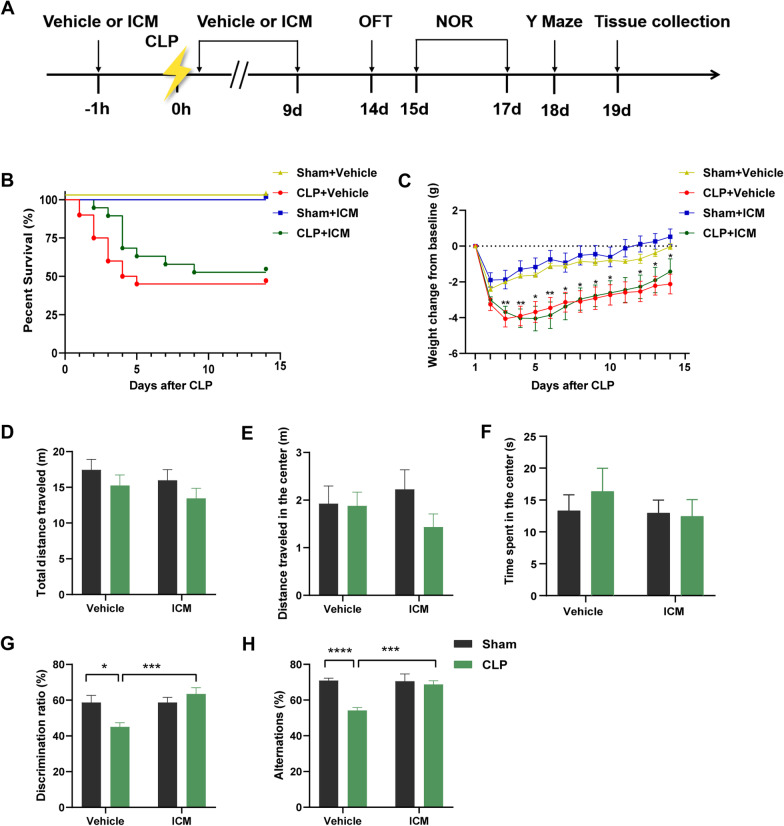
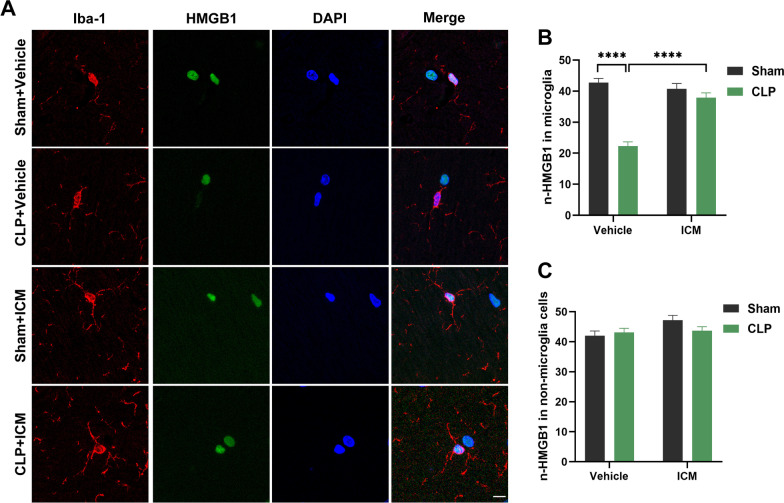
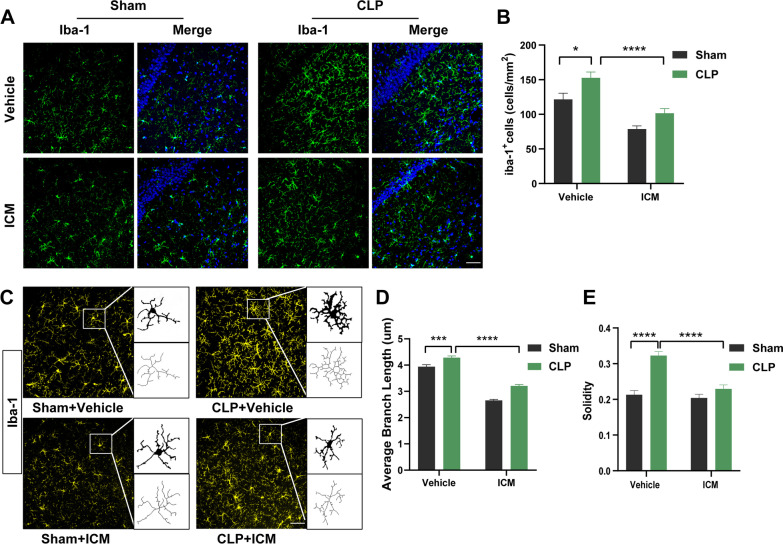
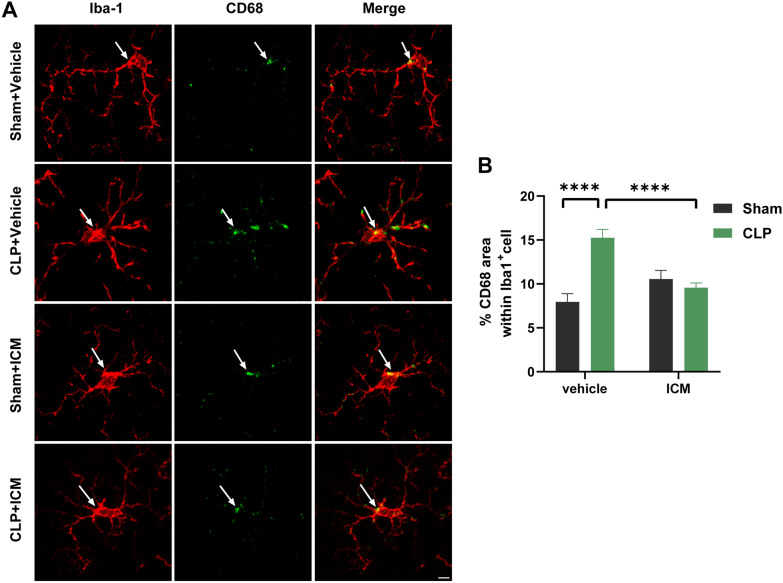
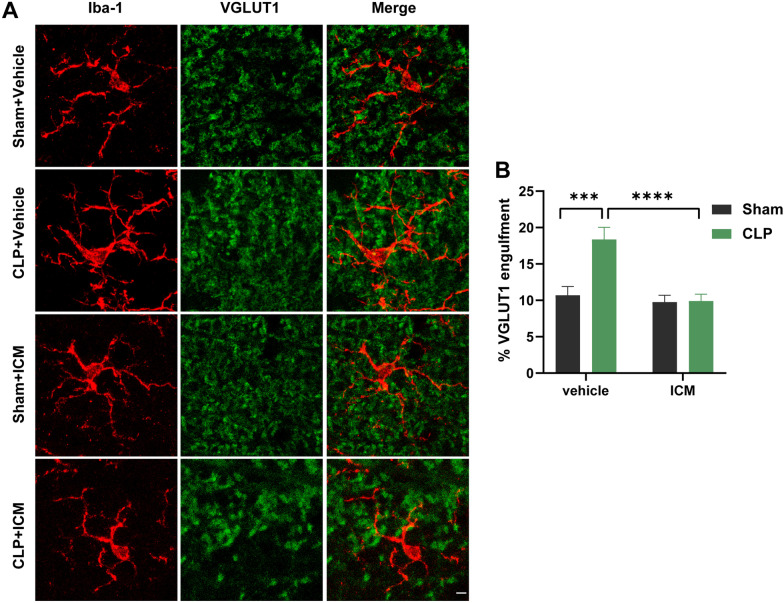
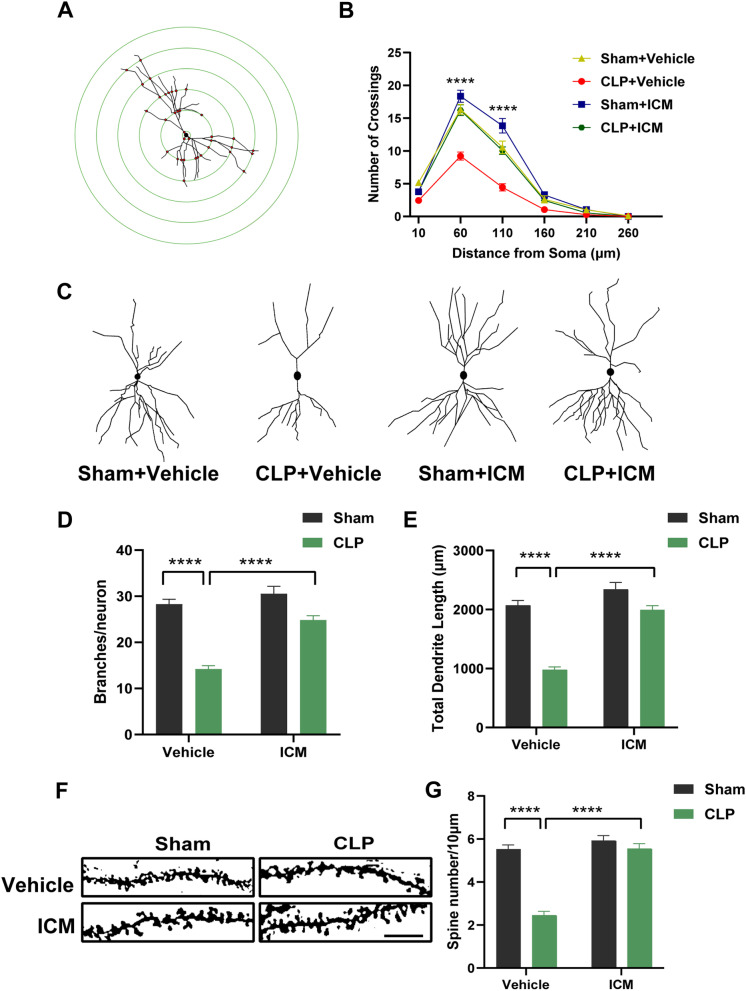
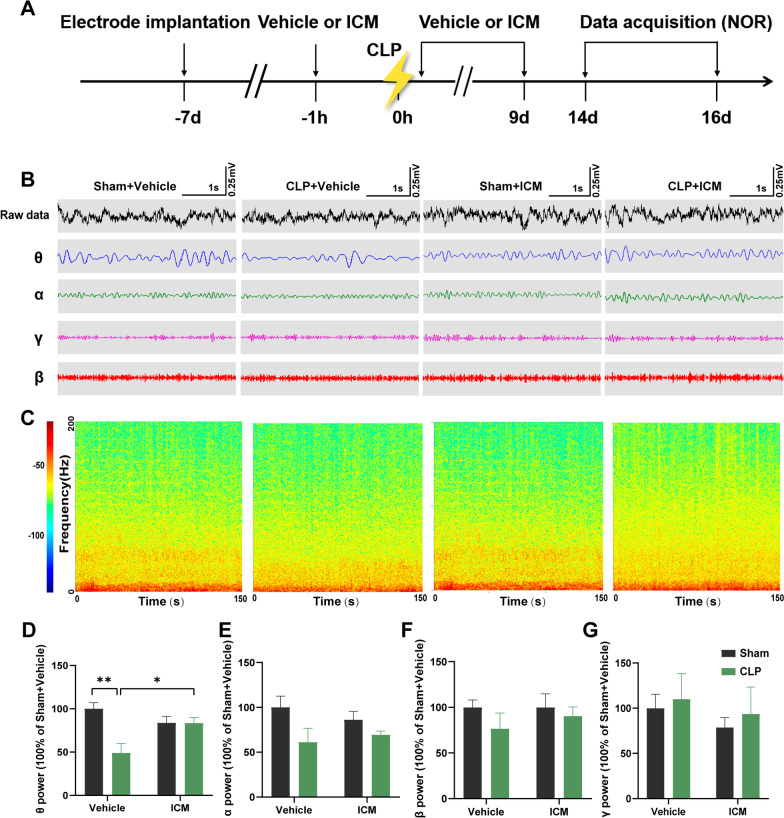
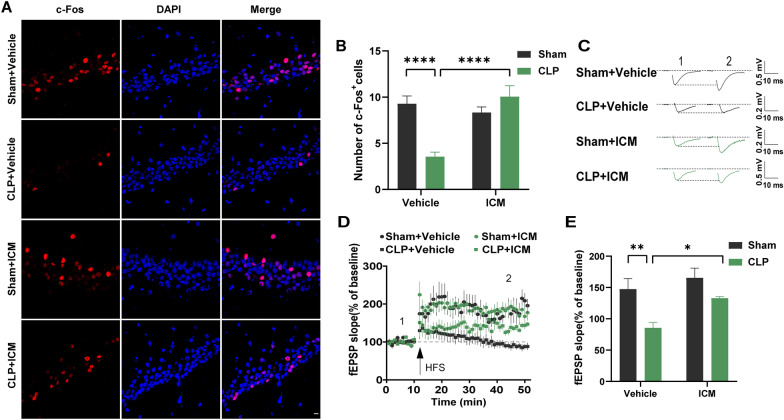
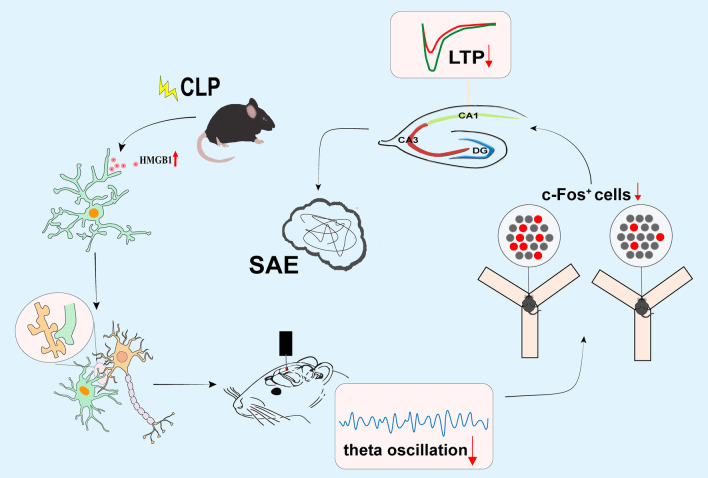
Background: Microglial activation-mediated neuroinflammation is one of the essential pathogenic mechanisms of sepsis-associated encephalopathy (SAE). Mounting evidence suggests that high mobility group box-1 protein (HMGB1) plays a pivotal role in neuroinflammation and SAE, yet the mechanism by which HMGB1 induces cognitive impairment in SAE remains unclear. Therefore, this study aimed to investigate the mechanism of HMGB1 underlying cognitive impairment in SAE. Methods: An SAE model was established by cecal ligation and puncture (CLP); animals in the sham group underwent cecum exposure alone without ligation and perforation. Mice in the inflachromene (ICM) group were continuously injected with ICM intraperitoneally at a daily dose of 10 mg/kg for 9 days starting 1 h before the CLP operation. The open field, novel object recognition, and Y maze tests were performed on days 14–18 after surgery to assess locomotor activity and cognitive function. HMGB1 secretion, the state of microglia, and neuronal activity were measured by immunofluorescence. Golgi staining was performed to detect changes in neuronal morphology and dendritic spine density. In vitro electrophysiology was performed to detect changes in long-term potentiation (LTP) in the CA1 of the hippocampus. In vivo electrophysiology was performed to detect the changes in neural oscillation of the hippocampus. Results: CLP-induced cognitive impairment was accompanied by increased HMGB1 secretion and microglial activation. The phagocytic capacity of microglia was enhanced, resulting in aberrant pruning of excitatory synapses in the hippocampus. The loss of excitatory synapses reduced neuronal activity, impaired LTP, and decreased theta oscillation in the hippocampus. Inhibiting HMGB1 secretion by ICM treatment reversed these changes. Conclusions: HMGB1 induces microglial activation, aberrant synaptic pruning, and neuron dysfunction in an animal model of SAE, leading to cognitive impairment. These results suggest that HMGB1 might be a target for SAE treatment.
Overview
The claims and statistics of this paper haven’t been checked yet.
Free: it reads the open-access text and checks the first 5 claims that cite a source we can check. Create a free account to check every claim.
Integrity signals
Registry
Cites
Statistics
Figures
Verification
Claims the paper makes
The claims and statistics of this paper haven’t been checked yet.
Free: it reads the open-access text and checks the first 5 claims that cite a source we can check. Create a free account to check every claim.
Claims other papers make about this one
Each is checked against this paper’s own text: does it say what the citing paper says it does?
The source backs part of the claim, not all of it — or backs it for a different population, condition or comparison.
In the citing paper
“HMGB1 inhibitors restore synaptic pruning balance [25,26]”
From Research Advances in the Pathogenesis of Sepsis-Associated Encephalopathy (2026) · cites this paper as [25]
Experimental — accuracy not yet measured
Self-check
Percentages, sums and reported differences re-computed from the paper’s own numbers.
The self-check needs the paper’s full text.
Citations
Cites
HMG-1 as a Late Mediator of Endotoxin Lethality in Mice
Wang, H., Bloom, O., Zhang, M., Vishnubhakat, J. M., Ombrellino, M., Che, J., Frazier, A., Yang, H., Ivanova, S., Borovikova, L., et al. (1999) · Science · doi:10.1126/science.285.5425.248 · Cited by 3,385 · cited 1×
“HMGB1 is released passively from damaged cells and is actively extracellularly secreted by activated immune cells [8].”
BackgroundYang, Y., Li, S., Yang, Q., Shi, Y., Zheng, M., Liu, Y., Chen, F., Song, G., Xu, H., Wan, T., et al. (2014) · Cellular Physiology and Biochemistry · doi:10.1159/000358696 · Cited by 3,253
HMGB1 is a therapeutic target for sterile inflammation and infection
Andersson, U., & Tracey, K. J. (2011) · Annual Review of Immunology · doi:10.1146/annurev-immunol-030409-101323 · Cited by 1,437
Repertoire of microglial and macrophage responses after spinal cord injury
David, S., & Kroner, A. (2011) · Nature Reviews Neuroscience · doi:10.1038/nrn3053 · Cited by 1,297 · cited 1×
“Microglia are activated under pathological conditions, inducing synaptic loss, neuron dysfunction, and neural circuit disruption [20, 21].”
BackgroundSpectral fingerprints of large-scale neuronal interactions
Siegel, M., Donner, T. H., & Engel, A. K. (2012) · Nature Reviews Neuroscience · doi:10.1038/nrn3137 · Cited by 1,295
Sepsis-associated encephalopathy
Gofton, T. E., & Young, G. B. (2012) · Nature Reviews Neurology · doi:10.1038/nrneurol.2012.183 · Cited by 821 · cited 3×
“BBB damage, cerebral microcirculation dysfunction, abnormal inflammatory response, and abnormal brain metabolism may all be involved in SAE development, but the specific mechanisms are not yet known [1].”
BackgroundMicroglia: Immune and non-immune functions
Borst, K., Dumas, A. A., & Prinz, M. (2021) · Immunity · doi:10.1016/j.immuni.2021.09.014 · Cited by 804
Cecal ligation and puncture: the gold standard model for polymicrobial sepsis?
Dejager, L., Pinheiro, I., Dejonckheere, E., & Libert, C. (2011) · Trends in Microbiology · doi:10.1016/j.tim.2011.01.001 · Cited by 784
Novel role of PKR in inflammasome activation and HMGB1 release
Lu, B., Nakamura, T., Inouye, K., Li, J., Tang, Y., Lundbäck, P., Valdes-Ferrer, S. I., Olofsson, P. S., Kalb, T., Roth, J., et al. (2012) · Nature · doi:10.1038/nature11290 · Cited by 757 · cited 1×
“In addition, a previous study reported that double-stranded RNA dependent protein kinase could physically interact with inflammasome components and mediates inflammasome activation, thus regulating release of HMGB1 [31].”
BackgroundMicroglia mediate forgetting via complement-dependent synaptic elimination
Wang, C., Yue, H., Hu, Z., Shen, Y., Ma, J., Li, J., Wang, X.-D., Wang, L., Sun, B., Shi, P., et al. (2020) · Science · doi:10.1126/science.aaz2288 · Cited by 629 · cited 1×
“Microglia are activated under pathological conditions, inducing synaptic loss, neuron dysfunction, and neural circuit disruption [20, 21].”
Background
Cited by
Items 101–139 of 139
Research Advances in the Pathogenesis of Sepsis-Associated Encephalopathy
Tan, H., Su, W., & Niu, Z. (2026) · International Journal of Molecular Sciences · doi:10.3390/ijms27125390 · Cited by 1
“HMGB1 inhibitors restore synaptic pruning balance [25,26]; MFGE8 enhances α V β integrin-mediated efferocytosis [27,28]; the microglial depletion agent PLX5622 prevents synaptic engulfment [29].”
Ngadimon, I. W., Mohan, D., Shaikh, M. F., Khoo, C. S., Tan, H. J., Lee, Y. M., Chamhuri, N. S., Fadzil, F., Zolkafli, N., Arulsamy, A., et al. (2024) · Research Square · doi:10.21203/rs.3.rs-3950429/v1
DANOS ENCEFÁLICOS COMO RESULTADO DA ATIVAÇÃO DA MICROGLIA NA ENCEFALOPATIA ASSOCIADA A SEPSE
Bubiak, A. D. S., Cunha, V. L., da Silva, A. C., Silva, S. R. S., da Costa, S. R. R., Kretschemer, A., Vilela, J. D. A., & Neves, L. T. (2024) · Revista Foco · doi:10.54751/revistafoco.v17n7-153
Melatonin alleviates cognitive impairment via modulating NLRP3/Caspase 1 pathway in db/db mice
Gao, M., Chen, J., Zhang, B., Li, J., Lang, J., Zhao, X., & Zhang, Q. (2025) · Journal of Alzheimer s Disease · doi:10.1177/13872877251375479
Wu, X., Wang, J., Li, J., Yao, G., Wei, L., & Li, X. (2025) · Central European Journal of Immunology · doi:10.5114/ceji.2025.154882
“Furthermore, we clarified that silencing HMGB1 significantly inhibited M1 polarization and inflammatory responses in LPS-stimulated microglia, which is consistent with various published reports [19, 20, 37].”
Yuan, Y., Fu, G., Zhu, Y., Xu, J., Li, F., & Sheng, Z.-Y. (2025) · Molecular Neurobiology · doi:10.1007/s12035-025-05399-y · Cited by 2
Fu, Q., Zhang, Y.-B., Shi, C.-X., Jiang, M., Lu, K., Zihui, F., Ruan, J.-P., Wu, J., & Gu, X.-P. (2024) · Figshare · doi:10.6084/m9.figshare.25621997
Fu, Q., Zhang, Y.-B., Shi, C.-X., Jiang, M., Lu, K., Zihui, F., Ruan, J.-P., Wu, J., & Gu, X.-P. (2024) · Figshare · doi:10.6084/m9.figshare.25622093
Fu, Q., Zhang, Y.-B., Shi, C.-X., Jiang, M., Lu, K., Zihui, F., Ruan, J.-P., Wu, J., & Gu, X.-P. (2024) · Figshare · doi:10.6084/m9.figshare.26707679
Fu, Q., Zhang, Y.-B., Shi, C.-X., Jiang, M., Lu, K., Zihui, F., Ruan, J.-P., Wu, J., & Gu, X.-P. (2024) · Figshare · doi:10.6084/m9.figshare.26707676
Huang, X., Ye, C., Zhao, X., Tong, Y., Lin, W., Huang, Q., Zheng, Y., Wang, J., Zhang, A., & 莫云长 (2023) · Figshare · doi:10.6084/m9.figshare.24708919
Lin, Z., Cai, L., Lin, J.-X., & Zheng, G.-Y. (2026) · Chinese Journal of Integrative Medicine · doi:10.1007/s11655-025-3940-8
Li, A. D., Qu, S., Wang, S., Guo, Q., Tan, S., Peng, M., & Liu, L. (2026) · Brain Research Bulletin · doi:10.1016/j.brainresbull.2026.111734 · Cited by 1
Self-citationHu, H., Peng, S., Chen, J., Li, D., Wu, S., Jiang, H., Lu, Y., Song, Y., & Zhu, W. (2026) · Inflammation Research · doi:10.1007/s00011-026-02183-z · Cited by 1
Peng, M., Tan, S., Li, A. D., Guo, Q., & Liu, L. (2026) · Inflammation · doi:10.1007/s10753-026-02481-y
Gao, J., Wang, L.-X., Zhou, L.-Y., Tang, Y.-C., Ning, J., Wang, C., Liu, J., Zhuo, E.-B., Zhou, Y.-N., Shen, Y.-J., et al. (2026) · Brain Research Bulletin · doi:10.1016/j.brainresbull.2026.111809
Zhang, Y., Pang, Y., Tan, H., Xian, R., Liang, J., Wen, Q., Li, Z., Yan, L., Xie, Z., Liang, J., et al. (2026) · Frontiers in Microbiology · doi:10.3389/fmicb.2026.1772788 · Cited by 1
“EA treatment markedly increased dendritic spine density, providing a structural basis for enhanced synaptic communication (Yin et al., 2023).”
Lv, Q., Wu, G., Huang, Z., Huo, J., Huang, X., Yang, B., Ye, Y., Cai, Y., Chen, S., Chen, L., et al. (2026) · Scientific Reports · doi:10.1038/s41598-026-45594-y
“This finding aligns with recent findings demonstrating critical illness-induced aberrant pruning of excitatory synapses and subsequent impairment of long-term potentiation 61 .”
Zhou, W., Hei, B., Liu, Z., Wang, Z., Li, C., Ding, Z., & Li, M. (2026) · Molecular Neurobiology · doi:10.1007/s12035-026-05846-4
Сенюк, І., Кравченко, В. М., Galuzinska, L. V., Honcharov, O., Sulashvili, N., & Щербак, О. В. (2026) · Farmatsevtychnyi zhurnal · doi:10.32352/0367-3057.1.26.08
Wang, Y., Nuerlan, D., Paizula, B., Kawulijiang, Y., Chen, J., Zhu, H., Xiao, W., Tueraili, Z., & Zhang, G. (2026) · International Immunopharmacology · doi:10.1016/j.intimp.2026.116712 · Cited by 1
Yao, Y., Gu, X., Huang, W., Huang, C., Li, B., Zhou, J., & Li, Q. (2026) · Molecular Neurobiology · doi:10.1007/s12035-026-05969-8
Encephalopathy: Cause, Pathogenesis, and Treatment
Lv, S., Zhong, X., Shang, R., Kong, L., Huang, Y., Ma, Y., Teng, J., & Wei, S. (2026) · MedComm · doi:10.1002/mco2.70802 · Cited by 2
“Subsequent studies suggested that high mobility group box 1 protein (HMGB1) plays a pivotal role in these changes by inducing microglial activation, abnormal synaptic pruning, and neuronal dysfunction, ultimately leading to cognitive impairment in SAE animal models [ 36 ].”
Yu, Y., Chen, Y., Tang, W., Lu, T., & Zhang, N. (2026) · Journal of Medicinal Chemistry · doi:10.1021/acs.jmedchem.6c00022
Sokolova, I. B., & Gorshkova, O. P. (2026) · Regional blood circulation and microcirculation · doi:10.24884/1682-6655-2026-25-2-70-75
Dominguini, D., Córneo, E. D. S., Simon, C. S., Borges, G. D. C., Muller, M. M. F., Bortoluzzi, D. P., Fagundes, B. M. K., Lemos, I., Ceretta, L. B., STRECK, E. L., et al. (2026) · Journal of Neuroimmunology · doi:10.1016/j.jneuroim.2026.579036
Yanan, Z., Xing, X., Chen, W., Xinyu, Z., Xintong, Y., Wei, X., Feng, C., Sun, L., Liu, Z., Wang, D., et al. (2026) · Pharmacological Research · doi:10.1016/j.phrs.2026.108358
Chen, Y., Tang, F., & Li, X. (2026) · Stem Cell Research & Therapy · doi:10.1186/s13287-026-05198-9
“High mobility group box 1 (HMGB1), a prominent damage-associated molecular pattern (DAMP), acts as a master regulator of neuroinflammation, synaptic degeneration, and cognitive dysfunction in SAE [173, 174].”
Giffin, K. A., Puranik, N., Bustamante, A. C., Padilla, M., Zeng, Z., Randolph, G., Wheaton, L., Moore, S. J., Newstead, M. W., Denstaedt, S. J., et al. (2026) · Brain Behavior & Immunity - Health · doi:10.1016/j.bbih.2026.101309
Gandhi, A., Kaur, L., & Vikram, V. (2026) · Journal of Holistic Integrative Pharmacy · doi:10.1016/j.jhip.2026.07.001
Zhang, Y.-Y., Long, X.-Y., Wang, K.-J., Tian, J., Xu, J., & Luo, X. (2026) · Acta Pharmacologica Sinica · doi:10.1038/s41401-026-01904-8
陈, 静. (2026) · Advances in Clinical Medicine · doi:10.12677/acm.2026.1682864
Liao, P., Zhang, L., Zhang, L., & Hu, Z. (2026) · Molecular Psychiatry · doi:10.1038/s41380-026-03819-6
Chen, X., Sun, Y., Jiang, S., Cheng, J., Li, H., Yin, S., & Xiao, Z. (2026) · International Immunopharmacology · doi:10.1016/j.intimp.2026.117292 · Cited by 1
Chen, Y., Xiao, J., & Si, H. (2026) · Pharmacological Research · doi:10.1016/j.phrs.2026.108467
Seol, S.-I., Kim, J., Davaanyam, D., Park, S., Lee, E.-H., Han, P.-L., Kim, T.-K., & Lee, J.-K. (2026) · International Journal of Molecular Sciences · doi:10.3390/ijms27198681
“Notably, HMGB1 induces excessive pruning of synapses in animal models of sepsis-associated encephalopathy [86] and of depression [61].”
Zhang, E., Sha, L., Zhu, C., Zhou, Z., Jin, Z., Yu, X., Meng, P., Meng, K., Wei, H., & Xu, Q. (2026) · Immunity & Inflammation · doi:10.1007/s44466-026-00054-0
Ya-qing, G., Wang, Y.-R., Wang, Y., Liu, Z., Zhang, K.-X., Ding, P., Hu, F.-X., Liu, W., Tao, Y., Jia, Q.-Y., et al. (2026) · Journal of Ethnopharmacology · doi:10.1016/j.jep.2026.122489
Zuo, J., Wang, X., Jing, G., Wu, X., & 宋雪民 (2026) · Molecular Medicine Reports · doi:10.3892/mmr.2026.14045
Metadata
- Authors
- Yin, X.-Y., Tang, X.-H., Wang, S.-X., Zhao, Y.-C., Jia, M., Yang, J.-J., Ji, M.-H., & Shen, J.-C.
- Affiliations
- First Affiliated Hospital of Zhengzhou University (CN)
- Nanjing General Hospital of Nanjing Military Command (CN)
- Second Affiliated Hospital of Nanjing Medical University (CN)
- Corresponding author
- Ji, Mu-Huo
- Shen, Jin-Chun
- Venue
- Journal of Neuroinflammation
- Published
- 2023-03-11
- Volume
- 20
- Issue
- 1
- Pages
- 69-69
- ISSN
- 1742-2094 (ISSN-L)
- PMC
- PMC10007818
- OpenAlex
- W4323971854
- Semantic Scholar
- 3b71435caa4db61bd328684e8e00ef6697c7e910
- Cited by
- 138
- References
- 62
- Citations by year
- 2026: 44 · 2025: 36 · 2024: 46 · 2023: 12
- FWCI
- 14.22
- Type
- journal article
- Language
- en
- Open access
- gold
- doi.org
- Licence
- cc-by
- creativecommons.org/licenses/by/4.0 (tdm)
- creativecommons.org/licenses/by/4.0 (vor)
- Locations
- Journal of Neuroinflammation (publishedVersion, cc-by)
- PubMed Central (publishedVersion, cc-by)
- PubMed (publishedVersion)
- DOAJ (DOAJ: Directory of Open Access Journals) (submittedVersion, cc-by-sa)
- Funders
- National Natural Science Foundation of China (81971020)
- Topics
- Life Sciences › Neuroscience › Neurology › Neuroinflammation and Neurodegeneration Mechanisms
- Life Sciences › Biochemistry, Genetics and Molecular Biology › Clinical Biochemistry › Advanced Glycation End Products research
- Life Sciences › Neuroscience › Developmental Neuroscience › Anesthesia and Neurotoxicity Research
- Keywords
- HMGB1, sepsis-associated encephalopathy, cognitive impairment, microglial activation, neuroinflammation, synaptic pruning, excitatory synapses, hippocampus, long-term potentiation, theta oscillations, cecal ligation and puncture, dendritic spine density, neuronal activity
- MeSH terms
- Neuroinflammatory Diseases, Animals, Disease Models, Animal, Hippocampus, Sepsis, HMGB1 Protein, Mice, Cognitive Dysfunction, Sepsis-Associated Encephalopathy
About these checks
Registry, retraction, Cites and statistics results are computed, not judged, with one exception: a printed reference that no index lists is read once by a model before it counts as a citation error. Claims are extracted by a model and kept only when their quote appears verbatim in the text; each cited source is then checked, with a model’s help, for whether it says what the claim relies on. Those verdicts can be wrong — read the claim’s quote and the cited source before relying on one.
Statistics and arithmetic are recomputed, not judged.
Confidence bands are shown only for fields calibrated on our annotated test set. None is calibrated yet, so no band is shown.
What counts as a claim ›How we measure confidence ›How we check this ›
Are you an author, or do you see a problem with this page? Request a review
Data sources
Bibliographic data: Semantic Scholar, OpenAlex, Crossref.
Contains information from the Semantic Scholar Academic Graph Datasets, made available under the ODC Attribution License (ODC-BY 1.0).
Semantic Scholar’s data is described in: Kinney, R., et al. (2023). The Semantic Scholar Open Data Platform. arXiv:2301.10140.
