

HMGB1 mediates synaptic loss and cognitive impairment in an animal model of sepsis-associated encephalopathy
Open accessThe DOI matches its Crossref record; 62 of the 62 references it cites were found in a registry or an index.
Abstract
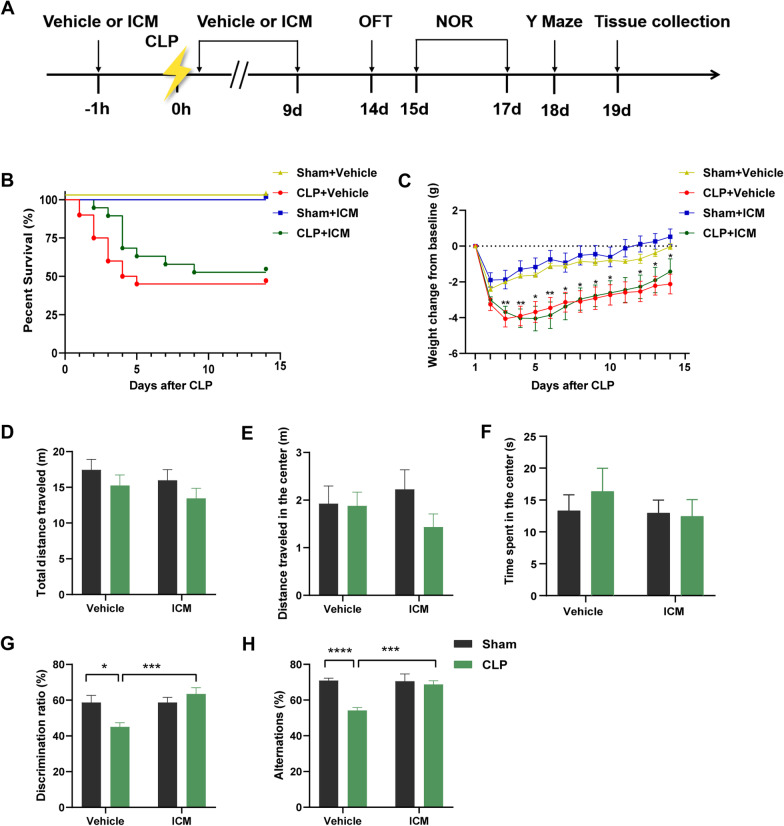
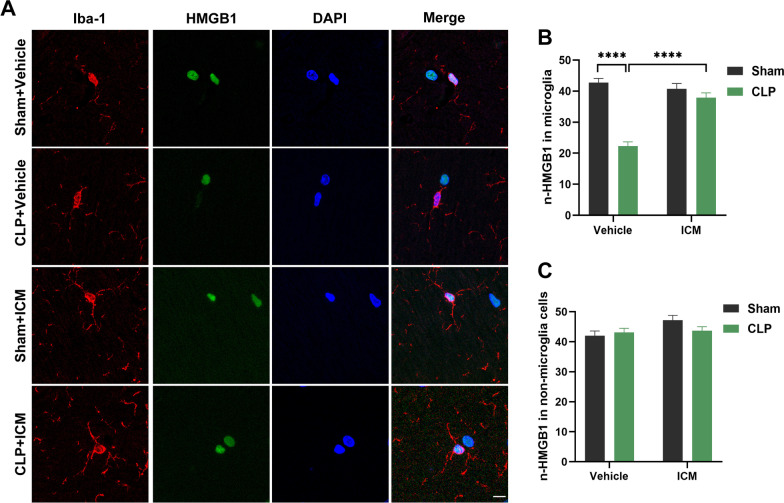
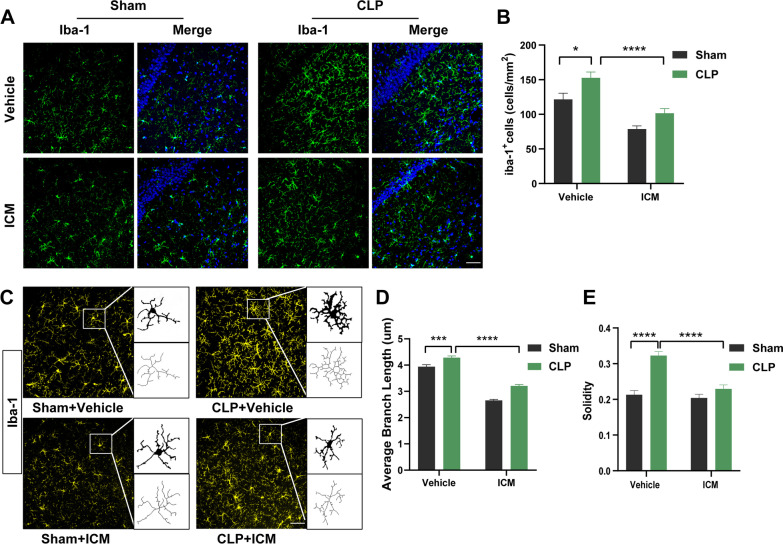
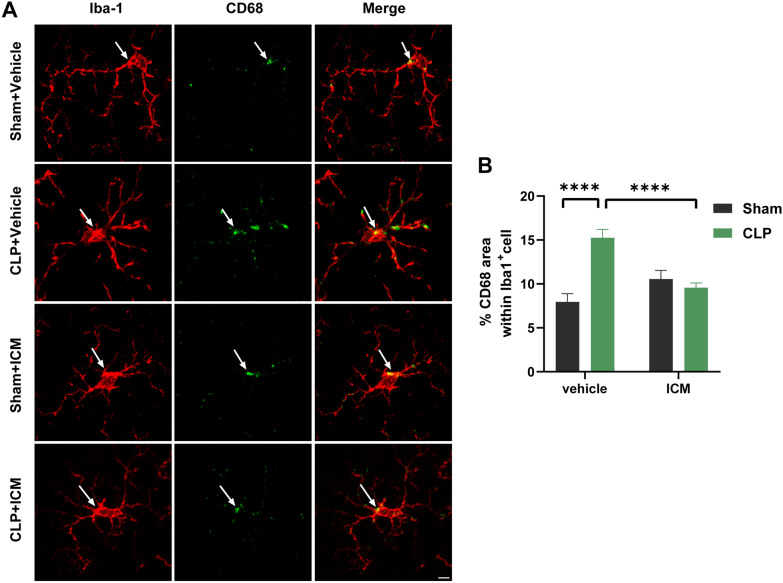
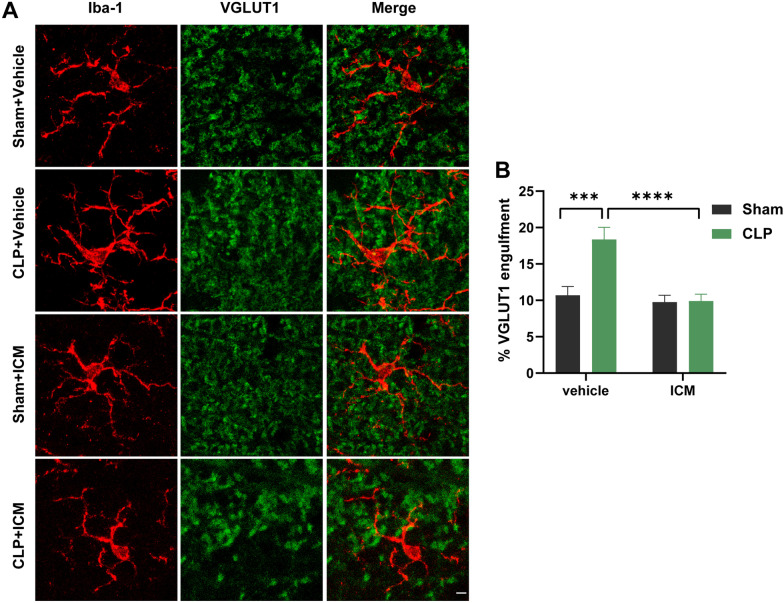
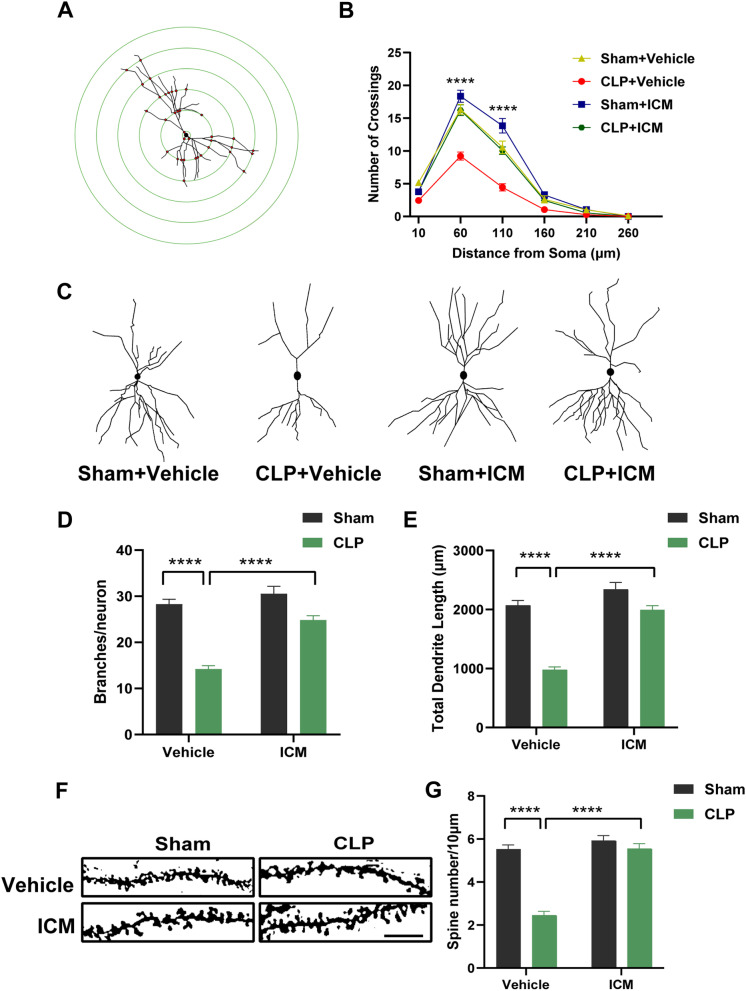
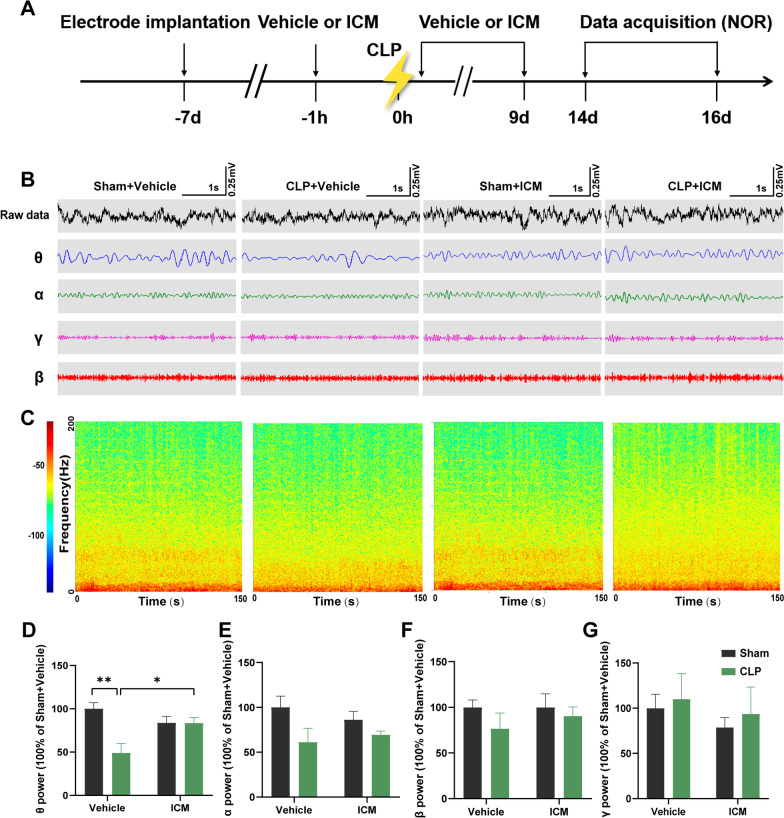
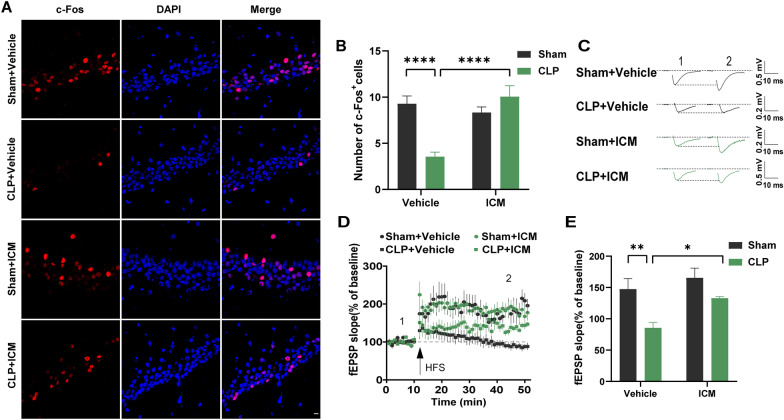
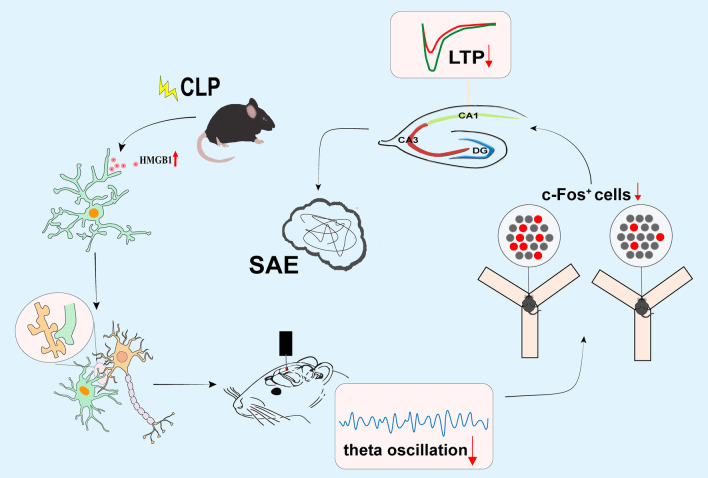
Background: Microglial activation-mediated neuroinflammation is one of the essential pathogenic mechanisms of sepsis-associated encephalopathy (SAE). Mounting evidence suggests that high mobility group box-1 protein (HMGB1) plays a pivotal role in neuroinflammation and SAE, yet the mechanism by which HMGB1 induces cognitive impairment in SAE remains unclear. Therefore, this study aimed to investigate the mechanism of HMGB1 underlying cognitive impairment in SAE. Methods: An SAE model was established by cecal ligation and puncture (CLP); animals in the sham group underwent cecum exposure alone without ligation and perforation. Mice in the inflachromene (ICM) group were continuously injected with ICM intraperitoneally at a daily dose of 10 mg/kg for 9 days starting 1 h before the CLP operation. The open field, novel object recognition, and Y maze tests were performed on days 14–18 after surgery to assess locomotor activity and cognitive function. HMGB1 secretion, the state of microglia, and neuronal activity were measured by immunofluorescence. Golgi staining was performed to detect changes in neuronal morphology and dendritic spine density. In vitro electrophysiology was performed to detect changes in long-term potentiation (LTP) in the CA1 of the hippocampus. In vivo electrophysiology was performed to detect the changes in neural oscillation of the hippocampus. Results: CLP-induced cognitive impairment was accompanied by increased HMGB1 secretion and microglial activation. The phagocytic capacity of microglia was enhanced, resulting in aberrant pruning of excitatory synapses in the hippocampus. The loss of excitatory synapses reduced neuronal activity, impaired LTP, and decreased theta oscillation in the hippocampus. Inhibiting HMGB1 secretion by ICM treatment reversed these changes. Conclusions: HMGB1 induces microglial activation, aberrant synaptic pruning, and neuron dysfunction in an animal model of SAE, leading to cognitive impairment. These results suggest that HMGB1 might be a target for SAE treatment.
Overview
The claims and statistics of this paper haven’t been checked yet.
Free: it reads the open-access text and checks the first 5 claims that cite a source we can check. Create a free account to check every claim.
Integrity signals
Registry
Cites
Statistics
Figures
Verification
Claims the paper makes
The claims and statistics of this paper haven’t been checked yet.
Free: it reads the open-access text and checks the first 5 claims that cite a source we can check. Create a free account to check every claim.
Claims other papers make about this one
Each is checked against this paper’s own text: does it say what the citing paper says it does?
The source backs part of the claim, not all of it — or backs it for a different population, condition or comparison.
In the citing paper
“HMGB1 inhibitors restore synaptic pruning balance [25,26]”
From Research Advances in the Pathogenesis of Sepsis-Associated Encephalopathy (2026) · cites this paper as [25]
Experimental — accuracy not yet measured
Self-check
Percentages, sums and reported differences re-computed from the paper’s own numbers.
The self-check needs the paper’s full text.
Citations
Cites
HMG-1 as a Late Mediator of Endotoxin Lethality in Mice
Wang, H., Bloom, O., Zhang, M., Vishnubhakat, J. M., Ombrellino, M., Che, J., Frazier, A., Yang, H., Ivanova, S., Borovikova, L., et al. (1999) · Science · doi:10.1126/science.285.5425.248 · Cited by 3,385 · cited 1×
“HMGB1 is released passively from damaged cells and is actively extracellularly secreted by activated immune cells [8].”
BackgroundYang, Y., Li, S., Yang, Q., Shi, Y., Zheng, M., Liu, Y., Chen, F., Song, G., Xu, H., Wan, T., et al. (2014) · Cellular Physiology and Biochemistry · doi:10.1159/000358696 · Cited by 3,253
HMGB1 is a therapeutic target for sterile inflammation and infection
Andersson, U., & Tracey, K. J. (2011) · Annual Review of Immunology · doi:10.1146/annurev-immunol-030409-101323 · Cited by 1,437
Repertoire of microglial and macrophage responses after spinal cord injury
David, S., & Kroner, A. (2011) · Nature Reviews Neuroscience · doi:10.1038/nrn3053 · Cited by 1,297 · cited 1×
“Microglia are activated under pathological conditions, inducing synaptic loss, neuron dysfunction, and neural circuit disruption [20, 21].”
BackgroundSpectral fingerprints of large-scale neuronal interactions
Siegel, M., Donner, T. H., & Engel, A. K. (2012) · Nature Reviews Neuroscience · doi:10.1038/nrn3137 · Cited by 1,295
Sepsis-associated encephalopathy
Gofton, T. E., & Young, G. B. (2012) · Nature Reviews Neurology · doi:10.1038/nrneurol.2012.183 · Cited by 821 · cited 3×
“BBB damage, cerebral microcirculation dysfunction, abnormal inflammatory response, and abnormal brain metabolism may all be involved in SAE development, but the specific mechanisms are not yet known [1].”
BackgroundMicroglia: Immune and non-immune functions
Borst, K., Dumas, A. A., & Prinz, M. (2021) · Immunity · doi:10.1016/j.immuni.2021.09.014 · Cited by 804
Cecal ligation and puncture: the gold standard model for polymicrobial sepsis?
Dejager, L., Pinheiro, I., Dejonckheere, E., & Libert, C. (2011) · Trends in Microbiology · doi:10.1016/j.tim.2011.01.001 · Cited by 784
Novel role of PKR in inflammasome activation and HMGB1 release
Lu, B., Nakamura, T., Inouye, K., Li, J., Tang, Y., Lundbäck, P., Valdes-Ferrer, S. I., Olofsson, P. S., Kalb, T., Roth, J., et al. (2012) · Nature · doi:10.1038/nature11290 · Cited by 757 · cited 1×
“In addition, a previous study reported that double-stranded RNA dependent protein kinase could physically interact with inflammasome components and mediates inflammasome activation, thus regulating release of HMGB1 [31].”
BackgroundMicroglia mediate forgetting via complement-dependent synaptic elimination
Wang, C., Yue, H., Hu, Z., Shen, Y., Ma, J., Li, J., Wang, X.-D., Wang, L., Sun, B., Shi, P., et al. (2020) · Science · doi:10.1126/science.aaz2288 · Cited by 629 · cited 1×
“Microglia are activated under pathological conditions, inducing synaptic loss, neuron dysfunction, and neural circuit disruption [20, 21].”
BackgroundMicroglial Remodeling of the Extracellular Matrix Promotes Synapse Plasticity
Nguyen, P. T., Dorman, L. C., Pan, S., Vainchtein, I. D., Han, R. T., Nakao-Inoue, H., Taloma, S. E., Barron, J. J., Molofsky, A. B., Kheirbek, M. A., et al. (2020) · Cell · doi:10.1016/j.cell.2020.05.050 · Cited by 615
Huttunen, H. J., Kuja-Panula, J., Sorci, G., Agneletti, A. L., Donato, R., & Rauvala, H. (2000) · Journal of Biological Chemistry · doi:10.1074/jbc.m006993200 · Cited by 577
Brain Oscillations and the Importance of Waveform Shape
Cole, S. R., & Voytek, B. (2017) · Trends in Cognitive Sciences · doi:10.1016/j.tics.2016.12.008 · Cited by 500 · cited 1×
“Neural oscillations are the rhythms of neural activity observed at different temporal and spatial scales, which are classified as delta oscillations (1–4 Hz), theta oscillations (4–8 Hz), alpha oscillations (8–12 Hz), beta oscillations (12–30 Hz) and gamma oscillations (30–90 Hz) [54].”
BackgroundLodge, D. J., Behrens, M. M., & Grace, A. A. (2009) · The Journal of Neuroscience · doi:10.1523/jneurosci.5419-08.2009 · Cited by 488 · cited 1×
“For example, in animal models of schizophrenia, diminished gamma oscillations have been shown to lead to impaired cognitive function [56, 57].”
BackgroundSundén-Cullberg, J., Norrby-Teglund, A., Rouhiainen, A., Rauvala, H., Herman, G., Tracey, K. J., Lee, M. L., Andersson, J., Tokics, L., & Treutiger, C. J. (2005) · Critical Care Medicine · doi:10.1097/01.ccm.0000155991.88802.4d · Cited by 428 · cited 2×
“Notably, HMGB1 is a late mediator of inflammation in sepsis [13].”
BackgroundThe neurological complications of sepsis
Bolton, C. F., Bryan, G. Y., & Zochodne, D. W. (1993) · Annals of Neurology · doi:10.1002/ana.410330115 · Cited by 344 · cited 1×
“of encephalopathy in medical and surgical intensive care [26], and approximately half (46%) of patients with sepsis have SAE [27].”
BackgroundGABA-receptive microglia selectively sculpt developing inhibitory circuits
Favuzzi, E., Huang, S., Saldi, G. A., Binan, L., Ibrahim, L. A., Fernández-Otero, M., Cao, Y., Zeine, A., Sefah, A., Zheng, K., et al. (2021) · Cell · doi:10.1016/j.cell.2021.06.018 · Cited by 325
Neurologic complications of critical medical illnesses
BLECK, T. P., SMITH, M. C., -C. PIERRE-LOUIS, S. J., JARES, J. J., MURRAY, J., & HANSEN, C. A. (1993) · Critical Care Medicine · doi:10.1097/00003246-199301000-00019 · Cited by 315 · cited 1×
“of encephalopathy in medical and surgical intensive care [26], and approximately half (46%) of patients with sepsis have SAE [27].”
BackgroundWalker, F. R., Beynon, S. B., Jones, K. A., Zhao, Z., Kongsui, R., Cairns, M., & Nilsson, M. (2014) · Brain, Behavior, and Immunity · doi:10.1016/j.bbi.2013.12.010 · Cited by 238 · cited 1×
“Microglial activation induces a change from a resting state to a highly branched state (hyperramification), an increase in the average length of the branches and an amoebic state [36].”
BackgroundFrank, M. G., Weber, M. D., Watkins, L. R., & Maier, S. F. (2015) · Brain, Behavior, and Immunity · doi:10.1016/j.bbi.2015.03.010 · Cited by 237 · cited 1×
“Interestingly, HMGB1 is also a late mediator of inflammation in sepsis [13] and participates in the amplification of neuroinflammation [32].”
BackgroundLi, F., Huangyang, P., Burrows, M., Guo, K., Riscal, R., Godfrey, J., Lee, K. E., Lin, N., Lee, P., Blair, I. A., et al. (2020) · Nature Cell Biology · doi:10.1038/s41556-020-0511-2 · Cited by 209 · cited 1×
“A previous study also revealed that using ICM can inhibit HMGB1 release thus limiting fructose 1,6-bisphosphatase 1-dependent hepatic stellate cell activation, the development of the secretory phenotype and tumor progression [18].”
HMGB1 Mediates Cognitive Impairment in Sepsis Survivors
Chavan, S. S., Huerta, P. T., Robbiati, S., Valdes-Ferrer, S. I., Ochani, M., Dancho, M., Frankfurt, M., Volpe, B. T., Tracey, K. J., & Diamond, B. (2012) · Molecular Medicine · doi:10.2119/molmed.2012.00195 · Cited by 199 · cited 1×
“In an animal model of SAE, the serum levels of HMGB1 are increased in sepsis survivors, which remains elevated for at least 4 weeks after CLP [14, 15].”
BackgroundHMGB1 in Development and Diseases of the Central Nervous System
Fang, P., Schachner, M., & Shen, Y.-Q. (2012) · Molecular Neurobiology · doi:10.1007/s12035-012-8264-y · Cited by 193 · cited 1×
“Conversely, HMGB1 can promote neurite outgrowth and cell migration during early brain development and is essential for processes such as forebrain development [45].”
BackgroundCerebral dysfunctions caused by sepsis during ageing
Manabe, T., & Heneka, M. T. (2022) · Nature Reviews Immunology · doi:10.1038/s41577-021-00643-7 · Cited by 191 · cited 1×
“SAE manifests as varying degrees of impaired consciousness, from mild delirium to coma, along with electroencephalographic (EEG) changes [2, 3], which severely reduces patients’ quality of life, increases mortality rates, and places tremendous economic pressure on society, families, and individuals [4].”
BackgroundFranklin, T. C., Wohleb, E. S., Zhang, Y., Fogaça, M., Hare, B., & Duman, R. S. (2018) · Biological Psychiatry · doi:10.1016/j.biopsych.2017.06.034 · Cited by 180
Enomoto, T., Tse, M. T., & Floresco, S. B. (2011) · Biological Psychiatry · doi:10.1016/j.biopsych.2010.09.038 · Cited by 179
The Impact of Acute Organ Dysfunction on Long-Term Survival in Sepsis*
Schuler, A., Wulf, D. A., Lu, Y., Iwashyna, T. J., Escobar, G. J., Shah, N. H., & Liu, V. X. (2018) · Critical Care Medicine · doi:10.1097/ccm.0000000000003023 · Cited by 161 · cited 1×
“SAE is a severe CNS complication of sepsis, manifesting clinically as diffuse brain dysfunction, with varying degrees of neurological symptoms ranging from lethargy to coma, and over 80% of patients demonstrate EEG abnormalities [1, 24, 25].”
BackgroundHippocampal theta codes for distances in semantic and temporal spaces
Solomon, E. A., Lega, B. C., Sperling, M. R., & Kahana, M. J. (2019) · Proceedings of the National Academy of Sciences · doi:10.1073/pnas.1906729116 · Cited by 154 · cited 1×
“In addition, several intracranial studies have suggested that increased theta power is associated with successful encoding or retrieval [59, 60].”
BackgroundA small molecule binding HMGB1 and HMGB2 inhibits microglia-mediated neuroinflammation
Lee, S., Nam, Y., Koo, J. Y., Lim, D., Park, J., Ock, J., Kim, J., Suk, K., & Park, S. B. (2014) · Nature Chemical Biology · doi:10.1038/nchembio.1669 · Cited by 146 · cited 1×
“Inflachromene (ICM) is a small molecule that can block cytoplasmic localization and extracellular release of HMGBs by perturbing its post-translational modification [16].”
BackgroundVoltage compartmentalization in dendritic spines in vivo
Cornejo, V. H., Ofer, N., & Yuste, R. (2021) · Science · doi:10.1126/science.abg0501 · Cited by 140 · cited 1×
“Dendritic spines are essential for receiving neurotransmitters and regulating synaptic plasticity, which is the basis of learning and memory [50].”
BackgroundCzerniawski, J., Miyashita, T., Lewandowski, G., & Guzowski, J. F. (2015) · Brain, Behavior, and Immunity · doi:10.1016/j.bbi.2014.09.014 · Cited by 138 · cited 1×
“Lipopolysaccharide (LPS) injection can also cause short- and long-term cognitive impairments through a mechanism that releases various inflammatory cytokines in the brain [29].”
BackgroundWang, B., Huang, X., Pan, X., Zhang, T., Hou, C., Su, W.-J., Liu, L.-L., Li, J.-M., & Wang, Y.-X. (2020) · Brain, Behavior, and Immunity · doi:10.1016/j.bbi.2020.06.019 · Cited by 129
Ding, H., Li, Y., Chen, S., Wen, Y., Zhang, S., Luo, E., Li, X., Zhong, W., & Zeng, H. (2022) · CNS Neuroscience & Therapeutics · doi:10.1111/cns.13765 · Cited by 126
A large-scale nanoscopy and biochemistry analysis of postsynaptic dendritic spines
Helm, M. S., Dankovich, T. M., Mandad, S., Rammner, B., Jähne, S., Salimi, V., Koerbs, C., Leibrandt, R., Urlaub, H., Schikorski, T., et al. (2021) · Nature Neuroscience · doi:10.1038/s41593-021-00874-w · Cited by 125 · cited 1×
“and are the primary site of synaptic connections between neurons [44].”
BackgroundZheng, L., Yu, M., Lin, R., Wang, Y., Zhuo, Z., Cheng, N., Wang, M., Tang, Y., Wang, L., & Hou, S. (2020) · Nature Communications · doi:10.1038/s41467-020-16826-0 · Cited by 123 · cited 1×
“A previous study demonstrated that the reduction in LFP cross-frequency coupling between theta and gamma power in the hippocampus is associated with impaired LTP in an animal model of transient global cerebral ischemia [61].”
BackgroundVillette, V., Poindessous-Jazat, F., Simon, A., Léna, C., Roullot, E., Bellessort, B., Epelbaum, J., Dutar, P., & Stéphan, A. (2010) · The Journal of Neuroscience · doi:10.1523/jneurosci.6284-09.2010 · Cited by 119
Xia, Q., Zhan, G., Mao, M., Zhao, Y., & Li, X. (2022) · Experimental & Molecular Medicine · doi:10.1038/s12276-022-00734-y · Cited by 118
Self-citationZhuang, X., Yu, Y., Jiang, Y., Zhao, S., Wang, Y., Su, L., Xie, K., Yu, Y., Lu, Y., & Lv, G. (2020) · International Immunopharmacology · doi:10.1016/j.intimp.2020.106287 · Cited by 113
Extracellular High-Mobility Group Box 1 Protein (HMGB1) as a Mediator of Persistent Pain
Agalave, N. M., & Svensson, C. I. (2014) · Molecular Medicine · doi:10.2119/molmed.2014.00176 · Cited by 109
Gao, J.-M., Zhang, X., Shu, G., Chen, N., Zhang, J., Xu, F., Li, F., Liu, Y., Wei, Y., He, Y., et al. (2022) · Acta Pharmacologica Sinica · doi:10.1038/s41401-022-00888-5 · Cited by 104
Widespread and Highly Correlated Somato-dendritic Activity in Cortical Layer 5 Neurons
Beaulieu-Laroche, L., Toloza, E. H. S., Brown, N. J., & Harnett, M. T. (2019) · Neuron · doi:10.1016/j.neuron.2019.05.014 · Cited by 102
Zhang, Z., Jiang, J., He, Y., Cai, J., Xie, J., Wu, M., Xing, M., Zhang, Z., Chang, H., Yu, P., et al. (2022) · Journal of Neuroinflammation · doi:10.1186/s12974-022-02596-7 · Cited by 102 · cited 1×
“One recent study demonstrated that pregabalin ameliorates microglial activation and neuronal damage by blocking the HMGB1 signaling pathway in radiation-induced brain injury [10].”
BackgroundNeuroinflammation in Sepsis: Molecular Pathways of Microglia Activation
Moraes, C., Zaverucha-do-Valle, C., Fleurance, R., Sharshar, T., Bozza, F., & d’Avila, J. (2021) · Pharmaceuticals · doi:10.3390/ph14050416 · Cited by 94
Savi, F. F., de Oliveira, A., de Medeiros, G. F., Bozza, F. A., Michels, M., Sharshar, T., Dal-Pizzol, F., & Ritter, C. (2021) · Neuroscience & Biobehavioral Reviews · doi:10.1016/j.neubiorev.2020.12.005 · Cited by 77 · cited 1×
“Consistent with our results, it has been suggested that sepsis induced by CLP can lead to cognitive impairment [28].”
ResultGold nanoparticles reduce inflammation in cerebral microvessels of mice with sepsis
Di Bella, D., Ferreira, J. P. S., Silva, R. D. N. O., Echem, C., Milan, A., Akamine, E. H., Carvalho, M. H., & Rodrigues, S. F. (2021) · Journal of Nanobiotechnology · doi:10.1186/s12951-021-00796-6 · Cited by 69
Tan, S.-W., Zhao, Y., Li, P., Ning, Y., Huang, Z.-Z., Yang, N., Liu, D., & Zhou, Y. (2021) · Journal of Neuroinflammation · doi:10.1186/s12974-021-02274-0 · Cited by 60 · cited 5×
“Consistent with our data, HMGB1 release induces cognitive deficits in diabetes-related dementia and TBI [12, 35].”
BackgroundInfluentialSelf-citationYi-Bin, W., Xiang, L., Bing, Y., Qi, Z., Fei-Tong, J., Minghong, W., Xiangxiang, Z., Le, K., Yan, L., Ping, S., et al. (2022) · Cell Death & Disease · doi:10.1038/s41419-022-04765-1 · Cited by 58
Regulation of α-synuclein homeostasis and inflammasome activation by microglial autophagy
Choi, I., Heaton, G. R., Lee, Y.-K., & Yue, Z. (2022) · Science Advances · doi:10.1126/sciadv.abn1298 · Cited by 58 · cited 1×
“Additionally, under pathological conditions, the enhanced phagocytic ability of long-term activated microglia can lead to excess inflammatory mediator expression, aberrant synaptic pruning, neuronal dysfunction, or even death [41].”
BackgroundReactivated Spatial Context Guides Episodic Recall
Herweg, N. A., Sharan, A. D., Sperling, M. R., Brandt, A., Schulze‐Bonhage, A., & Kahana, M. J. (2020) · Journal of Neuroscience · doi:10.1523/jneurosci.1640-19.2019 · Cited by 55 · cited 1×
“In addition, several intracranial studies have suggested that increased theta power is associated with successful encoding or retrieval [59, 60].”
BackgroundCho, W., Koo, J. Y., Park, Y., Oh, K., Lee, S., Song, J.-S., Bae, M. A., Lim, D., Lee, D., & Park, S. B. (2016) · Journal of Medicinal Chemistry · doi:10.1021/acs.jmedchem.6b00954 · Cited by 49 · cited 1×
“daily for 9 consecutive days beginning 1 h before CLP operation [22].”
MethodPoles, M. Z., Nászai, A., Gulácsi, L., Czakó, B. L., Gál, K. G., Glenz, R. J., Dookhun, D., Rutai, A., Tallósy, S. P., Szabó, A., et al. (2021) · Frontiers in Immunology · doi:10.3389/fimmu.2021.717157 · Cited by 49
Jeong, J., Lee, D. H., & Song, J. (2022) · Biomedicine & Pharmacotherapy · doi:10.1016/j.biopha.2022.112933 · Cited by 43 · cited 5×
“Consistent with our data, HMGB1 release induces cognitive deficits in diabetes-related dementia and TBI [12, 35].”
BackgroundInfluentialLi, Z., Vidjro, O. E., Guo, G., Du, Y., Zhou, Y., Xie, Q., Li, J., Gao, K., Zhou, L., & Ma, T. (2022) · Journal of Neuroinflammation · doi:10.1186/s12974-022-02666-w · Cited by 38
The development of ADAM10 endocytosis inhibitors for the treatment of Alzheimer’s disease
Musardo, S., Therin, S., Pelucchi, S., D’Andrea, L., Stringhi, R., Ribeiro, A., Manca, A., Balducci, C., Pagano, J., Sala, C., et al. (2022) · Molecular Therapy · doi:10.1016/j.ymthe.2022.03.024 · Cited by 35 · cited 1×
“In addition, a disintegrin and metalloproteinase domain 10 is involved in dendritic spine shaping in an animal model of AD, which alters dendritic morphology, induces dendritic spine loss, and impairs information transfer between neurons [49].”
BackgroundThe telomeric protein TERF2/TRF2 impairs HMGB1-driven autophagy
Iachettini, S., Ciccarone, F., Maresca, C., Angelo, C. D., Petti, E., Vito, S. D., Ciriolo, M. R., Zizza, P., & Biroccio, A. (2022) · Autophagy · doi:10.1080/15548627.2022.2138687 · Cited by 34 · cited 1×
“ICM treatment inhibits the cytosolic translocation of HMGB1, which is confirmed by genetic experiments based on the silencing of HMGB1 [17].”
BackgroundZhang, Y., Chen, S., Tian, W., Zhu, H., Li, W., Dai, W., Zhang, X., Gu, X., & Su, D. (2022) · Frontiers in Medicine · doi:10.3389/fmed.2022.817351 · Cited by 33
Patient-Derived In Vitro Models of Microglial Function and Synaptic Engulfment in Schizophrenia
Sheridan, S. D., Horng, J. E., & Perlis, R. H. (2022) · Biological Psychiatry · doi:10.1016/j.biopsych.2022.01.004 · Cited by 31
Role of lipocalin-2 in surgery-induced cognitive decline in mice: a signal from neuron to microglia
Xiang, X.-W., Tang, X.-X., Yu, Y., Xie, S.-Y., Liu, L., Chen, M.-L., Zhang, R., Kang, X., Zheng, Y.-Y., Yang, G., et al. (2022) · Journal of Neuroinflammation · doi:10.1186/s12974-022-02455-5 · Cited by 30
Self-citationPeidaee, E., Sheybani, F., Naderi, H., Khosravi, N., & Nooghabi, M. J. (2018) · Emergency Medicine International · doi:10.1155/2018/3587014 · Cited by 19 · cited 1×
“SAE is a severe CNS complication of sepsis, manifesting clinically as diffuse brain dysfunction, with varying degrees of neurological symptoms ranging from lethargy to coma, and over 80% of patients demonstrate EEG abnormalities [1, 24, 25].”
BackgroundThe Dual Nature of Microglia in Alzheimer’s Disease: A Microglia-Neuron Crosstalk Perspective
Xie, Z., Meng, J., Wu, Z., Nakanishi, H., Hayashi, Y., Kong, W., Lan, F., Narengaowa, Yang, Q., Qing, H., et al. (2023) · The Neuroscientist · doi:10.1177/10738584211070273 · Cited by 19
Nonoxid-HMGB1 Attenuates Cognitive Impairment After Traumatic Brain Injury in Rats
Chen, J.-Q., Gao, S., Luo, L., Jiang, Z., Liang, C., He, H., & Guo, Y. (2022) · Frontiers in Medicine · doi:10.3389/fmed.2022.827585 · Cited by 12 · cited 1×
“This discrepancy is most likely due to the the different redox state of HMGB1 which resulting in activation of different HMGB1 receptors and subsequent biological outcome [46].”
BackgroundZheng, P., Bai, Q., Feng, J., Zhao, B., Duan, J., Zhao, L., Liu, N., Ren, D., Zou, S., & Chen, W. (2021) · Bioengineering & Translational Medicine · doi:10.1002/btm2.10249 · Cited by 10
Cited by
Gaikwad, S., Senapati, S., Haque, M. A., & Kayed, R. (2024) · Alzheimer's & Dementia · doi:10.1002/alz.13490 · Cited by 117
“57,87 90 Importantly,exposuretopathologicalproteinaggregates such as A β and TauO triggers HMGB1 release, chronic inflammation, and upregulation of RAGE and TLR4 signaling pathways.”
BackgroundSepsis-associated encephalopathy: From pathophysiology to clinical management
Hong, Y., Chen, P., Gao, J., Lin, Y., Chen, L., & Shang, X. (2023) · International Immunopharmacology · doi:10.1016/j.intimp.2023.110800 · Cited by 102
Wu, X., Gao, Y.-Z., Shi, C., Tong, J.-H., Ma, D., Shen, J.-C., Yang, J., & Ji, M. (2023) · Neuropharmacology · doi:10.1016/j.neuropharm.2023.109646 · Cited by 82
Self-citationThe impact of neuroinflammation on neuronal integrity
Tastan, B., & Heneka, M. T. (2024) · Immunological Reviews · doi:10.1111/imr.13419 · Cited by 84
“193,211 These mediators modulate synaptic transmission, synaptic plasticity, and LTP across various neuroinflammation models.”
Mechanisms underlying delirium in patients with critical illness
Fan, Y.-Y., Luo, R.-Y., Wang, M., Yuan, C.-Y., Sun, Y., & Jing, J. (2024) · Frontiers in Aging Neuroscience · doi:10.3389/fnagi.2024.1446523 · Cited by 80
Metadata
- Authors
- Yin, X.-Y., Tang, X.-H., Wang, S.-X., Zhao, Y.-C., Jia, M., Yang, J.-J., Ji, M.-H., & Shen, J.-C.
- Affiliations
- First Affiliated Hospital of Zhengzhou University (CN)
- Nanjing General Hospital of Nanjing Military Command (CN)
- Second Affiliated Hospital of Nanjing Medical University (CN)
- Corresponding author
- Ji, Mu-Huo
- Shen, Jin-Chun
- Venue
- Journal of Neuroinflammation
- Published
- 2023-03-11
- Volume
- 20
- Issue
- 1
- Pages
- 69-69
- ISSN
- 1742-2094 (ISSN-L)
- PMC
- PMC10007818
- OpenAlex
- W4323971854
- Cited by
- 138
- References
- 62
- Citations by year
- 2026: 44 · 2025: 36 · 2024: 46 · 2023: 12
- FWCI
- 14.22
- Type
- journal article
- Language
- en
- Open access
- gold
- doi.org
- Licence
- cc-by
- creativecommons.org/licenses/by/4.0 (tdm)
- creativecommons.org/licenses/by/4.0 (vor)
- Locations
- Journal of Neuroinflammation (publishedVersion, cc-by)
- PubMed Central (publishedVersion, cc-by)
- PubMed (publishedVersion)
- DOAJ (DOAJ: Directory of Open Access Journals) (submittedVersion, cc-by-sa)
- Funders
- National Natural Science Foundation of China (81971020)
- Topics
- Life Sciences › Neuroscience › Neurology › Neuroinflammation and Neurodegeneration Mechanisms
- Life Sciences › Biochemistry, Genetics and Molecular Biology › Clinical Biochemistry › Advanced Glycation End Products research
- Life Sciences › Neuroscience › Developmental Neuroscience › Anesthesia and Neurotoxicity Research
- Keywords
- HMGB1, sepsis-associated encephalopathy, cognitive impairment, microglial activation, neuroinflammation, synaptic pruning, excitatory synapses, hippocampus, long-term potentiation, theta oscillations, cecal ligation and puncture, dendritic spine density, neuronal activity
- MeSH terms
- Neuroinflammatory Diseases, Animals, Disease Models, Animal, Hippocampus, Sepsis, HMGB1 Protein, Mice, Cognitive Dysfunction, Sepsis-Associated Encephalopathy
About these checks
Registry, retraction, Cites and statistics results are computed, not judged, with one exception: a printed reference that no index lists is read once by a model before it counts as a citation error. Claims are extracted by a model and kept only when their quote appears verbatim in the text; each cited source is then checked, with a model’s help, for whether it says what the claim relies on. Those verdicts can be wrong — read the claim’s quote and the cited source before relying on one.
Statistics and arithmetic are recomputed, not judged.
Confidence bands are shown only for fields calibrated on our annotated test set. None is calibrated yet, so no band is shown.
What counts as a claim ›How we measure confidence ›How we check this ›
Are you an author, or do you see a problem with this page? Request a review
Data sources
Bibliographic data: Semantic Scholar, OpenAlex, Crossref.
Contains information from the Semantic Scholar Academic Graph Datasets, made available under the ODC Attribution License (ODC-BY 1.0).
Semantic Scholar’s data is described in: Kinney, R., et al. (2023). The Semantic Scholar Open Data Platform. arXiv:2301.10140.
