

Creating a positive perception of childbirth experience: systematic review and meta-analysis of prenatal and intrapartum interventions
Open accessThe DOI matches its Crossref record; 54 of the 55 references it cites were found in a registry or an index.
Abstract
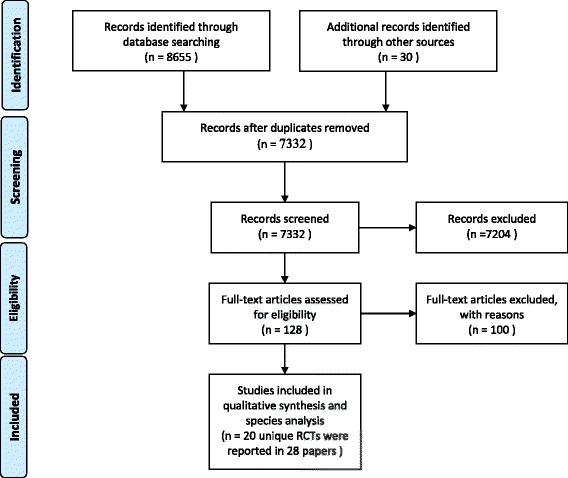
BACKGROUND: A negative experience in childbirth is associated with chronic maternal morbidities. The aim of this systematic review and meta-analysis was to identify currently available successful interventions to create a positive perception of childbirth experience which can prevent psychological birth trauma. METHODS: Randomized controlled trials of interventions in pregnancy or labour which aimed to improve childbirth experience versus usual care were identified from 1994 to September 2016. Low risk pregnant or childbearing women were chosen as the study population. PEDRO scale and Cochrane risk of bias tool were used for quality assessment. Pooled effect estimates were calculated when more than two studies had similar intervention. If it was not possible to include a study in the meta-analysis, its data were summarized narratively. RESULTS: After screening of 7832 titles/abstracts, 20 trials including 22,800 participants from 12 countries were included. Successful strategies to create a positive perception of childbirth experience were supporting women during birth (Risk Ratio = 1.35, 95% Confidence Interval: 1.07 to 1.71), intrapartum care with minimal intervention (Risk Ratio = 1.29, 95% Confidence Interval:1.15 to 1.45) and birth preparedness and readiness for complications (Mean Difference = 3.27, 95% Confidence Interval: 0.66 to 5.88). Most of the relaxation and pain relief strategies were not successful to create a positive birth experience (Mean Difference = - 2.64, 95% Confidence Intervention: - 6.80 to 1.52). CONCLUSION: The most effective strategies to create a positive birth experience are supporting women during birth, intrapartum care with minimal intervention and birth preparedness. This study might be helpful in clinical approaches and designing future studies about prevention of the negative and traumatic birth experiences.
Overview
The claims and statistics of this paper haven’t been checked yet.
Free: it reads the open-access text and checks the first 5 claims that cite a source we can check. Create a free account to check every claim.
Integrity signals
Registry
Cites
Statistics
Figures




Verification
Claims the paper makes
The claims and statistics of this paper haven’t been checked yet.
Free: it reads the open-access text and checks the first 5 claims that cite a source we can check. Create a free account to check every claim.
Claims other papers make about this one
Each is checked against this paper’s own text: does it say what the citing paper says it does?
The source backs part of the claim, not all of it — or backs it for a different population, condition or comparison.
In the citing paper
“These traumatic births can lead to various psychological consequences, including stress, anxiety, fear of death, and posttraumatic stress disorder [41].”
From Understanding mothers’ lived experiences of postpartum depression: a qualitative phenomenological study (2025) · cites this paper as [41]
Experimental — accuracy not yet measuredThe cited source says what the claim attributes to it.
In the citing paper
“A meta-analysis supports our findings, showing that continuous midwifery care empowers women with information on the optimal time to go to the hospital, leading to fewer labour interventions and greater satisfaction [57].”
From Effect of midwifery students’ continuity of care program on women’s experiences of maternity care: A randomised controlled trial (2026) · cites this paper as [57]
The cited source says what the claim attributes to it.
In the citing paper
“Childbirth is among the most challenging psychological events for women, with 10–34% of women experiencing traumatic birth experiences.”
From Understanding mothers’ lived experiences of postpartum depression: a qualitative phenomenological study (2025) · cites this paper as [41]
Self-check
Percentages, sums and reported differences re-computed from the paper’s own numbers.
The self-check needs the paper’s full text.
Citations
Cites
Methods of Meta-Analysis: Correcting Error and Bias in Research Findings
Schmidt, F. L., & Hunter, J. E. (2015) · doi:10.4135/9781483398105 · Cited by 5,542
Midwife-led continuity models versus other models of care for childbearing women
Sandall, J., Soltani, H., Gates, S., Shennan, A., & Devane, D. (2013) · Cochrane Database of Systematic Reviews · doi:10.1002/14651858.cd004667.pub3 · Cited by 1,226
Continuous support for women during childbirth
Hodnett, E. D., Gates, S., Hofmeyr, G. J., & Sakala, C. (2012) · Cochrane Database of Systematic Reviews · doi:10.1002/14651858.cd003766.pub4 · Cited by 1,155
Pain and women's satisfaction with the experience of childbirth: A systematic review
Hodnett, E. D. (2002) · American Journal of Obstetrics and Gynecology · doi:10.1016/s0002-9378(02)70189-0 · Cited by 967 · cited 5×
“Ethically it is not appropriate to conduct a RCT on professional behavior of caregivers [14].”
BackgroundInfluentialContinuous Support for Women During Childbirth
Hodnett, E. D., Gates, S., Hofmeyr, G. J., & Sakala, C. (2005) · Birth · doi:10.1111/j.0730-7659.2005.00336.x · Cited by 886
Prevalence and Predictors of Women's Experience of Psychological Trauma During Childbirth
Soet, J. E., Brack, G. A., & DiIorio, C. (2003) · Birth · doi:10.1046/j.1523-536x.2003.00215.x · Cited by 733 · cited 9×
“Therefore, it is evident there is a lack of recommendations within national guidelines regarding the prevention of PBT [1, 13].”
BackgroundInfluentialWomen's perceptions and experiences of a traumatic birth: a meta-ethnography
Elmir, R., Schmied, V., Wilkes, L., & Jackson, D. (2010) · Journal of Advanced Nursing · doi:10.1111/j.1365-2648.2010.05391.x · Cited by 432 · cited 7×
“Therefore, it is evident there is a lack of recommendations within national guidelines regarding the prevention of PBT [1, 13].”
BackgroundInfluentialPosttraumatic stress disorder after childbirth: A cross sectional study
Wijma, K., Söderquist, J., & Wijma, B. (1997) · Journal of Anxiety Disorders · doi:10.1016/s0887-6185(97)00041-8 · Cited by 418 · cited 1×
“Since then, studies began to assess maternal experience with regard to psychological aspects of childbirth [20].”
BackgroundDencker, A., Taft, C., Bergqvist, L., Lilja, H., & Berg, M. (2010) · BMC Pregnancy and Childbirth · doi:10.1186/1471-2393-10-81 · Cited by 365 · cited 2×
“It should be noted access to maternity care is directly influenced by socioeconomic disparities [52]; this confounding factor has been compared between groups across different studies and no differences were detected.”
BackgroundResultAyers, S., Eagle, A., & Waring, H. (2006) · Psychology, Health & Medicine · doi:10.1080/13548500600708409 · Cited by 345 · cited 7×
“Therefore, it is evident there is a lack of recommendations within national guidelines regarding the prevention of PBT [1, 13].”
BackgroundInfluential
Research works printed but not linked: 2
- Nichols FH The meaning of the childbirth experience: A review of the literature J Perinat Educ 1996 5 71 77
- Waltz CF, Strickland OL, Lenz ER. Measurement in nursing and health research. 4th ed: Springer Publishing Company; 2010.
Cited by
Items 101–200 of 325
The effect of partner massage on pain, anxiety, and the birth process in labor
Ataş, A. N., & Özerdoğan, N. (2025) · Advances in Integrative Medicine · doi:10.1016/j.aimed.2025.01.008 · Cited by 6
Reducing anxiety in pregnant women by prenatal gentle yo-ga
Armaita, A., Nisa, S., Lucintarillova, B., Aprihatin, Y., Krishna, N. R., Alimuddin, A., Ockta, Y., & Festiawan, R. (2025) · Retos · doi:10.47197/retos.v65.108934 · Cited by 6
Zang, Y., Huang, J., Zhang, H., Sun, K., Li, X., Wang, D., Tao, W. Y., Xing, L., Fu, L., Hou, R., et al. (2023) · Midwifery · doi:10.1016/j.midw.2023.103801 · Cited by 6
Oliver, C. L., Puiras, E., Sharma, V., & Mazmanian, D. S. (2024) · Expert Review of Neurotherapeutics · doi:10.1080/14737175.2024.2303430 · Cited by 6
“…ability to prevent or change (e.g. longstanding poor mental health, history of past trauma), dynamic factors related to the childbirth experience are within our ability and responsibility to improve (e.g. providing skin-to-skin contact between the mother and baby; access to midwifery care) [21,22].”
BackgroundCruwys, T., Corkin, N., & Pasalich, D. S. (2024) · Journal of Child and Family Studies · doi:10.1007/s10826-024-02808-z · Cited by 7
“While birth trauma is certainly something health professionals can and do seek to reduce (e.g. Taheri et al., 2018), by the time a new mother is presenting for support the experience of a traumatic event is part of a patient ’ s history.”
Ng, Y. X., Chang, C., Tan, C. Y., & He, H. G. (2024) · Midwifery · doi:10.1016/j.midw.2024.104184 · Cited by 6
Development and Psychometric Properties of The Delayed Childbearing Questionnaire (DCBQ-55)
Behboudi‐Gandevani, S., Ziaei, S., Kazemnejad, A., Farahani, F. K., & Vaismoradi, M. (2018) · Healthcare · doi:10.3390/healthcare6040120 · Cited by 6
“Creating a positive atmosphere regarding childbearing can influence a couple’s decision on the postponement of childbearing [35].”
BackgroundPhysical environment of the operating room during cesarean section: A systematic review
Lous, M. L., Béridot, C., Baxter, J. S. H., Huaulmé, A., Vasconcelos, F., Stoyanov, D. V., Siassakos, D. M., & Jannin, P. (2023) · European Journal of Obstetrics & Gynecology and Reproductive Biology · doi:10.1016/j.ejogrb.2023.06.029 · Cited by 6
The joy of childbirth: A mixed method exploration of positive birth experiences
Nielsen, A. (2019) · Research Commons (University of Waikato) · Cited by 6
Abdolalipour, S., Abbasalizadeh, S., Mohammad‐Alizadeh‐Charandabi, S., Abbasalizadeh, F., Jahanfar, S., & Mirghafourvand, M. (2024) · Frontiers in Global Women s Health · doi:10.3389/fgwh.2024.1309886 · Cited by 5
Childbirth Experience, Mistreatment, and Migrant Status: A Retrospective Cross‐Sectional Study
Mangindin, E. L., Gottfreðsdóttir, H., Stoll, K. H., Cadée, F., Lárusdóttir, E. I., & Swift, E. (2025) · Birth · doi:10.1111/birt.12900 · Cited by 5
Associations between sociodemographic and obstetric factors, and childbirth experience
Rozsa, D., Sande, R. K., Bernitz, S., Dalen, I., Braut, G. S., Øian, P., Eggebø, T. M., & Dalbye, R. (2025) · Acta Obstetricia Et Gynecologica Scandinavica · doi:10.1111/aogs.15076 · Cited by 5
“28 Practice guidelines from the Norwegian Gynecological Association recommend follow-up of the couple after instrumental deliveries and other obstetric complications such as postpartum hemorrhage.”
Türkmen, Ş., & Binfare, L. (2025) · BMC Pregnancy and Childbirth · doi:10.1186/s12884-025-07818-3 · Cited by 5
“It is estimated that between 4.3% and 34% of women experience negative childbirth outcomes [1–3].”
InfluentialAdolescents' Perceptions of Childbirth
Anderson, C. A., Baker, K. A., & Harter, L. (2020) · MCN The American Journal of Maternal/Child Nursing · doi:10.1097/nmc.0000000000000627 · Cited by 5
Weigl, T., Brunton, R., Dryer, R., & Garthus‐Niegel, S. (2023) · BMC Pregnancy and Childbirth · doi:10.1186/s12884-023-05787-z · Cited by 5
“Future research should also examine, if childhood development and mental health of children as well as couple and family relationships could be influenced in a positive manner by developing and applying adequate interventions for PrA [8, 16, 72].”
BackgroundWang, X., Wang, X., Wan, X., Wen, X., Lv, C., & Zhai, J. (2024) · BMC Pregnancy and Childbirth · doi:10.1186/s12884-024-07092-9 · Cited by 5
Weigl, T., & Garthus‐Niegel, S. (2021) · Zeitschrift für Geburtshilfe und Neonatologie · doi:10.1055/a-1471-7714 · Cited by 5
GÖÇMEN OLAN VE OLMAYAN KADINLARDA DOĞUM ÖNCESİ BAKIM MEMNUNİYETİNİN TRAVMATİK DOĞUM ALGISINA ETKİSİ
Bülez, A., OKYAY, E. K., Sever, E., Bolat, A., & Kürklü, A. (2023) · Kahramanmaraş Sütçü İmam Üniversitesi Sosyal Bilimler Dergisi · doi:10.33437/ksusbd.1348141 · Cited by 4
Kamath, P., Pai, M. V., Nayak, B. S., Upadhya, R., Priyesh, C., Shankar, R., Bhakshi, R., & Noronha, J. A. (2024) · Clinical Epidemiology and Global Health · doi:10.1016/j.cegh.2024.101712 · Cited by 4
Dögg, J., Trøseid, Å., Erlandsson, K., Jha, P., Sharma, B., & Bogren, M. U. (2024) · Sexual & Reproductive Healthcare · doi:10.1016/j.srhc.2024.101058 · Cited by 4
Maghalian, M., Veisi, S., Mirghafourvand, M., Rezaei, M., Samad‐Soltani, T., Naghizadeh, A., & Ghanbari-Homaie, S. (2025) · BMC Medical Education · doi:10.1186/s12909-025-07147-1 · Cited by 4
“…and continuous care by a supportive midwife [6–8], based on the needs and preferences of women [9, 10], reducing unnecessary interventions [11], perceived internal and external control [12], professional support [13], and skin-to-skin contact [14] are associated with a positive childbirth…”
Intrapartum midwifery care for women's enhanced childbirth: a concept analysis
Toda, A., Okubo, N., Misumi, J., & Hiroyama, N. (2025) · British Journal of Midwifery · doi:10.12968/bjom.2024.0121 · Cited by 4
La experiencia de parto en un hospital de España: humanización versus tecnificación
Esteban‐Sepúlveda, S., Fàbregas-Mitjans, M., Ordobas-Pages, L., Tutusaus-Arderiu, A., Andreica, L. E., & Leyva‐Moral, J. M. (2022) · Enfermería Clínica · doi:10.1016/j.enfcli.2021.10.014 · Cited by 4
The impacts of the COVID-19 pandemic on birth satisfaction and birth experiences in Russian women
Suarez, A., & Анатольевна, Я. В. (2022) · Frontiers in Global Women s Health · doi:10.3389/fgwh.2022.1040879 · Cited by 4
Atención al parto planificado en casa asistido por matrona/matrón en Chile
Pantoja, L., Aguilera, F., Olivares, C., & Faúndez, C. H. (2023) · MUSAS Revista de Investigación en Mujer Salud y Sociedad · doi:10.1344/musas2023.vol8.num1.7 · Cited by 4
Norris, G., Martin, C. J. H., Moylan, A., & Greig, Y. M. (2024) · Nurse Education Today · doi:10.1016/j.nedt.2024.106144 · Cited by 4
Wu, Y. H., Chu, Y., Zhao, X., Wang, X., Chen, L., Duan, R., Li, Y., & Liu, X. (2024) · BMC Nursing · doi:10.1186/s12912-024-02195-2 · Cited by 4
“Nulliparous women, those who have had negative birth experiences, individuals with psychological conditions such as anxiety, and those with low birth self-efficacy endured more severe childbirth pain compared to others [3, 6, 7].”
BackgroundDetermination of women’s perception of traumatic birth and influencing factors
Kırmızıgül, E. İ., Damsarsan, S., Yavuz, N. Ş., & Gölbaşı, Z. (2025) · Health Care For Women International · doi:10.1080/07399332.2025.2454587 · Cited by 4
“Contrary to findings in existing literature, a large-scale study showed that most relaxation and pain relief strategies were not successful in creating a positive birth experience (Taheri et al., 2018).”
Therapeutic resources used by physiotherapists for the relief of labor pain: a cross-sectional study
Fortes, A. D. C., Poli, G. G., Silva, C. M. D. A., Beleza, A. C. S., & Liebano, R. E. (2024) · Revista Brasileira Ginecologia e Obstetrícia · doi:10.61622/rbgo/2024rbgo99 · Cited by 4
“(30) Finally, we acknowledge as limitations of this study its online nature, as participants may have found the data collection form overly lengthy, and its self-administered format, which precluded the clarification of any doubts.”
Kadınların ve Eşlerinin Doğumda Eş Desteğine İlişkin Görüşleri: Nitel Bir Çalışma
Demir, R. (2023) · Gümüşhane Üniversitesi Sağlık Bilimleri Dergisi · doi:10.37989/gumussagbil.1135962 · Cited by 4
Primiparous women's narratives of confidence in the perinatal period
Khajehei, M., Swain, J. A., & Wen, Y. (2020) · British Journal of Midwifery · doi:10.12968/bjom.2020.28.1.42 · Cited by 4
Twin birth: The maternal experience
Ylilehto, E., Palomäki, O., Toivonen, E., Huhtala, H., & Uotila, J. T. (2022) · Sexual & Reproductive Healthcare · doi:10.1016/j.srhc.2022.100766 · Cited by 4
The second stage of labour - the use of interventions and women's experiences
Häggsgård, C. (2023) · Lund University Publications (Lund University) · Cited by 4
Várandós nők előzetes szülésélményének és szülési attitűdjének összefüggései
Szabó, J. G., & Lakatos, C. (2024) · Egészségtudományi Közlemények · doi:10.32967/etk.2024.009 · Cited by 3
A systematic review of birth trauma in the Middle East
Zedan, H. S. (2025) · BMC Women s Health · doi:10.1186/s12905-025-04034-1 · Cited by 3
Garrido, C. R., Okunbor, J. I., Boettcher, L. B., Kuller, J. A., Dotters-Katz, S. K., & Kimmel, M. C. (2026) · Obstetrical & Gynecological Survey · doi:10.1097/ogx.0000000000001493 · Cited by 3
[The need for paradigm change in maternal care: AMIIMSS model, scopes and challenges].
Fresnedo, C. Q., Ríos-Castillo, B., Hernández-Gordillo, H. C., & Duque-Molina, C. (2022) · PubMed Central · Cited by 3
Reyhan, F. A., & Dağlı, E. (2023) · MIDDLE BLACK SEA JOURNAL OF HEALTH SCIENCE · doi:10.19127/mbsjohs.1167397 · Cited by 3
Shabani, F., Homaie, S. G., Tabaei, F. Y., Montazeri, M., Raphi, F., Lalezari, E., & Mirghafourvand, M. (2024) · Reproductive Health · doi:10.1186/s12978-024-01921-y · Cited by 3
Mishra, M., & Awasthi, P. (2025) · THE SCIENTIFIC TEMPER · doi:10.58414/scientifictemper.2025.16.3.07 · Cited by 3
Akçay, E. A., & Alan, S. (2025) · BMC Pregnancy and Childbirth · doi:10.1186/s12884-025-08239-y · Cited by 3
“This study aims to address this gap by investigating the effect of a structured intervention on primiparous women’s birth self-efficacy and fear of childbirth, providing evidence on how such approaches can enhance maternal outcomes and inform holistic maternity care practices [5, 6].”
Zarean, E., Mehrabian, F., & Miri, M. S. (2021) · Journal of Preventive Epidemiology · doi:10.34172/jpe.2022.05 · Cited by 3
“Labor progression is linked to more cesarean deliveries, delivery enhancement, and vaginal inspections (11), resulting in severe difficulties for the mother and fetus if not detected and treated promptly (12).”
BackgroundLithuanian midwives’ attitudes and actions during lowrisk birth
Liepinaitienė, A., Cilinskaitė, E., Galkontas, A., & Dėdelė, A. (2023) · European Journal of Midwifery · doi:10.18332/ejm/166294 · Cited by 3
Häggsgård, C., Edqvist, M., Teleman, P. M., Tern, H., & Rubertsson, C. (2024) · BMJ Open · doi:10.1136/bmjopen-2023-077458 · Cited by 3
“38 The significance of this result should therefore be interpreted with caution.”
BackgroundValente, A. L. R., Melo, A. L. A. S., & D'Avila, A. M. F. C. (2024) · Research Society and Development · doi:10.33448/rsd-v13i11.47354 · Cited by 3
Association between doula care and postpartum post-traumatic stress disorder: A mixed-methods study
Lai, X., Zou, L., Chen, J., Wang, S., Feng, J., Lu, D., Wang, L., Krewski, D. R., Wen, S. W., Shang, H., et al. (2025) · Midwifery · doi:10.1016/j.midw.2025.104539 · Cited by 3
Inpatient Hospitalization for Postpartum Depression: Implications for Mother and Infant
Kosman, K. A., Almeida, M., Salama, K., Salzman, C., & Teslyar, P. (2020) · Harvard Review of Psychiatry · doi:10.1097/hrp.0000000000000253 · Cited by 3
The Outcome of Intrapartum Lamaze Philosophy in Low Risk Pregnant Women in Turkey
Erkaya, R., & Çalık, K. Y. (2021) · Reproductive Medicine International · doi:10.23937/2643-4555/1710015 · Cited by 3
EFFECT OF CHILDBIRTH PERCEPTIONS IN MOTHERS ON THE CHILDBIRTH FEARS OF THEIR SINGLE DAUGHTERS
Akgül, S., Baransel, E. S., & Uçar, T. (2022) · İnönü Üniversitesi Sağlık Hizmetleri Meslek Yüksek Okulu Dergisi · doi:10.33715/inonusaglik.1156159 · Cited by 3
Machín-Martín, E., la Torre, H. G., Bordón-Reyes, H., Jeppesen-Gutiérrez, J., & Martínez, A. M. (2024) · BMC Pregnancy and Childbirth · doi:10.1186/s12884-024-06400-7 · Cited by 3
“Satisfaction with childbirth is recognized as a complex and multidimensional construct influenced by numerous factors [2, 20, 23, 24].”
BackgroundInfluentialProceso de adaptación cultural del “Questionnaire for Assesing the Childbirth Experience (QACE)”
Coll, P. R., Casañas, R., Palomares, A. C., Aubián, G. M., Garcia, M. V., & Escuriet, R. (2020) · Enfermería Global · doi:10.6018/eglobal.402271 · Cited by 3
Hildingsson, I. (2021) · International Journal of Childbirth · doi:10.1891/ijcbirth-d-20-00048 · Cited by 3
Childbirth Satisfaction in Women With Psychological Traumatic Childbirth
Mokhtari, F., Mousavi, S., Nourizadeh, R., Hakimi, S., Mehrabi, E., & Shamsalizadeh, N. (2021) · International Journal of Women s Health and Reproduction Sciences · doi:10.15296/ijwhr.2023.03 · Cited by 3
“However, in the study by Taheri et al, there was no significant relationship between the use of analgesia methods and childbirth satisfaction (29).”
BackgroundStem [Stem en Ervaringen van Moeders]
Vogels-Broeke, M. A. (2023) · Research Publications (Maastricht University) · doi:10.26481/dis.20230209mv · Cited by 3
Moridi, A., Abedi, P., Iravani, M., Khosravi, S., Alianmoghaddam, N., Maraghi, E., & Saadati, N. (2023) · PLOS ONE · doi:10.1371/journal.pone.0283022 · Cited by 2
“According to studies, one of the reasons that mothers attend prenatal education classes is to improve the outcome of childbirth and have a positive childbirth experience [48, 49].”
BackgroundGangal, A. D., ŞAHİN, E. Ş., & Erenel, A. Ş. (2023) · Journal of Nursology · doi:10.5152/janhs.2023.23377 · Cited by 2
Rodríguez-Mireles, S., López‐Valcárcel, B. G., Galdos-Arias, P., Perez-Diaz, E., & Serra‐Majem, L. (2024) · Journal of Epidemiology & Community Health · doi:10.1136/jech-2023-220335 · Cited by 2
Virtual Reality as a Method to Cope With Labor Pain: What Do Women Want?
Leugenhaege, L. V., de Craen, N. V., Maes, K., Bergh, L. V., Timmerman, K., Aken, S. V., Mestdagh, E., & Kuipers, Y. (2024) · CIN Computers Informatics Nursing · doi:10.1097/cin.0000000000001120 · Cited by 2
Brain Training to Facilitate Labor and Birth: Impact of a Mobile Health Application
Hock, A., Donegan, T., Macedo, L. G., Pelino, S. D., & Dufour, S. P. (2024) · The Journal of Perinatal Education · doi:10.1891/jpe-2023-0033 · Cited by 2
Women’s Expectations and Experiences of Childbirth: A CrossSectional Study
Hirwa, P., & Nazik, E. (2024) · Women s Health Science Journal · doi:10.23880/whsj-16000234 · Cited by 2
Universidad de Córdoba, M., Romero, J. A. B., Conde-Flórez, A. A., González-Lara, A. M., Caraballo, Á. A. S., & Hernández, G. E. J. (2025) · Revista CUIDARTE · doi:10.15649/cuidarte.4387 · Cited by 2
Molgora, S., Bonazza, F., Carones, M. B., Ferrazzi, E. M., & Ford, E. M. (2025) · European Journal of Obstetrics & Gynecology and Reproductive Biology X · doi:10.1016/j.eurox.2025.100424 · Cited by 2
“…support from the partner and from healthcare professionals (e.g., good communication, intrapartum care provided by non-pharmacological pain relief measures, involvement in the decision-making process, etc.) have been associated with a more positive experience of labor and delivery [7; 9 – 11).”
Women's Satisfaction With Birth Experience According to Skin Color: A Cross‐Sectional Study
Dantas‐Silva, A., Santiago, S. A., Pantoja, B. L. B., & Surita, F. G. (2025) · Birth · doi:10.1111/birt.70049 · Cited by 2
Ghanbari-Homaie, S., Meedya, S., Mohammad‐Alizadeh‐Charandabi, S., Jafarabadi, M. A., Mohammadi, E., & Mirghafourvand, M. (2022) · International Journal of Childbirth · doi:10.1891/ijc-2021-0040 · Cited by 2
Briozzo, L., Bandeira, E., & Fiol, V. (2022) · Anales de la Facultad de Medicina · doi:10.25184/anfamed2022v9n2a1 · Cited by 2
Mother’s Perception on Childbirth: Cesarean Section vs Normal Birth
Malahayati, I., & Zuraidah (2024) · International Journal of TROPICAL DISEASE & Health · doi:10.9734/ijtdh/2024/v45i31521 · Cited by 2
Niazi, N. G., HAIDER, A. S., & Ayaz, S. B. (2022) · Pakistan Armed Forces Medical Journal · doi:10.51253/pafmj.v72i1.3699 · Cited by 2
METHODS OF LABOR ANALGESIA BY DETERMING THE LEVEL OF CHILDBIRTH SATISFACTION
Romanenko, A., & KUCHYN, Y. (2022) · Pain anesthesia and intensive care · doi:10.25284/2519-2078.2(99).2022.265839 · Cited by 2
Expérience de la naissance et préparation à la naissance, une relation pas si évidente
Avignon, V., Baud, D., & Horsch, A. (2024) · Sages-Femmes · doi:10.1016/j.sagf.2024.03.008 · Cited by 2
Cross Sectional Survey of Antenatal Educators’ Views About Current Antenatal Education Provision
Russell-Webster, T., Davies, A. K., Toolan, M., Lynch, M., Plachcinski, R., Larkin, M., Fraser, A., Barnfield, S., SMITH, M. G., Burden, C., et al. (2024) · Maternal and Child Health Journal · doi:10.1007/s10995-024-03932-4 · Cited by 2
“Traumatic childbirth experiences have been associated with postpartum mental health problems, including depression and post-traumatic stress disorder (PTSD) (Ayers & Pickering, 2001; Taheri et al., 2018).”
BackgroundRedfearn, S. (2024) · Canadian Journal of Midwifery Research and Practice · doi:10.22374/cjmrp.v21i1.26 · Cited by 2
Tabaghdehi, M. H., Haqshenas, S., Nikbakht, R., Hamidi, F., & Shahhosseini, Z. (2024) · BMC Pregnancy and Childbirth · doi:10.1186/s12884-024-06840-1 · Cited by 2
“Supporting women during labor and birth, caring for them with minimal interventions, and their preparation for childbirth and its complications have an effective role in the positive perception of childbirth experiences [23].”
BackgroundAlternative approach to monitoring labor: purple line
YILDIRIM, A. D., Esencan, T. Y., & Ata, B. (2025) · BMC Pregnancy and Childbirth · doi:10.1186/s12884-025-07300-0 · Cited by 2
“A systematic review and meta-analysis of 20 studies involving 22,800 participants from twelve countries indicated that support during childbirth, preparation for childbirth, and minimal interventions during labor were the most important factors leading to a positive birth experience [4].”
Meler, K. M., & Çankaya, S. (2025) · Postgraduate Medicine · doi:10.1080/00325481.2025.2501943 · Cited by 2
“The most efficacious approaches to fostering a positive birth experience are the provision of comprehensive support to women during labor and the completion of the birth process with minimal intervention [61].”
Black women perceptions regarding the birthing experience: A qualitative study
Dantas‐Silva, A., Sánchez, O. D. R., Faria-Schützer, D. B., Santiago, S. M., & Surita, F. G. (2025) · Midwifery · doi:10.1016/j.midw.2025.104458 · Cited by 2
Assessment of childbirth experience over time—A prospective cohort study
Hesselman, S., Sten, W., Skogsdal, Y., Wikman, A., & Viirman, F. (2025) · Acta Obstetricia Et Gynecologica Scandinavica · doi:10.1111/aogs.70010 · Cited by 2
“15,16 There is no standardized instrument for assessing a woman's childbirth experience, and a variety of tools are used in different settings.”
Cunha, I. V. A., da Mata, J. A. L., Fernandes, L. C. R., Tanaka, É. Z., & Sanfelice, C. F. D. O. (2021) · Revista de Enfermagem da UFSM · doi:10.5902/2179769263786 · Cited by 2
Women's Social Support Preferences and Experiences at Birth: A Qualitative Study
Demir, R. (2022) · Balıkesır Health Sciences Journal · doi:10.53424/balikesirsbd.1125091 · Cited by 2
Maternal Stress: Not Just a Mental Illness, but Also a Health HazardPreprint
Dušová, B., Chromá, J., Greplová, K., & Poláková, H. (2024) · Research Square · doi:10.21203/rs.3.rs-4411646/v1 · Cited by 2
Sandström, L. (2025) · Tampere University Institutional Repository (Tampere University) · Cited by 2
Jafari, E., Mirghafourvand, M., Abbasalizadeh, S., Meedya, S., Doshmangir, L., & Mohammad-Alizadeh-Charandabi, S. (2026) · PLOS One · doi:10.1371/journal.pone.0353118 · Cited by 1
“A meta-analysis supports our findings, showing that continuous midwifery care empowers women with information on the optimal time to go to the hospital, leading to fewer labour interventions and greater satisfaction [57].”
Cirban Ekrem, E., Kurt, A., & Kilci Erciyas, Ş. (2025) · BMC Pregnancy and Childbirth · doi:10.1186/s12884-025-08538-4 · Cited by 1
“These traumatic births can lead to various psychological consequences, including stress, anxiety, fear of death, and posttraumatic stress disorder [41].”
Effect of Intradermal Sterile Water Injection on Labor Experiences: A Randomized Controlled Study
Mamuk, R., & Şahin, N. H. (2023) · Clinical and Experimental Obstetrics & Gynecology · doi:10.31083/j.ceog5003065 · Cited by 1
“In this regard, a meta-analysis investigating how to achieve a positive labor experience shows that many non-pharmacological pain control methods are ineffective in promoting a positive labor experience [33].”
BackgroundThe management framework of upright position in the second stage of labour: A qualitative study
Fu, L., Zang, Y., Li, X., Wang, D., Xing, L., Tao, W. Y., Hou, R., & Lu, H. (2023) · Midwifery · doi:10.1016/j.midw.2023.103832 · Cited by 1
Mindarsih, E., Akhyar, M., Wiboworini, B., & Suminah, S. (2024) · International Journal of Public Health Science (IJPHS) · doi:10.11591/ijphs.v13i4.23980 · Cited by 1
VARIŞOĞLU, Y., & Vural, P. İ. (2024) · Nigerian Journal of Clinical Practice · doi:10.4103/njcp.njcp_831_23 · Cited by 1
Lindgren, A., Grundström, H., Kernell, K., & Tingström, P. (2024) · Sexual & Reproductive Healthcare · doi:10.1016/j.srhc.2024.101049 · Cited by 1
de Azevedo, A. P., Castro, L., Hofer, C. B., & Rêgo, F. M. P. D. S. (2025) · Behavioral Sciences · doi:10.3390/bs15040442 · Cited by 1
Sandström, L., Kaunonen, M., Huhtala, H., & Aho, A. L. (2025) · Journal of Advanced Nursing · doi:10.1111/jan.17073 · Cited by 1
Hasani, S., Bahrami, N., Heidarifard, S., & Alimoradi, Z. (2025) · Midwifery · doi:10.1016/j.midw.2025.104636 · Cited by 1
Stén, G., Malmquist, A., Nieminen, K., & Grundström, H. (2025) · BMC Pregnancy and Childbirth · doi:10.1186/s12884-025-08517-9 · Cited by 1
“Approaches that prevent and mitigate complications may therefore decrease BR-PTSS, as exemplified by a systematic review suggesting that preparedness for complications and strategies to minimise interventions improve the birth experience [42].”
Rouhzendeh, S., Maghalian, M., & Mirghafourvand, M. (2026) · International Journal of Africa Nursing Sciences · doi:10.1016/j.ijans.2026.101050 · Cited by 1
Abera, G., Wordofa, M. A., & Mulugeta, A. (2026) · Health Science Reports · doi:10.1002/hsr2.73028 · Cited by 1
“The presence of a companion has been associated with lower likelihood of instrumental births and higher level of maternal satisfaction [15, 16].”
InfluentialCurrent Resources for Evidence-Based Practice, January 2019
Bovbjerg, M. L. (2018) · Journal of Obstetric, Gynecologic & Neonatal Nursing · doi:10.1016/j.jogn.2018.12.002 · Cited by 1
Dulfe, P. A. M., Alves, V. H., Pereira, A. V., Albarracín, D. G. E., Rodrigues, D. P., & Marchiori, G. R. S. (2021) · Saúde (Santa Maria) · doi:10.5902/2236583444481 · Cited by 1
A Descriptive Study of Maternal Choices for Labor Pain Relief
Rhode, M. A., Murdock, E. L., Linares, C. Z., & Brou, L. I. (2022) · The Journal of Perinatal & Neonatal Nursing · doi:10.1097/jpn.0000000000000667 · Cited by 1
“Support from caregivers during labor is correlated well with maternal satisfaction in other research studies.(1,8,9) Another systematic review of prenatal and intrapartum interventions concluded that support for childbearing women, relaxation”
MethodResultBozorgian, L., Janghorban, R., & Yadollahi, P. (2022) · Journal of Health and Care · doi:10.52547/jhc.23.4.322 · Cited by 1
Childbirth experiences for women in a Kenyan county referral hospital
Okwako, J. M. (2023) · African Journal of Midwifery and Women s Health · doi:10.12968/ajmw.2021.0061 · Cited by 1
Sato, M. (2023) · Open Journal of Nursing · doi:10.4236/ojn.2023.1311048 · Cited by 1
Fear of Birth and Childbirth Preferences in BIPOC Women Prior to Childbirth Education
Carraher, S., Allen, R., Alvarez, M. E., & Ford, A. (2024) · The Journal of Perinatal Education · doi:10.1891/jpe-2022-0032 · Cited by 1
Metadata
- Authors
- Taheri, M., Takian, A., Taghizadeh, Z., Jafari, N., & Sarafraz, N.
- Affiliations
- Tehran University of Medical Sciences (IR)
- Ministry of Health and Medical Education (IR)
- Corresponding author
- Taghizadeh, Ziba
- Venue
- Reproductive Health
- Published
- 2018-05-02
- Volume
- 15
- Issue
- 1
- Pages
- 73-73
- ISSN
- 1742-4755 (ISSN-L)
- PMC
- PMC5932889
- OpenAlex
- W2807579791
- Semantic Scholar
- eb7f4386120445ac0a3eb395b948d666f8863679
- Cited by
- 253
- References
- 55
- Citations by year
- 2026: 21 · 2025: 41 · 2024: 66 · 2023: 34 · 2022: 36 · 2021: 23 · 2020: 22 · 2019: 7 · 2018: 3
- FWCI
- 2.22
- Type
- journal article
- Language
- en
- Open access
- gold
- doi.org
- Licence
- cc-by
- creativecommons.org/licenses/by/4.0/ (tdm)
- Locations
- Reproductive Health (publishedVersion, cc-by)
- Europe PMC (PubMed Central) (publishedVersion, other-oa)
- PubMed Central (publishedVersion, cc-by)
- PubMed (publishedVersion)
- DOAJ (DOAJ: Directory of Open Access Journals) (submittedVersion, cc-by-sa)
- Funders
- Tehran University of Medical Sciences and Health Services (95-02-28-32630)
- Topics
- Health Sciences › Medicine › Obstetrics and Gynecology › Maternal and Perinatal Health Interventions
- Health Sciences › Medicine › Public Health, Environmental and Occupational Health › Maternal Mental Health During Pregnancy and Postpartum
- Health Sciences › Medicine › Obstetrics and Gynecology › Pregnancy-related medical research
- Keywords
- childbirth experience, positive birth experience, intrapartum care, minimal intervention, childbirth support, childbirth preparation, relaxation techniques, pain relief during labour, prenatal intervention, maternal morbidity
- MeSH terms
- Female, Humans, Labor, Obstetric, Perception, Pregnancy, Prenatal Care, Stress, Psychological, Randomized Controlled Trials as Topic, Patient Satisfaction, Parturition, Postpartum Period, Pain Management
About these checks
Registry, retraction, Cites and statistics results are computed, not judged, with one exception: a printed reference that no index lists is read once by a model before it counts as a citation error. Claims are extracted by a model and kept only when their quote appears verbatim in the text; each cited source is then checked, with a model’s help, for whether it says what the claim relies on. Those verdicts can be wrong — read the claim’s quote and the cited source before relying on one.
Statistics and arithmetic are recomputed, not judged.
Confidence bands are shown only for fields calibrated on our annotated test set. None is calibrated yet, so no band is shown.
What counts as a claim ›How we measure confidence ›How we check this ›
Are you an author, or do you see a problem with this page? Request a review
Data sources
Bibliographic data: Semantic Scholar, OpenAlex, Crossref.
Contains information from the Semantic Scholar Academic Graph Datasets, made available under the ODC Attribution License (ODC-BY 1.0).
Semantic Scholar’s data is described in: Kinney, R., et al. (2023). The Semantic Scholar Open Data Platform. arXiv:2301.10140.
