

Creating a positive perception of childbirth experience: systematic review and meta-analysis of prenatal and intrapartum interventions
Open accessThe DOI matches its Crossref record; 54 of the 55 references it cites were found in a registry or an index.
Abstract
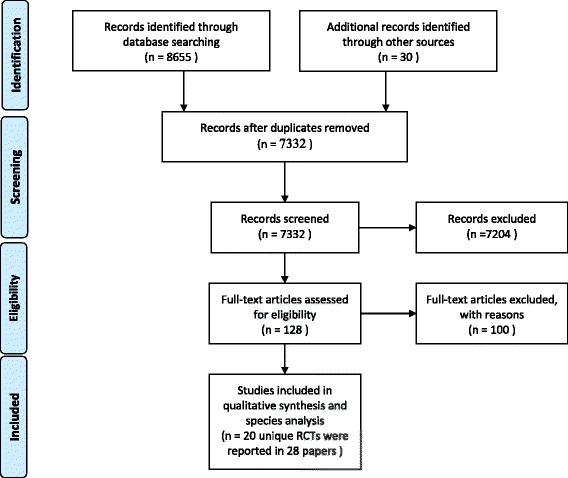
BACKGROUND: A negative experience in childbirth is associated with chronic maternal morbidities. The aim of this systematic review and meta-analysis was to identify currently available successful interventions to create a positive perception of childbirth experience which can prevent psychological birth trauma. METHODS: Randomized controlled trials of interventions in pregnancy or labour which aimed to improve childbirth experience versus usual care were identified from 1994 to September 2016. Low risk pregnant or childbearing women were chosen as the study population. PEDRO scale and Cochrane risk of bias tool were used for quality assessment. Pooled effect estimates were calculated when more than two studies had similar intervention. If it was not possible to include a study in the meta-analysis, its data were summarized narratively. RESULTS: After screening of 7832 titles/abstracts, 20 trials including 22,800 participants from 12 countries were included. Successful strategies to create a positive perception of childbirth experience were supporting women during birth (Risk Ratio = 1.35, 95% Confidence Interval: 1.07 to 1.71), intrapartum care with minimal intervention (Risk Ratio = 1.29, 95% Confidence Interval:1.15 to 1.45) and birth preparedness and readiness for complications (Mean Difference = 3.27, 95% Confidence Interval: 0.66 to 5.88). Most of the relaxation and pain relief strategies were not successful to create a positive birth experience (Mean Difference = - 2.64, 95% Confidence Intervention: - 6.80 to 1.52). CONCLUSION: The most effective strategies to create a positive birth experience are supporting women during birth, intrapartum care with minimal intervention and birth preparedness. This study might be helpful in clinical approaches and designing future studies about prevention of the negative and traumatic birth experiences.
Overview
The claims and statistics of this paper haven’t been checked yet.
Free: it reads the open-access text and checks the first 5 claims that cite a source we can check. Create a free account to check every claim.
Integrity signals
Registry
Cites
Statistics
Figures




Verification
Claims the paper makes
The claims and statistics of this paper haven’t been checked yet.
Free: it reads the open-access text and checks the first 5 claims that cite a source we can check. Create a free account to check every claim.
Claims other papers make about this one
Each is checked against this paper’s own text: does it say what the citing paper says it does?
The source backs part of the claim, not all of it — or backs it for a different population, condition or comparison.
In the citing paper
“These traumatic births can lead to various psychological consequences, including stress, anxiety, fear of death, and posttraumatic stress disorder [41].”
From Understanding mothers’ lived experiences of postpartum depression: a qualitative phenomenological study (2025) · cites this paper as [41]
Experimental — accuracy not yet measuredThe cited source says what the claim attributes to it.
In the citing paper
“A meta-analysis supports our findings, showing that continuous midwifery care empowers women with information on the optimal time to go to the hospital, leading to fewer labour interventions and greater satisfaction [57].”
From Effect of midwifery students’ continuity of care program on women’s experiences of maternity care: A randomised controlled trial (2026) · cites this paper as [57]
The cited source says what the claim attributes to it.
In the citing paper
“Childbirth is among the most challenging psychological events for women, with 10–34% of women experiencing traumatic birth experiences.”
From Understanding mothers’ lived experiences of postpartum depression: a qualitative phenomenological study (2025) · cites this paper as [41]
Self-check
Percentages, sums and reported differences re-computed from the paper’s own numbers.
The self-check needs the paper’s full text.
Citations
Cites
Methods of Meta-Analysis: Correcting Error and Bias in Research Findings
Schmidt, F. L., & Hunter, J. E. (2015) · doi:10.4135/9781483398105 · Cited by 5,542
Midwife-led continuity models versus other models of care for childbearing women
Sandall, J., Soltani, H., Gates, S., Shennan, A., & Devane, D. (2013) · Cochrane Database of Systematic Reviews · doi:10.1002/14651858.cd004667.pub3 · Cited by 1,226
Continuous support for women during childbirth
Hodnett, E. D., Gates, S., Hofmeyr, G. J., & Sakala, C. (2012) · Cochrane Database of Systematic Reviews · doi:10.1002/14651858.cd003766.pub4 · Cited by 1,155
Pain and women's satisfaction with the experience of childbirth: A systematic review
Hodnett, E. D. (2002) · American Journal of Obstetrics and Gynecology · doi:10.1016/s0002-9378(02)70189-0 · Cited by 967 · cited 5×
“Ethically it is not appropriate to conduct a RCT on professional behavior of caregivers [14].”
BackgroundInfluentialContinuous Support for Women During Childbirth
Hodnett, E. D., Gates, S., Hofmeyr, G. J., & Sakala, C. (2005) · Birth · doi:10.1111/j.0730-7659.2005.00336.x · Cited by 886
Prevalence and Predictors of Women's Experience of Psychological Trauma During Childbirth
Soet, J. E., Brack, G. A., & DiIorio, C. (2003) · Birth · doi:10.1046/j.1523-536x.2003.00215.x · Cited by 733 · cited 9×
“Therefore, it is evident there is a lack of recommendations within national guidelines regarding the prevention of PBT [1, 13].”
BackgroundInfluentialWomen's perceptions and experiences of a traumatic birth: a meta-ethnography
Elmir, R., Schmied, V., Wilkes, L., & Jackson, D. (2010) · Journal of Advanced Nursing · doi:10.1111/j.1365-2648.2010.05391.x · Cited by 432 · cited 7×
“Therefore, it is evident there is a lack of recommendations within national guidelines regarding the prevention of PBT [1, 13].”
BackgroundInfluentialPosttraumatic stress disorder after childbirth: A cross sectional study
Wijma, K., Söderquist, J., & Wijma, B. (1997) · Journal of Anxiety Disorders · doi:10.1016/s0887-6185(97)00041-8 · Cited by 418 · cited 1×
“Since then, studies began to assess maternal experience with regard to psychological aspects of childbirth [20].”
BackgroundDencker, A., Taft, C., Bergqvist, L., Lilja, H., & Berg, M. (2010) · BMC Pregnancy and Childbirth · doi:10.1186/1471-2393-10-81 · Cited by 365 · cited 2×
“It should be noted access to maternity care is directly influenced by socioeconomic disparities [52]; this confounding factor has been compared between groups across different studies and no differences were detected.”
BackgroundResultAyers, S., Eagle, A., & Waring, H. (2006) · Psychology, Health & Medicine · doi:10.1080/13548500600708409 · Cited by 345 · cited 7×
“Therefore, it is evident there is a lack of recommendations within national guidelines regarding the prevention of PBT [1, 13].”
BackgroundInfluential
Research works printed but not linked: 2
- Nichols FH The meaning of the childbirth experience: A review of the literature J Perinat Educ 1996 5 71 77
- Waltz CF, Strickland OL, Lenz ER. Measurement in nursing and health research. 4th ed: Springer Publishing Company; 2010.
Cited by
Items 301–325 of 325
A experiência do parto nas gestantes vivendo com o HIV
de Azevedo, A. P. (2026) · Portuguese National Funding Agency for Science, Research and Technology (RCAAP Project by FCT)
Perinatal Care Experiences as Voiced by Black Women Birthing in an Urban Academic Medical Center
Arciniega, N., Vaughn, B., & Sledge, J. (2026) · Nursing for Women s Health · doi:10.1016/j.nwh.2025.11.007
MUMCU, N., Koç, E., Bal, S., Karakaya, N., Rüzgar, Ş., & Topatan, S. (2026) · BMC Pregnancy and Childbirth · doi:10.1186/s12884-026-09135-9
“It is crucial for this process to be completed as a joyful event rather than a crisis for the woman [2].”
InfluentialGökgöz, İ. Ü. A., Özdemir, S., Turfan, E. Ç., Yıldırım, C., Özçoban, F. A., Küçükoğlu, S., Durmuş, M. K., Ataş, A. N., Bay, H., Çilesiz, E., et al. (2026) · Akademisyen Kitabevi eBooks · doi:10.37609/akya.4139
Gökgöz, İ. Ü. A., & Özkan, H. (2026) · BMC Pregnancy and Childbirth · doi:10.1186/s12884-026-09172-4
Doğan, E., Reyhan, F. A., & Uncu, B. (2026) · Journal of Reproductive and Infant Psychology · doi:10.1080/02646838.2026.2679527
Schunk, M., Hübener, C., Robert, S., Bayerl, S. P., & Luegmair, K. (2026) · Healthcare · doi:10.3390/healthcare14121607
Guided Imagery and Music for Labor Pain, Anxiety, and Birth Experience: A Randomized Trial
Uncu, B., Yılmaz, T., Sarıkaya, N., & Durmuş, M. K. (2026) · Journal of Integrative and Complementary Medicine · doi:10.1177/27683605261458521
Partner’s support during childbirth and women's mental health problems during the postpartum period
Tavares, D. S. M. (2024) · Portuguese National Funding Agency for Science, Research and Technology (RCAAP Project by FCT)
Yulghunlu, F. A., Mohammad‐Alizadeh‐Charandabi, S., Abbasalizadeh, F., Hajizadeh, K., & Mirghafourvand, M. (2026) · Journal of Health Population and Nutrition · doi:10.1186/s41043-026-01364-0
“Evidence indicates that for low-risk women, this strategy can decrease the incidence of unnecessary medical procedures, such as cesarean sections, while enhancing satisfaction with the delivery experience [57].”
Psychometric properties of the City Birth Trauma Scale in Black trauma-exposed women
Lipschutz, R. S., Karra, S., Stanhope, K. K., Nugent, N. R., Arthur, M., Wallace, S., McAfee, E. E., Ravi, M., Lathan, E. C., Britt, A. J., et al. (2026) · European Journal of Psychotraumatology · doi:10.1080/20008066.2026.2690729
Hasnita, Y., Oviana, A., Delima, M., & Andriani, Y. (2026) · Borneo Nursing Journal (BNJ) · doi:10.61878/bnj.v8i2.898
Derechos humanos y salud mental: Especial protección a la maternidad y la infancia
del Castillo, R. P. (2026) · doi:10.33732/td-49
Assessment and improvement of postpartum recovery
Frijmersum, Z. Z. (2026) · doi:10.5463/thesis.1625
Grampayre, M., Debost‐Legrand, A., Guittier, M.-J., Rivière, O., Vendittelli, F., & Barasinski, C. (2026) · Scientific Reports · doi:10.1038/s41598-026-62009-0
Özdemir, S. Ç., Güldür, A., Turgut, N., & Şat, S. Ö. (2026) · BMC Pregnancy and Childbirth · doi:10.1186/s12884-026-09791-x
Associations of maternal mood on the outcome of childbirth: a latent profile analysis
Yang, Z., Liu, H., Cai, Q., Zhu, X., Chen, Z., & Zhang, F. (2026) · Reproductive Health · doi:10.1186/s12978-026-02434-6
Anderson, G., Neri, C., di Pasquo, E., Martino, C., Tartaglia, S., Danza, M., Preziosi, J., Fermo, L. B. D., Filippini, A., Anselmo, M., et al. (2026) · PLoS ONE · doi:10.1371/journal.pone.0352315
“Women receiving visual biofeedback report a greater sense of control and understanding of the pushing process, which positively influences their childbirth experience [15].”
Bašková, M., Slotová, I., Škodová, Z., & Maskálová, E. (2026) · European Journal of Midwifery · doi:10.18332/ejm/226841
Çataloluk, A., Şener, R., & Sağlam, H. (2026) · BMC Pregnancy and Childbirth · doi:10.1186/s12884-026-09958-6
“Furthermore, fear of childbirth, an intervention-based birth experience, inadequate pain management, concerns about epidural anesthesia, and long, difficult labor processes also contribute to negative birth experiences [2, 37].”
Said, F. A., Barako, T., & Atsali, E. N. (2026) · Kenyan Journal of Nursing & Midwifery
مقایسه رعایت اصول اخلاق پزشکی و ادراک درد زایمان از دیدگاه زنان قوم لر و فارس
Bozorgian, L., Janghorban, R., & Yadollahi, P. (2023) · Faṣlnāmah-i akhlāq-i pizishkī./Faṣlnāmah-i akhlāq-i pizishkī. · doi:10.22037/mej.v16i47.39654
AHOUINGNAN, N. F. M. H. (2023) · JOURNAL DE LA SAGO (Gynécologie – Obstétrique et Santé de la Reproduction)
Usui, Y., Haruna, M., Sasagawa, E., Yonezawa, K., & Hikita, N. (2026) · Psychiatry and Clinical Neurosciences Reports · doi:10.1002/pcn5.70434
Cross-cultural adaptation and validation of the Japanese version of the Mistreatment Index
Sasabe, F., Usui, Y., Yonezawa, K., Tanaka, M., Yokoyama, M., Doering, K., Kurikawa, M., & Haruna, M. (2026) · Midwifery · doi:10.1016/j.midw.2026.105056
Metadata
- Authors
- Taheri, M., Takian, A., Taghizadeh, Z., Jafari, N., & Sarafraz, N.
- Affiliations
- Tehran University of Medical Sciences (IR)
- Ministry of Health and Medical Education (IR)
- Corresponding author
- Taghizadeh, Ziba
- Venue
- Reproductive Health
- Published
- 2018-05-02
- Volume
- 15
- Issue
- 1
- Pages
- 73-73
- ISSN
- 1742-4755 (ISSN-L)
- PMC
- PMC5932889
- OpenAlex
- W2807579791
- Semantic Scholar
- eb7f4386120445ac0a3eb395b948d666f8863679
- Cited by
- 253
- References
- 55
- Citations by year
- 2026: 21 · 2025: 41 · 2024: 66 · 2023: 34 · 2022: 36 · 2021: 23 · 2020: 22 · 2019: 7 · 2018: 3
- FWCI
- 2.22
- Type
- journal article
- Language
- en
- Open access
- gold
- doi.org
- Licence
- cc-by
- creativecommons.org/licenses/by/4.0/ (tdm)
- Locations
- Reproductive Health (publishedVersion, cc-by)
- Europe PMC (PubMed Central) (publishedVersion, other-oa)
- PubMed Central (publishedVersion, cc-by)
- PubMed (publishedVersion)
- DOAJ (DOAJ: Directory of Open Access Journals) (submittedVersion, cc-by-sa)
- Funders
- Tehran University of Medical Sciences and Health Services (95-02-28-32630)
- Topics
- Health Sciences › Medicine › Obstetrics and Gynecology › Maternal and Perinatal Health Interventions
- Health Sciences › Medicine › Public Health, Environmental and Occupational Health › Maternal Mental Health During Pregnancy and Postpartum
- Health Sciences › Medicine › Obstetrics and Gynecology › Pregnancy-related medical research
- Keywords
- childbirth experience, positive birth experience, intrapartum care, minimal intervention, childbirth support, childbirth preparation, relaxation techniques, pain relief during labour, prenatal intervention, maternal morbidity
- MeSH terms
- Female, Humans, Labor, Obstetric, Perception, Pregnancy, Prenatal Care, Stress, Psychological, Randomized Controlled Trials as Topic, Patient Satisfaction, Parturition, Postpartum Period, Pain Management
About these checks
Registry, retraction, Cites and statistics results are computed, not judged, with one exception: a printed reference that no index lists is read once by a model before it counts as a citation error. Claims are extracted by a model and kept only when their quote appears verbatim in the text; each cited source is then checked, with a model’s help, for whether it says what the claim relies on. Those verdicts can be wrong — read the claim’s quote and the cited source before relying on one.
Statistics and arithmetic are recomputed, not judged.
Confidence bands are shown only for fields calibrated on our annotated test set. None is calibrated yet, so no band is shown.
What counts as a claim ›How we measure confidence ›How we check this ›
Are you an author, or do you see a problem with this page? Request a review
Data sources
Bibliographic data: Semantic Scholar, OpenAlex, Crossref.
Contains information from the Semantic Scholar Academic Graph Datasets, made available under the ODC Attribution License (ODC-BY 1.0).
Semantic Scholar’s data is described in: Kinney, R., et al. (2023). The Semantic Scholar Open Data Platform. arXiv:2301.10140.
