

The alarmin IL-1α is a master cytokine in acute lung inflammation induced by silica micro- and nanoparticles
Open accessThe DOI matches its Crossref record; 86 of the 89 references it cites were found in a registry or an index.
Abstract
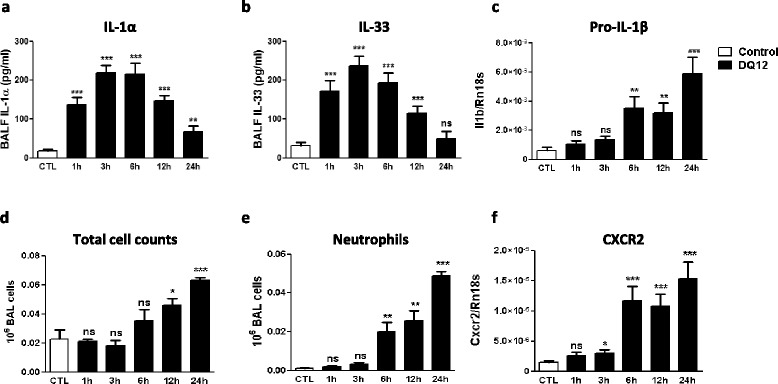
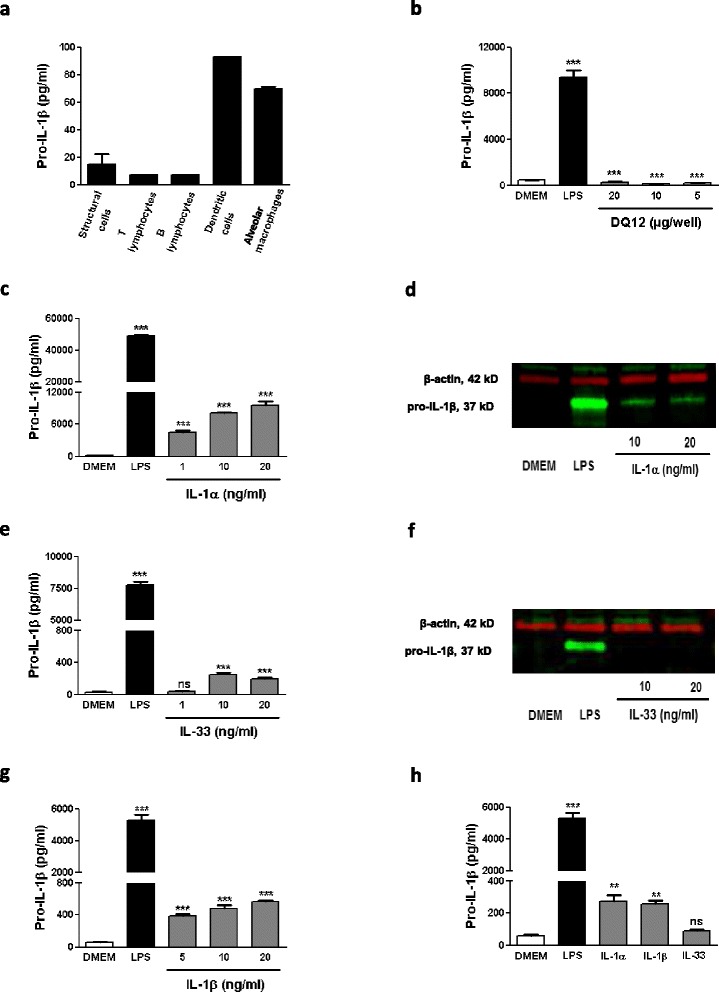
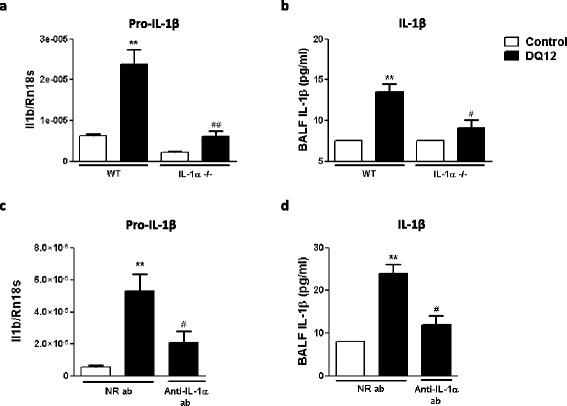
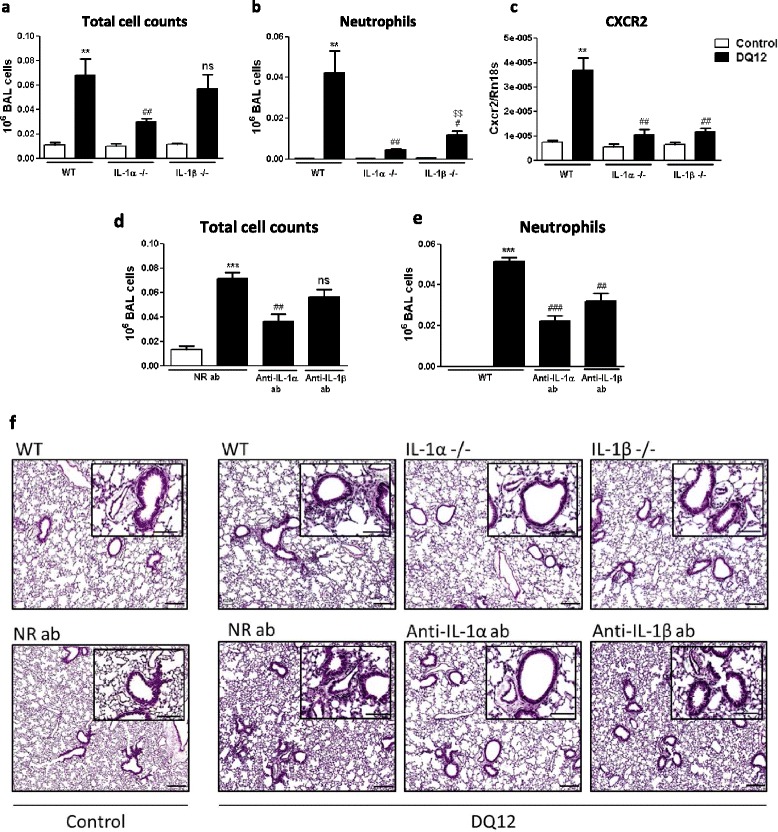
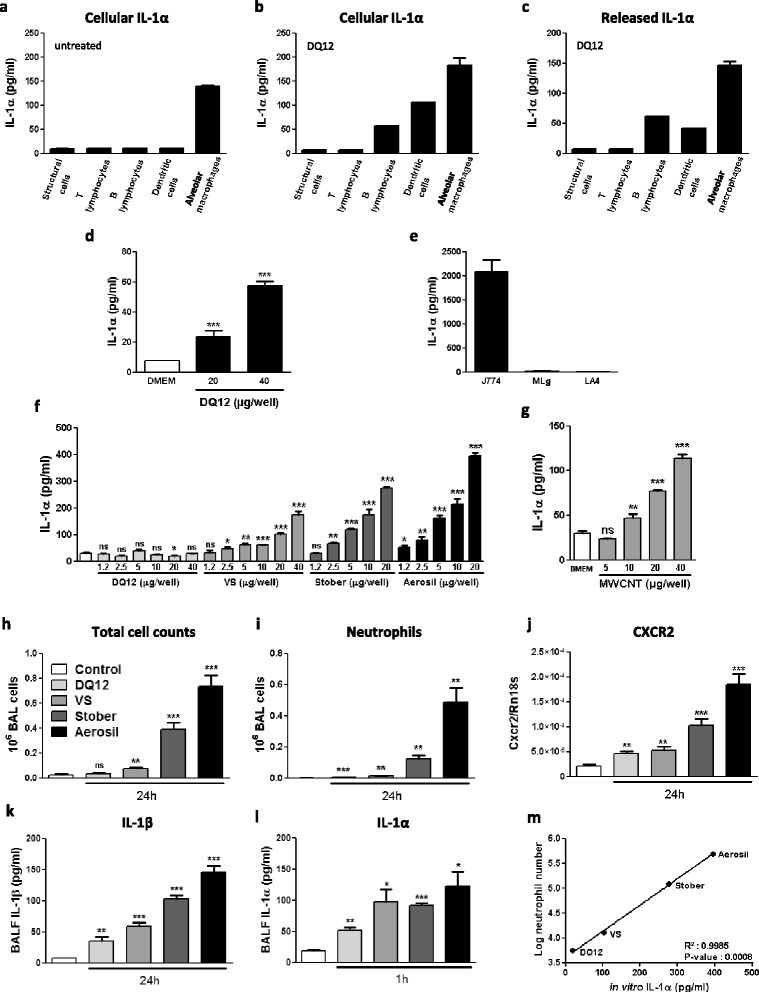
BACKGROUND: Inflammasome-activated IL-1β plays a major role in lung neutrophilic inflammation induced by inhaled silica. However, the exact mechanisms that contribute to the initial production of precursor IL-1β (pro-IL-1β) are still unclear. Here, we assessed the implication of alarmins (IL-1α, IL-33 and HMGB1) in the lung response to silica particles and found that IL-1α is a master cytokine that regulates IL-1β expression. METHODS: Pro- and mature IL-1β as well as alarmins were assessed by ELISA, Western Blot or qRT-PCR in macrophage cultures and in mouse lung following nano- and micrometric silica exposure. Implication of these immune mediators in the establishment of lung inflammatory responses to silica was investigated in knock-out mice or after antibody blockade by evaluating pulmonary neutrophil counts, CXCR2 expression and degree of histological injury. RESULTS: We found that the early release of IL-1α and IL-33, but not HMGB1 in alveolar space preceded the lung expression of pro-IL-1β and neutrophilic inflammation in silica-treated mice. In vitro, the production of pro-IL-1β by alveolar macrophages was significantly induced by recombinant IL-1α but not by IL-33. Neutralization or deletion of IL-1α reduced IL-1β production and neutrophil accumulation after silica in mice. Finally, IL-1α released by J774 macrophages after in vitro exposure to a range of micro- and nanoparticles of silica was correlated with the degree of lung inflammation induced in vivo by these particles. CONCLUSIONS: We demonstrated that in response to silica exposure, IL-1α is rapidly released from pre-existing stocks in alveolar macrophages and promotes subsequent lung inflammation through the stimulation of IL-1β production. Moreover, we demonstrated that in vitro IL-1α release from macrophages can be used to predict the acute inflammogenic activity of silica micro- and nanoparticles.
Overview
The claims and statistics of this paper haven’t been checked yet.
Free: it reads the open-access text and checks the first 5 claims that cite a source we can check. Create a free account to check every claim.
Integrity signals
Registry
Cites
Statistics
Figures
Verification
Claims the paper makes
The claims and statistics of this paper haven’t been checked yet.
Free: it reads the open-access text and checks the first 5 claims that cite a source we can check. Create a free account to check every claim.
Claims other papers make about this one
Each is checked against this paper’s own text: does it say what the citing paper says it does?
In the citing paper
“The closely related homolog IL-1α is, in contrast to IL-1β, biologically active, although little is known about its activation and secretion. IL-1α represents a key alarmin from dying cells and plays a pivotal role in acute particle-induced lung inflammation (37).”
From Volcanic Ash Activates the NLRP3 Inflammasome in Murine and Human Macrophages (2018) · cites this paper as [37]
Self-check
Percentages, sums and reported differences re-computed from the paper’s own numbers.
The self-check needs the paper’s full text.
Citations
Cites
1 retracted
Yang, H., Lundbäck, P., Ottosson, L., Erlandsson-Harris, H., Venereau, E., Bianchi, M. E., Al-Abed, Y., Andersson, U., Tracey, K. J., & Antoine, D. J. (2012) · Molecular Medicine · doi:10.2119/molmed.2011.00389 · Cited by 407 · cited 2×
“This suggest that the complexation with other inflammatory molecules [62] or the redox status of HMGB1 [25] are mandatory for HMGB1 inflammatory activity.”
BackgroundRetractedGout-associated uric acid crystals activate the NALP3 inflammasome
Martinon, F., Pétrilli, V., Mayor, A., Tardivel, A., & Tschopp, J. (2006) · Nature · doi:10.1038/nature04516 · Cited by 5,326 · cited 2×
“The role of the IL-1 family in particle-induced neutrophilic inflammation has been extensively investigated mainly by using IL-1 signaling pathway inhibition [3,11] i.”
BackgroundA metalloproteinase disintegrin that releases tumour-necrosis factor-α from cells
Black, R. A., Rauch, C. T., Kozlosky, C. J., Peschon, J. J., Slack, J. L., Wolfson, M. F., Castner, B. J., Stocking, K. L., Reddy, P., Srinivasan, S., et al. (1997) · Nature · doi:10.1038/385729a0 · Cited by 3,149
Hornung, V., Bauernfeind, F., Halle, A., Samstad, E. O., Kono, H., Rock, K. L., Fitzgerald, K. A., & Latz, E. (2008) · Nature Immunology · doi:10.1038/ni.1631 · Cited by 3,065 · cited 3×
“The role of the IL-1 family in particle-induced neutrophilic inflammation has been extensively investigated mainly by using IL-1 signaling pathway inhibition [3,11] i.”
BackgroundSterile inflammation: sensing and reacting to damage
Chen, G. Y., & Nuñez, G. (2010) · Nature Reviews Immunology · doi:10.1038/nri2873 · Cited by 3,051 · cited 1×
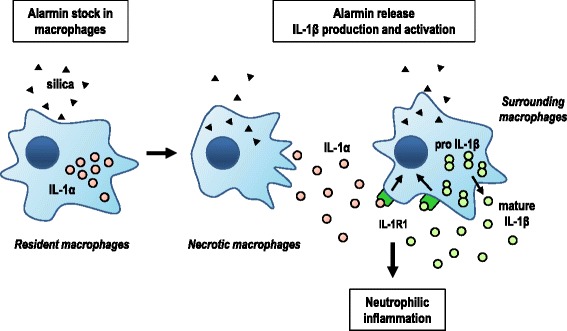
“In models of sterile inflammation, damaged and necrotic cells release intracellular stores of biologically active alarmins that initiate subsequent pro-inflammatory cytokine transcription and neutrophil recruitment [30,31].”
BackgroundInnate Immune Activation Through Nalp3 Inflammasome Sensing of Asbestos and Silica
Dostert, C., Pétrilli, V., Van Bruggen, R., Steele, C., Mossman, B. T., & Tschopp, J. (2008) · Science · doi:10.1126/science.1156995 · Cited by 2,658
Interleukin-1 in the pathogenesis and treatment of inflammatory diseases
Dinarello, C. A. (2011) · Blood · doi:10.1182/blood-2010-07-273417 · Cited by 2,248 · cited 3×
“However, contrary to IL-1β, IL-1α does not require maturation and/or exocytosis to be active; its precursors form can activate IL-1R1 or translocate to the nucleus where it will modify inflammatory gene transcription [32].”
BackgroundUnusual inflammatory and fibrogenic pulmonary responses to single-walled carbon nanotubes in mice
Shvedova, A. A., Kisin, E. R., Mercer, R., Murray, A. R., Johnson, V. J., Potapovich, A. I., Tyurina, Y. Y., Gorelik, O., Arepalli, S., Schwegler-Berry, D., et al. (2005) · American Journal of Physiology-Lung Cellular and Molecular Physiology · doi:10.1152/ajplung.00084.2005 · Cited by 1,312 · cited 1×
“It is well known that TNF-α is a key factor in the development of lung inflammation upon particle exposure [33,65-67].”
BackgroundLeung, C. C., Yu, I. T. S., & Chen, W. (2012) · The Lancet · doi:10.1016/s0140-6736(12)60235-9 · Cited by 1,193
Mechanisms in the Pathogenesis of Asbestosis and Silicosis
MOSSMAN, B. T., & CHURG, A. (1998) · American Journal of Respiratory and Critical Care Medicine · doi:10.1164/ajrccm.157.5.9707141 · Cited by 971 · cited 2×
“Finally, amorphous silica particles are generally regarded as less harmful than the crystalline forms [48-50].”
BackgroundThe Nalp3 inflammasome is essential for the development of silicosis
Cassel, S. L., Eisenbarth, S. C., Iyer, S. S., Sadler, J. J., Colegio, O. R., Tephly, L. A., Carter, A. B., Rothman, P. B., Flavell, R. A., & Sutterwala, F. S. (2008) · Proceedings of the National Academy of Sciences · doi:10.1073/pnas.0803933105 · Cited by 907 · cited 2×
“Several studies have demonstrated that K efflux, cytosolic release of lysosomal cathepsins and mitochondriaderived factors such as reactive oxygen species (ROS) are involved in the NLRP3 inflammasome assembly and activation by micro- and nanoparticles [7-11].”
BackgroundThe Sterile Inflammatory Response
Rock, K. L., Latz, E., Ontiveros, F., & Kono, H. (2010) · Annual Review of Immunology · doi:10.1146/annurev-immunol-030409-101311 · Cited by 865 · cited 1×
“In models of sterile inflammation, damaged and necrotic cells release intracellular stores of biologically active alarmins that initiate subsequent pro-inflammatory cytokine transcription and neutrophil recruitment [30,31].”
BackgroundThe inflammasome: an integrated view
Gross, O., Thomas, C. J., Guarda, G., & Tschopp, J. (2011) · Immunological Reviews · doi:10.1111/j.1600-065x.2011.01046.x · Cited by 778 · cited 1×
“It is, however, surprising that the signal(s) triggering NFκbmediated up-regulation of pro-IL-1β after particle exposure remain(s) unknown [12,13].”
BackgroundMutually exclusive redox forms of HMGB1 promote cell recruitment or proinflammatory cytokine release
Venereau, E., Casalgrandi, M., Schiraldi, M., Antoine, D. J., Cattaneo, A., De Marchis, F., Liu, J., Antonelli, A., Preti, A., Raeli, L., et al. (2012) · Journal of Experimental Medicine · doi:10.1084/jem.20120189 · Cited by 720 · cited 1×
“Several forms of recombinant HMGB1 [25,26] had no effect on pro-IL1β expression when added to macrophages (data not shown).”
BackgroundHorai, R., Asano, M., Sudo, K., Kanuka, H., Suzuki, M., Nishihara, M., Takahashi, M., & Iwakura, Y. (1998) · The Journal of Experimental Medicine · doi:10.1084/jem.187.9.1463 · Cited by 611
Hiscott, J., Marois, J., Garoufalis, J., D'Addario, M., Roulston, A., Kwan, I., Pepin, N., Lacoste, J., Nguyen, H., & Bensi, G. (1993) · Molecular and Cellular Biology · doi:10.1128/mcb.13.10.6231 · Cited by 585 · cited 1×
“Also, IL-1β positively autoregulates its own synthesis via NFκb binding activity [6].”
BackgroundThe cytokine activity of HMGB1
Yang, H., Wang, H., Czura, C. J., & Tracey, K. J. (2005) · Journal of Leukocyte Biology · doi:10.1189/jlb.1104648 · Cited by 545 · cited 2×
“Upon cell necrosis, the released IL-1α, IL-33 and HMGB1 alarmins alone or complexed to other molecules bind their respective receptors (IL-1R1, ST2 and RAGE, TLR2 or TLR4) and promote pro-inflammatory gene transcription via the NFκb pathway [16].”
BackgroundDinarello, C. A., Ikejima, T., Warner, S. J. C., Orencole, S. F., Lonnemann, G., Cannon, J. G., & Libby, P. (1987) · The Journal of Immunology · doi:10.4049/jimmunol.139.6.1902 · Cited by 537 · cited 1×
“The effect of IL-1α on IL-1β induction was also directly observed on macrophages in vitro [5,15,32,38-40].”
BackgroundYazdi, A. S., Guarda, G., Riteau, N., Drexler, S. K., Tardivel, A., Couillin, I., & Tschopp, J. (2010) · Proceedings of the National Academy of Sciences · doi:10.1073/pnas.1008155107 · Cited by 525 · cited 2×
“IL-1β production is well defined in immune cells but other sources such as epithelial cells have been recently identified [23,24].”
BackgroundSelf-citationAlarmins: awaiting a clinical response
Chan, J. K., Roth, J., Oppenheim, J. J., Tracey, K. J., Vogl, T., Feldmann, M., Horwood, N., & Nanchahal, J. (2012) · Journal of Clinical Investigation · doi:10.1172/jci62423 · Cited by 511 · cited 1×
“This occurs for instance in response to sterile injury or infection [19].”
BackgroundBlocking IL-1 in systemic inflammation
Dinarello, C. A. (2005) · The Journal of Experimental Medicine · doi:10.1084/jem.20050640 · Cited by 494 · cited 1×
“through the use of Anakinra (a recombinant non-glycosylated version of human IL-1Ra) is already in use for the clinical treatment of gout and other IL-1β-related autoimmune diseases [75].”
BackgroundGroß, O., Yazdi, A. S., Thomas, C. J., Masin, M., Heinz, L. X., Guarda, G., Quadroni, M., Drexler, S. K., & Tschopp, J. (2012) · Immunity · doi:10.1016/j.immuni.2012.01.018 · Cited by 460 · cited 7×
“It has been demonstrated that the pro-inflammatory cytokine interleukin-1β (IL-1β) drives particle-induced inflammation by enhancing granulocyte migration and accumulation to inflammatory sites [3-5].”
BackgroundMethodResultInfluentialFranchi, L., & Núñez, G. (2008) · European Journal of Immunology · doi:10.1002/eji.200838549 · Cited by 450 · cited 1×
“The effect of IL-1α on IL-1β induction was also directly observed on macrophages in vitro [5,15,32,38-40].”
BackgroundWillart, M. A. M., Deswarte, K., Pouliot, P., Braun, H., Beyaert, R., Lambrecht, B. N., & Hammad, H. (2012) · Journal of Experimental Medicine · doi:10.1084/jem.20112691 · Cited by 411 · cited 1×
“Injection of neutralizing antibodies directed against IL-1α [27,28] also markedly decreased the levels of IL-1β transcript (Figure 3c) and protein (Figure 3d) in response to silica.”
BackgroundCogswell, J. P., Godlevski, M. M., Wisely, G. B., Clay, W. C., Leesnitzer, L. M., Ways, J. P., & Gray, J. G. (1994) · The Journal of Immunology · doi:10.4049/jimmunol.153.2.712 · Cited by 371 · cited 1×
“Additionally, some constitutive cytokines that possess intracellular functions such as IL1α, IL-33 and High Mobility Group Box 1 (HMGB1) are also considered as alarmins [5,15-18].”
BackgroundIL-22 Is Required for Imiquimod-Induced Psoriasiform Skin Inflammation in Mice
Van Belle, A. B., de Heusch, M., Lemaire, M. M., Hendrickx, E., Warnier, G., Dunussi-Joannopoulos, K., Fouser, L. A., Renauld, J.-C., & Dumoutier, L. (2012) · The Journal of Immunology · doi:10.4049/jimmunol.1102224 · Cited by 287 · cited 1×
“Although the expression of this chemokine receptor has been reported in macrophages, CXCR2 is mainly expressed by recruited neutrophils and can be used as a biomarker of neutrophilic inflammation [22].”
BackgroundPauwels, N. S., Bracke, K. R., Dupont, L. L., Van Pottelberge, G. R., Provoost, S., Vanden Berghe, T., Vandenabeele, P., Lambrecht, B. N., Joos, G. F., & Brusselle, G. G. (2011) · European Respiratory Journal · doi:10.1183/09031936.00158110 · Cited by 250
Sterile inflammation of endothelial cell-derived apoptotic bodies is mediated by interleukin-1α
Berda-Haddad, Y., Robert, S., Salers, P., Zekraoui, L., Farnarier, C., Dinarello, C. A., Dignat-George, F., & Kaplanski, G. (2011) · Proceedings of the National Academy of Sciences · doi:10.1073/pnas.1116848108 · Cited by 232 · cited 1×
“IL-1α is a constitutive and ubiquitary cytokine (reviewed in [32]) whose release is frequently assessed in epithelial cells [41,42] or macrophages [15,43,44].”
BackgroundInnate and adaptive immune responses to cell death
Rock, K. L., Lai, J., & Kono, H. (2011) · Immunological Reviews · doi:10.1111/j.1600-065x.2011.01040.x · Cited by 221 · cited 1×
“It is, however, surprising that the signal(s) triggering NFκbmediated up-regulation of pro-IL-1β after particle exposure remain(s) unknown [12,13].”
BackgroundJohnston, C. J. (2000) · Toxicological Sciences · doi:10.1093/toxsci/56.2.405 · Cited by 195 · cited 1×
“Finally, amorphous silica particles are generally regarded as less harmful than the crystalline forms [48-50].”
BackgroundInduction of Inflammasome-dependent Pyroptosis by Carbon Black Nanoparticles
Reisetter, A. C., Stebounova, L. V., Baltrusaitis, J., Powers, L., Gupta, A., Grassian, V. H., & Monick, M. M. (2011) · Journal of Biological Chemistry · doi:10.1074/jbc.m111.238519 · Cited by 192 · cited 1×
“It has been recently shown that particles-induced pyroptosis, a lytic mode of cell death that exhibits cytoplasmic swelling and ruptures of the plasma membrane [47].”
BackgroundSuwara, M. I., Green, N. J., Borthwick, L. A., Mann, J., Mayer-Barber, K. D., Barron, L., Corris, P. A., Farrow, S. N., Wynn, T. A., Fisher, A. J., et al. (2014) · Mucosal Immunology · doi:10.1038/mi.2013.87 · Cited by 171 · cited 2×
“Alveolar and peritoneal neutrophilic accumulation induced by bleomycin, cigarette smoke or MSU were reduced when IL-1α response was inhibited [5,27,37,41].”
Hamilton, R. F., Wu, Z., Mitra, S., Shaw, P. K., & Holian, A. (2013) · Particle and Fibre Toxicology · doi:10.1186/1743-8977-10-57 · Cited by 171 · cited 1×
“MWCNT, known for their lung inflammatory potential [29], also induced IL-1α release from macrophages (Figure 5g).”
BackgroundSilica induces NLRP3 inflammasome activation in human lung epithelial cells
Peeters, P. M., Perkins, T. N., Wouters, E. F., Mossman, B. T., & Reynaert, N. L. (2013) · Particle and Fibre Toxicology · doi:10.1186/1743-8977-10-3 · Cited by 169 · cited 2×
“IL-1β production is well defined in immune cells but other sources such as epithelial cells have been recently identified [23,24].”
BackgroundPotential Role of Resident Islet Macrophage Activation in the Initiation of Autoimmune Diabetes
Arnush, M., Scarim, A. L., Heitmeier, M. R., Kelly, C. B., & Corbett, J. A. (1998) · The Journal of Immunology · doi:10.4049/jimmunol.160.6.2684 · Cited by 161 · cited 1×
“Resident macrophages have already been implicated in IL-1α release under inflammatory conditions in lung [37], but also in liver [45] and brain [46].”
BackgroundBotelho, F. M., Bauer, C. M. T., Finch, D., Nikota, J. K., Zavitz, C. C. J., Kelly, A., Lambert, K. N., Piper, S., Foster, M. L., Goldring, J. J. P., et al. (2011) · PLoS ONE · doi:10.1371/journal.pone.0028457 · Cited by 152
Thomassen, L. C. J., Aerts, A., Rabolli, V., Lison, D., Gonzalez, L., Kirsch-Volders, M., Napierska, D., Hoet, P. H., Kirschhock, C. E. A., & Martens, J. A. (2010) · Langmuir · doi:10.1021/la902050k · Cited by 148 · cited 1×
“Sterile St?ber particle suspension were synthesized based on St?ber process and its characterization was described elsewhere [81].”
MethodSelf-citationMeunier, É., Coste, A., Olagnier, D. P., Authier, H., Lefèvre, L., Dardenne, C., Bernad, J., Béraud, M., Flahaut, E., & Pipy, B. (2011) · Nanomedicine Nanotechnology Biology and Medicine · doi:10.1016/j.nano.2011.11.004 · Cited by 145
Comparison of non-crystalline silica nanoparticles in IL-1β release from macrophages
Sandberg, W. J., Låg, M., Holme, J. A., Friede, B., Gualtieri, M., Kruszewski, M., Schwarze, P. E., Skuland, T., & Refsnes, M. (2012) · Particle and Fibre Toxicology · doi:10.1186/1743-8977-9-32 · Cited by 142 · cited 1×
“These observations are in line with the recent conclusions offered by several experimental studies indicating that some amorphous (nano)silica particles need to be considered as potent toxic entities [51-55].”
ResultWähämaa, H., Schierbeck, H., Hreggvidsdottir, H. S., Palmblad, K., Aveberger, A.-C., Andersson, U., & Harris, H. E. (2011) · Arthritis Research & Therapy · doi:10.1186/ar3450 · Cited by 137 · cited 1×
“This suggest that the complexation with other inflammatory molecules [62] or the redox status of HMGB1 [25] are mandatory for HMGB1 inflammatory activity.”
BackgroundClouter, A. (2001) · Toxicological Sciences · doi:10.1093/toxsci/63.1.90 · Cited by 131 · cited 1×
“(b) [83].”
SRIVASTAVA, K. D., ROM, W. N., JAGIRDAR, J., YIE, T.-A., GORDON, T., & TCHOU-WONG, K.-M. (2002) · American Journal of Respiratory and Critical Care Medicine · doi:10.1164/ajrccm.165.4.2106009 · Cited by 127 · cited 1×
“Some reports specifically demonstrated a tempering effect of IL-1β deficiency on particle-induced inflammation [4,5,35,36].”
BackgroundThe Phagocytosis and Toxicity of Amorphous Silica
Costantini, L. M., Gilberti, R. M., & Knecht, D. A. (2011) · PLoS ONE · doi:10.1371/journal.pone.0014647 · Cited by 126 · cited 1×
“These observations are in line with the recent conclusions offered by several experimental studies indicating that some amorphous (nano)silica particles need to be considered as potent toxic entities [51-55].”
ResultGuo, J., Gu, N.-L., Chen, J., Shi, T., Zhou, Y., Rong, Y., Zhou, T., Yang, W., Cui, X., & Chen, W. (2013) · Archives of Toxicology · doi:10.1007/s00204-013-1063-z · Cited by 124 · cited 3×
“Recent evidence demonstrated that NLRP3 inflammasome activation by particles is pivotal in the release of the pro-inflammatory cytokine IL-1β and the development of lung inflammation [4,7,11].”
BackgroundHillegass, J. M., Miller, J. M., MacPherson, M. B., Westbom, C. M., Sayan, M., Thompson, J. K., Macura, S. L., Perkins, T. N., Beuschel, S. L., Alexeeva, V., et al. (2013) · Particle and Fibre Toxicology · doi:10.1186/1743-8977-10-39 · Cited by 120 · cited 4×
“Indeed, the pro-inflammatory cytokine TNF-α is also known to induce NFkB activation and IL-1β production [33,63].”
BackgroundInfluentialSager, T. M., Wolfarth, M. W., Andrew, M., Hubbs, A., Friend, S., Chen, T.-H., Porter, D. W., Wu, N., Yang, F., Hamilton, R. F., et al. (2014) · Nanotoxicology · doi:10.3109/17435390.2013.779757 · Cited by 115 · cited 1×
“Indeed, recent studies have shown that IL-33 is released in response to particle administration [56,57] and is implicated in lung inflammation after 30 days [58-60].”
BackgroundIshii, H., Fujii, T., Hogg, J. C., Hayashi, S., Mukae, H., Vincent, R., & van Eeden, S. F. (2004) · American Journal of Physiology-Lung Cellular and Molecular Physiology · doi:10.1152/ajplung.00290.2003 · Cited by 110 · cited 1×
“It is well known that TNF-α is a key factor in the development of lung inflammation upon particle exposure [33,65-67].”
BackgroundLefrançais, E., & Cayrol, C. (2012) · European Cytokine Network · doi:10.1684/ecn.2012.0320 · Cited by 107 · cited 1×
“Additionally, some constitutive cytokines that possess intracellular functions such as IL1α, IL-33 and High Mobility Group Box 1 (HMGB1) are also considered as alarmins [5,15-18].”
BackgroundA Carbon Nanotube Toxicity Paradigm Driven by Mast Cells and the IL‐33/ST2 Axis
Katwa, P., Wang, X., Urankar, R. N., Podila, R., Hilderbrand, S. C., Fick, R. B., Rao, A. M., Ke, P. C., Wingard, C. J., & Brown, J. M. (2012) · Small · doi:10.1002/smll.201200873 · Cited by 94 · cited 1×
“Indeed, recent studies have shown that IL-33 is released in response to particle administration [56,57] and is implicated in lung inflammation after 30 days [58-60].”
BackgroundDoes Vitreous Silica Contradict the Toxicity of the Crystalline Silica Paradigm?
Ghiazza, M., Polimeni, M., Fenoglio, I., Gazzano, E., Ghigo, D., & Fubini, B. (2010) · Chemical Research in Toxicology · doi:10.1021/tx900369x · Cited by 92 · cited 1×
“These observations are in line with the recent conclusions offered by several experimental studies indicating that some amorphous (nano)silica particles need to be considered as potent toxic entities [51-55].”
ResultCytokine regulation of IL-1 beta gene expression in the human polymorphonuclear leukocyte.
Marucha, P. T., Zeff, R. A., & Kreutzer, D. L. (1990) · The Journal of Immunology · doi:10.4049/jimmunol.145.9.2932 · Cited by 91 · cited 1×
“Indeed, the pro-inflammatory cytokine TNF-α is also known to induce NFkB activation and IL-1β production [33,63].”
BackgroundAlbrecht, C., Schins, R. P. F., Höhr, D., Becker, A. J., Shi, T., Knaapen, A. M., & Borm, P. J. A. (2004) · American Journal of Respiratory Cell and Molecular Biology · doi:10.1165/rcmb.2003-0300oc · Cited by 91 · cited 1×
“(a) [82].”
In Search of the Chemical Basis of the Hemolytic Potential of Silicas
Pavan, C., Tomatis, M., Ghiazza, M., Rabolli, V., Bolis, V., Lison, D., & Fubini, B. (2013) · Chemical Research in Toxicology · doi:10.1021/tx400105f · Cited by 87 · cited 1×
“These observations are in line with the recent conclusions offered by several experimental studies indicating that some amorphous (nano)silica particles need to be considered as potent toxic entities [51-55].”
ResultSelf-citationBølling, A. K., Herseth, J. I., Låg, M., Refsnes, M., & Schwarze, P. E. (2008) · Toxicology and Applied Pharmacology · doi:10.1016/j.taap.2008.07.002 · Cited by 82 · cited 1×
“It is well known that TNF-α is a key factor in the development of lung inflammation upon particle exposure [33,65-67].”
BackgroundCritical Role of Aquaporins in Interleukin 1β (IL-1β)-induced Inflammation
Rabolli, V., Wallemme, L., Re, S. L., Uwambayinema, F., Palmai‐Pallag, M., Thomassen, L. C. J., Tyteca, D., Octave, J., Marbaix, É., Lison, D., et al. (2014) · Journal of Biological Chemistry · doi:10.1074/jbc.m113.534594 · Cited by 78
Self-citationKatoh, M., Hamajima, F., Ogasawara, T., & Hata, K.-I. (2009) · The Journal of Toxicological Sciences · doi:10.2131/jts.34.327 · Cited by 78 · cited 1×
“These results are in agreement with other studies that demonstrated the predictive value of IL-1α release to screen the skin irritative potential of various chemicals [77-80].”
ResultBeamer, C. A., Girtsman, T. A., Seaver, B. P., Finsaas, K. J., Migliaccio, C. T., Perry, V. K., Rottman, J. B., Smith, D. E., & Holian, A. (2013) · Nanotoxicology · doi:10.3109/17435390.2012.702230 · Cited by 78 · cited 1×
“Indeed, recent studies have shown that IL-33 is released in response to particle administration [56,57] and is implicated in lung inflammation after 30 days [58-60].”
BackgroundSilica-induced cytokine release from A549 cells: importance of surface area versus size
Hefland, R. B., Schwarzel, P. E., Johansen, B. V., Myran, T., Uthus, N., & Refsnes, M. (2001) · Human & Experimental Toxicology · doi:10.1191/096032701676225130 · Cited by 76 · cited 1×
“These observations are in line with the recent conclusions offered by several experimental studies indicating that some amorphous (nano)silica particles need to be considered as potent toxic entities [51-55].”
ResultKono, H., Orlowski, G. M., Patel, Z., & Rock, K. L. (2012) · The Journal of Immunology · doi:10.4049/jimmunol.1200136 · Cited by 75 · cited 1×
“Some reports specifically demonstrated a tempering effect of IL-1β deficiency on particle-induced inflammation [4,5,35,36].”
BackgroundSilica induces apoptosis in macrophages and the release of interleukin-1 α and interleukin-1β
Sarih, M., Souvannavong, V., Brown, S. C., & Adam, A. (1993) · Journal of Leukocyte Biology · doi:10.1002/jlb.54.5.407 · Cited by 72
The Alarmin HMGN1 Contributes to Antitumor Immunity and Is a Potent Immunoadjuvant
Wei, F., Yang, D., Tewary, P., Li, Y., Li, S., Chen, X., Howard, O. M. Z., Bustin, M., & Oppenheim, J. J. (2014) · Cancer Research · doi:10.1158/0008-5472.can-13-2042 · Cited by 70 · cited 1×
“, uric acid) [14].”
Huaux, F., Lardot, C., Arras, M., Delos, M., Many, M.-C., Coutelier, J.-P., Buchet, J.-P., Renauld, J.-C., & Lison, D. (1999) · American Journal of Respiratory Cell and Molecular Biology · doi:10.1165/ajrcmb.20.4.3342 · Cited by 67 · cited 1×
“5 mg/mouse inducing robust lung inflammation [20,21].”
Self-citationDifferential pulmonary responses in rats inhaling crystalline, colloidal or amorphous silica dusts.
Warheit, D. B., McHugh, T. A., & Hartsky, M. A. (1995) · PubMed · Cited by 67
Nymark, P. E. H., Alstrup, J., Suhonen, S., Yahia, K., Vippola, M., Kleinjans, J. C. S., Catalán, J., Norppa, H., van Delft, J. H. M., & Briedé, J. J. (2014) · Particle and Fibre Toxicology · doi:10.1186/1743-8977-11-4 · Cited by 64 · cited 1×
“(f) [85].”
Relative Release of lnterleukin-1β and lnterleukin-1 Receptor Antagonist by Alveolar Macrophages
Kline, J. N., Schwartz, D. A., Monick, M. M., Floerchinger, C. S., & Hunninghake, G. W. (1993) · CHEST Journal · doi:10.1378/chest.104.1.47 · Cited by 63 · cited 1×
“Increased levels of IL-1 cytokines were reported in patients suffering from particle-associated inflammatory diseases such as asbestosis [71] and silicosis [72-74].”
BackgroundCytokine polymorphisms in silicosis and other pneumoconioses
Yücesoy, B., Vallyathan, V., Landsittel, D. P., Simeonova, P. P., & Luster, M. I. (2002) · Molecular and Cellular Biochemistry · doi:10.1023/a:1015987007360 · Cited by 63 · cited 1×
“Increased levels of IL-1 cytokines were reported in patients suffering from particle-associated inflammatory diseases such as asbestosis [71] and silicosis [72-74].”
BackgroundShadie, A. M., Herbert, C. A., & Kumar, R. K. (2014) · Clinical & Experimental Immunology · doi:10.1111/cei.12348 · Cited by 59 · cited 1×
“Indeed, recent studies have shown that IL-33 is released in response to particle administration [56,57] and is implicated in lung inflammation after 30 days [58-60].”
BackgroundUncoupling between Inflammatory and Fibrotic Responses to Silica: Evidence from MyD88 Knockout Mice
Re, S. L., Yakoub, Y., Devosse, R., Uwambayinema, F., Couillin, I., Ryffel, B., Marbaix, É., Lison, D., & Huaux, F. (2014) · PLoS ONE · doi:10.1371/journal.pone.0099383 · Cited by 54 · cited 1×
“However, this strong effect on inflammatory development was not concomitantly accompanied by a reduction of lung fibrosis, suggesting that inhibiting IL-1-driven inflammation may not be sufficient to control the fibrotic lung disease after particle exposure [76].”
BackgroundSelf-citationOzone Exposure of Macrophages Induces an Alveolar Epithelial Chemokine Response through IL-1α
Manzer, R., Dinarello, C. A., McConville, G., & Mason, R. J. (2007) · American Journal of Respiratory Cell and Molecular Biology · doi:10.1165/rcmb.2007-0250oc · Cited by 53 · cited 1×
“IL-1α is a constitutive and ubiquitary cytokine (reviewed in [32]) whose release is frequently assessed in epithelial cells [41,42] or macrophages [15,43,44].”
BackgroundRabolli, V., Re, S. L., Uwambayinema, F., Yakoub, Y., Lison, D., & Huaux, F. (2011) · Toxicology Letters · doi:10.1016/j.toxlet.2011.03.009 · Cited by 50 · cited 1×
“Total RNA extraction and quantification by qRT-PCR were performed as described [86].”
MethodSelf-citationNuclear retention of IL‐1α by necrotic cells: A mechanism to dampen sterile inflammation
Luheshi, N. M., McColl, B. W., & Brough, D. (2009) · European Journal of Immunology · doi:10.1002/eji.200939712 · Cited by 48 · cited 1×
“Resident macrophages have already been implicated in IL-1α release under inflammatory conditions in lung [37], but also in liver [45] and brain [46].”
BackgroundRole of Urokinase in the Fibrogenic Response of the Lung to Mineral Particles
Lardot, C., HUAUX, F. A., Broeckaert, F., Declerck, P. J., Delos, M., Fubini, B., & Lison, D. (1998) · American Journal of Respiratory and Critical Care Medicine · doi:10.1164/ajrccm.157.2.9707052 · Cited by 47 · cited 1×
“5 mg/mouse inducing robust lung inflammation [20,21].”
Self-citationIn vitro human skin irritation test for evaluation of medical device extracts
Casas, J., Lewerenz, G. M., Rankin, E. A., Willoughby, J. A., Blakeman, L. C., McKim, J. M., & Coleman, K. P. (2013) · Toxicology in Vitro · doi:10.1016/j.tiv.2013.08.006 · Cited by 45 · cited 1×
“These results are in agreement with other studies that demonstrated the predictive value of IL-1α release to screen the skin irritative potential of various chemicals [77-80].”
ResultGeneralization of Entropy Based Divergence Measures for Symbolic Sequence Analysis
Ré, M. A., & Azad, R. K. (2014) · PLoS ONE · doi:10.1371/journal.pone.0093532 · Cited by 44
Extracellular HMGB1 regulates multi-walled carbon nanotube-induced inflammation in vivo
Jessop, F., & Holian, A. (2015) · Nanotoxicology · doi:10.3109/17435390.2014.933904 · Cited by 44 · cited 2×
“The secreted HMGB1 enhanced IL-1β release from alveolar macrophages and its neutralization reduced lung IL-1β content and inflammation in vivo [61].”
BackgroundDevelopment of an in vitro corrosion/irritation prediction assay using the EpiDerm™ skin model
Kidd, D., Johnson, M., & Clements, J. (2007) · Toxicology in Vitro · doi:10.1016/j.tiv.2007.08.018 · Cited by 35 · cited 1×
“These results are in agreement with other studies that demonstrated the predictive value of IL-1α release to screen the skin irritative potential of various chemicals [77-80].”
ResultEndogenous IL-1α is a chromatin-associated protein in mouse macrophages
Lamacchia, C., Rodriguez, E., Palmer, G., & Gabay, C. (2013) · Cytokine · doi:10.1016/j.cyto.2013.04.010 · Cited by 34 · cited 3×
“The effect of IL-1α on IL-1β induction was also directly observed on macrophages in vitro [5,15,32,38-40].”
BackgroundHao, H., Zheng, B., Nasser, S., Ren, W., Latteier, M., Wooley, P. H., & Morawa, L. G. (2009) · Journal of Biomedical Materials Research Part A · doi:10.1002/jbm.a.32474 · Cited by 30 · cited 1×
“Additional investigations are also needed to better delineate the role the alarmin S100 and heat shock proteins highly secreted following particle exposure [68-70].”
BackgroundJuang, Y., Lai, B., Chien, H., Ho, M. F., Cheng, T., & Lai, C. (2014) · Rapid Communications in Mass Spectrometry · doi:10.1002/rcm.6866 · Cited by 29 · cited 1×
“Additional investigations are also needed to better delineate the role the alarmin S100 and heat shock proteins highly secreted following particle exposure [68-70].”
BackgroundLewis, J. A., Rao, K. M. K., Castranova, V., Vallyathan, V., Dennis, W. E., & Knechtges, P. L. (2007) · Environmental Health Perspectives · doi:10.1289/ehp.9745 · Cited by 27 · cited 1×
“Additional investigations are also needed to better delineate the role the alarmin S100 and heat shock proteins highly secreted following particle exposure [68-70].”
BackgroundIL-33 modulates chronic airway resistance changes induced by multi-walled carbon nanotubes
Wang, X., Shannahan, J. H., & Brown, J. M. (2014) · Inhalation Toxicology · doi:10.3109/08958378.2014.880202 · Cited by 23 · cited 1×
“Indeed, recent studies have shown that IL-33 is released in response to particle administration [56,57] and is implicated in lung inflammation after 30 days [58-60].”
BackgroundZhou, T., Rong, Y., Liu, Y., Zhou, Y., Guo, J., Cheng, W., Wang, H., & Chen, W. (2012) · Journal of Occupational and Environmental Medicine · doi:10.1097/jom.0b013e31824525ab · Cited by 23 · cited 1×
“Increased levels of IL-1 cytokines were reported in patients suffering from particle-associated inflammatory diseases such as asbestosis [71] and silicosis [72-74].”
BackgroundCrocidolite-induced pulmonary fibrosis in mice. Cytokinetic and biochemical studies.
Adamson, I. Y. R., & Bowden, D. H. (1986) · PubMed · Cited by 20
Accelerated Silicosis With Mixed-Dust Pneumoconiosis in a Hard-Metal Grinder
Cohen, C., Fireman, E. M., Ganor, E., Mann, A., Ribak, J., & Lerman, Y. (1999) · Journal of Occupational and Environmental Medicine · doi:10.1097/00043764-199906000-00014 · Cited by 20 · cited 1×
“Increased levels of IL-1 cytokines were reported in patients suffering from particle-associated inflammatory diseases such as asbestosis [71] and silicosis [72-74].”
BackgroundSouvannavong, V., & Adam, A. (1990) · Journal of Leukocyte Biology · doi:10.1002/jlb.48.2.183 · Cited by 20 · cited 1×
“Several studies have demonstrated that K efflux, cytosolic release of lysosomal cathepsins and mitochondriaderived factors such as reactive oxygen species (ROS) are involved in the NLRP3 inflammasome assembly and activation by micro- and nanoparticles [7-11].”
BackgroundSon, D., Na, Y., Cho, W.-S., Lee, B.-H., Heo, Y., Park, J., & Seok, S. H. (2012) · Toxicology Letters · doi:10.1016/j.toxlet.2012.10.017 · Cited by 16 · cited 1×
“These results are in agreement with other studies that demonstrated the predictive value of IL-1α release to screen the skin irritative potential of various chemicals [77-80].”
ResultLe Maho, S., Bignon, J., Lambré, C., Jaurand, M., & Masse, R. S. (1984) · PubMed · Cited by 10
Crocidolite-induced pulmonary fibrosis in mice
Bowden, D. H., & Adamson, I. Y. R. (1986) · Fed. Proc., Fed. Am. Soc. Exp. Biol.; (United States) · Cited by 5
Cited by
Silica, Silicosis, and Autoimmunity
Pollard, K. M. (2016) · Frontiers in Immunology · doi:10.3389/fimmu.2016.00097 · Cited by 431
Silica nanoparticles: Biomedical applications and toxicity
Huang, Y., Li, P., Zhao, R., Zhao, L., Liu, J., Peng, S., Fu, X., Wang, X., Luo, R., Wang, R., et al. (2022) · Biomedicine & Pharmacotherapy · doi:10.1016/j.biopha.2022.113053 · Cited by 356
The Toxicity of Silica Nanoparticles to the Immune System
Chen, L., Liu, J., Zhang, Y., Zhang, G., Kang, Y., Chen, A., Feng, X., & Shao, L. (2018) · Nanomedicine · doi:10.2217/nnm-2018-0076 · Cited by 318
The NLRP3 inflammasome in pathogenic particle and fibre-associated lung inflammation and diseases
Sayan, M., & Mossman, B. T. (2015) · Particle and Fibre Toxicology · doi:10.1186/s12989-016-0162-4 · Cited by 296
Øvrevik, J., Refsnes, M., Låg, M., Holme, J., & Schwarze, P. (2015) · Biomolecules · doi:10.3390/biom5031399 · Cited by 241
Metadata
- Authors
- Rabolli, V., Badissi, A. A., Devosse, R., Uwambayinema, F., Yakoub, Y., Palmai-Pallag, M., Lebrun, A., De Gussem, V., Couillin, I., Ryffel, B., Marbaix, E., Lison, D., & Huaux, F.
- Affiliations
- UCLouvain (BE)
- Université d'Orléans (FR)
- Corresponding author
- Huaux, François
- Venue
- Particle and Fibre Toxicology
- Published
- 2014-12
- Volume
- 11
- Issue
- 1
- Pages
- 69-69
- ISSN
- 1743-8977 (ISSN-L)
- PMC
- PMC4279463
- OpenAlex
- W2145373691
- Cited by
- 158
- References
- 89
- Citations by year
- 2026: 6 · 2025: 17 · 2024: 20 · 2023: 12 · 2022: 12 · 2021: 21 · 2020: 17 · 2019: 9 · 2018: 12 · 2017: 17 · 2016: 7 · 2015: 8
- FWCI
- 4.38
- Type
- journal article
- Language
- en
- Open access
- gold
- doi.org
- Locations
- Particle and Fibre Toxicology (publishedVersion, cc-by)
- Europe PMC (PubMed Central) (publishedVersion, cc-by)
- PubMed Central (publishedVersion, cc-by)
- PubMed (publishedVersion)
- Digital Access to Libraries (submittedVersion, other-oa)
- Funders
- European Commission (FP7-HEALTH-F4-2008, 202047)
- Fonds De La Recherche Scientifique - FNRS
- Agence Nationale de Sécurité Sanitaire de l’Alimentation, de l’Environnement et du Travail
- FP7 Health
- Topics
- Life Sciences › Biochemistry, Genetics and Molecular Biology › Molecular Biology › Inflammasome and immune disorders
- Life Sciences › Immunology and Microbiology › Immunology › IL-33, ST2, and ILC Pathways
- Health Sciences › Medicine › Pulmonary and Respiratory Medicine › Interstitial Lung Diseases and Idiopathic Pulmonary Fibrosis
- Keywords
- IL-1α, IL-1β, alarmins, silica nanoparticles, silica microparticles, acute lung inflammation, neutrophilic inflammation, alveolar macrophages, pro-IL-1β, IL-33, HMGB1, CXCR2
- MeSH terms
- Air Pollutants, Animals, Cell Line, Cells, Cultured, Female, Lung, Mice, Inbred C57BL, Microspheres, Particle Size, Pneumonia, Silicon Dioxide, Macrophages, Alveolar, Mice, Knockout, Inhalation Exposure, Respiratory Mucosa, Neutrophil Infiltration, Toxicity Tests, Acute, Interleukin-1alpha, Interleukin-1beta, Nanoparticles, Antibodies, Neutralizing
About these checks
Registry, retraction, Cites and statistics results are computed, not judged, with one exception: a printed reference that no index lists is read once by a model before it counts as a citation error. Claims are extracted by a model and kept only when their quote appears verbatim in the text; each cited source is then checked, with a model’s help, for whether it says what the claim relies on. Those verdicts can be wrong — read the claim’s quote and the cited source before relying on one.
Statistics and arithmetic are recomputed, not judged.
Confidence bands are shown only for fields calibrated on our annotated test set. None is calibrated yet, so no band is shown.
What counts as a claim ›How we measure confidence ›How we check this ›
Are you an author, or do you see a problem with this page? Request a review
Data sources
Bibliographic data: Semantic Scholar, OpenAlex, Crossref.
Contains information from the Semantic Scholar Academic Graph Datasets, made available under the ODC Attribution License (ODC-BY 1.0).
Semantic Scholar’s data is described in: Kinney, R., et al. (2023). The Semantic Scholar Open Data Platform. arXiv:2301.10140.
