

Characteristics of Indigenous primary health care service delivery models: a systematic scoping review
Open accessThe DOI matches its Crossref record; 99 of the 101 references it cites were found in a registry or an index.
Abstract
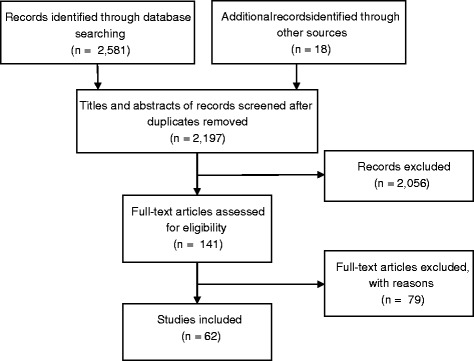
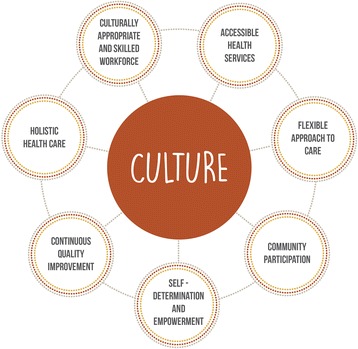
BACKGROUND: Indigenous populations have poorer health outcomes compared to their non-Indigenous counterparts. The evolution of Indigenous primary health care services arose from mainstream health services being unable to adequately meet the needs of Indigenous communities and Indigenous peoples often being excluded and marginalised from mainstream health services. Part of the solution has been to establish Indigenous specific primary health care services, for and managed by Indigenous peoples. There are a number of reasons why Indigenous primary health care services are more likely than mainstream services to improve the health of Indigenous communities. Their success is partly due to the fact that they often provide comprehensive programs that incorporate treatment and management, prevention and health promotion, as well as addressing the social determinants of health. However, there are gaps in the evidence base including the characteristics that contribute to the success of Indigenous primary health care services in providing comprehensive primary health care. This systematic scoping review aims to identify the characteristics of Indigenous primary health care service delivery models. METHOD: This systematic scoping review was led by an Aboriginal researcher, using the Joanna Briggs Institute Scoping Review Methodology. All published peer-reviewed and grey literature indexed in PubMed, EBSCO CINAHL, Embase, Informit, Mednar, and Trove databases from September 1978 to May 2015 were reviewed for inclusion. Studies were included if they describe the characteristics of service delivery models implemented within an Indigenous primary health care service. Sixty-two studies met the inclusion criteria. Data were extracted and then thematically analysed to identify the characteristics of Indigenous PHC service delivery models. RESULTS: Culture was the most prominent characteristic underpinning all of the other seven characteristics which were identified - accessible health services, community participation, continuous quality improvement, culturally appropriate and skilled workforce, flexible approach to care, holistic health care, and self-determination and empowerment. CONCLUSION: While the eight characteristics were clearly distinguishable within the review, the interdependence between each characteristic was also evident. These findings were used to develop a new Indigenous PHC Service Delivery Model, which clearly demonstrates some of the unique characteristics of Indigenous specific models.
Overview
The claims and statistics of this paper haven’t been checked yet.
Free: it reads the open-access text and checks the first 5 claims that cite a source we can check. Create a free account to check every claim.
Integrity signals
Registry
Cites
Statistics
Figures
Verification
Claims the paper makes
The claims and statistics of this paper haven’t been checked yet.
Free: it reads the open-access text and checks the first 5 claims that cite a source we can check. Create a free account to check every claim.
Claims other papers make about this one
Each is checked against this paper’s own text: does it say what the citing paper says it does?
The source backs part of the claim, not all of it — or backs it for a different population, condition or comparison.
In the citing paper
“Gaps abound in services to Indigenous healthcare and inadequate primary healthcare for FN in the Canadian context [22,23].”
From Canada First Nations Strengths in Community-Based Primary Healthcare (2022) · cites this paper as [23]
Experimental — accuracy not yet measuredThe source backs part of the claim, not all of it — or backs it for a different population, condition or comparison.
In the citing paper
“Community-based primary healthcare models that facilitate holistic Indigenous approaches, have been shown to more comprehensively address varied determinants of health and wellbeing than mainstream systems, which tend more toward addressing specific concerns [23].”
From Canada First Nations Strengths in Community-Based Primary Healthcare (2022) · cites this paper as [23]
Experimental — accuracy not yet measured
Self-check
Percentages, sums and reported differences re-computed from the paper’s own numbers.
The self-check needs the paper’s full text.
Citations
Cites
Preferred Reporting Items for Systematic Reviews and Meta-Analyses: the PRISMA statement
Moher, D., Liberati, A., Tetzlaff, J., Altman, D. G., & for the PRISMA Group (2009) · BMJ · doi:10.1136/bmj.b2535 · Cited by 83,823
Preferred Reporting Items for Systematic Reviews and Meta-Analyses: The PRISMA Statement
Moher, D., Liberati, A., Tetzlaff, J., Altman, D. G., & The PRISMA Group (2009) · PLoS Medicine · doi:10.1371/journal.pmed.1000097 · Cited by 64,042
Preferred reporting items for systematic reviews and meta-analyses: the PRISMA Statement.
(2009) · PubMed Central · Cited by 44,859
Preferred reporting items for systematic reviews and meta-analyses: The PRISMA statement
Moher, D., Liberati, A., Tetzlaff, J., Altman, D. G., & the PRISMA Group* (2009) · Annals of Internal Medicine · doi:10.7326/0003-4819-151-4-200908180-00135 · Cited by 37,554
Wang, G., Ma, R., Qiao, G., Wada, K., Aizawa, Y., & Satoh, T. (2015) · Integrative Medicine International · doi:10.1159/000368408 · Cited by 18,657
Guidance for conducting systematic scoping reviews
Peters, M. D. J., Godfrey, C. M., Khalil, H., McInerney, P., Parker, D., & Soares, C. B. (2015) · International Journal of Evidence-Based Healthcare · doi:10.1097/xeb.0000000000000050 · Cited by 7,472 · cited 2×
“A scoping review methodology was chosen, as it is the most appropriate methodology for synthesising a body of evidence that has yet to be comprehensively reviewed [19].”
MethodOrganizing Care for Patients with Chronic Illness
Wagner, E. H., Austin, B. T., & Korff, M. V. (1996) · The Milbank Quarterly · doi:10.2307/3350391 · Cited by 2,877 · cited 2×
“ample, the Chronic Care Model [90] focuses on implementing evidence based care, mobilising community”
BackgroundIndigenous health part 1: Determinants and disease patterns
Gracey, M., & King, M. (2009) · The Lancet · doi:10.1016/s0140-6736(09)60914-4 · Cited by 1,303
Napier, A. D., Ancarno, C., Butler, B., Calabrese, J., Chater, A., Chatterjee, H., Guesnet, F., Horne, R., Jacyna, S., Jadhav, S., et al. (2014) · The Lancet · doi:10.1016/s0140-6736(14)61603-2 · Cited by 849
International Journal of Evidence-Based Healthcare
(2020) · International Journal of Evidence-Based Healthcare · doi:10.1111/(issn)1744-1609 · Cited by 411
Research works printed but not linked: 13
- Lurie N Swift EK Mesauring disparities in access to care Guidnace for the national healthcare disparities report 2002 Washington, D. C The National Academies Press 99 148 25057628
- Lavoie J Policy and financing of indigenous primary health care providers in Canada, Australia and New Zealand 2005 London, England London School of Hygiene and Tropical Medicine
- World Health Organisation. Declaration of Alma-Ata. International conference on primary health care 1978 5-12 September 1978 [14/04/2016]; Available from: http://www.who.int/publications/almaata_declaration_en.pdf.
- QSR International Pty Ltd NVivo qualitative data analysis software 2012
- The Dreamers - Art Therapy for Women. Aborig Islander Health Worker J. 2002;26(6):10.
- Campbell D Ellis R Models of excellence in indigenous community health part one: the aboriginal medical service, Redfern Aboriginal and Islander Health Worker Journal 1995 19 4 4 14
- Dawson A Russel A Caponi A Asthma project at Pika Wiya health services: identifying barriers and developing resources Aboriginal and Islander Health Worker Journal 2003 27 5 20 22
- Tongs J Chatfield H Arabena K The Winnunga Nimmityjah aboriginal health service holistic health Care for Prison Model Aboriginal and Islander Health Worker Journal 2007 31 6 6 8
- Townsville Aboriginal Islanders Health Services Ltd The mums and babies project Families Australia Bulletin 2003 3 Winter 10 11
- Centre for Primary Care Human Systems for Southcentral Foundation’s Nuka system of care 2015 Harvard Boston, Massachusetts
- Anderson KM Olson S Leveraging culture to address health inequalities: examples from native communities 2013 Seattle, United States of America National Academies Press 24830070
- National Advisory Committee on Health and Disability The social, cultural and economic determinants of health in New Zealand: action to improve health 1998 New Zealand Wellington
- Russell L Smiler K Stace H Improving Māori health and reducing inequalities between Māori and non-Māori: has the primary health care strategy worked for Māori? 2013 New Zealand Health Research Council Of New Zealand and The Ministry Of Health Wellington
Cited by
Items 201–283 of 283
Foreword by Professor Christine Neville
(2021) · Cambridge University Press eBooks · doi:10.1017/9781108894166.001
(2021) · Cambridge University Press eBooks · doi:10.1017/9781108894166.002
Atenção Primária à Saúde diante das necessidades e singularidades amazônicas
Sousa, A. B. L. (2022) · Digital Library of Theses and Dissertations (Universidade de São Paulo) · doi:10.11606/t.6.2022.tde-18042022-131411 · Cited by 1
Midwifery practices and Aboriginal and Torres Strait Islander women: Urban and regional perspectives
(2021) · Cambridge University Press eBooks · doi:10.1017/9781108894166.009 · Cited by 1
Cultural understandings of Aboriginal suicide from a social and emotional wellbeing perspective
(2021) · Cambridge University Press eBooks · doi:10.1017/9781108894166.016
(2021) · Cambridge University Press eBooks · doi:10.1017/9781108894166.019
Editorial: Client Centric View of Population Health in the Digital Age—Making Healthcare Personal
Tanniru, M. R., Sule, A. A., & Shajahan, A. (2022) · Frontiers in Public Health · doi:10.3389/fpubh.2022.941423
Leclerc, A.-M. (2022) · International Journal of Indigenous Health · doi:10.32799/ijih.v17i2.36734 · Cited by 1
Oyibo, K., Salim, S., Fadrique, L. X., Boger, J. N., Urrutia, G. I. D. C., Batman, S., Agdeppa, E., & Morita, P. P. (2022) · doi:10.2196/preprints.44699
Dawson, D., McDonough, D., Reilly, R. E., & Charles, J. (2023) · Journal of the Australian Indigenous HealthInfoNet · doi:10.14221/aihjournal.v4n2.6
Schroth, R. J., Achan, G. K., McNally, M., Edwards, J., White, P. L., Neufeld, H. T., Bertone, M. F., Hayes, A., Hai‐Santiago, K., Star, L., et al. (2023) · Promotion de la santé et prévention des maladies chroniques au Canada · doi:10.24095/hpcdp.43.9.01f
Norton, A., Homayra, F., Defriend, C., Barker, B., Meilleur, L. R., Hayashi, K., & Nosyk, B. (2024) · BMC Health Services Research · doi:10.1186/s12913-024-10672-2 · Cited by 2
Dórame-López, N. A., Bobadilla-Tapia, L. E., Tapia-Villaseñor, A., Gallegos-Aguilar, A. C., Serna-Gutiérrez, A., Alemán-Mateo, H., & Esparza‐Romero, J. (2024) · Gaceta Médica de México · doi:10.24875/gmm.m24000856
“8,9 The Yaqui ethnic group is an indigenous group that dwells in northwestern Mexico, specifically in the state of Sonora, distributed in eight traditional settlements.”
Colli, A. D., & Garneau, A. B. (2024) · Witness The Canadian Journal of Critical Nursing Discourse · doi:10.25071/2291-5796.160
“Internationally, when discussing culturally appropriate primary care models, the importance of community involvement and an Indigenous workforce is emphasized (Harfield et al., 2018).”
BackgroundSaywell, N. L., Gordon, J., Adams, T., Niazi, I. K., & Hill, J. (2024) · New Zealand Journal of Physiotherapy · doi:10.15619/nzjp.v52i3.458
“At the heart of culturally appropriate services are a skilled workforce, community participation, and self-determination and empowerment (Harfield et al., 2018).”
(2025) · Cambridge Prisms Global Mental Health · doi:10.1017/gmh.2025.11.pr8
(2025) · Cambridge Prisms Global Mental Health · doi:10.1017/gmh.2025.11.pr9
(2024) · Cambridge Prisms Global Mental Health · doi:10.1017/gmh.2025.11.pr2
(2025) · Cambridge Prisms Global Mental Health · doi:10.1017/gmh.2025.11.pr7
(2024) · Cambridge Prisms Global Mental Health · doi:10.1017/gmh.2025.11.pr4
First Nations’ health and well-being: culturally responsive practice in primary health care
Mlcek, S. H., Biles, J. M., & Wilson, R. L. (2025) · Cambridge University Press eBooks · doi:10.1017/9781009464680.008
Guzys, D., & Halcomb, E. (2025) · Cambridge University Press eBooks · doi:10.1017/9781009464680.006
Linton, J., Lin, I. B., Matthews, V., Walke, E., Alves, E. D. S., Davidson, S. R. E., Tutty, A., & Williams, C. M. (2025) · medRxiv · doi:10.1101/2025.04.06.25325313
Wylie, L., Furlano, J. A., & Kehoe, A. K. (2025) · Advances in research ethics and integrity · doi:10.1108/s2398-601820250000012012
Anderson, K. M., Hewlett, N., Elder‐Robinson, E., Garvey, G., Murray, R., Chatfield, B., Fletcher, L., Noble, C., & Howard, K. (2025) · Supportive Care in Cancer · doi:10.1007/s00520-025-09524-4 · Cited by 2
Models of care for Indigenous children in rural and remote settings: A global scoping review
Freeman, J., Stubbs, T., Chadwick, V. L., Pickard, A., Esgin, T., Elliott, E. J., & Martiniuk, A. L. C. (2025) · PLOS Global Public Health · doi:10.1371/journal.pgph.0004934
“Other authors raised the more fundamental question of the appropriateness of adaptation, or whether models of care should be developed from the ground up in each place at each time [28,49].”
Holistic Health Recovery for the Ageing Population: A Multidimensional Approach
da Silva, T. M. H. R. (2025) · IGI Global eBooks · doi:10.4018/979-8-3693-6432-1.ch001 · Cited by 1
Facteurs favorisant l’accessibilité des services sociaux et de santé pour les hommes anicinapek
Pourcelot, H., Labra, Ó., & Asselin, H. (2025) · Canadian social work review · doi:10.7202/1119016ar
Chando, S., Howell, M., Nixon, J., Sherriff, S., Slater, K., Smith, N., Stevenson, L., Dickson, M., Jauré, A., Craig, J. C., et al. (2025) · Australian Journal of Primary Health · doi:10.1071/py25048
Haynes, E., Nelson, L., D’Antoine, H., Katzenellenbogen, J. M., Armstrong, E., Andrews, L., Brown, J., Bowser, N., Walker, R., Stacey, I., et al. (2025) · PLoS ONE · doi:10.1371/journal.pone.0328588
“…ADS, mobilising data literacy, and developing the healthcare research skills, capabilities and leadership of the CRP, wider community, and staff) will allow ACHHOs to prioritise and value community participation, a culturally appropriate and skilled workforce and self-determination [4].”
InfluentialFrameworks and models that promote Métis health: a narrative review
Santos, J. D. M., Carr, T., McHenry, S., Leeder, E., Laroque, S., & Groot, G. (2025) · AlterNative An International Journal of Indigenous Peoples · doi:10.1177/11771801251374209
“The authors argued that the role of culture in models of Indigenous primary care service delivery is the most significant difference between Indigenous service delivery and other models of care (Harfield et al., 2018).”
McAuley, K., Strobel, N., Christensen, D., Edmond, K. M., Jacoby, P. A., & McAullay, D. R. (2025) · BMJ Open · doi:10.1136/bmjopen-2024-089098
Pecjak, E., Patterson, H., Blake, M., Virkutis, R., MacIntyre, T., Poolacherla, S., Semeniuk, R., & Clark, L. A. (2025) · International Journal of Indigenous Health · doi:10.32799/ijih.v21i1.45608
Nanayakkara, N., Atkinson‐Briggs, S., Jenkins, A. J., & Cohen, N. D. (2025) · The Medical Journal of Australia · doi:10.5694/mja2.70108
Mealings, K. T., Halvorsen, L., Nash, K., MacQueen, D., Ward, K., & McMahon, C. M. (2025) · BMJ Open · doi:10.1136/bmjopen-2025-111702
Factors Influencing Success and Long‐Term Engagement With Aunty Roma's Falls Prevention Program
Newton, L., Filewood, K., Pham, M., Gupta, A., Reath, J., & Thomson, D. (2025) · Health Promotion Journal of Australia · doi:10.1002/hpja.70137
Beks, H., Mitchell, F., Charles, J. A., McNamara, K. P., & Versace, V. L. (2022) · Figshare · doi:10.6084/m9.figshare.21582115
Beks, H., Mitchell, F., Charles, J. A., McNamara, K. P., & Versace, V. L. (2022) · Figshare · doi:10.6084/m9.figshare.21582118
Additional file 1 of Ear and hearing care programs for First Nations children: a scoping review
Nash, K., Macniven, R., Clague, L., Coates, H. L. C., Fitzpatrick, M., Gunasekera, H., Gwynne, K., Halvorsen, L., Harkus, S., Holt, L., et al. (2023) · Figshare · doi:10.6084/m9.figshare.22662405
Kong, K., Cass, A., Leach, A. J., Morris, P. S., Kimber, A., Su, J.-Y., & Oguoma, V. M. (2021) · Figshare · doi:10.6084/m9.figshare.14795273
Beks, H., Ewing, G., Charles, J. A., Mitchell, F., Paradies, Y., Clark, R. A., & Versace, V. L. (2020) · Figshare · doi:10.6084/m9.figshare.13212787
Vincze, L. J., Barnes, K. A., Somerville, M., Littlewood, R., Atkins, H., Rogany, A., & Williams, L. T. (2021) · Figshare · doi:10.6084/m9.figshare.14651004
Beks, H., Ewing, G., Charles, J. A., Mitchell, F., Paradies, Y., Clark, R. A., & Versace, V. L. (2020) · Figshare · doi:10.6084/m9.figshare.13212790
Hiyare-Hewage, A., Sinka, V., Grande, E. D., Kerr, M., Kim, S., Mallitt, K.-A., Dickson, M., Jauré, A., Wilson, R., Craig, J. C., et al. (2024) · Figshare · doi:10.6084/m9.figshare.26420353
Additional file 2 of Ear and hearing care programs for First Nations children: a scoping review
Nash, K., Macniven, R., Clague, L., Coates, H. L. C., Fitzpatrick, M., Gunasekera, H., Gwynne, K., Halvorsen, L., Harkus, S., Holt, L., et al. (2023) · Figshare · doi:10.6084/m9.figshare.22662408
Kong, K., Cass, A., Leach, A. J., Morris, P. S., Kimber, A., Su, J.-Y., & Oguoma, V. M. (2021) · Figshare · doi:10.6084/m9.figshare.14795270
Fitzpatrick, K., Ody, M., Goveas, D., Montesanti, S. R., Campbell, P., MacDonald, K., Crowshoe, L. L., Campbell, S., & Roach, P. (2023) · Figshare · doi:10.6084/m9.figshare.22622690
Lucier, K. J., Schuster‐Wallace, C. J., Skead, D., Skead, K., & Dickson‐Anderson, S. E. (2020) · Figshare · doi:10.6084/m9.figshare.13237429
Parry‐Strong, A., Gearry, R. B., Merry, T. L., Weatherall, M., Davies, C., Worthington, A., Bishop, R., Wright, S. R., Lithander, F. E., Foster, M., et al. (2023) · Figshare · doi:10.6084/m9.figshare.24779250
Kong, K., Cass, A., Leach, A. J., Morris, P. S., Kimber, A., Su, J.-Y., & Oguoma, V. M. (2021) · Figshare · doi:10.6084/m9.figshare.14795276
Fitzpatrick, K., Ody, M., Goveas, D., Montesanti, S. R., Campbell, P., MacDonald, K., Crowshoe, L. L., Campbell, S., & Roach, P. (2023) · Figshare · doi:10.6084/m9.figshare.22622687
Beks, H., Ewing, G., Charles, J. A., Mitchell, F., Paradies, Y., Clark, R. A., & Versace, V. L. (2020) · Figshare · doi:10.6084/m9.figshare.13212781
Hiyare-Hewage, A., Sinka, V., Grande, E. D., Kerr, M., Kim, S., Mallitt, K.-A., Dickson, M., Jauré, A., Wilson, R., Craig, J. C., et al. (2024) · Figshare · doi:10.6084/m9.figshare.26420551
Vincze, L. J., Barnes, K. A., Somerville, M., Littlewood, R., Atkins, H., Rogany, A., & Williams, L. T. (2021) · Figshare · doi:10.6084/m9.figshare.14651007
Vincze, L. J., Barnes, K. A., Somerville, M., Littlewood, R., Atkins, H., Rogany, A., & Williams, L. T. (2021) · Figshare · doi:10.6084/m9.figshare.14651010
Beks, H., Mitchell, F., Charles, J. A., McNamara, K. P., & Versace, V. L. (2022) · Figshare · doi:10.6084/m9.figshare.21582112
Beks, H., Ewing, G., Charles, J. A., Mitchell, F., Paradies, Y., Clark, R. A., & Versace, V. L. (2020) · Figshare · doi:10.6084/m9.figshare.13212784
Fitzpatrick, K., Ody, M., Goveas, D., Montesanti, S. R., Campbell, P., MacDonald, K., Crowshoe, L. L., Campbell, S., & Roach, P. (2023) · Figshare · doi:10.6084/m9.figshare.22622693
Harfield, S. G., Purcell, T., Schioldann, E., Ward, J. S., Pearson, O. R., & Azzopardi, P. S. (2024) · Figshare · doi:10.6084/m9.figshare.25734565
Self-citationLucier, K. J., Schuster‐Wallace, C. J., Skead, D., Skead, K., & Dickson‐Anderson, S. E. (2020) · Figshare · doi:10.6084/m9.figshare.13237432
Rohit, A., Kirkham, R., McCarthy, L., Puruntatameri, V., Maple-Brown, L., & Brimblecombe, J. K. (2021) · Figshare · doi:10.6084/m9.figshare.15047574
Clifford, A., Stajic, J., Ward, J. S., & Shakeshaft, A. P. (2026) · Primary Health Care Research & Development · doi:10.1017/s1463423625100807
“There is a lack of research on the effectiveness of models of care in ACCHS (Harfield et al., 2018), despite these services being the main provider of primary health care (AIHW, 2023) to a rapidly growing First Nations Australian population (Australian Bureau of Statistics, 2021).”
Nembaware, S., & Dyll, L. (2026) · Popular Music & Society · doi:10.1080/03007766.2026.2621630
Kandi, L. A., Nguyen, A. T., Zhang, J., Sriram, N., Galiano, R. D., & Gosain, A. K. (2026) · The Cleft Palate-Craniofacial Journal · doi:10.1177/10556656261418392
Rural health care workforce retention measures: A rapid scoping review
Mengeling, M. A., Sears, R., Buchanan, C. H., Howren, M. B., Samuelson, R. J., Miller, K. L., McConnell, C., Wilson, J. R., Archambault, E. G., Anderson, B. L., et al. (2026) · The Journal of Rural Health · doi:10.1111/jrh.70145
Dubois, J. R., Kim, E., Pando-Bravo, J., Martin, L. E., & Yi, R. (2026) · Frontiers in Psychology · doi:10.3389/fpsyg.2026.1764387
“We follow a scoping review framework for this review, as it allows for the comprehensive summarization of a developing body of literature along with the identification of research gaps (Arksey and O'Malley, 2005; Harfield et al., 2018; Wagman et al., 2015).”
Lin, H.-T., SU, H.-F., Ho, H.-H., Chen, F.-T., & Chen, I.-C. (2026) · International Journal for Equity in Health · doi:10.1186/s12939-026-02861-8
“Findings align with international evidence that com-munity-governed, culturally anchored models enhance access and acceptability when supported by stable resourcing [5, 16] and with calls to transition from competency-based to anti-racism and structurally responsive commissioning [10].”
InfluentialMahlatsi, K. S., & Pienaar, A. J. (2026) · Mental Health and Social Inclusion · doi:10.1108/mhsi-09-2025-0247
(Larrakia/Wadjigan), J. C., Wright, C. C. J., Bresson, C., (Larrakia/Wadjigan), T. W., Yalanji), R. R. (., & Cubillo, B. (2026) · Globalization and Health · doi:10.1186/s12992-026-01218-8
“This was measured not against statistical inter-code reliability but rather how Indigenous lived realties were reflected and framed within the media portraying to governance, aspiration and priorities, leadership, engagement benefit to community; this was adapted from Hart-field et al. [41].”
Harfield, S. G., Azzopardi, P. S., Mishra, G. D., & Ward, J. S. (2026) · Journal of Primary Care & Community Health · doi:10.1177/21501319261468844
Self-citationMarza, S. G., Vásquez, K. H. Á., & Velarde, D. I. (2026) · Revista Científica de Enfermería UNITEPC · doi:10.36716/unitepc.v8i1.308
Bhattacharya, S., Dasgupta, A., Jahnavi, G., Venugopal, V., Panigrahi, S., Ghosh, S., Richa, Kumari, A., Kumar, S., Dibyanshu, et al. (2026) · Journal of Family Medicine and Primary Care · doi:10.4103/jfmpc.jfmpc_341_26
“[22] Although the web literature is less standardized on “governance exclusion” than on prevalence, implementation perspectives in rural‑tribal settings repeatedly stress that programme success depends on local legitimacy, culturally competent intermediaries, and trust‑building.”
Braiding knowledges: Integrating Indigenous healing into team-based primary care
Desharnais, J., Goertz, S., Ladak, Z., Morrisseau, K., Hamza, D. M., Katz, A., & Buss, M. (2026) · Canadian Family Physician · doi:10.46747/cfp.720708481
“12 Incorporating Indigenous healing practices—including smudging, talking circles, land-based activities, and visits with Elders—was seen as an essential part of wellness by both patients and providers.”
Mudiyanselage, J. B. (2026) · Queensland University of Technology · doi:10.5204/thesis.eprints.266988
Saim, M. S., Al-Kazzaz, H., Boparai, I., Diarrassouba, M., Kazi, A., Ahmad, H., & Martin, B. D. (2026) · BMC Palliative Care · doi:10.1186/s12904-026-02265-z
“Indigenous health systems research indicates that community authority, service design, and meaningful control over resources are central characteristics of accessible and responsive healthcare models [86, 87].”
Cachagee, M., Smith, A., Larkins, P., Larkin, M., Haag, D. G., Parker, E. J., Bui, E. M., Jamieson, L., & Poirier, B. (2026) · Community Dentistry And Oral Epidemiology · doi:10.1111/cdoe.70113
Structural Components of Indigenous Diabetes Care: An Indigenous-informed Scoping Review
McIntosh, B., Kremer, L., Anderson, A., & Hikaka, J. (2026) · Journal of Racial and Ethnic Health Disparities · doi:10.1007/s40615-026-03162-0
Daramola, I. C., Aleshinloye, O., Eferakeya, E. A., Sanni, B. O., Afolabi, A., & Onabanjo, S. (2026) · OALib · doi:10.4236/oalib.1115853
Minority ethnic heritage parent perceptions of accessing children’s services: a scoping review
Knight, J. S., & Atkinson, C. (2026) · Journal of Children s Services · doi:10.1108/jcs-10-2024-0054
Lau, G. T. Y., Laird, P. J., Aitken, R., Barwick, M. A., Bedford, L., Bowden, E. R., Dalton, C., Everingham, J., Fuery, A., Griffin, R., et al. (2026) · The Medical Journal of Australia · doi:10.5694/mja2.70312 · Cited by 1
McAllister, M., McAullay, D. R., Parsons, D. N., (Murri, L. C., White, J., Colegate, K., Clinch, R., Santos, A. D., & Armstrong, E. (2026) · Disability and Rehabilitation · doi:10.1080/09638288.2026.2731081
Giovannetti, C., Loizaga-Velder, A. K., Rush, B. R., Jaime, R. G. O., Valenzuela, S. M. G., Marcus, O., Agin-Liebes, G., & Vanderplasschen, W. (2026) · Frontiers in Public Health · doi:10.3389/fpubh.2026.1918846
Silva, E. S., Moura, H. S., & Frazão, P. (2026) · Community Dentistry And Oral Epidemiology · doi:10.1111/cdoe.70136
Metadata
- Authors
- Harfield, S. G., Davy, C., McArthur, A., Munn, Z., Brown, A., & Brown, N.
- Affiliations
- University of South Australia (AU)
- South Australian Health and Medical Research Institute (AU)
- The University of Adelaide (AU)
- University of Wollongong (AU)
- Corresponding author
- Harfield, Stephen G.
- Venue
- Globalization and Health
- Published
- 2018-01-25
- Volume
- 14
- Issue
- 1
- Pages
- 12-12
- ISSN
- 1744-8603 (ISSN-L)
- PMC
- PMC5784701
- OpenAlex
- W2787898157
- Cited by
- 270
- References
- 101
- Citations by year
- 2026: 22 · 2025: 27 · 2024: 38 · 2023: 37 · 2022: 38 · 2021: 62 · 2020: 25 · 2019: 9 · 2018: 11
- FWCI
- 4.41
- Type
- journal article
- Language
- en
- Open access
- gold
- doi.org
- Licence
- cc-by
- creativecommons.org/licenses/by/4.0 (tdm)
- creativecommons.org/licenses/by/4.0 (vor)
- Locations
- Globalization and Health (publishedVersion, cc-by)
- PubMed Central (publishedVersion, cc-by)
- PubMed (publishedVersion)
- Figshare (acceptedVersion)
- Research Online (University of Wollongong) (submittedVersion)
- Adelaide Research & Scholarship (AR&S) (University of Adelaide) (submittedVersion, cc-by)
- DOAJ (DOAJ: Directory of Open Access Journals) (submittedVersion, cc-by-sa)
- UniSA Research Outputs Repository (University of South Australia) (submittedVersion)
- Funders
- National Health and Medical Research Council (NHMRC No 1061242)
- Topics
- Social Sciences › Health › Indigenous Health, Education, and Rights
- Health Sciences › Medicine › Family Practice › Primary Care and Health Outcomes
- Social Sciences › Anthropology › Indigenous Cultures and History
- Keywords
- service delivery models, Indigenous health, culturally appropriate care, community participation, self-determination (international law), healthcare workers, holistic care, social determinants of health, health promotion, prevention, continuous quality improvement
- MeSH terms
- Health Services, Indigenous, Humans, Primary Health Care, Models, Organizational
About these checks
Registry, retraction, Cites and statistics results are computed, not judged, with one exception: a printed reference that no index lists is read once by a model before it counts as a citation error. Claims are extracted by a model and kept only when their quote appears verbatim in the text; each cited source is then checked, with a model’s help, for whether it says what the claim relies on. Those verdicts can be wrong — read the claim’s quote and the cited source before relying on one.
Statistics and arithmetic are recomputed, not judged.
Confidence bands are shown only for fields calibrated on our annotated test set. None is calibrated yet, so no band is shown.
What counts as a claim ›How we measure confidence ›How we check this ›
Are you an author, or do you see a problem with this page? Request a review
Data sources
Bibliographic data: Semantic Scholar, OpenAlex, Crossref.
Contains information from the Semantic Scholar Academic Graph Datasets, made available under the ODC Attribution License (ODC-BY 1.0).
Semantic Scholar’s data is described in: Kinney, R., et al. (2023). The Semantic Scholar Open Data Platform. arXiv:2301.10140.
