

Implementation of a self-management support approach (WISE) across a health system: a process evaluation explaining what did and did not work for organisations, clinicians and patients
Open accessThe DOI matches its Crossref record; 60 of the 60 references it cites were found in a registry or an index.
Abstract
BACKGROUND: Implementation of long-term condition management interventions rests on the notion of whole systems re-design, where incorporating wider elements of health care systems are integral to embedding effective and integrated solutions. However, most self-management support (SMS) evaluations still focus on particular elements or outcomes of a sub-system. A randomised controlled trial of a SMS intervention (WISE-Whole System Informing Self-management Engagement) implemented in primary care showed no effect on patient-level outcomes. This paper reports on a parallel process evaluation to ascertain influences affecting WISE implementation at patient, clinical and organisational levels. Normalisation Process Theory (NPT) provided a sensitising background and analytical framework. METHODS: A multi-method approach using surveys and interviews with organisational stakeholders, practice staff and trial participants about impact of training and use of tools developed for WISE. Analysis was sensitised by NPT (coherence, cognitive participation, collective action and reflective monitoring). The aim was to identify what worked and what did not work for who and in what context. RESULTS: Interviews with organisation stakeholders emphasised top-down initiation of WISE by managers who supported innovation in self-management. Staff from 31 practices indicated engagement with training but patchy adoption of WISE tools; SMS was neither prioritised by practices nor fitted with a biomedically focussed ethos, so little effort was invested in WISE techniques. Interviews with 24 patients indicated no awareness of any changes following the training of practice staff; furthermore, they did not view primary care as an appropriate place for SMS. CONCLUSION: The results contribute to understanding why SMS is not routinely adopted and implemented in primary care. WISE was not embedded because of the perceived lack of relevance and fit to the ethos and existing work. Enacting SMS within primary care practice was not viewed as a legitimate activity or a professional priority. There was failure to, in principle, engage with and identify patients' support needs. Policy presumptions concerning SMS appear to be misplaced. Implementation of SMS within the health service does not currently account for patient circumstances. Primary care priorities and support for SMS could be enhanced if they link to patients' broader systems of implementation networks and resources.
Overview
The claims and statistics of this paper haven’t been checked yet.
Free: it reads the open-access text and checks the first 5 claims that cite a source we can check. Create a free account to check every claim.
Integrity signals
Registry
Cites
Statistics
Figures
Verification
Claims the paper makes
The claims and statistics of this paper haven’t been checked yet.
Free: it reads the open-access text and checks the first 5 claims that cite a source we can check. Create a free account to check every claim.
Claims other papers make about this one
Each is checked against this paper’s own text: does it say what the citing paper says it does?
The cited source says what the claim attributes to it.
In the citing paper
“Process evaluations by Hooker et al. [66, 67], Kennedy et al. [51, 68], Bamford et al. [69], Clarke et al. [46] Godfrey et al. [70] and Ong et al. [71], all show how complex intervention trials are shaped in this way.”
From Implementation, context and complexity (2016) · cites this paper as [51]
The cited source says what the claim attributes to it.
In the citing paper
“NPT studies (e.g. [18, 48–52]) have focused on contextual and relational integration [21, 23]—the work that actors do to when they realise and execute interventions in organisational and relational settings.”
From Implementation, context and complexity (2016) · cites this paper as [51]
The cited source says what the claim attributes to it.
In the citing paper
“The WISE intervention was plastic and assumed that participants possessed a high level of autonomy over their engagement with the intervention and assigned to them a high degree of discretion about how they delivered it.”
From Implementation, context and complexity (2016) · cites this paper as [51]
In the citing paper
“In the WISE Trial in England, for example, Kennedy et al. [51, 68, 83] showed how attempts to implement a self-management intervention for long-term conditions in a primary care setting failed because of the relationship between the degree of plasticity possessed by a set of intervention components and the degree of elasticity possessed by the normative and relational structure of host contexts.”
From Implementation, context and complexity (2016) · cites this paper as [51]
In the citing paper
“Restructuring—normative or relational—was simply not possible.”
From Implementation, context and complexity (2016) · cites this paper as [51]
1 more claim about this paper
Create a free account to see every claim other papers make about this one.
Self-check
Percentages, sums and reported differences re-computed from the paper’s own numbers.
The self-check needs the paper’s full text.
Citations
Cites
Damschroder, L. J., Aron, D. C., Keith, R. E., Kirsh, S. R., Alexander, J. A., & Lowery, J. C. (2009) · Implementation Science · doi:10.1186/1748-5908-4-50 · Cited by 14,496 · cited 3×
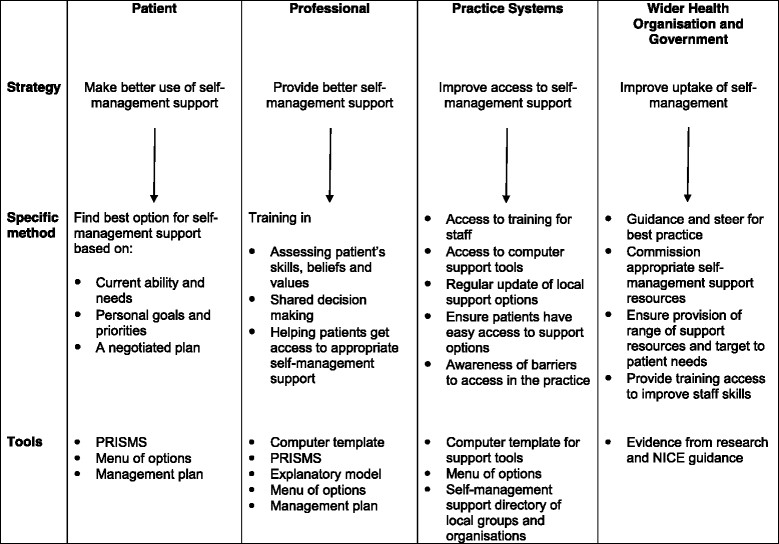
“For this paper, we also considered the outer systems which influence implementation [23] and have added to the original model (see Figure 1) [22].”
BackgroundMethodImproving Primary Care for Patients With Chronic Illness
Bodenheimer, T. (2002) · JAMA · doi:10.1001/jama.288.14.1775 · Cited by 2,961 · cited 2×
“There was good evidence of effectiveness for the components of the intervention (patient-centred information, shared decision-making and training of health professional teams in secondary care) [26-39].”
BackgroundMethodImplementation strategies: recommendations for specifying and reporting
Proctor, E. K., Powell, B. J., & McMillen, J. C. (2013) · Implementation Science · doi:10.1186/1748-5908-8-139 · Cited by 2,585 · cited 1×
“The implementation literature states the importance of being clear about specifying the implementation strategy used [17].”
MethodWelcome to Implementation Science
Eccles, M. P., & Mittman, B. S. (2006) · Implementation Science · doi:10.1186/1748-5908-1-1 · Cited by 2,254
Implementing, Embedding, and Integrating Practices: An Outline of Normalization Process Theory
May, C., & Finch, T. (2009) · Sociology · doi:10.1177/0038038509103208 · Cited by 2,115
Process evaluation in randomised controlled trials of complex interventions
Oakley, A., Strange, V., Bonell, C., Allen, E., & Stephenson, J. (2006) · BMJ · doi:10.1136/bmj.332.7538.413 · Cited by 1,247 · cited 1×
“The process evaluation was pre-specified to complement and provide additional evidence to the main trial [22,40].”
MethodTricco, A. C., Ivers, N. M., Grimshaw, J. M., Moher, D., Turner, L., Galipeau, J., Halperin, I., Vachon, B., Ramsay, T., Manns, B., et al. (2012) · The Lancet · doi:10.1016/s0140-6736(12)60480-2 · Cited by 652 · cited 1×
“Targeting and personalised management along with patient-mediated strategies are advocated components of future SMS interventions [8,9].”
BackgroundGrant, A., Treweek, S., Dreischulte, T., Foy, R., & Guthrie, B. (2013) · Trials · doi:10.1186/1745-6215-14-15 · Cited by 541 · cited 1×
“The WISE approach [20] is an intervention with evidence-based components, designed to provide and encourage SMS uptake and delivery across a whole health system [21].”
Thompson, C., Kinmonth, A., Stevens, L., Pevele, R., Stevens, A., Ostler, K., Pickering, R., Baker, N., Henson, A., Preece, J., et al. (2000) · The Lancet · doi:10.1016/s0140-6736(99)03171-2 · Cited by 489 · cited 2×
“There was good evidence of effectiveness for the components of the intervention (patient-centred information, shared decision-making and training of health professional teams in secondary care) [26-39].”
BackgroundMethodIvers, N. M., Sales, A., Colquhoun, H., Michie, S., Foy, R., Francis, J. J., & Grimshaw, J. M. (2014) · Implementation Science · doi:10.1186/1748-5908-9-14 · Cited by 400 · cited 1×
“Emerging evidence about implementation has found that audit and feedback are effective in improving quality of care, and such support might be important post-training [61].”
Background
Research works printed but not linked: 2
- Schaefer J Miller D Goldstein M Simmons L Partnering in Self-Management Support: A Toolkit for Clinicians 2009 Cambridge, MA Institute for Healthcare Improvement
- Royal College of General Practitioners Care planning improving the lives of people with long term conditions. Clinical Innovation and Research Centre 2011
Cited by
Implementation, context and complexity
May, C. R., Johnson, M., & Finch, T. (2016) · Implementation Science · doi:10.1186/s13012-016-0506-3 · Cited by 978
“[51, 68, 83] showed how attempts to implement a selfmanagement intervention for long-term conditions in a primary care setting failed because of the relationship between the degree of plasticity possessed by a set of intervention components and the degree of elasticity possessed by the normative and relational structu…”
BackgroundMay, C. R., Cummings, A., Girling, M., Bracher, M., Mair, F. S., May, C. M., Murray, E., Myall, M., Rapley, T., & Finch, T. (2018) · Implementation Science · doi:10.1186/s13012-018-0758-1 · Cited by 683
“Some articles (9/108) observed that NPT constructs overlapped, that the technical vocabulary of the theory was difficult and that as a result coding qualitative data was difficult [39, 44, 48, 59, 64, 67, 82, 99, 207].”
BackgroundMichie, S., Wood, C. E., Johnston, M., Abraham, C., Francis, J. J., & Hardeman, W. (2015) · Health Technology Assessment · doi:10.3310/hta19990 · Cited by 680
Personalised care planning for adults with chronic or long-term health conditions
Coulter, A., Entwistle, V. A., Eccles, A., Ryan, S., Shepperd, S., & Perera, R. (2015) · Cochrane Database of Systematic Reviews · doi:10.1002/14651858.cd010523.pub2 · Cited by 592
Delivering person centred care in long term conditions
Eaton, S., Roberts, S., & Turner, B. (2015) · BMJ · doi:10.1136/bmj.h181 · Cited by 199
Overbeck, G., Davidsen, A. S., & Kousgaard, M. B. (2016) · Implementation Science · doi:10.1186/s13012-016-0519-y · Cited by 152
Huddlestone, L., Turner, J., Eborall, H., Hudson, N., Davies, M. J., & Martin, G. P. (2020) · BMC Family Practice · doi:10.1186/s12875-020-01107-y · Cited by 171
Morgan, H. M., Entwistle, V. A., Cribb, A., Christmas, S., Owens, J., Skea, Z. C., & Watt, I. S. (2016) · Health Expectations · doi:10.1111/hex.12453 · Cited by 131
Entwistle, V. A., Cribb, A., & Owens, J. (2016) · Health Care Analysis · doi:10.1007/s10728-016-0335-1 · Cited by 98
“But despite some strikingly positive reports of what some forms of self-management support have achieved in some outcome domains for some people, efforts to enhance support for self-management, and especially that delivered by health professionals in the context of routine service provision, have often proven difficul…”
The Importance of Self-Management in the Context of Personalized Care in COPD
Cravo, A., Attar, D., Freeman, D., Holmes, S., Ip, L., & Singh, S. J. (2022) · International Journal of COPD · doi:10.2147/copd.s343108 · Cited by 97
“Primary care has long been identified as a key provider of self-management education and support because of its reach and central role in chronic disease management.(63) HCPs from the primary care setting are typically an individual’s first point of contact with the health system and very often continue to be the cont…”
BackgroundJones, F., Gage, H., Drummond, A. E., Bhalla, A., Grant, R., Lennon, S., McKevitt, C., Riazi, A., & Liston, M. B. (2016) · BMJ Open · doi:10.1136/bmjopen-2015-008900 · Cited by 90
The Effects of Exercise and Relaxation on Health and Wellbeing
Forbes, H., Fichera, E., Rogers, A. E., & Sutton, M. (2017) · Health Economics · doi:10.1002/hec.3477 · Cited by 73
Self-citationKennedy, A., Vassilev, I., James, E., & Rogers, A. (2015) · Implementation Science · doi:10.1186/s13012-016-0384-8 · Cited by 63
“Additionally, facilitating sources of self-management support is not viewed as a priority by healthcare professionals [7].”
BackgroundSelf-citationHarvey, G., Rycroft‐Malone, J., Seers, K., Wilson, P. M., Cassidy, C. E., Embrett, M. G., Hu, J., Pearson, M., Semenic, S. E., Zhao, J., et al. (2023) · Frontiers in Health Services · doi:10.3389/frhs.2023.1162762 · Cited by 70
“(33) Pragmatic, 2 arm cluster RCT; 44 UK general practices No effect on 12-month primary (patient) outcomes WISE not embedded because of a perceived lack of relevance and fit to the ethos and existing work and need for resources beyond the immediacy of the participating practices”
BackgroundFaiola, A. J., Papautsky, E. L., & Isola, M. L. (2018) · Current Problems in Cardiology · doi:10.1016/j.cpcardiol.2018.06.003 · Cited by 70
Adu, M. D., Malabu, U. H., Malau‐Aduli, A. E. O., & Malau‐Aduli, B. S. (2020) · Scientific Reports · doi:10.1038/s41598-019-56411-0 · Cited by 74
McCrorie, C., Benn, J., Johnson, O. A., & Scantlebury, A. (2019) · BMC Medical Informatics and Decision Making · doi:10.1186/s12911-019-0952-3 · Cited by 67
McIntyre, S. A., Francis, J., Gould, N. J., & Lorencatto, F. (2018) · Translational Behavioral Medicine · doi:10.1093/tbm/iby110 · Cited by 63
“About half of theories were used to develop process evaluation study materials, including interview or focus group topic guides [35,47,52,55–57], questionnaire items [32,43,45,46,52,57,59], or theory of planned behavior-based questionnaires (using standard methods [62]) [33,37,42,44].”
BackgroundMethodMann, C., Shaw, A., Guthrie, B., Wye, L., Man, M., Chaplin, K., & Salisbury, C. (2019) · BMJ Open · doi:10.1136/bmjopen-2019-031438 · Cited by 64
Khan, A., Dickens, A., Adab, P., & Jordan, R. (2017) · npj Primary Care Respiratory Medicine · doi:10.1038/s41533-017-0046-6 · Cited by 60
“Improving the general health of patients could benefit management of their COPD symptoms, such as breathlessness, and improve outcomes.(25) Table 5.”
BackgroundHowell, D., Richardson, A. M., May, C. R., Calman, L. A., Fazelzad, R., Moradian, S., & Foster, C. L. (2019) · Systematic Reviews · doi:10.1186/s13643-019-0952-5 · Cited by 47
Haring, M., Freigang, F., Amelung, V. E., & Gersch, M. (2022) · BMC Health Services Research · doi:10.1186/s12913-022-08626-7 · Cited by 52
“innovation process Type of tension (dilemma or paradox) Conflicting elements Kennedy et al. (2014) Self-managament support approach (WISE) Implementing projects Project engagement vs. Annual planning (Dilemma) A: Project engagement: Commitment and buy-in from key stakeholders (p. 8) B: Annual…”
BackgroundSwaithes, L., Paskins, Z., Dziedzic, K., & Finney, A. G. (2020) · Musculoskeletal Care · doi:10.1002/msc.1452 · Cited by 48
The REFReSH study group, Drew, S., Judge, A., May, C., Farmer, A., Cooper, C., Javaid, M. K., & Gooberman-Hill, R. (2015) · Implementation Science · doi:10.1186/s13012-015-0243-z · Cited by 43
“Previous iterations were originally used to explore professional action in the implementation of interventions in telehealth and e-health [25-27], but their application has since broadened to include a range of services across primary and secondary care [28-31].”
Morris, R., Kennedy, A. P., & Sanders, C. (2015) · Health Expectations · doi:10.1111/hex.12394 · Cited by 43
Self-citationCramm, J. M., & Nieboer, A. P. (2015) · BMC Family Practice · doi:10.1186/s12875-015-0340-8 · Cited by 40
“Similar to earlier studies [43–45] it was therefore not surprising that chronically ill patients’ self-management abilities reduced over time.”
ResultBrooks, H. L., Sanders, C., Lovell, K., Fraser, C., & Rogers, A. E. (2015) · BMC Health Services Research · doi:10.1186/s12913-015-1154-z · Cited by 43
“In line with other studies, data was analysed using the NPT constructs as a set of sensitising concepts for carrying out the study [17, 18] and for analysing the data once collected combined with thematic analysis [19].”
MethodSelf-citationWilliams, A., Lennox, L., Harris, M. J., & Antonacci, G. (2023) · Implementation Science · doi:10.1186/s13012-023-01311-1 · Cited by 40
Mills, S. L., Brady, T. J., Jayanthan, J., Ziabakhsh, S., & Sargious, P. M. (2016) · Health Promotion International · doi:10.1093/heapro/daw030 · Cited by 37
“However, a recent review has summarized the growing evidence base for SMS in primary healthcare (Battersby et al., 2010) and studies have begun to evaluate implementation of SMS in systems (Kennedy et al., 2014).”
BackgroundShifting mindsets: a realist synthesis of evidence from self‐management support training
Davies, F., Wood, F., Bullock, A. D., Wallace, C. A., & Edwards, A. (2018) · Medical Education · doi:10.1111/medu.13492 · Cited by 36
“Previous initiatives attempting to enhance HCPs’ skills in SMS have shown variable results.(4, 7-10) This may be partly because HCPs’ attitudes to their role in relation to SMS vary, and SMS training often challenges a traditional biomedical approach with which HCPs may be familiar and comfortable.”
BackgroundIn-MINDD Team, O’Donnell, C. A., Browne, S., Pierce, M., McConnachie, A., Deckers, K., van Boxtel, M. P. J., Manera, V., Köhler, S., Redmond, M., et al. (2015) · Pilot and Feasibility Studies · doi:10.1186/s40814-015-0035-x · Cited by 31
“There are, however, well-recognised problems associated with scaling up the implementation of such approaches, particularly in relation to sustainability and the embedding of such approaches in both the daily lives of patients and in the clinical routine of practitioners [33–36].”
BackgroundKantilal, K., Hardeman, W., Whiteside, H., Karapanagiotou, E. M., Small, M., & Bhattacharya, D. (2022) · Research in Social and Administrative Pharmacy · doi:10.1016/j.sapharm.2022.05.011 · Cited by 32
“intervention to enhance self-management support in routine primary care was ineffective as it was 517 not viewed as a priority by practitioners, who were more focused on delivering tasks linked to a pay518 for-performance framework.(79) Although the identified five mechanisms have been described in 519 studies related…”
BackgroundJordan, K. P., Edwards, J., Porcheret, M., Healey, E. L., Jinks, C., Bedson, J., Clarkson, K., Hay, E. M., & Dziedzic, K. (2017) · Osteoarthritis and Cartilage · doi:10.1016/j.joca.2017.05.017 · Cited by 30
Walker, C. F., & Peterson, C. L. (2020) · Qualitative Health Research · doi:10.1177/1049732320964173 · Cited by 29
“Kennedy et al. (2014) undertook a process evaluation of a self-management program in U.K. primary care.”
MethodWeldam, S. W. M., Lammers, J. J., Zwakman, M., & Schuurmans, M. J. (2016) · Applied Nursing Research · doi:10.1016/j.apnr.2016.10.010 · Cited by 36
What works for whom in the management of diabetes in people living with dementia: a realist review
Bunn, F., Goodman, C., Reece Jones, P., Russell, B., Trivedi, D., Sinclair, A., Bayer, A., Rait, G., Rycroft-Malone, J., & Burton, C. (2017) · BMC Medicine · doi:10.1186/s12916-017-0909-2 · Cited by 28
“1 Overview of study selection process SM support does not fit with a biomedically focused ethos, it is not embedded in the day-to-day work of primary care [60, 66 – 68, 85, 97].”
Lillvis, D. F., Willison, C. E., & Noyes, K. (2020) · BMC Health Services Research · doi:10.1186/s12913-020-05550-6 · Cited by 28
“For example, a study of a self-management support program for patients with chronic illnesses found that the intervention was not seen as relevant by either the practitioners or the patients, meaning that neither were willing to invest time and effort in the program [29].”
BackgroundMay, C. R., Hillis, A., Albers, B., Desveaux, L., Gilbert, A. W., Girling, M., Kislov, R., MacFarlane, A. E., Mair, F. S., Potthoff, S., et al. (2025) · Implementation Science · doi:10.1186/s13012-025-01444-5 · Cited by 28
“…strategies was the facilitation of group discussions amongst staff to develop shared understandings of implementation processes [45, 47, 49, 55–57, 72, 74, 78, 82, 97, 101]; to openly discuss perceived differences and their implications [63, 72, 77, 84, 88, 96]; to develop and share…”
InfluentialDupuis, S. L., McAiney, C. A., Loiselle, L., Hounam, B., Mann, J., & Wiersma, E. C. (2021) · Dementia · doi:10.1177/1471301221997281 · Cited by 25
“Instead, it has been recommended that the focus should be on identifying and drawing together the different components essential to self-management into a seamless, comprehensive, and coherent system of care and support (Kennedy & Rogers, 2001; Kennedy et al., 2014; Mountain, 2006; Northrup, 2002).”
BackgroundGrant, A. M., Dreischulte, T., & Guthrie, B. (2017) · BMJ Open · doi:10.1136/bmjopen-2016-015281 · Cited by 26
“These findings align with the findings of this study that lack of coherence and cognitive participation were important barriers to implementation, and therefore may be important targets for intervention.(25) Likewise, Berendsen et al(26) found the BeweegKuur (combined”
ResultReidy, C., Kennedy, A. P., Pope, C. J., Ballinger, C., Vassilev, I., & Rogers, A. E. (2016) · BMJ Open · doi:10.1136/bmjopen-2015-010853 · Cited by 27
Self-citationRogers, A. E., Vassilev, I., Brooks, H. L., Kennedy, A. P., & Blickem, C. (2016) · BMC Family Practice · doi:10.1186/s12875-016-0417-z · Cited by 22
“Studies in a UK context have indicated the existence of barriers to implemention [13] primacy given to ‘surveillance’ of patients with an insufficient capacity being made available for shared decision making amongst those most likely to benefit [10, 11, 18, 19].”
BackgroundSelf-citationDelivering person-centred care in long-term conditions
Eaton, S. D. (2016) · Future Hospital Journal · doi:10.7861/futurehosp.3-2-128 · Cited by 22
Managing diabetes in people with dementia: a realist review
Bunn, F., Goodman, C. M., Jones, P. R., Russell, B., Trivedi, D. P., Sinclair, A. J., Bayer, A. J., Rait, G., Rycroft‐Malone, J., & Burton, C. R. (2017) · Health Technology Assessment · doi:10.3310/hta21750 · Cited by 23
Wang, L., Mårtensson, J., Zhao, Y., & Nygårdh, A. (2018) · International Journal of COPD · doi:10.2147/copd.s161410 · Cited by 20
Turner, J., Martin, G. P., Hudson, N., Shaw, L., Huddlestone, L., Weis, C., Northern, A., Schreder, S., Davies, M. J., & Eborall, H. (2022) · BMC Health Services Research · doi:10.1186/s12913-022-08553-7 · Cited by 20
“Key features of successful implementation included user involvement in the design and championing of an intervention [39, 40, 43, 44, 49, 57, 59].”
BackgroundRoets-Merken, L. M., Vernooij-Dassen, M. J. F. J., Zuidema, S. U., Dees, M., Hermsen, P. G. J. M., Kempen, G. I. J. M., & Graff, M. J. L. (2016) · BMJ Open · doi:10.1136/bmjopen-2016-013122 · Cited by 22
Litchfield, I. J., Barrett, T. G., Hamilton-Shield, J. P., Moore, T. H., Narendran, P., Redwood, S., Searle, A., Uday, S., Wheeler, J., & Greenfield, S. (2023) · International Journal for Equity in Health · doi:10.1186/s12939-023-01976-6 · Cited by 19
“All of these design adaptations and the resulting dSSP will only be effective where the wider elements of the local health care system actively support their implementation [184, 185].”
BackgroundSelf-management support for older adults with chronic illness: implications for nursing practice
Byrne, G., Keogh, B., & Daly, L. (2022) · British Journal of Nursing · doi:10.12968/bjon.2022.31.2.86 · Cited by 25
Sørensen, M., Groven, K. S., Gjelsvik, B., Almendingen, K., & Garnweidner-Holme, L. M. (2020) · Primary Health Care Research & Development · doi:10.1017/s1463423620000432 · Cited by 16
“The study concluded that training, even when underlined by institutional and professional commitment, may require considerable additional incentives to successfully lead to the embedding of self-management support into routine practice (Kennedy et al., 2014), a finding supported by several other researchers (Bower et…”
ResultScott, J., Finch, T. L., Bevan, M. T., Maniatopoulos, G., Gibbins, C., Yates, B., Narayanan, K., Sheerin, N., & Kanagasundaram, N. S. (2019) · BMJ Open · doi:10.1136/bmjopen-2019-032925 · Cited by 16
Applying A Biopsychosocial Framework to Achieve Durable Behavior Change in Kidney Disease
Nair, D., Cukor, D., Taylor, W. D., & Cavanaugh, K. L. (2021) · Seminars in Nephrology · doi:10.1016/j.semnephrol.2021.10.002 · Cited by 17
Modelling self-management pathways for people with diabetes in primary care
Penn, M., Kennedy, A. P., Vassilev, I., Chew-Graham, C. A., Protheroe, J., Rogers, A. E., & Monks, T. (2015) · BMC Family Practice · doi:10.1186/s12875-015-0325-7 · Cited by 14
“management support lacked relevance for clinicians and patients and did not fit with existing work [14].”
BackgroundResultInfluentialSelf-citationDarley, S., Knowles, S. E., Woodward‐Nutt, K., Mitchell, C., Grande, G., Ewing, G., Rhodes, S., Bowen, A., & Patchwood, E. (2021) · BMJ Open · doi:10.1136/bmjopen-2020-038129 · Cited by 13
Kime, N. H., Wright, A., Heaven, A., Hawkins, R., Smith, J. E., Cundill, B., Foy, R., Lawton, R., Farrin, A. J., Hulme, C. T., et al. (2022) · BMC Geriatrics · doi:10.1186/s12877-022-03426-4 · Cited by 11
“If stakeholders lack a full understanding of what the intervention entails and have other competing demands on their time [23, 28] facilitation of the intervention is likely to be compromised [29].”
BackgroundResultFörster, A., Ozer, S., Crocker, T. F., House, A. O., Hewison, J., Roberts, E., Dickerson, J., Carter, G., Hulme, C. T., Fay, M., et al. (2021) · Programme Grants for Applied Research · doi:10.3310/pgfar09030 · Cited by 11
Goedendorp, M. M., Kuiper, D., Reijneveld, S. A., Sanderman, R., & Steverink, N. (2017) · Patient Education and Counseling · doi:10.1016/j.pec.2017.01.006 · Cited by 11
Valaitis, R. K., Cleghorn, L., Vassilev, I., Rogers, A. E., Ploeg, J., Kothari, A. R., Risdon, C., Gillett, J., Guenter, D., & Dolovich, L. R. (2021) · JMIR Formative Research · doi:10.2196/25285 · Cited by 11
“The implementation of a self-management support intervention in 31 primary care settings in England had poor uptake because of a perceived lack of relevance and fit to accessible sources of support and because primary care health care professionals did not prioritize self-management support [17].”
BackgroundSelf-citationÉvaluation quadriennale des programmes d’ETP en Île-de-France : un moyen de pilotage régional
Margat, A., Giacopelli, M., Hemon, Y., Lombrail, P., & Gagnayre, R. (2018) · Education thérapeutique du patient - Therapeutic patient education · doi:10.1051/tpe/2018017 · Cited by 9
Smith, J., Essery, R., Yardley, L., Richardson, A. M., Slodkowska‐Barabasz, J., Foster, C. L., Watson, E. K., Grimmett, C., Geraghty, A. W. A., Little, P. S., et al. (2022) · JMIR Cancer · doi:10.2196/36364 · Cited by 11
“Positive perceptions of the utility of an intervention have been shown to be key facilitators of implementation [39], and implementation failure occurred when HCPs did not perceive intervention use as a legitimate activity for patients or providers [40].”
BackgroundDesigning a recovery-orientated system of care: A community operational research perspective
Walsh, M., Kittler, M. G., Throp, M., & Shaw, F. (2018) · European Journal of Operational Research · doi:10.1016/j.ejor.2018.05.037 · Cited by 9
“The 28 recovery indicators proposed by Neale et al (2016a, see table 1) from their Delphi study and the related patient reported outcome measurement (PROM) tool for recovery from drug and alcohol dependence (Neale et al, 2016b) now offer a discrete basis for consistent outcomes measurement that can help place patients…”
BackgroundInfluentialPanagi, L., White, S. R., Patel, S. D., Bennett, S. D., Shafran, R., & Ford, T. J. (2022) · International Journal of Methods in Psychiatric Research · doi:10.1002/mpr.1926 · Cited by 10
Jeyathevan, G., Jaglal, S. B., Hitzig, S. L., Linassi, G. A., Mills, S., Noonan, V. K., Anzai, K., Clarke, T., Wolfe, D. L., Bayley, M. T., et al. (2021) · Journal of Spinal Cord Medicine · doi:10.1080/10790268.2021.1961054 · Cited by 8
Band, R. J., Kinsella, K., Ellis, J., James, E., Ciccognani, S., Breheny, K., Kandiyali, R., Ewings, S. M., & Rogers, A. E. (2025) · Public Health Research · doi:10.3310/wtjh4379 · Cited by 9
Self-citationWalker, A., Boaz, A., & Hurley, M. (2021) · Physiotherapy · doi:10.1016/j.physio.2021.01.004 · Cited by 6
Fredens, M., Nielsen, C. P., Grønkjær, M., Nielsen, B. K., Nissen, N. K., Benthien, K. S., Toft, U., Rasmussen, K., Kidholm, K., & Terkildsen, M. D. (2023) · Journal of Advanced Nursing · doi:10.1111/jan.15988 · Cited by 5
Dopp, A. R., Hindmarch, G., Osilla, K. C., Meredith, L. S., Manuel, J. K., Becker, K. M., Tarhuni, L., Schoenbaum, M., Komaromy, M. S., Cassells, A. N., et al. (2024) · Evidence & Policy · doi:10.1332/17442648y2023d000000016 · Cited by 6
“…are important limits to the generalisability of randomised trials to implementation practice, they are appropriate case examples (see, for example, Kennedy et al, 2014) because: (1) mis-implementation is still common in this context, despite the extensive financial and personnel resources…”
BackgroundAndersen, T. H., & Grabowski, D. (2020) · BMC Health Services Research · doi:10.1186/s12913-020-5036-7 · Cited by 4
Do workers with long-term health conditions need self-management support at work?
Hemming, S. (2020) · Figshare · doi:10.26174/thesis.lboro.13325912 · Cited by 10
Wyke, E., Baxter, E. R., Chew-Graham, C. A., Woodward, A., Walters, K. R., Davies, N., Taylor, S. J., Ross, J., Protheroe, J., Mitchell, C. A., et al. (2025) · British Journal of General Practice · doi:10.3399/bjgp.2025.0361 · Cited by 3
Self-citationRamond‐Roquin, A., Chouinard, M., Diallo, B. B., Bouhali, T., Provost, S., & Fortin, M. (2019) · Europe PMC (PubMed Central) · Cited by 6
The person at the centre? The role of self-management and self-management support
Nolte, E., & Anell, A. (2020) · Cambridge University Press eBooks · doi:10.1017/9781108855464.015 · Cited by 8
Impact of Migration on Gastrointestinal and Liver Diseases in Africa
Spearman, C. W., Ramadan, H. K., Sonderup, M. W., & Saad‐Hussein, A. (2023) · Springer eBooks · doi:10.1007/978-3-031-39466-9_7 · Cited by 3
Heaven, A., Foster, M., Foy, R., Hawkins, R., Hulme, C. T., Humphrey, S., Smith, J. E., & Clegg, A. P. (2025) · BJGP Open · doi:10.3399/bjgpo.2024.0163 · Cited by 2
Psychological and Behavioral Contributions to Rehabilitation and Recovery in Heart Disease
Clarke, D. M., Perera, D. N., & Casey, M. F. (2015) · Springer eBooks · doi:10.1007/978-981-4560-53-5_49-1 · Cited by 2
Psychological and Behavioral Contributions to Rehabilitation and Recovery in Heart Disease
Clarke, D. M., Perera, D. N., & Casey, M. F. (2016) · Springer eBooks · doi:10.1007/978-981-287-206-7_49 · Cited by 2
District Health Systems and Capacity Building
Lee, A., & Poon, P. K. K. (2020) · Springer eBooks · doi:10.1007/978-981-15-2521-6_23 · Cited by 2
Hale, L. A., McCulloch, M., Ruiter, S. D., Wihongia, E., Norlinga, E. M., Gorczynski, D., Kennedy, P., & Jones, F. (2023) · New Zealand Journal of Physiotherapy · doi:10.15619/nzjp/49.2.02 · Cited by 3
Coope, C., Baker, D., Lippiett, K. A., Moult, A., Scott, L. J., Chilcott, S., Turner, A. J., Jinks, C., Portillo, M. C., Dziedzic, K., et al. (2025) · BJGP Open · doi:10.3399/bjgpo.2025.0022 · Cited by 1
May, C. R., Finch, T. L., & Rapley, T. (2026) · NIHR Open Research · doi:10.3310/nihropenres.14315.1 · Cited by 3
The person at the centre? The role of self-management and self-management support
Nolte, E., & Anell, A. (2020) · Lund University Publications (Lund University) · Cited by 1
Edwards, J. (2017) · Keele Research Repository (Keele University) · Cited by 3
Clinician's Commentary on Figueiredo et al.
Harrison, S. L. (2017) · Physiotherapy Canada · doi:10.3138/ptc.2015-68-cc
Informal Learning Using Tablet Computers and Apps: A Multi-Method Study of Older Adults
Diabetes, S.-M., & Seabrook, H. J. (2016)
Self-management for dual sensory impaired older adults: an effective approach?
Roets-Merken, G. M. (2017) · Radboud Repository (Radboud University)
The use and integration of online information in health decision making
Bussey, L. (2018) · Northumbria Research Link (Northumbria University) · Cited by 1
Ouellette, C. (2020) · MacSphere (McMaster University) · doi:10.71548/15484
Implementation of the self-management of well-being interventions: determinants and effects
Kuiper, D. (2020) · University of Groningen research database (University of Groningen / Centre for Information Technology) · doi:10.33612/diss.127415575
Self-management: A patient’s perspective
Voshaar, M. (2020) · Oxford University Press eBooks · doi:10.1093/med/9780198831433.003.0027
Lee, T. M.-H. (2020) · TSpace (University of Toronto)
Fidelity and costs of implementing the integrated chronic disease management model in South Africa
Lebina, L. (2021) · Open University of Cape Town (University of Cape Town) · Cited by 2
George, M. S. (2017) · Clinical Psychology Forum · doi:10.53841/bpscpf.2017.1.300.3
Nazir, M. F., Wayenberg, E., & Qureshi, S. F. (2023) · Advances in logistics, operations, and management science book series · doi:10.4018/978-1-7998-9213-7.ch004
Maack, K., Gillberg, N., & Wikström, E. (2024) · BMC Health Services Research · doi:10.1186/s12913-024-11913-0
“The authors believe there a need for further studies that takes the patients into account in the empirical foundation, which also has been mentioned in other studies [46].”
Kime, N., Wright, A. N., Heaven, A., Hawkins, R., Smith, J., Cundill, B., Foy, R., Lawton, R., Farrin, A., Hulme, C. T., et al. (2022) · Figshare · doi:10.6084/m9.figshare.21151274
Kime, N., Wright, A. N., Heaven, A., Hawkins, R., Smith, J., Cundill, B., Foy, R., Lawton, R., Farrin, A., Hulme, C. T., et al. (2022) · Figshare · doi:10.6084/m9.figshare.21151277
Turner, J., Martin, G. P., Hudson, N., Shaw, L., Huddlestone, L., Weis, C., Northern, A., Schreder, S., Davies, M., & Eborall, H. (2022) · Figshare · doi:10.6084/m9.figshare.21220171
Kime, N., Wright, A. N., Heaven, A., Hawkins, R., Smith, J., Cundill, B., Foy, R., Lawton, R., Farrin, A., Hulme, C. T., et al. (2022) · Figshare · doi:10.6084/m9.figshare.21151283
Kime, N., Wright, A., Heaven, A., Hawkins, R., Smith, J., Cundill, B., Foy, R., Lawton, R., Farrin, A., Hulme, C. T., et al. (2022) · Figshare · doi:10.6084/m9.figshare.21151289
Metadata
- Authors
- Kennedy, A., Rogers, A., Chew-Graham, C., Blakeman, T., Bowen, R., Gardner, C., Lee, V., Morris, R., & Protheroe, J.
- Affiliations
- University of Southampton (GB)
- Keele University (GB)
- University of Manchester (GB)
- Corresponding author
- Kennedy, Anne
- ORCID
- Venue
- Implementation Science
- Published
- 2014-10-21
- Volume
- 9
- Issue
- 1
- Pages
- 129-129
- ISSN
- 1748-5908 (ISSN-L)
- PMC
- PMC4210530
- OpenAlex
- W2000611201
- Cited by
- 104
- References
- 60
- Citations by year
- 2026: 1 · 2025: 5 · 2024: 3 · 2023: 6 · 2022: 19 · 2021: 8 · 2020: 15 · 2019: 5 · 2018: 9 · 2017: 9 · 2016: 13 · 2015: 11
- FWCI
- 19.92
- Type
- journal article
- Language
- en
- Open access
- gold
- doi.org
- Locations
- Implementation Science (publishedVersion, cc-by)
- Europe PMC (PubMed Central) (publishedVersion, cc-by)
- PubMed Central (publishedVersion, cc-by)
- PubMed (publishedVersion)
- Keele Research Repository (Keele University) (submittedVersion, cc-by)
- Research Explorer (The University of Manchester) (submittedVersion, public-domain)
- Research Explorer (The University of Manchester) (submittedVersion)
- Funders
- National Institute for Health and Care Research (WMCLAHRC-2014-1, RP-PG-0407-10136)
- Programme Grants for Applied Research
- Topics
- Health Sciences › Health Professions › General Health Professions › Health Policy Implementation Science
- Health Sciences › Medicine › Public Health, Environmental and Occupational Health › Clinical practice guidelines implementation
- Health Sciences › Health Professions › General Health Professions › Health Sciences Research and Education
- Keywords
- self-management support, wise interventions, long-term condition management, implementation process evaluation, primary care, Normalisation Process Theory, organizational barriers, clinician training, patient awareness
- MeSH terms
- Delivery of Health Care, Health Plan Implementation, Humans, Interviews as Topic, Program Evaluation, Patient Satisfaction, Models, Organizational
About these checks
Registry, retraction, Cites and statistics results are computed, not judged, with one exception: a printed reference that no index lists is read once by a model before it counts as a citation error. Claims are extracted by a model and kept only when their quote appears verbatim in the text; each cited source is then checked, with a model’s help, for whether it says what the claim relies on. Those verdicts can be wrong — read the claim’s quote and the cited source before relying on one.
Statistics and arithmetic are recomputed, not judged.
Confidence bands are shown only for fields calibrated on our annotated test set. None is calibrated yet, so no band is shown.
What counts as a claim ›How we measure confidence ›How we check this ›
Are you an author, or do you see a problem with this page? Request a review
Data sources
Bibliographic data: Semantic Scholar, OpenAlex, Crossref.
Contains information from the Semantic Scholar Academic Graph Datasets, made available under the ODC Attribution License (ODC-BY 1.0).
Semantic Scholar’s data is described in: Kinney, R., et al. (2023). The Semantic Scholar Open Data Platform. arXiv:2301.10140.
