

Using the Knowledge to Action Framework in practice: a citation analysis and systematic review
Open accessThe DOI matches its Crossref record; 44 of the 45 references it cites were found in a registry or an index.
Abstract
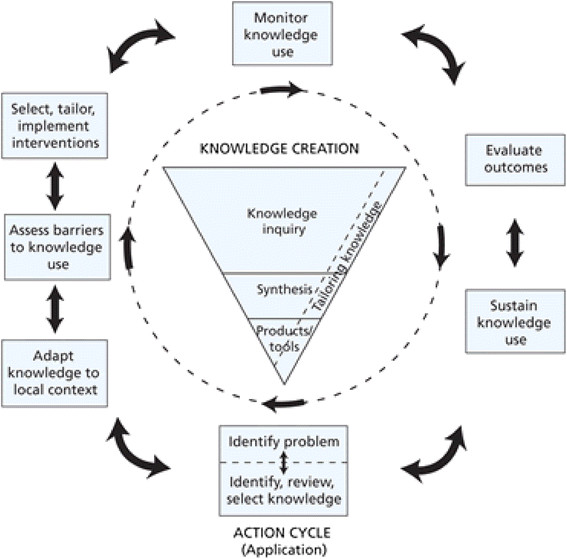
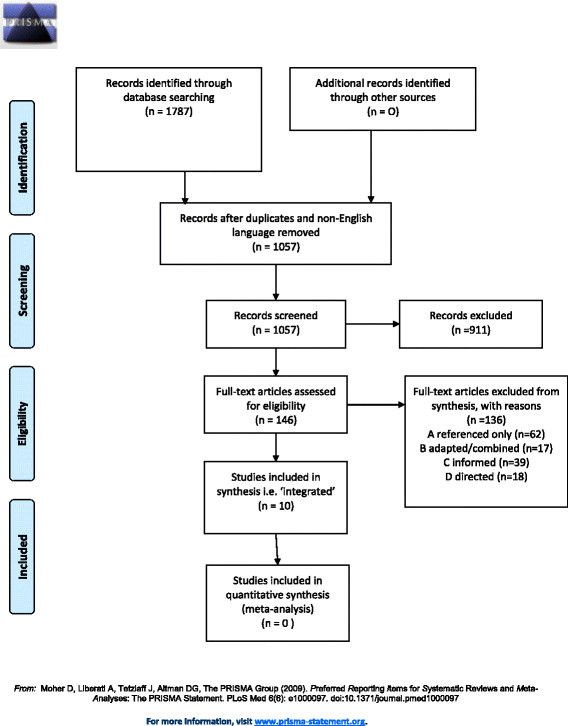
BACKGROUND: Conceptual frameworks are recommended as a way of applying theory to enhance implementation efforts. The Knowledge to Action (KTA) Framework was developed in Canada by Graham and colleagues in the 2000s, following a review of 31 planned action theories. The framework has two components: Knowledge Creation and an Action Cycle, each of which comprises multiple phases. This review sought to answer two questions: 'Is the KTA Framework used in practice? And if so, how?' METHODS: This study is a citation analysis and systematic review. The index citation for the original paper was identified on three databases-Web of Science, Scopus and Google Scholar-with the facility for citation searching. Limitations of English language and year of publication 2006-June 2013 were set. A taxonomy categorising the continuum of usage was developed. Only studies applying the framework to implementation projects were included. Data were extracted and mapped against each phase of the framework for studies where it was integral to the implementation project. RESULTS: The citation search yielded 1,787 records. A total of 1,057 titles and abstracts were screened. One hundred and forty-six studies described usage to varying degrees, ranging from referenced to integrated. In ten studies, the KTA Framework was integral to the design, delivery and evaluation of the implementation activities. All ten described using the Action Cycle and seven referred to Knowledge Creation. The KTA Framework was enacted in different health care and academic settings with projects targeted at patients, the public, and nursing and allied health professionals. CONCLUSIONS: The KTA Framework is being used in practice with varying degrees of completeness. It is frequently cited, with usage ranging from simple attribution via a reference, through informing planning, to making an intellectual contribution. When the framework was integral to knowledge translation, it guided action in idiosyncratic ways and there was theory fidelity. Prevailing wisdom encourages the use of theories, models and conceptual frameworks, yet their application is less evident in practice. This may be an artefact of reporting, indicating that prospective, primary research is needed to explore the real value of the KTA Framework and similar tools.
Overview
The claims and statistics of this paper haven’t been checked yet.
Free: it reads the open-access text and checks the first 5 claims that cite a source we can check. Create a free account to check every claim.
Integrity signals
Registry
Cites
Statistics
Figures
Verification
Claims the paper makes
The claims and statistics of this paper haven’t been checked yet.
Free: it reads the open-access text and checks the first 5 claims that cite a source we can check. Create a free account to check every claim.
Claims other papers make about this one
Each is checked against this paper’s own text: does it say what the citing paper says it does?
The cited source says what the claim attributes to it.
In the citing paper
“Out of 146 identified studies, the authors found that 101 studies either cited the model without explanation or used it to guide the project in a 'general, non-specified way', while only 10 studies used the model to inform 'the design, delivery, and evaluation of implementation activities' [32].”
From Scoping review identifies significant number of knowledge translation theories, models, and frameworks with limited use (2018) · cites this paper as [32]
In the citing paper
“Many of the action models mentioned here have been subjected to testing or evaluation, and some have been widely applied in empirical research, underscoring their usefulness [9,55].”
From Making sense of implementation theories, models and frameworks (2015) · cites this paper as [55]
Self-check
Percentages, sums and reported differences re-computed from the paper’s own numbers.
The self-check needs the paper’s full text.
Citations
Cites
Damschroder, L. J., Aron, D. C., Keith, R. E., Kirsh, S. R., Alexander, J. A., & Lowery, J. C. (2009) · Implementation Science · doi:10.1186/1748-5908-4-50 · Cited by 14,496 · cited 3×
“The importance of organisational or external factors and the ability to influence them is well recognised [1,3,33-35].”
Hoffmann, T. C., Glasziou, P. P., Boutron, I., Milne, R., Perera, R., Moher, D., Altman, D. G., Barbour, V., Macdonald, H., Johnston, M., et al. (2014) · BMJ · doi:10.1136/bmj.g1687 · Cited by 10,548 · cited 2×
“importance of reporting standards [8,36], such as the new TIDieR checklist [37] to facilitate more explicit”
Lost in knowledge translation: Time for a map?
Graham, I. D., Logan, J., Harrison, M. B., Straus, S. E., Tetroe, J., Caswell, W., & Robinson, N. (2006) · Journal of Continuing Education in the Health Professions · doi:10.1002/chp.47 · Cited by 4,705 · cited 9×
“The KTA Framework [1] is being used in practice with varying degrees of completeness and theory fidelity when the conceptual framework is integrated into the implementation project.”
InfluentialKnowledge translation of research findings
Grimshaw, J. M., Eccles, M. P., Lavis, J. N., Hill, S. J., & Squires, J. E. (2012) · Implementation Science · doi:10.1186/1748-5908-7-50 · Cited by 2,407 · cited 2×
“Our review, and similar studies [39,40,43-45], consistently comments on the limited, haphazard use of theory, even though theories can be applied in many different ways [41].”
Taylor, M. J., McNicholas, C., Nicolay, C., Darzi, A., Bell, D., & Reed, J. E. (2014) · BMJ Quality & Safety · doi:10.1136/bmjqs-2013-001862 · Cited by 1,871 · cited 1×
“The prevalence of the Action Cycle may simply reflect the cyclical nature of the change process evident in other common, quality improvement tools such as the ‘Plan, Do, Study, Act’ cycle [30].”
Bridging Research and Practice
Tabak, R. G., Khoong, E. C., Chambers, D. A., & Brownson, R. C. (2012) · American Journal of Preventive Medicine · doi:10.1016/j.amepre.2012.05.024 · Cited by 1,386 · cited 1×
“Potential benefits from applying a conceptual framework include making the process of knowledge translation more systematic, with greater likelihood of changed practice and spread of evidence [4,6-9].”
Kitson, A. L., Rycroft-Malone, J., Harvey, G., McCormack, B., Seers, K., & Titchen, A. (2008) · Implementation Science · doi:10.1186/1748-5908-3-1 · Cited by 1,314 · cited 1×
“The importance of organisational or external factors and the ability to influence them is well recognised [1,3,33-35].”
A compilation of strategies for implementing clinical innovations in health and mental health
Powell, B. J., McMillen, J. C., Proctor, E. K., Carpenter, C. R., Griffey, R. T., Bunger, A. C., Glass, J. E., & York, J. L. (2012) · Medical Care Research and Review · doi:10.1177/1077558711430690 · Cited by 1,069 · cited 1×
“more likely to be successful than a single strategy [27,46,47], as they target different barriers [40], which”
The PARIHS Framework—A Framework for Guiding the Implementation of Evidence-based Practice
Rycroft-Malone, J. (2004) · Journal of Nursing Care Quality · doi:10.1097/00001786-200410000-00002 · Cited by 923 · cited 5×
“Several conceptual frameworks are pertinent for implementation scientists, including Promoting Action on Research Implementation in Health Services (PARIHS) [5,10] the Consolidated Framework for Implementation Research (CFIR) [3] as well as the KTA Framework [1].”
InfluentialEccles, M., Grimshaw, J., Walker, A., Johnston, M., & Pitts, N. (2005) · Journal of Clinical Epidemiology · doi:10.1016/j.jclinepi.2004.09.002 · Cited by 917 · cited 2×
“Potential benefits from applying a conceptual framework include making the process of knowledge translation more systematic, with greater likelihood of changed practice and spread of evidence [4,6-9].”
Research works printed but not linked: 2
- Rycroft-Malone J Bucknall T Models and Frameworks for Implementing Evidence-Based Practice 2010 Chichester, UK Wiley Blackwell
- Keyser SE The Implementation of a Delirium Knowledge Translation Project for Families of the Elderly 2010 Ontario, Canada Dissertation for Masters of Science, School of Nursing, Queen’s University
Cited by
Items 201–300 of 548
Creemers, S. G., Santvoort, B. V., van den Berkmortel, F. W. P. J., Kiemeney, L. A. L. M., van Oort, I. M., Aben, K. K. H., Hamberg, P., & ProZIB, O. B. O. (2022) · Prostate Cancer and Prostatic Diseases · doi:10.1038/s41391-022-00556-z · Cited by 9
“Knowledgeto-action frameworks are also used for promoting application of research into clinical practice, identifying barriers and facilitators, and multiple stakeholders throughout the different levels of evidence [23].”
Peters, S., Jacobs, K., Wambeke, P. V., Rummens, S., Schelfaut, S., Moke, L., Dejaegher, J., Spriet, A., den Broeck, A. V., Vliers, J., et al. (2022) · BMJ Open Quality · doi:10.1136/bmjoq-2022-002075 · Cited by 8
Meißner, P. (2018) · Learning Health Systems · doi:10.1002/lrh2.10058 · Cited by 10
“As such the challenge is to assemble the LADDE (Leadership, Alignment, Data, Demonstration, and Evaluation) information and ask 5 questions to (1) determine if it was successful, (2) understand if it was done well, (3) identify if the goal needs to be modified, (4) can we do something (s) differently, and (5) see if i…”
BackgroundLuskin-Saxby, S., & Paynter, J. M. (2018) · Evidence-Based Communication Assessment and Intervention · doi:10.1080/17489539.2018.1558953 · Cited by 7
“Graham and colleagues’ KTA framework was devised by conceptualizing the knowledge-translation process based on a review of more than 30 different planned-action theories and frameworks (Field et al., 2014; Straus et al., 2008).”
BackgroundMethodInfluentialEngaging stakeholders with evidence and uncertainty: developing a toolkit
Oliver, S. R., Langer, L., Nduku, P., Umayam, H., aid, I. C. I. D. A. H., Conroy, K., aid, I. C. I. D. A. H., Maugham, C., Worldwide, I., Bradley, T., et al. (2021) · doi:10.51744/cmwp4 · Cited by 9
Knowledge translation for the everyday optometrist
Toomey, M., & Jalbert, I. (2021) · Clinical and Experimental Optometry · doi:10.1080/08164622.2021.1898275 · Cited by 8
“The Knowledge-to-action (KTA) framework is a commonly used model that describes the process of knowledge translation from the bench to practice.(71) The KTA framework is comprised of two stages: ‘knowledge creation’ and ‘action cycle’ (Figure 3).”
MethodMarch, M. K., & Roberts, K. E. (2024) · BMC Musculoskeletal Disorders · doi:10.1186/s12891-024-08107-4 · Cited by 7
ter Bogt, M. J. J., Bevelander, K. E., Kramer, E. A. H., van der Wal, M. M., Molleman, G. R. M., van den Muijsenbergh, M. E. T. C., & Fransen, G. A. J. (2024) · Archives of Public Health · doi:10.1186/s13690-024-01468-1 · Cited by 7
Zhu, E. M., Buljac‐Samardžić, M., Ahaus, K., & Huijsman, R. (2025) · Health Research Policy and Systems · doi:10.1186/s12961-024-01266-9 · Cited by 7
“These phases were derived on the basis of the two components of the KTA framework: the knowledge creation funnel and the knowledge action cycle [14].”
InfluentialEsmail, R., Hanson, H. M., Holroyd-Leduc, J. M., Niven, D. J., & Clement, F. M. (2021) · BMJ Open · doi:10.1136/bmjopen-2020-042251 · Cited by 7
Neziraj, M., Axelsson, M., Kumlien, C., Hellman, P., & Andersson, M. (2023) · BMJ Open · doi:10.1136/bmjopen-2023-072453 · Cited by 6
“15 Knowledge translation has been defined as ‘a dynamic and iterative process that includes synthesis, dissemination, exchange and ethically sound application of knowledge to improve health care of people in the country, provide more effective health service and products and strengthen the health…”
Building Capacity in Long-Term Care: Supporting Homes to Provide Intravenous Therapy
Παπαϊωάννου, Α., Hazzan, A. A., Ioannidis, G., O'Donnell, D. J. P., Broadhurst, D., Navare, H., Hillier, L. M., Simpson, D., & Loeb, M. B. (2018) · Canadian Geriatrics Journal · doi:10.5770/cgj.21.327 · Cited by 8
“(25,26) Efforts to support the implementation of the IV therapy service in this study were consistent with the knowledge-to-action framework.(27,28) This pilot project focused on addressing the factors identified as barriers to the use of IV therapy in LTC(1,12,17) and supporting the implementation process with clinic…”
MethodAgbadjé, T. T., Menear, M., Gagnon, M., & Légaré, F. (2021) · Implementation Science · doi:10.1186/s13012-021-01103-5 · Cited by 6
“Methods: Guided by the Knowledge-to-Action Framework and the Theoretical Domains Framework, we performed a synthesis of our research (11 publications) on prenatal screening in Quebec and on the decision aid.”
MethodInfluentialWright, W. L., White, P. A., Welsh, M., & Cutting, K. (2022) · Journal of the American Association of Nurse Practitioners · doi:10.1097/jxx.0000000000000768 · Cited by 6
“The KTA Framework provides guidance for health care professionals and researchers to identify evidence and translate findings into clinical practice (Field et al., 2014; Graham et al., 2006).”
BackgroundCichocki, M. N., Chung, W. T., Kane, R. L., & Chung, K. C. (2022) · Journal of Hand Surgery (European Volume) · doi:10.1177/17531934221133992 · Cited by 6
“Following coding, we used thematic analysis and a knowledge-to-action approach to create our conceptual framework (Field et al., 2014).”
MethodImproving the Sustainability of Public Health Interventions: The INNOVATE Model
Haregu, T., Kwaśnicka, D., Shrestha, A., Lynch, C., Absetz, P., Miranda, J. J., Thankappan, K. R., & Oldenburg, B. F. (2025) · Global Implementation Research and Applications · doi:10.1007/s43477-025-00149-7 · Cited by 6
“In this regard, one of the commonly used implementation research frameworks is the Knowledge to Action (Anjana et al., 2023 ) Frame - work (Anjana et al., 2023 ) which describes the knowledge creation and knowledge translation phases (Field et al., 2014 ).”
Musselman, K. E., Jervis-Rademeyer, H., & Nezon, E. (2025) · Expert Review of Medical Devices · doi:10.1080/17434440.2025.2517169 · Cited by 5
“Despite this perceived alignment between the KTA framework and technology translation, a subsequent systematic review of KTA framework use across 146 studies reported no application to technology translation [75].”
Nørgaard, B., Romero, C. S., Bała, M. M., Lund, H., & Andreasen, J. (2025) · Evaluation and Program Planning · doi:10.1016/j.evalprogplan.2025.102660 · Cited by 5
Alghamdi, N. S., Colton, N. A., & Taylor, P. M. (2025) · Healthcare · doi:10.3390/healthcare13222858 · Cited by 5
“The Knowledge-to-Action (KTA) framework, for instance, offers a process-oriented view of knowledge translation but primarily focuses on institutional actors and neglects patient-level dynamics [59].”
Drake, M., Scratch, S. E., Jackman, A. R., Scheinberg, A. M., Wilson, M., & Knight, S. (2024) · Brain Impairment · doi:10.1071/ib23094 · Cited by 5
Kaplan, A., Hutchinson, A. F., Hooper, S., Gwee, K., Khaw, D., Valent, L., & Willcox, J. C. (2024) · Journal of Eating Disorders · doi:10.1186/s40337-024-01077-x · Cited by 5
“…helped identify how to make care even better for those with eating disorders in general mental health settings. implementation science framework [13], the quality project sought to design, implement and evaluate evidence based, best practice, multidisciplinary ED screening and care pathway…”
BackgroundMeyle, J., Lambert, F., Winning, L., Bertl, K., Bruckmann, C., Duplan, M. B., Harrison, P., Laleman, I., Mattheos, N., Molina, A., et al. (2024) · Journal Of Clinical Periodontology · doi:10.1111/jcpe.14071 · Cited by 8
Co-designed resources to improve sleep health in young shiftworkers: a qualitative study
Shriane, A. E., Vincent, G. E., Ferguson, S. A., Gupta, C. C., Kolbe-Alexander, T. L., Sprajcer, M., Hilditch, C. J., Stanton, R., Thomas, M. J. W., Paterson, J. L., et al. (2025) · Sleep Medicine · doi:10.1016/j.sleep.2025.106511 · Cited by 5
“This is a sensible approach when considered through an implementation science lens, which recommends strategies and actions be provided alongside health information, enabling genuine behaviour change through a knowledge-to-action framework [77].”
Lockwood, C. S., Lizarondo, L. M., Harrison, M. B., Moola, S., Amer, Y. S., Bernhardsson, S., & Hernandez, H. P. (2018) · International Journal of Evidence-Based Healthcare · doi:10.1097/xeb.0000000000000147 · Cited by 6
Perianesthesia Nurses' Knowledge and Promotion of Safe Use, Storage, and Disposal of Opioids
Odom‐Forren, J., Brady, J. M., Rayens, M. K., & Sloan, P. A. (2019) · Journal of PeriAnesthesia Nursing · doi:10.1016/j.jopan.2019.04.005 · Cited by 5
“The first step to knowledge creation is to clearly identify and clarify the practice issue or problem.(11,12,15) We have identified that opioid prescribing guidelines and education for patients discharged to home are in the beginning phases in some governmental and medical organizations.”
BackgroundMethodInfluentialHotton, M., & Gagné, J. (2021) · International Journal of Audiology · doi:10.1080/14992027.2021.1947532 · Cited by 5
“The KTA model has been used successfully in audiology and other health sciences to develop and implement new clinical guidelines or practices (Moodie, Bagatto, et al. 2011, Field et al. 2014, Moodie, Kothari, et al. 2011).”
MethodBasham, C., Billings, E., Refay, A. S. E., Badra, R., Ali, M. A., Asy, A., Refaey, S., Kayali, G., & Meyer, C. B. (2022) · One Health · doi:10.1016/j.onehlt.2022.100454 · Cited by 5
The top cited articles in occupational therapy: a citation analysis study
Nowrouzi‐Kia, B., Chidu, C., Carter, L., McDougall, A., & Casole, J. (2017) · Scandinavian Journal of Occupational Therapy · doi:10.1080/11038128.2017.1342861 · Cited by 5
“using the Knowledge to Action Framework) that enable clinicians to access preappraised evidence rapidly [18].”
MethodSowan, A. K., & Chinman, M. (2024) · JMIR Research Protocols · doi:10.2196/54213 · Cited by 4
“Studies using the KTA model have demonstrated the dynamic, nonlinear aspect of knowledge translation and implementation [25].”
Branch‐Elliman, W., Chambers, D., Albin, O. R., Batshon, L. J., Castejón-Ramírez, S., Cheng, V. C., Emetuche, N., Datta, R., Kamboj, M., Krein, S. L., et al. (2025) · Infection Control and Hospital Epidemiology · doi:10.1017/ice.2025.75 · Cited by 5
Abdulrahman, A., Richards, D., BILGIN, A. A. B., & Formosa, P. (2025) · Computers & Security · doi:10.1016/j.cose.2025.104761 · Cited by 4
Diermayr, G., Greisberger, A., Stadel, M., Garbade, S. F., & Salbach, N. M. (2023) · Neurorehabilitation · doi:10.3233/nre-230010 · Cited by 4
“The “Knowledge-to-Action (KTA) cycle” is a widely used conceptual framework for KT that outlines activities required for sustainable implementation (Field et al., 2014; Graham et al., 2006).”
Translating the Neck Pain Clinical Guidelines Into Practice: An Integrated Framework Approach
Ramirez, M. M., Carvalho, M., Clewley, D. J., Pruka, K., George, S. Z., & Horn, M. E. (2025) · JOSPT open. · doi:10.2519/josptopen.2025.0101 · Cited by 4
Walker-Smith, T., & Baldwin, S. A. (2020) · Journal of Doctoral Nursing Practice · doi:10.1891/2380-9418.jdnp-d-19-00004 · Cited by 4
“These KTA action cycle steps assist in mobilizing healthcare systems change, and evaluating clinic practice patterns and intervention effectiveness (Field et al., 2014).”
BackgroundLumbreras, B., Parker, L. A., Alonso‐Coello, P., Mira-Bernabeu, J., Gómez-Pérez, L., Caballero-Romeu, J. P., Martínez, S. P., Cuenca, A. M. C., Moral, I., López‐Garrigós, M., et al. (2022) · International Journal of Environmental Research and Public Health · doi:10.3390/ijerph19158904 · Cited by 5
“This study will be guided by the KTA framework [19] to develop, test and validate a PDA to promote SDM in PC screening.”
BackgroundMethodInfluentialLiang, H., Ye, R., Song, N., Zhu, C., Xu, M., Ye, Q., Wei, L., & Chen, J. (2024) · BMC Neurology · doi:10.1186/s12883-024-03595-2 · Cited by 4
“This framework comprises two components: knowledge creation and an action cycle [12].”
BackgroundCeren, R. E. S., Talas, M. S., Akçay, K., Basar, F., & Halil, M. G. (2025) · Nutrition in Clinical Practice · doi:10.1002/ncp.11241 · Cited by 4
“27 Knowledge creation aims to produce knowledge tools.”
Lomanowska, A. M., Tahir, R., Choo, C., Zhu, S., Wang, D. Y., Slepian, P. M., Katz, J. D., & Clarke, H. A. (2025) · BMC Health Services Research · doi:10.1186/s12913-025-12301-y · Cited by 4
“Our knowledge translation activities follow the Knowledge to Action (KTA) framework [44, 45].”
Hydrology for impact: building partnerships, blending knowledge and bracing for climate change
Orr, H. G., Hall, C., Rhodes, V., Wilby, R. L., Peat, K. L., & Fowler, H. J. (2025) · Philosophical Transactions of the Royal Society A Mathematical Physical and Engineering Sciences · doi:10.1098/rsta.2024.0290 · Cited by 4
“…between social and ecological systems. focuses on resilience, sustainability and adaptive capacity. knowledge-to-action (K2A) framework [33] guides the translation of research findings into practical applications. involves identifying knowledge gaps, developing targeted strategies and…”
Clanchy, K., Sulek, R., Baque, E., Caine, A., Cardell, E., Chambers, L., Clark, M., Dare, L., Irvine‐Brown, L., Irwin, C. G., et al. (2021) · The Australian Educational Researcher · doi:10.1007/s13384-021-00429-9 · Cited by 5
“The KTAF comprises two components: (a) knowledge creation, including the synthesis of research and the construction of products and tools tailored to the translation context and (b) an action cycle, including adaptation to the translation context, assessment of barriers to, and facilitators of, translation, and develo…”
BackgroundMethodGlista, D., O’Hagan, R., DiFabio, D. L., Moodie, S., Muñoz, K. F., Curca, I. A., Meston, C. N., Richert, F., Pfingstgraef, D., Nageswaran, L., et al. (2023) · Journal of Evaluation in Clinical Practice · doi:10.1111/jep.13846 · Cited by 4
Next Generation Citizen Science Using Anecdata.org
Disney, J., Bailey, D., Farrell, A., & Taylor, A. (2017) · Maine policy review · doi:10.53558/phkw8135 · Cited by 4
“In medical fields, researchers refer to this translation of information into action as implementing a knowledge-to-action framework (reviewed by Field et al. 2014).”
Morgan, T. L., Liscio, M., Leung, P. C., McEachern, B., Yungblut, S., & Tomasone, J. R. (2021) · Evaluation and Program Planning · doi:10.1016/j.evalprogplan.2021.101992 · Cited by 4
Dixon, J., Shantz, E., Clarke, A. E., & Elliott, S. J. (2023) · Implementation Science Communications · doi:10.1186/s43058-023-00473-9 · Cited by 3
“Further, complementary to existing work, the model focuses on bringing research to a point where planned action theories, such as the Knowledge to Action (KTA) framework, may be used to enhance implementation efforts [51, 52].”
BackgroundFeasibility of providing web‐based education to patients prior to kidney transplant evaluation
Kayler, L. K., Nie, J., Solbu, A., Handmacher, M., Feeley, T. H., & Noyes, K. (2023) · Clinical Transplantation · doi:10.1111/ctr.15174 · Cited by 3
“The implementation of the remote web-education was guided by Knowledge to Action framework principles 14 and a local community advisory board (CAB).”
BackgroundMethodDevelopment of a Conceptual Framework to Guide Uptake of PhD-generated Knowledge by Policymakers
Damba, F. U., Mtshali, G. N., & Chimbari, M. J. (2023) · The Open Public Health Journal · doi:10.2174/0118749445253763230920043828 · Cited by 3
The impact of cricothyrotomy simulation on anesthesia provider airway crisis management
Cartier, A., Albert, A., Reanos, K., Windsor, T., Lepley, B., & Rollison, S. (2025) · Clinical Simulation in Nursing · doi:10.1016/j.ecns.2025.101842 · Cited by 3
Ellington, L. E., Jacob‐Files, E., Becerra, R., Mallma, G., Fieno, J. T. D., & Nielsen, K. R. (2018) · Acta Paediatrica · doi:10.1111/apa.14635 · Cited by 3
“One such guide is the Knowledge to Action (KTA) framework, which has been used globally in the deployment of a variety of interventions (14,15).”
BackgroundO’Leary, P., Domeracki, A., Raymond, J., Kozhumam, A., Macha, V., Sakita, F., Krym, V., Vissoci, J. R. N., & Staton, C. (2023) · PLOS Global Public Health · doi:10.1371/journal.pgph.0002154 · Cited by 3
Excellence in Pediatric Physical Therapy Education: Recommendations and Action Items
Birkmeier, M., Lundeen, H., Furze, J. A., Moore, J. G., Dannemiller, L., & Anderson, D. K. (2023) · Pediatric Physical Therapy · doi:10.1097/pep.0000000000001001 · Cited by 3
Yamaguchi, S., Zerbo, A., Cardoso, R., Elsabbagh, M., Gitterman, A., Glegg, S., González, M., Putterman, C., Weiss, J. A., & Shikako‐Thomas, K. (2024) · Journal of Evaluation in Clinical Practice · doi:10.1111/jep.14056 · Cited by 4
Lyzwinski, L. N., Thipse, M., Higginson, A., Tessier, M., Lo, S., Barrowman, N., Bjelić, V., & Radhakrishnan, D. (2024) · Journal of Asthma · doi:10.1080/02770903.2024.2399645 · Cited by 3
“This KT framework involves thoroughly reviewing and appraising research evidence, applying it to the local hospital context, evaluating barriers to implementing the knowledge, personal tailoring, and evaluating outcomes in knowledge, health, and sustainment (15,16).”
InfluentialServices in Minoritized Autistic Adolescents and Adults Varying in Language Skills
Girolamo, T. M., Escobedo, A. G., Ghali, S., Greene-Pendelton, K., Campos, I., & Ram-Kiran, P. (2024) · Seminars in Speech and Language · doi:10.1055/s-0044-1793913 · Cited by 3
Chew, K. A., Ponsford, J. L., & Gould, K. R. (2025) · Disability and Rehabilitation · doi:10.1080/09638288.2025.2457511 · Cited by 3
“Kta has been reported as a practical and flexible guide for clinical research translation into practice [41].”
Templeton, S. J., & Canada, A. L. (2025) · International Journal of Evidence-Based Healthcare · doi:10.1097/xeb.0000000000000498 · Cited by 3
Ho, F. Y. W., Swart, R., Boersma, L. J., Fijten, R., Cremers, H., van Merode, F., Jacobs, M., Alongi, F., Belderbos, J., Bhattacharya, I. S., et al. (2025) · Radiotherapy and Oncology · doi:10.1016/j.radonc.2025.110874 · Cited by 3
Chen, Y., Peet, J., Hausin, N., Hinds, D., Jayasinghe, R., Kennedy, W., Morris, S., Poulter, R. S., Starmer, G., Singbal, Y., et al. (2025) · Intensive and Critical Care Nursing · doi:10.1016/j.iccn.2025.104169 · Cited by 3
Assessing Preliminary Implementation Outcomes of a Lifestyle Medicine Intervention
Pangalangan, J. M. L., Farewell, C. V., Frates, E. P., Tollefson, M., Brooks‐Russell, A., & Puma, J. E. (2026) · Health Promotion Practice · doi:10.1177/15248399261419077 · Cited by 5
Truant, T. L. O., Green, E., Calvo, L., McCarthy, S. M., MacDonald, D., Patel, K., Stewart, J., Brunelli, M. V., Cullen, C., de Ellis, S. E., et al. (2016) · Cancer Nursing · doi:10.1097/ncc.0000000000000434 · Cited by 3
Ghahfarokhi, R. J., Alavi, M., & Soleymani, M. R. (2021) · Journal of Education and Health Promotion · doi:10.4103/jehp.jehp_821_20 · Cited by 3
Feldner, H. A., Fiss, A. L., Jeffries, L. M., & McCoy, S. W. (2022) · Physical & Occupational Therapy In Pediatrics · doi:10.1080/01942638.2022.2058335 · Cited by 3
“The KTA offers an integrated approach that defines critical aspects of a cyclical process for implementation, which includes both knowledge creation and action cycles (Field et al., 2014; Graham & Tetroe, 2010).”
BackgroundExploring perceptions of eating with dementia: Findings from a massive open online course
Goodwin, I., Lea, E. J., Bindoff, A. D., & Doherty, K. (2022) · Appetite · doi:10.1016/j.appet.2022.106126 · Cited by 3
Woods, A. L., Raskin, E. R., & Keller, D. S. (2023) · Journal of surgical education · doi:10.1016/j.jsurg.2023.02.016 · Cited by 4
Pepin, M.-E., Astronomo, R., Brown, A., & Fritz, N. E. (2023) · Physiotherapy Theory and Practice · doi:10.1080/09593985.2023.2229902 · Cited by 4
“A conceptual framework, the Knowledge-to-Action cycle (KTA) has been developed to give a framework for assisting the process of implementing current knowledge into clinical practice and was used for this study (Field, Booth, Ilott, and Gerrish, 2014).”
Tse, T., Skorik, S., Fraser, R., Munro, A., & Darzins, S. W. (2023) · Australian Occupational Therapy Journal · doi:10.1111/1440-1630.12920 · Cited by 3
“…Cycle (Straus et al., 2013), the next step would be to select one of the tools and conduct a larger-scale implementation study to address the barriers and draw upon the facilitators identified in this study (Field et al., 2014; Graham et al., 2006; Romney et al., 2022; Straus et al., 2013).”
BackgroundStover, A. M., Liang, D., Mueller, D., Kurtzman, R. T., Ikemeh, C., Canter, C., Acharya, S., Brese, J., Buhlinger, K. M., Chen, K. Y., et al. (2024) · Quality of Life Research · doi:10.1007/s11136-024-03789-8 · Cited by 3
Tong, W. T., Lee, Y. K., Ng, C. J., & Lee, P. Y. (2024) · PLoS ONE · doi:10.1371/journal.pone.0310654 · Cited by 4
Rohmah, I., Pangarsih, D. S., Rahayu, S. P., Widodo, A. F., Chang, K.-M., Ho, M., Tseng, Y.-H., & Chiu, H. (2025) · Intensive and Critical Care Nursing · doi:10.1016/j.iccn.2024.103938 · Cited by 3
Rishworth, A. (2016) · Universal Journal of Public Health · doi:10.13189/ujph.2016.040304 · Cited by 4
“Within this integrated process, both phases remain permeable, although, a recent systematic review finds few examples in the literature of a comprehensive application of the framework [8].”
BackgroundInfluentialAddressing the Practice Context in Evidence-Based Practice Implementation: Leadership and Climate
Shuman, C. J. (2017) · Deep Blue (University of Michigan) · Cited by 8
Brown, T., & Robinson, L. (2019) · Australian Occupational Therapy Journal · doi:10.1111/1440-1630.12576 · Cited by 3
Johannessen, T. (2022) · University of Stavanger eBooks · doi:10.31265/usps.138 · Cited by 2
The knowledge-to-action process model for knowledge translation in oral care in South Africa
Seedat, J. (2023) · South African Journal of Communication Disorders · doi:10.4102/sajcd.v70i1.951 · Cited by 2
Weppelman, I., & Patuano, A. (2024) · Science Communication · doi:10.1177/10755470241277199 · Cited by 2
“In our study, we combined the application of the KTA framework (often cited in the medical context; B. Field et al., 2014) and RtD methodology (primarily applied in design disciplines, such as architecture or engineering; Stappers & Giaccardi, 2014).”
Aguilar, A.-Z. “., & Nicastro, O. (2025) · The Journal for Nurse Practitioners · doi:10.1016/j.nurpra.2025.105342 · Cited by 2
“20,21,23,39 Tools such as knowledge check posttests, fi delity monitoring, and barrier assessments re fi ne knowledge application, whereas interdisciplinary discussions promote consistent education.”
McCredie, L., Sayner, A. M., Glinsky, J. V., Harwood, E., & Scrivener, K. (2025) · Disability and Rehabilitation · doi:10.1080/09638288.2025.2508403 · Cited by 3
“…implementation by offering guidance in the planning and execution of the implementation intervention and often involve several phases [21]. the Kta framework is commonly used for practice change in stroke rehabilitation [21–23]. this study had four distinct action cycle phases over 12 months.”
Marshall, R. A., Merritt, N., Stranges, T. N., Bartlett, S., Sawyer, S., & van Donkelaar, P. (2025) · BMC Women s Health · doi:10.1186/s12905-025-03753-9 · Cited by 2
“Using established implementation or knowledge mobilization processes [58–60] to deploy and evaluate specific action items from this research could inform strong-footed next steps in the right direction.”
Lai-Kwon, J. E., Rutherford, C., Jefford, M., Zhang, I., Devereux, C., Herath, D., Burbury, K., & Best, S. (2025) · Quality of Life Research · doi:10.1007/s11136-025-03995-y · Cited by 2
“…and frameworks exist [16, 17], including process models that describe how to translate research into practice (e.g. Knowledge to Action [18, 19]), determinant frameworks that specify the barriers and facilitators that influence implementation outcomes (e.g. the Consolidated Framework for…”
McKercher, J. P., Peiris, C. L., Peterson, S., Thwaites, C. K., Hill, A., Clifford, A. M., & Morris, M. E. (2025) · BMJ Open · doi:10.1136/bmjopen-2025-101974 · Cited by 2
Jennings, C. A., Cornthwaite, K. J., Osborn, M. P., Kichenadasse, G., & Dow, E. (2025) · Asia-Pacific Journal of Clinical Oncology · doi:10.1111/ajco.14210 · Cited by 2
“…lifecycle [32] process CEIH project lifecycle aligned to Knowledge to Action (KTA) model to support a KTIS approach to health system projects. aligned with Knowledge Translation and Implementation Science (KTIS) frameworks [33, 34] (Figure 1), specifically the KnowledgetoActionFramework(KTA)[35].”
Castro‐Sánchez, E., Fernández‐Fernández, I., & Blanco‐Mavillard, I. (2025) · Enfermería Clínica (English Edition) · doi:10.1016/j.enfcle.2025.502306 · Cited by 2
Evaluating impact of educational research on teachers’ practice: a teacher expectations intervention
Johnston, O. (2025) · Educational Research and Evaluation · doi:10.1080/13803611.2025.2570178 · Cited by 2
“Application of the framework has proved useful for continuing education for professionals in nursing and health care education in tertiary and professional settings (Field et al., 2014; OECD, 2022).”
Utilization of Lung Cancer Registries in Learning Health Systems for Health Care Improvement
Stirling, R. G., Baldwin, D., Heineman, D. J., Wouters, M. W. J. M., Navani, N., Dawkins, P. A., Melder, A., Zalcberg, J. R., & Jakobsen, E. H. (2025) · JCO Clinical Cancer Informatics · doi:10.1200/cci-25-00211 · Cited by 3
van Eijk, N. L., Schweren, L., Veerbeek, M., Creemers, D. H. M., van Ballegooijen, W., de Winter, R. F. P., Luijs, N., Janssen, K., Lucassen, I. G. M., Schoorl, M., et al. (2025) · Global Implementation Research and Applications · doi:10.1007/s43477-025-00202-5 · Cited by 2
“Once a framework has been selected, there is marked variation on how this framework is used, with many studies simply referencing the model without describing how it influenced the study (Field et al., 2014).”
Zheng, L. F., Ngoh, S. H. A., Ng, J. Y. X., & Tan, N. C. (2021) · Journal of Asthma · doi:10.1080/02770903.2021.1923736 · Cited by 2
“Engaging the stakeholders, such as the clinicians, is a crucial component of the action cycle (28).”
BackgroundClohesy, N., Schneiders, A. G., Barbery, G., & Obst, S. J. (2022) · Chiropractic & Manual Therapies · doi:10.1186/s12998-022-00450-4 · Cited by 2
Co-Producing the International Pediatric Oncology Exercise Guidelines (iPOEG) Toolkit with End-Users
McLaughlin, E., Wurz, A. J., Guilcher, G. M. T., Zwicker, J. D., & Culos-Reed, S. N. (2024) · Communications in Kinesiology · doi:10.51224/cik.2024.55 · Cited by 2
“Notably, visual knowledge translation projects can be done with meaningful end-user involvement through a process known as co-production (Smith et al., 2022), an increasingly recognized component of integrated knowledge translation [iKT; Field et al. (2014)].”
BackgroundMethodCunningham, C., Conway, J. L., Zahoui, Z., Haykowsky, M. J., & Scott, S. D. (2024) · CJC Pediatric and Congenital Heart Disease · doi:10.1016/j.cjcpc.2024.05.003 · Cited by 2
“14 Therefore, this study aimed to explore caregiver learning and experiences relating to caring for a child with heart failure through a qualitative approach.”
BackgroundThe state of implementation science in major depressive disorder: A narrative review
He, Y., Murphy, J., Wang, X., Michalak, E. E., Yang, T., Yang, X., Liu, J., Fang, Y., Lam, R. W. M., & Chen, J. (2024) · Psychiatry Research · doi:10.1016/j.psychres.2024.116330 · Cited by 2
Gallant, S. M., Mann, C., Benoit, B., Aston, M. L., Curran, J., & Cassidy, C. E. (2025) · Implementation Science Communications · doi:10.1186/s43058-025-00695-z · Cited by 2
“The KTA framework has two cycles: the knowledge creation stage and the action cycle [57].”
Cooper, J. R., Acker, K. A., Geyer, J. D., Henderson, M. M., Henderson-Mitchell, R. J., & Higginbotham, J. C. (2025) · International Journal of Environmental Research and Public Health · doi:10.3390/ijerph22040522 · Cited by 2
“Using conceptual frameworks to facilitate knowledge translation provides more effective health services and products and strengthens the healthcare system [21].”
Rudstam, H., Gower, W. S., & Looy, S. A. V. (2018) · Journal of Vocational Rehabilitation · doi:10.3233/jvr-180963 · Cited by 2
Wan, K., Zeng, G., Li, Y., Wu, J., Zou, B., Liang, H., & Jiang, M. (2021) · The Clinical Respiratory Journal · doi:10.1111/crj.13402 · Cited by 2
“Guidelines were included if they satisfy the following criteria: (1) not related to the management of respiratory diseases; (2) translated or adapted versions of international CPGs; (3) systematic reviews or interpretations of CPGs; (4) editorials and letters; (5) clinical trial; and (6) published in non- Chinese lang…”
BackgroundDesign for a Virtual Peer-to-Peer Knowledge to Action Platform for Type 2 Diabetes
Golkhandan, E., Paglialonga, A., Guergachi, A., Lussier, M., Richard, C., Dubé, L., Zenlea, I. S., Kyba, R., Mittal, M., Thomas, W. “., et al. (2022) · Studies in health technology and informatics · doi:10.3233/shti220542 · Cited by 2
Layden, T., Gulbransen, K., & Lightbown, S. (2023) · Nurse Education Today · doi:10.1016/j.nedt.2023.106035 · Cited by 2
Tucker, J. D., Chikwari, C. D., Tang, W., Jarolimova, J., Gravett, R. M., Goense, C. J. D., Matoga, M., Tan, R. K. J., Niaupari, S., Morroni, C., et al. (2024) · Sexually Transmitted Diseases · doi:10.1097/olq.0000000000001965 · Cited by 2
“Action 2: At the community level, the group proposed to standardize and streamline data collection, beginning at the ground-level jurisdictions with immediate data compilation, instead of waiting for large surveillance reports.”
BackgroundInfluentialBoudreau-Klymas, M. J., & Cameron, N. G. (2024) · Nursing Economic$ · doi:10.62116/nec.2024.42.3.119 · Cited by 2
Promoting Early Mobility of Patients in the Intensive Care Unit
Gilson, S. L. (2019) · ScholarWorks (Walden University) · Cited by 2
Middleton, L. (2017) · Open Access Victoria University of Wellington | Te Herenga Waka (Figshare) · doi:10.26686/wgtn.17060417 · Cited by 3
Recommendations for evolving a doctor of nursing practice program
Herbert, L., Slone, S., Johnson, R. R., Jones, K., Ribar, A. K., & Andrews, J. O. (2022) · Journal of Professional Nursing · doi:10.1016/j.profnurs.2022.08.002 · Cited by 1
Metadata
- Authors
- Field, B., Booth, A., Ilott, I., & Gerrish, K.
- Affiliations
- University of Sheffield (GB)
- Sheffield Teaching Hospitals NHS Foundation Trust (GB)
- Corresponding author
- Field, Becky
- Venue
- Implementation Science
- Published
- 2014-11-23
- Volume
- 9
- Issue
- 1
- Pages
- 172-172
- ISSN
- 1748-5908 (ISSN-L)
- PMC
- PMC4258036
- OpenAlex
- W2158985563
- Semantic Scholar
- c9e86a3c27ffe230645f343b1bc7cd1c57d7339e
- Cited by
- 454
- References
- 45
- Citations by year
- 2026: 49 · 2025: 67 · 2024: 46 · 2023: 48 · 2022: 44 · 2021: 51 · 2020: 37 · 2019: 24 · 2018: 39 · 2017: 23 · 2016: 19 · 2015: 7
- FWCI
- 2.78
- Type
- journal article
- Language
- en
- Open access
- gold
- doi.org
- Locations
- Implementation Science (publishedVersion, cc-by)
- Europe PMC (PubMed Central) (publishedVersion, cc-by)
- PubMed Central (publishedVersion, cc-by)
- PubMed (publishedVersion)
- White Rose Research Online (University of Leeds, The University of Sheffield, University of York) (acceptedVersion)
- Funders
- National Institute for Health and Care Research
- National Institute for Health Research Collaboration for Leadership in Applied Health Research and Care Yorkshire and Humber
- Topics
- Health Sciences › Health Professions › General Health Professions › Health Policy Implementation Science
- Health Sciences › Health Professions › General Health Professions › Health Sciences Research and Education
- Health Sciences › Medicine › Public Health, Environmental and Occupational Health › Clinical practice guidelines implementation
- Keywords
- knowledge-to-action framework, knowledge translation, implementation research, conceptual framework, theory application, knowledge production, healthcare implementation
- MeSH terms
- Canada, Delivery of Health Care, Denmark, Diffusion of Innovation, Democratic Republic of the Congo, Translational Research, Biomedical, Knowledge Management
About these checks
Registry, retraction, Cites and statistics results are computed, not judged, with one exception: a printed reference that no index lists is read once by a model before it counts as a citation error. Claims are extracted by a model and kept only when their quote appears verbatim in the text; each cited source is then checked, with a model’s help, for whether it says what the claim relies on. Those verdicts can be wrong — read the claim’s quote and the cited source before relying on one.
Statistics and arithmetic are recomputed, not judged.
Confidence bands are shown only for fields calibrated on our annotated test set. None is calibrated yet, so no band is shown.
What counts as a claim ›How we measure confidence ›How we check this ›
Are you an author, or do you see a problem with this page? Request a review
Data sources
Bibliographic data: Semantic Scholar, OpenAlex, Crossref.
Contains information from the Semantic Scholar Academic Graph Datasets, made available under the ODC Attribution License (ODC-BY 1.0).
Semantic Scholar’s data is described in: Kinney, R., et al. (2023). The Semantic Scholar Open Data Platform. arXiv:2301.10140.
