

Using the Knowledge to Action Framework in practice: a citation analysis and systematic review
Open accessThe DOI matches its Crossref record; 44 of the 45 references it cites were found in a registry or an index.
Abstract
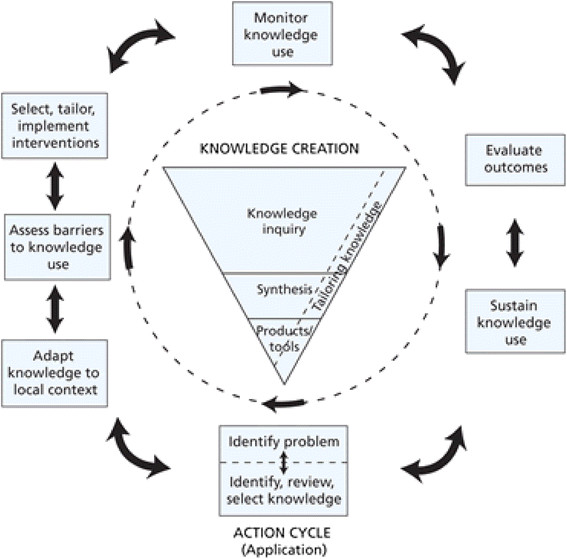
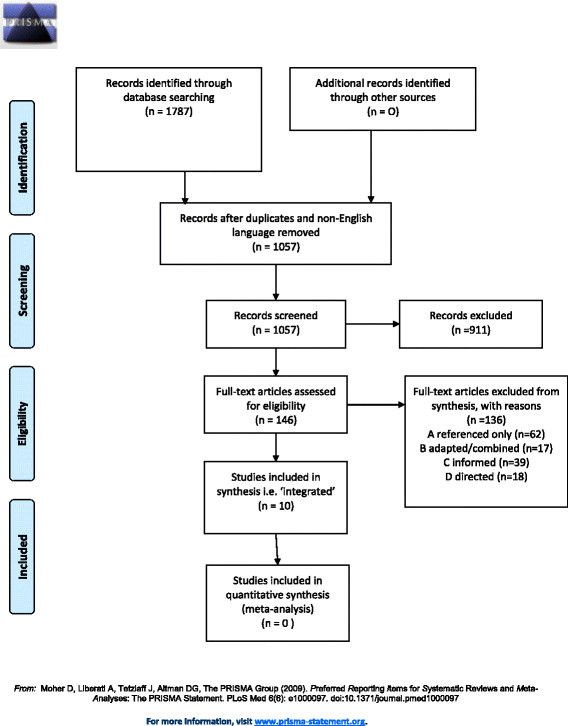
BACKGROUND: Conceptual frameworks are recommended as a way of applying theory to enhance implementation efforts. The Knowledge to Action (KTA) Framework was developed in Canada by Graham and colleagues in the 2000s, following a review of 31 planned action theories. The framework has two components: Knowledge Creation and an Action Cycle, each of which comprises multiple phases. This review sought to answer two questions: 'Is the KTA Framework used in practice? And if so, how?' METHODS: This study is a citation analysis and systematic review. The index citation for the original paper was identified on three databases-Web of Science, Scopus and Google Scholar-with the facility for citation searching. Limitations of English language and year of publication 2006-June 2013 were set. A taxonomy categorising the continuum of usage was developed. Only studies applying the framework to implementation projects were included. Data were extracted and mapped against each phase of the framework for studies where it was integral to the implementation project. RESULTS: The citation search yielded 1,787 records. A total of 1,057 titles and abstracts were screened. One hundred and forty-six studies described usage to varying degrees, ranging from referenced to integrated. In ten studies, the KTA Framework was integral to the design, delivery and evaluation of the implementation activities. All ten described using the Action Cycle and seven referred to Knowledge Creation. The KTA Framework was enacted in different health care and academic settings with projects targeted at patients, the public, and nursing and allied health professionals. CONCLUSIONS: The KTA Framework is being used in practice with varying degrees of completeness. It is frequently cited, with usage ranging from simple attribution via a reference, through informing planning, to making an intellectual contribution. When the framework was integral to knowledge translation, it guided action in idiosyncratic ways and there was theory fidelity. Prevailing wisdom encourages the use of theories, models and conceptual frameworks, yet their application is less evident in practice. This may be an artefact of reporting, indicating that prospective, primary research is needed to explore the real value of the KTA Framework and similar tools.
Overview
The claims and statistics of this paper haven’t been checked yet.
Free: it reads the open-access text and checks the first 5 claims that cite a source we can check. Create a free account to check every claim.
Integrity signals
Registry
Cites
Statistics
Figures
Verification
Claims the paper makes
The claims and statistics of this paper haven’t been checked yet.
Free: it reads the open-access text and checks the first 5 claims that cite a source we can check. Create a free account to check every claim.
Claims other papers make about this one
Each is checked against this paper’s own text: does it say what the citing paper says it does?
The cited source says what the claim attributes to it.
In the citing paper
“Out of 146 identified studies, the authors found that 101 studies either cited the model without explanation or used it to guide the project in a 'general, non-specified way', while only 10 studies used the model to inform 'the design, delivery, and evaluation of implementation activities' [32].”
From Scoping review identifies significant number of knowledge translation theories, models, and frameworks with limited use (2018) · cites this paper as [32]
In the citing paper
“Many of the action models mentioned here have been subjected to testing or evaluation, and some have been widely applied in empirical research, underscoring their usefulness [9,55].”
From Making sense of implementation theories, models and frameworks (2015) · cites this paper as [55]
Self-check
Percentages, sums and reported differences re-computed from the paper’s own numbers.
The self-check needs the paper’s full text.
Citations
Cites
Damschroder, L. J., Aron, D. C., Keith, R. E., Kirsh, S. R., Alexander, J. A., & Lowery, J. C. (2009) · Implementation Science · doi:10.1186/1748-5908-4-50 · Cited by 14,496 · cited 3×
“The importance of organisational or external factors and the ability to influence them is well recognised [1,3,33-35].”
Hoffmann, T. C., Glasziou, P. P., Boutron, I., Milne, R., Perera, R., Moher, D., Altman, D. G., Barbour, V., Macdonald, H., Johnston, M., et al. (2014) · BMJ · doi:10.1136/bmj.g1687 · Cited by 10,548 · cited 2×
“importance of reporting standards [8,36], such as the new TIDieR checklist [37] to facilitate more explicit”
Lost in knowledge translation: Time for a map?
Graham, I. D., Logan, J., Harrison, M. B., Straus, S. E., Tetroe, J., Caswell, W., & Robinson, N. (2006) · Journal of Continuing Education in the Health Professions · doi:10.1002/chp.47 · Cited by 4,705 · cited 9×
“The KTA Framework [1] is being used in practice with varying degrees of completeness and theory fidelity when the conceptual framework is integrated into the implementation project.”
InfluentialKnowledge translation of research findings
Grimshaw, J. M., Eccles, M. P., Lavis, J. N., Hill, S. J., & Squires, J. E. (2012) · Implementation Science · doi:10.1186/1748-5908-7-50 · Cited by 2,407 · cited 2×
“Our review, and similar studies [39,40,43-45], consistently comments on the limited, haphazard use of theory, even though theories can be applied in many different ways [41].”
Taylor, M. J., McNicholas, C., Nicolay, C., Darzi, A., Bell, D., & Reed, J. E. (2014) · BMJ Quality & Safety · doi:10.1136/bmjqs-2013-001862 · Cited by 1,871 · cited 1×
“The prevalence of the Action Cycle may simply reflect the cyclical nature of the change process evident in other common, quality improvement tools such as the ‘Plan, Do, Study, Act’ cycle [30].”
Bridging Research and Practice
Tabak, R. G., Khoong, E. C., Chambers, D. A., & Brownson, R. C. (2012) · American Journal of Preventive Medicine · doi:10.1016/j.amepre.2012.05.024 · Cited by 1,386 · cited 1×
“Potential benefits from applying a conceptual framework include making the process of knowledge translation more systematic, with greater likelihood of changed practice and spread of evidence [4,6-9].”
Kitson, A. L., Rycroft-Malone, J., Harvey, G., McCormack, B., Seers, K., & Titchen, A. (2008) · Implementation Science · doi:10.1186/1748-5908-3-1 · Cited by 1,314 · cited 1×
“The importance of organisational or external factors and the ability to influence them is well recognised [1,3,33-35].”
A compilation of strategies for implementing clinical innovations in health and mental health
Powell, B. J., McMillen, J. C., Proctor, E. K., Carpenter, C. R., Griffey, R. T., Bunger, A. C., Glass, J. E., & York, J. L. (2012) · Medical Care Research and Review · doi:10.1177/1077558711430690 · Cited by 1,069 · cited 1×
“more likely to be successful than a single strategy [27,46,47], as they target different barriers [40], which”
The PARIHS Framework—A Framework for Guiding the Implementation of Evidence-based Practice
Rycroft-Malone, J. (2004) · Journal of Nursing Care Quality · doi:10.1097/00001786-200410000-00002 · Cited by 923 · cited 5×
“Several conceptual frameworks are pertinent for implementation scientists, including Promoting Action on Research Implementation in Health Services (PARIHS) [5,10] the Consolidated Framework for Implementation Research (CFIR) [3] as well as the KTA Framework [1].”
InfluentialEccles, M., Grimshaw, J., Walker, A., Johnston, M., & Pitts, N. (2005) · Journal of Clinical Epidemiology · doi:10.1016/j.jclinepi.2004.09.002 · Cited by 917 · cited 2×
“Potential benefits from applying a conceptual framework include making the process of knowledge translation more systematic, with greater likelihood of changed practice and spread of evidence [4,6-9].”
Research works printed but not linked: 2
- Rycroft-Malone J Bucknall T Models and Frameworks for Implementing Evidence-Based Practice 2010 Chichester, UK Wiley Blackwell
- Keyser SE The Implementation of a Delirium Knowledge Translation Project for Families of the Elderly 2010 Ontario, Canada Dissertation for Masters of Science, School of Nursing, Queen’s University
Cited by
Making sense of implementation theories, models and frameworks
Nilsen, P. (2015) · Implementation Science · doi:10.1186/s13012-015-0242-0 · Cited by 4,447
“Many of the action models mentioned here have been subjected to testing or evaluation, and some have been widely applied in empirical research, underscoring their usefulness [9,55].”
Foster, A., Croot, L., Brazier, J., Harris, J., & O’Cathain, A. (2018) · Journal of Patient-Reported Outcomes · doi:10.1186/s41687-018-0072-3 · Cited by 386
Moore, J. L., Potter, K., Blankshain, K., Kaplan, S. L., O'Dwyer, L. C., & Sullivan, J. E. (2018) · Journal of Neurologic Physical Therapy · doi:10.1097/npt.0000000000000229 · Cited by 363
Making Sense of Implementation Theories, Models, and Frameworks
Nilsen, P. (2020) · Implementation Science 3.0 · doi:10.1007/978-3-030-03874-8_3 · Cited by 322
Stover, A. M., Haverman, L., van Oers, H. A., Greenhalgh, J., Potter, C. M., On behalf of the ISOQOL PROMs/PREMs in Clinical Practice Implementation Science Work Group, Ahmed, S., Greenhalgh, J., Gibbons, E., Haverman, L., et al. (2021) · Quality of Life Research · doi:10.1007/s11136-020-02564-9 · Cited by 308
Reardon, C. M., Damschroder, L. J., Ashcraft, L. E., Kerins, C., Bachrach, R. L., Nevedal, A. L., Domlyn, A. M., Dodge, J., Chinman, M., & Rogal, S. (2025) · Implementation Science · doi:10.1186/s13012-025-01450-7 · Cited by 172
“Is implementation being guided by a specific implementation strategy or process model [3] (e.g., Knowledge to Action Framework [87], Getting To Outcomes [65], or Getting To Implementation [66])?”
Lynch, E. A., Mudge, A., Knowles, S., Kitson, A. L., Hunter, S. C., & Harvey, G. (2018) · BMC Health Services Research · doi:10.1186/s12913-018-3671-z · Cited by 220
“And my previous projects have tended to fizzle out over time… KTA gives me part of a plan but I need some more tools to know how to take the next steps.”
MethodInfluentialStrifler, L., Cardoso, R., McGowan, J., Cogo, E., Nincic, V., Khan, P. A., Scott, A., Ghassemi, M., MacDonald, H., Lai, Y., et al. (2018) · Journal of Clinical Epidemiology · doi:10.1016/j.jclinepi.2018.04.008 · Cited by 227
“Out of 146 identified studies, the authors found that 101 studies either cited the model without explanation or used it to guide the project in a ‘‘general, nonspecified way’’, while only 10 studies used the model to inform ‘‘the design, delivery, and evaluation of implementation activities’’ [32].”
BackgroundMethodJob satisfaction among critical care nurses: A systematic review
Dilig-Ruiz, A., MacDonald, I., Varin, M. D., Vandyk, A. D., Graham, I. D., & Squires, J. E. (2018) · International Journal of Nursing Studies · doi:10.1016/j.ijnurstu.2018.08.014 · Cited by 234
Systematic searching for theory to inform systematic reviews: is it feasible? Is it desirable?
Booth, A., & Carroll, C. (2015) · Health Information & Libraries Journal · doi:10.1111/hir.12108 · Cited by 196
Self-citationImplementation science in resource-poor countries and communities
Yapa, H. M., & Bärnighausen, T. (2018) · Implementation Science · doi:10.1186/s13012-018-0847-1 · Cited by 171
Porritt, K. A., McArthur, A., Lockwood, C. S., & Munn, Z. (2022) · International Journal of Evidence-Based Healthcare · doi:10.1097/xeb.0000000000000361 · Cited by 197
Bergström, A., Ehrenberg, A., Eldh, A. C., Graham, I. D., Gustafsson, K., Harvey, G., Hunter, S. C., Kitson, A. A., Rycroft‐Malone, J., & Wallin, L. (2020) · Implementation Science · doi:10.1186/s13012-020-01003-0 · Cited by 192
Vainauskienė, V., & Vaitkienė, R. (2021) · International Journal of Environmental Research and Public Health · doi:10.3390/ijerph18052247 · Cited by 199
“There are three main implementation-oriented approaches in research [39]:”
BackgroundAssessing citation networks for dissemination and implementation research frameworks
Skolarus, T. A., Lehmann, T., Tabak, R. G., Harris, J., Lecy, J., & Sales, A. E. (2017) · Implementation Science · doi:10.1186/s13012-017-0628-2 · Cited by 163
Narrative review of frameworks for translating research evidence into policy and practice
Milat, A., & Li, B. (2017) · Public Health Research & Practice · doi:10.17061/phrp2711704 · Cited by 155
Hagermoser Sanetti, L. M., & Collier-Meek, M. A. (2019) · Journal of School Psychology · doi:10.1016/j.jsp.2019.07.008 · Cited by 129
Lin, F. F., Wu, Z., Song, B., Coyer, F. M., & Chaboyer, W. P. (2019) · International Journal of Nursing Studies · doi:10.1016/j.ijnurstu.2019.103483 · Cited by 151
Rabin, B. A., Cakici, J. A., Golden, C. A., Estabrooks, P. A., Glasgow, R. E., & Gaglio, B. (2022) · Implementation Science · doi:10.1186/s13012-022-01234-3 · Cited by 129
“, integrated use [29]) were selected for full abstraction.”
BackgroundMethodInfluentialWahono, B., & Chang, C. (2019) · Sustainability · doi:10.3390/su11040950 · Cited by 119
“Attitudes, knowledge, and application (AKA) are three important domains for educational assessment [13,14].”
BackgroundRixon, L., Baron, J., McGale, N., Lorencatto, F., Francis, J., & Davies, A. (2016) · BMC Health Services Research · doi:10.1186/s12913-016-1904-6 · Cited by 117
“This has been shown to be an effective search strategy to identify literature pertaining to a specific framework or model [95].”
BackgroundRedeveloping the JBI Model of Evidence Based Healthcare
Jordan, Z., Lockwood, C. S., Munn, Z., & Aromataris, E. (2018) · International Journal of Evidence-Based Healthcare · doi:10.1097/xeb.0000000000000139 · Cited by 127
Haynes, A. S., Rowbotham, S. J., Redman, S., Brennan, S., Williamson, A. B., & Moore, G. (2018) · Health Research Policy and Systems · doi:10.1186/s12961-018-0277-1 · Cited by 118
Dementia Risk Scores and Their Role in the Implementation of Risk Reduction Guidelines
Anstey, K. J., Zheng, L., Peters, R., Kootar, S., Barbera, M., Stephen, R., Dua, T., Chowdhary, N., Solomon, A., & Kivipelto, M. (2022) · Frontiers in Neurology · doi:10.3389/fneur.2021.765454 · Cited by 97
“This includes assessing barriers to use or uptake; monitoring use over time, evaluating outcomes and effectiveness and facilitating sustained use over time (96, 97).”
BackgroundBennett, S., Whitehead, M., Eames, S., Fleming, J., Low, S., & Caldwell, E. (2016) · BMC Medical Education · doi:10.1186/s12909-016-0771-5 · Cited by 78
D’Lima, D., Soukup, T., & Hull, L. (2022) · Frontiers in Public Health · doi:10.3389/fpubh.2021.755738 · Cited by 88
Majid, U., Kim, C., Cako, A., & Gagliardi, A. R. (2018) · PLoS ONE · doi:10.1371/journal.pone.0209826 · Cited by 85
Leggat, F. J., Wadey, R., Day, M. C., Winter, S., & Sanders, P. (2021) · Qualitative Research in Sport Exercise and Health · doi:10.1080/2159676x.2021.1954074 · Cited by 82
“2006) is one theoretical approach which has received vast empirical support (Field et al. 2014).”
BackgroundGardner, P., Slater, H., Jordan, J. M., Fary, R. E., Chua, J., & Briggs, A. M. (2016) · BMC Medical Education · doi:10.1186/s12909-016-0593-5 · Cited by 77
“The action cycle represents the activities needed for knowledge to be applied in practice [30].”
BackgroundTimm, L., Annerstedt, K. S., Ahlgren, J. Á., Absetz, P., Alvesson, H. M., Forsberg, B. C., & Daivadanam, M. (2022) · PLoS ONE · doi:10.1371/journal.pone.0275576 · Cited by 68
Kamran, R., Jackman, L., Chan, C. S. Y., Suk, Y., Jacklin, C., Deck, E., Wietek, N. C., Stepney, M., Harrison, C. J., Jain, A., et al. (2023) · JAMA Network Open · doi:10.1001/jamanetworkopen.2023.6425 · Cited by 64
Noyes, J., Hendry, M., Booth, A., Chandler, J., Lewin, S., Glenton, C., & Garside, R. (2016) · Journal of Clinical Epidemiology · doi:10.1016/j.jclinepi.2015.12.009 · Cited by 59
Self-citationStrifler, L., Barnsley, J. M., Hillmer, M. P., & Straus, S. E. (2020) · BMC Medical Informatics and Decision Making · doi:10.1186/s12911-020-01128-8 · Cited by 65
“Studies also suggest that implementation theories, models and frameworks may not be used appropriately [8, 14].”
BackgroundPowell, A. E., Davies, H. T. O., & Nutley, S. (2016) · Evidence & Policy · doi:10.1332/174426416x14534671325644 · Cited by 66
“Drawing on diverse disciplinary fields, a range of models, theories and frameworks has been developed that aim to provide insight into these processes (Field et al, 2014; Nilsen, 2015).”
BackgroundHow to translate scientific knowledge into practice? Concepts, models and application
Vieira, A. C., Gastaldo, D., & Harrison, D. M. (2020) · Revista Brasileira de Enfermagem · doi:10.1590/0034-7167-2019-0179 · Cited by 58
“Each component involves several overlapping phases that can be iterative, and the knowledge phases can impact the action phases(9).”
BackgroundOverview of theories, models and frameworks in implementation science
Nilsen, P. (2020) · Edward Elgar Publishing eBooks · doi:10.4337/9781788975995.00008 · Cited by 76
“Many of the action models mentioned here have been subjected to testing or evaluation, and some have been widely applied in empirical research, underscoring their usefulness (Field et al., 2014; Rycroft-Malone and Bucknall, 2010a).”
BackgroundHolt, N. L., Camiré, M., Tamminen, K. A., Pankow, K., Pynn, S. R., Strachan, L., MacDonald, D. J., & Fraser-Thomas, J. L. (2017) · Journal of Sport Psychology in Action · doi:10.1080/21520704.2017.1388893 · Cited by 59
“, 2006), which has been used in over 140 studies in the health services literature (Field et al., 2014).”
MethodThe use of GRADE-CERQual in qualitative evidence synthesis: an evaluation of fidelity and reporting
Wainwright, M., Zahroh, R. I., Tunçalp, Ö., Booth, A., Bohren, M. A., Noyes, J., Cheng, W., Munthe‐Kaas, H. M., & Lewin, S. A. (2023) · Health Research Policy and Systems · doi:10.1186/s12961-023-00999-3 · Cited by 54
“As qualitative evidence synthesis expands, methodological evaluations are emerging and increasingly needed, including evaluations of reporting standards [34, 35], of the use of theories and frameworks [36, 37] and specific QES methods or components of methods [38–40].”
MethodSelf-citationGholamzadeh, M., Abtahi, H., & Safdari, R. (2023) · Journal of Healthcare Engineering · doi:10.1155/2023/8550905 · Cited by 56
“26%): It is a conceptual framework intended to help those concerned with knowledge translation deliver sustainable, evidence-based interventions [62].”
BackgroundKnowledge brokering for healthy aging: a scoping review of potential approaches
Eerd, D. V., Newman, K., DeForge, R. T., Urquhart, R., Cornelissen, E., & Dainty, K. N. (2016) · Implementation Science · doi:10.1186/s13012-016-0504-5 · Cited by 52
Aytur, S., Carlino, S., Bernard, F., West, K., Dobrzycki, V., & Malik, R. (2021) · Journal of Community Psychology · doi:10.1002/jcop.22560 · Cited by 53
“Similar action cycles have been described in the implementation science literature (Field et al., 2014; Kwan et al., 2019; McLinden et al., 2018).”
BackgroundSpooner, A. J., Aitken, L. M., & Chaboyer, W. P. (2018) · Worldviews on Evidence-Based Nursing · doi:10.1111/wvn.12276 · Cited by 47
“Guided by the KTA, researchers and clinicians engage with end users to identify gaps in practice, align new knowledge to the local context, which informs implementation strategies to embed evidence-based practice (Field et al., 2014; Lockwood, Stephenson, Lizarondo, van Den Hoek, & Harrison, 2016).”
Flores, E. J., Mull, N. K., Lavenberg, J. G., Mitchell, M. D., Leas, B. F., Williams, A. D., Brennan, P. J., & Umscheid, C. A. (2018) · BMJ Quality & Safety · doi:10.1136/bmjqs-2018-008454 · Cited by 48
Zafra-Tanaka, J. H., Goicochea-Lugo, S., Villarreal-Zegarra, D., & Taype-Rondan, A. (2019) · BMC Psychiatry · doi:10.1186/s12888-019-2057-z · Cited by 44
“CPGs can help to close gaps between evidence and policy, issuing recommendations in favor of the use of effective interventions and against the use of futile interventions [4]; CPGs are needed to establish reliable recommendations achieved through a clear methodology [5].”
BackgroundLaur, C., McCullough, J., Davidson, B., & Keller, H. (2015) · Healthcare · doi:10.3390/healthcare3020393 · Cited by 44
“A key example is the Knowledge-to-Action process, which takes the tools produced through knowledge syntheses and applies them in an Action Cycle that incorporates the context, barriers, monitoring and evaluation processes, eventually leading to sustained change [35,39].”
BackgroundMethodMazariego, C. G., Jefford, M., Chan, R. J., Roberts, N. A., Millar, L., Anazodo, A. C., Hayes, S. C., Brown, B., Saunders, C. M., Webber, K., et al. (2022) · Journal of Cancer Survivorship · doi:10.1007/s11764-021-01135-2 · Cited by 44
“While our results were contextually derived in the Australian setting, we believe they have international relevance as the KTA framework used to organise and consider implementation factors is applicable globally [21] and the similarity of our findings to other international recommendations attests to their global rel…”
BackgroundMethodResultInfluentialBoyko, J. A., Carter, N., & Bryant‐Lukosius, D. (2016) · Worldviews on Evidence-Based Nursing · doi:10.1111/wvn.12160 · Cited by 36
Sekercioglu, N., Khalifah, R. A. A., Ewusie, J. E., Elias¹, R. M., Thabane, L., Busse, J. W., Akhtar‐Danesh, N., Iorio, A., Isayama, T., Martinez, J. P. D., et al. (2016) · International Urology and Nephrology · doi:10.1007/s11255-016-1436-3 · Cited by 45
Completeness of the reporting of evidence‐based practice educational interventions: a review
Albarqouni, L., Glasziou, P., & Hoffmann, T. (2017) · Medical Education · doi:10.1111/medu.13410 · Cited by 48
Holt, N. L., Pankow, K., Tamminen, K. A., Strachan, L., MacDonald, D. J., Fraser-Thomas, J. L., Côté, J., & Camiré, M. (2018) · Psychology of sport and exercise · doi:10.1016/j.psychsport.2018.01.002 · Cited by 49
(2021) · doi:10.2196/30940 · Cited by 43
“In taking an integrative knowledge translation approach, this project will be framed by the Knowledge-to-Action (KTA) framework [24,25] for transformational change in the health care system through the integration and developmental evaluation of evidence-based AI education interventions (Figure 1).”
MethodKnowledge translation: bridging the disability research-to-practice gap
Dew, A., & Boydell, K. (2017) · Research and Practice in Intellectual and Developmental Disabilities · doi:10.1080/23297018.2017.1315610 · Cited by 52
Pinto, B. B., Chew, M. S., Buse, G. L., & Walder, B. (2019) · European Journal of Anaesthesiology · doi:10.1097/eja.0000000000001067 · Cited by 48
Tomasone, J. R., Flood, S. M., Latimer‐Cheung, A. E., Faulkner, G., Duggan, M., Jones, R. A. P., Lane, K. N., Bevington, F., Carrier, J., Dolf, M., et al. (2020) · Applied Physiology, Nutrition, and Metabolism · doi:10.1139/apnm-2020-0601 · Cited by 45
(2021) · doi:10.2196/preprints.30940 · Cited by 43
Eerd, D. V., & Saunders, R. (2017) · Scholarly and Research Communication · doi:10.22230/src.2017v8n1a274 · Cited by 50
The value of implementation science in bridging the evidence gap in bereavement care
Breen, L. J., & Moullin, J. C. (2020) · Death Studies · doi:10.1080/07481187.2020.1747572 · Cited by 43
“theories about the process of change (Field et al., 2014).”
Developing implementation strategies to adopt Enhanced Recovery After Surgery (ERAS®) guidelines
Lam, J., Howlett, A. A., McLuckie, D., Stephen, L., Else, S., Jones, A., Beaudry, P., & Brindle, M. E. (2020) · BJS Open · doi:10.1093/bjsopen/zraa011 · Cited by 45
Facilitating Guideline Implementation in Primary Health Care Practices
Peters, S., Bussières, A., Depreitere, B., Vanholle, S., Cristens, J., Vermandere, M., & Thomas, A. (2020) · Journal of Primary Care & Community Health · doi:10.1177/2150132720916263 · Cited by 42
“32,44,46,47 48-52 A process framework was in line with what the implementation team of ebpracticenet needed at this stage.”
BackgroundMethodFrom research to evidence-informed decision making: a systematic approach
Poot, C. C., van der Kleij, R., Brakema, E. A., Vermond, D., Williams, S., Cragg, L., van den Broek, J. M., & Chavannes, N. H. (2018) · Journal of Public Health · doi:10.1093/pubmed/fdx153 · Cited by 47
Moore, J. L., Mbalilaki, J. A., & Graham, I. D. (2021) · Archives of Physical Medicine and Rehabilitation · doi:10.1016/j.apmr.2020.12.031 · Cited by 40
Yan, Q., Stevens, P. E., Holt, C. L., Walker, A. P., Ng, A. V., McManus, P., Basen‐Enguist, K., Weinhardt, L. S., Underwood, S. M., Asan, O., et al. (2019) · European Journal of Cancer Care · doi:10.1111/ecc.13013 · Cited by 36
Development of the Canadian Women-Centred HIV Care Model Using the Knowledge-to-Action Framework
Loutfy, M. R., Tharao, W. E., Kazemi, M., Logie, C. H., Underhill, A., O’Brien, N., Pick, N., Kestler, M., Yudin, M. H., Rana, J., et al. (2021) · Journal of the International Association of Providers of AIDS Care (JIAPAC) · doi:10.1177/2325958221995612 · Cited by 35
Romney, W. M., Bellows, D. M., Tavernite, J. P., Salbach, N. M., & Deutsch, J. E. (2021) · Archives of Physical Medicine and Rehabilitation · doi:10.1016/j.apmr.2021.01.076 · Cited by 34
Nutrition and Cancer Prevention: Why is the Evidence Lost in Translation?
Sebastiano, K. M. D., Murthy, G., Campbell, K. L., Desroches, S., & Murphy, R. A. (2018) · Advances in Nutrition · doi:10.1093/advances/nmy089 · Cited by 35
“A citation analysis of the KTA framework across all health disciplines identified 146 studies in which the KTA framework was referenced, but only 10 studies used it as an integral component of their study design (48).”
BackgroundMethodLaur, C. V., & Keller, H. (2015) · Journal of Multidisciplinary Healthcare · doi:10.2147/jmdh.s93103 · Cited by 35
Bonkowski, S. L., Gagne, J. C. D., Cade, M. B., & Bulla, S. (2018) · The Journal of Continuing Education in Nursing · doi:10.3928/00220124-20180320-08 · Cited by 32
Anderson, J. L., Mugavero, M. J., Ivankova, N. V., Reamey, R. A., Varley, A. L., Samuel, S., & Cherrington, A. (2022) · Academic Medicine · doi:10.1097/acm.0000000000004712 · Cited by 32
Kelechi, T. J., Brunette, G. P., Bonham, P. A., Crestodina, L. R., Droste, L. R., Ratliff, C. R., & Varnado, M. F. (2020) · Journal of Wound Ostomy and Continence Nursing · doi:10.1097/won.0000000000000622 · Cited by 37
McKillop, A., Shaw, J., Sheridan, N., Gray, C. S., Carswell, P., Wodchis, W. P., Connolly, M. J., Denis, J., Baker, G. R., & Kenealy, T. W. (2017) · International Journal of Integrated Care · doi:10.5334/ijic.2516 · Cited by 32
“the Knowledge to Action (KTA) framework [29]; 24 studies on the Promoting Action on Research Implementation in Health Services (PARIHS) framework [30]; 26 studies on the Consolidated Framework for Implementation Research (CFIR) [31] and 22 studies on the use of the CFIR in implementing the Chronic Care Model [32]; and…”
MethodDevelopment, Implementation, and Use of a Process to Promote Knowledge Translation in Rehabilitation
Moore, J. L., Carpenter, J., Doyle, A. M., Doyle, L. A., Hansen, P., Hahn, B. J., Hornby, T. G., Roth, H., Spoeri, S., Tappan, R. S., et al. (2017) · Archives of Physical Medicine and Rehabilitation · doi:10.1016/j.apmr.2017.08.476 · Cited by 34
OnTrackNY’s learning healthcare system
Humensky, J. L., Bello, I., Malinovsky, I., Nossel, I. R., Patel, S. R., Jones, G., Cabassa, L. J., Radigan, M., Sobeih, T. M., Tobey, C., et al. (2020) · Journal of Clinical and Translational Science · doi:10.1017/cts.2020.35 · Cited by 29
“Through an iterative process, knowledge creation may be derived from stakeholders, data, and mixed methods practice-based research [16] during the LHS scanning and surveillance phase (knowledge creation).”
MethodSibert, N. T., Kowalski, C., Pfaff, H., Wesselmann, S., & Breidenbach, C. (2021) · BMC Health Services Research · doi:10.1186/s12913-021-06361-z · Cited by 30
“Thus, the KTA framework can be used to identify crucial steps during the implementation process and has already been used in more than 140 implementation studies [9].”
MethodThe inseparability of context and clinical reasoning
Olson, A. P. J., Kämmer, J. E., Taher, A., Johnston, R., Yang, Q., Mondoux, S. E., & Monteiro, S. (2024) · Journal of Evaluation in Clinical Practice · doi:10.1111/jep.13969 · Cited by 28
Reported use of evidence in clinical practice: a survey of rehabilitation practices in Norway
Moore, J. L., Friis, S., Graham, I. D., Gundersen, E., & Nordvik, J. E. (2018) · BMC Health Services Research · doi:10.1186/s12913-018-3193-8 · Cited by 27
“the Knowledge-to-Action framework), may be required to fully support implementation efforts [18, 36].”
BackgroundBucknall, T. K., & Hitch, D. (2017) · International Journal of Health Policy and Management · doi:10.15171/ijhpm.2017.138 · Cited by 28
Sibley, K. M., Kasperavicius, D., Rodrigues, I. B., Giangregorio, L., Gibbs, J. C., Graham, I. D., Hoens, A. M., Kelly, C., Lalonde, D., Moore, J. E., et al. (2022) · BMC Health Services Research · doi:10.1186/s12913-022-08181-1 · Cited by 27
Implementation Science in Pediatric Health Care: Advances and Opportunities
Wittmeier, K. D. M., Klassen, T. P., & Sibley, K. M. (2015) · Archives of Pediatrics and Adolescent Medicine · doi:10.1001/jamapediatrics.2015.8 · Cited by 28
Allen, K. D., Bierma-Zeinstra, S., Foster, N. E., Golightly, Y. M., & HAWKER, G. A. (2015) · Osteoarthritis and Cartilage · doi:10.1016/j.joca.2015.02.772 · Cited by 29
Sturgiss, E. A., & Douglas, K. A. (2016) · Pilot and Feasibility Studies · doi:10.1186/s40814-016-0060-4 · Cited by 25
“Using the KTA framework to describe the development of clinical practice guidelines is well established [24].”
MethodVincenten, J. A., MacKay, J. M., Schröder‐Bäck, P., Schloemer, T., & Brand, H. (2019) · Central European Journal of Public Health · doi:10.21101/cejph.a5234 · Cited by 25
“implementation, such as setting agreed upon targets, early and sustained engagement of diverse actors and addressing context specific barriers and facilitators identified within this model (5, 8, 10, 16, 27, 32, 33).”
BackgroundZhao, N., Koch‐Weser, S., Lischko, A. M., & Chung, M. (2020) · International Journal of Public Health · doi:10.1007/s00038-020-01506-z · Cited by 25
O'Donnell, C. A., Mair, F. S., Dowrick, C., Brún, M. O.-D., Brún, T. D., Burns, N., Lionis, C., Saridaki, A., Papadakaki, M., Muijsenbergh, M. V. D., et al. (2017) · BMJ Open · doi:10.1136/bmjopen-2016-014289 · Cited by 24
“This lack of ‘theory fidelity’ has been raised in other fields, notably health promotion.(23) 25 Translating the constructs of a chosen theory into interventions can be challenging, especially when applied across multiple research sites.”
Steinskog, T. D., Tranvåg, O., Ciliska, D. K., Nortvedt, M. W., & Graverholt, B. (2021) · BMC Health Services Research · doi:10.1186/s12913-021-07282-7 · Cited by 25
“It outlines a process representing the activities involved in KT, including adaptation of knowledge to local context, assessment of barriers and facilitators to its use, in a tailored strategy for implementation [30].”
BackgroundKamran, R., Jackman, L., Laws, A., Stepney, M., Harrison, C. J., Jain, A., & Rodrigues, J. N. (2024) · PLoS ONE · doi:10.1371/journal.pone.0301922 · Cited by 24
Mooi, N. M., & Ncama, B. P. (2019) · Curationis · doi:10.4102/curationis.v42i1.1973 · Cited by 23
“However, there is still a need for improved knowledge-to-practice translation for all disciplines of healthcare professionals involved with nutritional care of the critically ill patient (Field et al. 2014:2).”
BackgroundHow a Networked Approach to Building Capacity in Knowledge Mobilization Supports Research Impact
MacGregor, S., & Phipps, D. J. (2020) · International Journal of Education Policy and Leadership · doi:10.22230/ijepl.2020v16n6a949 · Cited by 23
Minogue, V., Matvienko‐Sikar, K., Hayes, C. B., Morrissey, M., Gorman, G., & Terrés, A. (2021) · Health Research Policy and Systems · doi:10.1186/s12961-021-00747-5 · Cited by 26
Bornhoeft, K. (2018) · Journal of Community Health Nursing · doi:10.1080/07370016.2018.1475792 · Cited by 22
Huang, Z. H., & Yuan, L. (2023) · Expert Systems with Applications · doi:10.1016/j.eswa.2023.121558 · Cited by 26
Spoelstra, S. L., Schueller, M., & Sikorskii, A. (2019) · Implementation Science · doi:10.1186/s13012-019-0907-1 · Cited by 21
Chisholm, A. E., Russolillo, A., Carter, M., Steinberg, M., Lambert, L. K., Knox, A., & Black, A. (2024) · Journal of Advanced Nursing · doi:10.1111/jan.16362 · Cited by 23
“Informed by action research methodology (Field et al., 2014, Graham et al., 2006 ) The CTK aimed to promote safe initiation, monitoring, and management of patients prescribed clozapine.”
Galvin, E., Morris, H., Mousa, A., O’Donnell, R., Halfpenny, N., & Skouteris, H. (2020) · Children and Youth Services Review · doi:10.1016/j.childyouth.2020.105901 · Cited by 22
Salbach, N. M., MacKay-Lyons, M. J., Solomon, P. E., Howe, J.-A., McDonald, A., Bayley, M. T., Veitch, S., Sivarajah, L., Cacoilo, J. A., & Mihailidis, A. (2021) · Disability and Rehabilitation · doi:10.1080/09638288.2020.1867653 · Cited by 22
“The KTA framework is widely used [32] and promotes ongoing collaboration between researchers and decision-makers (or “end-users” e.”
BackgroundMalama, A., Zulu, J. M., Nzala, S. H., Kombe, M. M., & Silumbwe, A. (2021) · Health Research Policy and Systems · doi:10.1186/s12961-020-00650-5 · Cited by 20
“Across the globe, health professionals face the challenge of translating the best available evidence into actual health interventions and policies in a timely manner to provide the most effective care and services [4].”
BackgroundRamos‐Morcillo, A. J., Harillo‐Acevedo, D., & Ruzafa‐Martínez, M. (2020) · Journal of Nursing Management · doi:10.1111/jonm.13123 · Cited by 19
Teferi, B., Omar, M., Jeyakumar, T., Charow, R., Gillan, C., Jardine, J., Mattson, J., Dhalla, A., Koçak, S. A., Salhia, M., et al. (2023) · Education Sciences · doi:10.3390/educsci14010039 · Cited by 22
Jones, A., Tay, C. T., Melder, A., Vincent, A. J., & Teede, H. J. (2020) · Seminars in Reproductive Medicine · doi:10.1055/s-0041-1726131 · Cited by 19
Moick, S., Hiesmayr, M., Mouhieddine, M., Kiss, N., Bauer, P., Sulz, I., Singer, P., & Simon, J. (2020) · Clinical Nutrition · doi:10.1016/j.clnu.2020.06.021 · Cited by 19
Mathisen, T. S., Eilertsen, G., Ormstad, H., & Falkenberg, H. K. (2021) · BMC Health Services Research · doi:10.1186/s12913-021-06467-4 · Cited by 20
“It is a process model frequently used in clinical health care settings [3] and has two main components: 1) knowledge creation (knowledge inquiry, synthesis and tools/procedures) and 2) action cycle (adapt knowledge to the local context, identify barriers, tailor and implement interventions, monitor, evaluate and susta…”
Method
Metadata
- Authors
- Field, B., Booth, A., Ilott, I., & Gerrish, K.
- Affiliations
- University of Sheffield (GB)
- Sheffield Teaching Hospitals NHS Foundation Trust (GB)
- Corresponding author
- Field, Becky
- Venue
- Implementation Science
- Published
- 2014-11-23
- Volume
- 9
- Issue
- 1
- Pages
- 172-172
- ISSN
- 1748-5908 (ISSN-L)
- PMC
- PMC4258036
- OpenAlex
- W2158985563
- Semantic Scholar
- c9e86a3c27ffe230645f343b1bc7cd1c57d7339e
- Cited by
- 454
- References
- 45
- Citations by year
- 2026: 49 · 2025: 67 · 2024: 46 · 2023: 48 · 2022: 44 · 2021: 51 · 2020: 37 · 2019: 24 · 2018: 39 · 2017: 23 · 2016: 19 · 2015: 7
- FWCI
- 2.78
- Type
- journal article
- Language
- en
- Open access
- gold
- doi.org
- Locations
- Implementation Science (publishedVersion, cc-by)
- Europe PMC (PubMed Central) (publishedVersion, cc-by)
- PubMed Central (publishedVersion, cc-by)
- PubMed (publishedVersion)
- White Rose Research Online (University of Leeds, The University of Sheffield, University of York) (acceptedVersion)
- Funders
- National Institute for Health and Care Research
- National Institute for Health Research Collaboration for Leadership in Applied Health Research and Care Yorkshire and Humber
- Topics
- Health Sciences › Health Professions › General Health Professions › Health Policy Implementation Science
- Health Sciences › Health Professions › General Health Professions › Health Sciences Research and Education
- Health Sciences › Medicine › Public Health, Environmental and Occupational Health › Clinical practice guidelines implementation
- Keywords
- knowledge-to-action framework, knowledge translation, implementation research, conceptual framework, theory application, knowledge production, healthcare implementation
- MeSH terms
- Canada, Delivery of Health Care, Denmark, Diffusion of Innovation, Democratic Republic of the Congo, Translational Research, Biomedical, Knowledge Management
About these checks
Registry, retraction, Cites and statistics results are computed, not judged, with one exception: a printed reference that no index lists is read once by a model before it counts as a citation error. Claims are extracted by a model and kept only when their quote appears verbatim in the text; each cited source is then checked, with a model’s help, for whether it says what the claim relies on. Those verdicts can be wrong — read the claim’s quote and the cited source before relying on one.
Statistics and arithmetic are recomputed, not judged.
Confidence bands are shown only for fields calibrated on our annotated test set. None is calibrated yet, so no band is shown.
What counts as a claim ›How we measure confidence ›How we check this ›
Are you an author, or do you see a problem with this page? Request a review
Data sources
Bibliographic data: Semantic Scholar, OpenAlex, Crossref.
Contains information from the Semantic Scholar Academic Graph Datasets, made available under the ODC Attribution License (ODC-BY 1.0).
Semantic Scholar’s data is described in: Kinney, R., et al. (2023). The Semantic Scholar Open Data Platform. arXiv:2301.10140.
